
ISSN 1004-5759 CN 62-1105/S
Acta Prataculturae Sinica ›› 2026, Vol. 35 ›› Issue (12): 1-15.DOI: 10.11686/cyxb2026001
Xin-zhe DAI1( ), Wen REN2, Wei ZHANG1, Wen-qing CHEN1(), Zhi-xin ZHANG1()
Received:2026-01-06
Revised:2026-03-16
Online:2026-12-20
Published:2026-11-02
Contact:
Wen-qing CHEN,Zhi-xin ZHANG
Xin-zhe DAI, Wen REN, Wei ZHANG, Wen-qing CHEN, Zhi-xin ZHANG. Regulatory effects of spatial configuration optimization on water- and radiation-utilization of alfalfa/ryegrass intercropping systems in the semi-arid Loess Plateau[J]. Acta Prataculturae Sinica, 2026, 35(12): 1-15.
| 气候变量Climate variables | 年份Year | 4月Apr. | 5月May | 6月June | 7月July | 8月Aug. | 9月Sept. | 10月Oct. |
|---|---|---|---|---|---|---|---|---|
| 气温Temperature (℃) | 2023 | 10.6 | 15.9 | 20.5 | 22.8 | 21.9 | 17.5 | 10.4 |
| 2024 | 14.6 | 18.8 | 21.8 | 24.9 | 22.4 | 19.4 | 11.0 | |
| 2005-2024 | 12.2 | 16.8 | 20.8 | 22.5 | 21.3 | 16.1 | 9.7 | |
| 降水Precipitation (mm) | 2023 | 82.0 | 50.0 | 52.8 | 92.8 | 44.8 | 96.2 | 25.0 |
| 2024 | 19.8 | 16.8 | 21.8 | 40.4 | 161.2 | 74.6 | 51.4 | |
| 2005-2024 | 26.1 | 39.3 | 44.4 | 124.3 | 105.4 | 77.8 | 41.7 |
Table 1 Monthly mean temperature and precipitation during the growing season at the experimental site in 2023, 2024, and the 20-year average (2005-2024)
| 气候变量Climate variables | 年份Year | 4月Apr. | 5月May | 6月June | 7月July | 8月Aug. | 9月Sept. | 10月Oct. |
|---|---|---|---|---|---|---|---|---|
| 气温Temperature (℃) | 2023 | 10.6 | 15.9 | 20.5 | 22.8 | 21.9 | 17.5 | 10.4 |
| 2024 | 14.6 | 18.8 | 21.8 | 24.9 | 22.4 | 19.4 | 11.0 | |
| 2005-2024 | 12.2 | 16.8 | 20.8 | 22.5 | 21.3 | 16.1 | 9.7 | |
| 降水Precipitation (mm) | 2023 | 82.0 | 50.0 | 52.8 | 92.8 | 44.8 | 96.2 | 25.0 |
| 2024 | 19.8 | 16.8 | 21.8 | 40.4 | 161.2 | 74.6 | 51.4 | |
| 2005-2024 | 26.1 | 39.3 | 44.4 | 124.3 | 105.4 | 77.8 | 41.7 |

Fig.1 Schematic diagram of different intercropping patterns

Fig.2 Forage yield under different intercropping patterns

Fig.3 Land equivalent ratio (LER) and actual yield loss (AYL) of alfalfa and ryegrass under different intercropping patterns
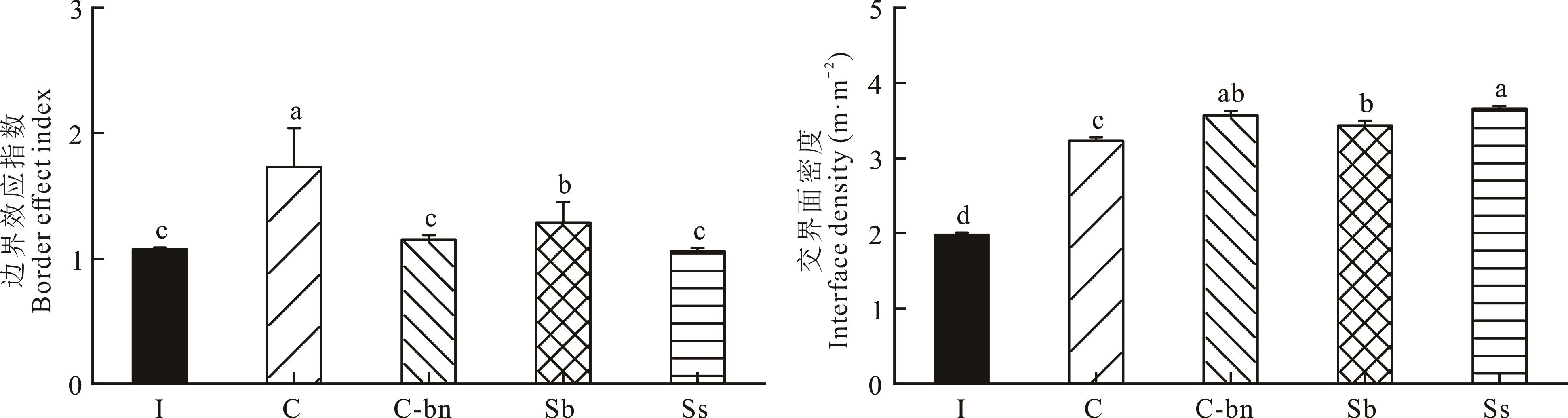
Fig.4 Border effect index and interface density under different intercropping patterns
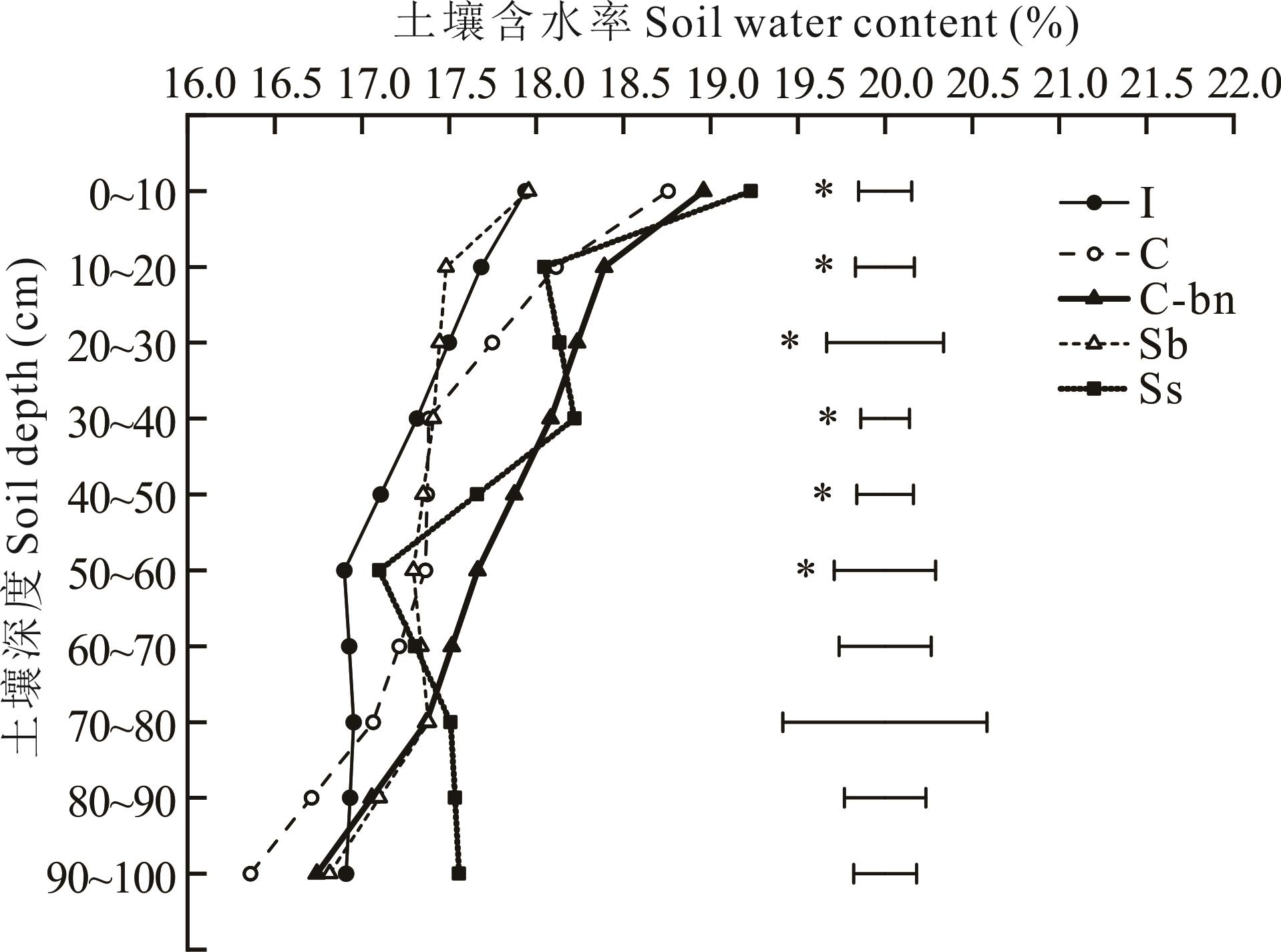
Fig.5 Soil water content in the 0-100 cm soil depth under different intercropping patterns

Fig.6 Water use efficiency under different intercropping patterns

Fig.7 Light interception ratio at different canopy heights under different intercropping patterns
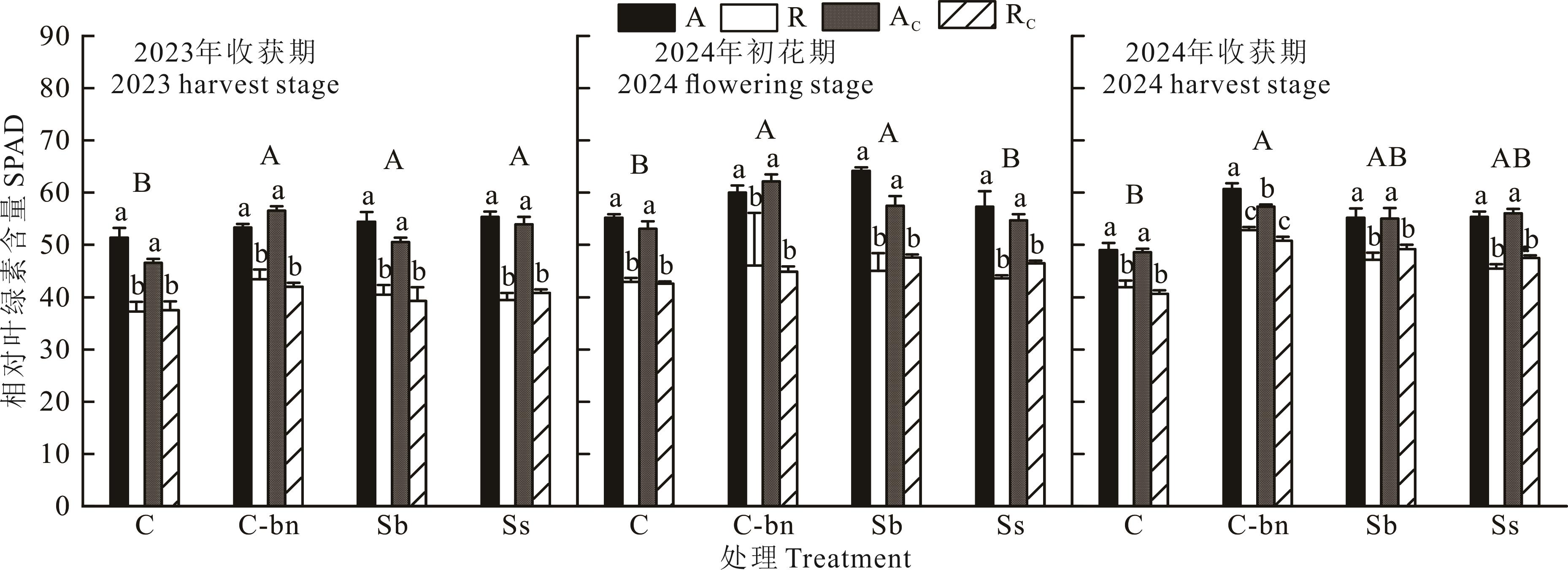
Fig.8 Leaf SPAD values at different spatial positions under different intercropping patterns

Fig.9 Radiation use efficiency under different intercropping patterns
| [1] | Lin S, Wang Y R. Spatial-temporal evolution of precipitation in China Loess Plateau. Journal of Desert Research, 2007(3): 502-508. |
| 林纾, 王毅荣. 中国黄土高原地区降水时空演变. 中国沙漠, 2007(3): 502-508. | |
| [2] | Kang S Z, Hao X M, Du T S, et al. Improving agricultural water productivity to ensure food security in China under changing environment: From research to practice. Agricultural Water Management, 2017, 179: 5-17. |
| [3] | Zhou H L. Response process and mechanism of water use in maize leaves to progressive drought. Beijing: Chinese Academy of Meteorological Sciences, 2020. |
| 周怀林. 玉米叶片水分利用的干旱响应过程与机制研究. 北京: 中国气象科学研究院, 2020. | |
| [4] | Yu X, Xiao S H, Li S J, et al. Review on crop yield and nitrogen utilization in cereal-legume intercropping system. Chinese Journal of Ecology, 2021, 40(8): 2601-2609. |
| 俞霞, 肖世豪, 李淑娟, 等. 禾本科-豆科间作模式中作物产量和氮素利用的研究进展. 生态学杂志, 2021, 40(8): 2601-2609. | |
| [5] | Xu H B, Hu J M, Luo G W, et al. Intercropping-driven maize yield gain depending on regional environments, planting conditions, and production managements: A global-scale evidence. European Journal of Agronomy, 2025, 168: 127622. |
| [6] | Yang H, Zhou Y, Chen P, et al. Effects of nutrient uptake and utilization on yield of maize-legume strip intercropping system. Acta Agronomica Sinica, 2022, 48(6): 1476-1487. |
| 杨欢, 周颖, 陈平, 等. 玉米-豆科作物带状间套作对养分吸收利用及产量优势的影响. 作物学报, 2022, 48(6): 1476-1487. | |
| [7] | Zhou Y, Lambrides C J, Fukai S. Associations between drought resistance, regrowth and quality in a perennial C4 grass. European Journal of Agronomy, 2015, 65: 1-9. |
| [8] | Li L, Tilman D, Lambers H, et al. Plant diversity and overyielding: Insights from belowground facilitation of intercropping in agriculture. New Phytologist, 2014, 203(1): 63-69. |
| [9] | Zhang H F, Pang G B, Fu Y R, et al. Effects of water stress at different growth stages on chlorophyll fluorescence parameters and yield of grape. Water Saving Irrigation, 2024(7): 1-7. |
| 张海峰, 庞桂斌, 付玉荣, 等. 不同生育期水分胁迫对葡萄叶绿素荧光参数指标和产量的影响. 节水灌溉, 2024(7): 1-7. | |
| [10] | Patra S, Parihar C M, Mahala D M, et al. Influence of long-term tillage and diversified cropping systems on hydro-physical properties in a sandy loam soil of north-western India. Soil and Tillage Research, 2023, 229: 105655. |
| [11] | Fan Z, Qiang B, Zhang X, et al. Optimizing light and nitrogen distribution in maize-soybean intercropping systems to enhance crop yield. European Journal of Agronomy, 2026, 172: 127853. |
| [12] | Zhang F, Li L. Using competitive and facilitative interactions in intercropping systems enhances crop productivity and nutrient-use efficiency. Plant and Soil, 2003, 248: 305-312. |
| [13] | Wu L B, Wang L L, Wang J W, et al. Effects of different carbon returning methods on grain yield, quality and water use efficiency of maize in dryland of the Loess Plateau. Scientia Agricultura Sinica, 2025, 58(14): 2751-2765. |
| 武凌彬, 王林林, 王江文, 等. 不同增碳方式对黄土高原旱地玉米产量、品质及水分利用效率的影响. 中国农业科学, 2025, 58(14): 2751-2765. | |
| [14] | Cui L, Yang W Y, Huang N, et al. Effects of maize plant types on dry matter accumulation characteristics and yield of soybean in maize-soybean intercropping systems. The Journal of Applied Ecology, 2015, 26(8): 2414-2420. |
| [15] | Wang F, Guo B B, Sun Z G, et al. Effects of elevated temperature and CO2 concentration on growth and yield of maize under intercropping with peanut. Acta Agronomica Sinica, 2021, 47(11): 2220-2231. |
| [16] | Guo H, Hou S, Zhang Y, et al. Incorporation alfalfa with annual forage enhances even water use and maintains forage yield resilience in a semiarid region. Agricultural Water Management, 2025, 320: 109838. |
| [17] | Weih M, Karley A J, Newton A C, et al. Grain yield stability of cereal-legume intercrops is greater than sole crops in more productive conditions. Agriculture, 2021, 11: 255. |
| [18] | Du G J, Bai W, Cai Q, et al. Effects of maize-alfalfa intercropping system on crop yields and productivity. Chinese Journal of Agrometeorology, 2025, 46(3): 398-408. |
| 杜桂娟, 白伟, 蔡倩, 等. 玉米-紫花苜蓿间作模式对作物产量及土地生产力的影响. 中国农业气象, 2025, 46(3): 398-408. | |
| [19] | Ren Y Y, Wang Z L, Wang X L, et al. The effect and mechanism of intercropping pattern on yield and economic benefit on the Loess Plateau. Acta Ecologica Sinica, 2015, 35(12): 4168-4177. |
| 任媛媛, 王志梁, 王小林, 等. 黄土塬区玉米大豆不同间作方式对产量和经济收益的影响及其机制. 生态学报, 2015, 35(12): 4168-4177. | |
| [20] | Vander Meer J H. The ecology of intercropping. London: Cambridge University Press, 2012: 176-188. |
| [21] | Li L, Sun J H, Zhang F S, et al. Wheat/maize or wheat/soybean strip intercropping: I. Yield advantage and interspecific interactions on nutrients. Field Crops Research, 2001, 71(2): 123-137. |
| [22] | Guo X X, Ma Z H, Zhang X Q, et al. Effects of different strip intercropping of soybean on soil hydrothermal dynamics and soybean yield. Journal of China Agricultural University, 2025, 30(12): 175-186. |
| 郭星星, 马子惠, 张向前, 等. 玉豆带状间作模式对土壤水热动态变化及大豆产量的影响. 中国农业大学学报, 2025, 30(12): 175-186. | |
| [23] | Lei Z D, Yang S X, Xie S C. Soil hydrodynamics. Beijing: Tsinghua University Press, 1988. |
| 雷志栋, 杨诗秀, 谢森传. 土壤水动力学. 北京: 清华大学出版社, 1988. | |
| [24] | Wang J X, Hu J Y, Zhang W, et al. Effects of different mulching methods on the production of photosynthetic substances and water use efficiency of intercropped maize. Scientia Agricultura Sinica, 2025, 58(3): 460-477. |
| 王佳芯, 胡静一, 张巍, 等. 覆膜方式对间作玉米光合物质生产及水分利用效率的影响. 中国农业科学, 2025, 58(3): 460-477. | |
| [25] | Morris R A, Garrity D P. Resource capture and utilization in intercropping: Water. Field Crops Research, 1993, 34: 303-317. |
| [26] | Grigera G, Oesterheld M. Variability of radiation use efficiency in mixed pastures under varying resource availability, defoliation and time scale. Grassland Science, 2021, 67(2): 156-166. |
| [27] | Sun J, Yang G, Zhang W, et al. Effects of heterogeneous salinity on growth, water uptake, and tissue ion concentrations of alfalfa. Plant and Soil, 2016, 408(1): 415-429. |
| [28] | Raza M A, Gul H, Wang J, et al. Land productivity and water use efficiency of maize-soybean strip intercropping systems in semi-arid areas: A case study in Punjab Province, Pakistan. Journal of Cleaner Production, 2021, 308: 127254. |
| [29] | Wang Y, Zhang Q, Ju M, et al. Alfalfa photosynthesis under partial root-zone drying: Diurnal patterns and its non-stomatal limitations. Plants, 2025, 14(11): 1573. |
| [30] | Bedoussac L, Journet E P, Hauggaard-Nielsen H, et al. Ecological principles underlying the increase of productivity achieved by cereal-grain legume intercrops in organic farming: A review. Agronomy for Sustainable Development, 2015, 35: 911-935. |
| [31] | Wedderburn M, Crush J, Pengelly W, et al. Root growth patterns of perennial ryegrass under well-watered and drought conditions. New Zealand Journal of Agricultural Research, 2010, 53(4): 377-388. |
| [32] | Katova A, Marinov-Serafimov P, Golubinova I, et al. Can we increase the drought tolerance of perennial ryegrass (Lolium perenne L.) to preserve grassland ecosystem services? A case study with three Bulgarian varieties. Plants, 2025, 14: 3704. |
| [33] | Wang Y F, Liu H Q, Zhao X N, et al. Effects of water and root separation on nitrogen uptake, utilization and transfer in a gramineae-legume intercropping system. Journal of Soil and Water Conservation, 2024, 38(4): 279-287. |
| 王一帆, 刘华清, 赵西宁, 等. 禾豆间作系统水分和根系分隔对牧草氮素吸收利用及转移的影响. 水土保持学报, 2024, 38(4): 279-287. | |
| [34] | Luo F, Liu W, Mi W, et al. Legume-grass mixtures increase forage yield by improving soil quality in different ecological regions of the Qinghai-Tibet Plateau. Frontiers in Plant Science, 2023, 14: 1280771. |
| [35] | Brooker R W, Maestre F T, Callaway R M, et al. Facilitation in plant communities: The past, the present, and the future. Journal of Ecology, 2008, 96: 18-34. |
| [36] | Wang R, Evers J B, Liu Y, et al. Border-row proportion determines strength of interspecific interactions and crop yields in maize/peanut strip intercropping. Field Crops Research, 2020, 253: 107819. |
| [37] | Cheng B, Wang L, Liu R, et al. Shade-tolerant soybean reduces yield loss by regulating its canopy structure and stem characteristics in the maize-soybean strip intercropping system. Frontiers in Plant Science, 2022, 13: 848893. |
| [38] | Feng L, Raza M A, Chen Y, et al. Narrow-wide row planting pattern improves the light environment and seed yields of intercrop species in relay intercropping system. PLoS One, 2019, 14(2): e0212885. |
| [39] | Chen P, Du Q, Liu X, et al. Effects of reduced nitrogen application rates on yield and nitrogen use efficiency in a maize–soybean relay strip intercropping system. Journal of Plant Nutrition and Soil Science, 2021, 184(2): 293-302. |
| [40] | Zhang W P, Liu G C, Sun J H, et al. Temporal dynamics of nutrient uptake by neighbouring plant species: Evidence from intercropping. Functional Ecology, 2017, 31(2): 469-479. |
| [41] | Hauggaard-Nielsen H, Gooding M, Ambus P, et al. Pea-barley intercropping for efficient symbiotic N2-fixation, soil N acquisition and use of other nutrients in European organic cropping systems. Field Crops Research, 2009, 113(1): 64-71. |
| [42] | Li Y S, Huang X, Luo J H, et al. Effects of different bandwidth and row ratios on yield and nitrogen efficiency of maize/soybean by relay strip intercropping. Chinese Journal of Oil Crop Sciences, 2024, 46(4): 863-871. |
| 李银水, 黄翔, 罗金华, 等. 不同带宽行比对玉米/大豆带状间套作群体产量和氮素效率的影响. 中国油料作物学报, 2024, 46(4): 863-871. | |
| [43] | Liang J, He Z, Shi W. Cotton/mung bean intercropping improves crop productivity, water use efficiency, nitrogen uptake, and economic benefits in the arid area of Northwest China. Agricultural Water Management, 2020, 240: 106277. |
| [44] | Rahman T, Ye L, Liu X, et al. Water use efficiency and water distribution response to different planting patterns in maize-soybean relay strip intercropping systems. Experimental Agriculture, 2017, 53(4): 543-561. |
| [45] | Homulle Z, George T S, Karley A J. Root traits with team benefits: Understanding belowground interactions in intercropping systems. Plant and Soil, 2022, 471: 1-26. |
| [46] | Li L, Sun J, Zhang F, et al. Root distribution and interactions between intercropped species. Oecologia, 2006, 147(2): 280-290. |
| [47] | Zhou Y Y, Xie Z W, Zhong P G, et al. Quantification of row orientation effects on radiation distribution in maize-soybean intercropping based on functional-structural plant model. Scientia Agricultura Sinica, 2024, 57(10): 1882-1899. |
| 周也莹, 谢子文, 钟培阁, 等. 基于功能-结构模型的玉米大豆间作不同行向辐射分布研究. 中国农业科学, 2024, 57(10): 1882-1899. | |
| [48] | Liu X, Rahman T, Song C, et al. Relationships among light distribution, radiation use efficiency and land equivalent ratio in maize-soybean strip intercropping. Field Crops Research, 2018, 224: 91-101. |
| [49] | Fan Y, Chen J, Cheng Y, et al. Effect of shading and light recovery on the growth, leaf structure, and photosynthetic performance of soybean in a maize-soybean relay-strip intercropping system. PLoS One, 2018, 13(5): e0198159. |
| [50] | Gong X W. Responses of light, water and fertilizer and the mechanism of reducing nitrogen and increasing efficiency in proso millet/mung bean intercropping system. Shaanxi: Northwest A&F University, 2021. |
| 宫香伟. 糜子/绿豆间作模式下糜子群体对光、水、肥资源的响应及减氮增效机制研究. 陕西: 西北农林科技大学, 2021. | |
| [51] | Wang L, Zhou T, Cheng B, et al. Variable light condition improves root distribution shallowness and P uptake of soybean in maize/soybean relay strip intercropping system. Plants, 2020, 9(9): 1204. |
| [52] | Shen L Q, Hu F L, Tuo M W, et al. Effects of intercropping belt type and mulching method on yield and water use efficiency in maize-pea systems. Acta Agriculturae Boreali-occidentalis Sinica, 2025, 34(10): 1781-1790. |
| 申龙强, 胡发龙, 拓明文, 等. 带型及覆盖方式对玉米||豌豆产量及水分利用效率的影响. 西北农业学报, 2025, 34(10): 1781-1790. | |
| [53] | Yao Z, Yu S M, Wang Q, et al. Water physiology and anatomical structure of Medicago sativa leaves in response to water stress. Acta Agrestia Sinica, 2025, 33(3): 823-830. |
| 姚泽, 于思敏, 王祺, 等. 紫花苜蓿叶片水分生理及其解剖结构的水分胁迫响应. 草地学报, 2025, 33(3): 823-830. | |
| [54] | Chen P, Xian G, Pu T, et al. Soybean-maize intercropping combined with water management enhances leaf traits to obtain yield benefits in semi-arid regions. Field Crops Research, 2025, 327: 109869. |
| [55] | Wang X C, Yang W Y. Review on relationship of source-sink and crop yield under shading stress in intercropping systems. Chinese Journal of Oil Crop Sciences, 2019, 41(2): 292-299. |
| 王兴才, 杨文钰. 基于间套作弱光胁迫下作物源库协调与产量研究进展. 中国油料作物学报, 2019, 41(2): 292-299. | |
| [56] | Bakhshy J, Zehtab-Salmasi S, Ghassemi-Golezani K, et al. The interactive effects of water and shade stresses on field performance of soybean. International Journal of Agronomy and Plant Production, 2013, 4: 2330-2334. |
| [1] | Yong-quan ZHAI, Yao MA, Li-hua SONG, Bing CAO. Effects of ryegrass intercropping density on the productivity, net benefits, and sustainability of a jujube-grass intercropping system [J]. Acta Prataculturae Sinica, 2026, 35(7): 68-79. |
| [2] | Xiao-cong LI, Ju-hui YAN, Xing WANG, Peng-fei HU, Yu-nong YE, Bing-zhe FU. Effects of different inter-row planting ratios of alfalfa and smooth brome on grass production performance and soil physicochemical properties [J]. Acta Prataculturae Sinica, 2026, 35(5): 113-125. |
| [3] | Wen-hui DENG, Xiao-na ZHAO, Jia-yi YONG, Si-yu GUAN, Guo-qiang HU, Teng-fei WANG, Hai-ying HU. Effects of intercropping oat with different densities on alfalfa seed yield and its constituent factors [J]. Acta Prataculturae Sinica, 2026, 35(4): 100-111. |
| [4] | Shi-chao ZHANG, Guo-wen CUI, De-peng ZHANG, Fu-ying HAN, Ding DING, Xiang-li LYU, Shuo LIN, Le-ran CHEN, Ji-ru LI, Hua CAI. Establishment of a tissue culture-free genetic transformation system for alfalfa and its applications in salt-tolerance gene functional characterization and gene editing [J]. Acta Prataculturae Sinica, 2026, 35(3): 223-234. |
| [5] | Jia-yi ZANG, Ming-jie XU, Ji-cheng XIE, Yu-ying SHEN, Xing-fa LAI. Effects of replacing chemical fertilizers with organic fertilizer at equivalent nitrogen levels on forage yield and water use efficiency in a silage maize/forage soybean intercropping system in dryland areas [J]. Acta Prataculturae Sinica, 2026, 35(3): 83-95. |
| [6] | Li-juan CHEN, Rong GAO, Jian-xi WANG, Hui-ling MA. A comparative study of differences in condensed tannin synthesis between Medicago sativa and Onobrychis viciifolia at different growth stages [J]. Acta Prataculturae Sinica, 2026, 35(2): 221-236. |
| [7] | Yang-kun LI, Zhuan-lin BEN, Jun-yu ZHANG, Hui-min YANG. A meta-analysis on the effect of fertilizer type on alfalfa seed yield under various climate and soil conditions [J]. Acta Prataculturae Sinica, 2026, 35(2): 54-67. |
| [8] | Ying ZHANG, Shan-mu HE, Ao-lei HE, Chang-ning LI, Tuo YAO. Effects of microbial inoculants combined with organic calcium protein on alfalfa growth and soil enzyme activity [J]. Acta Prataculturae Sinica, 2026, 35(1): 25-39. |
| [9] | Ying-hao ZHANG, Chu-bo LIU, Kun ZHOU, Jia-cun GUO, Shi-peng LIU, Luan-zi SUN. Effects of jujube tree on the growth of alfalfa and orchardgrass in different positions within an orchard [J]. Acta Prataculturae Sinica, 2025, 34(6): 203-212. |
| [10] | Can CUI, Meng-qi WANG, Wan-lu ZHAO, Xin-ying LIU, Jing-jing JIAN, Jun-xin YAN. The effect on seed germination and seedling growth of soaking seeds with diethyl aminoethyl hexanoate in alfalfa under NaCl stress [J]. Acta Prataculturae Sinica, 2025, 34(6): 46-58. |
| [11] | Xin-yue ZHOU, Li-ping WANG, Qing-xue JIANG, Xiao-ran MA, Deng-xia YI, Xue-min WANG. Isolation of the low-temperature induced proteinMsLTI65 from alfalfa and its response to different stresses [J]. Acta Prataculturae Sinica, 2025, 34(5): 89-104. |
| [12] | Tian-rong LUO, Jian-zhi MA, Ming-yang DU, Jie-cuo DUO, Hui-yan XIONG, Rui-jun DUAN. Identification and expression analysis of LACS gene family members in Medicago sativa [J]. Acta Prataculturae Sinica, 2025, 34(4): 124-136. |
| [13] | Tuo-xuan DONG, Xun-feng CHEN, Da-hai MEI, Yong-sha GUO, Xu-hong WEI, Qiu-yan SONG. Inhibition and control effect of nano-iron and copper on Ascochyta medicaginicola and spring black stem disease [J]. Acta Prataculturae Sinica, 2025, 34(4): 201-211. |
| [14] | Wen-qi CAI, Shu-xia LI, Xiao-tong WANG, Wen-xue SONG, Xu-xia MA, Xiao-mei MA, Xiao-hong LI, Xin-yao DAI. Effects of interaction between exogenous melatonin and ethylene on the growth and physiological characteristics of Medicago sativa seedlings under salt stress [J]. Acta Prataculturae Sinica, 2025, 34(1): 80-93. |
| [15] | Wen-wen QI, Hong-yuan MA, Ya-xiao LI, Yan DU, Meng-dan SUN, Hai-tao WU. Progress in research on breeding methods to produce new, high-quality forage varieties [J]. Acta Prataculturae Sinica, 2024, 33(6): 187-202. |
| Viewed | ||||||
|
Full text |
|
|||||
|
Abstract |
|
|||||
