
ISSN 1004-5759 CN 62-1105/S
Acta Prataculturae Sinica ›› 2026, Vol. 35 ›› Issue (10): 79-90.DOI: 10.11686/cyxb2025422
Previous Articles Next Articles
Rui ZHANG( ), Tie-juan WANG(), Bing-bing ZHANG, Jing FENG, Jin-ling SHAO
Received:2025-10-18
Revised:2025-11-24
Online:2026-10-20
Published:2026-09-09
Contact:
Tie-juan WANG
Rui ZHANG, Tie-juan WANG, Bing-bing ZHANG, Jing FENG, Jin-ling SHAO. A study of the point occurrence pattern of Artemisia ordosica populations and their spatial correlation with Caragana microphylla occurrence in the Mu Us sandy land[J]. Acta Prataculturae Sinica, 2026, 35(10): 79-90.
样地 Plot | 株数 Plant number | 密度 Density (plant·m-2) | 最小值 Minimum value (cm) | 最大值 Maximum value (cm) | 均值 Mean value (cm) | 标准差 Standard deviation | 变异系数 Coefficient of variation (%) | 各级株数比例 All classes of the plant number proportion | ||
|---|---|---|---|---|---|---|---|---|---|---|
| Ⅰ | Ⅱ | Ⅲ | ||||||||
| S | 173 | 0.11 | 6.80 | 104.87 | 39.99 | 22.15 | 55.38 | 56(32.37%) | 103(59.54%) | 14(8.09%) |
| F | 736 | 0.46 | 8.41 | 128.62 | 56.46 | 20.36 | 36.07 | 39(5.30%) | 563(76.49%) | 134(18.21%) |
Table 1 Individual size characteristics of A. ordosica population plant
样地 Plot | 株数 Plant number | 密度 Density (plant·m-2) | 最小值 Minimum value (cm) | 最大值 Maximum value (cm) | 均值 Mean value (cm) | 标准差 Standard deviation | 变异系数 Coefficient of variation (%) | 各级株数比例 All classes of the plant number proportion | ||
|---|---|---|---|---|---|---|---|---|---|---|
| Ⅰ | Ⅱ | Ⅲ | ||||||||
| S | 173 | 0.11 | 6.80 | 104.87 | 39.99 | 22.15 | 55.38 | 56(32.37%) | 103(59.54%) | 14(8.09%) |
| F | 736 | 0.46 | 8.41 | 128.62 | 56.46 | 20.36 | 36.07 | 39(5.30%) | 563(76.49%) | 134(18.21%) |
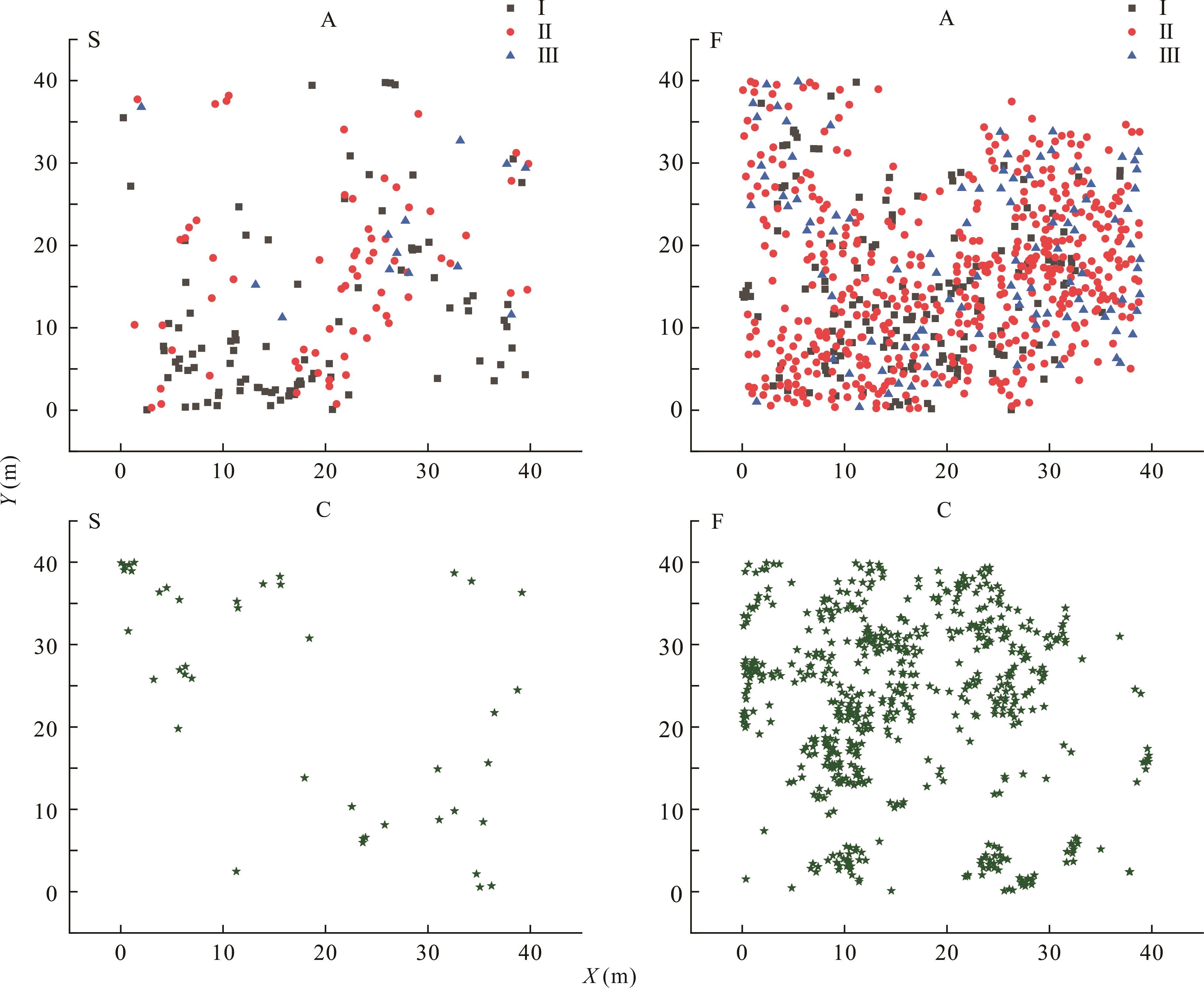
Fig.1 Spatial distribution of individuals of A. ordosica and C. microphylla
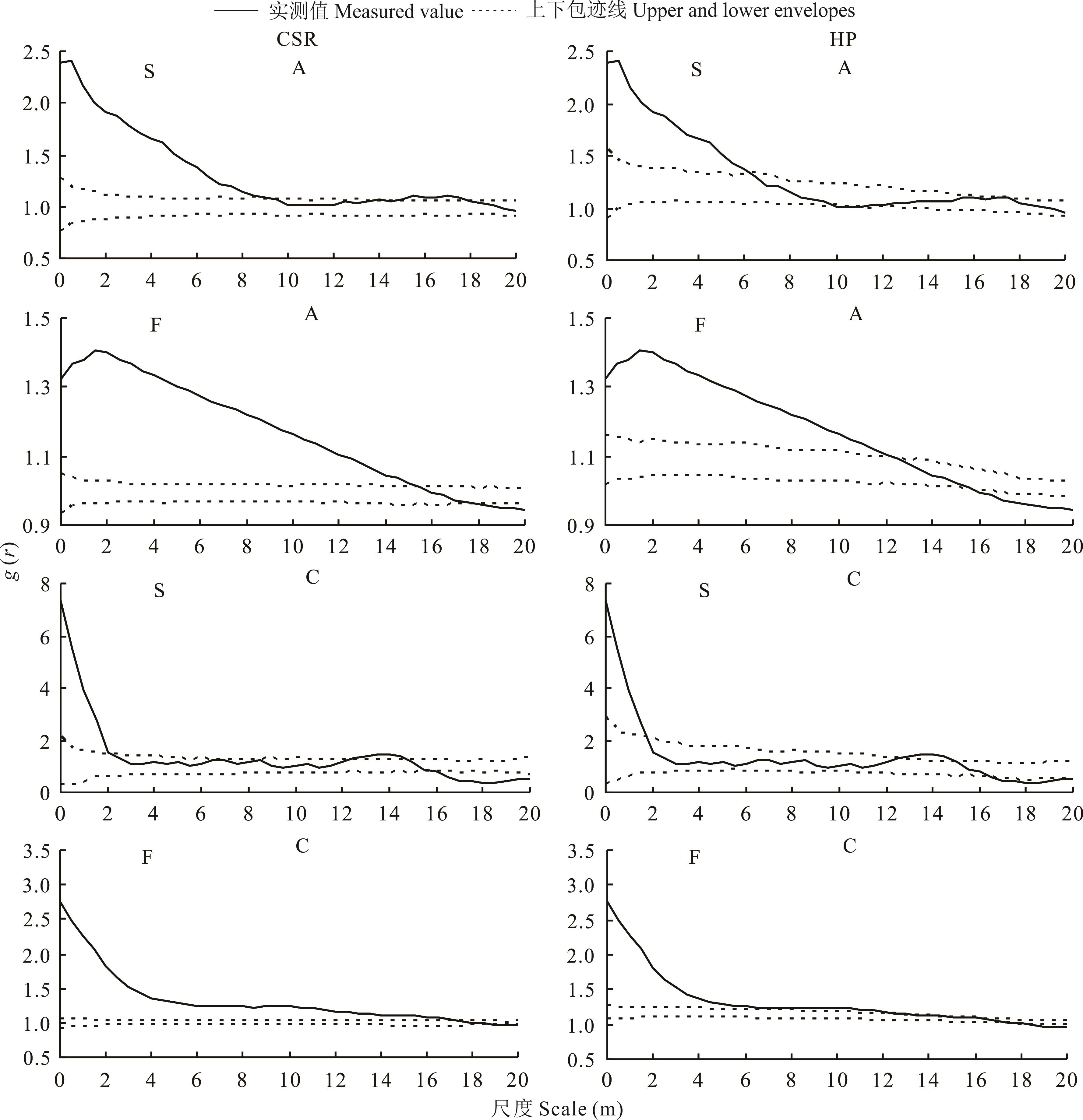
Fig.2 Spatial distribution pattern of A. ordosica and C. microphylla populations

Fig.3 Spatial distribution patterns of three size classes of A. ordosica population in semi-fixed sandy land
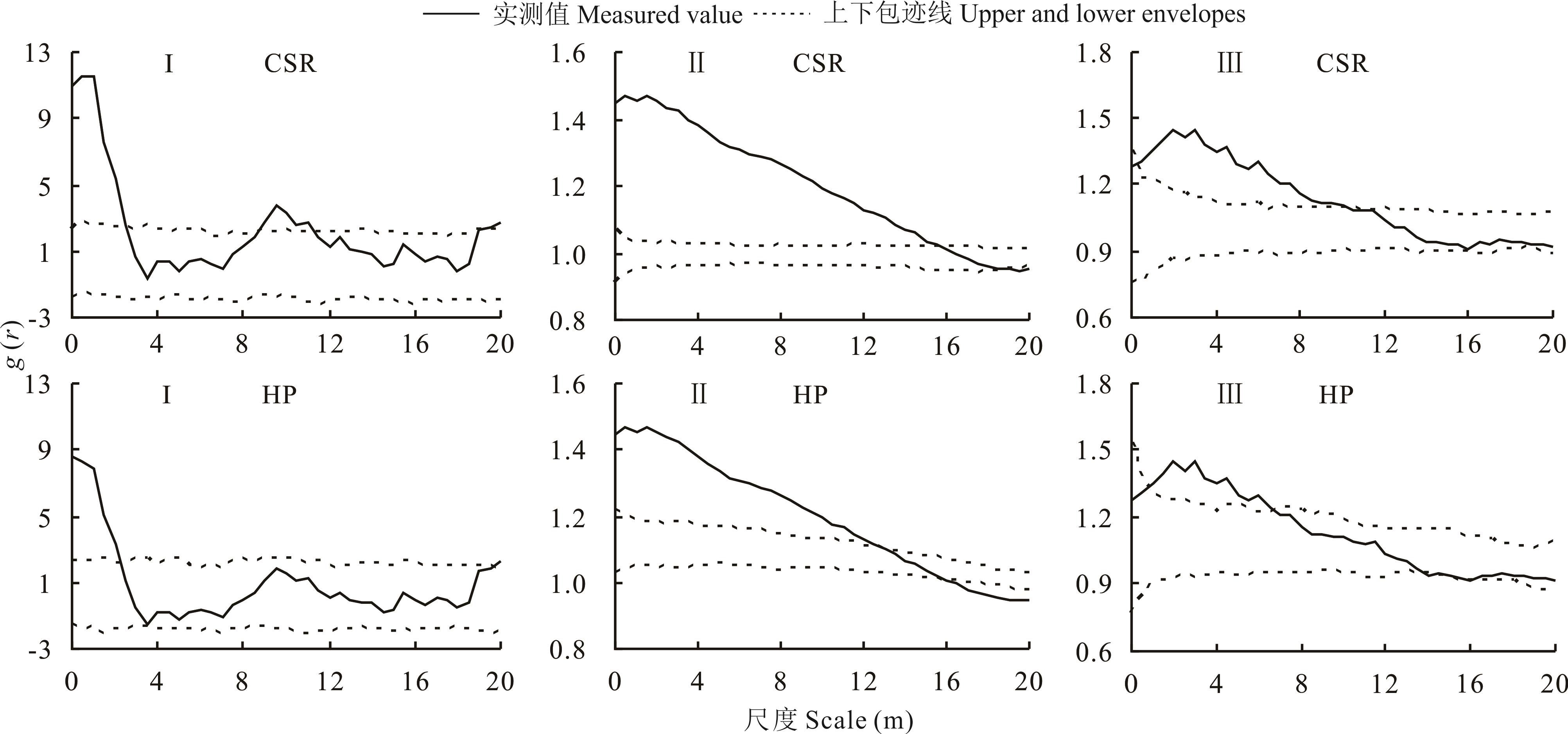
Fig.4 Spatial distribution patterns of three size classes of A. ordosica population in fixed sandy land
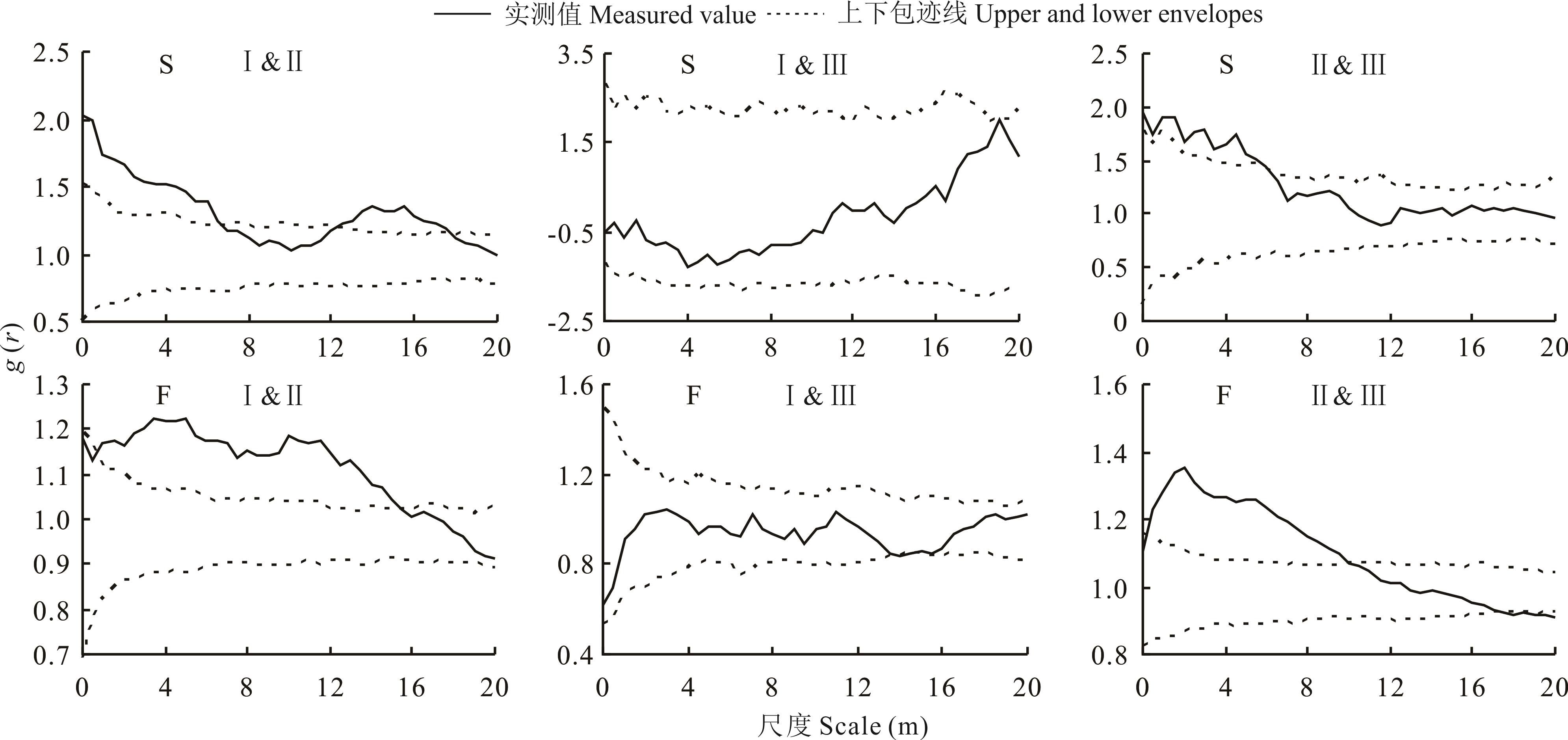
Fig.5 Spatial correlation between different size classes of A. ordosica populations
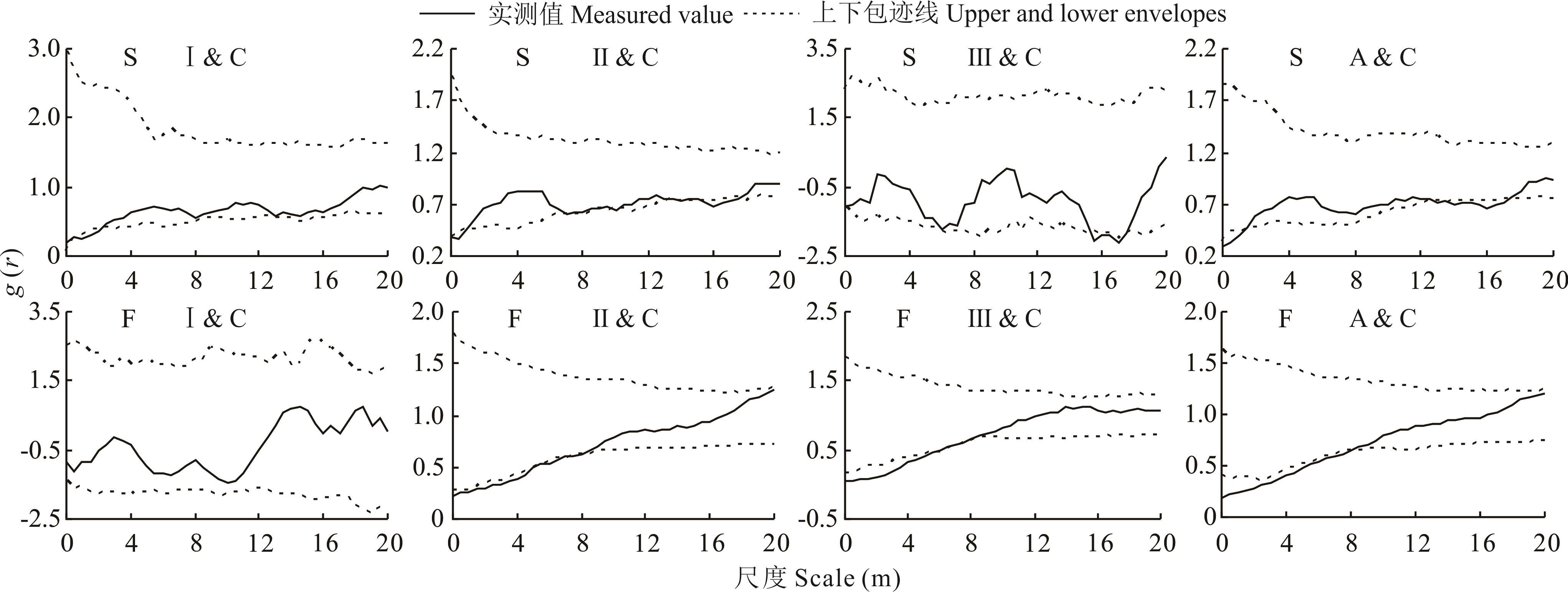
Fig.6 Interspecific association between different sizes of A. ordosica and C. microphylla
| [1] | John R, Dalling J W, Harms K E, et al. Soil nutrients influence spatial distributions of tropical tree species. Proceedings of the National Academy of Sciences of the United States of America, 2007, 104(3): 864-869. |
| [2] | Zhang W H, Zhang D H, Zhang Z S, et al. Spatial pattern of Artemisia ordosica population on semi-fixed dunes in the Tengger Desert, China. Acta Agrestia Sinica, 2023, 31(7): 2137-2145. |
| 张文豪, 张定海, 张志山, 等. 腾格里沙漠半固定沙丘上油蒿种群的空间格局研究. 草地学报, 2023, 31(7): 2137-2145. | |
| [3] | Zhang J T. Analysis of spatial point patten for plant species. Chinese Journal of Plant Ecology, 1998, 22(4): 57-62. |
| 张金屯. 植物种群空间分布的点格局分析. 植物生态学报, 1998, 22(4): 57-62. | |
| [4] | Tang R Y, Zhang D H, Zhao Y Y, et al. Spatial point pattern of Artemisia ordosica shrubland on fixed sand dunes in the Mu Us sandy land, China. Chinese Journal of Applied Ecology, 2025, 36(3): 719-728. |
| 唐如韵, 张定海, 赵有益, 等. 毛乌素沙地固定沙丘黑沙蒿灌丛空间点格局. 应用生态学报, 2025, 36(3): 719-728. | |
| [5] | Xu A Y, Xu D M, Liu J L, et al. Point pattern analysis of dominant populations based on null models in desert steppe in Ningxia. Acta Ecologica Sinica, 2020, 40(12): 4180-4187. |
| 许爱云, 许冬梅, 刘金龙, 等. 基于零模型的宁夏荒漠草原优势种群点格局分析. 生态学报, 2020, 40(12): 4180-4187. | |
| [6] | Condit R, Ashton P S, Baker P, et al. Spatial patterns in the distribution of tropical tree species. Science, 2000, 288(5470): 1414-1418. |
| [7] | Xing Y F, Shi J J, De K J, et al. Spatial distribution pattern and intraspecific association of Kobresia humilis in perennial artificial grassland. Acta Agrestia Sinica, 2022, 30(2): 253-258. |
| 邢云飞, 施建军, 德科加, 等. 多年生人工草地矮生嵩草(Kobresia humilis)种群空间格局与种内关联性. 草地学报, 2022, 30(2): 253-258. | |
| [8] | Li X T, Wang T J, Han W J, et al. Population structure and point pattern analysis of rare and endangered plant Potaninia mongolica in eastern Alxa, China. Chinese Journal of Plant Ecology, 2023, 47(4): 506-514. |
| 李晓田, 王铁娟, 韩文娟, 等. 东阿拉善珍稀濒危植物绵刺种群结构与点格局分析. 植物生态学报, 2023, 47(4): 506-514. | |
| [9] | Ma Z B, Xiao W F, Huang Q L, et al. A review of point pattern analysis in ecology and its application in China. Acta Ecologica Sinica, 2017, 37(19): 6624-6632. |
| 马志波, 肖文发, 黄清麟, 等. 生态学中的点格局研究概况及其在国内的应用. 生态学报, 2017, 37(19): 6624-6632. | |
| [10] | Zhao Y Z, Zhao L Q, Cao R. Flora Intramongolica (the third edition). Hohhot: Inner Mongolia People’s Publishing House, 2019, 5: 206-207. |
| 赵一之, 赵利清, 曹瑞. 内蒙古植物志(第三版). 呼和浩特: 内蒙古人民出版社, 2019, 5: 206-207. | |
| [11] | Guo K. Cyclic succession of Artemisia ordosica Krasch community in the Mu Us Sandy grassland. Chinese Journal of Plant Ecology, 2000, 24(2): 243-247. |
| 郭柯. 毛乌素沙地油蒿群落的循环演替. 植物生态学报, 2000, 24(2): 243-247. | |
| [12] | Yang H X, Zhang J T, Wu B, et al. Point pattern analysis of Artemisia ordosica population in Mu Us Sandy Land. Chinese Journal of Plant Ecology, 2006, 30(4): 563-570. |
| 杨洪晓, 张金屯, 吴波, 等. 毛乌素沙地油蒿种群点格局分析. 植物生态学报, 2006, 30(4): 563-570. | |
| [13] | Niu C X, Zhang D H, Zhang Z S, et al. Spatial distribution pattern and spatial correlation of main sand-fixing shrubs in fixed dunes in Yanchi region, Mu Us sandy land. Ecological Science, 2024, 43(1): 1-9. |
| 牛程旭, 张定海, 张志山, 等. 毛乌素沙地盐池地区固定沙丘主要固沙灌木的空间分布格局与空间关联性研究. 生态科学, 2024, 43(1): 1-9. | |
| [14] | Liu X T, Wang T J, Su R G G, et al. Spatial distribution patterns of Ammopiptanthus mongolicus population at different developmental stages in the Eastern Alashan. Acta Agrestia Sinica, 2023, 31(10): 3157-3166. |
| 刘晓婷, 王铁娟, 苏日古嘎, 等. 东阿拉善不同发育阶段沙冬青种群的空间分布格局. 草地学报, 2023, 31(10): 3157-3166. | |
| [15] | Zhang L, Wang T J, Guo J T, et al. Population distribution pattern analysis of the rare and endangered plant Tetraena mongolica in western Ordos China. Acta Agrestia Sinica, 2023, 31(2): 551-557. |
| 张丽, 王铁娟, 郭金停, 等. 西鄂尔多斯珍稀濒危植物四合木种群分布格局分析. 草地学报, 2023, 31(2): 551-557. | |
| [16] | Ripley B D. Modeling spatial patterns. Journal of the Royal Statistical Society: Series B (Methodological), 1977, 39(2): 172-192. |
| [17] | Stoyan D, Stoyan H. Fractals, random shapes and point fields: Methods of geometrical statistics. New York: John Wiley & Sons, 1994. |
| [18] | Matiu M, Wiegand T, Moloney K, et al. Handbook of spatial point-pattern analysis in ecology. Boca Raton: CRC Press, 2013. |
| [19] | Wang X T, Hou Y L, Liang C Z, et al. Point pattern analysis based on different null models for detecting spatial patterns. Biodiversity Science, 2012, 20(2): 151-158. |
| 王鑫厅, 侯亚丽, 梁存柱, 等. 基于不同零模型的点格局分析. 生物多样性, 2012, 20(2): 151-158. | |
| [20] | Shen G C, He F L, Waagepetersen R, et al. Quantifying effects of habitat heterogeneity and other clustering on spatial distributions of tree species. Ecology, 2013, 94(11): 2436-2443. |
| [21] | Qu W J, Wang L, Yang X G, et al. Point pattern analysis based on null models of population in fixed sand at the southeastern edge of the Tengger Desert. Acta Prataculturae Sinica, 2024, 33(10): 37-45. |
| 曲文杰, 王磊, 杨新国, 等. 基于零模型的腾格里沙漠东南缘固定沙地种群点格局分析. 草业学报, 2024, 33(10): 37-45. | |
| [22] | Dong X, Liu M H, Li X L, et al. Effects of artificial simulated precipitation on seed morphology and specific leaf area of Artemisia ordosica. Journal of Central South University of Forestry and Technology, 2020, 40(2): 36-42. |
| 董雪, 刘明虎, 李新乐, 等. 人工模拟增雨对油蒿种子形态性状和比叶面积的影响. 中南林业科技大学学报, 2020, 40(2): 36-42. | |
| [23] | Zhou Z L, Wang L, Yu J, et al. Seed germination physiology of two species of Caragana Fabr. Acta Botanica Boreali-Occidentalia Sinica, 2011, 31(12): 2509-2515. |
| 周正立, 王琳, 于军, 等. 锦鸡儿属两种植物种子萌发生理研究. 西北植物学报, 2011, 31(12): 2509-2515. | |
| [24] | West P W, Ratkowsky D A. Problems with models assessing influences of tree size and inter-tree competitive processes on individual tree growth: A cautionary tale. Journal of Forestry Research, 2022, 33(3): 565-577. |
| [25] | Ta F, Liu X D, Liu R H, et al. Spatial distribution patterns and association of Picea crassifolia population in Dayekou Basin of Qilian Mountains, northwestern China. Chinese Journal of Plant Ecology, 2020, 44(11): 1172-1183. |
| 拓锋, 刘贤德, 刘润红, 等. 祁连山大野口流域青海云杉种群空间格局及其关联性. 植物生态学报, 2020, 44(11): 1172-1183. | |
| [26] | Zhao G D, Xiong K, Xu G X, et al. Spatial patterns and associations of main dominant species Abies fargesii var. faxoniana and Betula utilis in Miyaluo subalpine dark coniferous forest of western Sichuan, China. Acta Ecologica Sinica, 2022, 42(8): 3377-3388. |
| 赵广东, 熊凯, 许格希, 等. 川西米亚罗亚高山暗针叶林岷江冷杉和糙皮桦空间格局及其关联性分析. 生态学报, 2022, 42(8): 3377-3388. | |
| [27] | Yu Y, Bai X J, Wang Z Y. Niche characteristics and competitive relationship of Larix gmelinii between different age classes in Greater Khingan Range secondary forest area. Acta Ecologica Sinica, 2022, 42(12): 4912-4921. |
| 俞昀, 白小军, 王志一. 大兴安岭次生林区不同龄级落叶松(Larix gmelinii)生态位特征和竞争关系. 生态学报, 2022, 42(12): 4912-4921. | |
| [28] | Yang C L, Liu M X, Wang Q Y, et al. Spatial pattern and correlation of populations of Anemone rivularis and Kobresia myosuroides under single-household management and multi-household management grazing patterns. Ecology and Environmental Sciences, 2023, 32(4): 651-659. |
| 杨春亮, 刘旻霞, 王千月, 等. 单户与联户放牧经营下草玉梅与嵩草种群空间格局及其关联性. 生态环境学报, 2023, 32(4): 651-659. | |
| [29] | Chen S H. Root types of grassland plants in Inner Mongolia. Hohhot: Inner Mongolia People’s Publishing House, 1987: 107-109. |
| 陈世璜. 内蒙古草原植物根系类型. 呼和浩特: 内蒙古人民出版社, 1987: 107-109. |
| [1] | Wen-jie QU, Lei WANG, Xin-guo YANG, Jian-jun QU, Li ZHANG, Bo ZHANG, Xiang-bo SUN. Point pattern analysis based on null models of populations in fixed sand at the southeastern edge of the Tengger Desert [J]. Acta Prataculturae Sinica, 2024, 33(10): 37-45. |
| [2] | Ya-ling HU, Eerdun HASI, Liang MAN, Yi YANG, Ping ZHANG. Vegetation responses to sand source and supply volume in Caragana microphylla shrubland [J]. Acta Prataculturae Sinica, 2023, 32(1): 26-35. |
| [3] | Rong RONG, Bin SUN, Zhi-tao WU, Zhi-hai GAO, Zi-qiang DU, Si-han TENG. Study on above-ground biomass measurement of Caragana microphylla in shrub-encroached grassland [J]. Acta Prataculturae Sinica, 2023, 32(1): 36-47. |
| [4] | Yuan-yuan LI, Ting-ting XU, Zhe AI, Zhao-na ZHOU, Fei MA. Relationship between plant functional traits and rhizosphere bacterial community structure of two Caragana species [J]. Acta Prataculturae Sinica, 2022, 31(7): 38-49. |
| [5] | Hong-jiao HU, Xin-ping LIU, Tong-hui ZHANG, Yu-hui HE, Ming-ming WANG, La-mei ZHANG, Shan-shan SUN, Li CHENG. Feed nutritional value and silage processing properties of Caragana microphylla [J]. Acta Prataculturae Sinica, 2021, 30(11): 181-190. |
| [6] | XU Ai-yun, XU Dong-mei, CAO Bing, LIU Jin-long, YU-Shuang, GUO Yan-ju, MA Xiao-jing. Spatial distribution patterns and interspecific relationships of Agropyron mongolicum populations in different desert steppe communities in Ningxia [J]. Acta Prataculturae Sinica, 2020, 29(3): 171-178. |
| [7] | LI Wu-bin, HE Bing-hui, WANG Li, SHEN Jian-hong, HUANG Zhi-qing, ZHANG Xing-hua, WEN Ji-jian, DAI Wan-gui. Spatial distribution pattern of soil nutrient contents in Jiuzhaigou Manaoke Gold Mine Valley, Sichuan, China [J]. Acta Prataculturae Sinica, 2011, 20(3): 1-9. |
| [8] | LIN Yan, BAI Yong-fei. Responses of aboveground net primary production and population structure of Caragana microphylla to prescribed burning in a typical steppe of Inner Mongolia [J]. Acta Prataculturae Sinica, 2010, 19(5): 170-178. |
| [9] | CHAI Yong-qing, CAO Zhi-zhong, CAI Zhuo-shan, WAN Li-xia, LI Xue-ling. The spatial distribution patterns of rare plant Gymnocarpos przewalskii communities in Subei [J]. Acta Prataculturae Sinica, 2010, 19(5): 239-249. |
| Viewed | ||||||
|
Full text |
|
|||||
|
Abstract |
|
|||||
