
ISSN 1004-5759 CN 62-1105/S
Acta Prataculturae Sinica ›› 2026, Vol. 35 ›› Issue (4): 158-168.DOI: 10.11686/cyxb2025151
Tian ZHANG1,2( ), Hua-juan LENG1, Jing CUI1, Fei HE1, Xue WANG1, Ming-na LI1, Qing-chuan YANG1, Jun-mei KANG1()
Received:2025-04-24
Revised:2025-08-09
Online:2026-04-20
Published:2026-02-07
Contact:
Jun-mei KANG
Tian ZHANG, Hua-juan LENG, Jing CUI, Fei HE, Xue WANG, Ming-na LI, Qing-chuan YANG, Jun-mei KANG. Identification of synaptotagmin gene family members in alfalfa and their transcript profiles under abiotic stresses[J]. Acta Prataculturae Sinica, 2026, 35(4): 158-168.
基因登录号 Gene ID | 基因名称 Gene name | 蛋白长度 Protein length (aa) | 分子量 Molecular weight (kDa) | 等电点 Isoelectric point (pI) | 不稳定系数 Instability index | 总平均亲水性 Grand average of hydropathicity |
|---|---|---|---|---|---|---|
| Msa083526.t01 | MsSYT1 | 537 | 61.44 | 6.36 | 29.74 | -0.339 |
| Msa000097.t01 | MsSYT2 | 535 | 60.98 | 7.61 | 32.65 | -0.250 |
| Msa005119.t01 | MsSYT3 | 544 | 62.05 | 8.40 | 35.48 | -0.091 |
| Msa086529.t01 | MsSYT4 | 821 | 92.00 | 6.92 | 40.18 | -0.216 |
| Msa183305.t01 | MsSYT5 | 566 | 63.51 | 5.96 | 31.42 | -0.095 |
| Msa027845.t01 | MsSYT6 | 1023 | 114.98 | 5.77 | 48.58 | -0.267 |
| Msa112806.t01 | MsSYT7 | 764 | 87.85 | 6.67 | 43.22 | -0.045 |
| Msa083527.t01 | MsSYT8a | 945 | 107.72 | 6.10 | 38.93 | -0.400 |
| Msa083527.t02 | MsSYT8b | 645 | 74.41 | 5.86 | 39.96 | -0.351 |
| Msa083527.t03 | MsSYT8c | 717 | 82.48 | 6.34 | 39.31 | -0.348 |
| Msa083527.t04 | MsSYT8d | 645 | 74.41 | 5.86 | 39.96 | -0.351 |
| Msa083527.t05 | MsSYT8e | 717 | 82.48 | 6.34 | 39.31 | -0.348 |
| Msa038100.t01 | MsSYT9 | 561 | 63.29 | 5.78 | 34.12 | -0.099 |
| Msa157005.t01 | MsSYT10 | 775 | 89.45 | 9.20 | 45.43 | -0.261 |
| Msa081502.t01 | MsSYT11 | 770 | 88.96 | 9.29 | 42.32 | -0.262 |
| Msa179019.t01 | MsSYT12 | 1005 | 114.51 | 9.16 | 45.19 | -0.387 |
| Msa156608.t01 | MsSYT13 | 1323 | 151.85 | 8.93 | 41.08 | -0.403 |
| Msa156589.t01 | MsSYT14 | 1013 | 115.13 | 9.27 | 43.45 | -0.371 |
| Msa135465.t01 | MsSYT15 | 828 | 93.71 | 6.90 | 45.36 | -0.301 |
| Msa056918.t01 | MsSYT16a | 568 | 64.18 | 5.98 | 33.88 | -0.114 |
| Msa056918.t02 | MsSYT16b | 1045 | 120.18 | 8.97 | 43.06 | -0.473 |
Table 1 Analysis of the basic properties of MsSYT gene family
基因登录号 Gene ID | 基因名称 Gene name | 蛋白长度 Protein length (aa) | 分子量 Molecular weight (kDa) | 等电点 Isoelectric point (pI) | 不稳定系数 Instability index | 总平均亲水性 Grand average of hydropathicity |
|---|---|---|---|---|---|---|
| Msa083526.t01 | MsSYT1 | 537 | 61.44 | 6.36 | 29.74 | -0.339 |
| Msa000097.t01 | MsSYT2 | 535 | 60.98 | 7.61 | 32.65 | -0.250 |
| Msa005119.t01 | MsSYT3 | 544 | 62.05 | 8.40 | 35.48 | -0.091 |
| Msa086529.t01 | MsSYT4 | 821 | 92.00 | 6.92 | 40.18 | -0.216 |
| Msa183305.t01 | MsSYT5 | 566 | 63.51 | 5.96 | 31.42 | -0.095 |
| Msa027845.t01 | MsSYT6 | 1023 | 114.98 | 5.77 | 48.58 | -0.267 |
| Msa112806.t01 | MsSYT7 | 764 | 87.85 | 6.67 | 43.22 | -0.045 |
| Msa083527.t01 | MsSYT8a | 945 | 107.72 | 6.10 | 38.93 | -0.400 |
| Msa083527.t02 | MsSYT8b | 645 | 74.41 | 5.86 | 39.96 | -0.351 |
| Msa083527.t03 | MsSYT8c | 717 | 82.48 | 6.34 | 39.31 | -0.348 |
| Msa083527.t04 | MsSYT8d | 645 | 74.41 | 5.86 | 39.96 | -0.351 |
| Msa083527.t05 | MsSYT8e | 717 | 82.48 | 6.34 | 39.31 | -0.348 |
| Msa038100.t01 | MsSYT9 | 561 | 63.29 | 5.78 | 34.12 | -0.099 |
| Msa157005.t01 | MsSYT10 | 775 | 89.45 | 9.20 | 45.43 | -0.261 |
| Msa081502.t01 | MsSYT11 | 770 | 88.96 | 9.29 | 42.32 | -0.262 |
| Msa179019.t01 | MsSYT12 | 1005 | 114.51 | 9.16 | 45.19 | -0.387 |
| Msa156608.t01 | MsSYT13 | 1323 | 151.85 | 8.93 | 41.08 | -0.403 |
| Msa156589.t01 | MsSYT14 | 1013 | 115.13 | 9.27 | 43.45 | -0.371 |
| Msa135465.t01 | MsSYT15 | 828 | 93.71 | 6.90 | 45.36 | -0.301 |
| Msa056918.t01 | MsSYT16a | 568 | 64.18 | 5.98 | 33.88 | -0.114 |
| Msa056918.t02 | MsSYT16b | 1045 | 120.18 | 8.97 | 43.06 | -0.473 |

Fig.1 Chromosomal distribution of MsSYT gene family members

Fig.2 Phylogenetic relationships of SYT gene family in M. sativa, A. thaliana and M. truncatula

Fig.3 MsSYT genes phylogenetic relationship, conserved motifs, conserved domains, and gene structural analysis

Fig.4 Analysis of cis-acting elements of MsSYT family members
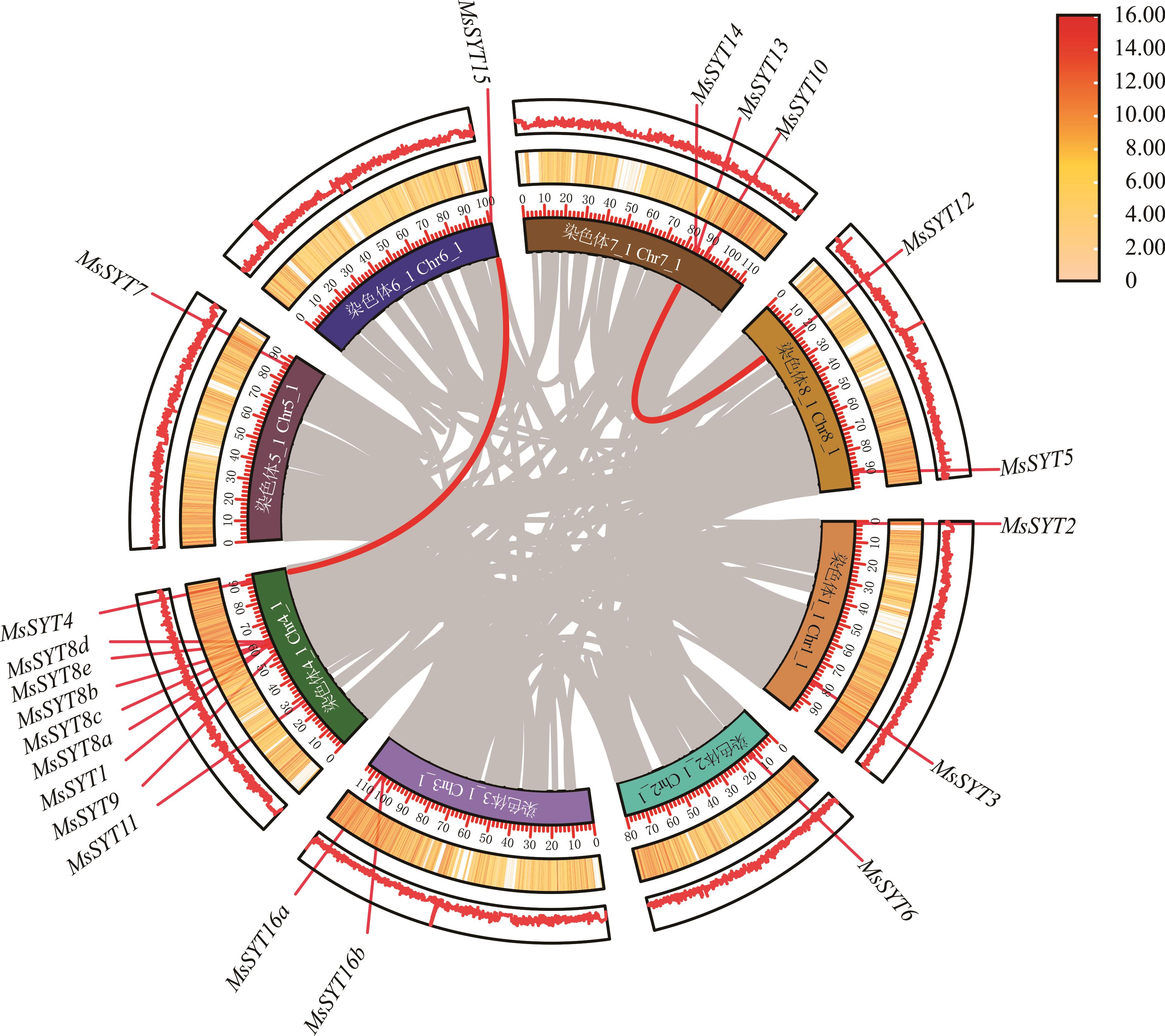
Fig.5 Collinearity analysis of MsSYT gene in M. sativa
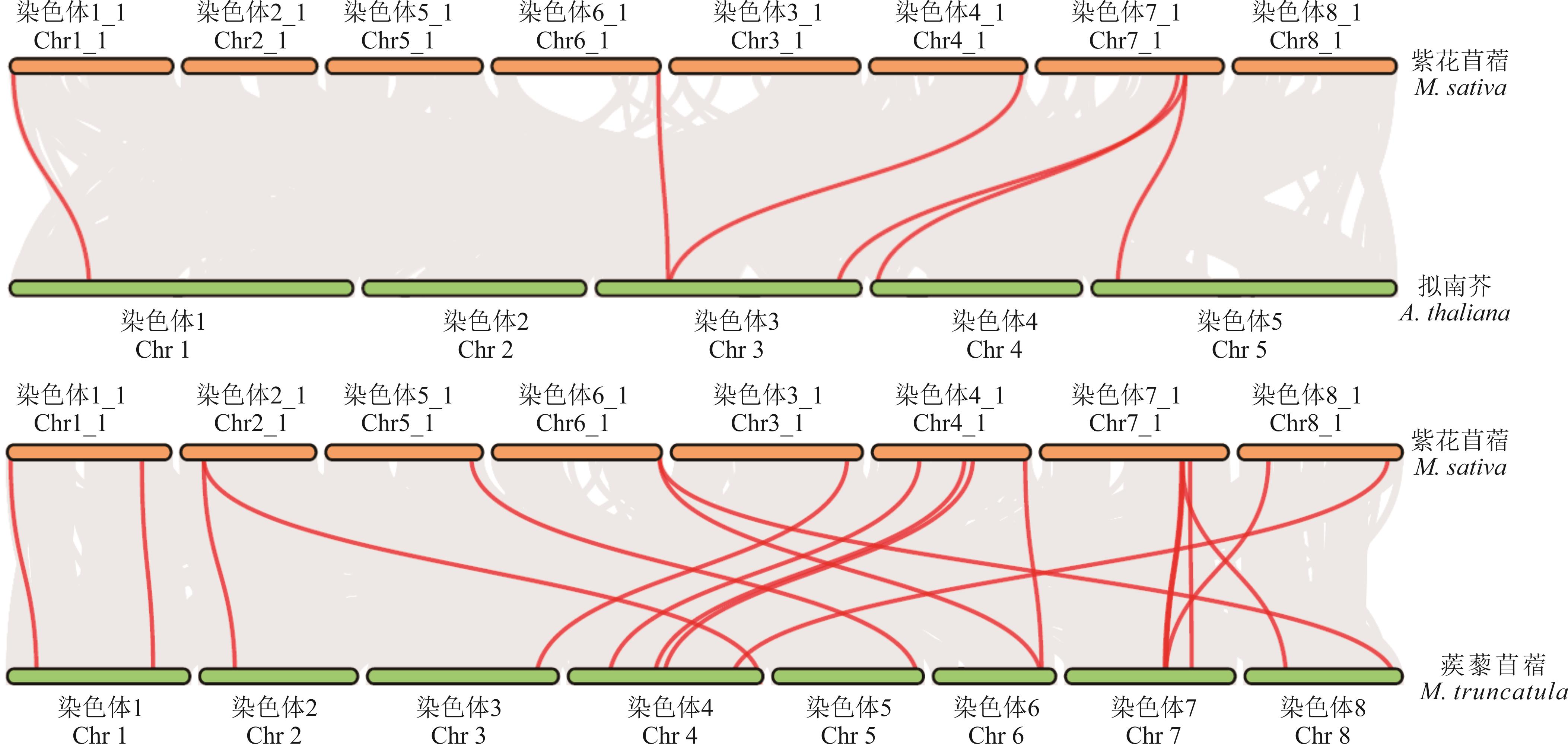
Fig.6 Collinearity analysis of SYT genes in M. sativa, A. thaliana and M. truncatula

Fig.7 Expression pattern of MsSYT gene under drought stress

Fig.8 Expression pattern of MsSYT gene under salt stress
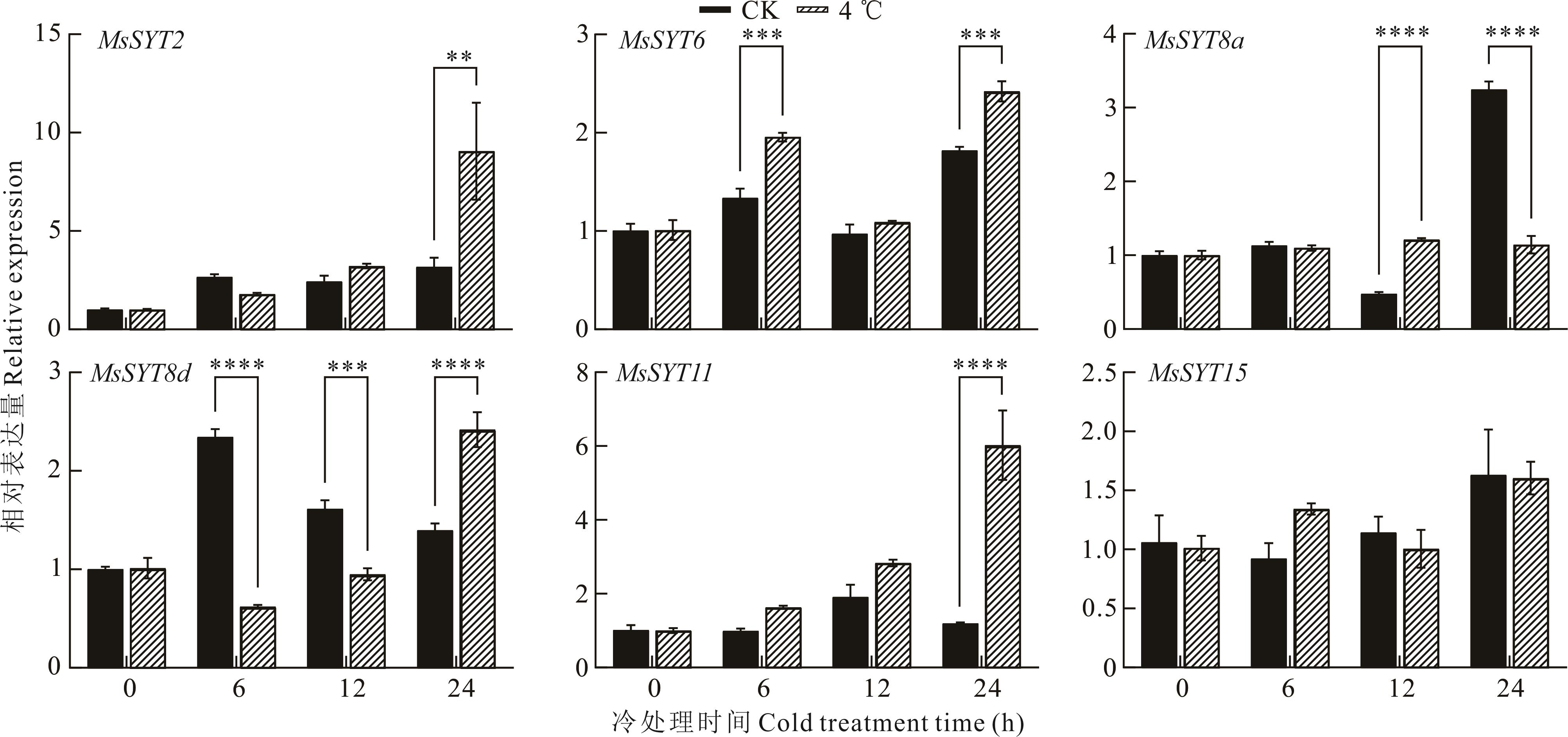
Fig.9 Expression pattern of MsSYT gene under cold stress
| [1] | Hinderliter A K, Almeida P F F, Biltonen R L,et al. Membrane domain formation by calcium-dependent, lipid-binding proteins: Insights from the C2 motif. Biochimica et Biophysica Acta (BBA)-Molecular Cell Research, 1998, 1448(2): 227-235. |
| [2] | Guerrero-Valero M, Marín-Vicente C, Gómez-Fernández J C, et al. The C2 domains of classical PKCs are specific ptdIns (4,5)P2-sensing domains with different affinities for membrane binding. Journal of Molecular Biology, 2007, 371(3): 608-621. |
| [3] | Xiao S P, Wu C C, Zuo D Y, et al. Systematic analysis and comparison of CaLB genes reveal the functions of GhCaLB42 and GhCaLB123 in fiber development and abiotic stress in cotton. Industrial Crops and Products, 2022, 184: 115030. |
| [4] | Nishizuka Y. The molecular heterogeneity of protein kinase C and its implications for cellular regulation. Nature, 1988, 334(6184): 661-665. |
| [5] | Gavrin A, Kulikova O, Bisseling T, et al. Interface symbiotic membrane formation in root nodules of Medicago truncatula: The role of synaptotagmins MtSyt1, MtSyt2 and MtSyt3. Frontiers in Plant Science, 2017, 8: 201. |
| [6] | Zhang D P, Aravind L. Identification of novel families and classification of the C2 domain superfamily elucidate the origin and evolution of membrane targeting activities in eukaryotes. Gene, 2010, 469(1): 18-30. |
| [7] | Benavente J L, Siliqi D, Infantes L, et al. The structure and flexibility analysis of the Arabidopsis synaptotagmin 1 reveal the basis of its regulation at membrane contact sites. Life Science Alliance, 2021, 4(10): e202101152. |
| [8] | Zhang H J, Zeng Y T, Seo J, et al. Global identification and characterization of C2 domain-containing proteins associated with abiotic stress response in rice (Oryza sativa L.). International Journal of Molecular Sciences, 2022, 23(4): 2221. |
| [9] | Schapire A L, Voigt B, Jasik J, et al. Arabidopsis synaptotagmin 1 is required for the maintenance of plasma membrane integrity and cell viability. The Plant Cell, 2008, 20(12): 3374-3388. |
| [10] | Krausko M, Kusá Z, Peterková D, et al. The absence of the AtSYT1 function elevates the adverse effect of salt stress on photosynthesis in Arabidopsis. International Journal of Molecular Sciences, 2022, 23(3): 1751. |
| [11] | Ruiz-Lopez N, Pérez-Sancho J, del Valle A E, et al. Synaptotagmins at the endoplasmic reticulum-plasma membrane contact sites maintain diacylglycerol homeostasis during abiotic stress. The Plant Cell, 2021, 33(7): 2431-2453. |
| [12] | García‐Hernández S, Rubio L, Rivera-Moreno M, et al. Functional and structural analysis reveals distinct biological roles of plant synaptotagmins in response to environmental stress. Plant, Cell & Environment, 2025, 48(1): 260-271. |
| [13] | Wang R Z. The functional ananlysis of CaSYT5 in pepper’s response to Relstionia solanacearum or high-temperature-high-humidity challenge. Fuzhou: Fujian Agriculture and Forestry University, 2017. |
| 王榕樟. CaSYT5在辣椒应答青枯病和高温高湿过程中的功能分析. 福州: 福建农林大学, 2017. | |
| [14] | Sun Q Z, Liu Q, Li F, et al. A brief review of the origin and dissemination of alfalfa. Acta Prataculturae Sinica, 2019, 28(6): 204-212. |
| 孙启忠, 柳茜, 李峰, 等. 苜蓿的起源与传播考述. 草业学报, 2019, 28(6): 204-212. | |
| [15] | Holub E B. The arms race is ancient history in Arabidopsis, the wildflower. Nature Reviews Genetics, 2001, 2(7): 516-527. |
| [16] | Tamura K, Stecher G, Kumar S.MEGA 11: Molecular evolutionary genetics analysis version 11. Molecular Biology and Evolution, 2021, 38(7): 3022-3027. |
| [17] | Bailey T L, Williams N, Misleh C, et al. MEME: Discovering and analyzing DNA and protein sequence motifs. Nucleic Acids Research, 2006, 34: W369-W373. |
| [18] | Lescot M, Déhais P, Thijs G, et al. PlantCARE, a database of plant cis-acting regulatory elements and a portal to tools for in silico analysis of promoter sequences. Nucleic Acids Research, 2002, 30(1): 325-327. |
| [19] | Wang Y, Tang H, DeBarry J D, et al. MCScanX: A toolkit for detection and evolutionary analysis of gene synteny and collinearity. Nucleic Acids Research, 2012, 40(7): e49. |
| [20] | Craxton M. Genomic analysis of synaptotagmin genes. Genomics, 2001, 77(1/2): 43-49. |
| [21] | Benitez-Fuente F, Botella M A. Biological roles of plant synaptotagmins. European Journal of Cell Biology, 2023, 102(3): 151335. |
| [22] | Ishikawa K, Tamura K, Fukao Y, et al. Structural and functional relationships between plasmodesmata and plant endoplasmic reticulum-plasma membrane contact sites consisting of three synaptotagmins. New Phytologist, 2020, 226(3): 798-808. |
| [23] | Lynch M, Conery J S. The evolutionary fate and consequences of duplicate genes. Science, 2000, 290(5494): 1151-1155. |
| [24] | Cannon S B, Mitra A, Baumgarten A, et al. The roles of segmental and tandem gene duplication in the evolution of large gene families in Arabidopsis thaliana. BMC Plant Biology, 2004, 4(1): 10. |
| [25] | Gao B. Response ot the Arabidopsis SYTA to salt stress. Jinan: Shandong Normal University, 2011. |
| 高彬. 拟南芥SYTA基因在盐胁迫响应中的功能研究. 济南: 山东师范大学, 2011. | |
| [26] | Hernandez-Garcia C, Finer J. Identification and validation of promoters and cis-acting regulatory elements. Plant Science, 2013, 217-218: 109-119. |
| [1] | Wen-hui DENG, Xiao-na ZHAO, Jia-yi YONG, Si-yu GUAN, Guo-qiang HU, Teng-fei WANG, Hai-ying HU. Effects of intercropping oat with different densities on alfalfa seed yield and its constituent factors [J]. Acta Prataculturae Sinica, 2026, 35(4): 100-111. |
| [2] | Ping MA, Zhi-guo LIU, Yu-shu SHA, Ya-ling LIU, Xiao-mei TUO, Bing-zhe FU, Xue-qing GAO. Nitrogen utilization characteristics of alfalfa at the seedling stage and screening of nitrogen-efficient varieties [J]. Acta Prataculturae Sinica, 2026, 35(4): 112-123. |
| [3] | Peng-yu TIAN, Yi-ru ZHANG, Xu-kai LI, Min-li SONG. Identification and expression analysis of the SiCCoAOMT gene family in Setaria italica [J]. Acta Prataculturae Sinica, 2026, 35(3): 195-209. |
| [4] | Yu-hua TONG, Xiao-tong WANG, Yong-long MA, Jin-hui YANG, Dong-wen YU, Shu-xia LI. Effects of a chitosan seed soaking treatment on seed germination and growth of alfalfa under saline alkali stress [J]. Acta Prataculturae Sinica, 2026, 35(3): 245-256. |
| [5] | Jian-min DU, Zhan-jun WANG, Wei WANG, Xue-peng MA, Dong-ning LI, Ji-xiang LI. Response of drying rate and nutrient content changes to the main environmental factors during alfalfa natural drying in irrigation areas [J]. Acta Prataculturae Sinica, 2026, 35(2): 131-142. |
| [6] | Zhao-ming WANG, Li-na ZHENG, Yue-hua ZHANG, Wei ZHAO, Xiang CHEN, Zhen-yu JIA. Bacterial community assembly in the rhizosphere and endosphere of different perennial alfalfa varieties with low fall dormancy rates [J]. Acta Prataculturae Sinica, 2026, 35(2): 195-207. |
| [7] | Ji-yuan ZHANG, Hai-quan AN, Jing-yi PAN, Chang LIU, Si-si LONG, Li-li ZHAO. Drought resistance evaluation of seed germination and seedling growth of seven alfalfa cultivars [J]. Acta Prataculturae Sinica, 2026, 35(2): 68-82. |
| [8] | Jia-le LIU, Juan QI, Wen-liang LI, Xin LU, Qi YUAN, Ming-jie LI, Ao-long ZHANG, Wang-yi DU. Identification and expression analysis of EsJRL genes in Elymus sibiricus [J]. Acta Prataculturae Sinica, 2026, 35(1): 206-222. |
| [9] | Hong-qian YU, Xue-peng MA, Han-guo ZENG, Xiao-yan SHAN, Man-li LI, Zhan-jun WANG. Effects of the amount and timing of subsurface drip irrigation on alfalfa seed production [J]. Acta Prataculturae Sinica, 2026, 35(1): 53-64. |
| [10] | Wei-peng ZOU, Yi LIU, Jia-xing ZHAI, Si-yi ZHOU, Zhi-yi GONG, Hui-fang CEN, Hui-sen ZHU, Tao XU. Cloning of MsNAC053 from alfalfa and analysis of its transcript profile in response to abiotic stresses [J]. Acta Prataculturae Sinica, 2025, 34(9): 121-133. |
| [11] | Ran XIAN, Yu DENG, Qiu-yue FU, Jing-xia JIANG, Jia-li TAO, Tao XU, Hui-sen ZHU, Hui-fang CEN. Cloning of alfalfa MsMYB86 and analysis of its transcriptional response to abiotic stress [J]. Acta Prataculturae Sinica, 2025, 34(9): 162-172. |
| [12] | Yi-xin LIU, Xiao-qing SUI, Xin-yao WANG, Meng-qing LANG, Ling-zi-yin SUN, Er-ge JIER. Mitigating effects of exogenous melatonin on alfalfa under salt stress [J]. Acta Prataculturae Sinica, 2025, 34(9): 206-214. |
| [13] | Ning CHEN, Feng-xuan BAO, Hui-xiang ZHAO, Nan WANG, Ru-yu JIANG, Guo-liang LI, Xiang-ping LIU, Shan-min QU, Wei-guang YANG. Physiological characteristics of the alfalfa root collar during overwintering under soda saline-alkali stress in cold areas [J]. Acta Prataculturae Sinica, 2025, 34(9): 78-86. |
| [14] | Hua-ying DU, Yu-zhou ZHANG, Nan ZHAO, Yan HU, Yi-dong WANG, Teng-da LIU, Pei-wen GU, Ze-yang YU. Trichoderma asperellum bai5 inhibits root rot pathogens of alfalfa (Medicago sativa) and promotes alfalfa plant growth [J]. Acta Prataculturae Sinica, 2025, 34(8): 179-190. |
| [15] | Yi-yin ZHANG, Bin WANG, Teng-fei WANG, Jian LAN, Hai-ying HU. Effects of intercropping triticale with alfalfa on system yield, resource utilization, and alfalfa seed yield [J]. Acta Prataculturae Sinica, 2025, 34(8): 43-53. |
| Viewed | ||||||
|
Full text |
|
|||||
|
Abstract |
|
|||||
