
ISSN 1004-5759 CN 62-1105/S
Acta Prataculturae Sinica ›› 2026, Vol. 35 ›› Issue (4): 42-53.DOI: 10.11686/cyxb2025269
Previous Articles Next Articles
Meng-qi LI1( ), Quan-min DONG1,2, Cai-cai SUN1, Wei-dong LYU1, Wei XU1, Yu-zhen LIU1,2, Wen-ting LIU1,2, Xiao-xia YANG1,2()
Received:2025-07-01
Revised:2025-08-28
Online:2026-04-20
Published:2026-02-07
Contact:
Xiao-xia YANG
Meng-qi LI, Quan-min DONG, Cai-cai SUN, Wei-dong LYU, Wei XU, Yu-zhen LIU, Wen-ting LIU, Xiao-xia YANG. Effects of summer decomposition of yak and Xizang sheep dung on soil nutrients in the Peri-Qinghai Lake Region[J]. Acta Prataculturae Sinica, 2026, 35(4): 42-53.
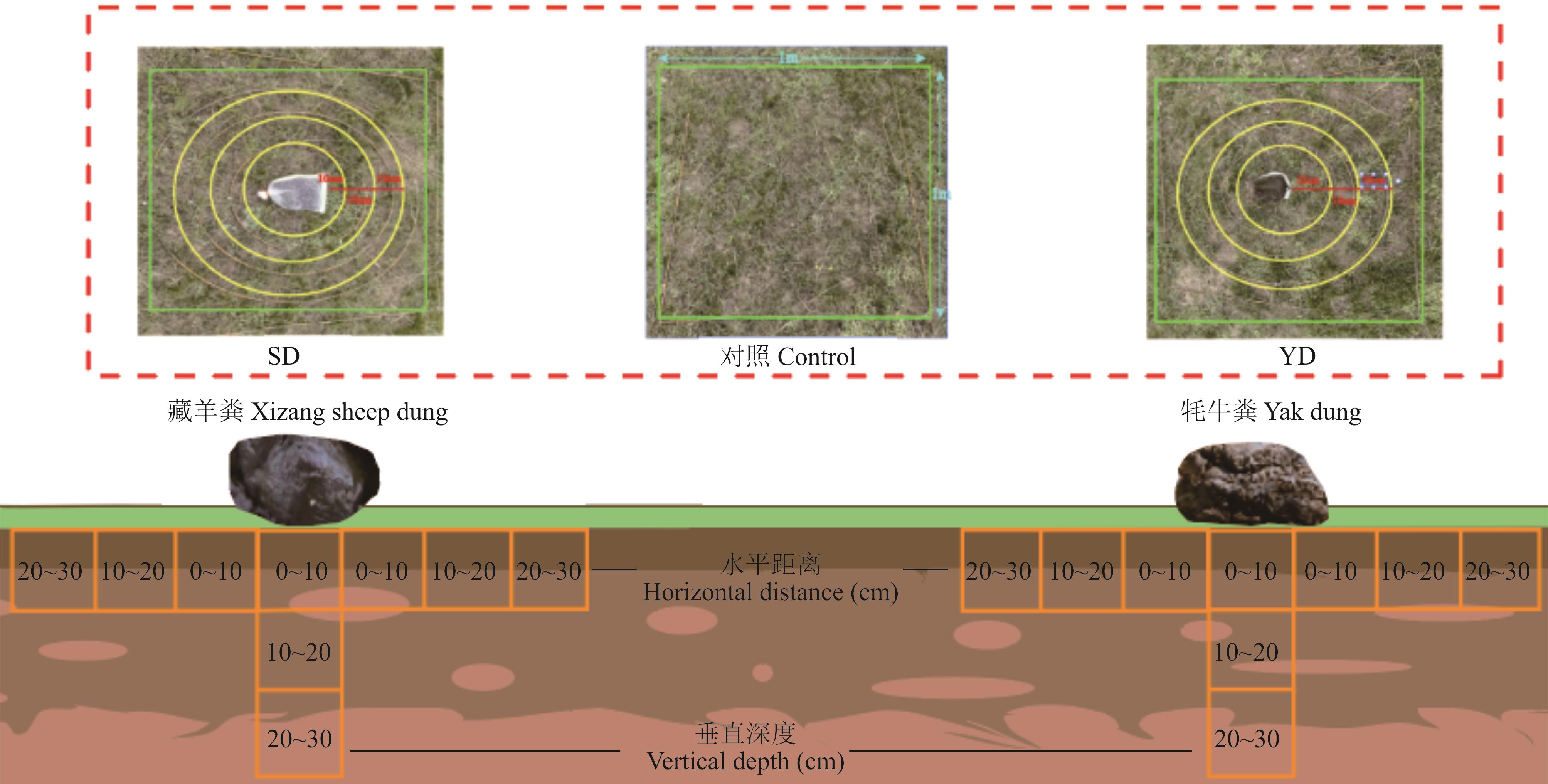
Fig.1 Schematic diagram of soil sampling in the vertical and horizontal directions
项目 Item | 全碳含量Total carbon content (g·kg-1) | 全氮含量Total nitrogen content (g·kg-1) | 全磷含量Total phosphorus content (g·kg-1) | 干基含水率Dry basis moisture content (%) |
|---|---|---|---|---|
| 牦牛粪Yak dung | 333.39±2.74A | 22.25±0.63A | 6.95±0.10B | 387.71 |
| 藏羊粪Xizang sheep dung | 311.41±1.93B | 15.51±0.53B | 7.47±0.15A | 173.75 |
| 0~10 cm土壤深度Soil depth | 39.55±0.82a | 2.11±0.04a | 0.60±0.01a | |
| 10~20 cm土壤深度Soil depth | 35.31±0.82b | 1.53±0.05b | 0.54±0.01b | |
| 20~30 cm土壤深度Soil depth | 33.93±0.51b | 0.92±0.07c | 0.44±0.01c |
Table 1 Initial values of nutrient content in yak and Xizang sheep dung and soil
项目 Item | 全碳含量Total carbon content (g·kg-1) | 全氮含量Total nitrogen content (g·kg-1) | 全磷含量Total phosphorus content (g·kg-1) | 干基含水率Dry basis moisture content (%) |
|---|---|---|---|---|
| 牦牛粪Yak dung | 333.39±2.74A | 22.25±0.63A | 6.95±0.10B | 387.71 |
| 藏羊粪Xizang sheep dung | 311.41±1.93B | 15.51±0.53B | 7.47±0.15A | 173.75 |
| 0~10 cm土壤深度Soil depth | 39.55±0.82a | 2.11±0.04a | 0.60±0.01a | |
| 10~20 cm土壤深度Soil depth | 35.31±0.82b | 1.53±0.05b | 0.54±0.01b | |
| 20~30 cm土壤深度Soil depth | 33.93±0.51b | 0.92±0.07c | 0.44±0.01c |
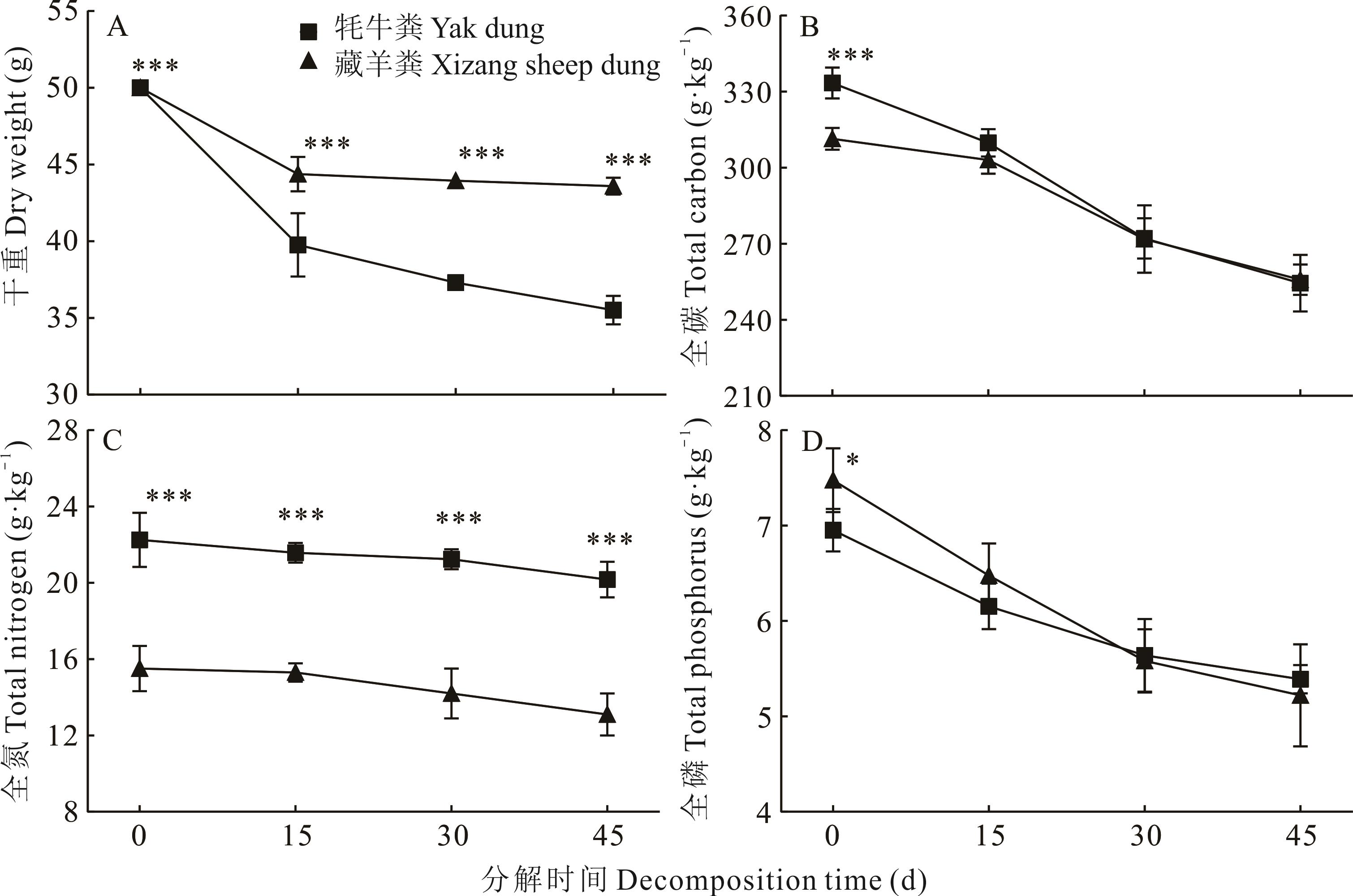
Fig.2 Nutrient variations in two fecal types under different decomposition periods

Fig.3 Response of soil nutrients to treatment, decomposition time, and soil depth
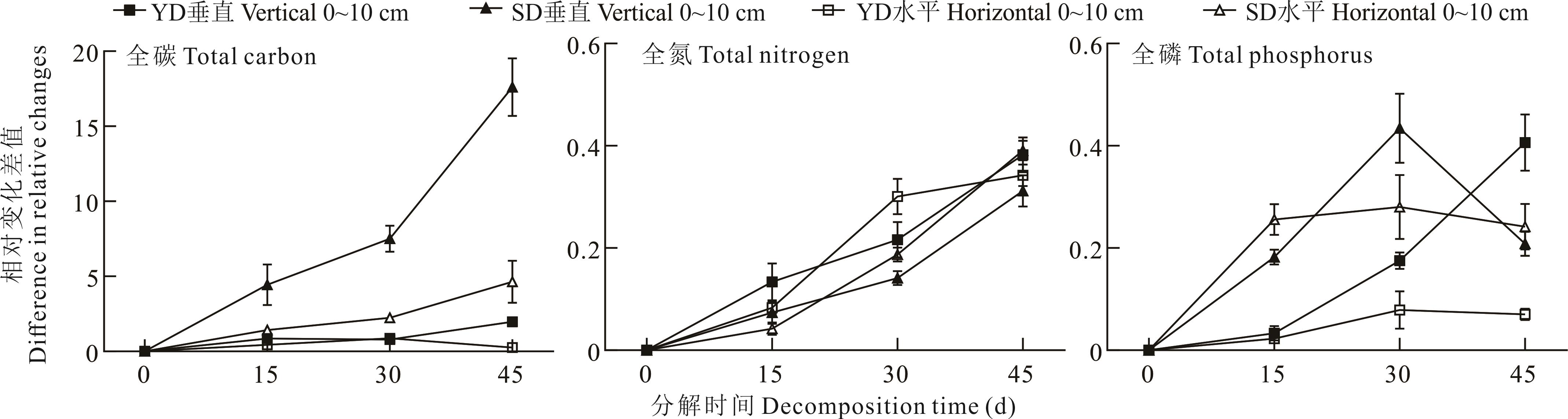
Fig.4 Inter-treatment differences in relative changes of surface soil nutrient
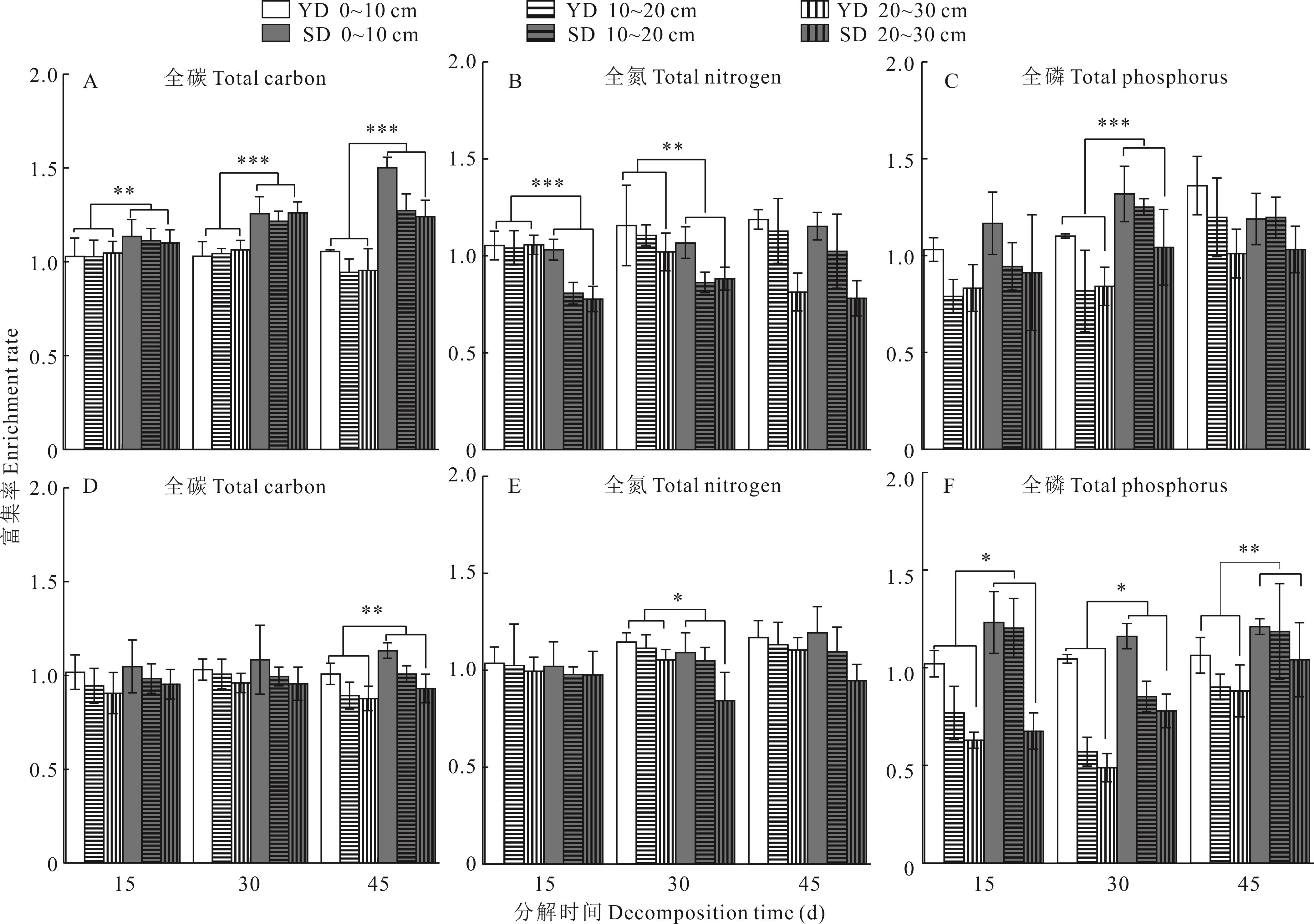
Fig.5 Treatment- and layer-specific changes in soil nutrient enrichment during decomposition
| [1] | Zhang Y J, Zhu J T, Shen R N, et al. Research progress on the effects of grazing on grassland ecosystem. Chinese Journal of Plant Ecology, 2020, 44(5): 553-564. |
| 张扬建, 朱军涛, 沈若楠, 等. 放牧对草地生态系统影响的研究进展. 植物生态学报, 2020, 44(5): 553-564. | |
| [2] | Dong S K, Shang Z H, Gao J X, et al. Enhancing sustainability of grassland ecosystems through ecological restoration and grazing management in an era of climate change on Qinghai-Tibetan Plateau. Agriculture Ecosystems and Environment, 2019, 287(C): 106684. |
| [3] | Willott J S, Miller J A, Incoll D L, et al. The contribution of rabbits (Oryctolagus cuniculus L.) to soil fertility in semi-arid spain. Biology and Fertility of Soils, 2000, 31(5): 379-384. |
| [4] | Gao Z Y, Wang H Y, Zhang Y F. Soil carbon, nitrogen and phosphorus stoichiometric characteristics and driving factors: a review. Journal of Zhejiang A & F University, 2025, 42(3): 645-656. |
| 高子滢, 王海燕, 张亦凡. 土壤碳氮磷化学计量特征及其驱动因素. 浙江农林大学学报, 2025, 42(3): 645-656. | |
| [5] | Jiang S C, Zhou D W. The impact of cattle dung deposition on grasslands in the Songnen Grassland. Acta Prataculturae Sinica, 2006, 15(4): 30-35. |
| 姜世成, 周道玮. 牛粪堆积对草地影响的研究. 草业学报, 2006, 15(4): 30-35. | |
| [6] | Wang C H, Xing X R, Han X G. Advances in study of factors affecting soil N mineralization in grassland ecosystems. Chinese Journal of Applied Ecology, 2004, 15(11): 2184-2188. |
| 王常慧, 邢雪荣, 韩兴国. 草地生态系统中土壤氮素矿化影响因素的研究进展. 应用生态学报, 2004, 15(11): 2184-2188. | |
| [7] | Liu X M, Chen H Y, Zheng R, et al. Decomposition of sheep and cattle dung in a steppe in Inner Mongolia, China. Chinese Journal of Applied and Environmental Biology, 2011, 17(6): 791-796. |
| 刘新民, 陈海燕, 峥嵘, 等. 内蒙古典型草原羊粪和牛粪的分解特征. 应用与环境生物学报, 2011, 17(6): 791-796. | |
| [8] | Liu X M. Assemblage characteristics of dung beetles in livestock dung in Inner Mongolian typical steppe. Chinese Journal of Ecology, 2011, 30(1): 24-29. |
| 刘新民. 内蒙古典型草原家畜粪中的粪金龟子群落特征. 生态学杂志, 2011, 30(1): 24-29. | |
| [9] | Zhang Z Y, Zhang S T. Effects of yak dung deposition on soil enzyme activities in an alpine meadow in the Tibetan Plateau. Pratacultural Science, 2021, 38(5): 803-811. |
| 张志阳, 张世挺. 牦牛粪沉积对青藏高原高寒草甸土壤酶活性的影响. 草业科学, 2021, 38(5): 803-811. | |
| [10] | Zhao Y, Li S Y, Dong B W, et al. Effects of fresh sheep manure addition on vegetation and soil characteristics of moderately saline-alkali degraded Leymus chinensis grassland. Chinese Journal of Grassland, 2023, 45(9): 57-65. |
| 赵宇, 李思宇, 董博文, 等. 鲜羊粪添加对中度盐碱退化羊草草地植被及土壤特征的影响. 中国草地学报, 2023, 45(9): 57-65. | |
| [11] | Sun P F. Research progress on the impacts of yak dung deposition from grazing on grassland-based animal husbandry. China Animal Industry, 2021, 7(2): 57. |
| 孙鹏飞. 放牧牦牛粪对草地畜牧业影响研究进展. 中国畜牧业, 2021, 7(2): 57. | |
| [12] | Wang J L, Cao W X, Li W. Response of foraging preference of Tibetan sheep to forage plants in different topographies on Qilian Mountains. Acta Ecologica Sinica, 2024, 44(16): 7213-7225. |
| 王金兰, 曹文侠, 李文. 祁连山不同地形饲用植物对藏羊偏食性的影响. 生态学报, 2024, 44(16): 7213-7225. | |
| [13] | Illius A W, Gordon I J. The allometry of food intake in grazing ruminants. Journal of Animal Ecology, 1987, 56(3): 989-999. |
| [14] | Du Z Y, Cai Y J, Wang X D, et al. Temporal variation of yak and Tibetan sheep dung nutrients from an alpine steppe in northern Tibet, China. Mountain Research, 2014, 32(4): 423-430. |
| 杜子银, 蔡延江, 王小丹, 等. 牦牛和藏绵羊粪便降解过程中的养分动态变化. 山地学报, 2014, 32(4): 423-430. | |
| [15] | Cao J M, Guo Y Y, Li N N, et al. Effects of dung beetles on characteristics of nutrient changes in cattle and horse feces and soil in Seirphidium semidesert. Chinese Journal of Grassland, 2021, 43(2): 75-81, 114. |
| 曹佳敏, 郭亚亚, 李娜娜, 等. 绢蒿荒漠粪甲虫对牛粪、马粪分解及粪下土壤养分的影响. 中国草地学报, 2021, 43(2): 75-81, 114. | |
| [16] | Huang C, Yan P, Liang C N. Current status and development directions of the yak breeding industry in China. Chinese Livestock and Poultry Breeding, 2023, 19(7): 121-127. |
| 黄纯, 阎萍, 梁春年. 中国牦牛种业现状与发展方向. 中国畜禽种业, 2023, 19(7): 121-127. | |
| [17] | Lyu W D, Dong Q M, Sun C C, et al. Effects of yak and Tibetan sheep grazing on the nitrogen pool of plant communities of alpine grasslands in the Qinghai-Tibetan Plateau. Acta Agrestia Sinica, 2024, 32(5): 1420-1428. |
| 吕卫东, 董全民, 孙彩彩, 等. 牦牛和藏羊放牧对青藏高原高寒草地植物群落氮库的影响. 草地学报, 2024, 32(5): 1420-1428. | |
| [18] | Sun C C, An H T, Dong Q M, et al. Responses of soil microbial activity to grazing intensity in alpine grasslands of Qinghai-Tibetan Plateau. Chinese Journal of Ecology, 2024, 44(9): 2930-2937. |
| 孙彩彩, 安海涛, 董全民, 等. 青藏高原高寒草地土壤微生物活性对放牧强度的响应. 生态学杂志, 2024, 44(9): 2930-2937. | |
| [19] | Du Z Y, Wang X D, Hong J T, et al. Effects of seasonal freeze-thaw cycles and livestock excreta returning on soil physical properties, and nitrogen and phosphorus dynamics in alpine grassland. Mountain Research, 2022, 40(1): 29-42. |
| 杜子银, 王小丹, 洪江涛, 等. 冻融及牲畜排泄物作用下的高寒草地土壤物理特性和氮磷变化. 山地学报, 2022, 40(1): 29-42. | |
| [20] | Shen Y L. Study on optical measurement method of leaf moisture content of lettuce. Zhengzhou: Hebei Agricultural University, 2019. |
| 申艳路. 生菜叶片含水率光学测量方法研究. 郑州: 河北农业大学, 2019. | |
| [21] | Ren X, Chu G X, Song R Q, et al. The characteristics of “fertile island” on Haloxylon ammodendron at an oasis-desert ecotone in the south edge of Junggar Basin. Chinese Journal of Soil Science, 2010, 41(1): 100-104. |
| 任雪, 褚贵新, 宋日权, 等. 准噶尔盆地南缘绿洲——荒漠过渡带梭梭“肥岛”效应特征. 土壤通报, 2010, 41(1): 100-104. | |
| [22] | Wan J X, Wang X F, Yang T J, et al. Livestock manure type affects microbial community composition and assembly during composting. Frontiers in Microbiology, 2021, 12: 621126. |
| [23] | Wu X W, Li G Y, Sun S C. Effect of rainfall regimes on the decomposition rate of yak dung in an alpine meadow of northwest Sichuan Province, China. Acta Ecologica Sinica, 2011, 31(23): 28-36. |
| 吴新卫, 李国勇, 孙书存. 降水量对川西北高寒草甸牦牛粪分解速率的影响. 生态学报, 2011, 31(23): 28-36. | |
| [24] | Williams P H, Haynes R J. Effect of sheep, deer and cattle dung on herbage production and soil nutrient content. Grass and Forage Science, 1995, 50(3): 263-271. |
| [25] | Wachendorf C, Lampe C, Taube F, et al. Nitrous oxide emissions and dynamics of soil nitrogen under 15^N‐labeled cow urine and dung patches on a sandy grassland soil. Journal of Plant Nutrition and Soil Science, 2008, 171(2): 171-180. |
| [26] | Ran X L, Deng Y, Sai N G, et al. Hotspots and future trends of phosphorus recycling from livestock manure: A bibliometric review. The Science of the Total Environment, 2023, 892: 164346. |
| [27] | Kong Y Y, Yu Y W, Hou F J. Interspecific associations in plant communities under yak dung depositions in an alpine meadow. Acta Prataculturae Sinica, 2017, 26(3): 44-52. |
| 孔杨云, 于应文, 侯扶江. 牦牛粪沉积下高寒草甸植物群落种间关联研究. 草业学报, 2017, 26(3): 44-52. | |
| [28] | Nargiza G L, Xiao Y X, Song B Y, et al. Effects of “fertile island” effects of desert plants on spatial distribution of soil nutrients. Bulletin of Botanical Research, 2023, 43(6): 868-880. |
| 阿力甫那尔格孜, 肖钰鑫, 宋泊沂, 等. 荒漠植物“肥岛”效应对土壤养分空间分布的影响. 植物研究, 2023, 43(6): 868-880. | |
| [29] | MacDiarmid B N, Watkin B R. The cattle dung patch. 2. Effect of a dung patch on chemical status of soil, and ammonia nitrogen losses from patch. Journal of the British Grassland Society, 1972, 27(1): 43-48. |
| [30] | Sager M. Trace and nutrient elements in manure, dung and compost samples in Austria. Soil Biology & Biochemistry, 2006, 39(6): 1383-1390. |
| [31] | Aarons R S, O'Connor R C, Gourley P J C. Dung decomposition in temperate dairy pastures. I. Changes in soil chemical properties. Soil Research, 2004, 42(1): 107-114. |
| [32] | Finzi A, Mattachini G, Lovarelli D, et al. Technical, economic, and environmental assessment of a collective integrated treatment system for energy recovery and nutrient removal from livestock manure. Sustainability, 2020, 12(7): 2756. |
| [1] | Yi-xin SONG, Ming-yuan LI, Ya-sheng MAIRIYANGU, Ji-lian WANG. The community structure and functional diversity of rhizosphere soil fungi of three plant species in the alpine grassland of Xinjiang [J]. Acta Prataculturae Sinica, 2026, 35(2): 167-178. |
| [2] | Dong-ya LIU, Yan YANG, Jing LIU, Bo WANG, Zhi-gang LI. Effects of short-term sheep manure return on soil quality of desert steppe [J]. Acta Prataculturae Sinica, 2026, 35(2): 28-39. |
| [3] | Bin FENG, Xiao-xia YANG, Yu-zhen LIU, Wen-ting LIU, Wei-dong LYU, Yan-fen ZHANG, Quan-min DONG. Effects of different livestock classes on species diversity, niches, and interspecific associations in alpine grassland [J]. Acta Prataculturae Sinica, 2025, 34(8): 1-14. |
| [4] | Kun ZHANG, Jian-xia QIAO, Jin-sheng LI, Yu-peng WANG, Ke-si LIU. Effects of different restoration materials on soil physicochemical properties and microbial communities in degraded alpine grassland [J]. Acta Prataculturae Sinica, 2025, 34(8): 132-148. |
| [5] | Bing-shu ZHU, Jiang-wen FAN, Hai-yan ZHANG, Lin HUANG, Hai-jing TIAN, Lin WANG, Shou-xing WANG, Ming-xin YANG, Yan-ming GUO. Grassland health assessment of alpine grassland in the Yellow River Source Park of Three-Rivers Headwaters National Park [J]. Acta Prataculturae Sinica, 2025, 34(7): 13-27. |
| [6] | Shun-hua LUO, Xin-yu LIU, Bao-ping MENG, Xuan-li CHEN, Ren-jie HU, Hong-yan YU, Xian-ying WANG, Bo ZHANG, Yu QIN. A study of functional group diversity and productivity of alpine grassland in Qilian Mountain National Park [J]. Acta Prataculturae Sinica, 2025, 34(6): 14-26. |
| [7] | Shu-qi LIU, Dong CUI, Wen-xin LIU, Hai-jun YANG, Yan-cheng YANG, Zhi-cheng JIANG, Jiang-chao YAN, Jiang-hui LIU. Effects of short-term nitrogen addition, watering, and mowing on plant community characteristics and soil physicochemical properties in Sophora alopecuroides degraded grassland [J]. Acta Prataculturae Sinica, 2025, 34(3): 41-55. |
| [8] | Li-li MA, Fu-zhen JIANG, Yu-shou MA, Kai-bin QI, Shun-bin JIA, Zheng-peng LI. Effect of particle size ratio, fertilizer application amount, and seeding rate combinations coal gangue matrix properties in restoration of a mining area [J]. Acta Prataculturae Sinica, 2025, 34(3): 71-84. |
| [9] | Cong HE, Yong-cai MA, Hong-biao ZI. Effects of the duration of grazing exclusion on plant communities in alpine grassland [J]. Acta Prataculturae Sinica, 2025, 34(11): 17-30. |
| [10] | Xiao-qian LU, Jin-lu CHEN, Wei-jun YANG, Qing-yun GUO, Dan-li WANG, Hong-mei ZHAO. Effects of nitrogen fertilizer reduction combined with humic acid on soil fungal communities in drip irrigated maize fields in northern Xinjiang [J]. Acta Prataculturae Sinica, 2025, 34(10): 120-131. |
| [11] | Sheng-wei JIN, Yin-cang HAN, Yong-gang SUN, Wei-qin DING, Ya-qian LIU, Zeng-yuan QI, Jian-qiang ZHOU. Effects of different feeding methods on growth performance and blood physiological and biochemical indexes of yaks [J]. Acta Prataculturae Sinica, 2025, 34(1): 215-225. |
| [12] | De-yu YANG, Wen-zhi HUANG, Yu-zhe FENG, Bin XUE, Xiao-wei ZHANG, Zhan-hong CUI. Effects of mineral salt brick supplementation in the warm season on growth performance, rumen fermentation, blood, and hair mineral content of grazing yaks [J]. Acta Prataculturae Sinica, 2024, 33(7): 105-118. |
| [13] | Ling-ling XU, Ben NIU, Xian-zhou ZHANG, Yong-tao HE, Pei-li SHI, Ning ZONG, Jian-shuang WU, Xiang-tao WANG. Climate responses of carbon fluxes in two adjacent alpine grasslands in northern Tibet [J]. Acta Prataculturae Sinica, 2024, 33(6): 1-16. |
| [14] | Wei-qin DING, Yong-gang SUN, Yin-cang HAN, Ya-qian LIU, Sheng-wei JIN. Identification and analysis of miRNAs in subcutaneous fat tissue of yaks [J]. Acta Prataculturae Sinica, 2024, 33(6): 227-235. |
| [15] | Sheng-ran HE, Xiao-jing LIU, Ya-jiao ZHAO, Xue WANG, Jing WANG. Effects of alfalfa/sweet sorghum intercropping on rhizosphere soil characteristics and microbial community characteristics [J]. Acta Prataculturae Sinica, 2024, 33(5): 92-105. |
| Viewed | ||||||
|
Full text |
|
|||||
|
Abstract |
|
|||||
