
ISSN 1004-5759 CN 62-1105/S
Acta Prataculturae Sinica ›› 2026, Vol. 35 ›› Issue (11): 1-12.DOI: 10.11686/cyxb2025489
Guo-liang YU1,2,3( ), Shang-jian YANG1,2,3, Jian-cheng WANG1,2,3, Xi-yong WANG1,2,3()
Received:2025-12-02
Revised:2026-01-05
Online:2026-11-20
Published:2026-10-12
Contact:
Xi-yong WANG
Guo-liang YU, Shang-jian YANG, Jian-cheng WANG, Xi-yong WANG. Characterization of grassland species diversity, phylogenetic diversity and factors influencing them in Hejing County, Xinjiang[J]. Acta Prataculturae Sinica, 2026, 35(11): 1-12.

Fig.1 Information on sampling places in Hejing County
草地类型 Grassland type | 优势物种(重要值) Dominant species (important value) |
|---|---|
荒漠草原 Desert steppe | 狭叶锦鸡儿C. stenophylla(4.3)、锐枝木蓼Atraphaxis pungens(3.7)、羊茅F. ovina(3.2)、紫菀木Asterothamnus alyssoides(3.1)、驼绒藜Krascheninnikovia ceratoides(3.0) |
河漫滩草甸 River floodplain meadow | 新疆苔草Carex turkestanica(8.9)、芨芨草Neotrinia splendens(8.7)、早熟禾Poa annua(7.9)、大叶橐吾Ligularia macrophylla(7.6)、冰草Agropyron cristatum(6.9) |
林缘草甸 Forest edge meadow | 阿尔泰独尾草Eremurus altaicus(3.8)、掌叶大黄Rheum palmatum(3.7)、针茅Stipa capillata(3.0)、黄唐松草Thalictrum flavum(2.9)、地榆Sanguisorba officinalis(2.7) |
亚高山草甸 Subalpine meadow | 新疆苔草C. turkestanica(5.3)、羊茅F. ovina(4.8)、珠芽蓼Bistorta vivipara(4.4)、冰草A. cristatum(4.3)、鬼箭锦鸡儿C. jubata(4.1) |
高山草甸 Alpine meadow | 新疆苔草C. turkestanica(7.8)、早熟禾P. annua(5.0)、鬼箭锦鸡儿C. jubata(4.8)、黄白火绒草Leontopodium ochroleucum(4.6)、珠芽蓼B. vivipara(3.2) |
Table 1 Dominant species and important values of grassland communities in Hejing County
草地类型 Grassland type | 优势物种(重要值) Dominant species (important value) |
|---|---|
荒漠草原 Desert steppe | 狭叶锦鸡儿C. stenophylla(4.3)、锐枝木蓼Atraphaxis pungens(3.7)、羊茅F. ovina(3.2)、紫菀木Asterothamnus alyssoides(3.1)、驼绒藜Krascheninnikovia ceratoides(3.0) |
河漫滩草甸 River floodplain meadow | 新疆苔草Carex turkestanica(8.9)、芨芨草Neotrinia splendens(8.7)、早熟禾Poa annua(7.9)、大叶橐吾Ligularia macrophylla(7.6)、冰草Agropyron cristatum(6.9) |
林缘草甸 Forest edge meadow | 阿尔泰独尾草Eremurus altaicus(3.8)、掌叶大黄Rheum palmatum(3.7)、针茅Stipa capillata(3.0)、黄唐松草Thalictrum flavum(2.9)、地榆Sanguisorba officinalis(2.7) |
亚高山草甸 Subalpine meadow | 新疆苔草C. turkestanica(5.3)、羊茅F. ovina(4.8)、珠芽蓼Bistorta vivipara(4.4)、冰草A. cristatum(4.3)、鬼箭锦鸡儿C. jubata(4.1) |
高山草甸 Alpine meadow | 新疆苔草C. turkestanica(7.8)、早熟禾P. annua(5.0)、鬼箭锦鸡儿C. jubata(4.8)、黄白火绒草Leontopodium ochroleucum(4.6)、珠芽蓼B. vivipara(3.2) |
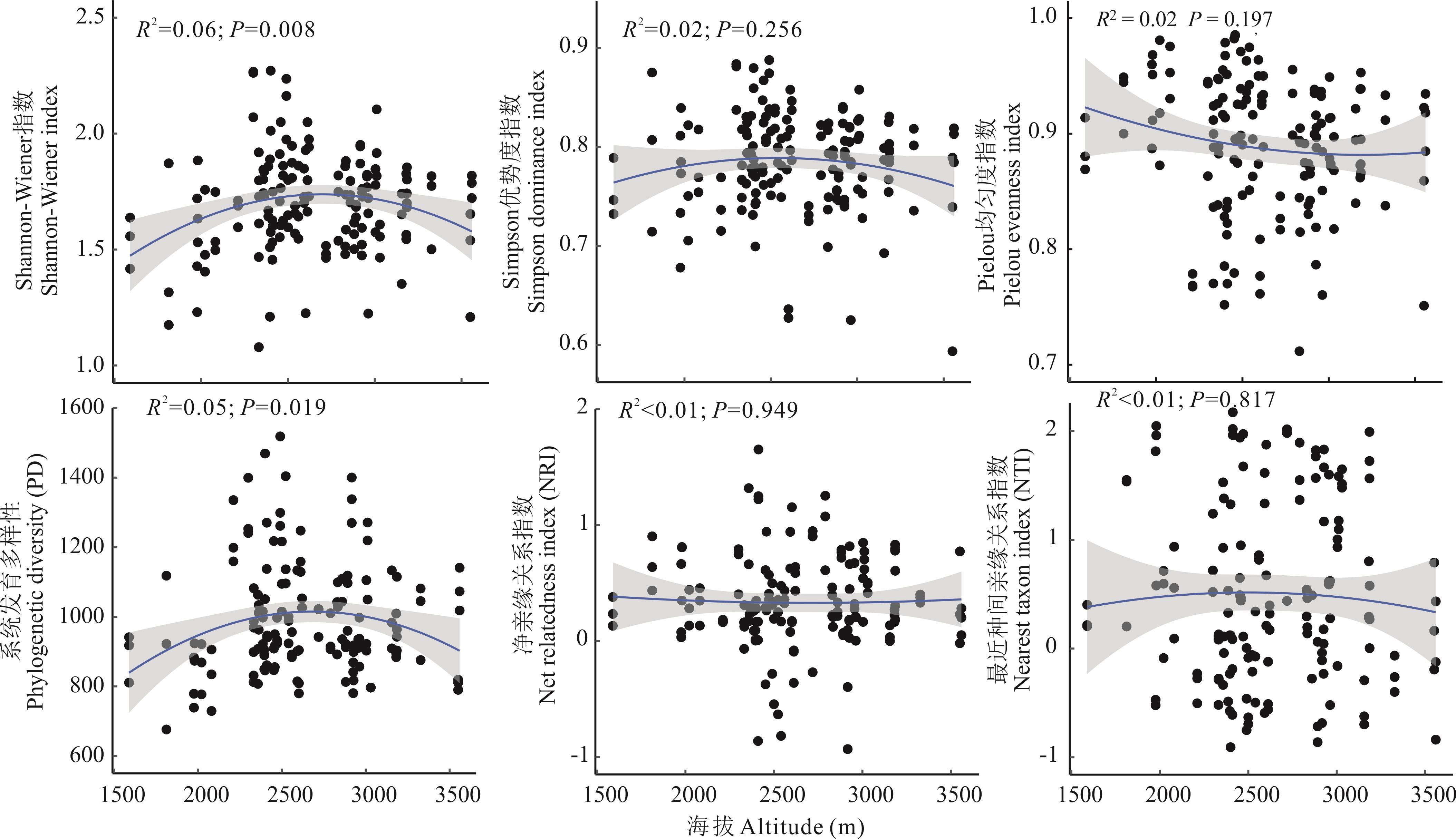
Fig.2 Elevation characteristics of species diversity and phylogenetic diversity
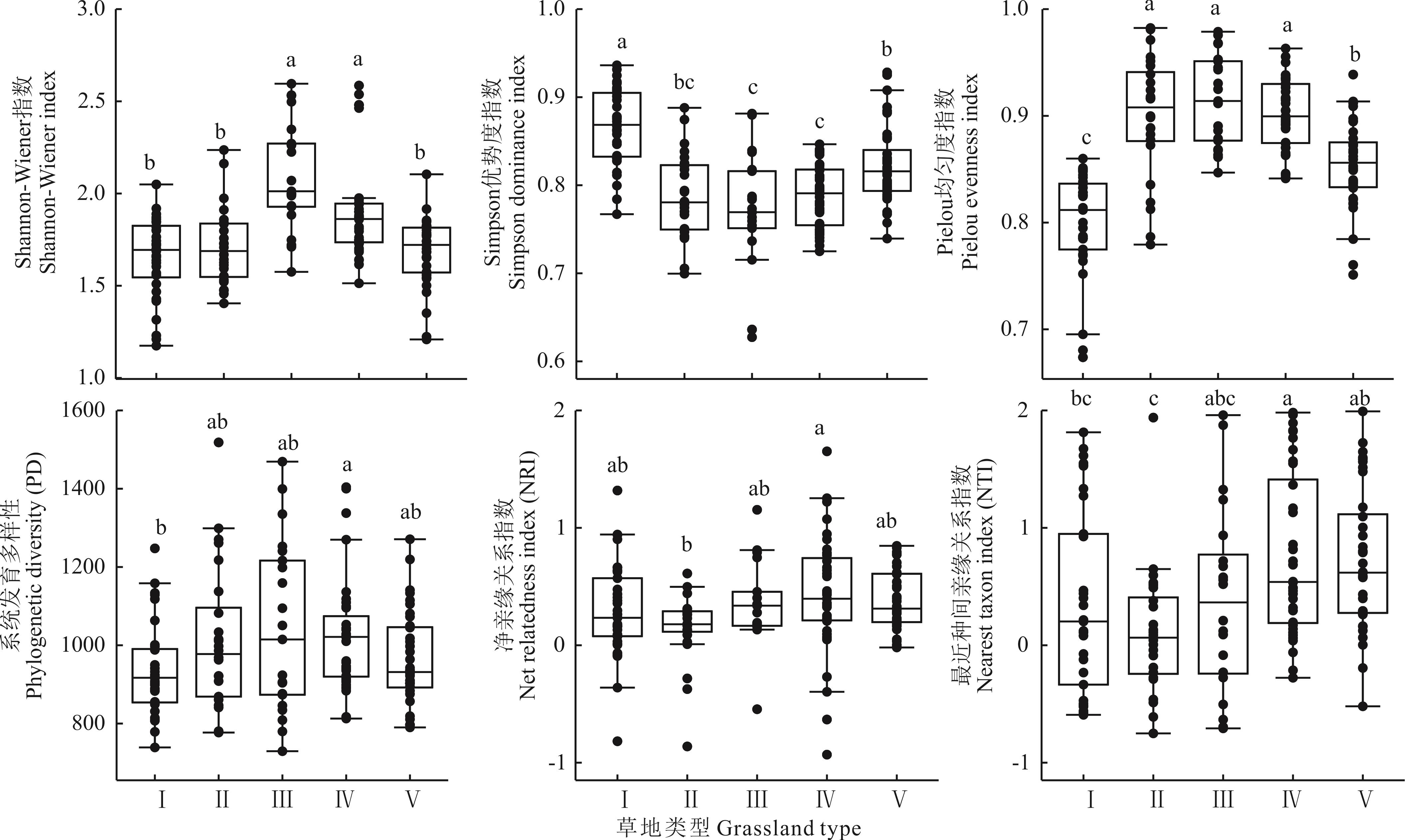
Fig.3 Characteristics of species diversity and phylogenetic diversity of different types of grasslands
变异来源 Source of variation | S-W | Simpson | Pielou | ||||||
|---|---|---|---|---|---|---|---|---|---|
离差平方和 Sum of squares (SS) | 均方 Mean square (MS) | F值 F value | 离差平方和 Sum of squares (SS) | 均方 Mean square (MS) | F值 F value | 离差平方和 Sum of squares (SS) | 均方 Mean square (MS) | F值 F value | |
| 海拔Altitude | 0.038 | 0.038 | 0.665 | 0.004 | 0.004 | 1.694 | 0.001 | 0.001 | 0.051 |
| 草地类型Grassland type | 3.746 | 0.937 | 16.390** | 0.181 | 0.045 | 21.273** | 0.279 | 0.069 | 37.158** |
海拔×草地类型 Altitude×grassland type | 0.332 | 0.083 | 1.450 | 0.026 | 0.007 | 3.077* | 0.014 | 0.003 | 1.813 |
变异来源 Source of variation | PD | NRI | NTI | ||||||
离差平方和 Sum of squares (SS) | 均方 Mean square (MS) | F值 F value | 离差平方和 Sum of squares (SS) | 均方 Mean square (MS) | F值 F value | 离差平方和 Sum of squares (SS) | 均方 Mean square (MS) | F值 F value | |
| 海拔Altitude | 6562.000 | 6562.000 | 0.272 | 0.001 | 0.001 | 0.009 | 0.900 | 0.904 | 1.773 |
| 草地类型Grassland type | 308501.000 | 77125.000 | 3.197* | 2.318 | 0.579 | 3.944* | 13.110 | 3.276 | 6.430** |
海拔×草地类型 Altitude×grassland type | 42515.000 | 10629.000 | 0.441 | 0.631 | 0.158 | 1.074 | 0.910 | 0.227 | 0.446 |
Table 2 Analysis of covariance (ANCOVA) parameters for species diversity and phylogenetic diversity
变异来源 Source of variation | S-W | Simpson | Pielou | ||||||
|---|---|---|---|---|---|---|---|---|---|
离差平方和 Sum of squares (SS) | 均方 Mean square (MS) | F值 F value | 离差平方和 Sum of squares (SS) | 均方 Mean square (MS) | F值 F value | 离差平方和 Sum of squares (SS) | 均方 Mean square (MS) | F值 F value | |
| 海拔Altitude | 0.038 | 0.038 | 0.665 | 0.004 | 0.004 | 1.694 | 0.001 | 0.001 | 0.051 |
| 草地类型Grassland type | 3.746 | 0.937 | 16.390** | 0.181 | 0.045 | 21.273** | 0.279 | 0.069 | 37.158** |
海拔×草地类型 Altitude×grassland type | 0.332 | 0.083 | 1.450 | 0.026 | 0.007 | 3.077* | 0.014 | 0.003 | 1.813 |
变异来源 Source of variation | PD | NRI | NTI | ||||||
离差平方和 Sum of squares (SS) | 均方 Mean square (MS) | F值 F value | 离差平方和 Sum of squares (SS) | 均方 Mean square (MS) | F值 F value | 离差平方和 Sum of squares (SS) | 均方 Mean square (MS) | F值 F value | |
| 海拔Altitude | 6562.000 | 6562.000 | 0.272 | 0.001 | 0.001 | 0.009 | 0.900 | 0.904 | 1.773 |
| 草地类型Grassland type | 308501.000 | 77125.000 | 3.197* | 2.318 | 0.579 | 3.944* | 13.110 | 3.276 | 6.430** |
海拔×草地类型 Altitude×grassland type | 42515.000 | 10629.000 | 0.441 | 0.631 | 0.158 | 1.074 | 0.910 | 0.227 | 0.446 |
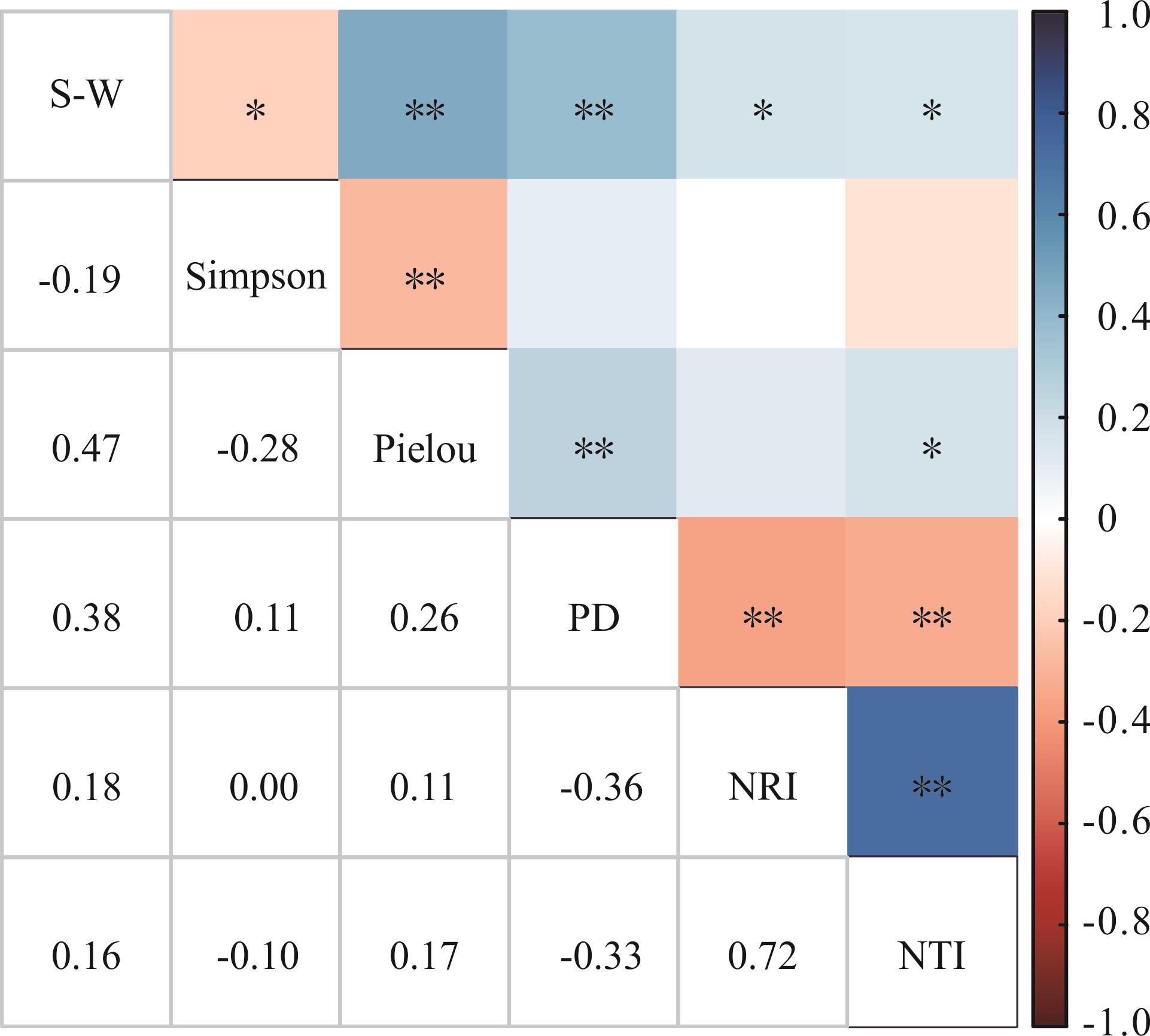
Fig.4 The correlation between species diversity and phylogenetic diversity index
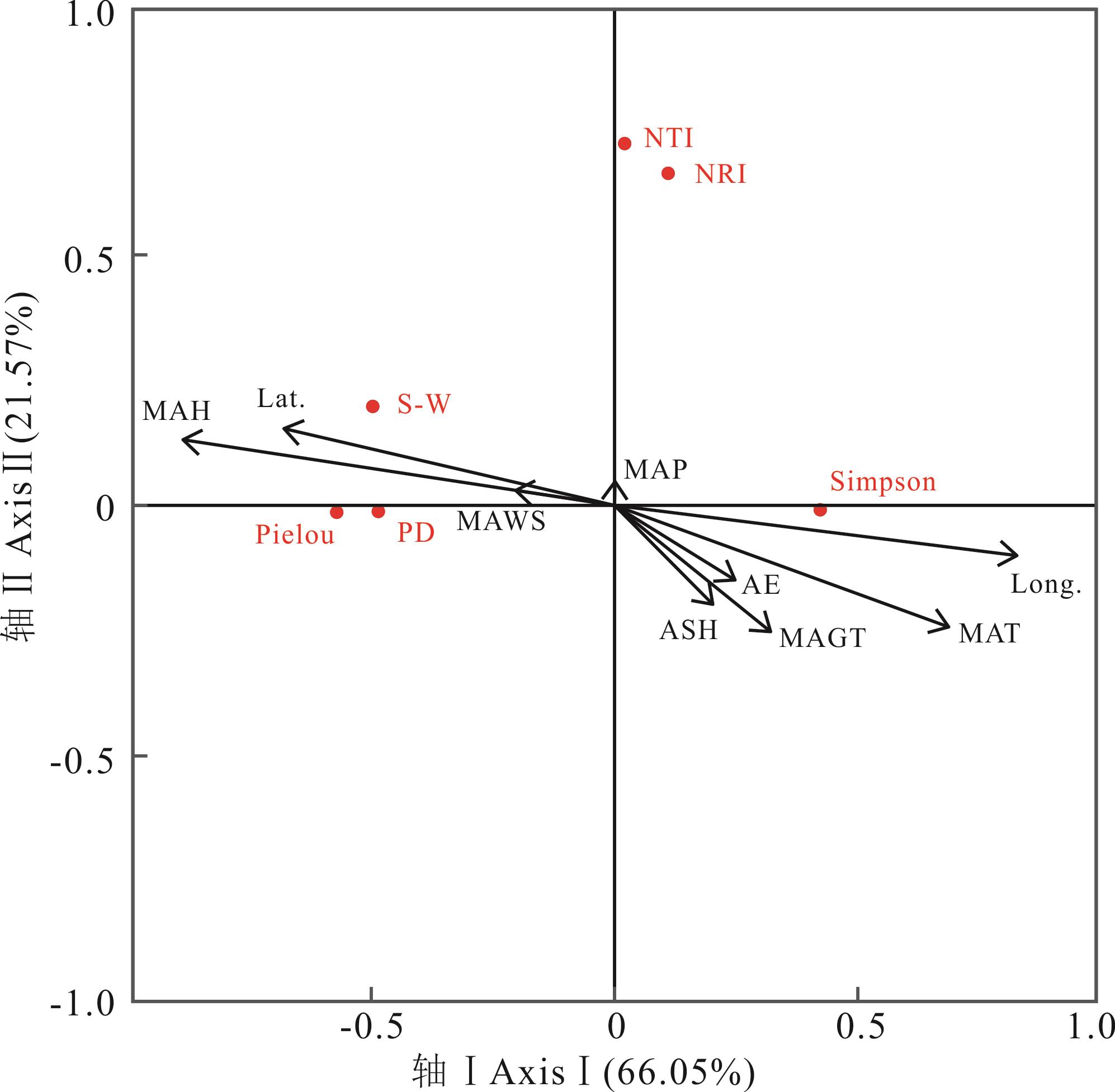
Fig.5 Redundancy analysis (RDA) ranking of species diversity and phylogenetic diversity and their influencing factors
影响因子 Impact factors | R2 | P值 P value | 轴Ⅰ得分 Axis Ⅰ score | 轴Ⅱ得分 Axis Ⅱ score |
|---|---|---|---|---|
| Long. | 0.040 | 0.085 | 0.827 | -0.100 |
| Lat. | 0.127 | 0.001 | -0.679 | 0.153 |
| MAP | -0.008 | 0.590 | 0.001 | 0.048 |
| MAT | 0.080 | 0.040 | 0.687 | -0.243 |
| MAGT | 0.036 | 0.183 | 0.321 | -0.252 |
| MAWS | -0.010 | 0.573 | -0.203 | 0.030 |
| ASH | -0.085 | 0.996 | 0.202 | -0.197 |
| MAH | 0.124 | 0.002 | -0.887 | 0.131 |
| AE | 0.012 | 0.354 | 0.248 | -0.149 |
Table 3 Significance test of impact factor
影响因子 Impact factors | R2 | P值 P value | 轴Ⅰ得分 Axis Ⅰ score | 轴Ⅱ得分 Axis Ⅱ score |
|---|---|---|---|---|
| Long. | 0.040 | 0.085 | 0.827 | -0.100 |
| Lat. | 0.127 | 0.001 | -0.679 | 0.153 |
| MAP | -0.008 | 0.590 | 0.001 | 0.048 |
| MAT | 0.080 | 0.040 | 0.687 | -0.243 |
| MAGT | 0.036 | 0.183 | 0.321 | -0.252 |
| MAWS | -0.010 | 0.573 | -0.203 | 0.030 |
| ASH | -0.085 | 0.996 | 0.202 | -0.197 |
| MAH | 0.124 | 0.002 | -0.887 | 0.131 |
| AE | 0.012 | 0.354 | 0.248 | -0.149 |
多样性指数 Diversity index | AIC | R2 | 影响因子 Impact factor | 回归系数估计值 Estimate regression coefficient | 标准误 Standard error | t值 t-value |
|---|---|---|---|---|---|---|
| S-W | -410.16 | 0.232 | Altitude** | -0.001 | 0.000 | -3.074 |
| MAT** | -0.315 | 0.104 | -3.032 | |||
| MAH* | -0.146 | 0.063 | -2.312 | |||
| Simpson | -886.43 | 0.118 | MAH** | -0.005 | 0.001 | -4.491 |
| Pielou | -885.07 | 0.236 | MAH** | 0.011 | 0.003 | 3.138 |
| ASH** | -0.001 | 0.000 | -2.967 | |||
| MAWS** | 0.149 | 0.051 | 2.902 | |||
| PD | 1532.50 | 0.201 | Lat.** | 1493.000 | 561.300 | 2.659 |
| MAT* | -192.700 | 79.000 | -2.439 | |||
| MAH* | -117.100 | 48.390 | -2.420 | |||
| NRI | -285.13 | 0.108 | Lat.** | -4.531 | 1.501 | -3.019 |
| MAP* | -0.009 | 0.003 | -2.345 | |||
| MAT* | 1.463 | 0.648 | 2.255 | |||
| NTI | -88.30 | 0.118 | Lat.** | -9.993 | 2.855 | -3.500 |
| MAP** | -0.022 | 0.007 | -3.191 | |||
| MAT** | 3.959 | 1.234 | 3.208 | |||
| MAH** | 1.616 | 0.475 | 3.403 | |||
| AE** | 0.138 | 0.041 | 3.411 |
Table 4 Stepwise regression of main factors affecting species diversity and phylogenetic diversity
多样性指数 Diversity index | AIC | R2 | 影响因子 Impact factor | 回归系数估计值 Estimate regression coefficient | 标准误 Standard error | t值 t-value |
|---|---|---|---|---|---|---|
| S-W | -410.16 | 0.232 | Altitude** | -0.001 | 0.000 | -3.074 |
| MAT** | -0.315 | 0.104 | -3.032 | |||
| MAH* | -0.146 | 0.063 | -2.312 | |||
| Simpson | -886.43 | 0.118 | MAH** | -0.005 | 0.001 | -4.491 |
| Pielou | -885.07 | 0.236 | MAH** | 0.011 | 0.003 | 3.138 |
| ASH** | -0.001 | 0.000 | -2.967 | |||
| MAWS** | 0.149 | 0.051 | 2.902 | |||
| PD | 1532.50 | 0.201 | Lat.** | 1493.000 | 561.300 | 2.659 |
| MAT* | -192.700 | 79.000 | -2.439 | |||
| MAH* | -117.100 | 48.390 | -2.420 | |||
| NRI | -285.13 | 0.108 | Lat.** | -4.531 | 1.501 | -3.019 |
| MAP* | -0.009 | 0.003 | -2.345 | |||
| MAT* | 1.463 | 0.648 | 2.255 | |||
| NTI | -88.30 | 0.118 | Lat.** | -9.993 | 2.855 | -3.500 |
| MAP** | -0.022 | 0.007 | -3.191 | |||
| MAT** | 3.959 | 1.234 | 3.208 | |||
| MAH** | 1.616 | 0.475 | 3.403 | |||
| AE** | 0.138 | 0.041 | 3.411 |
| [1] | Baldi A. Habitat heterogeneity overrides the species-area relationship. Journal of Biogeography, 2008, 35(4): 675-681. |
| [2] | Swenson N G, Erickson D L, Mi X. Phylogenetic and functional alpha and beta diversity in temperate and tropical tree communities. Ecology, 2012, 93(8): S112-S125. |
| [3] | Mcgill B J, Etienne R S, Gray J S, et al. Species abundance distributions: moving beyond single prediction theories to integration within an ecological framework. Ecology Letters, 2007, 10(10): 995-1015. |
| [4] | Elton C S. The ecology of invasions by animals and plants. Journal of Wildlife Management, 1960, 24(2): 231. |
| [5] | Ma Z J, Liu B, Wang J Q, et al. Construction of desert plant communities with different slope orientations based on phylogenetic and functional traits: Example of desertification closure reserve in Bohu County. Acta Ecologica Sinica, 2023, 43(10): 3946-3957. |
| 马紫荆, 刘彬, 王军强, 等. 基于系统发育及功能性状的不同坡向荒漠植物群落构建研究——以博湖县沙化封禁保护区为例. 生态学报, 2023, 43(10): 3946-3957. | |
| [6] | Rosindell J, Hubbell S P, Etienne R S. The unified neutral theory of biodiversity and biogeography at age ten. Trends in Ecology & Evolution, 2011, 26(7): 340-348. |
| [7] | Huang J X, Zheng F Y, Mi X C. Influence of environmental factors on phylogenetic structure at multiple spatial scales in an evergreen broad-leaved forest of China. Chinese Journal of Plant Ecology, 2010, 34(3): 309-315. |
| 黄建雄, 郑凤英, 米湘成. 不同尺度上环境因子对常绿阔叶林群落的谱系结构的影响. 植物生态学报, 2010, 34(3): 309-315. | |
| [8] | Zhang M M, Qin H, Wang Y, et al. Beta diversity of wetland vegetation in the middle and upper reaches of the Fenhe River watershed. Acta Ecologica Sinica, 2016, 36(11): 3292-3299. |
| 张淼淼, 秦浩, 王烨, 等. 汾河中上游湿地植被β多样性. 生态学报, 2016, 36(11): 3292-3299. | |
| [9] | Schweiger O, Klotz S, Durka W, et al. A comparative test of phylogenetic diversity indices. Oecologia, 2008, 157(3): 485-495. |
| [10] | Petchey O L, Gaston K J. Functional diversity(FD), species richness and community composition. Ecology Letters, 2002, 5(3): 402-411. |
| [11] | Zhong J J, Chen J, Chen Q, et al. Quantitative classification of MRT, CCA ordination, and species diversity along elevation gradients of a natural secondary forest in the Qinling mountains. Acta Ecologica Sinica, 2019, 39(1): 277-285. |
| 钟娇娇, 陈杰, 陈倩, 等. 秦岭山地天然次生林群落MRT数量分类、CCA排序及多样性垂直格局. 生态学报, 2019, 39(1): 277-285. | |
| [12] | Wang E Z, Zhang Y L, Qian H L, et al. Study on the distribution pattern of species diversity and phylogenetic diversity of plant community in Yanqi Hola Mountain along the altitude gradient. Acta Agrestia Sinica, 2025, 33(5): 1612-1621. |
| 王恩召, 张云玲, 钱慧玲, 等. 焉耆霍拉山植物群落物种多样性与系统发育多样性沿海拔梯度分布格局研究. 草地学报, 2025, 33(5): 1612-1621. | |
| [13] | Jiang S, Wei T X, Fan D H, et al. Plant diversity in different positions of gullies and valleys in the loess region of western Shanxi Province, northern China. Journal of Beijing Forestry University, 2024, 46(6): 20-27. |
| 江姗, 魏天兴, 范德卉, 等. 晋西黄土区沟谷不同部位植物多样性. 北京林业大学学报, 2024, 46(6): 20-27. | |
| [14] | Wang Z H, Lv S J, Wang Z W, et al. Effects of grazing intensity on dominant population and species diversity and their typical relationships. Ecology and Environment Sciences, 2024, 33(6): 869-876. |
| 王梓晗, 吕世杰, 王忠武, 等. 放牧强度对优势种群重要值和物种多样性及其二者典型关系的影响. 生态环境学报, 2024, 33(6): 869-876. | |
| [15] | Guo H, Liu W Q, Chen X L. Practical achievements, current problems, and solutions of the ecological civilization system in Xinjiang. Journal of Shaanxi Academy of Governance, 2025, 39(3): 102-106. |
| 郭虹, 刘婉青, 陈晓丽. 新疆生态文明制度体系的实践成就、现实问题与解决路径. 陕西行政学院学报, 2025, 39(3): 102-106. | |
| [16] | Tao M. Grassland resources degradation investigation and governance countermeasures in Hejing County. Modern Agricultural Science and Technology, 2018(6): 220-222. |
| 陶梦. 和静县草地资源退化情况调查及治理对策. 现代农业科技, 2018(6): 220-222. | |
| [17] | Abudureheman·Wusiman, Yusufujiang·Rusuli, Zhang F, et al. Temporal and spatial characteristics of grassland degradation in Xinjiang Section of Tianshan Mountains based on remote sensing monitoring and its relationship with climate factors. Pratacultural Science, 2023, 40(7): 1779-1792. |
| 阿卜杜热合曼·吾斯曼, 玉素甫江·如素力, 张发, 等. 基于遥感监测的天山新疆段草地退化时空特征及其与气候因子的关系. 草业科学, 2023, 40(7): 1779-1792. | |
| [18] | Gamito S. Caution is needed when applying Margalef diversity index. Ecological Indicators, 2010, 10(2): 550-551. |
| [19] | Njogu W A. Species richness, functional and phylogenetic diversity of plant communities along the altitudinal gradient of Mount Kenya, East Africa. Beijing: University of Chinese Academy of Sciences, 2021. |
| Njogu Waigwa Antony. 东非肯尼亚山海拔梯度植物群落的物种丰富度、功能和系统发育多样性. 北京: 中国科学院大学, 2021. | |
| [20] | Liu L, Ren S C, Xue T, et al. Vegetation distribution and species diversity in lake aiding basin based on Shannon-Wiener index. Ground Water, 2020, 42(4): 120-123. |
| 刘亮, 任世昌, 薛挺, 等. 基于Shannon-Wiener指数的艾丁湖流域植被分布及物种多样性研究. 地下水, 2020, 42(4): 120-123. | |
| [21] | Li W H, Ganjurjav H, Cao X J, et al. Effects of altitude on plant productivity and species diversity in alpine meadows of northern Tibet. Acta Prataculturae Sinica, 2017, 26(9): 200-207. |
| 栗文瀚, 干珠扎布, 曹旭娟, 等. 海拔梯度对藏北高寒草地生产力和物种多样性的影响. 草业学报, 2017, 26(9): 200-207. | |
| [22] | Fang J Y, Wang X P, Shen Z H, et al. Methods and protocols for plant community inventory. Biodiversity Science, 2009, 17(6): 533-548. |
| 方精云, 王襄平, 沈泽昊, 等. 植物群落清查的主要内容、方法和技术规范. 生物多样性, 2009, 17(6): 533-548. | |
| [23] | He J S, Chen W L. A review of gradient changes in species diversity of land plant communities. Acta Ecologica Sinica, 1997, 17(1): 93-101. |
| 贺金生, 陈伟烈. 陆地植物群落物种多样性的梯度变化特征. 生态学报, 1997, 17(1): 93-101. | |
| [24] | Tang Z Y, Fang J Y. A review on the elevational patterns of plant species diversity. Biodiversity Science, 2004, 12(1): 20-28. |
| 唐志尧, 方精云. 植物物种多样性的垂直分布格局. 生物多样性, 2004, 12(1): 20-28. | |
| [25] | Pan H L, Li M H, Cai X H, et al. Responses of growth and ecophysiology of plants to altitude. Ecology and Environment Sciences, 2009, 18(2): 722-730. |
| 潘红丽, 李迈和, 蔡小虎, 等. 海拔梯度上的植物生长与生理生态特性. 生态环境学报, 2009, 18(2): 722-730. | |
| [26] | Huang Z L, Kong G H, He D Q. Plant community diversity in Dinghushan Nature Reserve. Acta Ecologica Sinica, 2000, 20(2): 193-198. |
| 黄忠良, 孔国辉, 何道泉. 鼎湖山植物群落多样性的研究. 生态学报, 2000, 20(2): 193-198. | |
| [27] | Li M J, He Z S, Jiang L, et al. Distribution pattern and driving factors of species diversity and phylogenetic diversity along altitudinal gradient on the south slope of Daiyun Mountain. Acta Ecologica Sinica, 2021, 41(3): 1148-1157. |
| 李梦佳, 何中声, 江蓝, 等. 戴云山物种多样性与系统发育多样性海拔梯度分布格局及驱动因子. 生态学报, 2021, 41(3): 1148-1157. | |
| [28] | Niu H Y, Wang Z F, Lian J Y, et al. New progress in community assembly: community phylogenetic structure combining evolution and ecology. Biodiversity Science, 2011, 19(3): 275-283. |
| 牛红玉, 王峥峰, 练琚愉, 等. 群落构建研究的新进展: 进化和生态相结合的群落谱系结构研究. 生物多样性, 2011, 19(3): 275-283. | |
| [29] | Mao Z H, Zhu J J. Effects of disturbances on species composition and diversity of plant communities. Acta Ecologica Sinica, 2006, 26(8): 2695-2701. |
| 毛志宏, 朱教君. 干扰对植物群落物种组成及多样性的影响. 生态学报, 2006, 26(8): 2695-2701. | |
| [30] | Forest F, Grenyer R, Rouget M, et al. Preserving the evolutionary potential of floras in biodiversity hotspots. Nature, 2007, 445(7129): 757-760. |
| [31] | Honorio C E N, Kyle G, Dexter R, et al. Phylogenetic diversity of Amazonian tree communities. Diversity and Distributions, 2015, 21(11): 1295-1307. |
| [32] | Mishler B D, Knerr N, Gonzalez-orozco C E, et al. Phylogenetic measures of biodiversity and neo- and paleo-endemism in Australian Acacia. Nature Communications, 2014, 5(1): 4473. |
| [33] | Wang D B, Ji S Y, Chen F P. A review on the species diversity of plant community. Chinese Journal of Ecology, 2001, 20(4): 55-60. |
| 汪殿蓓, 暨淑仪, 陈飞鹏. 植物群落物种多样性研究综述. 生态学杂志, 2001, 20(4): 55-60. | |
| [34] | Zhang L Y, Chen C D. On the general characteristics of plant diversity of Gurbantunggut sandy desert. Acta Ecologica Sinica, 2002, 22(11): 1923-1932. |
| 张立运, 陈昌笃. 论古尔班通古特沙漠植物多样性的一般特点. 生态学报, 2002, 22(11): 1923-1932. | |
| [35] | Li F L, Bao W K. Responses of the morphological and anatomical structure of the plant leaf to environmental change. Chinese Bulletin of Botany, 2005, 22(Supple 1): 118-127. |
| 李芳兰, 包维楷. 植物叶片形态解剖结构对环境变化的响应与适应. 植物学通报, 2005, 22(增刊1): 118-127. | |
| [36] | Tang Z C. Response and adaptability of plants to water stress——Ⅱ response and adaptability of plants to drought. Plant Physiology Communications, 1983(4): 3-9. |
| 汤章城. 植物对水分胁迫的反应和适应性——Ⅱ植物对干旱的反应和适应性. 植物生理学通讯, 1983(4): 3-9. |
| [1] | Yu-long MA, Kai-yang QIU, Xin-yi LUO, Jing-jing ZHANG, Yu-hang WANG, Guo-hui WANG, Xiang ZHENG, Xu-ying HAI, Bin XUE, Ying-zhong XIE. Effects of different sand-fixing vegetation restoration modes on soil physicochemical properties, enzyme activities, and herbaceous plant diversity [J]. Acta Prataculturae Sinica, 2026, 35(6): 1-12. |
| [2] | Yang LIU, Hong XIAO, Chang-lin XU, Ming-yue DENG, Wen-qiang WEI, Ao HAN, Kai MA, Yun WANG. Impact of Salix oritrepha shrub encroachment on characteristics of herbaceous plant communities in the alpine meadows of the Eastern Qilian Mountains [J]. Acta Prataculturae Sinica, 2026, 35(3): 13-25. |
| [3] | Hui-teng WANG, Wen-lan LIU, Hong TANG, Xiao-juan LIU, Rong HAN, Jie SONG. Responses of species and functional diversity of spontaneous vegetation to urbanization in Lanzhou riverside parks [J]. Acta Prataculturae Sinica, 2026, 35(3): 96-113. |
| [4] | Shi-jie ZHOU, Yi-lian WANG, Pan SUN, Jing SHANG, Wen-yu YANG, Xue-gui WANG, Ji-zhi YANG. Analysis of weed species and community characteristics in soybean-maize fields with a banded compound planting pattern in Sichuan Province [J]. Acta Prataculturae Sinica, 2026, 35(2): 143-154. |
| [5] | Jia-qi HE, Lin WU, Zhi-min QIU, Xu-yong GAO, Lun-lun GAO, Shuang-bin FU, Yan-ping YANG, Pei-long WANG, Wan XU, Zhuang ZHOU. Species diversity and community characteristics of weeds on the banks of the Wenzhou expressway [J]. Acta Prataculturae Sinica, 2026, 35(2): 40-53. |
| [6] | Jie LI, Xue-ting YU, Shu-ke ZHAO, Qiu-ga YIXI, Dong-zhou GAMA, Hao WU, Yu-lin SHAN, He-ying YU. Progress in research on methods for estimating carbon stock in grassland ecosystems and factors influencing it [J]. Acta Prataculturae Sinica, 2026, 35(10): 222-236. |
| [7] | Shuang YAN, Fei XIA, Wei WEI, Jing-long WANG, Hao-yang WU, Lin-ling RAN, Yun-yin XUE, Hao SHI, Shai-kun ZHENG, Jun-qiang WANG, Jun-dong HE. Differences along an erosion gradient in alpine meadow plant community diversity and factors influencing diversity [J]. Acta Prataculturae Sinica, 2025, 34(6): 1-13. |
| [8] | Shun-hua LUO, Xin-yu LIU, Bao-ping MENG, Xuan-li CHEN, Ren-jie HU, Hong-yan YU, Xian-ying WANG, Bo ZHANG, Yu QIN. A study of functional group diversity and productivity of alpine grassland in Qilian Mountain National Park [J]. Acta Prataculturae Sinica, 2025, 34(6): 14-26. |
| [9] | Xue-ping LI, Shi-yang XU, Jian-jun LI, Yong-hong QI. Bacterial diversity and community structural changes in rhizosphere soil of naked barley disturbed by root rot [J]. Acta Prataculturae Sinica, 2025, 34(5): 118-129. |
| [10] | Shou-xing WANG, Hua-kun ZHOU, Li-peng OU, Cheng-xian LI, Yan-he WANG, Xiao-chun NING, Qiang GU, Dai-jun WEI, Ming-xin YANG. Vegetation and soil microbial diversity and their relationships with soil factors in different grassland types of the three river headwaters region [J]. Acta Prataculturae Sinica, 2025, 34(4): 16-26. |
| [11] | Xin GONG, Xin-ru HUO, Wen LI, Yan-dong YANG, Chao LIU, Wei-chun QIN, Yan SHEN, Guo-hui WANG, Hong-bin MA. Vegetation community characteristics and spatial differentiation in mountain grassland in Luoshan, Ningxia [J]. Acta Prataculturae Sinica, 2025, 34(2): 1-15. |
| [12] | Ye-xin LYU, Mao YE, Jiao-rong QIAN, Wei-long CHEN, Jing CHE, Miao-miao LI, Guo-yan ZENG. Biodiversity and phylogenetic diversity of grasslands in the Habahe forest area of Xinjiang and analysis of the influencing factors [J]. Acta Prataculturae Sinica, 2025, 34(12): 50-61. |
| [13] | Qian LIU, Yan-fen DING, Shan-shan SONG, Wen-jie XU, Wei YANG. Quantitative classification and ordination analysis of spontaneous vegetation communities in herb layer along the green belt of Nanjing Ming City Wall [J]. Acta Prataculturae Sinica, 2024, 33(5): 1-15. |
| [14] | Hao SHI, Cai-hong YANG, Fei XIA, Jun-qiang WANG, Wei WEI, Jing-long WANG, Yun-yin XUE, Shai-kun ZHENG, Hao-yang WU, Lin-ling RAN, Shuang YAN, Xiao-min JIANG. Initial effects of short-term warming on the productivity of alpine degraded grassland in northern Tibet during the restoration process [J]. Acta Prataculturae Sinica, 2024, 33(11): 30-45. |
| [15] | Hu-cheng XING, Xian-fang WANG, Qing ZHOU, Jing-cai YAN, Yu-cheng JIE. Types, grades, and utilization of grassland resources in 52 counties of Hunan Province [J]. Acta Prataculturae Sinica, 2023, 32(8): 91-103. |
| Viewed | ||||||
|
Full text |
|
|||||
|
Abstract |
|
|||||
