
ISSN 1004-5759 CN 62-1105/S
Acta Prataculturae Sinica ›› 2026, Vol. 35 ›› Issue (11): 170-183.DOI: 10.11686/cyxb2025466
Yi LI1,2( ), Jing DUO1, Yu-hao LIU1, Fang LIU1, Shi-liang LIU1, Xiao-lei JIE1, Ying ZHAO1()
Received:2025-11-17
Revised:2025-12-25
Online:2026-11-20
Published:2026-10-12
Contact:
Ying ZHAO
Yi LI, Jing DUO, Yu-hao LIU, Fang LIU, Shi-liang LIU, Xiao-lei JIE, Ying ZHAO. Effects of wood vinegar on soil cadmium morphological transformation and cadmium transport and bioaccumulation in ryegrass[J]. Acta Prataculturae Sinica, 2026, 35(11): 170-183.
项目 Item | pH | 全镉 Total cadmium (mg·kg-1) | 有机质 Organic matter (g·kg-1) | 碱解氮 Alkali-hydrolyzable nitrogen (mg·kg-1) | 速效磷 Available phosphorus (mg·kg-1) | 速效钾 Available potassium (mg·kg-1) |
|---|---|---|---|---|---|---|
| 土壤Soil | 7.79 | 2.06 | 9.96 | 9.75 | 23.45 | 354.67 |
Table 1 Basic physical and chemical properties of soil
项目 Item | pH | 全镉 Total cadmium (mg·kg-1) | 有机质 Organic matter (g·kg-1) | 碱解氮 Alkali-hydrolyzable nitrogen (mg·kg-1) | 速效磷 Available phosphorus (mg·kg-1) | 速效钾 Available potassium (mg·kg-1) |
|---|---|---|---|---|---|---|
| 土壤Soil | 7.79 | 2.06 | 9.96 | 9.75 | 23.45 | 354.67 |
项目 Item | pH | 电导率 Electrical conductivity (mS·cm-1) | 有机质 Organic matter (g·kg-1) | 全氮 Total nitrogen (g·kg-1) | 全磷 Total phosphorus (g·kg-1) | 全钾 Total potassium (g·kg-1) |
|---|---|---|---|---|---|---|
| 木醋液Wood vinegar | 4.18 | 3.50 | 57.75 | 2.69 | 0.81 | 0.09 |
Table 2 Basic physical and chemical properties of wood vinegar
项目 Item | pH | 电导率 Electrical conductivity (mS·cm-1) | 有机质 Organic matter (g·kg-1) | 全氮 Total nitrogen (g·kg-1) | 全磷 Total phosphorus (g·kg-1) | 全钾 Total potassium (g·kg-1) |
|---|---|---|---|---|---|---|
| 木醋液Wood vinegar | 4.18 | 3.50 | 57.75 | 2.69 | 0.81 | 0.09 |
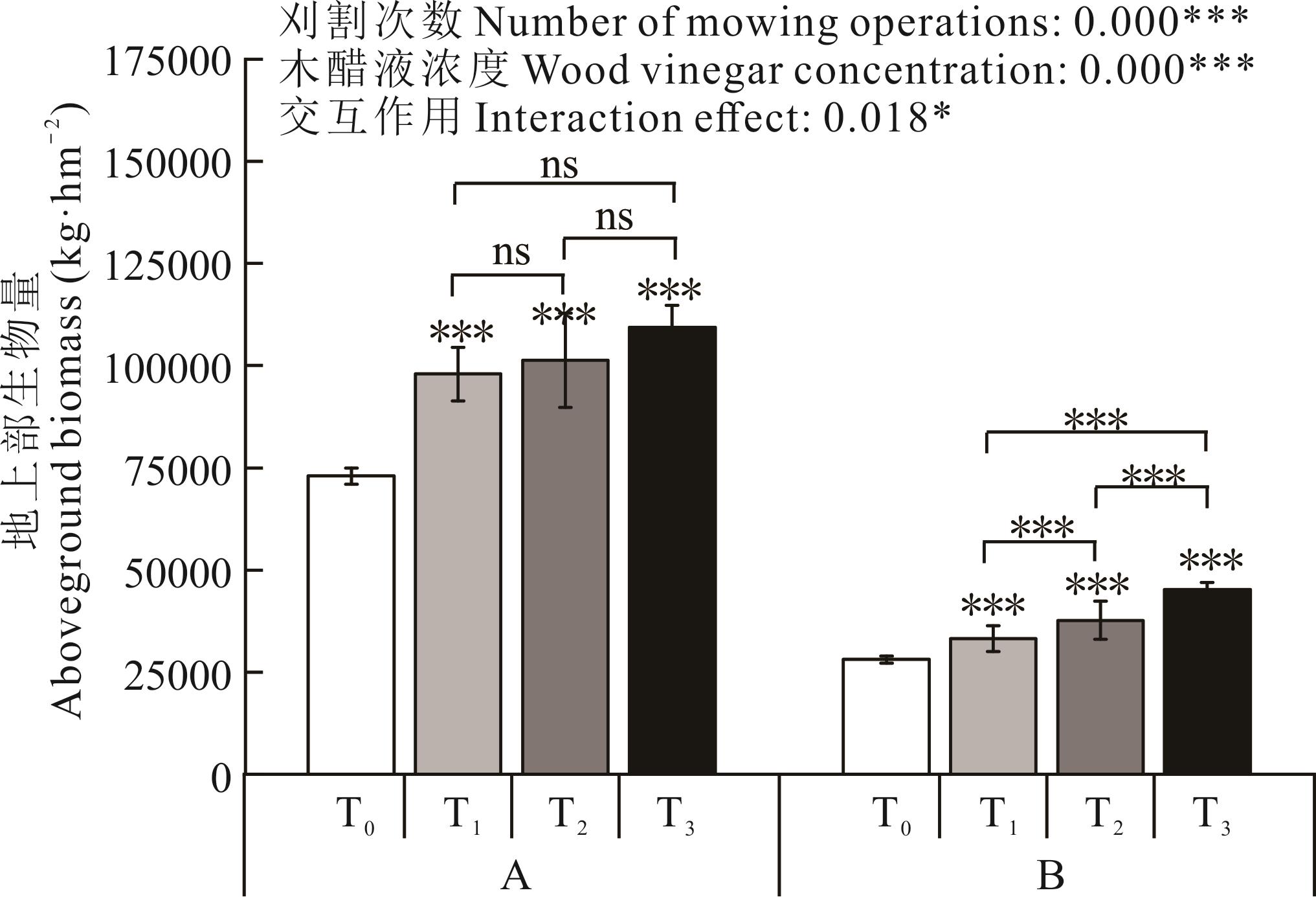
Fig.1 Effects of different wood vinegar concentrations on aboveground biomass of ryegrass
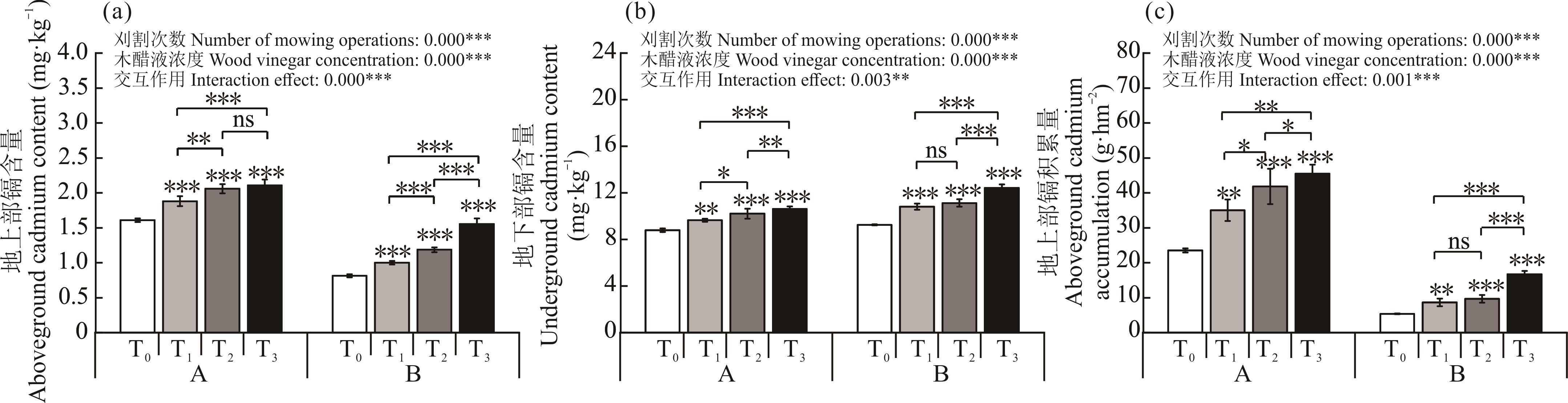
Fig.2 Effects of different wood vinegar concentrations on Cd content and accumulation in the aboveground and underground parts of ryegrass
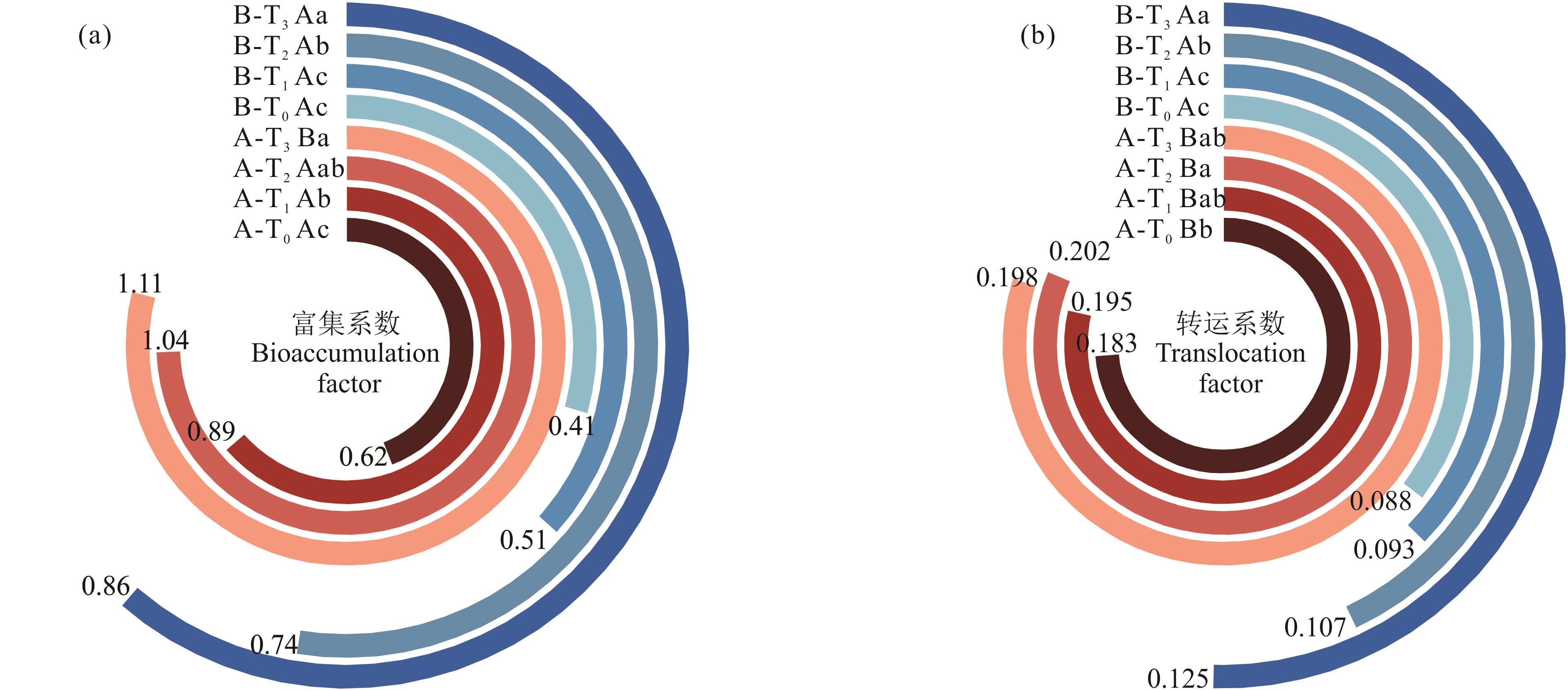
Fig.3 Effects of different wood vinegar concentrations on Cd bioaccumulation factor and translocation factor in the aboveground part of ryegrass

Fig.4 Effects of different wood vinegar concentrations combined with ryegrass on soil pH, urease, catalase, and sucrase activities

Fig.5 Effects of different wood vinegar concentrations combined with ryegrass on soil Cd content and speciation
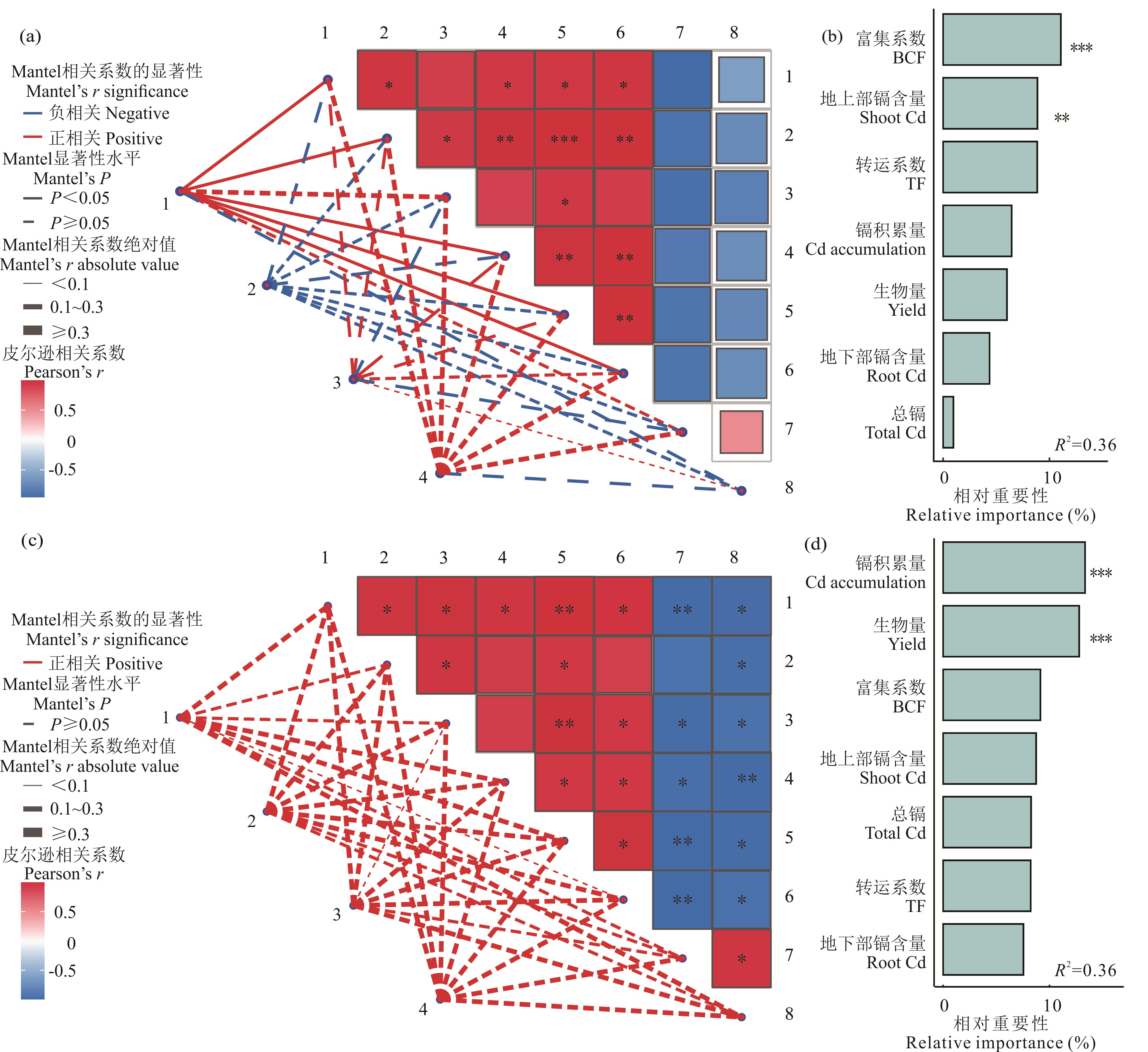
Fig.6 Mantel test analysis of various indicators in two harvests of ryegrass under different wood vinegar concentrations, along with key factors affecting soil available Cd identified by the random forest model
| [1] | Yu Q Y, Li W Y, Zhang N, et al. Present pollution status and safe utilization technologies of heavy metal-polluted farmland soil: a review. Soils, 2024, 56(2): 229-241. |
| 余琼阳, 李婉怡, 张宁, 等. 农田土壤重金属污染现状与安全利用技术研究进展. 土壤, 2024, 56(2): 229-241. | |
| [2] | Setia R, Dhaliwal S S, Singh R, et al. Ecological and human health risk assessment of metals in soils and wheat along Sutlej river(India). Chemosphere, 2023, 312(Part 1): 137331. |
| [3] | Baltas H, Sirin M, Gökbayrak E, et al. A case study on pollution and a human health risk assessment of heavy metals in agricultural soils around Sinop Province, Turkey. Chemosphere, 2020, 241(3/4): 125015. |
| [4] | Ministry of Environmental Protection of the People’s Republic of China, Ministry of Land and Resources of the People’s Republic of China. Report on the national general survey of soil contamination. China Environmental Protection Industry, 2014, 20(5): 10-11. |
| 环境保护部, 国土资源部.全国土壤污染状况调查公报. 中国环保产业, 2014, 20(5): 10-11. | |
| [5] | Chen S B, Wang M, Li S S, et al. Currentstatus of and discussion on farmland heavy metal pollution prevention in China. Earth Science Frontiers, 2019, 26(6): 35-41. |
| 陈世宝, 王萌, 李杉杉, 等. 中国农田土壤重金属污染防治现状与问题思考. 地学前缘, 2019, 26(6): 35-41. | |
| [6] | Zheng S N, Wang Q, Yuan Y Z, et al. Human health risk assessment of heavy metals in soil and food crops in the Pearl River Delta urban agglomeration of China. Food Chemistry, 2020, 316: 126213. |
| [7] | Gong B, Wang X P, Ying R R, et al. Impact of soil moisture on the bioavailability and ecotoxicity of heavy metals. Asian Journal of Ecotoxicology, 2025, 20(1): 48-61. |
| 龚冰, 王徐鹏, 应蓉蓉, 等. 土壤湿度对重金属污染物的生物有效性和生态毒性影响. 生态毒理学报, 2025, 20(1): 48-61. | |
| [8] | Song P P, Xu D, Yue J Y, et al. Recent advances in soil remediation technology for heavy metal contaminated sites: A critical review. Science of the Total Environment, 2022, 838(11): 156417. |
| [9] | Ghuge S A, Nikalje G C, Kadam U S, et al. Comprehensive mechanisms of heavy metal toxicity in plants, detoxify cation, and remediation. Journal of Hazardous Materials, 2023, 450(9): 131039. |
| [10] | Zhang L H, Bai J J, Tian R Y, et al. Cadmium remediation strategies in alkaline arable soils in Northern China: current status and challenges. Acta Pedologica Sinica, 2024, 61(2): 348-360. |
| 张力浩, 白姣杰, 田瑞云, 等. 中国北方碱性农田土壤镉污染修复:现状与挑战. 土壤学报, 2024, 61(2): 348-360. | |
| [11] | Zhao X F, Lei M, Chen T B. Species, habitat characteristics, and screening suggestions of cadmium hyperaccumulators in China. Environmental Science, 2023, 44(5): 2786-2798. |
| 赵晓峰, 雷梅, 陈同斌. 中国镉超富集植物的物种、生境特征和筛选建议. 环境科学, 2023, 44(5): 2786-2798. | |
| [12] | Liu Y W, Zhou J J, Sun D L, et al. Polyaspartic acid assisted-phytoremediation of cadmium-contaminated farmland: phytoextraction efficiency, soil quality, and rhizosphere microbial community. Science of the Total Environment, 2023, 862:160736. |
| [13] | Yang J S, Luo X S, Zhang X Y, et al. Investigation of Cd enrichment capacity and remediation potential of wild plants including Ammannia baccifera L. in Cd-contaminated farmland soil. Journal of Agro-Environment Science, 2023, 42(8): 1739-1747. |
| 杨金山, 罗小三, 张欣悦, 等. 污染农田水苋菜等野生植物镉富集能力和修复潜力调查. 农业环境科学学报, 2023, 42(8): 1739-1747. | |
| [14] | Zhou Z Q. Phytoextraction of cadmium in napier grass (Pennisetum purpureum Schumach) under field conditions. Fuzhou: Fujian Agriculture and Forestry University, 2020. |
| 周志强. 象草对镉污染土壤的田间植物提取修复效果研究. 福州: 福建农林大学, 2020. | |
| [15] | Li X M, Li J B, Song G L, et al. Cadmium tolerance and absorption characteristic of herbaceous plants. Pratacultural Science, 2018, 35(4): 760-770. |
| 李希铭, 李金波, 宋桂龙, 等. 35份草本植物镉吸收与富集特征比较. 草业科学, 2018, 35(4): 760-770. | |
| [16] | Chen X Y. Phytoremediation of heavy metal contaminated soils with mobilizing amendments. Zhengzhou: Henan University of Technology, 2021. |
| 陈小亚. 活化剂结合植物修复重金属污染土壤的研究. 郑州: 河南工业大学, 2021. | |
| [17] | Li J J. Screening of cadmium hyper-enriched plants and their combination with chelating agents for remediation of cadmium-contaminated soil. Mianyang: Southwest University of Science and Technology, 2024. |
| 李加驹. 镉超富集植物的筛选及其与螯合剂联合修复镉污染土壤的研究. 绵阳: 西南科技大学, 2024. | |
| [18] | Wu D M, Yu X L, Lai M L, et al. Diversified effects of coplanting landscape plants on heavy metals pollution remediation in urban soil amended with sewage sludge. Journal of Hazardous Materials, 2021, 403: 123855. |
| [19] | Zhou H Y, Shen Y, Zhang N M, et al. Wood fiber biomass pyrolysis solution as a potential tool for plant disease management: A review. Heliyon, 2024, 10(3): e25509. |
| [20] | Shen S W, Zhang D D, Wang M G, et al. Effects of combined application of wood vinegar-acidified biochar and nitrogen on active nitrogen and ammonia volatilization in saline soil. Environmental Science, 2022, 43(5): 2779-2787. |
| 申书伟, 张丹丹, 王敏鸽, 等. 木醋液酸化生物炭与氮素配施对盐渍土壤活性氮及氨挥发的影响. 环境科学, 2022, 43(5): 2779-2787. | |
| [21] | Wu M M. Study on the remediation effect of wood vinegar/ryegrass combination on soil heavy metal cadmium. Zhengzhou: Henan Agricultural University, 2023. |
| 吴苗苗. 木醋液/黑麦草联合对土壤重金属Cd的修复效果研究. 郑州: 河南农业大学, 2023. | |
| [22] | Kumar S, Rahman M, Bouket A C, et al. Unravelling the multifarious role of wood vinegar made from waste biomass in plant growth promotion, biotic stress tolerance, and sustainable agriculture. Journal of Analytical and Applied Pyrolysis, 2025, 185(1): 106851. |
| [23] | Yang W H, Wang S S, Ni W Z, et al. Enhanced Cd-Zn-Pb-contaminated soil phytoextraction by Sedum alfredii and the rhizosphere bacterial community structure and function by applying organic amendments. Plant and Soil, 2019, 444(1/2): 101-118. |
| [24] | Fang Z G, Xie J T, Yang Q, et al. Role and mechanism of low molecular-weight-organic acids in enhanced phytoremediation of heavy metal contaminated soil. Environmental Science, 2022, 43(10): 4669-4678. |
| 方治国, 谢俊婷, 杨青, 等. 低分子有机酸强化植物修复重金属污染土壤的作用与机制. 环境科学, 2022, 43(10): 4669-4678. | |
| [25] | Benzon H R L, Venecio Jr U, Lee S C. Pyroligneous acid influenced the bioavailability of heavy metals in contaminated paddy soil. Journal of Ecological Engineering, 2025, 26(9): 354-369. |
| [26] | Li F Z, Zhang Y P, Hao S F, et al. Leaching behaviour and enhanced phytoextraction of additives for cadmium-contaminated soil by Pennisetum sp. Bulletin of Environmental Contamination and Toxicology, 2020, 104(5): 658-667. |
| [27] | Bao S D. Soil and agricultural chemistry analysis. Beijing: China Agriculture Press, 2000: 14-168. |
| 鲍士旦. 土壤农化分析. 北京: 中国农业出版社, 2000: 14-168. | |
| [28] | Zhu L N. Screening of winter wheat cultivars with low cadmium accumulation and differences in cadmium accumulation mechanism. Zhengzhou: Henan Agricultural University, 2021. |
| 朱利楠. 冬小麦镉低积累品种筛选及镉积累机制差异. 郑州: 河南农业大学, 2021. | |
| [29] | Tessier A, Campbell P G C, Bisson M. Sequential extraction procedure for the speciation of particulate trace metals. Analytical Chemistry, 1979, 51(7): 844-851. |
| [30] | Guan S Y. Soil enzymes and their research methods. Beijing: Agricultural Press, 1986: 294-302. |
| 关松荫. 土壤酶及其研究法. 北京: 农业出版社, 1986: 294-302. | |
| [31] | Duo J, Ye J R, Yang D X, et al. Effect of wood vinegar on cadmium enrichment and transport of Gramineous crops in Cd-contaminated farmland. Environmental Science, 2025, 46(4): 2571-2579. |
| 多晶, 叶佳润, 杨东霞, 等. 木醋液对镉污染农田禾本科作物富集转运Cd效应影响. 环境科学, 2025, 46(4): 2571-2579. | |
| [32] | Geng K, Mei D Q Z, Jiang M Y, et al. Effects of foliar spraying of wood vinegar on yield and quality of vegetables. Soil and Fertilizer Sciences in China, 2023(9): 160-168. |
| 耿坤, 梅朵曲珍, 蒋梦圆, 等. 叶面喷施木醋液对蔬菜产量及品质的影响. 中国土壤与肥料, 2023(9): 160-168. | |
| [33] | Zhang L D, Huo P J, Liang J M, et al. Research progress on preparation process and synergistic technology of biomass-based wood vinegar. Journal of Forestry Engineering, 2023, 8(5): 27-36. |
| 张立丹, 霍鹏举, 梁嘉敏, 等. 生物质基木醋液的制备工艺和增效技术研究进展. 林业工程学报, 2023, 8(5): 27-36. | |
| [34] | Luo X X, Wang Z Y, Meki K, et al. Effect of co-application of wood vinegar and biochar on seed germination and seedling growth. Journal of Soils and Sediments, 2019, 19(12): 3934-3944. |
| [35] | Liu Q Q, Wu Q G, Zhou J, et al. Effects of foliar spraying of ZnO and MnO2 nanoparticles on uptake and translocation of Cd, Zn and Mn in wheat. Soil, 2025, 57(2): 376-386. |
| 刘奇奇, 吴求刚, 周静, 等. 叶面喷施纳米氧化锌和二氧化锰对小麦镉锌锰吸收和转运的影响. 土壤, 2025, 57(2): 376-386. | |
| [36] | Wang P, Chen H P, Kopitke P M, et al. Cadmium contamination in agricultural soils of China and the impact on food safety. Environmental Pollution, 2019, 249(12): 1038-1048. |
| [37] | Strasdeit H, Duhme A K, Kneer R, et al. Evidence for discrete Cd (SCys)4 units in cadmium phytochelatin complexes from EXAFS spectroscopy. Journal of the Chemical Society, Chemical Communications, 1991(16): 1129-1130. |
| [38] | Luo X M, Qian J C, Wang K, et al. Research progress on role of low molecular weight organic acids in phytoremediation of heavy metal contaminated soil. Shandong Agricultural Sciences, 2025, 57(5): 171-180. |
| 罗晓萌, 钱建财, 王锴, 等. 低分子量有机酸在植物修复土壤重金属污染中的作用研究进展. 山东农业科学, 2025, 57(5): 171-180. | |
| [39] | Zhao F J, Ma Y, Zhu Y G, et al. Soil contamination in China: current status and mitigation strategies. Environmental Science & Technology, 2015, 49(2): 750-759. |
| [40] | Ministry of Agriculture and Rural Affairs of the People’s Republic of China. Hygienical standard for feeds: GB 13078-2017. Animal Agriculture, 2018(1): 16-24. |
| 中华人民共和国农业农村部. 饲料卫生标准: GB 13078-2017. 畜牧产业, 2018(1): 16-24. | |
| [41] | Han H J, Yu B B. Effects of biochar and wood vinegar on soil characteristics of moderate saline soil. Soil and Fertilizer Sciences in China, 2026(1): 22-29. |
| 韩红杰, 于贝贝. 生物炭与木醋液对中度盐土土壤特性的影响. 中国土壤与肥料, 2026(1): 22-29. | |
| [42] | Han Y, Qiao D M, Qi X B, et al. Effects of oxalic acid on oil sunflower biomass, enzyme activity, and the Cd speciation of Cd-polluted soils. Journal of Agro-Environment Science, 2020, 39(9): 1964-1973. |
| 韩洋, 乔冬梅, 齐学斌, 等. 草酸对镉污染土壤油葵生物量及土壤酶活性和镉形态的影响. 农业环境科学学报, 2020, 39(9): 1964-1973. | |
| [43] | Lu H F, Qiao D M, Qi X B, et al. Effects of exogenous organic acids on soil pH, enzyme activity, and cadmium migration and transformation. Journal of Agro-Environment Science, 2020, 39(3): 542-553. |
| 陆红飞, 乔冬梅, 齐学斌, 等. 外源有机酸对土壤pH值、酶活性和Cd迁移转化的影响. 农业环境科学学报, 2020, 39(3): 542-553. | |
| [44] | Du J J, Hou F, Zhou Q X. Response of soil enzyme activity and soil bacterial community to PCB dissipation across different soils. Chemosphere, 2021, 283(12): 131229. |
| [45] | Yan Q, Xie J T, Liu H J, et al. The addition of exogenous low-molecular-weight organic acids improved phytoremediation by Bidens pilosa L. in Cd-contaminated soil. Environmental Science and Pollution Research, 2022, 29(51): 76766-76781. |
| [46] | Ma H, Li X D, Hou S Y, et al. The activation and extraction systems using organic acids and Lentinus edodes to remediate cadmium contaminated soil. Environmental Pollution, 2019, 255(2): 113252. |
| [47] | Chen Q, Zhang X Y, Huang L X, et al. Effects of organic acids on enzyme activities and heavy metal desorption in rhizosphere and non-rhizosphere soil of Impatiens uliginosa Franch. Chinese Journal of Soil Science, 2024, 55(2): 483-493. |
| 陈倩, 张先言, 黄琳曦, 等. 有机酸对滇水金凤根际和非根际土壤酶活性及重金属解吸的影响. 土壤通报, 2024, 55(2): 483-493. | |
| [48] | Song Y J. Study on enhancement of Hydrangea macrophylla by exogenous organic acid for remediation of cadmium-contaminated soil. Yangling: Northwest A&F University, 2025. |
| 宋云静. 外源有机酸强化八仙花修复镉污染土壤研究. 杨凌: 西北农林科技大学, 2025. | |
| [49] | Epelde L, Burges A, Mijangos I, et al. Microbial properties and attributes of ecological relevance for soil quality monitoring during a chemical stabilization field study. Applied Soil Ecology, 2014, 75(3): 1-12. |
| [50] | Du J N, Yan C L, Li Z D. Phosphorus and cadmium interactions in Kandelia obovate (S. L.) in relation to cadmium tolerance. Enviromental Science and Pollution Research, 2014, 21(1): 355-365. |
| [51] | Dresler S, Hanaka A, Bednarek W, et al. Accumulation of low-molecular-weight organic acids in roots and leaf segments of Zea mays plants treated with cadmium and copper. Acta Physiologiae Plantarum, 2014, 36(6): 1565-1575. |
| [52] | Zhang L. Study on occurrence and morphological characteristics of Cd in reclaimed soil by low molecular weight organic acid. Huainan: Anhui University of Science and Technology, 2022. |
| 张磊. 低分子有机酸对复垦土壤中镉的赋存形态特征研究. 淮南: 安徽理工大学, 2022. | |
| [53] | Zhou X Q, Shi A, Rensing C, et al. Wood vinegar facilitated growth and Cd/Zn phytoextraction of Sedum alfredii Hance by improving rhizosphere chemical properties and regulating bacterial community. Environmental Pollution, 2022, 305: 119266. |
| [54] | Ma H, Li X D, Wei M Y, et al. Elucidation of the mechanisms into effects of organic acids on soil fertility, cadmium speciation and ecotoxicity in contaminated soil. Chemosphere, 2020, 239: 124706. |
| [55] | Zhou L T, Chu W, Huang X Y, et al. Research progress on mechanism of phytoremediation for heavy metal contaminated soil. Environmental Science, (2025-06-17)[2026-03-09]. https://doi.org/10.13227/j.hjkx.202502160. |
| 周柳婷, 储薇, 黄小云, 等. 植物修复重金属污染土壤机制研究进展. 环境科学, (2025-06-17)[2026-03-09]. https://doi.org/10.13227/j.hjkx.202502160. | |
| [56] | Zhou X Y, Qi L B, Duo J, et al. Enhanced remediation of Cd-contaminated calcareous soil with herbage by wood vinegar. Journal of Agricultural Resources and Environment, 2025, 42(2): 301-310. |
| 周新元, 齐丽彬, 多晶, 等. 木醋液强化牧草修复石灰性Cd污染土壤效果研究. 农业资源与环境学报, 2025, 42(2): 301-310. |
| [1] | Tian-yi LU, Yan-mei AI, Yang WANG, Meng NA, Shang-qi XU, Ji-hai ZHOU. Cadmium enrichment characteristics and growth response of rice under excess cadmium stress in soil [J]. Acta Prataculturae Sinica, 2025, 34(8): 66-78. |
| [2] | Si-ran WANG, Bei-yi LIU, Ji-peng TIAN, Yun-hui CHENG, Neng-xiang XU, Wen-jie ZHANG, Xin WANG, Cheng-long DING. Improvement in the fermentation quality of Italian ryegrass silage by ensiling with combined lactic acid bacteria inoculants at low temperature [J]. Acta Prataculturae Sinica, 2025, 34(5): 159-170. |
| [3] | Meng-qi LIANG, Qi-feng WU, Tao SHAO, Ai-li WU, Qin-hua LIU. Effects of additives on the fermentation quality and α-tocopherol and β-carotene contents in Italian ryegrass silage [J]. Acta Prataculturae Sinica, 2023, 32(5): 180-189. |
| [4] | Jia-ming YAO, Huan-huan HAO, Jing ZHANG, Bin XU. The use of the tRNA-sgRNA/Cas9 system for gene editing in perennial ryegrass protoplasts [J]. Acta Prataculturae Sinica, 2023, 32(4): 129-141. |
| [5] | Hong-jian WEI, Wen-yuan HE, Yue WANG, Ming TANG, Hui CHEN. The effects of arbuscular mycorrhizal fungi and melatonin on the heat tolerance of perennial ryegrass [J]. Acta Prataculturae Sinica, 2023, 32(12): 126-138. |
| [6] | Jia-ming YAO, Yue HE, Huan-huan HAO, Xin-ru HUANG, Jing ZHANG, Bin XU. Characterization and transcriptional regulation analysis of the LpPIL5 gene in perennial ryegrass [J]. Acta Prataculturae Sinica, 2022, 31(9): 155-167. |
| [7] | Qing ZHANG, Jing XING, Jia-ming YAO, Ting-chao YIN, Xin-ru HUANG, Yue HE, Jing ZHANG, Bin XU. The role of a cytokinin signaling pathway type-B ARR transcription factor, LpARR10, in cadmium tolerance of perennial ryegrass [J]. Acta Prataculturae Sinica, 2022, 31(5): 135-143. |
| [8] | Dong-rong HAN, Tuo YAO, Hai-yun LI, Shu-chao HUANG, Yan-shan YANG, Ya-min GAO, Chang-ning LI, Yin-cui ZHANG. Effects of combined application of microbial fertilizer and chemical fertilizer on the growth of Lolium perenne [J]. Acta Prataculturae Sinica, 2022, 31(3): 136-143. |
| [9] | Li-qing ZHAO, Xiang-yong PENG, Jun-xiang LIU, Jin-mei MAO, Zhen-yuan SUN. Effects of reduced glutathione on the growth and photosynthesis of perennial ryegrass under lead stress [J]. Acta Prataculturae Sinica, 2021, 30(9): 97-104. |
| [10] | Hui-li WU, Wei TIAN, Yan-ling JI, Lai-qing LOU, Qing-sheng CAI. Screening for plant growth-promoting rhizobacteria that promote cadmium absorption and accumulation and their effects on annual ryegrass [J]. Acta Prataculturae Sinica, 2021, 30(7): 53-61. |
| [11] | Yi XIAO, Zhong-fu YANG, Gang NIE, Jia-ting HAN, Yang SHUAI, Xin-quan ZHANG. Multi-trait evaluation of yield and nutritive value of 12 Lolium multiflorum varieties or lines in Chengdu Plain [J]. Acta Prataculturae Sinica, 2021, 30(5): 174-185. |
| [12] | ZHOU Han-yang, SUN Peng-yue, YU Xin-rong, ZHOU Yu, ZHANG Zhi-wei, GAO Jin-zhu, ZHAO Dong-hao, LUO Yi-lan, HU Tian-ming, FU Juan-juan. Protective effects of Flavobacterium succinicans on perennial ryegrass under shade stress [J]. Acta Prataculturae Sinica, 2020, 29(6): 137-143. |
| [13] | SHEN Wu-yan, FENG Zheng-jun, QIN Wen-fang, FAN Yuan. Effects of saline-alkali stress on the growth and ion micro-distribution of ryegrass plants [J]. Acta Prataculturae Sinica, 2020, 29(2): 52-63. |
| [14] | MA Bi-hua, LIN Wei-hu, GAO Min, WANG Xing-di, TIAN Pei. Effects of salicylic acid and Epichloё on perennial ryegrass (Lolium perenne) under drought stress [J]. Acta Prataculturae Sinica, 2020, 29(1): 135-144. |
| [15] | WANG Ri-ming, WANG Zhi-qiang, XIANG Zuo-xiang. Effect of γ-aminobutyric acid on photosynthetic characteristics and carbohydrate metabolism under high temperature stress in perennial ryegrass [J]. Acta Prataculturae Sinica, 2019, 28(2): 168-178. |
| Viewed | ||||||
|
Full text |
|
|||||
|
Abstract |
|
|||||
