

ISSN 1004-5759 CN 62-1105/S
草业学报 ›› 2025, Vol. 34 ›› Issue (11): 205-216.DOI: 10.11686/cyxb2025032
• 研究论文 • 上一篇
郭常英( ), 杜文华()
收稿日期:2025-02-01
修回日期:2025-03-11
出版日期:2025-11-20
发布日期:2025-10-09
通讯作者:
杜文华
作者简介:E-mail: duwh@gsau.edu.cn基金资助:
Chang-ying GUO(), Wen-hua DU()
Received:2025-02-01
Revised:2025-03-11
Online:2025-11-20
Published:2025-10-09
Contact:
Wen-hua DU
摘要:
植物的花序和穗部形态特征是植物分类、种群区分及种质资源鉴定的重要依据,且这些特征的差异直接影响植物的繁殖效率和遗传传播模式。小黑麦是由小麦与黑麦远缘杂交而成的新物种,为了揭示小黑麦与其近缘种小麦和黑麦在花序和穗部特征上的差异,并为小黑麦独立成属提供分类学依据,以10个小黑麦、10个小麦和10个黑麦品种(系)为研究材料,通过观察其花序与穗部特征,分析其差异并进行主成分分析与聚类分析,最后通过正交偏最小二乘判别分析对研究结果进行验证。结果显示:小黑麦的花序长度大于黑麦,宽度大于小麦和黑麦,且基部小穗小花数显著高于小麦和黑麦。小黑麦的上位护颖长、下位护颖长,以及第1和2小花的芒长、外稃长、内稃长均显著大于小麦和黑麦。小黑麦的小穗数少于黑麦,但每小穗的花朵数更多,籽粒质量较重,使其具有在相同环境条件下较高的千粒重。综合分析表明:小黑麦的花序和穗部特征与小麦和黑麦存在显著差异,可有效区分三者,其中花序长、花序宽、籽粒厚和籽粒宽可作为区分小黑麦与小麦及黑麦的主要形态特征,正交偏最小二乘判别分析再次验证了上述结果。总体而言,花序和穗部特征可有效区分小黑麦与小麦及黑麦,研究结果可为小黑麦属的建立提供基础依据。
郭常英, 杜文华. 小黑麦及其近缘种花序及穗部特征差异[J]. 草业学报, 2025, 34(11): 205-216.
Chang-ying GUO, Wen-hua DU. Differences in inflorescence and spike characteristics between triticale and its allied species[J]. Acta Prataculturae Sinica, 2025, 34(11): 205-216.
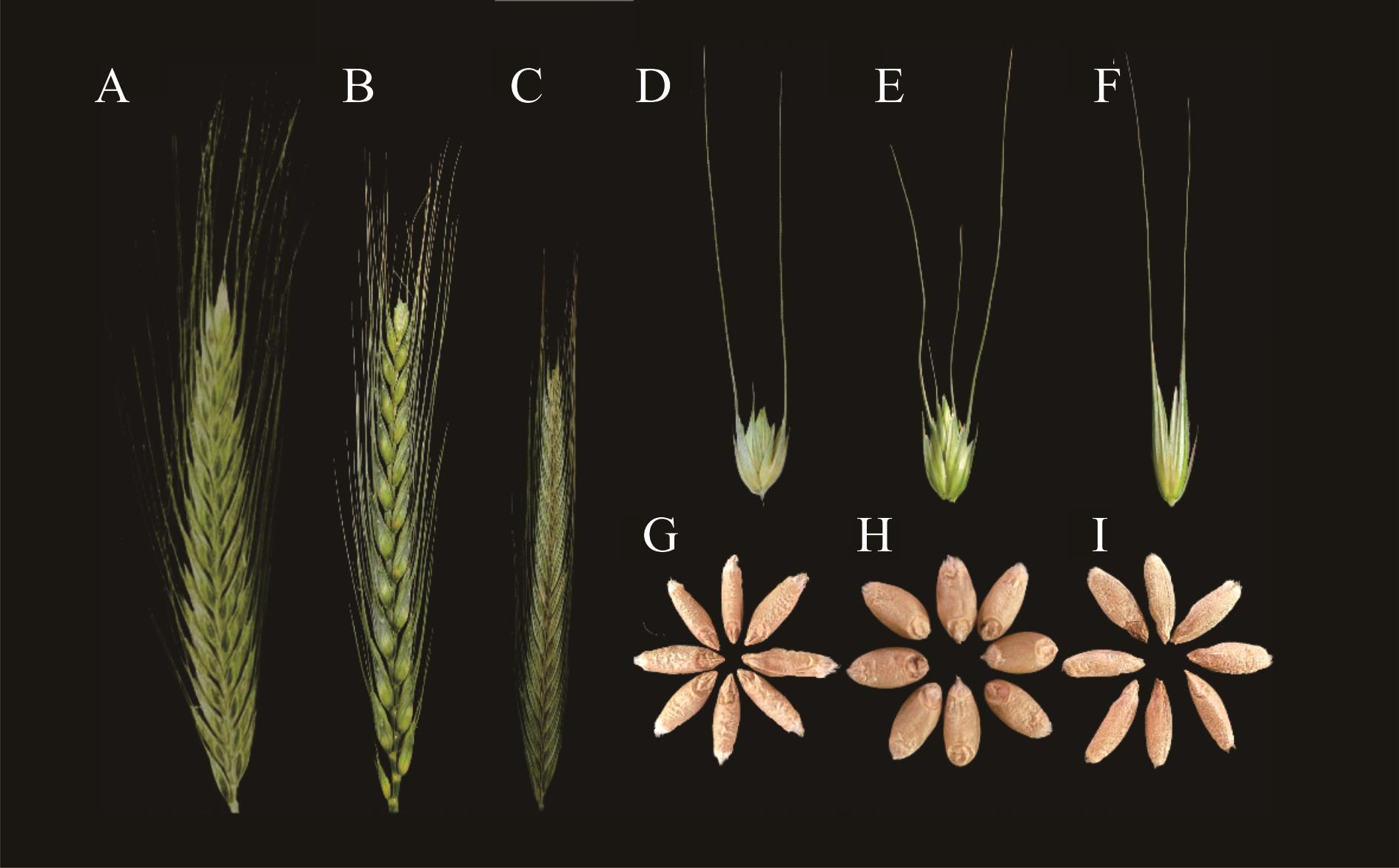
图1 小黑麦与小麦及黑麦花序、小花及籽粒A、B、C分别代表小黑麦、小麦及黑麦的花序,D、E、F分别为小黑麦、小麦及黑麦的小花,G、H、I分别为小黑麦、小麦及黑麦的籽粒。A, B and C represent the inflorescence of triticale, wheat and rye, respectively; D, E and F represent the floret of triticale, wheat and rye, respectively; G, H and I represent the grain of triticale, wheat and rye, respectively.
Fig.1 Inflorescences, florets, and grains of triticale, wheat, and rye

图2 小黑麦与小麦及黑麦花序特征比较*,**分别表示在0.05和0.01水平差异显著。下同。*, ** respectively indicate significant difference at the 0.05 level and extremely significant difference at the 0.01 level. The same below.
Fig.2 Comparison of inflorescence characteristics among triticale, wheat, and rye

图3 小黑麦与小麦及黑麦穗部特征比较
Fig.3 Comparison of spike characteristics among triticale, wheat and rye
| 部位Position | 项目Items | 小黑麦Triticale | 小麦Wheat | 黑麦Rye |
|---|---|---|---|---|
第1小花结构 First floret structure | 芒长Length of awn | 8.48±0.49a | 7.21±0.71b | 5.56±0.29c |
| 外稃长Length of lemma | 1.81±0.18a | 1.34±0.17b | 1.44±0.12b | |
| 外稃宽Width of lemma | 0.31±0.19a | 0.39±0.11a | 0.18±0.11b | |
| 外稃高Height of lemma | 0.36±0.16a | 0.39±0.16a | 0.26±0.09b | |
| 内稃长Length of palea | 1.53±0.07a | 1.23±0.12c | 1.45±0.11b | |
第2小花结构 Second floret structure | 芒长Length of awn | 7.81±0.97a | 6.23±0.45b | 5.31±0.47c |
| 外稃长Length of lemma | 1.73±0.12a | 1.41±0.12b | 1.51±0.17b | |
| 外稃宽Width of lemma | 0.31±0.10b | 0.39±0.11a | 0.18±0.05c | |
| 外稃高Height of lemma | 0.35±0.25b | 0.38±0.10a | 0.22±0.12c | |
| 内稃长Length of palea | 1.51±0.09a | 1.23±0.27b | 1.34±0.12b |
表1 小黑麦与小麦及黑麦中部小穗的小花结构比较
Table 1 Comparison of floret structures in the middle spikelets among triticale, wheat and rye (cm)
| 部位Position | 项目Items | 小黑麦Triticale | 小麦Wheat | 黑麦Rye |
|---|---|---|---|---|
第1小花结构 First floret structure | 芒长Length of awn | 8.48±0.49a | 7.21±0.71b | 5.56±0.29c |
| 外稃长Length of lemma | 1.81±0.18a | 1.34±0.17b | 1.44±0.12b | |
| 外稃宽Width of lemma | 0.31±0.19a | 0.39±0.11a | 0.18±0.11b | |
| 外稃高Height of lemma | 0.36±0.16a | 0.39±0.16a | 0.26±0.09b | |
| 内稃长Length of palea | 1.53±0.07a | 1.23±0.12c | 1.45±0.11b | |
第2小花结构 Second floret structure | 芒长Length of awn | 7.81±0.97a | 6.23±0.45b | 5.31±0.47c |
| 外稃长Length of lemma | 1.73±0.12a | 1.41±0.12b | 1.51±0.17b | |
| 外稃宽Width of lemma | 0.31±0.10b | 0.39±0.11a | 0.18±0.05c | |
| 外稃高Height of lemma | 0.35±0.25b | 0.38±0.10a | 0.22±0.12c | |
| 内稃长Length of palea | 1.51±0.09a | 1.23±0.27b | 1.34±0.12b |
花序特征 Inflorescences characteristics | 小黑麦 Triticale | 小麦 Wheat | 黑麦 Rye | 穗部特征 Spike characteristics | 小黑麦 Triticale | 小麦 Wheat | 黑麦 Rye |
|---|---|---|---|---|---|---|---|
| 花序长Inflorescence length | 9.07 | 6.98 | 12.69 | 小穗数Number of spikelets | 10.65 | 10.72 | 10.06 |
| 花序宽Inflorescence width | 9.26 | 12.81 | 11.61 | 穗粒数Number of grains per spike | 11.84 | 13.89 | 9.83 |
| 顶部小穗小花数Number of florets in top spikelet | 13.73 | 13.64 | 11.28 | 千粒重Weight per thousand grains | 24.93 | 14.57 | 23.15 |
| 中部小穗小花数Number of florets in middle spikelet | 12.78 | 9.89 | 12.98 | 穗长Spike length | 9.86 | 10.27 | 7.11 |
| 基部小穗小花数Number of florets in base spikelet | 22.71 | 10.88 | 2.50 | 穗宽Spike width | 9.62 | 10.00 | 16.67 |
| 上部护颖长Length of upper glume | 16.85 | 10.26 | 11.38 | 穗粒重Grain weight per spike | 14.57 | 14.79 | 10.00 |
| 上部护颖宽Width of upper glume | 12.13 | 15.00 | 18.29 | 籽粒长Grain length | 8.57 | 12.89 | 9.68 |
| 下部护颖长Length of lower glume | 15.82 | 12.24 | 11.97 | 籽粒宽Grain width | 7.69 | 6.67 | 10.00 |
| 下部护颖宽Width of lower glume | 12.90 | 14.25 | 16.46 | 籽粒厚Grain thickness | 7.69 | 8.33 | 9.09 |
表2 小黑麦、小麦及黑麦花序特征与穗部特征变异系数分析
Table 2 Analysis of coefficient of variation for inflorescence characteristics and spike characteristics of triticale, wheat and rye (%)
花序特征 Inflorescences characteristics | 小黑麦 Triticale | 小麦 Wheat | 黑麦 Rye | 穗部特征 Spike characteristics | 小黑麦 Triticale | 小麦 Wheat | 黑麦 Rye |
|---|---|---|---|---|---|---|---|
| 花序长Inflorescence length | 9.07 | 6.98 | 12.69 | 小穗数Number of spikelets | 10.65 | 10.72 | 10.06 |
| 花序宽Inflorescence width | 9.26 | 12.81 | 11.61 | 穗粒数Number of grains per spike | 11.84 | 13.89 | 9.83 |
| 顶部小穗小花数Number of florets in top spikelet | 13.73 | 13.64 | 11.28 | 千粒重Weight per thousand grains | 24.93 | 14.57 | 23.15 |
| 中部小穗小花数Number of florets in middle spikelet | 12.78 | 9.89 | 12.98 | 穗长Spike length | 9.86 | 10.27 | 7.11 |
| 基部小穗小花数Number of florets in base spikelet | 22.71 | 10.88 | 2.50 | 穗宽Spike width | 9.62 | 10.00 | 16.67 |
| 上部护颖长Length of upper glume | 16.85 | 10.26 | 11.38 | 穗粒重Grain weight per spike | 14.57 | 14.79 | 10.00 |
| 上部护颖宽Width of upper glume | 12.13 | 15.00 | 18.29 | 籽粒长Grain length | 8.57 | 12.89 | 9.68 |
| 下部护颖长Length of lower glume | 15.82 | 12.24 | 11.97 | 籽粒宽Grain width | 7.69 | 6.67 | 10.00 |
| 下部护颖宽Width of lower glume | 12.90 | 14.25 | 16.46 | 籽粒厚Grain thickness | 7.69 | 8.33 | 9.09 |
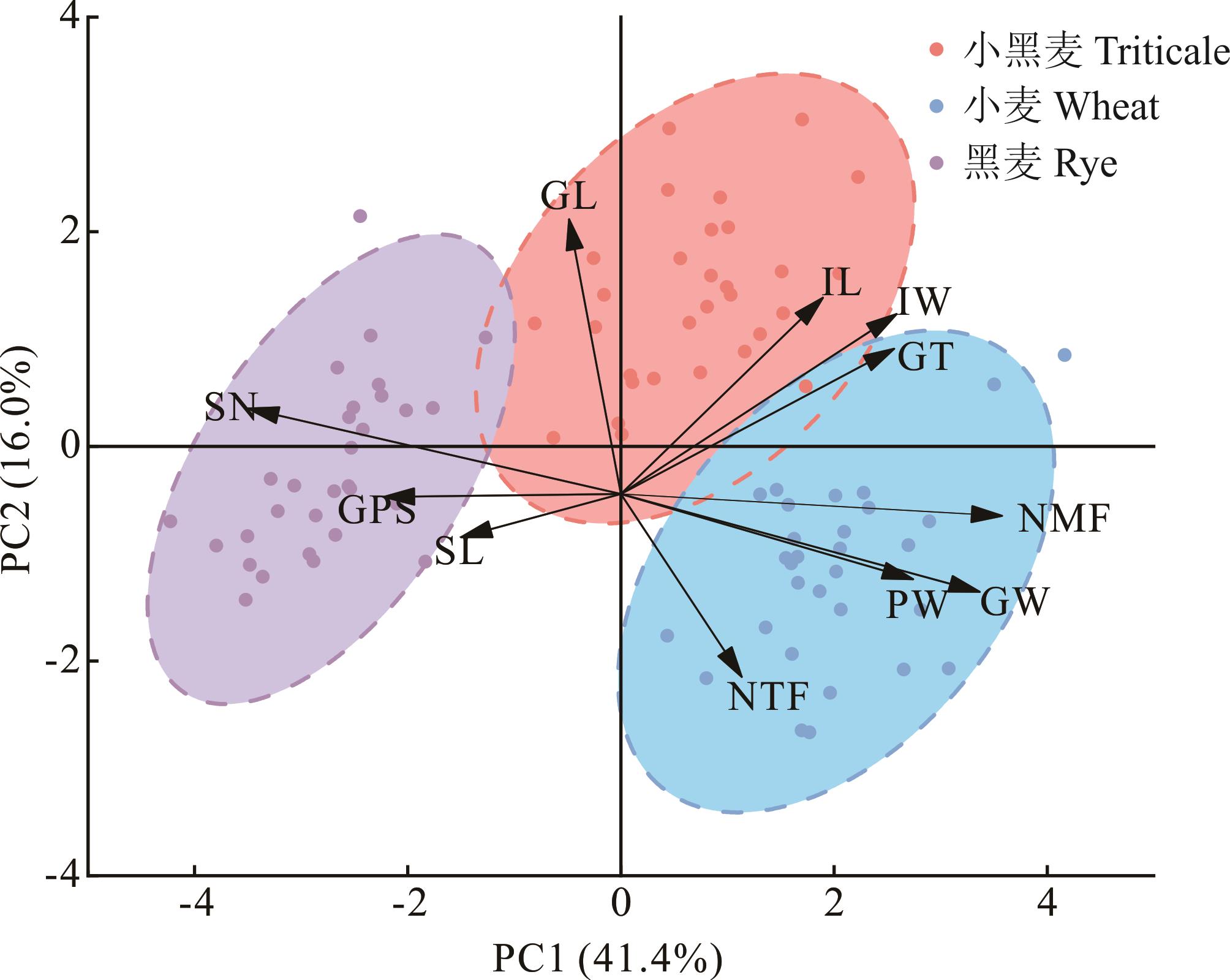
图4 小黑麦与小麦及黑麦花序及穗部特征主成分分析SN: 小穗数Spikelet number; GPS: 穗粒数Grains per spike; SL: 穗长Spike length; PW: 穗粒重Grain weight per spike; GL: 籽粒长Grain length; GW: 籽粒宽Grain width; GT: 籽粒厚Grain thickness; IL: 花序长Inflorescence length; IW: 花序宽Inflorescence width; NTF: 顶部小穗小花数Number of florets in top spikelet; NMF: 中部小穗小花数Number of florets in middle spikelet.
Fig.4 Principal component analysis of inflorescence and spike characteristics of triticale, wheat and rye
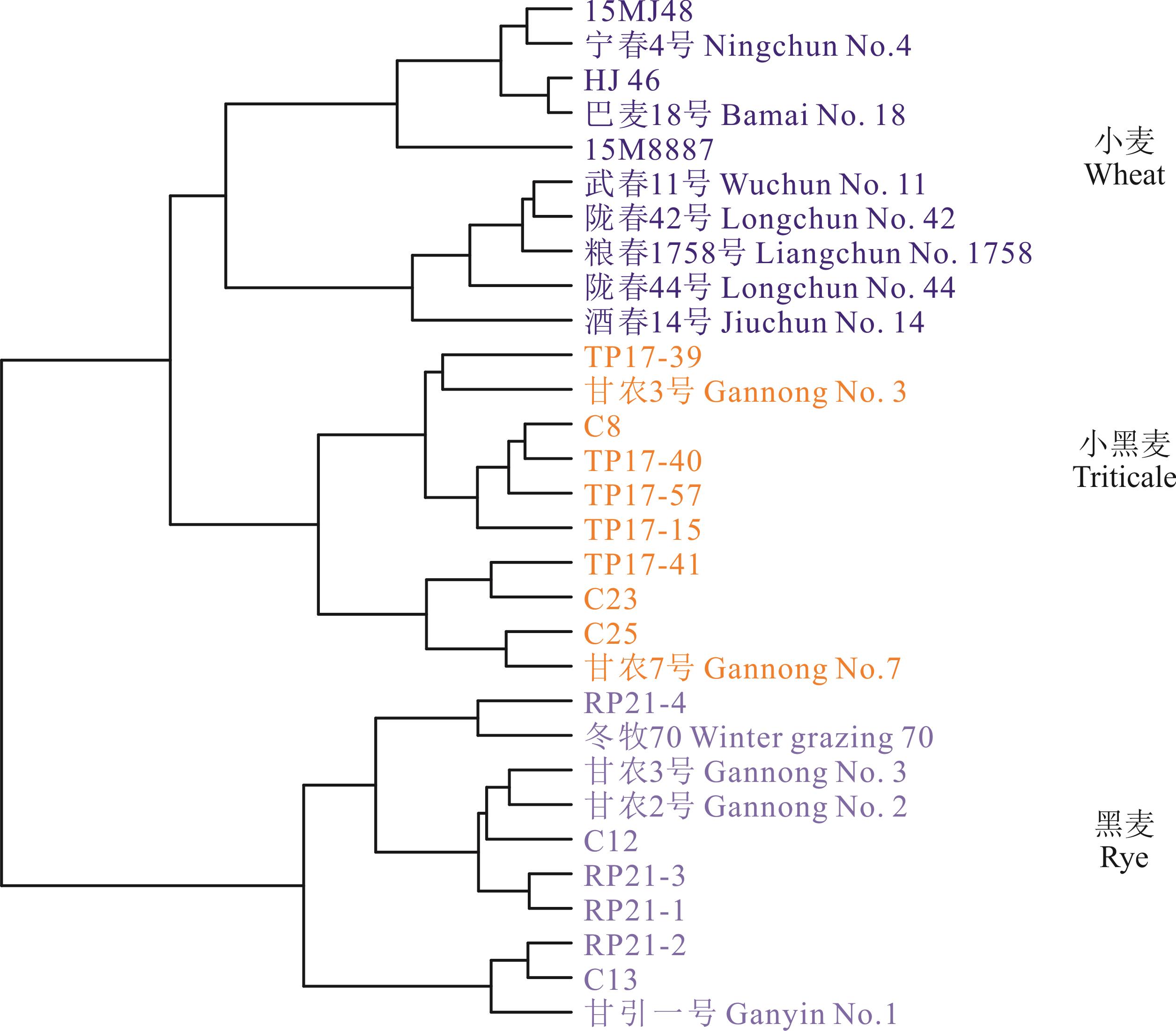
图5 小黑麦与小麦及黑麦花序及穗部特征聚类分析
Fig.5 Cluster analysis of inflorescence and spike characteristics of triticale, wheat and rye
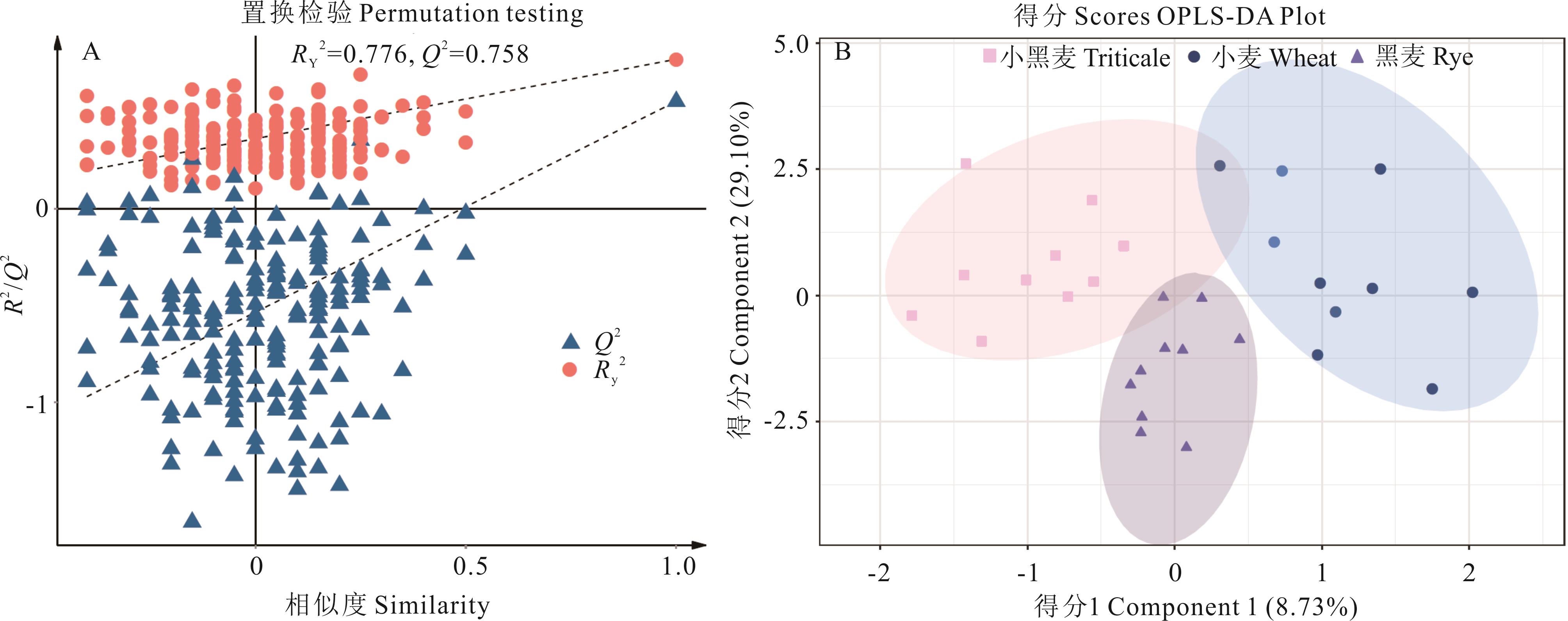
图6 小黑麦与小麦及黑麦花序及穗部特征OPLS-DA模型置换验证及得分
Fig.6 OPLS-DA model permutation validation and score of inflorescence and spike traits of triticale, wheat, and rye
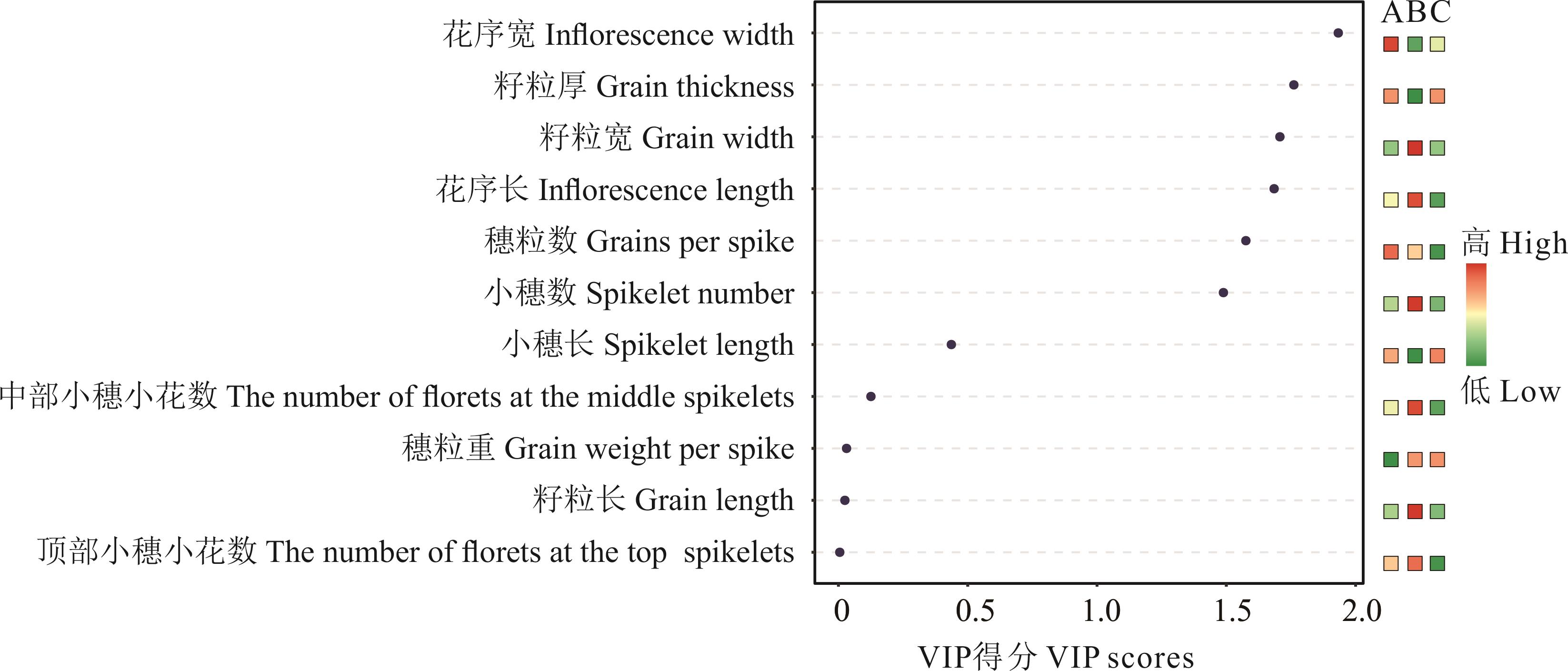
图7 小黑麦与小麦及黑麦花序及穗部特征VIP值A: 小黑麦Triticale; B: 小麦Wheat; C: 黑麦Rye.
Fig.7 VIP values of inflorescence and spike traits of triticale, wheat, and rye
| [1] | Lin Y P, Wu T H, Chan Y K, et al. De novo SNP calling reveals the genetic differentiation and morphological divergence in genus Amaranthus. The Plant Genome, 2022, 15(2): e20206. |
| [2] | Zhang Y, Zhou J, Tng D Y P, et al. Phylogeny and systematics of sassafras (Lauraceae), an interesting genus with disjunct distributions in eastern North America and East Asia. Plants, 2023, 12(6): 1419. |
| [3] | Anil S R, Devi A A, Asha K I, et al. Intraspecific inflorescence and palynological variations in the morphotypes of Amorphophallus paeoniifolius. Genetic Resources and Crop Evolution, 2023, 70(7): 1915-1927. |
| [4] | Yi X Q, He H, Zeng L, et al. Taxonomic significance of floral traits of 21 Epimedium species based on common garden cultivation. Acta Botanica Boreali-Occidentalia Sinica, 2023, 43(8): 1415-1426. |
| 易雪倩, 何花, 曾罗, 等. 基于同质园栽培的21种淫羊藿属植物花部特征的分类学意义. 西北植物学报, 2023, 43(8): 1415-1426. | |
| [5] | Wang R. Taxonomy and phylogeny of Chloridoideae (Poaceae). Ji’nan: Shandong Normal University, 2021. |
| 王蓉. 虎尾草亚科(禾本科)的分类和系统发育研究. 济南: 山东师范大学, 2021. | |
| [6] | Huang W. Analysis of phenotypic genetic diversity and comprehensive evaluation of Elymus L. germplasm resources. Yinchuan: Ningxia University, 2022. |
| 黄薇. 披碱草属种质资源表型遗传多样性分析与综合评价. 银川: 宁夏大学, 2022. | |
| [7] | Liu J. Studies on the photosynthetic performance, nitrogen use efficiency, forage productivity, and adaptability of forage triticale type black rye. Lanzhou: Gansu Agricultural University, 2019. |
| 刘晶. 饲草型小黑麦的光合性能、氮素利用率及生产性能和适应性研究. 兰州: 甘肃农业大学, 2019. | |
| [8] | Liu H C, Tian X H, Du W H. Structural characteristics of the inflorescence and grain traits of triticale and rye corn. Acta Prataculturae Sinica, 2018, 27(7): 120-132. |
| 刘汉成, 田新会, 杜文华. 小黑麦与黑麦花序结构和籽粒特性比较. 草业学报, 2018, 27(7): 120-132. | |
| [9] | Zhang H S, Wu X J, Guo S H, et al. Phenotypic diversity and comprehensive evaluation of Roegneria ciliaris (Trin.) Nevski germplasm resources in He’nan. Journal of Southern Agriculture, 2024, 55(10): 3003-3012. |
| 张鹤山, 吴新江, 郭胜华, 等. 河南省纤毛鹅观草种质资源表型多样性分析及综合评价. 南方农业学报, 2024, 55(10): 3003-3012. | |
| [10] | Hills M J, Hall L M, Messenger D F, et al. Evaluation of crossability between triticale (×Triticosecale Wittmack) and common wheat, durum wheat and rye. Environmental Biosafety Research, 2007, 6(4): 249. |
| [11] | Zhu J H, Chu H L, Shi Z Q, et al. Performance and nutritional quality of 15 triticale materials in Gannan alpine pastoral area. Grassland and Turf, 2024, 44(4): 133-140. |
| 祝嘉慧, 褚红丽, 史志强, 等. 15份小黑麦材料在甘南高寒牧区的生产性能及营养品质. 草原与草坪, 2024, 44(4): 133-140. | |
| [12] | He P L, Jie H D, Adnan R, et al. Comparative study on production performance of forage triticale and Italian Ryegrass in Hu’nan Province. Chinese Journal of Grassland, 2024, 46(4): 144-150. |
| 何鹏亮, 揭红东, Adnan R, 等. 湖南地区饲用小黑麦和多花黑麦草的生产性能比较研究. 中国草地学报, 2024, 46(4): 144-150. | |
| [13] | Qi W J, Du W H, Liu H B, et al. Study on the production performance and nutritive value of annual mixed grass-legume in the rainfed plateau area of Longdong. Chinese Journal of Grassland, 2023, 45(12): 42-50. |
| 齐文嘉, 杜文华, 刘海波, 等. 陇东旱塬区一年生禾豆混播草地生产性能与营养价值研究. 中国草地学报, 2023, 45(12): 42-50. | |
| [14] | Chang D D, Jin X N, Tian X H, et al. Genetic analysis on the mixed model of major gene plus polygenes for the panicle related traits in triticale. Grassland and Turf, 2021, 41(4): 56-63, 73. |
| 常丹丹, 金星娜, 田新会, 等. 小黑麦穗部性状的主基因+多基因混合遗传模型分析. 草原与草坪, 2021, 41(4): 56-63, 73. | |
| [15] | Liu J, Zhao F Y, Li D M, et al. Constructions on the linkage genetic map and initial locations on QTLs related to the hay yield of forage triticale. Acta Agrestia Sinica, 2019, 27(1): 219-226. |
| 刘晶, 赵方媛, 李冬梅, 等. 饲用型小黑麦遗传图谱构建及草产量相关性状QTLs初步定位. 草地学报, 2019, 27(1): 219-226. | |
| [16] | Guo R, Jin X N, Chang D D, et al. QTL analyses of forage yield-related traits using the recombinant inbred line populations of triticale. Acta Agrestia Sinica, 2023, 31(3): 710-718. |
| 郭蕊, 金星娜, 常丹丹, 等. 基于小黑麦RIL群体的草产量相关性状QTL分析. 草地学报, 2023, 31(3): 710-718. | |
| [17] | Tunggawihardja M, Bachelier J B. Floral structure and development in Nandina domestica and implications for systematic affinities in Berberidaceae and perianth evolution in Ranunculales. Botanical Journal of the Linnean Society, 2023, 52(10): 2003-2012. |
| [18] | Lin Z X, Lin D M, Liu Z J, et al. Cenchrus fungigraminus Z. X. Lin & D. M. Lin & S. R. Lan sp. nov., a new species of Panicoideae (Poaceae): evidence from morphological, nuclear and plastid genome data. Journal of Forest and Environment, 2022, 42(5): 514-520. |
| 林占熺, 林冬梅, 刘仲健, 等. 基于形态和基因组证据的禾本科新种——巨菌草(英文). 森林与环境学报, 2022, 42(5): 514-520. | |
| [19] | Wang Y H. Taxonomic study on five genera, including Festuca, of the subfamily Poeae in China. Ji’nan: Shandong Normal University, 2016. |
| 王燕红. 中国早熟禾亚科梯牧草属等五属的系统学研究. 济南: 山东师范大学, 2016. | |
| [20] | Liu D, Zhu H B, Shi J Y, et al. Comparison of the floral trait and scent from two sympatric desert spring flowering Brassicaceae herbs. Pratacultural Science, 2023, 40(5): 1315-1325. |
| 刘丹, 祝洪波, 石靖宇, 等. 同域分布的两种荒漠春季十字花科草本植物的花部特征与花气味差异性比较. 草业科学, 2023, 40(5): 1315-1325. | |
| [21] | Xiong S P, Cao W B, Zhang Z Y, et al. Effects of row spacing and sowing rate on vertical distribution of photosynthetically active radiation, biomass, and grain yield in winter wheat canopy. Chinese Journal of Applied Ecology, 2021, 32(4): 1298-1306. |
| 熊淑萍, 曹文博, 张志勇, 等. 行距和播种量对冬小麦冠层光合有效辐射垂直分布、生物量和籽粒产量的影响. 应用生态学报, 2021, 32(4): 1298-1306. | |
| [22] | Yan T F. Genetic analysis of inflorescence structure and grain characteristics of Avena nuda L. and Avena sativa L.. Yangzhou: Yangzhou University, 2020. |
| 闫天芳. 皮、裸燕麦杂交花序结构特性和籽粒特性遗传分析. 扬州: 扬州大学, 2020. | |
| [23] | Wang Y L, Bi X J, Zhong J S. Revisiting the origin and identity specification of the spikelet: a structural innovation in grasses (Poaceae). Plant Physiology, 2022, 190(1): 60-71. |
| [24] | Kellogg E A, Camara P E A S, Rudall P J, et al. Early inflorescence development in the grasses (Poaceae). Frontiers in Plant Science, 2013, 4: 250. |
| [25] | Liu M J. Analysis of spike type classification and key spike developmental characteristics of Elymus sibiricus L. in the Qinghai-Tibet Plateau. Xi’ning: Qinghai University, 2022. |
| 刘敏洁. 青藏高原老芒麦穗型分类及穗部关键发育特征分析. 西宁: 青海大学, 2022. | |
| [26] | Liu M, Qin Y, Liu W H, et al. Seed yield comparison of Bromus inermis germplasm in the alpine Qinghai-Tibet Plateau. Chinese Journal of Grassland, 2024, 46(3): 70-80. |
| 刘慢, 秦燕, 刘文辉, 等. 青藏高原高寒区不同无芒雀麦种质资源种子产量评价. 中国草地学报, 2024, 46(3): 70-80. | |
| [27] | He Y T, Hu Y, Duan H R, et al. Comprehensive evaluation of cold resistance of four Elymus forage varieties at the seedling stage. Pratacultural Science, 2024, 41(10): 2377-2388. |
| 何永涛, 胡宇, 段慧荣, 等. 披碱草属4个牧草品种苗期抗寒性综合评价. 草业科学, 2024, 41(10): 2377-2388. | |
| [28] | Pilatti V, Muchut S E, Uberti-Manassero N G, et al. Comparative study of the inflorescence, spikelet and flower development in species of Cynodonteae (Chloridoideae, Poaceae). Botanical Journal of the Linnean Society, 2019, 189(4): 353-377. |
| [29] | Kellogg E A, Hiser K M, Doust A N. Taxonomy, phylogeny, and inflorescence development of the genus Ixophorus (Panicoideae: Poaceae). International Journal of Plant Sciences, 2004, 165(6): 1089-1105. |
| [1] | 张译尹, 王斌, 王腾飞, 兰剑, 胡海英. 苜蓿种子田间作小黑麦对饲草产量、水分利用及苜蓿种子产量的影响[J]. 草业学报, 2025, 34(8): 43-53. |
| [2] | 郭楠, 杜鹉辰, 纪守坤, 刘建, 崔素倩, 袁辉, 韩旭, 刘计双, 高立杰. 施肥和补播对山地草甸牧草营养及瘤胃发酵的影响[J]. 草业学报, 2025, 34(4): 150-163. |
| [3] | 高守舆, 刘文静, 李钰莹, 向清源, 许佳俊, 舒蕾淇, 李肇中. 苗期白羊草对盐胁迫的生理生化响应及其耐盐阈值的界定[J]. 草业学报, 2025, 34(3): 164-174. |
| [4] | 关皓, 许多, 李海萍, 贾志锋, 马祥, 刘文辉, 陈有军, 李欣洋, 黄艳玲, 周青平, 陈仕勇. 高寒地区17个燕麦品种营养品质及瘤胃降解特性研究[J]. 草业学报, 2024, 33(9): 185-198. |
| [5] | 陆姣云, 田宏, 熊军波, 吴新江, 刘洋, 张鹤山. 14份乡土狼尾草材料幼苗的耐冷性综合评价[J]. 草业学报, 2024, 33(8): 98-111. |
| [6] | 孟晨, 鲁雪莉, 宋亦汝, 张成省, 李义强, 项海芹, 徐宗昌. 11份益母草种质材料苗期耐盐性评价与鉴定[J]. 草业学报, 2024, 33(5): 196-203. |
| [7] | 王萌, 鲁雪莉, 王菊英, 张梦超, 宋奕汝, 孟晨, 张莉, 徐宗昌. 小黑麦种质萌发期苗期耐盐资源评价与筛选[J]. 草业学报, 2024, 33(5): 58-68. |
| [8] | 张译尹, 李雪颖, 王斌, 宋珂辰, 兰剑, 胡海英. 盐胁迫对不同种质小黑麦幼苗水分利用效率和渗透调节的影响[J]. 草业学报, 2024, 33(4): 87-98. |
| [9] | 张珈敏, 关皓, 李海萍, 贾志锋, 马祥, 刘文辉, 陈有军, 陈仕勇, 蒋永梅, 甘丽, 周青平, 杨丽雪. 混播比例及乳酸菌剂对燕麦-饲用豌豆发酵TMR品质及瘤胃降解特性的影响[J]. 草业学报, 2024, 33(1): 169-181. |
| [10] | 曹玉莹, 苏雪萌, 周正朝, 郑群威, 岳佳辉. 黄土高原典型草本植物根-土复合体抗剪性能的空间差异性及其影响因素研究[J]. 草业学报, 2023, 32(5): 94-105. |
| [11] | 朱丽丽, 张业猛, 李万才, 赵亚利, 李想, 陈志国. 39个我国不同生态区培育的青贮玉米品种在青海高原适应性研究[J]. 草业学报, 2023, 32(4): 68-78. |
| [12] | 李春艳, 王艳, 李欣瑞, 李英主, 李明峰, 陈丽丽, 雷雄, 闫利军, 游明鸿, 季晓菲, 张昌兵, 吴婍, 苟文龙, 李达旭, 鄢家俊, 白史且. 中国野生老芒麦形态多样性研究与种质利用潜力分析[J]. 草业学报, 2023, 32(3): 67-79. |
| [13] | 魏露萍, 周青平, 刘芳, 林积圳, 詹圆, 汪辉. 遮穗和去颖下燕麦穗部特征变化和穗部光合贡献率估算[J]. 草业学报, 2023, 32(2): 110-118. |
| [14] | 孟晨, 鲁雪莉, 王菊英, 魏云冲, 张成省, 李义强, 徐宗昌. 不同类型盐胁迫对小黑麦种子萌发的影响[J]. 草业学报, 2023, 32(12): 171-180. |
| [15] | 徐宗昌, 鲁雪莉, 魏云冲, 孟晨, 张梦超, 张缘杨, 王萌, 王菊英, 张成省, 李义强. 航天诱变野大豆SP1群体苗期耐盐性鉴定与评价[J]. 草业学报, 2023, 32(11): 168-178. |
| 阅读次数 | ||||||
|
全文 |
|
|||||
|
摘要 |
|
|||||
