

ISSN 1004-5759 CN 62-1105/S
草业学报 ›› 2026, Vol. 35 ›› Issue (8): 45-54.DOI: 10.11686/cyxb2025330
杨金辉( ), 王晓彤, 马永龙, 余冬雯, 童玉花, 李淑霞()
收稿日期:2025-08-14
修回日期:2025-10-22
出版日期:2026-08-20
发布日期:2026-06-22
通讯作者:
李淑霞
作者简介:Corresponding author. E-mail: lishuxia620@163.com基金资助:
Jin-hui YANG(), Xiao-tong WANG, Yong-long MA, Dong-wen YU, Yu-hua TONG, Shu-xia LI()
Received:2025-08-14
Revised:2025-10-22
Online:2026-08-20
Published:2026-06-22
Contact:
Shu-xia LI
摘要:
以‘中苜1号’紫花苜蓿为材料,采用叶面喷施50 mg·L-1二氧化铈纳米颗粒(CeO2 NPs)溶液进行处理,再用300 mmol·L-1盐胁迫处理幼苗10 d,通过测定幼苗生长、光合、膜脂过氧化、抗氧化系统和渗透调节物质等指标,综合评价CeO2 NPs对紫花苜蓿幼苗耐盐性的影响。结果表明,盐胁迫显著抑制了紫花苜蓿幼苗的生长,降低了其生物量和光合作用,增加了活性氧的积累。在盐胁迫下,喷施CeO2 NPs显著缓解了盐胁迫对紫花苜蓿幼苗的损伤,促进了幼苗的生长和生物量的增加,提高了紫花苜蓿的相对含水量和光合作用。此外,喷施CeO2 NPs处理明显降低了盐胁迫下紫花苜蓿的相对电导率、丙二醛(MDA)、过氧化氢(H2O2)和超氧阴离子(·O2-)积累,同时升高了超氧化物歧化酶(SOD)、抗坏血酸过氧化物酶(APX)、过氧化氢酶(CAT)和过氧化物酶(POD)活性以及可溶性糖和脯氨酸含量,与单独盐胁迫处理相比分别提高了20.0%、29.9%、41.4%和54.3%,39.4%和16.5%。综合表明,CeO2 NPs通过增强紫花苜蓿的抗氧化酶活性、促进渗透调节物质积累,降低过氧化损伤,从而促进植株的光合作用和生长,最终增强紫花苜蓿的耐盐性。
杨金辉, 王晓彤, 马永龙, 余冬雯, 童玉花, 李淑霞. 喷施纳米氧化铈对紫花苜蓿幼苗耐盐性的影响[J]. 草业学报, 2026, 35(8): 45-54.
Jin-hui YANG, Xiao-tong WANG, Yong-long MA, Dong-wen YU, Yu-hua TONG, Shu-xia LI. Effect of CeO2 NPs on the salt tolerance of alfalfa seedlings[J]. Acta Prataculturae Sinica, 2026, 35(8): 45-54.
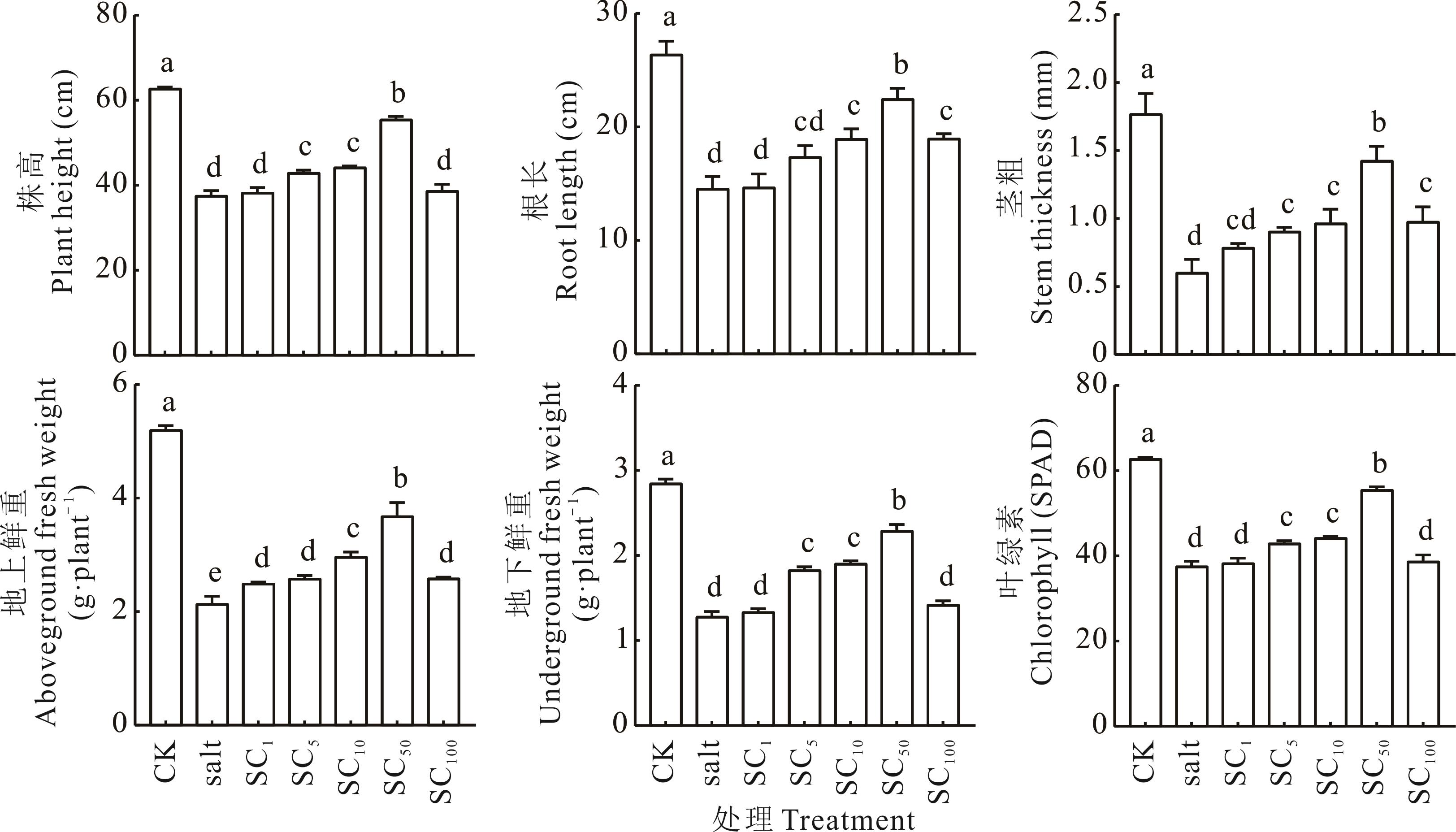
图1 喷施不同浓度CeO2 纳米颗粒溶液对盐胁迫下苜蓿幼苗生长的影响SC1、SC5、SC10、SC50、SC100处理分别表示1、5、10、50、100 mg·L-1 CeO2 NPs喷施后统一用300 mmol·L-1 NaCl进行处理。不同字母表示处理间差异显著(P<0.05),下同。SC1, SC5, SC10, SC50, and SC100 treatments represent the application of 1, 5, 10, 50, and 100 mg·L-1 CeO2 NPs, respectively, followed by uniform treatment with 300 mmol·L-1 NaCl. Different letters indicate significant differences among treatments (P<0.05), the same below.
Fig.1 Effect of sprayed CeO2 nanoparticles concentration on the growth of alfalfa seedlings under salt stress
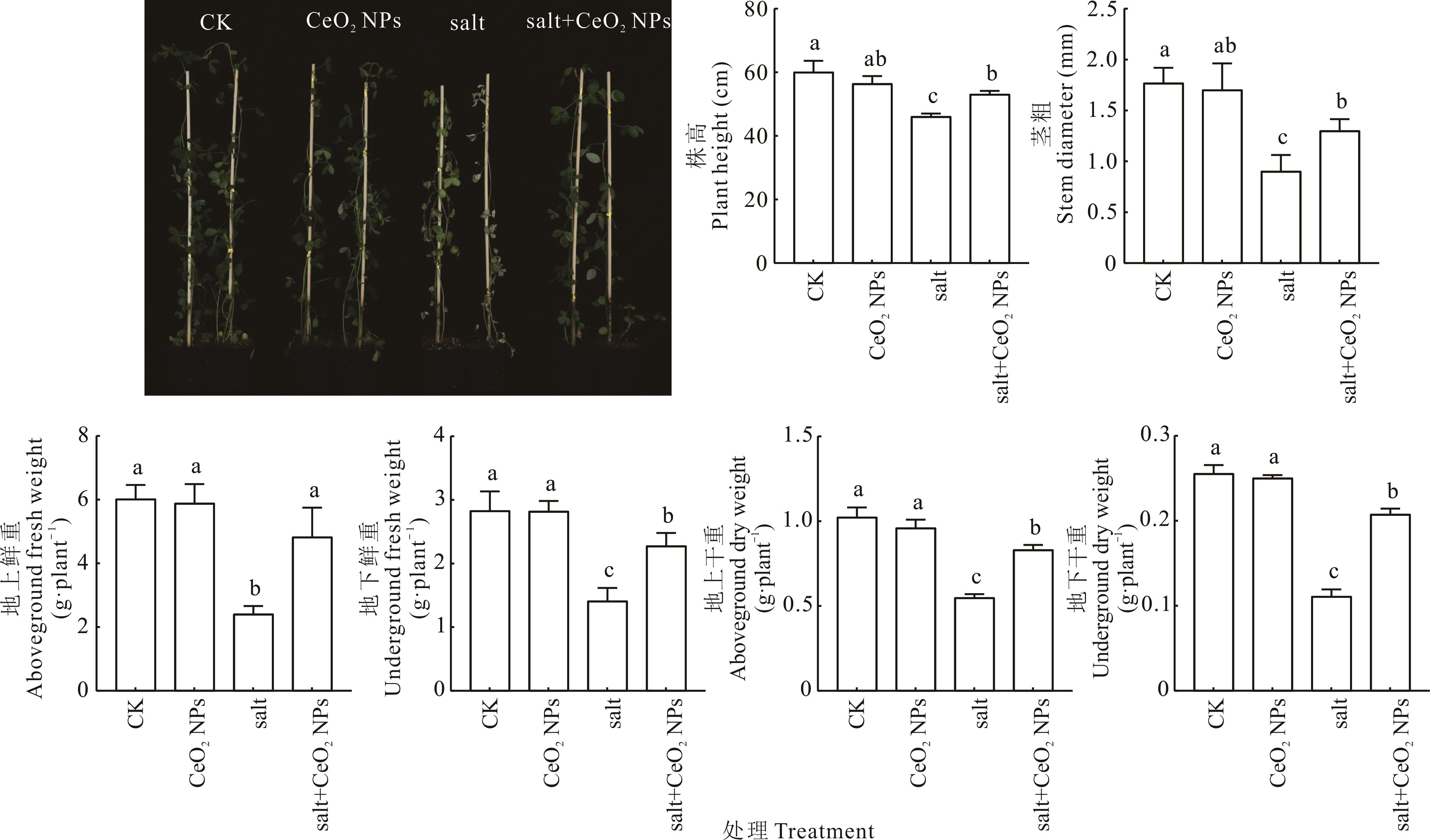
图2 喷施CeO2纳米颗粒溶液对盐胁迫下紫花苜蓿幼苗生长的影响
Fig.2 Effect of CeO2 nanoparticles spraying treatment on alfalfa seedling growth under salt stress
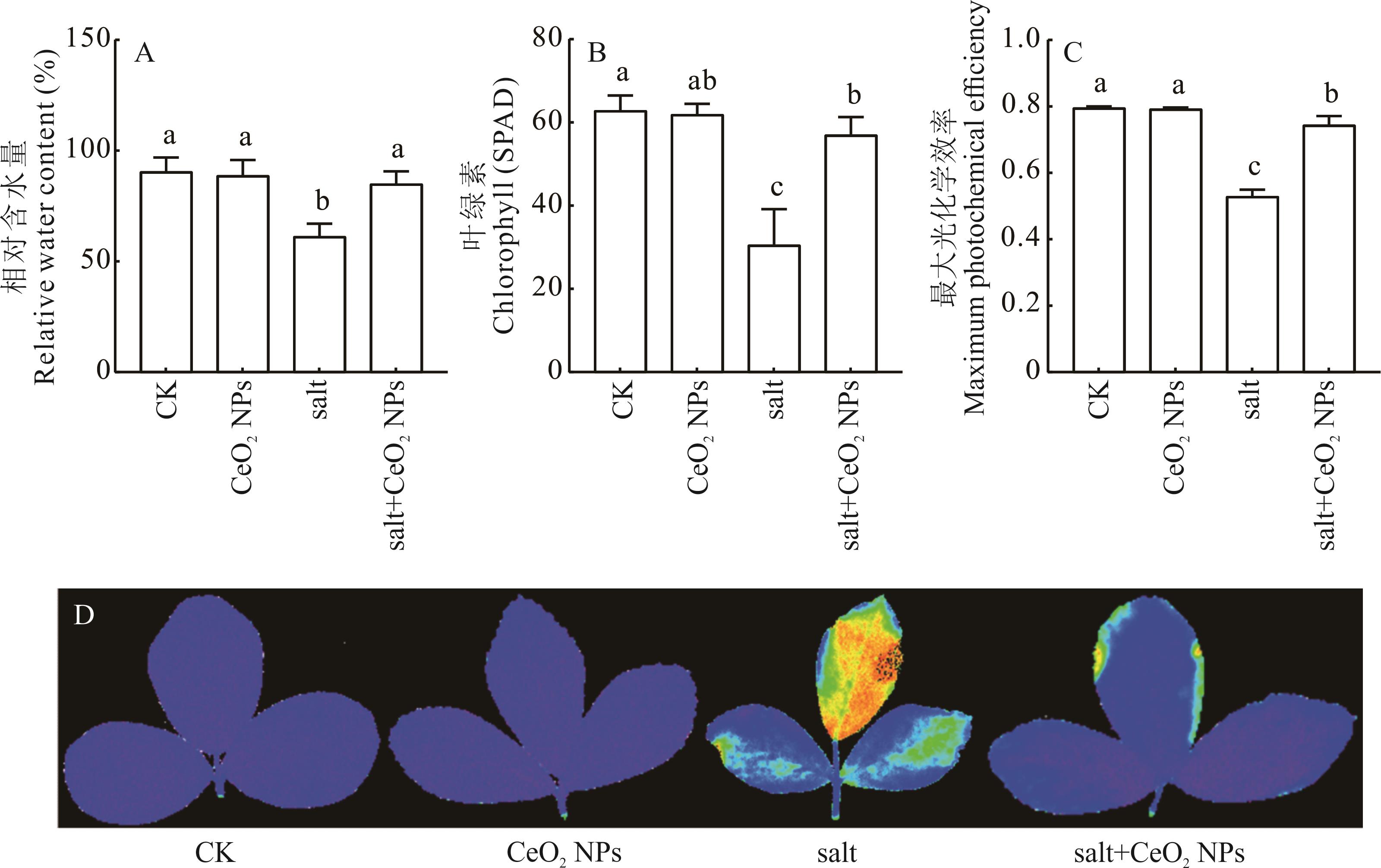
图3 喷施CeO2纳米颗粒溶液对盐胁迫下紫花苜蓿幼苗相对含水量和光合作用的影响
Fig.3 Effect of CeO2 nanoparticles spraying treatment on relative water content and photosynthesis in alfalfa seedlings under salt stress
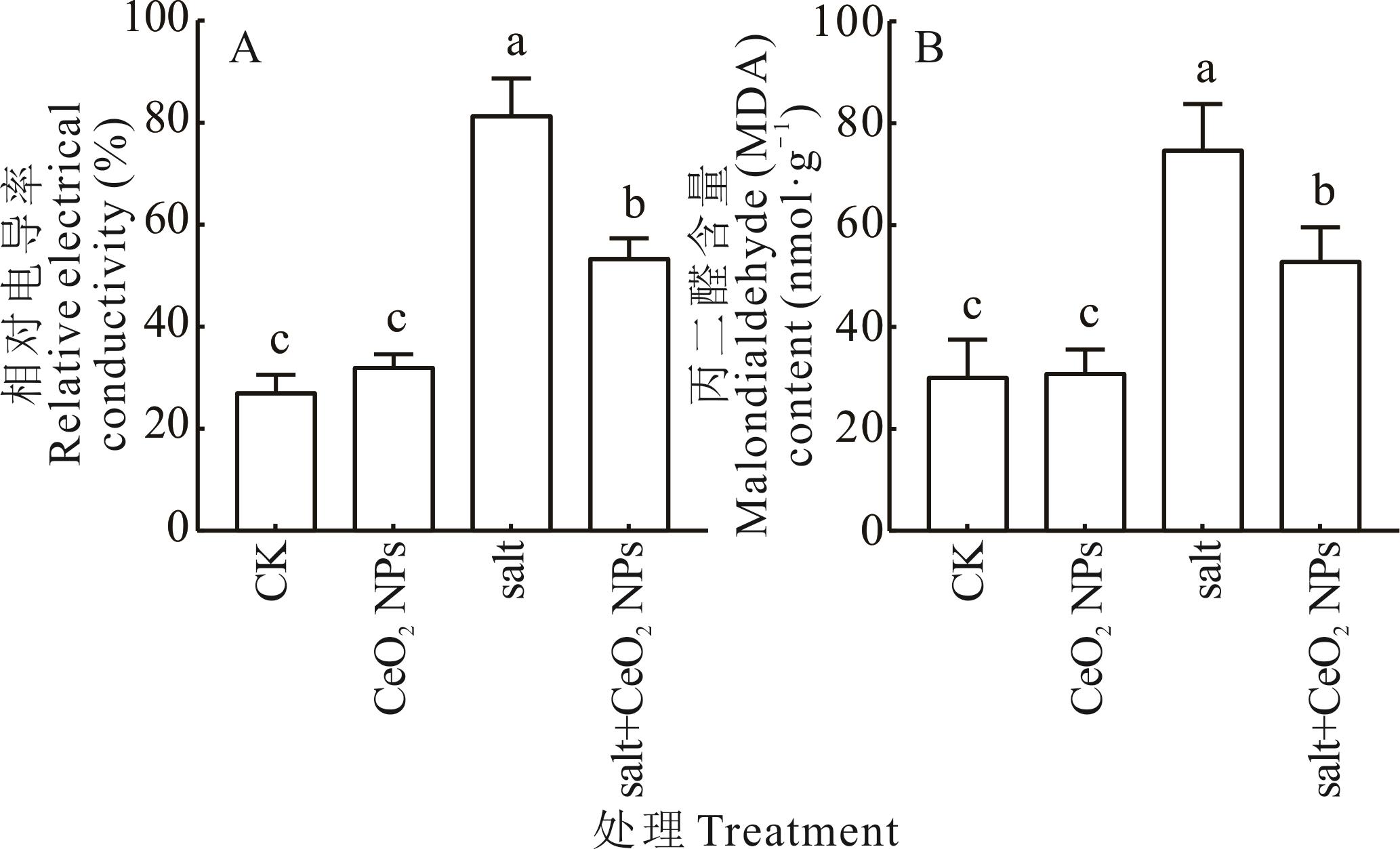
图4 喷施CeO2纳米颗粒溶液对盐胁迫下紫花苜蓿幼苗相对电导率与丙二醛含量的影响
Fig.4 Effect of CeO2 nanoparticles spraying treatment on relative electrical conductivity (REC) and malondialdehyde (MDA) content of alfalfa seedlings under salt stress
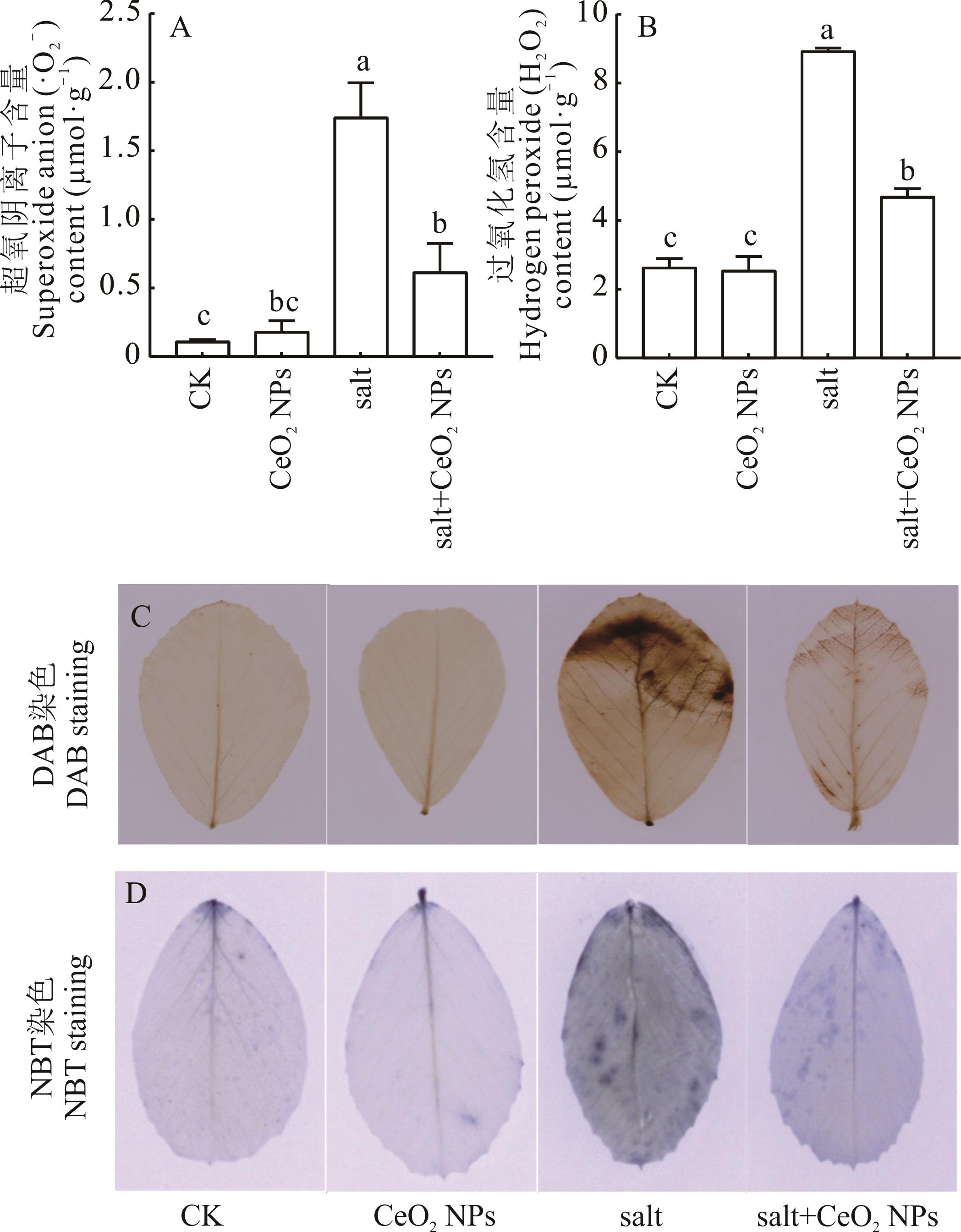
图5 喷施CeO2纳米颗粒溶液对盐胁迫下紫花苜蓿幼苗活性氧积累的影响DAB: 3,3'-二氨基联苯胺 3,3' diaminobenzidine; NBT: 硝基四氮唑蓝 Nitroblue tetrazolium.
Fig.5 Effect of CeO2 nanoparticles spraying treatment on reactive oxygen species accumulation in alfalfa seedlings under salt stress
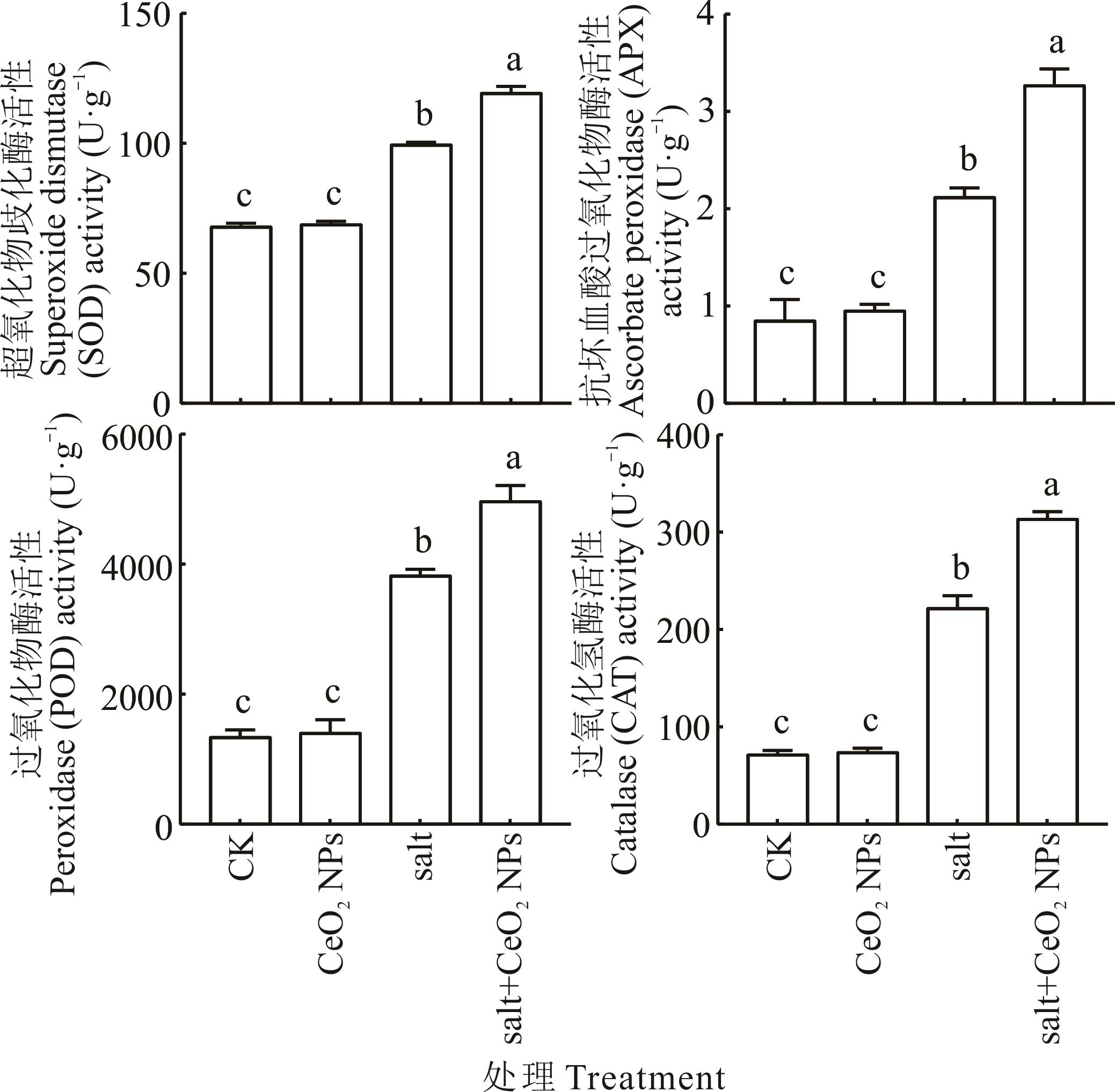
图6 喷施CeO2纳米颗粒溶液对盐胁迫下紫花苜蓿幼苗抗氧化酶系统的影响
Fig.6 Effect of CeO2 nanoparticles spraying treatment on the antioxidant enzyme system of alfalfa seedlings under salt stress
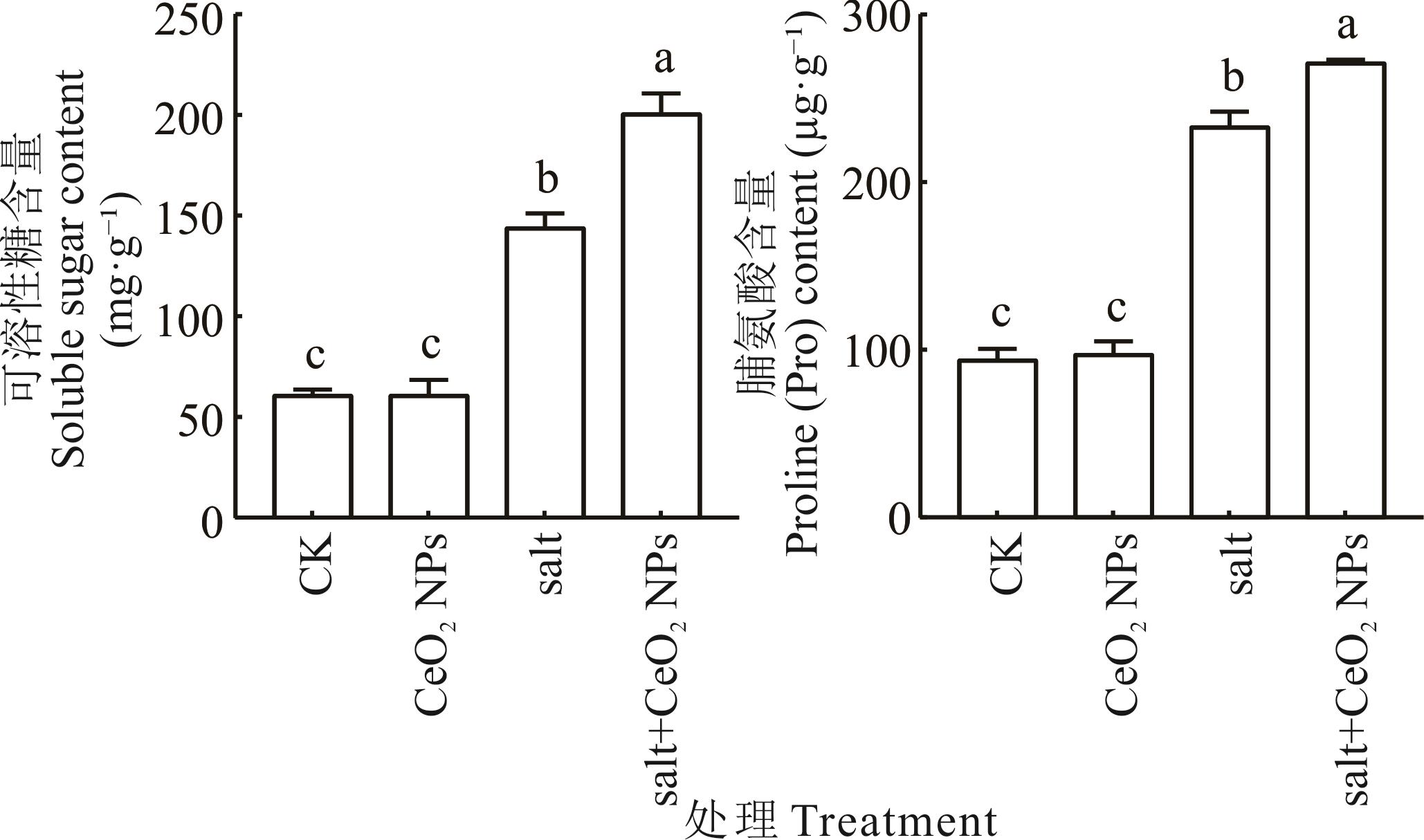
图7 喷施CeO2纳米颗粒溶液对盐胁迫下紫花苜蓿幼苗渗透调节物质的影响
Fig.7 Effect of CeO2 nanoparticles spraying treatment on osmotic regulatory substances in alfalfa seedlings under salt stress
| [1] | Li J G, Pu L J, Zhu M, et al. The present situation and hot lssues in the salt-affected soil research. Acta Geographica Sinica, 2012, 67(9): 1233-1245. |
| 李建国, 濮励杰, 朱明, 等. 土壤盐渍化研究现状及未来研究热点. 地理学报, 2012, 67(9): 1233-1245. | |
| [2] | Zhang K, Li M N, Cao S H, et al. The research advances of molecular mechanisms of plant in responding to salt stress. Acta Agrestia Sinica, 2017, 25(2): 226-235. |
| 张昆, 李明娜, 曹世豪, 等. 植物盐胁迫下应激调控分子机制研究进展. 草地学报, 2017, 25(2): 226-235. | |
| [3] | Hassan E, Hanideh F, Muhammad R. Interactions of nanoparticles and salinity stress at physiological, biochemical and molecular levels in plants: A review. Ecotoxicology and Environmental Safety, 2021, 225: 112769. |
| [4] | Kumar M, Etesami H, Kumar V, et al. Saline soil-based agriculture by halotolerant microorganisms. Singapore: Springer, 2019. |
| [5] | Parul P, Samiksha S, Rachana S, et al. Effect of salinity stress on plants and its tolerance strategies: A review. Environmental Science and Pollution Research, 2015, 22(6): 4056-4075. |
| [6] | Pan J, Huang C H, Luo J, et al. Effects of salt stress on plant and the mechanism of arbuscular mycorrhizal fungi enhancing salt tolerance of plants. Advances in Earth Science, 2018, 33(4): 361-372. |
| 潘晶, 黄翠华, 罗君, 等. 盐胁迫对植物的影响及AMF提高植物耐盐性的机制. 地球科学进展, 2018, 33(4): 361-372. | |
| [7] | Xu J Y, Shi X L, Li X, et al. Analysis of domestic current situation of Medicago sativa L. mixed planting. Modern Agriculture Research, 2024, 30(5): 107-111. |
| 徐静怡, 石昕岚, 李勋, 等. 国内紫花苜蓿混播研究现状分析. 现代农业研究, 2024, 30(5): 107-111. | |
| [8] | Sun P B, Wang Z J, Gegentu, et al. Research progress of alfalfa salt and alkali stress tolerance and mitigation measures. Northern Horticulture, 2023(21): 131-137. |
| 孙鹏波, 王志军, 格根图, 等. 紫花苜蓿耐盐碱胁迫与缓减措施的研究进展. 北方园艺, 2023(21): 131-137. | |
| [9] | Ahmad I, Akhtar M S. Use of nanoparticles in alleviating salt stress//Salt stress, microbes, and plant interactions: Causes and solution. Singapore: Springer, 2019: 199-215. |
| [10] | Faisal Z, Muhammad A. Nanoparticles potentially mediate salt stress tolerance in plants. Plant Physiology and Biochemistry, 2021, 160(3): 257-268. |
| [11] | Deyala M N, Hanan A. Metabolic status during germination of nano silica primed Zea mays seeds under salinity stress. Journal of Crop Science and Biotechnology, 2019, 22(11): 415-423. |
| [12] | Chen S Y, Lu Y, Wu S F, et al. Effects of seed soaking in Fe3O4 nanoparticle on tomato seed germination and seedling protective enzyme system under saline stress. Acta Pedologica Sinica, 2024, 61(4): 1166-1178. |
| 陈思远, 鲁尧, 武思凡, 等. 纳米级Fe3O4分散液浸种对NaCl胁迫下番茄种子萌发及幼苗保护酶系统的影响. 土壤学报, 2024, 61(4): 1166-1178. | |
| [13] | Kalteh M, Alipour Z T, Ashraf S, et al. Effect of silica nanoparticles on basil (Ocimum basilicum) under salinity stress. Journal of Chemical Health Risks, 2014, 4(8): 49-55. |
| [14] | Wang Z S, Li H, Li X N, et al. Nano-ZnO priming induces salt tolerance by promoting photosynthetic carbon assimilation in wheat. Archives of Agronomy and Soil Science, 2020, 66(9): 1259-1273. |
| [15] | Hussain A, Rizwan M, Ali Q, et al. Seed priming with silicon nanoparticles improved the biomass and yield while reduced the oxidative stress and cadmium concentration in wheat grains. Environmental Science and Pollution Research, 2019, 26(1): 7579-7588. |
| [16] | Ma J X. Mechanism of nano cerium oxide seed priming in promoting seed germination of rapeseed under low temperature stress. Hefei: Anhui Agricultural University, 2024. |
| 马锦旭. 纳米氧化铈引发促进低温胁迫下油菜种子萌发的机制研究. 合肥: 安徽农业大学, 2024. | |
| [17] | Zhou H, Wu H H, Zhang F, et al. Molecular basis of cerium oxide nanoparticle enhancement of rice salt tolerance and yield. Environmental Science. Nano, 2021, 8(11): 3294-3311. |
| [18] | Wu H, Zhang X, Giraldo J P, et al. It is not all about sodium: Revealing tissue specificity and signalling roles of potassium in plant responses to salt stress. Plant and Soil, 2018, 431(8): 1-17 |
| [19] | Chang J J.Identification of melatonin synthesis genes in watermelon and signaling mechanism of melatonin regulation of cold resistance. Yangling: Northwest A&F University, 2021. |
| 常静静. 西瓜褪黑素合成基因鉴定及褪黑素调控抗冷性的信号传导机制. 杨凌: 西北农林科技大学, 2021. | |
| [20] | Li Y H.Study on improving rapeseed salt tolerance trough cerium oxide nanoparticles. Wuhan: Huazhong Agricultural University, 2021. |
| 李燕辉. 氧化铈纳米颗粒提升油菜耐盐性的研究. 武汉: 华中农业大学, 2021. | |
| [21] | Basit F, Bhat J A, Ulhassan Z, et al. Seed priming with spermine mitigates chromium stress in rice by modifying the ion homeostasis, cellular ultrastructure and phytohormones balance. Antioxidants, 2022, 11(9): 1704. |
| [22] | Fukagawa N K, Ziska L H. Rice: Importance for global nutrition. Journal of Nutritional Science and Vitaminology, 2019, 65(10): S2-S3. |
| [23] | Wu H H, Shabala L, Shabala S, et al. Hydroxyl radical scavenging by cerium oxide nanoparticles improves Arabidopsis salinity tolerance by enhancing leaf mesophyll potassium retention. Environmental Sciences: Nano, 2018, 5(7): 1567. |
| [24] | Wu H H, Tito N, Giraldo J P, et al. Anionic cerium oxide nano-particles protect plant photosynthesis from abiotic stress by scavenging reactive oxygen species. ACS Nano, 2017, 11(11): 11283-11297. |
| [25] | Liu J H, Li G J, Chen L L, et al. Cerium oxide nanoparticles improve cotton salt tolerance by enabling better ability to maintain cytosolic K+/Na+ ratio. Journal of Nanobiotechnology, 2021, 19(5): 153. |
| [26] | Li Y H, Liu J H, Fu C C, et al. CeO2 nanoparticles modulate Cu-Zn superoxide dismutase and lipoxygenase-Ⅳ isozyme activities to alleviate membrane oxidative damage to improve rape-seed salt tolerance. Environmental Sciences Nano, 2022, 9(3): 1116-1132. |
| [27] | Djanaguiraman M, Nair R, Giraldo J R, et al. Cerium oxide nan-oparticles decrease drought-induced oxidative damage in sorghum leading to higher photosynthesis and grain yield. ACS Omega, 2018, 3(10): 14406-14416. |
| [28] | Wang Q Z, Liu Q, Gao Y N, et al. Review on the mechanisms of the response to salinity-alkalinity stress in plants. Acta Ecologica Sinica, 2017, 37(16): 5565-5577. |
| 王佺珍, 刘倩, 高娅妮, 等. 植物对盐碱胁迫的响应机制研究进展. 生态学报, 2017, 37(16): 5565-5577. | |
| [29] | Li Y H, Lin R C. Advances in the regulation mechanism of chlorophyll synthesis. Chinese Bulletin of Life Sciences, 2024, 36(9): 1141-1148. |
| 李玉红, 林荣呈. 叶绿素合成调控研究进展. 生命科学, 2024, 36(9): 1141-1148. | |
| [30] | Qin Z W, Wei Q Y, Liang L M, et al. Effects of cerium oxide nanoparticles seed priming on growth and physiological characteristics, and expression of stress resistance genes in pepper plants under salt stress. Jiangsu Journal of Agricultural Sciences, 2024, 40(9): 1719-1730. |
| 秦中维, 魏茜雅, 梁腊梅, 等. 氧化铈纳米颗粒引发处理对盐胁迫下辣椒植株生长、生理特性及相关耐盐基因表达的影响. 江苏农业学报, 2024, 40(9): 1719-1730. | |
| [31] | Zhu J K. Abiotic stress signaling and responses in plants. Cell, 2016, 167(2): 313-324. |
| [32] | Li X, Ahammed G J, Zhang X N, et al. Melatonin-mediated regulation of anthocyanin biosynthesis and antioxidant defense confer tolerance to arsenic stress in Camellia sinensis L. Journal of Hazardous Materials, 2021, 403(2): 123922. |
| [33] | Corsi F, Deidda T G, Urbani M, et al. The impressive anti-inflammatory activity of cerium oxide nanoparticles: More than redox? Nanomaterials, 2023, 13(20): 2803. |
| [34] | An J, Hu P G, Li F J, et al. Emerging investigator series: Molecular mechanisms of plant salinity stress tolerance improvement by seed priming with cerium oxide nanoparticles. Environmental Sciences Nano, 2020, 7(8): 2214-2228. |
| [35] | Lorenzo R, Weilan Z, Leonardo L, et al. The impact of cerium oxide nanoparticles on the salt stress responses of Brassica napus L. Environmental Pollution, 2016, 219(12): 28-36. |
| [36] | El-badri A M, Batool M, Mohamed I A, et al. Modulation of salinity impact on early seedling stage via nano-priming application of zinc oxide on rapeseed (Brassica napus L.). Plant Physiology and Biochemistry, 2021, 166(9): 376-392. |
| [37] | Gholamreza G, Elnaz Z, Havzhin R, et al. Protective effects of cerium oxide nanoparticles in grapevine (Vitis vinifera L.) cv. Flame seedless under salt stress conditions. Ecotoxicology and Environmental Safety, 2021, 220(9): 112402. |
| [38] | Khan M N, Li Y, Khan Z, et al. Nanoceria seed priming enhanced salt tolerance in rapeseed through modulating ROS homeostasis and α-amylase activities. Journal of Nanobiotechnology, 2021, 276(9): 1-9. |
| [1] | 李若鸿, 李长然, 傅佳怡, 胡新雨, 毛培胜. 纳米铁引发和生物炭结壳包衣对中华羊茅种子萌发和幼苗生长耐盐性的影响[J]. 草业学报, 2026, 35(8): 32-44. |
| [2] | 陈奋奇, 张金青, 禹一箭, 李振宇. 紫花苜蓿AP2亚家族基因鉴定、生信分析及MsBBM基因克隆[J]. 草业学报, 2026, 35(7): 117-134. |
| [3] | 刘昊臻, 晁嘉潞, 赵士钦, 王成, 张景鈜, 孙守江. 紫花苜蓿BBR-BPC全基因组鉴定及响应种子老化的表达模式分析[J]. 草业学报, 2026, 35(7): 135-150. |
| [4] | 任孟雨, 王利群, 南丽丽, 郭佳雨. 紫花苜蓿新品系对盐胁迫的响应[J]. 草业学报, 2026, 35(6): 24-34. |
| [5] | 李小聪, 闫聚辉, 王星, 胡鹏飞, 叶雨浓, 伏兵哲. 紫花苜蓿/无芒雀麦间作对草地生产性能和土壤理化特性的影响[J]. 草业学报, 2026, 35(5): 113-125. |
| [6] | 魏明, 吴欣蕊, 吴璇, 李昊, 伍国强, 张伟杰, 程子义. 甜菜碱醛脱氢酶基因BvBADH2的克隆及在植物盐胁迫中的作用[J]. 草业学报, 2026, 35(5): 185-195. |
| [7] | 马苹, 刘志国, 沙煜舒, 刘亚玲, 妥小梅, 伏兵哲, 高雪芹. 紫花苜蓿苗期氮利用特性及氮高效品种的筛选[J]. 草业学报, 2026, 35(4): 112-123. |
| [8] | 张钿, 冷华娟, 崔婧, 何飞, 王雪, 李明娜, 杨青川, 康俊梅. 紫花苜蓿突触结合蛋白家族成员鉴定与非生物胁迫下的表达分析[J]. 草业学报, 2026, 35(4): 158-168. |
| [9] | 张世超, 崔国文, 张德鹏, 韩福迎, 丁叮, 吕向丽, 林硕, 陈乐然, 李吉儒, 才华. 紫花苜蓿非组培遗传转化体系创建及在耐盐基因功能鉴定与基因编辑中的应用[J]. 草业学报, 2026, 35(3): 223-234. |
| [10] | 马祥, 李中兴, 杨容尘, 琚泽亮, 贾志锋, 杨培志. 盐胁迫对不同耐盐性燕麦糖类及内源激素含量变化的影响[J]. 草业学报, 2026, 35(3): 235-244. |
| [11] | 童玉花, 王晓彤, 马永龙, 杨金辉, 余冬雯, 李淑霞. 壳聚糖浸种对盐碱胁迫下紫花苜蓿种子萌发的影响[J]. 草业学报, 2026, 35(3): 245-256. |
| [12] | 陈丽娟, 高荣, 王建喜, 马晖玲. 紫花苜蓿与红豆草在不同生长时期缩合单宁合成差异的比较研究[J]. 草业学报, 2026, 35(2): 221-236. |
| [13] | 李瑒琨, 本转林, 张筠钰, 杨惠敏. 不同气候和土壤条件下施肥类型影响紫花苜蓿种子产量的整合分析[J]. 草业学报, 2026, 35(2): 54-67. |
| [14] | 张继元, 安海全, 潘靖一, 刘畅, 龙思思, 赵丽丽. 7个紫花苜蓿品种种子萌发及幼苗生长的抗旱性评价[J]. 草业学报, 2026, 35(2): 68-82. |
| [15] | 张颖, 贺善睦, 何傲蕾, 李昌宁, 姚拓. 微生物菌剂与有机钙蛋白配施对紫花苜蓿生长和土壤酶活性的影响[J]. 草业学报, 2026, 35(1): 25-39. |
| 阅读次数 | ||||||
|
全文 |
|
|||||
|
摘要 |
|
|||||
