

ISSN 1004-5759 CN 62-1105/S
草业学报 ›› 2026, Vol. 35 ›› Issue (9): 63-74.DOI: 10.11686/cyxb2025365
余冬雯1( ), 王晓彤1, 马永龙1, 吴轩2, 杨金辉1, 童玉花1, 李淑霞1()
收稿日期:2025-09-09
修回日期:2025-11-03
出版日期:2026-09-20
发布日期:2026-07-27
通讯作者:
李淑霞
作者简介:Corresponding author. E-mail: lishuxia620@163.com基金资助:
Dong-wen YU1(), Xiao-tong WANG1, Yong-long MA1, Xuan WU2, Jin-hui YANG1, Yu-hua TONG1, Shu-xia LI1()
Received:2025-09-09
Revised:2025-11-03
Online:2026-09-20
Published:2026-07-27
Contact:
Shu-xia LI
摘要:
随着全球气候变暖,干旱胁迫已成为制约作物生长和产量的主要环境因素。紫花苜蓿作为重要的牧草作物,其生长及生产性能在干旱条件下受到显著影响。2,4-表芸苔素内酯(EBR)是一种人工合成植物激素,可提高植物抗逆性,但其对紫花苜蓿抗旱性的影响及浓度效应尚不明确。本研究以紫花苜蓿‘中苜1号’为材料,通过叶面喷施不同浓度EBR(0、0.02、0.03、0.05、0.10、0.20 mg·L-1),结合干旱胁迫处理,探讨EBR对紫花苜蓿幼苗生长、光合色素含量、抗氧化酶活性及活性氧(ROS)代谢的影响。结果显示,干旱胁迫使紫花苜蓿株高、茎粗、叶面积、地上部鲜重和相对含水量分别下降36.7%、35.4%、43.6%、66.5%和40.7%,叶绿素a、叶绿素b、总叶绿素和类胡萝卜素含量分别下降65.6%、73.4%、67.7%和78.0%,丙二醛(MDA)含量和相对电导率分别升高45.1%和65.5%,超氧阴离子(O2-·)产生速率和过氧化氢(H2O2)含量分别增加100.0%和79.4%,脯氨酸(Pro)含量增加931.8%。外源EBR处理,尤其是0.05 mg·L-1浓度,显著缓解了干旱胁迫的不利影响:株高、茎粗、叶面积、地上部鲜重和相对含水量分别较干旱组提升31.3%、19.9%、62.6%、128.6%和47.5%;叶绿素a、叶绿素b、总叶绿素及类胡萝卜素含量分别提升120.2%、183.8%、134.3%和221.6%;MDA含量和相对电导率分别降低28.8%和26.0%;O2-·产生速率和H?O?含量分别降低43.9%和41.9%;超氧化物歧化酶(SOD)、过氧化氢酶(CAT)、过氧化物酶(POD)和抗坏血酸过氧化物酶(APX)活性分别提高62.3%、74.6%、83.8%和150.5%;Pro含量则显著降低64.5%。高浓度EBR(0.20 mg·L-1)缓解效果减弱,表现出明显的浓度依赖性。综上,适宜浓度EBR(0.05 mg·L-1)可通过激活抗氧化防御系统以降低ROS积累和膜损伤,从而提高紫花苜蓿幼苗的耐旱性。本研究为EBR在紫花苜蓿抗旱生产中的应用提供了理论依据。
余冬雯, 王晓彤, 马永龙, 吴轩, 杨金辉, 童玉花, 李淑霞. 2,4-表芸苔素内酯对干旱胁迫下紫花苜蓿生理特性的影响[J]. 草业学报, 2026, 35(9): 63-74.
Dong-wen YU, Xiao-tong WANG, Yong-long MA, Xuan WU, Jin-hui YANG, Yu-hua TONG, Shu-xia LI. Effects of 2,4-epibrassinolide on the physiological characteristics of alfalfa under drought stress[J]. Acta Prataculturae Sinica, 2026, 35(9): 63-74.

图1 外源2,4-表芸苔素内酯对干旱胁迫下紫花苜蓿幼苗表型,株高,茎粗和叶面积的影响CK: 对照组Control group; D: 干旱胁迫组Drought stress group; D+EBR0.02, D+EBR0.03, D+EBR0.05, D+EBR0.10, D+EBR0.20: 干旱胁迫+不同浓度2,4-表芸苔素内酯溶液Drought stress+different concentrations of 2,4-epibrassinolide solution (0.02, 0.03, 0.05, 0.10, 0.20 mg·L-1). 不同字母表示各处理在P<0.05水平存在显著差异,相同字母代表无显著差异。下同。Different letters mean significant differences among treatments at P<0.05 level, and same letters mean no significant difference. The same below.
Fig.1 The effects of exogenous 2,4-epibrassinolide (EBR) on the phenotype, plant height, stem diameter and leaf area of alfalfa seedlings under drought stress
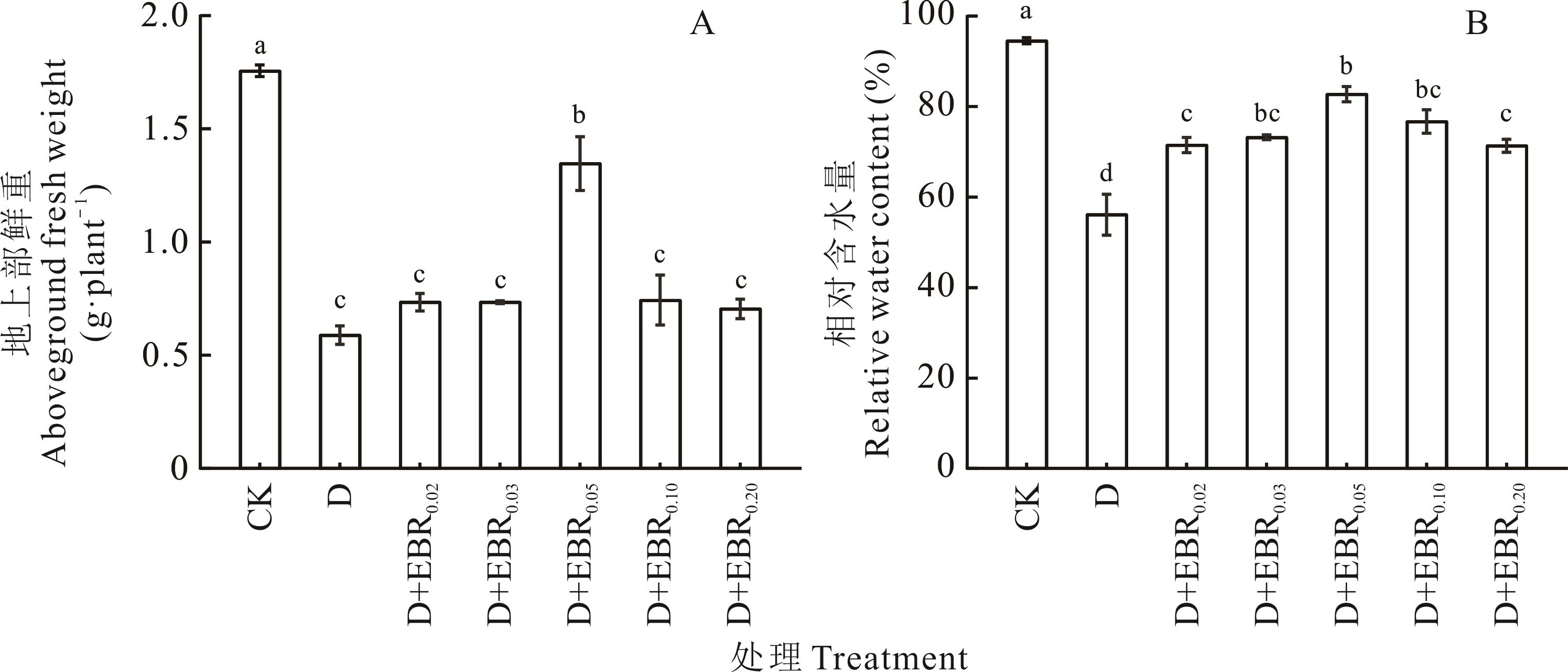
图2 外源2,4-表芸苔素内酯对干旱胁迫下紫花苜蓿幼苗地上部鲜重和相对含水量的影响
Fig.2 The effects of exogenous EBR on the aboveground fresh weight and relative water content of alfalfa seedlings under drought stress

图3 外源2,4-表芸苔素内酯对干旱胁迫下紫花苜蓿幼苗叶片光合色素含量的影响FW: 新鲜重量Fresh weight. 下同The same below.
Fig.3 The effects of exogenous EBR on photosynthetic pigment content in leaves of alfalfa seedlings under drought stress

图4 外源2,4-表芸苔素内酯对干旱胁迫下紫花苜蓿幼苗叶片丙二醛含量和相对电导率的影响
Fig.4 The effect of exogenous EBR on the malondialdehyde (MDA) content and relative conductivity in leaves of alfalfa seedlings under drought stress
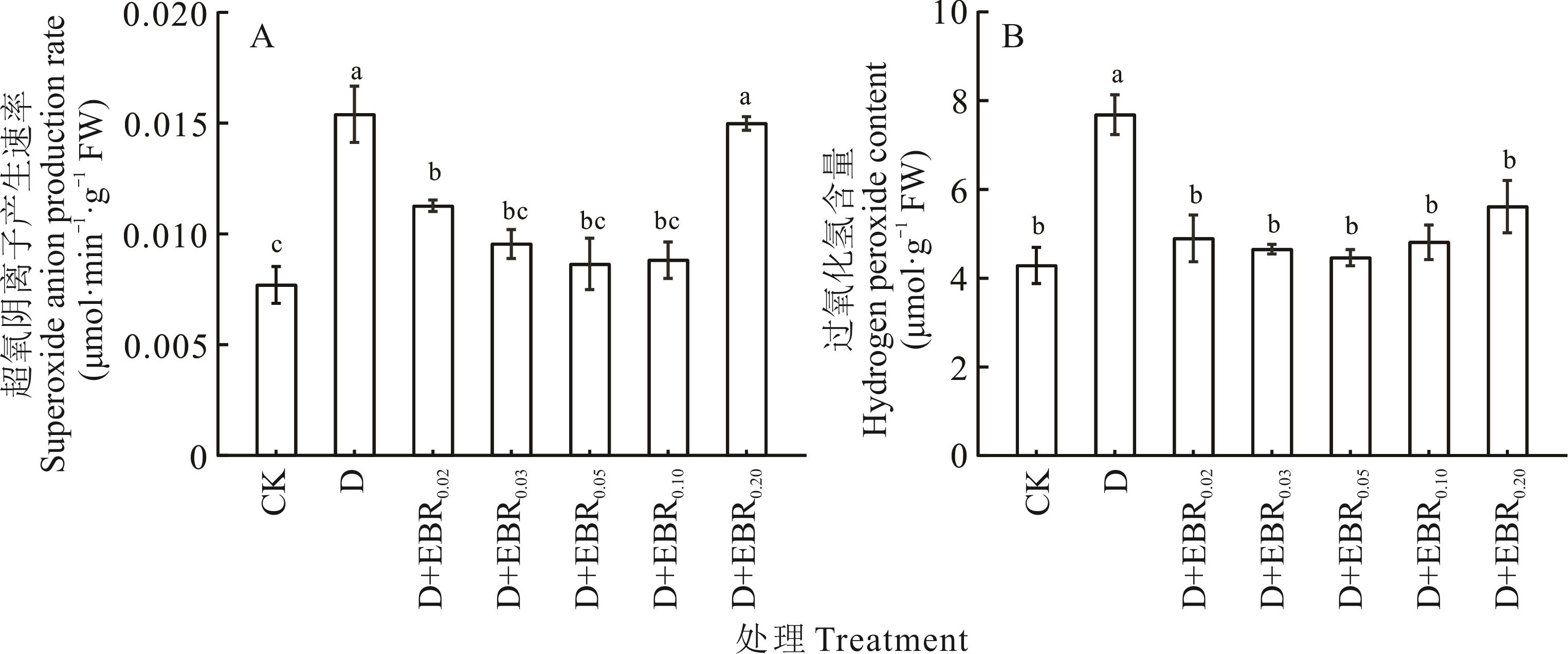
图5 外源2,4-表芸苔素内酯对干旱胁迫下紫花苜蓿幼苗叶片超氧阴离子产生速率和过氧化氢含量的影响
Fig.5 The effects of exogenous EBR on superoxide anion production rate and hydrogen peroxide content in leaves of alfalfa seedlings under drought stress

图6 外源2,4-表芸苔素内酯对干旱胁迫下紫花苜蓿幼苗叶片抗氧化酶活性的影响
Fig.6 The effects of exogenous EBR on the antioxidant enzyme activity in leaves of alfalfa seedlings under drought stress
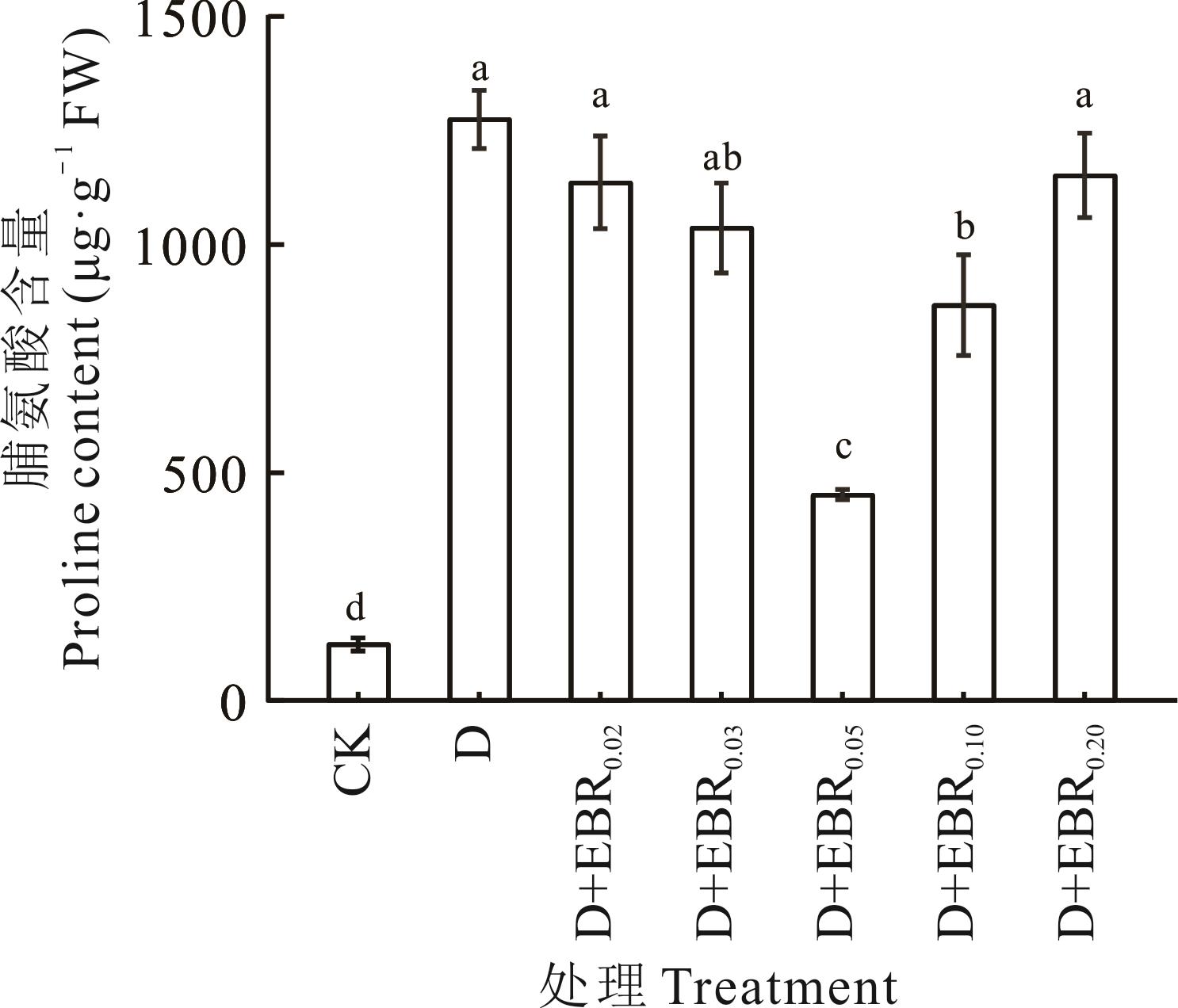
图7 外源2,4-表芸苔素内酯对干旱胁迫下紫花苜蓿幼苗叶片中脯氨酸含量的影响
Fig.7 The effects of exogenous EBR on proline content in leaves of alfalfa seedlings under drought stress

图8 主要生理指标间的相关性分析色块颜色从红色(正相关)到蓝色(负相关),相关系数为-1~1。*和**分别表示相关性在P≤0.05和P≤0.01水平上显著。Color patches range from red (positive correlation) to blue (negative correlation) with correlation coefficients ranging from -1 to 1. * and ** indicate significant correlation at P≤0.05 and P≤0.01, respectively.
Fig.8 Correlation analysis between the main physiological indexes
| [1] | Pishva Z K, Amini-Dehaghi M, Bostani A, et al. Biological and chemical nitrogen fertilizer impact on cumin (Cuminum cyminum L.) under different irrigation regimens. Journal of Herbmed Pharmacology, 2020, 9(3): 209-217. |
| [2] | Yang S J, Vanderbeld B, Wan J X, et al. Narrowing down the targets: Towards successful genetic engineering of drought-tolerant crops. Molecular Plant, 2010, 3(3): 469-490. |
| [3] | Nieves-Cordones M, García-Sánchez F, Pérez-Pérez J G, et al. Coping with water shortage: an update on the role of K+, Cl-, and water membrane transport mechanisms on drought resistance. Frontiers in Plant Science, 2019, 10: 1619. |
| [4] | Xu Z Z, Zhou G S, Shimizu H. Plant responses to drought and rewatering. Plant Signaling & Behavior, 2010, 5(6): 649-654. |
| [5] | Haghpanah M, Hashemipetroudi S, Arzani A, et al. Drought tolerance in plants: physiological and molecular responses. Plants, 2024, 13(21): 2962. |
| [6] | Sharma S K. Brassinosteroids application responses in fruit crops-a review. International Journal of Agriculture Environment and Biotechnology, 2021, 14(2): 123-140. |
| [7] | Li W J, Sun J, Zhang X Q, et al. The mechanisms underlying salt resistance mediated by exogenous application of 24-epibrassinolide in peanut. International Journal of Molecular Sciences, 2022, 23(12): 6376. |
| [8] | Kagale S, Divi U K, Krochko J E, et al. Brassinosteroid confers tolerance in Arabidopsis thaliana and Brassica napus to a range of abiotic stresses. Planta, 2007, 225(2): 353-364. |
| [9] | Silva A L J, Ferreira V M, Dos Santos C M, et al. 24-epibrassinolide promotes activation of physiological compensation mechanisms in response to drought stress and rehydration and improves yield in soybean. Journal of Agronomy and Crop Science, 2023, 209(3): 355-370. |
| [10] | Khan R, Ma X H, Hussain Q, et al. Application of 2,4-epibrassinolide improves drought tolerance in tobacco through physiological and biochemical mechanisms. Biology, 2022, 11(8): 1192. |
| [11] | Zhang Y Y, Wang L. Advances in basic biology of alfalfa (Medicago sativa L.): a comprehensive overview. Horticulture Research, 2025, 12(7): uhaf081. |
| [12] | Han R H, Lu X S, Gao G J, et al. Photosynthetic physiological response of alfalfa (Medicago sativa) to drought stress. Acta Ecologica Sinica, 2007, 27(12): 5229-5237. |
| 韩瑞宏, 卢欣石, 高桂娟, 等. 紫花苜蓿(Medicago sativa)对干旱胁迫的光合生理响应. 生态学报, 2007, 27(12): 5229-5237. | |
| [13] | Wang X M, Mace E, Tao Y F, et al. Large-scale genome-wide association study reveals that drought-induced lodging in grain sorghum is associated with plant height and traits linked to carbon remobilisation. Theoretical and Applied Genetics, 2020, 133: 3201-3215. |
| [14] | Cui Y, Ning S W, Jin J L, et al. Quantitative lasting effects of drought stress at a growth stage on soybean evapotranspiration and aboveground biomass. Water, 2020, 13(1): 18. |
| [15] | Liu J, Huang J, Xiong P D. Rewatering after drought: Unravelling the drought thresholds and function recovery-limiting factors in maize leaves. Plant, Cell & Environment, 2024, 47(12): 5457-5469. |
| [16] | Fei X T, Li J M, Kong L J, et al. miRNAs and their target genes regulate the antioxidant system of Zanthoxylum bungeanum under drought stress. Plant Physiology and Biochemistry, 2020, 150(2): 196-203. |
| [17] | Antoniou C, Fragkoudi I, Martinou A, et al. Spatial response of Medicago truncatula plants to drought and spider mite attack. Plant Physiology and Biochemistry, 2018, 130: 658-662. |
| [18] | Hussan S, Rather M A, Dar Z A, et al. Decoding the enigma of drought stress tolerance mechanisms in plants and its application in crop improvement//Innovative approaches for sustainable development: Theories and practices in agriculture. Cham: Springer International Publishing, 2022: 339-368. |
| [19] | Zhang C M, Shi S L. Physiological and proteomic responses of contrasting alfalfa (Medicago sativa L.) varieties to PEG-induced osmotic stress. Frontiers in Plant Science, 2018, 9(1): 242. |
| [20] | Zhou Y L, You X Y, Wang X Y, et al. Exogenous 24-epibrassinolide enhanced drought tolerance and promoted BRASSINOSTEROID-INSENSITIVE2 expression of quinoa. Plants, 2024, 13(6): 873. |
| [21] | Hu B F, Huang H L, Ji Y Z, et al. Evaluation of the optimum concentration of chlorophyll extract for determination of chlorophyll content by spectrophotometry. Pratacultural Science, 2018, 35(8): 1965-1974. |
| 胡秉芬, 黄华梨, 季元祖, 等. 分光光度法测定叶绿素含量的提取液的适宜浓度. 草业科学, 2018, 35(8): 1965-1974. | |
| [22] | Zhang Q D. Several methods for the determination of chlorophyll. Chinese Bulletin of Botany, 1985, 3(5): 60-64. |
| 张其德. 测定叶绿素的几种方法. 植物学通报, 1985, 3(5): 60-64. | |
| [23] | Zhao D Y, Shen L, Fan B, et al. Physiological and genetic properties of tomato fruits from 2 cultivars differing in chilling tolerance at cold storage. Journal of Food Science, 2009, 74(5): C348-C352. |
| [24] | Lv A M, Su L T, Fan N N, et al. The MsDHN1‐MsPIP2;1‐MsmMYB module orchestrates the trade-off between growth and survival of alfalfa in response to drought stress. Plant Biotechnology Journal, 2024, 22(5): 1132-1145. |
| [25] | Lv M H, Li J. Molecular mechanisms of brassinosteroid-mediated responses to changing environments in Arabidopsis. International Journal of Molecular Sciences, 2020, 21(8): 2737. |
| [26] | Kou J T. Physiological mechanism of 24-epibrassinolide-regulated salt stress tolerance in Medicago sativa. Lanzhou: Gansu Agricultural University, 2016. |
| 寇江涛. 2,4-表油菜素内酯诱导下紫花苜蓿耐盐性生理响应研究. 兰州: 甘肃农业大学, 2016. | |
| [27] | Jomova K, Alomar S Y, Alwasel S H, et al. Several lines of antioxidant defense against oxidative stress: Antioxidant enzymes, nanomaterials with multiple enzyme-mimicking activities, and low-molecular-weight antioxidants. Archives of Toxicology, 2024, 98(5): 1323-1367. |
| [28] | Yu W Z, Luo L, Qi X Y, et al. Insights into the impact of trans-zeatin overproduction-engineered Sinorhizobium meliloti on alfalfa (Medicago sativa L.) tolerance to drought stress. Journal of Agricultural and Food Chemistry, 2024, 72(15): 8650-8663. |
| [29] | Zandi P, Schnug E. Reactive oxygen species, antioxidant responses and implications from a microbial modulation perspective. Biology, 2022, 11(2): 155. |
| [30] | Ma X R, Liang Q W, Han Y S, et al. Integrated transcriptomic, proteomic and metabolomic analyses revealing the roles of amino acid and sucrose metabolism in augmenting drought tolerance in Agropyron mongolicum. Frontiers in Plant Science, 2024, 15: 1515944. |
| [31] | Che Y M, Hou L X, Sun Y J, et al. Hydrogen sulfide functions in regulation of stomatal movement and stress response in plant. Biotechnology Bulletin, 2016, 32(10): 18-26. |
| 车永梅, 侯丽霞, 孙艳君, 等. H2S参与植物气孔运动调节与逆境响应过程研究进展. 生物技术通报, 2016, 32(10): 18-26. | |
| [32] | Zhao B Q, Liu Q Y, Wang B S, et al. Roles of phytohormones and their signaling pathways in leaf development and stress responses. Journal of Agricultural and Food Chemistry, 2021, 69(12): 3566-3584. |
| [33] | Xia X J, Dong H, Yin Y L, et al. Brassinosteroid signaling integrates multiple pathways to release apical dominance in tomato. Proceedings of the National Academy of Sciences of the United States of America, 2021, 118(11): e2004384118. |
| [1] | 杨金辉, 王晓彤, 马永龙, 余冬雯, 童玉花, 李淑霞. 喷施纳米氧化铈对紫花苜蓿幼苗耐盐性的影响[J]. 草业学报, 2026, 35(8): 45-54. |
| [2] | 黄兆鹏, 何蓉, 南丽丽, 刘佳乐, 杨文科. 低磷胁迫下外源褪黑素对紫花苜蓿幼苗内源激素及有机酸的影响[J]. 草业学报, 2026, 35(8): 55-64. |
| [3] | 陈奋奇, 张金青, 禹一箭, 李振宇. 紫花苜蓿AP2亚家族基因鉴定、生信分析及MsBBM基因克隆[J]. 草业学报, 2026, 35(7): 117-134. |
| [4] | 刘昊臻, 晁嘉潞, 赵士钦, 王成, 张景鈜, 孙守江. 紫花苜蓿BBR-BPC全基因组鉴定及响应种子老化的表达模式分析[J]. 草业学报, 2026, 35(7): 135-150. |
| [5] | 任孟雨, 王利群, 南丽丽, 郭佳雨. 紫花苜蓿新品系对盐胁迫的响应[J]. 草业学报, 2026, 35(6): 24-34. |
| [6] | 李小聪, 闫聚辉, 王星, 胡鹏飞, 叶雨浓, 伏兵哲. 紫花苜蓿/无芒雀麦间作对草地生产性能和土壤理化特性的影响[J]. 草业学报, 2026, 35(5): 113-125. |
| [7] | 马苹, 刘志国, 沙煜舒, 刘亚玲, 妥小梅, 伏兵哲, 高雪芹. 紫花苜蓿苗期氮利用特性及氮高效品种的筛选[J]. 草业学报, 2026, 35(4): 112-123. |
| [8] | 张钿, 冷华娟, 崔婧, 何飞, 王雪, 李明娜, 杨青川, 康俊梅. 紫花苜蓿突触结合蛋白家族成员鉴定与非生物胁迫下的表达分析[J]. 草业学报, 2026, 35(4): 158-168. |
| [9] | 周晓彤, 罗永忠, 齐建伟, 邱应德, 马超. 新疆大叶苜蓿PYL-PP2C-SnRK2基因家族鉴定及对干旱胁迫的响应分析[J]. 草业学报, 2026, 35(4): 169-196. |
| [10] | 张世超, 崔国文, 张德鹏, 韩福迎, 丁叮, 吕向丽, 林硕, 陈乐然, 李吉儒, 才华. 紫花苜蓿非组培遗传转化体系创建及在耐盐基因功能鉴定与基因编辑中的应用[J]. 草业学报, 2026, 35(3): 223-234. |
| [11] | 童玉花, 王晓彤, 马永龙, 杨金辉, 余冬雯, 李淑霞. 壳聚糖浸种对盐碱胁迫下紫花苜蓿种子萌发的影响[J]. 草业学报, 2026, 35(3): 245-256. |
| [12] | 陈丽娟, 高荣, 王建喜, 马晖玲. 紫花苜蓿与红豆草在不同生长时期缩合单宁合成差异的比较研究[J]. 草业学报, 2026, 35(2): 221-236. |
| [13] | 李瑒琨, 本转林, 张筠钰, 杨惠敏. 不同气候和土壤条件下施肥类型影响紫花苜蓿种子产量的整合分析[J]. 草业学报, 2026, 35(2): 54-67. |
| [14] | 张继元, 安海全, 潘靖一, 刘畅, 龙思思, 赵丽丽. 7个紫花苜蓿品种种子萌发及幼苗生长的抗旱性评价[J]. 草业学报, 2026, 35(2): 68-82. |
| [15] | 张颖, 贺善睦, 何傲蕾, 李昌宁, 姚拓. 微生物菌剂与有机钙蛋白配施对紫花苜蓿生长和土壤酶活性的影响[J]. 草业学报, 2026, 35(1): 25-39. |
| 阅读次数 | ||||||
|
全文 |
|
|||||
|
摘要 |
|
|||||
