

ISSN 1004-5759 CN 62-1105/S
草业学报 ›› 2026, Vol. 35 ›› Issue (7): 15-31.DOI: 10.11686/cyxb2025234
刘树超1,2,3( ), 邵全琴2,3,4(), 樊江文2,3, 黄海波2
收稿日期:2025-06-10
修回日期:2025-10-09
出版日期:2026-07-20
发布日期:2026-05-21
通讯作者:
邵全琴
作者简介:Corresponding author. E-mail: shaoqq@igsnrr.ac.cn基金资助:
Shu-chao LIU1,2,3(), Quan-qin SHAO2,3,4(), Jiang-wen FAN2,3, Hai-bo HUANG2
Received:2025-06-10
Revised:2025-10-09
Online:2026-07-20
Published:2026-05-21
Contact:
Quan-qin SHAO
摘要:
三江源区作为青藏高原生态安全屏障的核心区域,其可食牧草动态变化对高寒草地可持续利用至关重要。本研究基于多源遥感数据(全球陆表特征参量产品和应用遥感-过程耦合模型GLOPEM CEVSA估算的NPP数据集、Landsat系列卫星影像)、长期草地样方监测数据及气象资料,量化了不同退化梯度下可食牧草比例的时空分异特征,构建了1981-2020年三江源区天然草地可食牧草的产草量数据集。结果表明:1)近40年全区可食牧草比例均值为0.69,呈“下降-波动-回升”趋势,分时段均值依次为0.72(1981-1990)、0.69(1991-2004)、0.66(2005-2012)和0.70(2013-2020),虽经生态工程修复,仍未恢复至80年代初水平;2)1981-2020年,三江源区可食牧草产草量空间上自东向西递减,年均值为403.48 kg·hm-2,年均产草总量为1322.61万t,62.5%区域呈显著增加趋势(P<0.05);3)年均温是可食牧草产草量变化的主控因子,正相关区域占68.3%,降水驱动作用在干旱区(<400 mm)及重度退化区显著增强;4)三江源国家公园内可食牧草产草量整体呈增长趋势,但园区间差异显著,澜沧江源园区年均产草量为399.56 kg·hm-2,高于长江源园区(169.37 kg·hm-2)。本研究分析了气候变暖与降水格局变化对高寒草地可食牧草恢复的差异化调控机制,为三江源区草地适应性管理提供了科学依据。
刘树超, 邵全琴, 樊江文, 黄海波. 1981-2020年三江源区可食牧草时空变化及气候驱动机制研究[J]. 草业学报, 2026, 35(7): 15-31.
Shu-chao LIU, Quan-qin SHAO, Jiang-wen FAN, Hai-bo HUANG. Spatiotemporal dynamics of edible forage and its climatic driving mechanisms in the Three-River Headwaters Region from 1981 to 2020[J]. Acta Prataculturae Sinica, 2026, 35(7): 15-31.
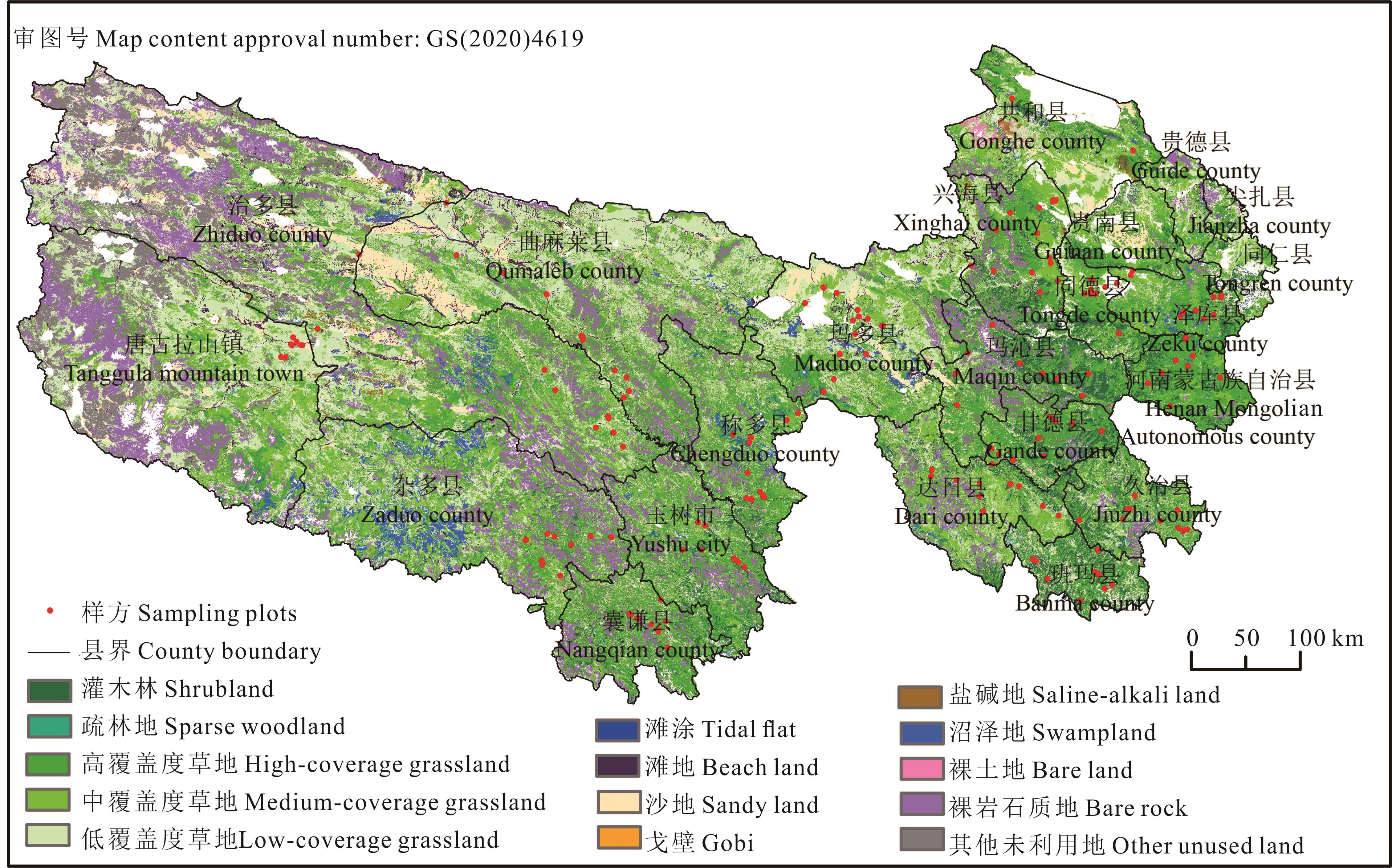
图1 三江源区草地空间分布基于自然资源部标准地图服务网站 GS(2020)4619号标准地图制作,底图边界无修改。Based on the standard map service website GS(2020)4619 of the Ministry of Natural Resources, the boundary of the base map is not modified.
Fig.1 Grassland spatial distribution of the Three-River Headwaters Region
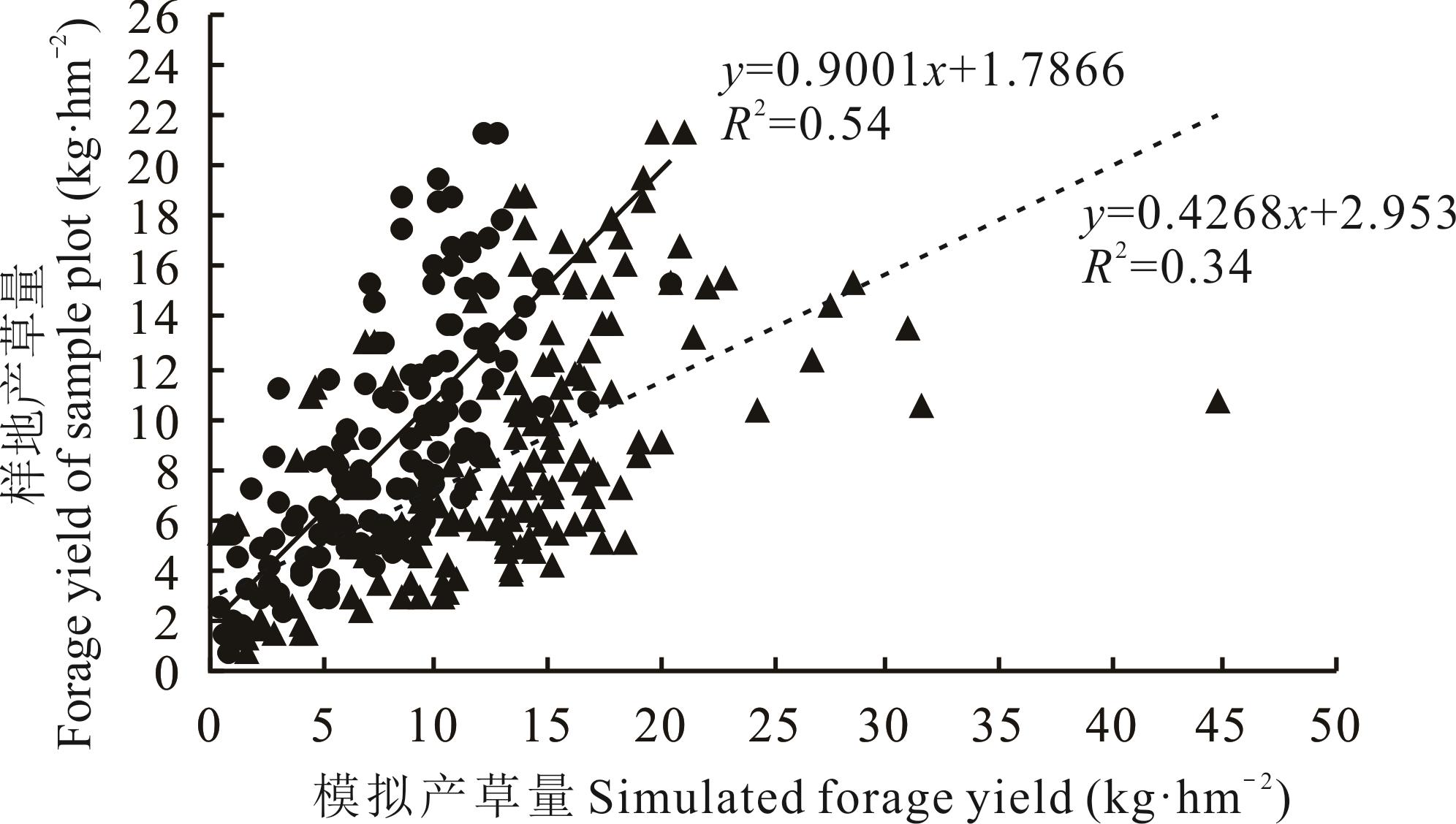
图2 不同NPP数据模拟产草量的精度验证“?”为基于GLASS NPP500数据模拟的产草量,“-”为GLASS NPP500数据模拟产草量的线性趋势线;“▲”为基于GLOPEM CEVSA NPP1000数据模拟的产草量,“……”为GLOPEM CEVSA NPP1000模拟产草量的线性趋势线。“?”indicates the forage yield simulated based on GLASS NPP500 data, “-” indicates linear trend line for simulating forage yield on GLASS NPP500 data, “▲”indicates the simulated forage yield based on GLOPEM CEVSA NPP1000 data, “……”indicates linear trend line for simulating forage yield on GLOPEM CEVSA NPP1000 data.
Fig.2 Validation of simulated forage yield accuracy from different NPP datasets
草地类、亚类、组和型 Grassland class, subclass, group, and type | 植被覆盖度 Vegetation coverage | 产草量干重Dry weight of grass yield (kg·hm-2) | 可食牧草比例Proportion of edible forage |
|---|---|---|---|
| 1.温性草原类 Temperate steppe | - | - | - |
| 1.1 山地草原亚类Mountain grassland subclass | 0.35(0.20~0.60) | 665 | - |
| 1.1.1中禾草组Medium grass group | - | - | - |
| 克氏针茅Stipa krylovii、羊茅Festuca ovina | 0.40 | 301 | - |
| 青海固沙草Orinus kokonorica、杂类草Herbarum variarum | 0.30~0.50 | 532 | - |
| 2.高寒草原类Alpine steppe | 0.20~0.60 | - | - |
| 2.1矮禾草组Dwarf grass group | - | - | - |
| 紫花针茅Stipa purpurea | 0.30~0.50 | 255 | - |
| 紫花针茅S. purpurea、杂类草Herbarum variarum | 0.30~0.50 | 255 | - |
| 3.高寒草甸类 Alpine meadow | - | - | - |
| 3.1高寒草甸亚类Alpine meadow subclass | 0.80~0.90 | - | - |
| 3.1.1小莎草组Small sedge group | - | - | - |
| 矮生嵩草Kobresia humilis | 0.80~0.90 | 831 | 0.93 |
| 高山嵩草Kobresia pygmaea | 0.80~0.90 | 562 | 0.85 |
| 禾叶嵩草Kobresia graminifolia | 0.70~0.90 | 968 | - |
| 线叶嵩草Kobresia capillifolia | 0.70~0.90 | 1212 | 0.85 |
| 线叶嵩草K. capillifolia、杂类草Herbarum variarum | 0.60~0.90 | 1610 | 0.83 |
| 3.2沼泽化高寒草甸亚类Swampy alpine meadow subclass | 0.70~0.95 | - | - |
| 3.2.1大莎草组Large sedge group | - | - | - |
| 西藏嵩草Kobresia tibetica | >0.90 | 980 | 0.93 |
表1 20世纪80年代三江源区部分草地资源统计
Table 1 Statistical of grassland resources in the Three-River Headwaters Region in the 1980s
草地类、亚类、组和型 Grassland class, subclass, group, and type | 植被覆盖度 Vegetation coverage | 产草量干重Dry weight of grass yield (kg·hm-2) | 可食牧草比例Proportion of edible forage |
|---|---|---|---|
| 1.温性草原类 Temperate steppe | - | - | - |
| 1.1 山地草原亚类Mountain grassland subclass | 0.35(0.20~0.60) | 665 | - |
| 1.1.1中禾草组Medium grass group | - | - | - |
| 克氏针茅Stipa krylovii、羊茅Festuca ovina | 0.40 | 301 | - |
| 青海固沙草Orinus kokonorica、杂类草Herbarum variarum | 0.30~0.50 | 532 | - |
| 2.高寒草原类Alpine steppe | 0.20~0.60 | - | - |
| 2.1矮禾草组Dwarf grass group | - | - | - |
| 紫花针茅Stipa purpurea | 0.30~0.50 | 255 | - |
| 紫花针茅S. purpurea、杂类草Herbarum variarum | 0.30~0.50 | 255 | - |
| 3.高寒草甸类 Alpine meadow | - | - | - |
| 3.1高寒草甸亚类Alpine meadow subclass | 0.80~0.90 | - | - |
| 3.1.1小莎草组Small sedge group | - | - | - |
| 矮生嵩草Kobresia humilis | 0.80~0.90 | 831 | 0.93 |
| 高山嵩草Kobresia pygmaea | 0.80~0.90 | 562 | 0.85 |
| 禾叶嵩草Kobresia graminifolia | 0.70~0.90 | 968 | - |
| 线叶嵩草Kobresia capillifolia | 0.70~0.90 | 1212 | 0.85 |
| 线叶嵩草K. capillifolia、杂类草Herbarum variarum | 0.60~0.90 | 1610 | 0.83 |
| 3.2沼泽化高寒草甸亚类Swampy alpine meadow subclass | 0.70~0.95 | - | - |
| 3.2.1大莎草组Large sedge group | - | - | - |
| 西藏嵩草Kobresia tibetica | >0.90 | 980 | 0.93 |
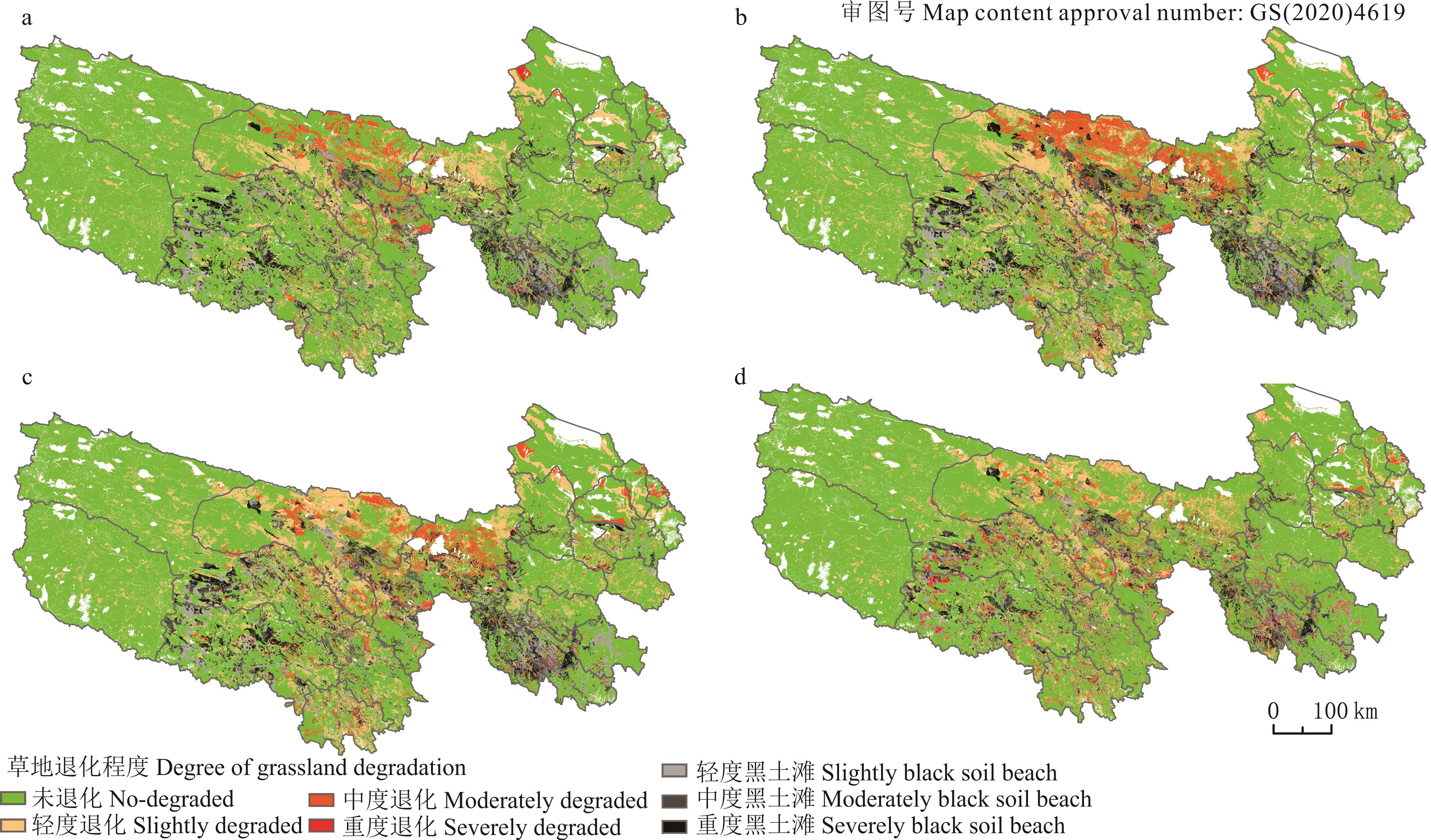
图3 三江源区天然草地不同时段退化程度空间分布a~d分别为1990、2004、2012和2020年草地退化程度的空间分布,基于自然资源部标准地图服务网站GS(2020)4619号标准地图制作,底图边界无修改。a-d represents the spatial distribution of grassland degradation in 1990, 2004, 2012, and 2020, respectively. Based on the standard map service website GS(2020)4619 of the Ministry of Natural Resources, the boundary of the base map is not modified.
Fig.3 Spatial distribution of natural grassland degradation at different time in the Three-River Headwaters Region
草地类、亚类、组和型 Grassland class, subclass, group, and type | 年份Year | |||
|---|---|---|---|---|
| 1990 | 2004 | 2012 | 2019 | |
| 1.温性草原类Temperate steppe | 0.95 | 0.95 | 0.89 | 0.94 |
| 1.1 山地草原亚类Mountain grassland subclass | 0.95 | 0.95 | 0.89 | 0.94 |
| 1.1.1中禾草组Medium grass group | 0.95 | 0.95 | 0.89 | 0.94 |
| 克氏针茅S. krylovii、羊茅F. ovina | 0.99 | 0.99 | 0.93 | 0.98 |
| 青海固沙草O. kokonorica、杂类草Herbarum variarum | 0.91 | 0.91 | 0.90 | 0.97 |
| 2.高寒草原类Alpine steppe | 0.83 | 0.83 | 0.78 | 0.82 |
| 2.1矮禾草组Dwarf grass group | 0.83 | 0.83 | 0.78 | 0.82 |
| 紫花针茅S. purpurea | 0.87 | 0.86 | 0.81 | 0.85 |
| 紫花针茅S. purpurea、杂类草Herbarum variarum | 0.80 | 0.79 | 0.75 | 0.79 |
| 3.高寒草甸类Alpine meadow | 0.82 | 0.80 | 0.75 | 0.79 |
| 3.1高寒草甸亚类Alpine meadow subclass | 0.79 | 0.77 | 0.75 | 0.76 |
| 3.1.1小莎草组Small sedge group | 0.79 | 0.77 | 0.75 | 0.76 |
| 矮生嵩草K. humilis | 0.93 | 0.90 | 0.85 | 0.89 |
| 高山嵩草K. pygmaea | 0.85 | 0.82 | 0.77 | 0.75 |
| 高山嵩草K. pygmaea、矮生嵩草K. humilis | 0.97 | 0.96 | 0.90 | 0.95 |
| 高山嵩草K. pygmaea、异针茅Stipa aliena | 0.81 | 0.79 | 0.75 | 0.78 |
| 高山嵩草K. pygmaea、圆穗蓼Polygonum macrophyllum | 0.88 | 0.86 | 0.80 | 0.84 |
| 高山嵩草K. pygmaea、杂类草Herbarum variarum | 0.79 | 0.76 | 0.75 | 0.76 |
| 线叶嵩草K. capillifolia、珠芽蓼Polygonum viviparum | 0.87 | 0.85 | 0.80 | 0.84 |
| 黑褐苔草Carex atrofusca、杂类草Herbarum variarum | 0.95 | 0.93 | 0.87 | 0.91 |
| 具金露梅的矮生嵩草K. humilis | 0.88 | 0.86 | 0.81 | 0.85 |
| 线叶嵩草K. capillifolia、高山早熟禾Poa alpigena | 0.81 | 0.79 | 0.75 | 0.78 |
| 禾叶嵩草K. graminifolia | 0.80 | 0.78 | 0.75 | 0.77 |
| 线叶嵩草K. capillifolia | 0.78 | 0.76 | 0.75 | 0.75 |
| 线叶嵩草K. capillifolia、杂类草Herbarum variarum | 0.83 | 0.79 | 0.75 | 0.79 |
| 3.2沼泽化高寒草甸亚类Swampy alpine meadow subclass | 0.93 | 0.97 | 0.91 | 0.96 |
| 3.2.1大莎草组Large sedge group | 0.93 | 0.97 | 0.91 | 0.96 |
| 西藏嵩草K. tibetica | 0.93 | 0.97 | 0.91 | 0.96 |
| 4.沼泽类Swamp | 0.76 | 0.76 | 0.75 | 0.75 |
| 4.1.1大莎草组Large sedge group | 0.76 | 0.76 | 0.75 | 0.75 |
| 木里苔草Carex muliensis | 0.76 | 0.76 | 0.75 | 0.75 |
| 5.高寒荒漠类Alpine desert | 0.76 | 0.75 | 0.75 | 0.75 |
| 5.1.1半灌木组Semi-shrub group | 0.76 | 0.75 | 0.75 | 0.75 |
| 垫状驼绒藜Krascheninnikovia compacta | 0.76 | 0.75 | 0.75 | 0.75 |
表2 三江源区未退化草地可食牧草比例统计
Table 2 Statistical of the proportion of edible forage in non-degraded natural grassland in the Three-River Headwaters Region
草地类、亚类、组和型 Grassland class, subclass, group, and type | 年份Year | |||
|---|---|---|---|---|
| 1990 | 2004 | 2012 | 2019 | |
| 1.温性草原类Temperate steppe | 0.95 | 0.95 | 0.89 | 0.94 |
| 1.1 山地草原亚类Mountain grassland subclass | 0.95 | 0.95 | 0.89 | 0.94 |
| 1.1.1中禾草组Medium grass group | 0.95 | 0.95 | 0.89 | 0.94 |
| 克氏针茅S. krylovii、羊茅F. ovina | 0.99 | 0.99 | 0.93 | 0.98 |
| 青海固沙草O. kokonorica、杂类草Herbarum variarum | 0.91 | 0.91 | 0.90 | 0.97 |
| 2.高寒草原类Alpine steppe | 0.83 | 0.83 | 0.78 | 0.82 |
| 2.1矮禾草组Dwarf grass group | 0.83 | 0.83 | 0.78 | 0.82 |
| 紫花针茅S. purpurea | 0.87 | 0.86 | 0.81 | 0.85 |
| 紫花针茅S. purpurea、杂类草Herbarum variarum | 0.80 | 0.79 | 0.75 | 0.79 |
| 3.高寒草甸类Alpine meadow | 0.82 | 0.80 | 0.75 | 0.79 |
| 3.1高寒草甸亚类Alpine meadow subclass | 0.79 | 0.77 | 0.75 | 0.76 |
| 3.1.1小莎草组Small sedge group | 0.79 | 0.77 | 0.75 | 0.76 |
| 矮生嵩草K. humilis | 0.93 | 0.90 | 0.85 | 0.89 |
| 高山嵩草K. pygmaea | 0.85 | 0.82 | 0.77 | 0.75 |
| 高山嵩草K. pygmaea、矮生嵩草K. humilis | 0.97 | 0.96 | 0.90 | 0.95 |
| 高山嵩草K. pygmaea、异针茅Stipa aliena | 0.81 | 0.79 | 0.75 | 0.78 |
| 高山嵩草K. pygmaea、圆穗蓼Polygonum macrophyllum | 0.88 | 0.86 | 0.80 | 0.84 |
| 高山嵩草K. pygmaea、杂类草Herbarum variarum | 0.79 | 0.76 | 0.75 | 0.76 |
| 线叶嵩草K. capillifolia、珠芽蓼Polygonum viviparum | 0.87 | 0.85 | 0.80 | 0.84 |
| 黑褐苔草Carex atrofusca、杂类草Herbarum variarum | 0.95 | 0.93 | 0.87 | 0.91 |
| 具金露梅的矮生嵩草K. humilis | 0.88 | 0.86 | 0.81 | 0.85 |
| 线叶嵩草K. capillifolia、高山早熟禾Poa alpigena | 0.81 | 0.79 | 0.75 | 0.78 |
| 禾叶嵩草K. graminifolia | 0.80 | 0.78 | 0.75 | 0.77 |
| 线叶嵩草K. capillifolia | 0.78 | 0.76 | 0.75 | 0.75 |
| 线叶嵩草K. capillifolia、杂类草Herbarum variarum | 0.83 | 0.79 | 0.75 | 0.79 |
| 3.2沼泽化高寒草甸亚类Swampy alpine meadow subclass | 0.93 | 0.97 | 0.91 | 0.96 |
| 3.2.1大莎草组Large sedge group | 0.93 | 0.97 | 0.91 | 0.96 |
| 西藏嵩草K. tibetica | 0.93 | 0.97 | 0.91 | 0.96 |
| 4.沼泽类Swamp | 0.76 | 0.76 | 0.75 | 0.75 |
| 4.1.1大莎草组Large sedge group | 0.76 | 0.76 | 0.75 | 0.75 |
| 木里苔草Carex muliensis | 0.76 | 0.76 | 0.75 | 0.75 |
| 5.高寒荒漠类Alpine desert | 0.76 | 0.75 | 0.75 | 0.75 |
| 5.1.1半灌木组Semi-shrub group | 0.76 | 0.75 | 0.75 | 0.75 |
| 垫状驼绒藜Krascheninnikovia compacta | 0.76 | 0.75 | 0.75 | 0.75 |

图4 三江源区各草地型可食牧草比例空间分布a~d分别为1990、2004、2012和2019年可食牧草比例空间分布,基于自然资源部标准地图服务网站 GS(2020)4619号标准地图制作,底图边界无修改。a-d represent spatial distribution of the proportion of edible forage in 1990, 2004, 2012 and 2019, respectively. Based on the standard map service website GS(2020)4619 of the Ministry of Natural Resources, the boundary of the base map is not modified.
Fig.4 Spatial distribution of the proportion of edible forage in the Three-River Headwaters Region
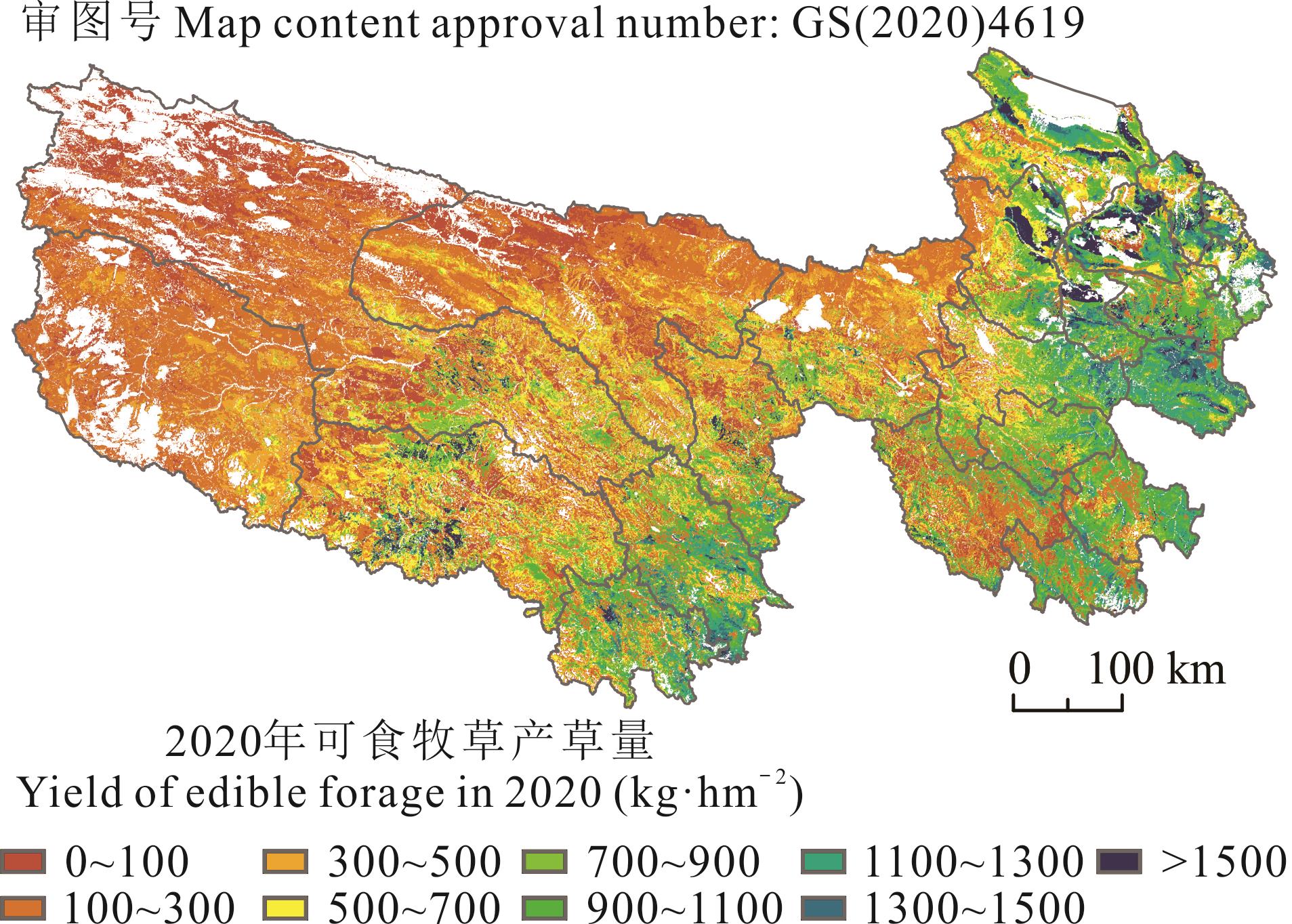
图5 2020年三江源区天然草地可食牧草产草量空间分布基于自然资源部标准地图服务网站 GS(2020)4619号标准地图制作,底图边界无修改。Based on the standard map service website GS(2020)4619 of the Ministry of Natural Resources, the boundary of the base map is not modified.
Fig.5 Spatial distribution of edible forage yield of natural grassland in the Three-River Headwaters Region in 2020

图6 1981-2020年三江源区天然草地可食牧草平均产草量空间分布基于自然资源部标准地图服务网站 GS(2020)4619号标准地图制作,底图边界无修改。Based on the standard map service website GS(2020)4619 of the Ministry of Natural Resources, the boundary of the base map is not modified.
Fig.6 Spatial distribution of average edible forage yield of natural grassland in the Three-River Headwaters Region from 1981 to 2020
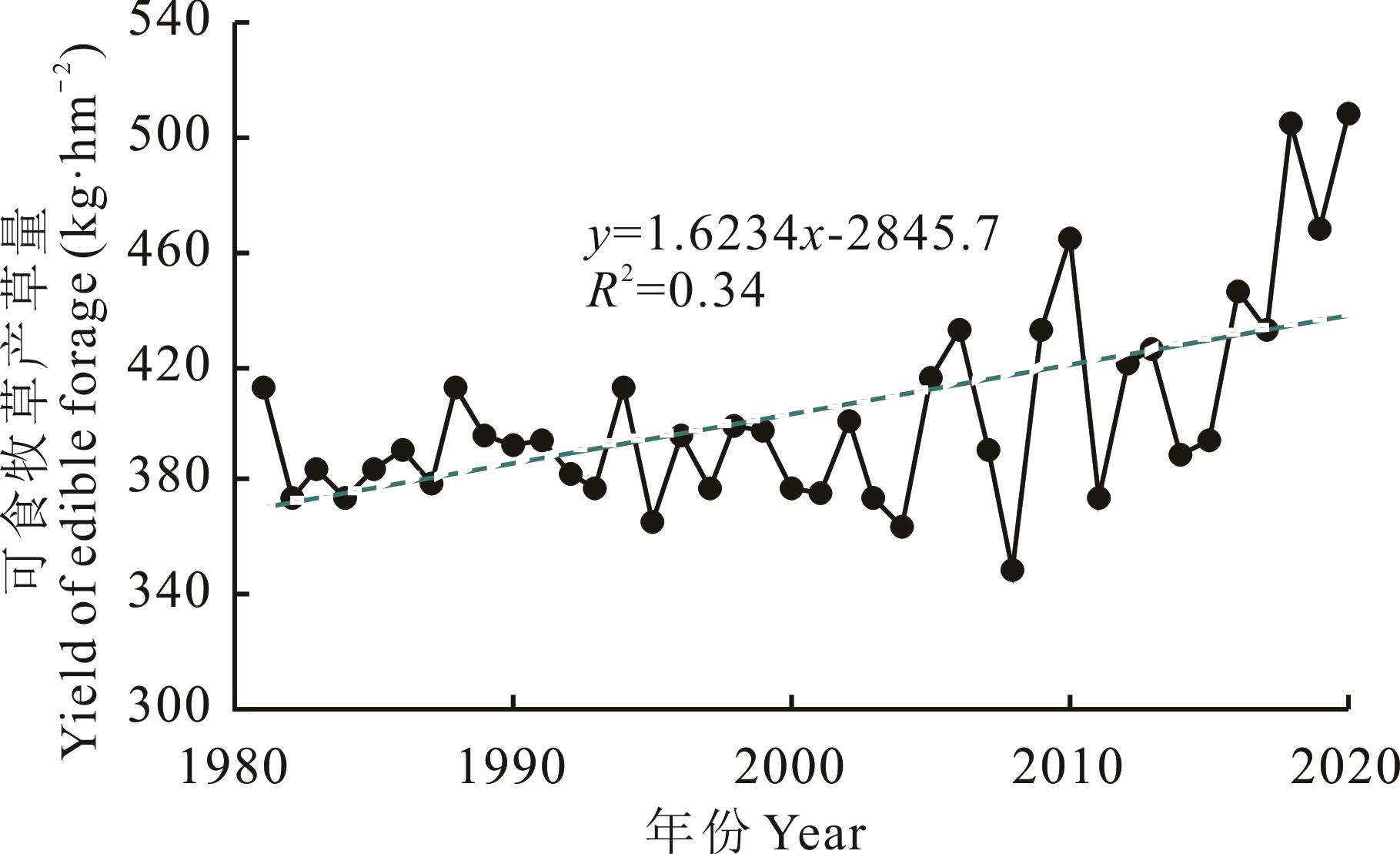
图7 1981-2020年三江源区天然草地可食牧草产草量年际变化
Fig.7 Interannual variation of edible forage yield in natural grassland in the Three-River Headwaters Region from 1981 to 2020
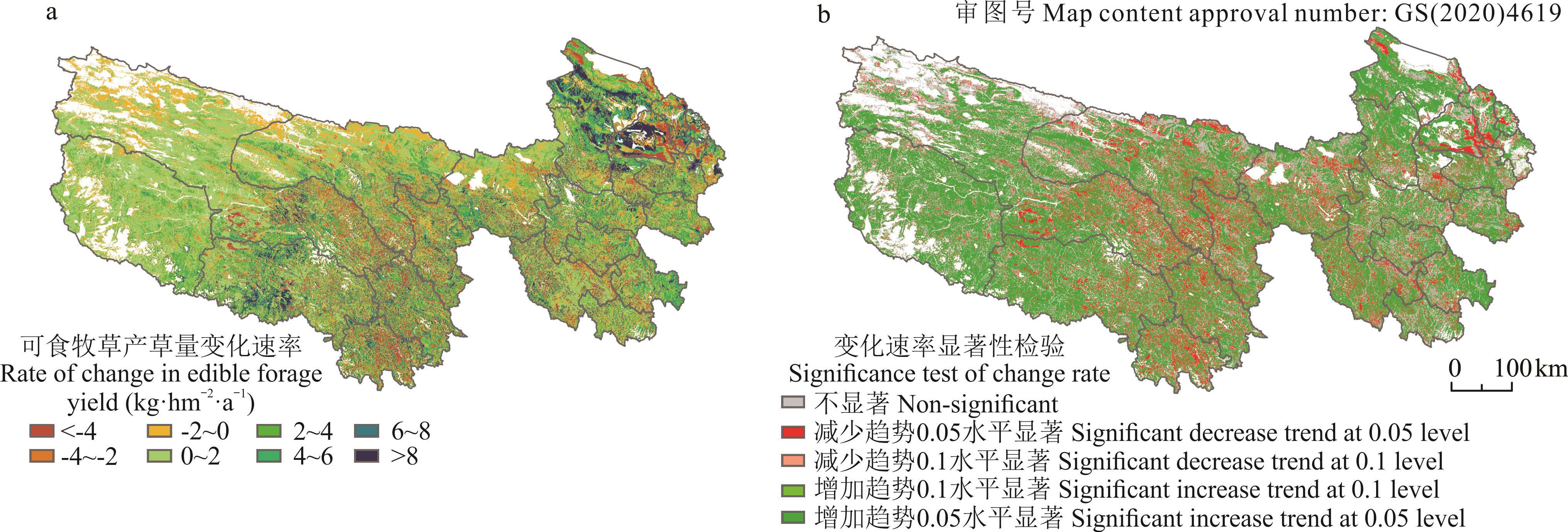
图8 1981-2020年三江源区可食牧草产草量年变化速率(a)及显著性检验(b)基于自然资源部标准地图服务网站 GS(2020)4619号标准地图制作,底图边界无修改。Based on the standard map service website GS(2020)4619 of the Ministry of Natural Resources, the boundary of the base map is not modified.
Fig.8 Annual change rate (a) and significance test (b) of edible forage yield in the Three-River Headwaters Region from 1981 to 2020
县、镇名称 County and town names | 可食牧草产草量 Edible forage yield (kg·hm-2) | 可食牧草产草总量 Total yield of edible forage (×104 t) | 可食牧草比例 Proportion of edible forage | 年变化速率 Annual rate of change (kg·hm-2·a-1) |
|---|---|---|---|---|
| 班玛县Banma county | 666.53 | 38.50 | 0.61 | 1.11 |
| 久治县Jiuzhi county | 717.78 | 56.11 | 0.67 | 1.40 |
| 甘德县Gande county | 657.17 | 44.72 | 0.70 | 1.38 |
| 玛沁县Maqin county | 612.34 | 72.76 | 0.76 | 1.89 |
| 玛多县Maduo county | 278.62 | 60.56 | 0.64 | 1.18 |
| 达日县Dari county | 367.88 | 51.37 | 0.46 | 0.52 |
| 同德县Tongde county | 953.84 | 36.28 | 0.75 | 1.59 |
| 贵德县Guide county | 772.37 | 23.62 | 0.84 | 1.24 |
| 共和县Gonghe county | 599.44 | 73.09 | 0.85 | 3.73 |
| 兴海县Xinghai county | 618.10 | 66.81 | 0.79 | 2.61 |
| 贵南县Guinan county | 868.33 | 45.72 | 0.82 | 2.30 |
| 泽库县Zeku county | 848.91 | 51.74 | 0.67 | 1.55 |
| 河南蒙古族自治县Henan Mongolian Autonomous county | 1088.47 | 69.13 | 0.79 | 1.75 |
| 同仁县Tongren county | 916.98 | 17.21 | 0.81 | 2.83 |
| 尖扎县Jianzha county | 900.68 | 10.69 | 0.79 | 1.59 |
| 囊谦县Nangqian county | 644.49 | 69.98 | 0.66 | 0.41 |
| 玉树市Yushu City | 636.85 | 92.94 | 0.69 | 1.35 |
| 杂多县Zaduo county | 367.91 | 117.48 | 0.65 | 2.02 |
| 称多县Chenduo county | 438.60 | 61.36 | 0.64 | 0.96 |
| 曲麻莱县Qumarlêb county | 208.90 | 87.80 | 0.65 | 0.88 |
| 治多县Zhiduo county | 192.36 | 113.03 | 0.66 | 0.75 |
| 唐古拉山镇Tanggula mountain town | 166.73 | 61.73 | 0.81 | 1.42 |
表3 1981-2020年三江源区县、镇可食牧草产草量统计
Table 3 Statistics of edible forge yield in counties and towns of the Three-River Headwaters Region from 1981 to 2020
县、镇名称 County and town names | 可食牧草产草量 Edible forage yield (kg·hm-2) | 可食牧草产草总量 Total yield of edible forage (×104 t) | 可食牧草比例 Proportion of edible forage | 年变化速率 Annual rate of change (kg·hm-2·a-1) |
|---|---|---|---|---|
| 班玛县Banma county | 666.53 | 38.50 | 0.61 | 1.11 |
| 久治县Jiuzhi county | 717.78 | 56.11 | 0.67 | 1.40 |
| 甘德县Gande county | 657.17 | 44.72 | 0.70 | 1.38 |
| 玛沁县Maqin county | 612.34 | 72.76 | 0.76 | 1.89 |
| 玛多县Maduo county | 278.62 | 60.56 | 0.64 | 1.18 |
| 达日县Dari county | 367.88 | 51.37 | 0.46 | 0.52 |
| 同德县Tongde county | 953.84 | 36.28 | 0.75 | 1.59 |
| 贵德县Guide county | 772.37 | 23.62 | 0.84 | 1.24 |
| 共和县Gonghe county | 599.44 | 73.09 | 0.85 | 3.73 |
| 兴海县Xinghai county | 618.10 | 66.81 | 0.79 | 2.61 |
| 贵南县Guinan county | 868.33 | 45.72 | 0.82 | 2.30 |
| 泽库县Zeku county | 848.91 | 51.74 | 0.67 | 1.55 |
| 河南蒙古族自治县Henan Mongolian Autonomous county | 1088.47 | 69.13 | 0.79 | 1.75 |
| 同仁县Tongren county | 916.98 | 17.21 | 0.81 | 2.83 |
| 尖扎县Jianzha county | 900.68 | 10.69 | 0.79 | 1.59 |
| 囊谦县Nangqian county | 644.49 | 69.98 | 0.66 | 0.41 |
| 玉树市Yushu City | 636.85 | 92.94 | 0.69 | 1.35 |
| 杂多县Zaduo county | 367.91 | 117.48 | 0.65 | 2.02 |
| 称多县Chenduo county | 438.60 | 61.36 | 0.64 | 0.96 |
| 曲麻莱县Qumarlêb county | 208.90 | 87.80 | 0.65 | 0.88 |
| 治多县Zhiduo county | 192.36 | 113.03 | 0.66 | 0.75 |
| 唐古拉山镇Tanggula mountain town | 166.73 | 61.73 | 0.81 | 1.42 |

图9 三江源区天然草地可食牧草不同时段平均产草量空间分布a~d分别为1981-1990年、1991-2004年、2005-2012年和2013-2020年的可食牧草年均产草量,基于自然资源部标准地图服务网站 GS(2020)4619号标准地图制作,底图边界无修改。a-d represents the average annual yield of edible forage from 1981 to 1990, 1991 to 2004, 2005 to 2012, and 2013 to 2020, respectively. Based on the standard map service website GS(2020)4619 of the Ministry of Natural Resources, the boundary of the base map is not modified. 下同The same below.
Fig.9 Spatial distribution of average edible forage yield at different time periods in natural grassland in the Three-River Headwaters Region

图10 三江源区天然草地可食牧草不同时段产草量变化速率空间分布a~d分别为1981-1990年、1991-2004年、2005-2012年和2013-2020年可食牧草产草量的年变化速率,基于自然资源部标准地图服务网站 GS(2020)4619号标准地图制作,底图边界无修改。a-d represents the annual change rate of edible forage yield from 1981 to 1990, 1991 to 2004, 2005 to 2012, and 2013 to 2020, respectively. Based on the standard map service website GS(2020)4619 of the Ministry of Natural Resources, the boundary of the base map is not modified.
Fig.10 Spatial distribution of change rate of edible forage yield in natural grassland at different periods in the Three-River Headwaters Region

图11 可食牧草产草量与年均降水(a)、年均温(b)的相关性基于自然资源部标准地图服务网站 GS(2020)4619号标准地图制作,底图边界无修改。Based on the standard map service website GS(2020)4619 of the Ministry of Natural Resources, the boundary of the base map is not modified.
Fig.11 Correlation between edible forage yield and annual precipitation (a) and annual average temperature (b)
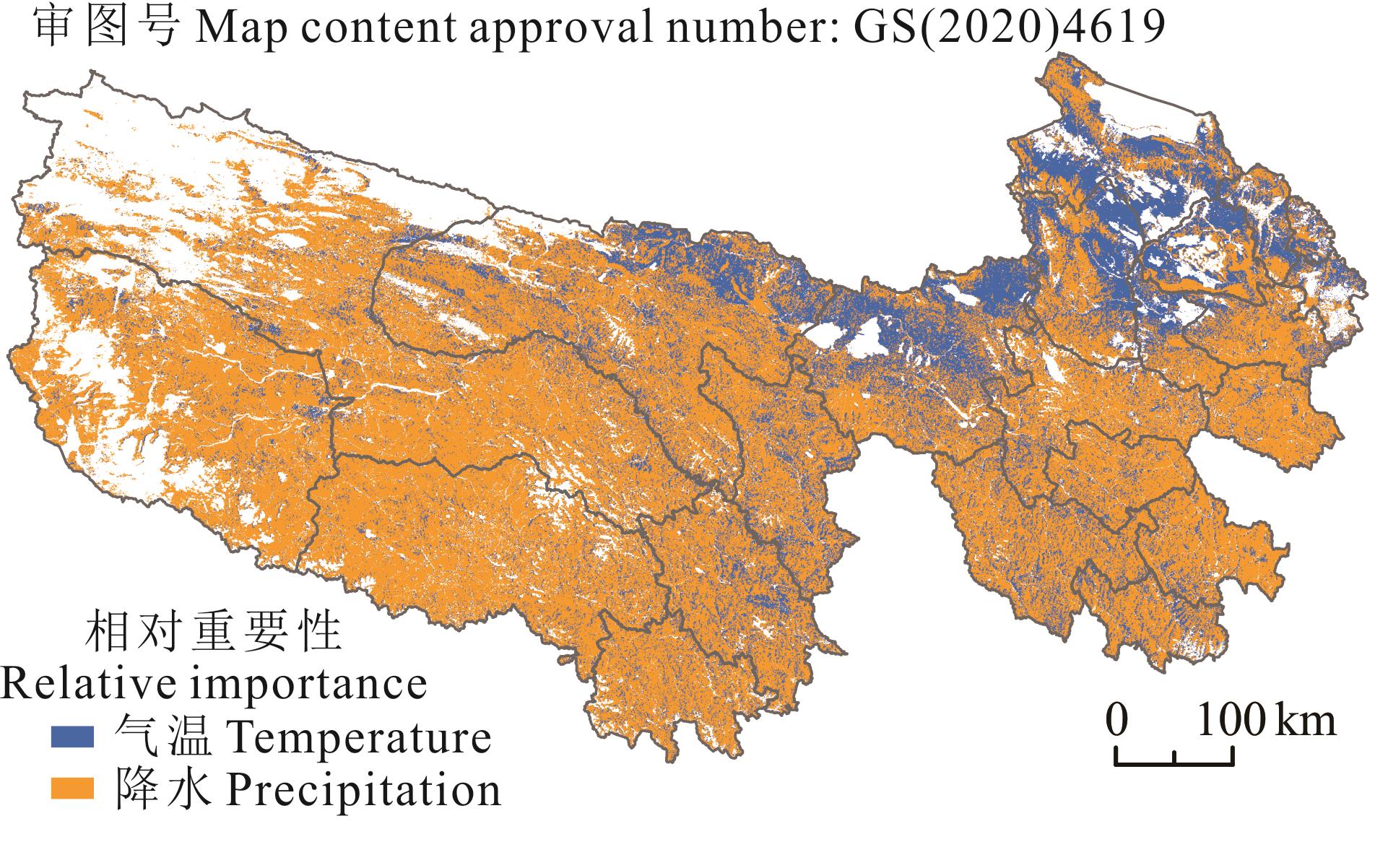
图12 降水和气温对可食牧草产草量相对重要性的空间分布基于自然资源部标准地图服务网站 GS(2020)4619号标准地图制作,底图边界无修改。Based on the standard map service website GS(2020)4619 of the Ministry of Natural Resources, the boundary of the base map is not modified.
Fig.12 Spatial distribution of the relative importance of precipitation and temperature on the yield of edible forage
| [1] | Zhao X Q, Zhou H K. Eco-environmental degradation, vegetation regeneration and sustainable development in the Headwaters of Three Rivers on Tibetan Plateau. Bulletin of Chinese Academy of Sciences, 2005, 20(6): 37-42. |
| 赵新全, 周华坤. 三江源区生态环境退化、恢复治理及其可持续发展. 中国科学院院刊, 2005, 20(6): 37-42. | |
| [2] | Liu J Y, Xu X L, Shao Q Q. The spatial and temporal characteristics of grassland degradation in the Three-River Headwaters Region in Qinghai Province. Journal of Geographical Sciences, 2008, 63(4): 364-376. |
| 刘纪远, 徐新良, 邵全琴. 近30年来青海三江源地区草地退化的时空特征. 地理学报, 2008, 63(4): 364-376. | |
| [3] | Shao Q Q, Fan J W. Monitoring and evaluation of ecological benefits of Sanjiangyuan ecological protection and construction projects. Beijing: Science Press, 2018. |
| 邵全琴, 樊江文. 三江源生态保护和建设工程生态效益监测评估. 北京: 科学出版社, 2018. | |
| [4] | Zhou H K, Zhao X Q, Zhou L, et al. A study on correlations between vegetation degradation and soil degradation in the ‘Alpine Meadow’ of the Qinghai-Tibetan Plateau. Acta Prataculturae Sinica, 2005, 14(3): 31-40. |
| 周华坤, 赵新全, 周立, 等. 青藏高原高寒草甸的植被退化与土壤退化特征研究.草业学报, 2005, 14(3): 31-40. | |
| [5] | Greyerz V K, Ericsson N, Jardstedt M, et al. Feeding straw to suckler cows spared land but did not decrease the climate impact of beef. Renewable Agriculture and Food Systems, 2024, 39: e36. |
| [6] | Zira S, Salomon E, Akerfeldt M, et al. Environmental consequences of pig production scenarios using biomass from rotational grass-clover leys as feed. Environmental Technology & Innovation, 2023, 30: 103068. |
| [7] | Moorby J M, Fraser M D. Review: New feeds and new feeding systems in intensive and semi-intensive forage-fed ruminant livestock systems. Animal, 2021, 15: 100297. |
| [8] | Wiangkham N, Prapagdee B. Potential of Napier grass with cadmium-resistant bacterial inoculation on cadmium phytoremediation and its possibility to use as biomass fuel. Chemosphere, 2018, 201: 511-518. |
| [9] | Mirshad P P, Chandran S, Puthur J T. Characteristics of bioenergy grasses important for enhanced NaCl tolerance potential. Russian Journal of Plant Physiology, 2014, 61(5): 639-645. |
| [10] | Vázquez de Aldana B R, Arellano J B, Cuesta M J, et al. Screening fungal endophytes from a wild grass for growth promotion in tritordeum, an agricultural cereal. Plant Science, 2021, 303: 110762. |
| [11] | Xu T W, Zhao X Q, Zhang X L, et al. Sustainable development of ecological grass-based livestock husbandry in Qinghai-Tibet Plateau alpine area: principle, technology and practice. Acta Ecologica Sinica, 2020, 40(18): 6324-6337. |
| 徐田伟, 赵新全, 张晓玲, 等. 青藏高原高寒地区生态草牧业可持续发展: 原理、技术与实践. 生态学报, 2020, 40(18): 6324-6337. | |
| [12] | He F Q, Chen D D, Li Q, et al. Temporal and spatial distribution of herbage nutrition in alpine grassland of Sanjiangyuan. Acta Ecologica Sinica, 2020, 40(18): 6304-6313. |
| 贺福全, 陈懂懂, 李奇, 等. 三江源高寒草地牧草营养时空分布. 生态学报, 2020, 40(18): 6304-6313. | |
| [13] | Chen D D, Li Q, Huo L L, et al. Nutritional condition, theoretical carrying capacity and feed value of alpine grasslands in the headwater regions of the Yangtze River and Yellow River. Acta Agrestia Sinica, 2023, 31(7): 2186-2192. |
| 陈懂懂, 李奇, 霍莉莉, 等. 长江源和黄河源区草地牧草养分、理论承载力及饲用价值. 草地学报, 2023, 31(7): 2186-2192. | |
| [14] | Cai Z Y, Wang J B, Song P F, et al. The analysis of grazing pressure of ungulates on grassland in Lancang River Source Park, Sanjiangyuan National Park. Acta Ecologica Sinica, 2025, 45(4): 1844-1853. |
| 蔡振媛, 王军邦, 宋鹏飞, 等. 三江源国家公园澜沧江源园区草地有蹄类动物承载力评估. 生态学报, 2025, 45(4): 1844-1853. | |
| [15] | Zhang F F, Yang K H, Yu L, et al. Dynamic research on the edible forage production of main grassland types in Shaertao Mountain, Xinjiang. Xinjiang Agricultural Sciences, 2018, 55(9): 1737-1746. |
| 张凡凡, 杨开虎, 于磊, 等. 新疆沙尔套山主要草地类型可食牧草产量动态变化规律. 新疆农业学报, 2018, 55(9): 1737-1746. | |
| [16] | Li W L, Xue Z Z, Guo S M, et al. Vegetation coverage changes and analysis of the driving forces in Maqu County based on 3S technology. Journal of Lanzhou University (Natural Sciences), 2010, 46(1): 85-90, 95. |
| 李文龙, 薛中正, 郭述茂, 等. 基于3S技术的玛曲县草地植被覆盖度变化及其驱动力. 兰州大学学报(自然科学版), 2010, 46(1): 85-90, 95. | |
| [17] | Wang H, Li W L, Du G Z, et al. Research on the change of grassland vegetation coverage using 3S technology in Gannan. Acta Prataculturae Sinica, 2012, 21(3): 26-37. |
| 王浩, 李文龙, 杜国祯, 等. 基于3S技术的甘南草地覆盖度动态变化研究. 草业学报, 2012, 21(3): 26-37. | |
| [18] | Liu X Y, Feng Q S, Liang T G, et al. Spatial-temporal dynamic balance between livestock carrying capacity and productivity of rangeland in Gannan of Gansu Province, China. Chinese Journal of Grassland, 2010, 32(1): 99-106. |
| 刘兴元, 冯琦胜, 梁天刚, 等. 甘南牧区草地生产力与载畜量时空动态平衡研究. 中国草地学报, 2010, 32(1): 99-106. | |
| [19] | Du X C, Li Y, Yu H Y, et al. Dynamic analysis of vegetation coverage, yield and nutrient content of edible forage in alpine meadow during growth period in Hezuo. China Herbivore Science, 2019, 39(4): 41-47. |
| 杜笑村, 李昀, 俞慧云, 等. 合作市高寒草甸牧草生长期植被盖度、可食牧草产量及养分含量动态分析. 中国草食动物科学, 2019, 39(4): 41-47. | |
| [20] | Yu H Y, Yu L P, Yang L P, et al. Analysis on the change of the yield and nutrient content of the edible forage and the grassland grazing capacity in the alpine grassland of Maqu County. China Herbivore Science, 2020, 40(3): 40-46. |
| 俞慧云, 俞联平, 杨林平, 等. 玛曲县高寒草地可食牧草产量和养分含量变化及草地承载力分析. 中国草食动物科学, 2020, 40(3): 40-46. | |
| [21] | Tao W G, Xu B, Yang X C. Advances and factors affecting the estimation of grass production using remote sensing. Acta Prataculturae Sinica, 2007, 16(2): 1-8. |
| 陶伟国, 徐斌, 杨秀春. 草原产草量遥感估算方法发展趋势及影响因素. 草业学报, 2007, 16(2): 1-8. | |
| [22] | Xu X L, Wang L, Li J, et al. Analysis of the grassland restoration trend and degradation situation in the “Three-River Headwaters” region since the implementation of the ecological project. Journal of Geo-information Science, 2017, 19(1): 50-58. |
| 徐新良, 王靓, 李静, 等. 三江源生态工程实施以来草地恢复态势及现状分析. 地球信息科学学报, 2017, 19(1): 50-58. | |
| [23] | Liang S L, Zhao X, Yuan W, et al. A long-term global land surface satellite (GLASS) dataset for environmental studies. International Journal of Digital Earth, 2013, 6: 5-33. |
| [24] | Liang S L, Zhang X, Xiao Z, et al. Global Land Surface Satellite (GLASS) products: Algorithms, validation and analysis. Berlin: Springer, 2013. |
| [25] | Wang J B, Liu J Y, Shao Q Q, et al. Spatial-temporal patterns of net primary productivity for 1988-2004 based on Glopem-Cevsa model in the “Three-River Headwaters” region of Qinghai Province, China. Chinese Journal of Plant Ecology, 2009, 33(2): 254-269. |
| 王军邦, 刘纪远, 邵全琴, 等. 基于遥感-过程耦合模型的1988-2004年青海三江源区净初级生产力模拟. 植物生态学报, 2009, 33(2): 254-269. | |
| [26] | Xu X L, Liu J Y, Zhang S W, et al. China multi-period land use and land cover remote sensing monitoring dataset (CNLUCC). Data registration and publishing system of resource and environment science data center, Chinese Academy of Sciences (http://www.resdc.cn/), 2018, DOI: 10.12078/2018070201. |
| 徐新良, 刘纪远, 张树文, 等. 中国多时期土地利用土地覆被遥感监测数据集(CNLUCC). 中国科学院资源环境科学数据中心数据注册与出版系统(http://www.resdc.cn/), 2018, DOI: 10.12078/2018070201. | |
| [27] | Dong Q M, Ma Y S, Xu C J, et al. Study of classification and gradation, restoration of black-soil beach degraded grassland in the Headwaters of Three Rivers. Acta Agrestia Sinica, 2015, 23(3): 441-447. |
| 董全民, 马玉寿, 许长军, 等. 三江源区黑土滩退化草地分类分级体系及分类恢复研究. 草地学报, 2015, 23(3): 441-447. | |
| [28] | Fan J W, Shao Q Q, Liu J Y, et al. Assessment of effects of climate change and grazing activity on grassland yield in the Three Rivers Headwaters Region of Qinghai-Tibet Plateau, China. Environment Monitoring and Assessment, 2010, 170(1/4): 571-584. |
| [29] | Wang C Y, Wang J B, Zhang F W, et al. Climate resource utilization rate and livestock-carrying capacity of grasslands in the Three River Headwaters region over the past 40 years. Pratacultural Science, 2022, 39(4): 672-687. |
| 王春雨, 王军邦, 张法伟, 等. 近40年三江源区高寒草地气候资源利用率及载畜量. 草业科学, 2022, 39(4): 672-687. | |
| [30] | Zhou X M.Chinese Kobresia meadow. Beijing: Science Press, 2001. |
| 周兴民. 中国嵩草草甸. 北京: 科学出版社, 2001. | |
| [31] | Department of Animal Husbandry and Veterinary Medicine, Ministry of Agriculture of the People’s Republic of China, National General Station of Animal and Veterinary Service. Rangeland resources of China. Beijing: China Science and Technology Press, 1996. |
| 中华人民共和国农业部畜牧兽医司, 全国畜牧兽医总站. 中国草地资源. 北京: 中国科学技术出版社, 1996. | |
| [32] | Xie C W, Qi S H. Analysis of runoff change and its response to weather fluctuation at source regions of the Yangtze and Yellow Rivers. Resources and Environment in the Yangtze Basin, 2007, 16(2): 251-255. |
| 谢昌卫, 齐三红. 长江-黄河源寒区径流量波动变化的气候因素分析.长江流域资源与环境, 2007, 16(2): 251-255. | |
| [33] | Chen Q, Zhou Q, Zhang H F, et al. Spatial disparity of NDVl response in vegetation growing season to climate change in the Three-River Headwaters Region. Ecology and Environmental Sciences, 2010, 19(6): 1284-1289. |
| 陈琼, 周强, 张海峰, 等. 三江源地区基于植被生长季的NDVI对气候因子响应的差异性研究. 生态环境学报, 2010, 19(6): 1284-1289. | |
| [34] | Liu S C, Shao Q Q, Ning J, et al. Remote-sensing-based assessment of the ecological restoration degree and restoration potential of ecosystems in the upper Yellow River over the past 20 years. Remote Sensing, 2022, 14(15): 3550. |
| [35] | Zhao X Q, Zhou Q P, Ma Y S, et al. Innovation and application of grassland ecological restoration and sustainable management technologies in Sanjiangyuan District. Qinghai Science and Technology, 2017, 24(1): 13-19. |
| 赵新全, 周青平, 马玉寿, 等. 三江源区草地生态恢复及可持续管理技术创新和应用.青海科技, 2017, 24(1): 13-19. |
| [1] | 赵琳兴, 王雁鹤, 王子超, 徐马强, 李泽宇, 祁昌贤, 崔宝祖, 王宗保. 基于无人机和Landsat数据的近30年三江源地区土地退化动态监测[J]. 草业学报, 2026, 35(2): 1-14. |
| [2] | 王喆, 王镜, 颉耀文, 赵慧芳, 校瑞香, 宗萨才文求藏. 三江源地区草地地上生物量时空变化及其对气候变化的响应[J]. 草业学报, 2026, 35(1): 1-12. |
| [3] | 朱炳淑, 樊江文, 张海燕, 黄麟, 田海静, 王林, 王守兴, 杨明新, 郭炎明. 三江源国家公园黄河源园区高寒草地健康评价[J]. 草业学报, 2025, 34(7): 13-27. |
| [4] | 郭龙欣, 张铭洋, 杨永胜, 庞博, 张振华, 张秀娟. 外源添加物对三江源高寒草甸苔藓结皮快速培育的影响[J]. 草业学报, 2025, 34(7): 132-144. |
| [5] | 王守兴, 周华坤, 欧立鹏, 李成先, 王雁鹤, 宁晓春, 谷强, 魏代军, 杨明新. 三江源不同草地类型植被及土壤微生物多样性与土壤因子特征的研究[J]. 草业学报, 2025, 34(4): 16-26. |
| [6] | 王金兰, 王小军, 刘启林, 梁国玲, 琚泽亮, 石红梅, 汪小兵, 文培, 青梅然丁null, 李文. 不同燕麦品种在三江源区的生产性能和营养品质综合评价[J]. 草业学报, 2024, 33(10): 83-95. |
| [7] | 张玉琢, 杨志贵, 于红妍, 张强, 杨淑霞, 赵婷, 许画画, 孟宝平, 吕燕燕. 基于STARFM的草地地上生物量遥感估测研究——以甘肃省夏河县桑科草原为例[J]. 草业学报, 2022, 31(6): 23-34. |
| [8] | 杨鑫, 曹文侠, 鱼小军, 汪海斌, 郝媛媛. 基于近20年MODIS NDVI日数据的青海省草地资源动态监测及其对环境因子的响应[J]. 草业学报, 2021, 30(9): 1-14. |
| [9] | 王传旗, 刘文辉, 张永超, 周青平. 野生垂穗披碱草成苗期间的耐旱性研究[J]. 草业学报, 2021, 30(9): 76-85. |
| [10] | 赵京东, 宋彦涛, 徐鑫磊, 乌云娜. 施氮和刈割对辽西北退化草地牧草产量和品质的影响[J]. 草业学报, 2021, 30(8): 36-48. |
| [11] | 李文, 魏廷虎, 永措巴占, 才仁塔次, 周玉海, 张雁平, 李文浩, 郭卫兴. 混播比例对三江源人工草地植被和土壤养分特征的影响[J]. 草业学报, 2021, 30(12): 39-48. |
| [12] | 吴廷美, 吴渊, 王多斌, 林慧龙. 三江源区牧户生计资本对其生计策略的影响研究[J]. 草业学报, 2019, 28(11): 12-21. |
| [13] | 曹巍, 刘璐璐, 吴丹. 三江源区土壤侵蚀变化及驱动因素分析[J]. 草业学报, 2018, 27(6): 10-22. |
| [14] | 林慧龙, 郑舒婷, 王雪璐. 基于RUSLE模型的三江源高寒草地土壤侵蚀评价[J]. 草业学报, 2017, 26(7): 11-22. |
| [15] | 张颖, 章超斌, 王钊齐, 杨悦, 张艳珍, 李建龙, 安如. 气候变化与人为活动对三江源草地生产力影响的定量研究[J]. 草业学报, 2017, 26(5): 1-14. |
| 阅读次数 | ||||||
|
全文 |
|
|||||
|
摘要 |
|
|||||
