

ISSN 1004-5759 CN 62-1105/S
草业学报 ›› 2025, Vol. 34 ›› Issue (6): 110-121.DOI: 10.11686/cyxb2024369
• 研究论文 • 上一篇
李若璇( ), 李升郅粲, 陈奕彤, 孙雨豪, 杨培志, 崔彦农, 龙明秀, 何树斌()
收稿日期:2024-09-26
修回日期:2024-11-11
出版日期:2025-06-20
发布日期:2025-04-03
通讯作者:
何树斌
作者简介:Corresponding author. E-mail: heshubin@nwsuaf.edu.cn基金资助:
Ruo-xuan LI(), Sheng-zhi-can LI, Yi-tong CHEN, Yu-hao SUN, Pei-zhi YANG, Yan-nong CUI, Ming-xiu LONG, Shu-bin HE()
Received:2024-09-26
Revised:2024-11-11
Online:2025-06-20
Published:2025-04-03
Contact:
Shu-bin HE
摘要:
为研究保护播种下糜子种植比例对紫花苜蓿根际土壤因子、氨氧化微生物[氨氧化古菌(ammonia-oxidizing archaea,AOA)和氨氧化细菌(ammonia-oxidizing bacteria,AOB)]和反硝化微生物(nirK、nirS和nosZ)的影响,以黄土高原旱作农业区紫花苜蓿根际土壤为对象,设置4种糜子-紫花苜蓿种植比例[1∶1(1P1M),1∶2(1P2M),1∶3(1P3M)和2∶3(2P3M)]并以紫花苜蓿单播(M)为对照,利用高通量测序分析紫花苜蓿根际土壤中氨氧化和反硝化微生物群落多样性、结构、组成、共现网络及其与土壤因子的相关性。结果表明:随着糜子种植密度的增加,保护播种提高了土壤总氮含量和稳定碳氮同位素值,且在保护播种2P3M中显著增加(P<0.05),土壤有机碳含量先降低后增加,且在2P3M中显著下降(P<0.05)。保护播种提高了土壤氨氧化和nosZ微生物的丰富度,降低了nirK微生物的丰富度,其中,AOA微生物α多样性对种植比例变化更敏感。β多样性分析发现,不同保护播种比例之间,土壤氨氧化和反硝化微生物群落结构差异均不明显。AOA和AOB微生物分别以亚硝化球菌属和亚硝化螺菌属为优势属,其含量均超过85%;而反硝化微生物表现为富集促进植物生长发育和养分转化的菌属,如nirK微生物中无色杆菌属和nirS微生物中固氮弧菌属等。共现网络分析表明,保护播种2P3M处理的土壤氨氧化和反硝化微生物群落具有更复杂的共现网络,主要体现在网络复杂性和模块化系数指标。相关性分析进一步显示,全氮、钙离子、镁离子与AOA微生物多样性显著相关,土壤有机碳和镉离子均与AOB和nirS微生物多样性显著相关。综上所述,饲草与杂粮保护播种会影响饲草根际土壤氨氧化和反硝化微生物多样性、组成和共现网络,揭示了保护播种技术下氮素高效利用的微生物机制,且以2∶3的比例种植作物可能会发挥出保护播种技术最佳优势。
李若璇, 李升郅粲, 陈奕彤, 孙雨豪, 杨培志, 崔彦农, 龙明秀, 何树斌. 保护播种下紫花苜蓿根际土壤氨氧化和反硝化微生物群落对糜子种植比例变化的响应[J]. 草业学报, 2025, 34(6): 110-121.
Ruo-xuan LI, Sheng-zhi-can LI, Yi-tong CHEN, Yu-hao SUN, Pei-zhi YANG, Yan-nong CUI, Ming-xiu LONG, Shu-bin HE. Effects of different planting ratios of broomcorn millet (Panicum miliaceum) on ammonia-oxidizing and denitrifying microorganisms in rhizosphere soil of alfalfa (Medicago sativa)[J]. Acta Prataculturae Sinica, 2025, 34(6): 110-121.
| 功能基因 Functional genes | 引物Primers | 引物序列Primer sequences (5′—3′) | 长度Length (bp) | 参考文献Reference |
|---|---|---|---|---|
| AOA | Arch-amoA26F Arch-amoA417R | GACTACATMTTCTAYACWGAYTGGGC GGKGTCATRTATGGWGGYAAYGTTGG | 417 | [ |
| AOB | amoA1F amoA2R | GGGGTTTCTACTGGTGGT CCCCTCKGSAAAGCCTTCTTC | 500 | [ |
| nirK | NIRK-F NIRK-R | TCATGGTGCTGCCGCGYGANGG GAACTTGCCGGTKGCCCAGAC | 400 | [ |
| nirS | CD3AF R3CDR | GTSAACGTSAAGGARACSGG GASTTCGGRTGSGTCTTGA | 400 | [ |
| nosZ | NOSZ-1126F NOSZ-1381R | GGGCTBGGGCCRTTGCA GAAGCGRTCCTTSGARAACTTG | 400 | [ |
表1 Illumina测序分析中使用的扩增引物和扩增片段大小
Table 1 Amplification primers and amplification sizes used in Illumina sequencing analysis
| 功能基因 Functional genes | 引物Primers | 引物序列Primer sequences (5′—3′) | 长度Length (bp) | 参考文献Reference |
|---|---|---|---|---|
| AOA | Arch-amoA26F Arch-amoA417R | GACTACATMTTCTAYACWGAYTGGGC GGKGTCATRTATGGWGGYAAYGTTGG | 417 | [ |
| AOB | amoA1F amoA2R | GGGGTTTCTACTGGTGGT CCCCTCKGSAAAGCCTTCTTC | 500 | [ |
| nirK | NIRK-F NIRK-R | TCATGGTGCTGCCGCGYGANGG GAACTTGCCGGTKGCCCAGAC | 400 | [ |
| nirS | CD3AF R3CDR | GTSAACGTSAAGGARACSGG GASTTCGGRTGSGTCTTGA | 400 | [ |
| nosZ | NOSZ-1126F NOSZ-1381R | GGGCTBGGGCCRTTGCA GAAGCGRTCCTTSGARAACTTG | 400 | [ |
处理 Treatments | 土壤有机碳 SOC (g·kg-1) | 总氮 TN (g·kg-1) | 铵态氮 NH4+-N (mg·kg-1) | 硝态氮 NO3--N (mg·kg-1) | 稳定碳同位素 δ13C(‰) | 稳定氮同位素 δ15N(‰) | 钙离子 Ca2+ (mg·kg-1) | 镁离子 Mg2+ (mg·kg-1) | 镉离子 Cd2+ (mg·kg-1) |
|---|---|---|---|---|---|---|---|---|---|
| M | 5.49±0.55a | 0.27±0.07bc | 4.98±0.92a | 2.96±0.50a | -7.20±0.08b | 26.35±2.12b | 4.59±0.27c | 35.83±0.01ab | 0.040±0.00a |
| 1P3M | 4.18±0.87b | 0.22±0.02c | 4.22±0.49a | 3.02±0.70a | -7.03±0.38ab | 26.71±4.51ab | 5.42±0.26a | 39.92±2.43a | 0.039±0.00ab |
| 1P2M | 4.44±0.97ab | 0.25±0.05bc | 4.63±1.04a | 2.89±0.44a | -6.81±0.44ab | 26.81±1.77ab | 5.20±0.43ab | 38.93±3.02ab | 0.033±0.01b |
| 2P3M | 4.23±0.57b | 0.41±0.04a | 4.67±1.03a | 2.99±0.98a | -6.62±0.22a | 32.12±3.89a | 4.73±0.47bc | 36.27±3.43ab | 0.039±0.00ab |
| 1P1M | 5.16±0.66ab | 0.31±0.08b | 4.52±0.83a | 3.01±0.38a | -6.99±0.34ab | 27.33±2.25ab | 4.39±0.07c | 34.84±2.57b | 0.036±0.01ab |
表2 不同保护播种比例下土壤因子变化
Table 2 Changes of soil factors in different companion planting ratios
处理 Treatments | 土壤有机碳 SOC (g·kg-1) | 总氮 TN (g·kg-1) | 铵态氮 NH4+-N (mg·kg-1) | 硝态氮 NO3--N (mg·kg-1) | 稳定碳同位素 δ13C(‰) | 稳定氮同位素 δ15N(‰) | 钙离子 Ca2+ (mg·kg-1) | 镁离子 Mg2+ (mg·kg-1) | 镉离子 Cd2+ (mg·kg-1) |
|---|---|---|---|---|---|---|---|---|---|
| M | 5.49±0.55a | 0.27±0.07bc | 4.98±0.92a | 2.96±0.50a | -7.20±0.08b | 26.35±2.12b | 4.59±0.27c | 35.83±0.01ab | 0.040±0.00a |
| 1P3M | 4.18±0.87b | 0.22±0.02c | 4.22±0.49a | 3.02±0.70a | -7.03±0.38ab | 26.71±4.51ab | 5.42±0.26a | 39.92±2.43a | 0.039±0.00ab |
| 1P2M | 4.44±0.97ab | 0.25±0.05bc | 4.63±1.04a | 2.89±0.44a | -6.81±0.44ab | 26.81±1.77ab | 5.20±0.43ab | 38.93±3.02ab | 0.033±0.01b |
| 2P3M | 4.23±0.57b | 0.41±0.04a | 4.67±1.03a | 2.99±0.98a | -6.62±0.22a | 32.12±3.89a | 4.73±0.47bc | 36.27±3.43ab | 0.039±0.00ab |
| 1P1M | 5.16±0.66ab | 0.31±0.08b | 4.52±0.83a | 3.01±0.38a | -6.99±0.34ab | 27.33±2.25ab | 4.39±0.07c | 34.84±2.57b | 0.036±0.01ab |

图1 不同保护播种比例下氨氧化和反硝化微生物群落α多样性AOA:氨氧化古菌 Ammonia-oxidizing archaea;AOB:氨氧化细菌 Ammonia-oxidizing bacteria;nirK:nirK微生物群落nirK-containing microorganisms;nirS:nirS微生物群落nirS-containing microorganisms;nosZ:nosZ微生物群落nosZ-containing microorganisms. 下同The same below. *, P<0.05; **, P<0.01 and ***, P<0.001.
Fig. 1 Alpha diversity of the alfalfa rhizosphere soil ammonia-oxidizing and denitrifying microbial communities in different companion planting ratios
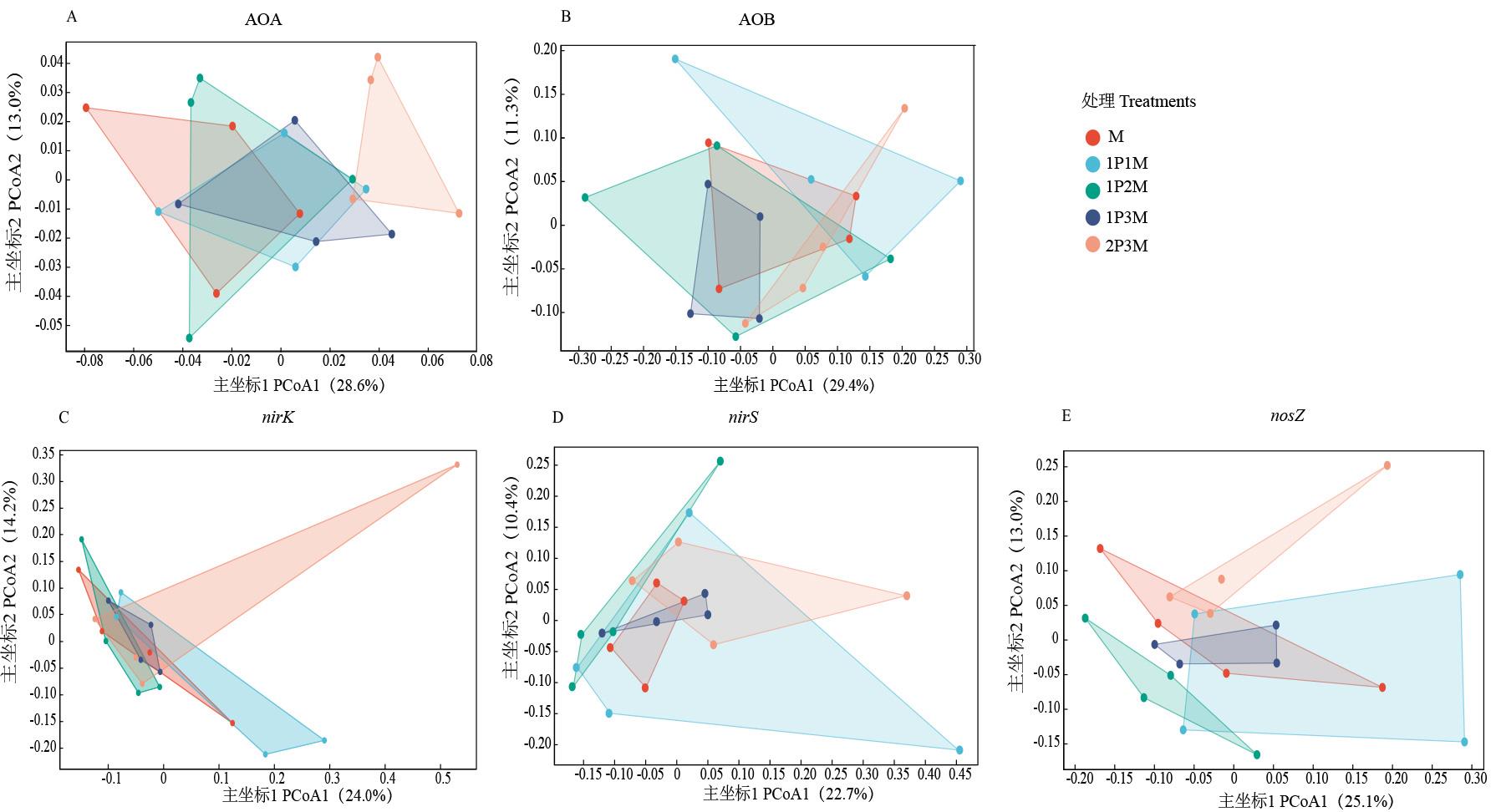
图2 不同保护播种比例下紫花苜蓿根际土壤氨氧化和反硝化微生物群落的主坐标分析
Fig. 2 Principal coordinates analysis of the alfalfa rhizosphere soil ammonia-oxidizing and denitrifying microbial communities in different companion planting ratios
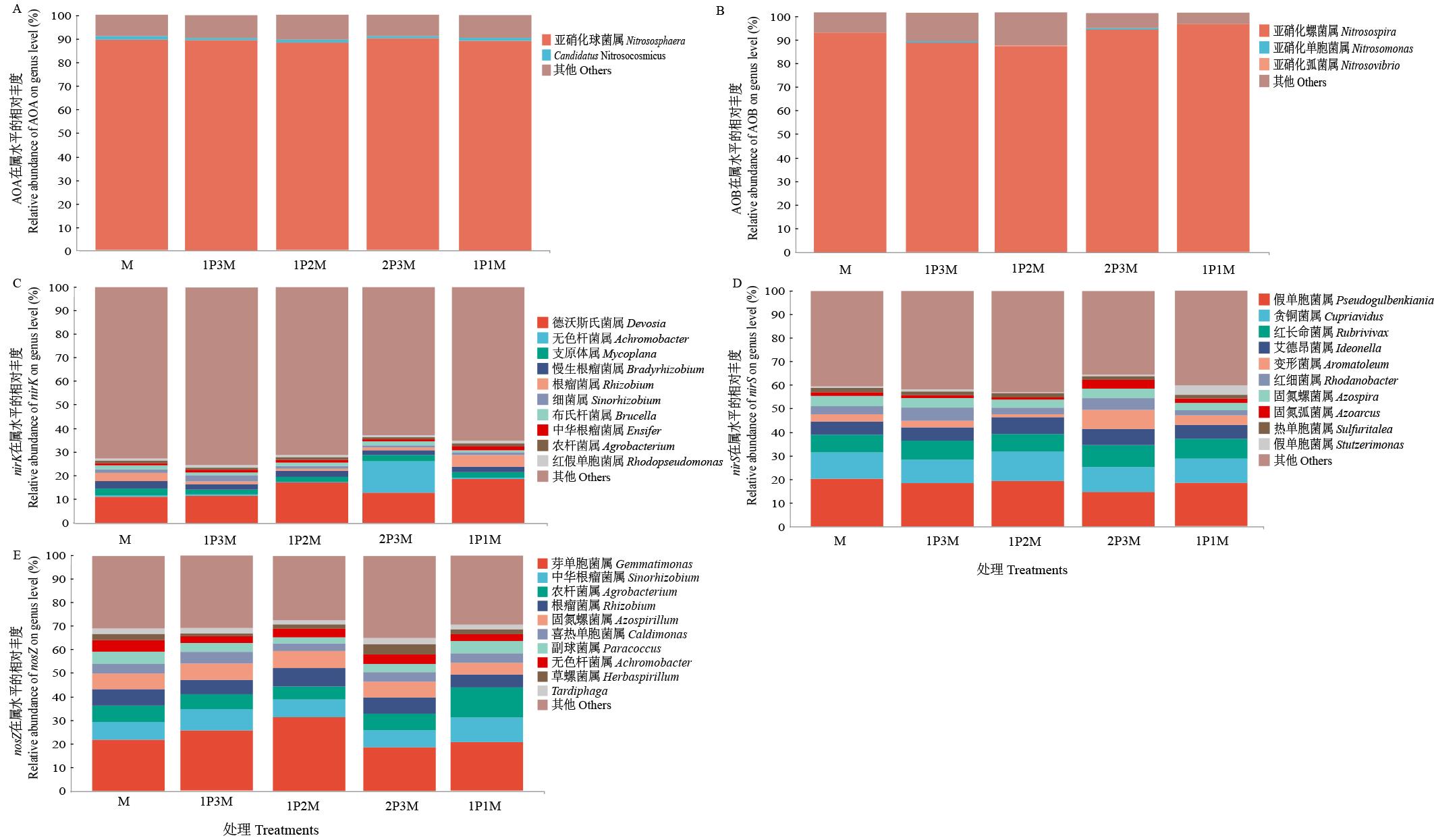
图 3 不同保护播种比例下紫花苜蓿根际土壤氨氧化和反硝化微生物群落在属水平上的群落组成
Fig. 3 Community composition at the genus levels of the alfalfa rhizosphere soil ammonia-oxidizing and denitrifying microbial communities in different companion planting ratios
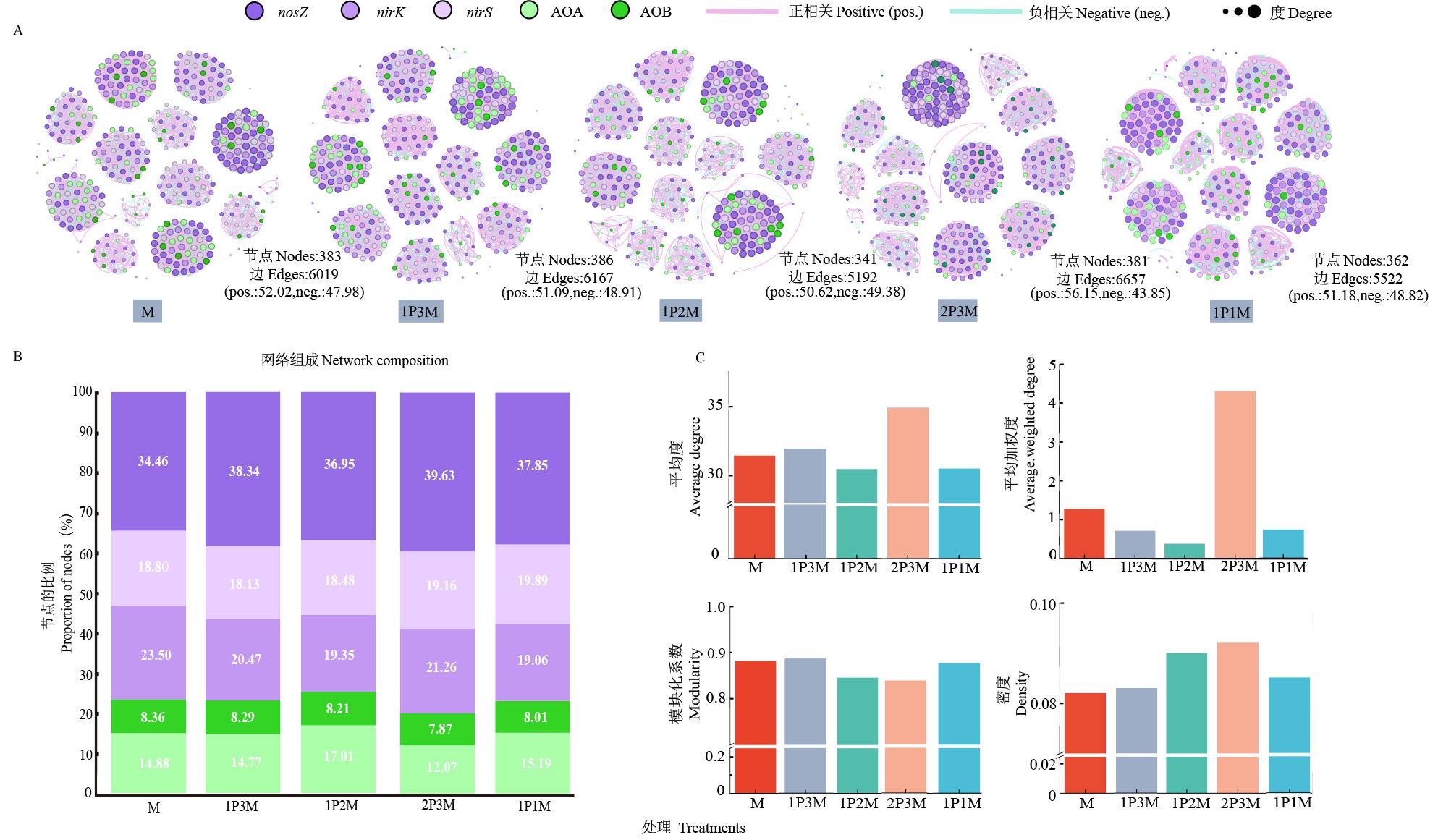
图4 不同保护播种比例下氨氧化和反硝化微生物群落在共现网络的可视化网络(A)、网络组成(B)及拓扑学性质(C)节点间的连接代表它们之间有强且显著的相关性。网络(A)中的点代表OTUs。A connection represents a strong (Spearman’s ρ>0.60) and significant (P<0.05) correlation. Different dots in (A) represent the OTUs in the network.
Fig. 4 Visual network (A), network composition (B) and topology properties (C) of microbial co-occurrence network in ammonia-oxidizing and denitrifying communities in different companion planting ratios
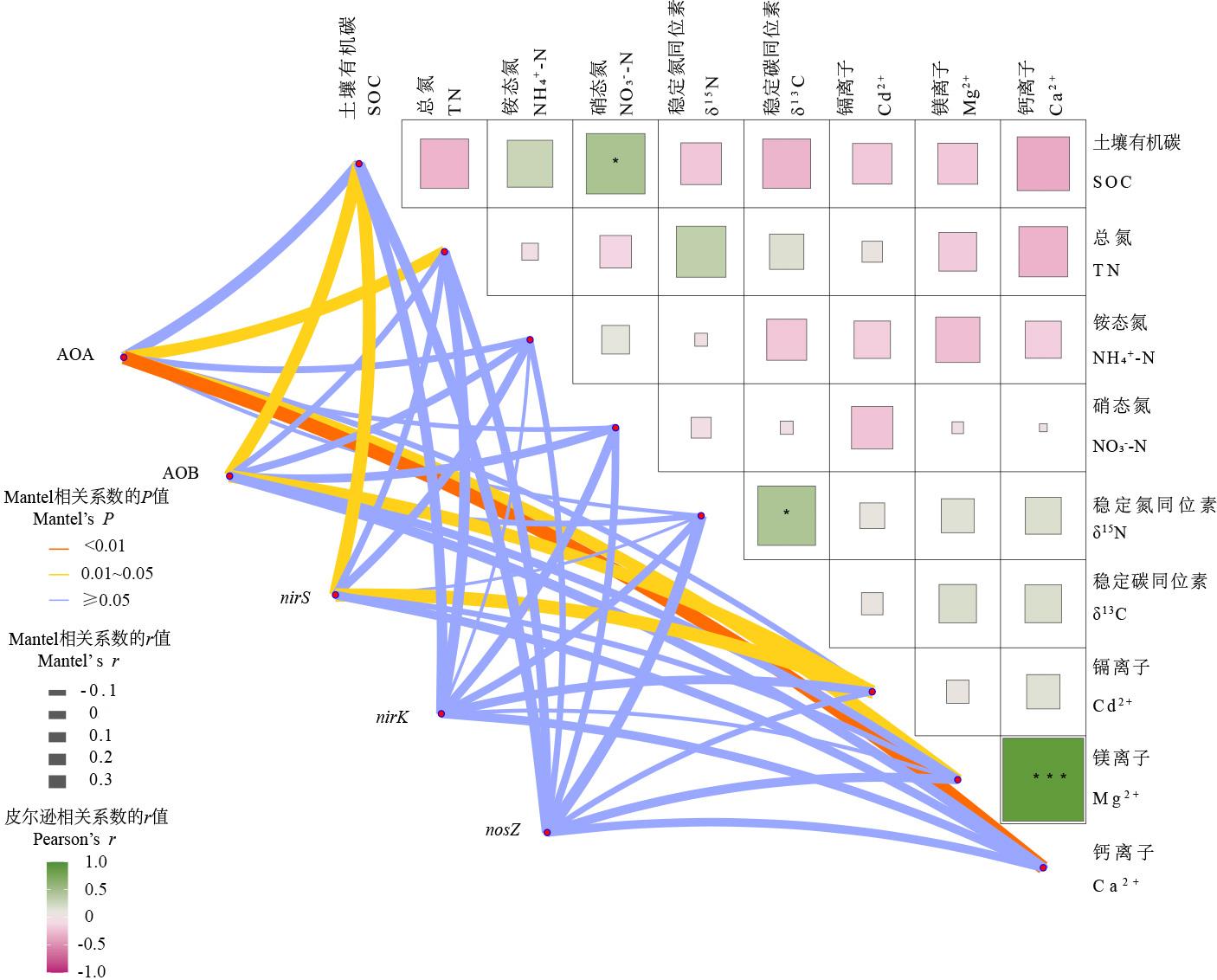
图5 紫花苜蓿根际氨氧化和反硝化微生物群落与土壤因子的关系热图颜色和网格大小代表了相关性大小。绿色和粉色方框分别代表正相关和负相关。线条粗细映射相关性值。节点与土壤因子之间连线的颜色具有统计学意义。Heat map color and grid size represent the size of correlation value. Green boxes represent positive correlations, and pink boxes represent negative correlations. The thickness of each line is mapped in this interval according to the correlation value. The color of the connection between the nodes and the soil factors indicate statistical significance. *, P<0.05; **, P<0.01 and ***, P<0.001.
Fig. 5 Relationship of ammonia-oxidizing and denitrifying microbial community diversity with alfalfa rhizosphere soil factors
| 1 | Feng W L, Liu Y S, Li Y R, et al. Feasibility analysis of a double-cropping system for the efficient use of farmland on China’s Loess Plateau. Journal of Geographical Sciences, 2023, 33(6): 1271-1286. |
| 2 | Zhang W, Lu J S, Bai J, et al. Introduction of soybean into maize field reduces N2O emission intensity via optimizing nitrogen source utilization. Journal of Cleaner Production, 2024, 442: 141052. |
| 3 | Gong X W, Dang K, Liu L, et al. Intercropping combined with nitrogen input promotes proso millet (Panicum miliaceum L.) growth and resource use efficiency to increase grain yield on the Loess plateau of China. Agricultural Water Management, 2021, 243: 106436. |
| 4 | Feng Y P, Shi Y, Zhao M Y, et al. Yield and quality properties of alfalfa (Medicago sativa L.) and their influencing factors in China. European Journal of Agronomy, 2022, 141: 126637. |
| 5 | Sowiński J. The effect of companion crops management on biological weed control in the seeding year of lucerne. Biological Agriculture & Horticulture, 2013, 30(2): 97-108. |
| 6 | Li P, Zhang H, Guo T T, et al. Effects of companion crop on weed suppression and forage growth in the early establishment stage of legume-grass mixture in Hulunbuir area. Acta Prataculturae Sinica, 2022, 30(12): 3423-3432. |
| 李沛, 张浩, 郭童天, 等. 保护播种对呼伦贝尔混播草地建植初期杂草抑制和牧草生长的影响. 草业学报, 2022, 30(12): 3423-3432. | |
| 7 | Lai H L, Gao F Y, Su H, et al. Nitrogen distribution and soil microbial community characteristics in a legume-cereal intercropping system: A review. Agronomy, 2022, 12(8): 1900. |
| 8 | Gong X W, Liu C J, Li J, et al. Responses of rhizosphere soil properties, enzyme activities and microbial diversity to intercropping patterns on the Loess Plateau of China. Soil and Tillage Research, 2019, 195: 104355. |
| 9 | Cuartero J, Pascual J A, Vivo J M, et al. A first-year melon/cowpea intercropping system improves soil nutrients and changes the soil microbial community. Agriculture, Ecosystems & Environment, 2022, 328: 107856. |
| 10 | Zhang G Z, Yang H, Zhang W P, et al. Interspecific interactions between crops influence soil functional groups and networks in a maize/soybean intercropping system. Agriculture, Ecosystems & Environment, 2023, 355: 108595. |
| 11 | Zhang J, Lin X G, Yin R. Advances in functional gene diversity of microorganism in relation to soil nitrogen cycling. Chinese Journal of Eco-Agriculture, 2009, 17(5): 1029-1034. |
| 张晶, 林先贵, 尹睿. 参与土壤氮素循环的微生物功能基因多样性研究进展. 中国生态农业学报, 2009, 17(5): 1029-1034. | |
| 12 | Grassmann C S, Mariano E, Diniz P P, et al. Functional N-cycle genes in soil and N2O emissions in tropical grass-maize intercropping systems. Soil Biology and Biochemistry, 2022, 169: 108655. |
| 13 | Han B, Ye X H, Li W, et al. The effects of different irrigation regimes on nitrous oxide emissions and influencing factors in greenhouse tomato fields. Journal of Soils and Sediments, 2017, 17(10): 2457-2468. |
| 14 | Zhou G P, Fan K K, Gao S J, et al. Green manuring relocates microbiomes in driving the soil functionality of nitrogen cycling to obtain preferable grain yields in thirty years. Science China Life Sciences, 2023, 67(3): 596-610. |
| 15 | Liu B, Ahnemann H, Arlotti D, et al. Impact of diversified cropping systems and fertilization strategies on soil microbial abundance and functional potentials for nitrogen cycling. Science of the Total Environment, 2024, 932: 172954. |
| 16 | Bao S D. Soil and agricultural chemistry analysis (the third edition). Beijing: China Agriculture Press, 2000: 106-108. |
| 鲍士旦. 土壤农化分析(第3版). 北京: 中国农业出版社, 2000: 106-108. | |
| 17 | Nilsson R H, Ryberg M, Kristiansson E, et al. Taxonomic reliability of DNA sequences in public sequence databases: a fungal perspective. PLoS One, 2006, 1(1): e59. |
| 18 | Park S J, Park B J, Rhee S K. Comparative analysis of archaeal 16S rRNA and amoA genes to estimate the abundance and diversity of ammonia-oxidizing archaea in marine sediments. Extremophiles, 2008, 12(4): 605-615. |
| 19 | Weiner A M, Maizels N. A deadly double life. Science, 1999, 284(5411): 63-64. |
| 20 | Mosier A C, Francis C A. Denitrifier abundance and activity across the San Francisco Bay estuary. Environmental Microbiology Reports, 2010, 2(5): 667-676. |
| 21 | Michotey V, Méjean V, Bonin P. Comparison of methods for quantification of cytochrome cd1-denitrifying bacteria in environmental marine samples. Applied and Environmental Microbiology, 2000, 66(4): 1564-1571. |
| 22 | Chen Z, Liu J B, Wu M N, et al. Differentiated response of denitrifying communities to fertilization regime in paddy soil. Microbial Ecology, 2011, 63(2): 446-459. |
| 23 | Jensen E S, Carlsson G, Hauggaard-Nielsen H. Intercropping of grain legumes and cereals improves the use of soil N resources and reduces the requirement for synthetic fertilizer N: A global-scale analysis. Agronomy for Sustainable Development, 2020, 40(1): 5. |
| 24 | Egbeagu U U, Liu W Y, Zhang J N, et al. The activity of ammonia-oxidizing bacteria on the residual effect of biochar-compost amended soils in two cropping seasons. Biochemical Engineering Journal, 2023, 191: 108778. |
| 25 | Zhou X Q, Chen C R, Wang Y F, et al. Effects of warming and increased precipitation on soil carbon mineralization in an Inner Mongolian grassland after 6 years of treatments. Biology and Fertility of Soils, 2012, 48(7): 859-866. |
| 26 | De Vries F T, Caruso T. Eating from the same plate? Revisiting the role of labile carbon inputs in the soil food web. Soil Biology and Biochemistry, 2016, 102: 4-9. |
| 27 | Cheng B, Wang L, Liu R J, et al. Shade-tolerant soybean reduces yield loss by regulating its canopy structure and stem characteristics in the maize-soybean strip intercropping system. Frontiers in Plant Science, 2022, 13: 848893. |
| 28 | Laughlin D C, Hart S C, Kaye J P, et al. Evidence for indirect effects of plant diversity and composition on net nitrification. Plant and Soil, 2010, 330: 435-445. |
| 29 | Yu Y J, Zhu B, Wang X G, et al. N2O emission from rice-rapeseed rotation system in Chengdu Plain of Sichun Basin. Chinese Journal of Applied Ecology, 2008, 19(6): 1277-1282. |
| 于亚军, 朱波, 王小国, 等. 成都平原水稻-油菜轮作系统氧化亚氮排放. 应用生态学报, 2008, 19(6): 1277-1282. | |
| 30 | Zhang X L, Teng Z Y, Zhang H H, et al. Nitrogen application and intercropping change microbial community diversity and physicochemical characteristics in mulberry and alfalfa rhizosphere soil. Journal of Forestry Research, 2021, 32(5): 2121-2133. |
| 31 | Franklin R B, Mills A L. Importance of spatially structured environmental heterogeneity in controlling microbial community composition at small spatial scales in an agricultural field. Soil Biology and Biochemistry, 2009, 41(9): 1833-1840. |
| 32 | Liu S, Yao J N, Zhang J J, et al. Functional gene abundance and community diversity of ammonia-oxidizing and denitrifying microorganisms in the rhizosphere soil of desert leguminous shrubs. Acta Prataculturae Sinica, 2024, 33(5): 115-127. |
| 刘爽, 姚佳妮, 张钧杰, 等. 荒漠豆科灌丛根际土壤氨氧化和反硝化微生物功能基因丰度及群落多样性特征. 草业学报, 2024, 33(5): 115-127. | |
| 33 | Zhalnina K, de Quadros P D, Gano K A, et al. Ca. Nitrososphaera and Bradyrhizobium are inversely correlated and related to agricultural practices in long-term field experiments. Frontiers in Microbiology, 2013, 4: 104. |
| 34 | Park S, Cho K, Lee T, et al. Improved insights into the adaptation and selection of Nitrosomonas spp. for partial nitritation under saline conditions based on specific oxygen uptake rates and next generation sequencing. Science of the Total Environment, 2022, 822: 153644. |
| 35 | Danish S, Zafar-ul-Hye M, Mohsim F, et al. ACC-deaminase producing plant growth promoting rhizobacteria and biochar mitigate adverse effects of drought stress on maize growth. PLoS One, 2020, 15(4): e0230615. |
| 36 | Kandel S L, Joubert P M, Doty S L. Bacterial endophyte colonization and distribution within plants. Microorganisms, 2017, 5(4): 77. |
| 37 | Chen S M, Waghmode T R, Sun R B, et al. Root-associated microbiomes of wheat under the combined effect of plant development and nitrogen fertilization. Microbiome, 2019, 7(1): 136. |
| 38 | Li X M, Qiao J T, Li S, et al. Bacterial communities and functional genes stimulated during anaerobic arsenite oxidation and nitrate reduction in a paddy soil. Environmental Science & Technology, 2019, 54(4): 2172-2181. |
| 39 | Xun W B, Liu Y P, Li W, et al. Specialized metabolic functions of keystone taxa sustain soil microbiome stability. Microbiome, 2021, 9(1): 35. |
| 40 | Ling N, Wang T T, Kuzyakov Y. Rhizosphere bacteriome structure and functions. Nature Communications, 2022, 13(1): 836. |
| 41 | Hernandez D J, David A S, Menges E S, et al. Environmental stress destabilizes microbial networks. ISME Journal, 2021, 15(6): 1722-1734. |
| 42 | Ma B, Wang Y L, Ye S D, et al. Earth microbial co-occurrence network reveals interconnection pattern across microbiomes. Microbiome, 2020, 8(82): 1-12. |
| 43 | Banerjee S, Walder F, Büchi L, et al. Agricultural intensification reduces microbial network complexity and the abundance of keystone taxa in roots. ISME Journal, 2019, 13(7): 1722-1736. |
| 44 | Jiao S, Lu Y H, Wei G H. Soil multitrophic network complexity enhances the link between biodiversity and multifunctionality in agricultural systems. Global Change Biology, 2021, 28(1): 140-153. |
| 45 | Feng J Y, Ma H X, Wang C Y, et al. Water rather than nitrogen availability predominantly modulates soil microbial beta-diversity and co-occurrence networks in a secondary forest. Science of the Total Environment, 2024, 907: 167996. |
| 46 | Hou S P, Ai C, Zhou W, et al. Structure and assembly cues for rhizospheric nirK- and nirS-type denitrifier communities in long-term fertilized soils. Soil Biology and Biochemistry, 2018, 119: 32-40. |
| 47 | Castellano-Hinojosa A, Correa-Galeote D, González-López J, et al. Effect of nitrogen fertilisers on nitrous oxide emission, nitrifier and denitrifier abundance and bacterial diversity in closed ecological systems. Applied Soil Ecology, 2020, 145: 103380. |
| 48 | Stahl D A, De La Torre J R. Physiology and diversity of ammonia-oxidizing archaea. Annual Review of Microbiology, 2012, 66(1): 83-101. |
| 49 | Hatzenpichler R. Diversity, physiology, and niche differentiation of ammonia-oxidizing archaea. Applied and Environmental Microbiology, 2012, 78(21): 7501-7510. |
| 50 | Sun H S, Jiang S X. A review on nirS-type and nirK-type denitrifiers via a scientometric approach coupled with case studies. Environmental Science: Processes & Impacts, 2022, 24(2): 221-232. |
| 51 | Azziz G, Monza J, Etchebehere C, et al. nirS- and nirK-type denitrifier communities are differentially affected by soil type, rice cultivar and water management. European Journal of Soil Biology, 2017, 78: 20-28. |
| [1] | 严双, 夏菲, 魏巍, 王敬龙, 吴皓阳, 冉林灵, 薛云尹, 石昊, 郑晒坤, 王军强, 贺俊东. 高寒草甸不同侵蚀样地植物多样性的差异及其关键影响因子[J]. 草业学报, 2025, 34(6): 1-13. |
| [2] | 李雪萍, 许世洋, 李建军, 漆永红. 青稞根腐病根际土壤细菌多样性及群落结构变化规律[J]. 草业学报, 2025, 34(5): 118-129. |
| [3] | 董晓慧, 师尚礼, 尹国丽, 陈三冬, 巩海强, 刘林波. 玉米器官组织内生细菌和真菌群落多样性[J]. 草业学报, 2025, 34(5): 130-145. |
| [4] | 王守兴, 周华坤, 欧立鹏, 李成先, 王雁鹤, 宁晓春, 谷强, 魏代军, 杨明新. 三江源不同草地类型植被及土壤微生物多样性与土壤因子特征的研究[J]. 草业学报, 2025, 34(4): 16-26. |
| [5] | 陈鑫珠, 林平冬, 岳稳, 杨雅妮, 邱水玲, 郑向丽. 不同添加剂对蚕豆秸秆青贮品质及微生物多样性的影响[J]. 草业学报, 2025, 34(4): 164-174. |
| [6] | 姜安静, 董乙强, 周时杰, 聂婷婷, 吴悦, 柳泽宇, 单兴芸, 雷雅欣, 吴凯, 安沙舟. 草地植物多样性沿海拔梯度分布特征及其驱动因素——以天山北坡东段为例[J]. 草业学报, 2025, 34(3): 29-40. |
| [7] | 刘淑琪, 崔东, 刘文新, 杨海军, 杨延成, 江智诚, 闫江超, 刘江慧. 短期氮、水添加和刈割对苦豆子型退化草地植物群落特征与土壤理化性质的影响[J]. 草业学报, 2025, 34(3): 41-55. |
| [8] | 龚昕, 霍新茹, 李雯, 杨彦东, 刘超, 秦伟春, 沈艳, 王国会, 马红彬. 宁夏罗山山地草原植被群落特征及其空间分异[J]. 草业学报, 2025, 34(2): 1-15. |
| [9] | 吕娜, 高吉喜, 李政海, 尤春赫, 刘晓曼, 张彪, 莫宇, 朱萨宁, 彭阳, 杨雪. 植物生长中期施肥对草甸草原群落特征与物种多样性的影响[J]. 草业学报, 2025, 34(2): 109-122. |
| [10] | 王文虎, 王世林, 梁国玲, 李文, 曹文侠. 坡向和坡位对祁连山高寒灌丛植物群落多样性的影响[J]. 草业学报, 2025, 34(1): 17-28. |
| [11] | 阿斯太肯·居力海提null, 孙宗玖, 于冰洁, 迪达尔·比苏力旦null, 李美莎, 敬一胜. 封育对蒿类荒漠草地土壤微生物碳源利用特征的影响[J]. 草业学报, 2025, 34(1): 29-40. |
| [12] | 姚佳妮, 刘爽, 张钧杰, 胡明珠, 代金霞. 宁夏荒漠草原典型灌丛根际土壤酶活性及微生物代谢多样性[J]. 草业学报, 2024, 33(9): 1-14. |
| [13] | 贺世龙, 叶贺, 李静, 张雅玲, 德海山, 红梅. 不同时限氮沉降和降水变化对荒漠草原中小型土壤节肢动物群落结构与多样性的影响[J]. 草业学报, 2024, 33(9): 140-154. |
| [14] | 郑荣春, 南志标, 段廷玉. 四个品种红三叶种带真菌多样性研究[J]. 草业学报, 2024, 33(8): 170-180. |
| [15] | 刘倩, 丁彦芬, 宋杉杉, 许文婕, 杨威. 南京明城墙绿带草本层自生植物群落数量分类与排序分析[J]. 草业学报, 2024, 33(5): 1-15. |
| 阅读次数 | ||||||
|
全文 |
|
|||||
|
摘要 |
|
|||||
