

ISSN 1004-5759 CN 62-1105/S
草业学报 ›› 2025, Vol. 34 ›› Issue (6): 139-153.DOI: 10.11686/cyxb2024303
• 研究论文 • 上一篇
赵媛媛1,2( ), 蒲小剑1,2, 徐成体1,2, 王伟1,2, 傅云洁1,2
收稿日期:2024-07-31
修回日期:2024-09-20
出版日期:2025-06-20
发布日期:2025-04-03
通讯作者:
赵媛媛
作者简介:赵媛媛(1991-),女,山东威海人,助理研究员,博士。E-mail: 18893147262@163.com基金资助:
Yuan-yuan ZHAO1,2(), Xiao-jian PU1,2, Cheng-ti XU1,2, Wei WANG1,2, Yun-jie FU1,2
Received:2024-07-31
Revised:2024-09-20
Online:2025-06-20
Published:2025-04-03
Contact:
Yuan-yuan ZHAO
摘要:
干旱不利于植物的正常生长、发育及繁殖,是造成农作物及饲草产量降低的重要因素之一。BMI1蛋白作为PcG蛋白复合体中唯一介导组蛋白泛素化的成员,在参与植物对外界非生物胁迫响应的表观遗传调控中发挥重要的作用。以蒺藜苜蓿为材料,克隆得到PcG家族成员MtBMI1,该基因全长5386 bp,编码429个氨基酸,具有zf-C3HC4和RAWUL两个保守的功能结构域。系统进化树分析表明该基因与菜豆PvBMI1-1和大豆GmBMI1-1亲缘关系更接近。烟草表皮亚细胞定位结果表明该基因编码的蛋白定位在细胞核上。GUS化学染色结果表明在成熟的拟南芥花序及柱头、花茎和果柄中具有较强的MtBMI1启动子表达活性。将MtBMI1在拟南芥中过表达进行功能分析,结果表明转基因拟南芥H2AK119ub组蛋白含量相比野生型显著(P<0.05)升高,同时干旱处理后的转基因株系相比野生型产生明显的失水表型,且根长、根鲜重和地上鲜重显著(P<0.05)低于野生型,丙二醛含量显著(P<0.05)高于野生型。以上结果表明MtBMI1在蒺藜苜蓿干旱胁迫响应中发挥负调控作用,该研究可为进一步揭示蒺藜苜蓿响应干旱胁迫的表观遗传调控机制提供理论依据。
赵媛媛, 蒲小剑, 徐成体, 王伟, 傅云洁. 蒺藜苜蓿MtBMI1基因克隆及抗旱性分析[J]. 草业学报, 2025, 34(6): 139-153.
Yuan-yuan ZHAO, Xiao-jian PU, Cheng-ti XU, Wei WANG, Yun-jie FU. Cloning of the MtBMI1 gene from Medicago truncatula and its role in drought tolerance[J]. Acta Prataculturae Sinica, 2025, 34(6): 139-153.
| 引物Primer | 引物序列Primer sequence (5'-3') |
|---|---|
| Mt-Actin F | TACCCCATTGAGCACGGTAT |
| Mt-Actin R | ATACATGGCAGGCACATTGA |
| Mt-BMI1 F | AAGGATGGAAGCGTACCTGTCTCA |
| Mt-BMI1 R | TGAATCAGCCACAGCTCAACCAA |
| MtBMI1 F | ATGTCGAATGATGTTGTGAAAGTGA |
| MtBMI1 R | TCAAGGGCGTGGAGATTTCCG |
| MtBMI1 MF | TGACCATGGTATCGAATGATGTTGTGAAAGTGA |
| MtBMI1 MR | AGGGTGACCTCAAGGGCGTGGAGATTTCCG |
| pC3301-R | AGTAACATAGATGACACCGC |
| MtBMI1 promoter F | TGTATCGAGAGGTGTGTAATCAGTAC |
| MtBMI1 promoter R | CACTTTCACAACATCATTCGACAT |
| MtBMI1 promoter MF | TACCCGGGGATCCTCTAGAGTATCGAGAGGTGTGTAATC |
| MtBMI1 promoter MR | ACCCTCAGATCTACCATGGATATTCTTGATGATTTCTTGCT |
| MtBMI1 GFP F | TGGAGAGGACACGCTCGAGATGTCGAATGATGTTGTGAA |
| MtBMI1 GFP R | CCCTTGCTCACCATGAATTCAGGGCGTGGAGATTTCCG |
| Bar F | ATGAGCCCAGAACGACGCCC |
| Bar R | TCAAATCTCGGTGACGGGCA |
表1 MtBMI1基因克隆、载体构建及qRT-PCR引物汇总
Table 1 Summary of primers used for MtBMI1 gene cloning, vector construction and qRT-PCR
| 引物Primer | 引物序列Primer sequence (5'-3') |
|---|---|
| Mt-Actin F | TACCCCATTGAGCACGGTAT |
| Mt-Actin R | ATACATGGCAGGCACATTGA |
| Mt-BMI1 F | AAGGATGGAAGCGTACCTGTCTCA |
| Mt-BMI1 R | TGAATCAGCCACAGCTCAACCAA |
| MtBMI1 F | ATGTCGAATGATGTTGTGAAAGTGA |
| MtBMI1 R | TCAAGGGCGTGGAGATTTCCG |
| MtBMI1 MF | TGACCATGGTATCGAATGATGTTGTGAAAGTGA |
| MtBMI1 MR | AGGGTGACCTCAAGGGCGTGGAGATTTCCG |
| pC3301-R | AGTAACATAGATGACACCGC |
| MtBMI1 promoter F | TGTATCGAGAGGTGTGTAATCAGTAC |
| MtBMI1 promoter R | CACTTTCACAACATCATTCGACAT |
| MtBMI1 promoter MF | TACCCGGGGATCCTCTAGAGTATCGAGAGGTGTGTAATC |
| MtBMI1 promoter MR | ACCCTCAGATCTACCATGGATATTCTTGATGATTTCTTGCT |
| MtBMI1 GFP F | TGGAGAGGACACGCTCGAGATGTCGAATGATGTTGTGAA |
| MtBMI1 GFP R | CCCTTGCTCACCATGAATTCAGGGCGTGGAGATTTCCG |
| Bar F | ATGAGCCCAGAACGACGCCC |
| Bar R | TCAAATCTCGGTGACGGGCA |

图1 MtBMI1的基因特征
Fig.1 The characteristics of MtBMI1 gene

图2 MtBMI1的全长CDS序列及对应的氨基酸序列
Fig.2 The full length of CDS and corresponding amino acid sequence of MtBMI1

图3 MtBMI1蛋白的保守结构域、二级和三级结构A:蒺藜苜蓿MtBMI1蛋白的结构域分析;B:蒺藜苜蓿MtBMI1蛋白质二级结构预测;C:蒺藜苜蓿MtBMI1蛋白质三级结构预测。A: The conserved domain analysis of MtBMI1 protein in M. truncatula; B: Prediction of secondary structure of MtBMI1 protein in M. truncatula; C: Prediction of tertiary structure of MtBMI1 protein in M. truncatula.
Fig.3 Conserved domains, secondary and tertiary structures of MtBMI1 protein

图4 BMI1蛋白的多序列比对Gm:大豆 G. max; Pv:菜豆 P. vulgaris; At:拟南芥 A. thaliana;Os:水稻 O. sativa;Mt:蒺藜苜蓿 M. truncatula;下同The same below.
Fig.4 Multiple sequence alignment of BMI1 protein

图5 BMI1基因的系统进化树构建
Fig.5 Phylogenetic tree construction of BMI1 gene

图6 MtBMI1在蒺藜苜蓿不同发育时期和不同组织中的表达谱不同字母代表差异显著(P<0.05),下同。Different letters show significant difference (P<0.05), the same below.
Fig.6 Expression profiles of MtBMI1 in different developmental stages and tissues of M. truncatula
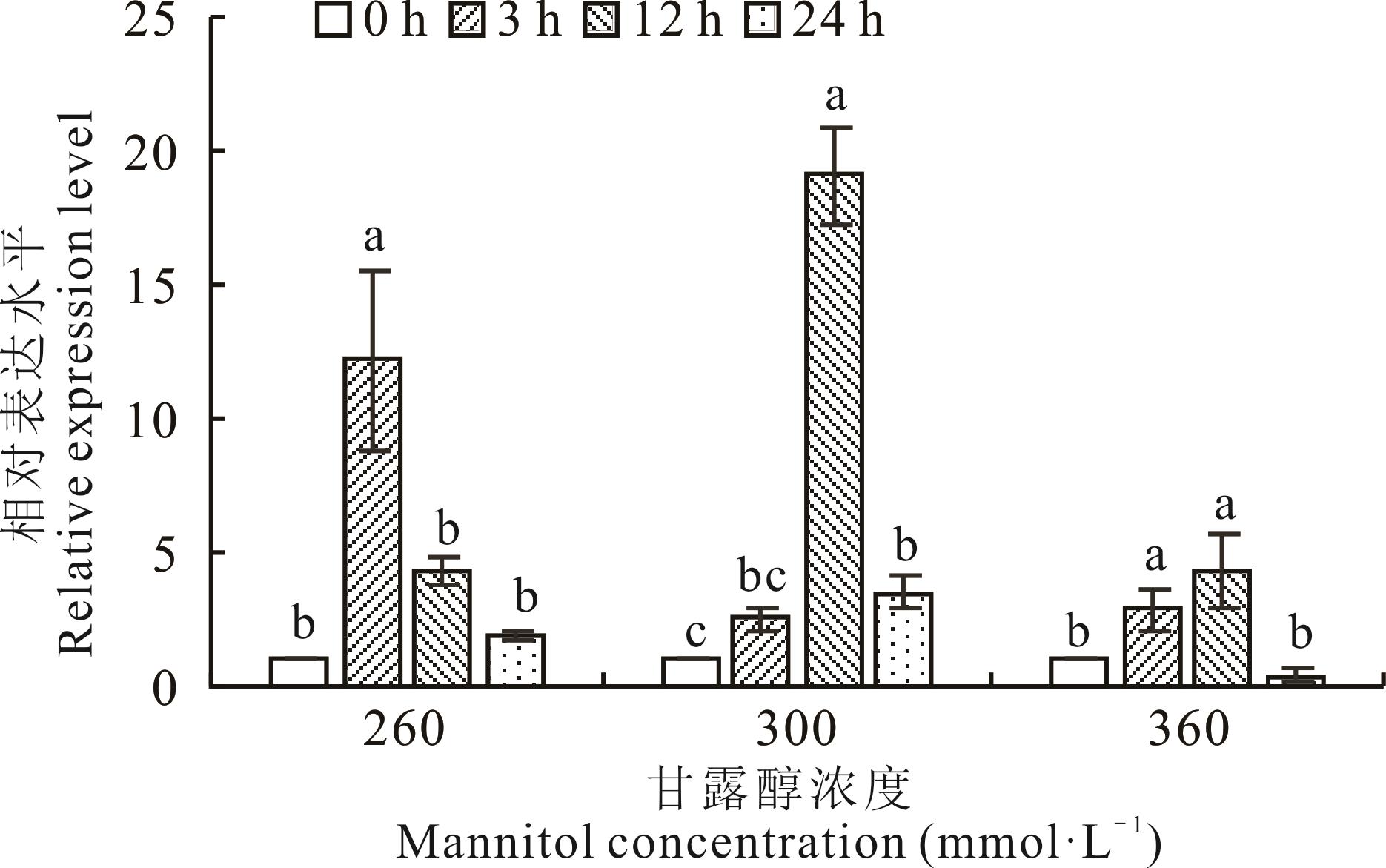
图7 不同浓度甘露醇处理下MtBMI1的表达谱
Fig.7 Expression profiles of MtBMI1 under different concentrations of mannitol

图8 MtBMI1基因在烟草叶片中的亚细胞定位从左到右依次为绿色荧光蛋白、明场、叶绿体自发荧光、3个通道的叠加图。Pictures from left to right are the green fluorescent protein channel (UV), bright field (DIC), chlorophyll autofluorescence channel (CHI) and overlay of three channels (Merge).
Fig.8 Subcellular localization of MtBMI1 gene in tobaccoleaf
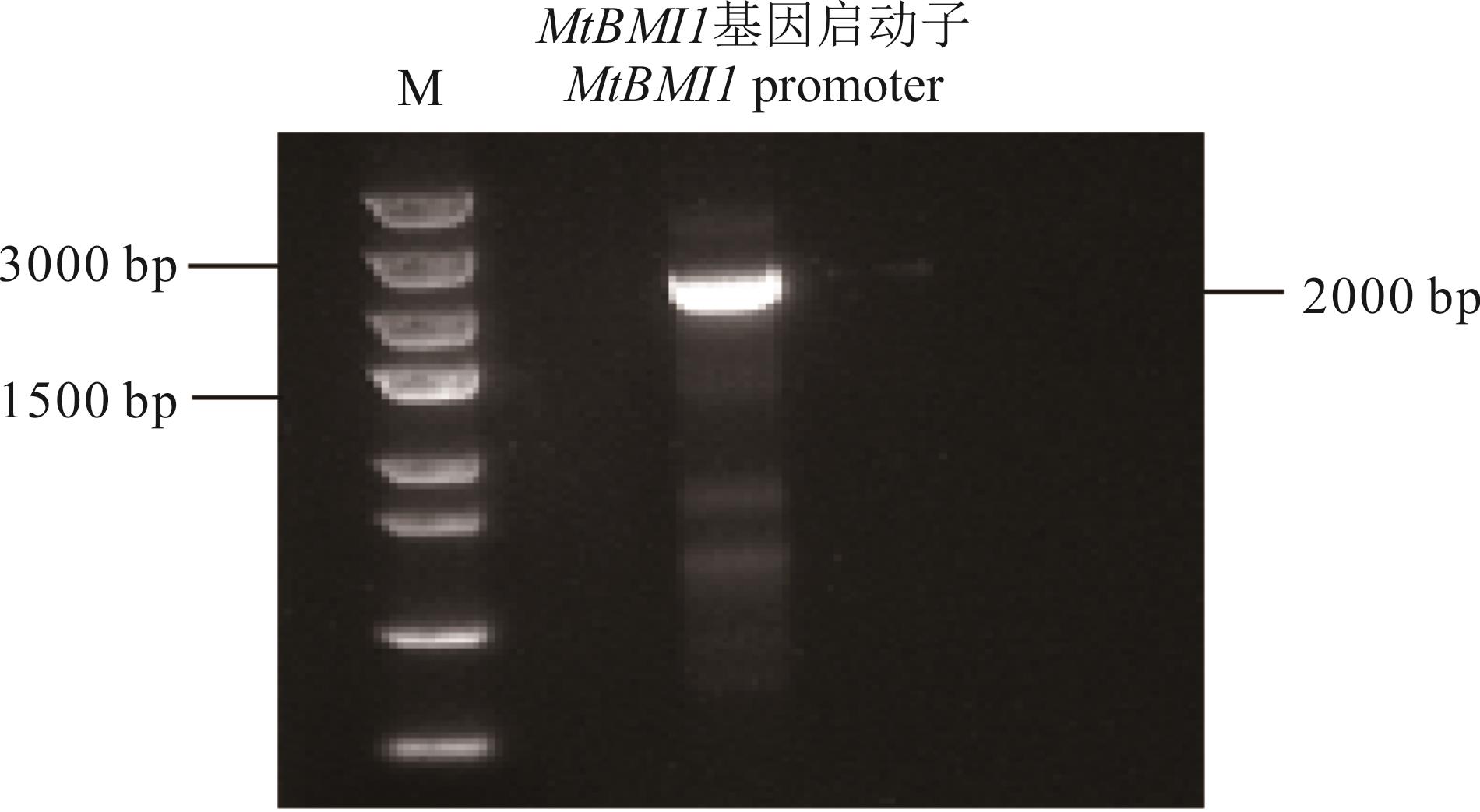
图9 RT-PCR克隆MtBMI1启动子M表示marker,下同。M represents marker, the same below.
Fig.9 MtBMI1 promoter cloned by RT-PCR

图10 pCAMBIA3301-MtBMI1启动子转拟南芥GUS染色
Fig.10 GUS staining results of pCAMBIA3301-MtBMI1 promotertransgenic Arabidopsis
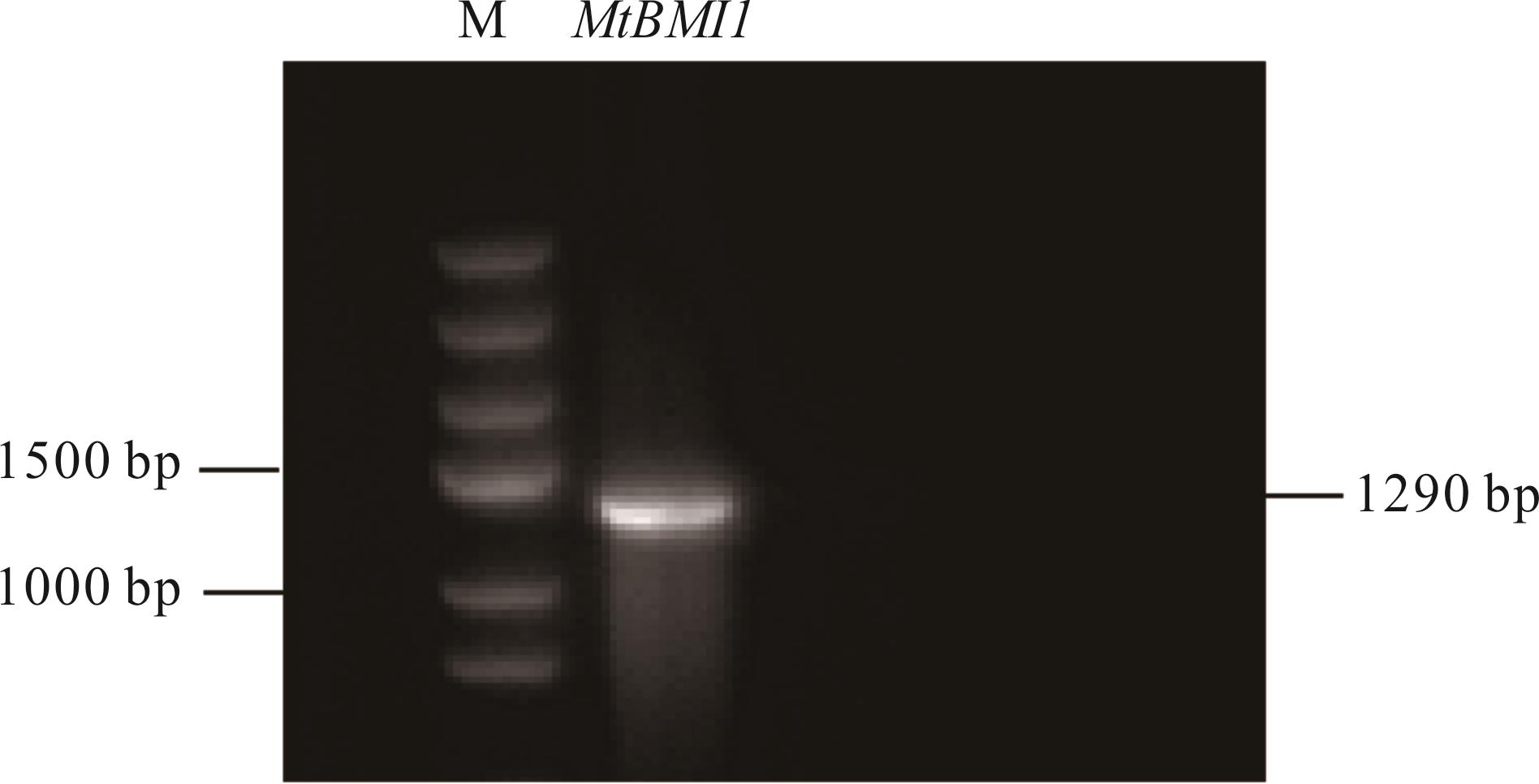
图11 RT-PCR克隆MtBMI1基因
Fig.11 MtBMI1 gene cloned by RT-PCR
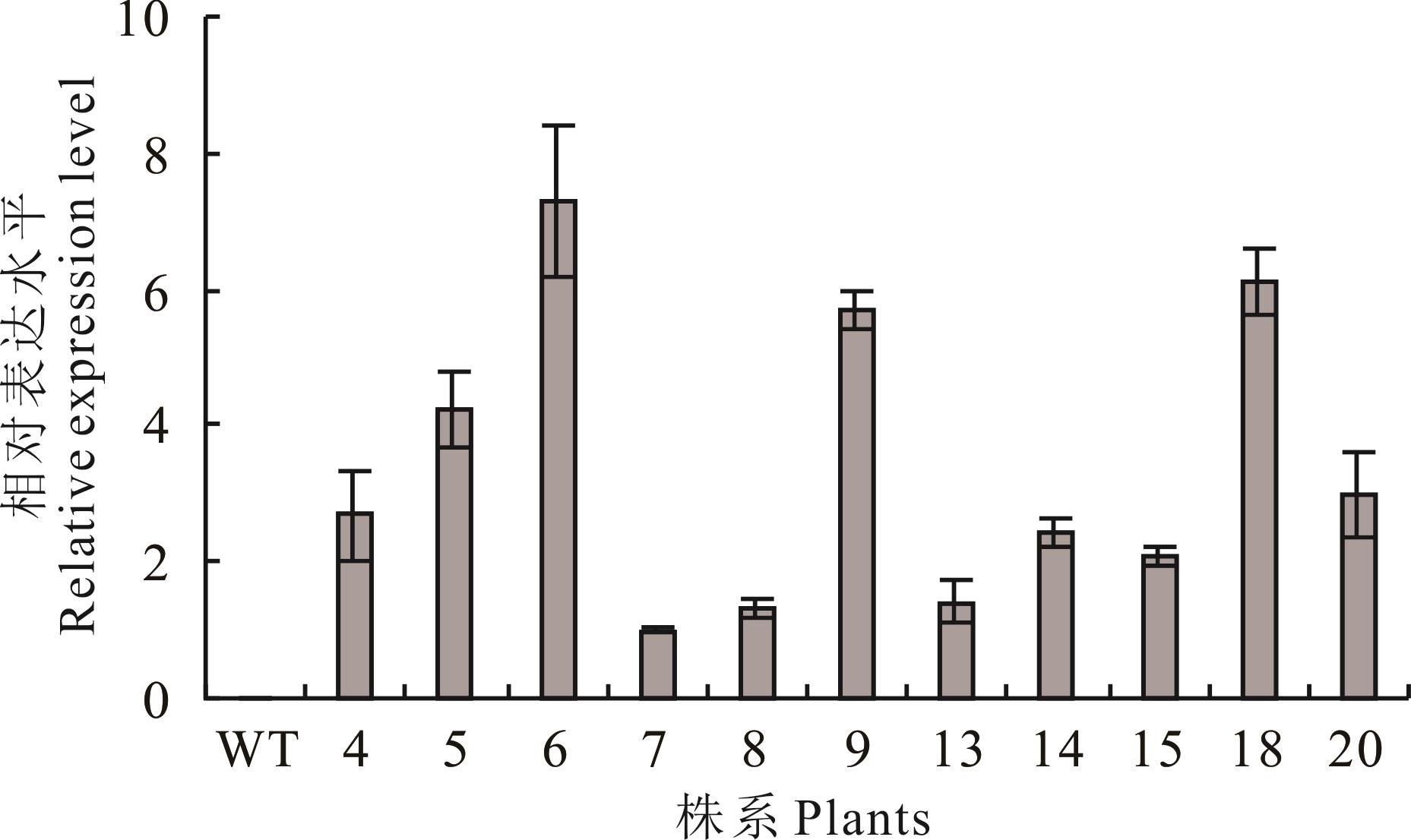
图12 转基因拟南芥各株系MtBMI1表达水平
Fig.12 The relative expression levels of MtBMI1 in transgenic Arabidopsis lines

图13 苗期和抽薹期的转基因与野生型拟南芥表型比较
Fig.13 Phenotypic comparison of transgenic and wild-type Arabidopsis at seedling and bolting stages

图14 300 mmol·L-1甘露醇处理下转基因与野生型拟南芥表型比较
Fig.14 Phenotypic comparison of transgenic and wild-type Arabidopsis under 300 mmol·L-1 mannitol treatment

图15 甘露醇处理对转基因与野生型拟南芥丙二醛和脯氨酸的影响*表示各材料间差异显著(P<0.05)。* indicate the significant differences among materials (P<0.05).
Fig.15 Effects of mannitol treatment on the content of malondialdehyde and proline in transgenic and wild-type Arabidopsis

图16 MtBMI1转基因拟南芥抗旱性评价*表示对照与处理间差异显著(P<0.05),不同字母表示材料间差异显著(P<0.05)。* mean significant difference between control and treatment (P<0.05), different letters show significant difference among materials (P<0.05).
Fig.16 Evaluation of drought resistance in MtBMI1 transgenic Arabidopsis

图17 MtBMI1转基因拟南芥H2AK119ub组蛋白含量分析
Fig.17 Analysis of H2AK119ub histone content in MtBMI1 transgenic Arabidopsis

图18 转基因拟南芥中与表观遗传修饰相关基因的表达水平
Fig.18 Expression levels of epigenetic modification related genes in transgenic Arabidopsis
| 1 | Li W, Wang Z, Li J, et al. Overexpression of AtBMI1C, a polycomb group protein gene, accelerates flowering in Arabidopsis. PLoS One, 2011, 6(6): e21364. |
| 2 | De Napoles M, Mermoud J E, Wakao R, et al. Polycomb group proteins Ring1A/B link ubiquitylation of histone H2A to heritable gene silencing and X inactivation. Developmental Cell, 2004, 7(5): 663-676. |
| 3 | Zhang K, Sridhar V V, Zhu J, et al. Distinctive core histone post-translational modification patterns in Arabidopsis thaliana. PLoS One, 2007, 2(11): e1210. |
| 4 | Ginjala V, Nacerddine K, Kulkarni A, et al. BMI1 is recruited to DNA breaks and contributes to DNA damage-induced H2A ubiquitination and repair. Molecular and Cellular Biology, 2011, 31(10): 1972-1982. |
| 5 | Bratzel F, López-Torrejón G, Koch M, et al. Keeping cell identity in Arabidopsis requires PRC1 RING-finger homologs that catalyze H2A monoubiquitination. Current Biology, 2010, 20(20): 1853-1859. |
| 6 | Yang C, Bratzel F, Hohmann N, et al. VAL- and AtBMI1-mediated H2Aub initiate the switch from embryonic to postgerminative growth in Arabidopsis. Current Biology, 2013, 23(14): 1324-1329. |
| 7 | Chen D, Molitor A, Liu C, et al. The Arabidopsis PRC1-like ring-finger proteins are necessary for repression of embryonic traits during vegetative growth. Cell Research, 2010, 20(12): 1332-1344. |
| 8 | Zhao Y, Zhang J, Sun Z, et al. Genome-wide identification and analysis of the polycomb group family in Medicago truncatula. International Journal of Molecular Sciences, 2021, 22(14): 7537. |
| 9 | Kong H M, Song J X, Yang J, et al. Identification and transcript profiling of the CAMTA gene family under abiotic stress in alfalfa. Acta Prataculturae Sinica, 2024, 33(5): 143-154. |
| 孔海明, 宋家兴, 杨静, 等. 紫花苜蓿CAMTA基因家族鉴定及其在非生物胁迫下的表达模式分析.草业学报, 2024, 33(5): 143-154. | |
| 10 | Hu S Q, Wang J C, Yao L R, et al. Cloning and preliminary functional analysis of the root gene HgAKR6C of Halogeton glomeratus. Acta Prataculturae Sinica, 2024, 33(1): 61-74. |
| 胡尚钦, 汪军成, 姚立蓉, 等. 盐生草根系基因HgAKR6C的克隆与初步功能分析. 草业学报, 2024, 33(1): 61-74. | |
| 11 | Qian C L, Ji Z J, Zhu Q, et al. Effects of 1-MCP on proline, polyamine, and nitric oxide metabolism in postharvest peach fruit under chilling stress. Horticultural Plant Journal, 2021, 7(3): 188-196. |
| 12 | Chen D, Molitor A M, Xu L, et al. Arabidopsis PRC1 core component AtRING1 regulates stem cell-determining carpel development mainly through repression of class I KNOX genes. BMC Biology, 2016, 14: 1-17. |
| 13 | Jiang L W, Huang L F, Jiang W. H3K27me3-mediated epigenetic regulation in pluripotency maintenance and lineage differentiation. Cell Insight, 2024, 3(4): 1-11. |
| 14 | Strejčková B, Čegan R, Pecinka A, et al. Identification of polycomb repressive complex 1 and 2 core components in hexaploid bread wheat. BMC Plant Biology, 2020, 20(1): 1-13. |
| 15 | Chen D, Huang Y, Ruan Y, et al. The evolutionary landscape of PRC1 core components in green lineage. Planta, 2016, 243(4): 825-846. |
| 16 | Merini W, Romero-Campero F J, Gomez-Zambrano A, et al. The Arabidopsis polycomb repressive complex 1 (PRC1) components AtBMI1A, B, and C impact gene networks throughout all stages of plant development. Plant Physiology, 2017, 173(1): 627-641. |
| 17 | Qin F, Sakuma Y, Tran L S P, et al. Arabidopsis DREB2A-interacting proteins function as RING E3 ligases and negatively regulate plant drought stress-responsive gene expression. The Plant Cell, 2008, 20(6): 1693-1707. |
| 18 | Bratzel F, Yang C, Angelova A, et al. Regulation of the new Arabidopsis imprinted gene AtBMI1C requires the interplay of different epigenetic mechanisms. Molecular Plant, 2012, 5(1): 260-269. |
| 19 | Xu L, Shen W H. Polycomb silencing of KNOX genes confines shoot stem cell niches in Arabidopsis. Current Biology, 2008, 18(24): 1966-1971. |
| [1] | 周昕越, 王丽萍, 蒋庆雪, 马晓冉, 仪登霞, 王学敏. 紫花苜蓿低温诱导蛋白MsLTI65的分离及其对不同逆境的响应[J]. 草业学报, 2025, 34(5): 89-104. |
| [2] | 陈彩锦, 包明芳, 王文虎, 尚继红, 曾燕霞, 沙晓弟, 朱新忠, 王学敏, 刘文辉. 紫花苜蓿抗旱育种研究现状及展望[J]. 草业学报, 2025, 34(3): 204-223. |
| [3] | 汪欣瑶, 彭亚萍, 姚立蓉, 汪军成, 司二静, 张宏, 杨轲, 马小乐, 孟亚雄, 王化俊, 李葆春. 盐生草HgS5基因的克隆与抗旱性鉴定[J]. 草业学报, 2025, 34(2): 184-195. |
| [4] | 崔红丽, 孙明哲, 贾博为, 孙晓丽. 蒺藜苜蓿OSCA基因家族鉴定及低温逆境表达分析[J]. 草业学报, 2024, 33(9): 111-125. |
| [5] | 周昕越, 蒋庆雪, 贾会丽, 马琳, 樊璐, 王学敏. 紫花苜蓿MsBBX20基因克隆及耐盐功能分析[J]. 草业学报, 2024, 33(10): 55-73. |
| [6] | 胡尚钦, 汪军成, 姚立蓉, 司二静, 马小乐, 杨轲, 张宏, 孟亚雄, 王化俊, 李葆春. 盐生草根系基因HgAKR6C的克隆与初步功能分析[J]. 草业学报, 2024, 33(1): 61-74. |
| [7] | 王少鹏, 刘佳, 洪军, 林积圳, 张义, 史昆, 王赞. 紫花苜蓿MsPPR1基因的克隆及抗旱功能分析[J]. 草业学报, 2023, 32(7): 49-60. |
| [8] | 王文娟, 师尚礼, 何龙, 武蓓, 刘旵旵. 干旱胁迫下多胺在植物体内的积累及其作用[J]. 草业学报, 2023, 32(6): 186-202. |
| [9] | 王园, 王晶, 李淑霞. 紫花苜蓿MsBBX24基因的克隆及耐盐性分析[J]. 草业学报, 2023, 32(3): 107-117. |
| [10] | 刘福, 陈诚, 张凯旋, 周美亮, 张新全. 日本百脉根LjbHLH34基因克隆及耐旱功能鉴定[J]. 草业学报, 2023, 32(1): 178-191. |
| [11] | 田骄阳, 王秋霞, 郑淑文, 刘文献. 全基因组水平蒺藜苜蓿CPP基因家族的鉴定及表达模式分析[J]. 草业学报, 2022, 31(7): 111-121. |
| [12] | 刘亚男, 于人杰, 高燕丽, 康俊梅, 杨青川, 武志海, 王珍. 蒺藜苜蓿膜联蛋白MtANN2基因的表达模式及盐胁迫下的功能分析[J]. 草业学报, 2022, 31(5): 124-134. |
| [13] | 吴彤, 刘云苗, 金军, 董伟峰, 才晓溪, 孙明哲, 贾博为, 孙晓丽. 蒺藜苜蓿cation/H+ exchanger基因家族鉴定及表达特征分析[J]. 草业学报, 2022, 31(1): 181-194. |
| [14] | 畅志鹏, 孙莹莹, 李佳阳, 龚春梅. 柠条CkCAD基因的克隆转化及其抗旱功能分析[J]. 草业学报, 2021, 30(3): 68-80. |
| [15] | 蔺豆豆, 赵桂琴, 琚泽亮, 宫文龙. 15份燕麦材料苗期抗旱性综合评价[J]. 草业学报, 2021, 30(11): 108-121. |
| 阅读次数 | ||||||
|
全文 |
|
|||||
|
摘要 |
|
|||||
