

ISSN 1004-5759 CN 62-1105/S
草业学报 ›› 2026, Vol. 35 ›› Issue (5): 48-60.DOI: 10.11686/cyxb2025241
杨雪琴1( ), 李建平1,2,3(), 陈婧1, 连佳丽1, 韩翠1, 罗叙1, 赵莹1
收稿日期:2025-06-19
修回日期:2025-08-19
出版日期:2026-05-20
发布日期:2026-03-11
通讯作者:
李建平
作者简介:Corresponding author. E-mail: lijianpingsas@nxu.edu.cn基金资助:
Xue-qin YANG1(), Jian-ping LI1,2,3(), Jing CHEN1, Jia-li LIAN1, Cui HAN1, Xu LUO1, Ying ZHAO1
Received:2025-06-19
Revised:2025-08-19
Online:2026-05-20
Published:2026-03-11
Contact:
Jian-ping LI
摘要:
作为陆地生态系统碳氮汇的重要贡献者,草地生态系统在调节全球碳氮源、汇及其循环过程中具有重要作用。本研究以毛乌素沙地南缘宁夏盐池县温性荒漠草原为对象,采用遮雨棚技术和人工补水措施,模拟5个水平的降水梯度,分别为自然降水量的33%、66%、100%、133%和166%(记为R33、R66、CK、R133、R166),系统研究了2018-2024年不同降水梯度下植被-土壤碳氮储量及固持速率的变化规律。经过6年降水控制模拟试验,结果表明:1)表层(0~10 cm)土壤碳氮储量受降水变化更敏感,降水减少导致表层土壤碳氮储量随处理年限增加呈下降趋势;降水增加使表层土壤碳氮储量呈上升趋势;2)降水增加时,植被碳氮储量随处理年限的增加显著上升;3)增水处理下,植被碳储量占草地生态系统碳储量的比重随时间增加呈上升趋势,2024年达到最大占比;随着降水量的减少和处理年限的增加,草地生态系统碳氮流失加剧,降水增加使草地生态系统碳氮固持速率呈上升趋势。因此,降水增加有助于植被-土壤生态系统碳氮储量增加及固持速率提高,降水减少导致碳氮流失加剧,研究结果为深入理解草地生态系统碳氮循环过程中的关键环节对降水变化的响应规律提供了参考。
杨雪琴, 李建平, 陈婧, 连佳丽, 韩翠, 罗叙, 赵莹. 降水变化对荒漠草原生态系统碳氮储量及固持速率的影响[J]. 草业学报, 2026, 35(5): 48-60.
Xue-qin YANG, Jian-ping LI, Jing CHEN, Jia-li LIAN, Cui HAN, Xu LUO, Ying ZHAO. The impact of precipitation changes on carbon and nitrogen storage and retention rates in desert steppe ecosystems[J]. Acta Prataculturae Sinica, 2026, 35(5): 48-60.
| 年份Year | 降水量Precipitation (mm) |
|---|---|
| 2018 | 360.0 |
| 2019 | 323.1 |
| 2020 | 205.2 |
| 2021 | 226.0 |
| 2022 | 313.2 |
| 2023 | 264.1 |
| 2024 | 332.4 |
表1 2018-2024年宁夏盐池县年降水量
Table 1 Annual precipitation of Yanchi County, Ningxia from 2018 to 2024
| 年份Year | 降水量Precipitation (mm) |
|---|---|
| 2018 | 360.0 |
| 2019 | 323.1 |
| 2020 | 205.2 |
| 2021 | 226.0 |
| 2022 | 313.2 |
| 2023 | 264.1 |
| 2024 | 332.4 |
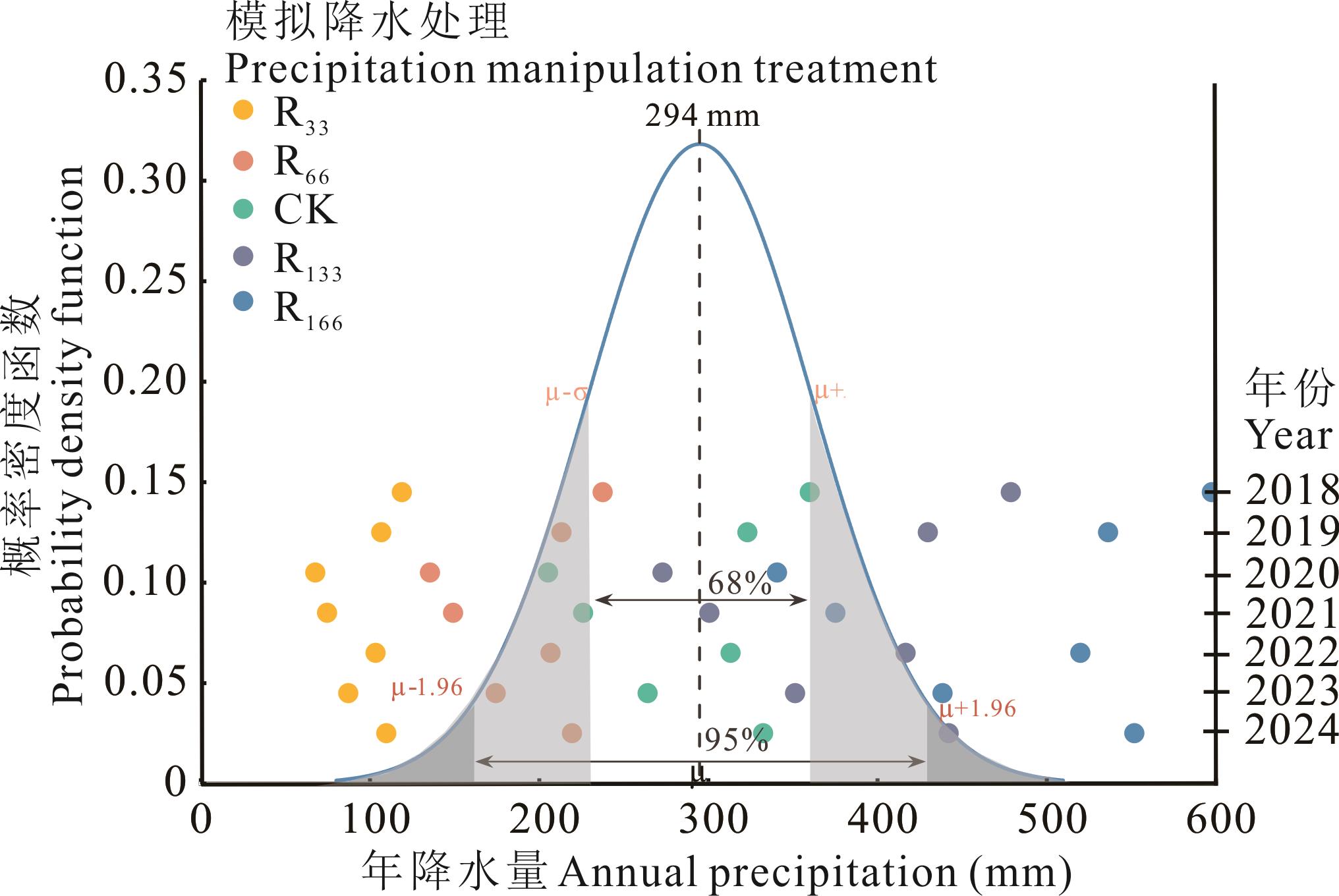
图1 荒漠草原40年间(1981-2020年)降水概率密度函数和2018-2024年模拟降水处理变化
Fig.1 Estimated probability density function of precipitation in desert steppe for 40 years (1981-2020) and the precipitation manipulation induced statistical changes in precipitation treatment in 2018-2024
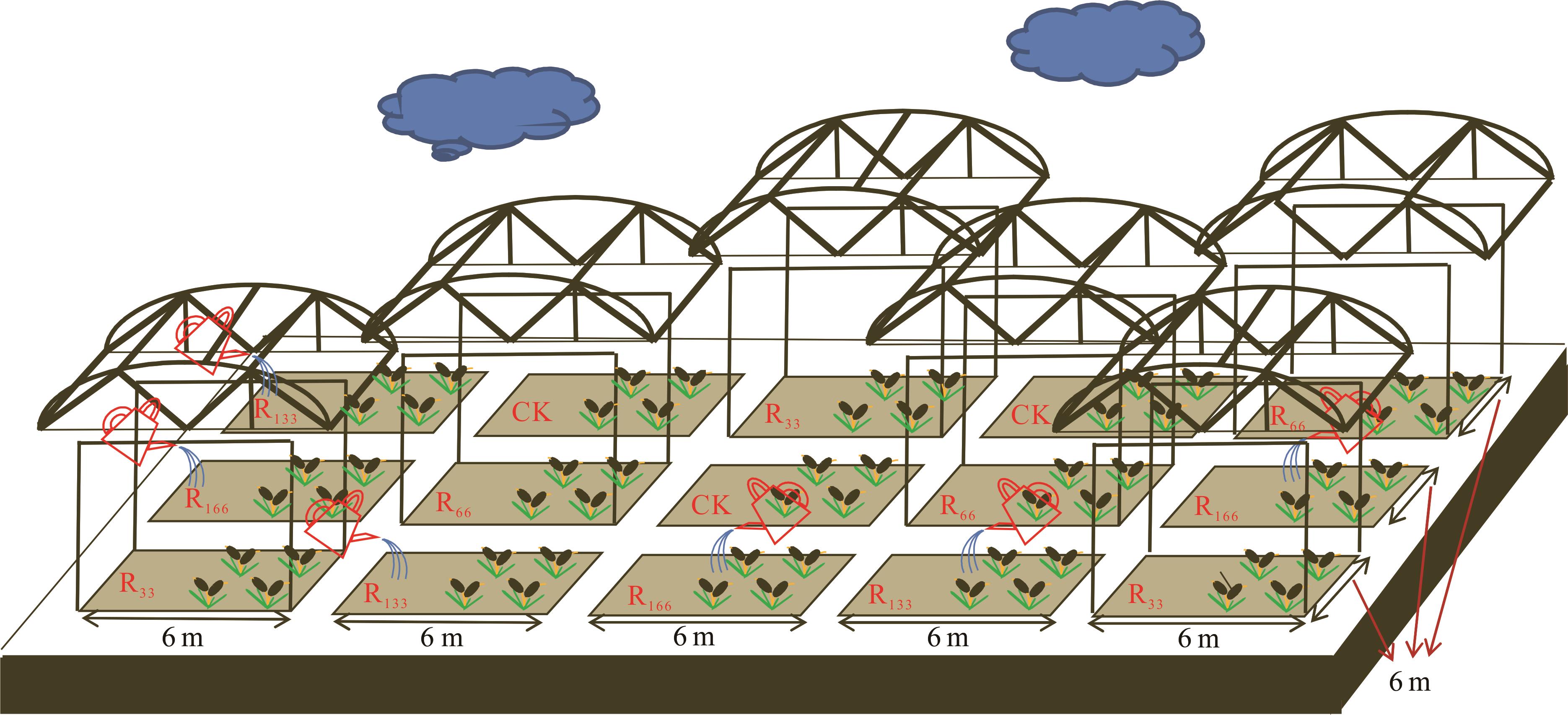
图2 试验区设置
Fig.2 Experimental area setting
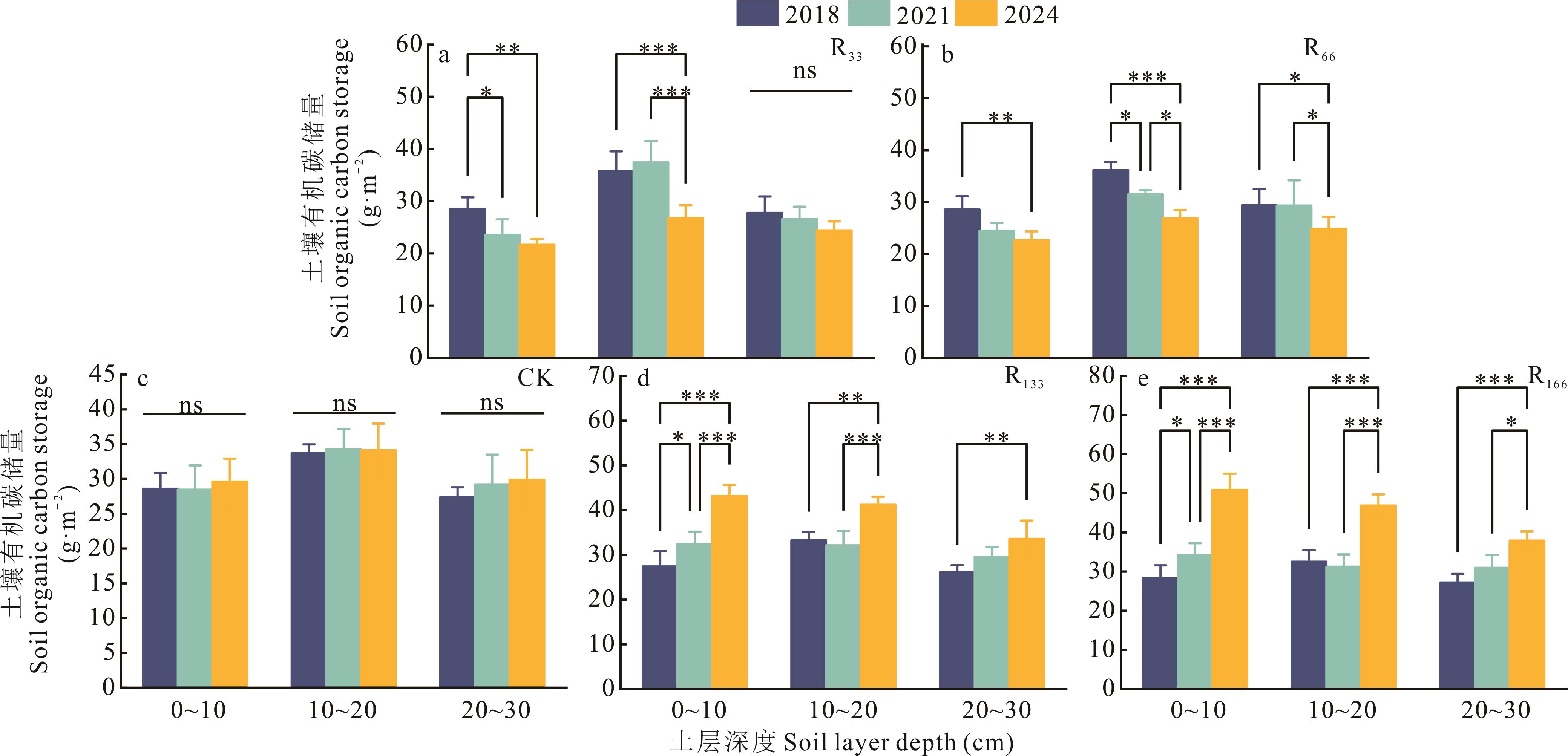
图3 降水变化对不同土层土壤有机碳储量的影响*, **和***分别表示P<0.05、P<0.01和P<0.001,ns表示不显著。误差线表示标准误。下同。*, ** and *** indicate significant differences at 0.05, 0.01, and 0.001 levels, respectively, ns indicates not significant. The error line represents the standard error. The same below.
Fig.3 Impact of precipitation changes on soil organic carbon storage in different soil layers
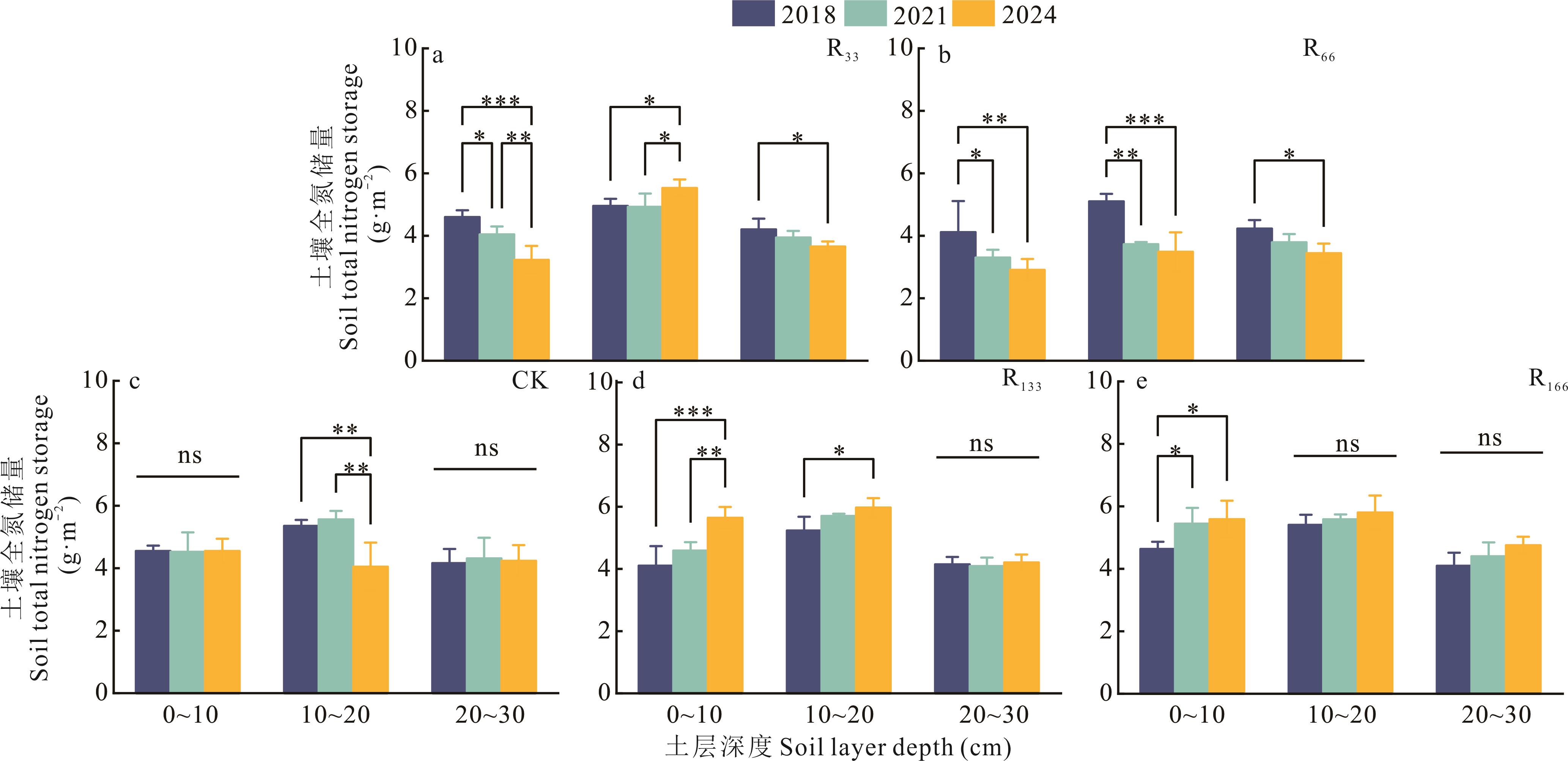
图4 降水变化对不同土层土壤全氮储量的影响
Fig.4 Impact of precipitation changes on soil total nitrogen storage in different soil layers
降水梯度 Precipitation gradient | 土层深度Soil depth (cm) | 土壤有机碳固持速率 Soil organic carbon sequestration rate (g·m-2·a-1) | 土壤全氮固持速率 Soil total nitrogen sequestration rate (g·m-2·a-1) | ||||
|---|---|---|---|---|---|---|---|
| 2018-2021 | 2021-2024 | 2018-2024 | 2018-2021 | 2021-2024 | 2018-2024 | ||
| R33 | 0~10 | -1.66±0.03b | -0.64±0.06a | -1.15±0.02ab | -0.19±0.00a | -0.27±0.01a | -0.23±0.00a |
| 10~20 | 0.53±0.04a | -3.56±0.08c | -1.51±0.04b | 0.03±0.00b | 0.20±0.01a | 0.10±0.00b | |
| 20~30 | -0.39±0.05a | -0.73±0.03a | -0.56±0.02a | -0.09±0.01a | -0.10±0.00a | -0.09±0.00a | |
| R66 | 0~10 | -1.36±0.04b | -0.61±0.02a | -0.99±0.03ab | -0.27±0.03a | -0.13±0.00a | -0.20±0.01a |
| 10~20 | -1.56±0.04a | -1.54±0.03a | -1.55±0.02a | -0.46±0.01a | -0.18±0.01a | -0.27±0.01a | |
| 20~30 | 0.01±0.06a | -1.49±0.09b | -0.75±0.02ab | -0.15±0.00a | -0.12±0.00a | -0.13±0.00a | |
| CK | 0~10 | -0.26±0.02b | 0.39±0.02a | 0.17±0.02ab | -0.09±0.01b | 0.07±0.00a | 0.02±0.00ab |
| 10~20 | 0.48±0.04a | -0.05±0.04a | 0.32±0.02a | 0.07±0.01a | -0.50±0.02c | -0.22±0.01b | |
| 20~30 | 1.11±0.06a | 0.22±0.01a | 0.65±0.04a | 0.08±0.01a | -0.05±0.00a | 0.02±0.00a | |
| R133 | 0~10 | 1.69±0.03c | 3.57±0.01a | 2.63±0.02b | 0.16±0.01b | 0.35±0.01a | 0.26±0.01ab |
| 10~20 | -0.61±0.03c | 3.02±0.05a | 1.32±0.01b | 0.16±0.01a | 0.09±0.01a | 0.12±0.00a | |
| 20~30 | 1.16±0.02a | 1.33±0.07a | 1.24±0.05a | 0.02±0.00a | 0.04±0.01a | 0.01±0.00a | |
| R166 | 0~10 | 1.96±0.08c | 5.56±0.05a | 3.76±0.03b | 0.27±0.01a | 0.05±0.01b | 0.16±0.01ab |
| 10~20 | -0.79±0.07c | 5.20±0.02a | 2.39±0.03b | 0.06±0.01a | 0.14±0.01a | 0.07±0.00a | |
| 20~30 | 1.25±0.04b | 2.32±0.04a | 1.78±0.01ab | 0.10±0.00a | 0.12±0.01a | 0.12±0.00a | |
表2 降水变化对土壤有机碳、全氮固持速率的影响
Table 2 Impact of precipitation changes on soil organic carbon and total nitrogen sequestration rates
降水梯度 Precipitation gradient | 土层深度Soil depth (cm) | 土壤有机碳固持速率 Soil organic carbon sequestration rate (g·m-2·a-1) | 土壤全氮固持速率 Soil total nitrogen sequestration rate (g·m-2·a-1) | ||||
|---|---|---|---|---|---|---|---|
| 2018-2021 | 2021-2024 | 2018-2024 | 2018-2021 | 2021-2024 | 2018-2024 | ||
| R33 | 0~10 | -1.66±0.03b | -0.64±0.06a | -1.15±0.02ab | -0.19±0.00a | -0.27±0.01a | -0.23±0.00a |
| 10~20 | 0.53±0.04a | -3.56±0.08c | -1.51±0.04b | 0.03±0.00b | 0.20±0.01a | 0.10±0.00b | |
| 20~30 | -0.39±0.05a | -0.73±0.03a | -0.56±0.02a | -0.09±0.01a | -0.10±0.00a | -0.09±0.00a | |
| R66 | 0~10 | -1.36±0.04b | -0.61±0.02a | -0.99±0.03ab | -0.27±0.03a | -0.13±0.00a | -0.20±0.01a |
| 10~20 | -1.56±0.04a | -1.54±0.03a | -1.55±0.02a | -0.46±0.01a | -0.18±0.01a | -0.27±0.01a | |
| 20~30 | 0.01±0.06a | -1.49±0.09b | -0.75±0.02ab | -0.15±0.00a | -0.12±0.00a | -0.13±0.00a | |
| CK | 0~10 | -0.26±0.02b | 0.39±0.02a | 0.17±0.02ab | -0.09±0.01b | 0.07±0.00a | 0.02±0.00ab |
| 10~20 | 0.48±0.04a | -0.05±0.04a | 0.32±0.02a | 0.07±0.01a | -0.50±0.02c | -0.22±0.01b | |
| 20~30 | 1.11±0.06a | 0.22±0.01a | 0.65±0.04a | 0.08±0.01a | -0.05±0.00a | 0.02±0.00a | |
| R133 | 0~10 | 1.69±0.03c | 3.57±0.01a | 2.63±0.02b | 0.16±0.01b | 0.35±0.01a | 0.26±0.01ab |
| 10~20 | -0.61±0.03c | 3.02±0.05a | 1.32±0.01b | 0.16±0.01a | 0.09±0.01a | 0.12±0.00a | |
| 20~30 | 1.16±0.02a | 1.33±0.07a | 1.24±0.05a | 0.02±0.00a | 0.04±0.01a | 0.01±0.00a | |
| R166 | 0~10 | 1.96±0.08c | 5.56±0.05a | 3.76±0.03b | 0.27±0.01a | 0.05±0.01b | 0.16±0.01ab |
| 10~20 | -0.79±0.07c | 5.20±0.02a | 2.39±0.03b | 0.06±0.01a | 0.14±0.01a | 0.07±0.00a | |
| 20~30 | 1.25±0.04b | 2.32±0.04a | 1.78±0.01ab | 0.10±0.00a | 0.12±0.01a | 0.12±0.00a | |
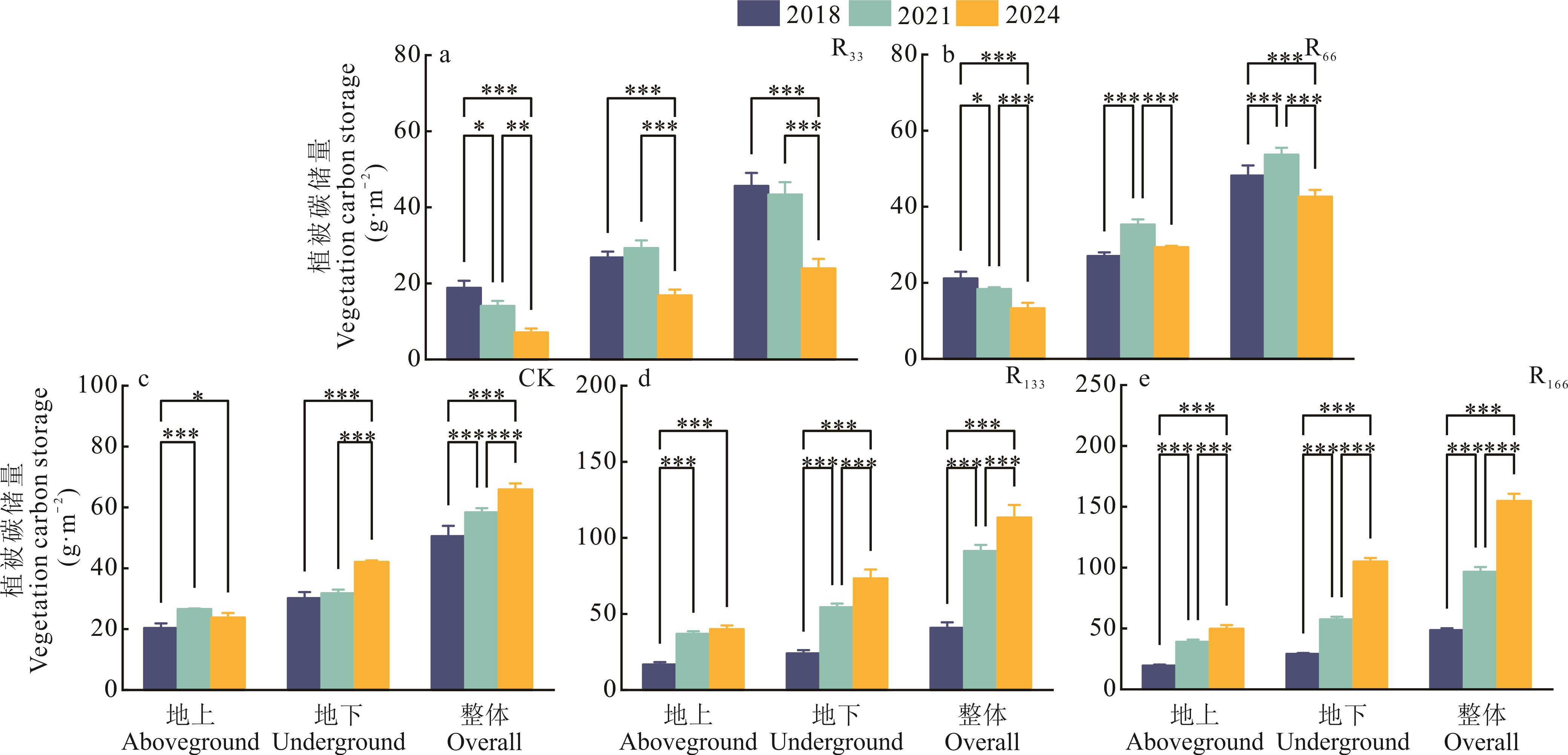
图5 降水变化对植被碳储量的影响
Fig.5 Impact of precipitation changes on vegetation carbon storage
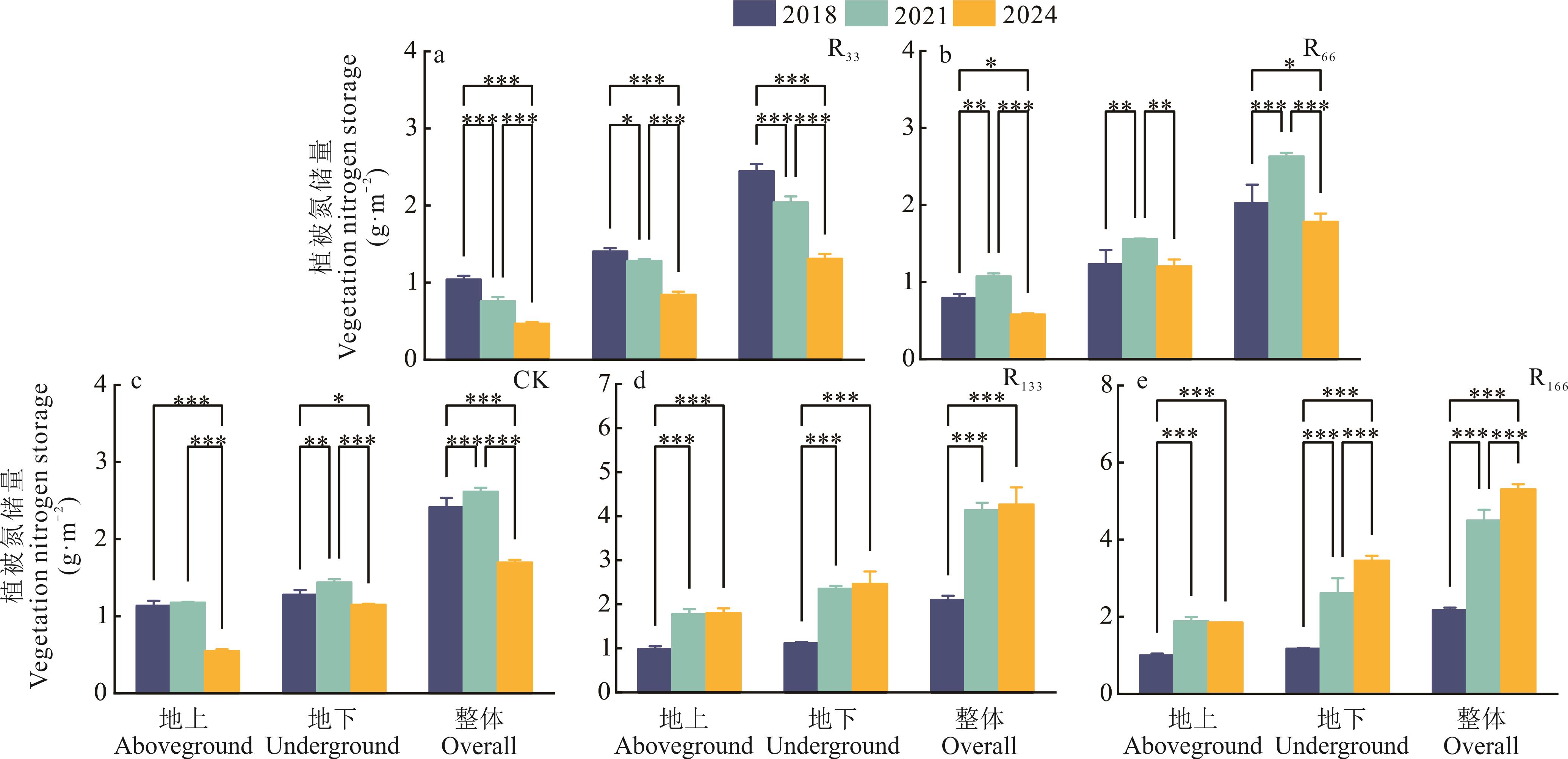
图6 降水变化对植被氮储量的影响
Fig.6 Impact of precipitation changes on vegetation nitrogen storage
| 降水梯度Precipitation gradient | 部位 Compartment | 植被碳固持速率 Vegetation carbon sequestration rate (g·m-2·a-1) | 植被氮固持速率 Vegetation nitrogen sequestration rate (g·m-2·a-1) | ||||
|---|---|---|---|---|---|---|---|
| 2018-2021 | 2021-2024 | 2018-2024 | 2018-2021 | 2021-2024 | 2018-2024 | ||
| R33 | 地上Aboveground | -1.58±0.11a | -2.33±0.21b | -1.95±0.14ab | -0.09±0.00a | -0.10±0.01a | -0.10±0.00a |
| 地下Underground | 0.83±0.15a | -4.15±0.10c | -1.66±0.07b | -0.04±0.00a | -0.15±0.00c | -0.09±0.00b | |
| R66 | 地上Aboveground | -0.93±0.25a | -1.69±0.21b | -1.31±0.13ab | 0.09±0.00a | -0.16±0.00c | -0.04±0.00b |
| 地下Underground | 2.77±0.10a | -1.99±0.19c | 0.39±0.06b | 0.11±0.03a | -0.12±0.02c | 0.00±0.01b | |
| CK | 地上Aboveground | 2.08±0.26a | -0.93±0.25c | 0.58±0.01b | 0.01±0.01a | -0.21±0.00c | -0.10±0.00b |
| 地下Underground | 0.54±0.21c | 3.43±0.13a | 1.99±0.15b | 0.05±0.00a | -0.10±0.01c | -0.02±0.00b | |
| R133 | 地上Aboveground | 6.72±0.11a | 1.02±0.24c | 3.87±0.09b | 0.27±0.01a | 0.01±0.00c | 0.14±0.00b |
| 地下Underground | 10.10±0.09a | 6.30±0.70c | 8.20±0.37b | 0.41±0.01a | 0.07±0.02c | 0.22±0.02b | |
| R166 | 地上Aboveground | 6.50±0.19a | 3.59±0.22c | 5.05±0.21b | 0.30±0.01a | -0.03±0.01c | 0.14±0.00b |
| 地下Underground | 9.48±0.26c | 15.82±0.16a | 12.65±0.21b | 0.48±0.08a | 0.28±0.10a | 0.38±0.01a | |
表3 降水变化对植被碳氮固持速率的影响
Table 3 Impact of precipitation changes on vegetation carbon and nitrogen sequestration rate
| 降水梯度Precipitation gradient | 部位 Compartment | 植被碳固持速率 Vegetation carbon sequestration rate (g·m-2·a-1) | 植被氮固持速率 Vegetation nitrogen sequestration rate (g·m-2·a-1) | ||||
|---|---|---|---|---|---|---|---|
| 2018-2021 | 2021-2024 | 2018-2024 | 2018-2021 | 2021-2024 | 2018-2024 | ||
| R33 | 地上Aboveground | -1.58±0.11a | -2.33±0.21b | -1.95±0.14ab | -0.09±0.00a | -0.10±0.01a | -0.10±0.00a |
| 地下Underground | 0.83±0.15a | -4.15±0.10c | -1.66±0.07b | -0.04±0.00a | -0.15±0.00c | -0.09±0.00b | |
| R66 | 地上Aboveground | -0.93±0.25a | -1.69±0.21b | -1.31±0.13ab | 0.09±0.00a | -0.16±0.00c | -0.04±0.00b |
| 地下Underground | 2.77±0.10a | -1.99±0.19c | 0.39±0.06b | 0.11±0.03a | -0.12±0.02c | 0.00±0.01b | |
| CK | 地上Aboveground | 2.08±0.26a | -0.93±0.25c | 0.58±0.01b | 0.01±0.01a | -0.21±0.00c | -0.10±0.00b |
| 地下Underground | 0.54±0.21c | 3.43±0.13a | 1.99±0.15b | 0.05±0.00a | -0.10±0.01c | -0.02±0.00b | |
| R133 | 地上Aboveground | 6.72±0.11a | 1.02±0.24c | 3.87±0.09b | 0.27±0.01a | 0.01±0.00c | 0.14±0.00b |
| 地下Underground | 10.10±0.09a | 6.30±0.70c | 8.20±0.37b | 0.41±0.01a | 0.07±0.02c | 0.22±0.02b | |
| R166 | 地上Aboveground | 6.50±0.19a | 3.59±0.22c | 5.05±0.21b | 0.30±0.01a | -0.03±0.01c | 0.14±0.00b |
| 地下Underground | 9.48±0.26c | 15.82±0.16a | 12.65±0.21b | 0.48±0.08a | 0.28±0.10a | 0.38±0.01a | |
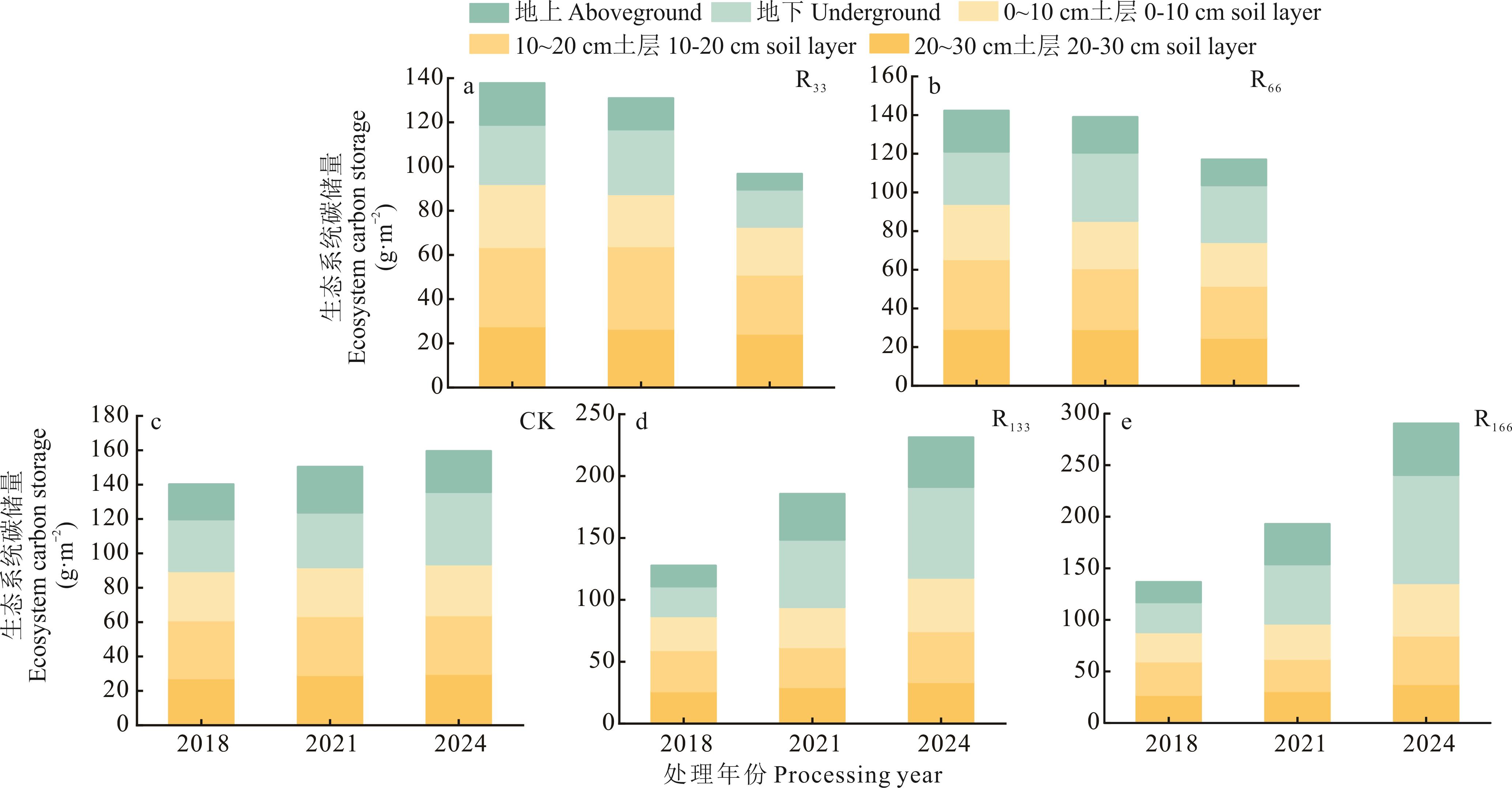
图7 降水变化对生态系统碳储量的影响
Fig.7 Impact of precipitation changes on ecosystem carbon storage
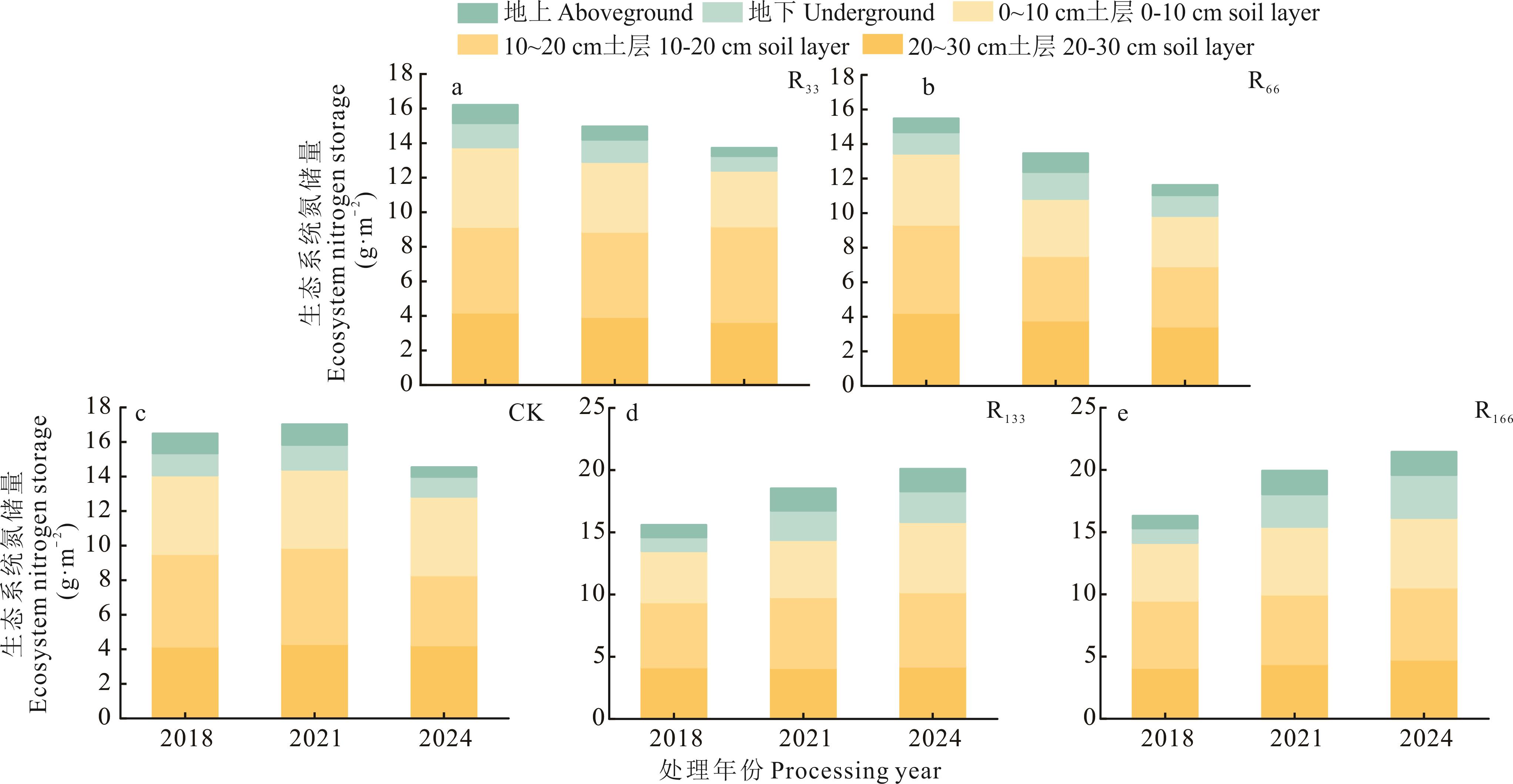
图8 降水变化对生态系统氮储量的影响
Fig.8 Impact of precipitation changes on ecosystem nitrogen storage
降水梯度 Precipitation gradient | 生态系统碳固持速率 Ecosystem carbon sequestration rate (g·m-2·a-1) | 生态系统氮固持速率 Ecosystem nitrogen sequestration rate (g·m-2·a-1) | ||||
|---|---|---|---|---|---|---|
| 2018-2021 | 2021-2024 | 2018-2024 | 2018-2021 | 2021-2024 | 2018-2024 | |
| R33 | -2.31±0.37a | -11.40±1.70c | -6.84±0.74b | -0.39±0.03a | -0.41±0.02a | -0.41±0.01a |
| R66 | -1.10±0.20a | -7.33±1.02c | -4.21±0.58b | -0.67±0.37a | -0.65±0.20a | -0.64±0.07a |
| CK | 3.50±0.77a | 3.05±0.46a | 3.37±0.64a | 0.13±0.15a | -0.80±0.13c | -0.31±0.11b |
| R133 | 19.26±0.47a | 15.24±1.71b | 17.26±1.03ab | 1.01±0.21a | 0.57±0.13b | 0.75±0.03ab |
| R166 | 18.66±1.74c | 32.48±0.78a | 25.62±1.18b | 1.21±0.06a | 0.51±0.23c | 0.86±0.09b |
表4 降水变化对生态系统碳氮固持速率的影响
Table 4 Impact of precipitation changes on ecosystem carbon and nitrogen sequestration rate
降水梯度 Precipitation gradient | 生态系统碳固持速率 Ecosystem carbon sequestration rate (g·m-2·a-1) | 生态系统氮固持速率 Ecosystem nitrogen sequestration rate (g·m-2·a-1) | ||||
|---|---|---|---|---|---|---|
| 2018-2021 | 2021-2024 | 2018-2024 | 2018-2021 | 2021-2024 | 2018-2024 | |
| R33 | -2.31±0.37a | -11.40±1.70c | -6.84±0.74b | -0.39±0.03a | -0.41±0.02a | -0.41±0.01a |
| R66 | -1.10±0.20a | -7.33±1.02c | -4.21±0.58b | -0.67±0.37a | -0.65±0.20a | -0.64±0.07a |
| CK | 3.50±0.77a | 3.05±0.46a | 3.37±0.64a | 0.13±0.15a | -0.80±0.13c | -0.31±0.11b |
| R133 | 19.26±0.47a | 15.24±1.71b | 17.26±1.03ab | 1.01±0.21a | 0.57±0.13b | 0.75±0.03ab |
| R166 | 18.66±1.74c | 32.48±0.78a | 25.62±1.18b | 1.21±0.06a | 0.51±0.23c | 0.86±0.09b |
| [1] | Asner G P, Elmore A J, Oler L P, et al. Grazing systems, ecosystem responses, and global change. Annual Review of Environment Resources, 2004, 29: 261-299. |
| [2] | Ge Q S, Zhu H Y. Changes of the physical and human geographical environment in China during the past 2000 years. Acta Geographica Sinica, 2021, 76(1): 3-14. |
| 葛全胜, 朱会义. 两千年来中国自然与人文地理环境变迁及启示. 地理学报, 2021, 76(1): 3-14. | |
| [3] | Li G S, Harazono Y, Oikawa T, et al. Grassland desertification by grazing and the resulting micrometeorological changes in Inner Mongolia. Agricultural and Forest Meteorology, 2000, 102: 125-137. |
| [4] | Yan R R, Xin X P, Wang X, et al. The change of soil carbon and nitrogen under different grazing gradients in Hulunber meadow steppe. Acta Ecologica Sinica, 2014, 34(6): 1587-1595. |
| 闫瑞瑞, 辛晓平, 王旭, 等. 不同放牧梯度下呼伦贝尔草甸草原土壤碳氮变化及固碳效应. 生态学报, 2014, 34(6):1587-1595. | |
| [5] | Huang Q D, Chen X, Shi M, et al. The spatial distribution and driving factors of carbon storage in the grassland ecosystems of the Northern Tibetan Plateau. Journal of Resources and Ecology, 2023, 14: 893-902. |
| [6] | Galloway N J, Dentener J F, Capone G D, et al. Nitrogen cycles: Past, present, and future. Biogeochemistry, 2004, 70: 153-226. |
| [7] | Shan Y R, Tian J H, Fan X W, et al. Spatial distribution of soil organic carbon components in mainland of China and their response to climate change. Chinese Journal of Applied Ecology, 2025, 36(3): 847-858. |
| 单雅茹, 田嘉禾, 樊修稳, 等. 中国大陆土壤有机碳组分的空间分布及其对气候变化的响应. 应用生态学报, 2025, 36(3): 847-858. | |
| [8] | Nie M H, Shen Y, Lu Y, et al. Ecostoichiometric characteristics of dominant plant leaves-soil ecology in different communities of desert steppe in Yanchi County, Ningxia. Acta Agrestia Sinica, 2021, 29(1): 131-140. |
| 聂明鹤, 沈艳, 陆颖, 等. 宁夏盐池县荒漠草原区不同群落优势植物叶片-土壤生态化学计量特征. 草地学报, 2021, 29(1):131-140. | |
| [9] | Wu J X, Li S Y, Han G D. Linkage between soil stoichiometric imbalance and microbial carbon use efficiency in desert steppe under different grazing intensities. Chinese Journal of Applied Ecology, 2024, 35(8): 2108-2118. |
| 吴佳芯, 李邵宇, 韩国栋. 不同放牧强度下荒漠草原土壤化学计量失衡与微生物碳利用效率的联系. 应用生态学报, 2024, 35(8): 2108-2118. | |
| [10] | Liu Y C, Niu B L, Li Q L, et al. Review on the response of vegetation and soil carbon storage to decreased precipitation under simulation experiments in forests. Terrestrial Ecosystem and Conservation, 2023, 3(5): 82-87. |
| 刘彦春, 牛保亮, 李青林, 等. 森林植被及土壤碳储量对降水减少响应的控制模拟实验研究进展. 陆地生态系统与保护学报, 2023, 3(5): 82-87. | |
| [11] | Cheng Y M, Ma H B, Ma J, et al. Effects of different grazing patterns on soil carbon and nitrogen storage and sequestration in desert steppe. Acta Prataculturae Sinica, 2022, 31(10): 18-27. |
| 程燕明, 马红彬, 马菁, 等. 不同放牧方式对荒漠草原土壤碳氮储量及固持的影响. 草业学报, 2022, 31(10): 18-27. | |
| [12] | Wang H Y, Dong Z, Guo J Y, et al. Organic carbon storage properties in Stipa breviflora desert steppe vegetation soil systems under different grazing intensities. Acta Ecologica Sinica, 2016, 36(15): 4617-4625. |
| 王合云, 董智, 郭建英, 等. 不同放牧强度下短花针茅荒漠草原植被-土壤系统有机碳组分储量特征. 生态学报, 2016, 36(15): 4617-4625. | |
| [13] | Wang X S, He J, Ma P, et al. Responses of the vegetation community structure and carbon storage of temperate meadow steppe to salinization in Huihe Reserve. Acta Agrestia Sinica, 2023, 31(4): 1154-1162. |
| 王雪松, 贺晶, 马普, 等. 辉河保护区温性草甸草原植被群落结构和碳储量对盐碱化的响应. 草地学报, 2023, 31(4): 1154-1162. | |
| [14] | Niu S L, Wu M Y, Han Y, et al. Water-mediated responses of ecosystem carbon fluxes to climatic change in a temperate steppe. The New Phytologist, 2008, 177: 209-219. |
| [15] | Su Z X, Su B Q, Shangguan Z P. Response characteristics of Robinia pseudoacacia leaf and soil ecological stoichiometric parameters to precipitation in the Loess Plateau. Acta Ecologica Sinica, 2020, 40(19): 7000-7008. |
| 苏卓侠, 苏冰倩, 上官周平. 黄土高原刺槐叶片-土壤生态化学计量参数对降雨量的响应特征. 生态学报, 2020, 40(19): 7000-7008. | |
| [16] | Bastida F, López-Mondéjar R, Baldrian P, et al. When drought meets forest management: Effects on the soil microbial community of a Holm oak forest ecosystem. Science of the Total Environment, 2019, 662: 276-286. |
| [17] | Liang X Q, Li J P, Zhang Y, et al. Responses of vegetation and soil ecological stoichiometry to precipitation in desert steppe. Pratacultural Science, 2022, 39(5): 864-875. |
| 梁晓谦, 李建平, 张翼, 等. 荒漠草原植被及土壤生态化学计量对降水的响应. 草业科学, 2022, 39(5): 864-875. | |
| [18] | Lupon A, Gerber S, Sabater F, et al. Climate response of the soil nitrogen cycle in three forest types of a headwater Mediterranean catchment. Journal of Geophysical Research: Biogeosciences, 2015, 120: 859-875. |
| [19] | Zhou X Q, Chen C R, Wang Y F, et al. Soil extractable carbon and nitrogen, microbial biomass and microbial metabolic activity in response to warming and increased precipitation in a semiarid Inner Mongolian grassland. Geoderma, 2013, 206: 24-31. |
| [20] | Lin L, Zhu B, Chen C R, et al. Precipitation overrides warming in mediating soil nitrogen pools in an alpine grassland ecosystem on the Tibetan Plateau. Scientific Reports, 2016, 6: 31438. |
| [21] | Bao S D. Soil agrochemical analysis (third edition). Beijing: China Agriculture Press, 1999: 30. |
| 鲍士旦. 土壤农化分析(第三版). 北京: 中国农业出版社, 1999: 30. | |
| [22] | Guo L B, Gifford R M. Soil carbon stocks and land use change: A Meta analysis. Global Change Biology, 2002, 8: 345-360. |
| [23] | Deng L, Han Q S, Zhang C, et al. Above-ground and below-ground ecosystem biomass accumulation and carbon sequestration with Caragana korshinskii Kom plantation development. Land Degradation & Development, 2017, 28: 906-917. |
| [24] | Li J P, Chen J, Xie Y Z, et al. Dynamics of carbon storage and its sequestration rate in deeper soil layers following long-term fenced grasslands. Research of Soil and Water Conservation, 2016, 23(6): 1-8. |
| 李建平, 陈婧, 谢应忠, 等. 封育对草地深层土壤碳储量及其固持速率的影响. 水土保持研究, 2016, 23(6): 1-8. | |
| [25] | Wang Q Y, Liu M X, Wang M, et al. Analysis of soil carbon, nitrogen and phosphorus storage and sequestration effects in alpine grassland with different degradation levels in Maqu County, China. Eurasian Soil Science, 2024, 57: 794-805. |
| [26] | Huxman T E, Smith M D, Fay P A, et al. Convergence across biomes to a common rain-use efficiency. Nature, 2004, 429: 651-654. |
| [27] | Chen Q M, Wang S Q, Yu G R. Spatial characteristics of soil organic carbon and nitrogen in Inner Mongolia. Chinese Journal of Applied Ecology, 2003, 14(5): 699-704. |
| 陈庆美, 王绍强, 于贵瑞. 内蒙古自治区土壤有机碳、氮蓄积量的空间特征. 应用生态学报, 2003, 14(5): 699-704. | |
| [28] | Xin L, Jun S L, Jian W L, et al. Precipitation mediates the response of carbon cycle to rising temperature in the mid-to-high latitudes of the northern hemisphere. PLoS One, 2015, DOI: 10.1371/journal.pone.0132663. |
| [29] | Li R H, Li X B, Niu H P, et al. Distribution of soil nitrogen storage in the typical steppe of Inner Mongolia. Journal of Arid Land Resources and Environment, 2017, 31(11): 110-115. |
| 李瑞华, 李晓兵, 牛海鹏, 等. 内蒙古典型草原区土壤氮储量分布研究. 干旱区资源与环境, 2017, 31(11): 110-115. | |
| [30] | Yang X Q, Li J P, Lian J L, et al. Influence of precipitation change on the ecological stoichiometry of carbon, nitrogen, and phosphorus within desert steppe soil. Chinese Journal of Grassland, 2025, 47(3): 20-30. |
| 杨雪琴, 李建平, 连佳丽, 等. 降水变化对荒漠草原土壤碳氮磷生态化学计量的影响. 中国草地学报, 2025, 47(3): 20-30. | |
| [31] | Cheng Z. Relationships between plant functional group diversity and soil carbon and nitrogen storages under different rainfall zones. Yangling: Northwest A&F University, 2021. |
| 程真. 不同降雨带下草地植物功能群多样性与土壤碳氮储量关系研究. 杨凌: 西北农林科技大学, 2021. | |
| [32] | Bai L, Cui Y Y, Liu Z T, et al. Effects of simulated precipitation on the stoichiometric characteristics of carbon and nitrogen of dominant species in desert steppe. Chinese Journal of Grassland, 2023, 45(1): 23-32. |
| 白柳, 崔媛媛, 刘倬彤, 等. 模拟降水对荒漠草原优势植物碳、氮化学计量特征的影响. 中国草地学报, 2023, 45(1): 23-32. | |
| [33] | Wu X D, Jiang Q, Ren X B, et al. Effects of precipitation on carbon, nitrogen and microbial characteristics of biological soil crusts in a desert steppe of Northern China. Acta Prataculturae Sinica, 2021, 30(7): 34-43. |
| 吴旭东, 蒋齐, 任小玢, 等. 降水水平对荒漠草原生物土壤结皮碳、氮和微生物的影响. 草业学报, 2021, 30(7): 34-43. | |
| [34] | Zhao W, Wang X X, Yang H T, et al. Spatio-temporal patterns of soil carbon and nitrogen characteristics along aridity gradients and their responses to climate change: Based on long-term field observation data of Chinese Ecosystem Research Network. Acta Ecologica Sinica, 2023, 43(9): 3582-3591. |
| 赵玮, 王新兴, 杨昊天, 等. 土壤碳氮特征沿干旱梯度时空格局及对气候变化的响应——基于中国生态系统研究网络(CERN)长期定位监测数据. 生态学报, 2023, 43(9): 3582-3591. | |
| [35] | Wang B, Duan Y X, Wang W F, et al. Carbon and nitrogen storage and distribution patterns of desert ecosystems at different vegetation restoration stages in the eastern Hobq Desert. Acta Ecologica Sinica, 2019, 39(7): 2470-2480. |
| 王博, 段玉玺, 王伟峰, 等. 库布齐东段不同植被恢复阶段荒漠生态系统碳氮储量及分配格局. 生态学报, 2019, 39(7): 2470-2480. | |
| [36] | Wang X, Zhong Z K, Wang J Y, et al. Responses of soil carbon pool of abandoned grassland on the Loess Plateau to two-years warming and increased precipitation. Acta Pedologica Sinica, 2023, 60(2): 523-534. |
| 王兴, 钟泽坤, 王佳懿, 等. 黄土高原撂荒草地土壤碳库对两年增温增雨的响应. 土壤学报, 2023, 60(2): 523-534. | |
| [37] | Ren H Y, Xu Z W, Isbell F, et al. Exacerbated nitrogen limitation ends transient stimulation of grassland productivity by increased precipitation. Ecological Monographs, 2017, 87: 457-469. |
| [38] | Tang K X, Guo J B, He L, et al. Characteristics of the spatial and temporal evolution of gross primary productivity and its influencing factors in China’s drylands. Arid Zone Research, 2024, 41(6): 964-973. |
| 唐可欣, 郭建斌, 何亮, 等. 中国旱区GPP时空演变特征及影响因素研究. 干旱区研究, 2024, 41(6): 964-973. | |
| [39] | Meng Z Y, Liu J N, Cao L G, et al. Trade-off between soil carbon and water following revegetation across climatic gradients on the Loess Plateau. Catena, 2025, DOI: 10.1016/J.CATENA.2025.109071. |
| [40] | Li Y, Wang Y, Han G D, et al. Soil microbial biomass carbon and nitrogen levels and their controlling factors in alpine grassland, Qinghai-Tibet Plateau. Acta Prataculturae Sinica, 2022, 31(6): 50-60. |
| 李洋, 王毅, 韩国栋, 等. 青藏高原高寒草地土壤微生物量碳氮含量特征及其控制要素. 草业学报, 2022, 31(6): 50-60. |
| [1] | 凡文帅, 王兴, 张祎, 张艺斐, 宋乃平, 杨新国, 李莹莹. 中国北方荒漠草原区灌木植被恢复效应及其对环境的依赖性[J]. 草业学报, 2026, 35(5): 36-47. |
| [2] | 李豫悦, 魏浩男, 马兴忠, 姜海鑫, 聂明鹤, 周瑶, 代成江, 田小武, 王国会, 马红彬. 轮牧对荒漠草原土壤种子库特征的影响[J]. 草业学报, 2026, 35(4): 1-13. |
| [3] | 刘冬娅, 杨燕, 刘静, 王博, 李志刚. 短期羊粪归还对荒漠草地土壤质量的影响[J]. 草业学报, 2026, 35(2): 28-39. |
| [4] | 邓文辉, 宋珂辰, 张浩, 管思雨, 雍嘉仪, 谢铁娜, 胡海英. 降水变化对荒漠草原植物群落主要物种气孔形态和光合生理特性的影响[J]. 草业学报, 2026, 35(1): 65-78. |
| [5] | 邓文辉, 宋珂辰, 张浩, 管思雨, 雍嘉仪, 胡海英. 降水变化条件下荒漠草原优势植物根际微生物群落结构和多样性特征研究[J]. 草业学报, 2025, 34(5): 12-26. |
| [6] | 骆欣怡, 邱开阳, 金涛, 鲍平安, 黄业芸, 何毅, 谢应忠. 碳、氮、钾添加对荒漠草原凋落物分解特征的影响[J]. 草业学报, 2025, 34(2): 41-53. |
| [7] | 马蓉, 李俊瑶, 岳平, 马旭君, 白珍, 庄玲, 白敬, 赵学勇, 王少昆. 降水变化下荒漠草原优势植物功能性状对生物量分配的调节机制[J]. 草业学报, 2025, 34(11): 31-39. |
| [8] | 鲍平安, 文志林, 王炎, 陈彦虎, 季波, 王占军, 吴旭东, 蒋齐. 不同牧草补播模式对荒漠草原植物群落结构及土壤特性的影响[J]. 草业学报, 2025, 34(10): 62-73. |
| [9] | 张振豪, 贾子玉, 李鑫宇, 程云湘. 荒漠草原混牧牛羊的放牧行为特征[J]. 草业学报, 2025, 34(1): 226-237. |
| [10] | 贺世龙, 叶贺, 李静, 张雅玲, 德海山, 红梅. 不同时限氮沉降和降水变化对荒漠草原中小型土壤节肢动物群落结构与多样性的影响[J]. 草业学报, 2024, 33(9): 140-154. |
| [11] | 曹颖, 聂明鹤, 沈艳, 胡艳, 马登宝, 李东, 候腾思, 方鹏, 王学琴. 宁夏干旱风沙区荒漠草原不同退化阶段植被土壤变化特征及其相关性[J]. 草业学报, 2024, 33(8): 1-14. |
| [12] | 候腾思, 沈艳, 马红彬, 方鹏, 曹颖. 柠条平茬对荒漠草原土壤水分特征及水量平衡的影响[J]. 草业学报, 2024, 33(8): 15-24. |
| [13] | 佘洁, 沈爱红, 石云, 赵娜, 张风红, 何洪源, 吴涛, 李红霞, 马益婷, 朱晓雯. 基于无人机遥感影像和面向对象技术的荒漠草原植被分类[J]. 草业学报, 2024, 33(7): 1-14. |
| [14] | 姜海鑫, 周瑶, 胡科, 丁占胜, 马红彬. 不同放牧时间对荒漠草原土壤颗粒组成及分形维数的影响[J]. 草业学报, 2024, 33(6): 17-28. |
| [15] | 赵亚楠, 王红梅, 李志丽, 张振杰, 陈彦硕, 苏荣霞. 荒漠草原灌丛转变过程土壤水分亏缺空间特征及影响因素[J]. 草业学报, 2024, 33(4): 22-34. |
| 阅读次数 | ||||||
|
全文 |
|
|||||
|
摘要 |
|
|||||
