
ISSN 1004-5759 CN 62-1105/S
Acta Prataculturae Sinica ›› 2025, Vol. 34 ›› Issue (3): 29-40.DOI: 10.11686/cyxb2024173
Previous Articles Next Articles
An-jing JIANG1( ), Yi-qiang DONG1,2,3(), Shi-jie ZHOU1, Ting-ting NIE1, Yue WU1, Ze-yu LIU1, Xing-yun SHAN1, Ya-xin LEI1, Kai WU1, Sha-zhou AN1,2,3
Received:2024-05-14
Revised:2024-07-01
Online:2025-03-20
Published:2025-01-02
Contact:
Yi-qiang DONG
An-jing JIANG, Yi-qiang DONG, Shi-jie ZHOU, Ting-ting NIE, Yue WU, Ze-yu LIU, Xing-yun SHAN, Ya-xin LEI, Kai WU, Sha-zhou AN. Distribution characteristics of grassland plant diversity along the altitudinal gradient and its driving factors: A case study of the eastern section of the northern slope of the Tianshan Mountains[J]. Acta Prataculturae Sinica, 2025, 34(3): 29-40.
| 样地序号Sample plot number | 海拔 Altitude (m) | 地理位置 Geographical position | 草地类型 Grassland type | 优势种 Dominant species | 年均温Mean annual temperature (℃) | 年均降水量Mean annual precipitation (mm) |
|---|---|---|---|---|---|---|
| 1 | 1250 | E 89.64°,N 43.76° | 温性荒漠草地Temperate desert grassland | 伊犁绢蒿,小蓬S. transiliense, N. erinaceum | 5.61 | 150.36 |
| 2 | 1270 | E 89.64°,N 43.73° | 温性荒漠草地Temperate desert grassland | 伊犁绢蒿,小蓬S. transiliense, N. erinaceum | 5.34 | 154.71 |
| 3 | 1370 | E 89.61°,N 43.71° | 温性荒漠草地Temperate desert grassland | 伊犁绢蒿S. transiliense | 4.93 | 161.42 |
| 4 | 1590 | E 89.62°,N 43.64° | 温性草原草地Temperate steppe grassland | 羊茅,草原苔草F. ovina, C. liparocarpos | 4.06 | 166.45 |
| 5 | 1750 | E 89.62°,N 43.63° | 温性草原草地Temperate steppe grassland | 羊茅,针茅,草原苔草F. ovina, S. capillata, C. liparocarpos | 3.67 | 172.28 |
| 6 | 1770 | E 89.62°,N 43.60° | 温性草原草地Temperate steppe grassland | 羊茅,草原苔草F. ovina, C. liparocarpos | 3.21 | 177.40 |
| 7 | 2060 | E 89.61°,N 43.55° | 温性草甸草原草地Temperate meadow-steppe grassland | 白尖苔草,草原糙苏,披碱草C. oxyleuca, P. pratensis, Elymus dahuricus | 1.76 | 195.20 |
| 8 | 2170 | E 89.61°,N 43.54° | 温性草甸草原草地Temperate meadow-steppe grassland | 无芒雀麦,白尖苔草B. inermis, C. oxyleuca | 1.28 | 208.60 |
| 9 | 2240 | E 89.60°,N 43.52° | 山地草甸草地Mountain meadow grassland | 天山羽衣草A. tianschanica | 0.76 | 212.02 |
| 10 | 2460 | E 89.60°,N 43.51° | 山地草甸草地Mountain meadow grassland | 黑花苔草C. melanantha | 0.24 | 222.11 |
| 11 | 2630 | E 89.60°,N 43.50° | 山地草甸草地Mountain meadow grassland | 黑花苔草C. melanantha | -0.19 | 229.12 |
| 12 | 2730 | E 89.60°,N 43.50° | 山地草甸草地Mountain meadow grassland | 黑花苔草C. melanantha | -1.04 | 246.88 |
| 13 | 2850 | E 89.60°,N 43.49° | 高寒草甸草地Alpine meadow grassland | 细果苔草,天山羽衣草C. stenocarpa, A. tianschanica | -1.49 | 246.09 |
| 14 | 2950 | E 89.59°,N 43.49° | 高寒草甸草地Alpine meadow grassland | 高山早熟禾,天山羽衣草P. alpina, A. tianschanica | -2.40 | 260.66 |
| 15 | 3150 | E 89.58°,N 43.48° | 高寒草甸草地Alpine meadow grassland | 高山早熟禾,细果苔草P. alpina, C. stenocarpa | -3.49 | 271.98 |
Table 1 Geographical location and basic information of the study area
| 样地序号Sample plot number | 海拔 Altitude (m) | 地理位置 Geographical position | 草地类型 Grassland type | 优势种 Dominant species | 年均温Mean annual temperature (℃) | 年均降水量Mean annual precipitation (mm) |
|---|---|---|---|---|---|---|
| 1 | 1250 | E 89.64°,N 43.76° | 温性荒漠草地Temperate desert grassland | 伊犁绢蒿,小蓬S. transiliense, N. erinaceum | 5.61 | 150.36 |
| 2 | 1270 | E 89.64°,N 43.73° | 温性荒漠草地Temperate desert grassland | 伊犁绢蒿,小蓬S. transiliense, N. erinaceum | 5.34 | 154.71 |
| 3 | 1370 | E 89.61°,N 43.71° | 温性荒漠草地Temperate desert grassland | 伊犁绢蒿S. transiliense | 4.93 | 161.42 |
| 4 | 1590 | E 89.62°,N 43.64° | 温性草原草地Temperate steppe grassland | 羊茅,草原苔草F. ovina, C. liparocarpos | 4.06 | 166.45 |
| 5 | 1750 | E 89.62°,N 43.63° | 温性草原草地Temperate steppe grassland | 羊茅,针茅,草原苔草F. ovina, S. capillata, C. liparocarpos | 3.67 | 172.28 |
| 6 | 1770 | E 89.62°,N 43.60° | 温性草原草地Temperate steppe grassland | 羊茅,草原苔草F. ovina, C. liparocarpos | 3.21 | 177.40 |
| 7 | 2060 | E 89.61°,N 43.55° | 温性草甸草原草地Temperate meadow-steppe grassland | 白尖苔草,草原糙苏,披碱草C. oxyleuca, P. pratensis, Elymus dahuricus | 1.76 | 195.20 |
| 8 | 2170 | E 89.61°,N 43.54° | 温性草甸草原草地Temperate meadow-steppe grassland | 无芒雀麦,白尖苔草B. inermis, C. oxyleuca | 1.28 | 208.60 |
| 9 | 2240 | E 89.60°,N 43.52° | 山地草甸草地Mountain meadow grassland | 天山羽衣草A. tianschanica | 0.76 | 212.02 |
| 10 | 2460 | E 89.60°,N 43.51° | 山地草甸草地Mountain meadow grassland | 黑花苔草C. melanantha | 0.24 | 222.11 |
| 11 | 2630 | E 89.60°,N 43.50° | 山地草甸草地Mountain meadow grassland | 黑花苔草C. melanantha | -0.19 | 229.12 |
| 12 | 2730 | E 89.60°,N 43.50° | 山地草甸草地Mountain meadow grassland | 黑花苔草C. melanantha | -1.04 | 246.88 |
| 13 | 2850 | E 89.60°,N 43.49° | 高寒草甸草地Alpine meadow grassland | 细果苔草,天山羽衣草C. stenocarpa, A. tianschanica | -1.49 | 246.09 |
| 14 | 2950 | E 89.59°,N 43.49° | 高寒草甸草地Alpine meadow grassland | 高山早熟禾,天山羽衣草P. alpina, A. tianschanica | -2.40 | 260.66 |
| 15 | 3150 | E 89.58°,N 43.48° | 高寒草甸草地Alpine meadow grassland | 高山早熟禾,细果苔草P. alpina, C. stenocarpa | -3.49 | 271.98 |
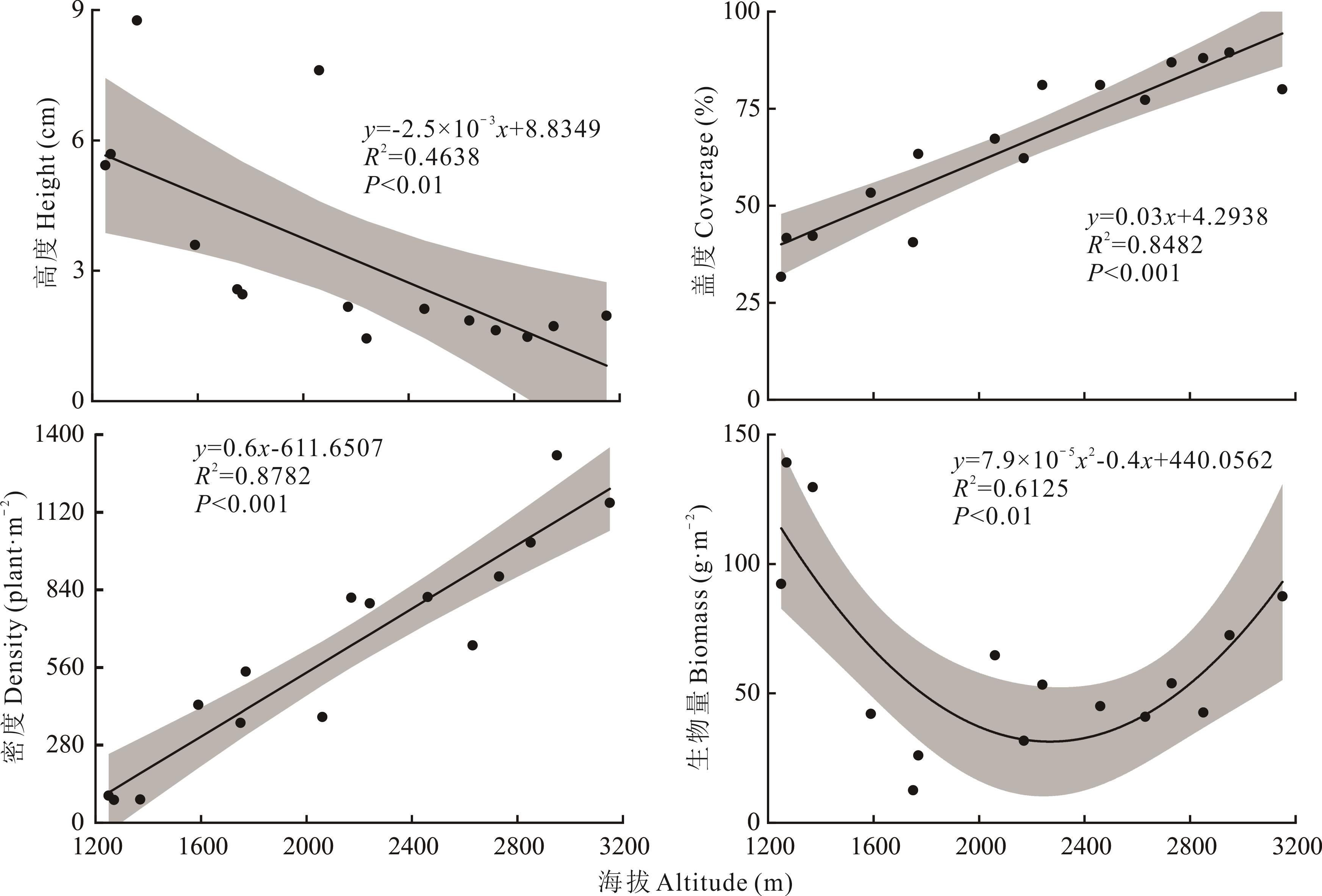
Fig.1 Quantitative characteristics of plant communities with different altitude gradients
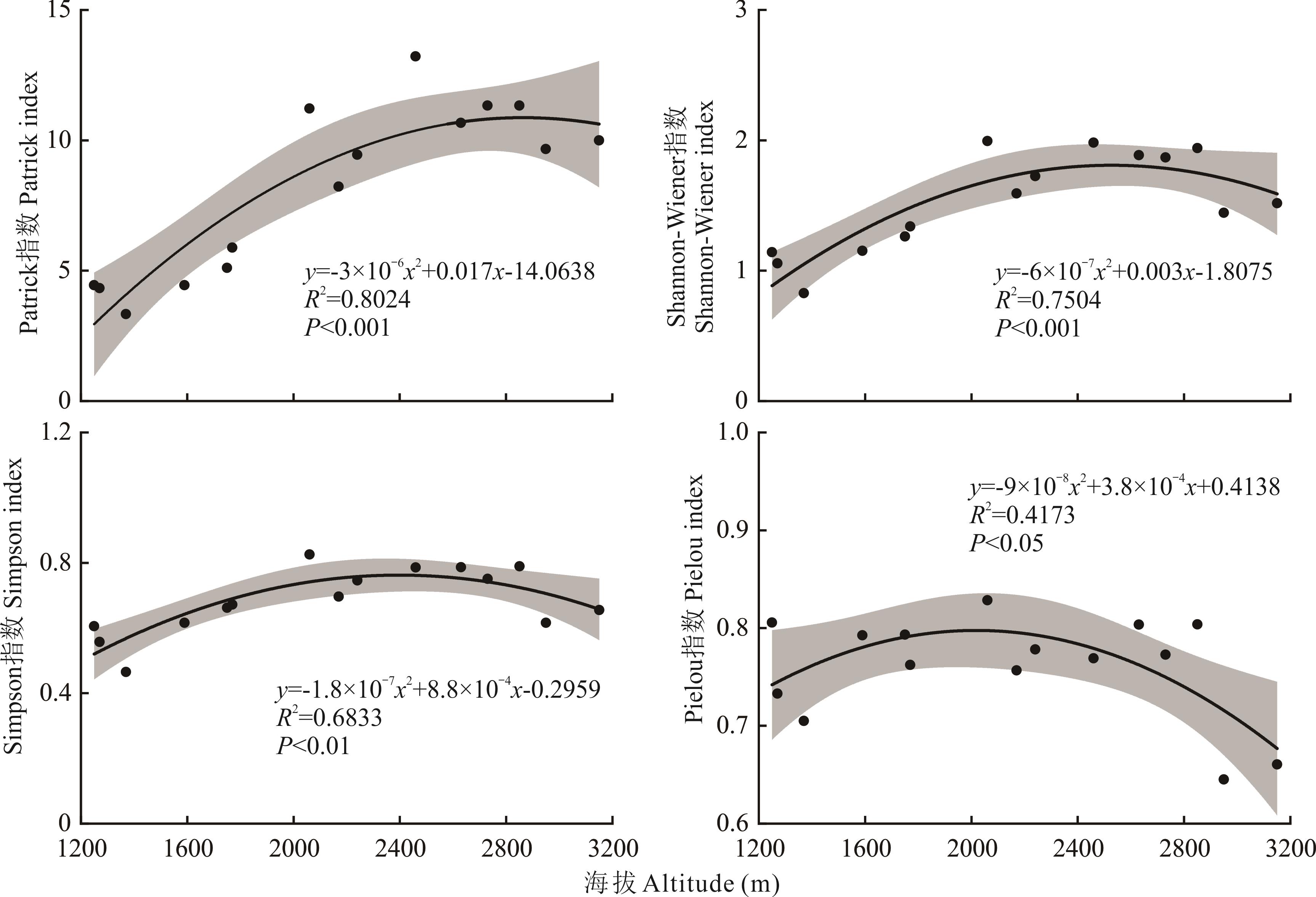
Fig.2 A fitting equation between alpha diversity index and altitude
| 海拔 Altitude (m) | 1250 m | 1270 m | 1370 m | 1590 m | 1750 m | 1770 m | 2060 m | 2170 m | 2240 m | 2460 m | 2630 m | 2730 m | 2850 m | 2950 m | 3150 m |
|---|---|---|---|---|---|---|---|---|---|---|---|---|---|---|---|
| 1250 | 0.94 | 0.53 | 0.33 | 0.27 | 0.20 | 0.00 | 0.00 | 0.00 | 0.00 | 0.00 | 0.00 | 0.00 | 0.00 | 0.00 | |
| 1270 | 0.50 | 0.57 | 0.35 | 0.29 | 0.21 | 0.00 | 0.00 | 0.00 | 0.00 | 0.00 | 0.00 | 0.00 | 0.00 | 0.00 | |
| 1370 | 3.50 | 3.00 | 0.53 | 0.32 | 0.35 | 0.00 | 0.00 | 0.00 | 0.00 | 0.00 | 0.00 | 0.00 | 0.00 | 0.00 | |
| 1590 | 6.00 | 5.50 | 3.50 | 0.64 | 0.60 | 0.06 | 0.13 | 0.00 | 0.00 | 0.07 | 0.07 | 0.07 | 0.00 | 0.00 | |
| 1750 | 8.00 | 7.50 | 6.50 | 4.00 | 0.58 | 0.21 | 0.29 | 0.07 | 0.10 | 0.12 | 0.13 | 0.13 | 0.06 | 0.12 | |
| 1770 | 8.00 | 7.50 | 5.50 | 4.00 | 5.00 | 0.05 | 0.12 | 0.00 | 0.05 | 0.06 | 0.07 | 0.07 | 0.07 | 0.00 | |
| 2060 | 17.50 | 17.00 | 16.00 | 16.50 | 15.50 | 17.50 | 0.54 | 0.35 | 0.29 | 0.35 | 0.32 | 0.18 | 0.18 | 0.17 | |
| 2170 | 15.50 | 15.00 | 14.00 | 13.50 | 12.50 | 14.50 | 13.50 | 0.56 | 0.39 | 0.43 | 0.40 | 0.39 | 0.34 | 0.33 | |
| 2240 | 11.50 | 11.00 | 10.00 | 11.50 | 12.50 | 12.50 | 12.50 | 8.00 | 0.56 | 0.59 | 0.56 | 0.48 | 0.61 | 0.59 | |
| 2460 | 19.00 | 18.50 | 17.50 | 19.00 | 19.00 | 19.00 | 19.00 | 15.50 | 9.50 | 0.69 | 0.68 | 0.46 | 0.54 | 0.61 | |
| 2630 | 14.50 | 14.00 | 13.00 | 13.50 | 14.50 | 14.50 | 14.50 | 12.00 | 7.00 | 7.50 | 0.84 | 0.56 | 0.51 | 0.55 | |
| 2730 | 13.50 | 13.00 | 12.00 | 12.50 | 13.50 | 13.50 | 13.50 | 12.00 | 7.00 | 7.50 | 3.00 | 0.54 | 0.43 | 0.53 | |
| 2850 | 14.00 | 13.50 | 12.50 | 13.00 | 14.00 | 14.00 | 14.00 | 12.50 | 8.50 | 13.00 | 8.50 | 8.50 | 0.68 | 0.67 | |
| 2950 | 14.00 | 13.50 | 12.50 | 14.00 | 15.00 | 14.00 | 14.50 | 13.50 | 6.50 | 11.00 | 9.50 | 10.50 | 6.00 | 0.77 | |
| 3150 | 14.50 | 14.00 | 13.00 | 14.50 | 14.50 | 15.50 | 15.00 | 14.00 | 7.00 | 9.50 | 9.00 | 9.00 | 6.50 | 4.50 |
Table 2 Sorenson similarity index and Cody index of plants at different altitudes
| 海拔 Altitude (m) | 1250 m | 1270 m | 1370 m | 1590 m | 1750 m | 1770 m | 2060 m | 2170 m | 2240 m | 2460 m | 2630 m | 2730 m | 2850 m | 2950 m | 3150 m |
|---|---|---|---|---|---|---|---|---|---|---|---|---|---|---|---|
| 1250 | 0.94 | 0.53 | 0.33 | 0.27 | 0.20 | 0.00 | 0.00 | 0.00 | 0.00 | 0.00 | 0.00 | 0.00 | 0.00 | 0.00 | |
| 1270 | 0.50 | 0.57 | 0.35 | 0.29 | 0.21 | 0.00 | 0.00 | 0.00 | 0.00 | 0.00 | 0.00 | 0.00 | 0.00 | 0.00 | |
| 1370 | 3.50 | 3.00 | 0.53 | 0.32 | 0.35 | 0.00 | 0.00 | 0.00 | 0.00 | 0.00 | 0.00 | 0.00 | 0.00 | 0.00 | |
| 1590 | 6.00 | 5.50 | 3.50 | 0.64 | 0.60 | 0.06 | 0.13 | 0.00 | 0.00 | 0.07 | 0.07 | 0.07 | 0.00 | 0.00 | |
| 1750 | 8.00 | 7.50 | 6.50 | 4.00 | 0.58 | 0.21 | 0.29 | 0.07 | 0.10 | 0.12 | 0.13 | 0.13 | 0.06 | 0.12 | |
| 1770 | 8.00 | 7.50 | 5.50 | 4.00 | 5.00 | 0.05 | 0.12 | 0.00 | 0.05 | 0.06 | 0.07 | 0.07 | 0.07 | 0.00 | |
| 2060 | 17.50 | 17.00 | 16.00 | 16.50 | 15.50 | 17.50 | 0.54 | 0.35 | 0.29 | 0.35 | 0.32 | 0.18 | 0.18 | 0.17 | |
| 2170 | 15.50 | 15.00 | 14.00 | 13.50 | 12.50 | 14.50 | 13.50 | 0.56 | 0.39 | 0.43 | 0.40 | 0.39 | 0.34 | 0.33 | |
| 2240 | 11.50 | 11.00 | 10.00 | 11.50 | 12.50 | 12.50 | 12.50 | 8.00 | 0.56 | 0.59 | 0.56 | 0.48 | 0.61 | 0.59 | |
| 2460 | 19.00 | 18.50 | 17.50 | 19.00 | 19.00 | 19.00 | 19.00 | 15.50 | 9.50 | 0.69 | 0.68 | 0.46 | 0.54 | 0.61 | |
| 2630 | 14.50 | 14.00 | 13.00 | 13.50 | 14.50 | 14.50 | 14.50 | 12.00 | 7.00 | 7.50 | 0.84 | 0.56 | 0.51 | 0.55 | |
| 2730 | 13.50 | 13.00 | 12.00 | 12.50 | 13.50 | 13.50 | 13.50 | 12.00 | 7.00 | 7.50 | 3.00 | 0.54 | 0.43 | 0.53 | |
| 2850 | 14.00 | 13.50 | 12.50 | 13.00 | 14.00 | 14.00 | 14.00 | 12.50 | 8.50 | 13.00 | 8.50 | 8.50 | 0.68 | 0.67 | |
| 2950 | 14.00 | 13.50 | 12.50 | 14.00 | 15.00 | 14.00 | 14.50 | 13.50 | 6.50 | 11.00 | 9.50 | 10.50 | 6.00 | 0.77 | |
| 3150 | 14.50 | 14.00 | 13.00 | 14.50 | 14.50 | 15.50 | 15.00 | 14.00 | 7.00 | 9.50 | 9.00 | 9.00 | 6.50 | 4.50 |

Fig.3 Plant coverage, biomass and Patrick index in relation to climate
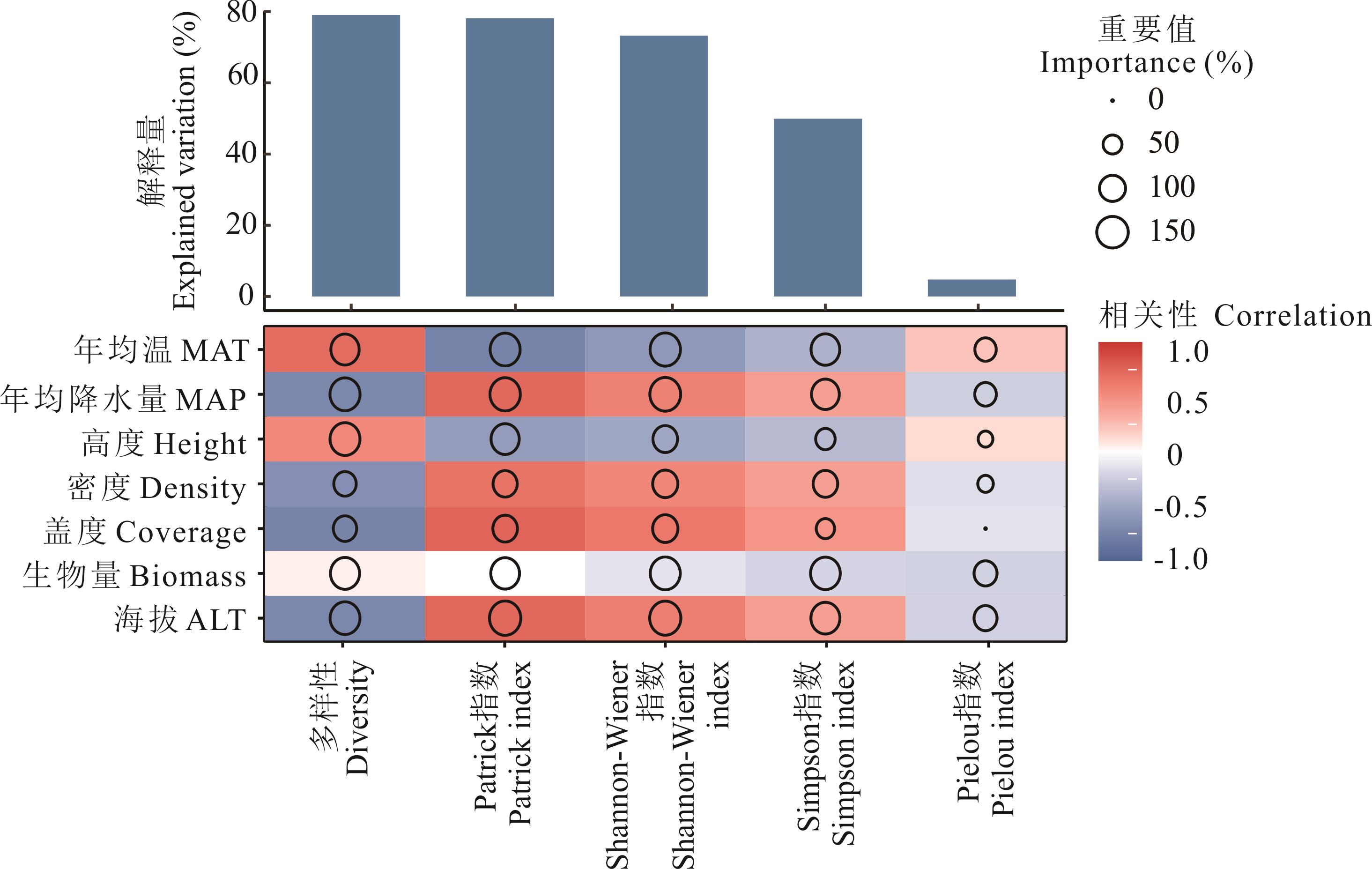
Fig.4 Contribution of abiotic and biological factors to plant alpha diversity based on correlation and random forest models
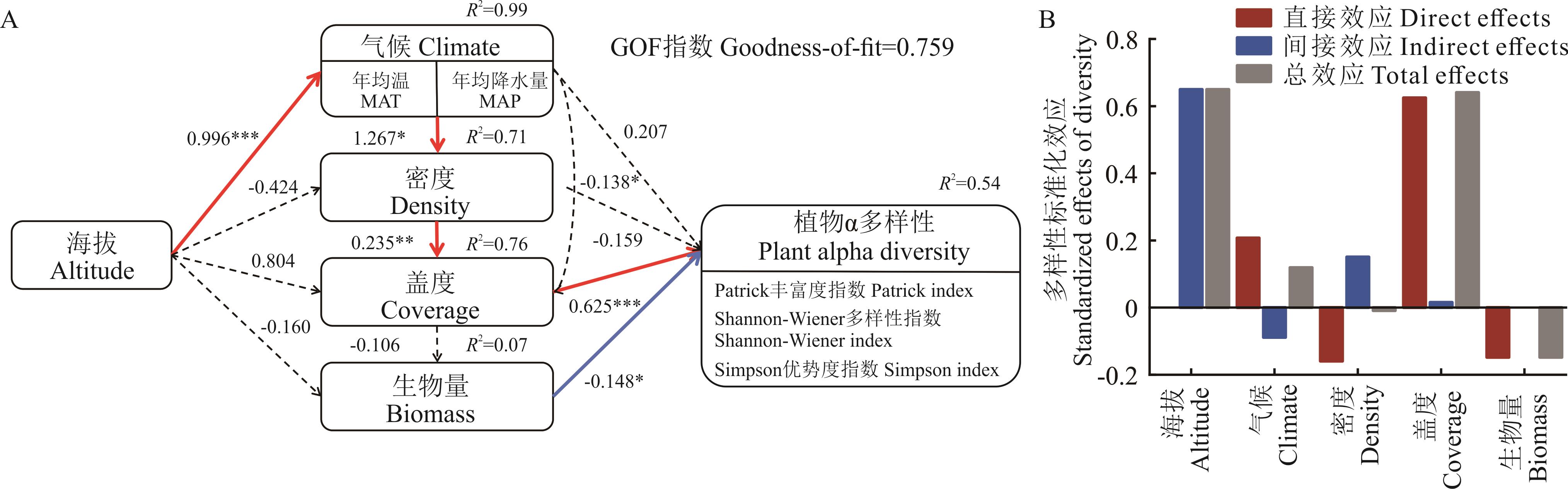
Fig.5 Effect of altitude on plant community diversity and its potential regulatory pathways
| 1 | Han J, Xue T, Yang J, et al. Effects of water retention and fertilization measures on plant community characteristics and species diversity of grassland in Loess Hilly Region. Acta Ecologica Sinica, 2024, 44(12): 5399-5411. |
| 韩军, 薛焘, 杨杰, 等. 保水增肥措施对黄土丘陵区草地植物群落特征及物种多样性的影响. 生态学报, 2024, 44(12): 5399-5411. | |
| 2 | Lan L S, You C C, Zhang L, et al. Characteristics of productivity and biodiversity of meadow grassland in western Jilin Province-A case study of grassland in Changling County in 2022. Acta Agrestia Sinica, 2024, 32(5): 1529-1537. |
| 兰理实, 由成成, 张龙, 等. 吉林西部草甸草原生产力和物种多样性特征研究—以2022年长岭县草原为例. 草地学报, 2024, 32(5): 1529-1537. | |
| 3 | Li S J, Wang X M, Liu H F, et al. Diversity of desert plants in Hexi Corridor and its response to environmental factors. Ecology and Environment, 2023, 32(3): 429-438. |
| 4 | Nettesheim F C, Garbin M L, Rajao P H M, et al. Environment is more relevant than spatial structure as a driver of regional variation in tropical tree community richness and composition. Plant Ecology & Diversity, 2018, 11(1): 27-40. |
| 5 | Bagaria G, Rodà F, Pino J. Extinction and colonisation of habitat specialists drive plant species replacement along a Mediterranean grassland-forest succession. Journal of Vegetation Science, 2019, 30(2): 331-340. |
| 6 | Korner C, Spehn E M. Mountain biodiversity: A global assessment. London: Routledge, 2019. |
| 7 | Rahbek C, Borregaard M K, Antonelli A, et al. Building mountain biodiversity: Geological and evolutionary processes. Science, 2019, 365(6458): 1114-1119. |
| 8 | Huang K, Xiang J, Ma Y, et al. Response of soil microbial communities to elevation gradient in central subtropical Pinus taiwanensis and Pinus massoniana forests. Forests, 2023, 14(4): 772. |
| 9 | Zhang X, Wang Y, Wang J, et al. Elevation influences belowground biomass proportion in forests by affecting climatic factors, soil nutrients and key leaf traits. Plants, 2024, 13(5): 674. |
| 10 | Li Y C. Study on vegetation variation and its response to climate factors and human activities in the Qilian Mountain. Lanzhou: Northwest Normal University, 2023. |
| 李玉辰. 祁连山植被变化及其对气候因子和人类活动的响应研究. 兰州: 西北师范大学, 2023. | |
| 11 | Meng Z X. Ecosystem multifunctional assessment of alpine grassland in Qinghai-Tibet Plateau at different altitude gradients. Xianyang: Northwest A & F University, 2022. |
| 孟泽昕. 不同海拔高度青藏高寒草地生态系统多功能性评估. 咸阳: 西北农林科技大学, 2022. | |
| 12 | Zhou S, Dong Y, Julihaiti A, et al. Spatial variation in desert spring vegetation biomass, richness and their environmental controls in the arid region of Central Asia. Sustainability, 2022, 14(19): 12152. |
| 13 | Shi G F, Xu N, Niu Z Q, et al. Altitudinal differences of understory plant biodiversity in eastern Greater Xing’an Mountains, Inner Mongolia. Acta Ecologica Sinica, 2024, 44(7): 3004-3015. |
| 史恭发, 徐诺, 牛钊倩, 等. 内蒙古大兴安岭东部林下植物生物多样性海拔差异研究. 生态学报, 2024, 44(7): 3004-3015. | |
| 14 | Aqeel M, Khalid N, Noman A, et al. Interplay between edaphic and climatic factors unravels plant and microbial diversity along an altitudinal gradient. Environmental Research, 2024, 242: 117711. |
| 15 | Liang H Z, Liu L L, Gao H, et al. Altitudinal distribution pattern and its driving factors of plant diversity in the middle section of the eastern slope of the Taihang Mountain. Chinese Journal of Eco-Agriculture, 2022, 30(7): 1091-1100. |
| 梁红柱, 刘丽丽, 高会, 等. 太行山东坡中段植物多样性垂直分布格局及其驱动因素. 中国生态农业学报, 2022, 30(7): 1091-1100. | |
| 16 | Wang X J. Distribution pattern of plant diversity along an elevation gradient in southern Gaoligong Mountain. Kunming: Yunnan University, 2021. |
| 王兴杰. 高黎贡山南段植物多样性沿海拔梯度分布格局研究. 昆明: 云南大学, 2021. | |
| 17 | Dong Y Q. Effects of grazing exclusion on vegetation and soil fractions of active organic carbon of Seriphidium transiliense desert under moderate degeneration. Urumqi: Xinjiang Agricultural University, 2017. |
| 董乙强. 禁牧对中度退化伊犁绢蒿荒漠植被和土壤活性有机碳组的影响. 乌鲁木齐: 新疆农业大学, 2017. | |
| 18 | Geng Q W, Muhammad A, Yuan Z X, et al. Plant species composition and diversity along successional gradients in arid and semi-arid regions of China. Forest Ecology and Management, 2022, 524: 120542. |
| 19 | Lu W, Yu J, Ren H, et al. Spatial variations in species diversity of mid-subtropical evergreen broad-leaved forest community in Gutianshan National Nature Reserve. Biodiversity Science, 2018, 26(9): 1023-1028. |
| 20 | Zhang H W, Wang M, Li J, et al. Effects of different altitudes on herbaceous plant species diversity and biomass in Jiajin Mountain. Chinese Journal of Applied and Environmental Biology, 2023, 29(5): 1125-1131. |
| 张瀚文, 王敏, 李婧, 等. 不同海拔高度对夹金山草本层植物物种多样性与生物量的影响. 应用与环境生物学报, 2023, 29(5): 1125-1131. | |
| 21 | Huo X R. Quantitative classification and health evaluation of grassland plant community in Luoshan nature reserve of Ningxia. Yinchuan: Ningxia University, 2023. |
| 霍新茹. 宁夏罗山自然保护区草地植物群落数量分类及其健康评价. 银川: 宁夏大学, 2023. | |
| 22 | Wu H B, Shui H W, Hu G Z, et al. Species diversity and biomass distribution patterns of alpine grassland along an elevation gradient in the Northern Tibetan Plateau. Ecology and Environmental Sciences, 2019, 28(6): 1071-1079. |
| 吴红宝, 水宏伟, 胡国铮, 等. 海拔对藏北高寒草地物种多样性和生物量的影响. 生态环境学报, 2019, 28(6): 1071-1079. | |
| 23 | Ma J J, Liu Y H, Sheng J D, et al. Changes of relationships between dominant species and their relative biomass along elevational gradients in Xinjiang grasslands. Acta Prataculturae Sinica, 2021, 30(8): 25-35. |
| 马婧婧, 刘耘华, 盛建东, 等. 新疆草地优势种植物相对生物量沿海拔梯度变化特征. 草业学报, 2021, 30(8): 25-35. | |
| 24 | He G, Shi Z, Fang H, et al. Climate and soil stressed elevation patterns of plant species to determine the aboveground biomass distributions in a valley-type Savanna. Frontiers in Plant Science, 2024, 15: 1324841. |
| 25 | Li N, Tang S M, Guo J Y, et al. Meta-analysis of effects of grazing on plant community properties in Nei Mongol grassland. Chinese Journal of Plant Ecology, 2023, 47(9): 1256-1269. |
| 李娜, 唐士明, 郭建英, 等. 放牧对内蒙古草地植物群落特征影响的Meta分析. 植物生态学报, 2023, 47(9): 1256-1269. | |
| 26 | He J S, Chen W L. A review of gradient changes in species diversity of land plant communities. Acta Ecologica Sinica, 1997(1): 93-101. |
| 贺金生, 陈伟烈. 陆地植物群落物种多样性的梯度变化特征. 生态学报, 1997(1): 93-101. | |
| 27 | Duan M J, Gao Q Z, Guo Y Q, et al. Species diversity distribution pattern of alpine grassland communities along an altitudinal gradient in the Northern Tibet. Pratacultural Science, 2011, 28(10): 1845-1850. |
| 段敏杰, 高清竹, 郭亚奇, 等. 藏北高寒草地植物群落物种多样性沿海拔梯度的分布格局. 草业科学, 2011, 28(10): 1845-1850. | |
| 28 | Bai J, Long C, Quan X, et al. Reverse diversity-biomass patterns in grasslands are constrained by climates and stoichiometry along an elevational gradient. Science of the Total Environment, 2024, 917: 170416. |
| 29 | Lv Z L, Liu B, Chang F, et al. Species diversity and phylogenetic diversity in Bayinbrook alpine grasslands: Elevation gradient distribution patterns and drivers. Acta Prataculturae Sinica, 2023, 32(7): 12-22. |
| 吕自立, 刘彬, 常凤, 等. 巴音布鲁克高寒草甸物种多样性与系统发育多样性沿海拔梯度分布格局及驱动因子. 草业学报, 2023, 32(7): 12-22. | |
| 30 | Wang C E, Huang M, Wang W Y, et al. Variation characteristics of plant community diversity and above-ground biomass in alpine degraded slopes along altitude gradients in the headwaters region of three-river on Tibetan Plateau. Acta Ecologica Sinica, 2022, 42(9): 3640-3655. |
| 王采娥, 黄梅, 王文银, 等. 三江源区高寒坡地退化植物群落多样性和地上生物量沿海拔梯度的变化特征. 生态学报, 2022, 42(9): 3640-3655. | |
| 31 | Li Q. Responses of alpine meadow vegetation, soil and microorganism to altitudes and aspect in eastern Qilian Mountains and its microbial adaptation mechanisms. Lanzhou: Gansu Agricultural University, 2023. |
| 李强. 东祁连山高寒草甸植被、土壤和微生物对海拔和坡向的响应及其微生物适应机制研究. 兰州: 甘肃农业大学, 2023. | |
| 32 | Yang Y, Qiu K Y, Li J Y, et al. Relationship between altitudinal distribution characteristics of typical plant community diversity and soil factors on the eastern slope of the Helan Mountains. Acta Ecologica Sinica, 2023, 43(12): 4995-5004. |
| 杨壹, 邱开阳, 李静尧, 等. 贺兰山东坡典型植物群落多样性垂直分布特征与土壤因子的关系. 生态学报, 2023, 43(12): 4995-5004. | |
| 33 | Ren S J, Song Z Y, Lin C C, et al. Spatial pattern of plant communities along wetness gradient in alpine grassland of Xizang and their driving factors. Acta Ecologica Sinica, 2024, 44(5): 1996-2007. |
| 任世杰, 宋朝阳, 林长存, 等. 西藏高寒草原湿润度梯度下植物群落特征空间格局及其驱动因子. 生态学报, 2024, 44(5): 1996-2007. | |
| 34 | Cong M Z, Liu Q J, Sun Z, et al. Interpretation of environmental factors affecting β diversity and its components of plant community in northern slope Changbai Mountain. Journal of Nanjing Forestry University (Natural Sciences Edition), 2024-02-27. (2024-02-27)[2024-08-07]. https://kns-cnki-net.webvpn.xjau.edu.cn/kcms/detail/32.1161.s.20240226.0919.002.html. |
| 丛明珠, 刘琪璟, 孙震, 等. 长白山北坡植物群落β多样性及其组分的驱动因素. 南京林业大学学报(自然科学版), 2024-02-27. (2024-02-27)[2024-08-07]. https://kns-cnki-net.webvpn.xjau.edu.cn/kcms/detail/32.1161.s.20240226.0919.002.html. | |
| 35 | Wang A, Wang X, Tognetti R, et al. Elevation alters carbon and nutrient concentrations and stoichiometry in Quercus aquifolioides in southwestern China. Science of the Total Environment, 2018, 622: 1463-1475. |
| 36 | Loreau M, Naeem S, Inchausti P, et al. Biodiversity and ecosystem functioning: Current knowledge and future challenges. Science, 2001, 294(5543): 804-808. |
| 37 | Li T, Xiong Q L, Luo P, et al. Direct and indirect effects of environmental factors, spatial constraints, and functional traits on shaping the plant diversity of montane forests. Ecology and Evolution, 2020, 10: 557-568. |
| 38 | Suttle K B, Thomsen M A, Power M E. Species interactions reverse grassland responses to changing climate. Science, 2007, 315(5812): 640-642. |
| 39 | Tylianakis J M, Didham R K, Bascompte J, et al. Global change and species interactions in terrestrial ecosystems. Ecology Letters, 2008, 11(12): 1351-1363. |
| 40 | Louthan A M, Doak D F, Angert A L. Where and when do species interactions set range limits. Trends in Ecology & Evolution, 2015, 30(12): 780-792. |
| [1] | Xin GONG, Xin-ru HUO, Wen LI, Yan-dong YANG, Chao LIU, Wei-chun QIN, Yan SHEN, Guo-hui WANG, Hong-bin MA. Vegetation community characteristics and spatial differentiation in mountain grassland in Luoshan, Ningxia [J]. Acta Prataculturae Sinica, 2025, 34(2): 1-15. |
| [2] | Wen-hu WANG, Shi-lin WANG, Guo-ling LIANG, Wen LI, Wen-xia CAO. Effects of slope categories of differing aspect and position on plant community diversity in alpine shrubland in the Qilian Mountains [J]. Acta Prataculturae Sinica, 2025, 34(1): 17-28. |
| [3] | Cong ZHANG, Ya WANG, Li-hua ZHOU, Xiao-dong PEI, Jun-hao LI, Gui SHI. Spatiotemporal distribution characteristics and driving factors of livestock feeding structure: A case study in Ningxia [J]. Acta Prataculturae Sinica, 2024, 33(8): 37-49. |
| [4] | Ying TANG, Xiao-jing LIU, Ya-jiao ZHAO, Lin DONG. Characteristics and driving factors of lactic acid bacteria communities in silage made from alfalfa in different regions of Gansu Province [J]. Acta Prataculturae Sinica, 2024, 33(2): 112-124. |
| [5] | Wan-yang YU, Yi-fan CHEN, Fa-yong FANG, Jin-xin ZHANG, Zhou LI, Long-shan ZHAO. An analysis of grassland spatial distribution and driving forces of patterns of change in grassland distribution in Guizhou Province from 1980 to 2020 [J]. Acta Prataculturae Sinica, 2024, 33(1): 1-18. |
| [6] | Min ZHAO, Kun ZHAO, Yun-bo WANG, Guo-mei YIN, Si-bo LIU, Bao-long YAN, Wei-jun MENG, Shi-jie LYU, Guo-dong HAN. Long-term grazing disturbance reduced plant diversity in Stipa breviflora desert steppe [J]. Acta Prataculturae Sinica, 2023, 32(9): 39-49. |
| [7] | Guo-liang YU, Zi-jing MA, Zi-li LYU, Bin LIU. Altitude and plant community jointly regulate soil stoichiometry characteristics of natural grassland in the Baluntai area on the southern slope of the middle Tianshan Mountains, China [J]. Acta Prataculturae Sinica, 2023, 32(9): 68-78. |
| [8] | Jing MA, Fang-jun GUO, Zhi-hui ZOU, Lin SUN, Fang CHEN. Seasonal variation in vegetation during restoration of sandy grassland at the southern edge of the Tengger desert [J]. Acta Prataculturae Sinica, 2023, 32(5): 203-210. |
| [9] | Shi-long LEI, Li-rong LIAO, Jie WANG, Lu ZHANG, Zhen-cheng YE, Guo-bin LIU, Chao ZHANG. The diversity-Godron stability relationship of alpine grassland and its environmental drivers [J]. Acta Prataculturae Sinica, 2023, 32(3): 1-12. |
| [10] | Ye-yun HUANG, Kai-yang QIU, Ya-chao ZHU, Ying-zhong XIE, Wang-suo LIU, Yi YANG, Si-yao WANG, Lu-yao CUI, Ping-an BAO. Correlation between vegetation biomass and soil fractal characteristics and soil moisture at different elevations in the Helan Mountains [J]. Acta Prataculturae Sinica, 2023, 32(12): 24-35. |
| [11] | Ya-hui WANG, Wen-jia TANG, Sen LI, Hong-yan ZHAO, Jia-li XIE, Chao MA, Chang-zhen YAN. Change in grassland productivity in Qinghai Province and its driving factors [J]. Acta Prataculturae Sinica, 2022, 31(2): 1-13. |
| [12] | Ke-tong YANG, Guo-peng CHEN, Jun-ren XIAN, Xiao-ya YU, Jin-wu ZHANG, Li WANG. Characteristics of stem and leaf functional traits of Rhododendron capitatum on the north slope of Zhagaliang, Gansu [J]. Acta Prataculturae Sinica, 2022, 31(2): 111-120. |
| [13] | Gui-qin ZHAO, Ze-liang JU, Ji-kuan CHAI. Effects of altitude and variety on nutrient levels and epiphytes of oats [J]. Acta Prataculturae Sinica, 2022, 31(11): 147-157. |
| [14] | Xin-lei XU, Yan-tao SONG, Jing-dong ZHAO, Yun-na WU. Changes in forage quality and its relationship with plant diversity under fertilization and mowing in Hulun Buir meadow steppe [J]. Acta Prataculturae Sinica, 2021, 30(7): 1-10. |
| [15] | Ya-hong LIU, Lei SHI, Hong CHANG, Yu XIE, La WEI, Hai-lian SUN, Xiu ZHAI. Analysis of driving factors that influence the pattern and quality of the ecosystem in Xilingol League [J]. Acta Prataculturae Sinica, 2021, 30(12): 17-26. |
| Viewed | ||||||
|
Full text |
|
|||||
|
Abstract |
|
|||||
