
ISSN 1004-5759 CN 62-1105/S
Acta Prataculturae Sinica ›› 2025, Vol. 34 ›› Issue (6): 181-192.DOI: 10.11686/cyxb2024297
Pei-pei JIANG1( ), Jin-hua GUO1, Hui-shu XIAO1, Yan-min PENG1, Jun ZHANG1, Wen-zhong TIAN2,3, Jun-jie Lyu2,3, Jin-zhi WU1, He-zheng WANG1, Guo-zhan FU1, Ming HUANG1(), You-jun LI1()
Received:2024-07-24
Revised:2024-09-25
Online:2025-06-20
Published:2025-04-03
Contact:
Ming HUANG,You-jun LI
Pei-pei JIANG, Jin-hua GUO, Hui-shu XIAO, Yan-min PENG, Jun ZHANG, Wen-zhong TIAN, Jun-jie Lyu, Jin-zhi WU, He-zheng WANG, Guo-zhan FU, Ming HUANG, You-jun LI. Effect of rotational tillage patterns on the crop yield and quality in a maize-wheat (Zea mays-Triticum aestivum) double cropping system in dryland agriculture[J]. Acta Prataculturae Sinica, 2025, 34(6): 181-192.
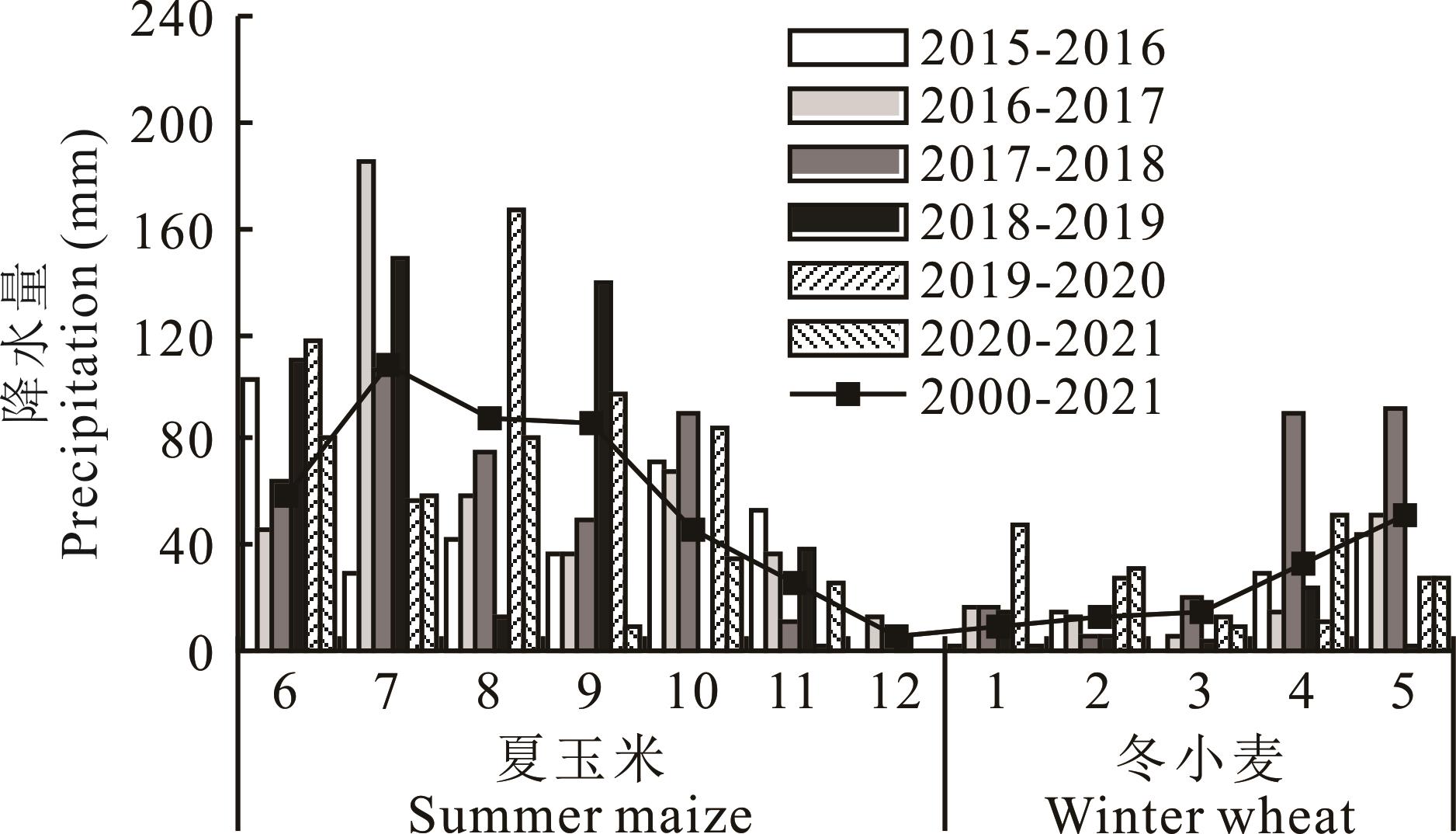
Fig.1 2015-2021 and latest 21-year average monthly precipitation
| 年度 Year | 夏玉米 Summer maize | 冬小麦 Winter wheat | 周年 Annual | |||
|---|---|---|---|---|---|---|
| DI | 降水年型 Precipitation type | DI | 降水年型 Precipitation type | DI | 降水年型 Precipitation type | |
| 2015 (2015-2016) | -1.10 | 干旱年Dry year | 0.31 | 平水年Normal year | -0.72 | 干旱年Dry year |
| 2016 (2016-2017) | -0.16 | 平水年Normal year | 0.32 | 平水年Normal year | 0.02 | 平水年Normal year |
| 2017 (2017-2018) | -0.42 | 干旱年Dry year | 1.98 | 丰水年Rainy year | 0.48 | 丰水年Rainy year |
| 2018 (2018-2019) | 0.52 | 丰水年Rainy year | -1.67 | 干旱年Dry year | -0.24 | 平水年Normal year |
| 2019 (2019-2020) | 0.74 | 丰水年Rainy year | 0.21 | 平水年Normal year | 0.68 | 丰水年Rainy year |
| 2020 (2020-2021) | -0.96 | 干旱年Dry year | -0.30 | 平水年Normal year | -0.85 | 干旱年Dry year |
Table 1 Precipitation year type in the experiment area from 2015 to 2021
| 年度 Year | 夏玉米 Summer maize | 冬小麦 Winter wheat | 周年 Annual | |||
|---|---|---|---|---|---|---|
| DI | 降水年型 Precipitation type | DI | 降水年型 Precipitation type | DI | 降水年型 Precipitation type | |
| 2015 (2015-2016) | -1.10 | 干旱年Dry year | 0.31 | 平水年Normal year | -0.72 | 干旱年Dry year |
| 2016 (2016-2017) | -0.16 | 平水年Normal year | 0.32 | 平水年Normal year | 0.02 | 平水年Normal year |
| 2017 (2017-2018) | -0.42 | 干旱年Dry year | 1.98 | 丰水年Rainy year | 0.48 | 丰水年Rainy year |
| 2018 (2018-2019) | 0.52 | 丰水年Rainy year | -1.67 | 干旱年Dry year | -0.24 | 平水年Normal year |
| 2019 (2019-2020) | 0.74 | 丰水年Rainy year | 0.21 | 平水年Normal year | 0.68 | 丰水年Rainy year |
| 2020 (2020-2021) | -0.96 | 干旱年Dry year | -0.30 | 平水年Normal year | -0.85 | 干旱年Dry year |
项目 Item | 夏玉米 Summer maize | 冬小麦 Winter wheat | 周年 Annual | ||||||||||||
|---|---|---|---|---|---|---|---|---|---|---|---|---|---|---|---|
干旱年 Dry year | 平水年 Normal year | 丰水年 Rainy year | 干旱年 Dry year | 平水年 Normal year | 丰水年 Rainy year | 干旱年 Dry year | 平水年 Normal year | 丰水年 Rainy year | |||||||
| 籽粒产重Grain yield (kg·hm-2) | 4414c | 5649b | 8140a | 2193b | 3660a | 3900a | 7948b | 9380ab | 10625a | ||||||
| F值 F value | |||||||||||||||
| 年型 Year (Y) | 724.84** | 272.95** | 228.97** | ||||||||||||
| 处理 Treatment (T) | 44.46** | 33.73** | 71.83** | ||||||||||||
| 年型×处理 Y×T | 0.07 | 0.02 | 0.03 | ||||||||||||
Table 2 Annual average yield under different precipitation types and source of variation
项目 Item | 夏玉米 Summer maize | 冬小麦 Winter wheat | 周年 Annual | ||||||||||||
|---|---|---|---|---|---|---|---|---|---|---|---|---|---|---|---|
干旱年 Dry year | 平水年 Normal year | 丰水年 Rainy year | 干旱年 Dry year | 平水年 Normal year | 丰水年 Rainy year | 干旱年 Dry year | 平水年 Normal year | 丰水年 Rainy year | |||||||
| 籽粒产重Grain yield (kg·hm-2) | 4414c | 5649b | 8140a | 2193b | 3660a | 3900a | 7948b | 9380ab | 10625a | ||||||
| F值 F value | |||||||||||||||
| 年型 Year (Y) | 724.84** | 272.95** | 228.97** | ||||||||||||
| 处理 Treatment (T) | 44.46** | 33.73** | 71.83** | ||||||||||||
| 年型×处理 Y×T | 0.07 | 0.02 | 0.03 | ||||||||||||

Fig.2 Effects of different treatments on grain yield of summer maize, winter wheat and annual under different precipitation types
处理 Treatment | 夏玉米 Summer maize | 冬小麦 Winter wheat | ||||
|---|---|---|---|---|---|---|
氮含量 Nitrogen content | 磷含量 Phosphorus content | 钾含量 Potassium content | 氮含量 Nitrogen content | 磷含量 Phosphorus content | 钾含量 Potassium content | |
| MNWN | 1.33ab | 0.26a | 0.35ab | 2.21b | 2.76b | 2.19c |
| MSWN | 1.34ab | 0.25a | 0.34ab | 2.20b | 2.92ab | 2.47bc |
| MNW3N1P | 1.36ab | 0.27a | 0.37a | 2.31a | 2.88ab | 3.09a |
| MSW3N1P | 1.38a | 0.25a | 0.34ab | 2.38a | 3.18a | 2.70b |
| CK | 1.32b | 0.24a | 0.32b | 2.21b | 2.76b | 3.26a |
Table 3 Effects of different rotational tillage modes on nitrogen, phosphorus and potassium contents in grains in dryland maize-wheat double cropping system (%)
处理 Treatment | 夏玉米 Summer maize | 冬小麦 Winter wheat | ||||
|---|---|---|---|---|---|---|
氮含量 Nitrogen content | 磷含量 Phosphorus content | 钾含量 Potassium content | 氮含量 Nitrogen content | 磷含量 Phosphorus content | 钾含量 Potassium content | |
| MNWN | 1.33ab | 0.26a | 0.35ab | 2.21b | 2.76b | 2.19c |
| MSWN | 1.34ab | 0.25a | 0.34ab | 2.20b | 2.92ab | 2.47bc |
| MNW3N1P | 1.36ab | 0.27a | 0.37a | 2.31a | 2.88ab | 3.09a |
| MSW3N1P | 1.38a | 0.25a | 0.34ab | 2.38a | 3.18a | 2.70b |
| CK | 1.32b | 0.24a | 0.32b | 2.21b | 2.76b | 3.26a |

Fig.3 Effects of different rotational tillage patterns on grain protein yield in dryland maize-wheat double cropping system
处理 Treatment | 清蛋白 Albumin | 球蛋白 Globulin | 醇溶蛋白 Gliadin | 谷蛋白 Glutelin | 谷醇比 Glutelin/gliadin | 贮藏蛋白 Storage protein |
|---|---|---|---|---|---|---|
| MNWN | 2.33b | 1.71ab | 3.33b | 4.14b | 1.24c | 7.46c |
| MSWN | 2.36b | 1.76ab | 3.36b | 4.07b | 1.21c | 7.43c |
| MNW3N1P | 2.54a | 1.85a | 3.36b | 4.81a | 1.43a | 8.16b |
| MSW3N1P | 2.36b | 1.78ab | 3.54a | 4.82a | 1.37b | 8.36a |
| CK | 2.32b | 1.66b | 3.32b | 4.15b | 1.25c | 7.47c |
Table 4 Effects of different rotational tillage patterns on the properties of protein components in winter wheat grains in dryland maize-wheat double cropping system (%)
处理 Treatment | 清蛋白 Albumin | 球蛋白 Globulin | 醇溶蛋白 Gliadin | 谷蛋白 Glutelin | 谷醇比 Glutelin/gliadin | 贮藏蛋白 Storage protein |
|---|---|---|---|---|---|---|
| MNWN | 2.33b | 1.71ab | 3.33b | 4.14b | 1.24c | 7.46c |
| MSWN | 2.36b | 1.76ab | 3.36b | 4.07b | 1.21c | 7.43c |
| MNW3N1P | 2.54a | 1.85a | 3.36b | 4.81a | 1.43a | 8.16b |
| MSW3N1P | 2.36b | 1.78ab | 3.54a | 4.82a | 1.37b | 8.36a |
| CK | 2.32b | 1.66b | 3.32b | 4.15b | 1.25c | 7.47c |
| 1 | Jia M Y, Huang L M, Li Q C, et al. Effects of tillage methods on physico-chemical and microbial characteristics of farmland soil and nutritional quality of wheat. Journal of Plant Nutrition and Fertilizers, 2022, 28(11): 1964-1976. |
| 贾梦圆, 黄兰媚, 李琦聪, 等. 耕作方式对农田土壤理化性质、微生物学特性及小麦营养品质的影响. 植物营养与肥料学报, 2022, 28(11): 1964-1976. | |
| 2 | Yan W, Sun J B, Lyu H G, et al. Effects of foliar applications of fertilizers containing different zinc sources on grain yield and grain nutritional quality of winter wheat and summer maize. Journal of Agro-Environment Science, 2024, 43(3): 504-515. |
| 颜为, 孙金鞭, 吕洪国, 等. 不同锌源叶面喷施对冬小麦和夏玉米产量及籽粒营养品质的影响. 农业环境科学学报, 2024, 43(3): 504-515. | |
| 3 | Liu J, Liu J, Su R G, et al. Current status, problems and countermeasures of wheat and maize production in Henan province. Journal of Agriculture, 2015, 5(1): 5-9. |
| 刘娇, 刘举, 苏瑞光, 等. 河南省小麦、玉米生产现状、问题与对策. 农学学报, 2015, 5(1): 5-9. | |
| 4 | Zhang J J, Wang Y, Fan T L, et al. Effects of different tillage and fertilization modes on the soil physical and chemical properties and crop yield under winter wheat/spring corn rotation on dryland of east Gansu, Northwest China. Chinese Journal of Applied Ecology, 2013, 24(4): 1001-1008. |
| 张建军, 王勇, 樊廷录, 等. 耕作方式与施肥对陇东旱塬冬小麦-春玉米轮作农田土壤理化性质及产量的影响. 应用生态学报, 2013, 24(4): 1001-1008. | |
| 5 | Wang Q L, Yu F X, Gao L, et al. Regulation of tillage on grain matter accumulation in maize. Frontiers in Plant Science, 2024, 15: 1373624. https://doi.org/10.3389/fpls.2024.1373624. |
| 6 | Zhang Y J, Wang R, Wang H, et al. Soil water use and crop yield increase under different long-term fertilization practices incorporated with two-year tillage rotations. Agricultural Water Management, 2019, 221(11): 362-370. |
| 7 | Wang Y L, Li J. Study of tillage patterns suitable for soil physicochemical properties and crop yields in wheat/maize fields. Journal of Plant Nutrition and Fertilizers, 2014, 20(5): 1139-1150. |
| 王玉玲, 李军. 利于小麦-玉米轮作田土壤理化性状和作物产量的耕作方式研究. 植物营养与肥料学报, 2014, 20(5): 1139-1150. | |
| 8 | Sun K, Liu Z, Hu H Y, et al. Effect of organic fertilizer and rotational tillage practices on soil carbon and nitrogen and maize yield in wheat-maize cropping system. Acta Agronomica Sinica, 2019, 45(3): 401-410. |
| 孙凯, 刘振, 胡恒宇, 等. 有机培肥与轮耕方式对夏玉米田土壤碳氮和产量的影响. 作物学报, 2019, 45(3): 401-410. | |
| 9 | Izumi Y, Yoshida T, Iijima M. Effects of subsoiling to the non-tilled field of wheat-soybean rotation on the root system development, water uptake, and yield. Plant Production Science, 2009, 12(3): 327-335. |
| 10 | Yan L, Jiang X X, Ji X N, et al. Distribution of water-stable aggregates under soil tillage practices in a black soil hillslope cropland in Northeast China. Journal of Soils and Sediments, 2020, 20(1): 24-31. |
| 11 | Nie L P, Guo L W, Niu H Y, et al. Effects of rotational tillage on tilth soil structure and crop yield and quality in maize-wheat croping system. Acta Agronomica Sinica, 2015, 41(3): 468-478. |
| 聂良鹏, 郭利伟, 牛海燕, 等. 轮耕对小麦-玉米两熟农田耕层构造及作物产量与品质的影响. 作物学报, 2015, 41(3): 468-478. | |
| 12 | Sun M, Ge X M, Gao Z Q, et al. Relationship between water storage conservation in fallow period and grains protein formation in dryland wheat in different precipitation years. Scientia Agricultura Sinica, 2014, 47(9): 1692-1704. |
| 孙敏, 葛晓敏, 高志强, 等. 不同降水年型休闲期耕作蓄水与旱地小麦籽粒蛋白质形成的关系. 中国农业科学, 2014, 47(9): 1692-1704. | |
| 13 | Guo S L, Zhu H H, Dang T H, et al. Winter wheat grain yield associated with precipitation distribution under long-term nitrogen fertilization in the semiarid Loess Plateau in China. Geoderma, 2012, 189(20): 442-450. |
| 14 | Xin N Q, Zhang Y Q, Wang L X. The study on dryland agriculture in North China. Beijing: Chinese Agriculture Press, 2002. |
| 信乃诠, 张燕卿, 王立祥. 中国北方旱区农业研究. 北京: 中国农业出版社, 2002. | |
| 15 | Wu J Z, Wang H T, Hou Y Q, et al. Optimum tillage pattern with high crop productivity and soil nitrate-N accumulation in rain-fed summer maize and winter wheat double cropping system. Journal of Plant Nutrition and Fertilizers, 2023, 29(4): 614-627. |
| 吴金芝, 汪洪涛, 侯园泉, 等. 提升雨养夏玉米-冬小麦两熟体系生产力和土壤硝态氮累积的最优耕作模式. 植物营养与肥料学报, 2023, 29(4): 614-627. | |
| 16 | He G, Wang Z H, Li F C, et al. Nitrogen, phosphorus and potassium requirement and their physiological efficiency for winter wheat affected by soil surface managements in dryland. Scientia Agricultura Sinica, 2016, 49(9): 1657-1671. |
| 何刚, 王朝辉, 李富翠, 等. 地表覆盖对旱地小麦氮磷钾需求及生理效率的影响. 中国农业科学, 2016, 49(9): 1657-1671. | |
| 17 | Huang M, Wu J Z, Li Y J, et al. Effects of tillage method and straw mulching on grain yield and protein content in wheat and soil nitrate residue under a winter wheat and summer soybean crop rotation in drylands. Acta Prataculturae Sinica, 2018, 27(9): 34-44. |
| 黄明, 吴金芝, 李友军, 等. 耕作方式和秸秆覆盖对旱地麦豆轮作下小麦籽粒产量、蛋白质含量和土壤硝态氮残留的影响. 草业学报, 2018, 27(9): 34-44. | |
| 18 | Yao X Y, Qiu W, Lu H H, et al. Optimum combination of planting density and fertilization mode for high yield, quality and nitrogen utilization of spring-sown fresh waxy maize. Journal of Plant Nutrition and Fertilizers, 2023, 29(12): 2258-2271. |
| 姚霄宇, 邱纹, 陆虎华, 等. 种植密度和施肥方式对春播鲜食糯玉米产量、品质及氮素吸收利用的影响. 植物营养与肥料学报, 2023, 29(12): 2258-2271. | |
| 19 | He Z F. Quality and analysis techniques of grain and oilseeds. Beijing: China Agriculture Press, 1985: 87-92. |
| 何照范. 粮油籽粒品质及其分析技术. 北京: 中国农业出版社, 1985: 87-92. | |
| 20 | Shi Y, Chen M X, Yu Z W, et al. Effects of shading at different phases of grain-filling on wheat grain protein components contents and processing quality. Chinese Journal of Applied Ecology, 2011, 22(10): 2504-2510. |
| 石玉, 陈茂学, 于振文, 等. 灌浆期不同阶段遮光对小麦籽粒蛋白质组分含量和加工品质的影响. 应用生态学报, 2011, 22(10): 2504-2510. | |
| 21 | Yimer T, Abera G, Beyene S, et al. Optimizing fertilization schemes to narrow the maize yield gap in smallholder farming systems in southern Ethiopia. Heliyon, 2024, 10(13): e33926. |
| 22 | Ding J L, Wei H Y, Yang Y H, et al. Effects of conservation tillage on soil water condition and winter wheat yield in farmland. Chinese Journal of Applied Ecology, 2018, 29(8): 2501-2508. |
| 丁晋利, 魏红义, 杨永辉, 等. 保护性耕作对农田土壤水分和冬小麦产量的影响. 应用生态学报, 2018, 29(8): 2501-2508. | |
| 23 | Li N, Zhou C, Sun X, et al. Effects of ridge tillage and mulching on water availability, grain yield, and water use efficiency in rain-fed winter wheat under different rainfall and nitrogen conditions. Soil and Tillage Research, 2018, 179(9): 86-95. |
| 24 | Zhao K N, Wang H T, Wu J Z, et al. One-off irrigation improves water and nitrogen use efficiency and productivity of wheat as mediated by nitrogen rate and tillage in drought-prone areas. Field Crops Research, 2023, 295(6): 108898. |
| 25 | Li N N, Sun M, Gao Z Q, et al. A study on the relationship between water consumption and nitrogen absorption, utilization under sub-soiling during the fallow period plus mulched-sowing in humid and dry years of dryland wheat. Scientia Agricultura Sinica, 2018, 51(18): 3455-3469. |
| 李念念, 孙敏, 高志强, 等. 极端年型旱地麦田深松和覆盖播种水分消耗与植株氮素吸收、利用关系的研究. 中国农业科学, 2018, 51(18): 3455-3469. | |
| 26 | Guo X Y, Wang H, Yu Q, et al. Effects of tillage on soil moisture and yield of wheat-maize rotation field in Weibei upland plateau. Scientia Agricultura Sinica, 2021, 54(14): 2977-2990. |
| 郭星宇, 王浩, 于琦, 等. 耕作对渭北旱塬小麦-玉米轮作田土壤水分和产量的影响. 中国农业科学, 2021, 54(14): 2977-2990. | |
| 27 | Yu Q, Li J, Zhou D, et al. Effects of no-tillage/subsoiling rotational tillage system on increasing soil water storage and crop yield under different precipitation patterns of winter wheat in the Loess Plateau. Scientia Agricultura Sinica, 2019, 52(11): 1870-1882. |
| 于琦, 李军, 周栋, 等. 不同降水年型黄土旱塬冬小麦免耕与深松轮耕蓄墒增收效应. 中国农业科学, 2019, 52(11): 1870-1882. | |
| 28 | Sun M, Wen F F, Gao Z Q, et al. Effects of farming practice during fallow period on soil water storage and yield of dryland wheat in different rainfall years. Acta Agronomica Sinica, 2014, 40(8): 1459-1469. |
| 孙敏, 温斐斐, 高志强, 等. 不同降水年型旱地小麦休闲期耕作的蓄水增产效应. 作物学报, 2014, 40(8): 1459-1469. | |
| 29 | Xin Y, Xie Y, Liu Y X, et al. Residue cover effects on soil erosion and the infiltration in black soil under simulated rainfall experiments. Journal of Hydrology, 2016, 543(12): 651-658. |
| 30 | Zhao Z X, Wang X Y, Tian Y J, et al. Effects of straw returning and nitrogen fertilizer types on summer maize yield and soil ammonia volatilization under future climate change. Scientia Agricultura Sinica, 2023, 56(1): 104-117. |
| 赵政鑫, 王晓云, 田雅洁, 等. 未来气候条件下秸秆还田和氮肥种类对夏玉米产量及土壤氨挥发的影响. 中国农业科学, 2023, 56(1): 104-117. | |
| 31 | Zhang X T, Wang J, Feng X Y, et al. Effects of tillage on soil organic carbon and crop yield under straw return. Agriculture, Ecosystems and Environment, 2023, 354(14): 108543. |
| 32 | Zhao Y H, Yin H K, Hu X C, et al. Effects of long-term straw returning on soil organic carbon and nitrogen components and maize yield in brown soil farmland. Agricultural Research in the Arid Areas, 2024, 42(3): 80-88. |
| 赵宇航, 殷浩凯, 胡雪纯, 等. 长期秸秆还田对褐土农田土壤有机碳、氮组分及玉米产量的影响. 干旱地区农业研究, 2024, 42(3): 80-88. | |
| 33 | Chen Y Z, Chai S X, Cheng H B, et al. Effects of straw-incorporation combined with autumn plastic mulching on soil water consumption characteristics and winter wheat yield in arid farming areas. Acta Agronomica Sinica, 2019, 45(2): 256-266. |
| 陈玉章, 柴守玺, 程宏波, 等. 秸秆还田结合秋覆膜对旱地冬小麦耗水特性和产量的影响. 作物学报, 2019, 45(2): 256-266. | |
| 34 | Fang B T, Li Y J, Yan G X, et al. Effects of tillage methods on wheat yield, nutilization and soil nitrate-N residue in dryland wheat-maize rotation system. Journal of Henan Normal University (Natural Science Edition), 2024, 52(5): 1-9. |
| 方保停, 李友军, 闫广轩, 等. 耕作方式对旱作区麦-玉轮作体系小麦产量、氮素利用和土壤硝态氮残留的影响. 河南师范大学学报(自然科学版), 2024, 52(5): 1-9. | |
| 35 | Xiong S P, Wang J, Wang X C, et al. Effects of tillage and nitrogen addition rate on nitrogen metabolism, grain yield and protein content in wheat in lime concretion black soil region. Chinese Journal of Plant Ecology, 2014, 38(7): 767-775. |
| 熊淑萍, 王静, 王小纯, 等. 耕作方式及施氮量对砂姜黑土区小麦氮代谢及籽粒产量和蛋白质含量的影响. 植物生态学报, 2014, 38(7): 767-775. | |
| 36 | Li W Q, Han M M, Zhang H J, et al. Effects of tillage practices and nitrogen rates on grain yield, grain protein content and nitrogen use efficiency in wheat. Chinese Agricultural Science Bulletin, 2024, 40(14): 1-12. |
| 李文倩, 韩明明, 张海军, 等. 耕作措施和施氮量对小麦籽粒产量、籽粒蛋白质含量和氮素利用率的影响.中国农学通报, 2024, 40(14): 1-12. | |
| 37 | Zhang D X, Ma S K, Zhang J, et al. Influences of different tillage methods on soil nutrient evolution, grain nutrient and yield of dryland wheat after anthesis. Jiangsu Agricultural Sciences, 2022, 50(24): 73-78. |
| 张冬霞, 马嵩科, 张静, 等. 不同耕作方式对旱作小麦花后土壤养分演变与籽粒养分和产量的影响. 江苏农业科学, 2022, 50(24): 73-78. | |
| 38 | Wen M J, Wang C B, Huo L, et al. Effects of subsoiling and straw returning on soil physical properties and maize production in Yellow River irrigation area of Gansu, China. Chinese Journal of Applied Ecology, 2019, 30(1): 224-232. |
| 温美娟, 王成宝, 霍琳, 等. 深松和秸秆还田对甘肃引黄灌区土壤物理性状和玉米生产的影响. 应用生态学报, 2019, 30(1): 224-232. | |
| 39 | Wang X Z, Fu Z L, Zhang Q K, et al. Short-term subsoiling effects with different wing mounting heights before winter wheat on soil properties and wheat growth in Northwest China. Soil and Tillage Research, 2021, 213(9): 105151. |
| 40 | Wang Q Y, Yu Z W, Shi Y, et al. Strip rotary tillage combining with every two-year subsoiling increases the nitrogen use efficiency and yield of winter wheat. Journal of Plant Nutrition and Fertilizers, 2024, 30(5): 863-872. |
| 王庆源, 于振文, 石玉, 等. 隔两年深松配合条旋耕显著提升冬小麦的氮素吸收利用效率和产量. 植物营养与肥料学报, 2024, 30(5): 863-872. | |
| 41 | Li W Y, Yan S H, Wang Z L. Comparison of grain protein components and processing quality in responses to dim light during grain filling between strong and weak gluten wheat cultivars. Acta Ecologica Sinica, 2012, 32(1): 265-273. |
| 李文阳, 闫素辉, 王振林. 强筋与弱筋小麦籽粒蛋白质组分与加工品质对灌浆期弱光的响应. 生态学报, 2012, 32(1): 265-273. | |
| 42 | Zhang L J, Zhang Y H, Lu Q L, et al. Effect of tillage model and nitrogen rate on grain quality of dryland winter wheat. Journal of Nuclear Agricultural Sciences, 2017, 31(8): 1567-1575. |
| 张礼军, 张耀辉, 鲁清林, 等. 耕作方式和氮肥水平对旱地冬小麦籽粒品质的影响. 核农学报, 2017, 31(8): 1567-1575. | |
| 43 | Sun M, Gao Z Q, Zhao W F, et al. Effect of subsoiling in fallow period and nitrogen application on soil moisture and grain protein accumulation in dryland wheat. Acta Agronomica Sinica, 2014, 40(7): 1286-1295. |
| 孙敏, 高志强, 赵维峰, 等. 休闲期深松配施氮肥对旱地土壤水分及小麦籽粒蛋白质积累的影响. 作物学报, 2014, 40(7): 1286-1295. | |
| 44 | Zhao H M, Gao Z Q, Zhao W F, et al. Effect of tillage in fallow period on grain protein and its related enzyme activity in dryland wheat. Journal of Triticeae Crops, 2013, 33(2): 331-338. |
| 赵红梅, 高志强, 赵维峰, 等. 休闲期耕作对旱地小麦籽粒蛋白质形成及其相关酶活性的影响. 麦类作物学报, 2013, 33(2): 331-338. |
| [1] | Jun-hao ZHANG, Xue-ru CHAI, Song-ke MA, Dong-xia ZHANG, Jing ZHANG, Chang-chang QIAO, Shuang LI, Ming HUANG, He-zheng WANG. Effects of straw return combined with phosphorus fertilizer on carbon assimilate accumulation in dryland wheat and the associated physiological mechanisms [J]. Acta Prataculturae Sinica, 2024, 33(6): 89-104. |
| [2] | Wei-jie LI, Li WANG, Jing-yong MA, Zi-kui WANG. Effects of a cover crop on deep soil water and root characteristics in a dryland apple orchard on the Loess Plateau [J]. Acta Prataculturae Sinica, 2023, 32(1): 63-74. |
| [3] | Gulnazar Ali, Hai-ning TAO, Zi-kui WANG, Yu-ying SHEN. Evaluating the deep-horizon soil water content and water use efficiency in the alfalfa-wheat rotation system on the dryland of Loess Plateau using APSIM [J]. Acta Prataculturae Sinica, 2021, 30(7): 22-33. |
| [4] | HU Yue-qiu, XU Kai-wei, LONG Ling, JIANG Fan, ZHOU Yuan, QIU Chuan-zhi, LI Jian-bing, CHEN Yuan-xue. Effect of high plant density on yield of maize variety ‘Zhenghong No. 6' [J]. Acta Prataculturae Sinica, 2020, 29(7): 154-162. |
| [5] | ZHOU Yan-zhi, CHEN Li-ming, WANG Wen-xia, LI Zu-jun, ZENG Yong-jun, TAN Xue-ming, HU Shui-xiu, SHI Qing-hua, PAN Xiao-hua, ZENG Yan-hua. Effects of different direct seeding methods and weed control timing on weed occurrence and grain yield of early indica rice [J]. Acta Prataculturae Sinica, 2020, 29(5): 132-140. |
| [6] | ZHANG Jian-jun, DANG Yi, ZHAO Gang, WANG Lei, FAN Ting-lu, LI Shang-zhong, LEI Kang-ning. Effect of no-tillage with film and stubble residues on soil nutrients, microbial populations and enzyme activity in dryland maize fields [J]. Acta Prataculturae Sinica, 2020, 29(2): 123-133. |
| [7] | LI Shang-zhong, FAN Ting-lu, ZHAO Hui, LI Cheng-de, ZHAO Gui-bin, ZHAO Gang, DANG Yi, WANG Lei, ZHANG Jian-jun, TANG Xiao-ming, WANG Shu-ying, CHENG Wan-li. Effects of different plastic film mulching cultivation models on yield, water use efficiency and quality of maize [J]. Acta Prataculturae Sinica, 2020, 29(10): 182-191. |
| [8] | WANG He-zheng, HUANG Ming, ZHANG Jun, MA Chao, WU Jin-zhi, LI You-jun, CHEN Ming-can, FU Guo-zhan. Effects of different quantities of straw mulch on oxidation resistance of dryland wheat at the grain-filling stage [J]. Acta Prataculturae Sinica, 2019, 28(11): 96-104. |
| [9] | ZHANG Jian-jun, DANG Yi, ZHAO Gang, FAN Ting-lu, WANG Lei, CHENG Wan-li, LI Shang-zhong, WANG Shu-ying, LEI Kang-ning, ZHANG Chao-wei. Effect of straw incorporation and nitrogen fertilizer reduction on spring maize yield and eco-physiological traits in an arid farming area [J]. Acta Prataculturae Sinica, 2019, 28(10): 156-165. |
| [10] | HUANG Ming, WU Jin-zhi, LI You-jun, WANG He-zheng, FU Guo-zhan, CHEN Ming-can, LI Xue-lai, MA Jun-li. Effects of tillage method and straw mulching on grain yield and protein content in wheat and soil nitrate residue under a winter wheat and summer soybean crop rotation in drylands [J]. Acta Prataculturae Sinica, 2018, 27(9): 34-44. |
| [11] | LI Shang-zhong, FAN Ting-lu, ZHAO Gang, DANG Yi, WANG Lei, ZHANG Jian-jun, TANG Xiao-ming, CHENG Wan-li. Effects of different cultivation patterns on soil moisture, temperature, yield and quality of dryland maize [J]. Acta Prataculturae Sinica, 2018, 27(4): 34-44. |
| [12] | LI Shang-Zhong, FAN Ting-Lu, ZHAO Gang, WANG Lei, DANG Yi, ZHANG Jian-Jun, TANG Xiao-Ming, WANG Shu-Ying. Effects of hybrid, plant density and plastic film mulching on yield and water use efficiency of dryland maize [J]. Acta Prataculturae Sinica, 2017, 26(12): 35-47. |
| [13] | ZHANG Sai, WANG Long-Chang, DU Juan, ZHAO Lin-Lu, CHEN Jiao, SHI Chao, HUANG Zhao-Cun, XIONG Ying, JIA Hui-Juan. Effects of different crops and straw mulching on soil aggregate and carbon sequestration potential in the dryland, triple cropping systems of Southwest China [J]. Acta Prataculturae Sinica, 2016, 25(1): 98-107. |
| [14] | SUN Xiao-Hua, XIE Ya-Ping, NIU Jun-Yi, LI Ai-Rong. Effect of potassium application rate on uptake and distribution of potassium and grain yield in oil flax [J]. Acta Prataculturae Sinica, 2015, 24(4): 30-38. |
| [15] | TIAN Lihua, WANG Dandan, SHEN Yuying. Advances in utilisation of dual-purpose Triticeae crops [J]. Acta Prataculturae Sinica, 2015, 24(2): 185-193. |
| Viewed | ||||||
|
Full text |
|
|||||
|
Abstract |
|
|||||
