
ISSN 1004-5759 CN 62-1105/S
Acta Prataculturae Sinica ›› 2026, Vol. 35 ›› Issue (2): 15-27.DOI: 10.11686/cyxb2025079
Previous Articles Next Articles
Jing WANG1,2( ), Xu-dong LI1, Tian-hu HAN1,4, De-cao NIU1, Chun-li BAI3, Ding GUO1()
Received:2025-03-11
Revised:2025-05-06
Online:2026-02-20
Published:2025-12-24
Contact:
Ding GUO
Jing WANG, Xu-dong LI, Tian-hu HAN, De-cao NIU, Chun-li BAI, Ding GUO. Distribution of soil aggregates in different vegetation micro-patches in alpine meadows and the relationship with organic carbon mineralization[J]. Acta Prataculturae Sinica, 2026, 35(2): 15-27.

Fig.1 Micro-vegetation patchification in grassland
样地 Site | 地下生物量 Underground biomass | 地上生物量 Aboveground biomass |
|---|---|---|
| 原生植被Native vegetation (CK) | 2841.68±498.94ab | 401.80±13.61b |
| 金露梅P. fruticosa (PF) | 3422.30±214.85a | 10085.97±469.62a |
| 珠芽蓼P. viviparum (PV) | 2394.29±379.01b | 650.36±159.00b |
| 黄帚橐吾L. virgaurea (LV) | 2312.15±499.89b | 465.53±26.65b |
| 裸地Bare area (BA) | 563.36±31.36c |
Table 1 Vegetation biomass of each grassland micro-patches (g·m-2)
样地 Site | 地下生物量 Underground biomass | 地上生物量 Aboveground biomass |
|---|---|---|
| 原生植被Native vegetation (CK) | 2841.68±498.94ab | 401.80±13.61b |
| 金露梅P. fruticosa (PF) | 3422.30±214.85a | 10085.97±469.62a |
| 珠芽蓼P. viviparum (PV) | 2394.29±379.01b | 650.36±159.00b |
| 黄帚橐吾L. virgaurea (LV) | 2312.15±499.89b | 465.53±26.65b |
| 裸地Bare area (BA) | 563.36±31.36c |
样地 Site | 土壤含水量 Soil water content (SWC,%) | 砂粒含量 Sand content (%) | 粉粒含量 Silt content (%) | 粘粒含量 Clay content (%) | pH | 土壤有机碳 Soil organic carbon (SOC,g·kg-1) | 土壤全氮 Total nitrogen (TN,g·kg-1) | 碳氮比 C∶N |
|---|---|---|---|---|---|---|---|---|
| CK | 83.36±2.53a | 20.92±2.15c | 69.56±2.44a | 9.52±0.48a | 6.87±0.18ab | 142.20±10.34a | 9.42±0.43a | 15.09±0.77a |
| PF | 76.82±2.18a | 24.05±2.86c | 67.17±2.76a | 8.78±0.22ab | 6.60±0.13b | 141.75±8.70a | 9.54±0.03a | 14.86±0.92a |
| PV | 84.41±5.75a | 19.41±0.70c | 71.57±0.65a | 9.02±0.13a | 6.80±0.38ab | 124.16±4.09b | 9.08±0.83a | 13.73±0.99a |
| LV | 56.66±8.66b | 33.75±0.86b | 58.11±1.29b | 8.14±0.51bc | 6.67±0.48b | 81.39±6.21c | 7.41±1.19b | 11.30±2.65b |
| BA | 60.44±4.61b | 43.39±3.85a | 49.24±4.10c | 7.37±0.33c | 7.44±0.16a | 56.75±3.26d | 7.11±0.62b | 8.04±1.05c |
Table 2 Soil physicochemical traits of grass micro-patches
样地 Site | 土壤含水量 Soil water content (SWC,%) | 砂粒含量 Sand content (%) | 粉粒含量 Silt content (%) | 粘粒含量 Clay content (%) | pH | 土壤有机碳 Soil organic carbon (SOC,g·kg-1) | 土壤全氮 Total nitrogen (TN,g·kg-1) | 碳氮比 C∶N |
|---|---|---|---|---|---|---|---|---|
| CK | 83.36±2.53a | 20.92±2.15c | 69.56±2.44a | 9.52±0.48a | 6.87±0.18ab | 142.20±10.34a | 9.42±0.43a | 15.09±0.77a |
| PF | 76.82±2.18a | 24.05±2.86c | 67.17±2.76a | 8.78±0.22ab | 6.60±0.13b | 141.75±8.70a | 9.54±0.03a | 14.86±0.92a |
| PV | 84.41±5.75a | 19.41±0.70c | 71.57±0.65a | 9.02±0.13a | 6.80±0.38ab | 124.16±4.09b | 9.08±0.83a | 13.73±0.99a |
| LV | 56.66±8.66b | 33.75±0.86b | 58.11±1.29b | 8.14±0.51bc | 6.67±0.48b | 81.39±6.21c | 7.41±1.19b | 11.30±2.65b |
| BA | 60.44±4.61b | 43.39±3.85a | 49.24±4.10c | 7.37±0.33c | 7.44±0.16a | 56.75±3.26d | 7.11±0.62b | 8.04±1.05c |
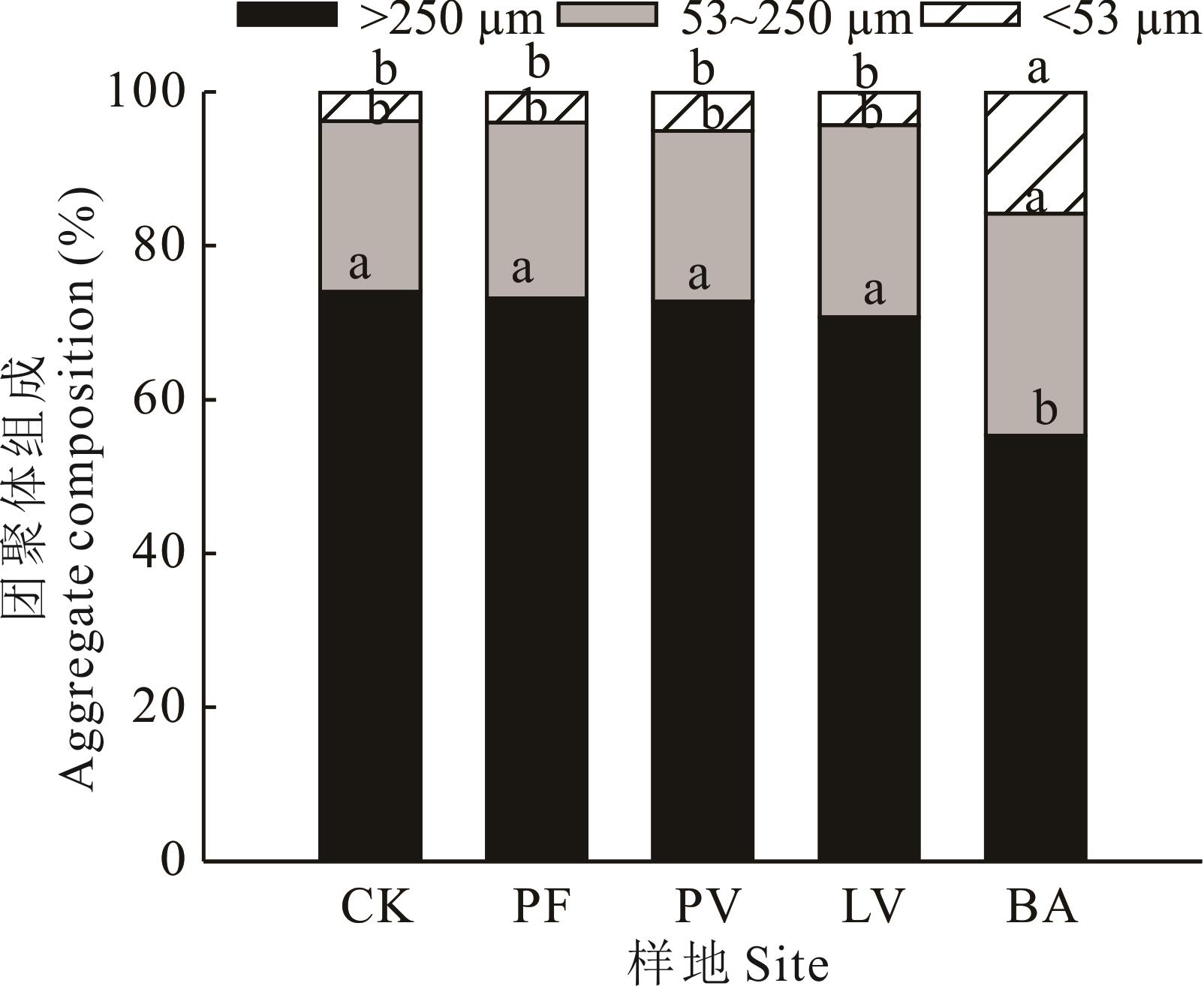
Fig. 2 Soil aggregate composition of grass micro-patches
样地 Site | 平均重量直径Mean weight diameter, MWD | 几何平均直径Geometric mean diameter,GMD |
|---|---|---|
| CK | 0.87±0.00a | 0.82±0.01a |
| PF | 0.86±0.01a | 0.81±0.01a |
| PV | 0.85±0.01a | 0.80±0.00a |
| LV | 0.83±0.01a | 0.79±0.01a |
| BA | 0.67±0.05b | 0.63±0.03b |
Table 3 Soil aggregates stability of grassland micro-patches (mm)
样地 Site | 平均重量直径Mean weight diameter, MWD | 几何平均直径Geometric mean diameter,GMD |
|---|---|---|
| CK | 0.87±0.00a | 0.82±0.01a |
| PF | 0.86±0.01a | 0.81±0.01a |
| PV | 0.85±0.01a | 0.80±0.00a |
| LV | 0.83±0.01a | 0.79±0.01a |
| BA | 0.67±0.05b | 0.63±0.03b |

Fig. 3 Soil organic carbon and total nitrogen content in different aggregate size of grassland micro-patches
样地 Site | 团聚体碳贡献率Percentage of soil C in each aggregate size (%) | 碳氮比 C∶N | ||||
|---|---|---|---|---|---|---|
| >250 μm | 53~250 μm | <53 μm | >250 μm | 53~250 μm | <53 μm | |
| CK | 66.84±3.42a | 16.31±1.44bc | 3.37±0.65b | 17.21±2.36b | 14.95±2.02a | 12.24±1.30a |
| PF | 66.61±3.58a | 13.30±1.49bc | 2.63±0.50b | 21.50±0.80a | 12.36±1.26ab | 9.26±0.25b |
| PV | 70.22±7.23a | 12.00±0.56c | 3.36±0.38b | 17.52±1.36b | 9.82±0.42bc | 8.29±0.74bc |
| LV | 66.19±10.98a | 16.74±3.15b | 3.14±0.55b | 12.58±2.79c | 9.14±1.45c | 8.02±1.86bc |
| BA | 51.48±4.45b | 24.47±2.66a | 13.12±1.33a | 9.10±0.77c | 9.01±0.86c | 6.19±0.67c |
Table 4 Percentage of soil C and C∶N in each aggregate size of grassland micro-patches
样地 Site | 团聚体碳贡献率Percentage of soil C in each aggregate size (%) | 碳氮比 C∶N | ||||
|---|---|---|---|---|---|---|
| >250 μm | 53~250 μm | <53 μm | >250 μm | 53~250 μm | <53 μm | |
| CK | 66.84±3.42a | 16.31±1.44bc | 3.37±0.65b | 17.21±2.36b | 14.95±2.02a | 12.24±1.30a |
| PF | 66.61±3.58a | 13.30±1.49bc | 2.63±0.50b | 21.50±0.80a | 12.36±1.26ab | 9.26±0.25b |
| PV | 70.22±7.23a | 12.00±0.56c | 3.36±0.38b | 17.52±1.36b | 9.82±0.42bc | 8.29±0.74bc |
| LV | 66.19±10.98a | 16.74±3.15b | 3.14±0.55b | 12.58±2.79c | 9.14±1.45c | 8.02±1.86bc |
| BA | 51.48±4.45b | 24.47±2.66a | 13.12±1.33a | 9.10±0.77c | 9.01±0.86c | 6.19±0.67c |
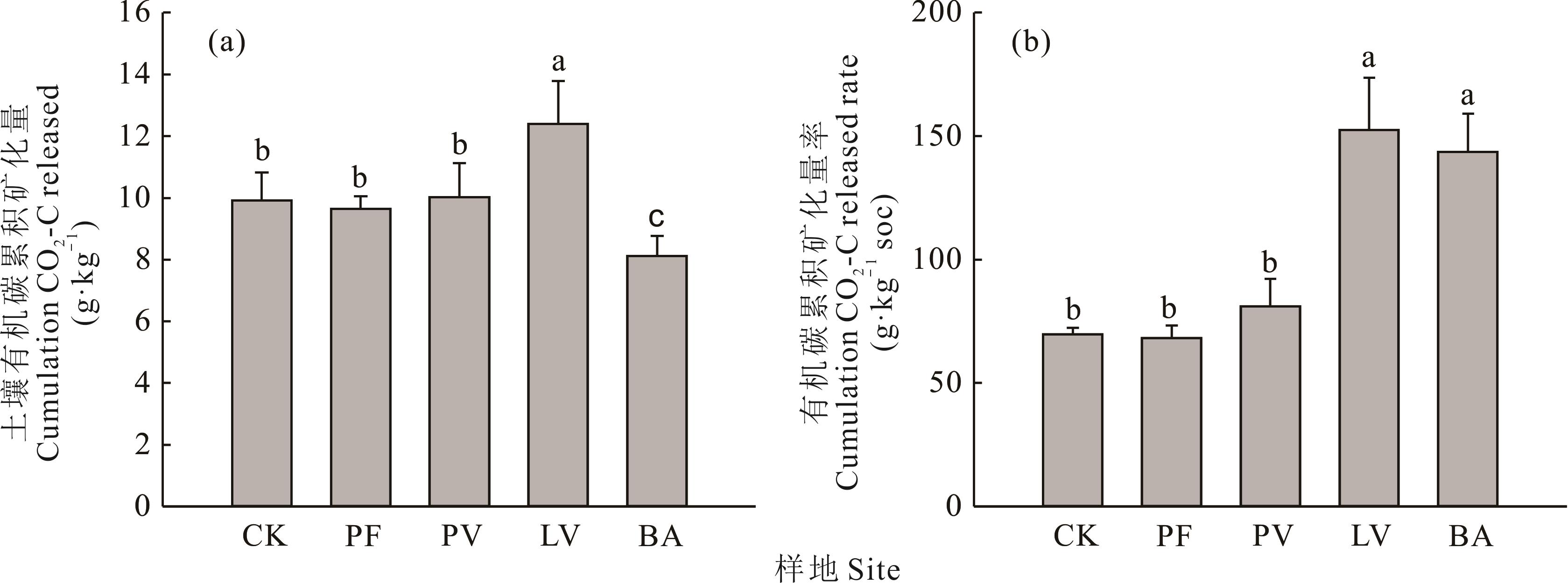
Fig. 4 Cumulative CO2-C released and their ratios to SOC in grassland micro-patches
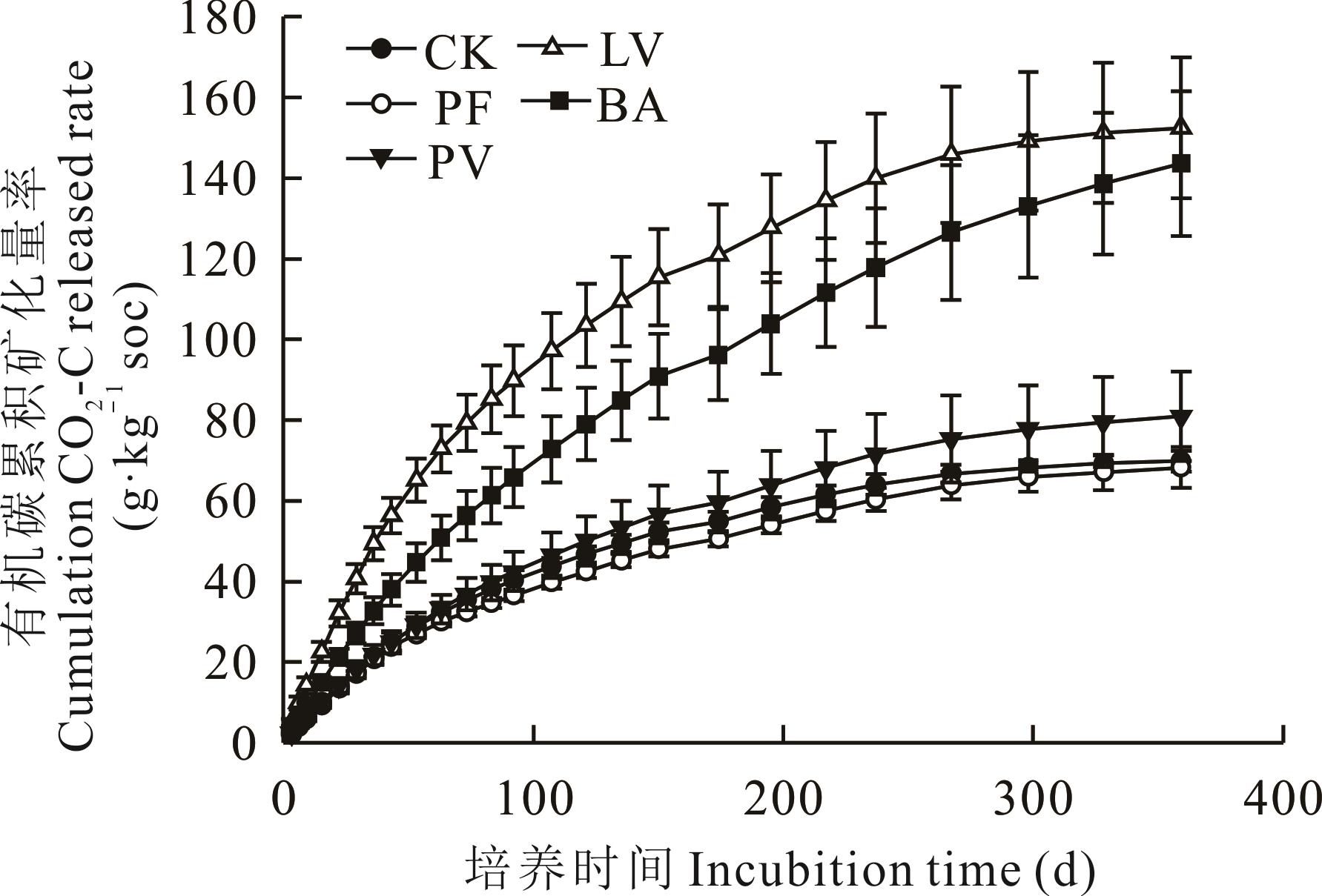
Fig. 5 Temporal dynamics of cumulative CO2-C released ratios to SOC of grassland micro-patches
项目 Item | 有机碳累积矿化量 Cumulation CO2-C released | 有机碳累积矿化量率 Cumulation CO2-C released rate |
|---|---|---|
| 大团聚体含量Macro content | 0.509* | -0.564** |
| 微团聚体含量Micro content | -0.325 | 0.480* |
| 粘粉粒团聚体含量S&C content | -0.563** | 0.536* |
| 平均重量直径Mean weight diameter (MWD) | 0.516* | -0.565** |
| 几何平均直径Geometric mean diameter (GMD) | 0.527* | -0.577** |
| 大团聚体碳含量Carbon content in macro | 0.137 | -0.873** |
| 微团聚体碳含量Carbon content in micro | -0.143 | -0.703** |
| 粘粉粒团聚体碳含量Carbon content in S&C | -0.679** | 0.171 |
| 大团聚体碳贡献率Percentage of soil C in macro | 0.394 | -0.345 |
| 微团聚体碳贡献率Percentage of soil C in micro | -0.404 | 0.605** |
| 粘粉粒团聚体碳贡献率Percentage of soil C in S&C | -0.549* | 0.554* |
| 大团聚体碳氮比C∶N with macro | 0.036 | -0.799** |
| 微团聚体碳氮比C∶N with micro | -0.047 | -0.606** |
| 粘粉粒团聚体碳氮比C∶N with S&C | 0.195 | -0.599** |
| 有机碳含量Soil organic carbon content | 0.083 | -0.916** |
Table 5 Correlation analysis of grassland micro-patches aggregates with cumulative mineralization and its rate
项目 Item | 有机碳累积矿化量 Cumulation CO2-C released | 有机碳累积矿化量率 Cumulation CO2-C released rate |
|---|---|---|
| 大团聚体含量Macro content | 0.509* | -0.564** |
| 微团聚体含量Micro content | -0.325 | 0.480* |
| 粘粉粒团聚体含量S&C content | -0.563** | 0.536* |
| 平均重量直径Mean weight diameter (MWD) | 0.516* | -0.565** |
| 几何平均直径Geometric mean diameter (GMD) | 0.527* | -0.577** |
| 大团聚体碳含量Carbon content in macro | 0.137 | -0.873** |
| 微团聚体碳含量Carbon content in micro | -0.143 | -0.703** |
| 粘粉粒团聚体碳含量Carbon content in S&C | -0.679** | 0.171 |
| 大团聚体碳贡献率Percentage of soil C in macro | 0.394 | -0.345 |
| 微团聚体碳贡献率Percentage of soil C in micro | -0.404 | 0.605** |
| 粘粉粒团聚体碳贡献率Percentage of soil C in S&C | -0.549* | 0.554* |
| 大团聚体碳氮比C∶N with macro | 0.036 | -0.799** |
| 微团聚体碳氮比C∶N with micro | -0.047 | -0.606** |
| 粘粉粒团聚体碳氮比C∶N with S&C | 0.195 | -0.599** |
| 有机碳含量Soil organic carbon content | 0.083 | -0.916** |
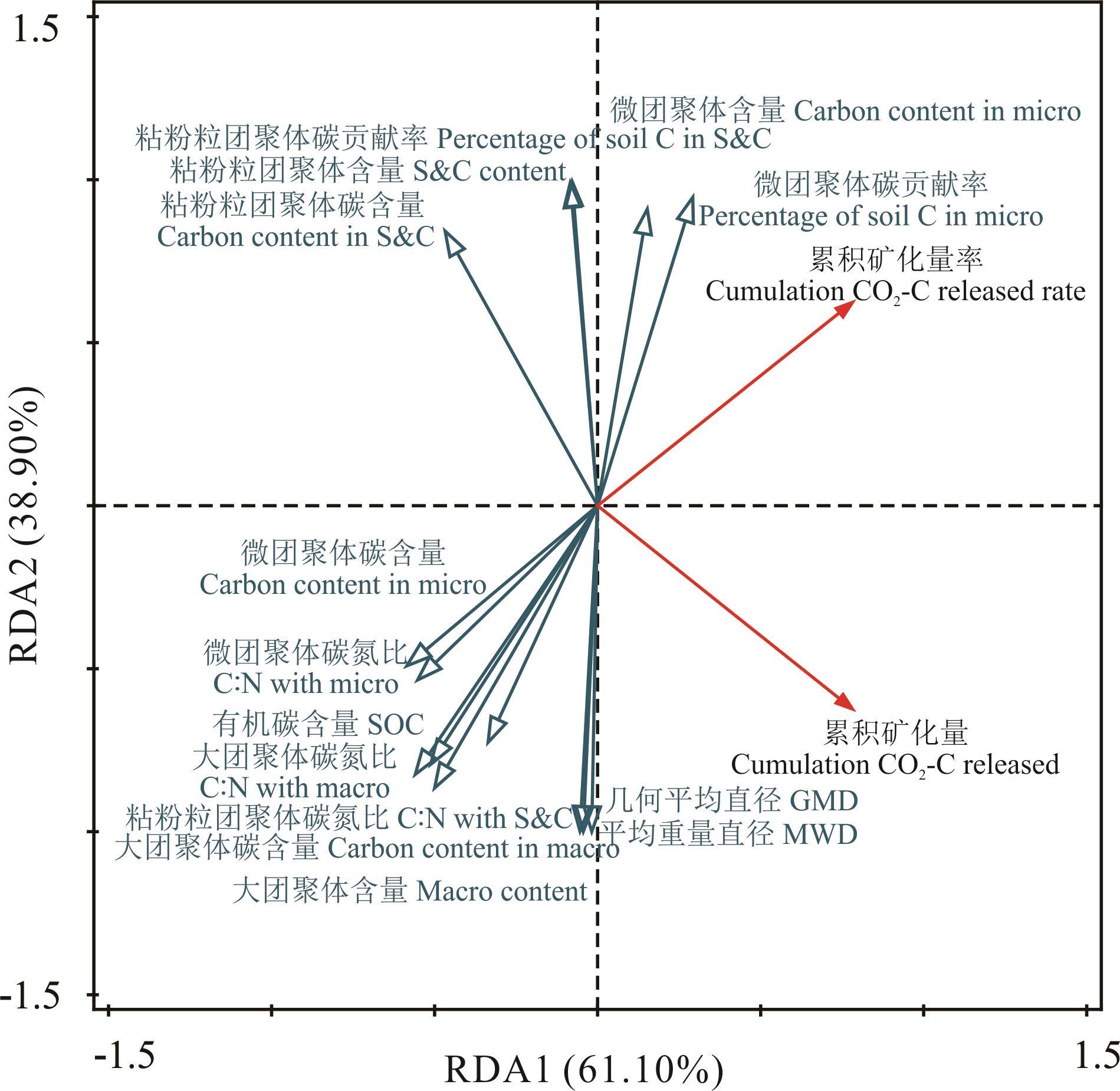
Fig.6 RDA analysis of grassland micro-patches aggregates with cumulative mineralization and its rate
| [1] | Smith P. Soils as carbon sinks: The global context. Soil Use and Management, 2004, 20(2): 25-36. |
| [2] | Schlesinger W H, Andrews J A. Soil respiration and the global carbon cycle. Biogeochemistry, 2000, 48(1): 7-20. |
| [3] | He Y, Trumbore S E, Torn M S, et al. Radiocarbon constraints imply reduced carbon uptake by soils during the 21st century. Science, 2016, 353(6306): 1419-1424. |
| [4] | Jia J, Yu D P, Zhou W M, et al. Variations of soil aggregates and soil organic carbon mineralization across forest types on the northern slope of Changbai Mountain. Acta Ecologica Sinica, 2015, 35(2): 15-23. |
| [5] | Christensen B T. Physical fractionation of soil and structural and functional complexity in organic matter turnover. European Journal of Soil Science, 2001, 52(3): 345-353. |
| [6] | Rivera J I, Bonilla C A. Predicting soil aggregate stability using readily available soil properties and machine learning techniques. Catena, 2020, 187(2): 104-111. |
| [7] | Jiang L M, Bai G F, Lv G H, et al. Effects of different management modes on soil aggregate stability and physicochemical properties of grassland in arid area. Journal of Agricultural Research in Arid Areas, 2018, 36(4): 15-21, 39. |
| 蒋腊梅, 白桂芬, 吕光辉, 等. 不同管理模式对干旱区草原土壤团聚体稳定性及其理化性质的影响. 干旱地区农业研究, 2018, 36(4): 15-21, 39. | |
| [8] | Wang J Y, Zhang F H. Distribution of soil aggregates and aggregate-associated organic carbon from typical halophyte community in arid region. Acta Ecologica Sinica, 2016, 36(3): 600-607. |
| 王静娅, 张凤华. 干旱区典型盐生植物群落土壤团聚体组成及有机碳分布. 生态学报, 2016, 36(3): 600-607. | |
| [9] | Six J, Bossuyt H, Degryze S, et al. A history of research on the link between (micro) aggregates, soil biota, and soil organic matter dynamics. Soil & Tillage Research, 2004, 79(1): 7-31. |
| [10] | Li J Y, Yuan X L, Ge L, et al. Rhizosphere effects promote soil aggregate stability and associated organic carbon sequestration in rocky areas of desertification. Agriculture, Ecosystems and Environment, 2020, 304(5): 28-36. |
| [11] | Puget P, Chenu C, Balesdent J. Dynamics of soil organic matter associated with particle-size fractions of water-stable aggregates. European Journal of Soil Science, 2000, 51(4): 595-605. |
| [12] | Jastrow J D, Boutton T W, Miller R M. Carbon dynamics of aggregate-associated organic matter estimated by carbon-13 natural abundance. Soil Science Society of America Journal, 1996, 60(3): 801-807. |
| [13] | Song L P, Luo Z Z, Li L L, et al. Effect of lucerne-crop rotations on soil physical properties in the semi-arid Loess Plateau of Central Gansu. Acta Prataculturae Sinica, 2015, 24(7): 12-20. |
| 宋丽萍, 罗珠珠, 李玲玲, 等. 陇中黄土高原半干旱区苜蓿-作物轮作对土壤物理性质的影响. 草业学报, 2015, 24(7): 12-20. | |
| [14] | Wang R Z, Chen Y, Li T, et al. Root distribution characteristics of Vetiveria zizanioides and Digitaria sanguinalis and their effects on the anti-erodibility of purple soil in slopelands. Acta Prataculturae Sinica, 2017, 26(7): 45-54. |
| 王润泽, 谌芸, 李铁, 等. 香根草和马唐的根系特征及对坡地紫色土抗侵蚀性的影响. 草业学报, 2017, 26(7): 45-54. | |
| [15] | Luo N, Shu Y G, Chen M J, et al. Soil structure and fractal characteristics of different land categories in a karst rocky desertification area. Acta Prataculturae Sinica, 2020, 29(7): 11-22. |
| 罗楠, 舒英格, 陈梦军, 等. 喀斯特山区不同草地土壤结构及分形特征. 草业学报, 2020, 29(7): 11-22. | |
| [16] | Luo Y J, Zhao G, Gao M, et al. Organic carbon distribution in aggregates and soil organic carbon mineralization in different vegetation covering. Journal of Soil and Water Conservation, 2010, 24(6): 117-122. |
| 罗友进, 赵光, 高明, 等. 不同植被覆盖对土壤有机碳矿化及团聚体碳分布的影响. 水土保持学报, 2010, 24(6): 117-122. | |
| [17] | Amelung W, Zech W. Organic species in ped surface and core fractions along a climosequence in the prairie, North America. Geoderma, 1996, 74(3/4): 193-206. |
| [18] | Song R, Liu L, Ma L Y, et al. Effect of crop root exudates on the size and stability of soil aggregate. Journal of Nanjing Agricultural University, 2009, 32(3): 93-97. |
| 宋日, 刘利, 马丽艳, 等. 作物根系分泌物对土壤团聚体大小及其稳定性的影响. 南京农业大学学报, 2009, 32(3): 93-97. | |
| [19] | Fattet M, Fu Y, Ghestem M, et al. Effects of vegetation type on soil resistance to erosion: Relationship between aggregate stability and shear strength. Catena, 2011, 87(1): 60-69. |
| [20] | Gould I J, Quinton J N, Weigelt A, et al. Plant diversity and root traits benefit physical properties key to soil function in grasslands. Ecology Letters, 2016, 19(9): 1140-1149. |
| [21] | Kumar A, Dorodnikov M, Splettstosser T, et al. Effects of maize roots on aggregate stability and enzyme activities in soil. Geoderma, 2017, 306(3): 50-57. |
| [22] | Wang Y. Study on quantity characteristics and species composition of three vegetation patches in alpine meadow on the Northeast Range of Tibet Plateau. Lanzhou: Lanzhou University, 2017. |
| 王莹. 青藏高原东北缘高寒草甸三种植被斑块数量特征及物种构成研究. 兰州: 兰州大学, 2017. | |
| [23] | Zhang W G, Huang W B, Yang Z Y. The study on the relationship between mini-patch and degradation of pasture. Acta Prataculturae Sinica, 2003, 5(3): 44-50. |
| 张卫国, 黄文冰, 杨振宇. 草地微斑块与草地退化关系的研究. 草业学报, 2003, 5(3): 44-50. | |
| [24] | Lin L, Cao G M, Fan B, et al. Effects of grazing on mini-patch and their component characteristics in alpine grassland. Grassland and Turf, 2021, 41(4): 143-153. |
| 林丽, 曹广民, 樊博, 等. 放牧对高寒草地微尺度斑块及其构件特征的影响. 草原与草坪, 2021, 41(4): 143-153. | |
| [25] | Huo J J, Zhu J F, Song M H, et al. Characteristics of vegetation patches in the process of degradation succession in an alpine meadow on Tibet Plateau. Acta Agrestia Sinica, 2022, 30(11): 3113-3118. |
| 霍佳娟, 朱珏妃, 宋明华, 等. 青藏高原高寒草甸退化演替进程中植被斑块特征. 草地学报, 2022, 30(11): 3113-3118. | |
| [26] | Du Y X, Kang Y M, Niu Y B, et al. Soil microflora characteristics under different vegetation patches in a desert steppe of Ningxia, Northwest China. Chinese Journal of Applied Ecology, 2019, 30(9): 3057-3065. |
| 杜雅仙, 康扬眉, 牛玉斌, 等. 宁夏荒漠草原不同植物群落微斑块内土壤微生物区系特征. 应用生态学报, 2019, 30(9): 3057-3065. | |
| [27] | Wu Y N, Luo W T, Huo G W, et al. Micro-scale spatial heterogeneity of vegetation community and soil organic matter under different grazing intensities. Journal of Desert Research, 2012, 32(4): 972-979. |
| 乌云娜, 雒文涛, 霍光伟, 等. 微生境尺度上放牧退化草原群落特征与土壤有机质的空间分异性. 中国沙漠, 2012, 32(4): 972-979. | |
| [28] | Shi M M, Zhang Y C, Zhang D Y, et al. Plant traits and soil properties in pasture mini-patches in an alpine meadow. Acta Prataculturae Sinica, 2015, 24(9): 197-205. |
| 石明明, 张永超, 张典业, 等. 高寒草甸草地微斑块植物特征及其土壤性质的研究. 草业学报, 2015, 24(9): 197-205. | |
| [29] | Wang Y, Niu D, Yuan X B, et al. Dominant plant species alter stoichiometric imbalances between soil microbes and their resources in an alpine grassland: Implications for soil microbial respiration. Geoderma, 2023, 431(3): 116336-116350. |
| [30] | Xu X, Shi Z, Li D J, et al. Soil properties control decomposition of soil organic carbon: Results from data-assimilation analysis. Geoderma, 2016, 262: 235-242. |
| [31] | Cui Y T, Wang C Y, Yao J H, et al. Effects of different screening methods on soil aggregates and soil microbial communities. Chinese Journal of Soil and Fertilizer, 2024, 5(1): 37-42. |
| 崔炎田, 王呈玉, 姚俊红, 等. 不同筛分方式对土壤团聚体及土壤微生物群落的影响. 中国土壤与肥料, 2024, 5(1): 37-42. | |
| [32] | Liu X, Wu H Y, Yang S, et al. Formation of soil aggregates and distribution of soil nutrients in rhizosphere of salt-tolerant trees in coastal polder reclamation. Acta Pedologica Sinica, 2020, 57(5): 1270-1279. |
| 刘星, 吴华勇, 杨升, 等. 海涂围垦区不同耐盐树种根际土壤团聚体形成及养分分布特征. 土壤学报, 2020, 57(5): 1270-1279. | |
| [33] | Wang X Y, Gao X F, Liu H P, et al. Review of analytical methods for aggregate size distribution and water-stability of soil macro-aggregates. Chinese Journal of Water and Soil Conservation, 2011, 9(3): 106-113. |
| 王秀颖, 高晓飞, 刘和平, 等. 土壤水稳性大团聚体测定方法综述. 中国水土保持科学, 2011, 9(3): 106-113. | |
| [34] | Nelson D W, Sommers L E, Sparks D L, et al. Total carbon, organic carbon, and organic matter. Methods of Soil Analysis, 1996, 9: 961-1010. |
| [35] | Bremer D J, Ham J M, Owensby C E, et al. Responses of soil respiration to clipping and grazing in a tallgrass prairie. Journal of Environmental Quality, 1998, 27(6): 1539-1548. |
| [36] | Li Y H, Shahbaz M, Zhu Z K, et al. Oxygen availability determines key regulators in soil organic carbon mineralisation in paddy soils. Soil Biology and Biochemistry, 2021, 153(5): 108-117. |
| [37] | Muhammad N A, Gao J, Wu L, et al. Soil microbial biomass and extracellular enzyme-mediated mineralization potentials of carbon and nitrogen under long-term fertilization (>30 years) in a rice-rice cropping system. Springer Nature Link, 2021, 21(13): 3789-3800. |
| [38] | Beare M H, Hendrix P F, Coleman D C. Water-stable aggregates and organic-matter fractions in conventional-tillage and no-tillage soils. Soil Science Society of America Journal, 1994, 58(3): 777-786. |
| [39] | Dexter A R. Advances in characterization of soil structure. Soil & Tillage Research, 1988, 11(3/4): 199-238. |
| [40] | Yang X M, Wander M M. Temporal changes in dry aggregate size and stability: tillage and crop effects on a silty loam Mollisol in Illinois. Soil & Tillage Research, 1998, 49(3): 173-183. |
| [41] | Qiu L P, Zhang X C, Zhang J A. Distribution of nutrients and enzymes in Loess Plateau soil aggregates after long-term fertilization. Acta Ecologica Sinica, 2006, 26(2): 364-372. |
| 邱莉萍, 张兴昌, 张晋爱. 黄土高原长期培肥土壤团聚体中养分和酶的分布. 生态学报, 2006, 26(2): 364-372. | |
| [42] | Ma R P, An S S, Dang T H, et al. Soil organic carbon and enzymatic activity in aggregates of soil under different plant communities in Hilly-Gully regions of Loess Plateau. Acta Pedologica Sinica, 2014, 51(1): 104-113. |
| 马瑞萍, 安韶山, 党廷辉, 等. 黄土高原不同植物群落土壤团聚体中有机碳和酶活性研究. 土壤学报, 2014, 51(1): 104-113. | |
| [43] | Luo Y J, Wei C F, Li Y, et al. Effects of land use on distribution and protection of organic carbon in soil aggregates in karst rocky desertification area. Acta Ecologica Sinica, 2011, 31(1): 257-266. |
| 罗友进, 魏朝富, 李渝, 等. 土地利用对石漠化地区土壤团聚体有机碳分布及保护的影响. 生态学报, 2011, 31(1): 257-266. | |
| [44] | Su Y Z, Chang X X, He Z B, et al. Changes in vegetative patches and characteristics in soil properties in the valleys of Qilian Mountains. Acta Ecologica Sinica, 2008(1): 212-219. |
| 苏永中, 常学向, 何志斌, 等. 祁连山典型流域谷地植被斑块演变与土壤性状. 生态学报, 2008(1): 212-219. | |
| [45] | Wang Y Q. Study on relationship between the patch density of Ligularia virgaurea and vegetation and soil in alpine meadow. Xining: Qinghai University, 2023. |
| 王玉琴. 黄帚橐吾斑块密度与高寒草甸植被和土壤的关系研究. 西宁: 青海大学, 2023. | |
| [46] | Mao Y L, Yang Y S, Zou S Q, et al. Effects of land use on soil organic carbon in aggregates of Hilly Red soil in Subtropical China. Journal of Mountain Science, 2007, 25(6): 706-713. |
| 毛艳玲, 杨玉盛, 邹双全, 等. 土地利用变化对亚热带山地红壤团聚体有机碳的影响. 山地学报, 2007, 25(6): 706-713. | |
| [47] | Hu N, Ma Z M, Lan J C, et al. Nitrogen fraction distributions and impacts on soil nitrogen mineralization in different vegetation restorations of karst rocky desertification. Environmental Science, 2015, 36(9): 3411-3421. |
| 胡宁, 马志敏, 蓝家程, 等. 石漠化山地植被恢复过程土壤团聚体氮分布及与氮素矿化关系研究. 环境科学, 2015, 36(9): 3411-3421. | |
| [48] | Ma X J, Guo Y J, Zhang J Y, et al. Size distribution of soil aggregates in different grassland desertification categories in Yanchi County, Ningxia. Acta Prataculturae Sinica, 2020, 29(3): 27-37. |
| 马晓静, 郭艳菊, 张嘉玉, 等. 宁夏盐池县沙化草地土壤团聚体分异特征. 草业学报, 2020, 29(3): 27-37. | |
| [49] | Su J, Zhao S W. Comparison of the analysis methods for soil aggregate stability. Journal of Soil and Water Conservation, 2009, 29(5): 114-117. |
| 苏静, 赵世伟. 土壤团聚体稳定性评价方法比较. 水土保持通报, 2009, 29(5): 114-117. | |
| [50] | Huang Z, Tian F P, Liu Y, et al. Effects of different grassland types on particle size distribution and stability of water stable aggregate on the Loess Plateau. Acta Prataculturae Sinica, 2017, 26(11): 216-221. |
| 黄泽, 田福平, 刘玉, 等. 黄土高原不同草地类型对水稳性团聚体粒径分布及稳定性的影响. 草业学报, 2017, 26(11): 216-221. | |
| [51] | Zhang X R, Zhang W Q. Research progress of soil aggregates. Northern Horticulture, 2020, 2(21): 131-137. |
| 张旭冉, 张卫青. 土壤团聚体研究进展. 北方园艺, 2020, 2(21): 131-137. | |
| [52] | Chen S, Sun T. Research of soil aggregate stability in different degradation stages of Songnen grassland. Pratacultural Science, 2017, 34(2): 217-223. |
| 陈帅, 孙涛. 松嫩草地不同退化阶段的土壤团聚体稳定性. 草业科学, 2017, 34(2): 217-223. | |
| [53] | Jiang L M, Yang X D, Yang J J, et al. Effects of different management strategies on soil organic carbon and nitrogen pools in arid areas and their influencing factors. Acta Prataculturae Sinica, 2018, 27(12): 22-33. |
| 蒋腊梅, 杨晓东, 杨建军, 等. 不同管理模式对干旱区草地土壤有机碳氮库的影响及其影响因素探究. 草业学报, 2018, 27(12): 22-33. | |
| [54] | Xu D M, Xu X Z, Wang G H, et al. Variations in soil organic carbon content and distribution during natural restoration succession on the desert steppe in Ningxia. Acta Prataculturae Sinica, 2017, 26(8): 35-42. |
| 许冬梅, 许新忠, 王国会, 等. 宁夏荒漠草原自然恢复演替过程中土壤有机碳及其分布的变化. 草业学报, 2017, 26(8): 35-42. | |
| [55] | Zhang S, Wang L C, Du J, et al. Effects of different crops and straw mulching on soil aggregate and carbon sequestration potential in the dryland, triple cropping systems of Southwest China. Acta Prataculturae Sinica, 2016, 25(1): 98-107. |
| 张赛, 王龙昌, 杜娟, 等. 西南“旱三熟”区不同作物和秸秆覆盖对土壤团聚体及固碳潜力的影响. 草业学报, 2016, 25(1): 98-107. | |
| [56] | Xie J S, Yang Y S, Chen G S, et al. Effects of vegetation restoration on water stability and organic carbon distribution in aggregates of degraded red soil in subtropics of China. Acta Ecologica Sinica, 2008, 28(2): 702-709. |
| 谢锦升, 杨玉盛, 陈光水, 等. 植被恢复对退化红壤团聚体稳定性及碳分布的影响. 生态学报, 2008, 28(2): 702-709. | |
| [57] | Li N, Zhang Y H, Han X Z, et al. Effects of long-term vegetation cover changes on the organic carbon fractions in soil aggregates of mollisols. Chinese Journal of Plant Ecology, 2019, 43(7): 624-634. |
| 李娜, 张一鹤, 韩晓增, 等. 长期不同植被覆盖对黑土团聚体内有机碳组分的影响. 植物生态学报, 2019, 43(7): 624-634. | |
| [58] | Peng C J, Song M H, Zhou C L, et al. Relationship between leaf functional traits of herbaceous plants and soil factors in different coverage gradients of potentilla fruticosa shrub under grazing. Acta Botanica Boreali-Occidentalia Sinica, 2020, 40(5): 870-881. |
| 朋措吉, 宋明华, 周春丽, 等. 放牧影响下不同盖度金露梅灌丛草本植物叶功能性状与土壤因子的关系. 西北植物学报, 2020, 40(5): 870-881. | |
| [59] | Liu Q, Li Y H, Li Z, et al. Characteristics of paddy soil organic carbon mineralization and influencing factors under different water conditions and microbial biomass levels. Environmental Science, 2021, 42(5): 2440-2448. |
| 刘琪, 李宇虹, 李哲, 等. 不同水分条件和微生物生物量水平下水稻土有机碳矿化及其影响因子特征. 环境科学, 2021, 42(5): 2440-2448. | |
| [60] | Wang C T, Long R J, Ding L M. Characteristics of clonal growth of Ligularia virgaurea to different elevation gradient on alpine meadow. Acta Botanica Boreali-Occidentalia Sinica, 2004, 5(10): 1805-1809. |
| 王长庭, 龙瑞军, 丁路明. 高寒草甸不同海拔梯度下多年生黄帚橐吾的克隆生长特征. 西北植物学报, 2004, 5(10): 1805-1809. | |
| [61] | Qi Z C, Chang P J, Li Y S, et al. Effects of grazing intensity on soil aggregates composition, stability, nutrients and C/N in desert shrubland. Arid Zone Research, 2021, 38(1): 87-94. |
| 祁正超, 常佩静, 李永善, 等. 放牧对荒漠灌丛草地土壤团聚体组成及其稳定性的影响. 干旱区研究, 2021, 38(1): 87-94. | |
| [62] | Miao S J, Zhou L R, Qiao Y F, et al. Organic carbon mineralization and carbon contribution in aggregate as affected by long-term fertilization. Acta Pedologica Sinica, 2009, 46(6): 1068-1075. |
| 苗淑杰, 周连仁, 乔云发, 等. 长期施肥对黑土有机碳矿化和团聚体碳分布的影响. 土壤学报, 2009, 46(6): 1068-1075. | |
| [63] | Chen J, Zhou X, Wang J, et al. Grazing exclusion reduced soil respiration but increased its temperature sensitivity in a meadow grassland on the Tibetan Plateau. Ecology and Evolution, 2016, 6(3): 675-687. |
| [1] | Jun-ling CHEN, Sha-sha WANG, Jing YE, Yi LIN, Yi-xiang WANG. Soil carbon mineralization in an orchard with and without interplanted ground cover species and its temperature sensitivity under long-term conditions [J]. Acta Prataculturae Sinica, 2025, 34(9): 53-64. |
| [2] | Xiang-jiao TAN, Kui-cai DONG, Hua ZHANG, Chuan-chuan TANG, Yan YANG. Effects of snow addition on soil phosphorus availability in an alpine meadow of the Tibetan Plateau [J]. Acta Prataculturae Sinica, 2024, 33(7): 205-214. |
| [3] | Shi-jun BAI, Jun-qiao LI, Xin LIU, Bo-wen LYU. Phylogeography of Potentilla anserina distributed across the Qinghai-Tibet Plateau [J]. Acta Prataculturae Sinica, 2024, 33(11): 84-105. |
| [4] | Yang LI, Yi WANG, Guo-dong HAN, Jian SUN, Ya-feng WANG. Soil microbial biomass carbon and nitrogen levels and their controlling factors in alpine grassland, Qinghai-Tibet Plateau [J]. Acta Prataculturae Sinica, 2022, 31(6): 50-60. |
| [5] | Rui WU, Wen-hui LIU, Yong-chao ZHANG, Yan QIN, Xiao-xing WEI, Min-jie LIU. A study of the correlation between seed shattering and agronomic traits of Elymus sibiricus on the Qinghai-Tibetan Plateau [J]. Acta Prataculturae Sinica, 2021, 30(4): 130-139. |
| [6] | LI Chong-yang, FAN Wen-tao, LI Guo-mei, GAO Jing, TANG Zeng, SONG Ren-de. Driving force analysis of changes in grassland coverage on the Qinghai-Tibet Plateau based on NDVI in 2000-2016 [J]. Acta Prataculturae Sinica, 2019, 28(10): 25-32. |
| [7] | HAN Meng-Qi, PAN Zhan-Lei, JIN Yu-Xi, QIN Jie, LI Jiang-Wen, WANG Zhong-Wu, HAN Guo-Dong. Response of soil nitrogen mineralization to different stocking rates on the Stipa breviflora desert steppe [J]. Acta Prataculturae Sinica, 2017, 26(9): 27-35. |
| [8] | BAO Gen-Sheng, LI Chun-Jie. Isolation and identification of endophytes infecting Stipa purpurea, a dominant grass in meadows of the Qinghai-Tibet Plateau [J]. Acta Prataculturae Sinica, 2016, 25(3): 32-42. |
| [9] | YUE Peng-peng,LU Xue-feng,YE Run-rong,ZHOU Yu-bi,YANG Shi-bing,PENG Min. Community characteristics of Stipa purpurea stepp in the Qinghai Lake region [J]. Acta Prataculturae Sinica, 2014, 23(4): 10-10. |
| [10] | CHEN Si-yu, YU Hui, FENG Qi-sheng, LIANG Tian-gang . Dynamic monitoring of vegetation water content based on microwave remote sensing in the Qinghai-Tibetan Plateau region from 2002 to 2010 [J]. Acta Prataculturae Sinica, 2013, 22(5): 1-10. |
| [11] | ZHAO Yu-yu, HUANG De-jun, MAO Zhu-xin, NIE Bin, FU Hua. A study on forage nutritional quality of Elymus nutans from different populations in the Qinghai-Tibet Plateau [J]. Acta Prataculturae Sinica, 2013, 22(1): 38-45. |
| [12] | QI Wei, GUO Shu-qing, CUI Xian-liang, YANG Min, ZHANG Yong-dong, DU Guo-zhen, BU Hai-yan. Variation of seed mass and SLA of 63 plant species in different habitats at various altitudes on the eastern Qinghai-Tibet Plateau [J]. Acta Prataculturae Sinica, 2012, 21(6): 42-50. |
| [13] |
DING Wei, SHANG Yan-xia, SHI Rui, SHI Sheng-bo.
Response of PSⅡ photochemistry efficiency and photosynthetic pigments during exposure of alpine plants Saussurea superba to natural UV-B radiation [J]. Acta Prataculturae Sinica, 2012, 21(3): 198-205. |
| [14] | WANG Zeng-ru, YANG Guo-jing, HE Xiao-bo, YE Bai-sheng . Response of distribution patterns of plant species diversity and biomass to permafrost changes [J]. Acta Prataculturae Sinica, 2012, 21(1): 10-17. |
| [15] | YANG Heng-shan,TAI Ji-cheng, FAN Fu. Effects of sowing methods on the oxidation stability and the chemical bound forms of soil organic carbon in artificial grassland [J]. Acta Prataculturae Sinica, 2011, 20(3): 36-42. |
| Viewed | ||||||
|
Full text |
|
|||||
|
Abstract |
|
|||||
