
ISSN 1004-5759 CN 62-1105/S
Acta Prataculturae Sinica ›› 2026, Vol. 35 ›› Issue (3): 43-51.DOI: 10.11686/cyxb2025177
Previous Articles Next Articles
Yu-qi JIANG1( ), Xin GUO2, Jia-chang JIANG3, Xing-ming LIU3, Chun-yan LIANG4, Hai-yan WEN1, De-cao NIU1, Xu-dong LI1()
Received:2025-05-07
Revised:2025-07-10
Online:2026-03-20
Published:2026-01-19
Contact:
Xu-dong LI
Yu-qi JIANG, Xin GUO, Jia-chang JIANG, Xing-ming LIU, Chun-yan LIANG, Hai-yan WEN, De-cao NIU, Xu-dong LI. Impact of grassland soil carbon saturation on litter decomposition and soil carbon sequestration[J]. Acta Prataculturae Sinica, 2026, 35(3): 43-51.
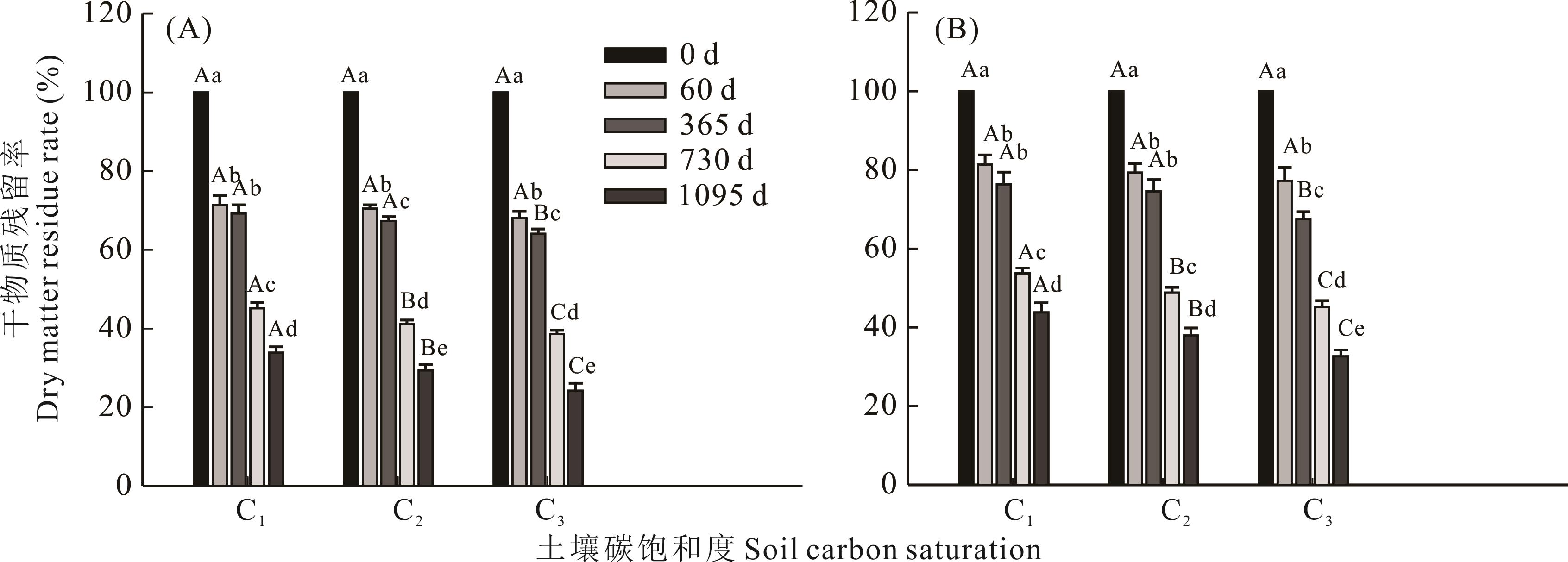
Fig.1 Dry matter residue rates of litter
分解时间 Decomposition time (d) | 凋落物 Litter | 土壤碳饱和度 Soil carbon saturation | Olson 拟合方程 Olson fitting equation | 分解系数 Decomposition coefficient (k) | P值 P value |
|---|---|---|---|---|---|
| 1095 | SL | C1 | y=4.5816e-0.0201t | 0.0201±0.004c | <0.05 |
| C2 | y=4.5816e-0.0287t | 0.0287±0.008b | <0.05 | ||
| C3 | y=4.5816e-0.0319t | 0.0319±0.002a | <0.05 | ||
| SR | C1 | y=4.0804e-0.0191t | 0.0191±0.003c | <0.05 | |
| C2 | y=4.0804e-0.0222t | 0.0222±0.005b | <0.05 | ||
| C3 | y=4.0804e-0.0270t | 0.0270±0.007a | <0.05 |
Table 1 Litter decomposition coefficient
分解时间 Decomposition time (d) | 凋落物 Litter | 土壤碳饱和度 Soil carbon saturation | Olson 拟合方程 Olson fitting equation | 分解系数 Decomposition coefficient (k) | P值 P value |
|---|---|---|---|---|---|
| 1095 | SL | C1 | y=4.5816e-0.0201t | 0.0201±0.004c | <0.05 |
| C2 | y=4.5816e-0.0287t | 0.0287±0.008b | <0.05 | ||
| C3 | y=4.5816e-0.0319t | 0.0319±0.002a | <0.05 | ||
| SR | C1 | y=4.0804e-0.0191t | 0.0191±0.003c | <0.05 | |
| C2 | y=4.0804e-0.0222t | 0.0222±0.005b | <0.05 | ||
| C3 | y=4.0804e-0.0270t | 0.0270±0.007a | <0.05 |

Fig.2 Changes of soil organic carbon (SOC) and total nitrogen (TN) contents under different carbon saturation treatments
土壤碳饱和度 Soil carbon saturation | 凋落物 Litter | 分解时间 Decomposition time (d) | 0.25~2.00 mm | 0.053~0.250 mm | <0.053 mm | |||
|---|---|---|---|---|---|---|---|---|
团聚体质量 Mass of soil aggregates (g) | 土壤有机碳含量Soil organic carbon (g·kg-1) | 团聚体质量 Mass of soil aggregates (g) | 土壤有机碳含量 Soil organic carbon (g·kg-1) | 团聚体质量 Mass of soil aggregates (g) | 土壤有机碳含量 Soil organic carbon (g·kg-1) | |||
| C1 | BV | 0 | 13.62±0.07a | 9.06±0.10b | 20.42±0.21b | 9.03±0.03ab | 14.84±0.11b | 9.63±0.09a |
| SL | 1095 | 13.59±0.06a | 9.61±0.07a | 20.56±0.02b | 9.22±0.07a | 14.67±0.05b | 9.71±0.09a | |
| SR | 1095 | 13.40±0.08a | 9.52±0.27a | 20.33±0.15b | 8.92±0.20b | 15.98±0.47a | 9.74±0.05a | |
| CK | 1095 | 13.57±0.23a | 9.01±0.16b | 21.07±0.25a | 9.04±0.28ab | 15.33±0.24ab | 9.54±0.02a | |
| C2 | BV | 0 | 13.47±0.11a | 5.46±0.13d | 21.36±0.09a | 5.41±0.20c | 15.16±0.27b | 5.42±0.17d |
| SL | 1095 | 13.51±0.12a | 6.61±0.13c | 21.10±0.12a | 5.27±0.30c | 14.67±0.02b | 7.43±0.19b | |
| SR | 1095 | 12.85±0.22b | 6.32±0.25c | 21.24±0.02a | 5.72±0.27c | 15.77±0.10a | 6.77±0.11c | |
| CK | 1095 | 13.81±0.21a | 5.30±0.12d | 20.87±0.12b | 5.22±0.21c | 14.59±0.04b | 5.13±0.21d | |
| C3 | BV | 0 | 11.27±0.09c | 3.31±0.21f | 20.90±0.14b | 2.32±0.12f | 16.88±0.09a | 2.79±0.10e |
| SL | 1095 | 12.57±0.07a | 5.01±0.10e | 21.23±0.13ab | 3.61±0.07d | 15.22±0.09b | 5.35±0.12d | |
| SR | 1095 | 12.17±0.12b | 4.87±0.12e | 21.17±0.21ab | 3.12±0.31e | 15.92±0.15b | 5.01±0.12d | |
| CK | 1095 | 11.11±0.09c | 3.22±0.14f | 21.53±0.16a | 2.27±0.23f | 16.69±0.08a | 2.65±0.09e | |
Table 2 Mass and SOC content of soil aggregates
土壤碳饱和度 Soil carbon saturation | 凋落物 Litter | 分解时间 Decomposition time (d) | 0.25~2.00 mm | 0.053~0.250 mm | <0.053 mm | |||
|---|---|---|---|---|---|---|---|---|
团聚体质量 Mass of soil aggregates (g) | 土壤有机碳含量Soil organic carbon (g·kg-1) | 团聚体质量 Mass of soil aggregates (g) | 土壤有机碳含量 Soil organic carbon (g·kg-1) | 团聚体质量 Mass of soil aggregates (g) | 土壤有机碳含量 Soil organic carbon (g·kg-1) | |||
| C1 | BV | 0 | 13.62±0.07a | 9.06±0.10b | 20.42±0.21b | 9.03±0.03ab | 14.84±0.11b | 9.63±0.09a |
| SL | 1095 | 13.59±0.06a | 9.61±0.07a | 20.56±0.02b | 9.22±0.07a | 14.67±0.05b | 9.71±0.09a | |
| SR | 1095 | 13.40±0.08a | 9.52±0.27a | 20.33±0.15b | 8.92±0.20b | 15.98±0.47a | 9.74±0.05a | |
| CK | 1095 | 13.57±0.23a | 9.01±0.16b | 21.07±0.25a | 9.04±0.28ab | 15.33±0.24ab | 9.54±0.02a | |
| C2 | BV | 0 | 13.47±0.11a | 5.46±0.13d | 21.36±0.09a | 5.41±0.20c | 15.16±0.27b | 5.42±0.17d |
| SL | 1095 | 13.51±0.12a | 6.61±0.13c | 21.10±0.12a | 5.27±0.30c | 14.67±0.02b | 7.43±0.19b | |
| SR | 1095 | 12.85±0.22b | 6.32±0.25c | 21.24±0.02a | 5.72±0.27c | 15.77±0.10a | 6.77±0.11c | |
| CK | 1095 | 13.81±0.21a | 5.30±0.12d | 20.87±0.12b | 5.22±0.21c | 14.59±0.04b | 5.13±0.21d | |
| C3 | BV | 0 | 11.27±0.09c | 3.31±0.21f | 20.90±0.14b | 2.32±0.12f | 16.88±0.09a | 2.79±0.10e |
| SL | 1095 | 12.57±0.07a | 5.01±0.10e | 21.23±0.13ab | 3.61±0.07d | 15.22±0.09b | 5.35±0.12d | |
| SR | 1095 | 12.17±0.12b | 4.87±0.12e | 21.17±0.21ab | 3.12±0.31e | 15.92±0.15b | 5.01±0.12d | |
| CK | 1095 | 11.11±0.09c | 3.22±0.14f | 21.53±0.16a | 2.27±0.23f | 16.69±0.08a | 2.65±0.09e | |
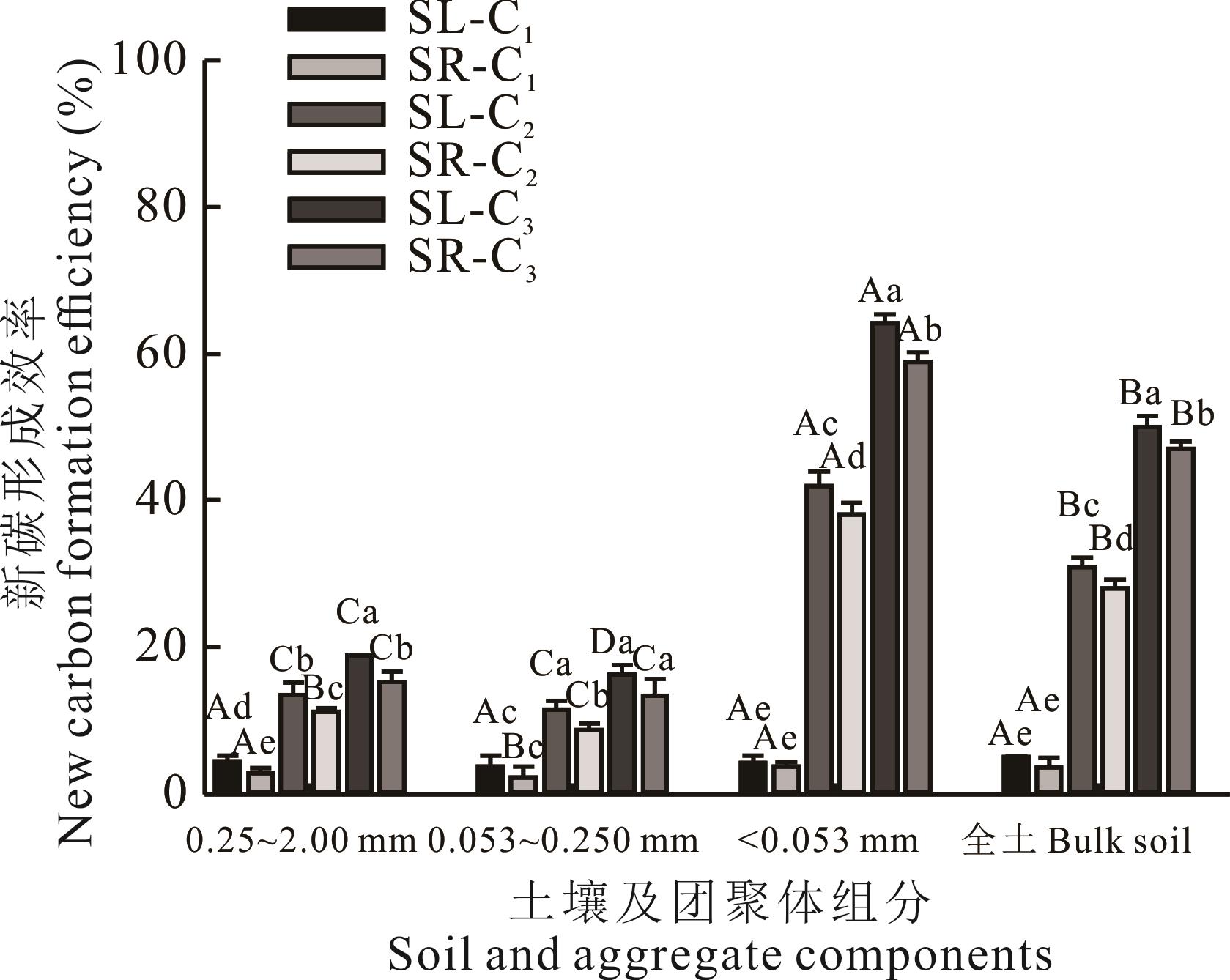
Fig.3 New carbon formation efficiency (NCE) of soil and different soil aggregate components (1095 d)
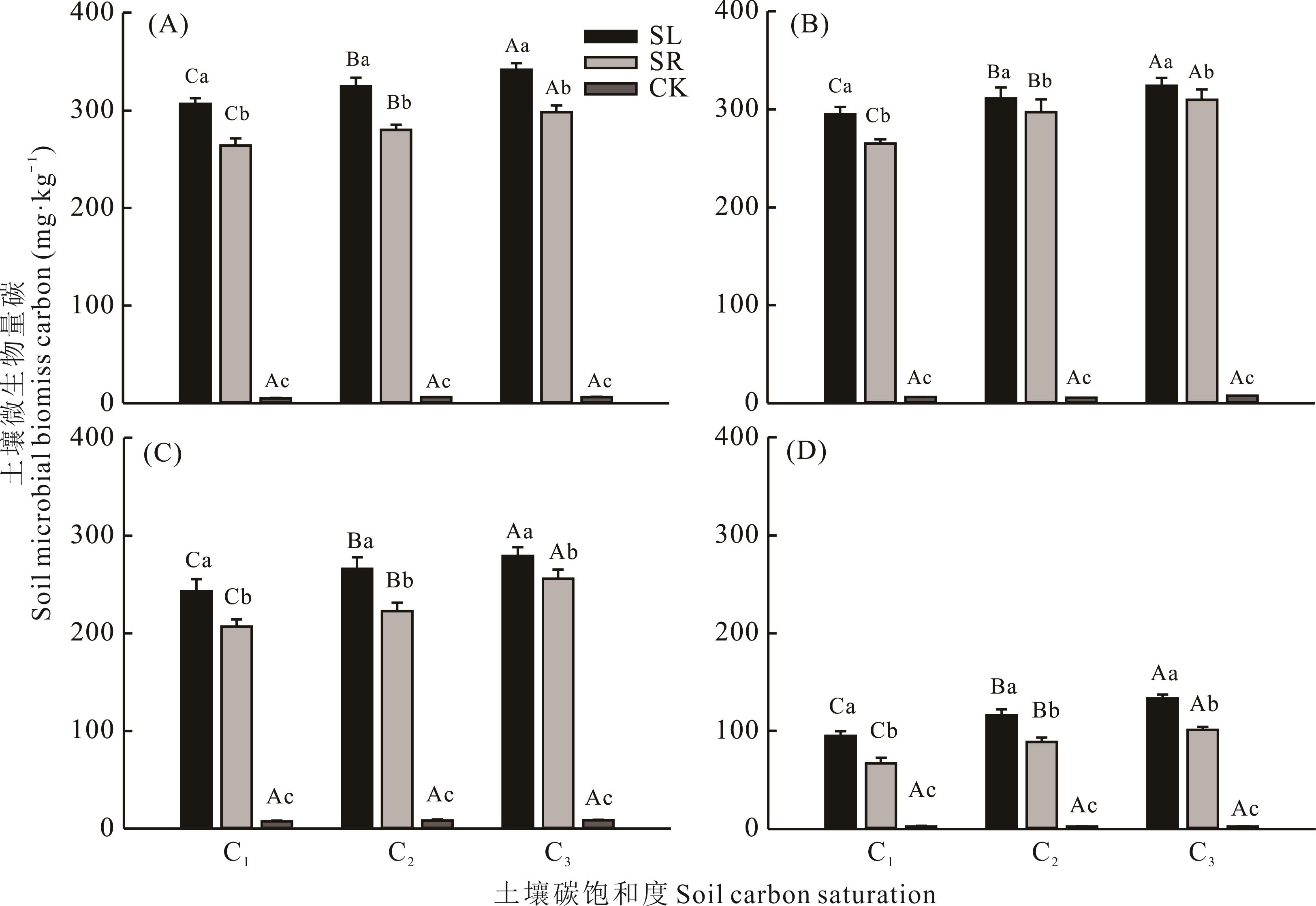
Fig.4 Soil microbial biomass carbon content
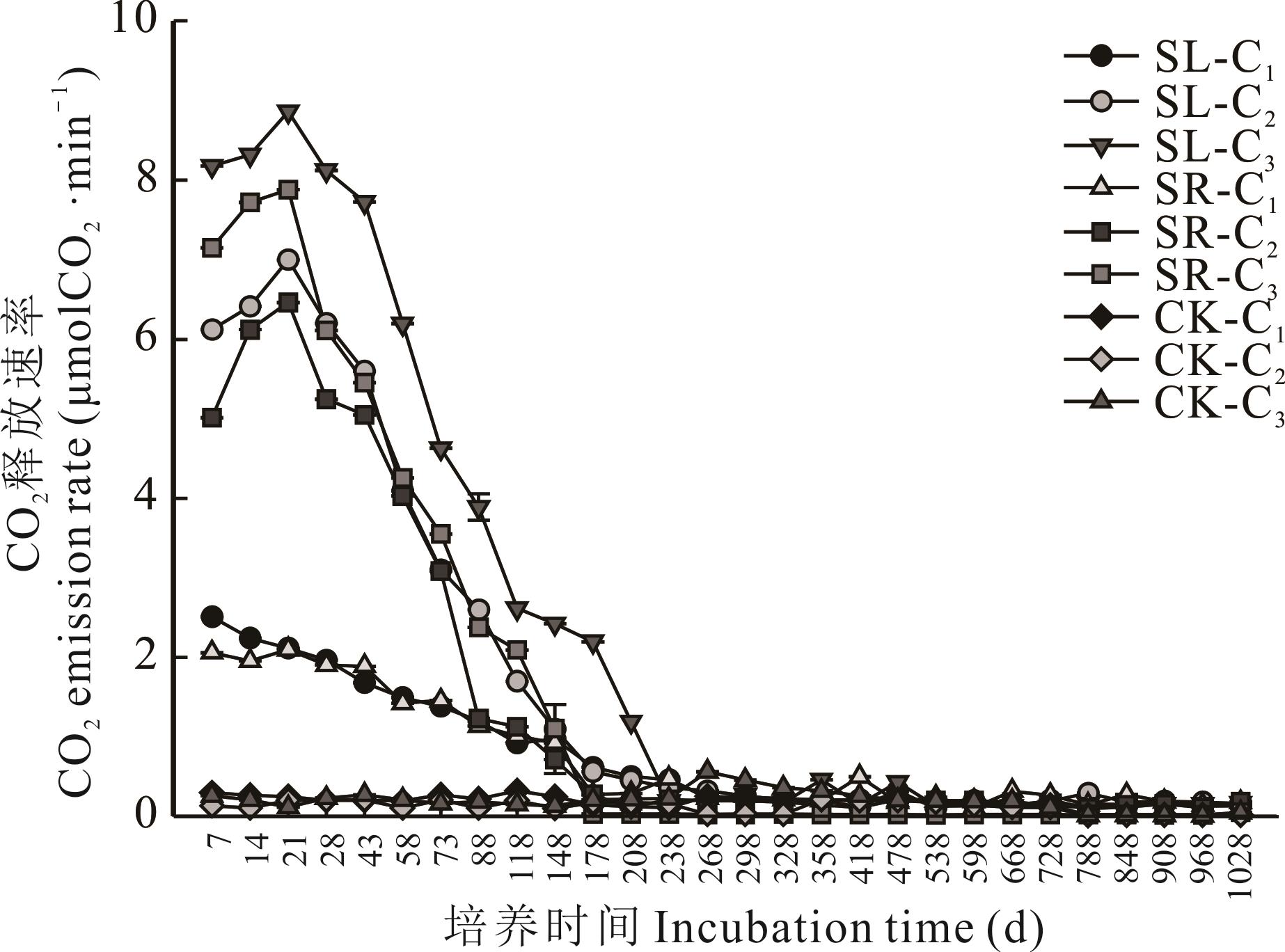
Fig.5 CO2emission rates under different treatments
| [1] | Salifou T, Lamourdia T, Babou A B. Organic carbon fractional distribution and saturation in tropical soils of West African savannas with contrasting mineral composition. Catena, 2020, 190: 104550. |
| [2] | Cotrufo M F, Soong J L, Horton A J M, et al. Formation of soil organic matter via biochemical and physical pathways of litter mass loss. Nature Geoscience, 2015, 8(10): 776-779. |
| [3] | Yu W C, Zhao J N, Li G, et al. Litter decompositions of three dominant plants in the Stipa baicalensis grassland of Inner Mongolia. Acta Agrestia Sinica, 2014, 22(3): 502-510. |
| 于雯超, 赵建宁, 李刚, 等. 内蒙古贝加尔针茅草原3种主要植物凋落物分解特征. 草地学报, 2014, 22(3): 502-510. | |
| [4] | West T O, Six J. Considering the influence of sequestration duration and carbon saturation on estimates of soil carbon capacity. Climatic Change, 2007, 80(1/2): 25-41. |
| [5] | Yang Y, Tian L H, Tian H Q, et al. Effect of climate warming on decomposition of plant litter in alpine meadow pastures in Northwestern Sichuan. Acta Prataculturae Sinica, 2020, 29(10): 35-46. |
| 杨阳, 田莉华, 田浩琦, 等. 增温对川西北高寒草甸草场植物凋落物分解的影响. 草业学报, 2020, 29(10): 35-46. | |
| [6] | Li X Q, Dong W H, Song Y, et al. Soil mesofauna participating in driving home-field advantage differ between litter mass loss and nutrient release. Applied Soil Ecology, 2021, 163: 103909. |
| [7] | Liu D D, Ju W L, Jin X L, et al. Associated soil aggregate nutrients and controlling factors on aggregate stability in semiarid grassland under different grazing prohibition timeframes. Science of the Total Environment, 2021, 777: 146104. |
| [8] | Veloso M G, Angers D A, Chantigny M H, et al. Carbon accumulation and aggregation are mediated by fungi in a subtropical soil under conservation agriculture. Geoderma, 2020, 363: 114159. |
| [9] | Yu J, Miao S J, Qiao Y F. The stabilization mechanism of different types of soil aggregates. Chinese Agricultural Science Bulletin, 2022, 38(14): 89-95. |
| 余洁, 苗淑杰, 乔云发. 不同类型土壤团聚体稳定机制的研究. 中国农学通报, 2022, 38(14): 89-95. | |
| [10] | Six J, Feller C, Denef K. et al. Soil organic matter, biota and aggregation in temperate and tropical soils-effects of no-tillage. Agronomie, 2002, 22(7): 755-775. |
| [11] | Gulde S, Chung H, Amelung W, et al. Soil carbon saturation controls labile and stable carbon pool dynamics. Soil Science Society of America Journal, 2008, 72(3): 605-612. |
| [12] | Lucas A T R, Sandro J G, Jeferson D, et al. Carbon saturation deficit and litter quality drive the stabilization of litter-derived C in mineral-associated organic matter in long-term no-till soil. Catena, 2022, 219: 106590. |
| [13] | Li X D, Fu H, Li X D, et al. Effects of land-use regimes on carbon sequestration in the Loess Plateau, northern China. New Zealand Journal of Agricultural Research, 2008, 51(1): 45-52. |
| [14] | Haddix M L, Paul E A, Cotrufo M F, et al. Dual, differential isotope labeling shows the preferential movement of labile plant constituents into mineral-bonded soil organic matter. Global Change Biology, 2016, 22(6): 2301-2312. |
| [15] | Zhang X R, Zhang W Q, Sai X, et al. Grazing altered soil aggregates, nutrients and enzyme activities in a Stipa kirschnii steppe of Inner Mongolia. Soil and Tillage Research, 2022, 219: 105327. |
| [16] | Singh L, Thakur D, Sharma M K, et al. Dynamics of leaf litter decomposition in the timberline zone of western Himalaya. Acta Oecologica, 2021, 111: 103715. |
| [17] | Pan L, Peng S, Gao W S, et al. Aggregate stability and associated C and N in a silty loam soil as affected by organic material inputs. Journal of Integrative Agriculture, 2015, 14(4): 774-787. |
| [18] | Chung H, Grove J H, Six J. Indications for soil carbon saturation in a temperate agroecosystem. Soil Science Society of America Journal, 2008, 72(4): 1132-1139. |
| [19] | Di J Y, Xu M G, Zhang W J, et al. Combinations of soil properties, carbon inputs and climate control the saturation deficit dynamics of stable soil carbon over 17-year fertilization. Scientific Reports, 2018, 8(1): 12653. |
| [20] | Yue K X, Gong J R, Yu S Y, et al. Effects of litter quality and soil enzyme activity on litter decomposition rate in typical grassland subject to nitrogen addition. Acta Prataculturae Sinica, 2020, 29(6): 71-82. |
| 岳可欣, 龚吉蕊, 于上媛, 等. 氮添加下典型草原凋落物质量和土壤酶活性对凋落物分解速率的影响. 草业学报, 2020, 29(6): 71-82. | |
| [21] | Haddix M L, Gregorich E G, Helgason B L, et al. Climate, carbon content, and soil texture control the independent formation and persistence of particulate and mineral-associated organic matter in soil. Geoderma, 2020, 363: 114160. |
| [22] | Campbell C A, Zentner R P, Bowren K E, et al. Effect of crop rotations and fertilization on soil biochemical properties in a thick Black Chernozem. Canadian Journal of Soil Science, 1991, 71(3): 377-387. |
| [23] | Huang Z S, Yu L F, Fu Y H, et al. Characteristics of carbon sequestration during natural restoration of Maolan Karst forest ecosystems. Chinese Journal of Plant Ecology, 2015, 39(6): 554-564. |
| 黄宗胜, 喻理飞, 符裕红, 等. 茂兰退化喀斯特森林植被自然恢复中生态系统碳吸存特征. 植物生态学报, 2015, 39(6): 554-564. | |
| [24] | Paustian K, Collins H P, Paul E A. Management controls on soil carbon//Paul E A, Paustian K, Elliott E T, et al. Soil organic matter in temperate agroecosystems. Boca Raton, FL.: CRC Press, 1997: 15-49. |
| [25] | Stewart C E, Paustian K, Conant R T, et al. Soil carbon saturation: evaluation and corroboration by long-term incubations. Soil Biology & Biochemistry, 2008, 40: 1741-1750. |
| [26] | Feng W T, Plante A F, Six J. Improving estimates of maximal organic carbon stabilization by fine soil particles. Biogeochemistry, 2013, 112(1/3): 81-93. |
| [27] | Lucas A T, Jeferson D, Sandro G, et al. Carbon sequestration capacity in no-till soil decreases in the long-term due to saturation of fine silt plus clay-size fraction. Geoderma, 2022, 412: 115711. |
| [28] | Liu Y L, Wang P, Wang J K. Formation and stability mechanism of soil aggregates: progress and prospect. Acta Pedologica Sinica, 2023, 60(3): 627-643. |
| 刘亚龙, 王萍, 汪景宽. 土壤团聚体的形成和稳定机制: 研究进展与展望. 土壤学报, 2023, 60(3): 627-643. | |
| [29] | Castellano M J, Mueller K E, Olk D C, et al. Integrating plant litter quality, soil organic matter stabilization, and the carbon saturation concept. Global Change Biology, 2015, 21(9): 3200-3209. |
| [30] | Rodrigo S N, Charles W R, Telmo J C, et al. Carbon saturation and translocation in a no-till soil under organic amendments. Agriculture, Ecosystems and Environment, 2018, 264: 73-84. |
| [31] | Skjemstad J. Role of the soil matrix and minerals in protecting natural organic materials against biological attack. Organic Geochemistry, 2000, 31(7/8): 697-710. |
| [32] | Du Z L, Wu W L, Zhang Q Z, et al. Long-term manure amendments enhance soil aggregation and carbon saturation of stable pools in north China Plain. Journal of Integrative Agriculture, 2014, 13(10): 2276-2285. |
| [1] | Xin-yi LUO, Kai-yang QIU, Tao JIN, Ping-an BAO, Ye-yun HUANG, Yi HE, Ying-zhong XIE. The effects of carbon, nitrogen, and potassium addition on the decomposition characteristics of litter in desert grasslands [J]. Acta Prataculturae Sinica, 2025, 34(2): 41-53. |
| [2] | Bang-yin HE, Jing-hong PEI, Qi-rui YE, Jia-jia HU, Cai-xue ZHENG, Jiang-wen LI. Allelopathic effects of different artificial economic forest litter extracts on Fabaceae and Poaceae species [J]. Acta Prataculturae Sinica, 2024, 33(8): 199-208. |
| [3] | Lin-xi HUANG, Qian CHEN, Xian-yan ZHANG, Shun YAN, Yun YANG, Pei-yao XIN, Qiong WANG. Effect of two kinds of tree litter leaf extracts on soil enzyme activities and eco-enzymatic stoichiometry of Axonopus compressus [J]. Acta Prataculturae Sinica, 2024, 33(4): 35-46. |
| [4] | Qing-hua TIAN, Dan LIU, Xiao-qin LIAO, Xiao-yan SONG, Lei HU, Chang-ting WANG. Effects of nitrogen fertilization on soil aggregate biological binding agents and stability in an alpine grassland [J]. Acta Prataculturae Sinica, 2024, 33(11): 46-57. |
| [5] | Lin-zhi LI, De-gang ZHANG, Yuan MA, Zhu-zhu LUO, Dong LIN, Long HAI, Lan-ge BAI. Ecological stoichiometry characteristics of soil aggregates in alpine meadows with differing degrees of degradation [J]. Acta Prataculturae Sinica, 2023, 32(8): 48-60. |
| [6] | Xin GUO, Huan LUO, Xue-mei XU, Ai-xia MA, Zhen-yan SHANG, Tian-hu HAN, De-cao NIU, Hai-yan WEN, Xu-dong LI. Effects of litter decomposition with different qualities on soil organic carbon content and its stability in grassland on the Loess Plateau [J]. Acta Prataculturae Sinica, 2023, 32(5): 83-93. |
| [7] | Yuan-yuan JIN, Zhen-jiang CHEN, Tian WANG, Chun-jie LI. Effects of Epichloë endophyte and field management practices on the abundance and diversity of the soil fungal community [J]. Acta Prataculturae Sinica, 2023, 32(4): 142-152. |
| [8] | Ao JIANG, Lu-huai JING, Tserang-donko MIPAM, Li-ming TIAN. Progress in research on the effects of grazing on grassland litter decomposition [J]. Acta Prataculturae Sinica, 2023, 32(4): 208-220. |
| [9] | Peng-chong DU, Yu-zhen PAN, Shuang-li HOU, Zhi-hui WANG, Hong-yi WANG. Effects of nitrogen and phosphorus addition on litter decomposition in Hulunber steppe [J]. Acta Prataculturae Sinica, 2023, 32(2): 44-53. |
| [10] | Wen-jie LU, Jin-yun QI, Cong WU, Ya-hong JING. Effects of mixed litter with different degrees of decomposition on the decomposition characteristics of semi-arid grassland in northern Shanxi [J]. Acta Prataculturae Sinica, 2023, 32(12): 47-57. |
| [11] | Jia-yu JIANG, Xue LIAN, Xi-ming TANG, Ren-tao LIU, An-ning ZHANG. The arthropod community structure in Reaumuria soongorica litter at the early stage of its decomposition in arid and semi-arid regions [J]. Acta Prataculturae Sinica, 2022, 31(5): 156-168. |
| [12] | Wen-ming MA, Chao-wen LIU, Qing-ping ZHOU, Zhuo-ma DENGzeng, Si-hong TANG, Diliyaer·mohetaer, Chen HOU. Effects of shrub encroachment on soil aggregate ecological stoichiometry and enzyme activity in alpine grassland [J]. Acta Prataculturae Sinica, 2022, 31(1): 57-68. |
| [13] | Mei-ling SONG, Yu-qin WANG, Hong-sheng WANG, Gen-sheng Bao. Effect of Epichloë endophyte on the litter decomposition of Stipa purpurea in alpine grassland [J]. Acta Prataculturae Sinica, 2021, 30(9): 150-158. |
| [14] | WAN Fang, MENG Zhong-ju, DANG Xiao-hong, WANG Rui-dong, ZHANG Hui-min. C, N and P ecological stoichiometry characteristics of a Stipa species plant-soil system subject to grazing exclusion in a desert steppe [J]. Acta Prataculturae Sinica, 2020, 29(9): 49-55. |
| [15] | SUN Shi-xian, DING Yong, LI Xia-zi, WU Xin-hong, YAN Zhi-jian, YIN Qiang, LI Jin-zhuo. Effects of seasonal regulation of grazing intensity on soil erosion in desert steppe grassland [J]. Acta Prataculturae Sinica, 2020, 29(7): 23-29. |
| Viewed | ||||||
|
Full text |
|
|||||
|
Abstract |
|
|||||
