
ISSN 1004-5759 CN 62-1105/S
Acta Prataculturae Sinica ›› 2026, Vol. 35 ›› Issue (7): 105-116.DOI: 10.11686/cyxb2025277
Jing SUN1( ), Yan-liang SUN1, Dong-jie XIA1, Kong-qin WEI1, Kai-xin YANG1, Xiao-qing SUI2, Qian-bing ZHANG1()
Received:2025-07-03
Revised:2025-09-18
Online:2026-07-20
Published:2026-05-21
Contact:
Qian-bing ZHANG
Jing SUN, Yan-liang SUN, Dong-jie XIA, Kong-qin WEI, Kai-xin YANG, Xiao-qing SUI, Qian-bing ZHANG. Effects of nitrogen-phosphorus and water coupling on soil nutrients and the photosynthetic characteristics and production performance of Bromus inermis[J]. Acta Prataculturae Sinica, 2026, 35(7): 105-116.
处理 Treatment | 净光合速率 Net photosynthetic rate (Pn, μmol CO2·m-2·s-1) | 蒸腾速率 Transpiration rate (Tr, mmol H2O·m-2·s-1) | 光能利用效率 Light use efficiency (LUE, mmol·mol-1) | 叶片瞬时水分利用效率 Leaf instantaneous water use efficiency (WUEi, μmol·mmol-1) |
|---|---|---|---|---|
| W1F0 | 17.06±0.51Bb | 6.50±0.44Aa | 0.0131±0.0005Bb | 2.63±0.11Aa |
| W2F0 | 18.68±0.37Ba | 6.42±0.75Aa | 0.0144±0.0005Ba | 2.93±0.28Aa |
| W3F0 | 19.30±0.32Ba | 6.42±0.95Aa | 0.0149±0.0002Ba | 3.06±0.52Aa |
| W1F1 | 18.28±0.42Ab | 6.26±0.57Aa | 0.0141±0.0005Ab | 2.93±0.21Aa |
| W2F1 | 20.36±0.41Aa | 6.30±0.39Aa | 0.0156±0.0004Aa | 3.24±0.21Aa |
| W3F1 | 20.68±0.09Aa | 6.07±0.81Aa | 0.0157±0.0001Aa | 3.45±0.42Aa |
| W1F2 | 18.03±0.50Ab | 6.65±0.73Aa | 0.0140±0.0005Ab | 2.74±0.37Ab |
| W2F2 | 20.21±0.43Aa | 5.94±0.61Aa | 0.0155±0.0003Aa | 3.43±0.34Aa |
| W3F2 | 20.44±0.18Aa | 6.03±0.23Aa | 0.0157±0.0002Aa | 3.39±0.10Aa |
| W | <0.001 | 0.563 | <0.001 | 0.005 |
| F | <0.001 | 0.638 | <0.001 | 0.063 |
| W×F | 0.726 | 0.839 | 0.946 | 0.807 |
Table 1 Photosynthetic performance of B. inermis under different water and fertilizer treatments
处理 Treatment | 净光合速率 Net photosynthetic rate (Pn, μmol CO2·m-2·s-1) | 蒸腾速率 Transpiration rate (Tr, mmol H2O·m-2·s-1) | 光能利用效率 Light use efficiency (LUE, mmol·mol-1) | 叶片瞬时水分利用效率 Leaf instantaneous water use efficiency (WUEi, μmol·mmol-1) |
|---|---|---|---|---|
| W1F0 | 17.06±0.51Bb | 6.50±0.44Aa | 0.0131±0.0005Bb | 2.63±0.11Aa |
| W2F0 | 18.68±0.37Ba | 6.42±0.75Aa | 0.0144±0.0005Ba | 2.93±0.28Aa |
| W3F0 | 19.30±0.32Ba | 6.42±0.95Aa | 0.0149±0.0002Ba | 3.06±0.52Aa |
| W1F1 | 18.28±0.42Ab | 6.26±0.57Aa | 0.0141±0.0005Ab | 2.93±0.21Aa |
| W2F1 | 20.36±0.41Aa | 6.30±0.39Aa | 0.0156±0.0004Aa | 3.24±0.21Aa |
| W3F1 | 20.68±0.09Aa | 6.07±0.81Aa | 0.0157±0.0001Aa | 3.45±0.42Aa |
| W1F2 | 18.03±0.50Ab | 6.65±0.73Aa | 0.0140±0.0005Ab | 2.74±0.37Ab |
| W2F2 | 20.21±0.43Aa | 5.94±0.61Aa | 0.0155±0.0003Aa | 3.43±0.34Aa |
| W3F2 | 20.44±0.18Aa | 6.03±0.23Aa | 0.0157±0.0002Aa | 3.39±0.10Aa |
| W | <0.001 | 0.563 | <0.001 | 0.005 |
| F | <0.001 | 0.638 | <0.001 | 0.063 |
| W×F | 0.726 | 0.839 | 0.946 | 0.807 |
处理 Treatment | 叶绿素a Chlorophyll a (Chla) | 叶绿素b Chlorophyll b (Chlb) | 类胡萝卜素 Carotenoids (Car) | 总叶绿素 Total chlorophyll (TChl) |
|---|---|---|---|---|
| W1F0 | 0.931±0.059Aa | 0.827±0.072Aa | 0.503±0.042Aa | 1.758±0.108Aa |
| W2F0 | 0.955±0.099Ba | 0.833±0.083Ba | 0.540±0.047Aa | 1.788±0.166Ca |
| W3F0 | 1.026±0.030Ba | 0.856±0.041Ba | 0.491±0.091Aa | 1.882±0.071Ba |
| W1F1 | 0.947±0.004Ab | 0.811±0.070Ab | 0.508±0.068Aa | 1.758±0.071Ab |
| W2F1 | 1.142±0.053Aa | 1.034±0.056Aa | 0.507±0.076Aa | 2.176±0.108Aa |
| W3F1 | 1.088±0.079ABa | 0.940±0.023Ba | 0.536±0.060Aa | 2.029±0.080Ba |
| W1F2 | 0.947±0.025Ab | 0.852±0.062Ab | 0.444±0.046Aa | 1.798±0.059Ac |
| W2F2 | 1.088±0.030Aa | 0.911±0.059Bb | 0.528±0.029Aa | 1.999±0.084Bb |
| W3F2 | 1.173±0.029Aa | 1.090±0.060Aa | 0.500±0.094Aa | 2.263±0.075Aa |
| W | 0.002 | 0.001 | 0.460 | <0.001 |
| F | <0.001 | 0.004 | 0.692 | <0.001 |
| W×F | 0.043 | 0.006 | 0.731 | 0.005 |
Table 2 Photosynthetic pigments of B. inermis under different water and fertilizer treatments (mg·g-1)
处理 Treatment | 叶绿素a Chlorophyll a (Chla) | 叶绿素b Chlorophyll b (Chlb) | 类胡萝卜素 Carotenoids (Car) | 总叶绿素 Total chlorophyll (TChl) |
|---|---|---|---|---|
| W1F0 | 0.931±0.059Aa | 0.827±0.072Aa | 0.503±0.042Aa | 1.758±0.108Aa |
| W2F0 | 0.955±0.099Ba | 0.833±0.083Ba | 0.540±0.047Aa | 1.788±0.166Ca |
| W3F0 | 1.026±0.030Ba | 0.856±0.041Ba | 0.491±0.091Aa | 1.882±0.071Ba |
| W1F1 | 0.947±0.004Ab | 0.811±0.070Ab | 0.508±0.068Aa | 1.758±0.071Ab |
| W2F1 | 1.142±0.053Aa | 1.034±0.056Aa | 0.507±0.076Aa | 2.176±0.108Aa |
| W3F1 | 1.088±0.079ABa | 0.940±0.023Ba | 0.536±0.060Aa | 2.029±0.080Ba |
| W1F2 | 0.947±0.025Ab | 0.852±0.062Ab | 0.444±0.046Aa | 1.798±0.059Ac |
| W2F2 | 1.088±0.030Aa | 0.911±0.059Bb | 0.528±0.029Aa | 1.999±0.084Bb |
| W3F2 | 1.173±0.029Aa | 1.090±0.060Aa | 0.500±0.094Aa | 2.263±0.075Aa |
| W | 0.002 | 0.001 | 0.460 | <0.001 |
| F | <0.001 | 0.004 | 0.692 | <0.001 |
| W×F | 0.043 | 0.006 | 0.731 | 0.005 |
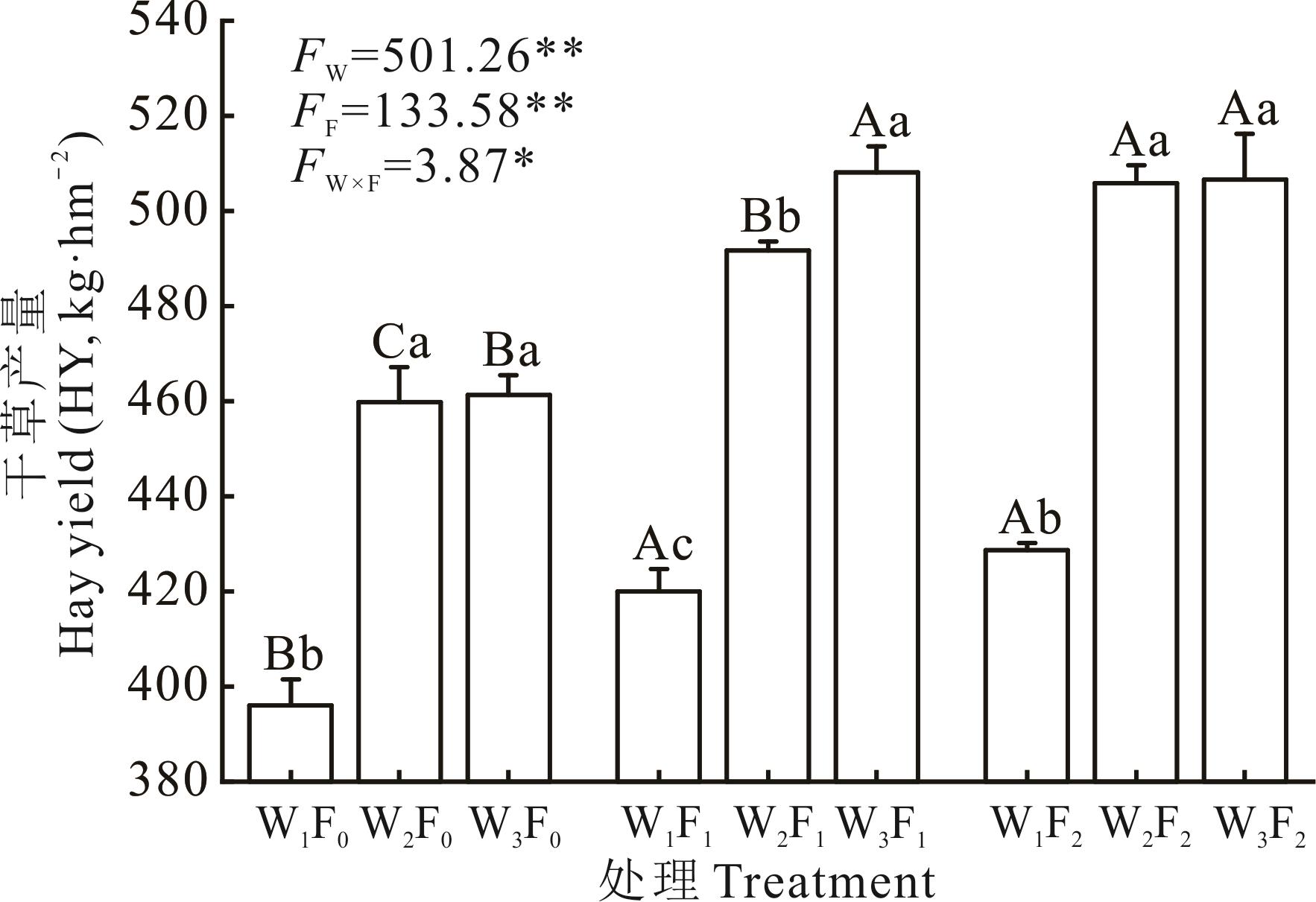
Fig.1 Hay yield of B. inermis under different water and fertilizer treatments
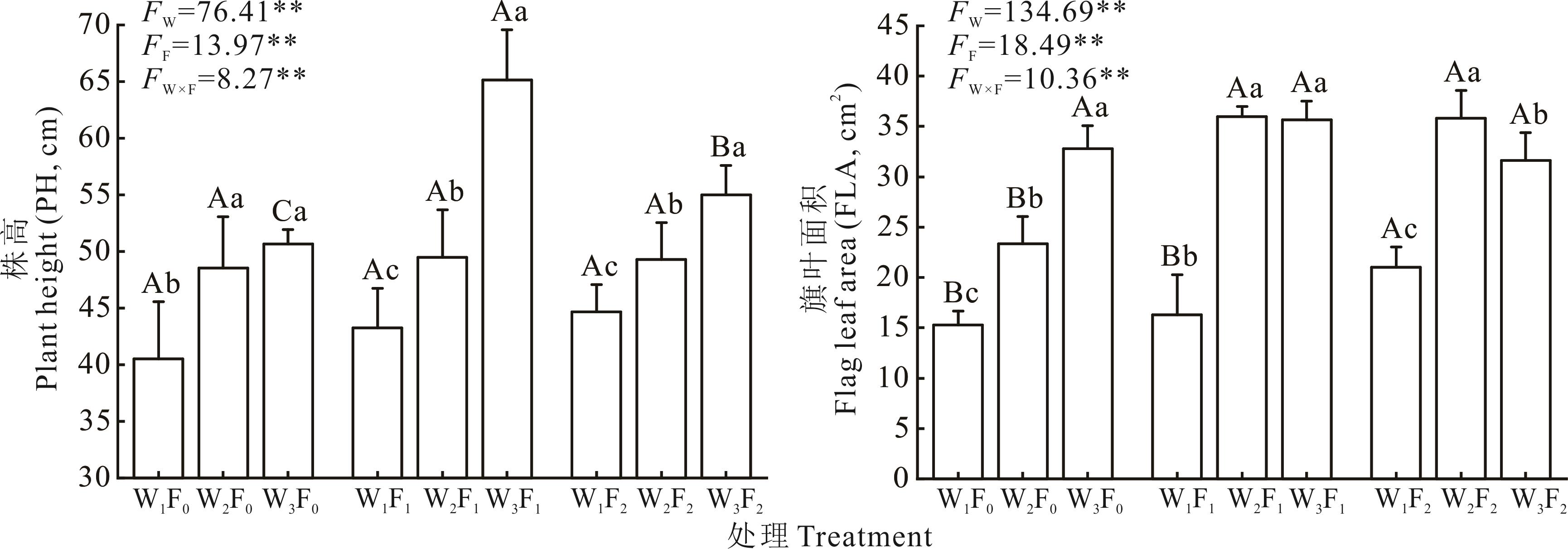
Fig.2 Growth traits of B. inermis under different water and fertilizer treatments
处理 Treatment | 粗蛋白 Crude protein (CP) | 酸性洗涤纤维 Acid detergent fiber (ADF) | 中性洗涤纤维 Neutral detergent fiber (NDF) | 相对饲喂价值 Relative feeding value (RFV) |
|---|---|---|---|---|
| W1F0 | 11.39±0.09Bc | 32.15±1.91Aa | 51.14±1.22Aa | 131.04±1.93Aa |
| W2F0 | 12.09±0.38Cb | 30.87±0.64Aa | 51.49±0.71Aa | 113.26±2.83Bb |
| W3F0 | 13.32±0.19Ba | 27.67±0.33Bb | 50.38±0.29Aa | 120.42±2.89Bb |
| W1F1 | 12.64±0.09Ab | 31.27±0.13Aa | 51.18±1.38Aa | 115.82±1.71Bab |
| W2F1 | 13.96±0.42Ba | 27.86±0.26Bc | 48.60±0.50Bb | 110.63±7.64Bb |
| W3F1 | 14.16±0.04Aa | 29.54±0.40Ab | 49.56±1.22Aab | 120.84±5.98Ba |
| W1F2 | 12.99±0.33Ac | 30.60±1.00Aa | 51.50±0.89Aa | 83.49±0.50Cc |
| W2F2 | 14.75±0.28Ab | 26.72±0.83Bb | 50.59±0.09Aa | 129.17±2.45Ab |
| W3F2 | 13.80±0.63ABa | 27.50±0.76Bb | 50.68±1.22Aa | 143.93±6.11Aa |
| W | <0.001 | <0.001 | 0.021 | 0.045 |
| F | <0.001 | <0.001 | 0.032 | <0.001 |
| W×F | <0.001 | 0.002 | 0.327 | <0.001 |
Table 3 Nutritional quality of B. inermis under different water and fertilizer treatments (%)
处理 Treatment | 粗蛋白 Crude protein (CP) | 酸性洗涤纤维 Acid detergent fiber (ADF) | 中性洗涤纤维 Neutral detergent fiber (NDF) | 相对饲喂价值 Relative feeding value (RFV) |
|---|---|---|---|---|
| W1F0 | 11.39±0.09Bc | 32.15±1.91Aa | 51.14±1.22Aa | 131.04±1.93Aa |
| W2F0 | 12.09±0.38Cb | 30.87±0.64Aa | 51.49±0.71Aa | 113.26±2.83Bb |
| W3F0 | 13.32±0.19Ba | 27.67±0.33Bb | 50.38±0.29Aa | 120.42±2.89Bb |
| W1F1 | 12.64±0.09Ab | 31.27±0.13Aa | 51.18±1.38Aa | 115.82±1.71Bab |
| W2F1 | 13.96±0.42Ba | 27.86±0.26Bc | 48.60±0.50Bb | 110.63±7.64Bb |
| W3F1 | 14.16±0.04Aa | 29.54±0.40Ab | 49.56±1.22Aab | 120.84±5.98Ba |
| W1F2 | 12.99±0.33Ac | 30.60±1.00Aa | 51.50±0.89Aa | 83.49±0.50Cc |
| W2F2 | 14.75±0.28Ab | 26.72±0.83Bb | 50.59±0.09Aa | 129.17±2.45Ab |
| W3F2 | 13.80±0.63ABa | 27.50±0.76Bb | 50.68±1.22Aa | 143.93±6.11Aa |
| W | <0.001 | <0.001 | 0.021 | 0.045 |
| F | <0.001 | <0.001 | 0.032 | <0.001 |
| W×F | <0.001 | 0.002 | 0.327 | <0.001 |
处理 Treatment | pH | 有机质 Organic matter (OM, g·kg-1) | 全磷 Total phosphorus (TP, g·kg-1) | 速效磷 Available phosphorus (AP, mg·kg-1) | 全氮 Total nitrogen (TN, g·kg-1) | 碱解氮 Alkali-hydrolyzable nitrogen (AN, mg·kg-1) |
|---|---|---|---|---|---|---|
| W1F0 | 7.74±0.08Aa | 14.39±0.71Bb | 1.43±0.10Ba | 12.33±0.32Ca | 2.17±0.11Ba | 20.85±3.12Cb |
| W2F0 | 7.79±0.03Aa | 15.68±0.34Aab | 1.30±0.01Ba | 12.68±0.47Ca | 2.13±0.01Aa | 30.16±2.33Ba |
| W3F0 | 7.77±0.04Aa | 17.75±0.90Ba | 1.28±0.10Ca | 12.53±0.08Ca | 2.13±0.01Ba | 27.98±1.09Ca |
| W1F1 | 7.78±0.04Aa | 16.84±0.19Ab | 1.63±0.01Aa | 13.44±0.42Bb | 2.27±0.03ABa | 30.49±0.79Bc |
| W2F1 | 7.78±0.05Aa | 16.43±0.63Ab | 1.51±0.06Aa | 13.69±0.14Bab | 2.21±0.01Aa | 40.97±2.13Ab |
| W3F1 | 7.75±0.03Aa | 21.38±1.20Aa | 1.52±0.17Ba | 14.03±0.27Ba | 2.24±0.01ABa | 48.22±2.74Ba |
| W1F2 | 7.77±0.03Aa | 15.64±0.11ABb | 1.79±0.09Aa | 14.05±0.34Ab | 2.33±0.06Aa | 39.00±2.87Ab |
| W2F2 | 7.76±0.02Aa | 17.52±0.42Ab | 1.67±0.17Aa | 14.52±0.51Aab | 2.24±0.10Aa | 44.25±2.92Ab |
| W3F2 | 7.76±0.03Aa | 20.43±0.33Aa | 1.72±0.04Aa | 14.68±0.06Aa | 2.31±0.13Aa | 57.18±6.78Aa |
| W | 0.960 | 0.057 | 0.038 | 0.012 | 0.198 | <0.001 |
| F | 0.660 | 0.008 | <0.001 | <0.001 | 0.002 | <0.001 |
| W×F | 0.673 | 0.190 | 0.959 | 0.590 | 0.968 | 0.009 |
Table 4 Soil nutrients of B. inermis under different water and fertilizer treatments
处理 Treatment | pH | 有机质 Organic matter (OM, g·kg-1) | 全磷 Total phosphorus (TP, g·kg-1) | 速效磷 Available phosphorus (AP, mg·kg-1) | 全氮 Total nitrogen (TN, g·kg-1) | 碱解氮 Alkali-hydrolyzable nitrogen (AN, mg·kg-1) |
|---|---|---|---|---|---|---|
| W1F0 | 7.74±0.08Aa | 14.39±0.71Bb | 1.43±0.10Ba | 12.33±0.32Ca | 2.17±0.11Ba | 20.85±3.12Cb |
| W2F0 | 7.79±0.03Aa | 15.68±0.34Aab | 1.30±0.01Ba | 12.68±0.47Ca | 2.13±0.01Aa | 30.16±2.33Ba |
| W3F0 | 7.77±0.04Aa | 17.75±0.90Ba | 1.28±0.10Ca | 12.53±0.08Ca | 2.13±0.01Ba | 27.98±1.09Ca |
| W1F1 | 7.78±0.04Aa | 16.84±0.19Ab | 1.63±0.01Aa | 13.44±0.42Bb | 2.27±0.03ABa | 30.49±0.79Bc |
| W2F1 | 7.78±0.05Aa | 16.43±0.63Ab | 1.51±0.06Aa | 13.69±0.14Bab | 2.21±0.01Aa | 40.97±2.13Ab |
| W3F1 | 7.75±0.03Aa | 21.38±1.20Aa | 1.52±0.17Ba | 14.03±0.27Ba | 2.24±0.01ABa | 48.22±2.74Ba |
| W1F2 | 7.77±0.03Aa | 15.64±0.11ABb | 1.79±0.09Aa | 14.05±0.34Ab | 2.33±0.06Aa | 39.00±2.87Ab |
| W2F2 | 7.76±0.02Aa | 17.52±0.42Ab | 1.67±0.17Aa | 14.52±0.51Aab | 2.24±0.10Aa | 44.25±2.92Ab |
| W3F2 | 7.76±0.03Aa | 20.43±0.33Aa | 1.72±0.04Aa | 14.68±0.06Aa | 2.31±0.13Aa | 57.18±6.78Aa |
| W | 0.960 | 0.057 | 0.038 | 0.012 | 0.198 | <0.001 |
| F | 0.660 | 0.008 | <0.001 | <0.001 | 0.002 | <0.001 |
| W×F | 0.673 | 0.190 | 0.959 | 0.590 | 0.968 | 0.009 |
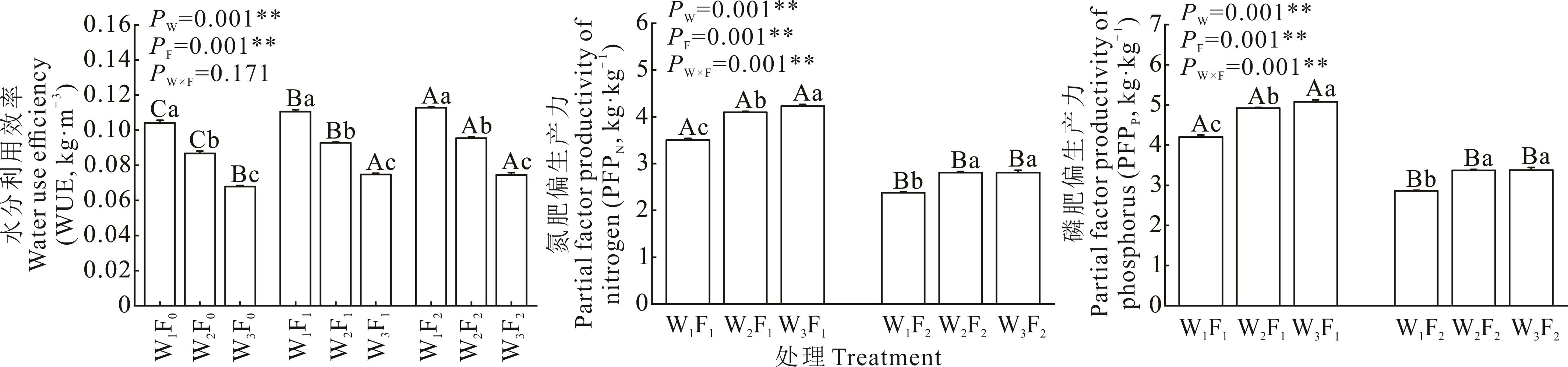
Fig.3 Water and fertilizer use efficiency of B. inermis under different water and fertilizer treatments
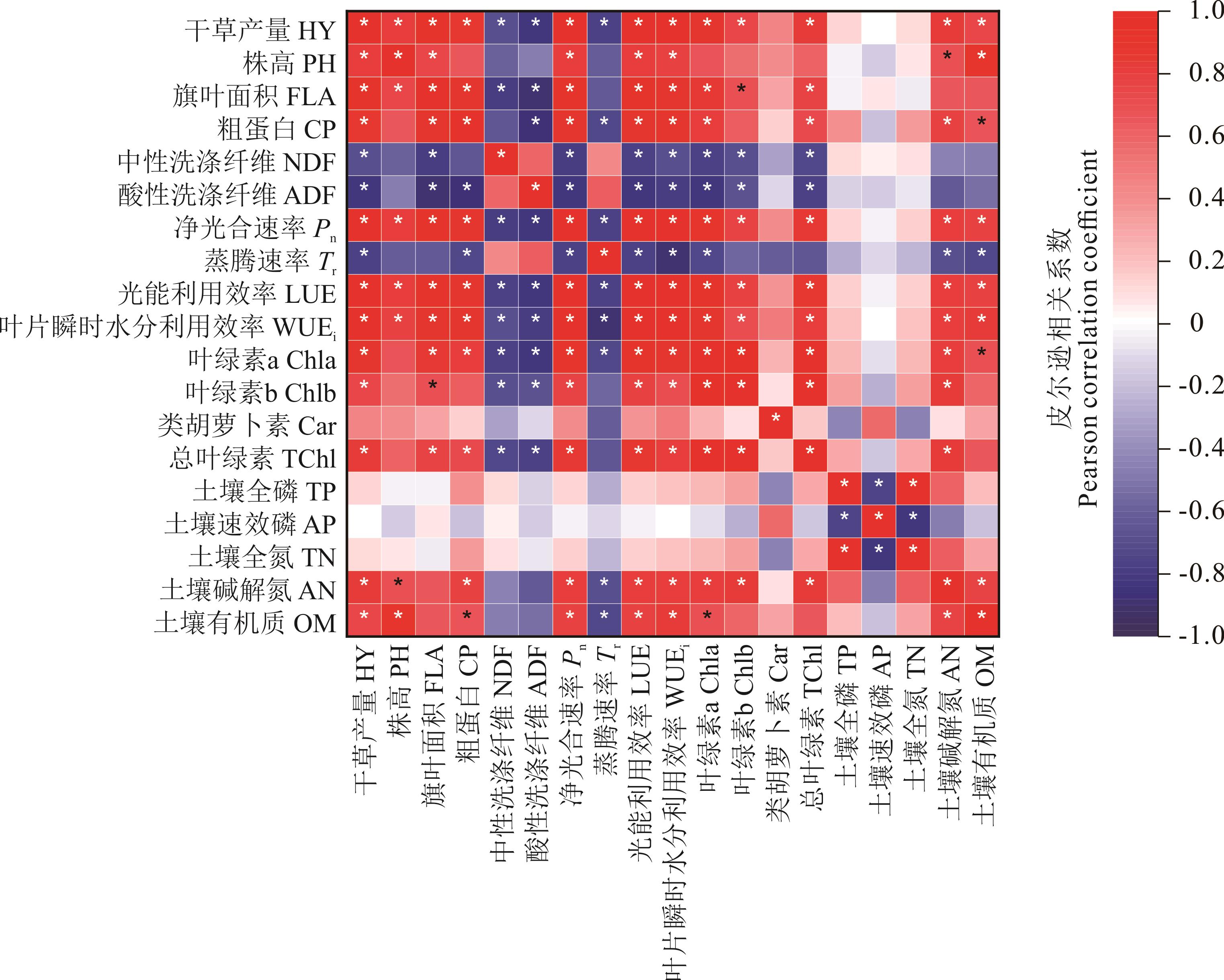
Fig.4 Correlation heat map of photosynthetic characteristics, production performance and soil nutrients of B. inermis
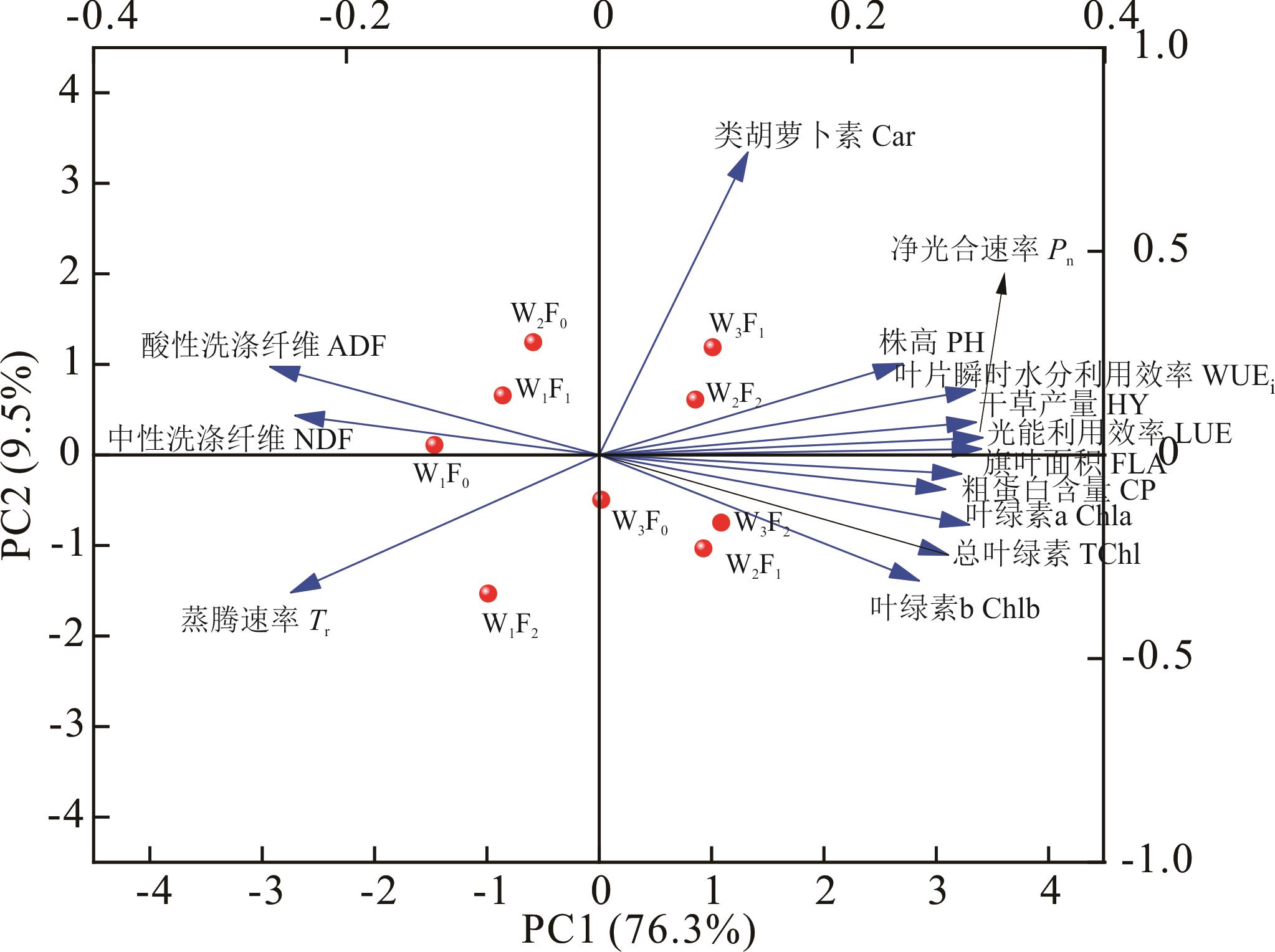
Fig.5 Principal component analysis biplot of main indexes of B. inermis under different water and fertilizer treatments
处理 Treatment | 第1主成分得分 First principal component score (PC1) | 第2主成分得分 Second principal component score (PC2) | 综合评价结果 Comprehensive evaluation result | |||
|---|---|---|---|---|---|---|
| 得分Score | 排序Rank | 得分Score | 排序Rank | 综合得分Composite score | 排序Rank | |
| W1F0 | -1.466 | 9 | 0.111 | 5 | -1.292 | 9 |
| W2F0 | -0.587 | 6 | 1.244 | 1 | -0.384 | 6 |
| W3F0 | 0.019 | 5 | -0.496 | 6 | -0.038 | 5 |
| W1F1 | -0.857 | 7 | 0.658 | 3 | -0.690 | 7 |
| W2F1 | 0.929 | 3 | -1.033 | 8 | 0.712 | 4 |
| W3F1 | 1.010 | 2 | 1.188 | 2 | 1.030 | 1 |
| W1F2 | -0.988 | 8 | -1.533 | 9 | -1.049 | 8 |
| W2F2 | 0.855 | 4 | 0.612 | 4 | 0.828 | 3 |
| W3F2 | 1.086 | 1 | -0.749 | 7 | 0.882 | 2 |
Table 5 Comprehensive evaluation results of B. inermis under different water and fertilizer treatments
处理 Treatment | 第1主成分得分 First principal component score (PC1) | 第2主成分得分 Second principal component score (PC2) | 综合评价结果 Comprehensive evaluation result | |||
|---|---|---|---|---|---|---|
| 得分Score | 排序Rank | 得分Score | 排序Rank | 综合得分Composite score | 排序Rank | |
| W1F0 | -1.466 | 9 | 0.111 | 5 | -1.292 | 9 |
| W2F0 | -0.587 | 6 | 1.244 | 1 | -0.384 | 6 |
| W3F0 | 0.019 | 5 | -0.496 | 6 | -0.038 | 5 |
| W1F1 | -0.857 | 7 | 0.658 | 3 | -0.690 | 7 |
| W2F1 | 0.929 | 3 | -1.033 | 8 | 0.712 | 4 |
| W3F1 | 1.010 | 2 | 1.188 | 2 | 1.030 | 1 |
| W1F2 | -0.988 | 8 | -1.533 | 9 | -1.049 | 8 |
| W2F2 | 0.855 | 4 | 0.612 | 4 | 0.828 | 3 |
| W3F2 | 1.086 | 1 | -0.749 | 7 | 0.882 | 2 |
| [1] | Yu A P, Jiang A C, Zhang H H, et al. Comparison and comprehensive evaluation of agronomic traits and productivity of 14 Bromus inermis. Acta Agrestia Sinica, 2024, 32(10): 3205-3214. |
| 于爱萍, 蒋昂辰, 张浩浩, 等. 14份无芒雀麦种质农艺性状与生产性能的比较及综合评价. 草地学报, 2024, 32(10): 3205-3214. | |
| [2] | Luo F M. Effect of water and fertilizer regulation on yield and quality of Bromus inermis Leyss. Hohhot: Inner Mongolia Agricultural University, 2024. |
| 罗凤敏. 水肥调控对无芒雀麦产量及品质特性的影响. 呼和浩特: 内蒙古农业大学, 2014. | |
| [3] | Sha B P, Xie Y Z, Gao X Q, et al. Effects of coupling of drip irrigation water and fertilizer on yield and quality of alfalfa in the yellow river irrigation district. Acta Prataculturae Sinica, 2021, 30(2): 102-114. |
| 沙栢平, 谢应忠, 高雪芹, 等. 地下滴灌水肥耦合对紫花苜蓿草产量及品质的影响. 草业学报, 2021, 30(2): 102-114. | |
| [4] | Tang Z X, Qi G P, Yin M H, et al. Effects of water and nitrogen regulation on nitrogen, phosphorus and potassium accumulation, quality, water and N utilization of Bromus inermis. Chinese Journal of Grassland, 2023, 45(5): 60-70. |
| 唐仲霞, 齐广平, 银敏华, 等. 水氮调控对无芒雀麦氮磷钾累积、品质及水氮利用的影响. 中国草地学报, 2023, 45(5): 60-70. | |
| [5] | Jiang Y B, Kang Y X, Qi G P, et al. Irrigation scheduling based on yield and quality in Bromus inermis. Acta Prataculturae Sinica, 2022, 31(11): 158-171. |
| 姜渊博, 康燕霞, 齐广平, 等. 基于产量与品质的无芒雀麦灌溉制度研究. 草业学报, 2022, 31(11): 158-171. | |
| [6] | Wang A X, Qi G P, Yin M H, et al. Effects of water and nitrogen regulation on growth and radiation utilization of alfalfa and Bromus inermis Leysis. mixed cropping grassland. Agricultural Research in the Arid Areas, 2023, 41(2): 168-178. |
| 汪爱霞, 齐广平, 银敏华, 等. 水氮调控对苜蓿与无芒雀麦混播草地生长和辐射利用的影响. 干旱地区农业研究, 2023, 41(2): 168-178. | |
| [7] | Zhao Z W, Qin Y L, Wu Y, et al. Effects of nitrogen addition on plant-soil-microbe stoichiometry characteristics of different functional group species in Bothriochloa ischemum community. Soil Ecology Letters, 2021, 4: 362-375. |
| [8] | Zhang X G, Hu X T, Ran H, et al. The response of grape yield and water fertilizer utilization to water and fertilizer coupling in greenhouse and its simulation. China Rural Water and Hydropower, 2019(1): 1-5. |
| 张兴国, 胡笑涛, 冉辉, 等. 水肥耦合对温室葡萄产量和水肥利用的影响. 中国农村水利水电, 2019(1): 1-5. | |
| [9] | Xing Y Y, Zhang F C, Wu L F, et al. Determination of optimal amount of irrigation and fertilizer under drip fertigated system based on tomato yield, quality, water and fertilizer use efficiency. Transactions of the Chinese Society of Agricultural Engineering, 2015, 31(Supple1): 110-121. |
| 邢英英, 张富仓, 吴立峰, 等. 基于番茄产量品质水肥利用效率确定适宜滴灌灌水施肥量. 农业工程学报, 2015, 31(增刊1): 110-121. | |
| [10] | Ge J H, Han X Y, Wang Q, et al. From photosynthesis to grain formation: A comprehensive evaluation of nitrogen-phosphorus co-optimization strategies in mung bean (Vigna radiata L.) cultivation. Field Crops Research, 2025, 333: 110112. |
| [11] | Shi G Q, Jiererge, Sui X Q, et al. Impact of foliar microelement fertilizer application on seed yield of Bromus inermis. Chinese Journal of Grassland, 2024, 46(6): 66-76. |
| 石国庆, 吉尔尔格, 隋晓青, 等. 叶面喷施微肥对无芒雀麦种子生产的影响. 中国草地学报, 2024, 46(6): 66-76. | |
| [12] | Wang G X, Cheng G D. The characteristics of soil resources and sustainabie development in the arid northwest China. Advances in Earth Science, 1999(5): 492-497. |
| 王根绪, 程国栋. 西北干旱区土壤资源特征与可持续发展. 地球科学进展, 1999(5): 492-497. | |
| [13] | Zhang Y Y, Hu D D, Ma C H, et al. Leaf structure and photosynthetic properties of alfalfa in response to bacteria and phosphorus addition. Acta Prataculturae Sinica, 2024, 33(8): 133-144. |
| 张盈盈, 胡丹丹, 马春晖, 等. 苜蓿叶片结构和光合特性对菌磷添加的响应. 草业学报, 2024, 33(8): 133-144. | |
| [14] | Liu X S, Sun Y L, An X X, et al. Effects of phosphorus application and inoculation with arbuscular mycorrhizal fungi and phosphorus-solubilizing bacteria on the photosynthetic characteristics and biomass of alfalfa. Acta Prataculturae Sinica, 2023, 32(3): 189-199. |
| 刘选帅, 孙延亮, 安晓霞, 等. 施磷和接种解磷菌对紫花苜蓿光合特性及生物量的影响. 草业学报, 2023, 32(3): 189-199. | |
| [15] | Liu L Y, Jia Y S, Wang Z J, et al. The law and correlation of chlorophyll and nutrient content changes during alfalfa drying. Chinese Journal of Grassland, 2021, 43(11): 60-68. |
| 刘丽英, 贾玉山, 王志军, 等. 苜蓿干燥过程中叶绿素与营养物质含量的变化及相关性. 中国草地学报, 2021, 43(11): 60-68. | |
| [16] | Huang W, Chang W, Yu S Y, et al. Comprehensive evaluation of production performance and nutritional quality of 16 Bromus inermis germplasm resources. Pratacultural Science, 2021, 38(11): 2237-2246. |
| 黄薇, 常巍, 余淑艳, 等. 16份无芒雀麦种质资源生产性能与营养品质的综合评价. 草业科学, 2021, 38(11): 2237-2246. | |
| [17] | Zhang Y Y, An X X, Ma C H, et al. The coupling of phosphate solubilizing bacteria and phosphate fertilizer to improve the growth and photosynthetic performance of alfalfa. Chinese Journal of Grassland, 2023, 45(11): 43-51. |
| 张盈盈, 安晓霞, 马春晖, 等. 解磷细菌与磷肥耦合提高苜蓿生长及光合性能. 中国草地学报, 2023, 45(11): 43-51. | |
| [18] | Yang K X, Zhao J T, Wang X Z, et al. Effects of different irrigation methods and phosphorus application on alfalfa yield, quality and water and phosphorus use efficiency. Transactions of the Chinese Society of Agricultural Engineering, 2023, 39(21): 130-138. |
| 杨开鑫, 赵建涛, 王旭哲, 等. 不同灌溉方式及施磷对紫花苜蓿产量、品质及水磷利用效率的影响. 农业工程学报, 2023, 39(21): 130-138. | |
| [19] | An X X, Li X, Cao G H, et al. Effects of arbuscular mycorrhizal fungi and phosphorus fertilizer interaction on the aboveground biomass and nutritional quality of alfalfa. Chinese Journal of Grassland, 2023, 45(4): 90-99. |
| 安晓霞, 李想, 曹冠华, 等. 菌磷互作对紫花苜蓿地上生物量及营养品质的影响. 中国草地学报, 2023, 45(4): 90-99. | |
| [20] | Guo W, Li D D, Xu J S, et al. Effects of application of straw and organic-inorganic fertilizers on soil quality and wheat yield in different texture fluvo-aquic soils. Acta Pedologica Sinica, 2024, 61(5): 1360-1373. |
| 郭伟, 李丹丹, 徐基胜, 等. 秸秆与有机无机肥配施对不同质地潮土土壤质量和小麦产量的影响. 土壤学报, 2024, 61(5): 1360-1373. | |
| [21] | Zhang D L, Chai Q, Yin W, et al. Response of maize agronomic traits, yield, water and fertilizer use efficiency to intercropping green manure under reduced irrigation levels in arid irrigation areas. Agricultural Research in the Arid Areas, 2024, 42(5): 85-96. |
| 张刁亮, 柴强, 殷文, 等. 干旱灌区减量灌水下玉米农艺性状、产量及水肥利用效率对间作绿肥的响应. 干旱地区农业研究, 2024, 42(5): 85-96. | |
| [22] | Du J X, Han T F, Qu X L, et al. Spatial-temporal evolution characteristics and driving factors of partial phosphorus productivity in major grain crops in China. Journal of Plant Nutrition and Fertilizers, 2022, 28(2): 191-204. |
| 都江雪, 韩天富, 曲潇林, 等. 中国主要粮食作物磷肥偏生产力时空演变特征及驱动因素. 植物营养与肥料学报, 2022, 28(2): 191-204. | |
| [23] | Liu C G, Wang Y J, Pan K W, et al. Carbon and nitrogen metabolism in leaves and roots of dwarf bamboo (Fargesia denudata) subjected to drought for two consecutive years during sprouting period. Journal of Plant Growth Regulation, 2014, 33(2): 243-255. |
| [24] | Lu J Y, Yang H M, Tian H, et al. Effect of water addition on carbon, nitrogen and phosphorus concentrations, and stoichiometric characteristics of alfalfa stems and leaves at different growth stage. Chinese Journal of Grassland, 2021, 43(6): 25-34. |
| 陆姣云, 杨惠敏, 田宏, 等. 水分对不同生育时期紫花苜蓿茎叶碳、氮、磷含量及化学计量特征的影响. 中国草地学报, 2021, 43(6): 25-34. | |
| [25] | Foyer C H, Descourviers P, Kunert K J. Protection against oxygen radicals: an important defense mechanism studied in transgenic plants. Plant, Cell and Environment, 1994, 17: 507-523. |
| [26] | Shangguan Z P, Shao M A, Dyckmans J. Effects of nitrogen nutrition and water deficit on net photosynthetic rate and chlorophyll fluorescence in winter wheat. Journal of Plant Physiology, 2000, 156(1): 46-51. |
| [27] | Wu L L, Tian C, Zhang L, et al. Research advance in the roles of water-nitrogen-oxygen factors in mediating rice growth, photosynthesis and nitrogen utilization in paddy soils. Chinese Journal of Applied Ecology, 2021, 32(4): 1498-1508. |
| 吴龙龙, 田仓, 张露, 等. 稻田水氮氧环境因子对水稻生长发育、光合作用和氮利用的调控研究进展. 应用生态学报, 2021, 32(4): 1498-1508. | |
| [28] | Xu X P, Fu X D, Liao H, et al. Advances in study of ammonium assimilation and its regulatory mechanism in plants. Chinese Bulletin of Botany, 2016, 51(2): 152-166. |
| 徐晓鹏, 傅向东, 廖红, 等. 植物铵态氮同化及其调控机制的研究进展. 植物学报, 2016, 51(2): 152-166. | |
| [29] | Chen Z H, Wei T B. Effects of coupling of irrigation and nitrogen fertilization on photosynthesis dry matter accumulation and yield of maize. Chinese Agricultural Science Bulletin, 2025, 41(4): 1-9. |
| 陈朝辉, 魏廷邦. 水肥耦合对玉米光合作用、干物质积累量和产量的影响. 中国农学通报, 2025, 41(4): 1-9. | |
| [30] | Cui Z K, Ding Z W, Shi Y, et al. Effects of water and nitrogen management on photosynthetic matter production and yield of wheat. Journal of Applied Ecology, 2024, 35(6): 1564-1572. |
| [31] | Wu W, Dong X O, Chen G M, et al. The elite haplotype OsGATA8-H coordinates nitrogen uptake and productive tiller formation in rice. Nature Genetics, 2024, 56: 1516-1526. |
| [32] | Cassman K G, Dobermann A, Walters D T. Agroecosystems, nitrogen-use efficiency, and nitrogen management. Ambio, 2002, 31(2): 132-140. |
| [33] | Lu B F, Kang W J, Shi S L, et al. The study on dynamics of nitrogen fixation efficiency of alfalfa-rhizobia symbiosis. Chinese Journal of Grassland, 2024, 46(6): 36-48. |
| 陆保福, 康文娟, 师尚礼, 等. 紫花苜蓿与根瘤菌共生过程中固氮效率的动态研究. 中国草地学报, 2024, 46(6): 36-48. | |
| [34] | He P. Comprehensive evaluation of the effects of different water and fertilizer patterns on physiological growth and soil nutrients in winter wheat. Zhengzhou: North China University of Water Resources and Electric Power, 2024. |
| 何平. 不同水肥模式对冬小麦生理生长和土壤养分影响的综合评价. 郑州: 华北水利水电大学, 2024. | |
| [35] | Meng X Y, Zhou L Y, Zhang Z X, et al. Effects of different irrigation patterns on growth, water and radiation use efficiency of rice. Transactions of the Chinese Society for Agricultural Machinery, 2019, 50(11): 285-292. |
| 孟翔燕, 周凌云, 张忠学, 等. 不同灌溉模式对水稻生长、水分和辐射利用效率的影响. 农业机械学报, 2019, 50(11): 285-292. | |
| [36] | Su F Y, Hao M D, Guo H H, et al. Effects of nitrogen fertilizer on the yield and nutrition absorption of artificial Leymus chinensis grassland. Acta Agrestia Sinica, 2015, 23(4): 893-896. |
| 苏富源, 郝明德, 郭慧慧, 等. 施用氮肥对人工羊草草地产量及养分吸收的影响. 草地学报, 2015, 23(4): 893-896. | |
| [37] | Liu X Y, Mao P C, Zheng M L, et al. Effects of water and nitrogen coupling treatment on yield, quality and soil characteristics of Dactylis glomerata under forest. Acta Agrestia Sinica, 2025, 33(5): 1602-1611. |
| 刘晓宇, 毛培春, 郑明利, 等. 水氮耦合处理对林下鸭茅草产量与品质及土壤特性的影响. 草地学报, 2025, 33(5): 1602-1611. | |
| [38] | Fan W J, Yang X, He H Y, et al. Effect of water and nitrogen coupling on the yield and physiology characteristics of edible canna and the physical and chemical properties of soil. Southwest China Journal of Agricultural Sciences, 2022, 35(5): 1069-1078. |
| 樊吴静, 杨鑫, 何虎翼, 等. 水氮耦合对旱藕产量、生理特性和土壤理化性状的影响. 西南农业学报, 2022, 35(5): 1069-1078. |
| [1] | Rui GAN, Jiererge, Xiao-qing SUI, Hai-jun LIU, Yu-xuan LIU, Gui-li JIN, MAIMAITI·Mu-yesaier. Effects of arbuscular mycorrhizal fungi on growth characteristics and sugar content of Bromus inermis [J]. Acta Prataculturae Sinica, 2026, 35(6): 122-130. |
| [2] | Yu-lin NIU, Ming-fang BAO, Wen-hu WANG, Xin CHEN, Kai-qiang LIU, Wen-hui LIU, Yan QIN. A multivariate evaluation of agronomic traits, yield and seed production in ten accessions of Bromus inermis from the Three-River-Source Region [J]. Acta Prataculturae Sinica, 2026, 35(6): 83-92. |
| [3] | Xiao-cong LI, Ju-hui YAN, Xing WANG, Peng-fei HU, Yu-nong YE, Bing-zhe FU. Effects of different inter-row planting ratios of alfalfa and smooth brome on grass production performance and soil physicochemical properties [J]. Acta Prataculturae Sinica, 2026, 35(5): 113-125. |
| [4] | Fei LI, Lin ZHANG, Ke-jia DE, Ting-xu FENG, Wei-shan LIN, Xue-mei XIANG, Xi-jie WEI. Effects of mixed sowing of oat and common vetch on the microbial diversity of inter-root soil in the Sanjiangyuan region [J]. Acta Prataculturae Sinica, 2026, 35(5): 99-112. |
| [5] | Meng-qi LI, Quan-min DONG, Cai-cai SUN, Wei-dong LYU, Wei XU, Yu-zhen LIU, Wen-ting LIU, Xiao-xia YANG. Effects of summer decomposition of yak and Xizang sheep dung on soil nutrients in the Peri-Qinghai Lake Region [J]. Acta Prataculturae Sinica, 2026, 35(4): 42-53. |
| [6] | Dong-ya LIU, Yan YANG, Jing LIU, Bo WANG, Zhi-gang LI. Effects of short-term sheep manure return on soil quality of desert steppe [J]. Acta Prataculturae Sinica, 2026, 35(2): 28-39. |
| [7] | Jun-shi FU, Li-li NAN, Ze-long ZHANG, Shi-wen WU. Multivariate evaluation of the photosynthetic characteristics of 21 timothy germplasm lines at different growth stages [J]. Acta Prataculturae Sinica, 2026, 35(1): 93-106. |
| [8] | Shu-qi LIU, Dong CUI, Wen-xin LIU, Hai-jun YANG, Yan-cheng YANG, Zhi-cheng JIANG, Jiang-chao YAN, Jiang-hui LIU. Effects of short-term nitrogen addition, watering, and mowing on plant community characteristics and soil physicochemical properties in Sophora alopecuroides degraded grassland [J]. Acta Prataculturae Sinica, 2025, 34(3): 41-55. |
| [9] | Li-li MA, Fu-zhen JIANG, Yu-shou MA, Kai-bin QI, Shun-bin JIA, Zheng-peng LI. Effect of particle size ratio, fertilizer application amount, and seeding rate combinations coal gangue matrix properties in restoration of a mining area [J]. Acta Prataculturae Sinica, 2025, 34(3): 71-84. |
| [10] | Ze-long HU, Guo-ling LIANG, Wen-hui LIU, Wen-hu WANG. Dynamic changes in pigment contents and photosynthetic characteristics of grains of black-grained and yellow-grained oat (Avena sativa) [J]. Acta Prataculturae Sinica, 2025, 34(12): 145-156. |
| [11] | Wen-lu HOU, Wen-juan KANG, Bao-fu LU, Yi-lin HAN, Jian GUAN, Jing-jing WANG. Effects of rhizobial strains with different symbiotic effects on the photosynthetic characteristics and respiratory metabolism of alfalfa [J]. Acta Prataculturae Sinica, 2025, 34(11): 66-80. |
| [12] | Xiao-qian LU, Jin-lu CHEN, Wei-jun YANG, Qing-yun GUO, Dan-li WANG, Hong-mei ZHAO. Effects of nitrogen fertilizer reduction combined with humic acid on soil fungal communities in drip irrigated maize fields in northern Xinjiang [J]. Acta Prataculturae Sinica, 2025, 34(10): 120-131. |
| [13] | Sheng-ran HE, Xiao-jing LIU, Ya-jiao ZHAO, Xue WANG, Jing WANG. Effects of alfalfa/sweet sorghum intercropping on rhizosphere soil characteristics and microbial community characteristics [J]. Acta Prataculturae Sinica, 2024, 33(5): 92-105. |
| [14] | Jin-xiu HAN, Bin CHEN, Yan-ting LIU, Ru MENG, Li-yan JIN, Miao HE. Identification of CibHLH1 and its effect on photosynthetic characteristics in Chrysanthemum indicum var. aromaticum [J]. Acta Prataculturae Sinica, 2024, 33(1): 89-101. |
| [15] | Guo-liang YU, Zi-jing MA, Zi-li LYU, Bin LIU. Altitude and plant community jointly regulate soil stoichiometry characteristics of natural grassland in the Baluntai area on the southern slope of the middle Tianshan Mountains, China [J]. Acta Prataculturae Sinica, 2023, 32(9): 68-78. |
| Viewed | ||||||
|
Full text |
|
|||||
|
Abstract |
|
|||||
