
ISSN 1004-5759 CN 62-1105/S
Acta Prataculturae Sinica ›› 2026, Vol. 35 ›› Issue (8): 32-44.DOI: 10.11686/cyxb2025331
Previous Articles Next Articles
Ruo-hong LI( ), Chang-ran LI, Jia-yi FU, Xin-yu HU, Pei-sheng MAO()
Received:2025-08-14
Revised:2025-11-03
Online:2026-08-20
Published:2026-06-22
Contact:
Pei-sheng MAO
Ruo-hong LI, Chang-ran LI, Jia-yi FU, Xin-yu HU, Pei-sheng MAO. Effects of nano-iron priming and biochar encrusting on the salt tolerance of Festuca sinensis at the seed germination and seedling growth stages[J]. Acta Prataculturae Sinica, 2026, 35(8): 32-44.
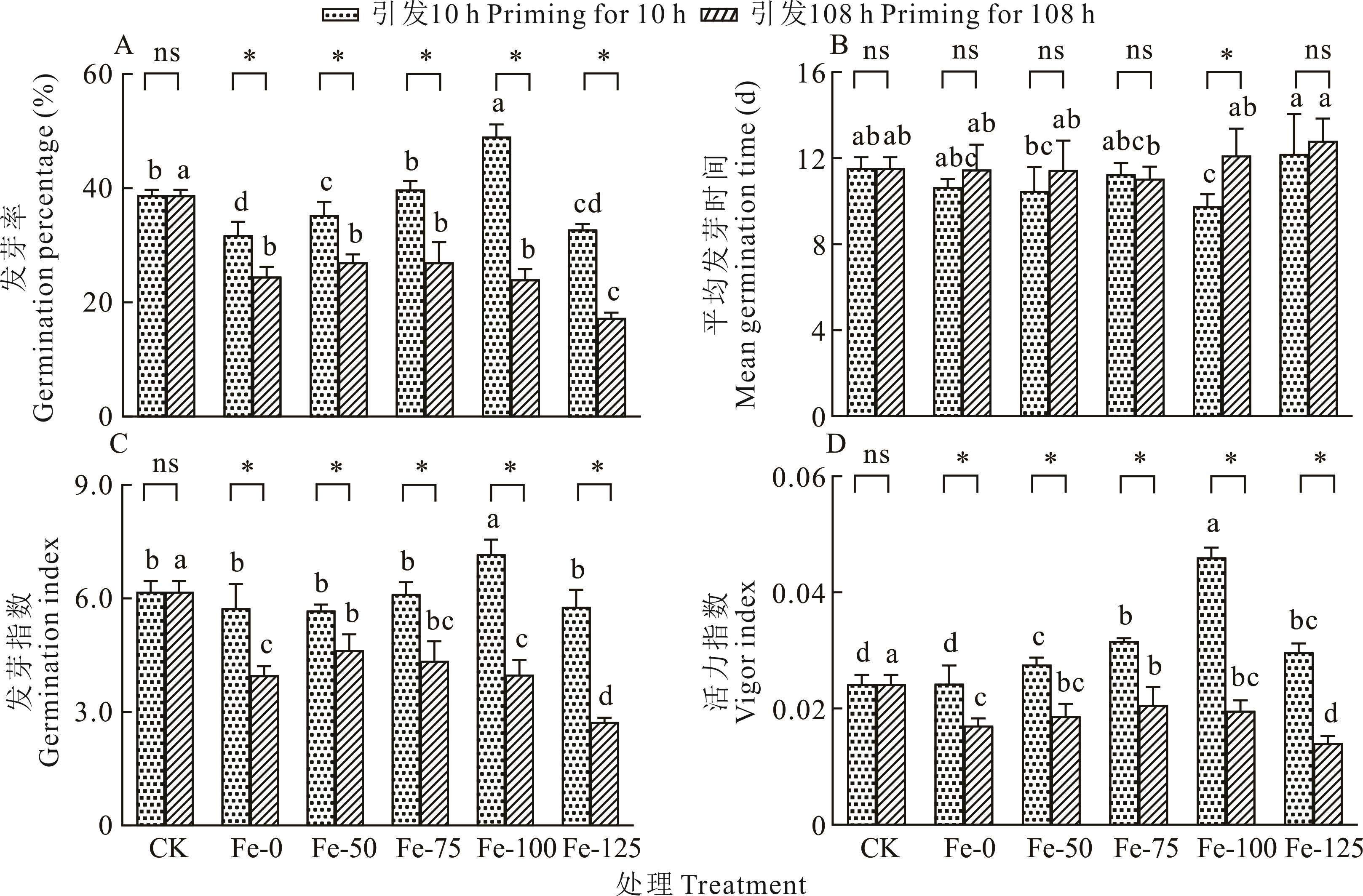
Fig.1 Effect of nano-iron priming on the germination characteristics of F. sinensis seeds under salt stress
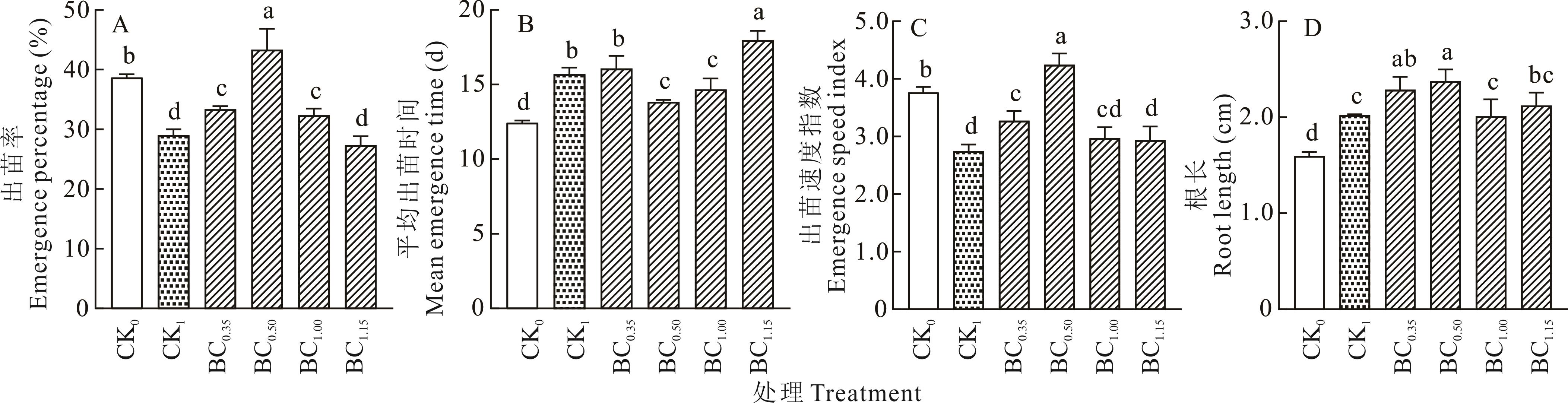
Fig.2 Effect of biochar encrusting on the germination characteristics of F. sinensis seeds under salt stress

Fig.3 Multispectral imaging of F. sinensis seedlings coated with nano-iron under salt stress and its effects on antioxidant enzyme system

Fig.4 Multispectral imaging of F. sinensis seedlings coated with biochar crusts under salt stress and its effects on antioxidant enzyme system
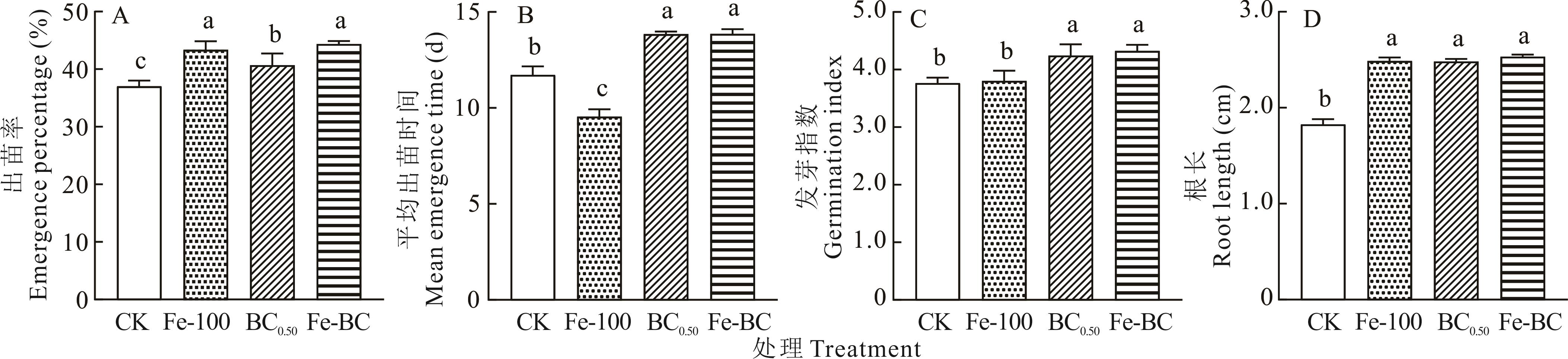
Fig.5 Effect of nano-iron priming and biochar encrusting combination on the germination characteristics of F. sinensis seeds under salt stress
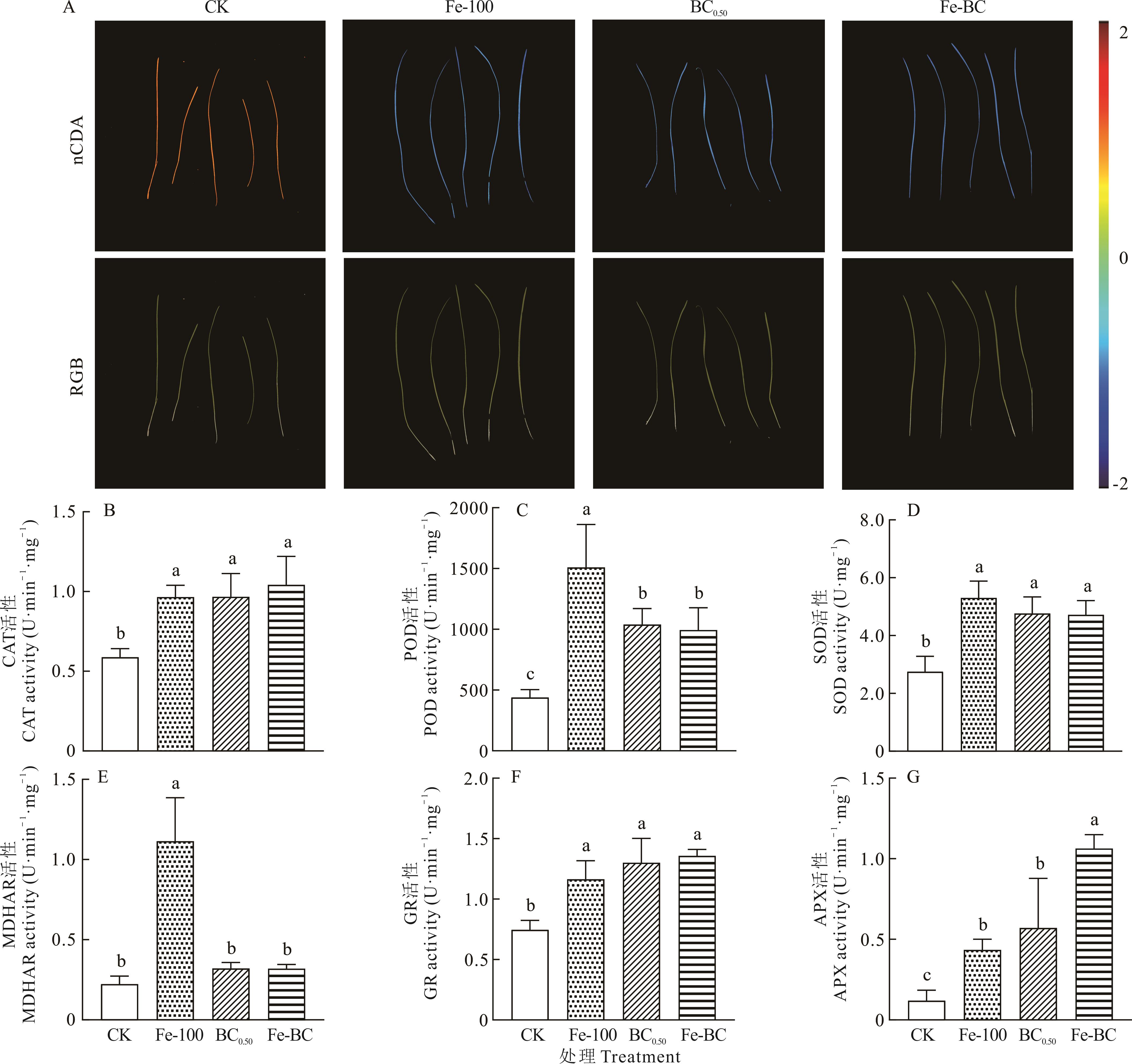
Fig.6 Multispectral imaging of F. sinensis seedlings and their effects on antioxidant enzyme system under salt stress using the combined treatment of nano-iron priming and biochar encrusting
| [1] | Wang G Z, Ni G, Feng G, et al. Saline-alkali soil reclamation and utilization in China: Progress and prospects. Frontiers of Agricultural Science & Engineering, 2024, 11(2): 216-228. |
| [2] | Tian P, Kuang Y, Nan Z B. The characteristics of Festuca sinensis and its breeding potential. Pratacultural Science, 2015, 32(7): 1079-1087. |
| 田沛, 旷宇, 南志标. 中华羊茅的优良特性以及利用内生真菌进行育种潜力浅析. 草业科学, 2015, 32(7): 1079-1087. | |
| [3] | Farooq M, Gogoi N, Hussain M, et al. Effects, tolerance mechanisms and management of salt stress in grain legumes. Plant Physiology and Biochemistry, 2017, 118: 199-217. |
| [4] | Liu L, Zhang Y Q, Wang J, et al. Comparison of salt tolerance during the germination period of 12 grass species under severe salt stress. Pratacultural Science, 2019, 36(11): 2806-2819. |
| 刘璐, 张跃群, 王婧, 等. 重度盐胁迫下12个地被草种萌发期的耐盐性比较. 草业科学, 2019, 36(11): 2806-2819. | |
| [5] | Gao M, Lin W H, Tian P. Effects of sodium stress on seed germination of Festuca sinensis. Seed, 2021, 40(5): 20-26, 32. |
| 高敏, 蔺伟虎, 田沛. 钠盐胁迫对中华羊茅种子萌发的影响. 种子, 2021, 40(5): 20-26, 32. | |
| [6] | Leonard S M, Xin H, Brown-brandl T M, et al. Effects of farrowing stall layout and number of heat lamps on sow and piglet production performance. Animals, 2020, 10(2): 348. |
| [7] | Ghafari H, Razmjoo J. Effect of foliar application of nano-iron oxidase, iron chelate and iron sulphate rates on yield and quality of wheat. International Journal of Agronomy and Plant Production, 2013, 4(11): 2997-3003. |
| [8] | Wang Y H, Tang L, Liu G Y, et al. Effect of nanomaterials on plant growth and development. Agriculture of Jilin, 2017(5): 62. |
| 王钰涵, 唐乐, 刘桂芸, 等. 纳米材料对植物生长发育的影响. 吉林农业, 2017(5): 62. | |
| [9] | Sun Y F. Effects of nanopriming with iron oxide (Ⅲ) on seed germination and drought resistance of switchgrass (Panicum virgatum). Xianyang: Northwest Agriculture and Forestry University, 2022.孙运府. 纳米铁引发对柳枝稷种子萌发特性及抗旱性的影响. 咸阳: 西北农林科技大学, 2022. |
| [10] | Maswada H F, Djanaguiraman M, Prasad P V V. Seed treatment with nano-iron (Ⅲ) oxide enhances germination, seeding growth and salinity tolerance of sorghum. Journal of Agronomy and Crop Science, 2018, 204(6): 577-587. |
| [11] | Li Y C, Mo H F, Wang T, et al. Study on the response of red clover seeds to iron nanoparticles. Agriculture and Technology, 2023, 43(6): 1-5. |
| 李羽超, 莫海凤, 王田, 等. 红三叶种子对纳米铁的响应研究. 农业与技术, 2023, 43(6): 1-5. | |
| [12] | Li Y. Research progress of biochar preparation and performance. Hans Journal of Chemical Engineering and Technology, 2020, 10(5): 384-388. |
| 李燕. 生物炭制备及其性能研究进展. 化学工程与技术, 2020, 10(5): 384-388. | |
| [13] | Beesley L, Moreno-jiménez E, Gomez-eyles J L, et al. A review of biochars’ potential role in the remediation, revegetation and restoration of contaminated soils. Environmental Pollution, 2011, 159(12): 3269-3282. |
| [14] | Zhang K K, Khan Z, Yu Q, et al. Biochar coating is a sustainable and economical approach to promote seed coating technology, seed germination, plant performance, and soil health. Plants, 2022, 11(21): 2864. |
| [15] | Elamparithi R, Sujatha K, Menaka C, et al. Impact of organic seaweed pelleting on seed quality and biochemical parameters in brinjal seeds. The Pharma Innovation Journal, 2021, 10(11): 1466-1469. |
| [16] | Dong J, Fu P P, Pan G X, et al. A novel agricultural seed coating agent prepared from biomass charcoal derived from agricultural waste and its preparation method: CN103053244A. 2014-12-10. |
| 董娟, 付潘潘, 潘根兴, 等. 一种利用农业废弃物新型生物质炭制备的农作物种子包衣剂及其制备方法: CN103053244A. 2014-12-10. | |
| [17] | Zhang K K, Khan Z, Liu J H, et al. Germination and growth performance of water-saving and drought-resistant rice enhanced by seed treatment with wood vinegar and biochar under dry direct-seeded system. Agronomy, 2022, 12(5): 1223. |
| [18] | Liu J Y. Study and evaluation on drought-resistant biochar encrusting technology of three grasses species. Beijing: China Agricultural University, 2024.刘婧禹. 三种禾草生物炭抗旱壳衣技术研究与评价. 北京: 中国农业大学, 2024. |
| [19] | International Seed Testing Association. International rules for seed testing. Wallisellen: The International Seed Testing Association, 2023. |
| [20] | State Key Laboratory of Grassland Agro-ecosystems, Lanzhou University. Rules of seed testing for forage, turfgrass and other herbaceous plant-The germination test: GB/T 2930.4-2017. Beijing: Standards Press of China, 2017.兰州大学草地农业生态系统国家重点实验室. 草种子检验规程 发芽试验: GB/T 2930.4-2017. 北京: 中国标准出版社, 2017. |
| [21] | Shrestha S, Deleuran L C, Olesen M H, et al. Use of multispectral imaging in varietal identification of tomato. Sensors, 2015, 15(2): 4496-4512. |
| [22] | Cakmak I, Marschner H. Magnesium-deficiency and high light-intensity enhance activities of superoxide-dismutase, ascorbate peroxidase, and glutathione-reductase in bean-leaves. Plant Physiology, 1992, 98(4): 1222-1227. |
| [23] | Kar M, Mishra D. Catalase, peroxidase, and polyphenoloxidase activities during rice leaf senescence. Plant Physiology, 1976, 57(2): 315-319. |
| [24] | Charles B, Irwin F. Superoxide dismutase-improved assays and an assay applicable to acrylamide gels. Analytical Biochemistry, 1971, 44(1): 276. |
| [25] | Arrigoni O, Dipierro S, Borraccino G. Ascorbate free-radical reductase, a key enzyme of the ascorbic-acid system. Febs Letters, 1981, 125(2): 242-244. |
| [26] | Hossain Z, López-Climent M F, Arbona V, et al. Modulation of the antioxidant system in citrus under waterlogging and subsequent drainage. Plant Physiology, 2009, 166(13): 1391-1404. |
| [27] | Nakano Y, Asada K. Hydrogen-peroxide is scavenged by ascorbate-specific peroxidase in spinach-chloroplasts. Plant and Cell Physiology, 1981, 22(5): 867-880. |
| [28] | Zhang M X, Zhao L Y, He Y Y, et al. Potential roles of iron nanomaterials in enhancing growth and nitrogen fixation and modulating rhizomicrobiome in alfalfa (Medicago sativa L.). Bioresource Technology, 2024, 391(Pt B): 129987. |
| [29] | Xu S, Wu Y X, Li H Z, et al. Mechanisms of doped nanoceria seed priming enhanced cold tolerance in rapeseed. Journal of Agro-Environment Science, 2025, https://link.cnki.net/urlid/12.1347.s.20250625.1017.002 |
| 续绅, 吴懿鑫, 李宏卓, 等. 掺杂氧化铈纳米颗粒介导的种子引发提升油菜耐寒性机理. 农业环境科学学报, 2025, https://link.cnki.net/urlid/12.1347.s.20250625.1017.002 | |
| [30] | Yu Y. Research on nano-priming and film coating technology of oat seeds resistant to UV-B stress. Beijing: China Agricultural University, 2024. 于洋. 基于纳米引发的耐UV-B型燕麦种子包膜技术研究. 北京: 中国农业大学, 2024. |
| [31] | Lee W, An Y, Yoon H, et al. Toxicity and bioavailability of copper nanoparticles to the terrestrial plants mung bean (Phaseolus radiatus) and wheat (Triticum aestivum): Plant agar test for water-insoluble nanoparticles. Environmental Toxicology and Chemistry, 2008, 27(9): 1915-1921. |
| [32] | Godlewska P, Ok Y S, Oleszczuk P, et al. Ecotoxicological aspects of biochar and biochar-amended soils. Journal of Hazardous Materials, 2021, 403: 123833. |
| [33] | Wang Y F. Chitosan-modified biochar promotes seed germination and seedling growth of wheat under salt stress. Molecular Plant Breeding, 2023, 21(19): 6493-6499. |
| 王乙富. 壳聚糖改性生物炭促进盐胁迫下小麦种子萌发和幼苗生长. 分子植物育种, 2023, 21(19): 6493-6499. | |
| [34] | Li C R, Liu J Y, Li R H, et al. Effects of biochar encrusting on drought resistance characteristics of Agropyron mongolicum during seed germination. Acta Agrestia Sinica, 2025, 33(3): 960-967. |
| 李长然, 刘婧禹, 李若鸿, 等. 生物炭结壳包衣对蒙古冰草萌发期抗旱特性的影响. 草地学报, 2025, 33(3): 960-967. | |
| [35] | Ji L H, He A L, He F, et al. Screening of alfalfa seed coating materials and theirs effect on seed germination. Acta Agrestia Sinica, 2025, 33(8): 2728-2736. |
| 吉凌鹤, 何傲蕾, 何峰, 等. 紫花苜蓿种子包衣材料筛选及其对种子萌发影响. 草地学报, 2025, 33(8): 2728-2736. | |
| [36] | Chen C, Yang K B. Effects of salt stress on plant growth and development. Molecular Plant Breeding, 2025, https://link.cnki.net/urlid/46.1068.S.20250401.1657.006 |
| 陈晨, 杨凯波. 盐胁迫对植物生长发育的影响. 分子植物育种, 2025, https://link.cnki.net/urlid/46.1068.S.20250401.1657.006 | |
| [37] | Mazhar M W, Ishtiaq M, Maqbool M, et al. Seed priming with calcium oxide nanoparticles improves germination, biomass, antioxidant defence and yield traits of canola plants under drought stress. South African Journal of Botany, 2022, 151: 889-899. |
| [38] | Hernández-hernández H, González-morales S, Benavides-mendoza A, et al. Effects of chitosan-PVA and Cu nanoparticles on the growth and antioxidant capacity of tomato under saline stress. Molecules, 2018, 23(1): 178. |
| [39] | Ullah I, Toor M D, Basit A, et al. Nanotechnology: An integrated approach towards agriculture production and environmental stress tolerance in plants. Water, Air, & Soil Pollution, 2023, 234(11): 666. |
| [40] | Zhao T M, Li Y B, Chen W F, et al. Effect of biochar on the physicochemical properties of coastal saline soil and the antioxidation system activity in maize seedlings. Journal of Soil and Water Conservation, 2019, 33(2): 196-200. |
| 赵铁民, 李渊博, 陈为峰, 等. 生物炭对滨海盐渍土理化性质及玉米幼苗抗氧化系统的影响. 水土保持学报, 2019, 33(2): 196-200. | |
| [41] | Xiang Y, Li Y Q, Zheng C Z, et al. Advances in the application of biochar in sandy soil remediation. Journal of Desert Research, 2024, 44(4): 315-326. |
| 向宇, 李玉强, 郑成卓, 等. 生物炭在沙质土壤修复中的应用研究进展. 中国沙漠, 2024, 44(4): 315-326. | |
| [42] | Li H T, Zhang Z D, Wen L Z, et al. Response of biochar and nano-silica in alleviating cadmium stress in rape. Tianjin Agricultural Sciences, 2025, 31(3): 1-5, 11. |
| 李海涛, 张召娣, 温立政, 等. 生物炭与纳米硅缓解油菜镉胁迫效应. 天津农业科学, 2025, 31(3): 1-5, 11. | |
| [43] | Wang Z M, Sheng Y K, Zhang Z D, et al. Effects of combined application of biochar and nano-silicaon photosynthetic fluorescence characteristics of oilseed rape. Shandong Agricultural Sciences, 2024, 56(7): 127-134. |
| 王子铭, 绳易坤, 张召娣, 等. 生物炭和纳米二氧化硅联合施用对油菜光合荧光特性的影响. 山东农业科学, 2024, 56(7): 127-134. | |
| [44] | Li H X, Lin Y, Zhou X B, et al. Research progress on heavy metals removal from wastewater by biochar-supported nano zero-valent iron. Journal of Environmental Engineering Technology, 2022, 12(3): 787-793. |
| 李华夏, 林毅, 周小斌, 等. 生物炭负载纳米零价铁去除废水中重金属的研究进展. 环境工程技术学报, 2022, 12(3): 787-793. | |
| [45] | Song P P, Ma W J, Wang J, et al. Preparation of iron-modified biochar and its application in heavy metal contaminated soils. Chinese Journal of Environmental Engineering, 2022, 16(12): 4018-4036. |
| 宋佩佩, 马文静, 王军, 等. 铁改性生物炭的制备及其在重金属污染土壤修复技术中的应用进展. 环境工程学报, 2022, 16(12): 4018-4036. | |
| [46] | Lu G X, Li X L, Qiao Y M, et al. Effects of seed pelleting on seed germination and physiological indexes of forages. Acta Agrestia Sinica, 2011, 19(3): 451-457. |
| 芦光新, 李希来, 乔有明, 等. 丸粒化处理对几种牧草种子萌发及生理特性的影响. 草地学报, 2011, 19(3): 451-457. | |
| [47] | Wang J Y, Riaz M, Babar S, et al. Iron-modified biochar alleviates salt-alkali stress in cotton by enhancing iron availability and rhizosphere microbiome-metabolite interactions. Plant and Soil, 2025, 516: 2101-2120. |
| [1] | Yi-han WANG, Lu-meng SHI, Zhi-jian LI, Bang-wei ZHOU. Effects of grass species and biochar application rate on soda saline-alkali soil improvement and forage growth in northeast China [J]. Acta Prataculturae Sinica, 2026, 35(5): 139-150. |
| [2] | Ming WEI, Xin-rui WU, Xuan WU, Hao LI, Guo-qiang WU, Wei-jie ZHANG, Zi-yi CHENG. Cloning of the betaine aldehyde dehydrogenase family BvBADH2 gene and its role in plant salt tolerance [J]. Acta Prataculturae Sinica, 2026, 35(5): 185-195. |
| [3] | Chang LIU, Ji-shan CHEN, Rui-fen ZHU, Wan-bin SUN, Bo YAO, Shi-kui DONG. Mitigation of soil microbial carbon and phosphorus limitations through organic fertilizer and biochar inputs in subtropical cultivated grassland [J]. Acta Prataculturae Sinica, 2026, 35(4): 54-66. |
| [4] | Xiang MA, Zhong-xing LI, Rong-chen YANG, Ze-liang JU, Zhi-feng JIA, Pei-zhi YANG. The effect of salt stress on sugar and endogenous hormone content in oat varieties with contrasting salt tolerance [J]. Acta Prataculturae Sinica, 2026, 35(3): 235-244. |
| [5] | Yi-xin LIU, Xiao-qing SUI, Xin-yao WANG, Meng-qing LANG, Ling-zi-yin SUN, Er-ge JIER. Mitigating effects of exogenous melatonin on alfalfa under salt stress [J]. Acta Prataculturae Sinica, 2025, 34(9): 206-214. |
| [6] | Qing-qing ZHANG, Xing-yu MA, Yan LU, Guang-Xing ZHAO, Fan-jiang ZENG, Cai-bian HUANG. A study of salt tolerance differences in Cyperus esculentus at different growth stages in a sandy saline soil [J]. Acta Prataculturae Sinica, 2025, 34(6): 168-180. |
| [7] | Ge TIAN, Li-li NAN, Li-qun WANG, Xiang-xiang MA, Rong HE, Jia-yu GUO. Effects of exogenous ABA on growth and physiological characteristics of sainfoin seedlings under NaCl stress [J]. Acta Prataculturae Sinica, 2025, 34(10): 95-106. |
| [8] | Wen-qi CAI, Shu-xia LI, Xiao-tong WANG, Wen-xue SONG, Xu-xia MA, Xiao-mei MA, Xiao-hong LI, Xin-yao DAI. Effects of interaction between exogenous melatonin and ethylene on the growth and physiological characteristics of Medicago sativa seedlings under salt stress [J]. Acta Prataculturae Sinica, 2025, 34(1): 80-93. |
| [9] | Zhen-huan ZHANG, Li-rong YAO, Jun-cheng WANG, Er-jing SI, Hong ZHANG, Ke YANG, Xiao-le MA, Ya-xiong MENG, Hua-jun WANG, Bao-chun LI. Identification of AKR gene family members in Halogeton glomeratus and salt tolerance analysis of the root salt stress response gene HgAKR42639 [J]. Acta Prataculturae Sinica, 2024, 33(7): 68-83. |
| [10] | Meng WANG, Xue-li LU, Ju-ying WANG, Meng-chao ZHANG, Yi-ru SONG, Chen MENG, Li ZHANG, Zong-chang XU. Evaluation and screening of the salt tolerance of triticale germplasm at the germination and seedling stages [J]. Acta Prataculturae Sinica, 2024, 33(5): 58-68. |
| [11] | Yan-lan ZHAO, Xin-yi ZENG, Jin-chao GONG, Xiang-jun LI, Xu-xu LI, Shan LIU, Xin-quan ZHANG, Ji-qiong ZHOU. Effect of arbuscular mycorrhizal fungi on the salt tolerance of Trifolium repens [J]. Acta Prataculturae Sinica, 2023, 32(3): 179-188. |
| [12] | Chen MENG, Xue-li LU, Ju-ying WANG, Yun-chong WEI, Cheng-sheng ZHANG, Yi-qiang LI, Zong-chang XU. Effects of different salt stresses on triticale seed germination [J]. Acta Prataculturae Sinica, 2023, 32(12): 171-180. |
| [13] | Jiao-yun LU, Hong TIAN, He-shan ZHANG, Jun-bo XIONG, Yang LIU, Zhen-nan WANG. Effects of H2O2 immersion on seed germination and seedling growth of alfalfa under salt stress [J]. Acta Prataculturae Sinica, 2023, 32(10): 141-152. |
| [14] | Wen-hui XIE, Li-juan HUANG, Li-li ZHAO, Lei-ting WANG, Wen-wu ZHAO. Effects of calcium salt stress on seed germination and seedling physiological characteristics of three Pueraria lobata germplasm lines [J]. Acta Prataculturae Sinica, 2022, 31(7): 220-233. |
| [15] | Yi-chao CHEN, Xiao-ying SUN, Zhi-jie XIE, Pan ZHOU, Lu ZHANG, Xue-li GAO, Dong LI, Xiao-feng LIU. Screening of rhizosphere growth promoting bacteria and their application in tailings improvement [J]. Acta Prataculturae Sinica, 2022, 31(7): 50-63. |
| Viewed | ||||||
|
Full text |
|
|||||
|
Abstract |
|
|||||
