
ISSN 1004-5759 CN 62-1105/S
Acta Prataculturae Sinica ›› 2026, Vol. 35 ›› Issue (8): 14-21.DOI: 10.11686/cyxb2025420
Previous Articles Next Articles
Huan LUO1( ), Yu-qi JIANG2, De-cao NIU2, Ding GUO2, Xu-dong LI2()
Received:2025-10-18
Revised:2025-11-12
Online:2026-08-20
Published:2026-06-22
Contact:
Xu-dong LI
Huan LUO, Yu-qi JIANG, De-cao NIU, Ding GUO, Xu-dong LI. The impact of soil moisture on litter decomposition and soil organic carbon deposition in the temperate grasslands of the Loess Plateau[J]. Acta Prataculturae Sinica, 2026, 35(8): 14-21.
凋落物 Litter | 培养时间 Co-culture time (a) | 处理 Treatment | 可溶性成分 Soluble components | 半纤维素 Hemicellulose | 纤维素 Cellulose | 木质素 Lignin |
|---|---|---|---|---|---|---|
| 叶片Leave (SL) | 0 | W0 | 0.135±0.001b | 0.163±0.001a | 0.147±0.000a | 0.055±0.000b |
| 3 | W1 | 0.204±0.003a | 0.114±0.010b | 0.036±0.011b | 0.090±0.010a | |
| 3 | W2 | 0.210±0.006a | 0.113±0.009b | 0.026±0.007b | 0.108±0.017a | |
| 根Root (SR) | 0 | W0 | 0.101±0.000b | 0.126±0.001a | 0.165±0.001a | 0.061±0.000b |
| 3 | W1 | 0.148±0.025ab | 0.117±0.016a | 0.069±0.010b | 0.144±0.007a | |
| 3 | W2 | 0.195±0.042a | 0.109±0.006a | 0.050±0.009b | 0.166±0.020a |
Table 1 Changes in the chemical composition of litter under different moisture treatments (g·kg-1)
凋落物 Litter | 培养时间 Co-culture time (a) | 处理 Treatment | 可溶性成分 Soluble components | 半纤维素 Hemicellulose | 纤维素 Cellulose | 木质素 Lignin |
|---|---|---|---|---|---|---|
| 叶片Leave (SL) | 0 | W0 | 0.135±0.001b | 0.163±0.001a | 0.147±0.000a | 0.055±0.000b |
| 3 | W1 | 0.204±0.003a | 0.114±0.010b | 0.036±0.011b | 0.090±0.010a | |
| 3 | W2 | 0.210±0.006a | 0.113±0.009b | 0.026±0.007b | 0.108±0.017a | |
| 根Root (SR) | 0 | W0 | 0.101±0.000b | 0.126±0.001a | 0.165±0.001a | 0.061±0.000b |
| 3 | W1 | 0.148±0.025ab | 0.117±0.016a | 0.069±0.010b | 0.144±0.007a | |
| 3 | W2 | 0.195±0.042a | 0.109±0.006a | 0.050±0.009b | 0.166±0.020a |
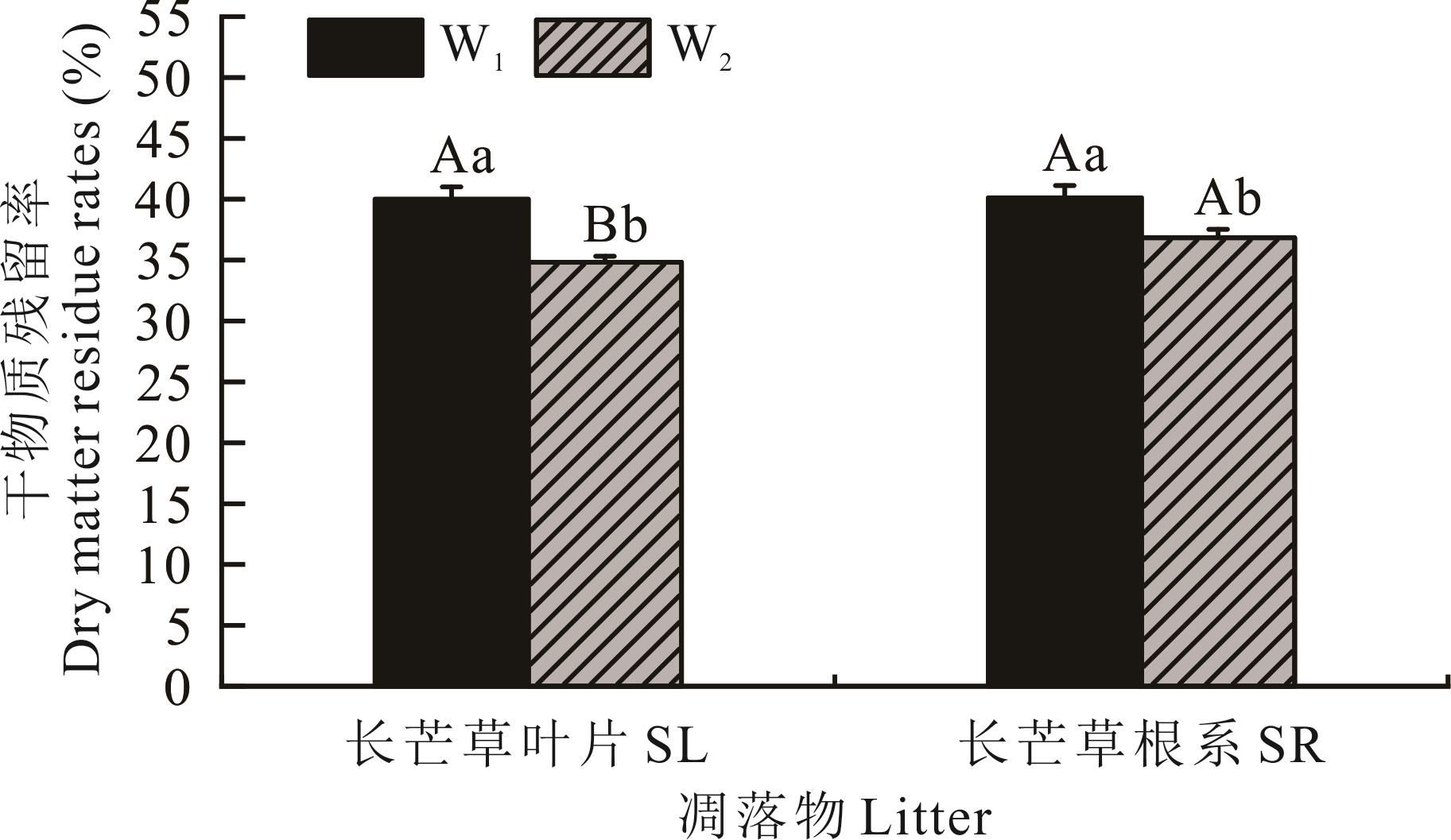
Fig.1 Dry matter residue rates of litters under different moisture treatments
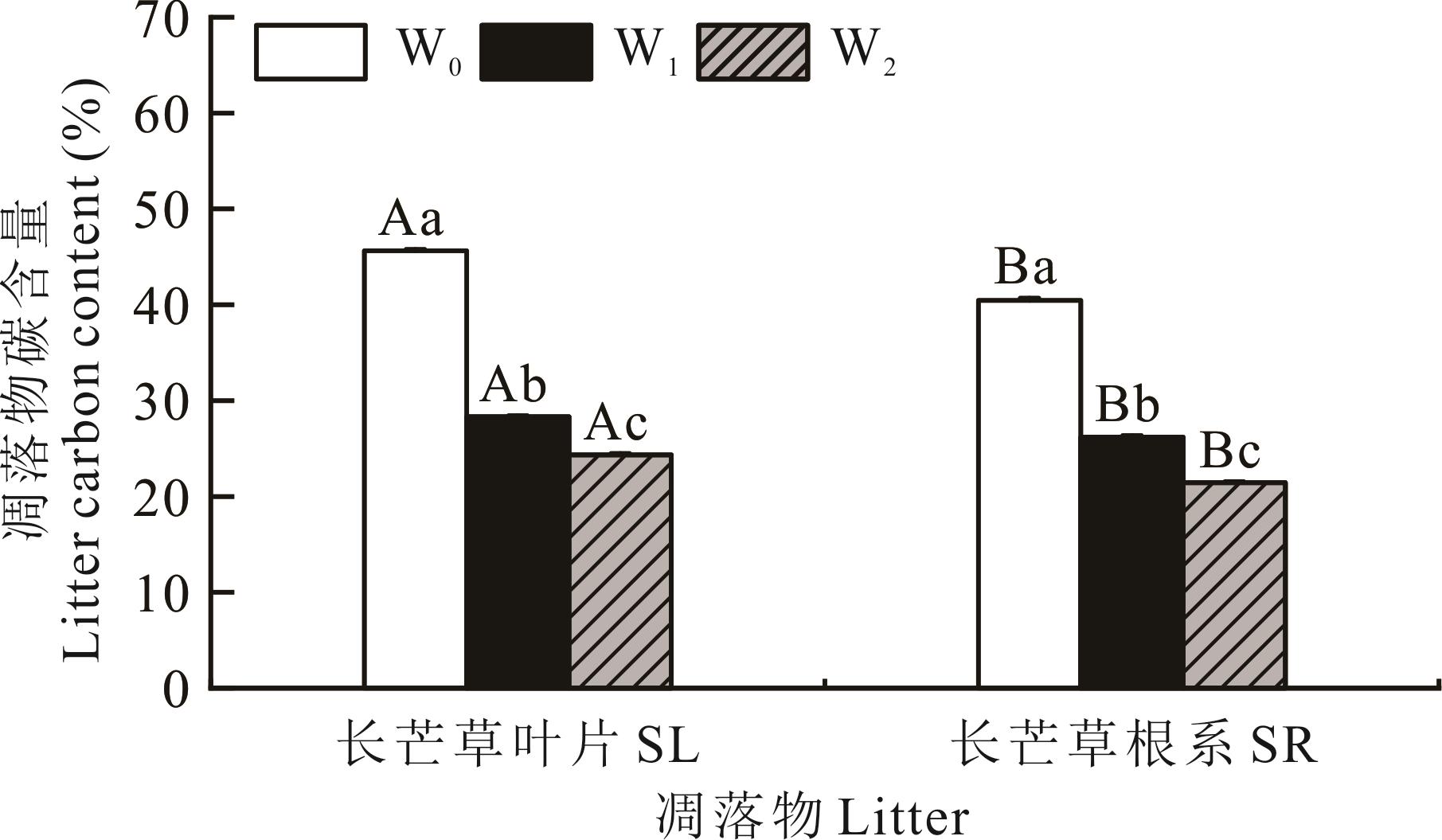
Fig.2 Changes in the litter carbon contents under different moisture treatments
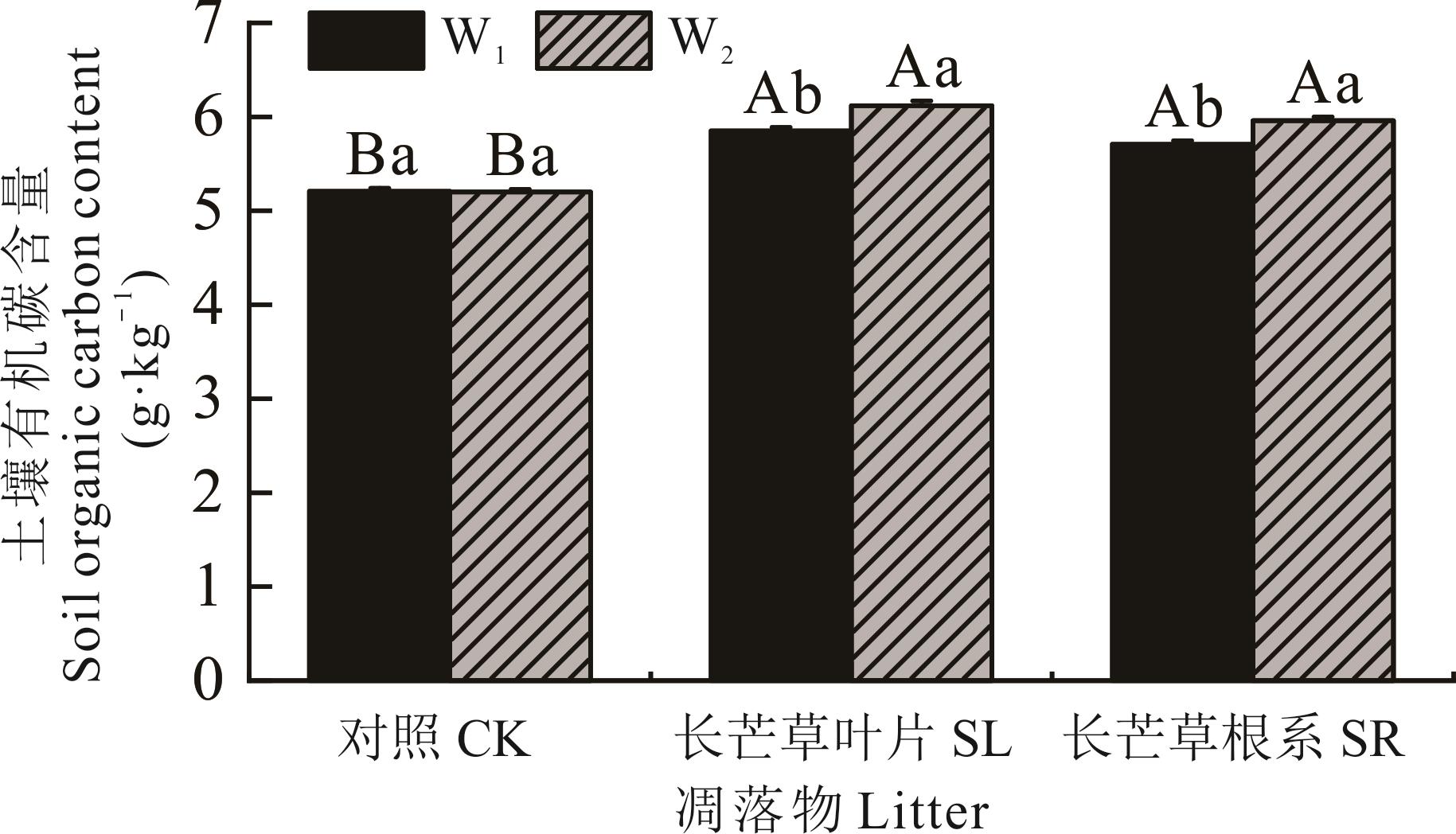
Fig.3 Changes in the soil organic carbon content under different moisture treatments
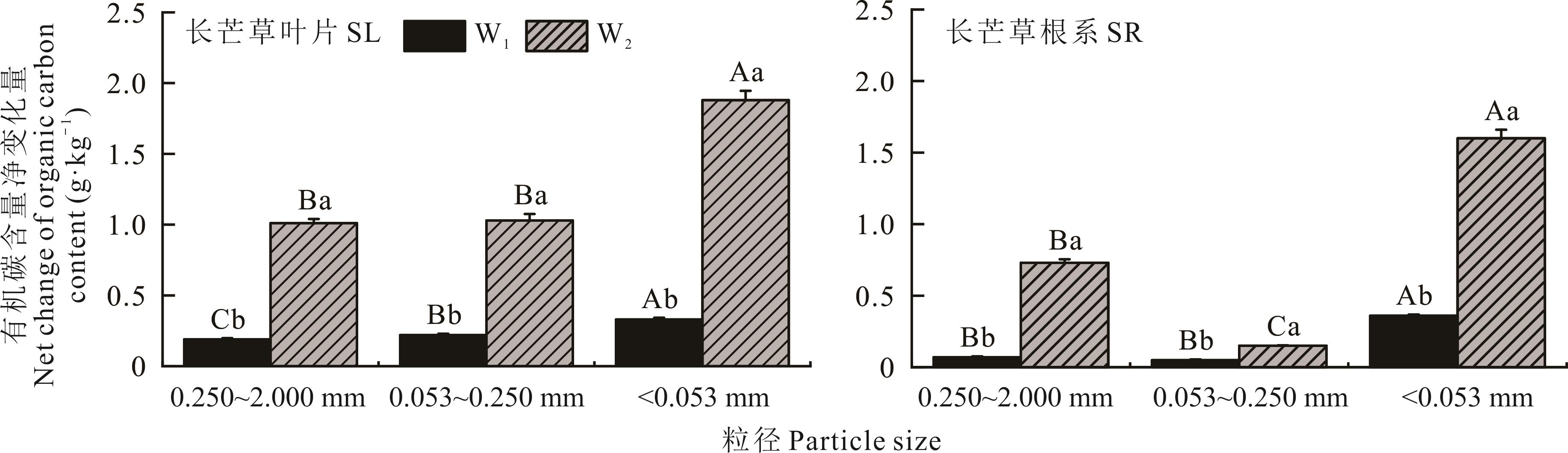
Fig.4 Net changes in the organic carbon content of soil aggregates with different particle sizes under different moisture treatments
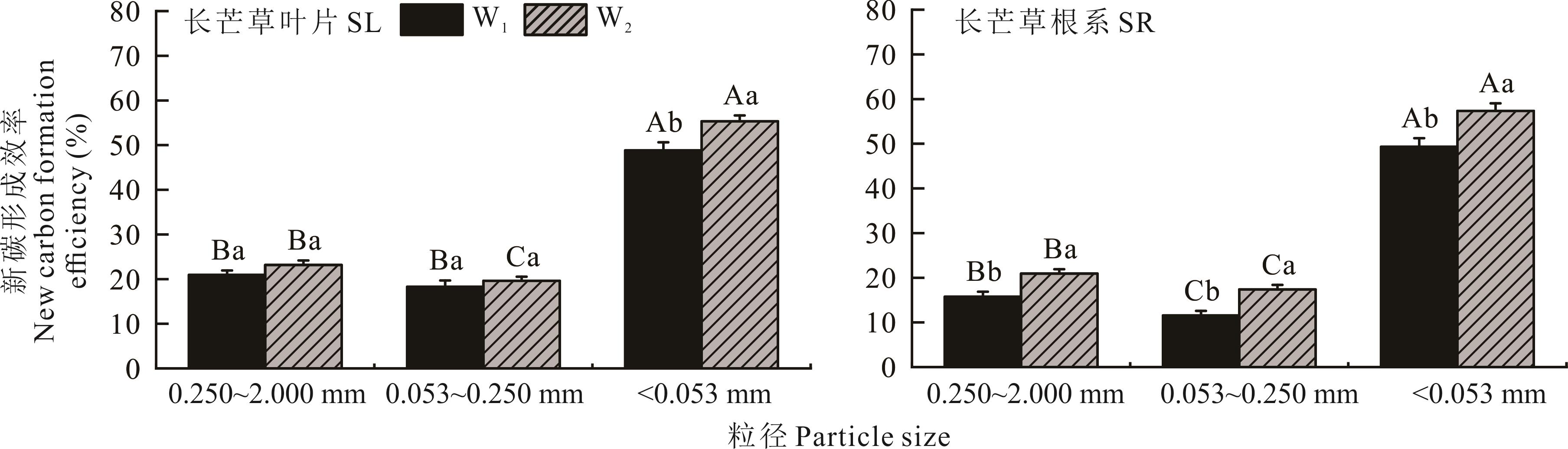
Fig.5 New carbon formation efficiency in soil aggregates of various particle sizes under different moisture treatments
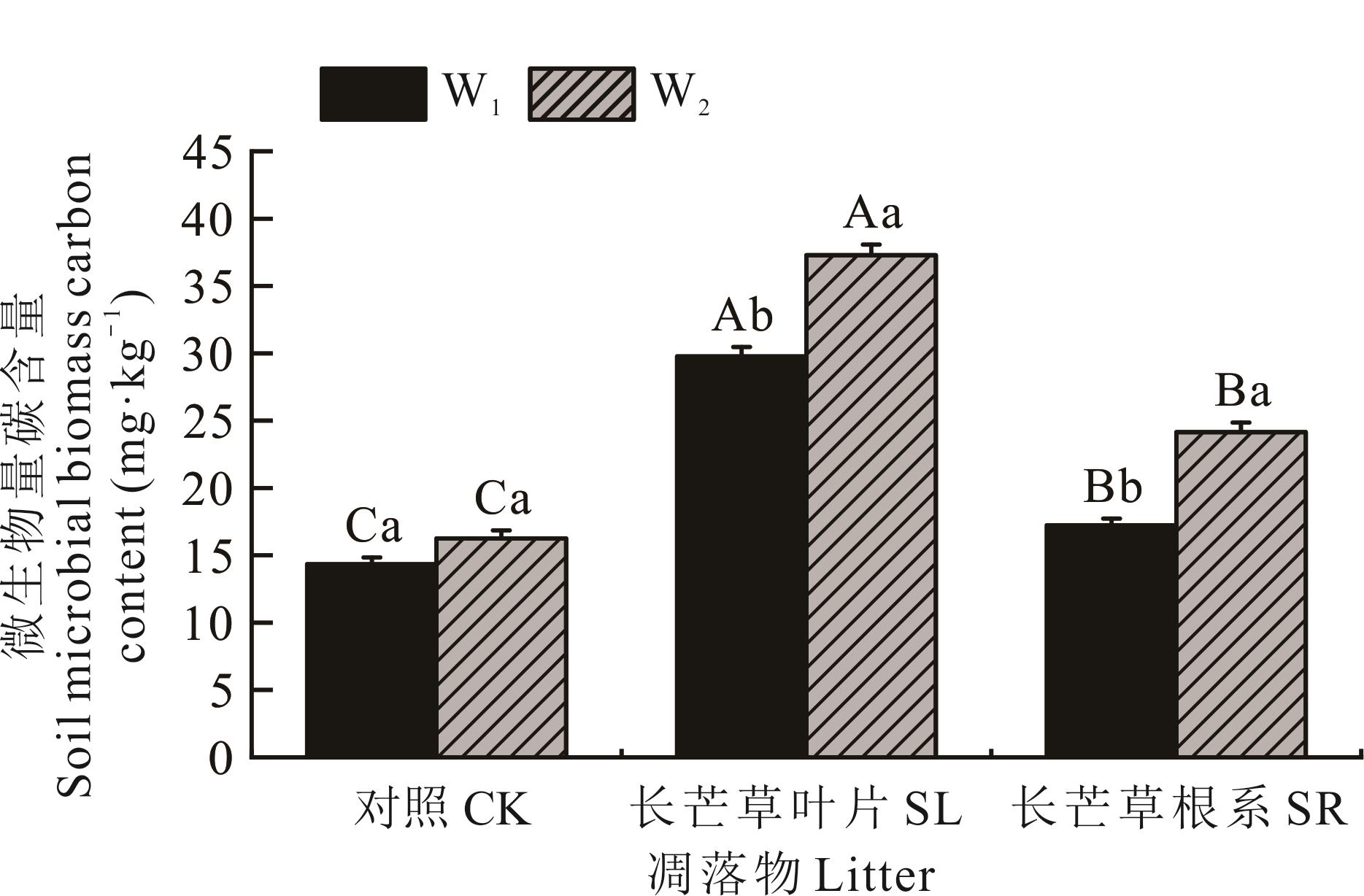
Fig.6 Soil microbial biomass carbon content under different moisture treatments
| [1] | Bontti E E, Decant J P, Munson S M, et al. Litter decomposition in grasslands of central North America (US Great Plains). Global Change Biology, 2009, 15(5): 1356-1363. |
| [2] | Chen Y C, Ma S Q, Lu X Y. Litter decomposition and nutrient dynamics of typical plant species in an alpine steppe ecosystem in northern Tibet. Pratacultural Science, 2019, 36(4): 1066-1073. |
| 陈有超, 马书琴, 鲁旭阳. 藏北高寒草原典型物种凋落物分解与养分动态. 草业科学, 2019, 36(4): 1066-1073. | |
| [3] | Zhang G S, Huang G B. Soil organic carbon sequestration potential in cropland. Acta Ecologica Sinica, 2005, 25(2): 351-357. |
| 张国盛, 黄高宝. 农田土壤有机碳固定潜力研究进展. 生态学报, 2005, 25(2): 351-357. | |
| [4] | Jin X X, Wang J K, Sun L J, et al. Progress of carbon cycle in farmland and sequestration in soil aggregates revealed by stable 13C isotope. Soils, 2017, 49(2): 217-224. |
| 金鑫鑫, 汪景宽, 孙良杰, 等. 稳定13C同位素示踪技术在农田土壤碳循环和团聚体固碳研究中的应用进展. 土壤, 2017, 49(2): 217-224. | |
| [5] | Epstein H E, Burke I C, Lauenroth W K. Regional patterns of decomposition and primary production rates in the US Great Plains. Ecology, 2002, 83(2): 320-327. |
| [6] | Wang M M, Hou F J. Influence of main factors on grass litter decomposition. Pratacultural Science, 2012, 29(10): 1631-1637. |
| 王苗苗, 侯扶江. 草地凋落物分解的主要影响因素. 草业科学, 2012, 29(10): 1631-1637. | |
| [7] | Thakur M P, Milcu A, Manning P, et al. Plant diversity drives soil microbial biomass carbon in grasslands irrespective of global environmental change factors. Global Change Biology, 2015, 21(11): 4076-4085. |
| [8] | Gao C B, Chang Z Q. Effects of water input on litter decomposition and nitrogen dynamics of desert vegetation in the Liangucheng National Nature Reserve, Gansu, China. Journal of Desert Research, 2021, 41(2): 145-152. |
| 高承兵, 常宗强. 降水量对连古城自然保护区荒漠植被凋落物分解和氮状态的影响. 中国沙漠, 2021, 41(2): 145-152. | |
| [9] | Chen Q, Li G, Li H D, et al. Soil moisture determines the consistency of organic matter decomposition in field and lab test patterns. Catena, 2024, 246: 108485. |
| [10] | Wen H Y, Fu H, Guo D. Influence of nitrogen addition on Stipa bungeana and Heteropappus altaicus litter decomposition and nutrient release in a steppe located on the Loess Plateau. Acta Ecologica Sinica, 2017, 37(6): 2014-2022. |
| 文海燕, 傅华, 郭丁. 黄土高原典型草原优势植物凋落物分解及养分释放对氮添加的响应. 生态学报, 2017, 37(6): 2014-2022. | |
| [11] | Lu W J, Qi J Y, Wu C, et al. Effects of mixed litter with different degrees of decomposition on the decomposition characteristics of semi-arid grassland in northern Shanxi. Acta Prataculturae Sinica, 2023, 32(12): 47-57. |
| 路文杰, 齐晋云, 吴聪, 等. 晋北半干旱草地不同分解程度凋落物混合对分解特征的影响. 草业学报, 2023, 32(12): 47-57. | |
| [12] | Wang Q W, Yu D P, Dai L M, et al. Research progress in water use efficiency of plants under global climate change. Chinese Journal of Applied Ecology, 2010, 21(12): 3255-3265. |
| 王庆伟, 于大炮, 代力民, 等. 全球气候变化下植物水分利用效率研究进展. 应用生态学报, 2010, 21(12): 3255-3265. | |
| [13] | Soong J L, Parton W J, Calderon F, et al. A new conceptual model on the fate and controls of fresh and pyrolized plant litter decomposition. Biogeochemistry, 2015, 124: 27-44. |
| [14] | Haddix M L, Paul E A, Cotrufo M F. Dual, differential isotope labeling shows the preferential movement of labile plant constituents into mineral-bonded soil organic matter. Global Change Biology, 2016, 22(6): 2301-2312. |
| [15] | Chung H, Grove J H, Six J. Indications for soil carbon saturation in a temperate agroecosystem. Soil Science Society of America Journal, 2008, 72(4): 1132-1139. |
| [16] | Guo X, Luo H, Xu X M, et al. Effects of litter decomposition with different qualities on soil organic carbon content and its stability in grassland on the Loess Plateau. Acta Prataculturae Sinica, 2023, 32(5): 83-93. |
| 郭鑫, 罗欢, 许雪梅, 等.不同品质凋落物分解对黄土高原草地土壤有机碳及其稳定性的影响. 草业学报, 2023, 32(5): 83-93. | |
| [17] | Lavallee J M, Conant R T, Paul E A, et al. Incorporation of shoot versus root-derived 13C and 15N into mineral-associated organic matter fractions: Results of a soil slurry incubation with dual-labelled plant material. Biogeochemistry, 2018, 137(3): 379-393. |
| [18] | Swift M J, Heal O W, Anderson J M. Decomposition in terrestrial ecosystems. Berkeley: University of California Press, 1979. |
| [19] | Yang L L, Gong J R, Liu M, et al. Advances in the effect of nitrogen deposition on grassland litter decomposition. Chinese Journal of Plant Ecology, 2017, 41(8): 894-913. |
| 杨丽丽, 龚吉蕊, 刘敏, 等. 氮沉降对草地凋落物分解的影响研究进展. 植物生态学报, 2017, 41(8): 894-913. | |
| [20] | Yan Z Q, Qi Y C, Peng Q, et al. Advances in the effects of simulated precipitation and nitrogen deposition on grassland biomass. Acta Agrestia Sinica, 2017, 25(6): 1165-1170. |
| 闫钟清, 齐玉春, 彭琴, 等. 模拟降水和氮沉降增加对草地生物量影响的研究进展. 草地学报, 2017, 25(6): 1165-1170. | |
| [21] | Dirks I, Navon Y, Kanas D. Atmospheric water vapor as driver of litter decomposition in Mediterranean shrubland and grassland during rainless seasons. Global Change Biology, 2010, 16(10): 2799-2812. |
| [22] | Brandt L A, King J Y, Hobbie S E, et al. The role of photodegradation in surface litter decomposition across a grassland ecosystem precipitation gradient. Ecosystems, 2010, 13(5): 765-781. |
| [23] | Brown M E, Chang M C. Exploring bacterial lignin degradation. Current Opinion in Chemical Biology, 2014, 19(1): 1-7. |
| [24] | Abiven S, Menasseri S, Chenu C. The effects of organic inputs over time on soil aggregate stability-A literature analysis. Soil Biology and Biochemistry, 2009, 41(1): 1-12. |
| [25] | Cotrufo M F, Wallenstein M D, Boot C M, et al. The microbial efficiency-matrix stabilization (MEMS) framework integrates plant litter decomposition with soil organic matter stabilization: Do labile plant inputs form stable soil organic matter. Global Change Biology, 2013, 19(4): 988-995. |
| [26] | Castro H F, Classen A T, Austin E E, et al. Soil microbial community responses to multiple experimental climate change drivers. Applied & Environmental Microbiology, 2010, 76(4): 999-1007. |
| [27] | Wang B R, An S S, Liang C, et al. Microbial necromass as the source of soil organic carbon in global ecosystems. Soil Biology and Biochemistry, 2021, 162: 108422. |
| [28] | Sokol N W, Bradford M A. Microbial formation of stable soil carbon is more efficient from belowground than aboveground input. Nature Geoscience, 2019, 12(1): 46-53. |
| [29] | Georgiou K, Jackson R B, Vinduková O, et al. Global stocks and capacity of mineral-associated soil organic carbon. Nature Communications, 2022, 13: 3797. |
| [30] | Haddix M L, Gregorich E G, Helgason B L, et al. Climate, carbon content, and soil texture control the independent formation and persistence of particulate and mineral-associated organic matter in soil. Geoderma, 2020, 363: 114160. |
| [31] | Katherine S R, Michael B, John M B, et al. Thirty years of increased precipitation modifies soil organic matter fractions but not bulk soil carbon and nitrogen in a mesic grassland. Soil Biology and Biochemistry, 2023, 185: 109145. |
| [32] | Clarholm M, Skyllberg U, Rosling A. Organic acid induced release of nutrients from metal-stabilized soil organic matter-The unbutton model. Soil Biology and Biochemistry, 2015, 84: 168-176. |
| [33] | Laub M, Samuel S, Patma V, et al. Litter quality and microbes explain aggregation differences in a tropical sandy soil. Journal of Soil Science and Plant Nutrition, 2022, 22(1): 848-860. |
| [1] | Xiao-xi ZHANG, Qian-yi LIANG, Ze-qiang ZHANG, Yuan-yuan LUO, Li-ping LI, Ruo-xuan LI, Xin LIU, Bo HU. Mutual effects of fresh and semidecomposed litter from abandoned grasslands in the Loess Hilly Region during early mixed decomposition [J]. Acta Prataculturae Sinica, 2026, 35(7): 58-67. |
| [2] | Wen-hui DENG, Xiao-na ZHAO, Jia-yi YONG, Si-yu GUAN, Guo-qiang HU, Teng-fei WANG, Hai-ying HU. Effects of intercropping oat with different densities on alfalfa seed yield and its constituent factors [J]. Acta Prataculturae Sinica, 2026, 35(4): 100-111. |
| [3] | Yu-qi JIANG, Xin GUO, Jia-chang JIANG, Xing-ming LIU, Chun-yan LIANG, Hai-yan WEN, De-cao NIU, Xu-dong LI. Impact of grassland soil carbon saturation on litter decomposition and soil carbon sequestration [J]. Acta Prataculturae Sinica, 2026, 35(3): 43-51. |
| [4] | Xin-yi LUO, Kai-yang QIU, Tao JIN, Ping-an BAO, Ye-yun HUANG, Yi HE, Ying-zhong XIE. The effects of carbon, nitrogen, and potassium addition on the decomposition characteristics of litter in desert grasslands [J]. Acta Prataculturae Sinica, 2025, 34(2): 41-53. |
| [5] | Bang-yin HE, Jing-hong PEI, Qi-rui YE, Jia-jia HU, Cai-xue ZHENG, Jiang-wen LI. Allelopathic effects of different artificial economic forest litter extracts on Fabaceae and Poaceae species [J]. Acta Prataculturae Sinica, 2024, 33(8): 199-208. |
| [6] | Lin-xi HUANG, Qian CHEN, Xian-yan ZHANG, Shun YAN, Yun YANG, Pei-yao XIN, Qiong WANG. Effect of two kinds of tree litter leaf extracts on soil enzyme activities and eco-enzymatic stoichiometry of Axonopus compressus [J]. Acta Prataculturae Sinica, 2024, 33(4): 35-46. |
| [7] | Qing-hua TIAN, Dan LIU, Xiao-qin LIAO, Xiao-yan SONG, Lei HU, Chang-ting WANG. Effects of nitrogen fertilization on soil aggregate biological binding agents and stability in an alpine grassland [J]. Acta Prataculturae Sinica, 2024, 33(11): 46-57. |
| [8] | Lin-zhi LI, De-gang ZHANG, Yuan MA, Zhu-zhu LUO, Dong LIN, Long HAI, Lan-ge BAI. Ecological stoichiometry characteristics of soil aggregates in alpine meadows with differing degrees of degradation [J]. Acta Prataculturae Sinica, 2023, 32(8): 48-60. |
| [9] | Xin GUO, Huan LUO, Xue-mei XU, Ai-xia MA, Zhen-yan SHANG, Tian-hu HAN, De-cao NIU, Hai-yan WEN, Xu-dong LI. Effects of litter decomposition with different qualities on soil organic carbon content and its stability in grassland on the Loess Plateau [J]. Acta Prataculturae Sinica, 2023, 32(5): 83-93. |
| [10] | Yuan-yuan JIN, Zhen-jiang CHEN, Tian WANG, Chun-jie LI. Effects of Epichloë endophyte and field management practices on the abundance and diversity of the soil fungal community [J]. Acta Prataculturae Sinica, 2023, 32(4): 142-152. |
| [11] | Ao JIANG, Lu-huai JING, Tserang-donko MIPAM, Li-ming TIAN. Progress in research on the effects of grazing on grassland litter decomposition [J]. Acta Prataculturae Sinica, 2023, 32(4): 208-220. |
| [12] | Peng-chong DU, Yu-zhen PAN, Shuang-li HOU, Zhi-hui WANG, Hong-yi WANG. Effects of nitrogen and phosphorus addition on litter decomposition in Hulunber steppe [J]. Acta Prataculturae Sinica, 2023, 32(2): 44-53. |
| [13] | Ye-yun HUANG, Kai-yang QIU, Ya-chao ZHU, Ying-zhong XIE, Wang-suo LIU, Yi YANG, Si-yao WANG, Lu-yao CUI, Ping-an BAO. Correlation between vegetation biomass and soil fractal characteristics and soil moisture at different elevations in the Helan Mountains [J]. Acta Prataculturae Sinica, 2023, 32(12): 24-35. |
| [14] | Wen-jie LU, Jin-yun QI, Cong WU, Ya-hong JING. Effects of mixed litter with different degrees of decomposition on the decomposition characteristics of semi-arid grassland in northern Shanxi [J]. Acta Prataculturae Sinica, 2023, 32(12): 47-57. |
| [15] | Jia-yu JIANG, Xue LIAN, Xi-ming TANG, Ren-tao LIU, An-ning ZHANG. The arthropod community structure in Reaumuria soongorica litter at the early stage of its decomposition in arid and semi-arid regions [J]. Acta Prataculturae Sinica, 2022, 31(5): 156-168. |
| Viewed | ||||||
|
Full text |
|
|||||
|
Abstract |
|
|||||
