
ISSN 1004-5759 CN 62-1105/S
Acta Prataculturae Sinica ›› 2027, Vol. 36 ›› Issue (1): 78-88.DOI: 10.11686/cyxb2026063
Previous Articles Next Articles
Hai-jun LIU1( ), Zhao YANG1, Xiao-qing SUI1(), Yan-fei WANG2, Jing QI1, Rui GAN1
Received:2026-02-11
Revised:2026-04-23
Online:2027-01-20
Published:2026-11-25
Contact:
Xiao-qing SUI
Hai-jun LIU, Zhao YANG, Xiao-qing SUI, Yan-fei WANG, Jing QI, Rui GAN. Effects on regrowth and root physiological characteristics of Medicago sativa of three different defoliants[J]. Acta Prataculturae Sinica, 2027, 36(1): 78-88.
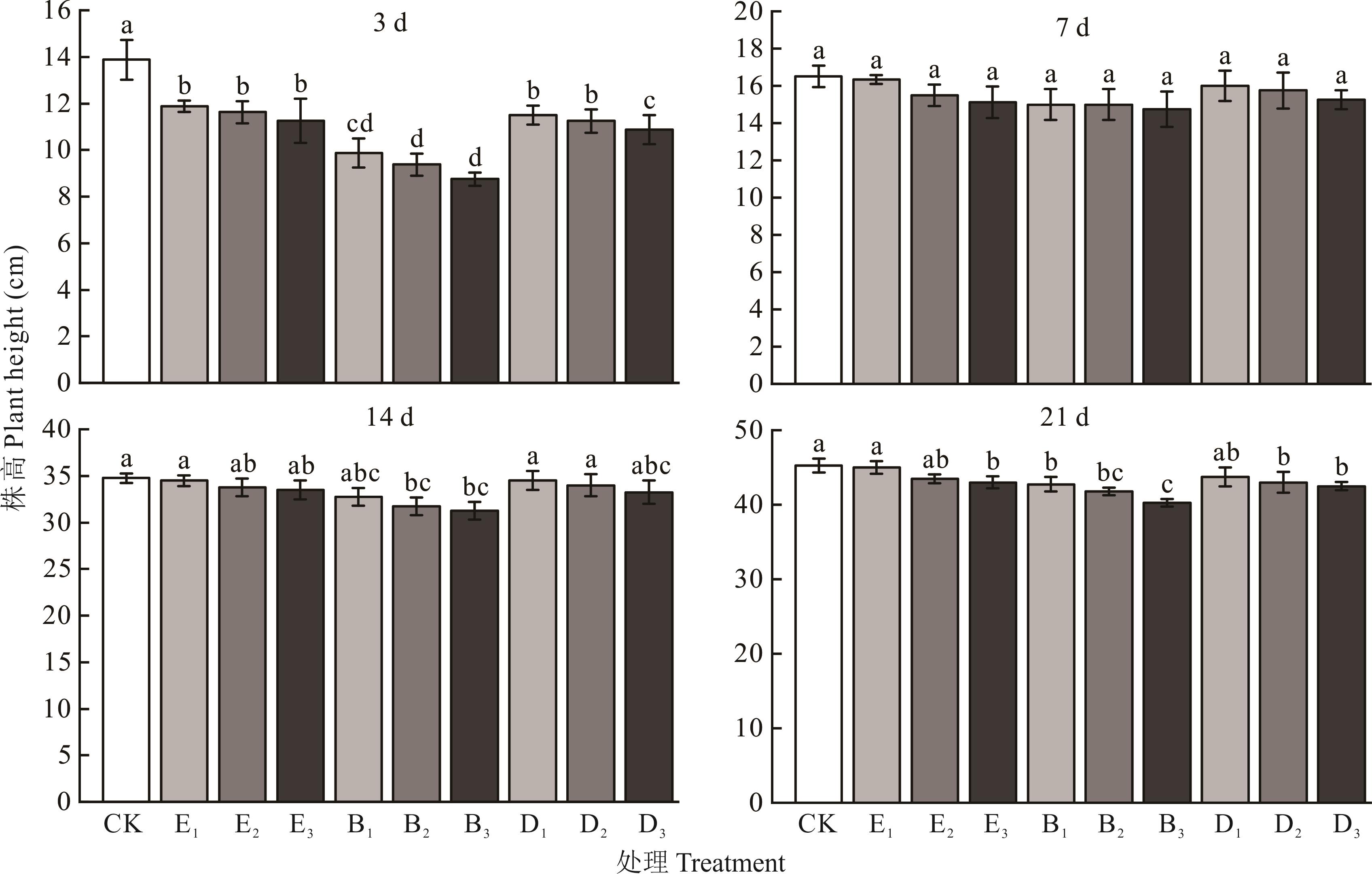
Fig.1 Effects of different defoliants on the plant height of alfalfa
处理 Treatment | 茎粗Stem diameter (mm) | 分枝数Branch number (No.) | 地上生物量Aboveground biomass (g·m-2) | |||
|---|---|---|---|---|---|---|
| 14 d | 21 d | 14 d | 21 d | 14 d | 21 d | |
| CK | 2.68±0.08bc | 3.25±0.05a | 8.00±0.82abc | 9.50±0.58b | 45.05±1.67ab | 50.57±1.39a |
| E1 | 2.80±0.06b | 3.23±0.03a | 8.75±0.50ab | 9.50±0.58b | 45.21±1.30ab | 51.69±1.28a |
| E2 | 2.99±0.05a | 3.26±0.04a | 9.25±0.50a | 11.25±0.50a | 46.98±1.40a | 52.11±1.79a |
| E3 | 2.58±0.17c | 3.21±0.02a | 8.00±0.82abc | 9.25±0.50b | 44.50±1.43ab | 50.48±2.07a |
| B1 | 2.61±0.02c | 3.23±0.02a | 7.75±0.50bc | 9.00±0.82b | 44.23±1.46ab | 50.17±2.20a |
| B2 | 2.59±0.03c | 3.21±0.02a | 7.50±0.58bc | 8.75±0.50b | 42.94±1.51ab | 48.16±1.09a |
| B3 | 2.43±0.03d | 3.13±0.05b | 7.25±0.50c | 8.25±0.50b | 41.95±1.64b | 47.55±1.51a |
| D1 | 2.68±0.03bc | 3.24±0.03a | 8.00±0.82abc | 9.25±0.50b | 44.78±1.36ab | 50.49±1.82a |
| D2 | 2.60±0.03c | 3.22±0.02a | 7.50±0.58bc | 8.75±0.50b | 44.70±1.20ab | 49.55±1.48a |
| D3 | 2.59±0.01c | 3.19±0.04ab | 7.25±0.50c | 9.00±0.82b | 44.03±1.20ab | 48.34±1.59a |
Table 1 Effects of different defoliants on stem diameter, branch number, and aboveground biomass of alfalfa
处理 Treatment | 茎粗Stem diameter (mm) | 分枝数Branch number (No.) | 地上生物量Aboveground biomass (g·m-2) | |||
|---|---|---|---|---|---|---|
| 14 d | 21 d | 14 d | 21 d | 14 d | 21 d | |
| CK | 2.68±0.08bc | 3.25±0.05a | 8.00±0.82abc | 9.50±0.58b | 45.05±1.67ab | 50.57±1.39a |
| E1 | 2.80±0.06b | 3.23±0.03a | 8.75±0.50ab | 9.50±0.58b | 45.21±1.30ab | 51.69±1.28a |
| E2 | 2.99±0.05a | 3.26±0.04a | 9.25±0.50a | 11.25±0.50a | 46.98±1.40a | 52.11±1.79a |
| E3 | 2.58±0.17c | 3.21±0.02a | 8.00±0.82abc | 9.25±0.50b | 44.50±1.43ab | 50.48±2.07a |
| B1 | 2.61±0.02c | 3.23±0.02a | 7.75±0.50bc | 9.00±0.82b | 44.23±1.46ab | 50.17±2.20a |
| B2 | 2.59±0.03c | 3.21±0.02a | 7.50±0.58bc | 8.75±0.50b | 42.94±1.51ab | 48.16±1.09a |
| B3 | 2.43±0.03d | 3.13±0.05b | 7.25±0.50c | 8.25±0.50b | 41.95±1.64b | 47.55±1.51a |
| D1 | 2.68±0.03bc | 3.24±0.03a | 8.00±0.82abc | 9.25±0.50b | 44.78±1.36ab | 50.49±1.82a |
| D2 | 2.60±0.03c | 3.22±0.02a | 7.50±0.58bc | 8.75±0.50b | 44.70±1.20ab | 49.55±1.48a |
| D3 | 2.59±0.01c | 3.19±0.04ab | 7.25±0.50c | 9.00±0.82b | 44.03±1.20ab | 48.34±1.59a |
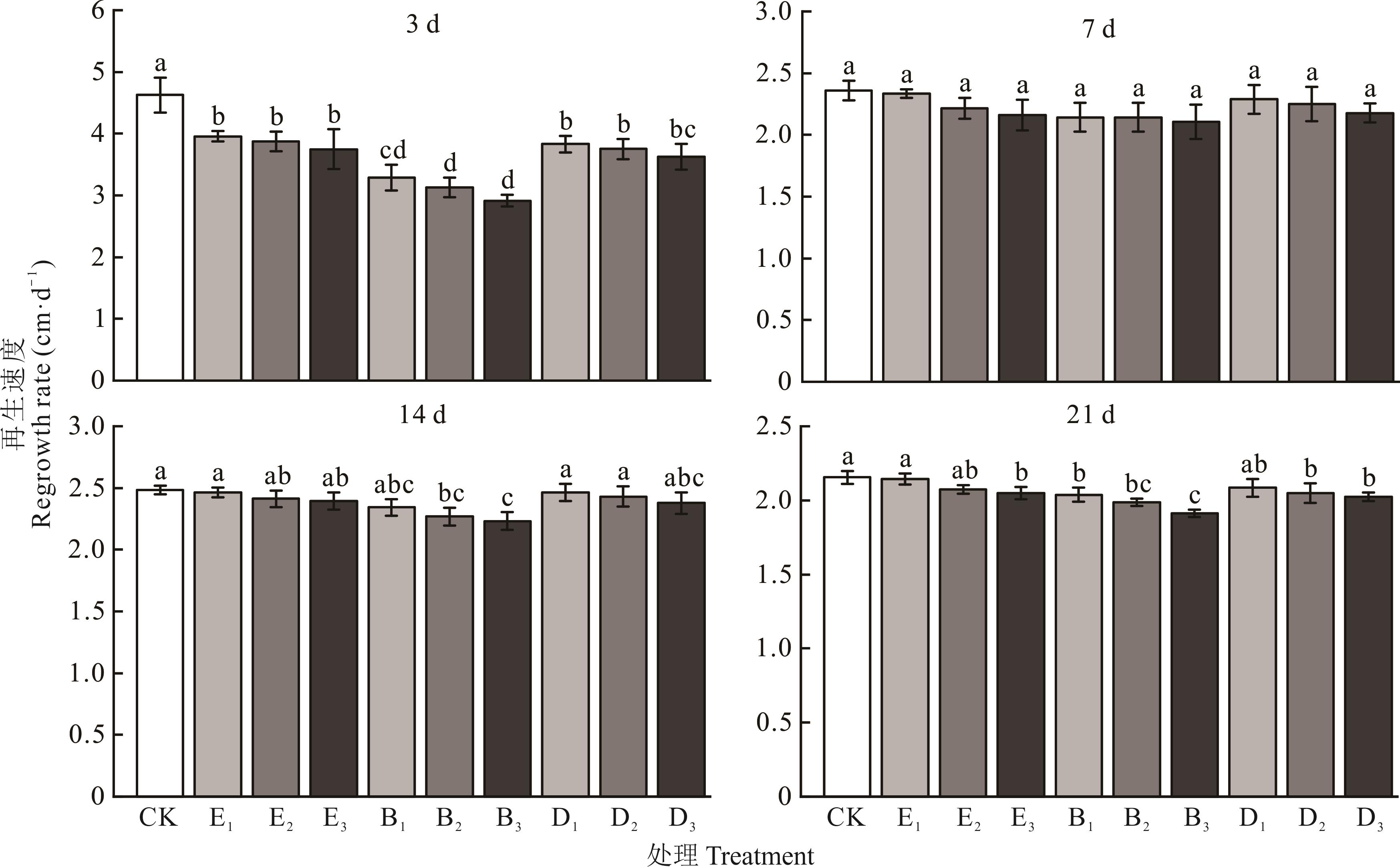
Fig.2 Effects of different defoliants on the regrowth rate of alfalfa
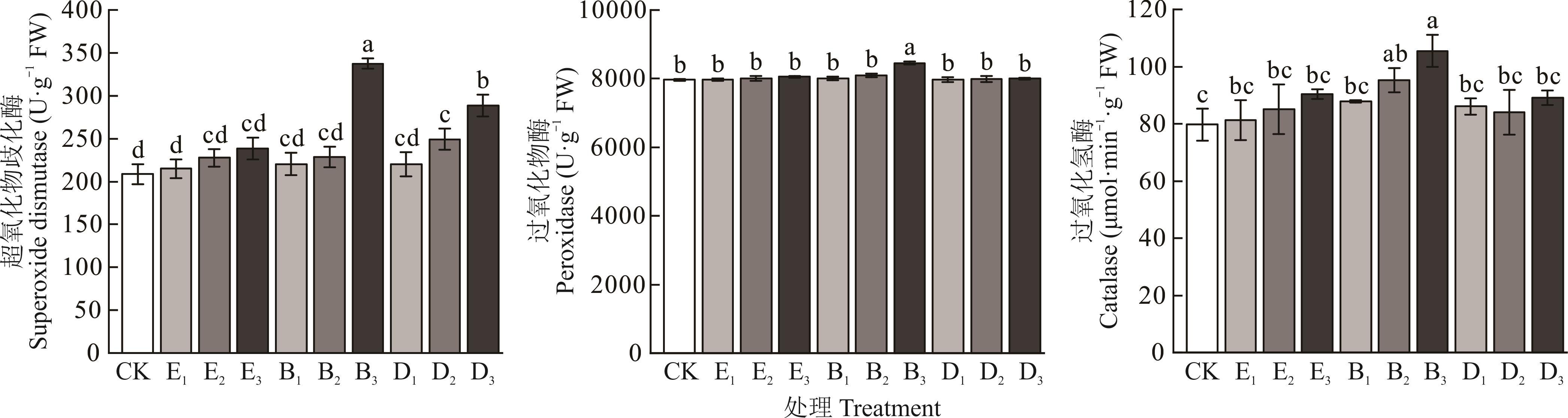
Fig.3 Effects of different defoliants on the antioxidant enzyme activity in the roots of alfalfa
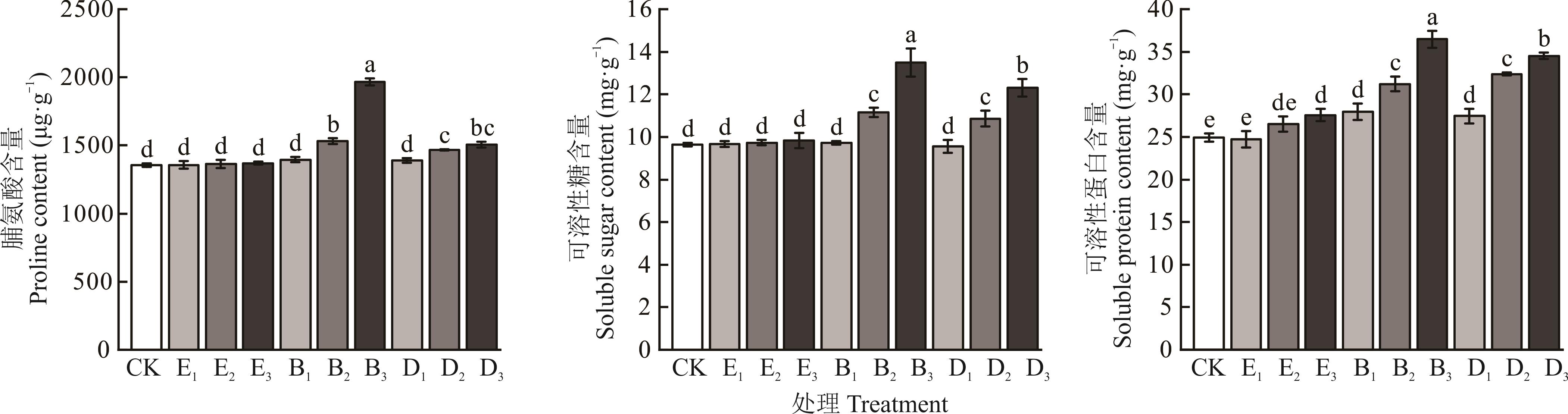
Fig.4 Effects of different defoliants on osmotic adjustment substances in the roots of alfalfa
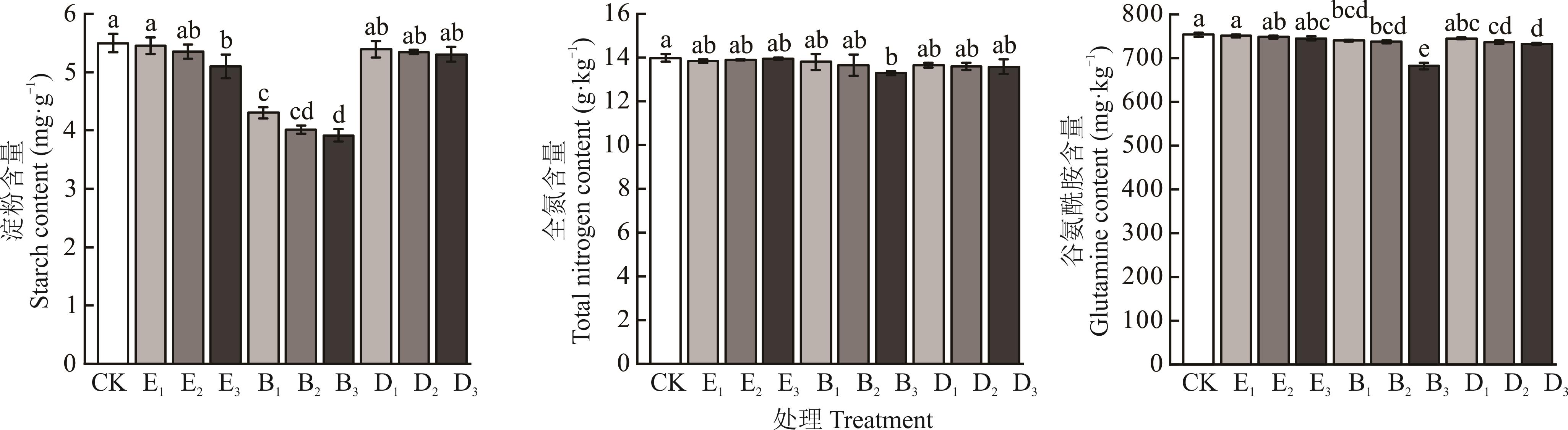
Fig.5 Effects of different defoliants on the storage substances in the roots of alfalfa
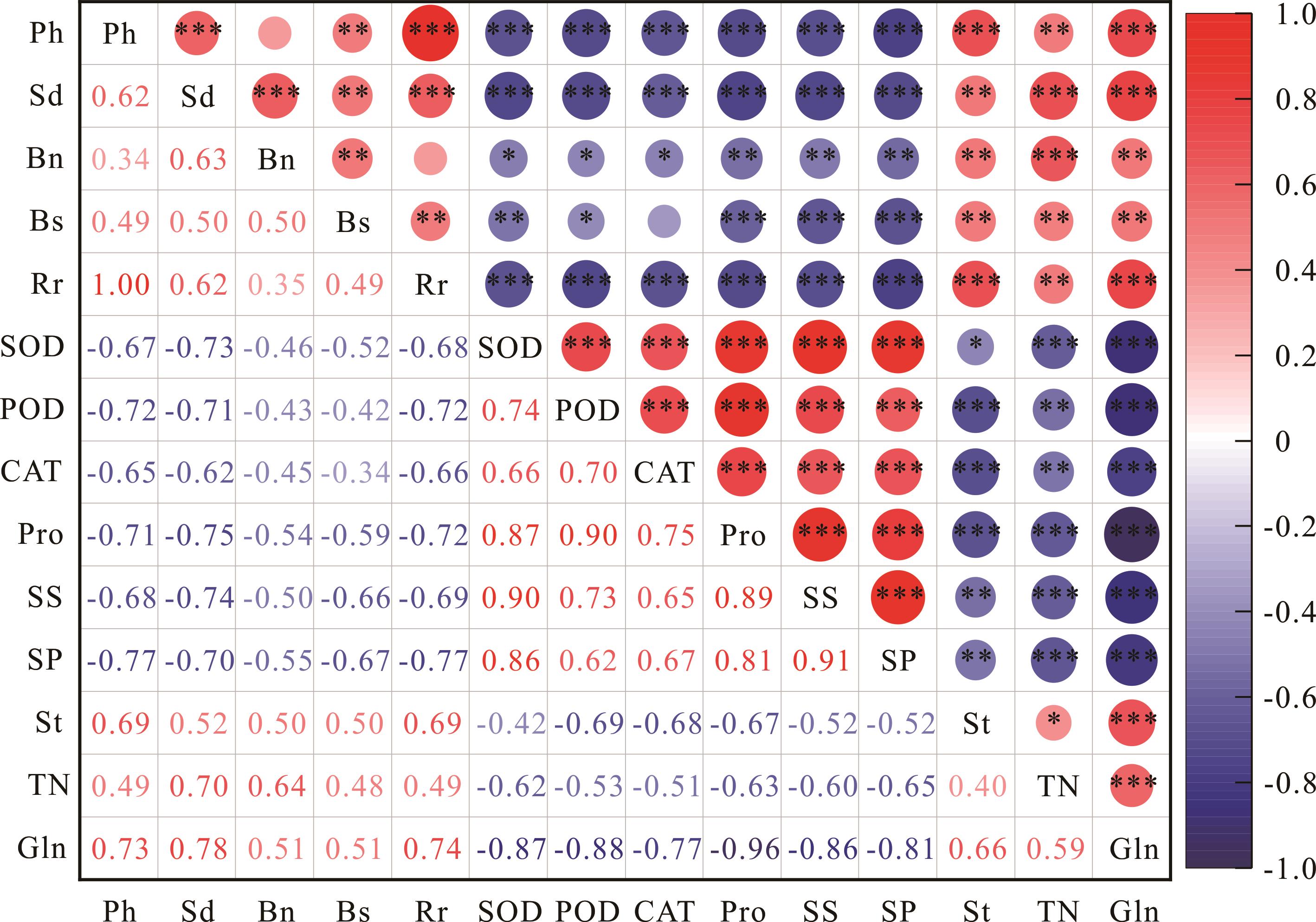
Fig.6 Correlation analysis of growth, physiological characteristics and root storage substances of alfalfa under different defoliant treatments
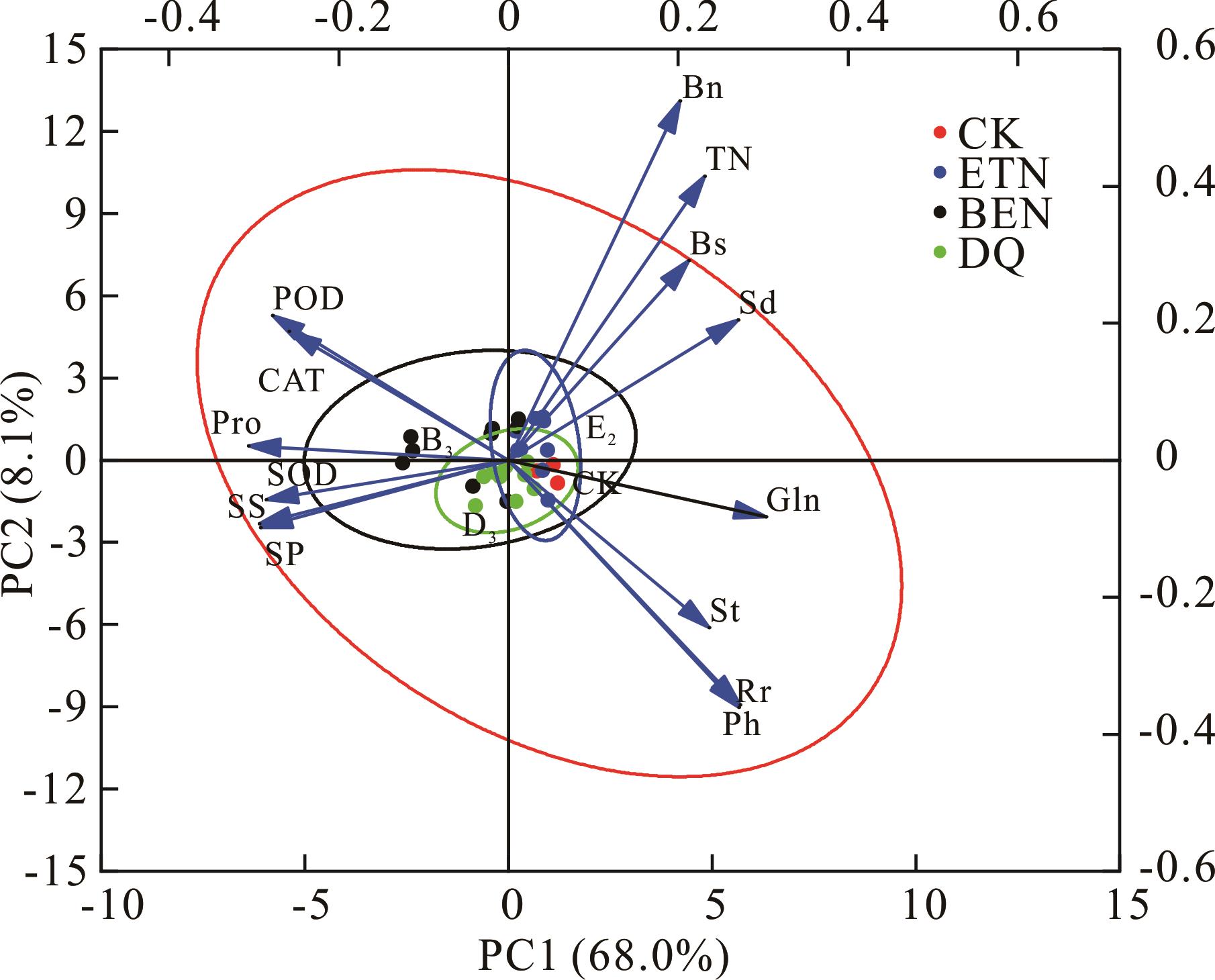
Fig.7 Principal component analysis of growth, physiological characteristics and root storage substances of alfalfa under different defoliant treatments
| [1] | Zhang F, Yang Q C. The breeding history, current status and prospects of alfalfa. Scientia Agricultura Sinica, 2025, 58(21): 4471-4481. |
| 张帆, 杨青川. 紫花苜蓿育种历史、现状与展望. 中国农业科学, 2025, 58(21): 4471-4481. | |
| [2] | Ma H X, Jiang P, Zhang X J, et al. Regulation of alfalfa growth, water and nitrogen utilization and distribution in arid region of Northwest China by optimizing irrigation method. Frontiers in Plant Science, 2025, 16: 1517398. |
| [3] | Peng X W, Sun Q C, Zhang S Z, et al. A comparative analysis of the efficacy of three plant growth regulators and dose optimization for improving agronomic traits and seed yield of purple-flowered alfalfa (Medicago sativa L.). Plants, 2025, 14(15): 2223-2247. |
| [4] | Wang Z W, Wang X G, Wang Q Z, et al. Effects of drying reagents on seed harvest and production performance of Medicago sativa. Journal of Anhui Agricultural Sciences, 2012, 40(6): 3359-3361. |
| 王正伟, 王显国, 王佺珍, 等. 干燥剂对紫花苜蓿种子收获及生产性能的影响. 安徽农业科学, 2012, 40(6): 3359-3361. | |
| [5] | Lu X, Li P B, Li M H, et al. Study on roofing effects of different concentration ethephon compound reagents on cotton. Xinjiang Agricultural Sciences, 2023, 60(2): 272-278. |
| 路茜, 李鹏兵, 李明华, 等. 不同浓度乙烯利复配剂对棉花的打顶效应. 新疆农业科学, 2023, 60(2): 272-278. | |
| [6] | Ma L J, Zhan D X, Chang J L. Progress in the application of chemical defoliation and ripening technology for cotton. Jiangsu Agricultural Sciences, 2025, 53(15): 23-31. |
| 马利军, 占东霞, 常锦乐. 棉花化学脱叶催熟技术应用进展. 江苏农业科学, 2025, 53(15): 23-31. | |
| [7] | Coelho J D S, Oliveira A L D, Souza C G M D, et al. Effect of the herbicides bentazon and diuron on the production of ligninolytic enzymes by Ganoderma lucidum. International Biodeterioration & Biodegradation, 2010, 64(2): 156-161. |
| [8] | Ou X M, Tang D X. Recent advances in research on the mechanisms of action of herbicides. World Agriculture, 2000(10): 28-30. |
| 欧晓明, 唐德秀. 除草剂作用机理研究的新进展. 世界农业, 2000(10): 28-30. | |
| [9] | Song M Q, Pang X P, Jin L, et al. Effects of mowing frequency and stubble height on yield and quality of alfalfa in the Qaidam Basin. Pratacultural Science, 2026, 43(6): 1558-1567. |
| 宋美琪, 庞晓攀, 金玲, 等. 刈割次数和留茬高度对柴达木盆地紫花苜蓿产量和品质的影响. 草业科学, 2026, 43(6): 1558-1567. | |
| [10] | Tian X H, Du W H. Effects of drying reagents on seed yield and quality of Medicago sativa. Acta Agrestia Sinica, 2007, 15(4): 359-362. |
| 田新会, 杜文华. 干燥剂对紫花苜蓿种子产量和质量的影响. 草地学报, 2007, 15(4): 359-362. | |
| [11] | An R J, Feng Y F, Xu Y L, et al. The experiment of screening and efficacy of treating stems and leaves to the control of weeds in the seedling period of alfalfa. Journal of Inner Mongolia Minzu University (Natural Sciences Edition), 2007, 22(2): 170-171. |
| 安瑞军, 冯一凡, 徐颖利, 等. 紫花苜蓿苗期茎叶处理剂筛选及防效试验. 内蒙古民族大学学报(自然科学版), 2007, 22(2): 170-171. | |
| [12] | Jing L L, Li M, Wang Z Y, et al. Effects of clothianidin application at different modes on root exudates and growth of tomato. Chinese Journal of Pesticide Science, 2025, 27(2): 332-340. |
| 荆莉莉, 李梅, 王中阳, 等. 噻虫胺不同方式施用对番茄根系分泌物及生长的影响. 农药学学报, 2025, 27(2): 332-340. | |
| [13] | Xia J, Nan L L, Wang K, et al. Effects of low phosphorus stress on root growth and rhizosphere bacteria of different root types alfalfa. Chinese Journal of Grassland, 2024, 46(6): 86-94. |
| 夏静, 南丽丽, 汪堃, 等. 低磷胁迫对不同根型苜蓿根系生长及根际细菌的影响. 中国草地学报, 2024, 46(6): 86-94. | |
| [14] | Hu X R, Tao M, Lu X X, et al. Study on the genetic integrity of ultra-dried seed of rice with isozyme of α-Amy and SOD. Journal of Plant Genetic Resources, 2007, 8(2): 228-230. |
| 胡小荣, 陶梅, 卢新雄, 等. α-淀粉酶和超氧化物歧化酶等位酶与水稻种子超干燥保存遗传完整性的研究. 植物遗传资源学报, 2007, 8(2): 228-230. | |
| [15] | Zhou J J, Wei W, Sang D, et al. Comparison between physiological characteristics and cold resistance of wild Poa root during the overwintering period in alpine regions in northern Tibet. Pratacultural Science, 2019, 36(8): 2008-2016. |
| 周娟娟, 魏巍, 桑旦, 等. 藏北高寒区越冬期间野生早熟禾根系生理特征及抗寒性比较. 草业科学, 2019, 36(8): 2008-2016. | |
| [16] | Gu T, Baosaihenna, Miao Y J, et al. Study on the adaptability of seed germination and physiology of three grasses to diurnal temperature change in alpine region. Acta Agrestia Sinica, 2026, 34(1): 266-274. |
| 顾涛, 包赛很那, 苗彦军, 等. 3种禾本科牧草种子萌发及生理对高寒昼夜变温的适应性研究. 草地学报, 2026, 34(1): 266-274. | |
| [17] | Thompson D I, Edwards T J, Van Staden J. A novel dual-phase culture medium promotes germination and seedling establishment from immature embryos in South African Disa (Orchidaceae) species. Plant Growth Regulation, 2007, 53(3): 163-171. |
| [18] | Zhu L, Li Z Y, Zhang X Q, et al. Unveiling the cold acclimation of alfalfa: insights into its starch-soluble sugar dynamic transformation. Plants, 2025, 14(9): 1313. |
| [19] | Zhang Y H, Liu C B, Zhou K, et al. Effects of jujube tree on the growth of alfalfa and orchardgrass in different positions within an orchard. Acta Prataculturae Sinica, 2025, 34(6): 203-212. |
| 张英豪, 刘楚波, 周坤, 等. 果草系统中枣树对不同方位紫花苜蓿和鸭茅生长的影响. 草业学报, 2025, 34(6): 203-212. | |
| [20] | Grant S L, Shulman Y, Tibbo P, et al. Determination of D-serine and related neuroactive amino acids in human plasma by high-performance liquid chromatography with fluorimetric detection. Journal of Chromatography B, 2006, 844(2): 278-282. |
| [21] | Chen X L, Lu M Y. Progress of studies on application of ethrel in plant flower-formation regulation. Journal of Southern Agriculture, 2005, 36(2): 110-112. |
| 陈香玲, 卢美英. 乙烯利在植物成花方面的应用及研究进展. 广西农业科学, 2005, 36(2): 110-112. | |
| [22] | Wang J, Shi W X, Sun R Q, et al. Effects of different kinds and levels of plant growth regulators on lodging resistance and yield of oat. Crops, (2025-12-04)[2026-02-11]. https://link-cnki-net-s.webvpn.xjau.edu.cn/urlid/11.1808.s.20251203. 1525.004. |
| 王婧, 石文鑫, 孙瑞卿, 等. 喷施不同植物生长调节剂及其浓度对燕麦倒伏性及产量的影响. 作物杂志, (2025-12-04)[2026-02-11]. https://link-cnki-net-s.webvpn.xjau.edu.cn/urlid/11.1808.s.20251203.1525.004. | |
| [23] | Shi Z L. Effects of plant growth regulators on lodging resistance and yield of winter wheat. Alaer: Tarim University, 2025. |
| 石志林. 植物生长调节剂对冬小麦抗倒伏能力和产量的影响. 阿拉尔: 塔里木大学, 2025. | |
| [24] | Wen T G, Wen Z R, Jiang W Q, et al. Effects of different exogenous plant growth regulators on stem lodging resistance and yield in a soybean-maize strip intercropping system. Jiangsu Journal of Agricultural Sciences, 2025, 41(10): 1936-1945. |
| 文廷刚, 文章荣, 蒋伟勤, 等. 外源植物生长调节剂对大豆玉米带状间作茎秆抗倒伏性状及产量的影响. 江苏农业学报, 2025, 41(10): 1936-1945. | |
| [25] | Hekmat S, Soltani N, Shropshire C, et al. Effect of imazamox plus bentazon on dry bean (Phaseolus vulgaris L.). Crop Protection, 2008, 27(12): 1491-1494. |
| [26] | Kuehne L, Heimer D. Efficacy and rates of diquat for reducing invasive knotweeds and potential for sequential use with imazapyr. Weed Biology and Management, 2023, 23(2): DOI: 10.1111/wbm.12265. |
| [27] | Ntanasi T, Karavidas I, Spyrou P G, et al. Plant biostimulants enhance tomato resilience to salinity stress: insights from two greek landraces. Plants, 2024, 13(10): 1404. |
| [28] | Ma L J. Effects of defoliants on defoliation effect and physiological characteristics of sea island cotton under different planting pattern. Urumqi: Xinjiang Agricultural University, 2025. |
| 马利军. 不同种植模式下脱叶剂对长绒棉脱叶效果及生理特性的影响. 乌鲁木齐: 新疆农业大学, 2025. | |
| [29] | Chen Y Q, Abudukadier·Kuerban, Deng C H, et al. Effect of different chemical regulators on physiological indicators of seed melon. Xinjiang Agricultural Sciences, 2025, 62(6): 1380-1387. |
| 陈友强, 阿不都卡地尔·库尔班, 邓超宏, 等. 不同化学调节剂对打瓜生理指标的影响. 新疆农业科学, 2025, 62(6): 1380-1387. | |
| [30] | Li Y T, Gao A X, Li Y J, et al.Effects of defoliants on the physiological characteristics of cotton varieties with different sensitivities. Xinjiang Agricultural Sciences, 2024, 61(9): 2094-2102. |
| 李永泰, 高阿香, 李艳军, 等. 脱叶剂对不同敏感性棉花品种生理特性的影响. 新疆农业科学, 2024, 61(9): 2094-2102. | |
| [31] | Ozturk M, Unal B T, Garcia-Caparros P, et al. Osmoregulation and its actions during the drought stress in plants. Physiologia Plantarum, 2021, 172(2): 1321-1335. |
| [32] | Hou L Y, Chen Y H, Wang Y C, et al. Influence of drought stress duration on quinoa physiological characteristics and drought tolerance evaluation at seedling stage. Journal of Nuclear Agricultural Sciences, 2024, 38(11): 2237-2246. |
| 侯丽媛, 陈禺怀, 王育川, 等. 干旱胁迫时间对藜麦苗期生理特性的影响及耐旱性评价. 核农学报, 2024, 38(11): 2237-2246. | |
| [33] | Wu Q H, Wang Y, Zhao Y N, et al. Effects of NPK ratio on yield nutrient absorption and economic benefit of high-yielding summer peanut in a fluvo-aquic soil. Soil and Fertilizer Sciences in China, 2019(2): 98-104. |
| 武庆慧, 汪洋, 赵亚南, 等. 氮磷钾配比对潮土区高产夏播花生产量、养分吸收和经济效益的影响. 中国土壤与肥料, 2019(2): 98-104. | |
| [34] | Ma Y X. Study on the dynamic growth of wheat root systems in different soils. Acta Agronomica Sinica, 1987, 13(1): 37-44. |
| 马元喜. 不同土壤对小麦根系生长动态的研究. 作物学报, 1987, 13(1): 37-44. | |
| [35] | Sun X Y. Effect of spraying ethephon on agronomic traits, yield and quality of peanut. Qinhuangdao: Hebei Normal University of Science & Technology, 2023. |
| 孙晓英. 喷施乙烯利对花生农艺性状、产量和品质的影响. 秦皇岛: 河北科技师范学院, 2023. | |
| [36] | The S V, Snyder R, Tegeder M. Targeting nitrogen metabolism and transport processes to improve plant nitrogen use efficiency. Frontiers in Plant Science, 2021, 11: 2330. |
| [37] | Liu H B, Wu Y, Cai J H, et al. Auxin controls root gravitropic response by affecting starch granule accumulation and cell wall modification in tomato. Plants, 2025, 14(7): 1020. |
| [38] | Hao Y. Effects of drought stress on physiological characteristics and non-structural carbohydrate allocation in Populus euphratica and Elaeagnus angustifolia seedlings. Alaer: Tarim University, 2025. |
| 郝瑜. 干旱胁迫对胡杨、沙枣幼苗生理特性与非结构性碳水化合物分配的影响. 阿拉尔: 塔里木大学, 2025. | |
| [39] | Zhang P, Li X X, Yan F N, et al. Regeneration and carbohydrate distribution in sweet sorghum after cutting. Acta Prataculturae Sinica, 2024, 33(5): 69-79. |
| 张盼, 李霄霄, 严发能, 等. 甜高粱刈割后再生及碳水化合物的分配规律. 草业学报, 2024, 33(5): 69-79. | |
| [40] | Zhang G H, Li R F, Tian L. Effects of epibrassinolide on cucumber seedlings under drought stress. China Cucurbits and Vegetables, 2025, 38(11): 77-84. |
| 张国恒, 李荣峰, 田玲. 表油菜素内酯对干旱胁迫条件下黄瓜幼苗的影响. 中国瓜菜, 2025, 38(11): 77-84. |
| [1] | Jia-yi YONG, Jia-xi YONG, Ying ZHANG, Hai-ying HU. Regrowth and forage quality responses to stubble height in five oat varieties [J]. Acta Prataculturae Sinica, 2026, 35(8): 97-111. |
| [2] | Xiao-cong LI, Ju-hui YAN, Xing WANG, Peng-fei HU, Yu-nong YE, Bing-zhe FU. Effects of different inter-row planting ratios of alfalfa and smooth brome on grass production performance and soil physicochemical properties [J]. Acta Prataculturae Sinica, 2026, 35(5): 113-125. |
| [3] | Wen-hui DENG, Xiao-na ZHAO, Jia-yi YONG, Si-yu GUAN, Guo-qiang HU, Teng-fei WANG, Hai-ying HU. Effects of intercropping oat with different densities on alfalfa seed yield and its constituent factors [J]. Acta Prataculturae Sinica, 2026, 35(4): 100-111. |
| [4] | Shi-chao ZHANG, Guo-wen CUI, De-peng ZHANG, Fu-ying HAN, Ding DING, Xiang-li LYU, Shuo LIN, Le-ran CHEN, Ji-ru LI, Hua CAI. Establishment of a tissue culture-free genetic transformation system for alfalfa and its applications in salt-tolerance gene functional characterization and gene editing [J]. Acta Prataculturae Sinica, 2026, 35(3): 223-234. |
| [5] | Li-juan CHEN, Rong GAO, Jian-xi WANG, Hui-ling MA. A comparative study of differences in condensed tannin synthesis between Medicago sativa and Onobrychis viciifolia at different growth stages [J]. Acta Prataculturae Sinica, 2026, 35(2): 221-236. |
| [6] | Yang-kun LI, Zhuan-lin BEN, Jun-yu ZHANG, Hui-min YANG. A meta-analysis on the effect of fertilizer type on alfalfa seed yield under various climate and soil conditions [J]. Acta Prataculturae Sinica, 2026, 35(2): 54-67. |
| [7] | Xin-zhe DAI, Wen REN, Wei ZHANG, Wen-qing CHEN, Zhi-xin ZHANG. Regulatory effects of spatial configuration optimization on water- and radiation-utilization of alfalfa/ryegrass intercropping systems in the semi-arid Loess Plateau [J]. Acta Prataculturae Sinica, 2026, 35(12): 1-15. |
| [8] | Ying ZHANG, Shan-mu HE, Ao-lei HE, Chang-ning LI, Tuo YAO. Effects of microbial inoculants combined with organic calcium protein on alfalfa growth and soil enzyme activity [J]. Acta Prataculturae Sinica, 2026, 35(1): 25-39. |
| [9] | Can CUI, Meng-qi WANG, Wan-lu ZHAO, Xin-ying LIU, Jing-jing JIAN, Jun-xin YAN. The effect on seed germination and seedling growth of soaking seeds with diethyl aminoethyl hexanoate in alfalfa under NaCl stress [J]. Acta Prataculturae Sinica, 2025, 34(6): 46-58. |
| [10] | Xin-yue ZHOU, Li-ping WANG, Qing-xue JIANG, Xiao-ran MA, Deng-xia YI, Xue-min WANG. Isolation of the low-temperature induced proteinMsLTI65 from alfalfa and its response to different stresses [J]. Acta Prataculturae Sinica, 2025, 34(5): 89-104. |
| [11] | Tian-rong LUO, Jian-zhi MA, Ming-yang DU, Jie-cuo DUO, Hui-yan XIONG, Rui-jun DUAN. Identification and expression analysis of LACS gene family members in Medicago sativa [J]. Acta Prataculturae Sinica, 2025, 34(4): 124-136. |
| [12] | Tuo-xuan DONG, Xun-feng CHEN, Da-hai MEI, Yong-sha GUO, Xu-hong WEI, Qiu-yan SONG. Inhibition and control effect of nano-iron and copper on Ascochyta medicaginicola and spring black stem disease [J]. Acta Prataculturae Sinica, 2025, 34(4): 201-211. |
| [13] | Wen-qi CAI, Shu-xia LI, Xiao-tong WANG, Wen-xue SONG, Xu-xia MA, Xiao-mei MA, Xiao-hong LI, Xin-yao DAI. Effects of interaction between exogenous melatonin and ethylene on the growth and physiological characteristics of Medicago sativa seedlings under salt stress [J]. Acta Prataculturae Sinica, 2025, 34(1): 80-93. |
| [14] | Wen-wen QI, Hong-yuan MA, Ya-xiao LI, Yan DU, Meng-dan SUN, Hai-tao WU. Progress in research on breeding methods to produce new, high-quality forage varieties [J]. Acta Prataculturae Sinica, 2024, 33(6): 187-202. |
| [15] | Ying TAN, Hao YIN. Effects of root application of an arbuscular mycorrhizal fungus and melatonin on the growth, photosynthetic characteristics, and antioxidant system of Medicago sativa under salt stresss [J]. Acta Prataculturae Sinica, 2024, 33(6): 64-75. |
| Viewed | ||||||
|
Full text |
|
|||||
|
Abstract |
|
|||||
