
ISSN 1004-5759 CN 62-1105/S
Acta Prataculturae Sinica ›› 2026, Vol. 35 ›› Issue (8): 97-111.DOI: 10.11686/cyxb2025342
Previous Articles Next Articles
Jia-yi YONG1( ), Jia-xi YONG1, Ying ZHANG1, Hai-ying HU1,2()
Received:2025-08-27
Revised:2025-10-13
Online:2026-08-20
Published:2026-06-22
Contact:
Hai-ying HU
Jia-yi YONG, Jia-xi YONG, Ying ZHANG, Hai-ying HU. Regrowth and forage quality responses to stubble height in five oat varieties[J]. Acta Prataculturae Sinica, 2026, 35(8): 97-111.
简称 Abbreviation | 品种 Variety | 熟性 Maturity | 生育期Period of duration (d) |
|---|---|---|---|
| TZZ | 挑战者Challenger | 中熟Mid-maturing | 108 |
| TY | 甜燕1号Tianyan No.1 | 早熟Early-maturing | 85 |
| MLS | 牧乐思Molasses | 晚熟Late-maturing | 115 |
| XY | 喜韵Xiyun | 中熟Mid-maturing | 110 |
| BY | 白燕7号Baiyan No.7 | 早熟Early-maturing | 85 |
Table 1 Maturity and period of duration of five oats varieties for test
简称 Abbreviation | 品种 Variety | 熟性 Maturity | 生育期Period of duration (d) |
|---|---|---|---|
| TZZ | 挑战者Challenger | 中熟Mid-maturing | 108 |
| TY | 甜燕1号Tianyan No.1 | 早熟Early-maturing | 85 |
| MLS | 牧乐思Molasses | 晚熟Late-maturing | 115 |
| XY | 喜韵Xiyun | 中熟Mid-maturing | 110 |
| BY | 白燕7号Baiyan No.7 | 早熟Early-maturing | 85 |
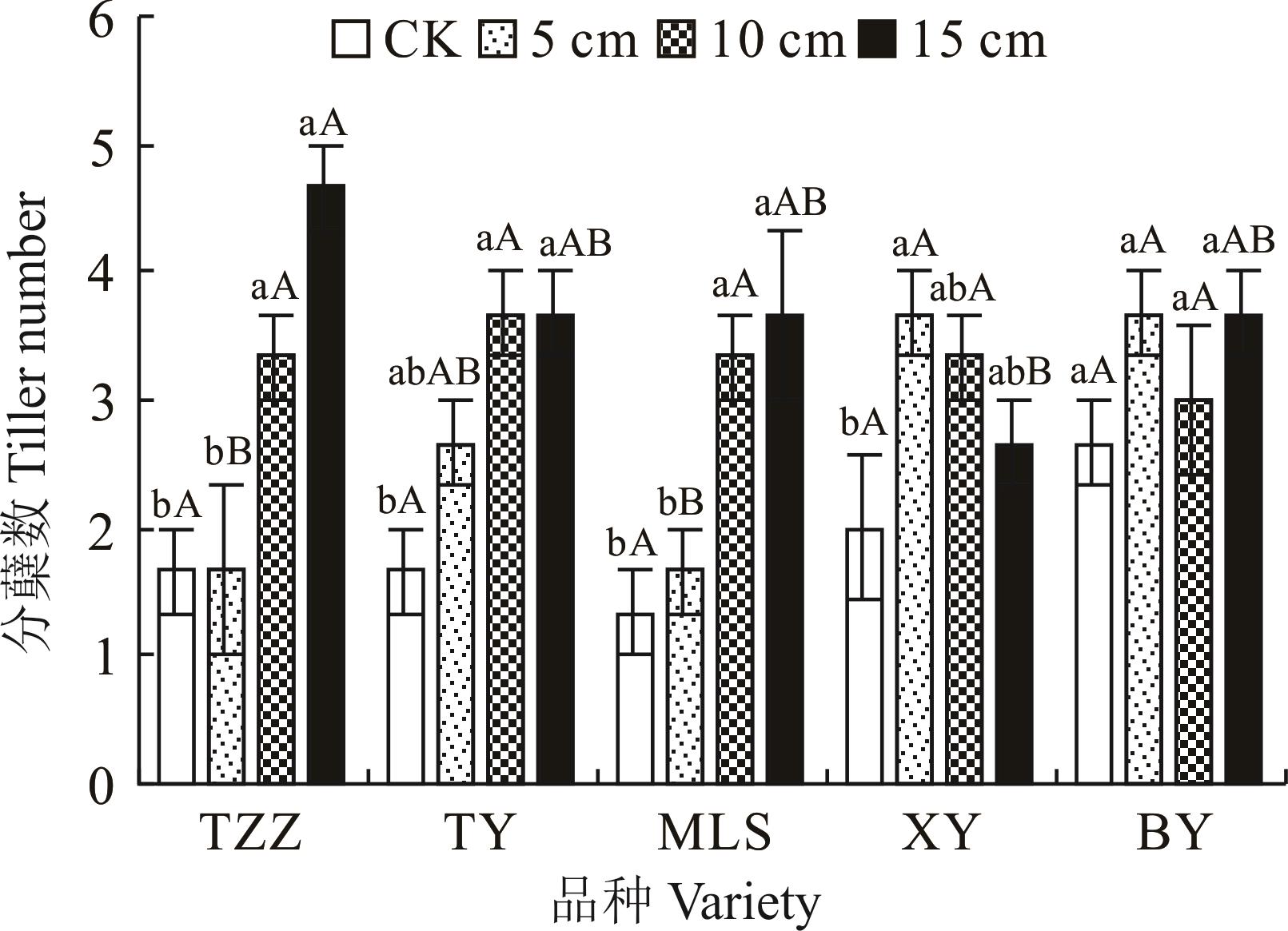
Fig.1 Effect of different stubble height on the tiller number of five oatsCI=G/C (6)
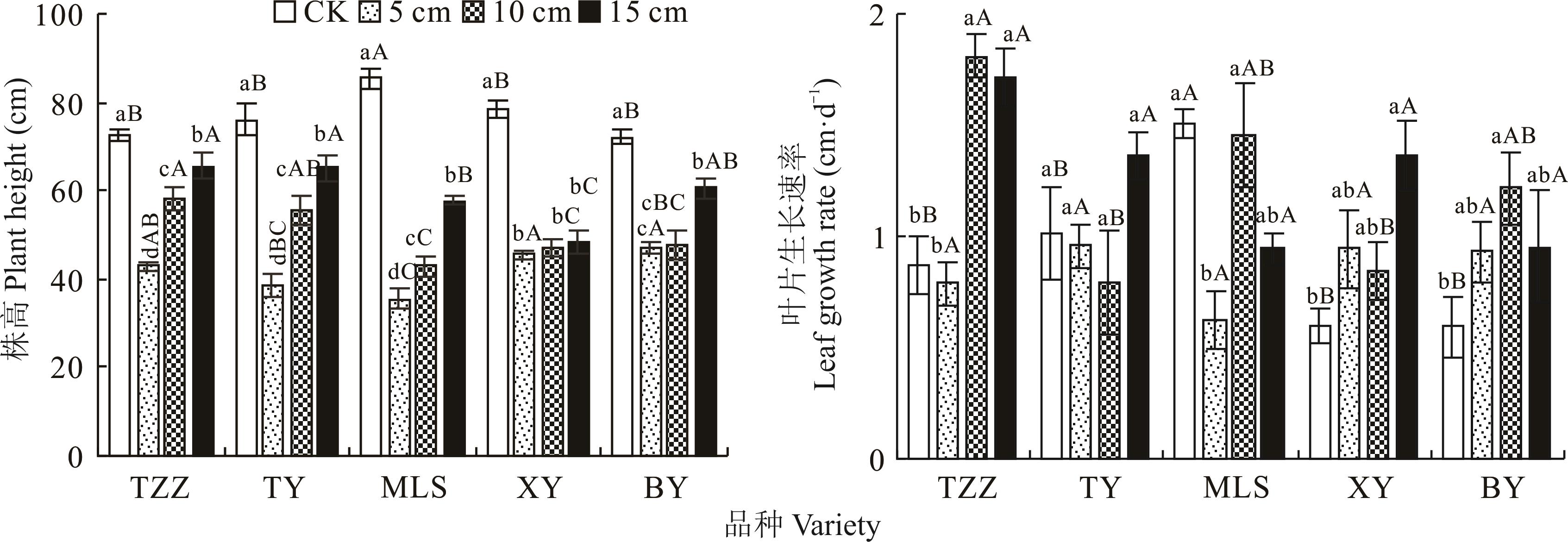
Fig.2 Effect of different stubble height on the plant height and leaf growth rate of five oats
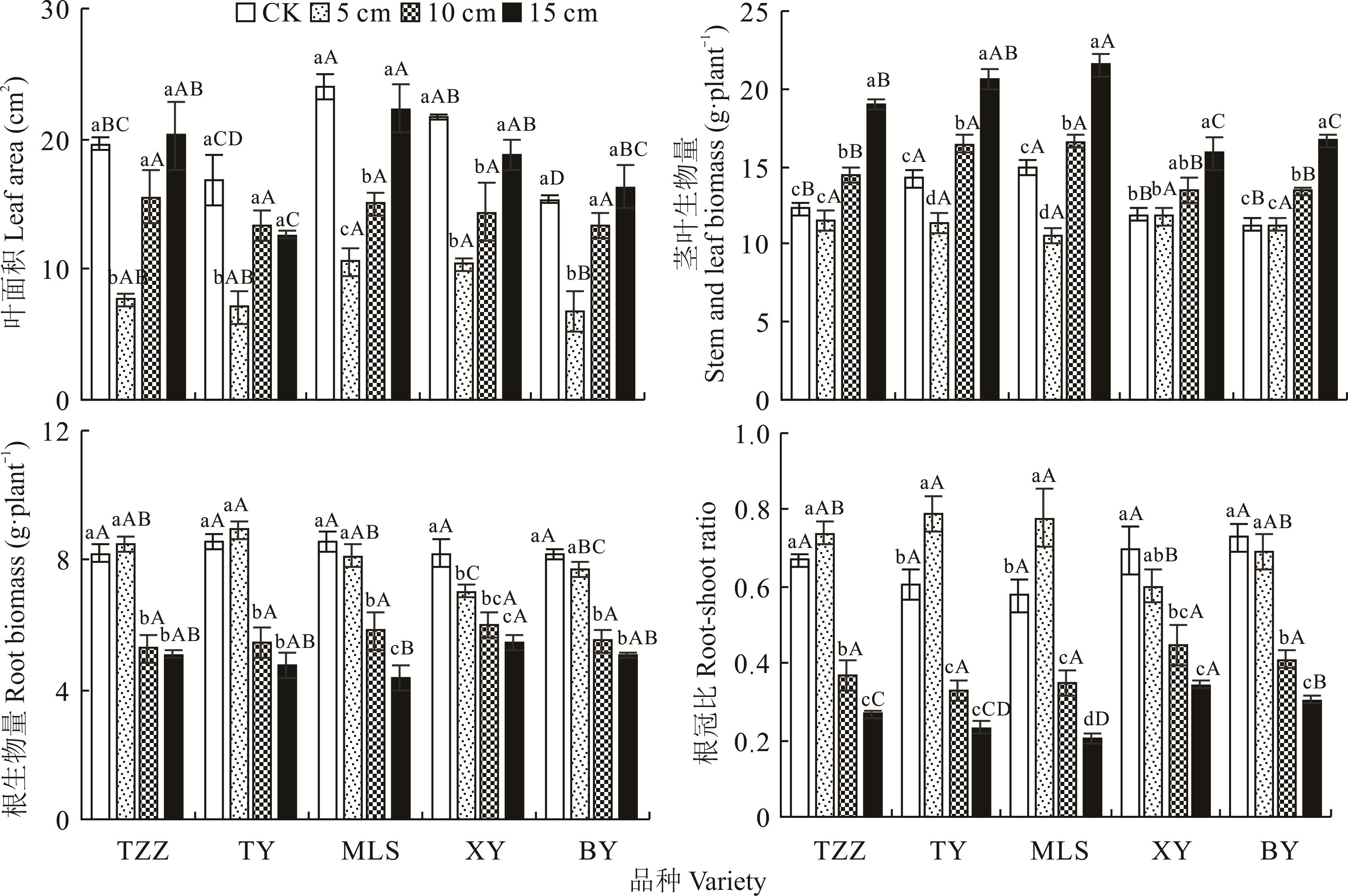
Fig.3 Effect of different stubble height on the leaf area and plant biomass of five oats
| 品种Variety | SH (cm) | CI | SR (%) |
|---|---|---|---|
| TZZ | 0 (CK) | 1.000±0.00cA | 100.0 |
| 5 | 0.936±0.07cAB | 20.0 | |
| 10 | 1.172±0.01bA | 80.0 | |
| 15 | 1.548±0.03aA | 80.0 | |
| TY | 0 (CK) | 1.000±0.00cA | 100.0 |
| 5 | 0.796±0.07dAB | 42.5 | |
| 10 | 1.154±0.04bA | 57.5 | |
| 15 | 1.445±0.06aA | 84.0 | |
| MLS | 0 (CK) | 1.000±0.00bA | 100.0 |
| 5 | 0.710±0.06cB | 45.0 | |
| 10 | 1.116±0.05bA | 34.3 | |
| 15 | 1.445±0.08aA | 77.1 | |
| XY | 0 (CK) | 1.000±0.00bA | 100.0 |
| 5 | 0.993±0.09bA | 55.0 | |
| 10 | 1.138±0.07abA | 70.0 | |
| 15 | 1.336±0.14aA | 70.0 | |
| BY | 0 (CK) | 1.000±0.00cA | 100.0 |
| 5 | 0.995±0.07cA | 40.0 | |
| 10 | 1.191±0.05bA | 60.0 | |
| 15 | 1.478±0.02aA | 80.0 |
Table 2 Effect of different stubble height on the compensatory growth of aboveground biomass of five oats
| 品种Variety | SH (cm) | CI | SR (%) |
|---|---|---|---|
| TZZ | 0 (CK) | 1.000±0.00cA | 100.0 |
| 5 | 0.936±0.07cAB | 20.0 | |
| 10 | 1.172±0.01bA | 80.0 | |
| 15 | 1.548±0.03aA | 80.0 | |
| TY | 0 (CK) | 1.000±0.00cA | 100.0 |
| 5 | 0.796±0.07dAB | 42.5 | |
| 10 | 1.154±0.04bA | 57.5 | |
| 15 | 1.445±0.06aA | 84.0 | |
| MLS | 0 (CK) | 1.000±0.00bA | 100.0 |
| 5 | 0.710±0.06cB | 45.0 | |
| 10 | 1.116±0.05bA | 34.3 | |
| 15 | 1.445±0.08aA | 77.1 | |
| XY | 0 (CK) | 1.000±0.00bA | 100.0 |
| 5 | 0.993±0.09bA | 55.0 | |
| 10 | 1.138±0.07abA | 70.0 | |
| 15 | 1.336±0.14aA | 70.0 | |
| BY | 0 (CK) | 1.000±0.00cA | 100.0 |
| 5 | 0.995±0.07cA | 40.0 | |
| 10 | 1.191±0.05bA | 60.0 | |
| 15 | 1.478±0.02aA | 80.0 |
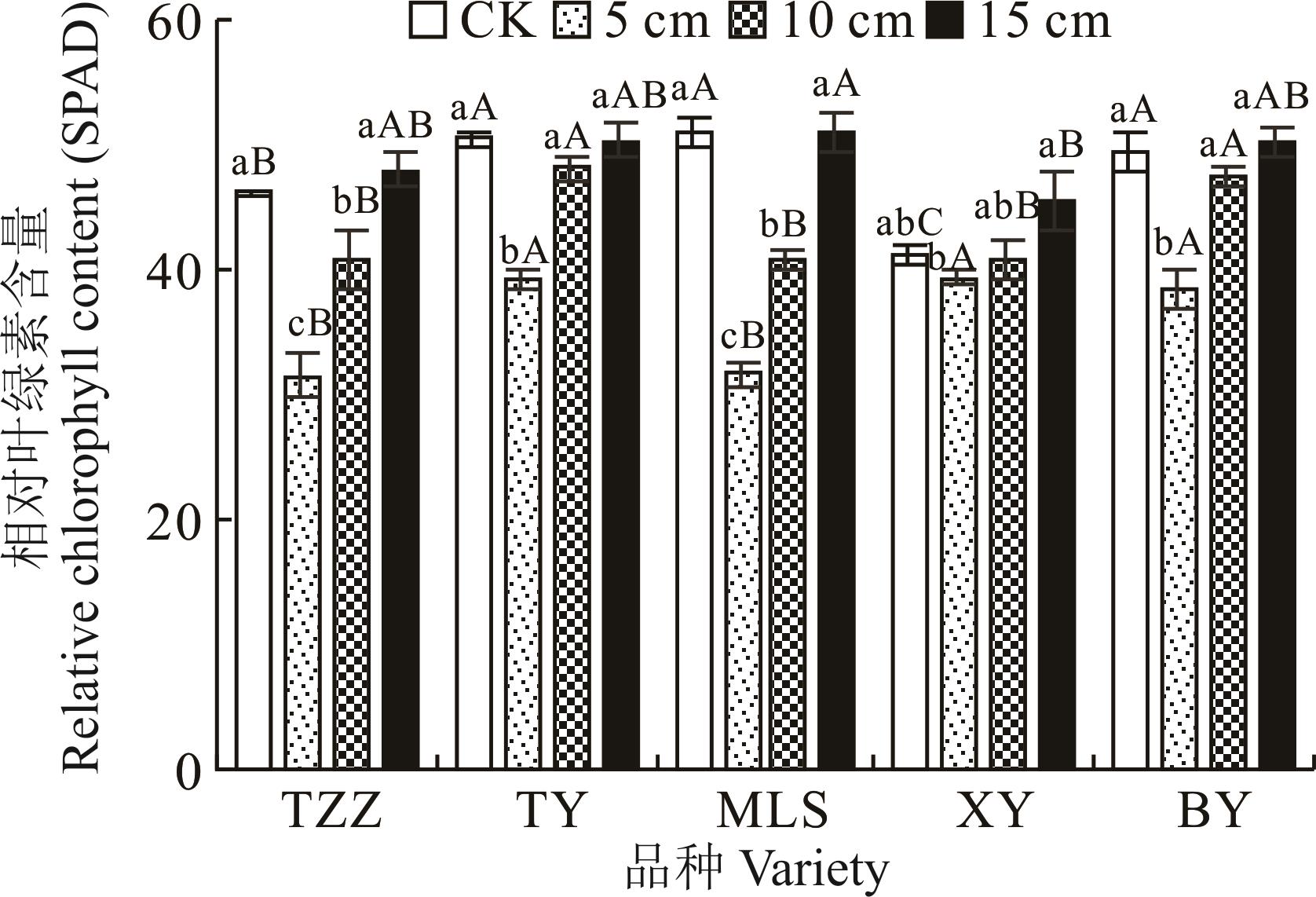
Fig.4 Effect of different stubble height on relative chlorophyll content of five oats

Fig.5 Effect of different stubble height on the contents of soluble sugar and starch of five oats
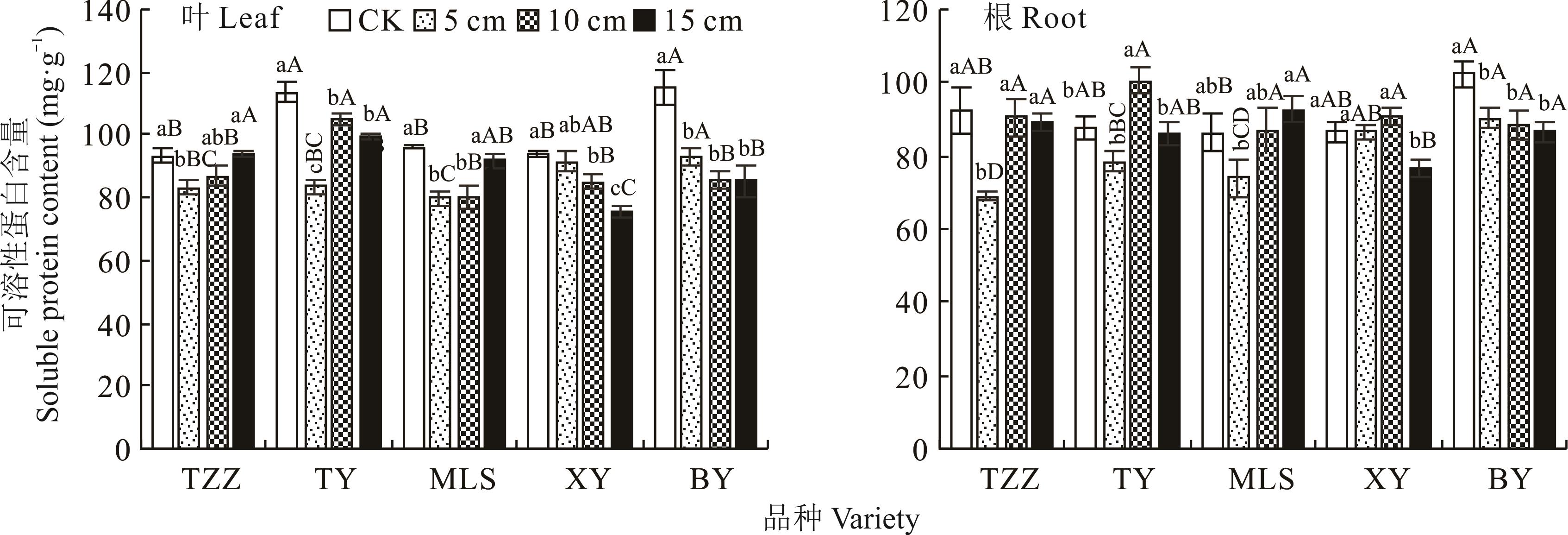
Fig.6 Effect of different stubble height on the contents of soluble protein of five oats
品种 Variety | 留茬高度 SH (cm) | 粗蛋白 CP (%) | 中性洗涤纤维 NDF (%) | 酸性洗涤纤维 ADF (%) | 相对饲草 质量RFQ |
|---|---|---|---|---|---|
| TZZ | 0 (CK) | 18.03±0.10aD | 53.55±0.45aA | 30.91±0.36dA | 152.56±2.51bC |
| 5 | 12.51±0.63cAB | 52.25±0.62aC | 39.69±0.20aA | 134.28±2.03cA | |
| 10 | 15.05±0.37bA | 50.66±0.34bCD | 34.58±0.79bA | 154.82±2.46bB | |
| 15 | 17.91±1.09aB | 48.17±0.25cB | 32.89±0.34cA | 171.25±0.29aBC | |
| TY | 0 (CK) | 20.29±0.30aA | 47.41±0.95cC | 27.34±0.83cC | 161.89±7.47aA |
| 5 | 13.82±0.67bA | 56.11±0.11aB | 35.37±0.39aD | 131.27±1.31cA | |
| 10 | 14.61±0.74bA | 54.38±0.39aB | 33.16±0.86bAB | 143.37±3.02cC | |
| 15 | 20.01±0.74aA | 51.91±1.03bA | 31.34±0.40bB | 158.53±5.32bC | |
| MLS | 0 (CK) | 19.58±0.16aAB | 51.64±0.63cB | 29.53±0.27cB | 164.49±3.29aB |
| 5 | 10.82±0.79dBC | 58.76±0.35aA | 38.37±0.51aB | 115.12±0.89cB | |
| 10 | 12.72±0.17cB | 56.77±0.52bA | 32.74±0.38bAB | 135.56±2.75bC | |
| 15 | 17.19±0.50bB | 52.04±0.41cA | 28.92±0.39cC | 164.31±0.84aBC | |
| XY | 0 (CK) | 19.10±0.33aBC | 53.94±0.33bA | 28.96±0.20cB | 156.09±1.87bBC |
| 5 | 11.19±0.63cBC | 57.60±0.36aA | 34.01±0.39aE | 129.51±2.05cA | |
| 10 | 12.46±0.65cB | 49.42±0.40cD | 32.33±0.71bAB | 166.86±3.59bA | |
| 15 | 15.19±0.11bC | 44.71±0.85dC | 25.98±0.58dD | 211.75±6.17aA | |
| BY | 0 (CK) | 18.35±0.37aCD | 53.21±0.40bAB | 30.91±0.23bA | 153.95±1.32bBC |
| 5 | 10.16±0.21dC | 59.11±0.89aA | 37.17±0.26aC | 116.96±2.12cB | |
| 10 | 12.23±0.32cB | 51.56±0.63bC | 31.43±0.66bB | 159.68±4.58bAB | |
| 15 | 14.95±0.28bC | 50.89±1.21bA | 26.62±0.43cD | 176.18±5.53aB |
Table 3 Effect of different stubble height on forage nutritional quality of five oats
品种 Variety | 留茬高度 SH (cm) | 粗蛋白 CP (%) | 中性洗涤纤维 NDF (%) | 酸性洗涤纤维 ADF (%) | 相对饲草 质量RFQ |
|---|---|---|---|---|---|
| TZZ | 0 (CK) | 18.03±0.10aD | 53.55±0.45aA | 30.91±0.36dA | 152.56±2.51bC |
| 5 | 12.51±0.63cAB | 52.25±0.62aC | 39.69±0.20aA | 134.28±2.03cA | |
| 10 | 15.05±0.37bA | 50.66±0.34bCD | 34.58±0.79bA | 154.82±2.46bB | |
| 15 | 17.91±1.09aB | 48.17±0.25cB | 32.89±0.34cA | 171.25±0.29aBC | |
| TY | 0 (CK) | 20.29±0.30aA | 47.41±0.95cC | 27.34±0.83cC | 161.89±7.47aA |
| 5 | 13.82±0.67bA | 56.11±0.11aB | 35.37±0.39aD | 131.27±1.31cA | |
| 10 | 14.61±0.74bA | 54.38±0.39aB | 33.16±0.86bAB | 143.37±3.02cC | |
| 15 | 20.01±0.74aA | 51.91±1.03bA | 31.34±0.40bB | 158.53±5.32bC | |
| MLS | 0 (CK) | 19.58±0.16aAB | 51.64±0.63cB | 29.53±0.27cB | 164.49±3.29aB |
| 5 | 10.82±0.79dBC | 58.76±0.35aA | 38.37±0.51aB | 115.12±0.89cB | |
| 10 | 12.72±0.17cB | 56.77±0.52bA | 32.74±0.38bAB | 135.56±2.75bC | |
| 15 | 17.19±0.50bB | 52.04±0.41cA | 28.92±0.39cC | 164.31±0.84aBC | |
| XY | 0 (CK) | 19.10±0.33aBC | 53.94±0.33bA | 28.96±0.20cB | 156.09±1.87bBC |
| 5 | 11.19±0.63cBC | 57.60±0.36aA | 34.01±0.39aE | 129.51±2.05cA | |
| 10 | 12.46±0.65cB | 49.42±0.40cD | 32.33±0.71bAB | 166.86±3.59bA | |
| 15 | 15.19±0.11bC | 44.71±0.85dC | 25.98±0.58dD | 211.75±6.17aA | |
| BY | 0 (CK) | 18.35±0.37aCD | 53.21±0.40bAB | 30.91±0.23bA | 153.95±1.32bBC |
| 5 | 10.16±0.21dC | 59.11±0.89aA | 37.17±0.26aC | 116.96±2.12cB | |
| 10 | 12.23±0.32cB | 51.56±0.63bC | 31.43±0.66bB | 159.68±4.58bAB | |
| 15 | 14.95±0.28bC | 50.89±1.21bA | 26.62±0.43cD | 176.18±5.53aB |
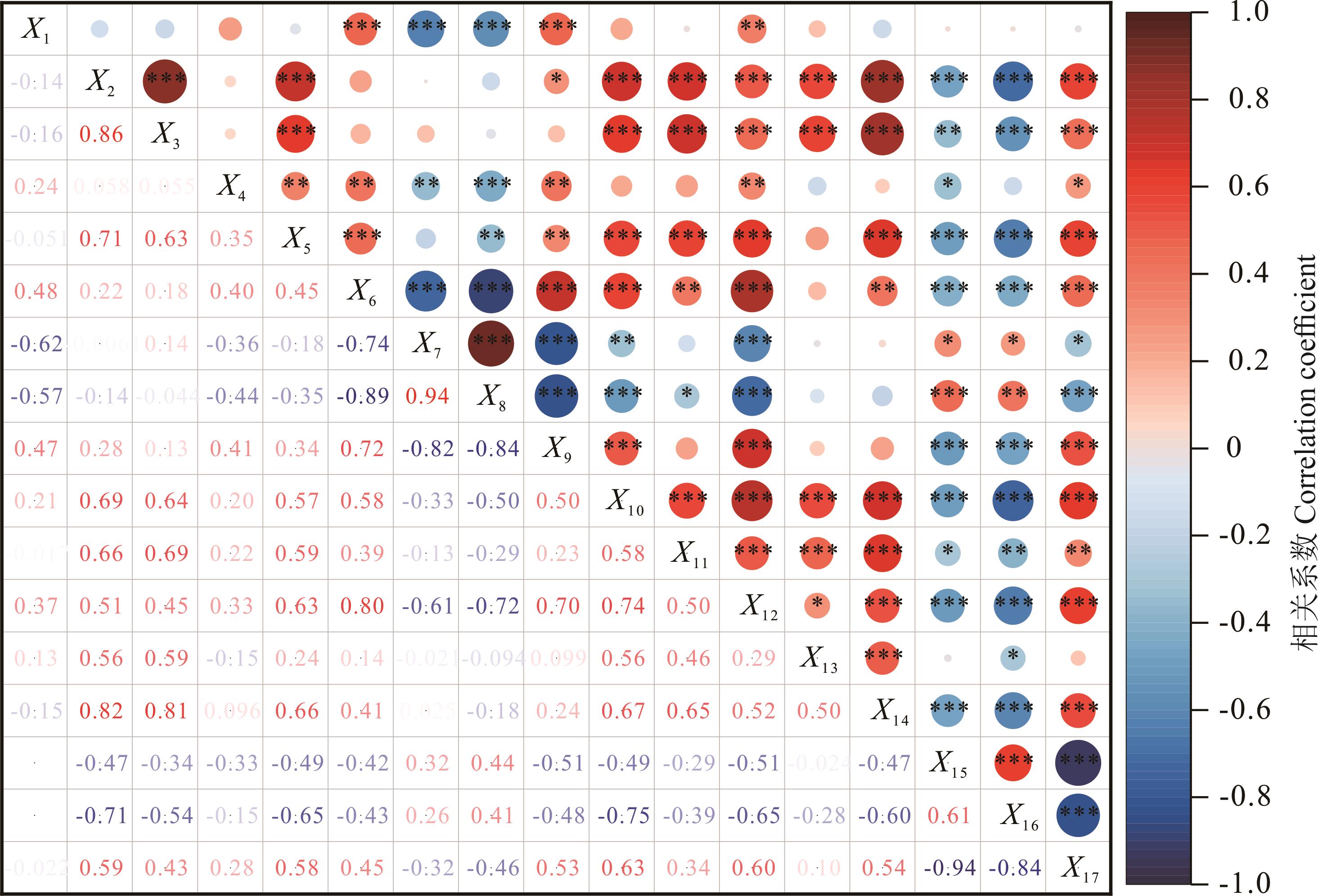
Fig.7 Correlation analysis of various indicators of oats under different stubble height treatments
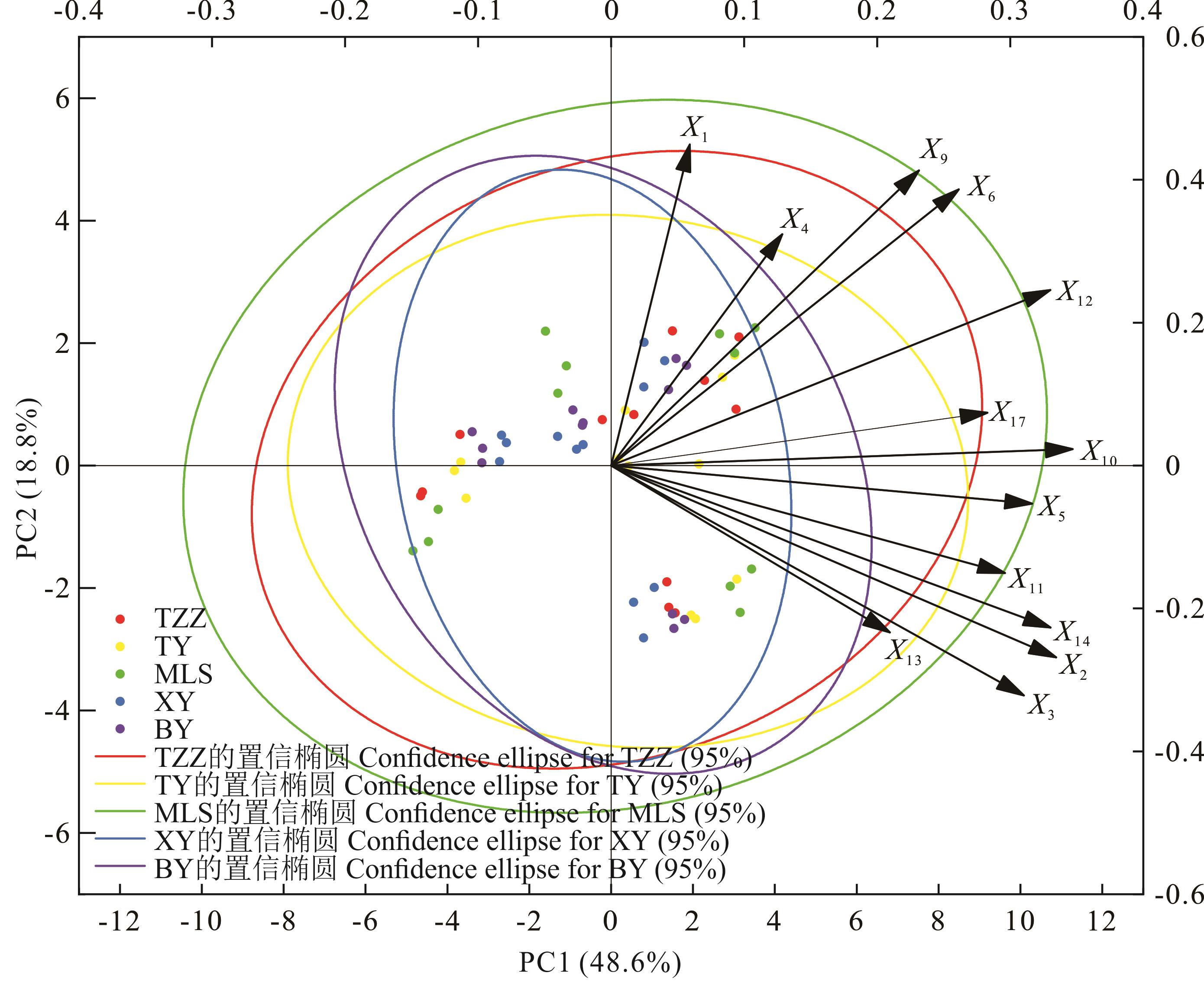
Fig.8 Principal component analysis of various indicators of five oats under different stubble height treatments
处理 Treatment | 等权Equal weight | 加权Weighted | ||
|---|---|---|---|---|
| 关联度Correlation degree | 排名Ranking | 关联度Correlation degree | 排名Ranking | |
| TZZ-CK | 0.7054 | 6 | 0.7235 | 6 |
| TY-CK | 0.7199 | 5 | 0.7456 | 4 |
| MLS-CK | 0.8214 | 1 | 0.8283 | 1 |
| XY-CK | 0.6463 | 9 | 0.6606 | 9 |
| BY-CK | 0.7269 | 4 | 0.7548 | 3 |
| TZZ-5 cm | 0.5550 | 20 | 0.5603 | 20 |
| TY-5 cm | 0.5866 | 15 | 0.5937 | 15 |
| MLS-5 cm | 0.5656 | 18 | 0.5726 | 19 |
| XY-5 cm | 0.5627 | 19 | 0.5739 | 18 |
| BY-5 cm | 0.5830 | 16 | 0.5934 | 16 |
| TZZ-10 cm | 0.6339 | 10 | 0.6411 | 11 |
| TY-10 cm | 0.6472 | 8 | 0.6723 | 8 |
| MLS-10 cm | 0.6128 | 12 | 0.6244 | 12 |
| XY-10 cm | 0.5727 | 17 | 0.5860 | 17 |
| BY-10 cm | 0.5967 | 14 | 0.6086 | 14 |
| TZZ-15 cm | 0.7341 | 3 | 0.7443 | 5 |
| TY-15 cm | 0.6997 | 7 | 0.7133 | 7 |
| MLS-15 cm | 0.7586 | 2 | 0.7747 | 2 |
| XY-15 cm | 0.6079 | 13 | 0.6150 | 13 |
| BY-15 cm | 0.6322 | 11 | 0.6440 | 10 |
Table 4 Correlation degree and ranking of different stubble height treatments
处理 Treatment | 等权Equal weight | 加权Weighted | ||
|---|---|---|---|---|
| 关联度Correlation degree | 排名Ranking | 关联度Correlation degree | 排名Ranking | |
| TZZ-CK | 0.7054 | 6 | 0.7235 | 6 |
| TY-CK | 0.7199 | 5 | 0.7456 | 4 |
| MLS-CK | 0.8214 | 1 | 0.8283 | 1 |
| XY-CK | 0.6463 | 9 | 0.6606 | 9 |
| BY-CK | 0.7269 | 4 | 0.7548 | 3 |
| TZZ-5 cm | 0.5550 | 20 | 0.5603 | 20 |
| TY-5 cm | 0.5866 | 15 | 0.5937 | 15 |
| MLS-5 cm | 0.5656 | 18 | 0.5726 | 19 |
| XY-5 cm | 0.5627 | 19 | 0.5739 | 18 |
| BY-5 cm | 0.5830 | 16 | 0.5934 | 16 |
| TZZ-10 cm | 0.6339 | 10 | 0.6411 | 11 |
| TY-10 cm | 0.6472 | 8 | 0.6723 | 8 |
| MLS-10 cm | 0.6128 | 12 | 0.6244 | 12 |
| XY-10 cm | 0.5727 | 17 | 0.5860 | 17 |
| BY-10 cm | 0.5967 | 14 | 0.6086 | 14 |
| TZZ-15 cm | 0.7341 | 3 | 0.7443 | 5 |
| TY-15 cm | 0.6997 | 7 | 0.7133 | 7 |
| MLS-15 cm | 0.7586 | 2 | 0.7747 | 2 |
| XY-15 cm | 0.6079 | 13 | 0.6150 | 13 |
| BY-15 cm | 0.6322 | 11 | 0.6440 | 10 |
| [1] | Zhang Q Q, Liang Q W, Narisu, et al. Effects of clipping on native grassland: A review. Animal Husbandry and Feed Science, 2018, 39(1): 33-42. |
| 张晴晴, 梁庆伟, 娜日苏, 等. 刈割对天然草地影响的研究进展. 畜牧与饲料科学, 2018, 39(1): 33-42. | |
| [2] | Zheng C C, Wang Y J, Sun H, et al. Effects of clipping on nitrogen allocation strategy and compensatory growth of Leymus chinensis under saline-alkali conditions. Chinese Journal of Applied Ecology, 2017, 28(7): 2222-2230. |
| 郑聪聪, 王永静, 孙昊, 等. 盐碱条件下刈割干扰对羊草的氮素分配策略及补偿生长的影响. 应用生态学报, 2017, 28(7): 2222-2230. | |
| [3] | Wang L H, Liu W, Wang J N, et al. The compensatory growth of plant community,synusia and varieties under different clipping intensity. Acta Prataculturae Sinica, 2015, 24(6): 35-42. |
| 王丽华, 刘尉, 王金牛, 等. 不同刈割强度下草地群落、层片及物种的补偿性生长. 草业学报, 2015, 24(6): 35-42. | |
| [4] | Ma H B, Xie Y Z. Plant compensatory growth under different grazing intensities in desert steppe. Scientia Agricultura Sinica, 2008(11): 3645-3650. |
| 马红彬, 谢应忠. 不同放牧强度下荒漠草原植物的补偿性生长. 中国农业科学, 2008(11): 3645-3650. | |
| [5] | Yang C X. Effects of fertilization and clipping on compensatory growth of Carex brevicuspis. Changsha: Central South University of Forestry and Technology, 2019. |
| 杨灿鑫. 施肥、刈割对短尖苔草补偿性生长影响的研究. 长沙: 中南林业科技大学, 2019. | |
| [6] | Guo A Q, Zhou R L, Song Y, et al. Relationship between physiological protection mechanisms and the compensatory growth of Lolium perenne L. at different cutting treatment levels. Acta Ecologica Sinica, 2018, 38(10): 3495-3503. |
| 郭安琪, 周瑞莲, 宋玉, 等. 刈割后黑麦草生理保护作用对其补偿性生长的影响. 生态学报, 2018, 38(10): 3495-3503. | |
| [7] | Chen H, Wang H Y, Du G Z. Impacts of clipping time,clipping intensity and fertilization on plant compensation of Avena sativa. Acta Botanica Boreali-Occidentalia Sinica, 2003(6): 969-975. |
| 陈红, 王海洋, 杜国桢. 刈割时间、刈割强度与施肥处理对燕麦补偿的影响. 西北植物学报, 2003(6): 969-975. | |
| [8] | Zhang Y K. Effect of mowing frequency on yield and quality of forage bermuda grass. Yantai: Ludong University, 2020. |
| 张寅坤. 刈割频率对牧草狗牙根产量和品质的影响. 烟台: 鲁东大学, 2020. | |
| [9] | Nowak R S, Caldwell M. A test of compensatory photosynthesis in the field Implications for herbivory tolerance. Oecologia, 1984, 61(3): 311-318. |
| [10] | Rong Y P, Han J G, Wang P, et al. Effects of cutting rate on carbohydrate reserves and nitrogen content of russian wildryegrass (Psathyrostachys perennis Keng). Chinese Journal of Grassland, 2000(2): 29-35. |
| 戎郁萍, 韩建国, 王培, 等. 刈割强度对新麦草产草量和贮藏碳水化合物及含氮化合物影响的研究. 中国草地学报, 2000(2): 29-35. | |
| [11] | Pan Q M, Han X G, Bai Y F, et al. Advances in physiology and ecology studies on stored non-structure carbohydrates in plants. Chinese Bulletin of Botany, 2002(1): 30-38. |
| 潘庆民, 韩兴国, 白永飞, 等. 植物非结构性贮藏碳水化合物的生理生态学研究进展. 植物学通报, 2002(1): 30-38. | |
| [12] | Zhang P, Li X X, Yan F N, et al. Regeneration and carbohydrate distribution in sweet sorghum after cutting. Acta Prataculturae Sinica, 2024, 33(5): 69-79. |
| 张盼, 李霄霄, 严发能, 等. 甜高粱刈割后再生及碳水化合物的分配规律. 草业学报, 2024, 33(5): 69-79. | |
| [13] | Yang H M, Wang Z N, Ji C R. Research progress in the dynamics of carbon and nitrogen in forages after cutting and grazing. Chinese Journal of Grassland, 2013, 35(4): 102-109, 120. |
| 杨惠敏, 王振南, 吉春荣. 刈割和放牧后牧草碳氮动态研究进展. 中国草地学报, 2013, 35(4): 102-109, 120. | |
| [14] | Qi Z Q, Yu Y X, Zeng Z H, et al. Yield,hay quality and regrowth of establishing Medicago sativa under four harvest schedules. Acta Prataculturae Sinica, 2010, 19(1): 134-142. |
| 戚志强, 玉永雄, 曾昭海, 等. 紫花苜蓿建植期四种刈割频次下的产量、品质及再生性研究. 草业学报, 2010, 19(1): 134-142. | |
| [15] | Wang X L, Wang J, Li Z Q. Correlation of continuous ryegrass regrowth with cytokinin induced by root nitrate absorption. Journal of Plant Research, 2013, 126(5): 685-697. |
| [16] | Zhao M. Comparative transcriptome analysis of regeneration after mowing the dual-purpose wheat Xinong 9106. Yangling: Northwest A&F University, 2021. |
| 赵梅. 粮饲兼用型小麦西农9106刈割后再生的比较转录组学分析. 杨凌: 西北农林科技大学, 2021. | |
| [17] | Zhang L. Screening of oat varieties with strong regeneration ability and its influencing factor. Hohhot: Inner Mongolia Agricultural University, 2022. |
| 张璐. 燕麦强再生力品种筛选及其影响因素研究. 呼和浩特: 内蒙古农业大学, 2022. | |
| [18] | Bao G S, Zhou Q P, Han Z L, et al. Effects of N and K fertilizer on oat growth performance and fresh grass yield. Chinese Qinghai Journal of Animal and Veterinary Sciences, 2008(4): 4-7. |
| 鲍根生, 周青平, 韩志林, 等. N、K配施对燕麦生长特性和鲜草产量影响的研究. 青海畜牧兽医杂志, 2008(4): 4-7. | |
| [19] | Yang C, Wang G G, Wang M L. Production and trade of wild oat forage in China. Pratacultural Science, 2017, 34(5): 1129-1135. |
| 杨春, 王国刚, 王明利. 我国的燕麦草生产和贸易. 草业科学, 2017, 34(5): 1129-1135. | |
| [20] | Fulkerson W, Slack K. Leaf number as a criterion for determining defoliation time for Lolium perenne: 2. Effect of defoliation frequency and height. Grass and Forage Science, 1995, 50(1): 16-20. |
| [21] | Zhang S W, Zong Y J, Fang C Y, et al. Optimization of anthrone colorimetric method for rapid determination of soluble sugar in barley leaves. Food Research and Development, 2020, 41(7): 196-200. |
| 张述伟, 宗营杰, 方春燕, 等. 蒽酮比色法快速测定大麦叶片中可溶性糖含量的优化. 食品研究与开发, 2020, 41(7): 196-200. | |
| [22] | Luo Q. Rapid determination of soluble protein content in rapeseed meal by coomassie brilliant blue method. Journal of Chengdu University (Natural Science Edition), 2014, 33(2): 125-126, 129. |
| 罗群. 考马斯亮蓝法快速测定菜籽粕中可溶性蛋白质的含量. 成都大学学报(自然科学版), 2014, 33(2): 125-126, 129. | |
| [23] | Li W L, Li F, Zhang Z J, et al. A performance evaluation of two crops of forage oats per year in the northern Ordos Plateau. Acta Prataculturae Sinica, 2024, 33(1): 159-168. |
| 李文龙, 李峰, 张仲鹃, 等. 鄂尔多斯高原北部一年两季燕麦种植模式生产性能评价. 草业学报, 2024, 33(1): 159-168. | |
| [24] | Wang X, Yang T, Sun L P, et al. Effects of different stubble heights on photosynthetic characteristics and non-structural carbohydrates of rape leaves. Northern Horticulture, 2022(13): 43-48. |
| 王祥, 杨涛, 孙鲁鹏, 等. 不同留茬高度对油菜叶片光合特性及非结构性碳水化合物的影响. 北方园艺, 2022(13): 43-48. | |
| [25] | Herbert D B, Ekschmitt K, Wissemann V, et al. Cutting reduces variation in biomass production of forage crops and allows low-performers to catch up: A case study of Trifolium pratense L. (red clover). Plant Biology, 2018, 20(3): 465-473. |
| [26] | Wang J S. Effects of cutting height on growth dynamics and yield of American sorghum-sudangrass hybird. Anhui Agricultural Science Bulletin, 2023, 29(2): 46-48, 58. |
| 王竟绍. 刈割高度对美国高丹草生长动态及产量的影响研究. 安徽农学通报, 2023, 29(2): 46-48, 58. | |
| [27] | Zhu Y, Zhang B, Tan Z L, et al. Research progress of clipping effect on quality and biomass of grazing. Pratacultural Science, 2009, 26(2): 80-85. |
| 朱珏, 张彬, 谭支良, 等. 刈割对牧草生物量和品质影响的研究进展. 草业科学, 2009, 26(2): 80-85. | |
| [28] | Liu J L, Tang F L, Zhang Y X, et al. Effect of different stubble heights on regeneration and yield of annual forages. Grassland and Turf, 2009(6): 47-49. |
| 刘杰淋, 唐凤兰, 张月学, 等. 刈割高度对一年生牧草再生性能及产量的影响. 草原与草坪, 2009(6): 47-49. | |
| [29] | Sun M, Tian K, Zhang Y, et al. Research on leaf functional traits and their environmental adaptation. Plant Science Journal, 2017, 35(6): 940-949. |
| 孙梅, 田昆, 张贇, 等. 植物叶片功能性状及其环境适应研究. 植物科学学报, 2017, 35(6): 940-949. | |
| [30] | Skinner R H, Nelson C J. Effect of tiller trimming on phyllochron and tillering regulation during tall fescue development. Crop Science, 1994, 34(5): 1267-1273. |
| [31] | Yuan F R, Zhu Z H, Li Y N, et al. Research on compensatory growth of Stipa aliena and impact factors under different habitats. Pratacultural Science, 2011, 28(11): 1972-1981. |
| 袁芙蓉, 朱志红, 李英年, 等. 异针茅在不同生境下补偿生长特性及其影响因素的研究. 草业科学, 2011, 28(11): 1972-1981. | |
| [32] | Wang Q, Yang L Q, Lei J Y, et al. Regrowth and biomass allocation of dual-purpose winter wheat under two clipping heights. Pratacultural Science, 2017, 34(10): 2109-2116. |
| 王茜, 杨丽群, 雷家运, 等. 刈割高度对冬小麦再生及生物量分配的影响. 草业科学, 2017, 34(10): 2109-2116. | |
| [33] | Shi S H. Effects of different leaf age leaf-cutting treatment on growth and yield of maize. Shenyang: Shenyang Agricultural University, 2020. |
| 石生辉. 不同叶龄期剪叶对玉米生长发育及产量的影响. 沈阳: 沈阳农业大学, 2020. | |
| [34] | Wu J H, Cui Y T, Zhao Q Z, et al. Effects of drought stress on anatomical structure of leaves and physiological indexes of Potentilla varieties. Pratacultural Science, 2013, 30(9): 1369-1373. |
| 吴建慧, 崔艳桃, 赵倩竹, 等. 干旱胁迫下委陵菜和翻白委陵菜叶片结构和生理指标的变化. 草业科学, 2013, 30(9): 1369-1373. | |
| [35] | Chen L, Huang J G, Dawson A. Contributions of insects and droughts to growth decline of trembling aspen mixed boreal forest of western Canada. Global Change Biology, 2018, 24(2): 655-667. |
| [36] | Zheng Y P, Wang H X, Lou X, et al. Changes of non-structural carbohydrates and its impact factors in trees: A review. Chinese Journal of Applied Ecology, 2014, 25(4): 1188-1196. |
| 郑云普, 王贺新, 娄鑫, 等. 木本植物非结构性碳水化合物变化及其影响因子研究进展. 应用生态学报, 2014, 25(4): 1188-1196. | |
| [37] | Bai K Y, Zhao M L, Wei Z J, et al. Effects of cutting on carbohydrate reserves of plant in the desert steppe. Acta Agrestia Sinica, 1996, 4(2): 126-133. |
| 白可喻, 赵萌莉, 卫智军, 等. 刈割对荒漠草原几种牧草贮藏碳水化合物的影响. 草地学报, 1996, 4(2): 126-133. | |
| [38] | Song X M, Chen X J. Effects of stubble height on the quality of whole plant maize. Journal of Animal Science and Veterinary Medicine, 2024, 43(3): 104-105. |
| 宋雪梅, 陈孝军. 不同留茬高度对全株玉米品质的影响. 畜牧兽医杂志, 2024, 43(3): 104-105. | |
| [39] | Donaghy D J, Fulkerson W J. Priority for allocation of water-soluble carbohydrate reserves during regrowth of Lolium perenne. Grass and Forage Science, 1998, 53(3): 211-218. |
| [40] | Drake M, Colby W G, Bredakis E. Yield of orchard grass as influenced by rates of nitrogen and harvest management. Agronomy Journal, 1963, 55(4): 361-362. |
| [41] | Li J, Yang M, Zhuang W F, et al. Effects of mowwing and density on yield and nutrition for regeneration of a triticale variety “Dongnong 5305”. Crops, 2009, 21(1): 73-77. |
| 李晶, 杨猛, 庄文峰, 等. 刈割对不同密度小黑麦东农5305产量及再生营养的影响. 作物杂志, 2009, 21(1): 73-77. | |
| [42] | Ding Z F, Liu J, Dai D M, et al. Effects of stubble heights on chromium accumulation in Leersia hexandra Swartz and its physiological mechanism. Chinese Journal of Applied and Environmental Biology, 2023, 29(1): 96-101. |
| 丁志凡, 刘杰, 代德敏, 等. 留茬高度对李氏禾累积铬能力的影响及生理机制. 应用与环境生物学报, 2023, 29(1): 96-101. | |
| [43] | Lu Q, Cheng Q M, Bao J, et al. Different alfalfa stubble height influence on the yield and quality. Grassland and Prataculture, 2017, 29(2): 39-43. |
| 卢强, 成启明, 包健, 等. 不同刈割留茬高度对苜蓿产量及品质的影响. 草原与草业, 2017, 29(2): 39-43. | |
| [44] | Wang D D, Tian L H, Shen Y Y, et al. Regrowth responses to cutting of different cultivars of winter wheat. Chinese Journal of Eco-Agriculture, 2014, 22(6): 642-647. |
| 王丹丹, 田莉华, 沈禹颖, 等. 不同品种冬小麦再生生长对刈割干扰的响应. 中国生态农业学报, 2014, 22(6): 642-647. | |
| [45] | Zhao X J, Zhang L Y, Liu S, et al. Effects of cutting height on quality of different varieties of whole plant corn silage. Chinese Journal of Animal Nutrition, 2018, 30(8): 3239-3246. |
| 赵雪娇, 张立阳, 刘帅, 等. 留茬高度对不同品种全株玉米青贮品质的影响. 动物营养学报, 2018, 30(8): 3239-3246. | |
| [46] | Zhang J M, Zhang C X, Hao Z Q, et al. Effect of different growth period and stubble height on quality of forage oat hay. Feed Research, 2022, 45(3): 114-118. |
| 张吉明, 张彩霞, 郝智强, 等. 不同生长期和留茬高度对饲用燕麦干草品质的影响. 饲料研究, 2022, 45(3): 114-118. | |
| [47] | Jing M L, Ma Y S, Chu R P, et al. Effects of stubble height on grass biomass and quality in Poa Pratensis L. cv. Qinghai artificial grassland. China Feed, 2022(18): 77-82. |
| 景美玲, 马玉寿, 褚荣鹏, 等. 留茬高度对青海草地早熟禾人工草地禾草生物量和品质的影响. 中国饲料, 2022(18): 77-82. |
| [1] | De-feng HUANG, Ke-ke LI, Ke LAI, Jie BAN, Shuo WANG, Bo-kang QI, Xiao-wen ZHANG, Zhi-qiang ZHONG, Xiao-chen DENG, Xian-jun YUAN. Evaluation of yield, nutritional quality and silage quality of 18 oat varieties in Shigatse [J]. Acta Prataculturae Sinica, 2026, 35(8): 84-96. |
| [2] | Bo-hong ZHANG, Xiang MA, Ze-liang JU, Lian-xue DUAN, Xiao-jun WANG, Zhi-feng JIA. Genetic diversity analysis and multi-trait evaluation of oat germplasm under different ecological conditions [J]. Acta Prataculturae Sinica, 2026, 35(7): 151-164. |
| [3] | Fei LI, Lin ZHANG, Ke-jia DE, Ting-xu FENG, Wei-shan LIN, Xue-mei XIANG, Xi-jie WEI. Effects of mixed sowing of oat and common vetch on the microbial diversity of inter-root soil in the Sanjiangyuan region [J]. Acta Prataculturae Sinica, 2026, 35(5): 99-112. |
| [4] | Yi-bo WANG, Xue-hua MING, Jian-yong ZHANG, Qi YUAN, Jian-ming DU, Bin WANG, Teng-fei WANG, Yi-yin ZHANG, Jian LAN, Le MU. Multi-trait evaluation of the production performance and seed yield of new oat germplasm materials in the arid area of Ningxia [J]. Acta Prataculturae Sinica, 2026, 35(4): 86-99. |
| [5] | Hao-bin JIA, Hao-yun JIANG, Ai-hua LI, Hai-bo WANG, Sun-quan LIN, Yue PAN, Jun-hong HUO, Jin-shun ZHAN. Effects of diets with different concentrate-to-roughage ratios on the growth rate, serum biochemical indexes, and rumen fermentation of Guangfeng goats [J]. Acta Prataculturae Sinica, 2026, 35(3): 170-184. |
| [6] | Xiang MA, Zhong-xing LI, Rong-chen YANG, Ze-liang JU, Zhi-feng JIA, Pei-zhi YANG. The effect of salt stress on sugar and endogenous hormone content in oat varieties with contrasting salt tolerance [J]. Acta Prataculturae Sinica, 2026, 35(3): 235-244. |
| [7] | Guo-cong LI, Fu-quan YIN, Ai-hong LAO, Yu-xin BAI, Sheng-nan WANG, Yan-li LU. Effects of stubble height and harvest period on the nutritional components and mycotoxin content of the silage maize cultivar ‘Yu Qingyu No. 3’ and in vitro rumen fermentation parameters for beef cattle [J]. Acta Prataculturae Sinica, 2026, 35(2): 155-166. |
| [8] | Kong-tao WEI, Chun-ping ZHANG, Yang YU, Zheng-she ZHANG, Ze ZHOU, Xue ZHANG, Xin-xin WANG, Si-yu YUE, Quan CAO, Quan-min DONG. Yield performance, nutritional quality, and soil physicochemical responses of oat (Avena sativa) cultivars in the Qinghai Lake-Gonghe Basin region [J]. Acta Prataculturae Sinica, 2026, 35(1): 107-118. |
| [9] | Zhi-peng ZHANG, Qing-xue JIANG, Xin-yue ZHOU, Tong MIAO, Jun TANG, Deng-xia YI, Xue-min WANG, Lin MA. Screening of candidate genes for plant height in forage oat (Avena sativa) through combined transcriptome and proteome analysis [J]. Acta Prataculturae Sinica, 2025, 34(9): 147-161. |
| [10] | Jia-yi YONG, Shuang MA, Feng-hua MA, Xiao-na ZHAO, Yi-yin ZHANG, Hai-ying HU. Effects of drought stress and rehydration on biomass allocation and osmotic regulation characteristics of Indigofera bungeana [J]. Acta Prataculturae Sinica, 2025, 34(7): 158-170. |
| [11] | Can CUI, Meng-qi WANG, Wan-lu ZHAO, Xin-ying LIU, Jing-jing JIAN, Jun-xin YAN. The effect on seed germination and seedling growth of soaking seeds with diethyl aminoethyl hexanoate in alfalfa under NaCl stress [J]. Acta Prataculturae Sinica, 2025, 34(6): 46-58. |
| [12] | Xiao-jing NING, Qiu-jie REN, Li-juan WANG, Xiao-lin JIA, Xiao-jun SHI, Jie WANG. Effects of different pelleted seed coating formulations on seed germination and seedling growth of three brewing sorghum (Sorghum bicolor) cultivars [J]. Acta Prataculturae Sinica, 2025, 34(6): 70-84. |
| [13] | Hang-qi HAN, Zi-fan WANG, He DING, Yu-rong CHEN, Qi WANG, Xiao-qing ZHANG. Comparative analysis of effects of oat hay and oat cubes on rumen fermentation and microbial composition in sheep [J]. Acta Prataculturae Sinica, 2025, 34(5): 212-222. |
| [14] | Nan GUO, Wu-chen DU, Shou-kun JI, Jian LIU, Su-qian CUI, Hui YUAN, Xu HAN, Ji-shuang LIU, Li-jie GAO. Effects of different fertilization and reseeding rates on the nutrient content of forage in a mountain meadow and its rumen fermentation parameters [J]. Acta Prataculturae Sinica, 2025, 34(4): 150-163. |
| [15] | Ze-long HU, Guo-ling LIANG, Wen-hui LIU, Wen-hu WANG. Dynamic changes in pigment contents and photosynthetic characteristics of grains of black-grained and yellow-grained oat (Avena sativa) [J]. Acta Prataculturae Sinica, 2025, 34(12): 145-156. |
| Viewed | ||||||
|
Full text |
|
|||||
|
Abstract |
|
|||||
