
ISSN 1004-5759 CN 62-1105/S
Acta Prataculturae Sinica ›› 2025, Vol. 34 ›› Issue (10): 16-29.DOI: 10.11686/cyxb2024455
Previous Articles Next Articles
Ting LI1( ), Xin-guang YANG2(), Cheng-wei DUAN1, Hua-fang SUN1, Tao GAO2, Tong-de CHEN2, Kai YANG2, Qian-hui YANG2
Received:2024-11-19
Revised:2024-12-27
Online:2025-10-20
Published:2025-07-11
Contact:
Xin-guang YANG
Ting LI, Xin-guang YANG, Cheng-wei DUAN, Hua-fang SUN, Tao GAO, Tong-de CHEN, Kai YANG, Qian-hui YANG. An investigation into the health of synthetic grassland ecosystems in high-alpine regions under varied fertilization and mixed planting circumstances recovering from coal mining damage[J]. Acta Prataculturae Sinica, 2025, 34(10): 16-29.
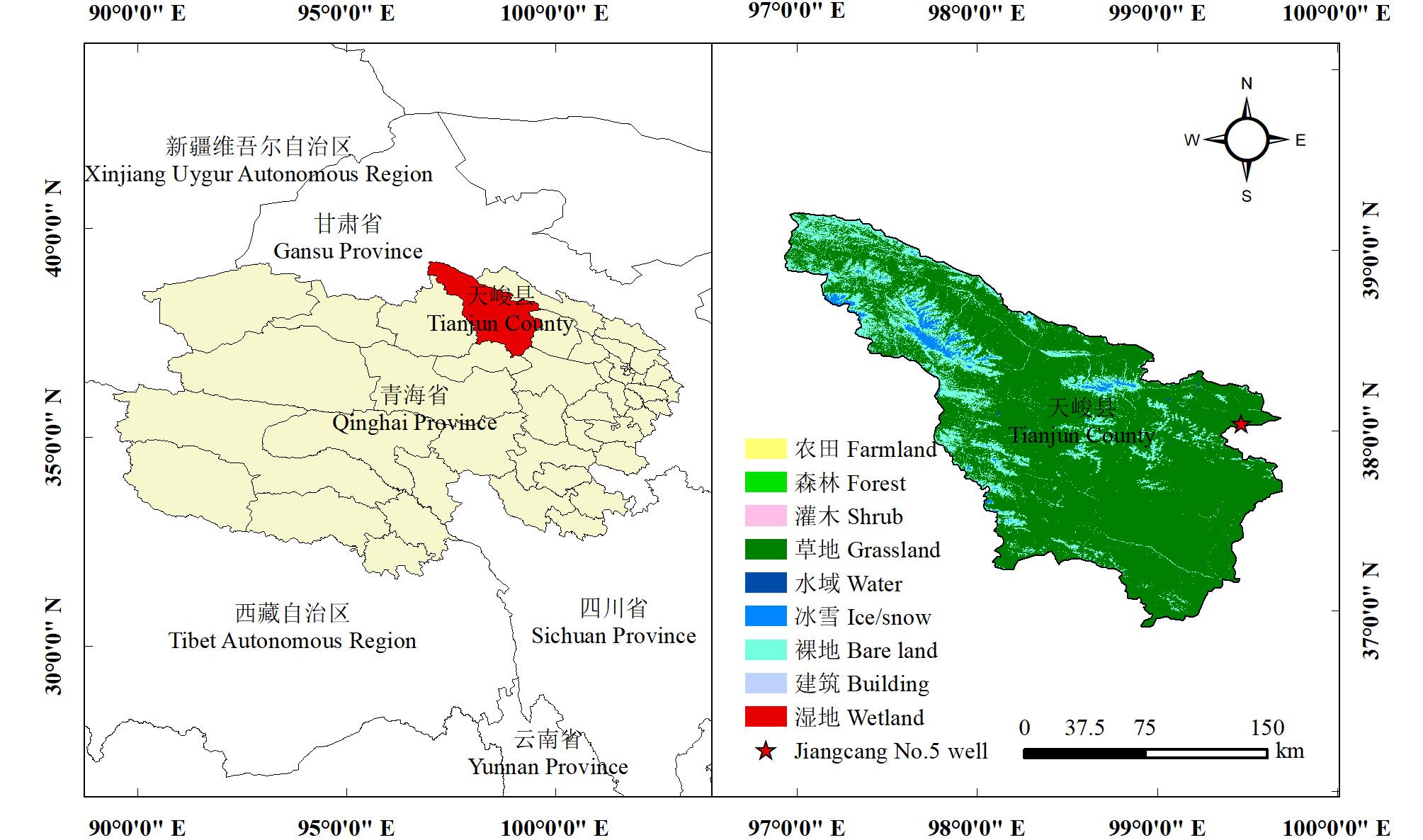
Fig.1 Remote sensing geographic location of Jiangcang No.5 well

Fig.2 Design of a two-factor randomized community experiment based on grass mixing and soil improvement
序号 Number | 健康指数 Health index | 健康等级 Health rank | 恢复效果 Restoration effect |
|---|---|---|---|
| 1 | 0.80≤V≤1.00 | 健康Health | 很好Very good |
| 2 | 0.60≤V<0.80 | 亚健康Sub-health | 好Good |
| 3 | 0.40≤V<0.60 | 不健康Unhealthy | 一般General |
| 4 | 0.20≤V<0.40 | 警戒Warning | 差Poor |
| 5 | 0.00≤V<0.20 | 崩溃Collapse | 很差Very poor |
Table 1 Indexes and ranks of artificial grassland health evaluation in alpine mining areas
序号 Number | 健康指数 Health index | 健康等级 Health rank | 恢复效果 Restoration effect |
|---|---|---|---|
| 1 | 0.80≤V≤1.00 | 健康Health | 很好Very good |
| 2 | 0.60≤V<0.80 | 亚健康Sub-health | 好Good |
| 3 | 0.40≤V<0.60 | 不健康Unhealthy | 一般General |
| 4 | 0.20≤V<0.40 | 警戒Warning | 差Poor |
| 5 | 0.00≤V<0.20 | 崩溃Collapse | 很差Very poor |

Fig.3 Vegetation characteristics under different restoration years and management practices

Fig.4 Soil characteristics under different restoration years and measures
处理 Treatment | 恢复1年Recovery for 1 year | 恢复2年Recovery for 2 years | 恢复3年Recovery for 3 years | ||||||
|---|---|---|---|---|---|---|---|---|---|
OCVOR指数 OCVOR index | 健康水平 Health level | 恢复效果 Restoration effect | OCVOR指数 OCVOR index | 健康水平 Health level | 恢复效果 Restoration effect | OCVOR指数 OCVOR index | 健康水平 Health level | 恢复效果 Restoration effect | |
| HF1 | 0.39±0.07bcd | 警戒Warning | 差Poor | 0.41±0.06bcd | 不健康Unhealthy | 一般General | 0.50±0.08bc | 不健康Unhealthy | 一般General |
| HF2 | 0.40±0.02bc | 不健康Unhealthy | 一般General | 0.40±0.06bcd | 不健康Unhealthy | 一般General | 0.54±0.04b | 不健康Unhealthy | 一般General |
| HF3 | 0.41±0.02bc | 不健康Unhealthy | 一般General | 0.39±0.06bcd | 警戒Warning | 差Poor | 0.46±0.04c | 不健康Unhealthy | 一般General |
| HF4 | 0.35±0.03def | 警戒Warning | 差Poor | 0.36±0.02de | 警戒Warning | 差Poor | 0.27±0.04e | 警戒Warning | 差Poor |
| BF1 | 0.34±0.02ef | 警戒Warning | 差Poor | 0.31±0.07ef | 警戒Warning | 差Poor | 0.39±0.09d | 警戒Warning | 差Poor |
| BF2 | 0.39±0.04bcd | 警戒Warning | 差Poor | 0.31±0.07ef | 警戒Warning | 差Poor | 0.38±0.08d | 警戒Warning | 差Poor |
| BF3 | 0.36±0.04def | 警戒Warning | 差Poor | 0.30±0.06f | 警戒Warning | 差Poor | 0.34±0.06d | 警戒Warning | 差Poor |
| BF4 | 0.31±0.07f | 警戒Warning | 差Poor | 0.26±0.04f | 警戒Warning | 差Poor | 0.19±0.06f | 崩溃Collapse | 很差Very poor |
| HBF1 | 0.37±0.03cde | 警戒Warning | 差Poor | 0.43±0.02b | 不健康Unhealthy | 一般General | 0.51±0.03bc | 不健康Unhealthy | 一般General |
| HBF2 | 0.36±0.04def | 警戒Warning | 差Poor | 0.42±0.03bc | 不健康Unhealthy | 一般General | 0.48±0.03bc | 不健康Unhealthy | 一般General |
| HBF3 | 0.42±0.02b | 不健康Unhealthy | 一般General | 0.44±0.02b | 不健康Unhealthy | 一般General | 0.46±0.02c | 不健康Unhealthy | 一般General |
| HBF4 | 0.38±0.02bcde | 警戒Warning | 差Poor | 0.37±0.02cd | 警戒Warning | 差Poor | 0.36±0.02d | 警戒Warning | 差Poor |
| UG | 1.00±0.00a | 健康Health | 很好Very good | 1.00±0.00a | 健康Health | 很好Very good | 1.00±0.00a | 健康Health | 很好Very good |
| CK | 0.00±0.00g | 崩溃Collapse | 很差Very poor | 0.00±0.00g | 崩溃Collapse | 很差Very poor | 0.00±0.00g | 崩溃Collapse | 很差Very poor |
Table 2 Evaluation of grassland ecosystem health and restoration effects under different restoration years and management practices
处理 Treatment | 恢复1年Recovery for 1 year | 恢复2年Recovery for 2 years | 恢复3年Recovery for 3 years | ||||||
|---|---|---|---|---|---|---|---|---|---|
OCVOR指数 OCVOR index | 健康水平 Health level | 恢复效果 Restoration effect | OCVOR指数 OCVOR index | 健康水平 Health level | 恢复效果 Restoration effect | OCVOR指数 OCVOR index | 健康水平 Health level | 恢复效果 Restoration effect | |
| HF1 | 0.39±0.07bcd | 警戒Warning | 差Poor | 0.41±0.06bcd | 不健康Unhealthy | 一般General | 0.50±0.08bc | 不健康Unhealthy | 一般General |
| HF2 | 0.40±0.02bc | 不健康Unhealthy | 一般General | 0.40±0.06bcd | 不健康Unhealthy | 一般General | 0.54±0.04b | 不健康Unhealthy | 一般General |
| HF3 | 0.41±0.02bc | 不健康Unhealthy | 一般General | 0.39±0.06bcd | 警戒Warning | 差Poor | 0.46±0.04c | 不健康Unhealthy | 一般General |
| HF4 | 0.35±0.03def | 警戒Warning | 差Poor | 0.36±0.02de | 警戒Warning | 差Poor | 0.27±0.04e | 警戒Warning | 差Poor |
| BF1 | 0.34±0.02ef | 警戒Warning | 差Poor | 0.31±0.07ef | 警戒Warning | 差Poor | 0.39±0.09d | 警戒Warning | 差Poor |
| BF2 | 0.39±0.04bcd | 警戒Warning | 差Poor | 0.31±0.07ef | 警戒Warning | 差Poor | 0.38±0.08d | 警戒Warning | 差Poor |
| BF3 | 0.36±0.04def | 警戒Warning | 差Poor | 0.30±0.06f | 警戒Warning | 差Poor | 0.34±0.06d | 警戒Warning | 差Poor |
| BF4 | 0.31±0.07f | 警戒Warning | 差Poor | 0.26±0.04f | 警戒Warning | 差Poor | 0.19±0.06f | 崩溃Collapse | 很差Very poor |
| HBF1 | 0.37±0.03cde | 警戒Warning | 差Poor | 0.43±0.02b | 不健康Unhealthy | 一般General | 0.51±0.03bc | 不健康Unhealthy | 一般General |
| HBF2 | 0.36±0.04def | 警戒Warning | 差Poor | 0.42±0.03bc | 不健康Unhealthy | 一般General | 0.48±0.03bc | 不健康Unhealthy | 一般General |
| HBF3 | 0.42±0.02b | 不健康Unhealthy | 一般General | 0.44±0.02b | 不健康Unhealthy | 一般General | 0.46±0.02c | 不健康Unhealthy | 一般General |
| HBF4 | 0.38±0.02bcde | 警戒Warning | 差Poor | 0.37±0.02cd | 警戒Warning | 差Poor | 0.36±0.02d | 警戒Warning | 差Poor |
| UG | 1.00±0.00a | 健康Health | 很好Very good | 1.00±0.00a | 健康Health | 很好Very good | 1.00±0.00a | 健康Health | 很好Very good |
| CK | 0.00±0.00g | 崩溃Collapse | 很差Very poor | 0.00±0.00g | 崩溃Collapse | 很差Very poor | 0.00±0.00g | 崩溃Collapse | 很差Very poor |

Fig.5 Characteristics of OCVOR index changes under different recovery years

Fig.6 Correlation analysis of plant growth, soil indicators and OCVOR index
| [1] | Yang X G, Li X L, Shi M M, et al. The effects of replaced topsoil of different depths on the vegetation and soil properties of reclaimed coal mine spoils in an alpine mining area. Israel Journal of Ecology and Evolution, 2019, 65(3/4): 105. |
| [2] | Lin L, Wei S, Yan J Z, et al. Zoning of ecological restoration in the Qilian Mountain area, China. International Journal of Environmental Research and Public Health, 2021, 18(23): 12417. |
| [3] | Qian D W, Du Y G, Li Q, et al. Alpine grassland management based on ecosystem service relationships on the southern slopes of the Qilian Mountains, China. Journal of Environmental Management, 2021, 288(2): 112447. |
| [4] | Li X Q, Li Q, Duan Y Z, et al. Soil fungal communities varied across aspects of restored grassland in former mining areas of the Qinghai-Tibet Plateau. PLoS One, 2024, 19(3): e0295019. |
| [5] | Yang X G, Li X L, Wang K Z, et al. Major paths of ecological restoration of coal mine spoils. Acta Ecologica Sinica, 2022, 42(19): 7740-7751. |
| 杨鑫光, 李希来, 王克宙, 等. 煤矸石山生态恢复的主要路径. 生态学报, 2022, 42(19): 7740-7751. | |
| [6] | Huang L, Zhang P, Hu Y G, et al. Vegetation and soil restoration in refuse dumps from open pit coal mines. Ecological Engineering, 2016, 94(1): 638-646. |
| [7] | Yang X G, Li Z W, Wang K Z, et al. Evaluation of artificial restoration effect in alpine damaged coal mining area based on OCVOR optimization model. Chinese Journal of Grassland, 2024, 46(3): 38-46. |
| 杨鑫光, 李志炜, 王克宙, 等. 基于OCVOR优化模型的高寒受损煤矿区人工恢复效果评价研究. 中国草地学报, 2024, 46(3): 38-46. | |
| [8] | Hong F Z, He G J, Wang G Z, et al. Monitoring of land cover and vegetation changes in Juhugeng coal mining area based on multi-source remote sensing data. Remote Sensing, 2023, 15(13): 34-39. |
| [9] | Xiao W, Gou J W, He T T, et al. Assessing the ecological impacts of opencast coal mining in Qinghai-Tibet Plateau-a case study in Muli coal field, China. Ecological Indicators, 2023, 153(1): 110454. |
| [10] | Jiang L, Cui T F, Liu H, et al. Remote sensing monitoring and analytical evaluation of grasslands in the Muli region of Qinghai, China from 2000 to 2021. Land, 2022, 11(10): 1733. |
| [11] | Li C C, Wang T, Zhao X, et al. Application research of slope monitoring and treatment technology in ecological restoration of open-pit coal mines in alpine mining areas. China Mining Magazine, 2024, 33(4): 122-131. |
| 李聪聪, 王佟, 赵欣, 等. 边坡监测与治理技术在高寒矿区露天煤矿生态修复中的应用研究. 中国矿业, 2024, 33(4): 122-131. | |
| [12] | Jin L Q, Li X L, Sun H F, et al. Effects of restoration years on vegetation and soil characteristics under different artificialmeasures in alpine mining areas, west China. Sustainability, 2022, 14(17): 10889. |
| [13] | Yang X G, Li X L, Jin L Q, et al. Effectiveness of different artificial restoration measures for soil and vegetation recovery on coal mine tailings in an alpine area. Acta Prataculturae Sinica, 2019, 28(3): 1-11. |
| 杨鑫光, 李希来, 金立群, 等. 不同人工恢复措施下高寒矿区煤矸石山植被和土壤恢复效果研究. 草业学报, 2019, 28(3): 1-11. | |
| [14] | Yuan Y, Zhao Z Q,Niu S Y, et al. Reclamation promotes the succession of the soil and vegetation in opencast coal mine: A case study from Robinia pseudoacacia reclaimed forests, Pingshuo mine, China. Catena, 2018, 165(1): 72-79. |
| [15] | Yang X G. Study on vegetation recovery potential of coal mine spoils in an alpine coal mining area. Xining: Qinghai University, 2019. |
| 杨鑫光. 高寒矿区煤矸石山植被恢复潜力研究. 西宁: 青海大学, 2019. | |
| [16] | Shan G L, Chen G, Liu Z L, et al. VOR and CVOR index for health evaluation of typical steppe in Inner Mongolia. Acta Agrestia Sinica, 2012, 20(3): 401-406. |
| 单贵莲, 陈功, 刘钟龄, 等. 典型草原健康评价的VOR和CVOR指数. 草地学报, 2012, 20(3): 401-406. | |
| [17] | Shi G F, Zhang J N, Yao L J, et al. Construction of grassland ecosystem health evaluation system in Inner Mongolia: Based on the formation, vegetation subtype and vegetation type. Journal of Inner Mongolia University (Natural Science Edition), 2022, 53(1): 55-65. |
| 史国锋, 张佳宁, 姚林杰, 等. 内蒙古草原生态系统健康评价体系构建—基于植被型、植被亚型、群系三个等级. 内蒙古大学学报(自然科学版), 2022, 53(1): 55-65. | |
| [18] | Lu J, Hu Y K, Yue P, et al. Assessment on the health of alpine steppe in Bayinbuluk based on CVOR index. Arid Zone Research, 2017, 34(4): 862-869. |
| 陆均, 胡玉昆, 岳平, 等. 基于CVOR指数的巴音布鲁克高寒草原健康评价. 干旱区研究, 2017, 34(4): 862-869. | |
| [19] | Su Y. Grassland health assessment based on RBF neural network and CVOR comprehensive index. Hohhot: Inner Mongolia Agricultural University, 2022. |
| 苏玥. 基于RBF神经网络和CVOR综合指数的草地健康评价. 呼和浩特: 内蒙古农业大学, 2022. | |
| [20] | Pu J Y, Dong L H, Shi W L, et al. Soil quality assessment under different land uses in an alpine grassland. Catena, 2018,171(1): 280-287. |
| [21] | Ma J J, Chen Y P, Mou X M, et al. Effects of plant diversity on soil organic carbon in alpine meadow in northeastern Qinghai-Xizang Plateau. Plateau Meteorology, 2025, 44(1): 56-66. |
| 马骏杰, 陈银萍, 牟晓明, 等. 植物多样性对青藏高原东北部高寒草甸土壤有机碳的影响. 高原气象, 2025, 44(1): 56-66. | |
| [22] | He F, Tong Z, Wang L, et al. Effect of fertilizer additions on plant communities and soil properties in a temperate grassland steppe. Polish Journal of Environmental Studies, 2018, 27(4): 1533-1540. |
| [23] | Zhang H J, Zheng K F, Gu S S, et al. Grass-legume mixture with Rhizobium inoculation enhanced the restoration effects of organic fertilizer. Microorganisms, 2023, 11(5): 11-14. |
| [24] | Kou X X, Mou X M, Xu W B, et al. Yak and Tibetan sheep dung increase the proportional biomass of grasses and alleviate soil nitrogen limitation in degraded Tibetan alpine grassland. Catena, 2024, 240(1): 108007. |
| [25] | Lüscher A, Barkaoui K, Finn J A, et al. Using plant diversity to reduce vulnerability and increase drought resilience of permanent and sown productive grasslands. Grass and Forage Science, 2022, 77(4): 235-246. |
| [26] | Grange G, Finn J A, Brophy C. Plant diversity enhanced yield and mitigated drought impacts in intensively managed grassland communities. Journal of Applied Ecology, 2021, 58(1): 1864-1875. |
| [27] | Šidlauskaitė G, Kadžiulienė Ž. The effect of inorganic nitrogen fertilizers on the quality of forage composed of various species of legumes in the northern part of a temperate climate zone. Plants, 2023, 12(21): 3676. |
| [28] | Liu W J, Jiang F Z, Qi K B, et al. Effects of different fertilization and sowing amounts on vegetation restoration and soil quality in alpine mining areas and comprehensive evaluation. Acta Prataculturae Sinica, 2025, 34(5): 27-39. |
| 刘文谨, 蒋福祯, 祁凯斌, 等. 不同施肥量和播种量对高寒矿区植被恢复和土壤质量的影响及综合评价. 草业学报, 2025, 34(5): 27-39. | |
| [29] | Liu Q Q, Lv L Y, He M H, et al. Screening of suitable mixed grass species and seeding rates of four native grass seeds in an alpine mining area. Sustainability, 2024, 16(21): 9587. |
| [30] | Hu S B, Li C H, Yu Z Y, et al. Effect of sheep plate manure and granular organic fertilizer on soil physicochemical properties and fungal community diversity in alpine mining areas. Science and Technology of Qinghai Agriculture and Forestry, 2024(4): 9-14, 123. |
| 胡生斌, 李长慧, 于中阳, 等. 羊板粪和颗粒有机肥配施对高寒矿区土壤理化性质及真菌群落多样性的影响. 青海农林科技, 2024(4): 9-14, 123. | |
| [31] | Qiao Q L, Wu Y R, Li Q Y, et al. The effects of commercial organic fertilizer and semi decomposed sheep manure on artificial grassland and soil characteristics in alpine mining area. Acta Agrestia Sinica, 2024, 32(8): 2659-2669. |
| 乔千洛, 武燕茹, 李钦瑶, 等. 商品有机肥和羊板粪对高寒矿区人工草地和土壤特性的影响. 草地学报, 2024, 32(8): 2659-2669. | |
| [32] | Tu D J, Qi P Y, Fang W, et al. Study on the soil physicochemical properties of Zhashan in the Muli mining area. Qinghai Prataculture, 2024, 33(3): 2-6, 22. |
| 土旦加, 祁培勇, 方伟, 等. 木里矿区渣山土壤理化性质研究. 青海草业, 2024, 33(3): 2-6, 22. | |
| [33] | Liang W W. The study on simple estimation method of aboveground biomass of grassland. Yangling: Northwest A&F University, 2015. |
| 梁卫卫. 草地地上生物量的简易估测方法研究. 杨凌: 西北农林科技大学, 2015. | |
| [34] | Bao S D. Agrochemical analysis of soil. Beijing: China Agriculture Press, 2000. |
| 鲍士旦. 土壤农化分析. 北京: 中国农业出版社, 2000. | |
| [35] | Hu Y, Gou X, Tsunekawa A, et al. Assessment of the vegetation sensitivity index in alpine meadows with a high coverage and toxic weed invasion under grazing disturbance. Frontiers in Plant Science, 2022, 13(1): 1068941. |
| [36] | Li Y Y, Dong S K, Wen L, et al. Three-dimensional framework of vigor, organization, and resilience (VOR) for assessing rangeland health: A case study from the alpine meadow of the Qinghai-Tibetan plateau, China. Ecohealth, 2013, 10(4): 423-433. |
| [37] | Ma Y N, Wang S X, Zhang Q, et al. Aerial seeding promotes the restoration of ecosystem health in Mu Us sandy grasslands in China. Agriculture, 2022, 12(8): 1255. |
| [38] | Ren J Z, Nan Z B, Hao D Y. The three major interfaces within pratacultural system. Acta Prataculturae Sinica, 2000, 9(1): 1-8. |
| 任继周, 南志标, 郝敦元. 草业系统中的界面论. 草业学报, 2000, 9(1): 1-8. | |
| [39] | Jiang J C, Sun B, Pan D R, et al. VOR index based health assessment of grassland ecosystem in Sunan county. China Herbivore Science, 2020, 40(4): 39-43. |
| 姜佳昌, 孙斌, 潘冬荣, 等. 基于VOR指数的肃南县草地生态系统健康评价. 中国草食动物科学, 2020, 40(4): 39-43. | |
| [40] | Holmes P M. Shrubland restoration following woody alien invasion and mining: Effects of topsoil depth, seed source, and fertilizer addition. Restoration Ecology, 2001, 9(1): 71-84. |
| [41] | Hou X Y, Liu S L, Zhao S, et al. Interaction mechanism between floristic quality and environmental factors during ecological restoration in a mine area based on structural equation modeling. Ecological Engineering, 2018, 124(1): 23-30. |
| [42] | Yang X G, Li X L, Ma P P, et al. Effects of fertilizer application rate on vegetation and soil restoration of coal mine spoils in an alpine mining area. Acta Prataculturae Sinica, 2021, 30(8): 98-108. |
| 杨鑫光, 李希来, 马盼盼, 等. 不同施肥水平下高寒矿区煤矸石山植被和土壤恢复效果研究. 草业学报, 2021, 30(8): 98-108. | |
| [43] | Zhang Y F, Li X L, Gao Z X, et al. Effects of different fertilization treatments on artificial vegetation and soil microbial characteristics in Muli mining area of Qinghai Province. Acta Agriculturae Boreali-Occidentalis Sinica, 2022, 31(6): 741-754. |
| 张玉芳, 李希来, 高志香, 等. 不同施肥组合对木里矿区人工植被和土壤微生物特征的影响. 西北农业学报, 2022, 31(6): 741-754. | |
| [44] | Wang Y, Wang Z C, Kang Y K, et al. Assessing the win-win situation of forage production and soil organic carbon through a short-term active restoration strategy in alpine grasslands. Frontiers in Plant Science, 2024, 14(1): 1290808. |
| [45] | Wang T, Du B, Li C C, et al. Ecological environment rehabilitation management model and key technologies in plateau alpine coal mine. Journal of China Coal Society, 2021, 46(1): 230-244. |
| 王佟, 杜斌, 李聪聪, 等. 高原高寒煤矿区生态环境修复治理模式与关键技术. 煤炭学报, 2021, 46(1): 230-244. | |
| [46] | Pikula D, Rutkowska A. Effect of leguminous crop and fertilization on soil organic carbon in 30-years field experiment. Plant, Soil and Environment, 2014, 60(11): 507-511. |
| [47] | Du S S, Qi J, Li X, et al. Effect of alfalfa and Elymus sibiricus mixture on forage yield and soil nutrients. Chinese Journal of Grassland, 2024, 46(2): 74-82. |
| 独双双, 祁娟, 李霞, 等. 苜蓿与老芒麦混播对牧草产量及土壤养分的影响. 中国草地学报, 2024, 46(2): 74-82. | |
| [48] | Zheng W, Ganar G L, Tang G R, et al. Effects of mixed species, mixed ratios of legume to grass on soil nutrients in surface soils of legume-grass mixture pasture. Pratacultural Science, 2015, 32(3): 329-339. |
| 郑伟, 加娜尔古丽, 唐高溶, 等. 混播种类与混播比例对豆禾混播草地浅层土壤养分的影响. 草业科学, 2015, 32(3): 329-339. | |
| [49] | Hurisso T T, Norton J B, Norton U. Soil profile carbon and nitrogen in prairie, perennial grass-legume mixture and wheat-fallow production in the central High Plains, USA. Agriculture, Ecosystems and Environment, 2013, 181(1): 179-187. |
| [50] | Liu J T, Zhou L, Wang D N, et al. The effect of balanced N, P and K fertilization on fine root traits and soil properties in Sapindusmuk orossi. Forests, 2024, 15(1): 94. |
| [51] | Yang X G, Li X L, Jin L Q, et al. Changes in soil properties of coal mine spoils in an alpine coal mining area after short-term restoration. Acta Prataculturae Sinica, 2018, 27(8): 30-38. |
| 杨鑫光, 李希来, 金立群, 等. 短期恢复下高寒矿区煤矸石山土壤变化特征研究. 草业学报, 2018, 27(8): 30-38. | |
| [52] | Zhao J, Zeng Z X, He X Y, et al. Effects of monoculture and mixed culture of grass and legume forage species on soil microbial community structure under different levels of nitrogen fertilization. European Journal of Soil Biology, 2015, 68(1): 61-68. |
| [53] | Qiao Q L, Yang W Q, Zhao S, et al. Effects of grass planting substrate on vegetation restoration in the Muli mining area.Pratacultural Science, 2022, 39(9): 1782-1792. |
| 乔千洛, 杨文权, 赵帅, 等. 种草基质对木里矿区植被恢复效果的影响. 草业科学, 2022, 39(9): 1782-1792. | |
| [54] | Bo H J, Xu M G, Jin D S, et al. Responses of maize root morphology and soil available nutrient to fertilizer types in a coal mine reclamation area. Canadian Journal of Soil Science, 2022, 102(2): 419-431. |
| [55] | Li S, Wei W L, Liu S T. Long-term organic amendments combined with nitrogen fertilization regulates soil organic carbon sequestration in calcareous soil. Agronomy, 2023, 13(2): 291. |
| [56] | Lal R. Soil carbon sequestration impacts on global climate change and food security. Science, 2004, 304(1): 1623-1627. |
| [57] | Martín J A R, Álvaro-Fuentes J, Gabriel J L, et al. Soil organic carbon stock on the Majorca Island: Temporal change in agricultural soil over the last 10 years. Catena, 2019, 181(1): 104087. |
| [58] | Taktsang B, Weber J, Ernakulum E, et al. Assessment of soil health indicators for sustainable production of maize in smallholder farming systems in the highlands of Cameroon. Geoderma, 2016, 276(1): 64-73. |
| [59] | Zhang Y F. Effects of combined application of sheep manure and granular organic fertilizer on the physicochemical properties of reconstructed soil and arbuscular mycorrhizal fungi community structural in Muli mining area. Xining: Qinghai University, 2023. |
| 张玉芳. 羊板粪和颗粒有机肥配施对木里矿区重构土壤理化性质和丛枝菌根真菌群落结构的影响. 西宁: 青海大学, 2023. | |
| [60] | Wang T, Cai X L, Li F, et al. Soil layer construction and composition changes in restoration of ecological and geological layer in alpine mining area on plateau. Journal of China Coal Society, 2022, 47(6): 2407-2419. |
| 王佟, 蔡杏兰, 李飞, 等. 高原高寒矿区生态地质层修复中的土壤层构建与成分变化差异. 煤炭学报, 2022, 47(6): 2407-2419. | |
| [61] | Du Z Y, Ji X B, Liu J L, et al. Ecological health assessment of Tibetan alpine grasslands in Gannan using remote sensed ecological indicators. Geo-Spatial Information Science, 2025, 28(1): 246-264. |
| [62] | Zou S B, Qian J K, Xu B R, et al. Spatiotemporal changes of ecosystem health and their driving mechanisms in alpine regions on the northeastern Tibetan Plateau. Ecological Indicators, 2022, 143(1): 109396. |
| [63] | Ye X, Zhou H K, Zhao X Q, et al. Review on grassland ecosystem health. Pratacultural Science, 2011, 28(4): 549-560. |
| 叶鑫, 周华坤, 赵新全, 等. 草地生态系统健康研究述评. 草业科学, 2011, 28(4): 549-560. | |
| [64] | Thompson T E, Fick G W. Growth response of alfalfa to duration of soil flooding and to temperature. Agronomy Journal, 1981, 73(2): 329-332. |
| [65] | Barta A L, Sulc R M. Interaction between waterlogging injury and irradiance level in alfalfa. Crop Science, 2002, 42(5): 1529-1534. |
| [66] | Meng X J, Zhao Q, Jin Y D, et al. Chilling-responsive mechanisms in halophyte Puccinellia tenuiflora seedlings revealed from proteomics analysis. Journal of Proteomics, 2016, 143(1): 365-381. |
| [67] | Yang X G, Li X L, Zhang J, et al. Physiological response of three cultivar grasses to natural cooling in alpine coal mine area. Chinese Journal of Grassland, 2019, 41(6): 72-79. |
| 杨鑫光, 李希来, 张静, 等. 高寒煤矿区3种人工栽培种对自然降温的生理响应. 中国草地学报, 2019, 41(6): 72-79. | |
| [68] | Sun M D, Wang H Q. High quality forage of improved grassland in alpine region-Poa crymophila cv Qinghai. Qinghai Prataculture, 2017, 26(4): 6-9. |
| 孙明德, 王海桥. 高寒地区改良草地的优良牧草-青海冷地早熟禾. 青海草业, 2017, 26(4): 6-9. | |
| [69] | Zhou W S, Wu N. Growth and potential reproduction of Poa crymophila in response to season precipitation shortage in the eastern Tibetan Plateau, China. Journal of Sichuan University (Natural Science Edition), 2012, 49(3): 699-704. |
| 周卫生, 吴宁. 中国青藏高原东部冷地早熟禾生长与潜在的繁殖对降水量缺乏的反应. 四川大学学报(自然科学版), 2012, 49(3): 699-704. | |
| [70] | An J D. Research on the adaptability and high-yield cultivation technology of Qinghai Chinese fescue in alpine region. Contemporary Animal Husbandry, 2015, 30(17): 95-96. |
| 安济东. 高寒地区青海中华羊茅适应性及高产栽培技术研究. 当代畜牧, 2015, 30(17): 95-96. | |
| [71] | Lai X J, Wang H Y, Yan J F, et al. Exploring the differences between sole silages of gramineous forages and mixed silages with forage legumes using 16S/ITS full-length sequencing. Frontiers in Microbiology, 2023, 14(1): 1120027. |
| [72] | Fujiwara R, Nashida H, Fukushima M, et al. Convolutional neural network models help effectively estimate legume coverage in grass-legume mixed swards. Frontiers in Plant Science, 2022, 12(1): 763479. |
| [73] | Krumins J A, Goodey N M, Gallagher F. Plant-soil interactions in metal contaminated soils. Soil Biology and Biochemistry, 2015, 80(1): 224-231. |
| [74] | Wubs E R J, Van H T, Melchers P D, et al. Soil inoculation steers plant-soil feedback, suppressing ruderal plant species. Frontiers in Ecology and Evolution, 2019, 7(1): 451. |
| [75] | Ma H, Pineda A, Vander W, et al. Synergistic and antagonistic effects of mixing monospecific soils on plant-soil feedbacks.Plant & Soil, 2018, 42(1): 271-279. |
| [1] | Hong-yu MA, Xiao-guo ZHOU, Bao WANG, Yu-chuan SONG, Aikeremu·Abulatijiang, Shao-li JIANG, Jiu-zhou MIN, Hong-mei ZHAO, Jun-hui CHENG. Differences in soil microbial functional gene abundance between rhizosphere soils of Haloxylon ammodendron and Tamarix chinensis in the Junggar Desert [J]. Acta Prataculturae Sinica, 2025, 34(8): 109-122. |
| [2] | Yu-gang GENG, Hong-mei YANG, Wen-wu WANG, Rui-jie LUO, Bao-guo ZHAO, Jiang-hong CHEN, Chang-sheng QIN, Rui-yin CHEN. Effects of stockpiling methods on root activity in stripped alpine meadows of the Qinghai-Tibet Plateau [J]. Acta Prataculturae Sinica, 2025, 34(8): 79-87. |
| [3] | Qian XU, Shuai GUO, Liang-liang ZHANG, Zhan-jun WANG, Guo-sheng XIN. Effects of supplemental feeding on growth rate, and serum biochemical and metabolomic parameters of grazing Tan sheep [J]. Acta Prataculturae Sinica, 2025, 34(6): 122-138. |
| [4] | Xue-xi MA, Ying-zhi GAO. Impact of shrub encroachment on soil hydrological processes in grassland [J]. Acta Prataculturae Sinica, 2025, 34(4): 212-222. |
| [5] | Si-yao PAN, Yu-chuan SONG, Ru-yi YUAN, Sheng-tong HOU, Jun-ge CAI, Bing CHEN, Jun-hui CHENG. Variations in soil inorganic nitrogen content under canopies of two shrubs in the Junggar Desert [J]. Acta Prataculturae Sinica, 2024, 33(5): 183-195. |
| [6] | Xue-min LI, Tong-ning LI, Zhi-yu WU, Zhen-guo WU. Spatio-temporal evolution of grassland ecosystem service value in Inner Mongolia under multi scenario simulation [J]. Acta Prataculturae Sinica, 2023, 32(8): 14-27. |
| [7] | Yun-liang LIANG, Jie LI, Yan-hua LU, Guang LI. Ecosystem service value evaluation and temporal-spatial evolution characteristics in an agro-pastoral ecotone of Gansu Province based on LUCC [J]. Acta Prataculturae Sinica, 2023, 32(5): 13-26. |
| [8] | Yu-xia HU, Ji-rui GONG, Chen-chen ZHU, Jia-yu SHI, Zi-he ZHANG, Liang-yuan SONG, Wei-yuan ZHANG. Spatial distribution of ecosystem services in the desert steppe, Inner Mongolia based on ecosystem service bundles [J]. Acta Prataculturae Sinica, 2023, 32(4): 1-14. |
| [9] | Ao JIANG, Lu-huai JING, Tserang-donko MIPAM, Li-ming TIAN. Progress in research on the effects of grazing on grassland litter decomposition [J]. Acta Prataculturae Sinica, 2023, 32(4): 208-220. |
| [10] | Hao CHEN, Fang GONG, Du-lan CHEN. Coupling and coordination relationship between grassland ecosystem service value and ecological well-being of pastoral residents, and its spatial heterogeneity [J]. Acta Prataculturae Sinica, 2023, 32(11): 1-16. |
| [11] | Juan-juan ZHOU, Wei WEI. Interactive effect of fertilization and cutting on community dynamics and transgressive overyielding effect of grass pasture in the northern Tibetan Plateau [J]. Acta Prataculturae Sinica, 2023, 32(10): 28-39. |
| [12] | Xin-yue JIN, Li GONG, Meng-ting WANG, Ye TAO, Duo-qi ZHOU. Differential covariation characteristics in functional traits of two ephemerals of Boraginaceae in the Gurbantunggut Desert, China [J]. Acta Prataculturae Sinica, 2023, 32(10): 58-70. |
| [13] | Ce YANG, Yu-xue ZHANG, He ZHANG, Chun-yan ZHENG, Feng ZHU. Recent advances in understanding the ecosystem functioning of diverse forage mixtures [J]. Acta Prataculturae Sinica, 2022, 31(9): 206-219. |
| [14] | Jiao-yun LU, He-shan ZHANG, Hong TIAN, Jun-bo XIONG, Yang LIU. Research progress on effects of nitrogen deposition on soil nitrogen cycling in grassland ecosystems [J]. Acta Prataculturae Sinica, 2022, 31(6): 221-234. |
| [15] | Xiao-ning ZHANG, Xiao-dan LI, Li-li NIAN, Ying-bo YANG, Xue-lu LIU. A bibliometric evaluation of the status of the water conservation function of grassland ecosystems [J]. Acta Prataculturae Sinica, 2022, 31(6): 35-49. |
| Viewed | ||||||
|
Full text |
|
|||||
|
Abstract |
|
|||||
