
ISSN 1004-5759 CN 62-1105/S
Acta Prataculturae Sinica ›› 2026, Vol. 35 ›› Issue (10): 15-29.DOI: 10.11686/cyxb2025401
Previous Articles Next Articles
Ding-wen ZHANG1,2,7( ), Yang LI1, Zhen-kai LI1,2,7, Shi-de DONG1, Han-wen LIU1, Chun-xiao YU1, Ying WEN5, Ying-zi Chen6, Guang-mei WANG1,2,3,4()
Received:2025-09-30
Revised:2026-01-05
Online:2026-10-20
Published:2026-09-09
Contact:
Guang-mei WANG
Ding-wen ZHANG, Yang LI, Zhen-kai LI, Shi-de DONG, Han-wen LIU, Chun-xiao YU, Ying WEN, Ying-zi Chen, Guang-mei WANG. Effects of summer cover cropping on soil fertility in saline-alkali farmland of the Yellow River Delta[J]. Acta Prataculturae Sinica, 2026, 35(10): 15-29.
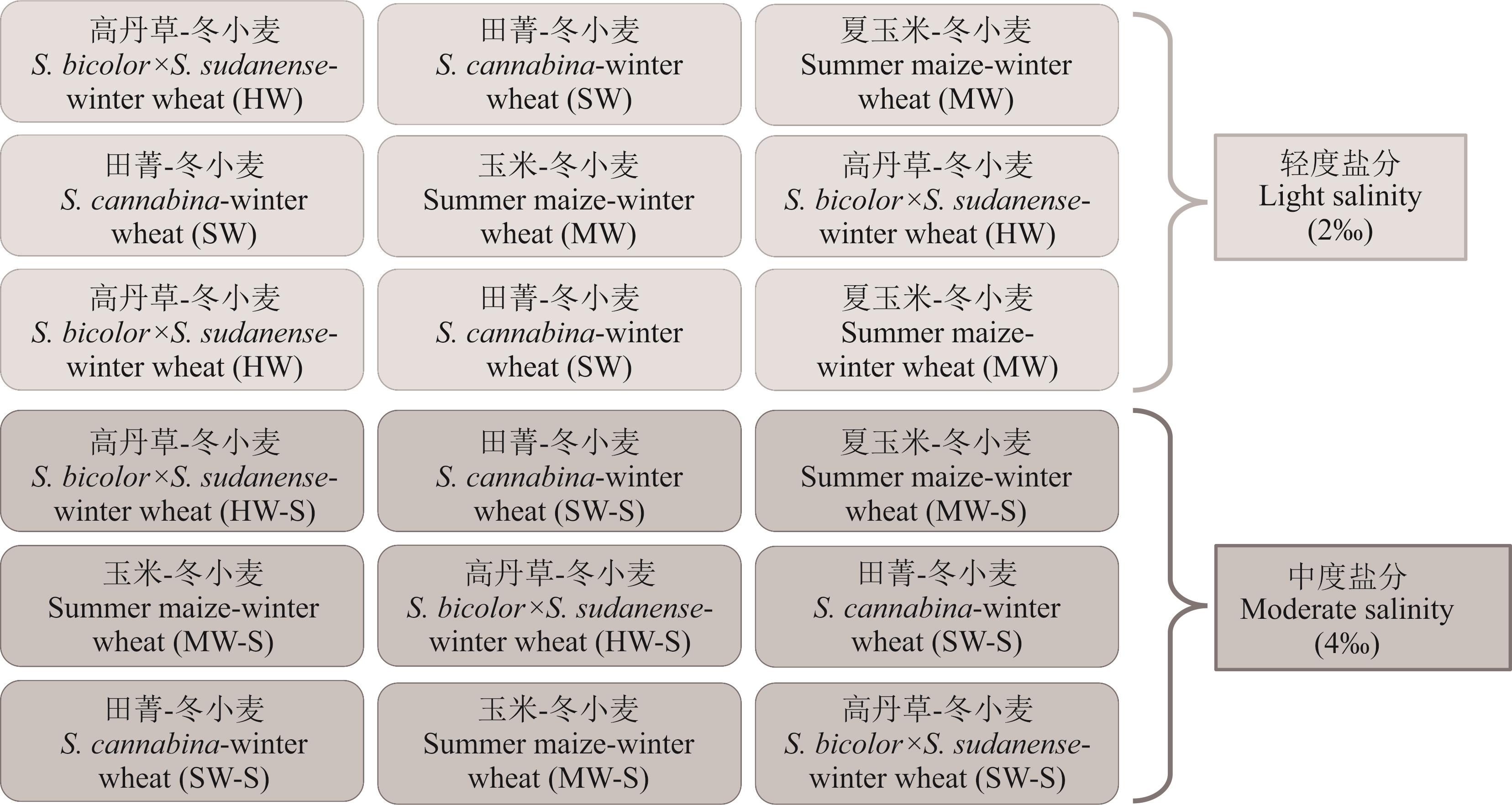
Fig.1 Experimental plot design
分级 Classification | pH | 含盐量Salt content (‰) | 土壤有机质 Soil organic matter (g?kg-1) | 全氮 Total nitrogen (g?kg-1) | 全磷 Total phosphorus (g?kg-1) | 全钾 Total potassium (g?kg-1) | 铵态氮 Ammonium nitrogen (mg?kg-1) | 硝态氮 Nitrate nitrogen (mg?kg-1) | 速效磷 Available phosphorus (mg?kg-1) | 速效钾 Available potassium (mg?kg-1) |
|---|---|---|---|---|---|---|---|---|---|---|
| Xa | 8.5 | 4 | 10 | 0.75 | 0.4 | 5 | 1 | 5 | 3 | 40 |
| Xc | 7.5 | 2 | 20 | 1.50 | 0.6 | 20 | 5 | 25 | 10 | 100 |
| Xp | 6.5 | 1 | 30 | 2.00 | 1.0 | 25 | 10 | 50 | 20 | 150 |
Table 1 Soil index classification standards
分级 Classification | pH | 含盐量Salt content (‰) | 土壤有机质 Soil organic matter (g?kg-1) | 全氮 Total nitrogen (g?kg-1) | 全磷 Total phosphorus (g?kg-1) | 全钾 Total potassium (g?kg-1) | 铵态氮 Ammonium nitrogen (mg?kg-1) | 硝态氮 Nitrate nitrogen (mg?kg-1) | 速效磷 Available phosphorus (mg?kg-1) | 速效钾 Available potassium (mg?kg-1) |
|---|---|---|---|---|---|---|---|---|---|---|
| Xa | 8.5 | 4 | 10 | 0.75 | 0.4 | 5 | 1 | 5 | 3 | 40 |
| Xc | 7.5 | 2 | 20 | 1.50 | 0.6 | 20 | 5 | 25 | 10 | 100 |
| Xp | 6.5 | 1 | 30 | 2.00 | 1.0 | 25 | 10 | 50 | 20 | 150 |
因子 Factors | pH | 含盐量Salt content | 铵态氮Ammonium nitrogen | 硝态氮Nitrate nitrogen | 速效磷Available phosphorus | 速效钾Available potassium | ||||||
|---|---|---|---|---|---|---|---|---|---|---|---|---|
F值 F value | P值 P value | F值 F value | P值 P value | F值 F value | P值 P value | F值 F value | P值 P value | F值 F value | P值 P value | F值 F value | P值 P value | |
| 土壤盐分水平Soil salinity level (SS) | 13.799 | 0.001** | 26.311 | <0.001** | 0.058 | 0.811 | 1.803 | 0.186 | 0.436 | 0.512 | 0.711 | 0.403 |
| 夏季覆盖作物类型Types of summer cover crops (TC) | 0.555 | 0.578 | 0.847 | 0.435 | 7.485 | 0.001** | 18.899 | <0.001** | 4.644 | 0.014* | 5.213 | 0.009** |
| 生育期Growth period (P) | 20.149 | 0.008** | 8.713 | 0.035* | 141.668 | <0.001** | 16.722 | 0.011* | 97.337 | <0.001** | 1.601 | 0.308 |
| SS×TC | 0.333 | 0.719 | 0.081 | 0.923 | 0.070 | 0.932 | 3.737 | 0.031* | 3.447 | 0.040* | 5.886 | 0.005** |
| SS×P | 0.129 | 0.882 | 6.205 | 0.059 | 0.222 | 0.810 | 40.485 | 0.002** | 34.029 | 0.003** | 1.596 | 0.309 |
| TC×P | 0.382 | 0.815 | 2.278 | 0.150 | 216.909 | <0.001** | 3.398 | 0.066 | 73.591 | <0.001** | 1.030 | 0.448 |
| SS×TC×P | 0.886 | 0.472 | 2.128 | 0.169 | 1.747 | 0.307 | 22.187 | <0.001** | 1.464 | 0.299 | 0.747 | 0.586 |
Table 2 Variance analysis of soil pH, salt content and available nutrients in each treatment of winter wheat under different salt levels
因子 Factors | pH | 含盐量Salt content | 铵态氮Ammonium nitrogen | 硝态氮Nitrate nitrogen | 速效磷Available phosphorus | 速效钾Available potassium | ||||||
|---|---|---|---|---|---|---|---|---|---|---|---|---|
F值 F value | P值 P value | F值 F value | P值 P value | F值 F value | P值 P value | F值 F value | P值 P value | F值 F value | P值 P value | F值 F value | P值 P value | |
| 土壤盐分水平Soil salinity level (SS) | 13.799 | 0.001** | 26.311 | <0.001** | 0.058 | 0.811 | 1.803 | 0.186 | 0.436 | 0.512 | 0.711 | 0.403 |
| 夏季覆盖作物类型Types of summer cover crops (TC) | 0.555 | 0.578 | 0.847 | 0.435 | 7.485 | 0.001** | 18.899 | <0.001** | 4.644 | 0.014* | 5.213 | 0.009** |
| 生育期Growth period (P) | 20.149 | 0.008** | 8.713 | 0.035* | 141.668 | <0.001** | 16.722 | 0.011* | 97.337 | <0.001** | 1.601 | 0.308 |
| SS×TC | 0.333 | 0.719 | 0.081 | 0.923 | 0.070 | 0.932 | 3.737 | 0.031* | 3.447 | 0.040* | 5.886 | 0.005** |
| SS×P | 0.129 | 0.882 | 6.205 | 0.059 | 0.222 | 0.810 | 40.485 | 0.002** | 34.029 | 0.003** | 1.596 | 0.309 |
| TC×P | 0.382 | 0.815 | 2.278 | 0.150 | 216.909 | <0.001** | 3.398 | 0.066 | 73.591 | <0.001** | 1.030 | 0.448 |
| SS×TC×P | 0.886 | 0.472 | 2.128 | 0.169 | 1.747 | 0.307 | 22.187 | <0.001** | 1.464 | 0.299 | 0.747 | 0.586 |
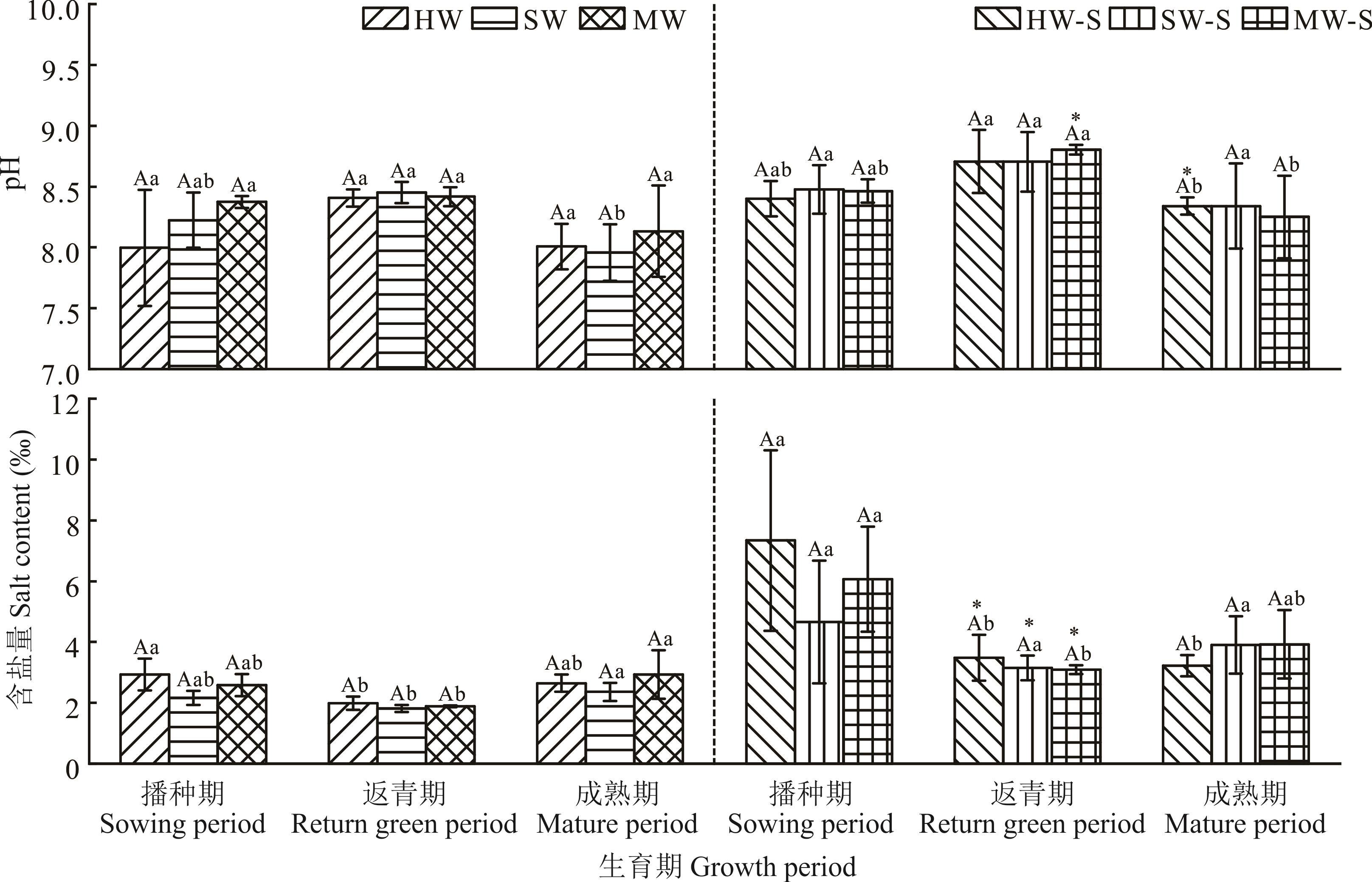
Fig.2 Soil pH and salinity of winter wheat under different salinity levels for each treatment
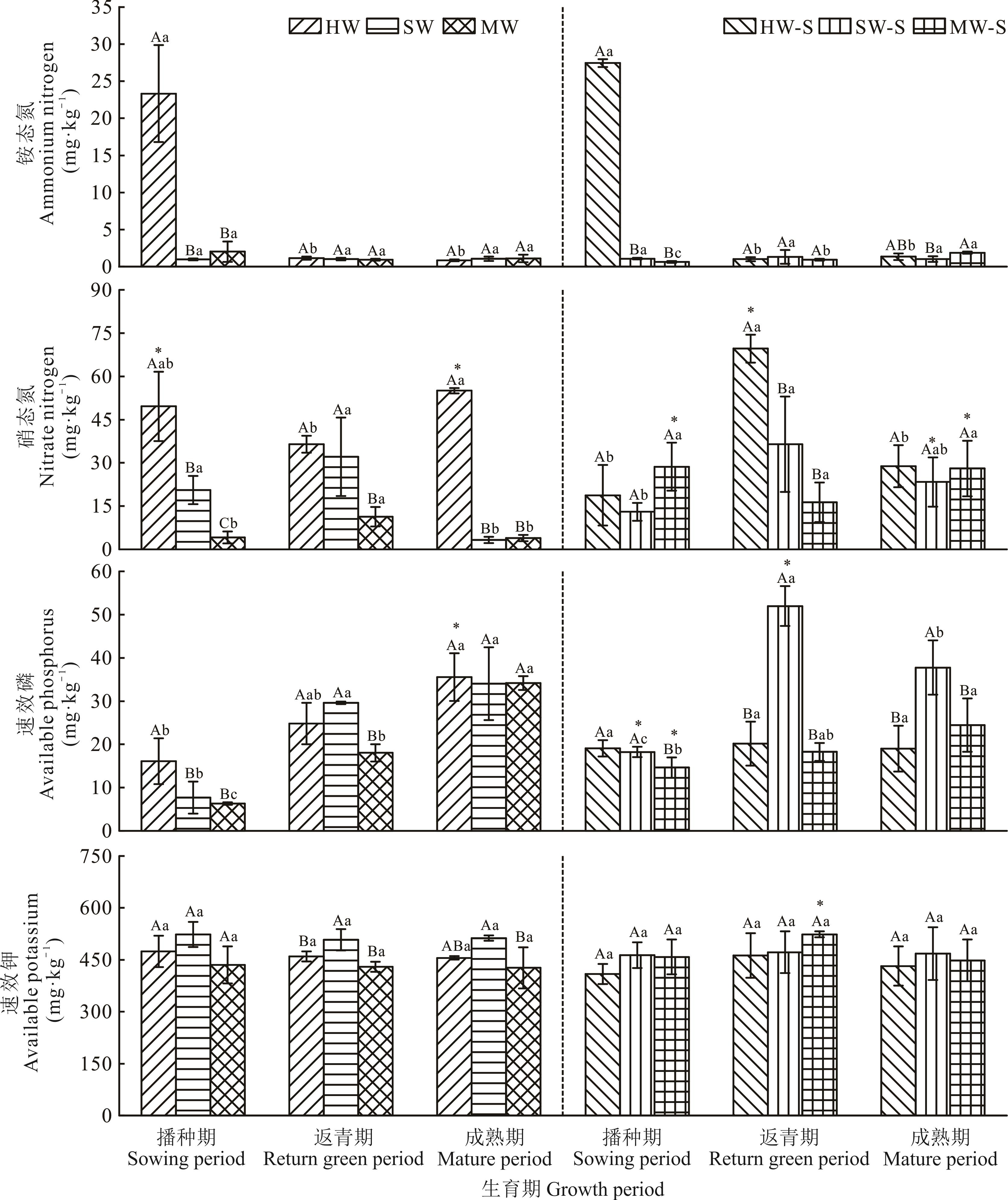
Fig.3 Soil available nutrient contents in winter wheat under different salinity levels for each treatment
因子 Factors | 全氮 Total nitrogen | 全磷 Total phosphorus | 全钾 Total potassium | 土壤有机质 Soil organic matter | 土壤肥力指数 Soil fertility index | |||||
|---|---|---|---|---|---|---|---|---|---|---|
F值 F value | P值 P value | F值 F value | P值 P value | F值 F value | P值 P value | F值 F value | P值 P value | F值 F value | P值 P value | |
| 土壤盐分水平Soil salinity level (SS) | 0.222 | 0.640 | 4.664 | 0.036* | 1.171 | 0.285 | 0.482 | 0.492 | 3.560 | 0.067 |
| 夏季覆盖作物类型Types of summer cover crops (TC) | 0.595 | 0.556 | 4.093 | 0.023* | 0.862 | 0.429 | 2.720 | 0.079 | 29.897 | <0.001** |
| 生育期Growth period (P) | 148.607 | <0.001** | 2.725 | 0.179 | 30.551 | 0.004** | 0.566 | 0.573 | 23.487 | <0.001** |
| SS×TC | 0.331 | 0.720 | 1.196 | 0.311 | 0.014 | 0.986 | 0.145 | 0.866 | 11.063 | <0.001** |
| SS×P | 1.457 | 0.335 | 4.862 | 0.085 | 2.437 | 0.203 | 0.114 | 0.893 | 3.987 | 0.027* |
| TC×P | 0.031 | 0.983 | 5.165 | 0.024* | 1.763 | 0.281 | 0.092 | 0.984 | 8.470 | <0.001** |
| SS×TC×P | 0.477 | 0.627 | 1.349 | 0.332 | 0.258 | 0.868 | 0.073 | 0.990 | 2.053 | 0.107 |
Table 3 Variance analysis of soil total nutrients, organic matter and soil fertility index of winter wheat under different salt levels in each treatment
因子 Factors | 全氮 Total nitrogen | 全磷 Total phosphorus | 全钾 Total potassium | 土壤有机质 Soil organic matter | 土壤肥力指数 Soil fertility index | |||||
|---|---|---|---|---|---|---|---|---|---|---|
F值 F value | P值 P value | F值 F value | P值 P value | F值 F value | P值 P value | F值 F value | P值 P value | F值 F value | P值 P value | |
| 土壤盐分水平Soil salinity level (SS) | 0.222 | 0.640 | 4.664 | 0.036* | 1.171 | 0.285 | 0.482 | 0.492 | 3.560 | 0.067 |
| 夏季覆盖作物类型Types of summer cover crops (TC) | 0.595 | 0.556 | 4.093 | 0.023* | 0.862 | 0.429 | 2.720 | 0.079 | 29.897 | <0.001** |
| 生育期Growth period (P) | 148.607 | <0.001** | 2.725 | 0.179 | 30.551 | 0.004** | 0.566 | 0.573 | 23.487 | <0.001** |
| SS×TC | 0.331 | 0.720 | 1.196 | 0.311 | 0.014 | 0.986 | 0.145 | 0.866 | 11.063 | <0.001** |
| SS×P | 1.457 | 0.335 | 4.862 | 0.085 | 2.437 | 0.203 | 0.114 | 0.893 | 3.987 | 0.027* |
| TC×P | 0.031 | 0.983 | 5.165 | 0.024* | 1.763 | 0.281 | 0.092 | 0.984 | 8.470 | <0.001** |
| SS×TC×P | 0.477 | 0.627 | 1.349 | 0.332 | 0.258 | 0.868 | 0.073 | 0.990 | 2.053 | 0.107 |
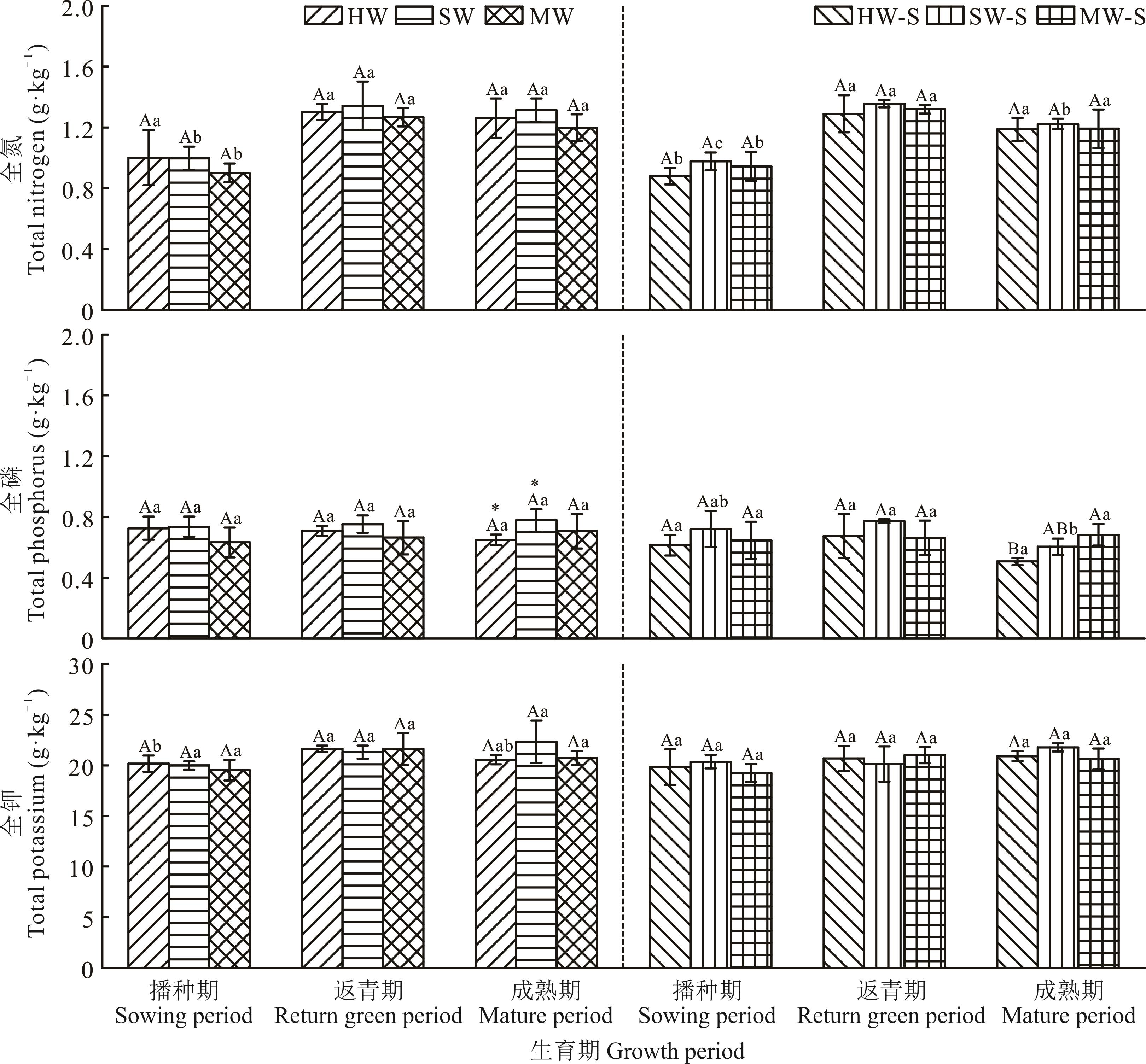
Fig.4 Soil total nutrient contents during the winter wheat under different salinity levels for each treatment
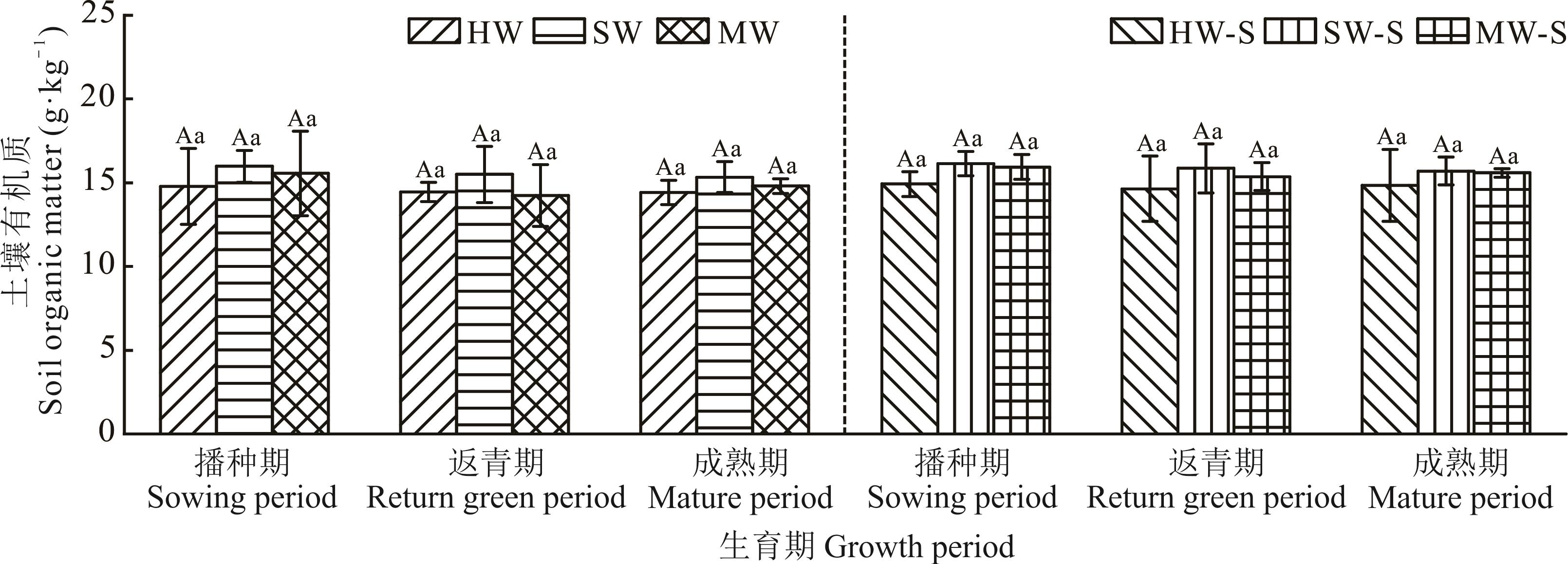
Fig.5 Soil organic matter contents during the winter wheat under different salinity levels for each treatment
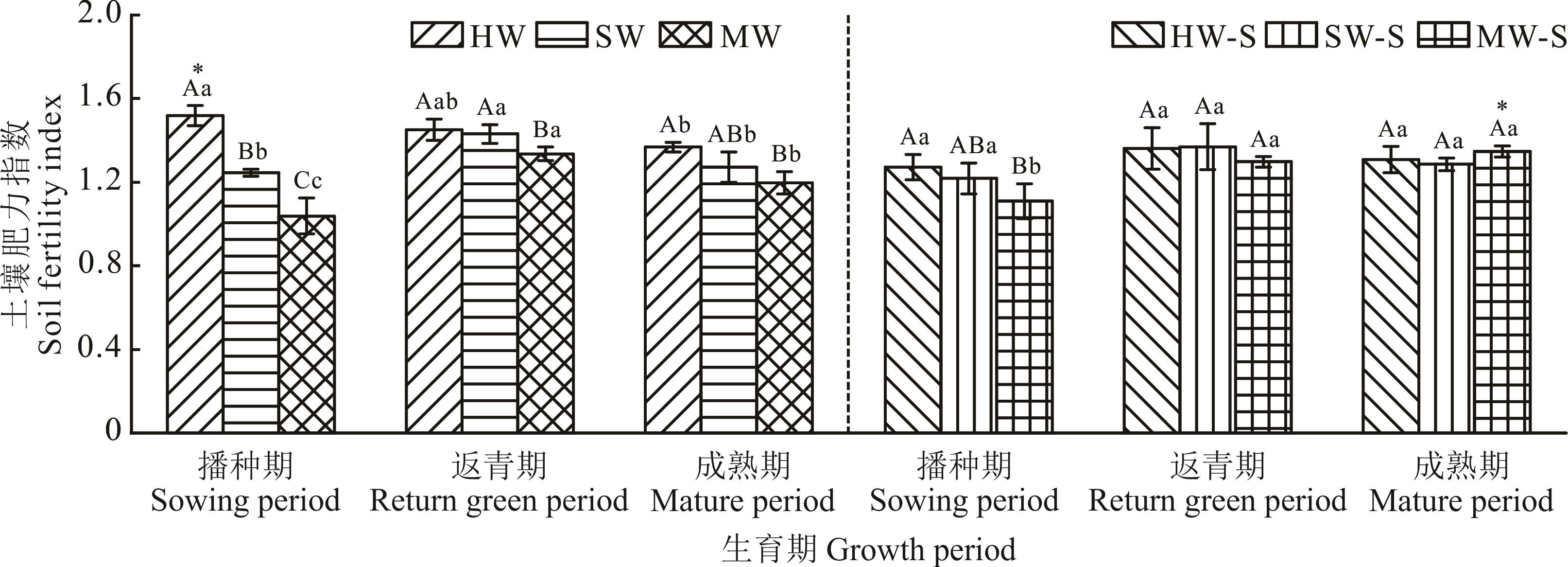
Fig.6 Soil fertility index of winter wheat under different salinity levels for each treatment
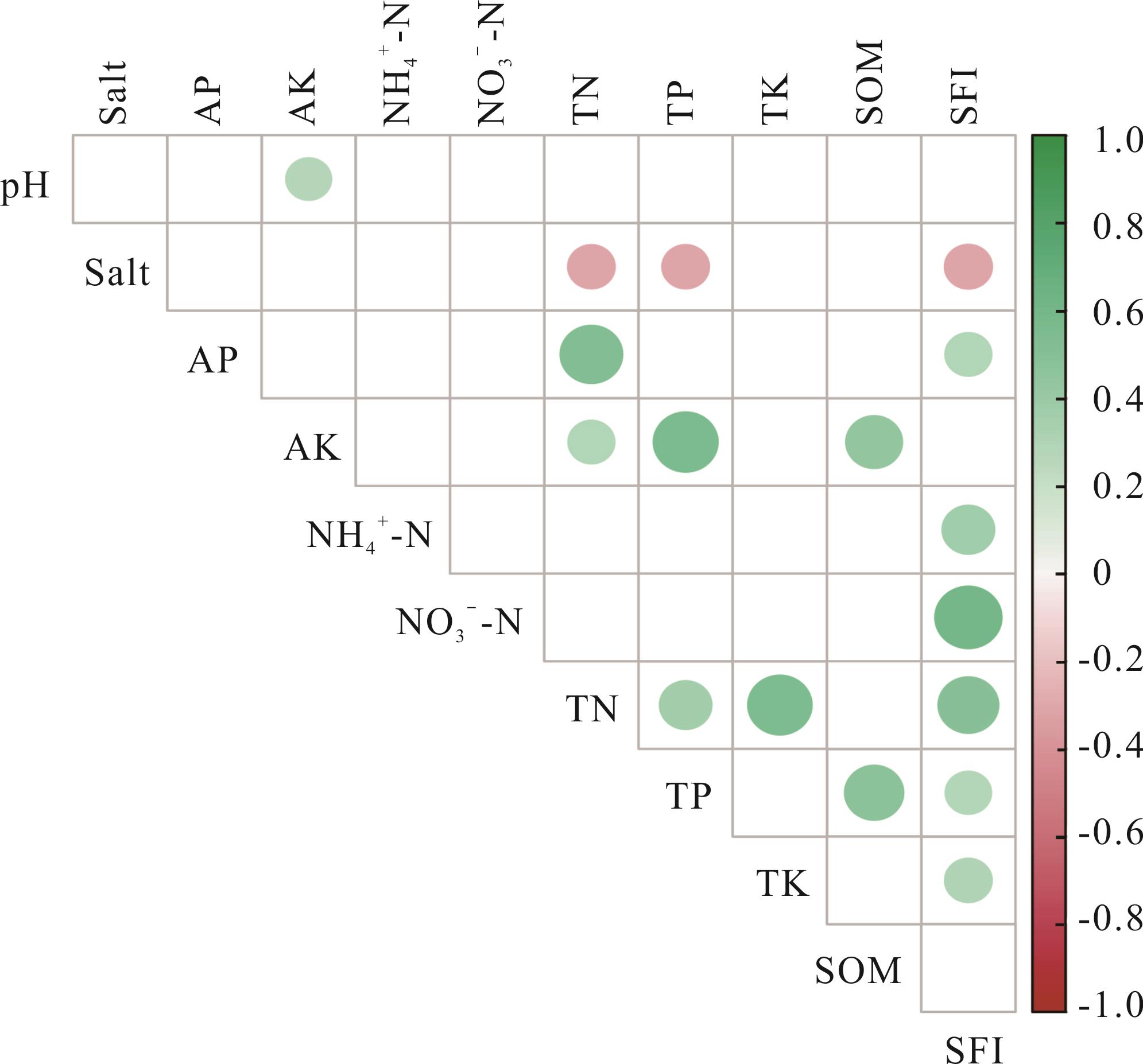
Fig.7 The correlation between soil fertility index and chemical properties
| [1] | Yang J S, Yao R J, Wang X P, et al. Research on salt-affected soils in China: History,status quo and prospect. Acta Pedologica Sinica, 2022, 59(1): 10-27. |
| 杨劲松, 姚荣江, 王相平, 等. 中国盐渍土研究: 历程、现状与展望. 土壤学报, 2022, 59(1): 10-27. | |
| [2] | Cui Q, Xia J B, Yang H J, et al. Biochar and effective microorganisms promote Sesbania cannabina growth and soil quality in the coastal saline-alkali soil of the Yellow River Delta, China. Science of the Total Environment, 2021, 756(7): 143801. |
| [3] | Cui L Q, Liu Y M, Yan J L, et al. Revitalizing coastal saline-alkali soil with biochar application for improved crop growth. Ecological Engineering, 2022, 179(6): 106594. |
| [4] | Huang X C, Shi X J, Li Y, et al. Effect of the inherent soil productivity on high, stable and sustainable yield of grain and oil crops in yellow soil region. Scientia Agricultura Sinica, 2017, 50(8): 1476-1485. |
| 黄兴成, 石孝均, 李渝, 等. 基础地力对黄壤区粮油高产、稳产和可持续生产的影响. 中国农业科学, 2017, 50(8): 1476-1485. | |
| [5] | Zou H Q, Li D J, Ren K Y, et al. Response of maize yield and nitrogen recovery efficiency to nitrogen fertilizer application in field with various soil fertility. Frontiers in Plant Science, 2024, 15(1): 1349180. |
| [6] | Liu Z J, Yuan X H, Zhang Z X, et al. Revisiting potassium-induced impacts on crop production and soil fertility based on thirty-three Chinese long-term experiments. Field Crops Research, 2025, 322(3): 109732. |
| [7] | Wang L Q, Ma D L, Liu H Y, et al. Soil fertility differences due to tillage methods modulate maize yield formation at different planting densities. Scientific Reports, 2025, 15(1): 2437. |
| [8] | Boselli R, Fiorini A, Santelli S, et al. Cover crops during transition to no-till maintain yield and enhance soil fertility in intensive agro-ecosystems. Field Crops Research, 2020, 255(11): 107871. |
| [9] | Zheng Y F, Cao X W, Zhou Y A, et al. Effect of planting salt-tolerant legumes on coastal saline soil nutrient availability and microbial communities. Journal of Environmental Management, 2023, 345(21): 11857. |
| [10] | Nouri A, Lukas S, Singh S, et al. When do cover crops reduce nitrate leaching? A global meta-analysis. Global Change Biology, 2022, 28(15): 4736-4749. |
| [11] | Jian J S, Du X, Reiter M S, et al. A meta-analysis of global cropland soil carbon changes due to cover cropping. Soil Biology & Biochemistry, 2020, 143(4): 107735. |
| [12] | Yang X M, Drury C F, Reynolds W D, et al. Legume cover crops provide nitrogen to corn during a three-year transition to organic cropping. Agronomy Journal, 2019, 111(6): 3253-3264. |
| [13] | Ma J Y, Wang T, Liu X L, et al. Meta-analysis of yield effects and influencing factors of cover crops on main grain crops in China. Scientia Agricultura Sinica, 2023, 56(10): 1871-1880. |
| 马佳玉, 王涛, 刘小利, 等. 覆盖作物对我国粮食作物的产量效应及影响因素的Meta分析. 中国农业科学, 2023, 56(10): 1871-1880. | |
| [14] | Liao H, Kuang S J, Zhang Q, et al. Impacts of continuous green manure combined with chemical fertilizer reduction on growth, nutrient accumulation and yield of maize in yellow soil area of Guizhou Province. Jiangsu Agricultural Sciences, 2024, 52(2): 98-104. |
| 廖恒, 况胜剑, 张钦, 等. 贵州黄壤区连续翻压绿肥配合化肥减量对玉米生长、养分积累和产量的影响. 江苏农业科学, 2024, 52(2): 98-104. | |
| [15] | Nielsen D C, Lyon D J, Higgins R K, et al. Cover crop effect on subsequent wheat yield in the central great plains. Agronomy Journal, 2016, 108(1): 243-256. |
| [16] | Jian S L, Li S X, Liu S Q, et al. Research advances of cover crops and their important roles. Acta Agronomica Sinica, 2022, 48(1): 1-14. |
| 蹇述莲, 李书鑫, 刘胜群, 等. 覆盖作物及其作用的研究进展. 作物学报, 2022, 48(1): 1-14. | |
| [17] | Shang S Q, Zhang X Y, Wang D W, et al. Effects of tillage depth and planting density on the photosynthetic characteristics and yield of peanut in coastal saline alkaline land. Transactions of the Chinese Society of Agricultural Engineering, 2025, 41(12): 86-94. |
| 尚书旗, 张茜雅, 王东伟, 等. 耕作深度与种植密度对滨海盐碱地花生光合特性及产量的影响. 农业工程学报, 2025, 41(12): 86-94. | |
| [18] | Ouyang Z, Wang H S, Lai J B, et al. New approach of high-quality agricultural development in the Yellow River Delta. Bulletin of Chinese Academy of Sciences, 2020, 35(2): 145-153. |
| 欧阳竹, 王竑晟, 来剑斌, 等. 黄河三角洲农业高质量发展新模式. 中国科学院院刊, 2020, 35(2): 145-153. | |
| [19] | Bao S D. Soil and agricultural chemistry analysis (the third edition). Beijing: China Agriculture Press, 2000. |
| 鲍士旦. 土壤农化分析(第3版). 北京: 中国农业出版社, 2000. | |
| [20] | Huang X C, Li Y, Bai Y J, et al. Evolution of yellow soil fertility under long-term fertilization and response of corp yield. Journal of Plant Nutrition and Fertilizers, 2018, 24(6): 1484-1491. |
| 黄兴成, 李渝, 白怡婧, 等. 长期不同施肥下黄壤综合肥力演变及作物产量响应. 植物营养与肥料学报, 2018, 24(6): 1484-1491. | |
| [21] | Tomczyk P, Wdowczyk A, Wiatkowska B, et al. Fertility and quality of arable soils in Poland: spatial-temporal analysis of long-term monitoring. Ecological Indicators, 2024, 166(9): 112375. |
| [22] | Jian Z J, Ni Y Y, Xu J, et al. Soil fertility in the Pinus massoniana forests of China. Acta Ecologica Sinica, 2021, 41(13): 5279-5288. |
| 简尊吉, 倪妍妍, 徐瑾, 等. 中国马尾松林土壤肥力特征. 生态学报, 2021, 41(13): 5279-5288. | |
| [23] | Gao Y, Zhang Y X, Bu A A, et al. Evaluation of fertility quality in typical “non-grain” cultivated soils of Zhejiang Province of China based on the improved Nemerow method. Acta Agriculturae Zhejiangensis, 2025, 37(8): 1755-1765. |
| 高扬, 张瑜昕, 卜爱爱, 等. 基于改进的内梅罗综合指数法的浙江省典型“非粮化”土壤肥力质量评价. 浙江农业学报, 2025, 37(8): 1755-1765. | |
| [24] | Bao Y X, Xu M G, Lv F T, et al. Evaluation method on soil fertility under long-term fertilization. Scientia Agricultura Sinica, 2012, 45(20): 4197-4204. |
| 包耀贤, 徐明岗, 吕粉桃, 等. 长期施肥下土壤肥力变化的评价方法. 中国农业科学, 2012, 45(20): 4197-4204. | |
| [25] | Chen X J, Zhao Y N, Chai G Q, et al. Integrated soil fertility and yield response to long-term different fertilization in purple soil. Transactions of the Chinese Society of Agricultural Engineering, 2016, 32(S1): 139-144. |
| 陈轩敬, 赵亚南, 柴冠群, 等. 长期不同施肥下紫色土综合肥力演变及作物产量响应. 农业工程学报, 2016, 32(S1): 139-144. | |
| [26] | Zhang Q, Liu X H, Ma X C, et al. Soil fertility assessment and environmental risk analysis of vegetable fields along the Yangtze River in Jiangsu Province. Jiangsu Agricultural Sciences, 2024, 52(10): 234-240. |
| 张琦, 刘新红, 马啸驰, 等. 江苏沿江地区菜地土壤肥力评价及环境风险分析. 江苏农业科学, 2024, 52(10): 234-240. | |
| [27] | Ding X R, Yan N Z, Wang Z F, et al. Effects of four amendments on fertility and labile organic carbon fractions of acid purple soil. Environmental Science, 2024, 45(3): 1655-1664. |
| 丁馨茹, 严宁珍, 王子芳, 等. 4种改良剂对酸性紫色土肥力及活性有机碳组分的影响. 环境科学, 2024, 45(3): 1655-1664. | |
| [28] | Tadiello T, Potenza E, Marino P, et al. Growth, weed control, and nitrogen uptake of winter-killed cover crops, and their effects on maize in conservation agriculture. Agronomy for Sustainable Development, 2022, 42(2): 3-15. |
| [29] | Taskin E, Boselli R, Fiorini A, et al. Combined impact of no-till and cover crops with or without short-term water stress as revealed by physicochemical and microbiological indicators. Biology, 2021, 10(1): 2-19. |
| [30] | Yin X W, Feng Q, Liu W, et al. Assessment and mechanism analysis of plant salt tolerance regulates soil moisture dynamics and controls root zone salinity and sodicity in seasonally irrigated agroecosystems. Journal of Hydrology, 2023, 617(2): 129138. |
| [31] | Wang D Y, Zheng J Y, Tan Y Y, et al. Seasonal climate drives soil salinity dynamics through vegetation and water regulation. Resources Environment and Sustainability, 2025, 22(4): 100266. |
| [32] | Yang X, Lu Y Q, Ma L L, et al. Effects of low-molecular-weight organic acids on leachate and soil properties of typical soils under leaching condition in three gorge reservior areas. Bulletin of Soil and Water Conservation, 2016, 36(4): 175-181. |
| 杨茜, 卢越琴, 马玲莉, 等. 淋溶条件下低分子量有机酸对淋出液及三峡库区典型土壤性质的影响. 水土保持通报, 2016, 36(4): 175-181. | |
| [33] | Qin Z Y, Wu J B, Zheng H X, et al. Improvement effects of different feed crops on soda saline-alkali soil. Soils, 2023, 55(5): 1088-1096. |
| 秦子元, 邬佳宾, 郑和祥, 等. 不同饲料作物对苏打盐碱土改良效应研究. 土壤, 2023, 55(5): 1088-1096. | |
| [34] | Fiorini A, Maris S C, Abalos D, et al. Combining no-till with rye cover crop mitigates nitrous oxide emissions without decreasing yield. Soil & Tillage Research, 2020, 196(1): 104442. |
| [35] | Gabriel J L, Muñoz-Carpena R, Quemada M. The role of cover crops in irrigated systems: Water balance, nitrate leaching and soil mineral nitrogen accumulation. Agriculture Ecosystems & Environment, 2012, 155(10): 50-61. |
| [36] | Hallama M, Pekrun C, Lambers H, et al. Hidden miners-the roles of cover crops and soil microorganisms in phosphorus cycling through agroecosystems. Plant and Soil, 2019, 434(1/2): 7-45. |
| [37] | Hallama M, Pekrun C, Mayer-Gruner P, et al. The role of microbes in the increase of organic phosphorus availability in the rhizosheath of cover crops. Plant and Soil, 2022, 476(7): 353-373. |
| [38] | Guo Y D, Cheng M, Zhao X F, et al. Effects of green manure rotation on soil properties and yield and quality of silage maize in saline-alkali soils. Chinese Journal of Eco-Agriculture, 2018, 26(6): 856-864. |
| 郭耀东, 程曼, 赵秀峰, 等. 轮作绿肥对盐碱地土壤性质、后作青贮玉米产量及品质的影响. 中国生态农业学报, 2018, 26(6): 856-864. | |
| [39] | Lv Z Z, Yang J S, Liu G M, et al. Relationship between soil salinization and groundwater characteristics in the Yellow River Delta. Acta Pedologica Sinica, 2017, 54(6): 1377-1385. |
| 吕真真, 杨劲松, 刘广明, 等. 黄河三角洲土壤盐渍化与地下水特征关系研究. 土壤学报, 2017, 54(6): 1377-1385. | |
| [40] | Acosta-Martínez V, Cotton J. Lasting effects of soil health improvements with management changes in cotton-based cropping systems in a sandy soil. Biology and Fertility of Soils, 2017, 53(5): 533-546. |
| [41] | Maltas A S, Tavali I E, Uz I, et al. Monitoring the effects of pH and EC regulated drip fertigation on microbial dynamics of calcareous soil in tomato cultivation under greenhouse conditions in a Mediterranean climate. Scientia Horticulturae, 2022, 306(16): 111448. |
| [42] | Xie W P, Yang J S, Gao S, et al. The effect and influence mechanism of soil salinity on phosphorus availability in coastal salt-affected soils. Water, 2022, 14(18): 2-15. |
| [43] | Yang Y Q, Guo Y. Elucidating the molecular mechanisms mediating plant salt-stress responses. New Phytologist, 2018, 217(2): 523-539. |
| [44] | Lu Y, Jin S B, Jia L, et al. Green manuring effect on changes of soil nitrogen fractions, maize growth, and nutrient uptake. Agronomy, 2018, 8(11): 261. |
| [45] | Adams A M, Gillespie A W, Dhillon G S, et al. Long-term effects of integrated soil fertility management practices on soil chemical properties in the Sahel. Geoderma, 2020, 366(10): 114207. |
| [46] | Choi N, Choi M, Lee S, et al. Effects of ecotypes and reduced N fertilization on root growth and aboveground development of ratooning sorghum×sudangrass hybrids. Agronomy, 2024, 14(9): 2073. |
| [47] | Hu Y J, Ma P H, Zhang B B, et al. Exploring optimal soil mulching for the wheat-maize cropping system in sub-humid drought-prone regions in China. Agricultural Water Management, 2019, 219(9): 59-71. |
| [48] | Su X C, Sun L Y, Kang Y T, et al. Green manuring increases network complexity and deterministic assembly of diazotrophic community in a subtropical paddy soil. Applied Soil Ecology, 2025, 208(4): 105997. |
| [49] | Sun L, He J Y, Qi P Y, et al. Multi-objective optimization of agronomic practices to balance soil fertility, water productivity, and economic returns in saline-alkali farmlands. Field Crops Research, 2025, 328(9): 109928. |
| [50] | Liu Y R, Hou H Q, Lan X J, et al. Effects of long-term sustainable inorganic fertilization on rice productivity and fertility of quaternary red soil. Agronomy, 2024, 14(10): 2311. |
| [51] | Ma T F, He X H, Chen S G, et al. Long-term organic-inorganic fertilization regimes alter bacterial and fungal communities and rice yields in paddy soil. Frontiers in Microbiology, 2022, 13: 809712. |
| [52] | Yu D Q, Meng Y H. Spatial distribution of salt ions in surface soils in the south coast of Laizhou bay. Marine Geology Frontiers, 2020, 36(8): 29-35. |
| 于得芹, 蒙永辉. 莱州湾南岸地区表层土壤盐分离子分异规律. 海洋地质前沿, 2020, 36(8): 29-35. | |
| [53] | Wang D, Liu S, Hao L W, et al. Nine-year biochar history increases topsoil nitrogen stocks and reduces the refractory organic nitrogen fractions in deep soils. Journal of Soils and Sediments, 2025, 25(6): 1802-1815. |
| [54] | Wang J K, Gao F S, Zhang K Y, et al. Effects of returning gramineous green manure to cotton field on soil carbon and nitrogen in saline alkali soil. Chinese Journal of Eco-Agriculture, 2023, 31(3): 396-404. |
| 王敬宽, 高枫舒, 张楷悦, 等. 禾本科绿肥还田对盐碱地棉田土壤碳氮及微生物量碳氮的影响. 中国生态农业学报, 2023, 31(3): 396-404. | |
| [55] | Jin F, Piao J L, Miao S H, et al. Long-term effects of biochar one-off application on soil physicochemical properties, salt concentration, nutrient availability, enzyme activity, and rice yield of highly saline-alkali paddy soils: based on a 6-year field experiment. Biochar, 2024, 6(1): 7972. |
| [56] | Sun S N, Yan X B, Yin F H. Current situation and prospect of improvement and comprehensive utilization for saline-alkali land of coastal tidal flats in China. Chinese Journal of Grassland, 2024, 46(2): 1-13. |
| 孙盛楠, 严学兵, 尹飞虎. 我国沿海滩涂盐碱地改良与综合利用现状与展望. 中国草地学报, 2024, 46(2): 1-13. |
| [1] | Hui ZHANG, Hui-ling LI, Qing-sen WANG, Feng-jing LIU, Jin-yu LI, Liang-de LI, Qiu-sheng ZHONG, Ding-feng WANG. Effects of intercropping the weed Artemisia lavandulaefolia on soil microbial structure and diversity in tea gardens [J]. Acta Prataculturae Sinica, 2026, 35(6): 166-180. |
| [2] | Long-hang CHAI, Rui ZHAO, Xiao-yi LIU, Jin-shun BAI. A meta-analysis of the effects of green manure on yield increase and chemical nitrogen fertilizer saving in Chinese farmlands [J]. Acta Prataculturae Sinica, 2026, 35(5): 162-174. |
| [3] | Lei ZHANG, Jin-tao DU, Qian-yu FAN, Shun LI, Song-juan GAO, Wei-dong CAO. Response of biological nitrogen fixation by milk vetch to soil fertility and rhizobium inoculation [J]. Acta Prataculturae Sinica, 2025, 34(5): 51-63. |
| [4] | Rui LIU, Dan-na CHANG, Guo-peng ZHOU, Song-juan GAO, Qiang CHAI, Wei-dong CAO. Techniques of N2O emission reduction in farmland and their synergistic application with green manure [J]. Acta Prataculturae Sinica, 2025, 34(2): 196-210. |
| [5] | Wen-jun ZHAO, Ting LIANG, Jian-song WANG, Kui LIU, Yu FENG, Zheng-xu WANG, Zi-he XU, Yun-cong ZHU, Meng-meng SUN, Xiang-wei LI, Li-bo FU, Mei YIN, Guo-peng ZHOU, Hua CHEN, Wei-dong CAO. Planting and incorporation of smooth vetch together with reduced nitrogen fertilizer application enhances tobacco yield and soil quality [J]. Acta Prataculturae Sinica, 2025, 34(10): 74-84. |
| [6] | Zheng WANG, Wei CHANG, Jun-cheng LI, Lian-tai SU, Li GAO, Peng ZHOU, Yuan AN. Effects of alfalfa green manure on the yield, nitrogen absorption, and nitrogen translocation of feed maize [J]. Acta Prataculturae Sinica, 2024, 33(8): 63-73. |
| [7] | Jian-feng NING, Tong LI, Rui-kun ZENG, Jian-wu YAO, Yong CHEN, Zi-wei LIANG. Soil fertility in perennial vegetable fields in the latosolic red soil zone of the Pearl River Delta [J]. Acta Prataculturae Sinica, 2024, 33(5): 25-40. |
| [8] | Shuai-lei LYU, Dan-na CHANG, Guo-peng ZHOU, Rui LIU, Xin ZHAO, Jia LIU, Chang-xu XU, Wei-dong CAO. The phosphorus effect of applying phosphate rock powder during the green manure season in red soil of Jiangxi Province [J]. Acta Prataculturae Sinica, 2024, 33(11): 149-160. |
| [9] | Wen-jun ZHAO, Rui LIU, Zheng-xu WANG, Yu FENG, Kai-zheng XUE, Kui LIU, Zi-he XU, Wei-dong CAO, Li-bo FU, Mei YIN, Hua CHEN. Effects of rotation with a green manure crop on soil quality and microbial nutrient limitation in a tobacco field in Yunnan [J]. Acta Prataculturae Sinica, 2024, 33(10): 147-158. |
| [10] | Xue-liang ZHANG, Yu-ting ZHANG, Rui LIU, Jun XIE, Jian-wei ZHANG, Wen-jing XU, Xiao-jun SHI. Effects of green manure return regimes on soil greenhouse gas emissions [J]. Acta Prataculturae Sinica, 2021, 30(5): 25-33. |
| [11] | Ke-sheng WU, Zong-xian CHE, Xing-guo BAO, Jiu-dong ZHANG, Bing-lin LU, Xin-qiang YANG, Rui-ju YANG. Analysis of soil fertility and crop yield characteristics following long-term straw return to the field in a Hexi Oasis irrigated area [J]. Acta Prataculturae Sinica, 2021, 30(12): 59-70. |
| [12] | Fei WANG, Cai-ling LIU, Chun-mei HE, Qing-hua LI, Yu-jie LIU, Yi-bin HUANG. Appropriate ratios of phosphate and potassium fertilizers and 50% return of rice straw enhanced yield and nutrient capture of Chinese milk vetch [J]. Acta Prataculturae Sinica, 2021, 30(12): 81-89. |
| [13] | Li-jun GU, Ting-yu DUAN. Current status of research on Vicia villosa var. glabresens as indicated by a bibliometric analysis using the China National Knowledge Infrastructure (CNKI) database [J]. Acta Prataculturae Sinica, 2021, 30(11): 221-228. |
| [14] | Xiao-fen CHEN, Lu-ping ZHANG, Wen-jing QIN, Jing-rui CHEN, Yang-geng XU, Ming LIU, Zhong-pei LI, Chang-xu XU, Jia LIU. A study of the appropriate seeding rates for four winter green manure crops in an upland red soil of Southern China [J]. Acta Prataculturae Sinica, 2021, 30(10): 137-146. |
| [15] | LÜ Han-qiang, YU Ai-zhong, WANG Yu-long, SU Xiang-xiang, LÜ Yi-tong, CHAI Qiang. Effect of green manure retention practices on nitrogen absorption and utilization by maize crops in the arid oasis irrigation area [J]. Acta Prataculturae Sinica, 2020, 29(8): 93-103. |
| Viewed | ||||||
|
Full text |
|
|||||
|
Abstract |
|
|||||
