

ISSN 1004-5759 CN 62-1105/S
草业学报 ›› 2027, Vol. 36 ›› Issue (1): 217-242.DOI: 10.11686/cyxb2026011
• 综合评述 • 上一篇
郭万里1,3( ), 闫启1,2, 牟翠翠3, 张吉宇1,2()
收稿日期:2026-01-12
修回日期:2026-03-16
出版日期:2027-01-20
发布日期:2026-11-25
通讯作者:
张吉宇
作者简介:E-mail: zhangjy@lzu.edu.cn基金资助:
Wan-li GUO1,3(), Qi YAN1,2, Cui-cui MU3, Ji-yu ZHANG1,2()
Received:2026-01-12
Revised:2026-03-16
Online:2027-01-20
Published:2026-11-25
Contact:
Ji-yu ZHANG
摘要:
草地生态系统作为全球分布最广的陆地生态系统之一,其具备同时提供多种功能与服务的能力,即生态系统多功能性(EMF),是维系全球生态安全与人类福祉的基石。然而,在全球变化和人为因素的双重胁迫下,草地退化引发的EMF下降正严重威胁国家生态安全。本研究基于对近5年相关文献的梳理与分析,围绕草地EMF的核心科学问题,重点从全球气候变化、生物多样性、土壤微生物特性、环境背景及人类活动5个维度,系统剖析了草地EMF的驱动机制与调控路径。详细阐述了增温的情境依赖性、降水变化的阈值效应、植物多维多样性的互补作用以及土壤微生物网络复杂性对EMF稳定性的核心贡献,并探讨了放牧、施肥等干扰下地上-地下功能的权衡与协同关系。通过厘清各驱动因子间的交互网络,本研究构建了一个整合多营养级生物类群与非生物环境因子的综合分析框架,并针对多因子叠加效应及跨尺度演变等前沿问题提出了未来研究展望,旨在为退化草地的精准修复、适应性管理及国家生态安全屏障的筑牢提供科学依据与理论支撑。
郭万里, 闫启, 牟翠翠, 张吉宇. 草地生态系统多功能性的驱动因素:研究进展及展望[J]. 草业学报, 2027, 36(1): 217-242.
Wan-li GUO, Qi YAN, Cui-cui MU, Ji-yu ZHANG. Drivers of multifunctionality in grassland ecosystems: Research progress and prospects[J]. Acta Prataculturae Sinica, 2027, 36(1): 217-242.
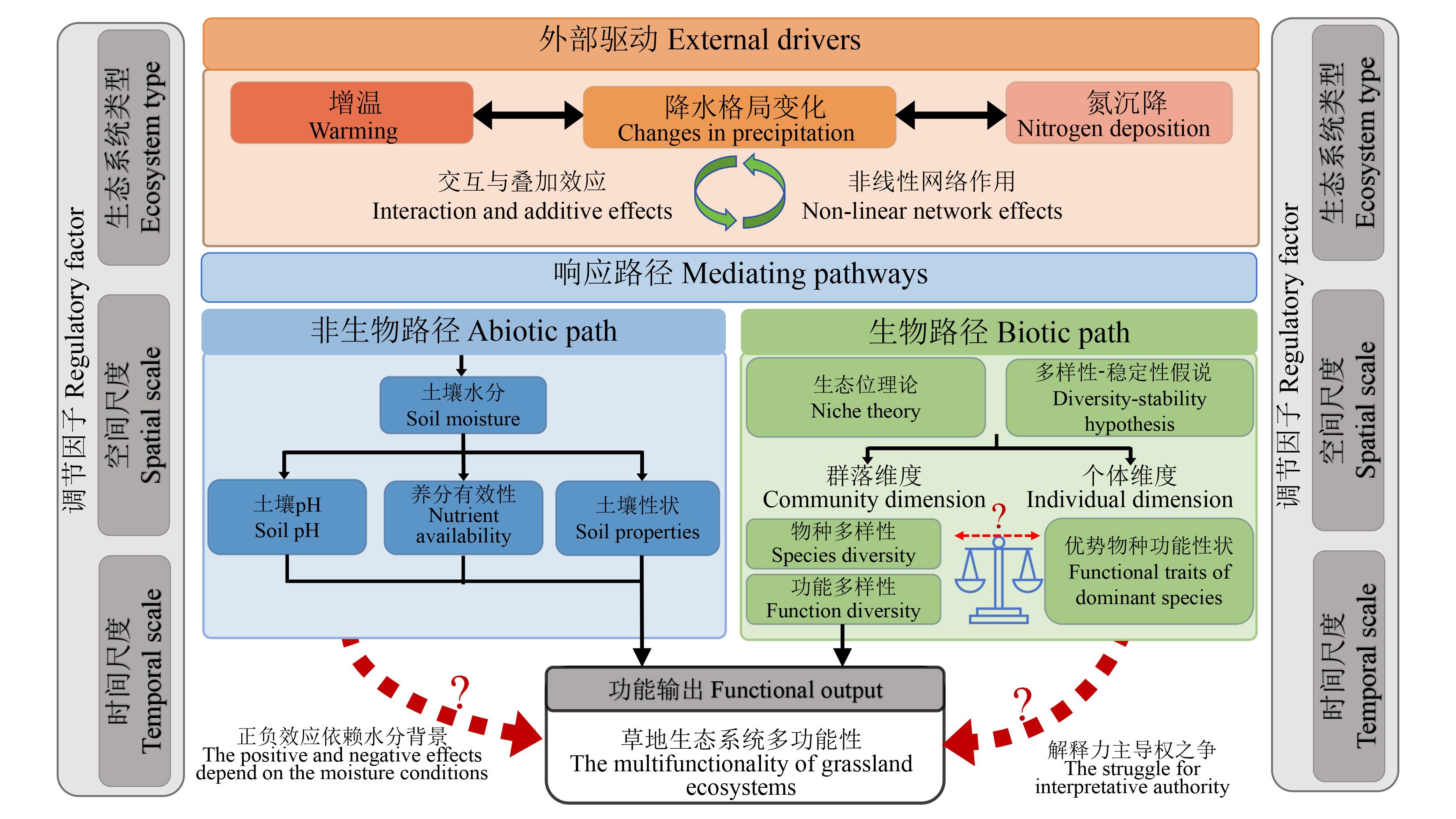
图1 草地生态系统多功能性响应全球变化的驱动机制综合框架
Fig.1 An integrated framework of driving mechanisms for grassland ecosystem multifunctionality (EMF) in response to global change

图2 生物多样性驱动草地生态系统多功能性的多维路径与理论框架
Fig.2 Multidimensional pathways and theoretical framework of biodiversity driving grassland ecosystem multifunctionality

图3 草地生态系统多功能性的微生物调控机制
Fig.3 Microbial regulation mechanisms of grassland ecosystem multifunctionality
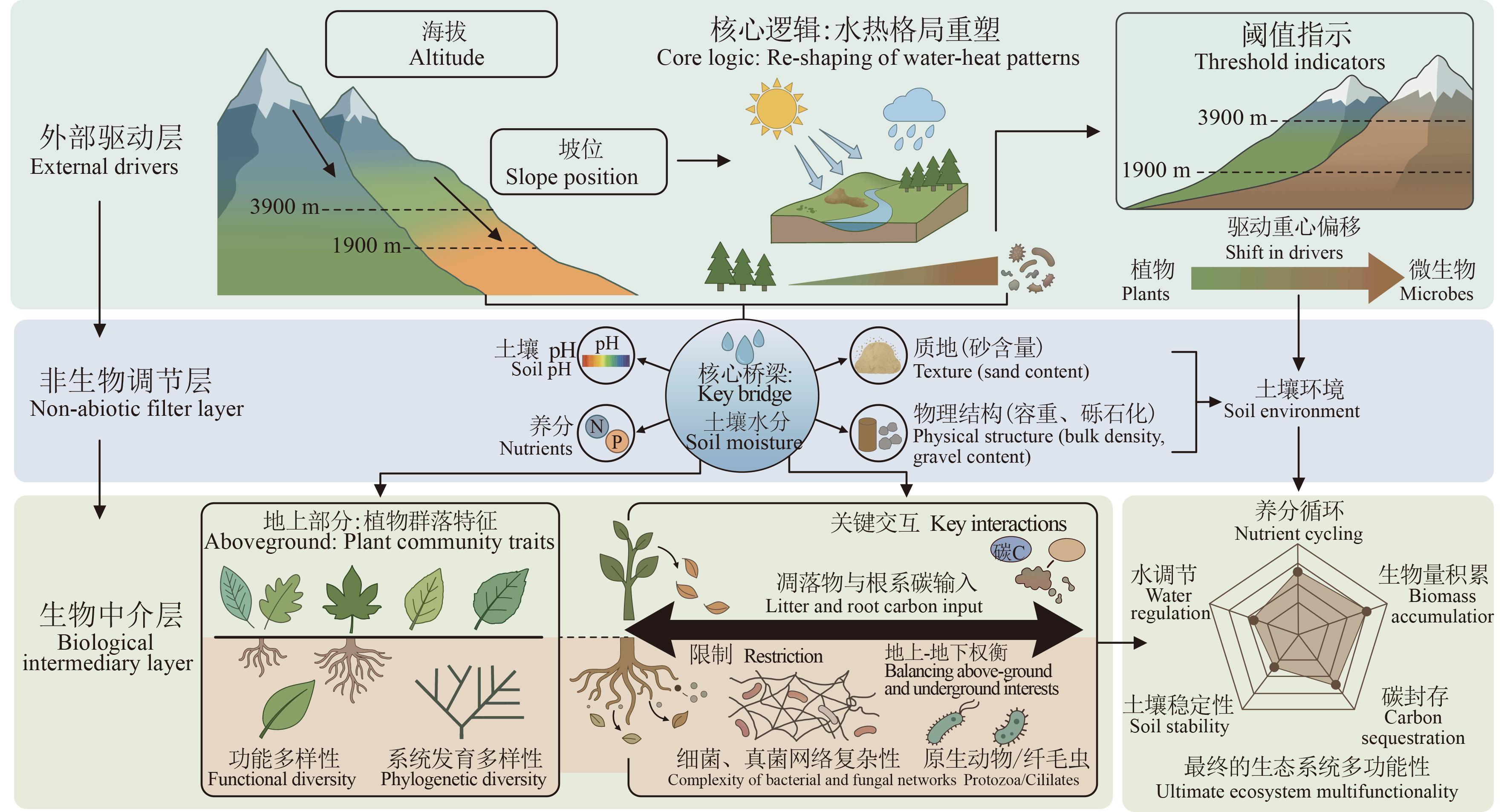
图4 环境因子对生态系统多功能性的影响机制
Fig.4 Influence mechanisms of environmental factors on ecosystem multifunctionality

图5 人类活动和管理措施对草地生态系统多功能性的影响机制
Fig.5 The mechanisms of the impacts of human activities and management measures on grassland ecosystem multifunctionality

图6 草地生态系统多功能性(EMF)影响因素
Fig.6 Influencing factors of grassland ecosystem multifunctionality (EMF)
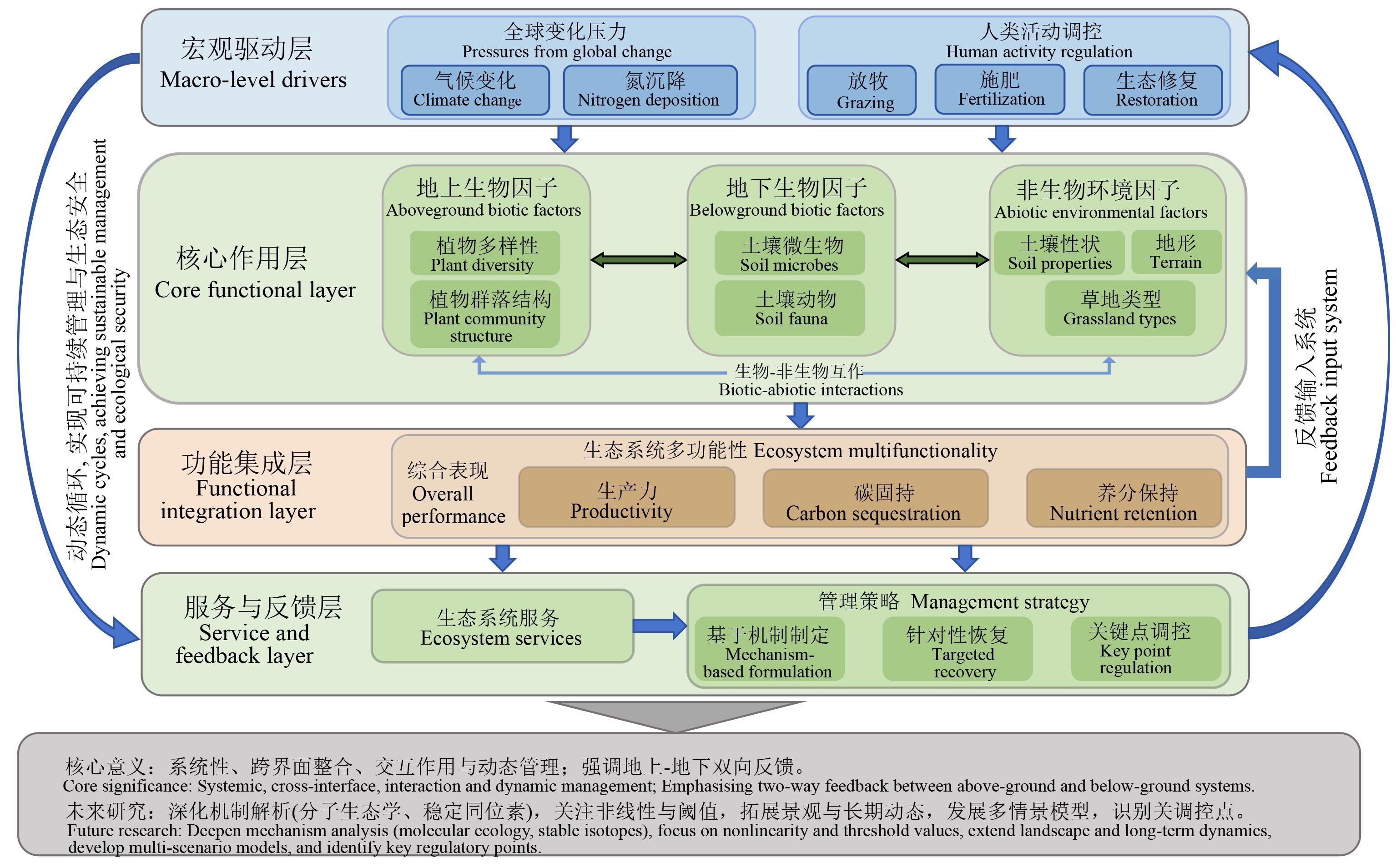
图7 草地生态系统多功能性综合分析框架
Fig.7 Comprehensive analysis framework for the multifunctionality of grassland ecosystems
| [1] | Zhang Z C, Sun J, Liu M, et al. Don’t judge toxic weeds on whether they are native but on their ecological effects. Ecology and Evolution, 2020, 10(17): 9014-9025. |
| [2] | Bai Y F, Zhao Y J, Wang Y, et al. Assessment of ecosystem services and ecological regionalization of grasslands support establishment of ecological security barriers in Northern China. Bulletin of Chinese Academy of Sciences, 2020, 35(6): 675-689. |
| 白永飞, 赵玉金, 王扬, 等. 中国北方草地生态系统服务评估和功能区划助力生态安全屏障建设. 中国科学院院刊, 2020, 35(6): 675-689. | |
| [3] | Stevens N, Bond W, Feurdean A, et al. Grassy ecosystems in the Anthropocene. Annual Review of Environment and Resources, 2022, 47(1): 261-289. |
| [4] | Zhao G L. Trends in grassland science: based on the shift analysis of research themes since the early 1900s. Fundamental Research, 2023, 3(2): 201-208. |
| [5] | Ren J Z. The historical mission of grassland science-New year’s address 2013. Acta Agrestia Sinica, 2013, 21(1): 1-2. |
| 任继周. 草业科学的历史使命——2013年新年献词. 草地学报, 2013, 21(1): 1-2. | |
| [6] | Hou F J, Li L, Ning J, et al. Development trends and key scientific issues of grassland agriculture based on the Big Food View. Bulletin of National Natural Science Foundation of China, 2024, 38(4): 647-657. |
| 侯扶江, 李岚, 宁娇, 等. 基于大食物观的草地农业发展趋势及关键科学问题. 中国科学基金, 2024, 38(4): 647-657. | |
| [7] | Xu R G, Ren J Z, Nan Z B, et al. Strategies and policies for the ecological and food security of China’s grassland. Strategic Study of CAE, 2016, 18(1): 8-16. |
| 旭日干, 任继周, 南志标, 等. 保障我国草地生态与食物安全的战略和政策. 中国工程科学, 2016, 18(1): 8-16. | |
| [8] | Ren J Z. Preface to the monograph on grassland ecological security and food security strategy in China. Pratacultural Science, 2016, 33(6): 1019-1020. |
| 任继周. 《中国草地生态保障与食物安全战略研究》专著总序. 草业科学, 2016, 33(6): 1019-1020. | |
| [9] | Wang D L, Wang L, Xin X P, et al. Systematic restoration for degraded grasslands: concepts, mechanisms and approaches. Scientia Agricultura Sinica, 2020, 53(13): 2532-2540. |
| 王德利, 王岭, 辛晓平, 等. 退化草地的系统性恢复: 概念、机制与途径. 中国农业科学, 2020, 53(13): 2532-2540. | |
| [10] | Pan Q M, Xue J G, Tao J, et al. Current status of grassland degradation and measures for grassland restoration in northern China. Chinese Science Bulletin, 2018, 63(17): 1642-1650. |
| 潘庆民, 薛建国, 陶金, 等. 中国北方草原退化现状与恢复技术. 科学通报, 2018, 63(17): 1642-1650. | |
| [11] | Bardgett R D, Bullock J M, Lavorel S, et al. Combatting global grassland degradation. Nature Reviews Earth and Environment, 2021, 2(10): 720-735. |
| [12] | Yu G R, Yang M, Hao T X. Coordinate the five-pool functions of ecosystem and build strong national ecological infrastructures―Ecological construction ideology, tasks and goals in the new developing era of China. Bulletin of Chinese Academy of Sciences, 2022, 37(11): 1534-1538. |
| 于贵瑞, 杨萌, 郝天象. 统筹生态系统五库功能,筑牢国家生态基础设施——新时代我国生态建设理念、任务和目标. 中国科学院院刊, 2022, 37(11): 1534-1538. | |
| [13] | Schulze E D, Mooney H A. Biodiversity and ecosystem function. New York: Springer Berlin, 1994. |
| [14] | Hazard C, Kruitbos L, Davidson H, et al. Contrasting effects of intra- and interspecific identity and richness of ectomycorrhizal fungi on host plants, nutrient retention and multifunctionality. New Phytologist, 2017, 213(2): 852-863. |
| [15] | Sanderson M A, Skinner R H, Barker D J, et al. Plant species diversity and management of temperate forage and grazing land ecosystems. Crop Science, 2004, 44(4): 1132-1144. |
| [16] | Hector A, Schmid B, Beierkuhnlein C, et al. Plant diversity and productivity experiments in European grasslands. Science, 1999, 286(5442): 1123-1127. |
| [17] | Manning P, van der Plas F, Soliveres S, et al. Redefining ecosystem multifunctionality. Nature Ecology & Evolution, 2018, 2(9): 427-436. |
| [18] | Garland G, Banerjee S, Edlinger A, et al. A closer look at the functions behind ecosystem multifunctionality. Journal of Ecology, 2021, 109(2): 600-613. |
| [19] | Hoelting L, Jacobs S, Felipe-Lucia M R, et al. Measuring ecosystem multifunctionality across scales. Environmental Research Letters, 2019, 14(12): 124083. |
| [20] | Byrnes J E K, Gamfeldt L, Isbell F, et al. Investigating the relationship between biodiversity and ecosystem multifunctionality. Methods in Ecology and Evolution, 2014, 5(2): 111-124. |
| [21] | Jing X, Prager C M, Classen A T, et al. Variation in the methods leads to variation in the interpretation of biodiversity-ecosystem multifunctionality relationships. Journal of Plant Ecology, 2020, 13(4): 431-441. |
| [22] | Gamfeldt L, Hillebrand H, Jonsson P R. Multiple functions increase the importance of biodiversity for overall ecosystem functioning. Ecology, 2008, 89(5): 1223-1231. |
| [23] | Xu W, Jing X, Ma Z Y, et al. A review on the measurement of ecosystem multifunctionality. Biodiversity Science, 2016, 24(1): 72-84. |
| 徐炜, 井新, 马志远, 等. 生态系统多功能性的测度方法. 生物多样性, 2016, 24(1): 72-84. | |
| [24] | Fiedler S, Monteiro J A F, Hulvey K B, et al. Global change shifts trade-offs among ecosystem functions in woodlands restored for multifunctionality. Journal of Applied Ecology, 2021, 58(8): 1705-1717. |
| [25] | Du L, Tian S C, Sun J, et al. Ecosystem multifunctionality, maximum height, and biodiversity of shrub communities affected by precipitation fluctuations in northwest China. Frontiers in Plant Science, 2023, 14: 1259858. |
| [26] | Duran J, Delgado-Baquerizo M, Dougill A J, et al. Temperature and aridity regulate spatial variability of soil multifunctionality in drylands across the globe. Ecology, 2018, 99(5): 1184-1193. |
| [27] | Pichon N A, Cappelli S L, Soliveres S, et al. Nitrogen availability and plant functional composition modify biodiversity-multifunctionality relationships. Ecology Letters, 2024, 27: e14361. |
| [28] | Zhang M N, Delgado-Baquerizo M, Li G Y, et al. Experimental impacts of grazing on grassland biodiversity and function are explained by aridity. Nature Communications, 2023, 14: 5040. |
| [29] | Zhao F F, Hao M H, Fan C Y, et al. Reduced soil moisture caused by human disturbance mediates the biodiversity effects on ecosystem multifunctionality across stand ages in the temperate forests of north-eastern China. Global Ecology and Conservation, 2025, 62: e03789. |
| [30] | Delgado-Baquerizo M, Maestre F T, Reich P B, et al. Microbial diversity drives multifunctionality in terrestrial ecosystems. Nature Communications, 2016, 7: 10541. |
| [31] | Han Z Q, Xu P S, Li Z T, et al. Microbial diversity and the abundance of keystone species drive the response of soil multifunctionality to organic substitution and biochar amendment in a tea plantation. Global Change Biology Bioenergy, 2022, 14(4): 481-495. |
| [32] | Runnel K, Tedersoo L, Krah F S, et al. Toward harnessing biodiversity-ecosystem function relationships in fungi. Trends in Ecology & Evolution, 2025, 40(2): 180-190. |
| [33] | Jiao S, Qi J J, Jin C J, et al. Core phylotypes enhance the resistance of soil microbiome to environmental changes to maintain multifunctionality in agricultural ecosystems. Global Change Biology, 2022, 28(22): 6653-6664. |
| [34] | Long X W, Li J N, Liao X H, et al. Stable soil biota network enhances soil multifunctionality in agroecosystems. Global Change Biology, 2025, 31(1): e70041. |
| [35] | Wagg C, Schlaeppi K, Banerjee S, et al. Fungal-bacterial diversity and microbiome complexity predict ecosystem functioning. Nature Communications, 2019, 10(1): 4841. |
| [36] | Jiao S, Lu Y H, Wei G H. Soil multitrophic network complexity enhances the link between biodiversity and multifunctionality in agricultural systems. Global Change Biology, 2022, 28(1): 140-153. |
| [37] | Pasari J R, Levi T, Zavaleta E S, et al. Several scales of biodiversity affect ecosystem multifunctionality. Proceedings of the National Academy of Sciences of the United States of America, 2013, 110(37): 10219-10222. |
| [38] | Scherer-Lorenzen M, Gessner M O, Beisner B E, et al. Pathways for cross-boundary effects of biodiversity on ecosystem functioning. Trends in Ecology & Evolution, 2022, 37(5): 454-467. |
| [39] | Zavaleta E S, Pasari J R, Hulvey K B, et al. Sustaining multiple ecosystem functions in grassland communities requires higher biodiversity. Proceedings of the National Academy of Sciences of the United States of America, 2010, 107(4): 1443-1446. |
| [40] | Grimm N B, Staudinger M D, Staudt A, et al. Climate-change impacts on ecological systems: introduction to a US assessment. Frontiers in Ecology and the Environment, 2013, 11(9): 456-464. |
| [41] | Fang J Y, Zhu J L, Shi Y. The responses of ecosystems to global warming. Science Bulletin, 2018, 63(2): 136-140. |
| 方精云, 朱江玲, 石岳. 生态系统对全球变暖的响应. 科学通报, 2018, 63(2): 136-140. | |
| [42] | Chen W J, Zhou H K, Wu Y, et al. Long-term warming impacts grassland ecosystem function: role of diversity loss in conditionally rare bacterial taxa. Science of the Total Environment, 2023, 892: 164722. |
| [43] | Xie C D, Ren Z W, Dong L W, et al. Effects of warming and nitrogen addition on the ecosystem multifunctionality of alpine grassland in the Tianshan Mountains. Journal of Xinjiang University (Natural Science Edition in Chinese and English), 2023, 40(5): 610-620. |
| 谢晨笛, 任正炜, 董六文, 等. 增温和氮添加对天山高寒草地生态系统多功能性的影响. 新疆大学学报(自然科学版中英文), 2023, 40(5): 610-620. | |
| [44] | Zhang H Y, Ye C C, Wang S. Elevation dependence of climate effects on ecosystem multifunctionality states over the Qinghai-Tibet Plateau. Global Ecology and Conservation, 2022, 36(1): e02066. |
| [45] | Zhu H Y, Fan C K, Jin H R, et al. Dominant species drive ecosystem multifunctionality under changed precipitation timing in a semiarid steppe. Ecological Applications, 2025, 35(6): e70106. |
| [46] | Li Z, Liu X W, Zhang M H, et al. High plant diversity alleviates the negative effects of nitrogen deposition on soil nitrogen cycling multifunctionality. Frontiers in Microbiology, 2025, 16: 1596515. |
| [47] | Zhao J X, Yang W, Tian L H, et al. Warming differentially affects above- and belowground ecosystem functioning of the semi-arid alpine grasslands. Science of the Total Environment, 2024, 914: 170061. |
| [48] | Zhou T Y, Ding L M, Yin X Y, et al. Decadal warming-induced changes in abiotic factors and multitrophic diversity drive soil multifunctionality in an alpine meadow. Geoderma, 2024, 450(1): 117035. |
| [49] | Dong L Z, Yao X D, Deng Y Y, et al. Nitrogen deficiency in soil mediates multifunctionality responses to global climatic drivers. Science of the Total Environment, 2022, 838(4): 156533. |
| [50] | Yang Y, Zhang C C, Tian M X, et al. Biodiversity gains importance in sustaining ecosystem multifunctionality when beyond aridity thresholds in temperate grasslands. Agriculture Ecosystems and Environment, 2026, 395: 109946. |
| [51] | Liu X C, Shi X M, Zhang S T. Soil abiotic properties and plant functional diversity co-regulate the impacts of nitrogen addition on ecosystem multifunctionality in an alpine meadow. Science of the Total Environment, 2021, 780: 146476. |
| [52] | Shi L N, Lin Z R, Yao Z Y, et al. Increased precipitation rather than warming increases ecosystem multifunctionality in an alpine meadow. Plant and Soil, 2024, 498(1/2): 357-370. |
| [53] | Yang X C, Song W Z, Yang X, et al. Microbial network structure, not plant and microbial community diversity, regulates multifunctionality under increased precipitation in a cold steppe. Frontiers in Microbiology, 2024, 14: 1349747. |
| [54] | Mo X M, Zhou Y, Hou S L, et al. Altered energy dynamics of soil nematode food web modify multifunctionality under precipitation regime change in a temperate grassland. Plant and Soil, 2025, 511(1/2): 1473-1483. |
| [55] | Liu M X, Xiao Y D, Shi J Y, et al. Precipitation alters the relationship between biodiversity and multifunctionality of grassland ecosystems. Journal of Environmental Management, 2025, 377: 124707. |
| [56] | Gu X, Wang T Z, Li C H. Elevated ozone decreases the multifunctionality of belowground ecosystems. Global Change Biology, 2023, 29(3): 890-908. |
| [57] | Shen Y, Luo Y H, Du L, et al. Nitrogen addition alleviates the negative effects of reduction in precipitation on soil multifunctionality in a typical steppe. Applied Soil Ecology, 2024, 204: 105727. |
| [58] | Wang B, Meng Y H, Deng S W, et al. Biodiversity of soil biota and plants stabilises ecosystem multifunctionality with increasing number of global change factors. Journal of Ecology, 2025, 113(7): 1699-1711. |
| [59] | Ma Y H, Tian L H, Qu G P, et al. Precipitation alters the effects of temperature on the ecosystem multifunctionality in alpine meadows. Frontiers in Plant Science, 2022, 12: 824296. |
| [60] | Wang K, Xue K, Liu W J, et al. Warming decouples associations between microbial network complexity and ecosystem multifunctionality in alpine grasslands. Agriculture Ecosystems and Environment, 2024, 374: 109189. |
| [61] | Song Z B, Zuo X, Wang S K, et al. Resource-enhancing global changes shift soil multifunctionality towards faster cycling in arid grasslands. Applied Soil Ecology, 2025, 208: 105987. |
| [62] | Song Z B, Zuo X A, Hu Y, et al. Plant functional traits predict soil multifunctionality under increased precipitation and nitrogen addition in a desert steppe. Catena, 2024, 247: 108486. |
| [63] | Loreau M, Naeem S, Inchausti P, et al. Ecology-Biodiversity and ecosystem functioning: Current knowledge and future challenges. Science, 2001, 294(5543): 804-808. |
| [64] | Hooper D U, Chapin F S, Ewel J J, et al. Effects of biodiversity on ecosystem functioning: a consensus of current knowledge. Ecological Monographs, 2005, 75(1): 3-35. |
| [65] | Cardinale B J, Srivastava D S, Duffy J E, et al. Effects of biodiversity on the functioning of trophic groups and ecosystems. Nature, 2006, 443(7114): 989-992. |
| [66] | Argens L, Brophy C, Weisser W W, et al. Functional group richness increases multifunctionality in intensively managed grasslands. Grassland Research, 2023, 2(3): 225-240. |
| [67] | Waldén E, Queiroz C, Plue J, et al. Biodiversity mitigates trade-offs among species functional traits underpinning multiple ecosystem services. Ecology Letters, 2023, 26(6): 929-941. |
| [68] | Allart L, Dumont B, Joly F, et al. Species richness: a pivotal factor mediating the effects of land use intensification and climate on grassland multifunctionality. Journal of Applied Ecology, 2024, 61(5): 1053-1066. |
| [69] | Li Z G, Wang B, Morreale S J, et al. Native Gramineae outperform Leguminosae in enhancing ecosystem multifunctionality during semiarid desert steppe restoration. Restoration Ecology, 2025, 33(6): e14329. |
| [70] | Chen J W, Liu Z Y, Cui H W, et al. Direct and indirect effects of dominant plants on ecosystem multifunctionality. Frontiers in Plant Science, 2023, 14: 1117903. |
| [71] | Wang X Y, Xiao Y M, Wang W Y, et al. Alpine steppe degradation weakens ecosystem multifunctionality through the decline in climax dominant species on the Qinghai-Tibetan Plateau. Frontiers in Plant Science, 2025, 16: 1650352. |
| [72] | Chen L W, Ding M J, Zhang H, et al. Effects of dominant plant species change on soil multifunctionality in alpine meadows of the Three-River Source Region. Journal of Cleaner Production, 2024, 434: 139888. |
| [73] | Yang S S, Sun J Y, Liu C, et al. Stellera chamaejasme expansion promotes the restoration of soil microbial diversity and ecosystem multifunctionality in degraded grasslands. Catena, 2024, 241: 108020. |
| [74] | La Bella G, Acosta A T R, Jucker T, et al. Below-ground traits, rare species and environmental stress regulate the biodiversity-ecosystem function relationship. Functional Ecology, 2024, 38(11): 2378-2394. |
| [75] | Hu Y, Guo A X, Li X Y, et al. Multi-trait functional diversity predicts ecosystem multifunctionality under nitrogen addition in a desert steppe. Plant and Soil, 2023, 491(1/2): 33-44. |
| [76] | Wang M Y, Lu N, An N N, et al. Plant functional and phylogenetic diversity regulate ecosystem multifunctionality in semi-arid grassland during succession. Frontiers in Environmental Science, 2022, 9: 791801. |
| [77] | Xu Y J, Dong K, Jiang M, et al. Soil moisture and species richness interactively affect multiple ecosystem functions in a microcosm experiment of simulated shrub encroached grasslands. Science of the Total Environment, 2022, 803: 149950. |
| [78] | Gao Y, Liu J, Wang D J, et al. Synergy and trade-off between plant functional traits enhance grassland multifunctionality under grazing exclusion in a semi-arid region. Journal of Environmental Management, 2025, 373: 123877. |
| [79] | Hou Z F, Lv G H, Jiang L M. Functional diversity can predict ecosystem functions better than dominant species: the case of desert plants in the Ebinur Lake Basin. Sustainability, 2021, 13(5): 2858. |
| [80] | Wang X F, Gong L, Luo Y, et al. Phylogenetic diversity drives soil multifunctionality in arid montane forest-grassland transition zone. Frontiers in Plant Science, 2024, 15(1): 1344948. |
| [81] | Liu J X, Hu D, Wang H F, et al. Scale effects on the relationship between plant diversity and ecosystem multifunctionality in arid desert areas. Forests, 2022, 13(9): 1505. |
| [82] | Jin X, Deng A, Fan Y J, et al. Diversity, functionality, and stability: shaping ecosystem multifunctionality in the successional sequences of alpine meadows and alpine steppes on the Qinghai-Tibet Plateau. Frontiers in Plant Science, 2025, 16: 1436439. |
| [83] | Jiang M, He L Y, Fan B J, et al. Intraspecific more than interspecific diversity plays an important role on Inner Mongolia grassland ecosystem functions: a microcosm experiment. Science of the Total Environment, 2022, 826: 154134. |
| [84] | Su H Y, Wang Z, Ma L, et al. Multitrophic diversity of the biotic community drives ecosystem multifunctionality in alpine grasslands. Ecology and Evolution, 2024, 14(11): e70511. |
| [85] | Li Y, Schuldt A, Ebeling A, et al. Plant diversity enhances ecosystem multifunctionality via multitrophic diversity. Nature Ecology & Evolution, 2024, 8(11): 2037-2047. |
| [86] | Guo Y Q, Xu T Q, Cheng J M, et al. Above- and belowground biodiversity drives soil multifunctionality along a long-term grassland restoration chronosequence. Science of the Total Environment, 2021, 772: 145010. |
| [87] | Wu S L, Liu Q L, Tang B, et al. Soil multitrophic network complexity drives positively ecosystem multifunctionality along altitude gradients in alpine grasslands. Catena, 2025, 260: 109449. |
| [88] | Chang C, Hu E, Tang X F, et al. Assembly of soil multitrophic community regulates multifunctionality via multifaceted biotic factors in subtropical ecosystems. Environment International, 2025, 195: 109272. |
| [89] | Yang F, Chen Q, Zhang Q, et al. Keystone species affect the relationship between soil microbial diversity and ecosystem function under land use change in subtropical China. Functional Ecology, 2021, 35(5): 1159-1170. |
| [90] | Cui H W, Wagg C, Wang X T, et al. The loss of above- and belowground biodiversity in degraded grasslands drives the decline of ecosystem multifunctionality. Applied Soil Ecology, 2022, 172: 104370. |
| [91] | Wang B, Wang S F, Wu L J, et al. Temporal asynchrony of plant and soil biota determines ecosystem multifunctional stability. Global Change Biology, 2024, 30(8): e17483. |
| [92] | Dietrich P, Ebeling A, Meyer S T, et al. Plant diversity and community age stabilize ecosystem multifunctionality. Global Change Biology, 2024, 30(3): e17225. |
| [93] | Yue Y P, Lai L M, Zhou J H, et al. Decoupled response of aboveground and belowground ecosystem multifunctionality to shrub encroachment in a semiarid grassland. Journal of Environmental Management, 2025, 379: 124827. |
| [94] | Zhang R Y, Tian D S, Chen H Y H, et al. Biodiversity alleviates the decrease of grassland multifunctionality under grazing disturbance: a global meta-analysis. Global Ecology and Biogeography, 2022, 31(1): 155-167. |
| [95] | Zheng J H, Zhang F, Zhang B, et al. Biodiversity and soil pH regulate the recovery of ecosystem multifunctionality during secondary succession of abandoned croplands in northern China. Journal of Environmental Management, 2023, 327: 116882. |
| [96] | Zhang R Y, Wang Z W, Niu S L, et al. Diversity of plant and soil microbes mediates the response of ecosystem multifunctionality to grazing disturbance. Science of the Total Environment, 2021, 776: 145730. |
| [97] | Wang B Z, Yang X H, Zhu Y J, et al. Plant diversity mediates the response of ecosystem multifunctionality to climate factor in Eastern Eurasian steppe. Global Ecology and Conservation, 2024, 50: e02827. |
| [98] | Xu F W, Li J J, Wu L J, et al. Independent biodiversity mechanisms regulate ecosystem multifunctionality and its temporal stability under resource enrichment in a mown grassland. Journal of Vegetation Science, 2024, 35: e13231. |
| [99] | Ma L N, Zhang C X, Xu X F, et al. Different facets of bacterial and fungal communities drive soil multifunctionality in grasslands spanning a 3500 km transect. Functional Ecology, 2022, 36(12): 3120-3133. |
| [100] | Wagg C, Hautier Y, Pellkofer S, et al. Diversity and asynchrony in soil microbial communities stabilizes ecosystem functioning. Elife, 2021, 10: e62813. |
| [101] | Zhang Y J, Ding M J, Zhang H, et al. Degradation-driven bacterial homogenization closely associated with the loss of soil multifunctionality in alpine meadows. Agriculture Ecosystems and Environment, 2023, 344: 108284. |
| [102] | Wang J, Wang X T, Liu G B, et al. Bacterial richness is negatively related to potential soil multifunctionality in a degraded alpine meadow. Ecological Indicators, 2021, 121: 106996. |
| [103] | Li R X, Wang P P, Liu Q H, et al. Microbial functional groups govern soil multifunctionality during alpine grassland restoration via turf transplantation. Catena, 2025, 258: 109269. |
| [104] | Chen Y C, Chi J H, Lu X Y, et al. Fungal-bacterial composition and network complexity determine soil multifunctionality during ecological restoration. Catena, 2023, 230: 107251. |
| [105] | Pan J X, Li Y, Zhang R Y, et al. Soil microbial gene abundance rather than diversity and network complexity predominantly determines soil multifunctionality in Tibetan alpine grasslands along a precipitation gradient. Functional Ecology, 2024, 38(5): 1210-1221. |
| [106] | Wang X Y, Hou Y J, Li H X, et al. Network complexity and community composition of key bacterial functional groups promote ecosystem multifunctionality in three temperate steppes of Inner Mongolia. Plant and Soil, 2024, 494(1/2): 251-268. |
| [107] | He P, Ling N, Lu X T, et al. Contributions of abundant and rare bacteria to soil multifunctionality depend on aridity and elevation. Applied Soil Ecology, 2023, 188: 104881. |
| [108] | Zhai C C, Han L L, Xiong C, et al. Soil microbial diversity and network complexity drive the ecosystem multifunctionality of temperate grasslands under changing precipitation. Science of the Total Environment, 2024, 906: 167217. |
| [109] | Wang W C, Zhang L, Liao L R, et al. Burrowing-mammal-induced enhanced soil multifunctionality is associated with higher microbial network complexity in alpine meadows. Geoderma, 2024, 443: 116849. |
| [110] | Zhang C, Lei S L, Wu H Y, et al. Simplified microbial network reduced microbial structure stability and soil functionality in alpine grassland along a natural aridity gradient. Soil Biology & Biochemistry, 2024, 191: 109366. |
| [111] | Luo S, Png G K, Ostle N J, et al. Grassland degradation-induced declines in soil fungal complexity reduce fungal community stability and ecosystem multifunctionality. Soil Biology & Biochemistry, 2023, 176: 108865. |
| [112] | Li S F, Huang X B, Tang R, et al. Soil microbial diversity and network complexity sustain ecosystem multifunctionality following afforestation in a dry-hot valley savanna. Catena, 2023, 231: 107329. |
| [113] | Qu Y A, Yang X C, Zhang M H, et al. Bacterial and fungal diversity and species interactions inversely affect ecosystem functions under drought in a semi-arid grassland. Microbiological Research, 2025, 293: 128075. |
| [114] | Du X F, Liu H W, Li Y B, et al. Soil community richness and composition jointly influence the multifunctionality of soil along the forest-steppe ecotone. Ecological Indicators, 2022, 139: 108900. |
| [115] | Chen W Q, Wang J Y, Zhang J H, et al. Increased connections among soil microbes and microfauna enhances soil multifunctionality along a long-term restoration chronosequence. Journal of Applied Ecology, 2024, 61(6): 1359-1371. |
| [116] | Jiao S, Peng Z H, Qi J J, et al. Linking bacterial-fungal relationships to microbial diversity and soil nutrient cycling. Msystems, 2021, 6(2): e01052-20. |
| [117] | Liu Y Z, Li C D, Zhao X Q, et al. Fungal diversity shapes ecosystem multifunctionality in alpine grasslands under different herbivore assemblages: a case study from the Qinghai-Tibetan Plateau. Catena, 2025, 256: 109109. |
| [118] | Yao Z Y, Wei X T, Liu C Y, et al. Regulatory effects of soil microbes and soil properties on ecosystem multifunctionality differ among grassland types in the Qinghai-Tibetan Plateau. Agriculture, 2025, 15(13): 1410. |
| [119] | Yao Z Y, Hu M A, Shi L N, et al. Driving factors of plant and soil properties on ecosystem multifunctionality vary among grassland types in the Qinghai-Tibetan Plateau. Plant and Soil, 2025, 513(1): 949-964. |
| [120] | Yang W, Qu G P, Kelly A R, et al. Positive effects of leguminous shrub encroachment on multiple ecosystem functions of alpine meadows and steppes greatly depended on increasing soil nutrient. Catena, 2024, 236: 107745. |
| [121] | Wang C W, Yu W Y, Ma L N, et al. Biotic and abiotic drivers of ecosystem multifunctionality: evidence from the semi-arid grasslands of northern China. Science of the Total Environment, 2023, 887: 164158. |
| [122] | Liu M X, Zhang G J, Li L, et al. Relationship between functional diversity and ecosystem multifunctionality of alpine meadow along an altitude gradient in Gannan, China. Chinese Journal of Applied Ecology, 2022, 33(5): 1291-1299. |
| 刘旻霞, 张国娟, 李亮, 等. 甘南高寒草甸海拔梯度上功能多样性与生态系统多功能的关系. 应用生态学报, 2022, 33(5): 1291-1299. | |
| [123] | Xiao Y D, Liu M X, Miao L L, et al. Plant diversity and ecosystem multifunctionality of different degraded grasslands in alpine meadows of Maqu. Ecological Research, 2024, 39(1): 54-71. |
| [124] | Wang N, Cheng J H, Liu Y H, et al. Relative importance of altitude shifts with plant and microbial diversity to soil multifunctionality in grasslands of north-western China. Plant and Soil, 2024, 504(1/2): 545-560. |
| [125] | Wang Y, Sun J, Lee T M. Altitude dependence of alpine grassland ecosystem multifunctionality across the Tibetan Plateau. Journal of Environmental Management, 2023, 332: 117358. |
| [126] | Song J Q, Yin Y L, Liu Y, et al. The extreme degradation of alpine meadows reducing ecosystem multifunctionality and the complexity of fungal networks in Qinghai-Tibetan Plateau, China. Polish Journal of Environmental Studies, 2025, 34(6): 4869-4882. |
| [127] | Chen Y Y, Liu M X, Zhang X, et al. The impact of slope position on the relationship between biodiversity and ecosystem multifunctionality in the Qinghai-Tibetan Plateau, subalpine meadows. Ecological Research, 2025, 40(5): e70006. |
| [128] | Qu G P, Zhao J X, Wu G L. Elevational amplification of plateau pika (Ochotona curzoniae) burrowing impacts on ecological functions in alpine grasslands. Journal of Environmental Management, 2025, 387: 125868. |
| [129] | Xu Y D, Dong S K, Gao X X, et al. Aboveground community composition and soil moisture play determining roles in restoring ecosystem multifunctionality of alpine steppe on Qinghai-Tibetan Plateau. Agriculture Ecosystems and Environment, 2021, 305: 107163. |
| [130] | Xue G M, Tian L H, Zhao J X, et al. Litter alteration reduces ecosystem multifunctionality through divergent aboveground-belowground feedbacks in alpine grasslands. Journal of Environmental Management, 2025, 386: 125763. |
| [131] | Ma J G, Zhu H D, Li Y M, et al. Soil moisture affected plant community characteristics and ecosystem multifunctionality of alpine grasslands on the eastern Qinghai-Tibet Plateau. Chinese Journal of Ecology, 2024, 43(1): 1-7. |
| 马建国, 朱怀德, 李玉满, 等. 土壤水分影响青藏高原东部高寒草地植物群落特征及生态系统多功能性. 生态学杂志, 2024, 43(1): 1-7. | |
| [132] | Zhao S T, Zhao X Y, Li Y L, et al. Impact of altered groundwater depth on soil microbial diversity, network complexity and multifunctionality. Frontiers in Microbiology, 2023, 14: 1214186. |
| [133] | Argens L, Weisser W W, Ebeling A, et al. Relationships between ecosystem functions vary among years and plots and are driven by plant species richness. Oikos, 2024, 2024(1): e10096. |
| [134] | Yang J W, Wang S J, Su W H, et al. Animal activities of the key herbivore plateau pika (Ochotona curzoniae) on the Qinghai-Tibet Plateau affect grassland microbial networks and ecosystem functions. Frontiers in Microbiology, 2022, 13: 950811. |
| [135] | Du L, Tian S C, Zhao N, et al. Evaluating soil acidification risk and its effects on biodiversity-ecosystem multifunctionality relationships in the drylands of China. Forest Ecosystems, 2024, 11: 100178. |
| [136] | Wu Y P, Ding M J, Zhang H, et al. Thresholds for the relationships between soil trace elements and ecosystem multifunctionality in degraded alpine meadows. Agriculture Ecosystems and Environment, 2025, 391: 109743. |
| [137] | Li S, Su H Y, Ma L, et al. Alpine gravelization compromises ecosystem multifunctionality through vegetation loss and soil nutrient depletion. Catena, 2025, 261: 109519. |
| [138] | Ma Z W, Wu J, Li L, et al. Litter-induced reduction in ecosystem multifunctionality is mediated by plant diversity and cover in an alpine meadow. Frontiers in Plant Science, 2021, 12: 773804. |
| [139] | Feng J Y, Wang L L, Zhai C C, et al. Root carbon inputs outweigh litter in shaping grassland soil microbiomes and ecosystem multifunctionality. NPJ Biofilms and Microbiomes, 2024, 10(1): 150. |
| [140] | Xing L H, Li Y, Zeng J, et al. High- and low-quality litter are equally important to the improvement of grassland soil multifunctionality and quality. Journal of Environmental Management, 2025, 392: 126754. |
| [141] | Hu Y, Zhang H L, Sun X Y, et al. Impact of grassland degradation on soil multifunctionality: Linking to protozoan network complexity and stability. Science of the Total Environment, 2024, 929: 172724. |
| [142] | Wei Y A, Jing X, Su F L, et al. Does pH matter for ecosystem multifunctionality? An empirical test in a semi-arid grassland on the Loess Plateau. Functional Ecology, 2022, 36(7): 1739-1753. |
| [143] | Feng B, Liu Y Z, Liu W T, et al. Soil physicochemical properties and plant functional traits regulate ecosystem multifunctionality of alpine grassland under different livestock grazing assemblies. Agriculture Ecosystems and Environment, 2024, 366: 108947. |
| [144] | Jiang K W, Zhang Q Q, Wang Y F, et al. Effects of grazing on the grassland ecosystem multifunctionality of montane meadow on the northern slope of the Tianshan Mountains, China. Environmental Earth Sciences, 2024, 83(2): 70. |
| [145] | Wu J L, Xi N X, Yang G, et al. Soil legacy of grazing shapes current ecosystem multifunctionality in a temperate grassland. Journal of Environmental Management, 2025, 395: 127922. |
| [146] | Wu S K, Hao J, Diao H J, et al. Short-term grazing diminished ecosystem multifunctionality of grassland in northern China. Plant and Soil, 2024, 505(1/2): 829-844. |
| [147] | Hao X H, Yang J J, Dong S K, et al. Impacts of short-term grazing intensity on the plant diversity and ecosystem function of alpine steppe on the Qinghai-Tibet Plateau. Plants, 2022, 11(14): 1889. |
| [148] | Taniguchi T, Akaji Y, Yamato M, et al. Dominance of arbuscular mycorrhizal fungi is key for Mongolian steppe management under livestock grazing, as indicated by ecosystem multifunctionality. Ecological Indicators, 2022, 136: 108686. |
| [149] | Chen J D, Huang M P, Zeng Y Z, et al. Grassland degradation status modulates the relative contribution of soil nematode diversity and community structure to ecosystem functioning under nitrogen fertilization and irrigation management. Agriculture Ecosystems and Environment, 2026, 396: 109954. |
| [150] | Yan Y, Ding J Y, Wang J, et al. Grazing mediates the biodiversity effects on multifunctionality in grasslands. Land Degradation and Development, 2024, 35(1): 213-223. |
| [151] | Yao Z Y, Shi L N, He Y C, et al. Grazing intensity, duration, and grassland type determine the relationship between soil microbial diversity and ecosystem multifunctionality in Chinese grasslands: a meta-analysis. Ecological Indicators, 2023, 154: 110801. |
| [152] | Sheng Z L, Du J Q, Li L J, et al. Grazing alters ecosystem multifunctionality via changes in taxonomic diversity and functional identity in temperate grassland, China. Global Ecology and Conservation, 2023, 42: e02323. |
| [153] | Wang Y T, Yang J J, Ma C H, et al. Rotational grazing enhances ecosystem multifunctionality in alpine pastoral grasslands. Agriculture Ecosystems and Environment, 2026, 397: 110055. |
| [154] | Zhu Y Z, Delgado-Baquerizo M, Shan D, et al. Grazing impacts on ecosystem functions exceed those from mowing. Plant and Soil, 2021, 464(1/2): 579-591. |
| [155] | Xu F W, Li J J, Su J S, et al. Understanding the drivers of ecosystem multifunctionality in the Mongolian steppe: the role of grazing history and resource input. Agriculture Ecosystems and Environment, 2024, 359: 108748. |
| [156] | Lima A Y V, Cherubin M R, Silva D F, et al. Carbon-related processes as indicators of soil health in a degraded dryland area under long-term restoration: Responses of a 21-year grazing exclusion system. Applied Soil Ecology, 2025, 215: 106463. |
| [157] | Li S Y, Cheng L. Multifunctionality of shrub-encroached grasslands under grazing. Journal of Applied Ecology, 2025, 62(6): 1326-1329. |
| [158] | Fernández-Guisuraga J M, Fernández-García V, Tárrega R, et al. Transhumant sheep grazing enhances ecosystem multifunctionality in productive mountain grasslands: a case study in the Cantabrian Mountains. Frontiers in Ecology and Evolution, 2022, 10: 861611. |
| [159] | Liu M X, Yin F L, Xiao Y D, et al. Grazing alters the relationship between alpine meadow biodiversity and ecosystem multifunctionality. Science of the Total Environment, 2023, 898: 165445. |
| [160] | Chen Q, Shi M M, Zhou B R, et al. Evolutionary patterns and driving factors of ecosystem multifunctionality regulated by grazing exclusion duration in alpine grasslands. Chinese Journal of Applied and Environmental Biology, 2026, 32(5): 750-759. |
| 陈奇, 石明明, 周秉荣, 等. 封育年限调控下高寒草地生态系统多功能性演变特征与驱动因子. 应用与环境生物学报, 2026, 32(5): 750-759. | |
| [161] | Zheng J H, Zhang B, Zhang F, et al. Effects of fencing on near-term ecosystem multifunctionality in a typical steppe in Inner Mongolia. Agriculture Ecosystems and Environment, 2023, 342: 108238. |
| [162] | Gao E L, Ma H, Yang T, et al. Meadow transformations alter above- and below-ground ecological networks and ecosystem multifunctionality. Functional Ecology, 2023, 37(6): 1703-1716. |
| [163] | Liu M, He W, Zhang Z C, et al. Mutual feedback between above- and below-ground controls the restoration of alpine ecosystem multifunctionality in long-term grazing exclusion. Journal of Cleaner Production, 2022, 333: 130184. |
| [164] | Yu L F, Sun W J, Zhang H Y, et al. Grazing exclusion jeopardizes plant biodiversity effect but enhances dryness effect on multifunctionality in arid grasslands. Agriculture Ecosystems and Environment, 2024, 363: 108883. |
| [165] | Niu W L, Ding J Y, Fu B J, et al. Ecosystem multifunctionality is more related to the indirect effects than to the direct effects of human management in China’s drylands. Journal of Environmental Management, 2024, 368: 122259. |
| [166] | Zhang Y Q, Luo Z Z, Li L L, et al. Nitrogen fertilization shapes soil microbial diversity and ecosystem multifunctionality by modulating soil nutrients. Microorganisms, 2025, 13(3): 540. |
| [167] | Li L, He X Z, Zhang X M, et al. Different effects of grazing and nitrogen addition on ecosystem multifunctionality are driven by changes in plant resource stoichiometry in a typical steppe. Plant and Soil, 2022, 481(1/2): 179-194. |
| [168] | Wu Y, Zhou H K, Chen W J, et al. The combined nitrogen and phosphorus fertilizer application reduced soil multifunctionality in Qinghai-Tibet Plateau grasslands, China. European Journal of Soil Biology, 2024, 123: 103684. |
| [169] | Wang C, Li X A, Hu Y X, et al. Nitrogen addition weakens the biodiversity multifunctionality relationships across soil profiles in a grassland assemblage. Agriculture Ecosystems and Environment, 2023, 342: 108241. |
| [170] | Lozano Y M, Aguilar-Trigueros C A, Onandia G, et al. Effects of microplastics and drought on soil ecosystem functions and multifunctionality. Journal of Applied Ecology, 2021, 58(5): 988-996. |
| [171] | Piton G, Foulquier A, Bernard L, et al. Mineral fertilization reduces the drought resistance of soil multifunctionality in a mountain grassland system through plant-soil interactions. Peer Community Journal, 2025, 5: e534. |
| [172] | Zhang Y, Xi H, Whalen J K, et al. Fungicide, not nitrogen, reduces soil nematode diversity and multifunctionality in alpine grasslands. Applied Soil Ecology, 2025, 215: 106481. |
| [173] | Liu S Q, Cui D, Jiang Z C, et al. Short-term nitrogen addition, watering, and mowing weakened the relationship between soil biodiversity and ecosystem multifunctionality in degraded Sophora alopecuroides grassland. Biodiversity Science, 2025, 33(3): 172-185. |
| 刘淑琪, 崔东, 江智诚, 等. 短期氮、水添加和刈割减弱了苦豆子型退化草地土壤生物多样性与生态系统多功能性的联系. 生物多样性, 2025, 33(3): 172-185. | |
| [174] | Su H Y, Ma L, Chang T, et al. Effects of main land-use types on plant and microbial diversity and ecosystem multifunctionality in degraded alpine grasslands. Land, 2023, 12(3): 638. |
| [175] | Ma L N, Zhang C X, Feng J C, et al. Distinct roles of plant and microbial communities in ecosystem multifunctionality during grassland degradation and restoration. Geoderma, 2025, 459: 117381. |
| [176] | Xu Y D, Dong S K, Shen H, et al. Degradation significantly decreased the ecosystem multifunctionality of three alpine grasslands: evidences from a large-scale survey on the Qinghai-Tibet Plateau. Journal of Mountain Science, 2021, 18(2): 357-366. |
| [177] | Wang Z H, Liu X, Zhou W J, et al. Land use intensification in a dry-hot valley reduced the constraints of water content on soil microbial diversity and multifunctionality but increased CO2 production. Science of the Total Environment, 2022, 852: 158397. |
| [178] | Schils R L M, Bufe C, Rhymer C M, et al. Permanent grasslands in Europe: land use change and intensification decrease their multifunctionality. Agriculture Ecosystems and Environment, 2022, 330: 107891. |
| [179] | Ding L L, Wang P C. Afforestation suppresses soil nitrogen availability and soil multifunctionality on a subtropical grassland. Science of the Total Environment, 2021, 761: 143663. |
| [180] | Guo Y X, Boughton E H, Bohlman S, et al. Grassland intensification effects cascade to alter multifunctionality of wetlands within metaecosystems. Nature Communications, 2023, 14(1): 8267. |
| [181] | Richter F J, Suter M, Luescher A, et al. Effects of management practices on the ecosystem-service multifunctionality of temperate grasslands. Nature Communications, 2024, 15(1): 3829. |
| [182] | Tian L H, Yang W, Ji-Shi A, et al. Artificial reseeding improves multiple ecosystem functions in an alpine sandy meadow of the eastern Tibetan Plateau. Land Degradation and Development, 2023, 34(7): 2052-2060. |
| [183] | Yang Y, Chai Y B, Xie H J, et al. Responses of soil microbial diversity, network complexity and multifunctionality to three land-use changes. Science of the Total Environment, 2023, 859(1): 160255. |
| [184] | Liu Y, Ding C X, Wang T M, et al. Ecosystem multifunctionality regulated by soil microbial activity and indicator taxa versus biodiversity for industrial solar facilities on the Qinghai-Tibet Plateau. Microorganisms, 2025, 13(7): 1464. |
| [185] | Liu S S, Ward S E, Wilby A, et al. Multiple targeted grassland restoration interventions enhance ecosystem service multifunctionality. Nature Communications, 2025, 16(1): 3971. |
| [186] | Han C, Li Y G, Zhang Y K, et al. Hippophae rhamnoides plantation can improve above- and belowground biodiversity and soil multifunctionality in the northeastern mountain ecosystem of Tibetan Plateau. Plant and Soil, 2025, 516(1): 491-516. |
| [187] | Shu X Y, Liu W J, Hu Y F, et al. Ecosystem multifunctionality and soil microbial communities in response to ecological restoration in an alpine degraded grassland. Frontiers in Plant Science, 2023, 14: 1173962. |
| [188] | Li Y H, Han X, Li B, et al. Soil addition improves multifunctionality of degraded grasslands through increasing fungal richness and network complexity. Geoderma, 2023, 437: 116607. |
| [189] | Li D B, Xu H B, Li Y, et al. Sheep dung addition and reseeding promote ecosystem multifunctionality by mediating soil microbial network complexity in a subtropical grassland. Applied Soil Ecology, 2025, 211: 106157. |
| [190] | Zhang S H, Chen Y S, Zhou X B, et al. Climate and human impact together drive changes in ecosystem multifunctionality in the drylands of China. Applied Soil Ecology, 2024, 193: 105163. |
| [191] | Sanaei A, Sayer E J, Yuan Z Q, et al. Grazing intensity alters the plant diversity-ecosystem carbon storage relationship in rangelands across topographic and climatic gradients. Functional Ecology, 2023, 37(3): 703-718. |
| [192] | Lange M, Eisenhauer N, Sierra C A, et al. Plant diversity increases soil microbial activity and soil carbon storage. Nature Communications, 2015, 6(1): 6707. |
| [193] | Chen L T, Jiang L, Jing X, et al. Above- and belowground biodiversity jointly drive ecosystem stability in natural alpine grasslands on the Tibetan Plateau. Global Ecology and Biogeography, 2021, 30(7): 1418-1429. |
| [194] | Craven D, Eisenhauer N, Pearse W D, et al. Multiple facets of biodiversity drive the diversity-stability relationship. Nature Ecology & Evolution, 2018, 2(10): 1579-1587. |
| [195] | Wang Y, Liu M, Chen Y C, et al. Plants and microbes mediate the shift in ecosystem multifunctionality from low to high patterns across alpine grasslands on the Tibetan Plateau. Frontiers in Plant Science, 2021, 12: 760599. |
| [196] | Zhao X Z, Li L, Hou F J. Minimum sampling density determines soil bacterial diversity through ecosystem multifunctionality in a typical steppe. Journal of Environmental Management, 2025, 391: 126313. |
| [197] | Jing X, He J S. Relationship between biodiversity, ecosystem multifunctionality and multiserviceability: literature overview and research advances. Chinese Journal of Plant Ecology, 2021, 45(10): 1094-1111. |
| 井新, 贺金生. 生物多样性与生态系统多功能性和多服务性的关系: 回顾与展望. 植物生态学报, 2021, 45(10): 1094-1111. | |
| [198] | Jing X, Jiang S J, Liu H Y, et al. Complex relationships and feedback mechanisms between climate change and biodiversity. Biodiversity Science, 2022, 30(10): 293-311. |
| 井新, 蒋胜竞, 刘慧颖, 等. 气候变化与生物多样性之间的复杂关系和反馈机制. 生物多样性, 2022, 30(10): 293-311. | |
| [199] | Gross N, Le Bagousse-Pinguet Y, Liancourt P, et al. Functional trait diversity maximizes ecosystem multifunctionality. Nature Ecology & Evolution, 2017, 1(5): 0132. |
| [200] | Hoelting L, Beckmann M, Volk M, et al. Multifunctionality assessments-more than assessing multiple ecosystem functions and services. A quantitative literature review. Ecological Indicators, 2019, 103(1): 226-235. |
| [1] | 林平冬, 缪伏荣, 刘景, 岳稳, 陈鑫珠. 不同添加剂对茶渣青贮品质和微生物多样性的影响[J]. 草业学报, 2026, 35(8): 123-133. |
| [2] | 张辉, 李慧玲, 王庆森, 刘丰静, 李金玉, 李良德, 钟秋生, 王定锋. 茶园间作杂草野艾蒿对茶园土壤微生物结构及多样性的影响[J]. 草业学报, 2026, 35(6): 166-180. |
| [3] | 杜建民, 王占军, 汪威, 马雪鹏, 李东宁, 李吉祥. 灌区苜蓿田间晾晒干燥速率与营养物质变化对主要环境因素的响应[J]. 草业学报, 2026, 35(2): 131-142. |
| [4] | 陈姝妍, 陶思印, 杜金舆, 李耀坤, 柳广斌, 孙宝丽, 郭勇庆, 刘德武, 邓铭. 不同微生物协同黑曲霉对木薯渣发酵品质和微生物多样性的影响[J]. 草业学报, 2026, 35(12): 103-112. |
| [5] | 李捷, 于雪婷, 赵恕轲, 弋西求尕, 尕玛东周, 吴昊, 单俞霖, 于鹤英. 草地生态系统碳储量估算方法及影响因素研究进展[J]. 草业学报, 2026, 35(10): 222-236. |
| [6] | 马红钰, 周小国, 王宝, 宋渝川, 艾克热木·阿不拉提江null, 蒋邵丽, 闵九洲, 赵红梅, 程军回. 准噶尔荒漠梭梭和柽柳根际土壤微生物功能基因丰度变化特征[J]. 草业学报, 2025, 34(8): 109-122. |
| [7] | 孔天赐, 马学青, 贺晨帮, 樊泰延, 芦光新, 祁鹤兴. 青贮玉米真菌性病害对青贮发酵微生物多样性的影响[J]. 草业学报, 2025, 34(7): 95-106. |
| [8] | 王玉琴, 宋梅玲, 周睿, 王宏生. 黄帚橐吾密度对土壤微生物群落特征的影响[J]. 草业学报, 2025, 34(6): 99-109. |
| [9] | 王守兴, 周华坤, 欧立鹏, 李成先, 王雁鹤, 宁晓春, 谷强, 魏代军, 杨明新. 三江源不同草地类型植被及土壤微生物多样性与土壤因子特征的研究[J]. 草业学报, 2025, 34(4): 16-26. |
| [10] | 陈鑫珠, 林平冬, 岳稳, 杨雅妮, 邱水玲, 郑向丽. 不同添加剂对蚕豆秸秆青贮品质及微生物多样性的影响[J]. 草业学报, 2025, 34(4): 164-174. |
| [11] | 马学喜, 高英志. 灌丛化对草地土壤水文过程影响的研究进展[J]. 草业学报, 2025, 34(4): 212-222. |
| [12] | 刘淑琪, 崔东, 刘文新, 杨海军, 杨延成, 江智诚, 闫江超, 刘江慧. 短期氮、水添加和刈割对苦豆子型退化草地植物群落特征与土壤理化性质的影响[J]. 草业学报, 2025, 34(3): 41-55. |
| [13] | 景煜都, 刘小伟, 梁可, 封俊豪, 于强, 郭梁. 灌丛化对黄土高原草地土壤有机碳组分与稳定性的影响及其微生物调控机制[J]. 草业学报, 2025, 34(12): 1-15. |
| [14] | 陶惠赟, 杨闰艳, 李延灿, 刘亚鹏, 祁鹤兴. 黄河源区矮嵩草根际土壤微生物多样性及对环境因子的响应[J]. 草业学报, 2025, 34(12): 16-32. |
| [15] | 程杨, 井长青. 基于CoLM陆面模式的不同类型草地生长季碳水通量及其影响因素[J]. 草业学报, 2025, 34(12): 33-49. |
| 阅读次数 | ||||||
|
全文 |
|
|||||
|
摘要 |
|
|||||
