
ISSN 1004-5759 CN 62-1105/S
草业学报 ›› 2026, Vol. 35 ›› Issue (12): 227-243.DOI: 10.11686/cyxb2025526
• 综合评述 • 上一篇
王竞红( ), 韩迎新, 高冰, 韩金吉, 王申萌, 潘一诺, 郑雅文, 蔺吉祥, 李娟霞, 代丽娟()
收稿日期:2025-12-25
修回日期:2026-03-19
出版日期:2026-12-20
发布日期:2026-11-02
通讯作者:
代丽娟
作者简介:E-mail: dailijuan0060@163.com基金资助:
Jing-hong WANG(), Ying-xin HAN, Bing GAO, Jin-ji HAN, Shen-meng WANG, Yi-nuo PAN, Ya-wen ZHENG, Ji-xiang LIN, Juan-xia LI, Li-juan DAI()
Received:2025-12-25
Revised:2026-03-19
Online:2026-12-20
Published:2026-11-02
Contact:
Li-juan DAI
摘要:
禾本科大麦属植物具有较高的经济及生态价值,是我国优良作物。当前土地盐碱化作为全球农业发展的重大制约因素,其引发的盐碱胁迫已成为限制植物生长发育的主要非生物胁迫之一,严重威胁作物生产与生态环境。了解盐碱胁迫对植物造成的危害、植物对盐碱胁迫的响应及耐盐碱植物的抗逆机制,将有助于增强作物的耐盐碱能力及推动盐碱地开发利用。本研究系统检索并整理Web of Science及CNKI等数据库收录的近20年来国内外大麦属植物盐碱胁迫相关研究文献,从种子萌发、生长表型、生理生化代谢及分子调控机制等方面,综合分析了大麦属植物对盐碱胁迫的响应机制。结果表明:盐碱胁迫下,大麦属植物通过抑制种子萌发进程、降低生长速率、改变生长表型以减少胁迫损伤,同时启动渗透调节、抗氧化防御、离子平衡维持、气体交换及水分吸收调节等生理生化机制抵御胁迫,且转录因子与耐盐碱相关关键基因在分子层面调控抗逆通路激活,其盐碱抗逆机制呈现多途径协同作用特征。最后针对植物适应盐碱胁迫的研究进行展望,提出当前研究需解决的问题与突破口,旨在为提升大麦属植物耐盐碱能力、增加作物产量、强化其观赏与经济价值,并为推动盐碱地开发改良与利用提供一定的理论依据。
王竞红, 韩迎新, 高冰, 韩金吉, 王申萌, 潘一诺, 郑雅文, 蔺吉祥, 李娟霞, 代丽娟. 大麦属植物对盐碱胁迫的响应机制研究进展[J]. 草业学报, 2026, 35(12): 227-243.
Jing-hong WANG, Ying-xin HAN, Bing GAO, Jin-ji HAN, Shen-meng WANG, Yi-nuo PAN, Ya-wen ZHENG, Ji-xiang LIN, Juan-xia LI, Li-juan DAI. Progress in research on the responses and tolerance of Hordeum species to saline-alkali stress[J]. Acta Prataculturae Sinica, 2026, 35(12): 227-243.
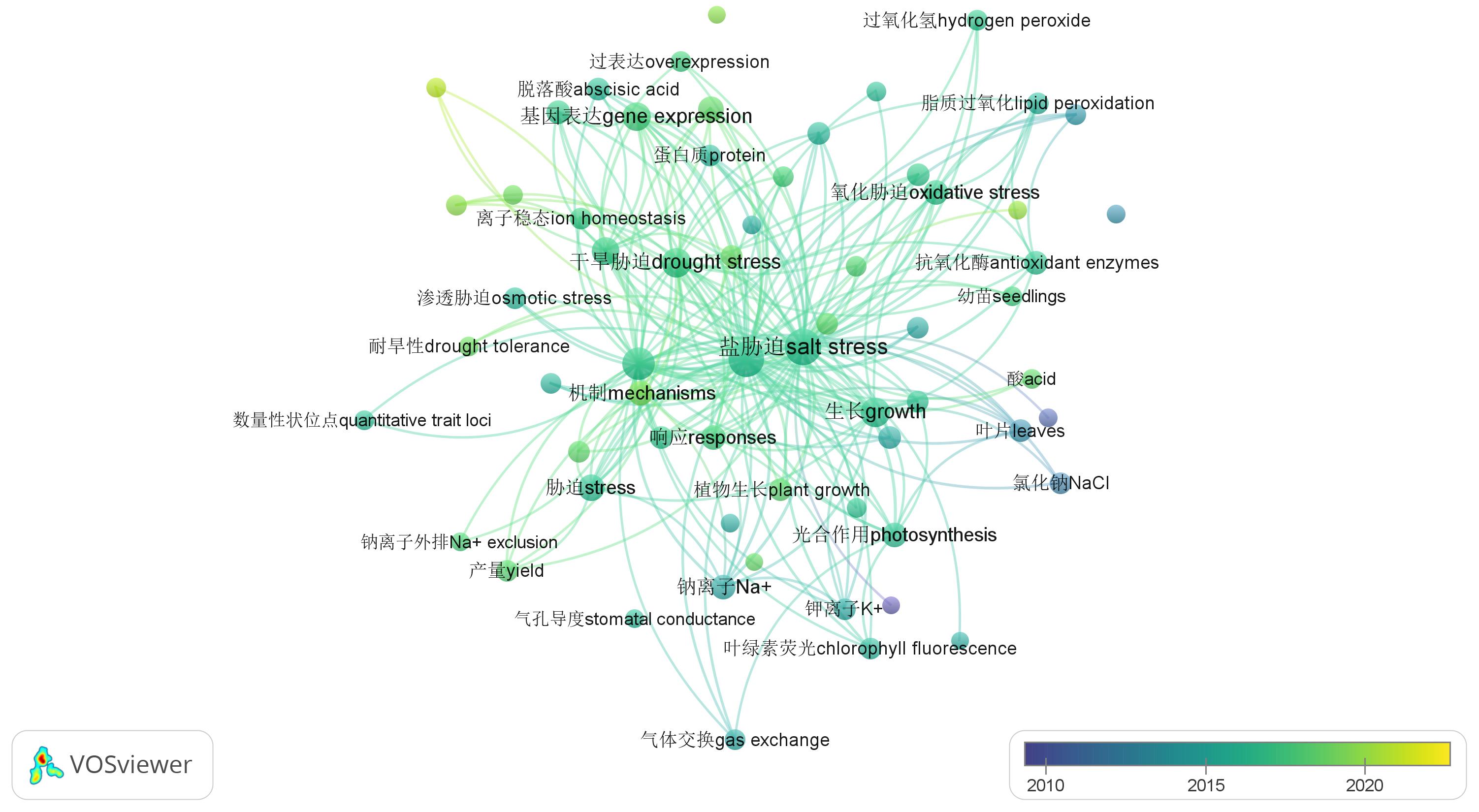
图1 大麦属植物对盐碱胁迫响应研究的时间可视化
Fig. 1 Temporal visualization of research on saline-alkali stress response in Hordeum plants
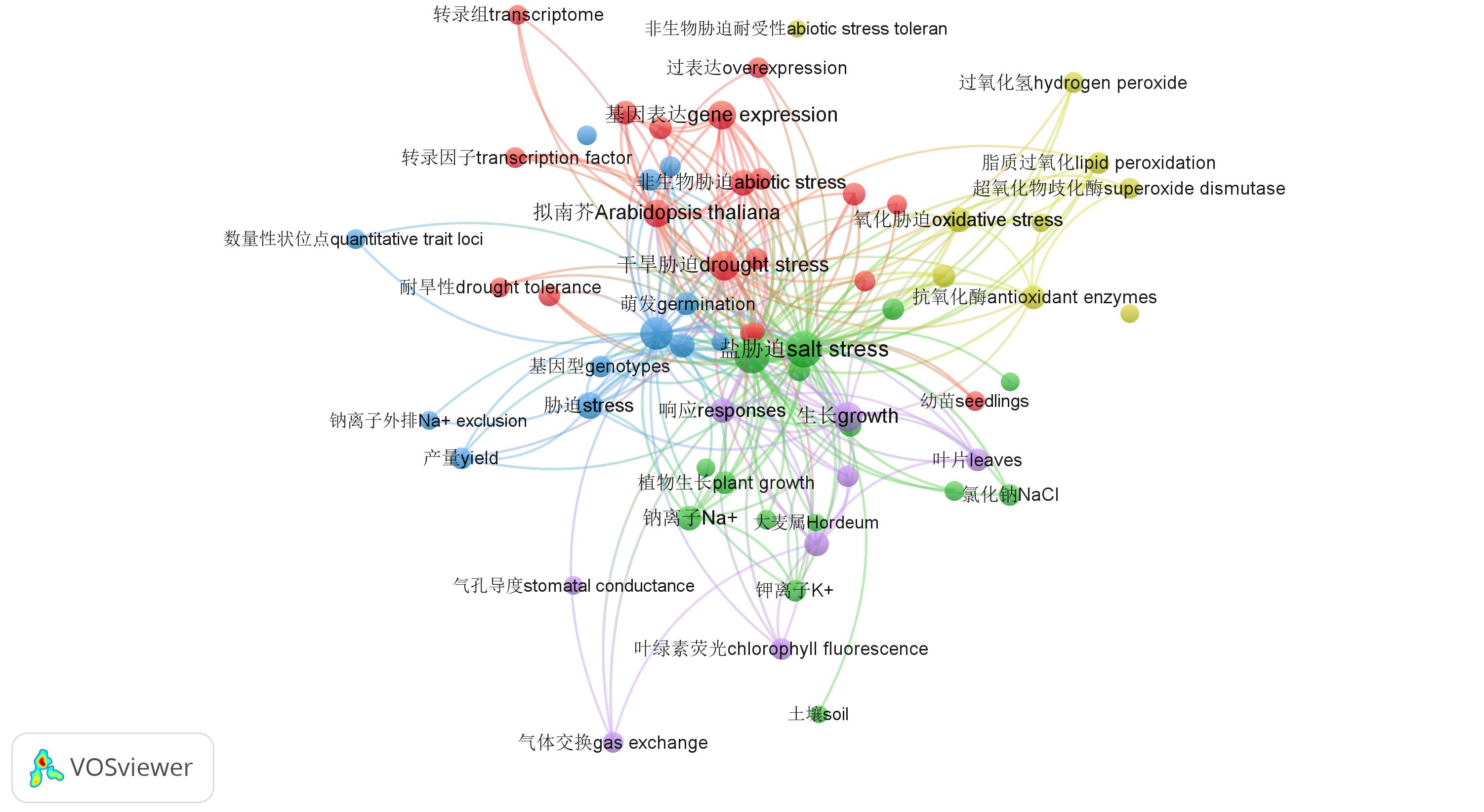
图2 大麦属植物对盐碱胁迫响应研究的领域可视化
Fig. 2 Visualization of research field on saline-alkali stress response in Hordeum plants
基因 Gene | 描述 Description | 盐碱胁迫下基因功能 Gene function under saline-alkali stress | 基因来源 Genetic origin | 参考文献 References |
|---|---|---|---|---|
| HbCIPK2 | 编码类钙调神经磷酸酶B互作蛋白激酶Encodes a CBL-interacting protein kinase | 维持钠钾平衡。Maintain the balance of Na+ and K+. | 短芒大麦草H. brevisubulatum | [ |
| HbNHX1 | 编码Na+/H+逆向转运蛋白Encodes the Na+/H+ antiporter protein | 降低Na+毒性,促进液泡中Na+区隔化。Reduces the toxicity of Na+, and promotes the compartmentalization of Na+ within vacuoles. | 布顿大麦草H. bogdanii | [ |
| HvHKT2 | 编码高亲和性K+转运蛋白Encodes a high-affinity K+ transporter protein | 防止K+外流。Prevents the outflow of K+. | 大麦H. | [ |
| HvHKT3 | 编码高亲和性K+转运蛋白Encodes a high-affinity K+ transporter protein | 促进K+从根到芽运输。Promotes the transport of K+ from the roots to the buds. | 大麦H. vulgare | [ |
| HvCML31 | 编码钙调蛋白样蛋白Encodes calmodulin-like protein | 胁迫信号感知。Perception of coercion signals. | 大麦H. vulgare | [ |
| HvSnRK1 | 编码丝/苏氨酸蛋白激酶Encodes serine/threonine protein kinase | 胁迫信号感知。Perception of coercion signals. | 大麦H. vulgare | [ |
| HbDHN3 | 编码脱水素蛋白Encodes dehydratase protein | 其磷酸化修饰可显著增强盐耐受性。Its phosphorylation modification can significantly enhance salt tolerance. | 短芒大麦草H. brevisubulatum | [ |
| HmHKT2;1 | 编码高亲和性K+转运蛋白Encodes a high-affinity K+ transporter protein | 维持K?稳态。Maintaining the K? homeostasis. | 海大麦H. marinum | [ |
| HvPIP2;8 | 编码水通道蛋白Encodes aquaporins | 介导水和离子(Na?/K?)运输。Mediates the transport of water and ions (Na?/K?). | 大麦H. vulgare | [ |
| HvYSL | 编码铁转运蛋白Encodes iron transport proteins | 促进碱胁迫下铁元素吸收。Promote the absorption of iron under alkali stress conditions. | 大麦H. vulgare | [ |
| HbreCaBP.0750 | 编码Ca2+结合蛋白Encodes Ca2+ binding proteins | 促进氮吸收。Promotes nitrogen absorption. | 短芒大麦草H. brevisubulatum | [ |
| HvCIPKs | 编码类钙调磷酸酶 B 互作蛋白激酶Encodes calcium-dependent protein kinases | 促进Ca2+信号传导。Promotes Ca2+ signal transduction. | 大麦H. vulgare | [ |
| HvNHX1 | 编码Na+/H+逆向转运蛋白Encodes the Na+/H+ antiporter protein | 促进Na+区隔化,或作为 K?/H?交换体。Promotes the separation of Na+, or functions as a K?/H? exchanger. | 大麦H. vulgare | [ |
| HvNHX1 | 编码Na+/H+逆向转运蛋白Encodes the Na+/H+ antiporter protein | 促进Na+区隔化。Promotes the compartmentalization of Na+. | 野大麦H. vulgare | [ |
| HvRcaA | 编码核酮糖-1,5-二磷酸羧化酶/加氧酶活化酶A蛋白Encodes rubisco activase A protein | 与转录因子MYC2联合促进光合作用。Promotes photosynthesis with the transcription factor MYC2. | 大麦H. vulgare | [ |
表1 大麦属植物耐盐碱相关基因研究进展
Table 1 Research progress on genes related to saline-alkali tolerance in Hordeum
基因 Gene | 描述 Description | 盐碱胁迫下基因功能 Gene function under saline-alkali stress | 基因来源 Genetic origin | 参考文献 References |
|---|---|---|---|---|
| HbCIPK2 | 编码类钙调神经磷酸酶B互作蛋白激酶Encodes a CBL-interacting protein kinase | 维持钠钾平衡。Maintain the balance of Na+ and K+. | 短芒大麦草H. brevisubulatum | [ |
| HbNHX1 | 编码Na+/H+逆向转运蛋白Encodes the Na+/H+ antiporter protein | 降低Na+毒性,促进液泡中Na+区隔化。Reduces the toxicity of Na+, and promotes the compartmentalization of Na+ within vacuoles. | 布顿大麦草H. bogdanii | [ |
| HvHKT2 | 编码高亲和性K+转运蛋白Encodes a high-affinity K+ transporter protein | 防止K+外流。Prevents the outflow of K+. | 大麦H. | [ |
| HvHKT3 | 编码高亲和性K+转运蛋白Encodes a high-affinity K+ transporter protein | 促进K+从根到芽运输。Promotes the transport of K+ from the roots to the buds. | 大麦H. vulgare | [ |
| HvCML31 | 编码钙调蛋白样蛋白Encodes calmodulin-like protein | 胁迫信号感知。Perception of coercion signals. | 大麦H. vulgare | [ |
| HvSnRK1 | 编码丝/苏氨酸蛋白激酶Encodes serine/threonine protein kinase | 胁迫信号感知。Perception of coercion signals. | 大麦H. vulgare | [ |
| HbDHN3 | 编码脱水素蛋白Encodes dehydratase protein | 其磷酸化修饰可显著增强盐耐受性。Its phosphorylation modification can significantly enhance salt tolerance. | 短芒大麦草H. brevisubulatum | [ |
| HmHKT2;1 | 编码高亲和性K+转运蛋白Encodes a high-affinity K+ transporter protein | 维持K?稳态。Maintaining the K? homeostasis. | 海大麦H. marinum | [ |
| HvPIP2;8 | 编码水通道蛋白Encodes aquaporins | 介导水和离子(Na?/K?)运输。Mediates the transport of water and ions (Na?/K?). | 大麦H. vulgare | [ |
| HvYSL | 编码铁转运蛋白Encodes iron transport proteins | 促进碱胁迫下铁元素吸收。Promote the absorption of iron under alkali stress conditions. | 大麦H. vulgare | [ |
| HbreCaBP.0750 | 编码Ca2+结合蛋白Encodes Ca2+ binding proteins | 促进氮吸收。Promotes nitrogen absorption. | 短芒大麦草H. brevisubulatum | [ |
| HvCIPKs | 编码类钙调磷酸酶 B 互作蛋白激酶Encodes calcium-dependent protein kinases | 促进Ca2+信号传导。Promotes Ca2+ signal transduction. | 大麦H. vulgare | [ |
| HvNHX1 | 编码Na+/H+逆向转运蛋白Encodes the Na+/H+ antiporter protein | 促进Na+区隔化,或作为 K?/H?交换体。Promotes the separation of Na+, or functions as a K?/H? exchanger. | 大麦H. vulgare | [ |
| HvNHX1 | 编码Na+/H+逆向转运蛋白Encodes the Na+/H+ antiporter protein | 促进Na+区隔化。Promotes the compartmentalization of Na+. | 野大麦H. vulgare | [ |
| HvRcaA | 编码核酮糖-1,5-二磷酸羧化酶/加氧酶活化酶A蛋白Encodes rubisco activase A protein | 与转录因子MYC2联合促进光合作用。Promotes photosynthesis with the transcription factor MYC2. | 大麦H. vulgare | [ |
| [1] | Yao D H, Liao Y B, Kong X B, et al. Characteristics of saline-alkali land and resources based on three-layer fusion of saline-alkali soil in Songnen Plain of China. Transactions of the Chinese Society of Agricultural Engineering, 2022, 38(23): 247-257. |
| 姚东恒, 廖宇波, 孔祥斌, 等. 基于“三层”融合的松嫩平原盐碱地资源特征. 农业工程学报, 2022, 38(23): 247-257. | |
| [2] | Yun X X, Chen Y S. International development of saline-alkali land and its enlightenment to China. Territory & Natural Resources Study, 2020(1): 84-87. |
| 云雪雪, 陈雨生. 国际盐碱地开发动态及其对我国的启示. 国土与自然资源研究, 2020(1): 84-87. | |
| [3] | Wang J, Tian Y L, Mu Z J, et al. Hot topics and frontier evolution of plant improvement to saline-alkali soil—visual analysis based on VOSviewer. Acta Agrestia Sinica, 2023, 31(9): 2598-2607. |
| 王静, 田永雷, 慕宗杰, 等. 植物改良盐碱地的热点研究及前沿进展—基于VOSviewer的数据可视化分析. 草地学报, 2023, 31(9): 2598-2607. | |
| [4] | Zhou J L, Chen T X, Chen S H, et al. Research progress on Hordeum-Epichloë symbiosis. Pratacultural Science, 2019, 36(8): 1988-1998. |
| 周景乐, 陈泰祥, 陈水红, 等. 大麦属植物Epichloë属内生真菌研究进展. 草业科学, 2019, 36(8): 1988-1998. | |
| [5] | Jin J H, Zha Y J, Ding Z E. Improvement effect of barley on saline-alkali shelter-forest soil. Protection Forest Science and Technology, 2011(4): 43-44. |
| 金久宏, 查永江, 丁志娥. 大麦对盐碱性防护林地改良效果分析. 防护林科技, 2011(4): 43-44. | |
| [6] | Liu Z A, Wang K, Li M H, et al. Tolerance characteristics of Hordeum brevisubulatum to salinity-alkali stress. Journal of Science of Teachers’ College and University, 2023, 43(5): 65-70. |
| 刘子昂, 王铠, 李明慧, 等. 短芒大麦草对盐碱胁迫的耐受特性. 高师理科学刊, 2023, 43(5): 65-70. | |
| [7] | Li J B, Jin Y N, Liu Z P, et al. Morphology and metabolism of storage substances contribution to alkali stress responses in two contrasting barley cultivars during germination stage. Journal of Seed Science, 2023, 45(6): e202345030. |
| [8] | Fan H B, Li J B, Liu Z P, et al. Research on differences between different genotypes of barley under alkali stress of seed germination and material transformation efficiency. Journal of Inner Mongolia Minzu University (Natural Sciences), 2024, 39(1): 26-31. |
| 范宏博, 李建波, 刘志萍, 等. 不同基因型大麦碱胁迫下种子萌发及物质转化效率的差异性研究. 内蒙古民族大学学报(自然科学版), 2024, 39(1): 26-31. | |
| [9] | Li J B, Liu Z P, Wang W D, et al. Screening and identification of excellent alkali-tolerant germplasm of barley at the germination stage. Pratacultural Science, 2023, 40(10): 2581-2597. |
| 李建波, 刘志萍, 王文迪, 等. 大麦萌发期优异耐碱性种质筛选与鉴定. 草业科学, 2023, 40(10): 2581-2597. | |
| [10] | Ya M F, Liu R T, Wang J L. Effects of exogenous melatonin immersion on seed germination characteristics and seedling growth of black barley under different complex saline-alkali stresses. Jiangsu Agricultural Sciences, 2023, 51(21): 86-92. |
| 亚梦菲, 刘人铜, 王建林. 不同复合盐碱胁迫下外源褪黑素浸种对黑青稞种子萌发特性及幼苗生长的影响. 江苏农业科学, 2023, 51(21): 86-92. | |
| [11] | Fu T T, Yao H, Huang H Y, et al. Effect of humic acid on seed germination and seedling growth of Longzi black highland barley under salt stress. Tibet Journal of Agricultural Sciences, 2025, 47(3): 6-12. |
| 付甜甜, 姚慧, 黄慧云, 等. 腐植酸对盐碱胁迫下隆子黑青稞种子萌发及幼苗生长的影响. 西藏农业科技, 2025, 47(3): 6-12. | |
| [12] | Zhang Y L, Zhao W J, Yu L, et al. Effect of NaCl stress on seed germination and seedling growth of different highland barley cultivars. Hubei Agricultural Sciences, 2019, 58(9): 19-24. |
| 张银乐, 赵伟进, 于粮, 等. NaCl胁迫对青稞种子萌发及幼苗生长的影响. 湖北农业科学, 2019, 58(9): 19-24. | |
| [13] | Liu X N, Bao Q J, Zhang H Y, et al. Effect of saline and alkali environment on seeds germination period of malting barley cultivar Ganpi 5. Gansu Agricultural Science and Technology, 2018(9): 37-41. |
| 柳小宁, 包奇军, 张华瑜, 等. 盐碱环境对甘啤5号啤酒大麦种子萌发期的影响. 甘肃农业科技, 2018(9): 37-41. | |
| [14] | Wang J F, Zhaxicuomu, Nimazhuoga, et al. Effects of mixed saline-alkali stress on seed germination and single leaf stage seedling growth of Longzi black highland barley. Journal of Plateau Agriculture, 2022, 6(6): 517-525. |
| 王继发, 扎西措姆, 尼玛卓嘎, 等. 混合盐碱胁迫对隆子黑青稞种子萌发及单叶期幼苗生长的影响. 高原农业, 2022, 6(6): 517-525. | |
| [15] | Zou K, Wang L J, Wang J Q, et al. Seed germination response characteristics of Thermopsis przewalskii, Hordeum jubatum, and Halogeton glomeratus under salt and drought stresses. Pratacultural Science, 2018, 35(12): 2883-2892. |
| 邹凯, 王绿菁, 王嘉茜, 等. 青海野决明、芒颖大麦草和盐生草种子萌发对盐分和干旱胁迫的响应特征. 草业科学, 2018, 35(12): 2883-2892. | |
| [16] | Ayijiang·Kakeerman, Amanula·Yimingniyazi, Wang Z Z, et al. Seed germination characteristics of diploid and tetraploid Hordeum bulbosum. Shandong Agricultural Sciences, 2020, 52(7): 24-28. |
| 阿衣江·卡克尔曼, 阿马努拉·依明尼亚孜, 王振振, 等. 二倍体、四倍体球茎大麦种子萌发特性研究. 山东农业科学, 2020, 52(7): 24-28. | |
| [17] | Hasanuzzaman M D, Davies N W, Shabala L, et al. Residual transpiration as a component of salinity stress tolerance mechanism: A case study for barley. BMC Plant Biology, 2017, 17(1): 107. |
| [18] | Long F, Wang K, Zhu Y B, et al. Effects of Epichloë endophyte on the growth and physiology of Hordeum bogdanii under salt stress. Heilongjiang Animal Science and Veterinary Medicine, 2022(15): 13-17, 22. |
| 龙凤, 王凯, 朱亚斌, 等. 盐胁迫下内生真菌对布顿大麦生长和生理的影响. 黑龙江畜牧兽医, 2022(15): 13-17, 22. | |
| [19] | Shi C C. Physiological and transcriptomic analysis of Hordeum jubatum seedlings in response to salinity and drought stress under uniform water potential. Harbin: Northeast Forestry University, 2023. |
| 石聪聪. 等水势下芒颖大麦草响应盐碱与干旱胁迫的生理基础及转录组学分析. 哈尔滨: 东北林业大学, 2023. | |
| [20] | Jin Y N, Li J B, Men X L, et al. Effects on root growth and physiology of barley seedlings under various alkali stress. Molecular Plant Breeding, 1-13[2025-12-08]. https://link.cnki.net/urlid/46.1068.S.20231024.0928.002. |
| 靳亚楠, 李建波, 门秀丽, 等. 碱胁迫对大麦幼苗根系形态及生理特性的影响. 分子植物育种, 1-13[2025-12-08]. https://link.cnki.net/urlid/46.1068.S.20231024.0928.002. | |
| [21] | Qiao F, Zhou C, Dai J T, et al. Changes of physiological indexes of highland barley seedlings under NaHCO3 stress. Qinghai Science and Technology, 2022, 29(3): 108-112. |
| 乔枫, 周诚, 戴江天, 等. NaHCO3胁迫下青稞幼苗相关生理指标的变化. 青海科技, 2022, 29(3): 108-112. | |
| [22] | Isayenkov S, Hilo A, Rizzo P, et al. Adaptation strategies of halophytic barley Hordeum marinum ssp. marinum to high salinity and osmotic stress. International Journal of Molecular Sciences, 2020, 21(23): 9019. |
| [23] | Sreesaeng J, Li S J, Chen Z H, et al. Comparative transcriptome profiling reveals key lncRNAs and regulatory mechanisms for salt tolerance in hulless barley. Plant Physiology and Biochemistry, 2025, 229: 110686. |
| [24] | Lv S L, Tai F, Guo J, et al. Phosphatidylserine synthase from Salicornia europaea is involved in plant salt tolerance by regulating plasma membrane stability. Plant and Cell Physiology, 2021, 62(1): 66-79. |
| [25] | Sharipova G, Ivanov R, Veselov D, et al. Effect of salinity on stomatal conductance, leaf hydraulic conductance, HvPIP2 aquaporin, and abscisic acid abundance in barley leaf cells. International Journal of Molecular Sciences, 2022, 23(22): 14282. |
| [26] | Boussora F, Triki T, Bennani L, et al. Mineral accumulation, relative water content and gas exchange are the main physiological regulating mechanisms to cope with salt stress in barley. Scientific Reports, 2024, 14(1): 14931. |
| [27] | Torun H, Novák O, Mikulík J, et al. Timing-dependent effects of salicylic acid treatment on phytohormonal changes, ROS regulation, and antioxidant defense in salinized barley (Hordeum vulgare L.). Scientific Reports, 2020, 10(1): 13886. |
| [28] | Shi C C, Guo F, Sun Y H, et al. Physiological and transcriptomic analysis of Hordeum jubatum seedlings in response to salt, alkali and drought stresses under uniform water potential. Environmental and Experimental Botany, 2024, 220: 105677. |
| [29] | Huang X X, Liu Z D, Wang H L, et al. The mitigative effects of salicylic acid pretreatment on hulless barley seedlings under salt stress. Guizhou Agricultural Sciences, 2012, 40(10): 47-49. |
| 黄晓西, 刘昭弟, 王怀林, 等. 水杨酸预处理对青稞幼苗盐胁迫的缓解效应. 贵州农业科学, 2012, 40(10): 47-49. | |
| [30] | Song S W, Jiao D Z, Yang Y F. Physiological response and transcriptome analysis of Hordeum brevisubulatum under mixed salt and alkaline stress. Pratacultural Science, 2019, 36(5): 1379-1388. |
| 宋士伟, 焦德志, 杨允菲. 东北草地野大麦对混合盐碱胁迫的生理响应及转录组分析. 草业科学, 2019, 36(5): 1379-1388. | |
| [31] | Zhang H K, Yu C Y, Zhang Q, et al. Salinity survival: Molecular mechanisms and adaptive strategies in plants. Frontiers in Plant Science, 2025, 16: 1527952. |
| [32] | Tyerman S D, Munns R, Fricke W, et al. Energy costs of salinity tolerance in crop plants. New Phytologist, 2019, 221(1): 25-29. |
| [33] | Ishikawa T, Shabala S. Control of xylem Na+ loading and transport to the shoot in rice and barley as a determinant of differential salinity stress tolerance. Physiologia Plantarum, 2019, 165(3): 619-631. |
| [34] | Etikala B, Adimalla N, Madhav S, et al. Salinity problems in groundwater and management strategies in arid and semi-arid regions//Madhav S, Singh P, eds. Groundwater Geochemistry: Pollution and Remediation Methods. Hoboken: Wiley Blackwell, 2021: 42-56. |
| [35] | Lindberg S, Premkumar A. Ion changes and signaling under salt stress in wheat and other important crops. Plants, 2023, 13(1): 46. |
| [36] | Yang S, Xu Y Q, Tang Z Z, et al. The impact of alkaline stress on plant growth and its alkaline resistance mechanisms. International Journal of Molecular Sciences, 2024, 25(24): 13719. |
| [37] | Hussain S, Hussain S, Ali B, et al. Recent progress in understanding salinity tolerance in plants: Story of Na+/K+ balance and beyond. Plant Physiology and Biochemistry, 2021, 160: 239-256. |
| [38] | Long F, Hu M F, Chen S, et al. Endophytic fungi regulate HbNHX1 expression and ion balance in Hordeum bogdanii under alkaline stress. Journal of Fungi, 2023, 9(3): 331. |
| [39] | Han D, Wang K, Long F, et al. Effects of endophytic fungi on the secondary metabolites of Hordeum bogdanii under alkaline stress. AMB Express, 2022, 12(1): 73. |
| [40] | Velarde-Buendía A M, Shabala S, Cvikrova M, et al. Salt-sensitive and salt-tolerant barley varieties differ in the extent of potentiation of the ROS-induced K+ efflux by polyamines. Plant Physiology and Biochemistry, 2012, 61: 18-23. |
| [41] | Ran X, Wang X, Gao X K, et al. Effects of salt stress on the photosynthetic physiology and mineral ion absorption and distribution in white willow (Salix alba L.). PLoS One, 2021, 16(11): e0260086. |
| [42] | Zhao S S, Zhang Q K, Liu M Y, et al. Regulation of plant responses to salt stress. International Journal of Molecular Sciences, 2021, 22(9): 4609. |
| [43] | Feng H, Gao Z N, Yang Y Q, et al. Comprehensive evaluation of production performance and silage nutritional quality of 18 barley varieties (lines). Pratacultural Science, 2024, 41(11): 2685-2694. |
| 冯辉, 郜战宁, 杨永乾, 等. 18个大麦品种(系)生产性能与青贮营养价值综合评价. 草业科学, 2024, 41(11): 2685-2694. | |
| [44] | Alché J D D. A concise appraisal of lipid oxidation and lipoxidation in higher plants. Redox biology, 2019, 23: 101136. |
| [45] | Zhu Y C, Fu Q, Zhu C, et al. Review on physiological and molecular mechanisms for enhancing salt tolerance in turfgrass. Grass Research, 2024, 4(1): e024 |
| [46] | Xu H G, Chen H, Halford N G, et al. Ion homeostasis and coordinated salt tolerance mechanisms in a barley (Hordeum vulgare L.) doubled haploid line. BMC Plant Biology, 2025, 25(1): 52. |
| [47] | Qiao F, Duan G P, Xu X N, et al. Effect of antioxidant enzyme activities of hulless barley seedlings treated with NaHCO3 stress. Journal of Qinghai Normal University (Natural Science Edition), 2022, 38(1): 51-56. |
| 乔枫, 段国苹, 许小宁, 等. NaHCO3胁迫下对青稞幼苗抗氧化酶活性的影响. 青海师范大学学报(自然科学版), 2022, 38(1): 51-56. | |
| [48] | Wang Z H, Pei L, Zheng X R, et al. Photosynthetic characteristics and salt-tolerance indexes of spring wheat with drip irrigation in saline-alkali soils. Transactions of the Chinese Society for Agricultural Machinery, 2016, 47(4): 65-72, 104. |
| 王振华, 裴磊, 郑旭荣, 等. 盐碱地滴灌春小麦光合特性与耐盐指标研究. 农业机械学报, 2016, 47(4): 65-72, 104. | |
| [49] | Chaves M M, Flexas J, Pinheiro C. Photosynthesis under drought and salt stress: regulation mechanisms from whole plant to cell. Annals of Botany, 2009, 103(4): 551-560. |
| [50] | Zeeshan M, Lu M Q, Sehar S, et al. Comparison of biochemical, anatomical, morphological, and physiological responses to salinity stress in wheat and barley genotypes deferring in salinity tolerance. Agronomy, 2020, 10(1): 127. |
| [51] | Kiani-Pouya A, Rasouli F, Rabbi B, et al. Stomatal traits as a determinant of superior salinity tolerance in wild barley. Journal of Plant Physiology, 2020, 245: 153108. |
| [52] | Guo L Y, Lu Y Y, Bao S Y, et al. Carbon and nitrogen metabolism in rice cultivars affected by salt-alkaline stress. Crop and Pasture Science, 2021, 72(5): 372-382. |
| [53] | Cheng S, Ulaanduu N, Li Z L, et al. Research progress in the mechanism of plant photosystem Ⅱ(PSⅡ) responsing to abiotic stress. Biotechnology Bulletin, 2023, 39(12): 33-42. |
| 程爽, Ulaanduu Namuun, 李卓琳, 等. 植物光系统Ⅱ(PSⅡ)应答非生物胁迫机理研究进展. 生物技术通报, 2023, 39(12): 33-42. | |
| [54] | Shi C C, Fu Y R, Guo Y Q, et al. Comparative effects of water potential stress induced by salt, alkali and drought on photosynthetic electron transport and apparatus in Hordeum jubatum seedlings. Crop and Pasture Science, 2022, 74(4): 324-333. |
| [55] | Shi C C, Yang F, Liu Z H, et al. Uniform water potential induced by salt, alkali, and drought stresses has different impacts on the seedling of Hordeum jubatum: From growth, photosynthesis, and chlorophyll fluorescence. Frontiers in Plant Science, 2021, 12: 733236. |
| [56] | Tavakkoli E, Fatehi F, Coventry S, et al. Additive effects of Na+ and Cl- ions on barley growth under salinity stress. Journal of Experimental Botany, 2011, 62(6): 2189-2203. |
| [57] | Abdelrady W A, Ma Z X, Elshawy E E, et al. Physiological and biochemical mechanisms of salt tolerance in barley under salinity stress. Plant Stress, 2024, 11: 100403. |
| [58] | Jadidi O, Etminan A, Azizi-Nezhad R, et al. Physiological and molecular responses of barley genotypes to salinity stress. Genes, 2022, 13(11): 2040. |
| [59] | Lu Y Y, Fricke W. Diurnal changes in apoplast bypass flow of water and ions in salt-stressed wheat (Triticum aestivum L.) and barley (Hordeum vulgare L.). Physiologia Plantarum, 2023, 175(4): e13955. |
| [60] | Kaneko T, Horie T, Nakahara Y, et al. Dynamic regulation of the root hydraulic conductivity of barley plants in response to salinity/osmotic stress. Plant and Cell Physiology, 2015, 56(5): 875-882. |
| [61] | Wallach R, Da-Costa N, Raviv M, et al. Development of synchronized, autonomous, and self-regulated oscillations in transpiration rate of a whole tomato plant under water stress. Journal of Experimental Botany, 2010, 61(12): 3439-3449. |
| [62] | Hasanuzzaman M, Zhou M X, Shabala S. How does stomatal density and residual transpiration contribute to osmotic stress tolerance? Plants, 2023, 12(3): 494. |
| [63] | Even M, Sabo M, Meng D L, et al. Night-time transpiration in barley (Hordeum vulgare) facilitates respiratory carbon dioxide release and is regulated during salt stress. Annals of Botany, 2018, 122(4): 569-582. |
| [64] | Nefissi O R, Arasappan D, Abid G, et al. Transcriptomic analysis of salt-stress-responsive genes in barley roots and leaves. International Journal of Molecular Sciences, 2021, 22(15): 8155. |
| [65] | Gharaghanipor N, Arzani A, Rahimmalek M, et al. Physiological and transcriptome indicators of salt tolerance in wild and cultivated barley. Frontiers in Plant Science, 2022, 13: 819282. |
| [66] | Luan H Y, Meng W, Zhang Y H, et al. Genome-wide association analysis of traits related to salt tolerance in barley. Journal of Triticeae Crops, 2024, 44(6): 729-734. |
| 栾海业, 孟炜, 张英虎, 等. 大麦耐盐相关性状的全基因组关联分析. 麦类作物学报, 2024, 44(6): 729-734. | |
| [67] | Xu T T, Meng S, Zhu X P, et al. Integrated GWAS and transcriptomic analysis reveal the candidate salt-responding genes regulating Na+/K+ balance in barley (Hordeum vulgare L.). Frontiers in Plant Science, 2023, 13: 1004477. |
| [68] | Feng H, Zhao J L, Xiao F, et al. Quantitative proteomic and phosphoproteomic analyses reveal salt tolerance mechanisms of the halophyte Hordeum brevisubulatum. Plant Physiology and Biochemistry, 2025, 228: 110284. |
| [69] | Mian A, Oomen R J F J, Isayenkov S, et al. Over-expression of an Na+- and K+-permeable HKT transporter in barley improves salt tolerance. The Plant Journal, 2011, 68(3): 468-479. |
| [70] | Hmidi D, Messedi D, Corratgé-Faillie C, et al. Investigation of Na+ and K+ transport in halophytes: Functional analysis of the HmHKT2; 1 transporter from Hordeum maritimum and expression under saline conditions. Plant and Cell Physiology, 2019, 60(11): 2423-2435. |
| [71] | Huang L, Kuang L H, Wu L Y, et al. The HKT transporter HvHKT1; 5 negatively regulates salt tolerance. Plant Physiology, 2020, 182(1): 584-596. |
| [72] | Balaji S, Gopinath S, Arulganesh T, et al. Regulatory SNP in OsHKT2; 1 governs OsRR22 interaction and salt tolerance in rice. International Journal of Biological Macromolecules, 2025, 327: 147171. |
| [73] | Ali A, Raddatz N, Pardo J M, et al. HKT sodium and potassium transporters in Arabidopsis thaliana and related halophyte species. Physiologia Plantarum, 2021, 171(4): 546-558. |
| [74] | Riedelsberger J, Miller J K, Valdebenito-Maturana B, et al. Plant HKT channels: An updated view on structure, function and gene regulation. International Journal of Molecular Sciences, 2021, 22(4): 1892. |
| [75] | Tran S T H, Imran S, Horie T, et al. A survey of barley PIP aquaporin ionic conductance reveals Ca2+-sensitive HvPIP2; 8 Na+ and K+ conductance. International Journal of Molecular Sciences, 2020, 21(19): 7135. |
| [76] | Liu X X, Zhu X F, Zheng S J, et al. Beyond iron-storage pool: Functions of plant apoplastic iron during stress. Trends in Plant Science, 2023, 28(8): 941-954. |
| [77] | Murata Y, Itoh Y, Iwashita T, et al. Transgenic petunia with the iron (Ⅲ)-phytosiderophore transporter gene acquires tolerance to iron deficiency in alkaline environments. PLoS One, 2015, 10(3): e0120227. |
| [78] | Zhang H, Yu F, Xie P, et al. A Gγ protein regulates alkaline sensitivity in crops. Science, 2023, 379(6638): eade8416. |
| [79] | Feng H, Du Q W, Jiang Y, et al. Hordeum I genome unlocks adaptive evolution and genetic potential for crop improvement. Nature Plants, 2025, 11(3): 438-452. |
| [80] | Gao S S, Feng H, Huang X, et al. Identification and expression analysis of barley CIPK gene family. Modern Agricultural Science and Technology, 2024(4): 156-163. |
| 高姗姗, 冯浩, 黄鑫, 等. 大麦CIPK基因家族鉴定及表达分析. 现代农业科技, 2024(4): 156-163. | |
| [81] | Adem G D, Roy S J, Zhou M X, et al. Evaluating contribution of ionic, osmotic and oxidative stress components towards salinity tolerance in barley. BMC Plant Biology, 2014, 14(1): 113. |
| [82] | Jabeen Z, Irshad F, Hussain N, et al. NHX-type Na+/H+ antiporter gene expression under different salt levels and allelic diversity of HvNHX in wild and cultivated barleys. Frontiers in Genetics, 2022, 12: 809988. |
| [83] | Aliakbari M, Tahmasebi S, Sisakht J N. Jasmonic acid improves barley photosynthetic efficiency through a possible regulatory module, MYC2-RcaA, under combined drought and salinity stress. Photosynthesis Research, 2024, 159(1): 69-78. |
| [84] | Ng D W K, Abeysinghe J K, Kamali M. Regulating the regulators: The control of transcription factors in plant defense signaling. International Journal of Molecular Sciences, 2018, 19(12): 3737. |
| [85] | Admas T, Shu J, Shalmani A, et al. Salt stress-responsive transcription factors provide insights to enhance barley improvement: A review. Planta, 2025, 262(3): 56. |
| [86] | Xu Z S, Ni Z Y, Li Z Y, et al. Isolation and functional characterization of HvDREB1-a gene encoding a dehydration-responsive element binding protein in Hordeum vulgare. Journal of Plant Research, 2009, 122(1): 121-130. |
| [87] | Jung J, Won S Y, Suh S C, et al. The barley ERF-type transcription factor HvRAF confers enhanced pathogen resistance and salt tolerance in Arabidopsis. Planta, 2007, 225(3): 575-588. |
| [88] | Xu Y F, Liu L J, Shen L, et al. A transcription factor HvCBP60‐8 confers salt tolerance in barley. The Plant Journal, 2025, 124(2): e70535. |
| [89] | Jiang C, Wang Y, He Y, et al. Identification and characterization of miRNAs and lncRNAs associated with salinity stress in rice panicles. International Journal of Molecular Sciences, 2024, 25(15): 8247. |
| [90] | Zha S, Wang Y L, Yuan H J, et al. Transcriptome analysis of Tibetan hulless barley under salt-alkali stress. Southwest China Journal of Agricultural Sciences, 2021, 34(7): 1375-1385. |
| 扎桑, 王玉林, 原红军, 等. 盐碱胁迫下青稞全转录组分析. 西南农业学报, 2021, 34(7): 1375-1385. | |
| [91] | Liu H C, Li Y, Shi X X, et al. Analysis of the agronomic traits of 51 accessions of hulless barley germplasm. Barley and Cereal Sciences, 2023, 40(1): 18-25. |
| 刘海翠, 李赢, 石晓旭, 等. 51份裸大麦种质资源农艺性状分析. 大麦与谷类科学, 2023, 40(1): 18-25. | |
| [92] | Wang Y L, Yuan H J, Zhasang, et al. microRNA-mediated membrane system and ion transport are involved in the response to saline-alkali stress in Tibetan hulless barley. Barley and Cereal Sciences, 2020, 37(4): 7-14. |
| 王玉林, 原红军, 扎桑, 等. microRNA调控膜系统及离子转运介导青稞盐碱胁迫的应答. 大麦与谷类科学, 2020, 37(4): 7-14. |
| [1] | 赵颖, 张聪聪, 宋雨婷, 张翀敏, 安悦, 杨宾宾, 马永, 王宝强. 2,4-表油菜素内酯对盐碱胁迫下藜麦幼苗生长的促进效应[J]. 草业学报, 2026, 35(9): 100-112. |
| [2] | 梁雪枫, 方淑梅, 梁喜龙. Pre-mRNA选择性剪接对植物盐碱胁迫响应的调控机制[J]. 草业学报, 2026, 35(9): 236-246. |
| [3] | 杨金辉, 王晓彤, 马永龙, 余冬雯, 童玉花, 李淑霞. 喷施纳米氧化铈对紫花苜蓿幼苗耐盐性的影响[J]. 草业学报, 2026, 35(8): 45-54. |
| [4] | 李月琪, 马涛, 丁玉萍, 苏明, 李涛, 马小英, 马风兰, 万猛虎, 李清云, 张丹, 吴娜, 刘吉利. 基于生长-养分积累-产量协同调控的宁夏盐碱地玉米品种适应性研究[J]. 草业学报, 2026, 35(6): 93-107. |
| [5] | 刘朝荣, 陈永成, 陈莹, 张旭东, 胡天宇, 苏力合, 张凡凡, 王旭哲, 姚琨, 马春晖. 新疆盐碱化土壤下不同羊草的耐盐碱性差异研究[J]. 草业学报, 2026, 35(4): 29-41. |
| [6] | 马祥, 李中兴, 杨容尘, 琚泽亮, 贾志锋, 杨培志. 盐胁迫对不同耐盐性燕麦糖类及内源激素含量变化的影响[J]. 草业学报, 2026, 35(3): 235-244. |
| [7] | 童玉花, 王晓彤, 马永龙, 杨金辉, 余冬雯, 李淑霞. 壳聚糖浸种对盐碱胁迫下紫花苜蓿种子萌发的影响[J]. 草业学报, 2026, 35(3): 245-256. |
| [8] | 甘芮, 杨国斌, 隋晓青, 齐静, 靳瑰丽, 王玉祥, 彭建. 生物炭对盐碱胁迫下无芒雀麦幼苗生理和基因表达的影响[J]. 草业学报, 2026, 35(10): 117-128. |
| [9] | 孙朗, 任燕萍, 娜菲莎·木则帕尔, 谌能双, 马丽, 程聪, 李俐, 张桦. 梭梭WOX转录因子家族鉴定及HaWOX29和HaWOX54在根生长中的功能研究[J]. 草业学报, 2026, 35(1): 192-205. |
| [10] | 李永龙, 周生辉, 薛梦瑶, 高远, 巨乐, 陈奕冰, 付松林, 郝建昊, 李恒, 张昆, 左志芳. 结缕草ZjWRKY63基因的克隆及转基因拟南芥的耐盐性分析[J]. 草业学报, 2025, 34(12): 157-169. |
| [11] | 蔡文祺, 李淑霞, 王晓彤, 宋文学, 麻旭霞, 马小梅, 李小红, 代昕瑶. 外源褪黑素与乙烯交互对盐胁迫下紫花苜蓿幼苗生长和生理特性的影响[J]. 草业学报, 2025, 34(1): 80-93. |
| [12] | 卜祥琪, 李姗姗, 段莹娜, 王迎春, 郑琳琳. 一氧化氮对盐碱胁迫下盐地碱蓬抗逆性及饲用品质的影响[J]. 草业学报, 2024, 33(9): 60-69. |
| [13] | 程鑫宇, 王继莲, 麦日艳古·亚生null, 李明源. 盐爪爪根际土壤产IAA菌株分离及促生特性分析[J]. 草业学报, 2024, 33(4): 110-121. |
| [14] | 罗颖, 李聪, 王沛, 田莉华, 汪辉, 周青平, 雷映霞. 低氮胁迫下不同皮燕麦品种早期的响应研究及耐低氮性综合评价[J]. 草业学报, 2024, 33(2): 164-184. |
| [15] | 刘建新, 刘瑞瑞, 刘秀丽, 欧晓彬, 贾海燕, 卜婷, 李娜. 盐碱胁迫下外源硫化氢对裸燕麦叶片氨基酸代谢过程的影响[J]. 草业学报, 2023, 32(2): 119-130. |
| 阅读次数 | ||||||
|
全文 |
|
|||||
|
摘要 |
|
|||||
