

ISSN 1004-5759 CN 62-1105/S
草业学报 ›› 2027, Vol. 36 ›› Issue (1): 149-162.DOI: 10.11686/cyxb2026031
• 研究论文 • 上一篇
禹一箭( ), 李雅宁, 杨宇航, 张金青()
收稿日期:2026-01-20
修回日期:2026-03-12
出版日期:2027-01-20
发布日期:2026-11-25
通讯作者:
张金青
作者简介:E-mail: zhangjq@nxu.edu.cn基金资助:
Yi-jian YU(), Ya-ning LI, Yu-hang YANG, Jin-qing ZHANG()
Received:2026-01-20
Revised:2026-03-12
Online:2027-01-20
Published:2026-11-25
Contact:
Jin-qing ZHANG
摘要:
饲用燕麦在面临盐-旱复合胁迫时,其根系抗氧化防御系统的响应机制尚不清楚。本研究以‘陇燕5号’为材料,设置碱性盐(NaHCO3)、干旱(PEG-6000)及盐-旱复合胁迫,并在0、6、24和72 h采集根系样品,测定抗坏血酸-谷胱甘肽(AsA-GSH)循环关键酶活性及抗氧化物质含量,同时分析了20个AsA-GSH循环相关基因的表达变化。结果表明,碱性盐、干旱及复合胁迫下,AsA-GSH循环酶活性及抗氧化物质含量均显著升高,复合胁迫呈现出6 h强响应、72 h氧化还原稳态失衡的特征。基因表达显示,AsAPX1和AsVTC2为复合胁迫特异性响应基因;AsGST家族基因如AsGSTU1主要响应干旱胁迫;AsVTC2和AsVTC5的差异表达表明燕麦可能通过转换AsA生物合成路径适应不同胁迫。关联分析显示,转录水平的响应普遍早于酶活性和抗氧化物含量变化;复合胁迫6 h时,基因表达和酶活性的变化趋势一致,均维持在较高水平;胁迫72 h时,尽管基因表达上调,但酶活性显著下降,表明此时燕麦遭受了严重的生理损伤。本研究表明,燕麦通过激活AsA-GSH循环与苯丙氨酸解氨酶依赖的次生代谢途径增强对逆境胁迫的耐受性,为选育抗逆燕麦品种提供了理论参考和基因资源。
禹一箭, 李雅宁, 杨宇航, 张金青. 碱性盐、干旱及复合胁迫对燕麦抗坏血酸-谷胱甘肽循环及基因表达变化的影响[J]. 草业学报, 2027, 36(1): 149-162.
Yi-jian YU, Ya-ning LI, Yu-hang YANG, Jin-qing ZHANG. Effects of alkaline salt, drought and combined salt and drought stress on the ascorbic acid-glutathione cycle and gene expression in oats[J]. Acta Prataculturae Sinica, 2027, 36(1): 149-162.
基因名称 Gene name | 基因描述 Gene description | 定位 Location | 基因标识符 Gene identification | 正向引物 Forward primer | 反向引物 Reverse primer |
|---|---|---|---|---|---|
| AsAPX1 | L-抗坏血酸过氧化物酶1 L-ascorbate peroxidase 1 | 细胞质Cytosolic | AVESA.00001b.r3.5Ag0000469 | GGCTAGGCAGAAGCTCCG | GCCGGTCTTGGAGGACAC |
| AsAPX4 | L-抗坏血酸过氧化物酶4 L-ascorbate peroxidase 4 | 过氧化物酶体Peroxisomal | AVESA.00001b.r3.5Cg0000255 | CTGGTGGCCACAGTCTGG | GCCCCTCAGATTCCCCCT |
| AsAPX6 | L-抗坏血酸过氧化物酶6 L-ascorbate peroxidase 6 | 叶绿体/线粒体Chloroplastic/mitochondrial | AVESA.00001b.r3.5Cg0001174 | GCCCTCCTTCACCTGCTG | TTTACCCCAGCCACTGCG |
| AsAPX7 | L-抗坏血酸过氧化物酶7 L-ascorbate peroxidase 7 | 叶绿体Chloroplastic | AVESA.00001b.r3.2Cg0001902 | CGGTCTCACCAACCCACC | CGAGGACGAGGAGGGGAA |
| AsAPX8 | L-抗坏血酸过氧化物酶8 L-ascorbate peroxidase 8 | 叶绿体Chloroplastic | AVESA.00001b.r3.6Dg0001347 | AGACTCCTCGTCCACCCC | TGGACGATCGGGAGCTGA |
| AsDHAR2 | 谷胱甘肽S-转移酶DHAR2 Glutathione S-transferase DHAR2 | 叶绿体Chloroplastic | AVESA.00001b.r3.7Ag0001171 | GTCCTCGTCGACCCTCCT | CTTGGCGCAGACCTCCAG |
| AsGR1 | 谷胱甘肽还原酶1 Glutathione reductase 1 | 叶绿体Chloroplastic | AVESA.00001b.r3.4Ag0002304 | CTCGCCTCTCCCCTTCCT | CGCCATGGCTCTCTCTCG |
| AsGR2 | 谷胱甘肽还原酶2 Glutathione reductase 2 | 细胞质Cytosolic | AVESA.00001b.r3.6Ag0002030 | TTGCCATCTGCGAGCTCC | TCTTCTTGGGGACGCAGC |
| AsGPX1 | 磷脂过氧化氢谷胱甘肽过氧化物酶1 Phospholipid hydroperoxide glutathione peroxidase 1 | 叶绿体Chloroplastic | AVESA.00001b.r3.5Cg0002997 | TCCCTAAGGCGGCATCCT | ATGCTCTTCTCCGTGGCG |
| AsGPX6 | 磷脂过氧化氢谷胱甘肽过氧化物酶6 Phospholipid hydroperoxide glutathione peroxidase 6 | - | AVESA.00001b.r3.2Ag0001758 | GCTCGATCTCGTCTCGCC | TCGACGTCCTTCCCGCTA |
| AsGSTU1 | 谷胱甘肽S转移酶GSTU1 Glutathione S-transferase GSTU1 | - | AVESA.00001b.r3.4Dg0002076 | GGAGCTCGGGGAGAAGGA | CGCTGAACTCCCCGTACC |
| AsGSTU6 | 谷胱甘肽S转移酶GSTU6 Glutathione S-transferase GSTU6 | - | AVESA.00001b.r3.3Dg0000108 | GTGACAAGACCCCGCTCC | TTCACGTCCGGCAAGACC |
| AsGSTZ1 | 谷胱甘肽S转移酶GSTZ1 Glutathione S-transferase GSTZ1 | - | AVESA.00001b.r3.7Ag0001549 | GCCACCGGGGATGAAGTC | CGGCGGATTCTTGGGTGT |
| AsGRXS11 | 单巯基谷胱甘肽过氧化物还原酶-S11 Monothiol glutaredoxin-S11 | - | AVESA.00001b.r3.1Cg0001274 | AGAGCCTAGAGGACCGGC | CGAACTGAAGCCGCAACG |
| AsGRXS12 | 单巯基谷胱甘肽过氧化物还原酶-S12 Monothiol glutaredoxin-S12 | - | AVESA.00001b.r3.1Dg0000630 | AGGACCGACTGAAGGCCT | GGACCCAAAGCTGACCCC |
| AsGSH2 | 谷胱甘肽合成酶Glutathione synthetase | 叶绿体Chloroplastic | AVESA.00001b.r3.6Cg0000998 | TGGTCTTGCTTGCGGTGT | TACTCAGCCCATGCAGCG |
| AsVTC2 | GDP-L-半乳糖磷酸化酶2 GDP-L-galactose phosphorylase 2 | - | AVESA.00001b.r3.4Ag0003300 | TGTCGCAAGGGAGGCAAG | GTTTCTCTGTCGGCGCCT |
| AsVTC5 | GDP-L-半乳糖磷酸化酶5 GDP-L-galactose phosphorylase 5 | - | AVESA.00001b.r3.5Cg0000798 | GTCGCAAGGGAGGCAGAG | TGGAAGTGGAGGTGGTTGA |
| AsPAL | 苯丙氨酸氨裂解酶 Phenylalanine ammonia-lyase | - | AVESA.00001b.r3.6Cg0003392 | GGCGTCCAAGAAGGTGCT | AACACGGCCTCCTTGTCG |
| AsPPO | 多酚氧化酶Polyphenol oxidase | 叶绿体Chloroplastic | AVESA.00001b.r3.2Dg0002047 | AGCTTCGAGCAGCAGTGG | GGAGCTCCAGGTCAGGGA |
| Actin | - | - | GQ339780 | GAGCGGGAAATTGTGAGGGA | GAAGAGGACCTCAGGGCAAC |
表1 用于RT-qPCR分析的引物序列
Table 1 Primer sequences used for RT-qPCR analysis
基因名称 Gene name | 基因描述 Gene description | 定位 Location | 基因标识符 Gene identification | 正向引物 Forward primer | 反向引物 Reverse primer |
|---|---|---|---|---|---|
| AsAPX1 | L-抗坏血酸过氧化物酶1 L-ascorbate peroxidase 1 | 细胞质Cytosolic | AVESA.00001b.r3.5Ag0000469 | GGCTAGGCAGAAGCTCCG | GCCGGTCTTGGAGGACAC |
| AsAPX4 | L-抗坏血酸过氧化物酶4 L-ascorbate peroxidase 4 | 过氧化物酶体Peroxisomal | AVESA.00001b.r3.5Cg0000255 | CTGGTGGCCACAGTCTGG | GCCCCTCAGATTCCCCCT |
| AsAPX6 | L-抗坏血酸过氧化物酶6 L-ascorbate peroxidase 6 | 叶绿体/线粒体Chloroplastic/mitochondrial | AVESA.00001b.r3.5Cg0001174 | GCCCTCCTTCACCTGCTG | TTTACCCCAGCCACTGCG |
| AsAPX7 | L-抗坏血酸过氧化物酶7 L-ascorbate peroxidase 7 | 叶绿体Chloroplastic | AVESA.00001b.r3.2Cg0001902 | CGGTCTCACCAACCCACC | CGAGGACGAGGAGGGGAA |
| AsAPX8 | L-抗坏血酸过氧化物酶8 L-ascorbate peroxidase 8 | 叶绿体Chloroplastic | AVESA.00001b.r3.6Dg0001347 | AGACTCCTCGTCCACCCC | TGGACGATCGGGAGCTGA |
| AsDHAR2 | 谷胱甘肽S-转移酶DHAR2 Glutathione S-transferase DHAR2 | 叶绿体Chloroplastic | AVESA.00001b.r3.7Ag0001171 | GTCCTCGTCGACCCTCCT | CTTGGCGCAGACCTCCAG |
| AsGR1 | 谷胱甘肽还原酶1 Glutathione reductase 1 | 叶绿体Chloroplastic | AVESA.00001b.r3.4Ag0002304 | CTCGCCTCTCCCCTTCCT | CGCCATGGCTCTCTCTCG |
| AsGR2 | 谷胱甘肽还原酶2 Glutathione reductase 2 | 细胞质Cytosolic | AVESA.00001b.r3.6Ag0002030 | TTGCCATCTGCGAGCTCC | TCTTCTTGGGGACGCAGC |
| AsGPX1 | 磷脂过氧化氢谷胱甘肽过氧化物酶1 Phospholipid hydroperoxide glutathione peroxidase 1 | 叶绿体Chloroplastic | AVESA.00001b.r3.5Cg0002997 | TCCCTAAGGCGGCATCCT | ATGCTCTTCTCCGTGGCG |
| AsGPX6 | 磷脂过氧化氢谷胱甘肽过氧化物酶6 Phospholipid hydroperoxide glutathione peroxidase 6 | - | AVESA.00001b.r3.2Ag0001758 | GCTCGATCTCGTCTCGCC | TCGACGTCCTTCCCGCTA |
| AsGSTU1 | 谷胱甘肽S转移酶GSTU1 Glutathione S-transferase GSTU1 | - | AVESA.00001b.r3.4Dg0002076 | GGAGCTCGGGGAGAAGGA | CGCTGAACTCCCCGTACC |
| AsGSTU6 | 谷胱甘肽S转移酶GSTU6 Glutathione S-transferase GSTU6 | - | AVESA.00001b.r3.3Dg0000108 | GTGACAAGACCCCGCTCC | TTCACGTCCGGCAAGACC |
| AsGSTZ1 | 谷胱甘肽S转移酶GSTZ1 Glutathione S-transferase GSTZ1 | - | AVESA.00001b.r3.7Ag0001549 | GCCACCGGGGATGAAGTC | CGGCGGATTCTTGGGTGT |
| AsGRXS11 | 单巯基谷胱甘肽过氧化物还原酶-S11 Monothiol glutaredoxin-S11 | - | AVESA.00001b.r3.1Cg0001274 | AGAGCCTAGAGGACCGGC | CGAACTGAAGCCGCAACG |
| AsGRXS12 | 单巯基谷胱甘肽过氧化物还原酶-S12 Monothiol glutaredoxin-S12 | - | AVESA.00001b.r3.1Dg0000630 | AGGACCGACTGAAGGCCT | GGACCCAAAGCTGACCCC |
| AsGSH2 | 谷胱甘肽合成酶Glutathione synthetase | 叶绿体Chloroplastic | AVESA.00001b.r3.6Cg0000998 | TGGTCTTGCTTGCGGTGT | TACTCAGCCCATGCAGCG |
| AsVTC2 | GDP-L-半乳糖磷酸化酶2 GDP-L-galactose phosphorylase 2 | - | AVESA.00001b.r3.4Ag0003300 | TGTCGCAAGGGAGGCAAG | GTTTCTCTGTCGGCGCCT |
| AsVTC5 | GDP-L-半乳糖磷酸化酶5 GDP-L-galactose phosphorylase 5 | - | AVESA.00001b.r3.5Cg0000798 | GTCGCAAGGGAGGCAGAG | TGGAAGTGGAGGTGGTTGA |
| AsPAL | 苯丙氨酸氨裂解酶 Phenylalanine ammonia-lyase | - | AVESA.00001b.r3.6Cg0003392 | GGCGTCCAAGAAGGTGCT | AACACGGCCTCCTTGTCG |
| AsPPO | 多酚氧化酶Polyphenol oxidase | 叶绿体Chloroplastic | AVESA.00001b.r3.2Dg0002047 | AGCTTCGAGCAGCAGTGG | GGAGCTCCAGGTCAGGGA |
| Actin | - | - | GQ339780 | GAGCGGGAAATTGTGAGGGA | GAAGAGGACCTCAGGGCAAC |
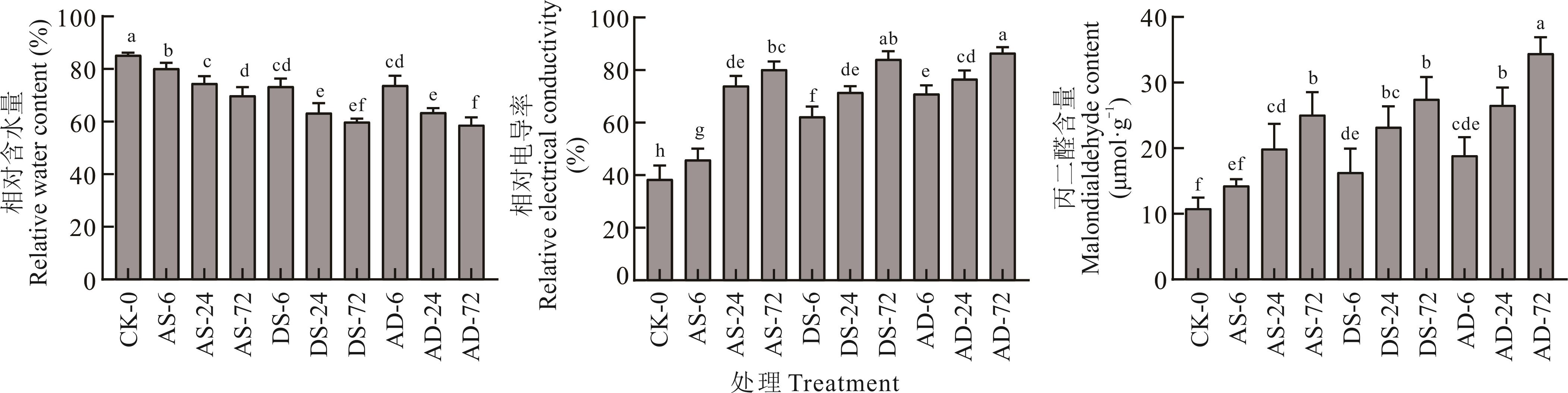
图1 碱性盐、干旱及复合胁迫对燕麦根系细胞膜损伤的影响不同小写字母表示所有处理在P<0.05水平上差异显著。CK-0表示处理0 h取样(对照);AS-6、AS-24和AS-72分别表示碱性盐胁迫6、24和72 h取样;DS-6、DS-24和DS-72分别表示干旱胁迫6、24和72 h取样;AD-6、AD-24和AD-72分别表示复合胁迫6、24和72 h取样。下同。Different lowercase letters indicate that all treatments were significantly different at the P<0.05 level. CK-0 indicates sampling at 0 hour of treatment (control); AS-6, AS-24, and AS-72 indicate sampling at 6, 24, and 72 hours under alkaline salt stress, respectively; DS-6, DS-24, and DS-72 indicate sampling at 6, 24, and 72 hours under drought stress, respectively; AD-6, AD-24, and AD-72 indicate sampling at 6, 24, and 72 hours under combined stress, respectively. The same below.
Fig.1 Effects of alkaline salt, drought, and combined stress on oat root cell membrane damage
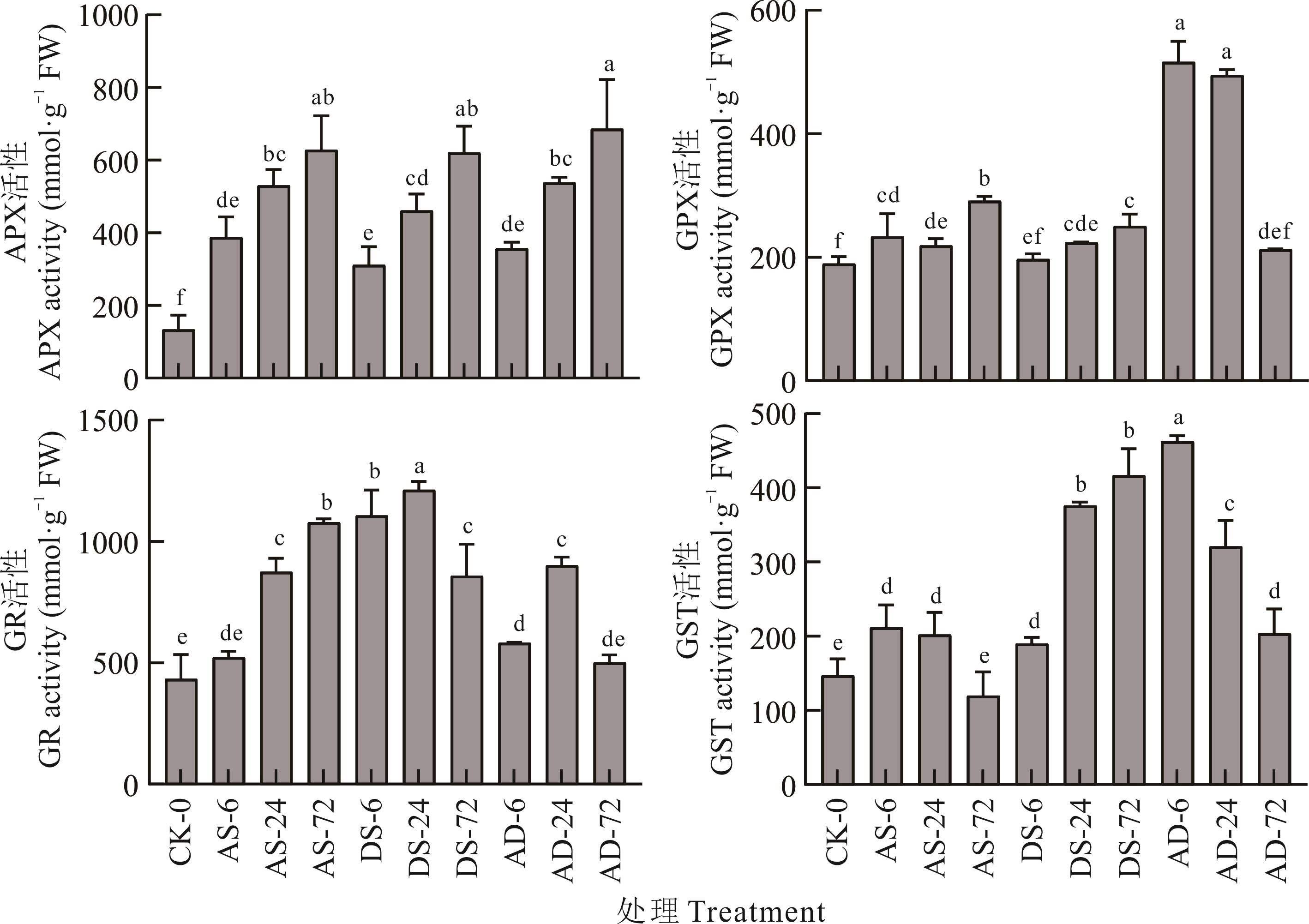
图2 碱性盐、干旱及复合胁迫下燕麦根系抗坏血酸-谷胱甘肽循环关键酶活性的变化FW: 鲜重Fresh weight; APX: 抗坏血酸过氧化物酶Ascorbate peroxidase; GPX: 谷胱甘肽过氧化物酶Glutathione peroxidase; GR: 谷胱甘肽还原酶Glutathione reductase; GST: 谷胱甘肽S-转移酶Glutathione S-transferase; 下同The same below.
Fig.2 Changes in the activities of key enzymes in the ascorbic acid-glutathione (AsA-GSH) cycle in oat roots under alkaline salt, drought, and combined stresses

图3 碱性盐、干旱及复合胁迫下燕麦根系AsA-GSH循环抗氧化剂含量及氧化还原比值的变化AsA: 抗坏血酸Ascorbic acid; DHA: 脱氢抗坏血酸Dehydroascorbate; GSH: 谷胱甘肽Glutathione; GSSG: 氧化型谷胱甘肽Oxidized glutathione. 下同The same below.
Fig.3 Changes in the contents of AsA-GSH cycle antioxidants and redox ratios in oat roots under alkaline salt, drought, and combined stresses
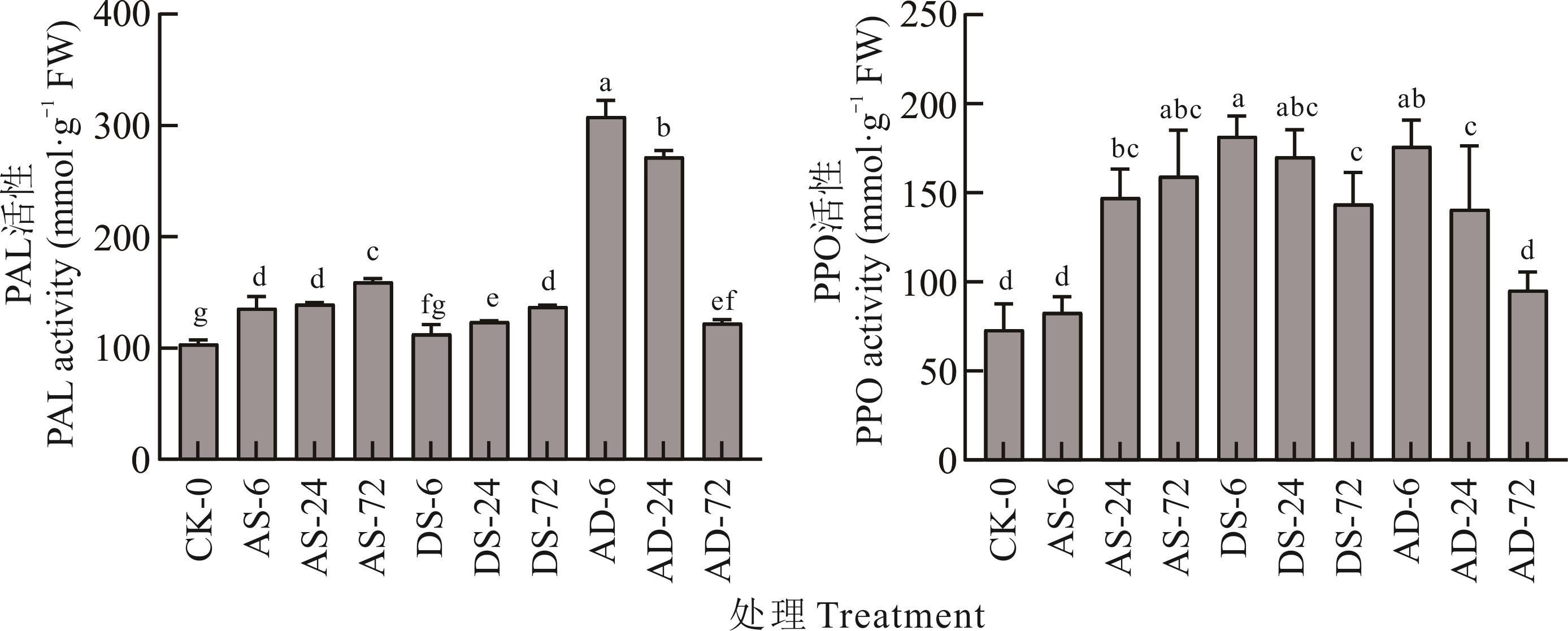
图4 碱性盐、干旱及复合胁迫下燕麦根系PAL和PPO活性的变化PAL: 苯丙氨酸解氨酶Phenylalanine ammonia-lyase; PPO: 多酚氧化酶Polyphenol oxidase; 下同The same below.
Fig.4 Changes in PAL and PPO activities in oat roots under alkaline salt, drought, and combined stresses

图5 碱性盐、干旱及复合胁迫下燕麦根系抗坏血酸-谷胱甘肽循环核心酶编码基因的表达
Fig.5 Expression of genes encoding key enzymes in the ascorbic acid-glutathione (AsA-GSH) cycle in oat roots under alkaline salt, drought, and combined stresses

图6 碱性盐、干旱及复合胁迫下燕麦根系谷胱甘肽代谢与氧化还原调节相关基因的表达
Fig.6 Expression of genes related to glutathione (GSH) metabolism and redox regulation in oat roots under alkaline salt, drought, and combined stresses
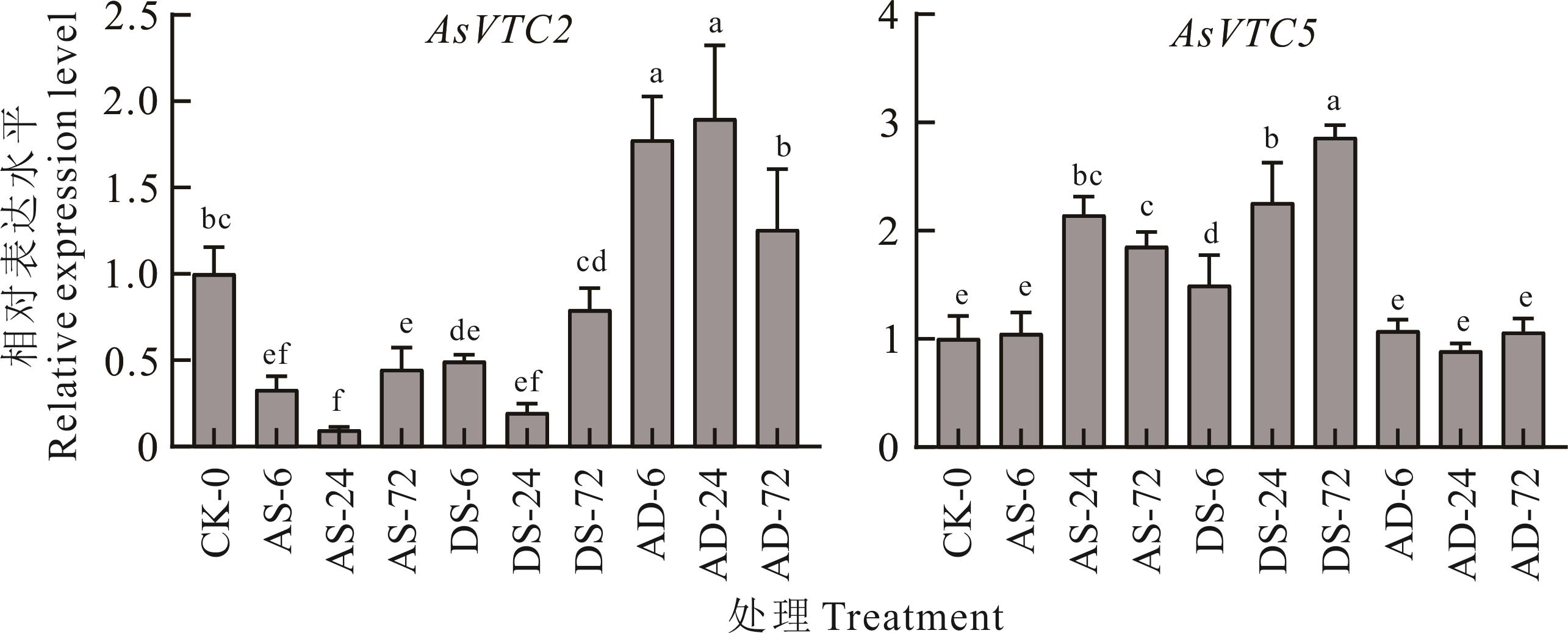
图7 碱性盐、干旱及复合胁迫下燕麦根系抗坏血酸生物合成关键基因的表达
Fig.7 Expression of key genes involved in ascorbic acid (AsA) biosynthesis in oat roots under alkaline salt, drought, and combined stresses
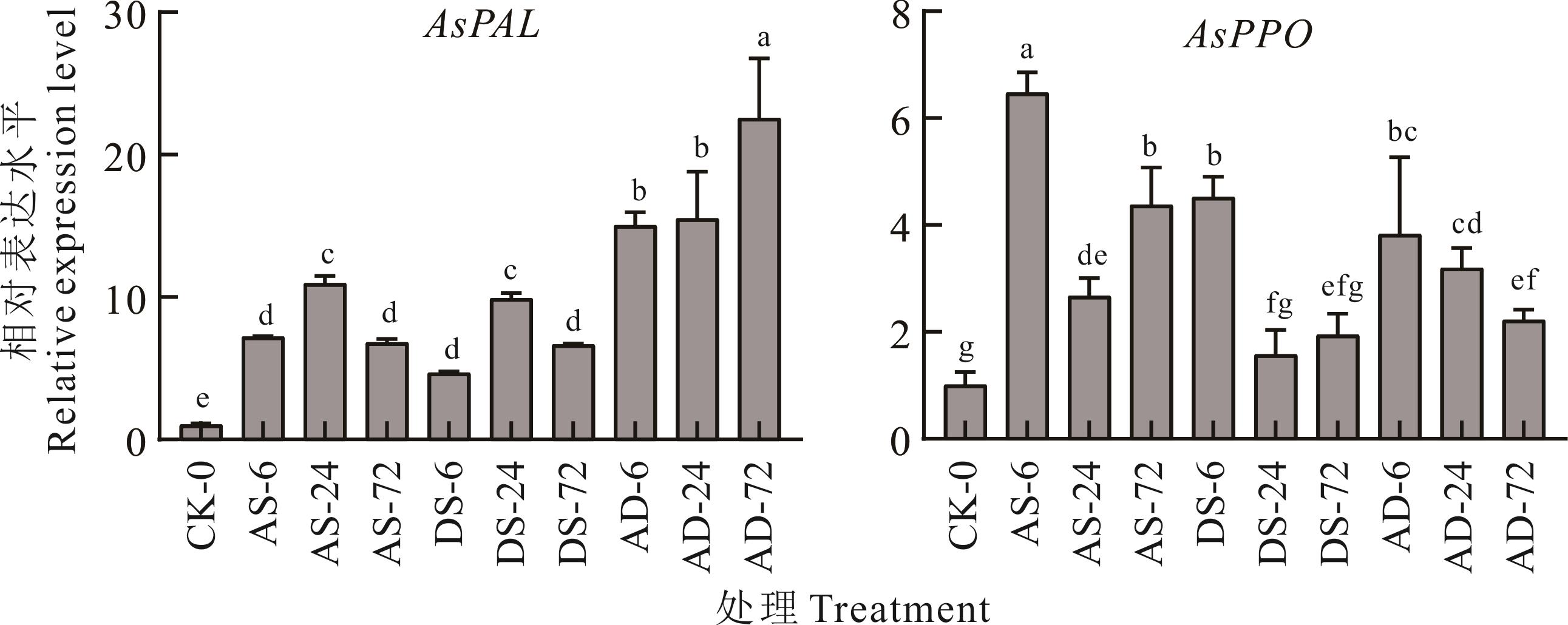
图8 碱性盐、干旱及复合胁迫下燕麦根系PAL和PPO基因的表达
Fig.8 Expression of PAL and PPO genes in oat roots under alkaline salt, drought, and combined stresses

图9 碱性盐、干旱及其复合胁迫下燕麦抗氧化系统生理指标及相关基因表达的热图分析A: 抗氧化酶活性及非酶抗氧化剂含量的变化Changes in antioxidant enzyme activity and non-enzymatic antioxidant content; B: 抗氧化相关基因转录水平表达谱Expression profile of antioxidant-related gene transcription levels.
Fig.9 Heatmap analysis of physiological indicators of the antioxidant system and related gene expression in oats under alkaline salt, drought, and their combined stresses
| [1] | Zhao T, Lu H H, Zhang F, et al. Evaluation of forage production performance and prediction of introduction adaptability for different Avena sativa germplasms in the southeast edge of the Qinghai-Tibet plateau. Frontiers in Plant Science, 2025, 16: 1564278. |
| [2] | Wang X J, Wang J L, Ju Z L, et al. Comprehensive evaluation on production performance and nutritional quality of different varieties of forage oat in the Qinghai Lake Area. Scientia Agricultura Sinica, 2024, 57(19): 3730-3742. |
| 王小军, 王金兰, 琚泽亮, 等. 环青海湖地区不同饲用燕麦品种生产性能和营养品质综合评价. 中国农业科学, 2024, 57(19): 3730-3742. | |
| [3] | Song T, Hang J H, Shi X T, et al. Physiological responses and drought resistance evaluation of forage oat (Avena sativa L.) seedling cultivar under drought stress. Plant Signaling & Behavior, 2025, 20(1): 2574391. |
| [4] | Dong G, Zhao F Y, Chen J Q, et al. Land uses changed the dynamics and controls of carbon-water exchanges in alkali-saline Songnen Plain of Northeast China. Ecological Indicators, 2021, 133: 108353. |
| [5] | Tian Z J, Jia X Y, Chang J J, et al. Effects of salinity-alkalinity and degradation on soil phosphorus fractions and microbial communities in the Songnen Plain, Northeast China. Sustainability, 2025, 17(23): 10527. |
| [6] | Angon P B, Tahjib-Ul-Arif M, Samin S I, et al. How do plants respond to combined drought and salinity stress?-A systematic review. Plants, 2022, 11(21): 2884. |
| [7] | Zhao W, Chen X J, Wang J H, et al. Emerging mechanisms of plant responses to abiotic stress. Plants, 2025, 14(22): 3445. |
| [8] | Cao H L, Ding R S, Kang S Z, et al. Chapter three-drought, salt, and combined stresses in plants: effects, tolerance mechanisms, and strategies. Advances in Agronomy, 2023, 178: 107-163. |
| [9] | Wang Y, Hou Y Y, Ma Y Q, et al. Effect of glycine betaine treatment on chilling injury and ascorbic acid-glutathione cycle metabolism in peach fruits. Food Science, 2021, 42(13): 158-165. |
| 王懿, 侯媛媛, 马钰晴, 等. 甘氨酸甜菜碱处理对桃果实冷害及抗坏血酸-谷胱甘肽循环代谢的影响. 食品科学, 2021, 42(13): 158-165. | |
| [10] | Yang Q, Fan C F, Wang Y, et al. Role and underlying mechanism of the ascorbic acid-reduced glutathione cycle in scavenging hydrogen peroxide in postharvest melons induced by salicylic acid. Food Science, 2021, 42(1): 243-249. |
| 杨乾, 范存斐, 王毅, 等. 水杨酸处理诱导采后甜瓜抗坏血酸-还原型谷胱甘肽循环代谢清除过氧化氢的作用及机制. 食品科学, 2021, 42(1): 243-249. | |
| [11] | Costa J H, Roque A L M, Aziz S, et al. Genome-wide identification of ascorbate-glutathione cycle gene families in soybean (Glycine max) reveals gene duplication events and specificity of gene members linked to development and stress conditions. International Journal of Biological Macromolecules, 2021, 187: 528-543. |
| [12] | Hasanuzzaman M, Bhuyan M H M B, Anee T I, et al. Regulation of ascorbate-glutathione pathway in mitigating oxidative damage in plants under abiotic stress. Antioxidants, 2019, 8(9): 384. |
| [13] | Yang Z X, Zheng X, Chen L B, et al. Morphological adaptation strategies of Rumex hanus planted in saline-alkali land of arid areas. Acta Prataculturae Sinica, 2022, 31(7): 15-27. |
| 杨志新, 郑旭, 陈来宝, 等. 干旱区盐碱地食叶草根系形态分布适应策略研究. 草业学报, 2022, 31(7): 15-27. | |
| [14] | Fu Y Y, Li P H, Hamani A K M, et al. Effects of single and combined drought and salinity stress on the root morphological characteristics and root hydraulic conductivity of different winter wheat varieties. Plants, 2023, 12(14): 2694. |
| [15] | Schachtman D P, Goodger J Q D. Chemical root to shoot signaling under drought. Trends in Plant Science, 2008, 13(6): 281-287. |
| [16] | Li Z G, Yi X Y, Li Y T. Effect of pretreatment with hydrogen sulfide donor sodium hydrosulfide on heat tolerance in relation to antioxidant system in maize (Zea mays) seedlings. Biologia, 2014, 69(8): 1001-1009. |
| [17] | Koukol J, Conn E E. The metabolism of aromatic compounds in higher plants. Ⅳ. Purification and properties of the phenylalanine deaminase of Hordeum vulgare. Journal of Biological Chemistry, 1961, 236(10): 2692-2698. |
| [18] | Mayer A M, Harel E, Ben-Shaul R. Assay of catechol oxidase-a critical comparison of methods. Phytochemistry, 1966, 5(4): 783-789. |
| [19] | Zhang Y Q, Liu H, Ma X Y, et al. Genome-wide identification and expression analysis of the class Ⅲ peroxidase gene (PRXⅢ) family in Medicago sativa L. and its function in the abiotic stress response. BMC Plant Biology, 2025, 25(1): 1-15. |
| [20] | Pandey P, Singh J, Achary V M M, et al. Redox homeostasis via gene families of ascorbate-glutathione pathway. Frontiers in Environmental Science, 2015, 3: 25. |
| [21] | Wu P B, Li L J, Zhang Y L. Comprehensive evaluation of saline-alkali tolerance and comparison of rhizosphere soil organic acid content at rapeseed seedling stage. Crops, 2022(1): 110-115. |
| 吴鹏博, 李立军, 张艳丽. 油菜苗期耐盐碱性综合评价与根际土壤有机酸含量比较. 作物杂志, 2022(1): 110-115. | |
| [22] | Li M Y, Gao Z Y, Jiang L N, et al. Involvement of the ABA- and H2O2- mediated ascorbate-glutathione cycle in the drought stress responses of wheat roots. Phyton-International Journal of Experimental Botany, 2024, 93(2): 329-342. |
| [23] | Wang S J, Ma Q H, Li C, et al. Chloroplast responses to drought: integrative mechanisms and mitigation strategies. International Journal of Biological Macromolecules, 2025, 26(24): 11872. |
| [24] | Raja V, Qadir S U, Alyemeni M N, et al. Impact of drought and heat stress individually and in combination on physio-biochemical parameters, antioxidant responses, and gene expression in Solanum lycopersicum. 3 Biotech, 2020, 10(5): 208. |
| [25] | Cao H L, Ding R S, Du T S, et al. A meta-analysis highlights the cross-resistance of plants to drought and salt stresses from physiological, biochemical, and growth levels. Physiologia Plantarum, 2024, 176(2): e14282. |
| [26] | Zuo Z F, Li Y L, Wei Y J, et al. Identification of DREB genes from Zoysia japonica and their transcript profiles in response to abiotic stress. Acta Prataculturae Sinica, 2025, 34(5): 74-88. |
| 左志芳, 李永龙, 魏雨佳, 等. 结缕草DREB基因家族的鉴定及非生物胁迫下的表达模式分析. 草业学报, 2025, 34(5): 74-88. | |
| [27] | Xu Y H, Cheng J L, Hu H B, et al. Genome-wide identification of NAC family genes in oat and functional characterization of AsNAC109 in abiotic stress tolerance. Plants, 2024, 13(7): 1017. |
| [28] | Koussevitzky S, Suzuki N, Huntington S, et al. Ascorbate peroxidase 1 plays a key role in the response of Arabidopsis thaliana to stress combination. Journal of Biological Chemistry, 2008, 283(49): 34197-34203. |
| [29] | Sun M, Sun S J, Jia Z C, et al. Genome-wide analysis and expression profiling of glutathione reductase gene family in oat (Avena sativa) indicate their responses to abiotic stress during seed imbibition. International Journal of Molecular Sciences, 2022, 23(19): 11650. |
| [30] | Xu C B, Jiang L Y, Li A X, et al. Glutathione S-transferase in mediating adaptive responses of oats (Avena sativa) to osmotic and cadmium stress: genome-wide analysis. BMC Plant Biology, 2025, 25(1): 538. |
| [31] | Mazumdar A B, Chattopadhyay S. Glutathione pathways and gene networks: central players in crop adaptation to environmental stresses. Plant Growth Regulation, 2025, 105(6): 1927-1948. |
| [32] | Yengkokpam P, Mazumder P B. Antioxidant enzymatic activities and profiling of gene expression associated with organophosphate stress tolerance in Solanum melongena L. cv. Longai. 3 Biotech, 2021, 11(12): 510. |
| [1] | 赵颖, 张聪聪, 宋雨婷, 张翀敏, 安悦, 杨宾宾, 马永, 王宝强. 2,4-表油菜素内酯对盐碱胁迫下藜麦幼苗生长的促进效应[J]. 草业学报, 2026, 35(9): 100-112. |
| [2] | 张琪琳, 王小军, 李晶, 程重庆, 梁国玲, 刘文辉, 琚泽亮, 贾志锋, 马祥, 李文. 环青海湖地区燕麦与一年生豆科牧草混播组配研究[J]. 草业学报, 2026, 35(9): 198-210. |
| [3] | 刘进娣, 陈仕勇, 李进, 蒋涛, 梁国玲, 周青平. 燕麦蔗糖转运蛋白基因家族的鉴定及其对干旱和盐碱胁迫的响应[J]. 草业学报, 2026, 35(8): 144-156. |
| [4] | 黄德锋, 李珂珂, 赖可, 班洁, 王硕, 齐博康, 张晓雯, 钟志强, 邓孝琛, 原现军. 18个燕麦品种在日喀则的生产性能和青贮品质评价[J]. 草业学报, 2026, 35(8): 84-96. |
| [5] | 雍嘉仪, 雍佳熹, 张颖, 胡海英. 5种燕麦再生生长性能及饲草品质对留茬高度的响应[J]. 草业学报, 2026, 35(8): 97-111. |
| [6] | 张博鸿, 马祥, 琚泽亮, 段连学, 王小军, 贾志锋. 不同生态条件下燕麦种质资源遗传多样性分析与综合评价[J]. 草业学报, 2026, 35(7): 151-164. |
| [7] | 王涛, 李静, 卢强, 柯文灿, 黄帅. 蒲公英黄酮和枯草芽孢杆菌对燕麦青贮品质、抗氧化活性及微生物群落结构的影响[J]. 草业学报, 2026, 35(6): 108-121. |
| [8] | 任孟雨, 王利群, 南丽丽, 郭佳雨. 紫花苜蓿新品系对盐胁迫的响应[J]. 草业学报, 2026, 35(6): 24-34. |
| [9] | 袁绍燕, 刘元坤, 蔡世杰, 雷婷馨, 周萍萍, 王俊珍, 颜红海. 多样性燕麦种质资源苗期耐盐性综合评价[J]. 草业学报, 2026, 35(6): 49-59. |
| [10] | 魏明, 吴欣蕊, 吴璇, 李昊, 伍国强, 张伟杰, 程子义. 甜菜碱醛脱氢酶基因BvBADH2的克隆及在植物盐胁迫中的作用[J]. 草业学报, 2026, 35(5): 185-195. |
| [11] | 李菲, 张琳, 德科加, 冯廷旭, 林伟山, 向雪梅, 魏希杰. 三江源区燕麦与箭筈豌豆混播对根际土壤微生物多样性的影响[J]. 草业学报, 2026, 35(5): 99-112. |
| [12] | 邓文辉, 赵小娜, 雍嘉仪, 管思雨, 胡国强, 王腾飞, 胡海英. 行比和燕麦密度对苜蓿种子产量及其构成因素的影响[J]. 草业学报, 2026, 35(4): 100-111. |
| [13] | 王一博, 明雪花, 张建勇, 袁琦, 杜建明, 王斌, 王腾飞, 张译尹, 兰剑, 牟乐. 宁夏干旱区燕麦新种质生产性能和种子产量综合评价研究[J]. 草业学报, 2026, 35(4): 86-99. |
| [14] | 马祥, 李中兴, 杨容尘, 琚泽亮, 贾志锋, 杨培志. 盐胁迫对不同耐盐性燕麦糖类及内源激素含量变化的影响[J]. 草业学报, 2026, 35(3): 235-244. |
| [15] | 第乙林, 刘思甜, 刘欣影, 杜泳, 李州. γ-氨基丁酸对镉胁迫下匍匐翦股颖耐受性及镉吸收转运的影响[J]. 草业学报, 2026, 35(2): 208-220. |
| 阅读次数 | ||||||
|
全文 |
|
|||||
|
摘要 |
|
|||||
