
ISSN 1004-5759 CN 62-1105/S
Acta Prataculturae Sinica ›› 2026, Vol. 35 ›› Issue (8): 193-206.DOI: 10.11686/cyxb2025319
Lu-yao LIU1,2( ), Dong CUI1,3(), Shu-qi LIU1,3, Zhi-cheng JIANG1,3, Yun-hao WU1,3, Ze-zheng LIU1,3, Jun-qi LIU1,3
Received:2025-08-05
Revised:2025-09-20
Online:2026-08-20
Published:2026-06-22
Contact:
Dong CUI
Lu-yao LIU, Dong CUI, Shu-qi LIU, Zhi-cheng JIANG, Yun-hao WU, Ze-zheng LIU, Jun-qi LIU. Response of the soil arthropod community to nitrogen and phosphorus inputs during the maturity-senescence period of Sophora alopecuroides[J]. Acta Prataculturae Sinica, 2026, 35(8): 193-206.
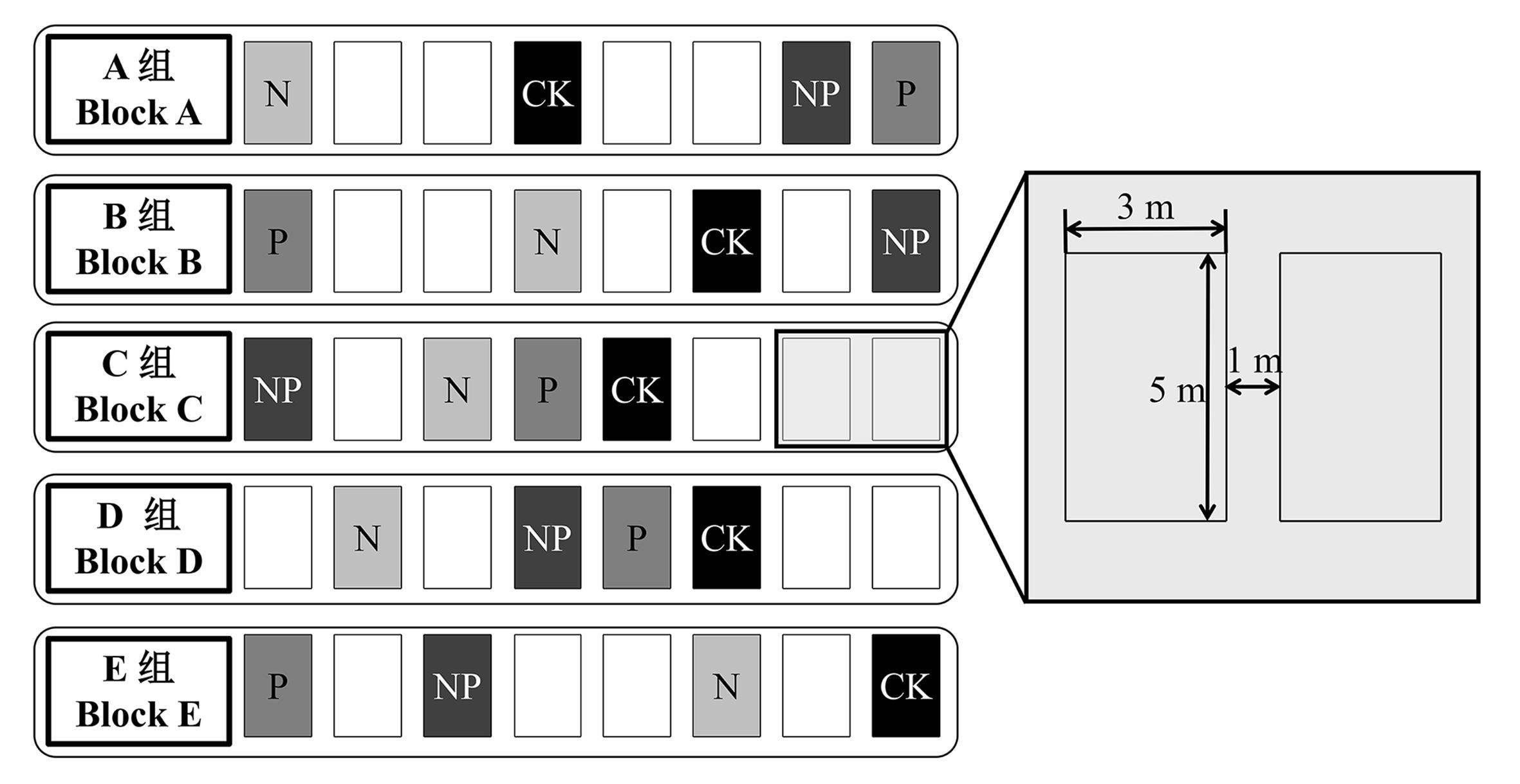
Fig.1 Sample plot design
类群 Taxa | 氮添加N | 磷添加P | 氮磷添加NP | 对照CK | ||||||||
|---|---|---|---|---|---|---|---|---|---|---|---|---|
| ni | Perc. | A | ni | Perc. | A | ni | Perc. | A | ni | Perc. | A | |
| 苦豆子成熟期Maturity stage of S. alopecuroides | ||||||||||||
| 胭螨科Rhodacaridae | 13 | 12.62 | +++ | 48 | 25.53 | +++ | 15 | 12.00 | +++ | 29 | 10.90 | +++ |
| 角绥螨科Antennoseiidae | 1 | 0.97 | + | 0 | 0.00 | 0 | 0.00 | 0 | 0.00 | |||
| 下盾螨科Hypoaspidae | 4 | 3.88 | ++ | 6 | 3.19 | ++ | 15 | 12.00 | +++ | 49 | 18.42 | +++ |
| 糙尾足螨科Trachyuropodidae | 0 | 0.00 | 2 | 1.06 | ++ | 0 | 0.00 | 17 | 6.39 | ++ | ||
| 裂胸螨科Aceosejidae | 0 | 0.00 | 3 | 1.60 | ++ | 2 | 1.60 | ++ | 0 | 0.00 | ||
| 派伦螨科Parholaspidae | 0 | 0.00 | 1 | 0.53 | + | 1 | 0.80 | + | 1 | 0.38 | + | |
| 尾足螨科Uropodidae | 0 | 0.00 | 22 | 11.70 | +++ | 1 | 0.80 | + | 17 | 6.39 | ++ | |
| 古甲螨科Palaeacaridae | 0 | 0.00 | 2 | 1.06 | ++ | 1 | 0.80 | + | 2 | 0.75 | + | |
| 奥甲螨科Oppiidae | 56 | 54.37 | +++ | 60 | 31.91 | +++ | 59 | 47.20 | +++ | 91 | 34.21 | +++ |
| 广缝甲螨科Cosmochthoniidae | 1 | 0.97 | + | 3 | 1.60 | ++ | 3 | 2.40 | ++ | 3 | 1.13 | ++ |
| 长单翼甲螨科Protoribatidae | 2 | 1.94 | ++ | 0 | 0.00 | 0 | 0.00 | 0 | 0.00 | |||
| 上罗甲螨科Epilohmanniidae | 0 | 0.00 | 0 | 0.00 | 0 | 0.00 | 1 | 0.38 | + | |||
| 懒甲螨科Nothridae | 0 | 0.00 | 0 | 0.00 | 0 | 0.00 | 3 | 1.13 | ++ | |||
| 缝甲螨科Hypochthoniidae | 0 | 0.00 | 0 | 0.00 | 0 | 0.00 | 1 | 0.38 | + | |||
| 步甲螨科Carabodidae | 0 | 0.00 | 0 | 0.00 | 0 | 0.00 | 2 | 0.75 | + | |||
| 赤螨科Erythraeidae | 2 | 1.94 | ++ | 1 | 0.53 | + | 6 | 4.80 | ++ | 5 | 1.88 | ++ |
| 莓螨科Rhagidiidae | 0 | 0.00 | 0 | 0.00 | 0 | 0.00 | 22 | 8.27 | ++ | |||
| 球角跳科Hypogastruridae | 1 | 0.97 | + | 0 | 0.00 | 0 | 0.00 | 0 | 0.00 | |||
| 棘跳科Onychiuridae | 3 | 2.91 | ++ | 0 | 0.00 | 0 | 0.00 | 0 | 0.00 | |||
| 长角跳科Entomobryidae | 1 | 0.97 | + | 0 | 0.00 | 2 | 1.60 | ++ | 1 | 0.38 | + | |
| 等节跳科Isotomidae | 0 | 0.00 | 2 | 1.06 | ++ | 0 | 0.00 | 4 | 1.50 | ++ | ||
| 叶蝉科Cicadellidae | 3 | 2.91 | ++ | 1 | 0.53 | + | 3 | 2.40 | ++ | 0 | 0.00 | |
| 蚜总科Aphididae | 0 | 0.00 | 2 | 1.06 | ++ | 0 | 0.00 | 1 | 0.38 | + | ||
| 蝉总科Cicadoidea | 0 | 0.00 | 1 | 0.53 | + | 0 | 0.00 | 1 | 0.38 | + | ||
| 蓟马科Thripidae | 0 | 0.00 | 0 | 0.00 | 1 | 0.80 | + | 0 | 0.00 | |||
| 隐翅虫科Staphylinidae | 2 | 1.94 | ++ | 0 | 0.00 | 0 | 0.00 | 0 | 0.00 | |||
| 步甲科Carabidae | 0 | 0.00 | 1 | 0.53 | + | 0 | 0.00 | 0 | 0.00 | |||
| 象甲科Curculionidae | 0 | 0.00 | 0 | 0.00 | 1 | 0.80 | + | 0 | 0.00 | |||
| 毛蚊科Bibionidae | 1 | 0.97 | + | 2 | 1.06 | ++ | 0 | 0.00 | 1 | 0.38 | + | |
| 蚊科Culicidae | 1 | 0.97 | + | 4 | 2.13 | ++ | 3 | 2.40 | ++ | 1 | 0.38 | + |
| 瘿蚊科Cecidomyiidae | 2 | 1.94 | ++ | 0 | 0.00 | 0 | 0.00 | 0 | 0.00 | |||
| 蚁科Formicidae | 5 | 4.85 | ++ | 15 | 7.98 | ++ | 11 | 8.80 | ++ | 2 | 0.75 | + |
| 小蜂总科Chalcidoidea | 0 | 0.00 | 4 | 2.13 | ++ | 0 | 0.00 | 1 | 0.38 | + | ||
| 鞘翅目幼虫Coleoptera larvae | 5 | 4.85 | ++ | 8 | 4.26 | ++ | 1 | 0.80 | + | 11 | 4.14 | ++ |
| 苦豆子凋落期Senescence stage of S. alopecuroides | ||||||||||||
| 蜘蛛目Araneida | 0 | 0.00 | 0 | 0.00 | 0 | 0.00 | 1 | 0.48 | + | |||
| 胭螨科Rhodacaridae | 6 | 5.56 | ++ | 5 | 3.31 | ++ | 9 | 7.83 | ++ | 15 | 7.21 | ++ |
| 下盾螨科Hypoaspidae | 11 | 10.19 | +++ | 17 | 11.26 | +++ | 13 | 11.30 | +++ | 29 | 13.94 | +++ |
| 糙尾足螨科Trachyuropodidae | 8 | 7.41 | ++ | 3 | 1.99 | ++ | 4 | 3.48 | ++ | 4 | 1.92 | ++ |
| 尾足螨科Uropodidae | 0 | 0.00 | 1 | 0.66 | + | 7 | 6.09 | ++ | 6 | 2.88 | ++ | |
| 裂胸螨科Aceosejidae | 6 | 5.56 | ++ | 4 | 2.65 | ++ | 1 | 0.87 | + | 3 | 1.44 | ++ |
| 派伦螨科Parholaspidae | 0 | 0.00 | 0 | 0.00 | 1 | 0.87 | + | 0 | 0.00 | |||
| 寄螨科Parasitidae | 0 | 0.00 | 0 | 0.00 | 0 | 0.00 | 1 | 0.48 | + | |||
| 孔洞螨科Trematuridae | 0 | 0.00 | 0 | 0.00 | 0 | 0.00 | 1 | 0.48 | + | |||
| 古甲螨科Palaeacaridae | 5 | 4.63 | ++ | 2 | 1.32 | ++ | 4 | 3.48 | ++ | 2 | 0.96 | + |
| 礼服甲螨科Trhypochthoniidae | 1 | 0.93 | + | 0 | 0.00 | 0 | 0.00 | 0 | 0.00 | |||
| 奥甲螨科Oppiidae | 21 | 19.44 | +++ | 38 | 25.17 | +++ | 28 | 24.35 | +++ | 88 | 42.31 | +++ |
| 广缝甲螨科Cosmochthoniidae | 2 | 1.85 | ++ | 0 | 0.00 | 4 | 3.48 | ++ | 4 | 1.92 | ++ | |
| 长单翼甲螨科Protoribates | 0 | 0.00 | 0 | 0.00 | 0 | 0.00 | 1 | 0.48 | + | |||
| 上罗甲螨科Epilohmanniidae | 1 | 0.93 | + | 8 | 5.30 | ++ | 3 | 2.61 | ++ | 8 | 3.85 | ++ |
| 珠甲螨科Damaeidae | 2 | 1.85 | ++ | 2 | 1.32 | ++ | 2 | 1.74 | ++ | 0 | 0.00 | |
| 步甲螨科Carabodidae | 0 | 0.00 | 0 | 0.00 | 0 | 0.00 | 1 | 0.48 | + | |||
| 大翼甲螨科Galumnidae | 0 | 0.00 | 0 | 0.00 | 0 | 0.00 | 3 | 1.44 | ++ | |||
| 耳头甲螨科Otocepheidae | 0 | 0.00 | 0 | 0.00 | 0 | 0.00 | 1 | 0.48 | + | |||
| 赤螨科Erythraeidae | 0 | 0.00 | 2 | 1.32 | ++ | 1 | 0.87 | + | 1 | 0.48 | + | |
| 莓螨科Rhagidiidae | 6 | 5.56 | ++ | 16 | 10.60 | +++ | 14 | 12.17 | +++ | 17 | 8.17 | ++ |
| 吸螨科Bdellidae | 0 | 0.00 | 2 | 1.32 | ++ | 2 | 1.74 | ++ | 0 | 0.00 | ||
| 粉螨科Acaridae | 2 | 1.85 | ++ | 29 | 19.21 | +++ | 1 | 0.87 | + | 0 | 0.00 | |
| 绒螨科Trombidiidae | 1 | 0.93 | + | 0 | 0.00 | 0 | 0.00 | 0 | 0.00 | |||
| 球角跳科Hypogastruridae | 2 | 1.85 | ++ | 0 | 0.00 | 0 | 0.00 | 1 | 0.48 | + | ||
| 棘跳科Onychiuridae | 2 | 1.85 | ++ | 0 | 0.00 | 3 | 2.61 | ++ | 0 | 0.00 | ||
| 长角跳科Entomobryidae | 5 | 4.63 | ++ | 5 | 3.31 | ++ | 3 | 2.61 | ++ | 10 | 4.81 | ++ |
| 等节跳科Isotomidae | 1 | 0.93 | + | 0 | 0.00 | 0 | 0.00 | 0 | 0.00 | |||
| 疣跳科Neanuridae | 0 | 0.00 | 0 | 0.00 | 0 | 0.00 | 1 | 0.48 | + | |||
| 粉蚧科Pseudococcidae | 0 | 0.00 | 1 | 0.66 | + | 0 | 0.00 | 0 | 0.00 | |||
| 象甲科Curculionidae | 0 | 0.00 | 1 | 0.66 | + | 3 | 2.61 | ++ | 2 | 0.96 | + | |
| 网蚊科Blephariceridae | 0 | 0.00 | 1 | 0.66 | + | 0 | 0.00 | 0 | 0.00 | |||
| 蚁科Formicidae | 23 | 21.30 | +++ | 7 | 4.64 | ++ | 5 | 4.35 | ++ | 1 | 0.48 | + |
| 啮虫科Psocidae | 1 | 0.93 | + | 0 | 0.00 | 1 | 0.87 | + | 0 | 0.00 | ||
| 地蜈蚣科Geophilidae | 0 | 0.00 | 0 | 0.00 | 0 | 0.00 | 1 | 0.48 | + | |||
| 鞘翅目幼虫Coleoptera larvae | 2 | 1.85 | ++ | 3 | 1.99 | ++ | 5 | 4.35 | ++ | 5 | 2.40 | ++ |
| 双翅目幼虫Diptera larvae | 0 | 0.00 | 3 | 1.99 | ++ | 1 | 0.87 | + | 1 | 0.48 | + | |
| 鳞翅目幼虫Lepidoptera larvae | 0 | 0.00 | 1 | 0.66 | + | 0 | 0.00 | 0 | 0.00 | |||
Table 1 Response of soil fauna abundance and relative proportion to nutrient addition
类群 Taxa | 氮添加N | 磷添加P | 氮磷添加NP | 对照CK | ||||||||
|---|---|---|---|---|---|---|---|---|---|---|---|---|
| ni | Perc. | A | ni | Perc. | A | ni | Perc. | A | ni | Perc. | A | |
| 苦豆子成熟期Maturity stage of S. alopecuroides | ||||||||||||
| 胭螨科Rhodacaridae | 13 | 12.62 | +++ | 48 | 25.53 | +++ | 15 | 12.00 | +++ | 29 | 10.90 | +++ |
| 角绥螨科Antennoseiidae | 1 | 0.97 | + | 0 | 0.00 | 0 | 0.00 | 0 | 0.00 | |||
| 下盾螨科Hypoaspidae | 4 | 3.88 | ++ | 6 | 3.19 | ++ | 15 | 12.00 | +++ | 49 | 18.42 | +++ |
| 糙尾足螨科Trachyuropodidae | 0 | 0.00 | 2 | 1.06 | ++ | 0 | 0.00 | 17 | 6.39 | ++ | ||
| 裂胸螨科Aceosejidae | 0 | 0.00 | 3 | 1.60 | ++ | 2 | 1.60 | ++ | 0 | 0.00 | ||
| 派伦螨科Parholaspidae | 0 | 0.00 | 1 | 0.53 | + | 1 | 0.80 | + | 1 | 0.38 | + | |
| 尾足螨科Uropodidae | 0 | 0.00 | 22 | 11.70 | +++ | 1 | 0.80 | + | 17 | 6.39 | ++ | |
| 古甲螨科Palaeacaridae | 0 | 0.00 | 2 | 1.06 | ++ | 1 | 0.80 | + | 2 | 0.75 | + | |
| 奥甲螨科Oppiidae | 56 | 54.37 | +++ | 60 | 31.91 | +++ | 59 | 47.20 | +++ | 91 | 34.21 | +++ |
| 广缝甲螨科Cosmochthoniidae | 1 | 0.97 | + | 3 | 1.60 | ++ | 3 | 2.40 | ++ | 3 | 1.13 | ++ |
| 长单翼甲螨科Protoribatidae | 2 | 1.94 | ++ | 0 | 0.00 | 0 | 0.00 | 0 | 0.00 | |||
| 上罗甲螨科Epilohmanniidae | 0 | 0.00 | 0 | 0.00 | 0 | 0.00 | 1 | 0.38 | + | |||
| 懒甲螨科Nothridae | 0 | 0.00 | 0 | 0.00 | 0 | 0.00 | 3 | 1.13 | ++ | |||
| 缝甲螨科Hypochthoniidae | 0 | 0.00 | 0 | 0.00 | 0 | 0.00 | 1 | 0.38 | + | |||
| 步甲螨科Carabodidae | 0 | 0.00 | 0 | 0.00 | 0 | 0.00 | 2 | 0.75 | + | |||
| 赤螨科Erythraeidae | 2 | 1.94 | ++ | 1 | 0.53 | + | 6 | 4.80 | ++ | 5 | 1.88 | ++ |
| 莓螨科Rhagidiidae | 0 | 0.00 | 0 | 0.00 | 0 | 0.00 | 22 | 8.27 | ++ | |||
| 球角跳科Hypogastruridae | 1 | 0.97 | + | 0 | 0.00 | 0 | 0.00 | 0 | 0.00 | |||
| 棘跳科Onychiuridae | 3 | 2.91 | ++ | 0 | 0.00 | 0 | 0.00 | 0 | 0.00 | |||
| 长角跳科Entomobryidae | 1 | 0.97 | + | 0 | 0.00 | 2 | 1.60 | ++ | 1 | 0.38 | + | |
| 等节跳科Isotomidae | 0 | 0.00 | 2 | 1.06 | ++ | 0 | 0.00 | 4 | 1.50 | ++ | ||
| 叶蝉科Cicadellidae | 3 | 2.91 | ++ | 1 | 0.53 | + | 3 | 2.40 | ++ | 0 | 0.00 | |
| 蚜总科Aphididae | 0 | 0.00 | 2 | 1.06 | ++ | 0 | 0.00 | 1 | 0.38 | + | ||
| 蝉总科Cicadoidea | 0 | 0.00 | 1 | 0.53 | + | 0 | 0.00 | 1 | 0.38 | + | ||
| 蓟马科Thripidae | 0 | 0.00 | 0 | 0.00 | 1 | 0.80 | + | 0 | 0.00 | |||
| 隐翅虫科Staphylinidae | 2 | 1.94 | ++ | 0 | 0.00 | 0 | 0.00 | 0 | 0.00 | |||
| 步甲科Carabidae | 0 | 0.00 | 1 | 0.53 | + | 0 | 0.00 | 0 | 0.00 | |||
| 象甲科Curculionidae | 0 | 0.00 | 0 | 0.00 | 1 | 0.80 | + | 0 | 0.00 | |||
| 毛蚊科Bibionidae | 1 | 0.97 | + | 2 | 1.06 | ++ | 0 | 0.00 | 1 | 0.38 | + | |
| 蚊科Culicidae | 1 | 0.97 | + | 4 | 2.13 | ++ | 3 | 2.40 | ++ | 1 | 0.38 | + |
| 瘿蚊科Cecidomyiidae | 2 | 1.94 | ++ | 0 | 0.00 | 0 | 0.00 | 0 | 0.00 | |||
| 蚁科Formicidae | 5 | 4.85 | ++ | 15 | 7.98 | ++ | 11 | 8.80 | ++ | 2 | 0.75 | + |
| 小蜂总科Chalcidoidea | 0 | 0.00 | 4 | 2.13 | ++ | 0 | 0.00 | 1 | 0.38 | + | ||
| 鞘翅目幼虫Coleoptera larvae | 5 | 4.85 | ++ | 8 | 4.26 | ++ | 1 | 0.80 | + | 11 | 4.14 | ++ |
| 苦豆子凋落期Senescence stage of S. alopecuroides | ||||||||||||
| 蜘蛛目Araneida | 0 | 0.00 | 0 | 0.00 | 0 | 0.00 | 1 | 0.48 | + | |||
| 胭螨科Rhodacaridae | 6 | 5.56 | ++ | 5 | 3.31 | ++ | 9 | 7.83 | ++ | 15 | 7.21 | ++ |
| 下盾螨科Hypoaspidae | 11 | 10.19 | +++ | 17 | 11.26 | +++ | 13 | 11.30 | +++ | 29 | 13.94 | +++ |
| 糙尾足螨科Trachyuropodidae | 8 | 7.41 | ++ | 3 | 1.99 | ++ | 4 | 3.48 | ++ | 4 | 1.92 | ++ |
| 尾足螨科Uropodidae | 0 | 0.00 | 1 | 0.66 | + | 7 | 6.09 | ++ | 6 | 2.88 | ++ | |
| 裂胸螨科Aceosejidae | 6 | 5.56 | ++ | 4 | 2.65 | ++ | 1 | 0.87 | + | 3 | 1.44 | ++ |
| 派伦螨科Parholaspidae | 0 | 0.00 | 0 | 0.00 | 1 | 0.87 | + | 0 | 0.00 | |||
| 寄螨科Parasitidae | 0 | 0.00 | 0 | 0.00 | 0 | 0.00 | 1 | 0.48 | + | |||
| 孔洞螨科Trematuridae | 0 | 0.00 | 0 | 0.00 | 0 | 0.00 | 1 | 0.48 | + | |||
| 古甲螨科Palaeacaridae | 5 | 4.63 | ++ | 2 | 1.32 | ++ | 4 | 3.48 | ++ | 2 | 0.96 | + |
| 礼服甲螨科Trhypochthoniidae | 1 | 0.93 | + | 0 | 0.00 | 0 | 0.00 | 0 | 0.00 | |||
| 奥甲螨科Oppiidae | 21 | 19.44 | +++ | 38 | 25.17 | +++ | 28 | 24.35 | +++ | 88 | 42.31 | +++ |
| 广缝甲螨科Cosmochthoniidae | 2 | 1.85 | ++ | 0 | 0.00 | 4 | 3.48 | ++ | 4 | 1.92 | ++ | |
| 长单翼甲螨科Protoribates | 0 | 0.00 | 0 | 0.00 | 0 | 0.00 | 1 | 0.48 | + | |||
| 上罗甲螨科Epilohmanniidae | 1 | 0.93 | + | 8 | 5.30 | ++ | 3 | 2.61 | ++ | 8 | 3.85 | ++ |
| 珠甲螨科Damaeidae | 2 | 1.85 | ++ | 2 | 1.32 | ++ | 2 | 1.74 | ++ | 0 | 0.00 | |
| 步甲螨科Carabodidae | 0 | 0.00 | 0 | 0.00 | 0 | 0.00 | 1 | 0.48 | + | |||
| 大翼甲螨科Galumnidae | 0 | 0.00 | 0 | 0.00 | 0 | 0.00 | 3 | 1.44 | ++ | |||
| 耳头甲螨科Otocepheidae | 0 | 0.00 | 0 | 0.00 | 0 | 0.00 | 1 | 0.48 | + | |||
| 赤螨科Erythraeidae | 0 | 0.00 | 2 | 1.32 | ++ | 1 | 0.87 | + | 1 | 0.48 | + | |
| 莓螨科Rhagidiidae | 6 | 5.56 | ++ | 16 | 10.60 | +++ | 14 | 12.17 | +++ | 17 | 8.17 | ++ |
| 吸螨科Bdellidae | 0 | 0.00 | 2 | 1.32 | ++ | 2 | 1.74 | ++ | 0 | 0.00 | ||
| 粉螨科Acaridae | 2 | 1.85 | ++ | 29 | 19.21 | +++ | 1 | 0.87 | + | 0 | 0.00 | |
| 绒螨科Trombidiidae | 1 | 0.93 | + | 0 | 0.00 | 0 | 0.00 | 0 | 0.00 | |||
| 球角跳科Hypogastruridae | 2 | 1.85 | ++ | 0 | 0.00 | 0 | 0.00 | 1 | 0.48 | + | ||
| 棘跳科Onychiuridae | 2 | 1.85 | ++ | 0 | 0.00 | 3 | 2.61 | ++ | 0 | 0.00 | ||
| 长角跳科Entomobryidae | 5 | 4.63 | ++ | 5 | 3.31 | ++ | 3 | 2.61 | ++ | 10 | 4.81 | ++ |
| 等节跳科Isotomidae | 1 | 0.93 | + | 0 | 0.00 | 0 | 0.00 | 0 | 0.00 | |||
| 疣跳科Neanuridae | 0 | 0.00 | 0 | 0.00 | 0 | 0.00 | 1 | 0.48 | + | |||
| 粉蚧科Pseudococcidae | 0 | 0.00 | 1 | 0.66 | + | 0 | 0.00 | 0 | 0.00 | |||
| 象甲科Curculionidae | 0 | 0.00 | 1 | 0.66 | + | 3 | 2.61 | ++ | 2 | 0.96 | + | |
| 网蚊科Blephariceridae | 0 | 0.00 | 1 | 0.66 | + | 0 | 0.00 | 0 | 0.00 | |||
| 蚁科Formicidae | 23 | 21.30 | +++ | 7 | 4.64 | ++ | 5 | 4.35 | ++ | 1 | 0.48 | + |
| 啮虫科Psocidae | 1 | 0.93 | + | 0 | 0.00 | 1 | 0.87 | + | 0 | 0.00 | ||
| 地蜈蚣科Geophilidae | 0 | 0.00 | 0 | 0.00 | 0 | 0.00 | 1 | 0.48 | + | |||
| 鞘翅目幼虫Coleoptera larvae | 2 | 1.85 | ++ | 3 | 1.99 | ++ | 5 | 4.35 | ++ | 5 | 2.40 | ++ |
| 双翅目幼虫Diptera larvae | 0 | 0.00 | 3 | 1.99 | ++ | 1 | 0.87 | + | 1 | 0.48 | + | |
| 鳞翅目幼虫Lepidoptera larvae | 0 | 0.00 | 1 | 0.66 | + | 0 | 0.00 | 0 | 0.00 | |||
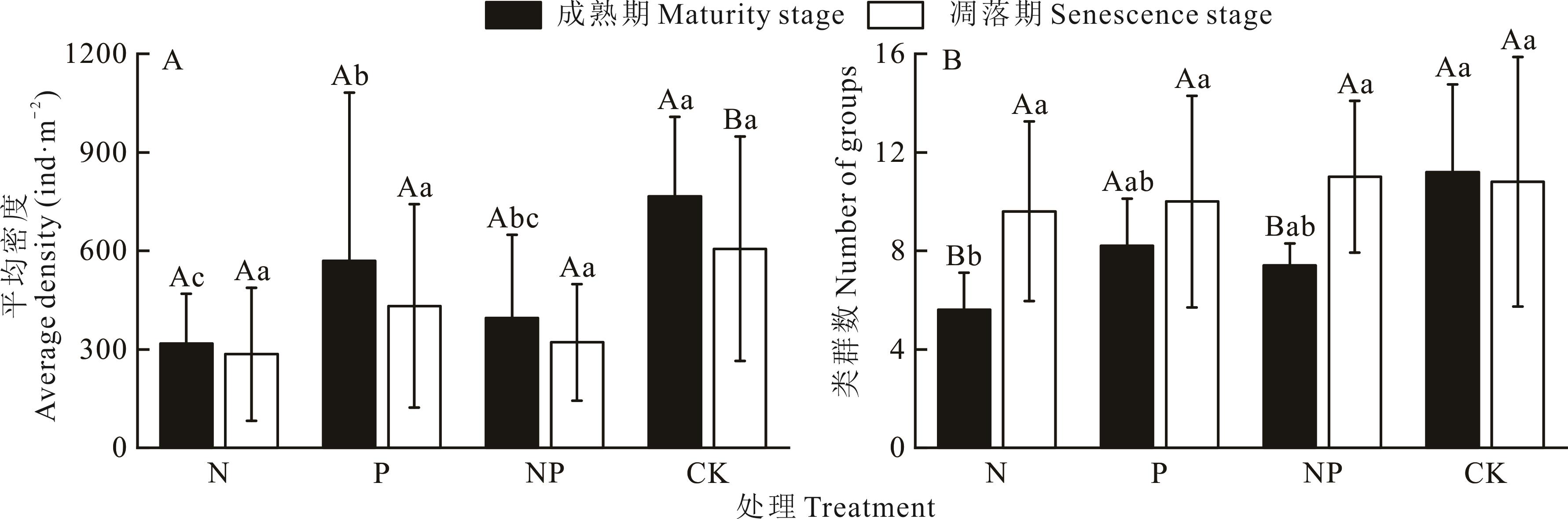
Fig.2 Effects of nutrient addition on the average density and number of groups of soil fauna
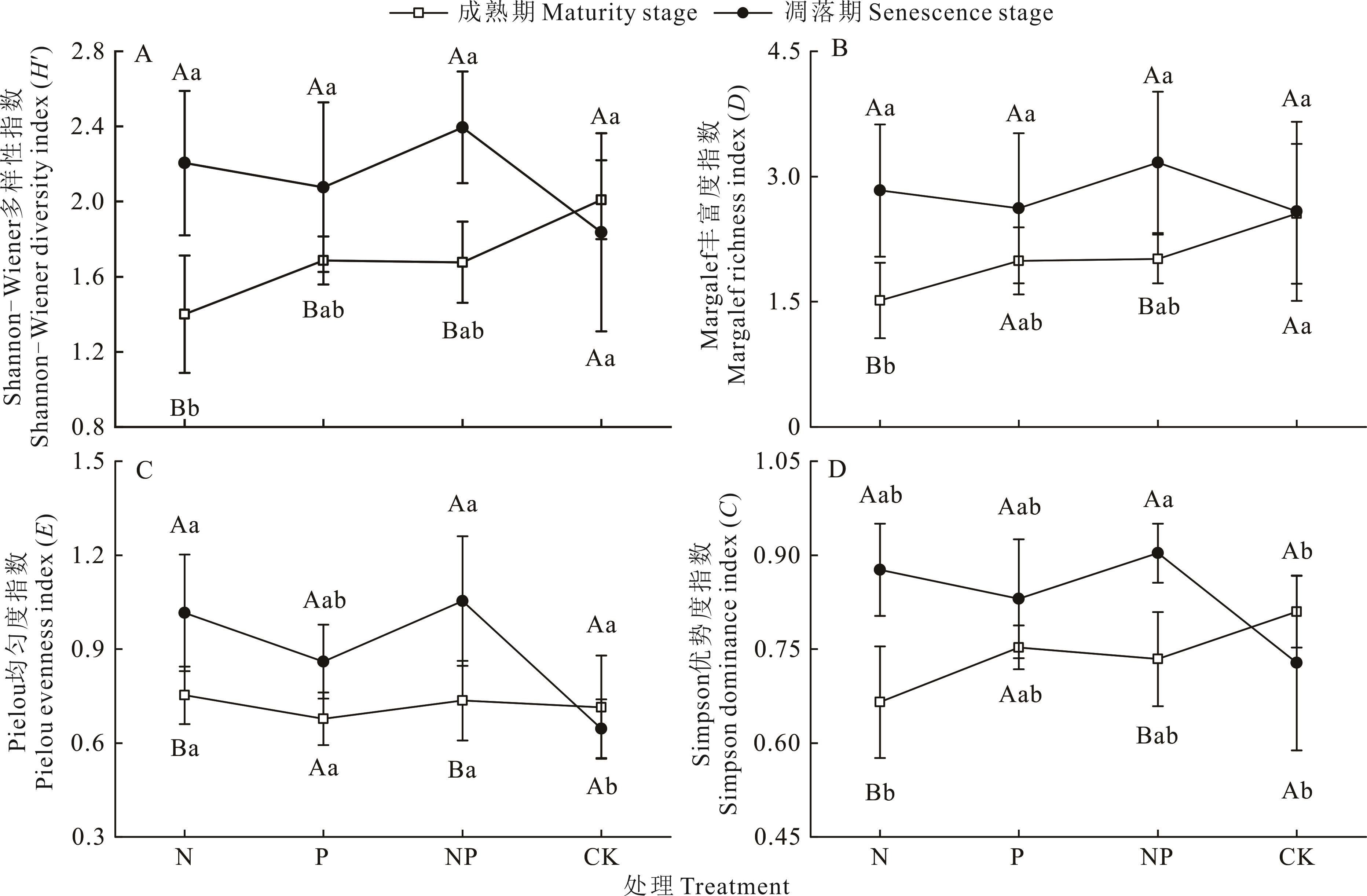
Fig.3 Effects of nutrient addition on soil fauna diversity
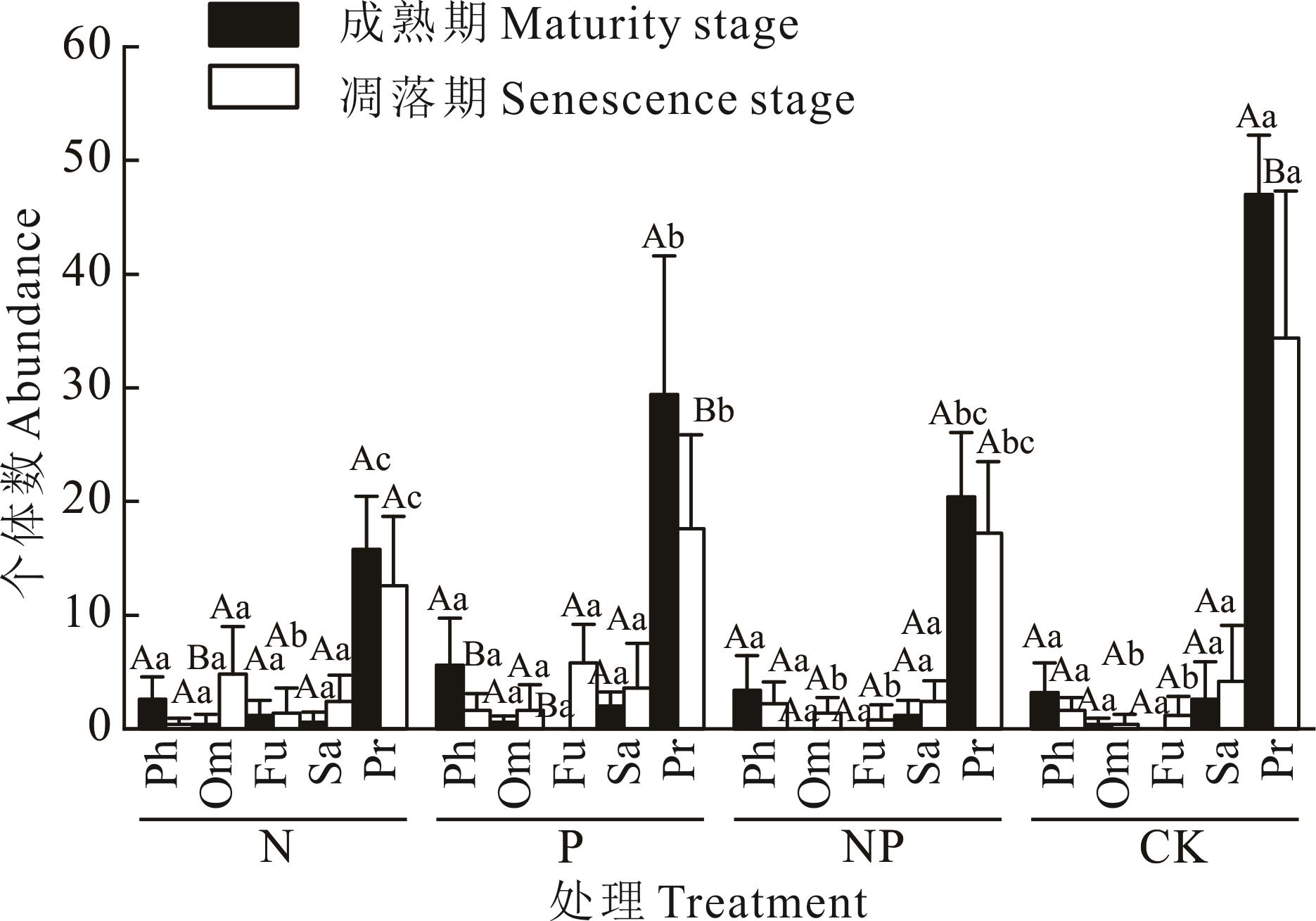
Fig.4 Effects of nutrient addition on the abundance of soil fauna functional groups
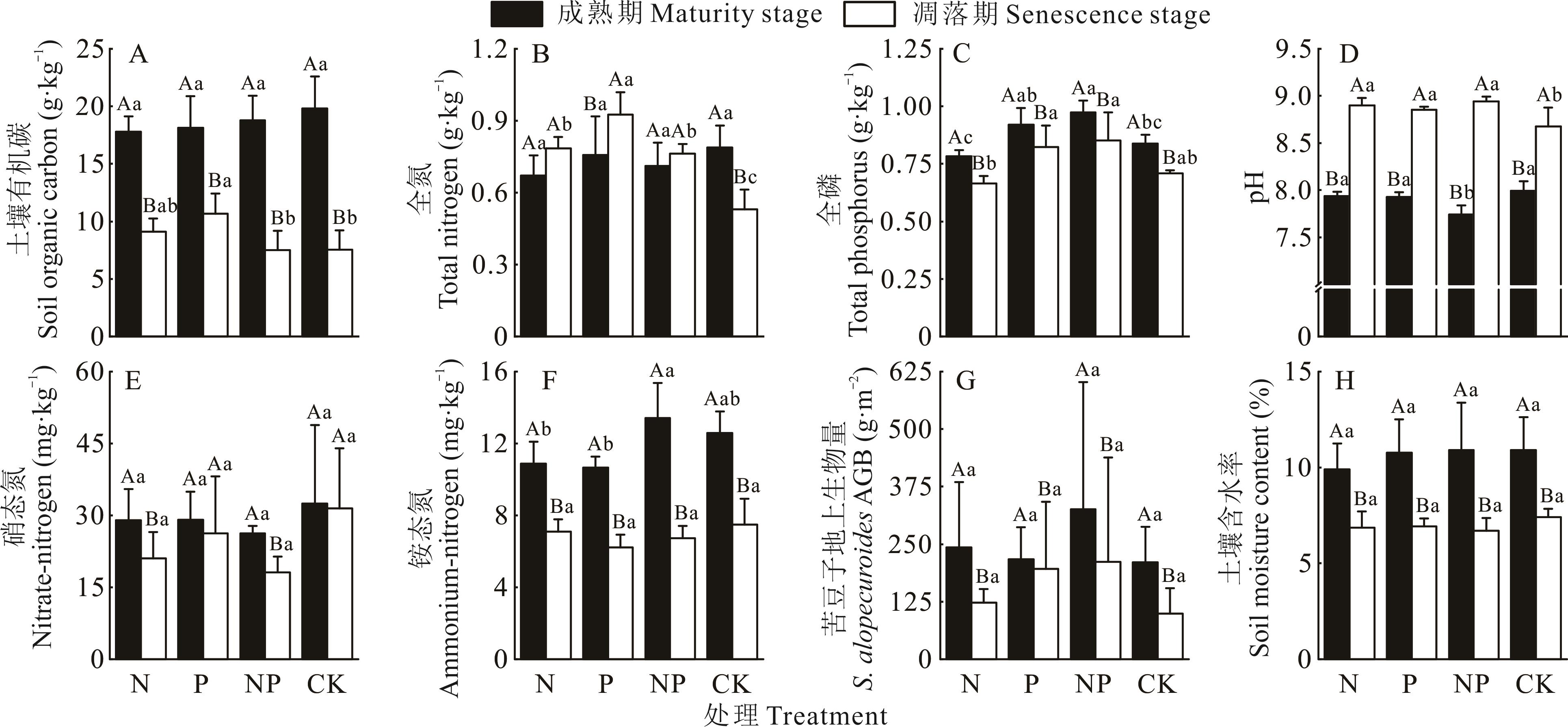
Fig.5 Effects of nutrient addition on environmental factors
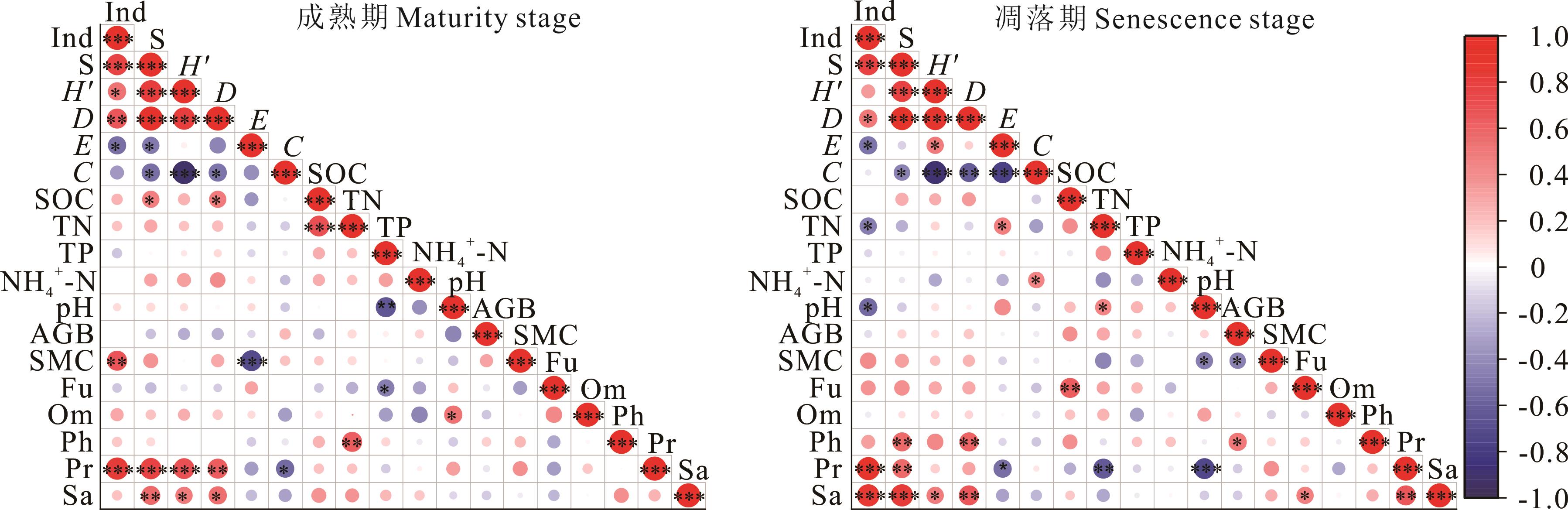
Fig. 6 Pearson correlation analysis of soil fauna community characteristics, abundance of functional groups, and environmental factors
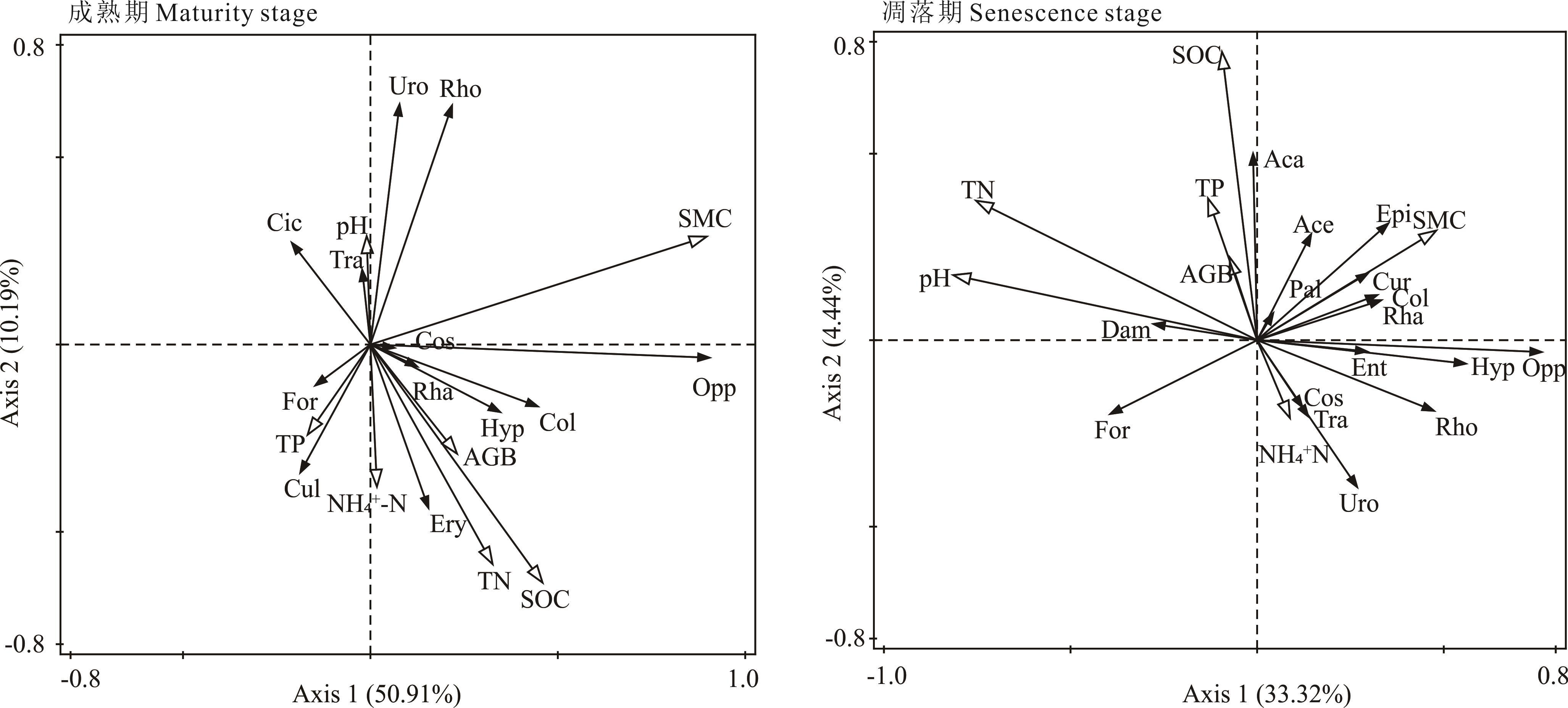
Fig.7 Redundancy analysis (RDA) of soil fauna community composition and environmental factors during the maturity and senescence periods of S. alopecuroides
| [1] | Burrell A L, Evans J P, De Kauwe M G. Anthropogenic climate change has driven over 5 million km2 of drylands towards desertification. Nature Communications, 2020, 11(1): 3853. |
| [2] | Li J F. Climate of Xinjiang. Beijing: China Meteorological Press,1991. |
| 李江风.新疆气候.北京: 气象出版社,1991. | |
| [3] | Yan J J, Liu H J, Cui D, et al. Spatiotemporal dynamics of grassland degradation in Yili Valley of Xinjiang over the last 15 years. Pratacultural Science, 2018, 35(3): 508-520. |
| 闫俊杰, 刘海军, 崔东, 等. 近15年新疆伊犁河谷草地退化时空变化特征. 草业科学, 2018, 35(3): 508-520. | |
| [4] | Yin C A. Sophora alopecuroides resources and utilization in desert and semi desert areas. Journal of Arid Land Resources and Environment, 1995(2): 48-54. |
| 尹长安. 干旱荒漠半荒漠地区苦豆子的资源状况及开发利用. 干旱区资源与环境, 1995(2): 48-54. | |
| [5] | Li H, Chen W M, Chen X, et al. Poisonous weed species and their harmfulness in the grassland of Yili regions, xinjiang Uygur Autonomous Region of China. Pratacultural Science, 2010, 27(11): 171-173. |
| 李宏, 陈卫民, 陈翔, 等. 新疆伊犁草原毒害草种类及其发生与危害. 草业科学, 2010, 27(11): 171-173. | |
| [6] | Yang R R. Causes of grassland degradation and sustainable development analysis in western China. Pratacultural Science, 2002, 19(1): 23-27. |
| 杨汝荣. 我国西部草地退化原因及可持续发展分析. 草业科学, 2002, 19(1): 23-27. | |
| [7] | Yang G, Wagg C, Veresoglou S D, et al. How soil biota drive ecosystem stability.Trends in Plant Science, 2018, 23(12):1057-1067. |
| [8] | Blankinship J C, Niklaus P A, Hungate B A. A meta-analysis of responses of soil biota to global change. Oecologia, 2011, 165(3): 553-565. |
| [9] | Gerrit A, Anton P, Xavier F J, et al. Conceptualizing soil fauna effects on labile and stabilized soil organic matter. Nature Communications, 2024, 15(1): 5005. |
| [10] | Sundareshwar P V, Morris J T, Koepfler E K, et al. Phosphorus limitation of coastal ecosystem processes. Science, 2003, 299(5606): 563-565. |
| [11] | Cunha H F V, Andersen K M, Lugli L F, et al. Direct evidence for phosphorus limitation on Amazon forest productivity. Nature, 2022, 608(7923): 558-562. |
| [12] | Wu Z D, Hong M, Ma S F, et al. Effects of long-term nutrient addition on meso-micro soil arthropod communities in a Stipa baicalensis grassland. Chinese Journal of Applied and Environmental Biology, 2022, 28(6): 1534-1541. |
| 武振丹, 红梅, 马尚飞, 等. 长期养分添加对贝加尔针茅草原中小型土壤节肢动物群落的影响. 应用与环境生物学报, 2022, 28(6): 1534-1541. | |
| [13] | Boxman A W, Blanck K, Brandrud T E, et al. Vegetation and soil biota response to experimentally-changed nitrogen inputs in coniferous forest ecosystems of the NITREX project. Forest Ecology and Management, 1998, 101(1/2/3): 65-79. |
| [14] | Sun F, Tariq A, Chen H, et al. Effect of nitrogen and phosphorus application on agricultural soil food webs. Archives of Agronomy and Soil Science, 2017, 63(8): 1176-1186. |
| [15] | Wu H T, Lv X G, Yang Q, et al. Ecological characteristics and functions of soil fauna community. Acta Pedologica Sinica, 2006, 43(2): 314-323. |
| 武海涛, 吕宪国, 杨青, 等. 土壤动物主要生态特征与生态功能研究进展. 土壤学报, 2006, 43(2): 314-323. | |
| [16] | Xu G L, Mo J M, Brown S, et al. Effects of simulated N deposition on soil fauna. Acta Ecologica Sinica, 2004, 24(10): 2245-2251. |
| 徐国良, 莫江明, Brown Sandra, 等. 土壤动物对模拟N沉降的响应. 生态学报, 2004, 24(10): 2245-2251. | |
| [17] | Wan M W, Liu X Z, Methods of phenological observation in China. Beijing: Science Press, 1979. |
| 宛敏渭, 刘秀珍. 中国物候观测方法. 北京: 科学出版社, 1979. | |
| [18] | Lei C L, Rong X L. General entomology. Beijing: China Agriculture Press, 2003. |
| 雷朝亮, 荣秀兰. 普通昆虫学. 北京: 中国农业出版社, 2003. | |
| [19] | Yin S G, Bei N X, Chen W P. Soil gamasid mites in Northeast China. Beijing: China Agriculture Press, 2013. |
| 殷绥公, 贝纳新, 陈万鹏. 中国东北土壤革螨. 北京: 中国农业出版社, 2013. | |
| [20] | Sun Y, Wang Y, Liu X Y. Collembolan taxonomy and ecological diversity in Heilongjiang Province. Harbin: Heilongjiang University Press, 2012. |
| 孙元, 王颖, 刘晓颖. 黑龙江省弹尾虫分类与生态多样性研究. 哈尔滨: 黑龙江大学出版社, 2012. | |
| [21] | Bao S D. Soil and agrochemical chemistry analysis (The third edition). Beijing: China Agriculture Press, 2000. |
| 鲍士旦. 土壤农化分析(第3版). 北京: 中国农业出版社, 2000. | |
| [22] | Lin Y H, Zhu P, Zhang F D, et al. Effect of different fertilizer treatments on crop soil insect community at black soil district in Jilin Province. Acta Ecologica Sinica, 2006, 26(4): 1122-1130. |
| 林英华, 朱平, 张夫道, 等. 吉林黑土区不同施肥处理对农田土壤昆虫的影响. 生态学报, 2006, 26(4): 1122-1130. | |
| [23] | Chen X L, Guo Y H. Effects of nitrogen, phosphorus, and potassium on yield and matrine content of Sophora alopecuroides L. Journal of China Agricultural University, 2013, 18(1): 76-81. |
| 陈晓丽, 郭玉海. 氮磷钾肥料对苦豆子产量和苦参碱含量的影响. 中国农业大学学报, 2013, 18(1): 76-81. | |
| [24] | Ochoa-Hueso R, Rocha I, Stevens J C, et al. Simulated nitrogen deposition affects soil fauna from a semiarid Mediterranean ecosystem in central Spain. Biology and Fertility of Soils, 2014, 50(1): 191-196. |
| [25] | Wang X, Zhu X M, Fang Y Y, et al. Long-term nitrogen fertilization accelerates labile biomolecules decomposition and retains recalcitrant compounds in a temperate agroecosystem. Agriculture, Ecosystems & Environment, 2025, 379: 109373. |
| [26] | Yin X Q, Ma C, He H S, et al. Distribution and diversity patterns of soil fauna in different salinization habitats of Songnen Grasslands, China. Applied Soil Ecology, 2018, 123: 375-383. |
| [27] | Dong J H, Li R J, Zheng W F, et al. Elevation gradient distribution pattern and environmental driving factors of soil fauna functional groups in poplar-birch mixed forest in Guandi Mountain. Acta Ecologica Sinica, 2025, 45(2): 769-787. |
| 董江海, 李蓉姣, 郑文芳, 等. 关帝山杨桦混交林土壤动物功能群海拔梯度分布格局及其环境驱动因素. 生态学报, 2025, 45(2): 769-787. | |
| [28] | Xu Y P, Lu P, Tan F, et al. Composition and structure of cropland soil fauna in black soil area of Jilin as affected by exogenous carbon and nitrogen. Acta Pedologica Sinica, 2013, 50(4): 800-809. |
| 徐演鹏, 卢萍, 谭飞, 等. 外源C、N干扰下吉林黑土区农田土壤动物组成与结构. 土壤学报, 2013, 50(4): 800-809. | |
| [29] | Wang Y, Huang B B, Yan G Y, et al. Effects of long-term nitrogen addition and seasonal variation on soil faunal community structure in a temperate natural secondary forest. European Journal of Forest Research, 2022, 141(4): 547-560. |
| [30] | Zhou J J, Wang Q G, Sun Y, et al. Response of soil fauna to nitrogen deposition in a broad-leaved Korean pine forest in Xiaoxing’an Mountains. World Ecology, 2020, 9(2): 11 |
| 周娇娇, 王庆贵, 孙元, 等. 小兴安岭阔叶红松林土壤动物对氮沉降的响应.世界生态学, 2020, 9(2): 11. | |
| [31] | Bian C J, Liu S R, Ma X Q, et al. Fine root biomass mediates soil fauna community in response to nitrogen addition in poplar plantations (Populus deltoids) on the east coast of China. Forests, 2019, 10(2): 164. |
| [32] | Sullivan P T, Sullivan S D. Influence of nitrogen fertilization on abundance and diversity of plants and animals in temperate and boreal forests. Environmental Reviews, 2017, 26(1): 26-42. |
| [33] | Li J H, Zhang R, Cheng B H, et al. Effects of nitrogen and phosphorus additions on decomposition and accumulation of soil organic carbon in alpine meadows on the Tibetan Plateau. Land Degradation and Development, 2020, 32(3): 1467-1477. |
| [34] | Zhang H R, Yang T, Wu X J, et al. Phosphorus addition increases microbial necromass by increasing N availability in China: A Meta-analysis. Applied Soil Ecology, 2023, 190: 105009. |
| [35] | Li X, Wei X, Wang C T, et al. Effects of exogenous nutrient addition on alpine meadow soil arthropod communities. Acta Prataculturae Sinica, 2022, 31(4): 155-164. |
| 李鑫, 魏雪, 王长庭, 等. 外源性养分添加对高寒草甸土壤节肢动物群落的影响. 草业学报, 2022, 31(4): 155-164. | |
| [36] | Liu J R, Guo K X, Sheng Y, et al. Changes of soil arthropod community during litter decomposition in a subtropical forest. Acta Ecologica Sinica, 2021, 41(7): 2770-2782. |
| 刘静如, 郭可馨, 谌亚, 等. 亚热带森林凋落叶分解过程土壤节肢动物群落的变化特征. 生态学报, 2021, 41(7): 2770-2782. | |
| [37] | Zhang Y, Liu J, Peng B. Study on carbon, nitrogen, and phosphorus content and their stoichiometric characteristics of Agropyron cristatum at different phenological periods. Agriculture and Technology, 2022, 42(13): 22-25. |
| 张艳, 刘佳, 彭彬. 不同物候期高冰草碳氮磷含量及其化学计量特征研究. 农业与技术, 2022, 42(13): 22-25. | |
| [38] | Liu Y, Zhou G Y, Chu G W, et al. Seasonal dynamics of soil acidity and nutrient contents under coniferous and broad-leaved mixed forest at Dinghushan. Ecology and Environment, 2005, 4(1): 81-85 |
| 刘艳, 周国逸, 褚国伟, 等. 鼎湖山针阔叶混交林土壤酸度与土壤养分的季节动态. 生态环境, 2005, 4(1): 81-85. | |
| [39] | Liu H M, Li J, Wang L L, et al. Effects of nitrogen addition on the stoichiometric characteristics of plants and soil in the Stipa baicalensis grassland of Inner Mongolia, China. Acta Prataculturae Sinica, 2018, 27(7): 25-35. |
| 刘红梅, 李洁, 王丽丽, 等. 氮添加对贝加尔针茅草原植物和土壤化学计量特征的影响. 草业学报, 2018, 27(7): 25-35. | |
| [40] | Lawrie A C, Wheeler C T. Nitrogen fixation in the root nodules of Vicia faba L. in relation to the assimilation of carbon: I. Plant growth and metabolism of photosynthetic assimilates. New Phytologist, 1975, 74(3): 429-436. |
| [41] | Pöyry J, Carvalheiro G L, Heikkinen K R, et al. The effects of soil eutrophication propagate to higher trophic levels.Global Ecology and Biogeography, 2017, 26(1): 18-30. |
| [42] | Flores-Rios A, Thomas E, Peri P P, et al. Co-benefits of soil carbon protection for invertebrate conservation. Biological Conservation, 2020, 252: 108859. |
| [43] | Mao J H, Wang J S, Liao J S,et al. Plant nitrogen uptake preference and drivers in natural ecosystems at the global scale. New Phytologist, 2025, 246(3): 972-983. |
| [44] | Liu R T, Zhao H L, Zhao X Y, et al. Soil macro faunal response to sand dune conversion from mobile dunes to fixed dunes in Horqin sandy land, northern China. European Journal of Soil Biology, 2009, 45(5/6): 417-422. |
| [45] | Meunier C L, Gundale M J, Sanchez I S, et al. Impact of nitrogen deposition on forest and lake food webs in nitrogen-limited environments. Global change biology, 2016, 22(1): 164-179. |
| [46] | Johannes R, Erland B, Brookes P C, et al.Soil bacterial and fungal communities across a pH gradient in an arable soil. The ISME journal, 2010, 4(10): 1340-1351. |
| [47] | Cole L, Buckland S M, Bardgett R D. Influence of disturbance and nitrogen addition on plant and soil animal diversity in grassland. Soil Biology and Biochemistry, 2008, 40(2): 505-514. |
| [48] | Brussaard L. Soil fauna, guilds, functional groups and ecosystem processes. Applied Soil Ecology, 1998, 9(1/2/3): 123-135. |
| [1] | Ping-dong LIN, Fu-rong MIAO, Jing LIU, Wen YUE, Xin-zhu CHEN. Effects of additives on the quality and microbial diversity of tea residue silage [J]. Acta Prataculturae Sinica, 2026, 35(8): 123-133. |
| [2] | Bo-hong ZHANG, Xiang MA, Ze-liang JU, Lian-xue DUAN, Xiao-jun WANG, Zhi-feng JIA. Genetic diversity analysis and multi-trait evaluation of oat germplasm under different ecological conditions [J]. Acta Prataculturae Sinica, 2026, 35(7): 151-164. |
| [3] | Yu-long MA, Kai-yang QIU, Xin-yi LUO, Jing-jing ZHANG, Yu-hang WANG, Guo-hui WANG, Xiang ZHENG, Xu-ying HAI, Bin XUE, Ying-zhong XIE. Effects of different sand-fixing vegetation restoration modes on soil physicochemical properties, enzyme activities, and herbaceous plant diversity [J]. Acta Prataculturae Sinica, 2026, 35(6): 1-12. |
| [4] | Xun-wen WU, Yin-long XU, Yu MO, Qing LUO, Jia-xin LI, Yi-lin ZHANG, Jie YU, Jing ZHANG, Yu ZHAO, Ya-jing BAO. Calorific values of plant organs of vegetation growing on the Erguna Meadow Steppe, Inner Mongolia [J]. Acta Prataculturae Sinica, 2026, 35(6): 13-23. |
| [5] | Ying-ying NIE, Li-jun XU, Xiu-yuan XU, Wei XUE, Xin-jia WU, Bo YUAN, Zhao ZHANG, Hong-zhi ZHANG, Qiong ZHOU, Yu-lin LI. Effects of nutrient addition on plant diversity and aboveground biomass of saline-alkali grassland in Horqin [J]. Acta Prataculturae Sinica, 2026, 35(5): 61-71. |
| [6] | Yu-yue LI, Hao-nan WEI, Xing-zhong MA, Hai-xin JIANG, Ming-he NIE, Yao ZHOU, Cheng-jiang DAI, Xiao-wu TIAN, Guo-hui WANG, Hong-bin MA. Effects of rotational grazing on characteristics of the soil seed bank in desert steppe [J]. Acta Prataculturae Sinica, 2026, 35(4): 1-13. |
| [7] | Bei-bei WANG, Chang YANG, Wen-yan ZHU, Shi-xiao XU, Ping SUN. Spatial differences in microbial communities around the root system of Stellera chamaejasme plants of different ages [J]. Acta Prataculturae Sinica, 2026, 35(3): 128-157. |
| [8] | Yang LIU, Hong XIAO, Chang-lin XU, Ming-yue DENG, Wen-qiang WEI, Ao HAN, Kai MA, Yun WANG. Impact of Salix oritrepha shrub encroachment on characteristics of herbaceous plant communities in the alpine meadows of the Eastern Qilian Mountains [J]. Acta Prataculturae Sinica, 2026, 35(3): 13-25. |
| [9] | Hui-teng WANG, Wen-lan LIU, Hong TANG, Xiao-juan LIU, Rong HAN, Jie SONG. Responses of species and functional diversity of spontaneous vegetation to urbanization in Lanzhou riverside parks [J]. Acta Prataculturae Sinica, 2026, 35(3): 96-113. |
| [10] | Shi-jie ZHOU, Yi-lian WANG, Pan SUN, Jing SHANG, Wen-yu YANG, Xue-gui WANG, Ji-zhi YANG. Analysis of weed species and community characteristics in soybean-maize fields with a banded compound planting pattern in Sichuan Province [J]. Acta Prataculturae Sinica, 2026, 35(2): 143-154. |
| [11] | Jia-qi HE, Lin WU, Zhi-min QIU, Xu-yong GAO, Lun-lun GAO, Shuang-bin FU, Yan-ping YANG, Pei-long WANG, Wan XU, Zhuang ZHOU. Species diversity and community characteristics of weeds on the banks of the Wenzhou expressway [J]. Acta Prataculturae Sinica, 2026, 35(2): 40-53. |
| [12] | Ze-yu XIANG, Zhong-bing TANG, Xin-heng PENG, Xiao-long YANG, Chuang-ming YANG, Xiang-dong QIU, Chun-fa CHEN, Yan-song PENG, Sai-xia ZHOU. Plant community characteristics and niches in mountain meadows of Wugong Mountain [J]. Acta Prataculturae Sinica, 2025, 34(9): 12-25. |
| [13] | Wei TANG, Zi-guang LI, Qing-tian ZHAO, Juan SUN. Effects of oat (Avena sativa) planting density on the growth and rhizosphere fungal community structure of Digitaria sanguinalis and Echinochloa crusgalli [J]. Acta Prataculturae Sinica, 2025, 34(8): 149-164. |
| [14] | Shan-shan TANG, Min HU. Differences in enzyme activity and bacterial community structure in rhizosphere soil of four grass species [J]. Acta Prataculturae Sinica, 2025, 34(8): 99-108. |
| [15] | Tian-ci KONG, Xue-qing MA, Chen-bang HE, Tai-yan FAN, Guang-xin LU, He-xing QI. Effects of fungal diseases of silage maize on microbial diversity of silage fermentation [J]. Acta Prataculturae Sinica, 2025, 34(7): 95-106. |
| Viewed | ||||||
|
Full text |
|
|||||
|
Abstract |
|
|||||
