
ISSN 1004-5759 CN 62-1105/S
Acta Prataculturae Sinica ›› 2026, Vol. 35 ›› Issue (12): 183-196.DOI: 10.11686/cyxb2026028
Tian TIAN1,2,3,4( ), Ling-jie WANG1,2,3,4, Zhi-jun WANG1,2,3,4, Yin-xia ZHANG1,2,3,4, Wen-hua DU1,2,3,4()
Received:2026-01-20
Revised:2026-03-30
Online:2026-12-20
Published:2026-11-02
Contact:
Wen-hua DU
Tian TIAN, Ling-jie WANG, Zhi-jun WANG, Yin-xia ZHANG, Wen-hua DU. Bioinformatic analysis of the triticale chloroplast genome and identification of molecular marker loci[J]. Acta Prataculturae Sinica, 2026, 35(12): 183-196.

Fig.1 Summary chart of the origins of different types of triticale (Source: Simmonds[6])
项目 Item | 碱基占比Percentage of bases (%) | 长度 Length (bp) | |||
|---|---|---|---|---|---|
| GC | GC1 | GC2 | GC3 | ||
| 全长Full length | 38.32 | 38.26 | 38.54 | 38.15 | 135899 |
| 大单拷贝区Large single copy (LSC) | 36.28 | 35.85 | 36.37 | 36.63 | 80004 |
| 小单拷贝区Small single copy (SSC) | 32.18 | 33.19 | 32.89 | 30.47 | 12791 |
| 重复拷贝区域A Inverted repeat A (IRA) | 43.91 | 44.06 | 44.43 | 43.25 | 21552 |
| 重复拷贝区域B Inverted repeat B (IRB) | 43.91 | 43.25 | 44.43 | 44.06 | 21552 |
Table 1 Base composition characteristics of codons in chloroplast genome of triticale
项目 Item | 碱基占比Percentage of bases (%) | 长度 Length (bp) | |||
|---|---|---|---|---|---|
| GC | GC1 | GC2 | GC3 | ||
| 全长Full length | 38.32 | 38.26 | 38.54 | 38.15 | 135899 |
| 大单拷贝区Large single copy (LSC) | 36.28 | 35.85 | 36.37 | 36.63 | 80004 |
| 小单拷贝区Small single copy (SSC) | 32.18 | 33.19 | 32.89 | 30.47 | 12791 |
| 重复拷贝区域A Inverted repeat A (IRA) | 43.91 | 44.06 | 44.43 | 43.25 | 21552 |
| 重复拷贝区域B Inverted repeat B (IRB) | 43.91 | 43.25 | 44.43 | 44.06 | 21552 |

Fig.2 The complete chloroplast genome of triticale
| 功能Function | 基因类别Gene group | 基因名称Gene name |
|---|---|---|
光合作用 Photosynthesis | 光系统Ⅰ的亚基Subunits of photosystemⅠ | psaA,psaB,psaC,psaI,psaJ |
| 光系统Ⅱ的亚基Subunits of photosystem Ⅱ | psbA,psbB,psbC,psbD,psbE,psbF,psbH,psbI,psbJ,psbK,psbL,psbM,psbN,psbT,psbZ | |
| NADH脱氢酶的亚基Subunits of NADH dehydrogenase | ndhA*,ndhB*(2),ndhC,ndhD,ndhE,ndhF,ndhG,ndhH,ndhI,ndhJ,ndhK | |
| 细胞色素b/f复合物的亚基Subunits of cytochrome b/f complex | petA,petB*,petD*,petG,petL,petN | |
| ATP合酶的亚基Subunits of ATP synthase | atpA,atpB,atpE,atpF*,atpH,atpI | |
| Rubisco的大亚基Large subunit of Rubisco | rbcL | |
| 光叶绿素酸酯还原酶的亚基Subunits of photochlorophyllide reductase | - | |
自我复制 Self-replication | 大核糖体亚基的蛋白质Proteins of large ribosomal subunit | rpl14,rpl16*,rpl2*(2),rpl20,rpl22,rpl23(2),rpl32,rpl33,rpl36 |
| 小核糖体亚基的蛋白质Proteins of small ribosomal subunit | rps11,rps12**(2),rps14,rps15(2),rps16*,rps18,rps19(2),rps2,rps3,rps4,rps7(2),rps8 | |
| RNA聚合酶的亚基Subunits of RNA polymerase | rpoA,rpoB,rpoC1,rpoC2 | |
| 核糖体RNA Ribosomal RNAs | rrn16(2),rrn23(2),rrn4.5(2),rrn5(2) | |
| 转运RNA Transfer RNAs | trnA-UGC*(2),trnC-GCA,trnD-GUC,trnE-UUC,trnF-GAA,trnG-GCC,trnG-UCC*,trnH-GUG(2),trnI-CAU(2),trnI-GAU*(2),trnK-UUU*,trnL-CAA(2),trnL-UAA*,trnL-UAG,trnM-CAU,trnN-GUU(2),trnP-UGG,trnQ-UUG,trnR-ACG(2),trnR-UCU,trnS-GCU,trnS-GGA,trnS-UGA,trnT-GGU,trnT-UGU,trnV-GAC(2),trnV-UAC*,trnW-CCA,trnY-GUA,trnfM-CAU | |
其他基因 Other genes | 成熟酶Maturase | matK |
| 蛋白酶Protease | clpP | |
| 包膜蛋白Envelope membrane protein | cemA | |
| 乙酰辅酶A羧化酶Acetyl-CoA carboxylase | - | |
| c型细胞色素合成基因c-type cytochrome synthesis gene | ccsA | |
| 翻译起始因子Translation initiation factor | infA | |
| 其他Other | - | |
未知功能基因 Genes of unknown function | 保守的假设叶绿体开放阅读框Conserved hypothetical chloroplast open reading frame | ycf2(2),ycf3**,ycf4,ycf68(2) |
Table 2 Functional classification of chloroplast genes in triticale
| 功能Function | 基因类别Gene group | 基因名称Gene name |
|---|---|---|
光合作用 Photosynthesis | 光系统Ⅰ的亚基Subunits of photosystemⅠ | psaA,psaB,psaC,psaI,psaJ |
| 光系统Ⅱ的亚基Subunits of photosystem Ⅱ | psbA,psbB,psbC,psbD,psbE,psbF,psbH,psbI,psbJ,psbK,psbL,psbM,psbN,psbT,psbZ | |
| NADH脱氢酶的亚基Subunits of NADH dehydrogenase | ndhA*,ndhB*(2),ndhC,ndhD,ndhE,ndhF,ndhG,ndhH,ndhI,ndhJ,ndhK | |
| 细胞色素b/f复合物的亚基Subunits of cytochrome b/f complex | petA,petB*,petD*,petG,petL,petN | |
| ATP合酶的亚基Subunits of ATP synthase | atpA,atpB,atpE,atpF*,atpH,atpI | |
| Rubisco的大亚基Large subunit of Rubisco | rbcL | |
| 光叶绿素酸酯还原酶的亚基Subunits of photochlorophyllide reductase | - | |
自我复制 Self-replication | 大核糖体亚基的蛋白质Proteins of large ribosomal subunit | rpl14,rpl16*,rpl2*(2),rpl20,rpl22,rpl23(2),rpl32,rpl33,rpl36 |
| 小核糖体亚基的蛋白质Proteins of small ribosomal subunit | rps11,rps12**(2),rps14,rps15(2),rps16*,rps18,rps19(2),rps2,rps3,rps4,rps7(2),rps8 | |
| RNA聚合酶的亚基Subunits of RNA polymerase | rpoA,rpoB,rpoC1,rpoC2 | |
| 核糖体RNA Ribosomal RNAs | rrn16(2),rrn23(2),rrn4.5(2),rrn5(2) | |
| 转运RNA Transfer RNAs | trnA-UGC*(2),trnC-GCA,trnD-GUC,trnE-UUC,trnF-GAA,trnG-GCC,trnG-UCC*,trnH-GUG(2),trnI-CAU(2),trnI-GAU*(2),trnK-UUU*,trnL-CAA(2),trnL-UAA*,trnL-UAG,trnM-CAU,trnN-GUU(2),trnP-UGG,trnQ-UUG,trnR-ACG(2),trnR-UCU,trnS-GCU,trnS-GGA,trnS-UGA,trnT-GGU,trnT-UGU,trnV-GAC(2),trnV-UAC*,trnW-CCA,trnY-GUA,trnfM-CAU | |
其他基因 Other genes | 成熟酶Maturase | matK |
| 蛋白酶Protease | clpP | |
| 包膜蛋白Envelope membrane protein | cemA | |
| 乙酰辅酶A羧化酶Acetyl-CoA carboxylase | - | |
| c型细胞色素合成基因c-type cytochrome synthesis gene | ccsA | |
| 翻译起始因子Translation initiation factor | infA | |
| 其他Other | - | |
未知功能基因 Genes of unknown function | 保守的假设叶绿体开放阅读框Conserved hypothetical chloroplast open reading frame | ycf2(2),ycf3**,ycf4,ycf68(2) |
基因 Gene | 外显子1 Exon I | 内含子1 Intron I | 外显子2 Exon Ⅱ | 内含子2 Intron Ⅱ | 外显子3 Exon Ⅲ | 基因 Gene | 外显子1 Exon I | 内含子1 Intron I | 外显子2 Exon Ⅱ | 内含子2 Intron Ⅱ | 外显子3 Exon Ⅲ |
|---|---|---|---|---|---|---|---|---|---|---|---|
| trnK-UUU | 38 | 2484 | 36 | rpl2 | 388 | 663 | 431 | ||||
| rps16 | 40 | 789 | 218 | ndhB | 775 | 712 | 758 | ||||
| trnS-CGA | 31 | 658 | 62 | trnT-CGU | 32 | 787 | 59 | ||||
| atpF | 145 | 826 | 407 | trnA-UGC | 37 | 805 | 36 | ||||
| ycf3 | 124 | 756 | 230 | 731 | 159 | ndhA | 550 | 1036 | 539 | ||
| trnL-UAA | 36 | 588 | 51 | trnA-UGC | 37 | 805 | 36 | ||||
| trnV-UAC | 38 | 581 | 53 | trnT-CGU | 32 | 787 | 59 | ||||
| petB | 6 | 748 | 642 | ndhB | 775 | 712 | 758 | ||||
| petD | 8 | 749 | 475 | rpl2 | 388 | 663 | 431 | ||||
| rpl16 | 9 | 1043 | 402 |
Table 3 The length of exons and introns in genes with introns in triticale chloroplast genome (bp)
基因 Gene | 外显子1 Exon I | 内含子1 Intron I | 外显子2 Exon Ⅱ | 内含子2 Intron Ⅱ | 外显子3 Exon Ⅲ | 基因 Gene | 外显子1 Exon I | 内含子1 Intron I | 外显子2 Exon Ⅱ | 内含子2 Intron Ⅱ | 外显子3 Exon Ⅲ |
|---|---|---|---|---|---|---|---|---|---|---|---|
| trnK-UUU | 38 | 2484 | 36 | rpl2 | 388 | 663 | 431 | ||||
| rps16 | 40 | 789 | 218 | ndhB | 775 | 712 | 758 | ||||
| trnS-CGA | 31 | 658 | 62 | trnT-CGU | 32 | 787 | 59 | ||||
| atpF | 145 | 826 | 407 | trnA-UGC | 37 | 805 | 36 | ||||
| ycf3 | 124 | 756 | 230 | 731 | 159 | ndhA | 550 | 1036 | 539 | ||
| trnL-UAA | 36 | 588 | 51 | trnA-UGC | 37 | 805 | 36 | ||||
| trnV-UAC | 38 | 581 | 53 | trnT-CGU | 32 | 787 | 59 | ||||
| petB | 6 | 748 | 642 | ndhB | 775 | 712 | 758 | ||||
| petD | 8 | 749 | 475 | rpl2 | 388 | 663 | 431 | ||||
| rpl16 | 9 | 1043 | 402 |
基因 Gene | 长度1 Length 1 (bp) | 起始1 Start 1 (bp) | 类型 Type | 长度2 Length 2 (bp) | 起始2 Start 2 (bp) | Hamming值 Hamming | E值 E-value | 区域 Region |
|---|---|---|---|---|---|---|---|---|
| - | 21552 | 80004 | P | 21552 | 114347 | 0 | 0 | LSC-IRb; SSC-IRa |
| IGS; rpl23 | 286 | 56298 | P | 286 | 82092 | -1 | 2.88×10-160 | LSC; IRb |
| IGS; rpl23 | 286 | 56298 | D | 286 | 133525 | -1 | 2.88×10-160 | LSC; IRa |
| IGS; rpl23 | 111 | 56473 | P | 111 | 82092 | 0 | 7.71×10-58 | LSC; IRb |
| IGS; rpl23-2 | 111 | 56473 | D | 111 | 133700 | 0 | 7.71×10-58 | LSC; IRa |
| IGS; IGS | 60 | 100722 | P | 60 | 100722 | -2 | 6.23×10⁻²³ | IRb; IRb |
| IGS; IGS | 60 | 100722 | D | 60 | 115121 | -2 | 6.23×10⁻²³ | IRb; IRa |
| IGS; IGS | 60 | 115121 | P | 60 | 115121 | -2 | 6.23×10⁻²³ | IRa; IRa |
| IGS; rps12 | 49 | 14368 | D | 49 | 88910 | -3 | 8.15×10⁻¹⁵ | LSC; IRb |
| IGS; rps12 | 49 | 14368 | P | 49 | 126944 | -3 | 8.15×10⁻¹⁵ | LSC; IRa |
| IGS; IGS | 43 | 12606 | D | 43 | 12774 | -3 | 2.24×10⁻¹¹ | LSC; LSC |
| rps18; rps18 | 40 | 65224 | D | 40 | 65266 | -2 | 3.02×10⁻¹¹ | LSC; LSC |
| trnfM-CAU; IGS | 41 | 12682 | D | 41 | 36224 | -3 | 3.09×10⁻¹⁰ | LSC; LSC |
| psaB; psaA | 38 | 38253 | D | 38 | 40477 | -2 | 4.35×10⁻¹⁰ | LSC; LSC |
| IGS; IGS | 38 | 41450 | D | 38 | 41464 | -2 | 4.35×10⁻¹⁰ | LSC; LSC |
| ycf3; IGS | 39 | 43222 | D | 39 | 89574 | -3 | 4.24×10⁻⁹ | LSC; IRb |
| ycf3; IGS | 39 | 43222 | P | 39 | 126290 | -3 | 4.24×10⁻⁹ | LSC; IRa |
| ndhB; ndhB | 30 | 86577 | P | 30 | 86577 | 0 | 4.51×10⁻⁹ | IRb; IRb |
| ndhB; ndhB | 30 | 86577 | D | 30 | 129296 | 0 | 4.51×10⁻⁹ | IRb; IRa |
| ndhB; ndhB | 30 | 129296 | P | 30 | 129296 | 0 | 4.51×10⁻⁹ | IRa; IRa |
| trnS-GCU; trnS-GGA | 36 | 7527 | P | 36 | 44746 | -2 | 6.24×10⁻⁹ | LSC; LSC |
| IGS; IGS | 33 | 60479 | P | 33 | 60479 | -1 | 6.97×10⁻⁹ | LSC; LSC |
| IGS; IGS | 38 | 12577 | D | 38 | 36289 | -3 | 1.57×10⁻⁸ | LSC; LSC |
| infA; infA | 38 | 75735 | D | 38 | 75753 | -3 | 1.57×10⁻⁸ | LSC; LSC |
| rps18; rps18 | 37 | 65244 | D | 37 | 65286 | -3 | 5.77×10⁻⁸ | LSC; LSC |
| IGS; IGS | 31 | 100753 | D | 31 | 115152 | -1 | 1.05×10⁻⁷ | IRb; IRa |
| IGS; IGS | 36 | 12785 | D | 36 | 36330 | -3 | 2.12×10⁻⁷ | LSC; LSC |
| rpoC2; rpoC2 | 36 | 27000 | D | 36 | 27051 | -3 | 2.12×10⁻⁷ | LSC; LSC |
| trnfM-CAU; IGS | 35 | 12666 | D | 35 | 36208 | -3 | 7.77×10⁻⁷ | LSC; LSC |
| rpoC2; rpoC2 | 34 | 27081 | D | 34 | 27102 | -3 | 2.84×10⁻⁶ | LSC; LSC |
| rpoC2; rpoC2 | 34 | 27143 | D | 34 | 27218 | -3 | 2.84×10⁻⁶ | LSC; LSC |
| rpoC2; rpoC2 | 34 | 27206 | D | 34 | 27272 | -3 | 2.84×10⁻⁶ | LSC; LSC |
| rps18; rps18 | 34 | 65266 | D | 34 | 65287 | -3 | 2.84×10⁻⁶ | LSC; LSC |
| rps3; rps3 | 34 | 79232 | D | 34 | 79277 | -3 | 2.84×10⁻⁶ | LSC; LSC |
| rps18; rps18 | 31 | 65282 | D | 31 | 65303 | -2 | 4.71×10⁻⁶ | LSC; LSC |
| trnG-UCC; IGS | 33 | 12814 | D | 33 | 36191 | -3 | 1.04×10⁻⁵ | LSC; LSC |
| psbM; psbM | 30 | 16660 | P | 30 | 16660 | -2 | 1.76×10⁻⁵ | LSC; LSC |
| rps18; rps18 | 30 | 65680 | P | 30 | 65680 | -2 | 1.76×10⁻⁵ | LSC; LSC |
| trnS-UGA; trnS-GGA | 32 | 11223 | P | 32 | 44753 | -3 | 3.77×10⁻⁵ | LSC; LSC |
| trnT-GGU; trnT-UGU | 32 | 14733 | P | 32 | 45996 | -3 | 3.77×10⁻⁵ | LSC; LSC |
| rpoC2; rpoC2 | 32 | 26962 | D | 32 | 27061 | -3 | 3.77×10⁻⁵ | LSC; LSC |
| rpoC2; rpoC2 | 32 | 27109 | D | 32 | 27163 | -3 | 3.77×10⁻⁵ | LSC; LSC |
| rpoC2; rpoC2 | 31 | 26954 | D | 31 | 27149 | -3 | 1.37×10⁻⁴ | LSC; LSC |
| rpoC2; rpoC2 | 31 | 27131 | D | 31 | 27272 | -3 | 1.37×10⁻⁴ | LSC; LSC |
| rps18; rps18 | 30 | 65213 | D | 30 | 65318 | -3 | 4.94×10⁻⁴ | LSC; LSC |
| rps18; rps18 | 30 | 65266 | D | 30 | 65308 | -3 | 4.94×10⁻⁴ | LSC; LSC |
| rps18; rps18 | 30 | 65301 | D | 30 | 65322 | -3 | 4.94×10⁻⁴ | LSC; LSC |
Table 4 Repeat sequences in triticale chloroplast genome
基因 Gene | 长度1 Length 1 (bp) | 起始1 Start 1 (bp) | 类型 Type | 长度2 Length 2 (bp) | 起始2 Start 2 (bp) | Hamming值 Hamming | E值 E-value | 区域 Region |
|---|---|---|---|---|---|---|---|---|
| - | 21552 | 80004 | P | 21552 | 114347 | 0 | 0 | LSC-IRb; SSC-IRa |
| IGS; rpl23 | 286 | 56298 | P | 286 | 82092 | -1 | 2.88×10-160 | LSC; IRb |
| IGS; rpl23 | 286 | 56298 | D | 286 | 133525 | -1 | 2.88×10-160 | LSC; IRa |
| IGS; rpl23 | 111 | 56473 | P | 111 | 82092 | 0 | 7.71×10-58 | LSC; IRb |
| IGS; rpl23-2 | 111 | 56473 | D | 111 | 133700 | 0 | 7.71×10-58 | LSC; IRa |
| IGS; IGS | 60 | 100722 | P | 60 | 100722 | -2 | 6.23×10⁻²³ | IRb; IRb |
| IGS; IGS | 60 | 100722 | D | 60 | 115121 | -2 | 6.23×10⁻²³ | IRb; IRa |
| IGS; IGS | 60 | 115121 | P | 60 | 115121 | -2 | 6.23×10⁻²³ | IRa; IRa |
| IGS; rps12 | 49 | 14368 | D | 49 | 88910 | -3 | 8.15×10⁻¹⁵ | LSC; IRb |
| IGS; rps12 | 49 | 14368 | P | 49 | 126944 | -3 | 8.15×10⁻¹⁵ | LSC; IRa |
| IGS; IGS | 43 | 12606 | D | 43 | 12774 | -3 | 2.24×10⁻¹¹ | LSC; LSC |
| rps18; rps18 | 40 | 65224 | D | 40 | 65266 | -2 | 3.02×10⁻¹¹ | LSC; LSC |
| trnfM-CAU; IGS | 41 | 12682 | D | 41 | 36224 | -3 | 3.09×10⁻¹⁰ | LSC; LSC |
| psaB; psaA | 38 | 38253 | D | 38 | 40477 | -2 | 4.35×10⁻¹⁰ | LSC; LSC |
| IGS; IGS | 38 | 41450 | D | 38 | 41464 | -2 | 4.35×10⁻¹⁰ | LSC; LSC |
| ycf3; IGS | 39 | 43222 | D | 39 | 89574 | -3 | 4.24×10⁻⁹ | LSC; IRb |
| ycf3; IGS | 39 | 43222 | P | 39 | 126290 | -3 | 4.24×10⁻⁹ | LSC; IRa |
| ndhB; ndhB | 30 | 86577 | P | 30 | 86577 | 0 | 4.51×10⁻⁹ | IRb; IRb |
| ndhB; ndhB | 30 | 86577 | D | 30 | 129296 | 0 | 4.51×10⁻⁹ | IRb; IRa |
| ndhB; ndhB | 30 | 129296 | P | 30 | 129296 | 0 | 4.51×10⁻⁹ | IRa; IRa |
| trnS-GCU; trnS-GGA | 36 | 7527 | P | 36 | 44746 | -2 | 6.24×10⁻⁹ | LSC; LSC |
| IGS; IGS | 33 | 60479 | P | 33 | 60479 | -1 | 6.97×10⁻⁹ | LSC; LSC |
| IGS; IGS | 38 | 12577 | D | 38 | 36289 | -3 | 1.57×10⁻⁸ | LSC; LSC |
| infA; infA | 38 | 75735 | D | 38 | 75753 | -3 | 1.57×10⁻⁸ | LSC; LSC |
| rps18; rps18 | 37 | 65244 | D | 37 | 65286 | -3 | 5.77×10⁻⁸ | LSC; LSC |
| IGS; IGS | 31 | 100753 | D | 31 | 115152 | -1 | 1.05×10⁻⁷ | IRb; IRa |
| IGS; IGS | 36 | 12785 | D | 36 | 36330 | -3 | 2.12×10⁻⁷ | LSC; LSC |
| rpoC2; rpoC2 | 36 | 27000 | D | 36 | 27051 | -3 | 2.12×10⁻⁷ | LSC; LSC |
| trnfM-CAU; IGS | 35 | 12666 | D | 35 | 36208 | -3 | 7.77×10⁻⁷ | LSC; LSC |
| rpoC2; rpoC2 | 34 | 27081 | D | 34 | 27102 | -3 | 2.84×10⁻⁶ | LSC; LSC |
| rpoC2; rpoC2 | 34 | 27143 | D | 34 | 27218 | -3 | 2.84×10⁻⁶ | LSC; LSC |
| rpoC2; rpoC2 | 34 | 27206 | D | 34 | 27272 | -3 | 2.84×10⁻⁶ | LSC; LSC |
| rps18; rps18 | 34 | 65266 | D | 34 | 65287 | -3 | 2.84×10⁻⁶ | LSC; LSC |
| rps3; rps3 | 34 | 79232 | D | 34 | 79277 | -3 | 2.84×10⁻⁶ | LSC; LSC |
| rps18; rps18 | 31 | 65282 | D | 31 | 65303 | -2 | 4.71×10⁻⁶ | LSC; LSC |
| trnG-UCC; IGS | 33 | 12814 | D | 33 | 36191 | -3 | 1.04×10⁻⁵ | LSC; LSC |
| psbM; psbM | 30 | 16660 | P | 30 | 16660 | -2 | 1.76×10⁻⁵ | LSC; LSC |
| rps18; rps18 | 30 | 65680 | P | 30 | 65680 | -2 | 1.76×10⁻⁵ | LSC; LSC |
| trnS-UGA; trnS-GGA | 32 | 11223 | P | 32 | 44753 | -3 | 3.77×10⁻⁵ | LSC; LSC |
| trnT-GGU; trnT-UGU | 32 | 14733 | P | 32 | 45996 | -3 | 3.77×10⁻⁵ | LSC; LSC |
| rpoC2; rpoC2 | 32 | 26962 | D | 32 | 27061 | -3 | 3.77×10⁻⁵ | LSC; LSC |
| rpoC2; rpoC2 | 32 | 27109 | D | 32 | 27163 | -3 | 3.77×10⁻⁵ | LSC; LSC |
| rpoC2; rpoC2 | 31 | 26954 | D | 31 | 27149 | -3 | 1.37×10⁻⁴ | LSC; LSC |
| rpoC2; rpoC2 | 31 | 27131 | D | 31 | 27272 | -3 | 1.37×10⁻⁴ | LSC; LSC |
| rps18; rps18 | 30 | 65213 | D | 30 | 65318 | -3 | 4.94×10⁻⁴ | LSC; LSC |
| rps18; rps18 | 30 | 65266 | D | 30 | 65308 | -3 | 4.94×10⁻⁴ | LSC; LSC |
| rps18; rps18 | 30 | 65301 | D | 30 | 65322 | -3 | 4.94×10⁻⁴ | LSC; LSC |

Fig.3 Length of repeat, repeate sequences and region in the triticale chloroplast genome

Fig.4 Comparison of chloroplast genomes in the genus Triticum, Secale and triticale

Fig.5 Comparison of the borders of the LSC, SSC, and IR regions of the genus Triticum, Secale and triticale

Fig.6 Sequence analysis of chloroplast genome with the genus Triticum, Secale and triticale
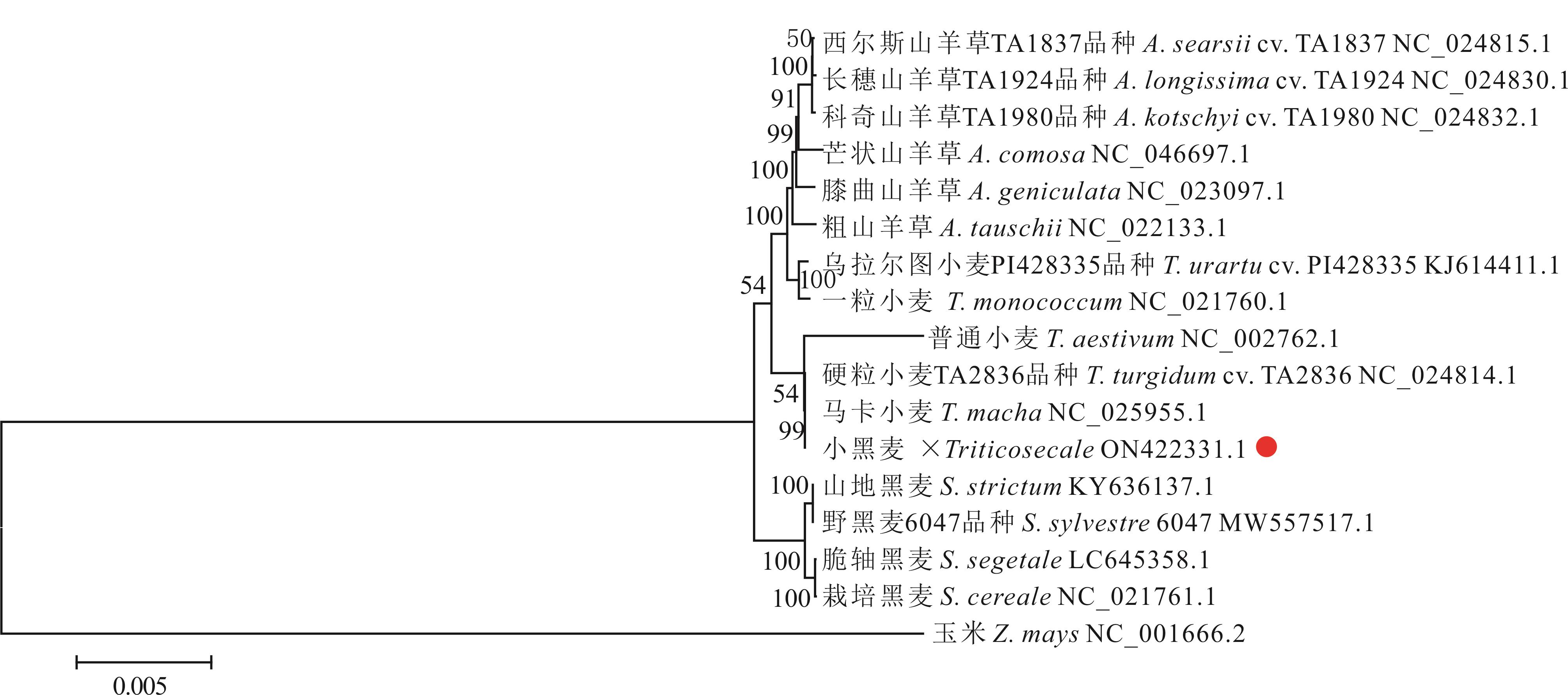
Fig.7 Phylogenetic tree of chloroplast genomes from 17 Poaceae species
| [1] | Mergoum M, Singh P K, Peña R J, et al. Triticale: A “new” crop with old challenges//Handbook of plant breeding. New York: Springer US, 2009: 267-287. |
| [2] | Zhu F. Triticale: Nutritional composition and food uses. Food Chemistry, 2018, 241: 468-479. |
| [3] | Mcgoverin C M, Snyders F, Muller N, et al. A review of triticale uses and the effect of growth environment on grain quality. Journal of the Science of Food and Agriculture, 2011, 91(7): 1155-1165. |
| [4] | Wang W Q, Liu J, Tian X H, et al. Evaluations on the adaptability of ×Triticosecale Wittmack ‘Gannong No.4’ in different regions of Qinghai Province. Acta Agrestia Sinica, 2020, 28(6): 1626-1634. |
| 王伟强, 刘晶, 田新会, 等. ‘甘农4号’小黑麦品种在青海省不同区域的适应性评价. 草地学报, 2020, 28(6): 1626-1634. | |
| [5] | Mergoum M, Sapkota S, ElDoliefy A E F A, et al. Triticale (×Triticosecale Wittmack) breeding//Advances in plant breeding strategies: Cereals. Cham: Springer International Publishing, 2019: 405-451. |
| [6] | Simmonds N W. Evolution of crop plants. London: Longman Group Ltd., 1976. |
| [7] | Hammouda D, Baaziz N, Khalfallah N. Genetic characterization of octoploid (AABBDDRR) and hexaploid (AABBRR) triticales. European Scientific Journal, 2015, 11(9): 284-297. |
| [8] | Wang B L, Chen Q F, Men W Q, et al. Analysis of chromosome composition of hexaploid triticale of different plant heights. Journal of Henan Agricultural University, 2021, 55(4): 631-638. |
| 王贝麟, 陈麒帆, 门文强, 等. 六倍体小黑麦株高分离的染色体构成分析. 河南农业大学学报, 2021, 55(4): 631-638. | |
| [9] | Yang T, Chen X Z, Sui J S, et al. Chromosomic analysis of hexaploid triticale by fluorescence in situ hybridization. Journal of Southwest University (Natural Science Edition), 2019, 41(4): 42-48. |
| 杨婷, 陈星灼, 隋建枢, 等. 六倍体小黑麦染色体的荧光原位杂交分析. 西南大学学报(自然科学版), 2019, 41(4): 42-48. | |
| [10] | Wang S X. A “contest” with saline-alkali land with triticale. Lanzhou: Gansu Daily Publishing House, 2025. |
| 王思璇. “以麦治碱”一场与盐碱地的“较量”. 兰州: 甘肃日报出版社, 2025. | |
| [11] | Moore M J, Soltis P S, Bell C D, et al. Phylogenetic analysis of 83 plastid genes further resolves the early diversification of eudicots. Proceedings of the National Academy of Sciences of the United States of America, 2010, 107(10): 4623-4628. |
| [12] | Tian T, Zhang Y X, Du W H, et al. Comparative genomics of Triticum, Secale, and triticale: Codon usage bias in chloroplast genomes and its implications for evolution and genetic engineering. International Journal of Molecular Sciences, 2025, 26(21): 10266. |
| [13] | Zhang Y Z. Evolutionary patterns analysis of the main morphology and karyotypic ancestral characteristics of the triticeae. Ya’an: Sichuan Agricultural University, 2023. |
| 张瑜卓. 小麦族植物主要形态及核型祖先特征的演化式样分析. 雅安: 四川农业大学, 2023. | |
| [14] | Tian T, Wang H X. Characterization analysis of microsatellite in chloroplast of Syringa reticulata subsp. amurensis. Molecular Plant Breeding, 2024, 22(8): 2501-2507. |
| 田甜, 王宏霞. 暴马丁香的叶绿体微卫星特征分析. 分子植物育种, 2024, 22(8): 2501-2507. | |
| [15] | Cao D. Triticale chloroplast genome. GenBank, ON422331.1, 2022. |
| [16] | Greiner S, Lehwark P, Bock R. Organellar Genome DRAW (OGDRAW) version 1.3.1: Expanded toolkit for the graphical visualization of organellar genomes. Nucleic Acids Research, 2019, 47(W1): W59-W64. |
| [17] | Kurtz S, Choudhuri J V, Ohlebusch E, et al. REPuter: The manifold applications of repeat analysis on a genomic scale. Nucleic Acids Research, 2001, 29(22): 4633-4642. |
| [18] | Beier S, Thiel T, MÜnch T, et al. MISA-web: A web server for microsatellite prediction. Bioinformatics, 2017, 33(16): 2583-2585. |
| [19] | Raubeson L A, Peery R, Chumley T W, et al. Comparative chloroplast genomics: Analyses including new sequences from the angiosperms Nuphar advena and Ranunculus macranthus. BMC Genomics, 2007, 8(1): 174. |
| [20] | Amiryousefi A, Hyvönen J, Poczai P. IRscope: An online program to visualize the junction sites of chloroplast genomes. Bioinformatics, 2018, 34(17): 3030-3031. |
| [21] | Katoh K, Standley D M. MAFFT multiple sequence alignment software version 7: Improvements in performance and usability. Molecular Biology and Evolution, 2013, 30(4): 772-780. |
| [22] | Nguyen L T, Schmidt H A, Von Haeseler A, et al. IQ-TREE: A fast and effective stochastic algorithm for estimating maximum-likelihood phylogenies. Molecular Biology and Evolution, 2015, 32(1): 268-274. |
| [23] | Ebert D, Peakall R O D. Chloroplast simple sequence repeats (cpSSRs): Technical resources and recommendations for expanding cpSSR discovery and applications to a wide array of plant species. Molecular Ecology Resources, 2009, 9(3): 673-690. |
| [24] | Lee J, Kang Y, Shin S C, et al. Combined analysis of the chloroplast genome and transcriptome of the Antarctic vascular plant Deschampsia antarctica Desv. PLoS One, 2014, 9(3): e92501. |
| [25] | Du W H, Tian X H, Liu H C, et al. Industrialization demonstration of high efficient double cropping pattern of Gannong No. 2 triticale in alpine pastoral area and agro-pastoral ecotone of Gansu Province. Lanzhou: Gansu Agricultural University, 2023. |
| 杜文华, 田新会, 刘汉成, 等. 甘肃省高寒牧区和农牧交错区甘农2号小黑麦一年两作高效种植模式产业化示范. 兰州: 甘肃农业大学, 2023. | |
| [26] | Wicke S, Schneeweiss G M, Depamphilis C W, et al. The evolution of the plastid chromosome in land plants: Gene content, gene order, gene function. Plant Molecular Biology, 2011, 76(3): 273-297. |
| [27] | Naver H, Boudreau E, Rochaix J D. Functional studies of Ycf3: Its role in assembly of photosystemⅠand interactions with some of its subunits. The Plant Cell, 2001, 13(12): 2731-2745. |
| [28] | Boudreau E, Takahashi Y, Lemieux C, et al. The chloroplast ycf3 and ycf4 open reading frames of Chlamydomonas reinhardtii are required for the accumulation of the photosystemⅠcomplex. The EMBO Journal, 1997, 16(20): 6095-6104. |
| [29] | Irimia M, Roy S W. Spliceosomal introns as tools for genomic and evolutionary analysis. Nucleic Acids Research, 2008, 36(5): 1703-1712. |
| [30] | Guo S, Guo L L, Zhao W, et al. Complete chloroplast genome sequence and phylogenetic analysis of Paeonia ostii. Molecules, 2018, 23(2): 246. |
| [31] | Goldbecker E S, de Vries J. Systems biology of streptophyte cell evolution. Annual Review of Plant Biology, 2025, 76(1): 493-522. |
| [1] | Zheng LI, Hai-ying HU, Jian LAN, Li DING, Wen-bo WEI, Yu-lian LI, Qiao-li MA. Evaluation and screening of salt tolerance of triticale germplasm resources at the germination stage [J]. Acta Prataculturae Sinica, 2026, 35(5): 225-238. |
| [2] | Yi-yin ZHANG, Bin WANG, Teng-fei WANG, Jian LAN, Hai-ying HU. Effects of intercropping triticale with alfalfa on system yield, resource utilization, and alfalfa seed yield [J]. Acta Prataculturae Sinica, 2025, 34(8): 43-53. |
| [3] | Xian-fang ZHANG, Gang NIE, Si-yuan HUANG, Shuai YU, Su-tian ZUO, Xin-quan ZHANG. Identification of hybrids and analysis of phenotypic variation in the F1 generation of Pennisetum purpureum based on SSR markers [J]. Acta Prataculturae Sinica, 2025, 34(11): 114-124. |
| [4] | Chang-ying GUO, Wen-hua DU. Differences in inflorescence and spike characteristics between triticale and its allied species [J]. Acta Prataculturae Sinica, 2025, 34(11): 205-216. |
| [5] | Zheng-yan LI, Zhi-ming XU, Yan LI, Yang LI. Effects of short-term continuous cropping of alfalfa on the growth and soil microenvironment of subsequent sorghum-sudan grass hybrid crops in the Jianghuai area [J]. Acta Prataculturae Sinica, 2024, 33(9): 155-168. |
| [6] | Fang WANG, Shi-zi ZHANG, Rong-hui DAI, Li-yun YANG, Li-juan LUO, Ling-yan JIANG. Screening and verification of SgMPK6-interacting proteins of Stylosanthes [J]. Acta Prataculturae Sinica, 2024, 33(7): 84-93. |
| [7] | Meng WANG, Xue-li LU, Ju-ying WANG, Meng-chao ZHANG, Yi-ru SONG, Chen MENG, Li ZHANG, Zong-chang XU. Evaluation and screening of the salt tolerance of triticale germplasm at the germination and seedling stages [J]. Acta Prataculturae Sinica, 2024, 33(5): 58-68. |
| [8] | Ping MU, Ji-kuan CHAI, Wei-juan SU, Hai-long ZHANG, Gui-qin ZHAO. Phenotype and genetic variation analysis of forward and reverse hybrid progeny from different oat crosses [J]. Acta Prataculturae Sinica, 2024, 33(4): 73-86. |
| [9] | Yi-yin ZHANG, Xue-ying LI, Bin WANG, Ke-chen SONG, Jian LAN, Hai-ying HU. Effects of salt stress on water use efficiency and osmotic adjustment of seedlings of different triticale strains [J]. Acta Prataculturae Sinica, 2024, 33(4): 87-98. |
| [10] | Hai-wang YUE, Jian-wei WEI, Guang-cai WANG, Peng-cheng LIU, Shu-ping CHEN, Jun-zhou BU. Comprehensive evaluation of silage maize hybrids in the Huanghuaihai plain based on mega-environments delineated using envirotyping techniques [J]. Acta Prataculturae Sinica, 2024, 33(3): 120-138. |
| [11] | Xiang HUANG, Meng-yao HE, Zi-xuan WANG, Guang-ming CHU, Ping JIANG. Chloroplast genome characteristics of Physocarpus opulifolius ‘Diabolo’ and phylogenetic analysis of the subfamily Spiraeoideae [J]. Acta Prataculturae Sinica, 2024, 33(3): 161-173. |
| [12] | Wei-hao DOU, Gui-long SONG, Lie-bao HAN, Jia-bao CHEN, Xiao-hui YANG, Yong-qiang QIAN, Bo-kun ZOU, Yu-feng CHEN, Xiao-hong LIANG. Effects of hybrid turf strengthening methods on the quality and safety performance of football field turf [J]. Acta Prataculturae Sinica, 2023, 32(8): 104-114. |
| [13] | Rui-jie YANG, Shu-qin HE, Shu-feng ZHOU, Jing-yue YANG, Yu-xian JIN, Zi-cheng ZHENG. Root regulation of soil scourability in hybrid sorghum grass during the growing period [J]. Acta Prataculturae Sinica, 2023, 32(7): 149-159. |
| [14] | Jia-qi DONG, Yan-ting YANG, Wen-qiang FAN, Jia-ni WANG, Feng-ling SHI. Identification of Medicago ruthenica hybrids and heterosis analysis of main agronomic traits in F1 and F2 [J]. Acta Prataculturae Sinica, 2023, 32(7): 229-239. |
| [15] | Xiao-dong YU, Hao-yang YU, Xu YANG, Dong-xu ZHAO, Lin-gang ZHANG. Difference analysis of chloroplast genome sequence between two ecotypes of Leymus chinensis in Inner Mongolia [J]. Acta Prataculturae Sinica, 2023, 32(7): 72-84. |
| Viewed | ||||||
|
Full text |
|
|||||
|
Abstract |
|
|||||
