
ISSN 1004-5759 CN 62-1105/S
Acta Prataculturae Sinica ›› 2026, Vol. 35 ›› Issue (11): 13-23.DOI: 10.11686/cyxb2025464
Previous Articles Next Articles
Yan CHEN1( ), Yong-gang YAN2, Xiang-jun ZHAO2, Zhi-gang LI1,3()
Received:2025-11-11
Revised:2026-02-04
Online:2026-11-20
Published:2026-10-12
Contact:
Zhi-gang LI
Yan CHEN, Yong-gang YAN, Xiang-jun ZHAO, Zhi-gang LI. Impacts of grazing exclusion and reseeding on vegetation biomass, soil organic carbon, and soil particle characteristics in a degraded desert steppe[J]. Acta Prataculturae Sinica, 2026, 35(11): 13-23.
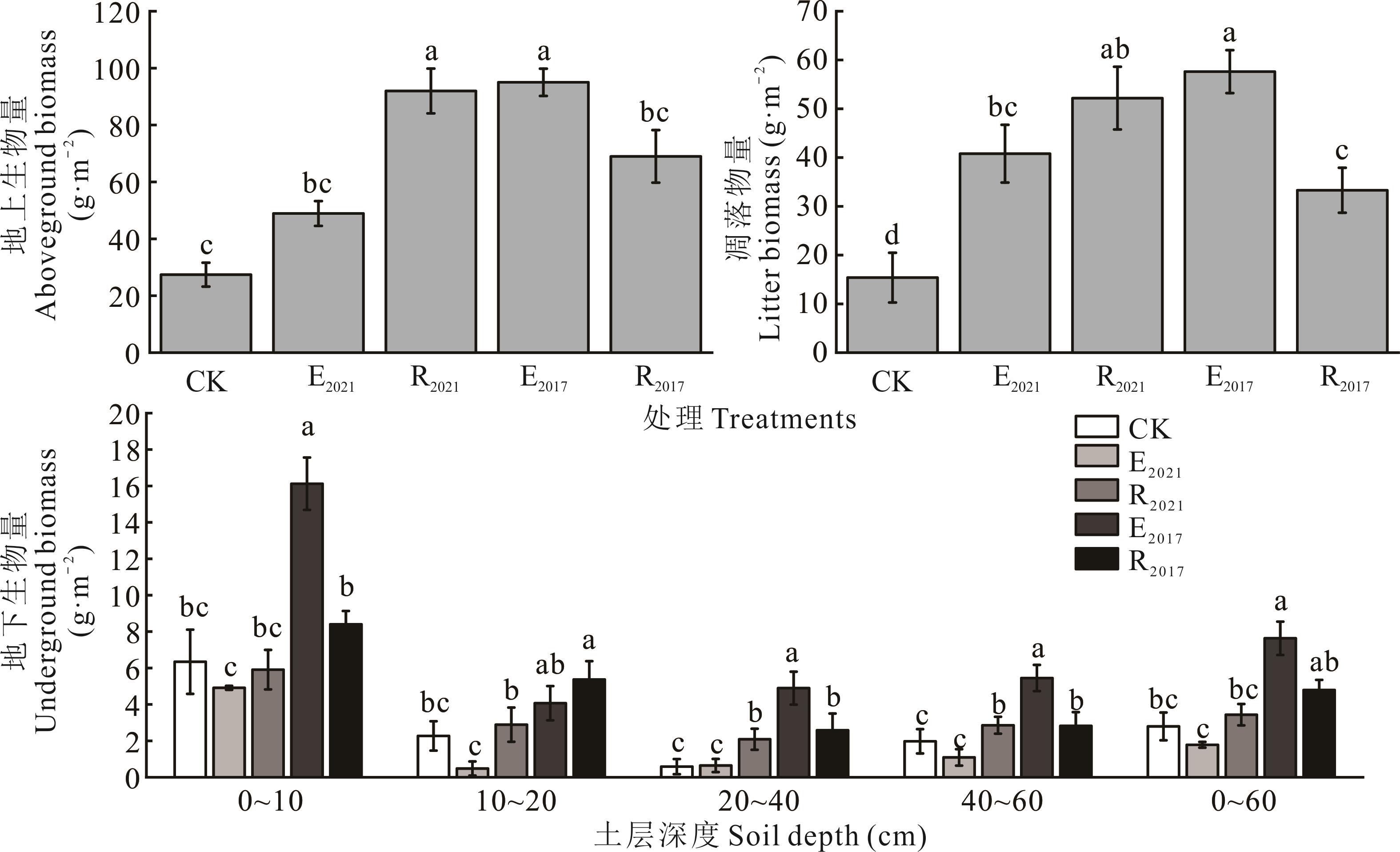
Fig.1 Changes of aboveground biomass, litter biomass, and underground biomass among different treatments
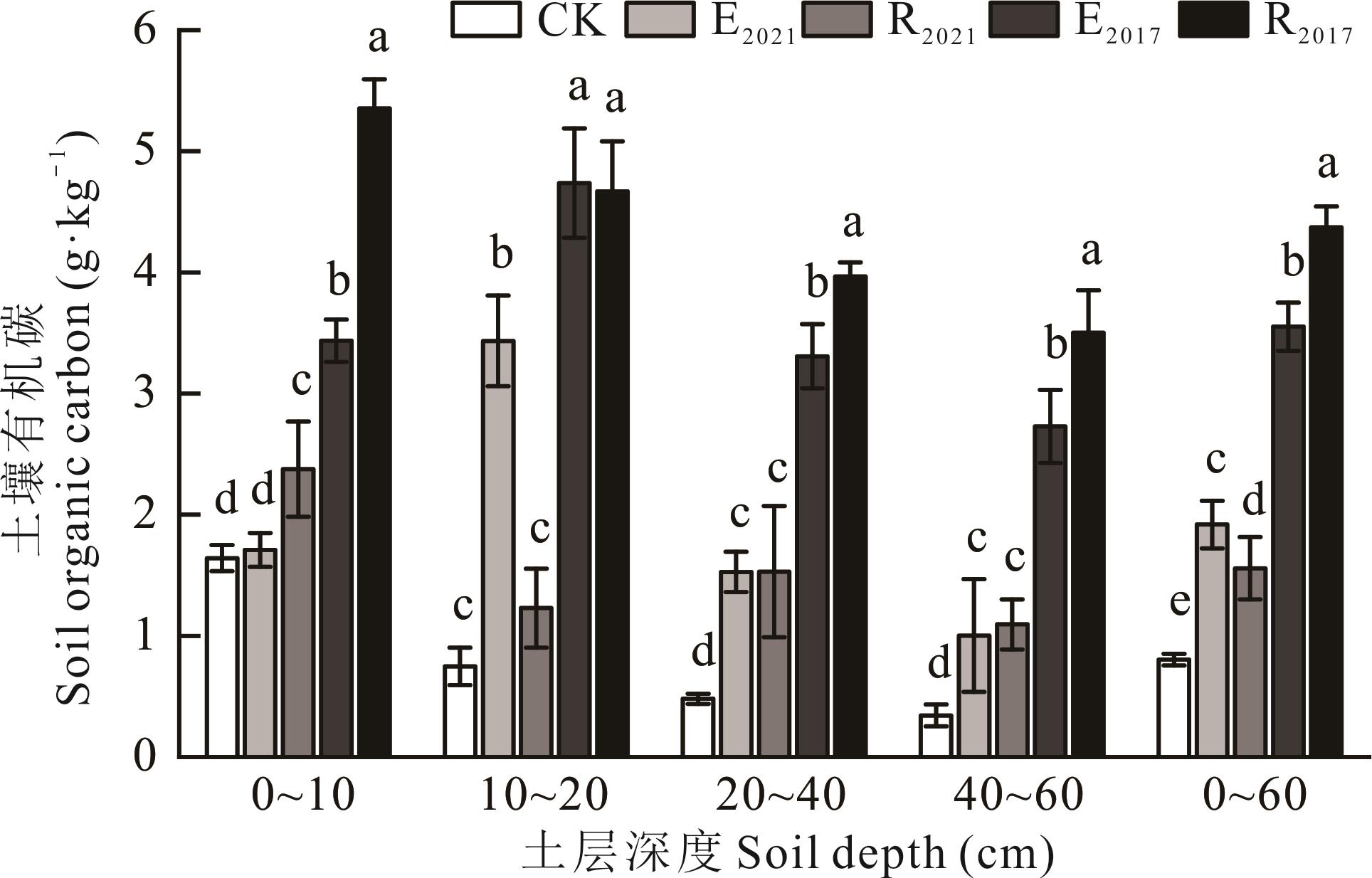
Fig.2 Changes of soil organic carbon among different treatments
土层深度 Soil depth (cm) | 处理 Treatments | 中砂粒 Medium sand (250~500 μm) | 细砂粒 Fine sand (100~250 μm) | 极细砂粒 Very fine sand (50~100 μm) | 粉黏粒 Silt+clay (<50 μm) |
|---|---|---|---|---|---|
| 0~10 | CK | 2.33±0.21ab | 54.99±6.42a | 37.11±3.72a | 5.57±2.89a |
| E2021 | 3.76±2.25ab | 55.18±3.32a | 35.44±1.07b | 5.63±1.84a | |
| R2021 | 4.36±2.04a | 58.32±3.87a | 34.41±5.27b | 2.92±0.70a | |
| E2017 | 1.45±0.99b | 50.97±7.88a | 40.08±5.04a | 7.51±4.44a | |
| R2017 | 2.97±0.80ab | 52.80±7.38a | 37.42±4.80a | 6.81±3.64a | |
| 10~20 | CK | 2.39±1.33a | 59.15±2.20a | 36.25±3.34b | 2.22±0.60c |
| E2021 | 2.33±0.63a | 59.81±5.97a | 35.48±4.81b | 2.38±0.76c | |
| R2021 | 2.36±2.04a | 59.28±4.03a | 35.59±5.11b | 2.77±0.98c | |
| E2017 | 1.12±0.95b | 45.63±3.96b | 40.47±3.41a | 12.78±1.45a | |
| R2017 | 1.15±1.08b | 45.04±3.95b | 44.03±5.91a | 9.79±1.30b | |
| 20~40 | CK | 6.42±2.22a | 62.49±1.78a | 28.67±3.41b | 2.43±0.47c |
| E2021 | 2.27±0.26b | 67.68±4.27a | 28.57±3.80b | 1.49±0.31c | |
| R2021 | 2.56±2.11b | 59.75±5.80a | 35.93±6.62a | 1.75±1.02c | |
| E2017 | 3.27±1.73b | 41.47±5.00b | 37.39±2.79a | 17.88±3.14a | |
| R2017 | 1.74±0.74b | 49.02±2.80b | 41.35±0.67a | 7.89±2.97b | |
| 40~60 | CK | 1.72±0.16a | 56.06±1.98b | 38.17±2.00a | 4.05±0.51c |
| E2021 | 4.43±1.78a | 65.67±4.58a | 27.07±3.06b | 2.84±0.881c | |
| R2021 | 2.05±0.43a | 57.56±4.91b | 37.95±4.35a | 2.45±0.85c | |
| E2017 | 5.02±4.26a | 37.72±1.68d | 38.22±2.76a | 19.04±2.60a | |
| R2017 | 3.99±1.27a | 44.21±5.24c | 37.52±4.18a | 14.28±2.76b |
Table 1 Soil particle compositions among different treatments (%)
土层深度 Soil depth (cm) | 处理 Treatments | 中砂粒 Medium sand (250~500 μm) | 细砂粒 Fine sand (100~250 μm) | 极细砂粒 Very fine sand (50~100 μm) | 粉黏粒 Silt+clay (<50 μm) |
|---|---|---|---|---|---|
| 0~10 | CK | 2.33±0.21ab | 54.99±6.42a | 37.11±3.72a | 5.57±2.89a |
| E2021 | 3.76±2.25ab | 55.18±3.32a | 35.44±1.07b | 5.63±1.84a | |
| R2021 | 4.36±2.04a | 58.32±3.87a | 34.41±5.27b | 2.92±0.70a | |
| E2017 | 1.45±0.99b | 50.97±7.88a | 40.08±5.04a | 7.51±4.44a | |
| R2017 | 2.97±0.80ab | 52.80±7.38a | 37.42±4.80a | 6.81±3.64a | |
| 10~20 | CK | 2.39±1.33a | 59.15±2.20a | 36.25±3.34b | 2.22±0.60c |
| E2021 | 2.33±0.63a | 59.81±5.97a | 35.48±4.81b | 2.38±0.76c | |
| R2021 | 2.36±2.04a | 59.28±4.03a | 35.59±5.11b | 2.77±0.98c | |
| E2017 | 1.12±0.95b | 45.63±3.96b | 40.47±3.41a | 12.78±1.45a | |
| R2017 | 1.15±1.08b | 45.04±3.95b | 44.03±5.91a | 9.79±1.30b | |
| 20~40 | CK | 6.42±2.22a | 62.49±1.78a | 28.67±3.41b | 2.43±0.47c |
| E2021 | 2.27±0.26b | 67.68±4.27a | 28.57±3.80b | 1.49±0.31c | |
| R2021 | 2.56±2.11b | 59.75±5.80a | 35.93±6.62a | 1.75±1.02c | |
| E2017 | 3.27±1.73b | 41.47±5.00b | 37.39±2.79a | 17.88±3.14a | |
| R2017 | 1.74±0.74b | 49.02±2.80b | 41.35±0.67a | 7.89±2.97b | |
| 40~60 | CK | 1.72±0.16a | 56.06±1.98b | 38.17±2.00a | 4.05±0.51c |
| E2021 | 4.43±1.78a | 65.67±4.58a | 27.07±3.06b | 2.84±0.881c | |
| R2021 | 2.05±0.43a | 57.56±4.91b | 37.95±4.35a | 2.45±0.85c | |
| E2017 | 5.02±4.26a | 37.72±1.68d | 38.22±2.76a | 19.04±2.60a | |
| R2017 | 3.99±1.27a | 44.21±5.24c | 37.52±4.18a | 14.28±2.76b |
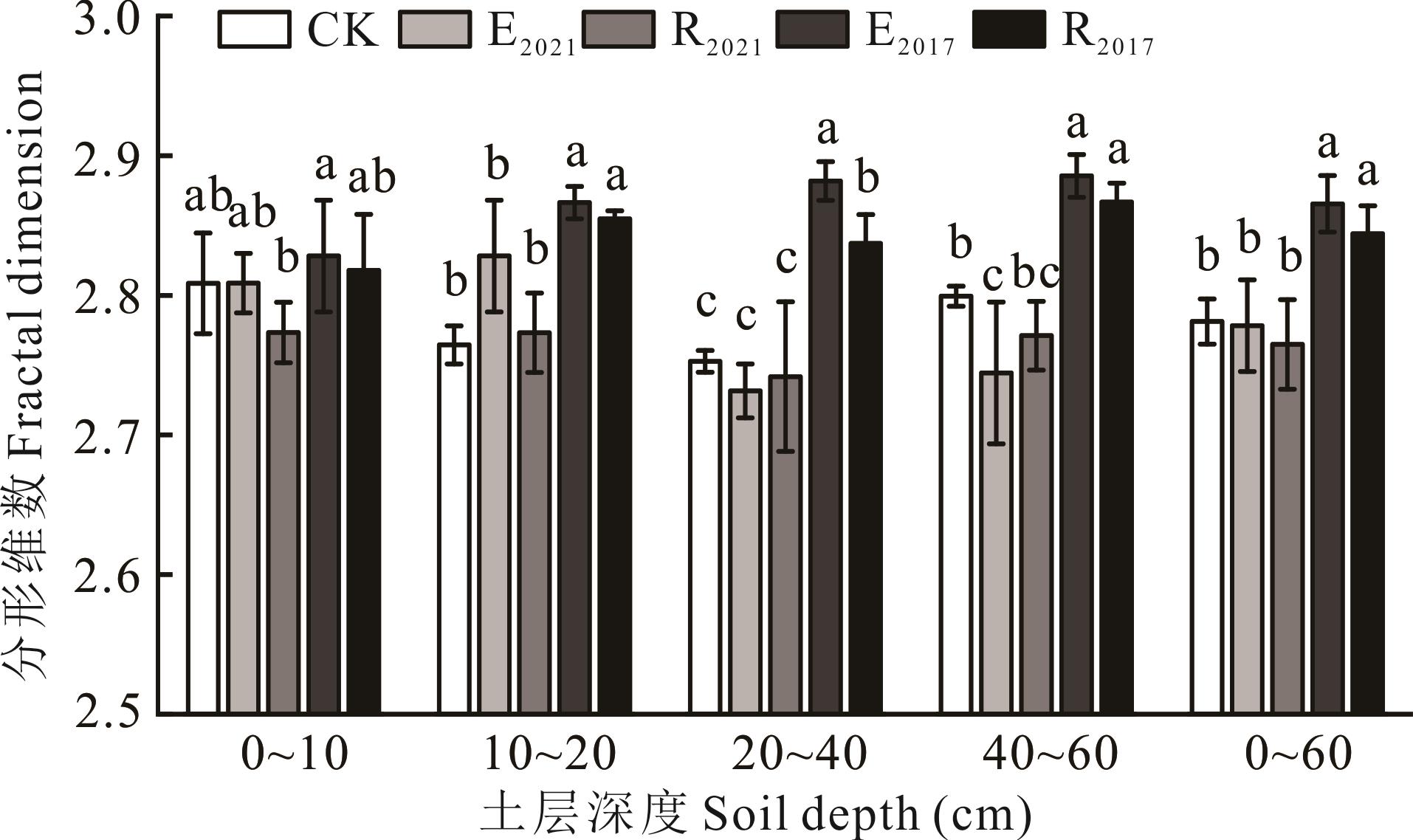
Fig.3 Fractal dimension characteristics of soil particles among different treatments

Fig.4 Correlation analysis between soil particle composition and fractal dimension
土壤颗粒 Soil particles | 土层深度 Soil depth (cm) | 地上生物量 Aboveground biomass | 凋落物量 Litter biomass | 地下生物量 Underground biomass | 土壤有机碳 Soil organic carbon |
|---|---|---|---|---|---|
中砂粒 Medium sand | 0~10 | -0.001 | 0.117 | -0.165 | -0.165 |
| 10~20 | -0.239 | -0.160 | -0.365 | -0.365 | |
| 20~40 | -0.446* | -0.469* | -0.446* | -0.446* | |
| 40~60 | 0.158 | 0.207 | 0.310 | 0.310 | |
细砂粒 Fine sand | 0~10 | -0.046 | -0.037 | -0.246 | -0.246 |
| 10~20 | -0.429 | -0.264 | -0.751** | -0.751** | |
| 20~40 | -0.589** | -0.350 | -0.725** | -0.725** | |
| 40~60 | -0.475* | -0.236 | -0.741** | -0.741** | |
极细砂粒 Very fine sand | 0~10 | 0.078 | 0.033 | 0.205 | 0.205 |
| 10~20 | 0.201 | 0.070 | 0.506* | 0.506* | |
| 20~40 | 0.553* | 0.268 | 0.660** | 0.660** | |
| 40~60 | 0.248 | -0.040 | 0.192 | 0.192 | |
粉黏粒 Silt+clay | 0~10 | -0.018 | -0.037 | 0.277 | 0.277 |
| 10~20 | 0.573** | 0.418 | 0.812** | 0.812** | |
| 20~40 | 0.554* | 0.454* | 0.669** | 0.669** | |
| 40~60 | 0.456* | 0.293 | 0.831** | 0.831** |
Table 2 Correlation analysis between soil particles composition and plant biomass and soil organic carbon in different soil depths
土壤颗粒 Soil particles | 土层深度 Soil depth (cm) | 地上生物量 Aboveground biomass | 凋落物量 Litter biomass | 地下生物量 Underground biomass | 土壤有机碳 Soil organic carbon |
|---|---|---|---|---|---|
中砂粒 Medium sand | 0~10 | -0.001 | 0.117 | -0.165 | -0.165 |
| 10~20 | -0.239 | -0.160 | -0.365 | -0.365 | |
| 20~40 | -0.446* | -0.469* | -0.446* | -0.446* | |
| 40~60 | 0.158 | 0.207 | 0.310 | 0.310 | |
细砂粒 Fine sand | 0~10 | -0.046 | -0.037 | -0.246 | -0.246 |
| 10~20 | -0.429 | -0.264 | -0.751** | -0.751** | |
| 20~40 | -0.589** | -0.350 | -0.725** | -0.725** | |
| 40~60 | -0.475* | -0.236 | -0.741** | -0.741** | |
极细砂粒 Very fine sand | 0~10 | 0.078 | 0.033 | 0.205 | 0.205 |
| 10~20 | 0.201 | 0.070 | 0.506* | 0.506* | |
| 20~40 | 0.553* | 0.268 | 0.660** | 0.660** | |
| 40~60 | 0.248 | -0.040 | 0.192 | 0.192 | |
粉黏粒 Silt+clay | 0~10 | -0.018 | -0.037 | 0.277 | 0.277 |
| 10~20 | 0.573** | 0.418 | 0.812** | 0.812** | |
| 20~40 | 0.554* | 0.454* | 0.669** | 0.669** | |
| 40~60 | 0.456* | 0.293 | 0.831** | 0.831** |
土层深度 Soil depth (cm) | 地上生物量 Aboveground biomass | 凋落物量 Litter biomass | 地下生物量 Underground biomass | 土壤有机碳 Soil organic carbon |
|---|---|---|---|---|
| 0~10 | -0.080 | -0.088 | 0.450* | 0.241 |
| 10~20 | 0.534* | 0.363 | 0.652** | 0.783** |
| 20~40 | 0.475* | 0.289 | 0.611** | 0.687** |
| 40~60 | 0.363 | 0.134 | 0.627** | 0.590** |
Table 3 Correlation analysis between soil particles fractal dimension and plant biomass and soil organic carbon in different soil depths
土层深度 Soil depth (cm) | 地上生物量 Aboveground biomass | 凋落物量 Litter biomass | 地下生物量 Underground biomass | 土壤有机碳 Soil organic carbon |
|---|---|---|---|---|
| 0~10 | -0.080 | -0.088 | 0.450* | 0.241 |
| 10~20 | 0.534* | 0.363 | 0.652** | 0.783** |
| 20~40 | 0.475* | 0.289 | 0.611** | 0.687** |
| 40~60 | 0.363 | 0.134 | 0.627** | 0.590** |
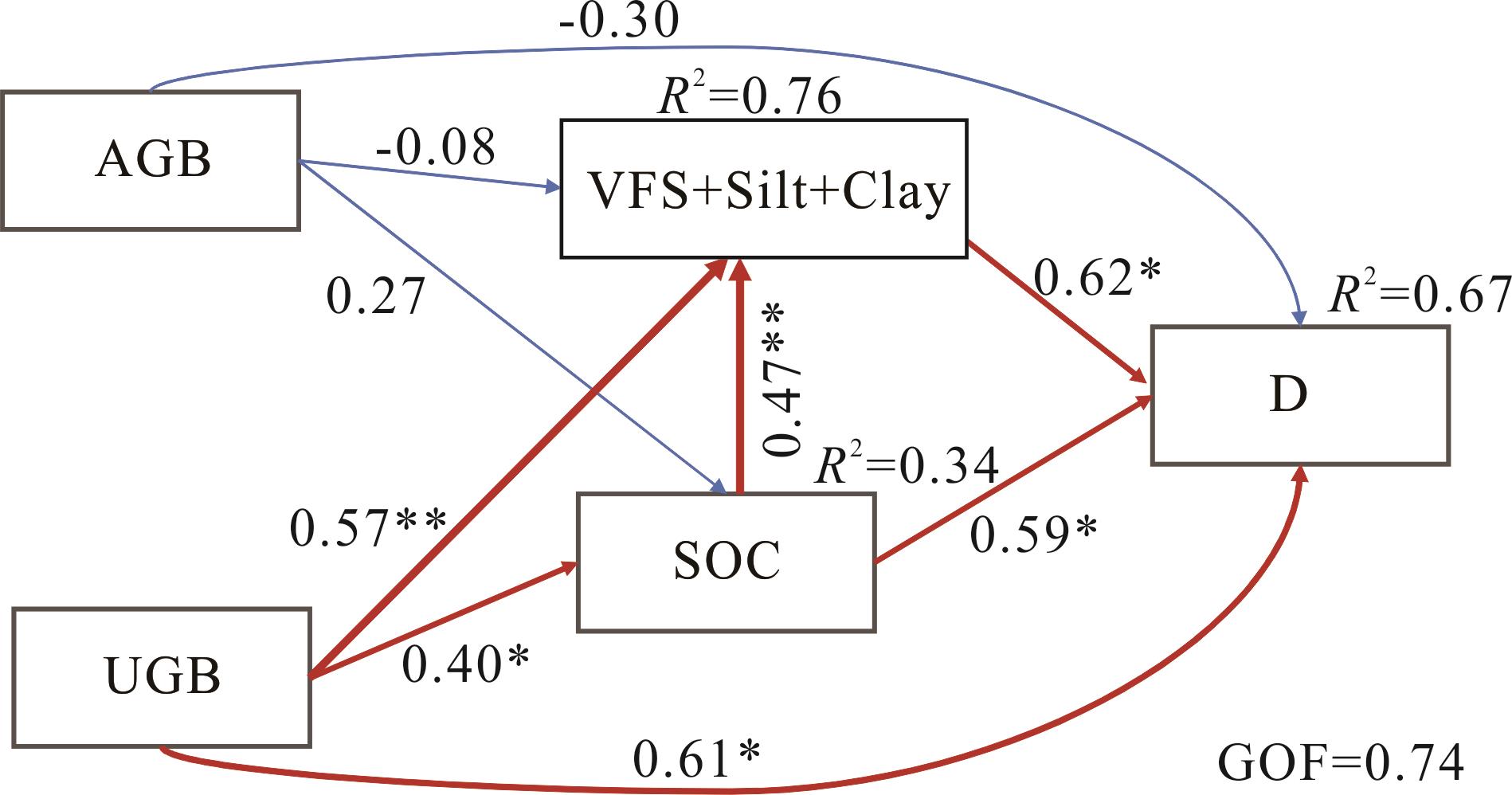
Fig.5 The partial least squares path model showing effects of aboveground biomass, underground biomass and soil organic carbon on soil particle composition and fractal dimension
| [1] | Wang T, Chen L, Xie Y L, et al. Responses of rhizosphere bacteria to grazing in alpine meadow of Henan County, Qinghai Province. Acta Agrestia Sinica, 2025, 33(10): 3263-3271. |
| 王添, 陈兰, 谢永丽, 等. 青海省河南县高寒草甸根际土壤细菌对放牧的响应. 草地学报, 2025, 33(10): 3263-3271. | |
| [2] | Tian X. A report on E-C translation of current state and future impacts of climate change on biodiversity (Excerpts) from the perspective of translation skopos theory. Lanzhou: Lanzhou Jiaotong University, 2024. |
| 田雪. 目的论视角下《气候变化对生物多样性的影响: 现状与未来》(节选)英汉翻译实践报告. 兰州: 兰州交通大学, 2024. | |
| [3] | Zhang G R, Wang X Y, Lyu J L, et al. Impact and mechanisms of grazing exclusion on soil organic carbon dynamics in grasslands. Acta Ecologica Sinica, 2025, 45(16): 8243-8252. |
| 张光茹, 王星宇, 吕佳霖, 等. 围栏封育对草地土壤有机碳动态的影响机制研究进展. 生态学报, 2025, 45(16): 8243-8252. | |
| [4] | Nan W L, Xie Y Z, Peng W D, et al. Restoration effects of reseeding and enclosure on the vegetation of different degraded desert steppes. Pratacultural Science, 2024, 41(5): 1068-1077. |
| 南万璐, 谢应忠, 彭文栋, 等. 补播与围封对不同退化程度荒漠草地植被的恢复效果. 草业科学, 2024, 41(5): 1068-1077. | |
| [5] | Yu S, Tao L B, Xu D M, et al. Effects of enclosure on the soil organic carbon and its active components in desert steppe grassland. Acta Prataculturae Sinica, 2019, 28(2): 190-196. |
| 于双, 陶利波, 许冬梅, 等. 封育对荒漠草原土壤有机碳及其活性组分的影响. 草业学报, 2019, 28(2): 190-196. | |
| [6] | Yan B L, Wang Z W, Qu Z Q, et al. Effects of enclosure on carbon density of plant-soil system in typical steppe and desert steppe in Nei Mongol, China. Chinese Journal of Plant Ecology, 2018, 42(3): 327-336. |
| 闫宝龙, 王忠武, 屈志强, 等. 围封对内蒙古典型草原与荒漠草原植被-土壤系统碳密度的影响. 植物生态学报, 2018, 42(3): 327-336. | |
| [7] | Wang L Y, Zhou G N, Zhu X Y, et al. Effects of litter on soil organic carbon and microbial functional diversity. Acta Ecologica Sinica, 2021, 41(7): 2709-2718. |
| 王利彦, 周国娜, 朱新玉, 等. 凋落物对土壤有机碳与微生物功能多样性的影响. 生态学报, 2021, 41(7): 2709-2718. | |
| [8] | Zhang Y F, Wang X, Pan H Z, et al. Long-term enclosure restoration effect and their environmental dependencies in desert steppes of northern China. Acta Ecologica Sinica, 2025, 45(17): 8529-8543. |
| 张艺斐, 王兴, 潘海珠, 等. 中国北方荒漠草原长期围栏封育恢复效应及其环境依赖性. 生态学报, 2025, 45(17): 8529-8543. | |
| [9] | Bao P A, Wen Z L, Wang Y, et al. Effects of different forage reseeding patterns on plant community structure and soil characteristics in desert steppe. Acta Prataculturae Sinica, 2025, 34(10): 62-73. |
| 鲍平安, 文志林, 王炎, 等. 不同牧草补播模式对荒漠草原植物群落结构及土壤特性的影响. 草业学报, 2025, 34(10): 62-73. | |
| [10] | Zhang Y J, Zhou J Q, Yang G W, et al. Theory and application of no-tillage reseeding in degraded grasslands. Chinese Science Bulletin, 2020, 65(16): 1546-1555. |
| 张英俊, 周冀琼, 杨高文, 等. 退化草原植被免耕补播修复理论与实践. 科学通报, 2020, 65(16): 1546-1555. | |
| [11] | Wang X, Yu S, Xu D M, et al. Effects of different restoration measures on soil carbon and nitrogen and their component fractions in a degraded desert steppe. Acta Prataculturae Sinica, 2022, 31(1): 26-35. |
| 王星, 于双, 许冬梅, 等. 不同恢复措施对退化荒漠草原土壤碳氮及其组分特征的影响. 草业学报, 2022, 31(1): 26-35. | |
| [12] | Lynch J P. Root phenes for enhanced soil exploration and phosphorus acquisition: Tools for future crops. Plant Physiology, 2011, 156: 1041-1049. |
| [13] | Wang B, Lin X K, Feng Z R, et al. Effects of reseeded native forage species on soil water holding capacity and vegetation biomass in a desert steppe. Pratacultural Science, 2023, 40(9): 2247-2256. |
| 王博, 蔺雄奎, 冯占荣, 等. 补播乡土牧草对荒漠草地土壤持水性及植被生物量的影响. 草业科学, 2023, 40(9): 2247-2256. | |
| [14] | Dong Y W, Wang B, Lin X K, et al. Impacts of reseeding native grass and a legume on soil microbial community structure in the desert steppe of Ningxia. Pratacultural Science, 2024, 41(5): 1099-1111. |
| 董月唯, 王博, 蔺雄奎, 等. 补播乡土禾豆牧草对宁夏荒漠草地土壤微生物群落结构的影响. 草业科学, 2024, 41(5): 1099-1111. | |
| [15] | Guo Z N, Tan J G, Sun S X, et al. Study on fractal dimension and nutrient characteristics in different grazing intensity. Acta Agrestia Sinica, 2024, 32(12): 3698-3705. |
| 郭振宁, 镡建国, 孙世贤, 等. 不同放牧强度荒漠草原土壤粒径分形维数和养分特征研究. 草地学报, 2024, 32(12): 3698-3705. | |
| [16] | Zhang H D, Zhou S L, Li Q, et al. Soil particle composition and pore characteristics in the root zone of date palm in the dry zone under different irrigation methods. Transactions of the Chinese Society of Agricultural Engineering, 2024, 40(24): 98-105. |
| 张华东, 周少梁, 李侨, 等. 不同灌溉方式下旱区枣树根区土壤颗粒组成和孔隙特征. 农业工程学报, 2024, 40(24): 98-105. | |
| [17] | Zhao M Y, Zhao W W, Liu Y X. Comparative analysis of soil particle size distribution and its influence factors in different scales: a case study in the Loess Hilly-gully area. Acta Ecologica Sinica, 2015, 35(14): 4625-4632. |
| 赵明月, 赵文武, 刘源鑫. 不同尺度下土壤粒径分布特征及其影响因子-以黄土丘陵沟壑区为例. 生态学报, 2015, 35(14): 4625-4632. | |
| [18] | Ma X C, Jin W H, Tu J Y, et al. Impact of shifts among mycorrhizal types on soil aggregate composition and characteristics. Journal of Zhejiang A&F University, 2023, 40(6): 1149-1157. |
| 马行聪, 金文豪, 屠嘉莹, 等. 不同优势菌根类型转变对土壤团聚体组成及性状的影响. 浙江农林大学学报, 2023, 40(6): 1149-1157. | |
| [19] | Jiang H X, Zhou Y, Hu K, et al. Effects of different grazing times on soil particle composition and fractal dimension in the desert steppe. Acta Prataculturae Sinica, 2024, 33(6): 17-28. |
| 姜海鑫, 周瑶, 胡科, 等. 不同放牧时间对荒漠草原土壤颗粒组成及分形维数的影响. 草业学报, 2024, 33(6): 17-28. | |
| [20] | Shi J C, Jie D M, Liu L D, et al. The preliminary research on the fractal characteristics of Phragmites communis phytolith in northeast China. Quaternary Sciences, 2017, 37(6): 1444-1455. |
| 史吉晨, 介冬梅, 刘利丹, 等. 东北地区芦苇植硅体分形特征初步研究. 第四纪研究, 2017, 37(6): 1444-1455. | |
| [21] | Yoshihara Y, Tatsuno Y, Miyasaka K, et al. Can complementarity in water use help explain diversity-productivity relationships in semi-arid grasslands? Journal of Arid Environments, 2020, 173: 103994. |
| [22] | Bao S D. Soil agricultural chemistry analysis. Beijing: China Agriculture Press, 2013. |
| 鲍士旦. 土壤农化分析. 北京: 中国农业出版社, 2013. | |
| [23] | Yang P L, Luo Y P, Shi Y C. Soil fractal characteristics characterized by the weight distribution of particle size. Chinese Science Bulletin, 1993, 38(20): 1896-1899. |
| 杨培岭, 罗远培, 石元春. 用粒径的重量分布表征的土壤分形特征. 科学通报, 1993, 38(20): 1896-1899. | |
| [24] | Huang F, Liu J, Wang B, et al. The impacts of shrub branch covering on soil respiration in a desert steppe of Ningxia. Acta Ecologica Sinica, 2025, 45(7): 3218-3228. |
| 黄飞, 刘静, 王博, 等. 灌枝覆盖对宁夏荒漠草地土壤呼吸的影响. 生态学报, 2025, 45(7): 3218-3228. | |
| [25] | Wang B, Liu J, Li Z G, et al. The contributions of root morphological characteristics and soil property to soil infiltration in a reseeded desert steppe. Catena, 2023, 225: 107020. |
| [26] | Cai A D, Zhang W J, Shen X R, et al. Carbon sequestration efficiency of different soil particle sizes under long-term fertilization. Journal of Plant Nutrition and Fertilizers, 2015, 21(6): 1431-1438. |
| 蔡岸冬, 张文菊, 申小冉, 等. 长期施肥土壤不同粒径颗粒的固碳效率. 植物营养与肥料学报, 2015, 21(6): 1431-1438. | |
| [27] | Xu X. The interaction network of “Rhizosphere-bulk-rooting zone” soil microbiota-Taking Rhododendron lapponicum in Qilian Mountains as an example. Lanzhou: Northwest Normal University, 2024. |
| 徐笑. “根际-非根际-根围”土壤微型生物互作网络——以祁连山高山杜鹃为例. 兰州: 西北师范大学, 2024. | |
| [28] | Lin X K, Schneider R L, Morreale S J, et al. The impacts of shrub branch shelter and nitrogen addition on soil microbial activity and plant litter decomposition in a desert steppe. Applied Soil Ecology, 2025, 207: 105956. |
| [1] | Shi-lu HU, Jin-yan FENG, Hao LUO, Ning RAO, Sheng-chao CUI, Ming-jie LI, Tian-shan ZHA, Wei FENG. Characteristics and driving factors of plant community changes under enclosure in the desert grassland ecosystem of Yanchi, Ningxia [J]. Acta Prataculturae Sinica, 2026, 35(7): 32-45. |
| [2] | Jiang-ping MA, Li-juan CAO, Wen-wen ZHANG, Meng-yu ZHAO, Teng-fei WANG, Yi-yin ZHANG, Bin WANG, Jia-wang LI, Xiao-bing WANG, Jian LAN. Effects of reseeding and phosphorus application on productivity and soil in improvement of degraded alfalfa stands [J]. Acta Prataculturae Sinica, 2026, 35(7): 92-104. |
| [3] | Wen-shuai FAN, Xing WANG, Yi ZHANG, Yi-fei ZHANG, Nai-ping SONG, Xin-guo YANG, Ying-ying LI. Restoration effect of shrub vegetation and its dependence on the environment in a desert grassland area of northern China [J]. Acta Prataculturae Sinica, 2026, 35(5): 36-47. |
| [4] | Xue-qin YANG, Jian-ping LI, Jing CHEN, Jia-li LIAN, Cui HAN, Xu LUO, Ying ZHAO. The impact of precipitation changes on carbon and nitrogen storage and retention rates in desert steppe ecosystems [J]. Acta Prataculturae Sinica, 2026, 35(5): 48-60. |
| [5] | Jia-li LIAN, Jing CHEN, Xue-qing YANG, Ying ZHAO, Xu LUO, Cui HAN, Jian-ping LI. Effects of precipitation changes on the soil organic carbon distribution and stability of organic carbon pool in desert steppe [J]. Acta Prataculturae Sinica, 2026, 35(5): 85-98. |
| [6] | Yu-yue LI, Hao-nan WEI, Xing-zhong MA, Hai-xin JIANG, Ming-he NIE, Yao ZHOU, Cheng-jiang DAI, Xiao-wu TIAN, Guo-hui WANG, Hong-bin MA. Effects of rotational grazing on characteristics of the soil seed bank in desert steppe [J]. Acta Prataculturae Sinica, 2026, 35(4): 1-13. |
| [7] | Dong-ya LIU, Yan YANG, Jing LIU, Bo WANG, Zhi-gang LI. Effects of short-term sheep manure return on soil quality of desert steppe [J]. Acta Prataculturae Sinica, 2026, 35(2): 28-39. |
| [8] | Wen-hui DENG, Ke-chen SONG, Hao ZHANG, Si-yu GUAN, Jia-yi YONG, Tie-na XIE, Hai-ying HU. Effects of changes in precipitation on stomatal morphology and photosynthetic and physiological characteristics of major species in desert steppe plant communities [J]. Acta Prataculturae Sinica, 2026, 35(1): 65-78. |
| [9] | Wen-hui DENG, Ke-chen SONG, Hao ZHANG, Si-yu GUAN, Jia-yi YONG, Hai-ying HU. Structure and diversity characteristics of the rhizosphere microbial community of dominant plants on the desert steppe under changing precipitation [J]. Acta Prataculturae Sinica, 2025, 34(5): 12-26. |
| [10] | Rong MA, Jun-yao LI, Ping YUE, Xu-jun MA, Zhen BAI, Ling ZHUANG, Jing BAI, Xue-yong ZHAO, Shao-kun WANG. Regulatory mechanisms of biomass allocation governed by functional traits of dominant plants in desert steppe under precipitation changes [J]. Acta Prataculturae Sinica, 2025, 34(11): 31-39. |
| [11] | Ping-an BAO, Zhi-lin WEN, Yan WANG, Yan-hu CHEN, Bo JI, Zhan-jun WANG, Xu-dong WU, Qi JIANG. Effects of different forage reseeding patterns on plant community structure and soil characteristics in desert steppe [J]. Acta Prataculturae Sinica, 2025, 34(10): 62-73. |
| [12] | Zhen-hao ZHANG, Zi-yu JIA, Xin-yu LI, Yun-xiang CHENG. Grazing behavior traits of cattle and sheep on mixed pasture in desert steppe [J]. Acta Prataculturae Sinica, 2025, 34(1): 226-237. |
| [13] | ASITAIKEN·Julihaiti, Zong-jiu SUN, Bing-jie YU, DIDAER·Bisulidan, Mei-sha LI, Yi-sheng JING. Effects of enclosure on soil microbial carbon source utilization characteristics of sagebrush desert grassland [J]. Acta Prataculturae Sinica, 2025, 34(1): 29-40. |
| [14] | Shi-long HE, He YE, Jing LI, Ya-ling ZHANG, Hai-shan DE, Mei HONG. Effects of nitrogen deposition and precipitation changes in different time spans on community structure and diversity of soil meso- and micro-fauna in Stipa breviflora desert steppe [J]. Acta Prataculturae Sinica, 2024, 33(9): 140-154. |
| [15] | Ying CAO, Ming-he NIE, Yan SHEN, Yan HU, Deng-bao MA, Dong LI, Teng-si HOU, Peng FANG, Xue-qin WANG. Changes in vegetation and soil characteristics and their correlations in grasslands at different stages of degradation on the desert steppe in an arid wind-sandy area of Ningxia [J]. Acta Prataculturae Sinica, 2024, 33(8): 1-14. |
| Viewed | ||||||
|
Full text |
|
|||||
|
Abstract |
|
|||||
