
ISSN 1004-5759 CN 62-1105/S
Acta Prataculturae Sinica ›› 2026, Vol. 35 ›› Issue (5): 36-47.DOI: 10.11686/cyxb2025305
Previous Articles Next Articles
Wen-shuai FAN( ), Xing WANG(), Yi ZHANG, Yi-fei ZHANG, Nai-ping SONG, Xin-guo YANG, Ying-ying LI
Received:2025-07-22
Revised:2025-09-10
Online:2026-05-20
Published:2026-03-11
Contact:
Xing WANG
Wen-shuai FAN, Xing WANG, Yi ZHANG, Yi-fei ZHANG, Nai-ping SONG, Xin-guo YANG, Ying-ying LI. Restoration effect of shrub vegetation and its dependence on the environment in a desert grassland area of northern China[J]. Acta Prataculturae Sinica, 2026, 35(5): 36-47.

Fig.1 Distribution of experimental loci for data sources
指标 Indicator | 样本量 Sample size (N) | 失安全系数 Fail-safe coefficient (Nfs) | P值 P value | 显著性水平 Signifiance level |
|---|---|---|---|---|
| 地上生物量Above-ground biomass | 18 | 823 | <0.01 | 0.05 |
| 分枝数Branches | 12 | 3660 | <0.01 | 0.05 |
| 根重Root biomass | 4 | 28724 | <0.01 | 0.05 |
| 基径Base diameter | 25 | 9969747 | <0.01 | 0.05 |
| 冠幅Crown width | 25 | 76220 | <0.01 | 0.05 |
| 生殖枝数Number of reproductive branches | 15 | 4076 | <0.01 | 0.05 |
| 株高Plant height | 36 | 19270 | <0.01 | 0.05 |
Table 1 Literature bias test
指标 Indicator | 样本量 Sample size (N) | 失安全系数 Fail-safe coefficient (Nfs) | P值 P value | 显著性水平 Signifiance level |
|---|---|---|---|---|
| 地上生物量Above-ground biomass | 18 | 823 | <0.01 | 0.05 |
| 分枝数Branches | 12 | 3660 | <0.01 | 0.05 |
| 根重Root biomass | 4 | 28724 | <0.01 | 0.05 |
| 基径Base diameter | 25 | 9969747 | <0.01 | 0.05 |
| 冠幅Crown width | 25 | 76220 | <0.01 | 0.05 |
| 生殖枝数Number of reproductive branches | 15 | 4076 | <0.01 | 0.05 |
| 株高Plant height | 36 | 19270 | <0.01 | 0.05 |
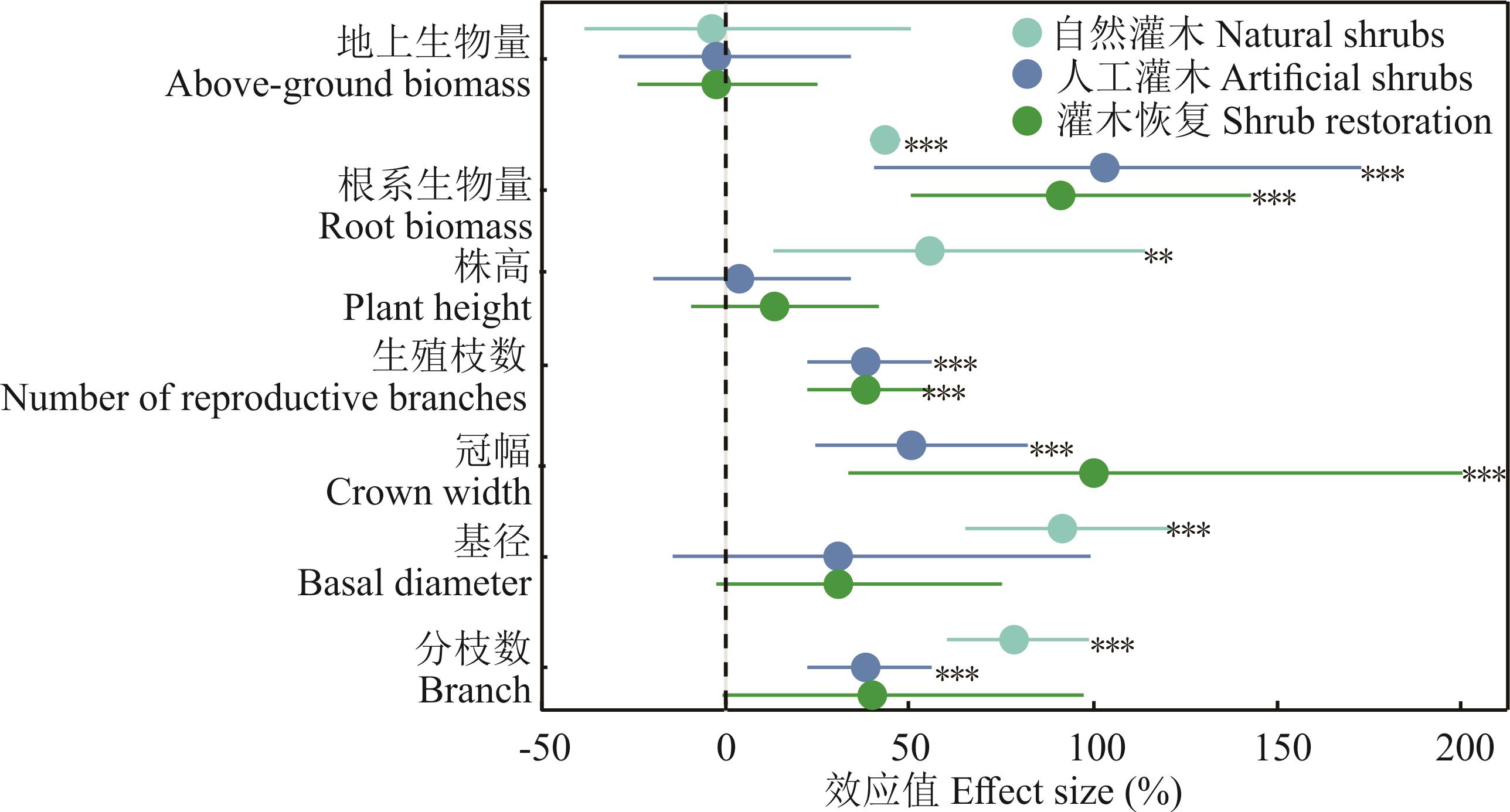
Fig.2 Overall restoration effects of shrub vegetation in desert grassland areas
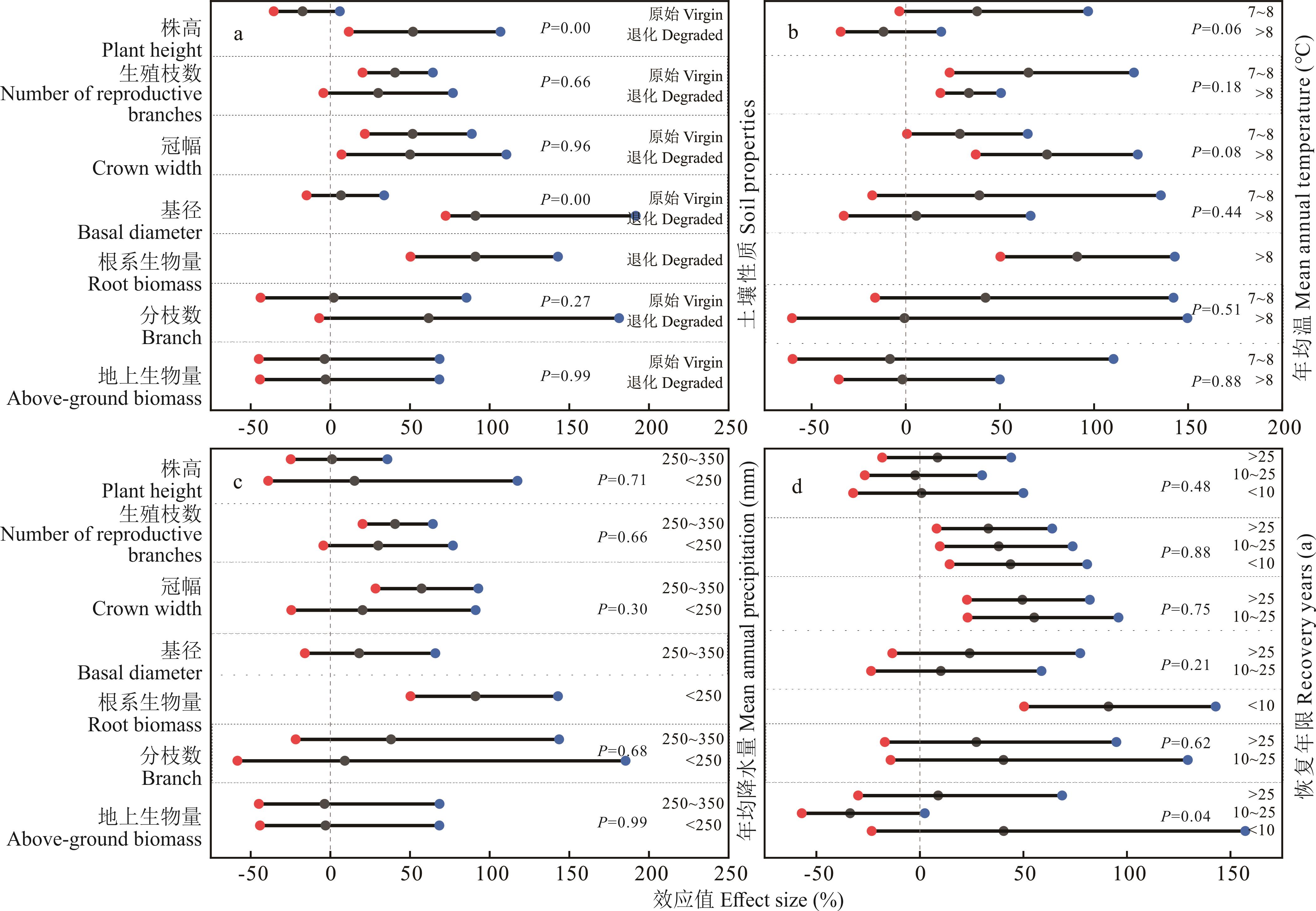
Fig.3 Influencing factors of shrub restoration effect in desert steppe area
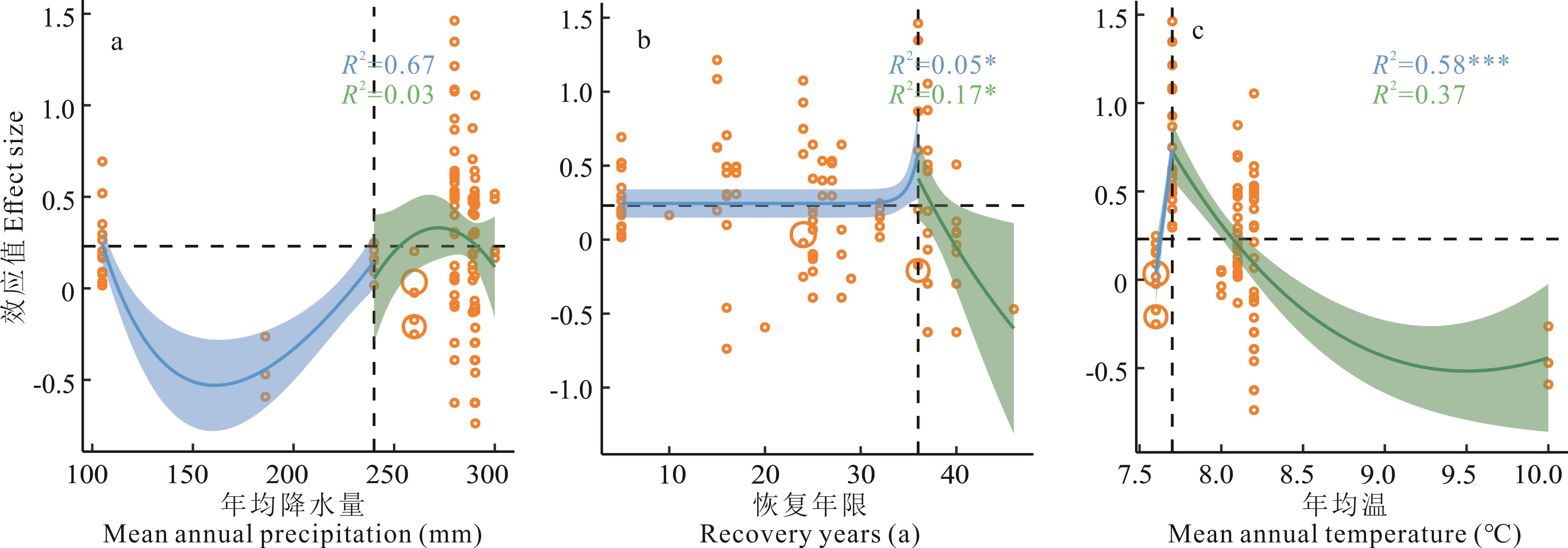
Fig.4 Threshold effects of environmental dependence on shrub vegetation restoration
| [1] | Zheng J H, Wang Q, Yuan S, et al. Soil deterioration due to long-term grazing of desert-steppe promotes stress-tolerant ecological strategies in plants. Science of the Total Environment, 2024, 907: 168131. |
| [2] | Zhou W X, Li C J, Wang S, et al. Effects of vegetation restoration on soil properties and vegetation attributes in the arid and semi-arid regions of China. Journal of Environmental Management, 2023, 343: 118186. |
| [3] | Yuan H Y, Du L T, Qiao C L, et al. Simulation of GPP and ET response to climate change for the planted shrub ecosystem in desert steppe area of Yanchi county, Ningxia. Acta Ecologica Sinica, 2024, 44(8): 3515-3524. |
| 袁洪艺, 杜灵通, 乔成龙, 等. 人工灌丛总初级生产力和蒸散对气候变化的响应模拟——以宁夏盐池县荒漠草原区为例. 生态学报, 2024, 44(8): 3515-3524. | |
| [4] | Zhao Y N, Wang H M, Li Z G, et al. Anthropogenic shrub encroachment has accelerated the degradation of desert steppe soil over the past four decades. Science of the Total Environment, 2024, 946: 174487. |
| [5] | Yang X G, Liu C H, Wang L, et al. Study on ecological restoration and reconstruction of desert steppe: A review. Acta Ecologica Sinica, 2023, 43(1): 95-104. |
| 杨新国, 刘春虹, 王磊, 等. 荒漠草原生态恢复与重建: 人工植被推动下水分介导的系统响应、生态阈值与互馈作用. 生态学报, 2023, 43(1): 95-104. | |
| [6] | Li X H, Zha T S, Liu P, et al. Interannual variation in gross ecosystem production and evapotranspiration in a temperate semiarid grassland undergoing vegetation recovery. Agricultural and Forest Meteorology, 2023, 341: 109672. |
| [7] | Alldredge M W, Peek J M, Wall W A. Shrub community development and annual productivity trends over a 100-year period on an industrial forest of Northern Idaho. Forest Ecology and Management, 2001, 152(1/2/3): 259-273. |
| [8] | Liu L, Qi W, Guo Y F, et al. Effect of stumping on leaf functional traits of Caragana korshinskii in ecologically fragile area of Otog Banner. Journal of Agricultural Science and Technology, 2024, 26(7): 61-68. |
| 刘璐, 祁伟, 郭月峰, 等. 平茬对鄂托克旗生态脆弱区柠条叶功能性状的影响. 中国农业科技导报, 2024, 26(7): 61-68. | |
| [9] | Andreu-Hayles L, Gaglioti B, Berner L T, et al. A narrow window of summer temperatures associated with shrub growth in Arctic Alaska. Environmental Research Letters, 2020, 15(10): 105012. |
| [10] | Poyatos R, Heinemeyer A, Ineson P, et al. Environmental and vegetation drivers of seasonal CO2 fluxes in a sub-arctic forest-mire ecotone. Ecosystems, 2014, 17(3): 377-393. |
| [11] | Buhrmann R D, Ramdhani S, Pammenter N W, et al. Grasslands feeling the heat: The effects of elevated temperatures on a subtropical grassland. Bothalia, 2016, 46(2): a2122. |
| [12] | Liu D J, Zhang C, Ogaya R, et al. World-wide impacts of climate change and nitrogen deposition on vegetation structure, composition, and functioning of shrublands. New Phytologist, 2025, 247(3): 1117-1128. |
| [13] | Xue H X, Li Q H, Xu J, et al. Effects of sand burial on growth and biomass allocation of Nitraria tangutorum. Pratacultural Science, 2016, 33(10): 2062-2070. |
| 薛海霞, 李清河, 徐军, 等. 沙埋对唐古特白刺幼苗生长和生物量分配的影响. 草业科学, 2016, 33(10): 2062-2070. | |
| [14] | Zhang Y, Gou Q Q, Gao M, et al. The response mechanism of early seed regeneration process of Caragana korshinskii bushes with different plantation ages in sandy-hilly region of northwest Shanxi Province. Journal of Desert Research, 2023, 43(2): 243-254. |
| 张宇, 缑倩倩, 高敏, 等. 晋西北丘陵风沙区不同种植年限柠条(Caragana korshinskii)种子更新早期过程对干旱胁迫的响应机制. 中国沙漠, 2023, 43(2): 243-254. | |
| [15] | Chen J, Song N P, Chen L, et al. Soil moisture dynamics and its response to precipitation in different cover types of desert steppe. Journal of Soil and Water Conservation, 2021, 35(6): 198-206. |
| 陈娟, 宋乃平, 陈林, 等. 荒漠草原不同覆被类型土壤水分动态及其对降水的响应. 水土保持学报, 2021, 35(6): 198-206. | |
| [16] | Zhai B, Dang X H, Liu X J, et al. Fertile island effect in the sedimentary process of Tetraena mongolica Maxim nebkhas in steppe-desert ecotones on the Inner Mongolia Plateau, China. Journal of Mountain Science, 2022, 19(10): 2791-2805. |
| [17] | Yang M X, Song N P, Yang X G. Distribution and estimation model of aboveground modular biomass of arctificial Caragana intermedia forest. Jiangsu Agricultural Sciences, 2013, 41(12): 331-333. |
| 杨明秀, 宋乃平, 杨新国. 人工柠条林枝、叶构件生物量的分配格局与估测模型. 江苏农业科学, 2013, 41(12): 331-333. | |
| [18] | Wang X Y, Guo Y G, Chen L, et al. Modeling the biomass of lemon grassland thickets of different stand ages in desert grasslands. Journal of Biomathematics, 2013, 28(2): 377-383. |
| 王新云, 郭艺歌, 陈林, 等. 荒漠草原不同林龄柠条灌丛生物量模型研究. 生物数学学报, 2013, 28(2): 377-383. | |
| [19] | Wang X, Song N P, Yang X G, et al. The response of spatial pattern of plant diversity to environmental factors in the scale of micro-landform in desert steppe. Journal of Soil and Water Conservation, 2016, 30(4): 274-280, 328. |
| 王兴, 宋乃平, 杨新国, 等. 荒漠草原植物多样性分布格局对微地形尺度环境变化的响应. 水土保持学报, 2016, 30(4): 274-280, 328. | |
| [20] | Shi J D, Luo D H, Weng H, et al. Optimally estimating the sample standard deviation from the five-number summary. Research Synthesis Methods, 2020, 11(5): 641-654. |
| [21] | Hedges L V, Gurevitch J, Curtis P S. The meta-analysis of response ratios in experimental ecology. Ecology, 1999, 80(4): 1150-1156. |
| [22] | Lajeunesse M J. On the meta-analysis of response ratios for studies with correlated and multi-group designs. Ecology, 2011, 92(11): 2049-2055. |
| [23] | Rosenthal R. The file drawer problem and tolerance for null results. Psychological Bulletin, 1979, 86(3): 638. |
| [24] | Hoeve M, Stams G J J M, van der Put C E, et al. A meta-analysis of attachment to parents and delinquency. Journal of Abnormal Child Psychology, 2012, 40(5): 771-785. |
| [25] | Wang F F. Remote sensing regression model and aridity threshold of vegetation aboveground biomass at a global scale. Lanzhou: Lanzhou University, 2021. |
| 王方方. 全球尺度植被地上生物量的遥感回归模型及干旱阈值. 兰州: 兰州大学, 2021. | |
| [26] | Fong Y, Huang Y, Gilbert P B, et al. Chngpt: Threshold regression model estimation and inference. BMC Bioinformatics, 2017, 18(1): 454. |
| [27] | She W W, Bai Y X, Zhang Y Q, et al. Plasticity in meristem allocation as an adaptive strategy of a desert shrub under contrasting environments. Frontiers in Plant Science, 2017, 8: 1933. |
| [28] | Dai Y M, Li M L, Xu M Z, et al. Leaf traits of Artemisia ordosica at different dune fixation stages in Mau Us Sandy Land. Chinese Journal of Plant Ecology, 2022, 46(11): 1376-1387. |
| 代远萌, 李满乐, 徐铭泽, 等. 毛乌素沙地沙丘不同固定阶段黑沙蒿叶性状特征. 植物生态学报, 2022, 46(11): 1376-1387. | |
| [29] | Ascenzi I, Hilbers J P, van Katwijk M M, et al. Increased but not pristine soil organic carbon stocks in restored ecosystems. Nature Communications, 2025, 16(1): 637. |
| [30] | Qu W J, Wang L, Yang X G, et al. Point pattern analysis based on null models of populations in fixed sand at the southeastern edge of the Tengger Desert. Acta Prataculturae Sinica, 2024, 33(10): 37-45. |
| 曲文杰, 王磊, 杨新国, 等. 基于零模型的腾格里沙漠东南缘固定沙地种群点格局分析. 草业学报, 2024, 33(10): 37-45. | |
| [31] | Gao J L, Luo F M, Liu H X, et al. Effects of typical ecological projects of desertification combating on soil physical properties in Ulan Buh Desert. Arid Zone Research, 2023, 40(5): 737-746. |
| 高君亮, 罗凤敏, 刘泓鑫, 等. 乌兰布和沙漠草方格-灌木林对土壤水分物理性质的影响. 干旱区研究, 2023, 40(5): 737-746. | |
| [32] | He J S, Han X G. Ecological stoichiometry: Searching for unifying principles from individuals to ecosystems. Chinese Journal of Plant Ecology, 2010, 34(1): 2-6. |
| 贺金生, 韩兴国. 生态化学计量学: 探索从个体到生态系统的统一化理论. 植物生态学报, 2010, 34(1): 2-6. | |
| [33] | Yang X G, Zhao W, Chen L, et al. Antidromal succession between soil and plant in the Caragana intermedia shrubland in the desert steppe. Ecology and Environmental Sciences, 2015, 24(4): 590-594. |
| 杨新国, 赵伟, 陈林, 等. 荒漠草原人工柠条林土壤与植被的演变特征. 生态环境学报, 2015, 24(4): 590-594. | |
| [34] | Chen J J, Huang L, Jia H F, et al. Vertical variability and dynamic simulation of soil moisture in different artificial vegetation arrangements in the Tengger Desert. Journal of Arid Land Resources and Environment, 2022, 36(4): 126-133. |
| 陈嘉嘉, 黄磊, 贾鸿飞, 等. 腾格里沙漠人工植被区不同植被类型土壤水分垂直变异特征及其动态变化模型. 干旱区资源与环境, 2022, 36(4): 126-133. | |
| [35] | Yang L Z, Feng L, Yang G S, et al. Water absorption potential and influencing factors of leaf in Caragana korshinskii, Artemisia ordosica, Hedysarum scoparium in a revegetated area of the Tengger Desert, China. Journal of Desert Research, 2020, 40(2): 214-221. |
| 杨利贞, 冯丽, 杨贵森, 等. 柠条(Caragana korshinskii)、油蒿(Artemisia ordosica)、花棒(Hedysarum scoparium)叶片吸水潜力及影响因素. 中国沙漠, 2020, 40(2): 214-221. | |
| [36] | Li Y J, Zhao F X, Tang X J, et al. Effect of plant functional traits on productivity of artificial Caragana korshinskii forest in the windy-sandy region of northwest Shanxi Province, China. Southwest China Journal of Agricultural Sciences, 2023, 36(3): 647-654. |
| 李亚杰, 赵峰侠, 唐学娟, 等. 晋西北风沙区植物功能性状对人工柠条林生产力的影响. 西南农业学报, 2023, 36(3): 647-654. | |
| [37] | Wang G H, Wang J Q, Liu J. Characteristics of vegetation and soil in Caragana korshinskii plantations in the hilly and sandy areas of northwestern Shanxi Province, China. Chinese Journal of Applied Ecology, 2024, 35(1): 62-72. |
| 王国华, 王佳琪, 刘婧. 晋西北丘陵风沙区柠条锦鸡儿人工林植被和土壤随林龄变化特征. 应用生态学报, 2024, 35(1): 62-72. | |
| [38] | Tian N, Gu J L, Yang X G, et al. Characteristics of canopy interception by Caragana intermedia in desert grasslands. Acta Ecologica Sinica, 2019, 39(14): 5279-5287. |
| 田娜, 古君龙, 杨新国, 等. 荒漠草原中间锦鸡儿冠层截留特征. 生态学报, 2019, 39(14): 5279-5287. | |
| [39] | Chen X Y, Chen L, Yang X G, et al. Spatial distribution and drivers of throughfall beneath shrub canopies in a semi-arid desert steppe. Water and Environment Journal, 2023, 37(3): 493-511. |
| [40] | Song Y, Liu T J, Wang J, et al. The responses of three dominant species to increased rainfall under different grazing systems in a desert steppe. Hydrological Processes, 2022, 36(6): 14632. |
| [41] | Li B, Gao J, Wang X, et al. Effects of biological soil crusts on water infiltration and evaporation Yanchi Ningxia, Maowusu Desert, China. International Journal of Sediment Research, 2016, 31(4): 311-323. |
| [42] | Gao R R, Yang X J, Liu G F, et al. Effects of rainfall pattern on the growth and fecundity of a dominant dune annual in a semi-arid ecosystem. Plant and Soil, 2015, 389(1/2): 335-347. |
| [43] | Xue Y Y, Liang H B, Zhang H Z, et al. Quantifying the policy-driven large scale vegetation restoration effects on evapotranspiration over drylands in China. Journal of Environmental Management, 2023, 345: 118723. |
| [44] | Lü H, Wang X, Song N P, et al. Response of soil moisture dynamics in four typical herbaceous communities to extreme drought precipitation in the desert steppe. Journal of Soil and Water Conservation, 2023, 37(6): 145-152. |
| 吕浩, 王兴, 宋乃平, 等. 荒漠草原4种典型草本植物群落土壤水分动态对极端干旱降水的响应. 水土保持学报, 2023, 37(6): 145-152. | |
| [45] | Guo Y P, Gheyret G, Liu T Y, et al. Distribution patterns and climate limitations of typical shrublands in northern China. Scientia Sinica (Vitae), 2021, 51(3): 346-361. |
| 郭焱培, 艾尤尔·亥热提, 刘同彦, 等. 中国北方典型灌丛的分布特征及气候限制. 中国科学: 生命科学, 2021, 51(3): 346-361. |
| [1] | Long-hang CHAI, Rui ZHAO, Xiao-yi LIU, Jin-shun BAI. A meta-analysis of the effects of green manure on yield increase and chemical nitrogen fertilizer saving in Chinese farmlands [J]. Acta Prataculturae Sinica, 2026, 35(5): 162-174. |
| [2] | Yu-yue LI, Hao-nan WEI, Xing-zhong MA, Hai-xin JIANG, Ming-he NIE, Yao ZHOU, Cheng-jiang DAI, Xiao-wu TIAN, Guo-hui WANG, Hong-bin MA. Effects of rotational grazing on characteristics of the soil seed bank in desert steppe [J]. Acta Prataculturae Sinica, 2026, 35(4): 1-13. |
| [3] | Dong-ya LIU, Yan YANG, Jing LIU, Bo WANG, Zhi-gang LI. Effects of short-term sheep manure return on soil quality of desert steppe [J]. Acta Prataculturae Sinica, 2026, 35(2): 28-39. |
| [4] | Yang-kun LI, Zhuan-lin BEN, Jun-yu ZHANG, Hui-min YANG. A meta-analysis on the effect of fertilizer type on alfalfa seed yield under various climate and soil conditions [J]. Acta Prataculturae Sinica, 2026, 35(2): 54-67. |
| [5] | Wen-hui DENG, Ke-chen SONG, Hao ZHANG, Si-yu GUAN, Jia-yi YONG, Tie-na XIE, Hai-ying HU. Effects of changes in precipitation on stomatal morphology and photosynthetic and physiological characteristics of major species in desert steppe plant communities [J]. Acta Prataculturae Sinica, 2026, 35(1): 65-78. |
| [6] | Shao-yu YUAN, Shi-hui HAN, Tian XIA, Ning-bo HE, Jian-jie ZHANG. Responses of soil pH to different fertilization practices in natural grasslands of northern China [J]. Acta Prataculturae Sinica, 2025, 34(7): 28-40. |
| [7] | Wen-hui DENG, Ke-chen SONG, Hao ZHANG, Si-yu GUAN, Jia-yi YONG, Hai-ying HU. Structure and diversity characteristics of the rhizosphere microbial community of dominant plants on the desert steppe under changing precipitation [J]. Acta Prataculturae Sinica, 2025, 34(5): 12-26. |
| [8] | Rong MA, Jun-yao LI, Ping YUE, Xu-jun MA, Zhen BAI, Ling ZHUANG, Jing BAI, Xue-yong ZHAO, Shao-kun WANG. Regulatory mechanisms of biomass allocation governed by functional traits of dominant plants in desert steppe under precipitation changes [J]. Acta Prataculturae Sinica, 2025, 34(11): 31-39. |
| [9] | Zhen-hao ZHANG, Zi-yu JIA, Xin-yu LI, Yun-xiang CHENG. Grazing behavior traits of cattle and sheep on mixed pasture in desert steppe [J]. Acta Prataculturae Sinica, 2025, 34(1): 226-237. |
| [10] | Shi-long HE, He YE, Jing LI, Ya-ling ZHANG, Hai-shan DE, Mei HONG. Effects of nitrogen deposition and precipitation changes in different time spans on community structure and diversity of soil meso- and micro-fauna in Stipa breviflora desert steppe [J]. Acta Prataculturae Sinica, 2024, 33(9): 140-154. |
| [11] | Zi-ao SHEN, Jing WU, Chun-bin LI. Simulation of vegetation cover in the inland river basin of Hexi based on the theory of ecohydrological optimality [J]. Acta Prataculturae Sinica, 2024, 33(9): 15-27. |
| [12] | Ying CAO, Ming-he NIE, Yan SHEN, Yan HU, Deng-bao MA, Dong LI, Teng-si HOU, Peng FANG, Xue-qin WANG. Changes in vegetation and soil characteristics and their correlations in grasslands at different stages of degradation on the desert steppe in an arid wind-sandy area of Ningxia [J]. Acta Prataculturae Sinica, 2024, 33(8): 1-14. |
| [13] | Teng-si HOU, Yan SHEN, Hong-bin MA, Peng FANG, Ying CAO. Effects of Caragana intermedia stubble on soil water characteristics and water balance on the desert steppe [J]. Acta Prataculturae Sinica, 2024, 33(8): 15-24. |
| [14] | Shou-xia XU. Meta-analysis of the effects of arbuscular mycorrhizae on the yield and quality of wheat [J]. Acta Prataculturae Sinica, 2024, 33(7): 192-204. |
| [15] | Hai-xin JIANG, Yao ZHOU, Ke HU, Zhan-sheng DING, Hong-bin MA. Effects of different grazing times on soil particle composition and fractal dimension in the desert steppe [J]. Acta Prataculturae Sinica, 2024, 33(6): 17-28. |
| Viewed | ||||||
|
Full text |
|
|||||
|
Abstract |
|
|||||
