
ISSN 1004-5759 CN 62-1105/S
Acta Prataculturae Sinica ›› 2026, Vol. 35 ›› Issue (11): 52-63.DOI: 10.11686/cyxb2025486
Previous Articles Next Articles
Xiao-shan ZHU( ), Yin-rui LONG, Ting-yu DUAN, Pan-pan SHANG()
Received:2025-12-01
Revised:2026-01-12
Online:2026-11-20
Published:2026-10-12
Contact:
Pan-pan SHANG
Xiao-shan ZHU, Yin-rui LONG, Ting-yu DUAN, Pan-pan SHANG. Effects of arbuscular mycorrhizal fungus and Trichoderma on the control of Sclerotinia rot of Astragalus sinicus and the response of phyllosphere bacterial communities[J]. Acta Prataculturae Sinica, 2026, 35(11): 52-63.
| 处理Treatment | 编号Code | 第3周Week 3 (3 w) | 第4周Week 4 (4 w) |
|---|---|---|---|
| 未接种None | NMT-S- | / | 收获Harvest |
| 仅接种哈茨木霉菌Inoculated with T. harzianum only | NMT+S- | / | 收获Harvest |
| 仅接种扭形球囊霉Inoculated with S. tortuosa only | AMT-S- | / | 收获Harvest |
| 接种扭形球囊霉和哈茨木霉菌Inoculated with S. tortuosa and T. harzianum | AMT+S- | / | 收获Harvest |
| 仅接种核盘菌Inoculated with S. sclerotiorum only | NMT-S+ | 核盘菌S. sclerotiorum | 收获Harvest |
| 接种哈茨木霉菌和核盘菌Inoculated with T. harzianum and S. sclerotiorum | NMT+S+ | 核盘菌S. sclerotiorum | 收获Harvest |
| 接种扭形球囊霉和核盘菌Inoculated with S. tortuosaand S. sclerotiorum | AMT-S+ | 核盘菌S. sclerotiorum | 收获Harvest |
| 接种扭形球囊霉、哈茨木霉菌和核盘菌Inoculated with S. tortuosa, T. harzianum and S. sclerotiorum | AMT+S+ | 核盘菌S. sclerotiorum | 收获Harvest |
Table 1 Treatment codes and timing of experimental manipulations of the eight treatment
| 处理Treatment | 编号Code | 第3周Week 3 (3 w) | 第4周Week 4 (4 w) |
|---|---|---|---|
| 未接种None | NMT-S- | / | 收获Harvest |
| 仅接种哈茨木霉菌Inoculated with T. harzianum only | NMT+S- | / | 收获Harvest |
| 仅接种扭形球囊霉Inoculated with S. tortuosa only | AMT-S- | / | 收获Harvest |
| 接种扭形球囊霉和哈茨木霉菌Inoculated with S. tortuosa and T. harzianum | AMT+S- | / | 收获Harvest |
| 仅接种核盘菌Inoculated with S. sclerotiorum only | NMT-S+ | 核盘菌S. sclerotiorum | 收获Harvest |
| 接种哈茨木霉菌和核盘菌Inoculated with T. harzianum and S. sclerotiorum | NMT+S+ | 核盘菌S. sclerotiorum | 收获Harvest |
| 接种扭形球囊霉和核盘菌Inoculated with S. tortuosaand S. sclerotiorum | AMT-S+ | 核盘菌S. sclerotiorum | 收获Harvest |
| 接种扭形球囊霉、哈茨木霉菌和核盘菌Inoculated with S. tortuosa, T. harzianum and S. sclerotiorum | AMT+S+ | 核盘菌S. sclerotiorum | 收获Harvest |
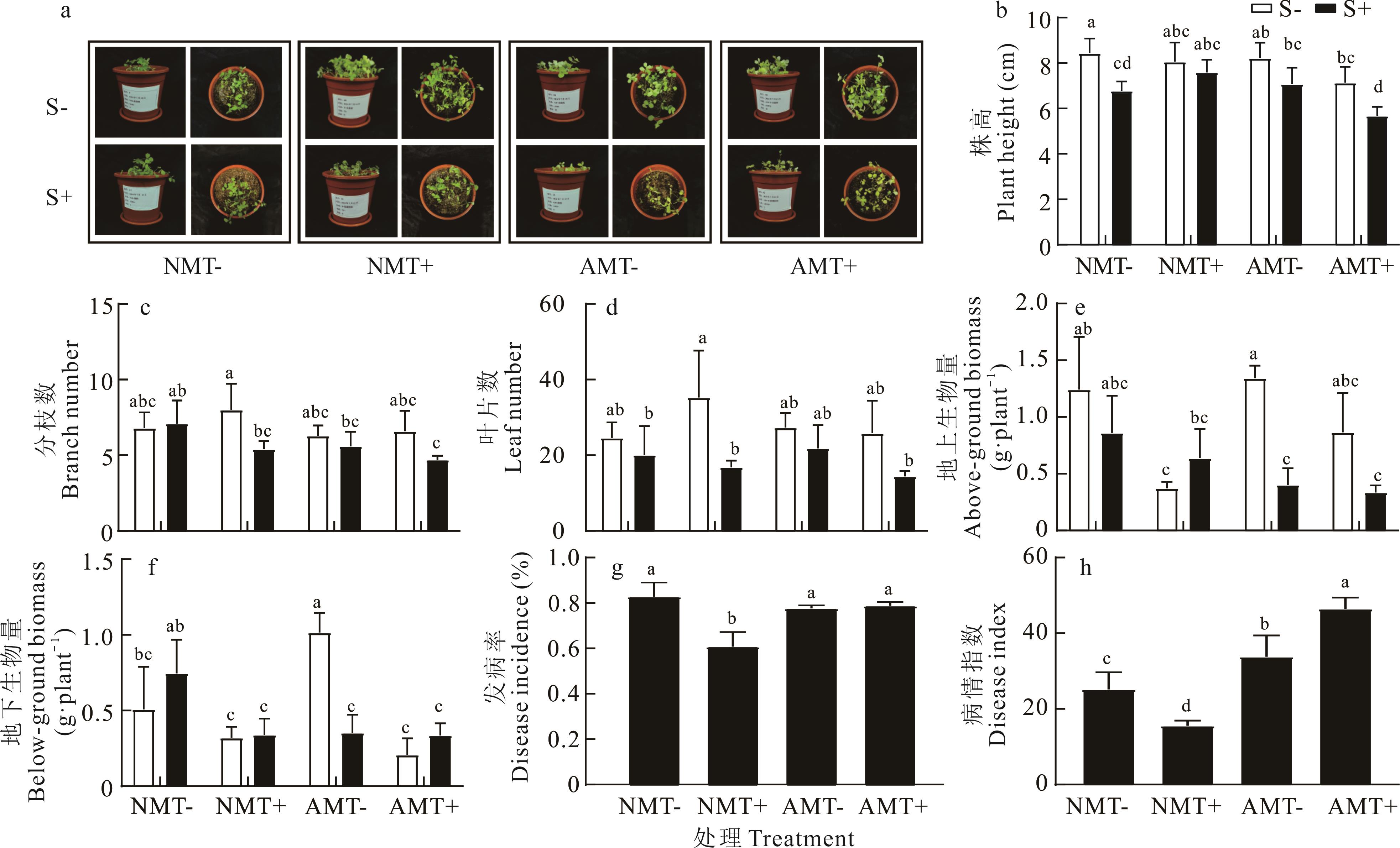
Fig.1 Plant growth under different inoculation treatments
指标 Parameter | 互作效应Interactions effect | |||||||
|---|---|---|---|---|---|---|---|---|
丛枝菌根真菌 Arbuscular mycorrhizal (AM) | 木霉菌 Trichoderma (T) | 核盘菌 Sclerotinia sclerotiorum (S) | AM×T | AM×S | T×S | AM×T×S | ||
| 株高Plant height (PH) | 0.002 | 0.016 | <0.001 | <0.001 | NS | NS | NS | |
| 叶片数Leaf number (LN) | NS | NS | <0.001 | NS | NS | 0.025 | NS | |
| 分枝数Number of branch (BN) | 0.007 | NS | 0.001 | NS | NS | 0.007 | NS | |
| 地上生物量Above-ground biomass (AGB) | NS | <0.001 | <0.001 | NS | 0.001 | 0.009 | NS | |
| 地下生物量Below-ground biomass (BGB) | NS | <0.001 | NS | NS | 0.002 | 0.019 | <0.001 | |
| 发病率Disease incidence | 0.004 | <0.001 | <0.001 | NS | 0.004 | <0.001 | NS | |
| 病情指数Disease index | <0.001 | NS | <0.001 | <0.001 | <0.001 | NS | <0.001 | |
| 超氧化物歧化酶活性Superoxide dismutase activity (SOD) | NS | NS | NS | NS | NS | NS | NS | |
| 过氧化物酶活性Peroxidase activity (POD) | NS | NS | NS | NS | NS | NS | NS | |
| 过氧化氢酶活性Catalase activity (CAT) | <0.001 | NS | 0.006 | NS | NS | 0.013 | <0.001 | |
| 多酚氧化酶活性Polyphenol oxidase activity (PPO) | NS | NS | NS | NS | NS | NS | NS | |
| 丙二醛含量Malondialdehyde content (MDA) | NS | NS | <0.001 | NS | NS | 0.010 | NS | |
| 可溶性糖含量Soluble sugar content (SS) | NS | NS | NS | NS | NS | NS | NS | |
Table 2 Analysis of variance for arbuscular mycorrhizal fungi (AM), Trichoderma (T), pathogenic fungi (S) and their interactions
指标 Parameter | 互作效应Interactions effect | |||||||
|---|---|---|---|---|---|---|---|---|
丛枝菌根真菌 Arbuscular mycorrhizal (AM) | 木霉菌 Trichoderma (T) | 核盘菌 Sclerotinia sclerotiorum (S) | AM×T | AM×S | T×S | AM×T×S | ||
| 株高Plant height (PH) | 0.002 | 0.016 | <0.001 | <0.001 | NS | NS | NS | |
| 叶片数Leaf number (LN) | NS | NS | <0.001 | NS | NS | 0.025 | NS | |
| 分枝数Number of branch (BN) | 0.007 | NS | 0.001 | NS | NS | 0.007 | NS | |
| 地上生物量Above-ground biomass (AGB) | NS | <0.001 | <0.001 | NS | 0.001 | 0.009 | NS | |
| 地下生物量Below-ground biomass (BGB) | NS | <0.001 | NS | NS | 0.002 | 0.019 | <0.001 | |
| 发病率Disease incidence | 0.004 | <0.001 | <0.001 | NS | 0.004 | <0.001 | NS | |
| 病情指数Disease index | <0.001 | NS | <0.001 | <0.001 | <0.001 | NS | <0.001 | |
| 超氧化物歧化酶活性Superoxide dismutase activity (SOD) | NS | NS | NS | NS | NS | NS | NS | |
| 过氧化物酶活性Peroxidase activity (POD) | NS | NS | NS | NS | NS | NS | NS | |
| 过氧化氢酶活性Catalase activity (CAT) | <0.001 | NS | 0.006 | NS | NS | 0.013 | <0.001 | |
| 多酚氧化酶活性Polyphenol oxidase activity (PPO) | NS | NS | NS | NS | NS | NS | NS | |
| 丙二醛含量Malondialdehyde content (MDA) | NS | NS | <0.001 | NS | NS | 0.010 | NS | |
| 可溶性糖含量Soluble sugar content (SS) | NS | NS | NS | NS | NS | NS | NS | |
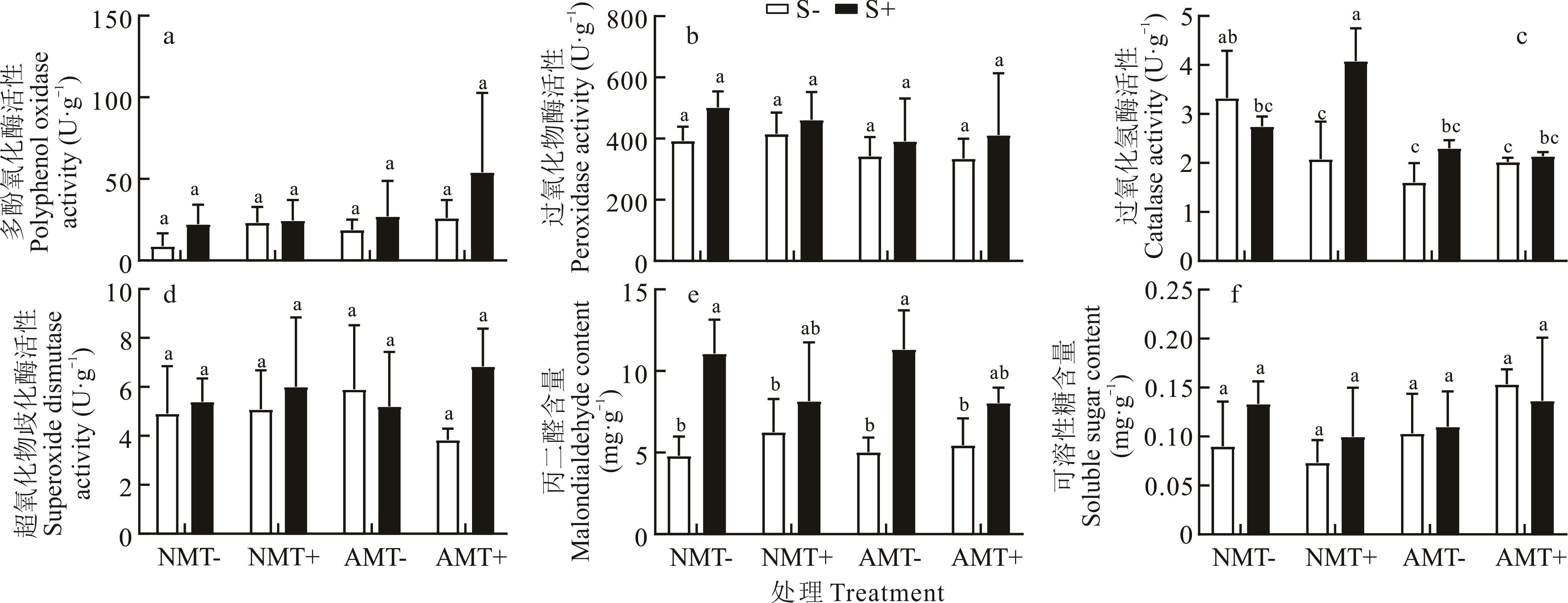
Fig.2 Changes in physiological indices under different inoculation treatments

Fig.3 Bacterial species composition and community diversity under different inoculation treatments

Fig.4 Biomarkers under different inoculation treatments

Fig.5 Analysis of network interactions among bacterial communities and the correlation of physiological indicators
| [1] | Liu C L, He C M, Wang L M, et al. The study on comprehensive value of Chinese milk vetch as forage and green manure. Acta Agrestia Sinica, 2020, 28(3): 857-862. |
| 刘彩玲, 何春梅, 王利民, 等. 紫云英作为饲草和绿肥综合利用价值的研究. 草地学报, 2020, 28(3): 857-862. | |
| [2] | Cao W D, Huang H X. Ideas on restoration and development of green manures in China. Soils and Fertilizer Sciences in China, 2009(4): 1-3. |
| 曹卫东, 黄鸿翔. 关于我国恢复和发展绿肥若干问题的思考. 中国土壤与肥料, 2009(4): 1-3. | |
| [3] | Zhan Y. Occurrence and control techniques of Sclerotinia disease in forage Astragalus sinicus. China Agricultural Information, 2015(20): 94-95. |
| 詹杨. 饲用紫云英菌核病发生与防治技术. 中国农业信息, 2015(20): 94-95. | |
| [4] | Shi H F, Guo Z F. Advances in research on germplasm resources and genetic breeding of Astragalus sinicus. Pratacultural Science, 2020, 37(12): 2507-2519. |
| 施海帆, 郭振飞. 紫云英种质资源与遗传育种研究进展. 草业科学, 2020, 37(12): 2507-2519. | |
| [5] | Bolton M D, Thomma P H J, Nelson B D. Sclerotinia sclerotiorum (Lib.) de Bary: biology and molecular traits of a cosmopolitan pathogen. Molecular Plant Pathology, 2006, 7(1): 1-16. |
| [6] | Li E C, Xi Z, Zhu N, et al. Research advances on biocontrol of sclerotiniarot caused by Sclerotinia sclerotiorum. Journal of Yunnan Agricultural University (Natural Science), 2023, 38(4): 714-724. |
| 李恩琛, 郗征, 朱娜, 等. 核盘菌引起的菌核病生物防治研究进展. 云南农业大学学报(自然科学), 2023, 38(4): 714-724. | |
| [7] | Jia H M, Fang Q, Zhang S H, et al. Effects of AM fungi on growth and rhizosphere soil enzyme activities of Salvia miltiorrhiza. Acta Prataculturae Sinica, 2020, 29(6): 83-92. |
| 贾红梅, 方千, 张秫华, 等. AM真菌对丹参生长及根际土壤酶活性的影响. 草业学报, 2020, 29(6): 83-92. | |
| [8] | Li X Y, Yi L T, Li Y, et al.Advances in research on plant tolerance to abiotic stress by arbuscular mycorrhizal fungi. Journal of Zhejiang Forestry Science and Technology, 2022, 42(1): 101-110. |
| 李晓芸, 伊力塔, 李彦, 等. 丛枝菌根真菌提高植物非生物胁迫耐受性研究进展. 浙江林业科技, 2022, 42(1): 101-110. | |
| [9] | Wang G J, Xia S, Cui Y N, et al. Effects of AM fungi on plant stress resistance and the mechanisms. Journal of Changchun Normal University, 2019, 38(12): 79-81. |
| 王桂君, 夏霜, 崔亚男, 等. AM真菌对植物抗逆性的影响及机制探讨. 长春师范大学学报, 2019, 38(12): 79-81. | |
| [10] | Zhang W, Yang J Y, Lu X, et al. A preliminary study of the antifungal activity and antagonism mechanisms of Trichoderma spp. against turfgrass pathogens. Acta Prataculturae Sinica, 2021, 30(9): 137-149. |
| 章武, 杨锦玉, 卢翔, 等. 木霉菌对草坪草病原菌的抑菌效果及其机理初步研究. 草业学报, 2021, 30(9): 137-149. | |
| [11] | Chen Y R. Screening and disease prevention mechanism of biocontrol Trichoderma against Sclerotinia sclerotiorum in sunflower. Daqing: Heilongjiang Bayi Agricultural University, 2022. |
| 陈玉蓉. 向日葵菌核病生防木霉菌的筛选与防病机制研究. 大庆: 黑龙江八一农垦大学, 2022. | |
| [12] | Liang W B. Diversity in mycoviruses of Sclerotinia sclerotiorum from America on pinto and garden bean. Wuhan: Huazhong Agricultural University, 2021. |
| 梁炜博. 美国斑豆和菜豆菌核病菌中真菌病毒的多样性. 武汉: 华中农业大学, 2021. | |
| [13] | National Agricultural Technology Extension Service Center. Technical specification for the monitoring and reporting of sclerotinia stem rot in rapeseed: NY/T2038-2011. Beijing: China Agriculture Press, 2011. |
| 全国农业技术推广服务中心. 油菜菌核病测报技术规范: NY/T2038-2011. 北京: 中国农业出版社, 2011. | |
| [14] | Yang G, Qiao L, Lv Y H, et al. Field control effect of five fungicides on Sclerotinia trifoliorum. Chinese Agricultural Science Bulletin, 2017, 33(14): 109-112. |
| 杨光, 乔利, 吕玉虎, 等. 5种杀菌剂对紫云英菌核病大田防效测定. 中国农学通报, 2017, 33(14): 109-112. | |
| [15] | Li H S, Sun Q, Zhao S J, et al. Principles and techniques of plant physiology and biochemistry experiments. Beijing: Higher Education Press, 2015. |
| 李合生, 孙群, 赵世杰, 等. 植物生理生化实验原理与技术. 北京: 高等教育出版社, 2015. | |
| [16] | Lorrai R, Ferrari S. Host cell wall damage during pathogen infection: mechanisms of perception and role in plant-pathogen interactions. Plants, 2021, 10(2): 399. |
| [17] | Munzert K S, Engelsdorf T. Plant cell wall structure and dynamics in plant-pathogen interactions and pathogen defence. Journal of Experimental Botany, 2025, 76(2): 228-242. |
| [18] | Alfiky A, Weisskopf L. Deciphering Trichoderma-plant-pathogen interactions for better development of biocontrol applications. Journal of Fungi, 2021, 7(1): 61. |
| [19] | Chakraborty B N, Chakraborty U, Sunar K. Induced immunity developed by Trichoderma species in plants//Anil K S, Pratibha S. Trichoderma: Host pathogen interactions and applications. Singapore: Springer Singapore, 2020: 125-147. |
| [20] | Cai F, Chen W, Wei Z, et al. Colonization of Trichoderma harzianum strain SQR-T037 on tomato roots and its relationship to plant growth, nutrient availability and soil microflora. Plant and Soil, 2015, 338(1): 337-350. |
| [21] | Shang P P, Zheng R C, Li Y D, et al. Effect of AM fungi on the growth and powdery mildew development of Astragalus sinicus L. under water stress. Plant Physiology and Biochemistry, 2025, 219: 109422. |
| [22] | Li Y D, Duan T Y. Effects of AM fungi on alfalfa leaf spot caused by Phoma medicaginis and pea aphids Acyrthosiphon pisum. Chinese Journal of Ecology, 2020, 39(4): 1214-1221. |
| 李应德, 段廷玉. AM真菌对紫花苜蓿茎点霉叶斑病及豌豆蚜为害的影响. 生态学杂志, 2020, 39(4): 1214-1221. | |
| [23] | Zhang W Z, Ding T T, Duan T Y. Effect of two kinds of arbuscular mycorrhizal fungi on plant growth and anthracnose of Vicia sativa. Pratacultural Science, 2020, 37(2): 320-329. |
| 张伟珍, 丁婷婷, 段廷玉. 两种AM真菌对箭筈豌豆生长及炭疽病发生的影响. 草业科学, 2020, 37(2): 320-329. | |
| [24] | Anzano A, Bonanomi G, Mazzoleni S, et al. Plant metabolomics in biotic and abiotic stress: a critical overview. Phytochemistry Reviews, 2022, 21(2): 503-524. |
| [25] | Mishra N, Jiang C K, Chen L, et al. Achieving abiotic stress tolerance in plants through antioxidative defense mechanisms. Frontiers in Plant Science, 2023, 14: 1110622. |
| [26] | Constabel C P, Barbehenn R. Defensive roles of polyphenol oxidase in plants//Andreas S. Induced plant resistance to herbivory. Dordrecht, The Netherlands: Springer, 2008: 253-270. |
| [27] | Fujita M, Hasanuzzaman M. Approaches to enhancing antioxidant defense in plants. Antioxidants, 2022, 11(5): 925. |
| [28] | Selinski J, Scheibe R, Day D A, et al. Alternative oxidase is positive for plant performance. Trends in Plant Science, 2018, 23(7): 588-597. |
| [29] | Gong T, Xin X F. Phyllosphere microbiota: Community dynamics and its interaction with plant host. Journal of Integrative Plant Biology, 2021, 63(2): 297-304. |
| [30] | Chen T, Nomura K, Wang X, et al. A plant genetic network for preventing dysbiosis in the phyllospher. Nature, 2020, 580(7805): 653-657. |
| [31] | Sohrabi R, Paasch B C, Liber J A, et al. Phyllosphere microbiome. Annual Review of Plant Biology, 2023, 74(1): 539-568. |
| [32] | Wei Z, Hu J, Gu Y A, et al. Ralstonia solanacearum pathogen disrupts bacterial rhizosphere microbiome during an invasion. Soil Biology and Biochemistry, 2018, 118: 8-17. |
| [33] | Li T, Shi X T, Wang J G, et al. Turning antagonists into allies: Bacterial-fungal interactions enhance the efficacy of controlling Fusarium wilt disease. Science Advances, 2025, 11(7): eads5089. |
| [34] | Zhu R, Yan W, Wang Y J, et al. Plant growth-promoting rhizobacteria and Trichoderma shift common vetch (Vicia sativa) physiology and phyllosphere bacteria toward antagonism against anthracnose caused by Colletotrichum spinaciae. Grassland Research, 2024, 3(3): 275-289. |
| [35] | Custodio V, Salas-González I, Gopaulchan D, et al. Individual leaf microbiota tunes a genetic regulatory network to promote leaf growth. Cell Host & Microbe, 2025, 33(3): 436-450. |
| [1] | Ping-dong LIN, Fu-rong MIAO, Jing LIU, Wen YUE, Xin-zhu CHEN. Effects of additives on the quality and microbial diversity of tea residue silage [J]. Acta Prataculturae Sinica, 2026, 35(8): 123-133. |
| [2] | Lu-yao LIU, Dong CUI, Shu-qi LIU, Zhi-cheng JIANG, Yun-hao WU, Ze-zheng LIU, Jun-qi LIU. Response of the soil arthropod community to nitrogen and phosphorus inputs during the maturity-senescence period of Sophora alopecuroides [J]. Acta Prataculturae Sinica, 2026, 35(8): 193-206. |
| [3] | Bo-hong ZHANG, Xiang MA, Ze-liang JU, Lian-xue DUAN, Xiao-jun WANG, Zhi-feng JIA. Genetic diversity analysis and multi-trait evaluation of oat germplasm under different ecological conditions [J]. Acta Prataculturae Sinica, 2026, 35(7): 151-164. |
| [4] | Yu-long MA, Kai-yang QIU, Xin-yi LUO, Jing-jing ZHANG, Yu-hang WANG, Guo-hui WANG, Xiang ZHENG, Xu-ying HAI, Bin XUE, Ying-zhong XIE. Effects of different sand-fixing vegetation restoration modes on soil physicochemical properties, enzyme activities, and herbaceous plant diversity [J]. Acta Prataculturae Sinica, 2026, 35(6): 1-12. |
| [5] | Rui GAN, Jiererge, Xiao-qing SUI, Hai-jun LIU, Yu-xuan LIU, Gui-li JIN, MAIMAITI·Mu-yesaier. Effects of arbuscular mycorrhizal fungi on growth characteristics and sugar content of Bromus inermis [J]. Acta Prataculturae Sinica, 2026, 35(6): 122-130. |
| [6] | Ying-ying NIE, Li-jun XU, Xiu-yuan XU, Wei XUE, Xin-jia WU, Bo YUAN, Zhao ZHANG, Hong-zhi ZHANG, Qiong ZHOU, Yu-lin LI. Effects of nutrient addition on plant diversity and aboveground biomass of saline-alkali grassland in Horqin [J]. Acta Prataculturae Sinica, 2026, 35(5): 61-71. |
| [7] | Yu-yue LI, Hao-nan WEI, Xing-zhong MA, Hai-xin JIANG, Ming-he NIE, Yao ZHOU, Cheng-jiang DAI, Xiao-wu TIAN, Guo-hui WANG, Hong-bin MA. Effects of rotational grazing on characteristics of the soil seed bank in desert steppe [J]. Acta Prataculturae Sinica, 2026, 35(4): 1-13. |
| [8] | Bei-bei WANG, Chang YANG, Wen-yan ZHU, Shi-xiao XU, Ping SUN. Spatial differences in microbial communities around the root system of Stellera chamaejasme plants of different ages [J]. Acta Prataculturae Sinica, 2026, 35(3): 128-157. |
| [9] | Yang LIU, Hong XIAO, Chang-lin XU, Ming-yue DENG, Wen-qiang WEI, Ao HAN, Kai MA, Yun WANG. Impact of Salix oritrepha shrub encroachment on characteristics of herbaceous plant communities in the alpine meadows of the Eastern Qilian Mountains [J]. Acta Prataculturae Sinica, 2026, 35(3): 13-25. |
| [10] | Hui-teng WANG, Wen-lan LIU, Hong TANG, Xiao-juan LIU, Rong HAN, Jie SONG. Responses of species and functional diversity of spontaneous vegetation to urbanization in Lanzhou riverside parks [J]. Acta Prataculturae Sinica, 2026, 35(3): 96-113. |
| [11] | Shi-jie ZHOU, Yi-lian WANG, Pan SUN, Jing SHANG, Wen-yu YANG, Xue-gui WANG, Ji-zhi YANG. Analysis of weed species and community characteristics in soybean-maize fields with a banded compound planting pattern in Sichuan Province [J]. Acta Prataculturae Sinica, 2026, 35(2): 143-154. |
| [12] | Meng-hui YANG, Ya-jie LIU, Na LI, Chun-xue YANG. Effects of common mycorrhizal networks on the growth and alkali tolerance of Pennisetum alopecuroides under different planting patterns [J]. Acta Prataculturae Sinica, 2026, 35(2): 179-194. |
| [13] | Jia-qi HE, Lin WU, Zhi-min QIU, Xu-yong GAO, Lun-lun GAO, Shuang-bin FU, Yan-ping YANG, Pei-long WANG, Wan XU, Zhuang ZHOU. Species diversity and community characteristics of weeds on the banks of the Wenzhou expressway [J]. Acta Prataculturae Sinica, 2026, 35(2): 40-53. |
| [14] | Guo-liang YU, Shang-jian YANG, Jian-cheng WANG, Xi-yong WANG. Characterization of grassland species diversity, phylogenetic diversity and factors influencing them in Hejing County, Xinjiang [J]. Acta Prataculturae Sinica, 2026, 35(11): 1-12. |
| [15] | Ze-yu XIANG, Zhong-bing TANG, Xin-heng PENG, Xiao-long YANG, Chuang-ming YANG, Xiang-dong QIU, Chun-fa CHEN, Yan-song PENG, Sai-xia ZHOU. Plant community characteristics and niches in mountain meadows of Wugong Mountain [J]. Acta Prataculturae Sinica, 2025, 34(9): 12-25. |
| Viewed | ||||||
|
Full text |
|
|||||
|
Abstract |
|
|||||
