
ISSN 1004-5759 CN 62-1105/S
Acta Prataculturae Sinica ›› 2026, Vol. 35 ›› Issue (3): 96-113.DOI: 10.11686/cyxb2025150
Previous Articles Next Articles
Hui-teng WANG( ), Wen-lan LIU(), Hong TANG, Xiao-juan LIU, Rong HAN, Jie SONG
Received:2025-04-24
Revised:2025-06-05
Online:2026-03-20
Published:2026-01-19
Contact:
Wen-lan LIU
Hui-teng WANG, Wen-lan LIU, Hong TANG, Xiao-juan LIU, Rong HAN, Jie SONG. Responses of species and functional diversity of spontaneous vegetation to urbanization in Lanzhou riverside parks[J]. Acta Prataculturae Sinica, 2026, 35(3): 96-113.
城市化水平 Urbanization level | 公园名称 Name of parks | 所属区 District | 面积 Area (hm2) | 样方数 Samples number(No.) | 城市化指数 Urbanization index (%) |
|---|---|---|---|---|---|
| Ⅰ | 兰州龙源公园Lanzhou Longyuan Park | 城关区Chengguan District | 2.87 | 47 | 75.6 |
| Ⅱ | 西沙公园Xisha Park | 西固区Xigu District | 12.00 | 64 | 82.6 |
| 小西湖公园Xiaoxihu Park | 七里河区Qilihe District | 14.20 | 78 | 83.4 | |
| Ⅲ | 滩尖子湿地公园Tanjianzi Wetland Park | 城关区Chengguan District | 14.95 | 83 | 86.1 |
| 银滩湿地公园Silver Beach Wetland Park | 安宁区Anning District | 53.80 | 74 | 86.2 | |
| 寓言故事公园Fables Park | 安宁区Anning District | 0.38 | 36 | 86.3 | |
| 马拉松文化主题公园Marathon Culture Theme Park | 城关区Chengguan District | 11.60 | 72 | 86.7 | |
| 水车博览园Waterwheel Expo Park | 城关区Chengguan District | 5.59 | 47 | 86.8 | |
| 廉政文化主题公园Integrity Culture Theme Park | 安宁区Anning District | 15.30 | 33 | 87.3 | |
| 百合公园Lily Park | 七里河区Qilihe District | 11.00 | 54 | 87.4 | |
| Ⅳ | 马滩湿地公园Matan Wetland Park | 七里河区Qilihe District | 7.60 | 51 | 87.8 |
| Ⅴ | 雁滩公园Yantan Park | 城关区Chengguan District | 14.55 | 53 | 92.0 |
Table 1 Overview of the number of plots and urbanization index in each park
城市化水平 Urbanization level | 公园名称 Name of parks | 所属区 District | 面积 Area (hm2) | 样方数 Samples number(No.) | 城市化指数 Urbanization index (%) |
|---|---|---|---|---|---|
| Ⅰ | 兰州龙源公园Lanzhou Longyuan Park | 城关区Chengguan District | 2.87 | 47 | 75.6 |
| Ⅱ | 西沙公园Xisha Park | 西固区Xigu District | 12.00 | 64 | 82.6 |
| 小西湖公园Xiaoxihu Park | 七里河区Qilihe District | 14.20 | 78 | 83.4 | |
| Ⅲ | 滩尖子湿地公园Tanjianzi Wetland Park | 城关区Chengguan District | 14.95 | 83 | 86.1 |
| 银滩湿地公园Silver Beach Wetland Park | 安宁区Anning District | 53.80 | 74 | 86.2 | |
| 寓言故事公园Fables Park | 安宁区Anning District | 0.38 | 36 | 86.3 | |
| 马拉松文化主题公园Marathon Culture Theme Park | 城关区Chengguan District | 11.60 | 72 | 86.7 | |
| 水车博览园Waterwheel Expo Park | 城关区Chengguan District | 5.59 | 47 | 86.8 | |
| 廉政文化主题公园Integrity Culture Theme Park | 安宁区Anning District | 15.30 | 33 | 87.3 | |
| 百合公园Lily Park | 七里河区Qilihe District | 11.00 | 54 | 87.4 | |
| Ⅳ | 马滩湿地公园Matan Wetland Park | 七里河区Qilihe District | 7.60 | 51 | 87.8 |
| Ⅴ | 雁滩公园Yantan Park | 城关区Chengguan District | 14.55 | 53 | 92.0 |
| 生境类型Habitat type | 干扰类型Interference type | 人为干扰程度Degree of human interference |
|---|---|---|
| 人工草坪Artificial turf | 践踏、刈割Trample, mow | 强Strong |
| 硬质生境Hard habitat | 践踏、拔除Trample, uproot | 中强Medium-strong |
| 灌丛Scrub | 拔除Uproot | 中Middle |
| 林地Woodland | 拔除、刈割Uproot, mow | 弱中Weak-medium |
| 滨水生境Waterfront habitat | 践踏Trample | 弱Weak |
Table 2 Habitat types and human disturbance classifications
| 生境类型Habitat type | 干扰类型Interference type | 人为干扰程度Degree of human interference |
|---|---|---|
| 人工草坪Artificial turf | 践踏、刈割Trample, mow | 强Strong |
| 硬质生境Hard habitat | 践踏、拔除Trample, uproot | 中强Medium-strong |
| 灌丛Scrub | 拔除Uproot | 中Middle |
| 林地Woodland | 拔除、刈割Uproot, mow | 弱中Weak-medium |
| 滨水生境Waterfront habitat | 践踏Trample | 弱Weak |
植物性状 Plant traits | 性状特征 Traits characteristics | 属性 Attributes | 文献参考Literature reference |
|---|---|---|---|
| 叶片大小Leaf size | 1.小Small; 2.中等Medium; 3.大Large. | C | Chaudhary等[ |
| 叶片质地Leaf texture | 1.膜质Membranous; 2.草质Herbaceous; 3.纸质Papery; 4.肉质Fleshy; 5.革质Leathery. | C | 宋晨晨等[ |
| 叶片绒毛Leaf fluff | 1.无毛或近无毛Glabrous or subglabrous; 2.中等密度Medium density; 3.密毛Densely hairy. | C | 宋晨晨等[ |
| 叶片粗糙程度Leaf froughness | 1.光滑Soft; 2.较光滑Slightly soft; 3.较粗糙Slightly rough; 4.粗糙Rough. | C | 宋晨晨等[ |
| 花期Flowering period | 1.短(0~3个月)Short (0-3 months); 2.中(4~6个月) Medium (4-6 months); 3.长(6个月以上) Long (more than 6 months). | Q | 潘妮等[ |
| 固氮类型Nitrogen fixation type | 1.固氮N-fixing; 2.不固氮Non-N-fixing. | C | 宋晨晨等[ |
| 植物来源Species source | 1.本地Native species; 2.国内外来Domestic alien species; 3.国外外来Foreign alien species. | C | 潘妮等[ |
| 根系深浅Root depth | 1.深根Deep root; 2.中根Medium root; 3.浅根Shallow root. | C | Dawson等[ |
| 根系类型Root type | 1.直根系Taproot system; 2.须根系Fibrous root system. | C | 潘妮等[ |
| 果期Fruit period | 1.短(0~3个月) Short (0-3 months); 2.中(4~6个月) Medium (4-6 months); 3.长(6个月以上)Long (more than 6 months). | Q | 潘妮等[ |
| 植株高度Plant height | 株高Plant height. | Q | 骆沁宇等[ |
| 传粉方式Pollination mode | 1.风媒Wind-borne; 2.虫媒Insect-borne. | C | 骆沁宇等[ |
| 种子扩散方式Dispersal mode | 1.风力传播Wind-borne; 2.动物传播Animal-borne; 3.自动传播Auto-borne. | C | 骆沁宇等[ |
Table 3 Types of plant functional traits
植物性状 Plant traits | 性状特征 Traits characteristics | 属性 Attributes | 文献参考Literature reference |
|---|---|---|---|
| 叶片大小Leaf size | 1.小Small; 2.中等Medium; 3.大Large. | C | Chaudhary等[ |
| 叶片质地Leaf texture | 1.膜质Membranous; 2.草质Herbaceous; 3.纸质Papery; 4.肉质Fleshy; 5.革质Leathery. | C | 宋晨晨等[ |
| 叶片绒毛Leaf fluff | 1.无毛或近无毛Glabrous or subglabrous; 2.中等密度Medium density; 3.密毛Densely hairy. | C | 宋晨晨等[ |
| 叶片粗糙程度Leaf froughness | 1.光滑Soft; 2.较光滑Slightly soft; 3.较粗糙Slightly rough; 4.粗糙Rough. | C | 宋晨晨等[ |
| 花期Flowering period | 1.短(0~3个月)Short (0-3 months); 2.中(4~6个月) Medium (4-6 months); 3.长(6个月以上) Long (more than 6 months). | Q | 潘妮等[ |
| 固氮类型Nitrogen fixation type | 1.固氮N-fixing; 2.不固氮Non-N-fixing. | C | 宋晨晨等[ |
| 植物来源Species source | 1.本地Native species; 2.国内外来Domestic alien species; 3.国外外来Foreign alien species. | C | 潘妮等[ |
| 根系深浅Root depth | 1.深根Deep root; 2.中根Medium root; 3.浅根Shallow root. | C | Dawson等[ |
| 根系类型Root type | 1.直根系Taproot system; 2.须根系Fibrous root system. | C | 潘妮等[ |
| 果期Fruit period | 1.短(0~3个月) Short (0-3 months); 2.中(4~6个月) Medium (4-6 months); 3.长(6个月以上)Long (more than 6 months). | Q | 潘妮等[ |
| 植株高度Plant height | 株高Plant height. | Q | 骆沁宇等[ |
| 传粉方式Pollination mode | 1.风媒Wind-borne; 2.虫媒Insect-borne. | C | 骆沁宇等[ |
| 种子扩散方式Dispersal mode | 1.风力传播Wind-borne; 2.动物传播Animal-borne; 3.自动传播Auto-borne. | C | 骆沁宇等[ |
生活型 Life form | 种数 Species number | 乡土种Indigenous species | 外来种Exotic species | ||||||
|---|---|---|---|---|---|---|---|---|---|
| 种数Species number | 比例Proportion (%) | 国内外来植物Domestic alien plants | 比例Proportion (%) | 国外外来植物Foreign alien plants | 比例Proportion (%) | 入侵植物Invasive plants | 比例Proportion (%) | ||
| 乔木Tree | 9 | 6 | 66.7 | 2 | 22.2 | 1 | 11.1 | 0 | 0 |
| 灌木Shrub | 9 | 7 | 77.8 | 2 | 22.2 | 0 | 0.0 | 0 | 0 |
| 草本Herb | 121 | 63 | 52.1 | 31 | 25.6 | 7 | 5.8 | 20 | 16.5 |
| 藤本Vine | 3 | 1 | 33.3 | 1 | 33.3 | 1 | 33.3 | 0 | 0 |
| 总计Total | 142 | 77 | 54.2 | 36 | 25.4 | 9 | 6.3 | 20 | 14.1 |
Table 4 Composition of spontaneous plant species
生活型 Life form | 种数 Species number | 乡土种Indigenous species | 外来种Exotic species | ||||||
|---|---|---|---|---|---|---|---|---|---|
| 种数Species number | 比例Proportion (%) | 国内外来植物Domestic alien plants | 比例Proportion (%) | 国外外来植物Foreign alien plants | 比例Proportion (%) | 入侵植物Invasive plants | 比例Proportion (%) | ||
| 乔木Tree | 9 | 6 | 66.7 | 2 | 22.2 | 1 | 11.1 | 0 | 0 |
| 灌木Shrub | 9 | 7 | 77.8 | 2 | 22.2 | 0 | 0.0 | 0 | 0 |
| 草本Herb | 121 | 63 | 52.1 | 31 | 25.6 | 7 | 5.8 | 20 | 16.5 |
| 藤本Vine | 3 | 1 | 33.3 | 1 | 33.3 | 1 | 33.3 | 0 | 0 |
| 总计Total | 142 | 77 | 54.2 | 36 | 25.4 | 9 | 6.3 | 20 | 14.1 |
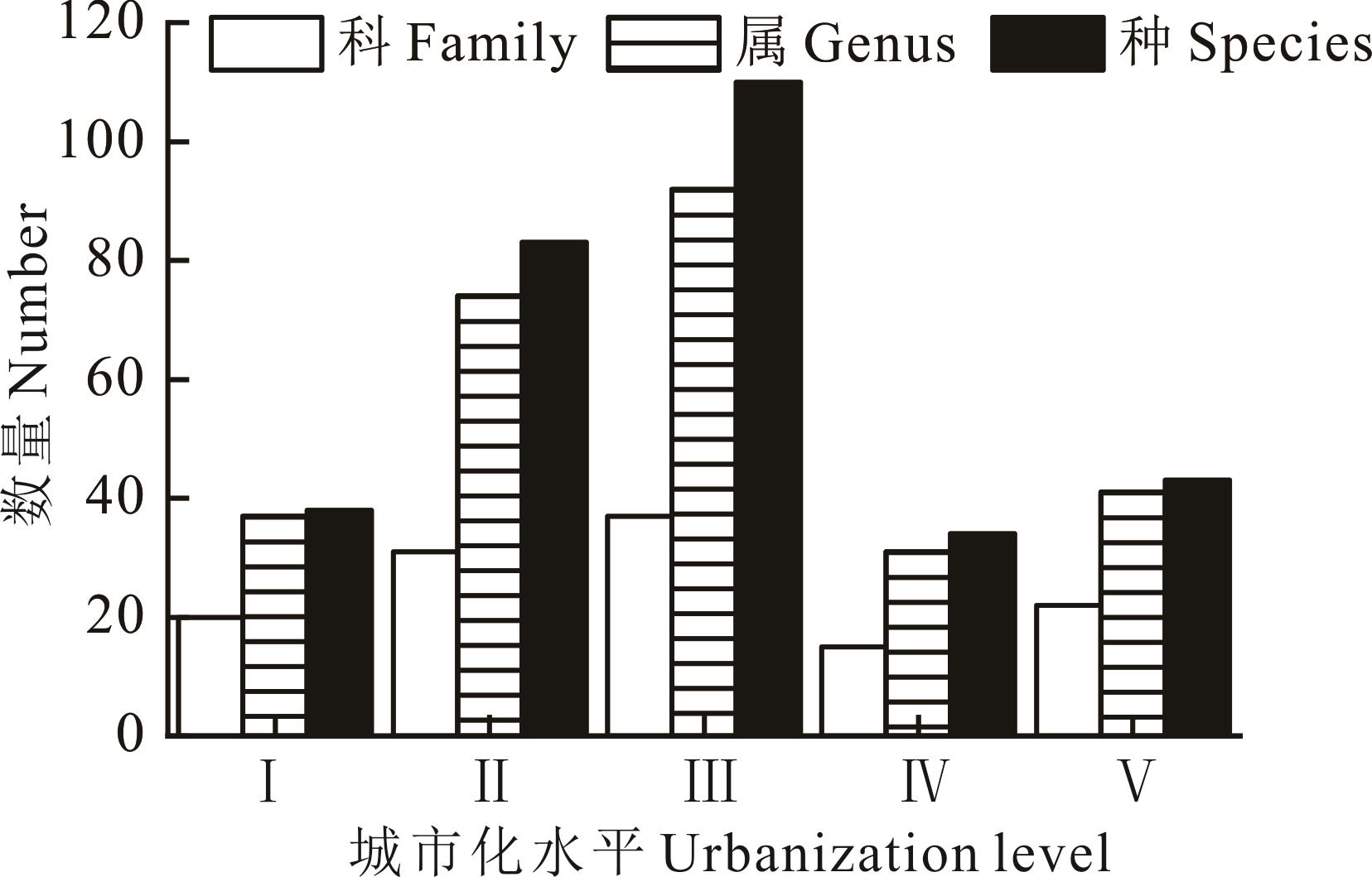
Fig.1 Different urbanization gradients families, genera, and species
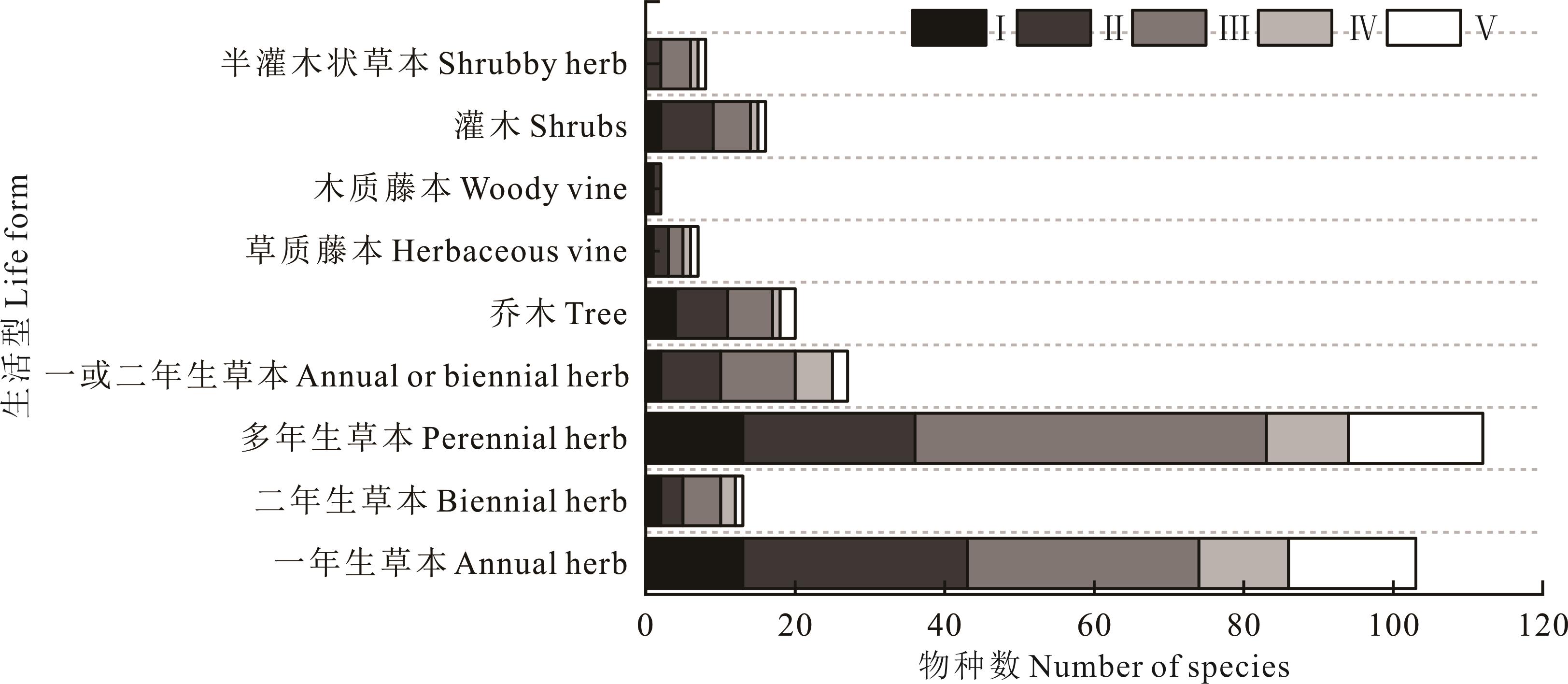
Fig.2 Life forms with different urbanization gradients
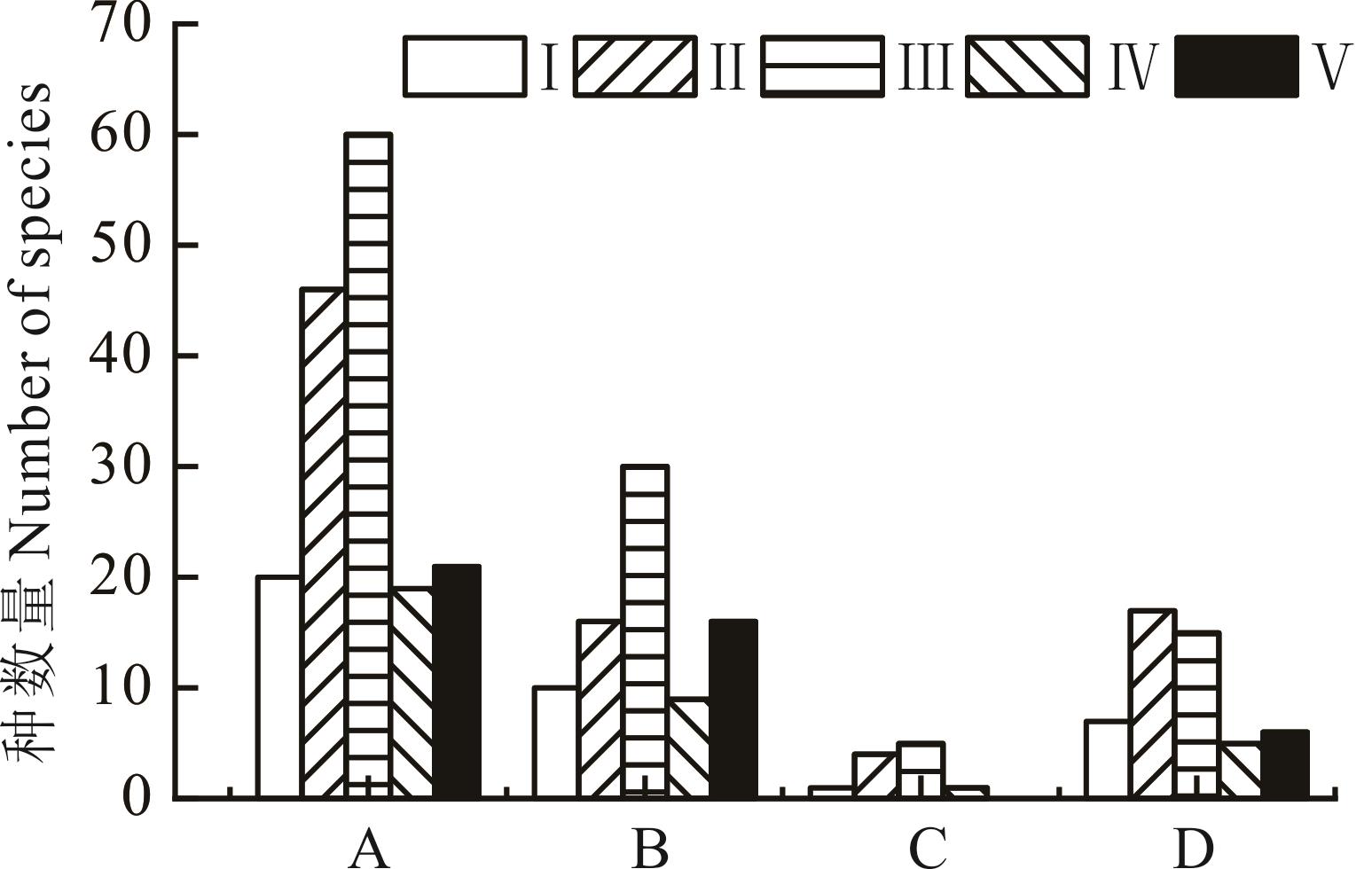
Fig.3 Species sources of different urbanization gradients
城市化水平Ⅰ Urbanization level Ⅰ | 城市化水平Ⅱ Urbanization level Ⅱ | 城市化水平Ⅲ Urbanization level Ⅲ | 城市化水平Ⅳ Urbanization level Ⅳ | 城市化水平Ⅴ Urbanization level Ⅴ | |||||
|---|---|---|---|---|---|---|---|---|---|
种名 Species name | 重要值 Important value | 种名 Species name | 重要值 Important value | 种名 Species name | 重要值 Important value | 种名 Species name | 重要值 Important value | 种名 Species name | 重要值 Important value |
| 蒲公英T. mongolicum* | 0.33 | 朝天委陵 菜P.supina* | 0.41 | 早开堇菜V.prionantha* | 0.50 | 乳苣L. tatarica | 0.54 | 芦苇P. australis* | 0.35 |
| 旋覆花I. japonica | 0.27 | 曼陀罗Datura stramonium | 0.23 | 芦苇P. australis* | 0.25 | 旋覆花I. japonica | 0.29 | 千屈菜L. salicaria* | 0.32 |
| 芦苇P. australis* | 0.24 | 早开堇菜V.prionantha* | 0.23 | 旋覆花I. japonica | 0.24 | 地肤Bassia scoparia* | 0.23 | 白车轴草T. repens | 0.16 |
| 宽叶独行菜L.latifolium | 0.22 | 青杞S.septemlobum* | 0.22 | 诸葛菜Orychophragmus violaceus* | 0.23 | 藜Chenopodium album* | 0.19 | 平车前Plantago depressa* | 0.16 |
| 小蓬草E. canadensis | 0.17 | 芦苇P. australis* | 0.16 | 粗毛牛膝菊G.quadriradiata | 0.21 | 苦苣菜Sonchusoleraceus | 0.18 | 蒲公英T. mongolicum* | 0.15 |
Table 5 Important values of different urbanization gradients
城市化水平Ⅰ Urbanization level Ⅰ | 城市化水平Ⅱ Urbanization level Ⅱ | 城市化水平Ⅲ Urbanization level Ⅲ | 城市化水平Ⅳ Urbanization level Ⅳ | 城市化水平Ⅴ Urbanization level Ⅴ | |||||
|---|---|---|---|---|---|---|---|---|---|
种名 Species name | 重要值 Important value | 种名 Species name | 重要值 Important value | 种名 Species name | 重要值 Important value | 种名 Species name | 重要值 Important value | 种名 Species name | 重要值 Important value |
| 蒲公英T. mongolicum* | 0.33 | 朝天委陵 菜P.supina* | 0.41 | 早开堇菜V.prionantha* | 0.50 | 乳苣L. tatarica | 0.54 | 芦苇P. australis* | 0.35 |
| 旋覆花I. japonica | 0.27 | 曼陀罗Datura stramonium | 0.23 | 芦苇P. australis* | 0.25 | 旋覆花I. japonica | 0.29 | 千屈菜L. salicaria* | 0.32 |
| 芦苇P. australis* | 0.24 | 早开堇菜V.prionantha* | 0.23 | 旋覆花I. japonica | 0.24 | 地肤Bassia scoparia* | 0.23 | 白车轴草T. repens | 0.16 |
| 宽叶独行菜L.latifolium | 0.22 | 青杞S.septemlobum* | 0.22 | 诸葛菜Orychophragmus violaceus* | 0.23 | 藜Chenopodium album* | 0.19 | 平车前Plantago depressa* | 0.16 |
| 小蓬草E. canadensis | 0.17 | 芦苇P. australis* | 0.16 | 粗毛牛膝菊G.quadriradiata | 0.21 | 苦苣菜Sonchusoleraceus | 0.18 | 蒲公英T. mongolicum* | 0.15 |
植物性状 Plant traits | 特征分类 Characteristic classification | 占物种总数的比例Proportion of total species | 植物性状 Plant traits | 特征分类 Characteristic classification | 占物种总数的比例Proportion of total species |
|---|---|---|---|---|---|
叶片质地 Leaf texture | 膜质Membranous | 4.92 | 固氮类型Nitrogen fixation type | 固氮N-fixing | 7.75 |
| 草质Herbaceous | 61.87 | 不固氮Non-N-fixing | 92.25 | ||
| 纸质Papery | 26.06 | 植物来源Species source | 本地Native species | 54.23 | |
| 肉质Fleshy | 0.70 | 国内外来Domestic alien species | 26.06 | ||
| 革质Leathery | 6.34 | 国外外来Foreign alien species | 5.63 | ||
| 入侵植物Invasive plants | 14.08 | ||||
| 叶片大小Leaf size | 小Small | 24.65 | 根系深浅 Root depth | 浅Shallow | 85.92 |
| 中等Medium | 59.15 | 中Medium | 0 | ||
| 大Large | 16.20 | 深Deep | 14.08 | ||
叶片绒毛 Leaf fluff | 无毛或近无毛Glabrous or subglabrous | 57.04 | 根系类型 Root type | 直根系Taproot system | 13.38 |
| 中等密度Medium density | 26.06 | 须根系Fibrous root system | 86.62 | ||
| 密毛Densely hairy | 16.90 | 传粉方式Pollination mode | 风媒Wind-borne | 26.76 | |
| 叶片粗糙程度Leaf froughness | 光滑Soft | 7.04 | 虫媒Insect-borne | 73.24 | |
| 较光滑Slightly soft | 43.66 | 种子扩散方式Dispersal mode | 风力传播Wind-borne | 59.15 | |
| 较粗糙Slightly rough | 36.62 | 动物传播Animal-borne | 16.20 | ||
| 粗糙Rough | 12.68 | 自动传播Auto-borne | 24.65 | ||
| 花期Flowering period | 短Short | 50.00 | 果期Fruit period | 短Short | 54.93 |
| 中Medium | 45.07 | 中Medium | 42.25 | ||
| 长Long | 4.93 | 长Long | 2.82 |
Table 6 Proportion of functional traits to the number of plant species (%)
植物性状 Plant traits | 特征分类 Characteristic classification | 占物种总数的比例Proportion of total species | 植物性状 Plant traits | 特征分类 Characteristic classification | 占物种总数的比例Proportion of total species |
|---|---|---|---|---|---|
叶片质地 Leaf texture | 膜质Membranous | 4.92 | 固氮类型Nitrogen fixation type | 固氮N-fixing | 7.75 |
| 草质Herbaceous | 61.87 | 不固氮Non-N-fixing | 92.25 | ||
| 纸质Papery | 26.06 | 植物来源Species source | 本地Native species | 54.23 | |
| 肉质Fleshy | 0.70 | 国内外来Domestic alien species | 26.06 | ||
| 革质Leathery | 6.34 | 国外外来Foreign alien species | 5.63 | ||
| 入侵植物Invasive plants | 14.08 | ||||
| 叶片大小Leaf size | 小Small | 24.65 | 根系深浅 Root depth | 浅Shallow | 85.92 |
| 中等Medium | 59.15 | 中Medium | 0 | ||
| 大Large | 16.20 | 深Deep | 14.08 | ||
叶片绒毛 Leaf fluff | 无毛或近无毛Glabrous or subglabrous | 57.04 | 根系类型 Root type | 直根系Taproot system | 13.38 |
| 中等密度Medium density | 26.06 | 须根系Fibrous root system | 86.62 | ||
| 密毛Densely hairy | 16.90 | 传粉方式Pollination mode | 风媒Wind-borne | 26.76 | |
| 叶片粗糙程度Leaf froughness | 光滑Soft | 7.04 | 虫媒Insect-borne | 73.24 | |
| 较光滑Slightly soft | 43.66 | 种子扩散方式Dispersal mode | 风力传播Wind-borne | 59.15 | |
| 较粗糙Slightly rough | 36.62 | 动物传播Animal-borne | 16.20 | ||
| 粗糙Rough | 12.68 | 自动传播Auto-borne | 24.65 | ||
| 花期Flowering period | 短Short | 50.00 | 果期Fruit period | 短Short | 54.93 |
| 中Medium | 45.07 | 中Medium | 42.25 | ||
| 长Long | 4.93 | 长Long | 2.82 |
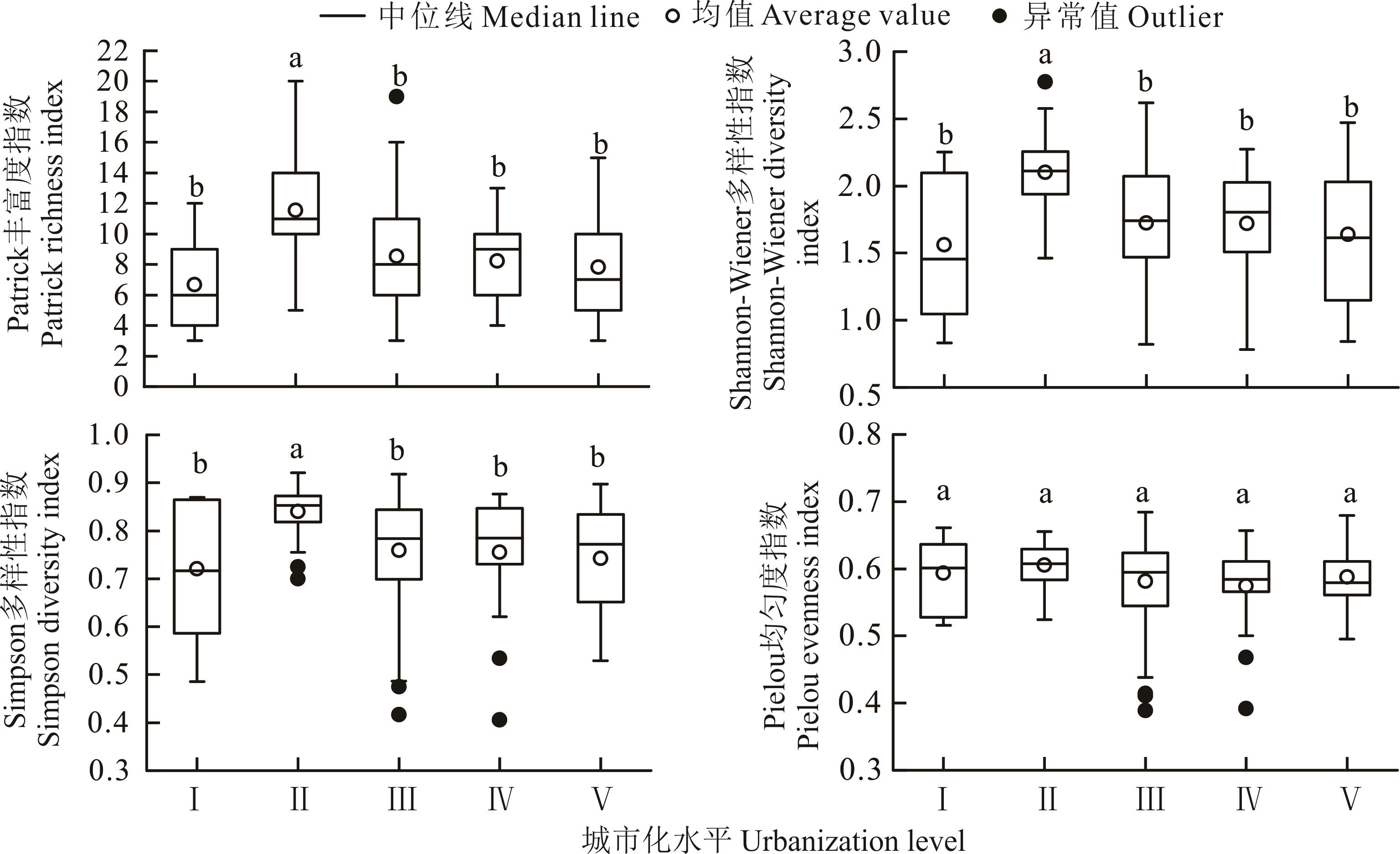
Fig.4 Biodiversity of spontaneous plant species at different urbanization gradients
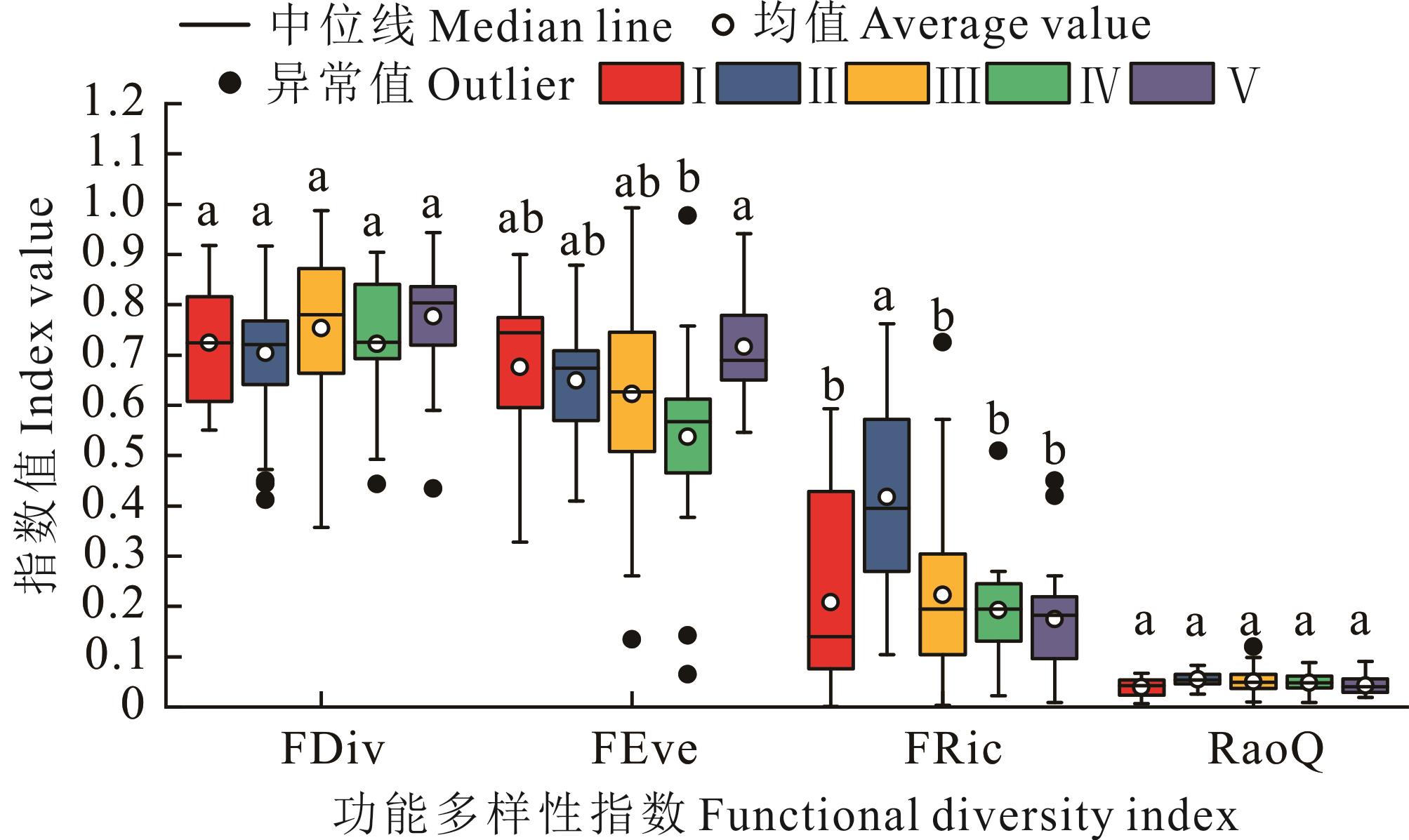
Fig.5 Functional diversity of spontaneous plants with different urbanization gradients
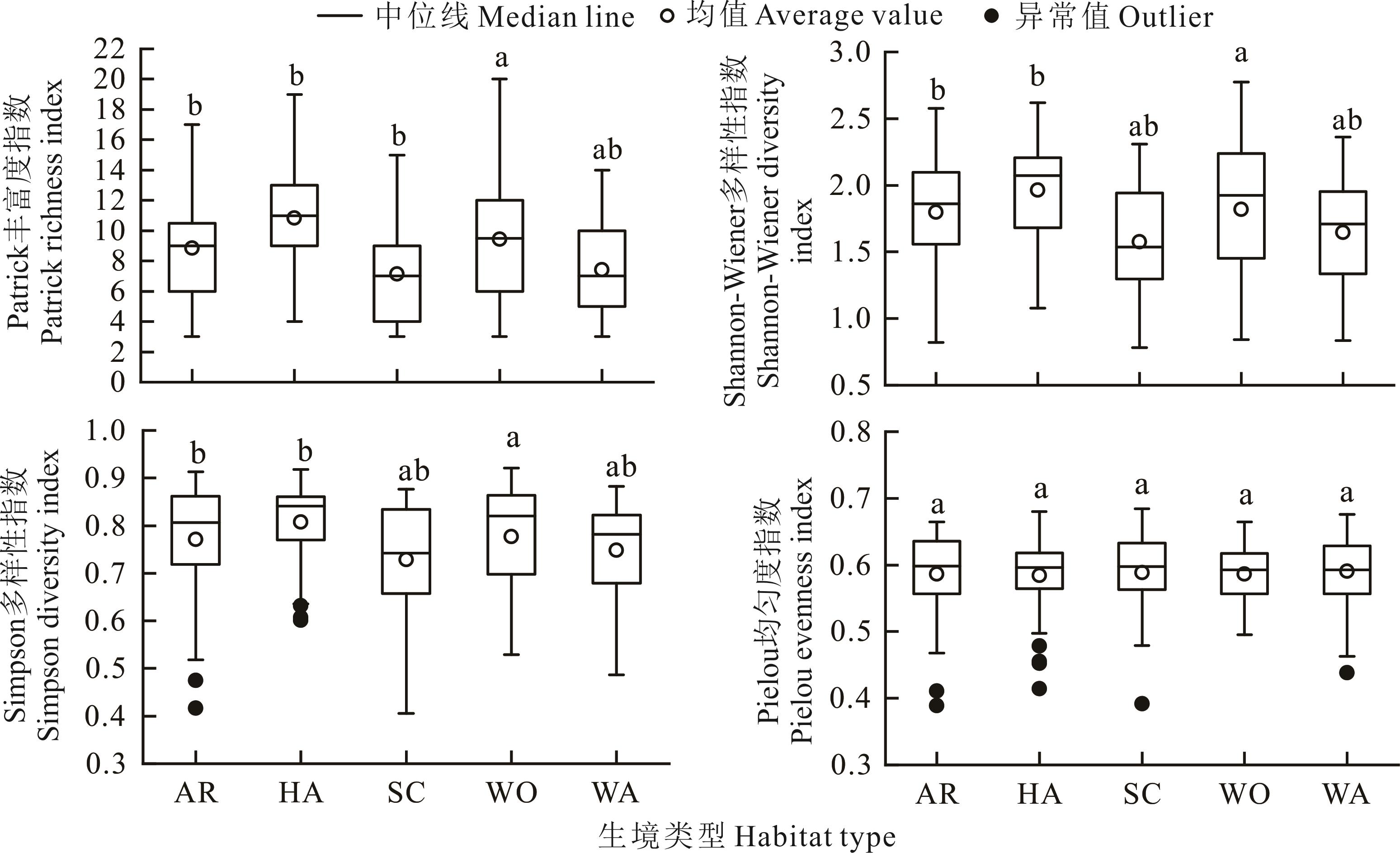
Fig.6 Species diversity of spontaneous plant communities in different habitat types
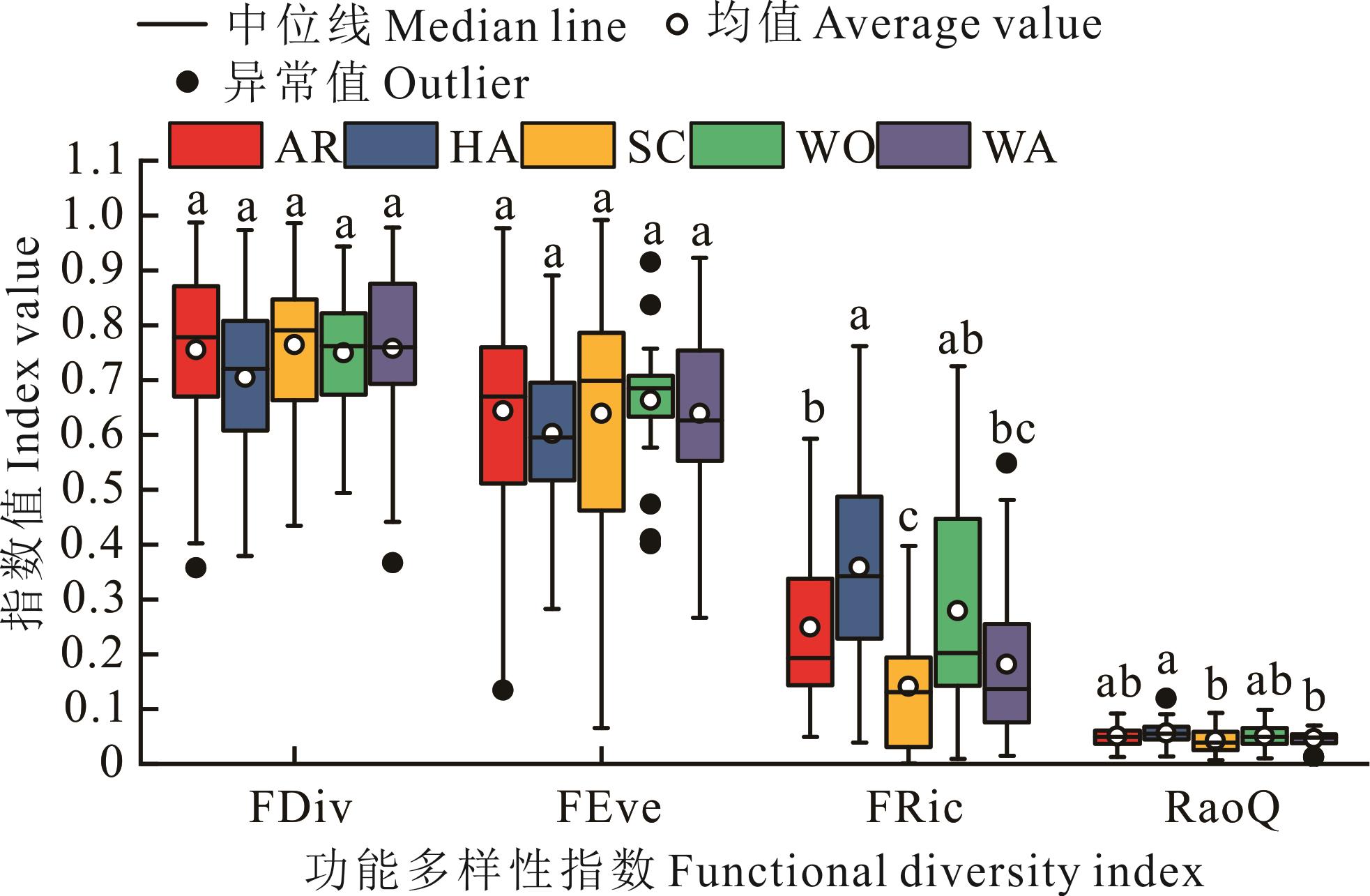
Fig.7 Functional diversity of spontaneous plant communities in different habitat types
城市化水平 Urbanization level | 指数Index | FRic | RaoQ | FEve |
|---|---|---|---|---|
| Ⅰ | RaoQ | 0.843* | ||
| FEve | 0.007 | 0.308* | ||
| FDiv | 0.104 | 0.164 | -0.186 | |
| Ⅱ | RaoQ | 0.307* | ||
| FEve | 0.064 | 0.149 | ||
| FDiv | -0.230 | -0.171 | 0.147 | |
| Ⅲ | RaoQ | 0.020 | ||
| FEve | -0.115 | -0.025 | ||
| FDiv | -0.292** | 0.050 | -0.055 | |
| Ⅳ | RaoQ | 0.532* | ||
| FEve | 0.038 | 0.026 | ||
| FDiv | 0.104 | 0.102 | 0.154 | |
| Ⅴ | RaoQ | 0.760** | ||
| FEve | 0.059 | 0.098 | ||
| FDiv | 0.000 | 0.390 | 0.118 |
Table 7 Spearman rank correlation among functional diversity indices
城市化水平 Urbanization level | 指数Index | FRic | RaoQ | FEve |
|---|---|---|---|---|
| Ⅰ | RaoQ | 0.843* | ||
| FEve | 0.007 | 0.308* | ||
| FDiv | 0.104 | 0.164 | -0.186 | |
| Ⅱ | RaoQ | 0.307* | ||
| FEve | 0.064 | 0.149 | ||
| FDiv | -0.230 | -0.171 | 0.147 | |
| Ⅲ | RaoQ | 0.020 | ||
| FEve | -0.115 | -0.025 | ||
| FDiv | -0.292** | 0.050 | -0.055 | |
| Ⅳ | RaoQ | 0.532* | ||
| FEve | 0.038 | 0.026 | ||
| FDiv | 0.104 | 0.102 | 0.154 | |
| Ⅴ | RaoQ | 0.760** | ||
| FEve | 0.059 | 0.098 | ||
| FDiv | 0.000 | 0.390 | 0.118 |
指数 Index | 功能丰富度 Functional richness | Rao二次熵 Rao quadratic entropy | 功能均匀度 Functional evenness | 功能分歧度 Functional divergence |
|---|---|---|---|---|
| Patrick指数Patrick index | 0.212** | 0.464** | -0.063 | 0.101 |
| Shannon-Wiener指数Shannon-Wiener index | 0.244** | 0.535** | 0.017 | 0.025 |
| Simpson指数Simpson index | 0.217** | 0.544** | 0.060 | -0.017 |
| Pielou指数Pielou index | 0.118 | 0.295** | 0.213** | -0.084 |
Table 8 Spearman’s rank correlation of species diversity with functional diversity
指数 Index | 功能丰富度 Functional richness | Rao二次熵 Rao quadratic entropy | 功能均匀度 Functional evenness | 功能分歧度 Functional divergence |
|---|---|---|---|---|
| Patrick指数Patrick index | 0.212** | 0.464** | -0.063 | 0.101 |
| Shannon-Wiener指数Shannon-Wiener index | 0.244** | 0.535** | 0.017 | 0.025 |
| Simpson指数Simpson index | 0.217** | 0.544** | 0.060 | -0.017 |
| Pielou指数Pielou index | 0.118 | 0.295** | 0.213** | -0.084 |
指数 Index | 功能丰富度Functional richness | Rao二次熵Rao quadratic entropy | ||||||||
|---|---|---|---|---|---|---|---|---|---|---|
| Ⅰ | Ⅱ | Ⅲ | Ⅳ | Ⅴ | Ⅰ | Ⅱ | Ⅲ | Ⅳ | Ⅴ | |
| Patrick指数Patrick index | 0.768** | 0.290** | 0.048** | 0.014 | 0.696** | 0.718** | 0.014 | 0.150** | 0.038** | 0.277** |
| Shannon-Wiener指数Shannon-Wiener index | 0.675** | 0.221** | 0.073** | 0.014 | 0.772** | 0.736** | 0.018 | 0.240** | 0.182** | 0.408** |
Table 9 Regression analysis of species diversity and functional diversity of spontaneous plant communities (correlation coefficient R2)
指数 Index | 功能丰富度Functional richness | Rao二次熵Rao quadratic entropy | ||||||||
|---|---|---|---|---|---|---|---|---|---|---|
| Ⅰ | Ⅱ | Ⅲ | Ⅳ | Ⅴ | Ⅰ | Ⅱ | Ⅲ | Ⅳ | Ⅴ | |
| Patrick指数Patrick index | 0.768** | 0.290** | 0.048** | 0.014 | 0.696** | 0.718** | 0.014 | 0.150** | 0.038** | 0.277** |
| Shannon-Wiener指数Shannon-Wiener index | 0.675** | 0.221** | 0.073** | 0.014 | 0.772** | 0.736** | 0.018 | 0.240** | 0.182** | 0.408** |

Fig.8 Regression analysis of species diversity and functional diversity in spontaneous plants communities across different levels of urbanization
| [1] | Zhang J P, Liu C L, Liu X N, et al. Species diversity of spontaneous herbaceous plants in the green belt areas of Beijing. Research of Environmental Sciences, 2025, 38(1): 39-48. |
| 张继平, 刘春兰, 刘晓娜, 等. 北京市绿化隔离地区自生草本植物物种多样性研究. 环境科学研究, 2025, 38(1): 39-48. | |
| [2] | Gao Z W. Pattern of spontaneous plants diversity and its factors in 9 cities of Yunnan Province, China. Shanghai: East China Normal University, 2021. |
| 高志文. 云南省9个城市的自生植物多样性格局及其影响因子. 上海: 华东师范大学, 2021. | |
| [3] | Shi X Y. Investigation of spontaneous vegetation resources and landscape application in Xi’an urban area. Xi’an: Xi’an University of Architecture and Technology, 2024. |
| 史新园. 西安城区自生植物资源调查与园林应用研究. 西安: 西安建筑科技大学, 2024. | |
| [4] | Uchida K, Fujimoto H, Ushimaru A. Urbanization promotes the loss of seasonal dynamics in the semi-natural grasslands of an East Asian megacity. Basic and Applied Ecology, 2018, 29: 1-11. |
| [5] | Mckinney M L. Urbanization, biodiversity, and conservation. Bioscience, 2002, 52: 883-890. |
| [6] | Chen J Y, Yun H F, Xu W B, et al. Responses of spontaneous plant diversity to urbanization in different habitats. Journal of Southwest Forestry University (Natural Science), 2025, 45(4): 1-10. |
| 陈金艳, 员浩帆, 徐文斌, 等. 不同生境下城市自生植物多样性对城市化的响应. 西南林业大学学报(自然科学), 2025, 45(4): 1-10. | |
| [7] | Bonthoux S, Brun M, Di Pietro F, et al. How can wastelands promote biodiversity in cities? A review. Landscape and Urban Planning, 2014, 132: 79-88. |
| [8] | Madre F, Vergnes A, Machon N, et al. Green roofs as habitats for wild plant species inurban landscapes: first insights from a large-scale sampling. Landscape and Urban Planning, 2014, 122: 100-107. |
| [9] | Khew J Y T, Yokohari M, Tanaka T. Public perceptions of nature and landscape preference in Singapore. Human Ecology, 2014, 42: 979-988. |
| [10] | Zhang M Y, Li X L, Fan S X, et al. Response of spontaneous plant communities to microhabitats in a riparian corridor in Beijing, China. Scientific Reports, 2024, 14: 17642. |
| [11] | Yang Y F, Xu B, Yu Q, et al. Distribution pattern and factors influencing spontaneous plant diversity in different wetland habitats. Forests, 2022, 13: 1678. |
| [12] | Zhang M L. Diversity pattern of ruderal community and its responses to heterogeneous habitat in urban of Hangzhou. Hangzhou: East China Normal University, 2018. |
| 张明丽. 杭州城市杂草群落多样性格局及对异质化生境的响应. 杭州: 华东师范大学, 2018. | |
| [13] | You Q. Composition and community characteristics of spontaneous herbaceous plants in the main urban area of Zhengzhou. Zhengzhou: Henan Agricultural University, 2024. |
| 尤其. 郑州市主城区自生草本植物组成与群落特征研究. 郑州: 河南农业大学, 2024. | |
| [14] | Chen X S. Plant diversity and community types of urban green space on urban-rural gradient in Harbin. Shanghai: East China Normal University, 2014. |
| 陈晓双. 哈尔滨城区杂草群落分布格局及其对生境异质化的响应. 上海: 华东师范大学, 2014. | |
| [15] | Shen P X, Ren S, Liang X Y, et al. Diversity and distribution characteristics of spontaneous vegetation in herbaceous layer of urban river corridors in Harbin. Landscape Architecture, 2024, 31(6): 28-36. |
| 申沛鑫, 任术, 梁新悦, 等. 哈尔滨城市河流廊道草本层自生植物多样性及分布特征. 风景园林, 2024, 31(6): 28-36. | |
| [16] | Li X L, Zhang M Y, Fan S X, et al. Study on distribution characteristics of spontaneous plants in urban park green spaces in different habitats in Beijing. Research of Environmental Sciences, 2024, 37(10): 2118-2125. |
| 李晓璐, 张梦园, 范舒欣, 等. 基于不同生境的北京城市公园绿地自生植物分布特征研究. 环境科学研究, 2024, 37(10): 2118-2125. | |
| [17] | An Q, Liu W L. Investigation and analysis of the diversity of self-generated herbaceous plants in three universities in Lanzhou City. Subtropical Plant Science, 2024, 53(3): 257-270. |
| 安琪, 刘文兰. 兰州市3所高校自生草本植物多样性调查与分析.亚热带植物科学, 2024, 53(3): 257-270. | |
| [18] | Liu Q, Ding Y F, Song S S, et al. Quantitative classification and ordination analysis of spontaneous vegetation communities in herb layer along the green belt of Nanjing Ming City Wall. Acta Prataculturae Sinica, 2024, 33(5): 1-15. |
| 刘倩, 丁彦芬, 宋杉杉, 等. 南京明城墙绿带草本层自生植物群落数量分类与排序分析. 草业学报, 2024, 33(5): 1-15. | |
| [19] | Chu C H. Spatial distribution and plant diversity of idle land in the main city of Nanjing. Nanjing: Nanjing Agricultural University, 2020. |
| 褚晨晖. 南京市主城区闲置土地分布及植物多样性研究. 南京: 南京农业大学, 2020. | |
| [20] | Zhai Y W. Response of the spontaneous plant composition in road greenbelt to urbanization level in: implications for spontaneous plant landscape construction-a case study of Nanjing City. Nanjing: Nanjing Agricultural University, 2020. |
| 翟育雯. 道路绿地自生植物组成对城市化水平的响应及景观营造研究——以南京市为例. 南京: 南京农业大学, 2020. | |
| [21] | Hu R, Chen R Z. Research on summer climate adaptability of spontaneous vegetation for roof greening in Chengdu. Landscape Architecture, 2024, 31(4): 104-110. |
| 胡锐, 陈睿智. 成都自生草本植物屋顶绿化夏季气候适应性研究. 风景园林, 2024, 31(4): 104-110. | |
| [22] | Lyu N N, Liu W L, Liu X J. Species composition and diversity analysis of autophytes in Lanzhou riverside parks. Biotic Resources, 2024, 46(3): 255-264. |
| 吕宁宁, 刘文兰, 刘晓娟. 兰州滨河公园自生植物物种组成及多样性分析. 生物资源, 2024, 46(3): 255-264. | |
| [23] | Li J W, He B Y, Li C, et al. Analysis of grassland community-level plant functional traits and functional diversity at different times during restoration. Acta Prataculturae Sinica, 2023, 32(1): 16-25. |
| 李江文, 何邦印, 李彩, 等. 不同恢复年限草地群落水平植物功能性状及功能多样性分析. 草业学报, 2023, 32(1): 16-25. | |
| [24] | Dong S K, Tang L, Zhang X F, et al. Relationship between plant species diversity and functional diversity in alpine grasslands. Acta Ecologica Sinica, 2017, 37(5): 1472-1483. |
| 董世魁, 汤琳, 张相锋, 等. 高寒草地植物物种多样性与功能多样性的关系. 生态学报, 2017, 37(5): 1472-1483. | |
| [25] | Jiang X L, Zhang W G. Functional diversity and its research method. Acta Ecologica Sinica, 2010, 30(10): 2766-2773. |
| 江小雷, 张卫国. 功能多样性及其研究方法. 生态学报, 2010, 30(10): 2766-2773. | |
| [26] | Wang K. Research on the spontaneous herbaceous plants in Beijing urban area. Beijing: Beijing Forestry University, 2014. |
| 王阔. 北京城市化环境下自生草本植物现状及园林应用研究. 北京: 北京林业大学, 2014. | |
| [27] | Pan N, Min Y T, Zhao J J, et al. Species and functional diversity of spontaneous herb communities in urban built-up areas: A case study of Shenzhen City. Acta Ecologica Sinica, 2024, 44(9): 3759-3774. |
| 潘妮, 闵钰婷, 赵娟娟, 等. 城市建成区自生草本植物群落的物种多样性与功能多样性——以深圳市为例. 生态学报, 2024, 44(9): 3759-3774. | |
| [28] | Li X P, Li X L, Zhang M Y, et al. Urban park attributes as predictors for the diversity and composition of spontaneous plants-A case in Beijing, China. Urban Forestry & Urban Greening, 2024, 91: 128-185. |
| [29] | Qin D Y. Functional traits of spontaneous plants in Chongqing metropolis and their responses to urbanization. Chongqing: Chongqing University, 2021. |
| 秦丹亚. 重庆市主城区自生植物功能性状及其对城市化的响应. 重庆: 重庆大学, 2021. | |
| [30] | Zhang Y, Wu Y H, Zhao F. Study on species diversity of typical plant community in wetland along Yellow River in Lanzhou. Grassland and Turf, 2016, 36(1): 65-71. |
| 张瑜, 吴永华, 赵峰. 黄河兰州段湿地典型植物群落物种多样性研究. 草原与草坪, 2016, 36(1): 65-71. | |
| [31] | Zhang Q P, Wang Q, Zhang L, et al. An analyses of plant diversities for Yellow River wetland in Lanzhou City. Bullet in of Soil and Water Conservation, 2012, 32(3): 240-244. |
| 张起鹏, 王倩, 张丽, 等. 黄河兰州段湿地植物多样性研究. 水土保持通报, 2012, 32(3): 240-244. | |
| [32] | Zhou P P, Zhang M J, Wang S J, et al. The characteristics of stable hydrogen and oxygen isotopes of greening plants in Lanzhou downtown. Chinese Journal of Ecology, 2016, 35(11): 2942-2951. |
| 周盼盼, 张明军, 王圣杰, 等. 兰州城区绿化植物稳定氢氧同位素特征. 生态学杂志, 2016, 35(11): 2942-2951. | |
| [33] | Zhong J L, Li X, Liu W, et al. Effects of urbanization intensity on forest vegetation charactistics and landscape pattern indices in Nanchang. Chinese Journal of Ecology, 2024, 43(8): 2285-2294. |
| 钟嘉琳, 李心, 刘玮, 等. 南昌城市化强度对森林植被特征和景观格局指数的影响. 生态学杂志, 2024, 43(8): 2285-2294. | |
| [34] | Zhang M Y, Li K, Xing X Y, et al. Responses of spontaneous plant diversity to urbanization in Wenyu River-North canal ecological corridor, Beijing. Acta Ecologica Sinica, 2022, 42(7): 2582-2592. |
| 张梦园, 李坤, 邢小艺, 等. 北京温榆河-北运河生态廊道自生植物多样性对城市化的响应.生态学报, 2022, 42(7): 2582-2592. | |
| [35] | Li X P, Zhang S N, Feng L, et al. Habitat and species diversity of spontaneous plants on both sides of river corridor in Chengdu urban area. Landscape Architecture, 2022, 29(1): 64-70. |
| 李晓鹏, 张思凝, 冯黎, 等. 成都城区河流廊道自生植物的生境及物种多样性. 风景园林, 2022, 29(1): 64-70. | |
| [36] | Luo Q Y, Zhang M Y, Li X L, et al. Diversity characteristics and functional trait composition of spontaneous plants in different habitats of urban green space, Beijing. Acta Ecologica Sinica, 2024, 44(11): 4744-4757. |
| 骆沁宇, 张梦园, 李晓璐, 等. 北京城市绿地不同生境自生植物多样性特征及其功能性状组成. 生态学报, 2024, 44(11): 4744-4757. | |
| [37] | Editorial Board of Flora of China, Chinese Academy of Sciences. Flora of China (Volum 1). Beijing: Science Press, 2006. |
| 中国科学院中国植物志编委会. 中国植物志(第一卷). 北京: 科学出版社, 2006. | |
| [38] | Editorial Board Member of Gansu Flora. Flora of Gansu (Volum 2). Lanzhou: Gansu Science and Technology Press, 2005. |
| 甘肃植物志编委. 甘肃植物志(第二卷). 兰州: 甘肃科学技术出版社, 2005. | |
| [39] | Ma J S, Li H R. The checklist of the alien invasive plants in China. Beijing: Higher Education Press, 2018. |
| 马金双, 李惠茹. 中国外来入侵植物名录. 北京: 高等教育出版社, 2018. | |
| [40] | Wan F H, Liu Q R, Xie M, et al. Color illustrations of invasive alien plants in China. Beijing: Science Press, 2012. |
| 万方浩, 刘全儒, 谢明, 等. 生物入侵:中国外来入侵植物图鉴. 北京: 科学出版社, 2012. | |
| [41] | Zhang J T. Quantitative ecology. Beijing: Science Press, 2004. |
| 张金屯. 数量生态学. 北京: 科学出版社, 2004. | |
| [42] | Chaudhary I J, Rathore D. Suspended particulate matter deposition and its impact on urban trees. Atmospheric Pollution Research, 2018, 9: 1072-1082. |
| [43] | Song C C, Liu S Y, Zhao J J, et al. Evaluation of ecological function for urban plant communities based on functional traits. Chinese Journal of Ecology, 2020, 39(2): 703-714. |
| 宋晨晨, 刘时彦, 赵娟娟, 等. 基于功能特征的城市植物群落生态功能评价. 生态学杂志, 2020, 39(2): 703-714. | |
| [44] | Dawson S K, Carmona C P, González-Suárez M, et al. The traits of “trait ecologists”: An analysis of the use of trait and functional trait terminology. Ecology and Evolution, 2021, 11(23): 16434-16445. |
| [45] | Petchey O L, Gaston K J. Functional diversity (FD), species richness and community composition. Ecology Letters, 2002, 5(3): 402-411. |
| [46] | Han T T, Tang X, Ren H, et al. Community/ecosystem functional diversity: measurements and development. Acta Ecologica Sinica, 2021, 41(8): 3286-3295. |
| 韩涛涛, 唐玄, 任海, 等. 群落/生态系统功能多样性研究方法及展望. 生态学报, 2021, 41(8): 3286-3295. | |
| [47] | Li J, Lu S J, Qiu L S, et al. Effects of invasive plants on species and functional diversity of herbs in the built-up area of Shenzhen, China. Acta Ecologica Sinica, 2023, 43(18): 7507-7522. |
| 李建, 卢世君, 邱礼杉, 等. 深圳市建成区入侵植物对草本植物种类及功能多样性的影响. 生态学报, 2023, 43(18): 7507-7522. | |
| [48] | Li M J, Zhao J J, Liu S Y, et al. Study on the functional diversity and the species diversity of plant communities in Mountain City Parks—A case study of the main urban area of Chongqing. Chinese Landscape Architecture, 2021, 37(2): 124-129. |
| 李明娟, 赵娟娟, 刘时彦, 等. 山地城市公园植物群落功能多样性与物种多样性研究——以重庆市主城区为例. 中国园林, 2021, 37(2): 124-129. | |
| [49] | Liu C, Xing S H, Yao Y, et al. Spatial distribution pattern and influencing factors of spontaneous plants within the built-up areas of Beijing, China. Acta Ecologica Sinica, 2024, 44(2): 544-558. |
| 刘昌, 邢韶华, 姚扬, 等. 北京城区自生植物分布格局及其影响因素. 生态学报, 2024, 44(2): 544-558. | |
| [50] | Wang M, Li J, Kuang S, et al. Plant diversity along the urban-rural gradient and its relationship with urbanization degree in Shanghai, China. Forests, 2020, 11(2): 171. |
| [51] | Chen X S, Liang H, Song K, et al. Ruderal species diversity and distribution in heterogeneous habitats of the urban area of Harbin. Chinese Journal of Ecology, 2014, 33(4): 946-952. |
| 陈晓双, 梁红, 宋坤, 等. 哈尔滨中心城区杂草物种多样性及其在异质生境中的分布特征. 生态学杂志, 2014, 33(4): 946-952. | |
| [52] | Tian Z H, Chen K X, Da L J, et al. Diversity, spatial pattern and dynamics vegetation under urbanization in shanghai (Ⅲ): Flora of the ruderal in the urban area of Shanghai under the influence of rapid urbanization. Journal of East China Normal University (Natural Science), 2008(4): 49-57. |
| 田志慧, 陈克霞, 达良俊, 等. 城市化进程中上海植被的多样性、空间格局和动态响应(Ⅲ):高度城市化影响下上海中心城区杂草区系特征. 华东师范大学学报(自然科学版), 2008(4): 49-57. | |
| [53] | Pan N. Species composition and functional diversity of spontaneous herbs communities in Shenzhen discipline: Landscape architecture. Chongqing: Southwest University, 2022. |
| 潘妮. 深圳市建成区自生草本植物群落的种类构成与功能多样性研究. 重庆: 西南大学, 2022. | |
| [54] | You Q, Jiang W Q, Yan Q R, et al. Diversity of spontaneous herbaceous plants and influencing factors in different habitats within the main urban area of Zhengzhou. Journal of Central South University of Forestry & Technology, 2024, 44(11): 109-119. |
| 尤其, 姜文倩, 闫倩如, 等. 郑州主城区不同生境自生草本植物多样性及影响因素. 中南林业科技大学学报, 2024, 44(11): 109-119. | |
| [55] | Soulard C T, Valette E, Perrin C, et al. Peri-urban agro-ecosystems in the Mediterranean: diversity, dynamics, and drivers. Regional Environmental Change, 2018, 18: 651-662. |
| [56] | Mouillot D, Graham N, Villeger S, et al. A functional approach reveals community responses to disturbances. Trends in Ecology Evolution, 2013, 28(3): 167-177. |
| [1] | Yang LIU, Hong XIAO, Chang-lin XU, Ming-yue DENG, Wen-qiang WEI, Ao HAN, Kai MA, Yun WANG. Impact of Salix oritrepha shrub encroachment on characteristics of herbaceous plant communities in the alpine meadows of the Eastern Qilian Mountains [J]. Acta Prataculturae Sinica, 2026, 35(3): 13-25. |
| [2] | Shi-jie ZHOU, Yi-lian WANG, Pan SUN, Jing SHANG, Wen-yu YANG, Xue-gui WANG, Ji-zhi YANG. Analysis of weed species and community characteristics in soybean-maize fields with a banded compound planting pattern in Sichuan Province [J]. Acta Prataculturae Sinica, 2026, 35(2): 143-154. |
| [3] | Jia-qi HE, Lin WU, Zhi-min QIU, Xu-yong GAO, Lun-lun GAO, Shuang-bin FU, Yan-ping YANG, Pei-long WANG, Wan XU, Zhuang ZHOU. Species diversity and community characteristics of weeds on the banks of the Wenzhou expressway [J]. Acta Prataculturae Sinica, 2026, 35(2): 40-53. |
| [4] | Shuang YAN, Fei XIA, Wei WEI, Jing-long WANG, Hao-yang WU, Lin-ling RAN, Yun-yin XUE, Hao SHI, Shai-kun ZHENG, Jun-qiang WANG, Jun-dong HE. Differences along an erosion gradient in alpine meadow plant community diversity and factors influencing diversity [J]. Acta Prataculturae Sinica, 2025, 34(6): 1-13. |
| [5] | Shun-hua LUO, Xin-yu LIU, Bao-ping MENG, Xuan-li CHEN, Ren-jie HU, Hong-yan YU, Xian-ying WANG, Bo ZHANG, Yu QIN. A study of functional group diversity and productivity of alpine grassland in Qilian Mountain National Park [J]. Acta Prataculturae Sinica, 2025, 34(6): 14-26. |
| [6] | Xue-ping LI, Shi-yang XU, Jian-jun LI, Yong-hong QI. Bacterial diversity and community structural changes in rhizosphere soil of naked barley disturbed by root rot [J]. Acta Prataculturae Sinica, 2025, 34(5): 118-129. |
| [7] | Shou-xing WANG, Hua-kun ZHOU, Li-peng OU, Cheng-xian LI, Yan-he WANG, Xiao-chun NING, Qiang GU, Dai-jun WEI, Ming-xin YANG. Vegetation and soil microbial diversity and their relationships with soil factors in different grassland types of the three river headwaters region [J]. Acta Prataculturae Sinica, 2025, 34(4): 16-26. |
| [8] | Xin GONG, Xin-ru HUO, Wen LI, Yan-dong YANG, Chao LIU, Wei-chun QIN, Yan SHEN, Guo-hui WANG, Hong-bin MA. Vegetation community characteristics and spatial differentiation in mountain grassland in Luoshan, Ningxia [J]. Acta Prataculturae Sinica, 2025, 34(2): 1-15. |
| [9] | Ye-xin LYU, Mao YE, Jiao-rong QIAN, Wei-long CHEN, Jing CHE, Miao-miao LI, Guo-yan ZENG. Biodiversity and phylogenetic diversity of grasslands in the Habahe forest area of Xinjiang and analysis of the influencing factors [J]. Acta Prataculturae Sinica, 2025, 34(12): 50-61. |
| [10] | Qian LIU, Yan-fen DING, Shan-shan SONG, Wen-jie XU, Wei YANG. Quantitative classification and ordination analysis of spontaneous vegetation communities in herb layer along the green belt of Nanjing Ming City Wall [J]. Acta Prataculturae Sinica, 2024, 33(5): 1-15. |
| [11] | Hao SHI, Cai-hong YANG, Fei XIA, Jun-qiang WANG, Wei WEI, Jing-long WANG, Yun-yin XUE, Shai-kun ZHENG, Hao-yang WU, Lin-ling RAN, Shuang YAN, Xiao-min JIANG. Initial effects of short-term warming on the productivity of alpine degraded grassland in northern Tibet during the restoration process [J]. Acta Prataculturae Sinica, 2024, 33(11): 30-45. |
| [12] | Zi-li LYU, Bin LIU, Feng CHANG, Zi-jing MA, Qiu-mei CAO. Species diversity and phylogenetic diversity in Bayinbrook alpine grasslands: elevation gradient distribution patterns and drivers [J]. Acta Prataculturae Sinica, 2023, 32(7): 12-22. |
| [13] | Cai-feng LIU, Yuan-yuan DUAN, Ling-ling WANG, Yi-mo WANG, Zheng-gang GUO. Effects of plateau pika (Ochotona curzoniae) disturbance on the relationship between plant species diversity and soil ecological stoichiometry in alpine meadows [J]. Acta Prataculturae Sinica, 2023, 32(6): 157-166. |
| [14] | Yan-shuo CHEN, Yan-ping MA, Hong-mei WANG, Ya-nan ZHAO, Zhi-li LI, Zhen-jie ZHANG. Carbon source utilization by soil bacteria at different lengths of time after introducing shrubs to the desert steppe [J]. Acta Prataculturae Sinica, 2023, 32(6): 30-44. |
| [15] | Mei-hui LI, Yu-hua LI, Xin-hui YAN, Hang-hang TUO, Meng-ru YANG, Zi-lin WANG, Wei LI. Characteristics of plant diversity and aboveground productivity and their relationship driven by subshrub expansion [J]. Acta Prataculturae Sinica, 2023, 32(5): 27-39. |
| Viewed | ||||||
|
Full text |
|
|||||
|
Abstract |
|
|||||
