
ISSN 1004-5759 CN 62-1105/S
Acta Prataculturae Sinica ›› 2026, Vol. 35 ›› Issue (6): 131-144.DOI: 10.11686/cyxb2025289
Ji-peng TIAN1,2( ), Xin WANG1,2, Mudasir NAZAR1,2, Bei-yi LIU1,2(), Si-ran WANG1,2, Cheng-long DING1,2(), Yun-hui CHENG1,2, Jie LI3
Received:2025-07-09
Revised:2025-09-25
Online:2026-06-20
Published:2026-04-13
Contact:
Bei-yi LIU,Cheng-long DING
Ji-peng TIAN, Xin WANG, Mudasir NAZAR, Bei-yi LIU, Si-ran WANG, Cheng-long DING, Yun-hui CHENG, Jie LI. Changes in non-structural carbohydrates of rice straw between before and after ensiling and additive effects on ensilage fermentation and microbial community structure[J]. Acta Prataculturae Sinica, 2026, 35(6): 131-144.
项目 Item | 处理组 Treatment group | 标准误 SEM | 显著性 P-value | ||||
|---|---|---|---|---|---|---|---|
| Y | CK | HLAB | PACA | HLAB_PACA | |||
| 蔗糖Sucrose | 3.35±1.290a | 1.16±0.338a | 1.05±0.061a | 0.91±0.037a | 1.14±0.121a | 0.33 | NS |
| 葡萄糖Glucose | 24.70±1.690a | 1.52±0.425d | 4.80±0.438cd | 10.70±0.901b | 6.65±0.681c | 2.19 | *** |
| 果糖Fructose | 31.80±1.750a | 4.04±0.196b | 3.87±0.190b | 5.24±0.577b | 5.08±0.372b | 2.94 | *** |
| 淀粉Starch | 88.9±7.62a | 51.8±8.76b | 73.9±8.44ab | 48.2±4.83b | 50.3±3.28b | 5.03 | ** |
| 非结构性碳水化合物NSC | 149.0±10.40a | 58.6±8.51b | 83.6±8.10b | 65.1±4.85b | 63.2±4.11b | 9.41 | *** |
Table 1 Changes in non-structural carbohydrate composition in rice straw before and after ensiling (g·kg-1 DM)
项目 Item | 处理组 Treatment group | 标准误 SEM | 显著性 P-value | ||||
|---|---|---|---|---|---|---|---|
| Y | CK | HLAB | PACA | HLAB_PACA | |||
| 蔗糖Sucrose | 3.35±1.290a | 1.16±0.338a | 1.05±0.061a | 0.91±0.037a | 1.14±0.121a | 0.33 | NS |
| 葡萄糖Glucose | 24.70±1.690a | 1.52±0.425d | 4.80±0.438cd | 10.70±0.901b | 6.65±0.681c | 2.19 | *** |
| 果糖Fructose | 31.80±1.750a | 4.04±0.196b | 3.87±0.190b | 5.24±0.577b | 5.08±0.372b | 2.94 | *** |
| 淀粉Starch | 88.9±7.62a | 51.8±8.76b | 73.9±8.44ab | 48.2±4.83b | 50.3±3.28b | 5.03 | ** |
| 非结构性碳水化合物NSC | 149.0±10.40a | 58.6±8.51b | 83.6±8.10b | 65.1±4.85b | 63.2±4.11b | 9.41 | *** |
项目 Item | 处理组Treatment group | 标准误 SEM | 显著性 P-value | |||
|---|---|---|---|---|---|---|
| CK | HLAB | PACA | HLAB_PACA | |||
| pH | 4.96±0.0260a | 4.04±0.0029bc | 4.07±0.0058b | 4.01±0.0058c | 0.12 | *** |
| 乳酸Lactic acid (g·kg-1 DM) | 7.66±0.78c | 44.20±2.19b | 61.70±1.79a | 65.90±2.94a | 6.98 | *** |
| 乙酸Acetic acid (g·kg-1 DM) | 6.10±0.635a | 2.13±0.433c | 3.63±0.267bc | 4.07±0.088b | 0.46 | ** |
| 丙酸Propionic acid (g·kg-1 DM) | 0.185±0.185b | ND | 10.300±0.514a | 8.170±1.190a | 1.43 | *** |
| 丁酸Butyric acid (g·kg-1 DM) | 21.80±1.20a | 3.99±2.31b | ND | ND | 2.77 | *** |
| 氨态氮Ammonia Nitrogen (g·kg-1 TN) | 208.0±9.020a | 51.5±0.373b | 55.1±1.540b | 54.3±0.472b | 20.30 | *** |
| 1,2-丙二醇1,2-Propanediol (g·kg-1 DM) | ND | 0.358±0.0348 | ND | ND | 0.05 | NS |
| 乙醇Ethanol (g·kg-1 DM) | 18.0±4.22a | 11.8±1.75a | 8.22±0.82a | 8.01±1.39a | 1.59 | NS |
Table 2 Effects of additives on fermentation quality in rice straw after 90 d of ensiling
项目 Item | 处理组Treatment group | 标准误 SEM | 显著性 P-value | |||
|---|---|---|---|---|---|---|
| CK | HLAB | PACA | HLAB_PACA | |||
| pH | 4.96±0.0260a | 4.04±0.0029bc | 4.07±0.0058b | 4.01±0.0058c | 0.12 | *** |
| 乳酸Lactic acid (g·kg-1 DM) | 7.66±0.78c | 44.20±2.19b | 61.70±1.79a | 65.90±2.94a | 6.98 | *** |
| 乙酸Acetic acid (g·kg-1 DM) | 6.10±0.635a | 2.13±0.433c | 3.63±0.267bc | 4.07±0.088b | 0.46 | ** |
| 丙酸Propionic acid (g·kg-1 DM) | 0.185±0.185b | ND | 10.300±0.514a | 8.170±1.190a | 1.43 | *** |
| 丁酸Butyric acid (g·kg-1 DM) | 21.80±1.20a | 3.99±2.31b | ND | ND | 2.77 | *** |
| 氨态氮Ammonia Nitrogen (g·kg-1 TN) | 208.0±9.020a | 51.5±0.373b | 55.1±1.540b | 54.3±0.472b | 20.30 | *** |
| 1,2-丙二醇1,2-Propanediol (g·kg-1 DM) | ND | 0.358±0.0348 | ND | ND | 0.05 | NS |
| 乙醇Ethanol (g·kg-1 DM) | 18.0±4.22a | 11.8±1.75a | 8.22±0.82a | 8.01±1.39a | 1.59 | NS |
| 项目Item | 处理组 Treatment group | 标准误 SEM | 显著性 P-value | |||
|---|---|---|---|---|---|---|
| CK | HLAB | PACA | HLAB_PACA | |||
| 干物质Dry matter (g·kg-1) | 295±3.23c | 311±0.33b | 327±1.84a | 328±3.74a | 4.18 | *** |
| 粗蛋白Crude protein (g·kg-1 DM) | 69.5±0.159a | 71.5±0.506a | 72.2±0.820a | 70.4±0.727a | 0.40 | NS |
| 中性洗涤纤维Neutral detergent fiber (g·kg-1 DM) | 636±5.04a | 601±4.54b | 561±1.33c | 571±5.87c | 9.06 | *** |
| 酸性洗涤纤维Acid detergent fiber (g·kg-1 DM) | 407±0.77a | 372±3.30b | 338±5.48c | 348±4.86c | 8.20 | *** |
Table 3 Effects of additives on protein and fiber composition in rice straw after 90 d of ensiling
| 项目Item | 处理组 Treatment group | 标准误 SEM | 显著性 P-value | |||
|---|---|---|---|---|---|---|
| CK | HLAB | PACA | HLAB_PACA | |||
| 干物质Dry matter (g·kg-1) | 295±3.23c | 311±0.33b | 327±1.84a | 328±3.74a | 4.18 | *** |
| 粗蛋白Crude protein (g·kg-1 DM) | 69.5±0.159a | 71.5±0.506a | 72.2±0.820a | 70.4±0.727a | 0.40 | NS |
| 中性洗涤纤维Neutral detergent fiber (g·kg-1 DM) | 636±5.04a | 601±4.54b | 561±1.33c | 571±5.87c | 9.06 | *** |
| 酸性洗涤纤维Acid detergent fiber (g·kg-1 DM) | 407±0.77a | 372±3.30b | 338±5.48c | 348±4.86c | 8.20 | *** |
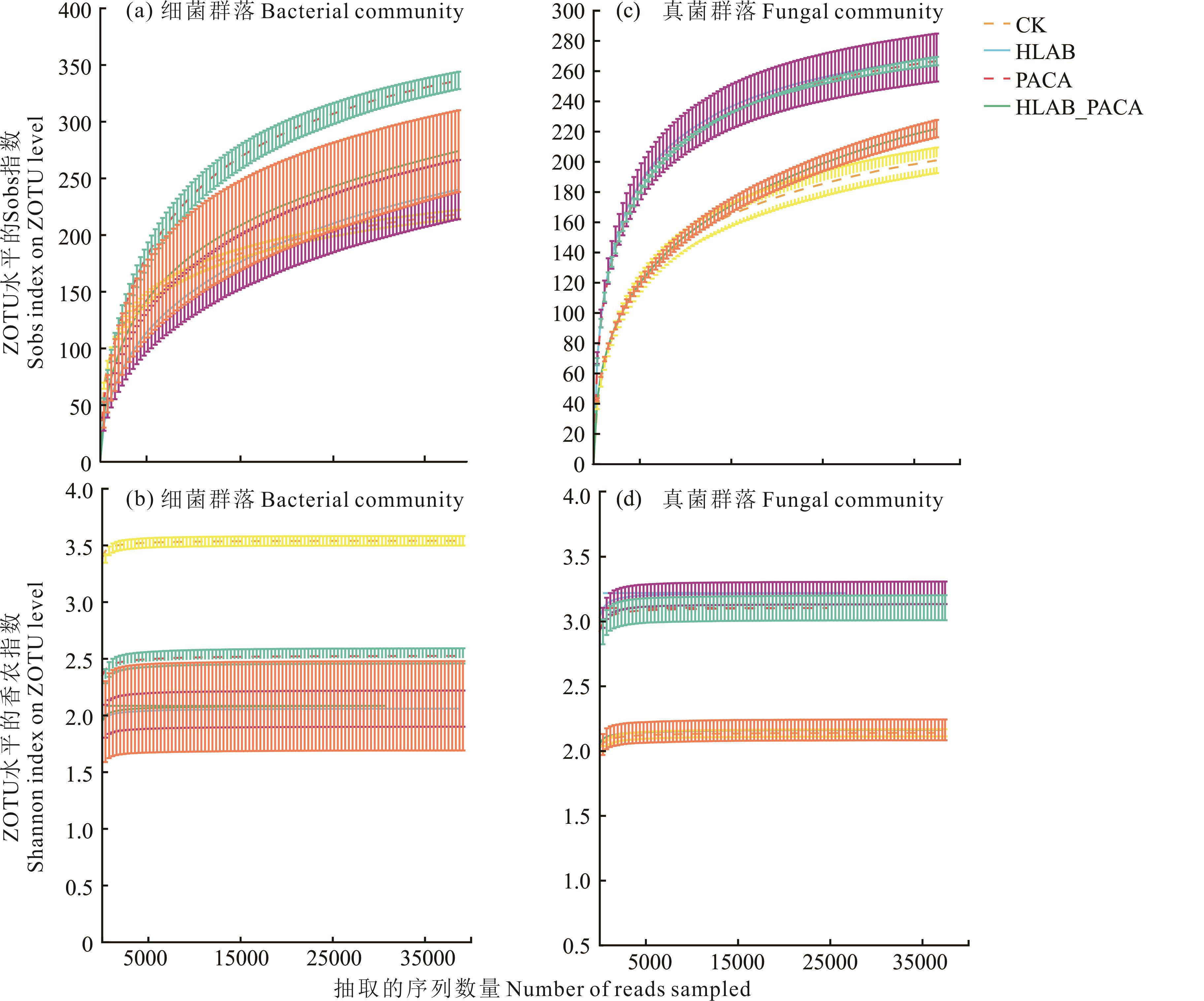
Fig.1 Rarefaction curve of bacterial community and fungal community in rice straw silage
类别 Category | 项目 Item | 处理组 Treatment group | 标准误 SEM | 显著性 P-value | |||
|---|---|---|---|---|---|---|---|
| CK | HLAB | PACA | HLAB_PACA | ||||
细菌群落 Bacterial community | Sobs指数Sobs index | 218±6.5a | 240±45.3a | 336±13.3a | 274±62.4a | 21.500 | NS |
| 香农指数Shannon index | 3.54±0.073a | 2.06±0.276a | 2.52±0.116a | 2.08±0.683a | 0.241 | NS | |
| 辛普森指数Simpson index | 0.061±0.006a | 0.267±0.039a | 0.217±0.023a | 0.326±0.116a | 0.040 | NS | |
| Ace指数Ace index | 250±8.31c | 312±38.90bc | 379±5.66ab | 439±8.92a | 23.100 | ** | |
| Chao1指数Chao1 index | 247±9.5b | 302±38.0ab | 386±10.4a | 363±34.8a | 19.900 | * | |
| 覆盖度Coverage (%) | 99.91±0.0045a | 99.83±0.0145ab | 99.84±0.0153ab | 99.81±0.0371b | 0.015 | * | |
真菌群落 Fungal community | Sobs指数Sobs index | 201±14.70a | 269±27.50a | 266±4.84a | 222±9.96a | 11.300 | * |
| 香农指数Shannon index | 2.14±0.048b | 3.22±0.151a | 3.10±0.167a | 2.16±0.139b | 0.163 | ** | |
| 辛普森指数Simpson index | 0.279±0.0246a | 0.110±0.0104b | 0.138±0.0300b | 0.300±0.0405a | 0.028 | ** | |
| Ace指数Ace index | 227±14.9a | 288±26.0a | 287±12.7a | 279±9.8a | 10.500 | NS | |
| Chao1指数Chao1 index | 234±13.4a | 296±21.3a | 291±18.0a | 273±14.4a | 10.300 | NS | |
| 覆盖度Coverage (%) | 99.90±0.0103ab | 99.91±0.0067a | 99.91±0.0227a | 99.85±0.0062b | 0.010 | * | |
Table 4 Effects of additives on the α diversity of bacterial and fungal community in rice straw after 90 d of ensiling
类别 Category | 项目 Item | 处理组 Treatment group | 标准误 SEM | 显著性 P-value | |||
|---|---|---|---|---|---|---|---|
| CK | HLAB | PACA | HLAB_PACA | ||||
细菌群落 Bacterial community | Sobs指数Sobs index | 218±6.5a | 240±45.3a | 336±13.3a | 274±62.4a | 21.500 | NS |
| 香农指数Shannon index | 3.54±0.073a | 2.06±0.276a | 2.52±0.116a | 2.08±0.683a | 0.241 | NS | |
| 辛普森指数Simpson index | 0.061±0.006a | 0.267±0.039a | 0.217±0.023a | 0.326±0.116a | 0.040 | NS | |
| Ace指数Ace index | 250±8.31c | 312±38.90bc | 379±5.66ab | 439±8.92a | 23.100 | ** | |
| Chao1指数Chao1 index | 247±9.5b | 302±38.0ab | 386±10.4a | 363±34.8a | 19.900 | * | |
| 覆盖度Coverage (%) | 99.91±0.0045a | 99.83±0.0145ab | 99.84±0.0153ab | 99.81±0.0371b | 0.015 | * | |
真菌群落 Fungal community | Sobs指数Sobs index | 201±14.70a | 269±27.50a | 266±4.84a | 222±9.96a | 11.300 | * |
| 香农指数Shannon index | 2.14±0.048b | 3.22±0.151a | 3.10±0.167a | 2.16±0.139b | 0.163 | ** | |
| 辛普森指数Simpson index | 0.279±0.0246a | 0.110±0.0104b | 0.138±0.0300b | 0.300±0.0405a | 0.028 | ** | |
| Ace指数Ace index | 227±14.9a | 288±26.0a | 287±12.7a | 279±9.8a | 10.500 | NS | |
| Chao1指数Chao1 index | 234±13.4a | 296±21.3a | 291±18.0a | 273±14.4a | 10.300 | NS | |
| 覆盖度Coverage (%) | 99.90±0.0103ab | 99.91±0.0067a | 99.91±0.0227a | 99.85±0.0062b | 0.010 | * | |
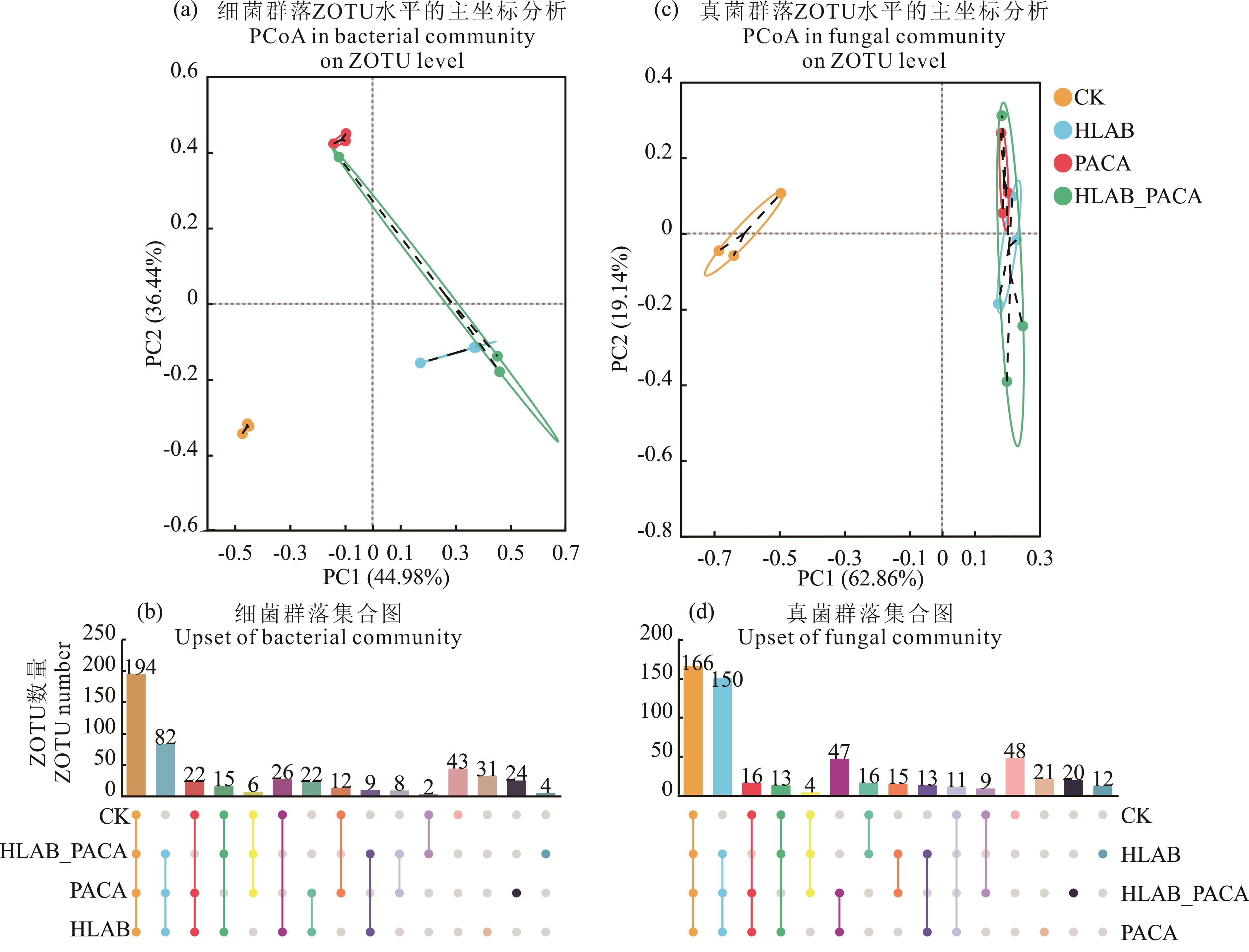
Fig.2 Principal coordinates analysis (PCoA) and upset analysis of bacterial community and fungal community in rice straw silage
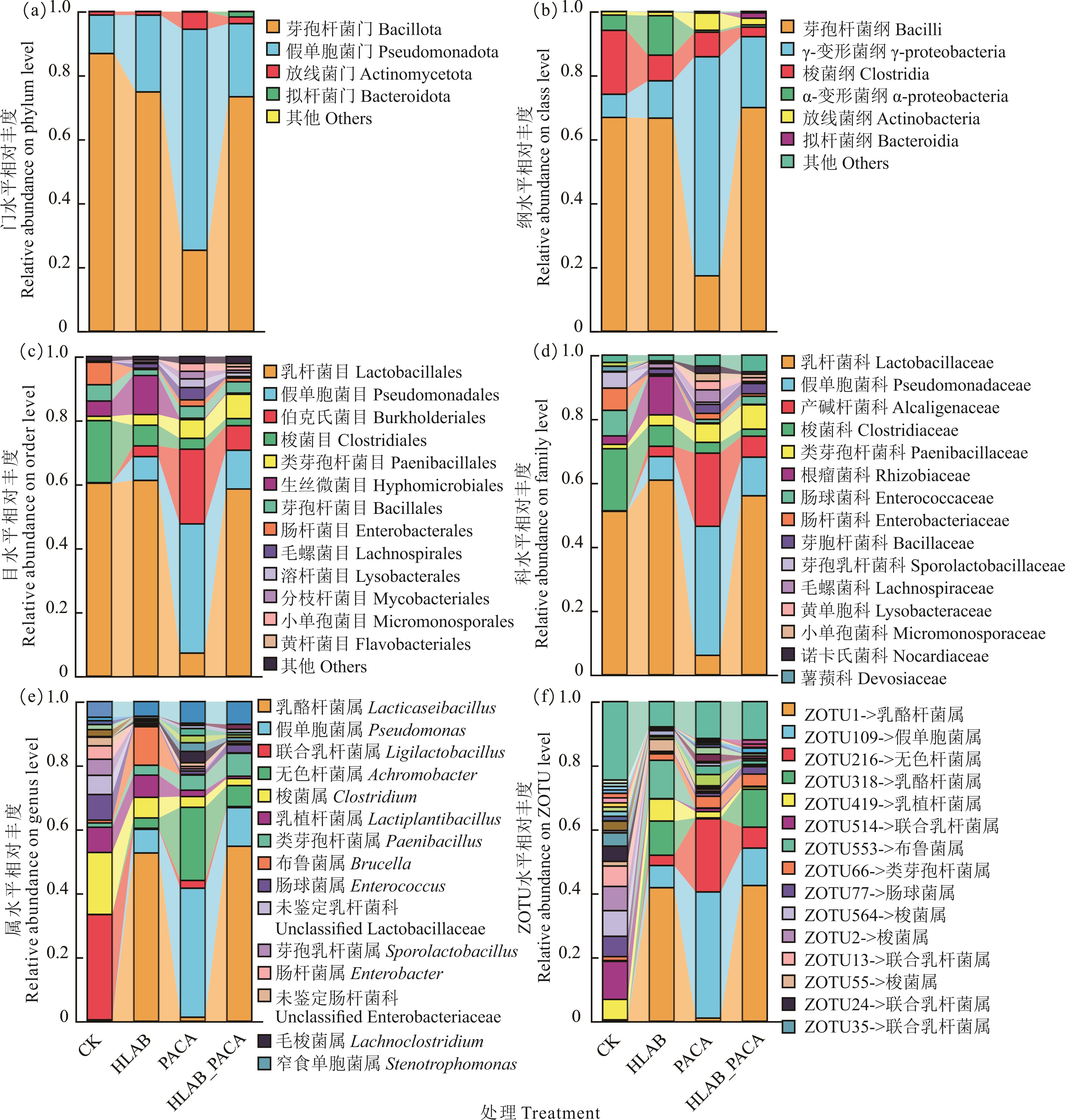
Fig.3 Analysis of the bacterial community composition in rice straw silage
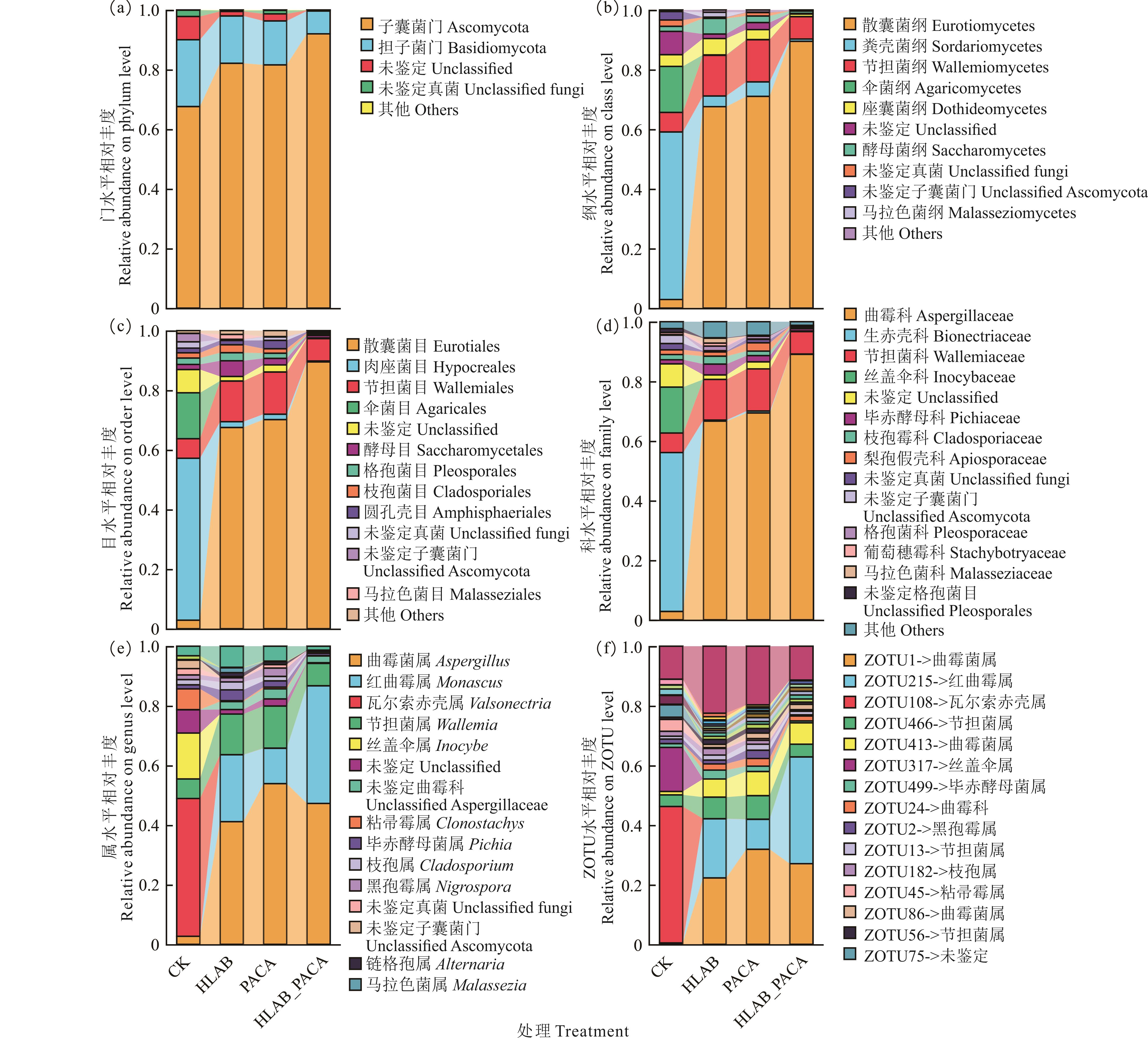
Fig.4 Analysis of the fungal community compositon in rice straw silage
方法 Method | 处理方式 Processing method | 项目 Item | 处理组 Treatment group | 标准误 SEM | 显著性 P-value | |||
|---|---|---|---|---|---|---|---|---|
| CK | HLAB | PACA | HLAB_PACA | |||||
真菌多样性 Fungal diversity | PCR扩增 PCR amplification | 曲霉科相对丰度Relative abundance of Aspergillaceae (%) | 2.8±1.93c | 66.7±3.28b | 69.4±3.75b | 89.0±3.95a | 9.880 | *** |
平板培养法 Plate count method | 梯度稀释和培养基 Gradient dilution and culture medium | 霉菌数Moulds count (log CFU·g-1) | NDb | 2.06±0.161a | 1.53±0.250a | 1.57±0.274a | 0.249 | *** |
霉菌毒素分析 Mycotoxin analysis | 甲醇萃取 Methanol extraction | 黄曲霉毒素B1含量Aflatoxin B1 count (μg·kg-1 DM) | 0.521±0.206a | 0.222±0.025a | 1.500±1.210a | 0.869±0.014a | 0.298 | NS |
| 玉米赤霉烯酮含量Zearalenone count (μg·kg-1 DM) | 95.8±0.126a | 97.8±0.667a | 96.0±0.970a | 95.7±0.571a | 0.387 | NS | ||
Table 5 Potential mycotoxin risks of microorganisms in rice straw silage after 90 d of ensiling
方法 Method | 处理方式 Processing method | 项目 Item | 处理组 Treatment group | 标准误 SEM | 显著性 P-value | |||
|---|---|---|---|---|---|---|---|---|
| CK | HLAB | PACA | HLAB_PACA | |||||
真菌多样性 Fungal diversity | PCR扩增 PCR amplification | 曲霉科相对丰度Relative abundance of Aspergillaceae (%) | 2.8±1.93c | 66.7±3.28b | 69.4±3.75b | 89.0±3.95a | 9.880 | *** |
平板培养法 Plate count method | 梯度稀释和培养基 Gradient dilution and culture medium | 霉菌数Moulds count (log CFU·g-1) | NDb | 2.06±0.161a | 1.53±0.250a | 1.57±0.274a | 0.249 | *** |
霉菌毒素分析 Mycotoxin analysis | 甲醇萃取 Methanol extraction | 黄曲霉毒素B1含量Aflatoxin B1 count (μg·kg-1 DM) | 0.521±0.206a | 0.222±0.025a | 1.500±1.210a | 0.869±0.014a | 0.298 | NS |
| 玉米赤霉烯酮含量Zearalenone count (μg·kg-1 DM) | 95.8±0.126a | 97.8±0.667a | 96.0±0.970a | 95.7±0.571a | 0.387 | NS | ||
| [1] | Li N S, Cheng Y F. Potential and current status of feed utilization of rice straw. Feed Industry, 2025, 46(8): 157-162. |
| 李年顺, 成艳芬. 水稻秸秆饲料化利用的潜力与现状. 饲料工业, 2025, 46(8): 157-162. | |
| [2] | Yu Z, Sun Q Z. Silage technology of grass and forage. Beijing: China Agricultural University Press, 2011. |
| 玉柱, 孙启忠. 饲草青贮技术. 北京: 中国农业大学出版社, 2011. | |
| [3] | Li P, Zhang Y, Gou W L, et al. Silage fermentation and bacterial community of bur clover, annual ryegrass and their mixtures prepared with microbial inoculant and chemical additive. Anim Feed Science and Technology, 2019, 247: 285-293. |
| [4] | Dong C F, Xu N X, Zhang W J, et al. Content and distribution of nonstructural carbohydrates compositions in different parts of rice (Oryza sativa L.) straw. Jiangsu Journal of Agricultural Sciences, 2022, 38(1): 165-171. |
| 董臣飞, 许能祥, 张文洁, 等. 稻草中非结构性碳水化合物不同组分的含量与分布. 江苏农业学报, 2022, 38(1): 165-171. | |
| [5] | Tian J P, Xu N X, Liu B Y, et al. Interaction effect of silo density and additives on the fermentation quality, microbial counts, chemical composition and in vitro degradability of rice straw silage. Bioresource Technology, 2020, 297: 122412. |
| [6] | Chen X Z, Dong C X, Zhang J G. Silage carbon sources preferred by epiphytic lactic acid bacteria. Fujian Journal of Agricultural Sciences, 2024, 39(5): 512-521. |
| 陈鑫珠, 董朝霞, 张建国. 饲草附生乳酸菌对碳源的选择性. 福建农业学报, 2024, 39(5): 512-521. | |
| [7] | Zhao J, Dong Z H, Li J F, et al. Evaluation of Lactobacillus plantarum MTD1 and waste molasses as fermentation modifier to increase silage quality and reduce ruminal greenhouse gas emissions of rice straw. Science of the Total Environment, 2019, 688: 143-152. |
| [8] | Wang S R, Ding C L, Tian J P, et al. Evaluation of growth stage and storage time on fermentation characteristics, microbial community structure, co-occurrence networks, and their functional shifts and pathogenic risk of fermented italian ryegrass. LWT-Food Science and Technology, 2025, 215: 117272. |
| [9] | Tian J P, Liu B Y, Gu H R, et al. Effects of lactic acid bacteria and calcium propionate on fermentation quality and mycotoxin contents of whole plant maize and oat silages. Acta Prataculturae Sinica, 2022, 31(8): 157-166. |
| 田吉鹏, 刘蓓一, 顾洪如, 等. 乳酸菌及丙酸钙对全株玉米和燕麦青贮饲料发酵品质和霉菌毒素含量的影响. 草业学报, 2022, 31(8): 157-166. | |
| [10] | Kaewpila C, Thip-uten S, Cherdthong A, et al. Impact of cellulase and lactic acid bacteria inoculant to modify ensiling characteristics and in vitro digestibility of sweet corn stover and cassava pulp silage. Agriculture-Basel, 2021, 11(1): 66. |
| [11] | Wang Y, Yu J, Li Q, et al. Screening the carbon source type in solid-state fermentation with Phanerochaete chrysosporium to improve the forage value of corn straw and rice straw. Animals, 2023, 13(5): 888. |
| [12] | Dong C F, Xu N X, Ding C L, et al. Rapid evaluation method for rice (Oryza sativa L.) straw feeding quality. Field Crops Research, 2018, 228: 204-209. |
| [13] | Dong C F, Xu N X, Ding C L, et al. Developing ratoon rice as forage in subtropical and temperate areas. Field Crops Research, 2020, 245: 107660. |
| [14] | Zhao J, Wang S R, Dong Z H, et al. Effect of storage time and the level of formic acid on fermentation characteristics, epiphytic microflora, carbohydrate components and in vitro digestibility of rice straw silage. Animal Bioscience, 2021, 34(6): 1038-1048. |
| [15] | Saylor B A, McCary C L, Diepersloot E C, et al. Effect of forage processor roll gap width and storage length on fermentation profile, nutrient composition, kernel processing score, and starch disappearance of whole-plant maize silage harvested at three different maturities. Agriculture-Basel, 2021, 11(7): 574. |
| [16] | Sushkova V I, Zhukovskii S V, Berezina O V, et al. Biosynthesis of butyric acid from cabbage stem and molasses by the strain Clostridium butyricum VKPM B-9619. Russian Journal of Bioorganic Chemistry, 2013, 39(7): 771-776. |
| [17] | Usman·Daguti, Li J. Prevention and treatment of butyric acid-induced diarrhea in cattle and sheep. China Animal Health, 2025, 27(3): 58-59. |
| 吾斯曼·达古提, 李晶. 牛羊丁酸所致腹泻的预防与治疗. 中国动物保健, 2025, 27(3): 58-59. | |
| [18] | Sun H, Liao C S, Lu G R, et al. Role of Lactiplantibacillus paraplantarum during anaerobic storage of ear-removed corn on biogas production. Bioresource Technology, 2022, 364: 128061. |
| [19] | Xu G F, Li X B, Hu J F, et al. An evaluation of the effectiveness of four chemical additives on the fermentation characteristics, in vitro digestibility and aerobic stability of total mixed ration silage based on soy sauce residue. Journal of Animal Physiology and Animal Nutrition, 2025, 109(1): 130-139. |
| [20] | Wang C, Han H Y, Gu X Y, et al. A survey of fermentation products and bacterial communities in corn silage produced in a bunker silo in China. Animal Science Journal, 2014, 85(1): 32-36. |
| [21] | Li D X, Ni K K, Pang H L, et al. Identification and antimicrobial activity detection of lactic acid bacteria isolated from corn stover silage. Asian-Australasian Journal of Animal Sciences, 2015, 28(5): 620-631. |
| [22] | Yao Z H, Zhu Y, Wu Q, et al. Challenges and perspectives of quantitative microbiome profiling in food fermentations. Critical Reviews in Food Science and Nutrition, 2024, 64(15): 4995-5015. |
| [23] | Edgar R. SINTAX: A simple non-Bayesian taxonomy classifier for 16S and ITS sequences. bioRxiv, 2016: 074161, doi: https://doi.org/10.1101/074161. |
| [24] | Dong C, Liu P, Wang X, et al. Effects of phenyllactic acid on fermentation parameters, nitrogen fractions and bacterial community of high-moisture stylo silage. Fermentation, 2023, 9(6): 572. |
| [25] | Assohoun-Djeni N M C, Djeni N T, Messaoudi S, et al. Biodiversity, dynamics and antimicrobial activity of lactic acid bacteria involved in the fermentation of maize flour for doklu production in Côte d’Ivoire. Food Control, 2016, 62: 397-404. |
| [26] | Squara S, Ferrero F, Tabacco E, et al. Effect of inoculation with Lentilactobacillus buchneri and Lacticaseibacillus paracasei on the maize silage volatilome: The advantages of advanced 2D-chromatographic fingerprinting approaches. Journal of Agricultural and Food Chemistry, 2022, 70(38): 12232-12248. |
| [27] | Liang Y C, Zhang X W, Shao T, et al. Effects of different lactic acid bacteria strains on fermentation quality and mycotoxin contents of whole-plant corn silage. Acta Prataculturae Sinica, 2025, 34(3): 123-133. |
| 梁宇成, 张晓雯, 邵涛, 等. 乳酸菌对全株玉米青贮发酵品质和霉菌毒素含量的影响. 草业学报, 2025, 34(3): 123-133. | |
| [28] | Banati H, Darvas B, Feher-Toth S, et al. Determination of mycotoxin production of fusarium species in genetically modified maize varieties by quantitative flow immunocytometry. Toxins, 2017, 9(2): 70. |
| [29] | Ferrara M, Haidukowski M, D’Imperio M, et al. New insight into microbial degradation of mycotoxins during anaerobic digestion. Waste Management, 2021, 119: 215-225. |
| [30] | Garnier L, Penland M, Thierry A, et al. Antifungal activity of fermented dairy ingredients: Identification of antifungal compounds. International Journal of Food Microbiology, 2020, 322: 108574. |
| [31] | Haegeman B, Hamelin J, Moriarty J, et al. Robust estimation of microbial diversity in theory and in practice. ISME Journal, 2013, 7(6): 1092-1101. |
| [32] | Zhang M, Pei L, Zhang X. Effects of different kinds of probiotics on performance, nutrient digestibility and intestinal flora of laying hens. Feed Industry, 2017, 38(3): 28-32. |
| 张敏, 裴蕾, 张鑫. 不同微生态制剂对蛋鸡生产性能、养分消化率和肠道菌群影响. 饲料工业, 2017, 38(3): 28-32. | |
| [33] | Abbaszadeh S, Tavakoli R, Sharifzadeh A, et al. Lactic acid bacteria as functional probiotic isolates for inhibiting the growth of Aspergillus flavus, A. parasiticus, A. niger and Penicillium chrysogenum. Journal de Mycologie Medicale, 2015, 25(4): 263-267. |
| [34] | Han R, Tang T, Zhang M N, et al. Analysis of mycotoxin contamination of green roughage in some sheep farms. Anhui Agricultural Science Bulletin, 2023, 29(Z1): 151-155. |
| 韩睿, 唐涛, 张孟恩, 等. 部分羊场青储饲料霉菌毒素污染状况分析. 安徽农学通报, 2023, 29(Z1): 151-155. | |
| [35] | Moon Y S, Kim H M, Chun H S, et al. Organic acids suppress aflatoxin production via lowering expression of aflatoxin biosynthesis-related genes in Aspergillus flavus. Food Control, 2018, 88: 207-216. |
| [36] | General Administration of Quality Supervision, Inspection and Quarantine of the People’s Republic of China, Standardization Administration of the People’s Republic of China. Hygienical standard for feeds: GB 13078-2017. Beijing: Standards Press of China, 2017. |
| 中华人民共和国国家质量监督检验检疫总局, 中国国家标准化管理委员会. 饲料卫生标准: GB 13078-2017. 北京: 中国标准出版社, 2017. |
| Viewed | ||||||
|
Full text |
|
|||||
|
Abstract |
|
|||||
