
ISSN 1004-5759 CN 62-1105/S
Acta Prataculturae Sinica ›› 2025, Vol. 34 ›› Issue (5): 51-63.DOI: 10.11686/cyxb2024229
Previous Articles Next Articles
Lei ZHANG1( ), Jin-tao DU1(), Qian-yu FAN1, Shun LI1, Song-juan GAO1(), Wei-dong CAO2()
Received:2024-06-11
Revised:2024-07-18
Online:2025-05-20
Published:2025-03-20
Contact:
Song-juan GAO,Wei-dong CAO
Lei ZHANG, Jin-tao DU, Qian-yu FAN, Shun LI, Song-juan GAO, Wei-dong CAO. Response of biological nitrogen fixation by milk vetch to soil fertility and rhizobium inoculation[J]. Acta Prataculturae Sinica, 2025, 34(5): 51-63.

Fig.1 Aboveground biomass of milk vetch under different treatments
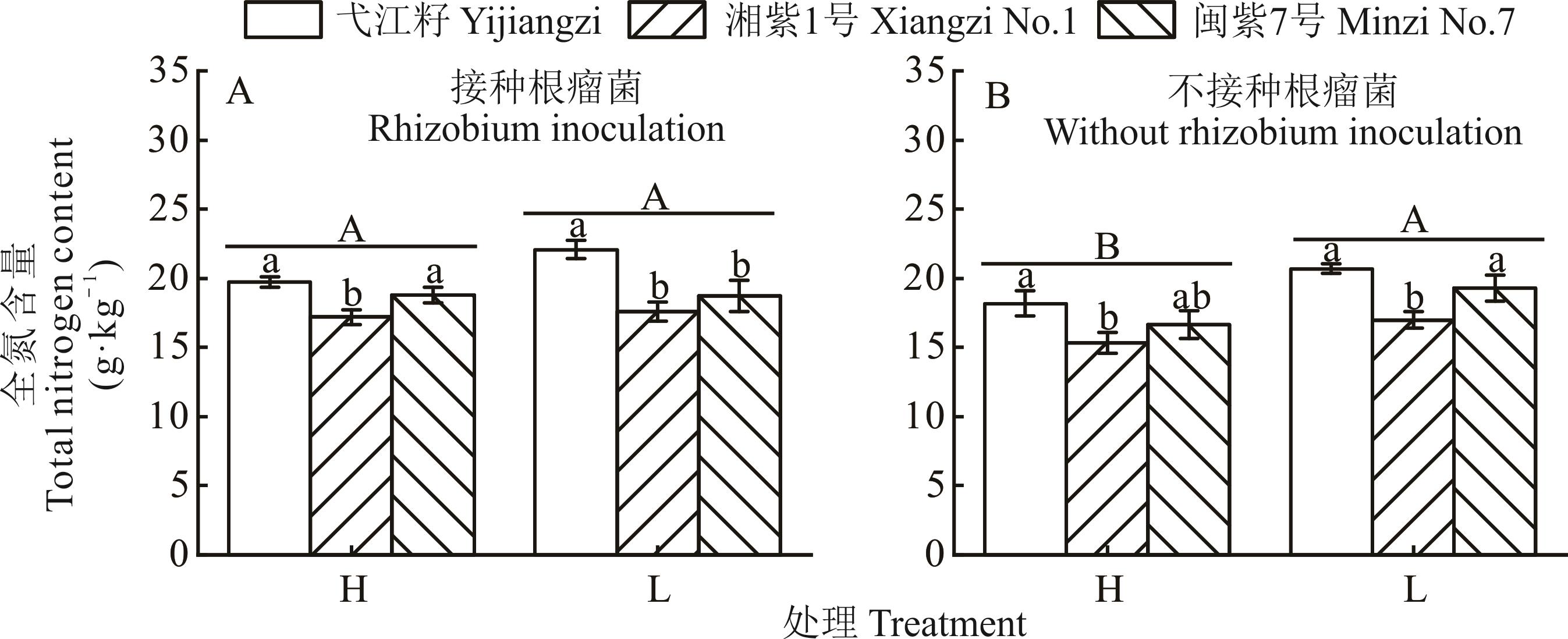
Fig.2 Total nitrogen content of milk vetch under different treatments

Fig.3 Nitrogen absorption of milk vetch under different treatments

Fig.4 Nitrogen fixation efficiency of milk vetch under different treatments

Fig.5 Nitrogen fixation by milk vetch under different treatments
处理因素 Treatment factors | F | |
|---|---|---|
固氮效率 Nitrogen fixation efficiency | 固氮量 Nitrogen fixation | |
| SF | 49.71*** | 10.23*** |
| MV | 0.84ns | 0.87ns |
| RI | 8.35** | 6.19* |
| SF×MV | 5.24** | 2.24ns |
| SF×RI | 1.37ns | 5.75* |
| MV×RI | 1.98ns | 7.88** |
| SF×MV×RI | 2.49ns | 5.49** |
Table 1 Interaction effect of different treatment factors on nitrogen fixation efficiency and nitrogen fixation in milk vetch
处理因素 Treatment factors | F | |
|---|---|---|
固氮效率 Nitrogen fixation efficiency | 固氮量 Nitrogen fixation | |
| SF | 49.71*** | 10.23*** |
| MV | 0.84ns | 0.87ns |
| RI | 8.35** | 6.19* |
| SF×MV | 5.24** | 2.24ns |
| SF×RI | 1.37ns | 5.75* |
| MV×RI | 1.98ns | 7.88** |
| SF×MV×RI | 2.49ns | 5.49** |

Fig.6 Phosphorus content and absorption of milk vetch plants under different treatments

Fig.7 Potassium content and absorption of milk vetch under different treatments
处理 Treatment | pH | 有机碳 Organic carbon (g·kg-1) | 全氮 Total N (g·kg-1) | 有效磷 Available P (mg·kg-1) | 速效钾 Available K (mg·kg-1) | 铵态氮 Ammonium N(mg·kg-1) | 硝态氮 Nitrate N(mg·kg-1) |
|---|---|---|---|---|---|---|---|
| IHY | 5.50±0.02a | 10.70±0.69b | 1.02±0.054b | 31.4±3.7a | 114.7±9.3a | 2.2±0.9b | 2.2±0.6b |
| IHM | 5.42±0.06b | 12.23±1.24a | 1.27±0.014a | 33.3±2.7a | 111.9±7.2a | 3.4±0.8a | 2.5±0.4ab |
| IHX | 5.41±0.07b | 10.60±0.52b | 1.04±0.055b | 30.8±1.3a | 105.2±4.1b | 3.9±1.2a | 2.9±0.7a |
| IH | 5.44±0.07A | 11.28±1.24A | 1.11±0.136A | 31.84±2.9A | 110.6±8.0A | 2.5±0.6A | 3.2±1.2A |
| NHY | 5.50±0.04ab | 11.03±0.56b | 1.04±0.048b | 31.7±2.4b | 104.3±6.2c | 3.0±1.6a | 2.2±0.7b |
| NHM | 5.38±0.08b | 13.46±3.26a | 1.29±0.231a | 35.1±1.6a | 123.3±8.2a | 2.7±0.9a | 3.1±0.9a |
| NHX | 5.44±0.05a | 11.82±0.40ab | 1.25±0.360a | 30.9±2.4b | 111.6±6.0b | 3.2±0.5a | 2.6±0.9ab |
| NH | 5.40±0.06B | 12.10±2.12A | 1.19±0.231A | 32.59±2.8A | 113.1±11.2A | 2.6±1.2A | 3.0±1.1A |
| ILY | 6.08±0.04a | 8.85±0.39a | 0.82±0.038a | 14.6±0.4c | 81.5±6.2a | 2.8±0.5a | 2.9±0.4a |
| ILM | 5.74±0.05c | 9.19±0.82a | 0.82±0.034a | 16.8±0.8a | 77.2±7.2a | 3.0±0.5a | 2.0±0.5b |
| ILX | 5.84±0.04b | 8.98±0.43a | 0.83±0.024a | 15.4±0.8b | 81.4±5.1a | 2.6±0.6a | 1.9±0.2b |
| IL | 5.89±0.15A | 9.01±0.58A | 0.82±0.032A | 15.6±1.2A | 80.0±6.3A | 2.8±0.5A | 2.3±0.6A |
| NLY | 5.94±0.02a | 8.73±0.38a | 0.81±0.039a | 14.5±0.6c | 79.4±3.6a | 2.7±0.4a | 2.1±0.5a |
| NLM | 5.76±0.03c | 8.80±0.42a | 0.79±0.047a | 17.7±1.1a | 65.4±8.8b | 2.6±0.4ab | 2.0±0.3ab |
| NLX | 5.81±0.03b | 8.82±0.25a | 0.82±0.021a | 15.7±1.0b | 75.7±7.9a | 2.3±0.4b | 1.7±0.3b |
| NL | 5.84±0.08A | 8.78±0.34A | 0.81±0.037A | 16.0±1.6A | 73.5±9.2B | 2.5±0.4B | 1.9±0.4B |
Table 2 Soil basic fertility properties of different treatments
处理 Treatment | pH | 有机碳 Organic carbon (g·kg-1) | 全氮 Total N (g·kg-1) | 有效磷 Available P (mg·kg-1) | 速效钾 Available K (mg·kg-1) | 铵态氮 Ammonium N(mg·kg-1) | 硝态氮 Nitrate N(mg·kg-1) |
|---|---|---|---|---|---|---|---|
| IHY | 5.50±0.02a | 10.70±0.69b | 1.02±0.054b | 31.4±3.7a | 114.7±9.3a | 2.2±0.9b | 2.2±0.6b |
| IHM | 5.42±0.06b | 12.23±1.24a | 1.27±0.014a | 33.3±2.7a | 111.9±7.2a | 3.4±0.8a | 2.5±0.4ab |
| IHX | 5.41±0.07b | 10.60±0.52b | 1.04±0.055b | 30.8±1.3a | 105.2±4.1b | 3.9±1.2a | 2.9±0.7a |
| IH | 5.44±0.07A | 11.28±1.24A | 1.11±0.136A | 31.84±2.9A | 110.6±8.0A | 2.5±0.6A | 3.2±1.2A |
| NHY | 5.50±0.04ab | 11.03±0.56b | 1.04±0.048b | 31.7±2.4b | 104.3±6.2c | 3.0±1.6a | 2.2±0.7b |
| NHM | 5.38±0.08b | 13.46±3.26a | 1.29±0.231a | 35.1±1.6a | 123.3±8.2a | 2.7±0.9a | 3.1±0.9a |
| NHX | 5.44±0.05a | 11.82±0.40ab | 1.25±0.360a | 30.9±2.4b | 111.6±6.0b | 3.2±0.5a | 2.6±0.9ab |
| NH | 5.40±0.06B | 12.10±2.12A | 1.19±0.231A | 32.59±2.8A | 113.1±11.2A | 2.6±1.2A | 3.0±1.1A |
| ILY | 6.08±0.04a | 8.85±0.39a | 0.82±0.038a | 14.6±0.4c | 81.5±6.2a | 2.8±0.5a | 2.9±0.4a |
| ILM | 5.74±0.05c | 9.19±0.82a | 0.82±0.034a | 16.8±0.8a | 77.2±7.2a | 3.0±0.5a | 2.0±0.5b |
| ILX | 5.84±0.04b | 8.98±0.43a | 0.83±0.024a | 15.4±0.8b | 81.4±5.1a | 2.6±0.6a | 1.9±0.2b |
| IL | 5.89±0.15A | 9.01±0.58A | 0.82±0.032A | 15.6±1.2A | 80.0±6.3A | 2.8±0.5A | 2.3±0.6A |
| NLY | 5.94±0.02a | 8.73±0.38a | 0.81±0.039a | 14.5±0.6c | 79.4±3.6a | 2.7±0.4a | 2.1±0.5a |
| NLM | 5.76±0.03c | 8.80±0.42a | 0.79±0.047a | 17.7±1.1a | 65.4±8.8b | 2.6±0.4ab | 2.0±0.3ab |
| NLX | 5.81±0.03b | 8.82±0.25a | 0.82±0.021a | 15.7±1.0b | 75.7±7.9a | 2.3±0.4b | 1.7±0.3b |
| NL | 5.84±0.08A | 8.78±0.34A | 0.81±0.037A | 16.0±1.6A | 73.5±9.2B | 2.5±0.4B | 1.9±0.4B |

Fig.8 Contribution of soil properties and different treatment factors to aboveground biomass, nitrogen absorption and nitrogen fixation
| 1 | Galloway J N, Townsend A R, Erisman J W, et al. Transformation of the nitrogen cycle: Recent trends, questions, and potential solutions. Science, 2008, 320(5878): 889-892. |
| 2 | Voisin A S, Guéguen J, Huyghe C, et al. Legumes for feed, food, biomaterials and bioenergy in Europe: a review. Agronomy for Sustainable Development, 2014, 34(2): 361-380. |
| 3 | Mueller T, Thorup-Kristensen K. N-fixation of selected green manure plants in an organic crop rotation. Biological Agriculture & Horticulture, 2001, 18(4): 345-363. |
| 4 | Cao W D, Gao S J. Chinese green manure development strategy by 2025. Chinese Journal of Agricultural Resources and Regional Planning, 2023, 44(12): 1-9. |
| 曹卫东, 高嵩涓. 到2025年中国绿肥发展策略. 中国农业资源与区划, 2023, 44(12): 1-9. | |
| 5 | Gao J S, Cao W D, Li D C, et al. Effects of long-term double-rice and green manure rotation on rice yield and soil organic matter in paddy field. Acta Ecologica Sinica, 2011, 31(16): 4542-4548. |
| 高菊生, 曹卫东, 李冬初, 等. 长期双季稻绿肥轮作对水稻产量及稻田土壤有机质的影响. 生态学报, 2011, 31(16): 4542-4548. | |
| 6 | Chen J R, Qin W J, Wang S X, et al. Effects of reduced chemical fertilizer combined with Chinese milk vetch (Astragalus sinicus L.) incorporation on rice yield and nitrogen use efficiency in double-rice cropping system. Journal of Soil and Water Conservation, 2019, 33(6): 280-287. |
| 陈静蕊, 秦文婧, 王少先, 等. 化肥减量配合紫云英还田对双季稻产量及氮肥利用率的影响. 水土保持学报, 2019, 33(6): 280-287. | |
| 7 | Li J M, Huang Q H, Yuan T Y, et al. Effects of long-term green manure application on rice yield and soil nutrients in paddy soil. Journal of Plant Nutrition and Fertilizers, 2011, 17(3): 563-570. |
| 李继明, 黄庆海, 袁天佑, 等. 长期施用绿肥对红壤稻田水稻产量和土壤养分的影响. 植物营养与肥料学报, 2011, 17(3): 563-570. | |
| 8 | Chang D N, Ma X T, Zhou G P, et al. Symbiotic compatibility of different rhizobia strains with important Chinese milk vetch (Astragalus sinicus) cultivars. Acta Prataculturae Sinica, 2022, 31(12): 171-180. |
| 常单娜, 马晓彤, 周国朋, 等. 不同根瘤菌与紫云英主栽品种的共生匹配性. 草业学报, 2022, 31(12): 171-180. | |
| 9 | Gao S J, Zhou G P, Cao W D. Effects of milk vetch (Astragalus sinicus) as winter green manure on rice yield and rate of fertilizer application in rice paddies in south China. Journal of Plant Nutrition and Fertilizers, 2020, 26(12): 2115-2126. |
| 高嵩涓, 周国朋, 曹卫东. 南方稻田紫云英作冬绿肥的增产节肥效应与机制. 植物营养与肥料学报, 2020, 26(12): 2115-2126. | |
| 10 | Gao S J, Zhou G P, Chang D N, et al. Southern China can produce more high-quality rice with less N by green manuring. Resources, Conservation and Recycling, 2023, 196: 107025. |
| 11 | Zhang J L, Nie J, Cao W D, et al. Long-term green manuring to substitute partial chemical fertilizer simultaneously improving crop productivity and soil quality in a double-rice cropping system. European Journal of Agronomy, 2023, 142: 126641. |
| 12 | Yang B J, Huang G Q, Chen H J, et al. Optimum combination of winter green manure plowed and nitrogen application levels for high nitrogen uptake and utilization in rice. Journal of Plant Nutrition and Fertilizers, 2016, 22(5): 1187-1195. |
| 杨滨娟, 黄国勤, 陈洪俊, 等. 利于水稻氮素吸收的绿肥翻压量和施氮水平研究. 植物营养与肥料学报, 2016, 22(5): 1187-1195. | |
| 13 | Qian C C, Wang S B, Yang B J, et al. Effect of combined application of Chinese milk vetch and nitrogen fertilizer on nitrogen uptake, utilization and dry matter accumulation in early rice. Chinese Journal of Eco-Agriculture, 2017, 25(4): 563-571. |
| 钱晨晨, 王淑彬, 杨滨娟, 等. 紫云英与氮肥配施对早稻干物质生产及氮素吸收利用的影响. 中国生态农业学报, 2017, 25(4): 563-571. | |
| 14 | Wang J H, Cao K, Zhang X. Effects of incorporation amounts of Chinese milk vetch on nutrient uptake and yield of single cropping late rice. Journal of Plant Nutrition and Fertilizers, 2014, 20(1): 156-163. |
| 王建红, 曹凯, 张贤. 紫云英翻压量对单季晚稻养分吸收和产量的影响. 植物营养与肥料学报, 2014, 20(1): 156-163. | |
| 15 | Yang L, Nie J, Xu C X, et al. Biological nitrogen fixation of Chinese milk vetch (Astragalus sinicus L.) as affected by exogenous carbon and nitrogen input. Symbiosis, 2021, 85(1): 69-77. |
| 16 | Cai S Y, Pittelkow C M, Zhao X, et al. Winter legume-rice rotations can reduce nitrogen pollution and carbon footprint while maintaining net ecosystem economic benefits. Journal of Cleaner Production, 2018, 195: 289-300. |
| 17 | Gao P, Yang Z C, Gao J S, et al. Study on the efficiency of inoculating rhizobia into Astragalus sinicus L. Hunan Agricultural Sciences, 2020(3): 20-22. |
| 高鹏, 杨志长, 高菊生, 等. 紫云英接种根瘤菌效果研究. 湖南农业科学, 2020(3): 20-22. | |
| 18 | Lin D H, Gu R S. Milk vetch in China. Fuzhou: Fujian Science and Technology Press, 2000: 52-67. |
| 林多胡, 顾荣申. 中国紫云英. 福州: 福建科学技术出版社, 2000: 52-67. | |
| 19 | Pan F X, Lu J W, Li X K, et al. Effect of fertilizer amount on yield and nutrient accumulation of green manures. Chinese Journal of Eco-Agriculture, 2012, 20(2): 158-162. |
| 潘福霞, 鲁剑巍, 李小坤, 等. 不同施肥量对绿肥产量和养分积累的影响. 中国生态农业学报, 2012, 20(2): 158-162. | |
| 20 | Zhang M, Shi P F, Li B Y, et al. Phenotypic diversity and podding characteristics of 70 Chinese milk vetch (Astragalus sinicus) germplasm lines cultivated in Southern Henan. Acta Prataculturae Sinica, 2022, 31(3): 168-180. |
| 张梦, 史鹏飞, 李本银, 等. 70份紫云英种质资源表型多样性及其在豫南地区的结实特征. 草业学报, 2022, 31(3): 168-180. | |
| 21 | Zhong S J, Lin C, Li W X, et al. Effect of matching Astragalus sinicus L. with rhizobium on nodule formation and nitrogen fixation. Fujian Journal of Agricultural Sciences, 2014, 29(7): 691-697. |
| 钟少杰, 林诚, 李文霞, 等. 不同紫云英品种与根瘤菌匹配对结瘤固氮的影响. 福建农业学报, 2014, 29(7): 691-697. | |
| 22 | Lin X J, Cao W D, Wu Y Q, et al. Advance in Astragalus sinicus research. Pratacultural Science, 2011, 28(1): 135-140. |
| 林新坚, 曹卫东, 吴一群, 等. 紫云英研究进展. 草业科学, 2011, 28(1): 135-140. | |
| 23 | The Office of National Soil Survey. China soil. Beijing: China Agriculture Press, 1998. |
| 全国土壤普査办公室. 中国土壤. 北京: 中国农业出版社, 1998. | |
| 24 | Chen S Y, Xu C, Zhang W J, et al. Combined application of biochar and nitrogen fertilizers reducing heavy metals contents in potted rice planted in contaminated soil. Transactions of the Chinese Society of Agricultural Engineering, 2014, 30(14): 189-197. |
| 陈少毅, 许超, 张文静, 等. 生物质炭与氮肥配施降低水稻重金属含量的盆栽试验. 农业工程学报, 2014, 30(14): 189-197. | |
| 25 | Peoples M B, Chalk P M, Unkovich M J, et al. Can differences in 15N natural abundance be used to quantify the transfer of nitrogen from legumes to neighbouring non-legume plant species? Soil Biology and Biochemistry, 2015, 87: 97-109. |
| 26 | Zhen C, Wang H Y, Lei X D, et al. Digital mapping of soil total nitrogen in Wangyedian experimental forest farm based on random forest model. Journal of Huazhong Agricultural University, 2024, 43(3): 249-257. |
| 甄诚, 王海燕, 雷相东, 等. 基于随机森林模型的旺业甸实验林场土壤全氮数字制图. 华中农业大学学报, 2024, 43(3): 249-257. | |
| 27 | Yuan M M, Liu Q, Zhang S L, et al. Effects of biological nitrogen fixation and plow-down of green manure crop on rice yield and soil nitrogen in paddy field. Acta Pedologica Sinica, 2011, 48(4): 797-803. |
| 袁嫚嫚, 刘勤, 张少磊, 等. 太湖地区稻田绿肥固氮量及绿肥还田对水稻产量和稻田土壤氮素特征的影响. 土壤学报, 2011, 48(4): 797-803. | |
| 28 | Hu F L, Zhao C, Feng F X, et al. Improving N management through intercropping alleviates the inhibitory effect of mineral N on nodulation in pea. Plant and Soil, 2017, 412(1): 235-251. |
| 29 | Cai D T. A study of the nutritional character and its green manure value of Astragalus sinicus. Journal of Nanjing Agricultural University, 1987(1): 57-61. |
| 蔡大同. 紫云英营养特性、栽培要点和肥效. 南京农业大学学报, 1987(1): 57-61. | |
| 30 | Zhang S H, Zhang Y, Ma X Y, et al. Mechanisms underlying loss of plant biodiversity by atmospheric nitrogen deposition in grasslands. Acta Ecologica Sinica, 2022, 42(4): 1252-1261. |
| 张世虎, 张悦, 马晓玉, 等. 大气氮沉降影响草地植物物种多样性机制研究综述. 生态学报, 2022, 42(4): 1252-1261. | |
| 31 | Salvagiotti F, Cassman K G, Specht J E, et al. Nitrogen uptake, fixation and response to fertilizer N in soybeans: A review. Field Crops Research, 2008, 108(1): 1-13. |
| 32 | Li Y G, Zhou J C. Main factors affecting symbiotic nitrogen fixation efficiency of rhizobia and genetic modification. Microbiology of Bulletin, 2002(6): 86-89. |
| 李友国, 周俊初. 影响根瘤菌共生固氮效率的主要因素及遗传改造. 微生物学通报, 2002(6): 86-89. | |
| 33 | Yu F M, Lin J N, Xie D Y, et al. Soil properties and heavy metal concentrations affect the composition and diversity of the diazotrophs communities associated with different land use types in a mining area. Applied Soil Ecology, 2020, 155: 103669. |
| 34 | Chang D N, Wang H, Zhou G P, et al. Yield and nitrogen uptake of rice and soil nitrogen supply capacity under fertilizer reduction in a rice-rice-Chinese milk vetch rotation system, northern Jiangxi Province, China. Journal of Plant Nutrition and Fertilizers, 2023, 29(8): 1449-1460. |
| 常单娜, 王慧, 周国朋, 等. 赣北地区稻-稻-紫云英轮作体系减施化肥对水稻产量、氮素吸收及土壤供氮能力的影响. 植物营养与肥料学报, 2023, 29(8): 1449-1460. | |
| 35 | Qi Y, Huang Y M, Wang Y, et al. Biomass and its allocation of four grassland species under different nitrogen levels. Acta Ecologica Sinica, 2011, 31(18): 5121-5129. |
| 祁瑜, 黄永梅, 王艳, 等. 施氮对几种草地植物生物量及其分配的影响. 生态学报, 2011, 31(18): 5121-5129. | |
| 36 | Yan J, Han X Z, Ding J, et al. Responses of growth, nodulation and yield of soybean to different nitrogen and phosphorus fertilization management. Journal of Plant Nutrition and Fertilizers, 2014, 20(2): 318-325. |
| 严君, 韩晓增, 丁娇, 等. 东北黑土区大豆生长、结瘤及产量对氮、磷的响应. 植物营养与肥料学报, 2014, 20(2): 318-325. | |
| 37 | Wang F, Liu C L, He C M, et al. Appropriate ratios of phosphate and potassium fertilizers and 50% return of rice straw enhanced yield and nutrient capture of Chinese milk vetch. Acta Prataculturae Sinica, 2021, 30(12): 81-89. |
| 王飞, 刘彩玲, 何春梅, 等. 适宜磷、钾肥配比及稻秆半量还田提高紫云英产量与养分截获. 草业学报, 2021, 30(12): 81-89. | |
| 38 | Wang Y T, Cao W D, Zou C M, et al. Effects of phosphorus and potassium on the growth and soil properties of Chinese milk vetch (Astragalus sinicus L.). Soil and Fertilizer Sciences in China, 2022(1): 54-62. |
| 王雨婷, 曹卫东, 邹长明, 等. 磷钾对紫云英(Astragalus sinicus L.)生长和土壤性状的影响. 中国土壤与肥料, 2022(1): 54-62. | |
| 39 | Wang L N, Yu Y Q, Lu D X, et al. Soil pH modulates nitrogen transfer from nitrogen-fixing plants to non-nitrogen-fixing plants. Chinese Journal of Plant Ecology, 2022, 46(1): 1-17. |
| 40 | Chen J, Luo T S, Zhou Z, et al. Research advances in nitrogen deposition effects on microbial processes involved in soil nitrogen cycling in tropical and subtropical forests. Acta Ecologica Sinica, 2020, 40(23): 8528-8538. |
| 陈洁, 骆土寿, 周璋, 等. 氮沉降对热带亚热带森林土壤氮循环微生物过程的影响研究进展. 生态学报, 2020, 40(23): 8528-8538. | |
| 41 | Zhu D. Influence of beneficial microorganisms on rhizosphere micro-ecology with aciduric kudzu, rhizobium meliloti and highland barley as examples. Chongqing: Southwest University, 2014. |
| 朱丹. 有益微生物对根际微生态的影响——以耐酸葛藤、苜蓿根瘤菌和秦青稞菌肥为例. 重庆: 西南大学, 2014. | |
| 42 | Ibekwe A M, Angle J S, Chaney R L, et al. Enumeration and N2 fixation potential of Rhizobium leguminosarum biovar trifolii grown in soil with varying pH values and heavy metal concentrations. Agriculture, Ecosystems & Environment, 1997, 61(2): 103-111. |
| [1] | Shao-xing LI, Wen-feng SONG, Yu-ling ZHOU, Li-xia SONG, Ke REN, Qun MA, Long-chang WANG. Effects of straw and milk vetch mulching on the ecological stoichiometric characteristics of soil-microbe-sweet potato plants [J]. Acta Prataculturae Sinica, 2025, 34(3): 56-70. |
| [2] | Yuan-yuan DU, Wen-juan KANG, Shang-li SHI, Yi-lin HAN, Fu-qiang HE. Effects of exogenous hormones on the proliferation of endophytic fluorescent labeled rhizobia in seeds and growth of the seedlings [J]. Acta Prataculturae Sinica, 2025, 34(2): 81-93. |
| [3] | Hai-xia DUAN, Qian SHI, Sheng-ping KANG, Hai-qing GOU, Chong-liang LUO, You-cai XIONG. Advances in research on the interactions among arbuscular mycorrhizal fungi, rhizobia, and plants [J]. Acta Prataculturae Sinica, 2024, 33(5): 166-182. |
| [4] | Jian-feng NING, Tong LI, Rui-kun ZENG, Jian-wu YAO, Yong CHEN, Zi-wei LIANG. Soil fertility in perennial vegetable fields in the latosolic red soil zone of the Pearl River Delta [J]. Acta Prataculturae Sinica, 2024, 33(5): 25-40. |
| [5] | Chun-zeng LIU, Chun-feng ZHENG, Liang-peng NIE, Lin ZHANG, Ji-shi ZHANG, Yu-hu LV, Ben-yin LI, Wei-dong CAO. Effects of foliar spray with various bioactive compounds on seed number and seed weight of Chinese milk vetch (Astragalus sinicus) [J]. Acta Prataculturae Sinica, 2022, 31(5): 76-83. |
| [6] | Wen-jing REN, Yu-hu LV, Guo-peng ZHOU, Dan-na CHANG, Chun-yang XIANG, Wei-dong CAO. Evaluation of agronomic traits and nutrient absorption of an F4 recombinant inbred line of Chinese milk vetch (Astragalus sinicus) [J]. Acta Prataculturae Sinica, 2022, 31(2): 101-110. |
| [7] | Dan-na CHANG, Xiao-tong MA, Guo-peng ZHOU, Song-juan GAO, Rui LIU, Wei-dong CAO. Symbiotic compatibility of different rhizobia strains with important Chinese milk vetch (Astragalus sinicus) cultivars [J]. Acta Prataculturae Sinica, 2022, 31(12): 171-180. |
| [8] | Yong-gang CHEN, Wen-juan KANG, Fang WU, Yun A, Shang-li SHI, Cui-mei ZHANG, Zi-li LI. Boron promotes secretion of extracellular polysaccharides and indole-3-acetic acid by Rhizobium [J]. Acta Prataculturae Sinica, 2021, 30(5): 42-51. |
| [9] | Zhi-min WEI, Bin SUN, Cheng FANG, Zi-wen DAI, Man-qiang LIU, Jia-guo JIAO, Feng HU, Hui-xin LI, Li XU. Co-inoculation with rhizobia and azotobacter affects the growth of Vicia villosa [J]. Acta Prataculturae Sinica, 2021, 30(5): 94-102. |
| [10] | Ke-sheng WU, Zong-xian CHE, Xing-guo BAO, Jiu-dong ZHANG, Bing-lin LU, Xin-qiang YANG, Rui-ju YANG. Analysis of soil fertility and crop yield characteristics following long-term straw return to the field in a Hexi Oasis irrigated area [J]. Acta Prataculturae Sinica, 2021, 30(12): 59-70. |
| [11] | Fei WANG, Cai-ling LIU, Chun-mei HE, Qing-hua LI, Yu-jie LIU, Yi-bin HUANG. Appropriate ratios of phosphate and potassium fertilizers and 50% return of rice straw enhanced yield and nutrient capture of Chinese milk vetch [J]. Acta Prataculturae Sinica, 2021, 30(12): 81-89. |
| [12] | Fan ZHANG, Qian YANG. Effects of co-utilization of Chinese milk vetch and rice straw on the potassium cycle and potassium balance in a paddy soil [J]. Acta Prataculturae Sinica, 2021, 30(1): 72-80. |
| [13] | XING Yi-mei, DONG Li, ZHAN Li-feng, CAI Hua, YANG Sheng-qiu, SUN Na. Effect of mixed inoculation of Glomus mosseae and Sinorhizobium melilotion alkali resistance of alfalfa [J]. Acta Prataculturae Sinica, 2020, 29(9): 136-145. |
| [14] | LIU Fang, CHEN Zhen, XU Wen, CHU Zhi-ying, GUAN Yong-xiang, WU Gui-cheng, HUAN Jing, SUN Zheng-guo. Impacts of different paddy soils on nodule growth characteristics of Chinese milk vetch [J]. Acta Prataculturae Sinica, 2020, 29(6): 153-161. |
| [15] | HE Guo-xing, SONG Jian-chao, WEN Ya-jie, LIU Cai-ting, QI Juan. Effects of different rhizobium fertilizers on alfalfa productivity and soil fertility [J]. Acta Prataculturae Sinica, 2020, 29(5): 109-120. |
| Viewed | ||||||
|
Full text |
|
|||||
|
Abstract |
|
|||||
