
ISSN 1004-5759 CN 62-1105/S
Acta Prataculturae Sinica ›› 2026, Vol. 35 ›› Issue (2): 167-178.DOI: 10.11686/cyxb2025089
Previous Articles Next Articles
Yi-xin SONG1,2( ), Ming-yuan LI1,2, Ya-sheng MAIRIYANGU1,2, Ji-lian WANG1,2()
Received:2025-03-20
Revised:2025-05-21
Online:2026-02-20
Published:2025-12-24
Contact:
Ji-lian WANG
Yi-xin SONG, Ming-yuan LI, Ya-sheng MAIRIYANGU, Ji-lian WANG. The community structure and functional diversity of rhizosphere soil fungi of three plant species in the alpine grassland of Xinjiang[J]. Acta Prataculturae Sinica, 2026, 35(2): 167-178.
植被类型 Vegetation type | pH | 土壤有机质 Soil organic matter (g·kg-1) | 全氮 Total nitrogen (g·kg-1) | 全磷 Total phosphorus (g·kg-1) | 全钾 Total potassium (g·kg-1) | 碱解氮 Alkali-hydrolyzable nitrogen (mg·kg-1) | 速效磷 Available phosphorus (mg·kg-1) | 速效钾 Available potassium (mg·kg-1) |
|---|---|---|---|---|---|---|---|---|
蒲公英 T. mongolicum | 7.92±0.05a | 65.46±3.11b | 3.79±0.07c | 0.97±0.02a | 13.71±0.62a | 220.25±7.75c | 10.06±0.11c | 216.57±3.61a |
早熟禾 P. annua | 7.85±0.08a | 73.65±2.28b | 4.62±0.13b | 0.97±0.05a | 12.61±0.34a | 254.23±5.08b | 11.77±0.19b | 213.01±2.08a |
野胡萝卜 D. carota | 7.69±0.04a | 92.18±3.06a | 5.93±0.08a | 1.01±0.06a | 11.86±0.37a | 343.67±4.09a | 15.51±0.22a | 217.48±3.78a |
Table 1 Physical and chemical properties of rhizosphere soil of three dominant plant species
植被类型 Vegetation type | pH | 土壤有机质 Soil organic matter (g·kg-1) | 全氮 Total nitrogen (g·kg-1) | 全磷 Total phosphorus (g·kg-1) | 全钾 Total potassium (g·kg-1) | 碱解氮 Alkali-hydrolyzable nitrogen (mg·kg-1) | 速效磷 Available phosphorus (mg·kg-1) | 速效钾 Available potassium (mg·kg-1) |
|---|---|---|---|---|---|---|---|---|
蒲公英 T. mongolicum | 7.92±0.05a | 65.46±3.11b | 3.79±0.07c | 0.97±0.02a | 13.71±0.62a | 220.25±7.75c | 10.06±0.11c | 216.57±3.61a |
早熟禾 P. annua | 7.85±0.08a | 73.65±2.28b | 4.62±0.13b | 0.97±0.05a | 12.61±0.34a | 254.23±5.08b | 11.77±0.19b | 213.01±2.08a |
野胡萝卜 D. carota | 7.69±0.04a | 92.18±3.06a | 5.93±0.08a | 1.01±0.06a | 11.86±0.37a | 343.67±4.09a | 15.51±0.22a | 217.48±3.78a |
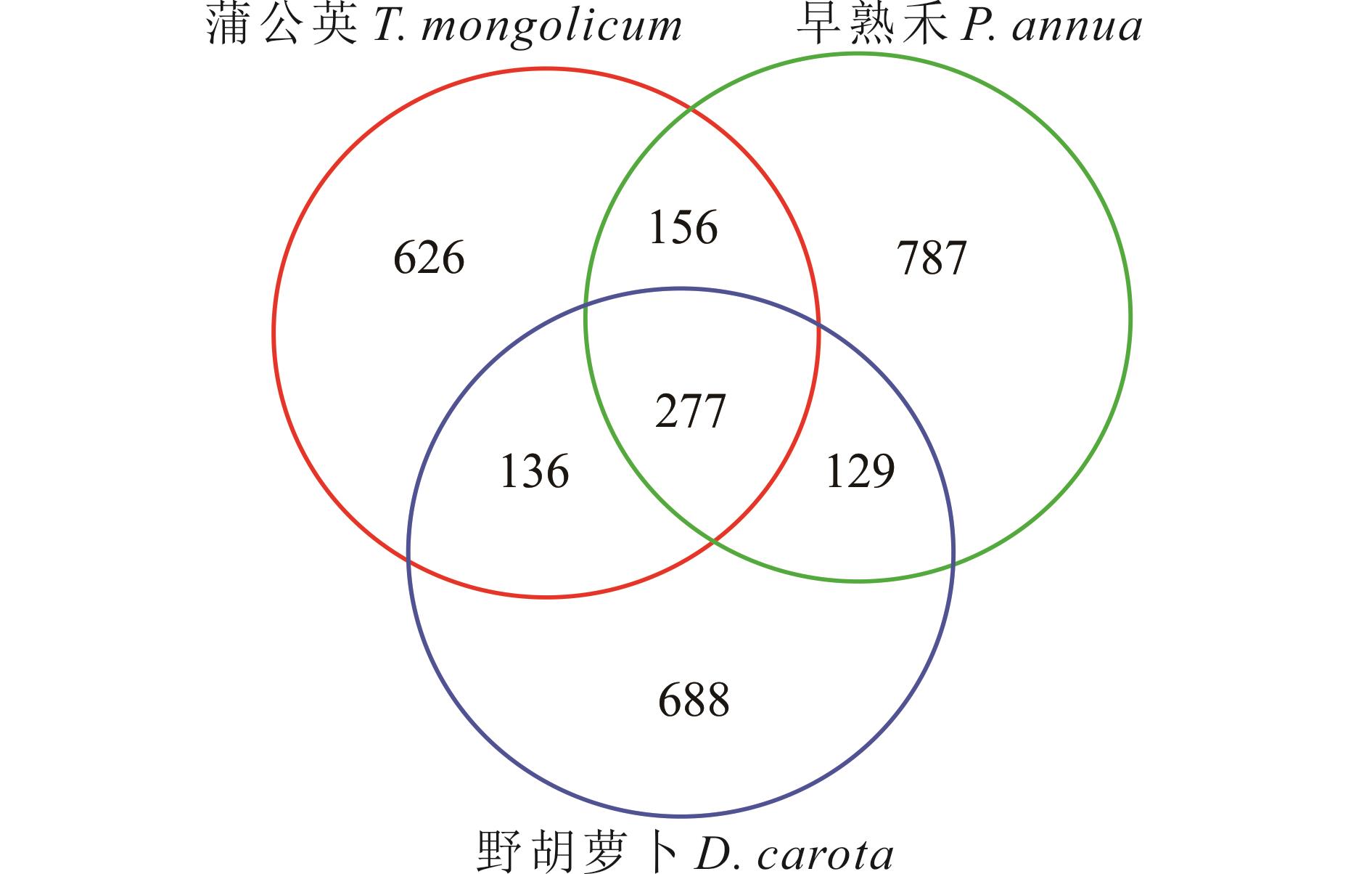
Fig.1 The analysis of fungi amplicon sequence variants among three plant species
植被类型 Vegetation type | 覆盖深度 Coverage | 观测特征指数 Observed features index | 查普曼指数 Chao1 index | 优势度指数 Dominance index | 均匀度指数 Pielou index | 香农指数 Shannon index | 辛普森指数 Simpson index |
|---|---|---|---|---|---|---|---|
| 蒲公英 T. mongolicum | 1.0000±0.0000a | 441.0000± 46.5743a | 446.4583±50.2776a | 0.0309±0.0066a | 0.7657±0.0341a | 6.6948±0.1990a | 0.9691±0.0066a |
| 早熟禾 P. annua | 1.0000±0.0000a | 529.0000± 50.5602a | 541.3155±58.4673a | 0.0210±0.0032a | 0.7948±0.0153a | 7.1703±0.0608a | 0.9790±0.0032a |
| 野胡萝卜 D. carota | 0.9998±0.0002a | 453.5000± 50.9485a | 471.9364±59.7400a | 0.0213±0.0054a | 0.7854±0.0371a | 6.8955±0.2211a | 0.9787±0.0054a |
Table 2 Alpha diversity analysis of soil fungal communities in the rhizosphere of three plant species
植被类型 Vegetation type | 覆盖深度 Coverage | 观测特征指数 Observed features index | 查普曼指数 Chao1 index | 优势度指数 Dominance index | 均匀度指数 Pielou index | 香农指数 Shannon index | 辛普森指数 Simpson index |
|---|---|---|---|---|---|---|---|
| 蒲公英 T. mongolicum | 1.0000±0.0000a | 441.0000± 46.5743a | 446.4583±50.2776a | 0.0309±0.0066a | 0.7657±0.0341a | 6.6948±0.1990a | 0.9691±0.0066a |
| 早熟禾 P. annua | 1.0000±0.0000a | 529.0000± 50.5602a | 541.3155±58.4673a | 0.0210±0.0032a | 0.7948±0.0153a | 7.1703±0.0608a | 0.9790±0.0032a |
| 野胡萝卜 D. carota | 0.9998±0.0002a | 453.5000± 50.9485a | 471.9364±59.7400a | 0.0213±0.0054a | 0.7854±0.0371a | 6.8955±0.2211a | 0.9787±0.0054a |
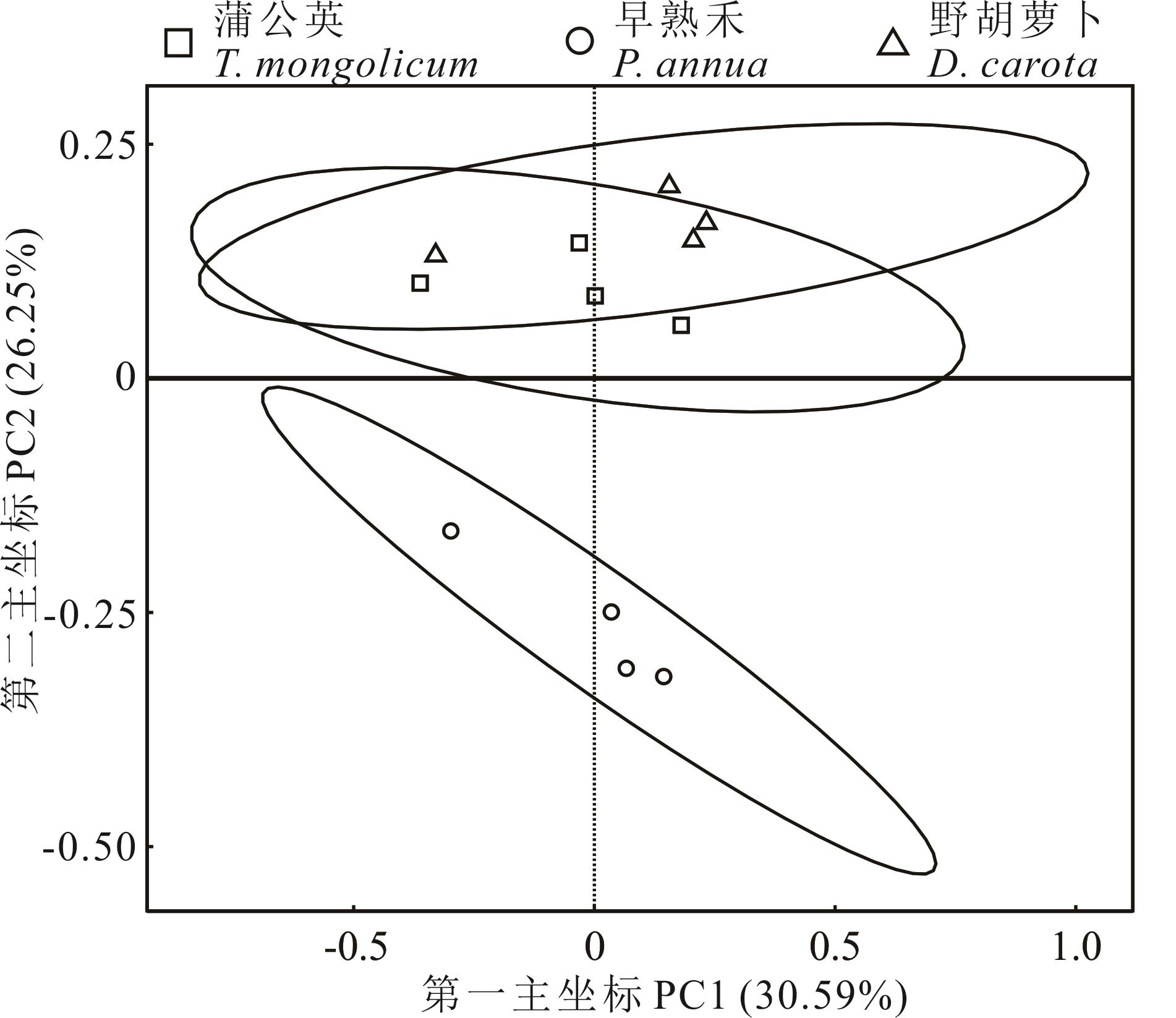
Fig.2 Principal coordinates analysis (PCoA) of rhizosphere fungal communities among three plant species
组别 Group | R值 R valve | P值 P valve |
|---|---|---|
| 蒲公英-早熟禾T. mongolicum-P. annua | 0.7292 | 0.0398 |
| 早熟禾-野胡萝卜P. annua-D. carota | 0.6251 | 0.0249 |
| 蒲公英-野胡萝卜T. mongolicum-D. carota | 0.2917 | 0.1542 |
Table 3 Analysis of similarities (ANOSIM) analysis of rhizosphere soil fungal communities among plant species
组别 Group | R值 R valve | P值 P valve |
|---|---|---|
| 蒲公英-早熟禾T. mongolicum-P. annua | 0.7292 | 0.0398 |
| 早熟禾-野胡萝卜P. annua-D. carota | 0.6251 | 0.0249 |
| 蒲公英-野胡萝卜T. mongolicum-D. carota | 0.2917 | 0.1542 |

Fig.3 Distribution characteristics of rhizosphere fungal communities among plant species at phylum level

Fig.4 Distribution characteristics of rhizosphere fungal communities among plant species at genus level
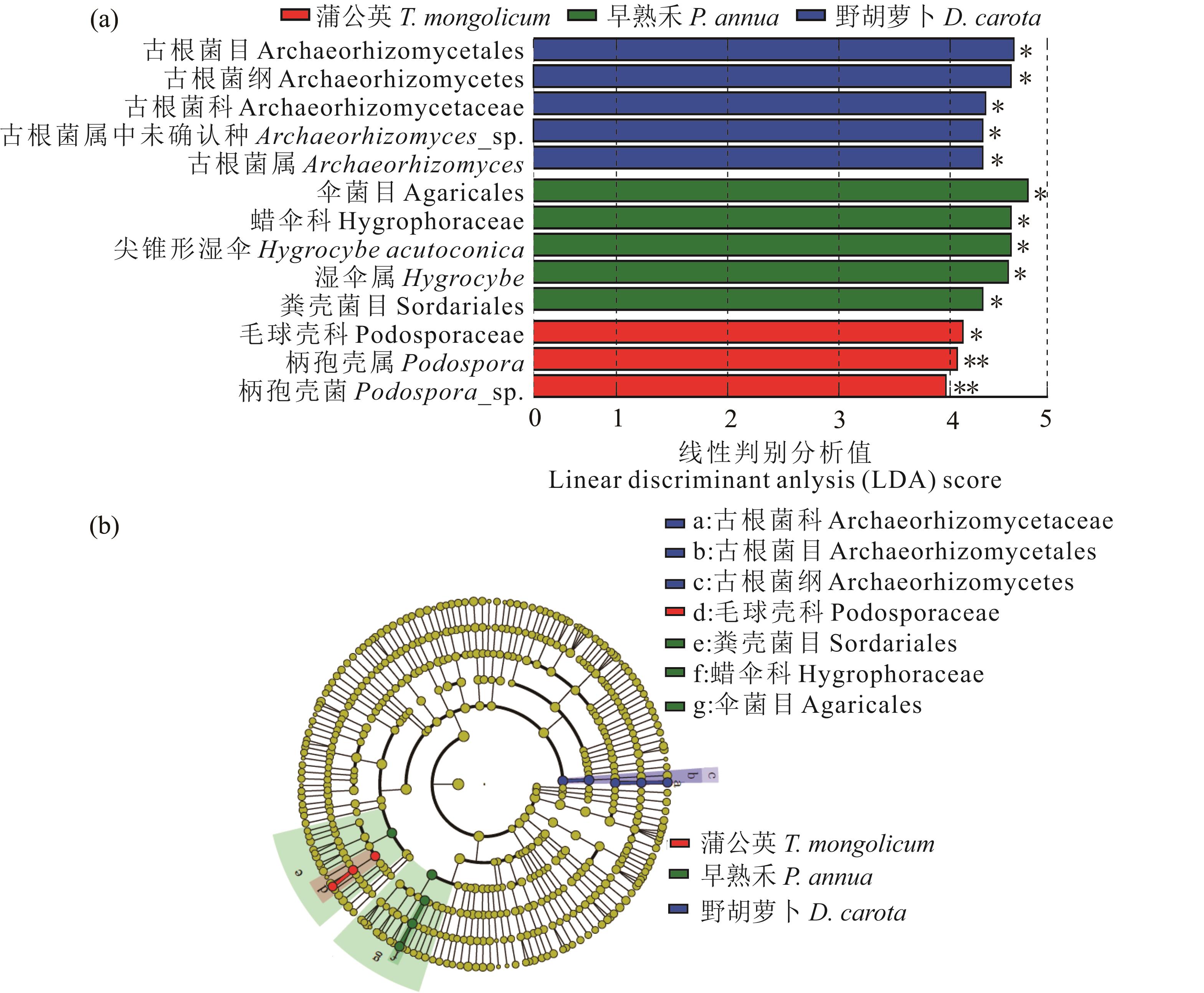
Fig.5 Identification of fungal biomarkers in the rhizosphere soil of three plant species based on LefSe analysis
| 样品名称Sample name | 未分配Unassigned | 腐生营养型Saprotroph | 复合营养型Polytroph | 共生营养型Symbiotroph | 病理营养型Pathotroph |
|---|---|---|---|---|---|
| 蒲公英T. mongolicum | 0.529±0.045ab | 0.271±0.052a | 0.108±0.012b | 0.048±0.015a | 0.044±0.018a |
| 早熟禾P. annua | 0.412±0.018b | 0.286±0.036a | 0.189±0.018a | 0.076±0.021a | 0.037±0.007a |
| 野胡萝卜D. carota | 0.573±0.043a | 0.274±0.041a | 0.081±0.016b | 0.052±0.016a | 0.021±0.004a |
Table 4 Relative abundance of nutritional modes in rhizosphere fungal communities among three plant species
| 样品名称Sample name | 未分配Unassigned | 腐生营养型Saprotroph | 复合营养型Polytroph | 共生营养型Symbiotroph | 病理营养型Pathotroph |
|---|---|---|---|---|---|
| 蒲公英T. mongolicum | 0.529±0.045ab | 0.271±0.052a | 0.108±0.012b | 0.048±0.015a | 0.044±0.018a |
| 早熟禾P. annua | 0.412±0.018b | 0.286±0.036a | 0.189±0.018a | 0.076±0.021a | 0.037±0.007a |
| 野胡萝卜D. carota | 0.573±0.043a | 0.274±0.041a | 0.081±0.016b | 0.052±0.016a | 0.021±0.004a |
功能类型 Functional group | 蒲公英 T. mongolicum | 早熟禾 P. annua | 野胡萝卜 D. carota |
|---|---|---|---|
| 未定义腐生菌 Undefined saprotroph | 0.2486±0.0478a | 0.2096±0.0394a | 0.1851±0.0558a |
| 土壤腐生菌 Soil saprotroph | 0.0107±0.0052b | 0.0594±0.0072ab | 0.0758±0.0212a |
| 丛枝菌根真菌 Arbuscular mycorrhizal fungi | 0.0364±0.0126a | 0.0636±0.0192a | 0.0445±0.0154a |
| 兰花菌根菌 Orchid mycorrhizal | 0.0039±0.0009a | 0.0063±0.0013a | 0.0044±0.0009a |
| 外生菌根 Ectomycorrhizal | 0.0067±0.0026a | 0.0037±0.0015a | 0.0014±0.0002a |
| 植物病原菌 Plant pathogen | 0.0419±0.0181a | 0.0356±0.0072a | 0.0162±0.0039a |
| 未定义腐生-未定义的生物营养菌 Undefined saprotroph-undefined biotroph | 0.0044±0.0022b | 0.0983±0.0196a | 0.0007±0.0003b |
粪腐生-内生-凋落物腐生-未定义腐生菌 Dung saprotroph-endophyte-litter saprotroph-undefined saprotroph | 0.0459±0.0079a | 0.0259±0.0046a | 0.0021±0.0011b |
动物病原-内生-植物病原-木质腐生菌 Animal pathogen-endophyte-plant pathogen-wood saprotroph | 0.0202±0.0044a | 0.0173±0.0043a | 0.0312±0.0077a |
| 内生-植物病原菌 Endophyte-plant pathogen | 0.0122±0.0024a | 0.0188±0.0021a | 0.0223±0.0061a |
| 植物病原-土壤腐生-木质腐生菌 Plant pathogen-soil saprotroph-wood saprotroph | 0.0061±0.0015a | 0.0043±0.0031a | 0.0169±0.0053a |
| 植物病原-未定义腐生菌 Plant pathogen-undefined saprotroph | 0.0034±0.0018ab | 0.0137±0.0041a | 0.0026±0.0017b |
Table 5 Relative abundance of functional types of fungal communities in rhizosphere soil of three plant species
功能类型 Functional group | 蒲公英 T. mongolicum | 早熟禾 P. annua | 野胡萝卜 D. carota |
|---|---|---|---|
| 未定义腐生菌 Undefined saprotroph | 0.2486±0.0478a | 0.2096±0.0394a | 0.1851±0.0558a |
| 土壤腐生菌 Soil saprotroph | 0.0107±0.0052b | 0.0594±0.0072ab | 0.0758±0.0212a |
| 丛枝菌根真菌 Arbuscular mycorrhizal fungi | 0.0364±0.0126a | 0.0636±0.0192a | 0.0445±0.0154a |
| 兰花菌根菌 Orchid mycorrhizal | 0.0039±0.0009a | 0.0063±0.0013a | 0.0044±0.0009a |
| 外生菌根 Ectomycorrhizal | 0.0067±0.0026a | 0.0037±0.0015a | 0.0014±0.0002a |
| 植物病原菌 Plant pathogen | 0.0419±0.0181a | 0.0356±0.0072a | 0.0162±0.0039a |
| 未定义腐生-未定义的生物营养菌 Undefined saprotroph-undefined biotroph | 0.0044±0.0022b | 0.0983±0.0196a | 0.0007±0.0003b |
粪腐生-内生-凋落物腐生-未定义腐生菌 Dung saprotroph-endophyte-litter saprotroph-undefined saprotroph | 0.0459±0.0079a | 0.0259±0.0046a | 0.0021±0.0011b |
动物病原-内生-植物病原-木质腐生菌 Animal pathogen-endophyte-plant pathogen-wood saprotroph | 0.0202±0.0044a | 0.0173±0.0043a | 0.0312±0.0077a |
| 内生-植物病原菌 Endophyte-plant pathogen | 0.0122±0.0024a | 0.0188±0.0021a | 0.0223±0.0061a |
| 植物病原-土壤腐生-木质腐生菌 Plant pathogen-soil saprotroph-wood saprotroph | 0.0061±0.0015a | 0.0043±0.0031a | 0.0169±0.0053a |
| 植物病原-未定义腐生菌 Plant pathogen-undefined saprotroph | 0.0034±0.0018ab | 0.0137±0.0041a | 0.0026±0.0017b |
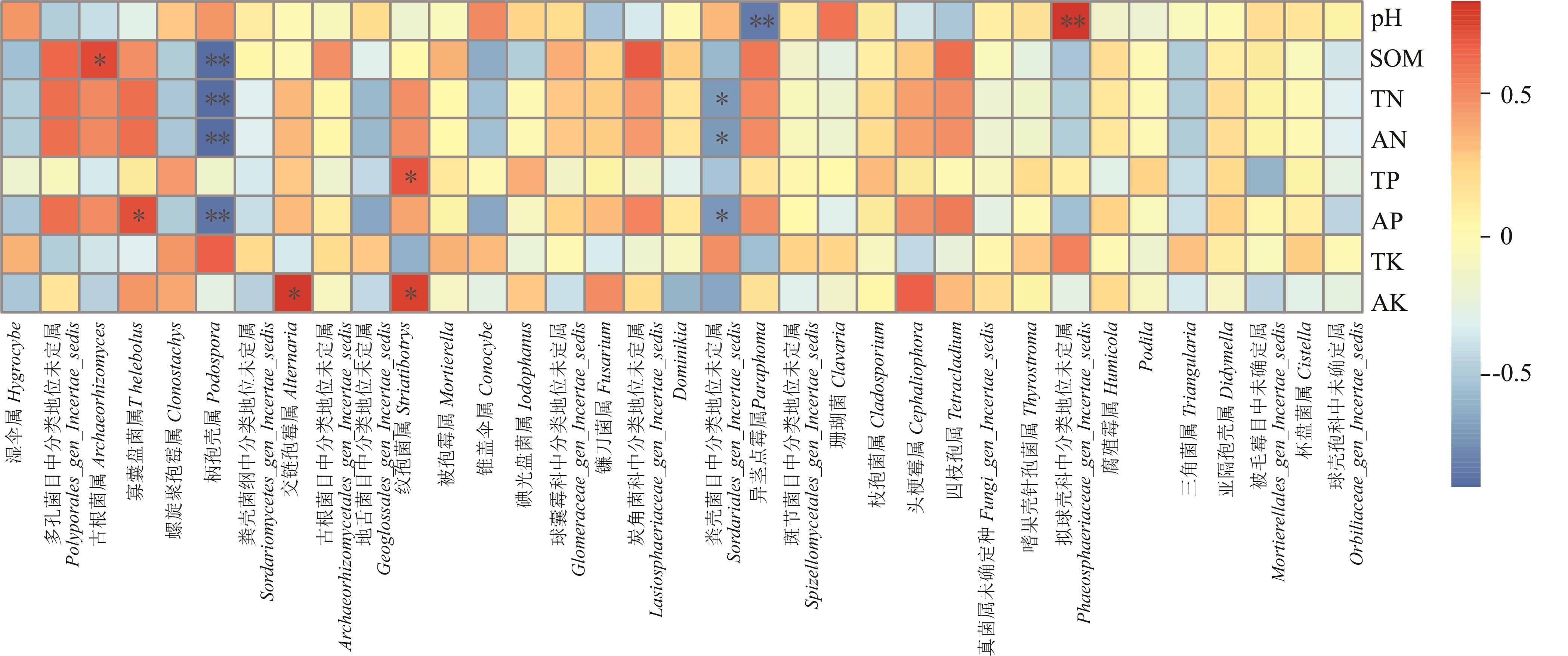
Fig.6 Spearman correlation analysis of species richness and soil physicochemistry factor at genus level
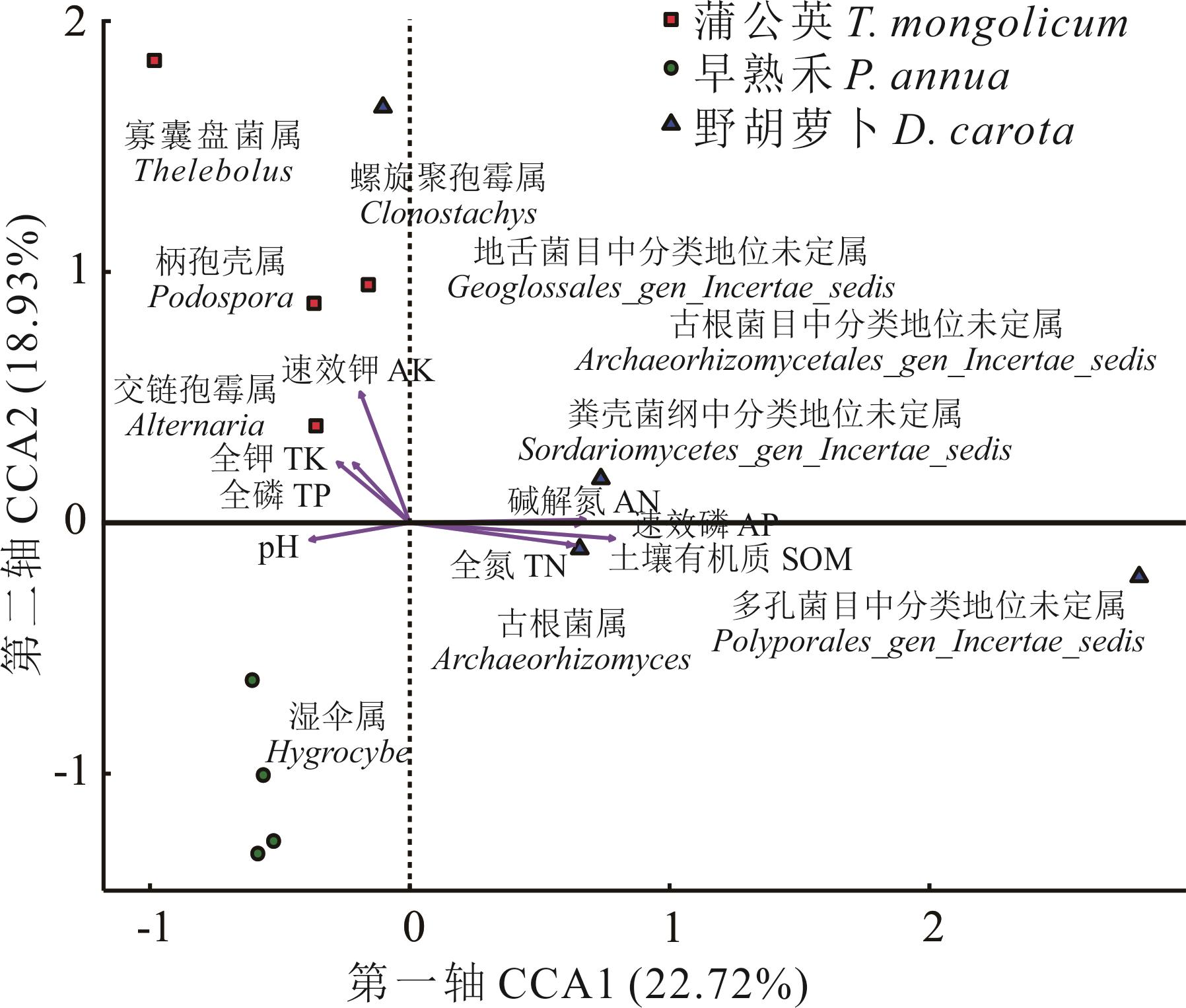
Fig.7 Canonical correspondence analysis of dominant fungal groups and soil environmental factors
| [1] | Liu L L, Sheng J D, Cheng J H, et al. Relationship between plant species characteristics and climate factors in different grassland types of Xinjiang. Acta Prataculturae Sinica, 2016, 25(5): 1-12. |
| 刘利利, 盛建东, 程军回, 等. 新疆不同草地类型植物物种特征与水热因子的关系研究. 草业学报, 2016, 25(5): 1-12. | |
| [2] | Chu S L, Yun J, Asiya·Manlike, et al. Evaluation of grassland productivity in Kizilsu Kirgiz autonomous prefecture of Xinjiang. Pratacultural Science, 2011, 28(1): 53-58. |
| 储少林, 贠静, 阿斯娅·曼力克, 等. 克州地区天然草地生产力评价. 草业科学, 2011, 28(1): 53-58. | |
| [3] | Lv L L, Huang H L, Lv J T, et al. Unique dissolved organic matter molecules and microbial communities in rhizosphere of three typical crop soils and their significant associations based on FT-ICR-MS and high-throughput sequencing analysis. Science of the Total Environment, 2024, 919: 170904. |
| [4] | Tan W Y, Nian H, Tran L S P, et al. Small peptides: Novel targets for modulating plant-rhizosphere microbe interactions. Trends in Microbiology, 2024, 2385: 12. |
| [5] | Mesny F, Hacquard S, Thomma B P. Co-evolution within the plant holobiont drives host performance. EMBO Reports, 2023, 24(9): e57455. |
| [6] | Warnasuriya S D, Udayanga D, Manamgoda D S, et al. Fungi as environmental bioindicators. Science of the Total Environment, 2023, 892: 164583. |
| [7] | Koziol L, Bever J D. The missing link in grassland restoration: arbuscular mycorrhizal fungi inoculation increases plant diversity and accelerates succession. Journal of Applied Ecology, 2017, 54(5): 1301-1309. |
| [8] | Sweeney C J, Vries F T, Dongen B E, et al. Root traits explain rhizosphere fungal community composition among temperate grassland plant species. New Phytologist, 2021, 229(3): 1492-1507. |
| [9] | Oliveira T B, Lucas R C, Scarcella A S A, et al. Fungal communities differentially respond to warming and drought in tropical grassland soil. Molecular Ecology, 2020, 29(8): 1550-1559. |
| [10] | Zhou Q, Wang J L, Zhang T, et al. Special fungal community structure formed by typical halophytes in the rhizosphere soil under the synergistic action of different saline and alkaline environments. Journal of Plant Growth Regulation, 2024, 43(12): 4635-4652. |
| [11] | Ma Y, Wang X L, Ma Y S, et al. Effects of the degree of alpine meadow degradation on the rhizosphere soil fungal community and the ecological network of dominant species. Acta Prataculturae Sinica, 2024, 33(2): 125-137. |
| 马源, 王晓丽, 马玉寿, 等. 高寒草甸退化程度对优势物种根际土壤真菌群落和生态网络的影响. 草业学报, 2024, 33(2): 125-137. | |
| [12] | Mao W Y, Yao J Q, Chen J, et al. Change characteristics of extreme temperature-rising process in the east Pamirs during 1961-2017. Arid Zone Research, 2019, 36(6): 1368-1378. |
| 毛炜峄, 姚俊强, 陈静, 等. 1961-2017年东帕米尔高原极端升温过程气候变化特征. 干旱区研究, 2019, 36(6): 1368-1378. | |
| [13] | Chen H M, Li W J, Qiu J, et al. A checklist of wild vascular plants in Xinjiang, China. Biodiversity Science, 2023, 31(9): 56-62. |
| 陈慧妹, 李文军, 邱娟, 等. 新疆野生维管植物名录. 生物多样性, 2023, 31(9): 56-62. | |
| [14] | Li M Y, Wang J L, Zhou Q, et al. Analysis on the rhizosphere fungal community structure of four halophytes in Southern Xinjiang. Acta Ecologica Sinica, 2021, 41(21): 8484-8495. |
| 李明源, 王继莲, 周茜, 等. 南疆四种盐生植物根际土壤真菌群落结构特征. 生态学报, 2021, 41(21): 8484-8495. | |
| [15] | Bao S D. Soil agrochemical analysis (the third edition). Beijing: China Agriculture Press, 2000. |
| 鲍士旦. 土壤农化分析(第三版). 北京: 中国农业出版社, 2000. | |
| [16] | Su Z X, Su B Q, Wu Y, et al. A less complex but more specialized microbial network resulted in faster fine-root decomposition in young stands of Robinia pseudoacacia. Applied Soil Ecology, 2023, 182: 104735. |
| [17] | Liu H Q, Sun W C, Guo Q, et al. Ecological benefit analysis of winter rapeseed rhizosphere soil fungi driving and influencing soil fertility. Acta Ecologica Sinica, 2025, 45(1): 80-90. |
| 刘海卿, 孙万仓, 郭倩, 等. 冬油菜根际土壤真菌驱动及其影响土壤肥力的生态效益分析. 生态学报, 2025, 45(1): 80-90. | |
| [18] | Yang H Q, Xiang Y Q, Lv Q, et al. A comparative study on the soil fungal community structure across three mixed forests at the initial stage of afforestation. Acta Ecologica Sinica, 2024, 44(8): 3360-3371. |
| 杨慧琴, 向涌旗, 吕倩, 等. 3种混交林造林初期土壤真菌群落结构特征. 生态学报, 2024, 44(8): 3360-3371. | |
| [19] | Wang S H, Chang S L, Li X, et al. Soil fungal diversity and its community structure in Tianshan Forest. Acta Ecologica Sinica, 2021, 41(1): 124-134. |
| 王诗慧, 常顺利, 李鑫, 等. 天山林区土壤真菌多样性及其群落结构. 生态学报, 2021, 41(1): 124-134. | |
| [20] | Geml J, Arnold A E, Semenova-Nelsen T A, et al. Community dynamics of soil-borne fungal communities along elevation gradients in neotropical and palaeotropical forests. Molecular Ecology, 2022, 31(7): 2044-2060. |
| [21] | Zhang Y, Cao H Y, Zhao P S, et al. Evolution of soil fungal community with the stand aging of Pinus sylvestris var. mongolica forests in semi-arid and dry sub-humid regions. Environmental Science, 2025, 46(6): 3975-3984. |
| 张英, 曹红雨, 赵珮杉, 等. 半干旱-亚湿润干旱区樟子松林地土壤真菌群落随林龄增长的演变. 环境科学, 2025, 46(6): 3975-3984. | |
| [22] | Williams A, Vries F T. Plant root exudation under drought: implications for ecosystem functioning. New Phytologist, 2020, 225(5): 1899-1905. |
| [23] | Ma C X, Yu Q, Liu Y J, et al. The characteristics of rhizosphere soil fungal community of restored vegetation in Inner Mongolia open pit mine dump. Acta Ecologica Sinica, 2025, 45(4): 1974-1986. |
| 马晨鑫, 俞琦, 刘永杰, 等. 内蒙古露天煤矿排土场植物恢复根际土壤真菌群落特征. 生态学报, 2025, 45(4): 1974-1986. | |
| [24] | Liu B C, Li F Y, Zhao Q H, et al. Research progress on remediation of polycyclic aromatic hydrocarbons contaminated soil by Gramineae plants. Chemical Industry and Engineering Progress, 2023, 42(7): 3736-3748. |
| 刘柏成, 李法云, 赵琦慧, 等. 禾本科植物修复多环芳烃污染土壤研究进展. 化工进展, 2023, 42(7): 3736-3748. | |
| [25] | Feng L, Li Z K, Wang H, et al. Changes of rhizosphere soil microbial community structure of Stellaria dichotoma L.var. lanceolata Bge. planted for different years. Microbiology China, 2024, 51(10): 4132-4148. |
| 冯璐, 李振凯, 王红, 等. 不同种植年限银柴胡根际土壤微生物群落结构变化. 微生物学通报, 2024, 51(10): 4132-4148. | |
| [26] | Nie J M, Zhang X F, Zhang Q D, et al. Responses of soil fungal community structure to seasonal soil layer interactions in typical grassland of Inner Mongolia. Acta Agrestia Sinica, 2024, 32(11): 3408-3416. |
| 聂佳明, 张晓馥, 张起迪, 等. 内蒙古典型草原土壤真菌群落结构对季节土层交互的响应. 草地学报, 2024, 32(11): 3408-3416. | |
| [27] | Zhang Y C, Yang W Q, Wei X Y, et al. Study on vegetation and soil characteristics of different types of grassland in Qilian Mountain National Park. Chinese Journal of Grassland, 2024, 46(11): 23-34. |
| 张阳灿, 杨文权, 魏兴勇, 等. 祁连山国家公园不同类型草地植被及土壤特征研究. 中国草地学报, 2024, 46(11): 23-34. | |
| [28] | Zhang C B, Ren C H, Wang Y L, et al. Uncovering fungal community composition in natural habitat of Ophiocordyceps sinensis using high-throughput sequencing and culture-dependent approaches. BMC Microbiology, 2020, 20(1): 331. |
| [29] | Patkowska E, Mielniczuk E, Jamiołkowska A, et al. The influence of Trichoderma harzianum Rifai T-22 and other biostimulants on rhizosphere beneficial microorganisms of carrot. Agronomy, 2020, 10(11): 1637. |
| [30] | Zhang H, Li W H, Zhao H X, et al. Effects of invasive Compositae plants on soil nitrogen content. Pratacultural Science, 2023, 40(7): 1766-1778. |
| 张涵, 李伟华, 赵海霞, 等. 菊科植物改变土壤氮素的可利用性. 草业科学, 2023, 40(7): 1766-1778. | |
| [31] | Guo Z M, Zhang X Y, Dungait J A J, et al. Contribution of soil microbial necromass to SOC stocks during vegetation recovery in a subtropical Karst ecosystem. Science of the Total Environment, 2021, 761: 143945. |
| [32] | Priyashantha A K H, Dai D Q, Bhat D J, et al. Plant-fungi interactions: Where it goes? Biology, 2023, 12(6): 809. |
| [33] | Sui J K, Li C Y, Wang Y P, et al. Microecological shifts in the rhizosphere of perennial large trees and seedlings in continuous cropping of poplar. Microorganisms, 2023, 12(1): 58. |
| [34] | Dong L, Li J J, Sun J, et al. Soil degradation influences soil bacterial and fungal community diversity in overgrazed alpine meadows of the Qinghai-Tibet Plateau. Scientific Reports, 2021, 11: 11538. |
| [35] | Gong M X, Wang J L, Li M Y. Plant species shaping rhizosphere fungal community structure in the subalpine forest steppe belt. Rhizosphere, 2025, 33: 100999. |
| [36] | Hauchhum R, Tripathi S K. Impact of rhizosphere microbes of three early colonizing annual plants on improving soil fertility during vegetation establishment under different fallow periods following shifting cultivation. Agricultural Research, 2020, 9(2): 213-221. |
| [1] | Ying WANG, Ming-yuan LI, Mairiyangu·Yasheng, Ji-lian WANG. Comparative study of rhizosphere soil fungal community structure among different plants in Tomur Peak, Xinjiang [J]. Acta Prataculturae Sinica, 2025, 34(7): 83-94. |
| [2] | Wen-hui DENG, Ke-chen SONG, Hao ZHANG, Si-yu GUAN, Jia-yi YONG, Hai-ying HU. Structure and diversity characteristics of the rhizosphere microbial community of dominant plants on the desert steppe under changing precipitation [J]. Acta Prataculturae Sinica, 2025, 34(5): 12-26. |
| [3] | Shou-xing WANG, Hua-kun ZHOU, Li-peng OU, Cheng-xian LI, Yan-he WANG, Xiao-chun NING, Qiang GU, Dai-jun WEI, Ming-xin YANG. Vegetation and soil microbial diversity and their relationships with soil factors in different grassland types of the three river headwaters region [J]. Acta Prataculturae Sinica, 2025, 34(4): 16-26. |
| [4] | Rong-chun ZHENG, Zhi-biao NAN, Ting-yu DUAN. Diversity of seed-borne fungi on four Trifolium pratense cultivars [J]. Acta Prataculturae Sinica, 2024, 33(8): 170-180. |
| [5] | Zhen-fen ZHANG, Rong HUANG, Xiang-yang LI, Bo YAO, Gui-qin ZHAO. Seed-borne bacterial diversity of oat and functional analysis based on Illumina MiSeq high-throughput sequencing [J]. Acta Prataculturae Sinica, 2023, 32(7): 96-108. |
| [6] | Huan LIU, Kai DONG, Zeng-wangdui REN, Jing-long WANG, Yun-fei LIU, Gui-qin ZHAO. Effects of co-sowing of Artemisia wellbyi and perennial grasses on the characteristics of vegetation and soil fungal communities in desertified grasslands in Tibet [J]. Acta Prataculturae Sinica, 2023, 32(6): 45-57. |
| [7] | Ying TIAN, Zhe XU, Li-zhen ZHU, Jun WANG, Xue-fei WEN. Effect of cutting time during the growing season on the soil bacterial community under an artificial Caragana intermedia plantation [J]. Acta Prataculturae Sinica, 2022, 31(5): 40-50. |
| [8] | Xu-mei JIN, Ying-ying WANG, Chong-yi LIU, Xin-yi CHEN, Ming-xiu LONG, Shu-bin HE. Effects on soil nutrients and bacterial communities of different cover crops in an organic kiwifruit orchard in the Guanzhong region of China [J]. Acta Prataculturae Sinica, 2022, 31(10): 53-63. |
| [9] | Xin MA, Zhu-zhu LUO, Yao-quan ZHANG, Jia-he LIU, Yi-ning NIU, Li-qun CAI. Distribution characteristics and ecological function predictions of soil bacterial communities in rainfed alfalfa fields on the Loess Plateau [J]. Acta Prataculturae Sinica, 2021, 30(3): 54-67. |
| [10] | WEI Peng, AN Sha-zhou, DONG Yi-qiang, SUN Zong-jiu, Bieerdawulieti·Xihayi, LI Chao. A high-throughput sequencing evaluation of bacterial diversity and community structure of the desert soil in the Junggar Basin [J]. Acta Prataculturae Sinica, 2020, 29(5): 182-190. |
| [11] | Cheng-yi LI, Xi-lai LI, Yuan-wu YANG, Hong-lin LI, De-fei LIANG. Effect of nitrogen addition on soil bacterial diversity in alpine degraded grasslands of differing slope [J]. Acta Prataculturae Sinica, 2020, 29(12): 161-170. |
| [12] | LIU Hong-mei, YANG Dian-lin, ZHANG Hai-fang, ZHAO Jian-ning, WANG Hui, ZHANG Nai-qin. Effects of nitrogen addition on the soil bacterial community structure of Stipa baicalensis steppe [J]. Acta Prataculturae Sinica, 2019, 28(9): 23-32. |
| [13] | WU Wen-xian, ZHANG Lei, HUANG Xiao-qin, YANG Xiao-xiang, XUE Long-hai, LIU Yong. Difference in soil microbial diversity in artificial grasslands of the Northwest Plateau of Sichuan Province [J]. Acta Prataculturae Sinica, 2019, 28(3): 29-41. |
| [14] | WU Juan-zi, QIAN Chen, LIU Zhi-wei, PAN Yu-mei, ZHONG Xiao-xian. De novo transcriptomic analysis for lignin synthesis in Cenchrus purpureus using RNA-seq [J]. Acta Prataculturae Sinica, 2019, 28(1): 150-161. |
| [15] | ZHANG Dong-Yan, WANG Jun, YANG Shui-Ping, ZHANG Xue, LIU Jing, ZHAO Jian, HE Da-Min, YANG Hong-Jun, MO Jing-Jing, GOU Jian-Yu, ZHAO Xin-Mei, JIANG Wei, DING Wei, CHEN Da-Xia. Influence of Scrophularia ningpoensis-tobacco intercropping on bacterial community structure in soil [J]. Acta Prataculturae Sinica, 2017, 26(6): 120-130. |
| Viewed | ||||||
|
Full text |
|
|||||
|
Abstract |
|
|||||
