
ISSN 1004-5759 CN 62-1105/S
Acta Prataculturae Sinica ›› 2026, Vol. 35 ›› Issue (6): 166-180.DOI: 10.11686/cyxb2025246
Hui ZHANG( ), Hui-ling LI, Qing-sen WANG, Feng-jing LIU, Jin-yu LI, Liang-de LI, Qiu-sheng ZHONG(), Ding-feng WANG()
Received:2025-06-23
Revised:2025-08-18
Online:2026-06-20
Published:2026-04-13
Contact:
Qiu-sheng ZHONG,Ding-feng WANG
Hui ZHANG, Hui-ling LI, Qing-sen WANG, Feng-jing LIU, Jin-yu LI, Liang-de LI, Qiu-sheng ZHONG, Ding-feng WANG. Effects of intercropping the weed Artemisia lavandulaefolia on soil microbial structure and diversity in tea gardens[J]. Acta Prataculturae Sinica, 2026, 35(6): 166-180.
处理 Treatment | pH | 土壤有机质 Soil organic matter (g·kg-1) | 全氮 Total nitrogen (g·kg-1) | 有效磷 Available phosphorus (mg·kg-1) | 碱解氮 Available nitrogen (mg·kg-1) | 速效钾 Available potassium (mg·kg-1) |
|---|---|---|---|---|---|---|
| CK | 3.56±0.045bB | 47.90±1.50aA | 2.40±0.07aA | 20.85±0.87aA | 167.50±10.50aA | 251.50±5.48aA |
| TA | 3.67±0.040bB | 42.25±1.15bA | 2.16±0.02bB | 21.60±0.69aA | 156.00±0.00aA | 168.50±0.87bB |
| TC | 4.05±0.050aA | 31.80±0.70cB | 1.76±0.01cC | 12.05±0.38cB | 148.00±7.00abA | 217.50±7.79aA |
| CC | 4.15±0.040aA | 26.80±0.40dB | 1.43±0.01dD | 14.10±0.29bB | 126.50±7.50bA | 166.50±10.68bB |
Table 1 Effects of intercropping A. lavandulaefolia in tea garden on soil physicochemical properties
处理 Treatment | pH | 土壤有机质 Soil organic matter (g·kg-1) | 全氮 Total nitrogen (g·kg-1) | 有效磷 Available phosphorus (mg·kg-1) | 碱解氮 Available nitrogen (mg·kg-1) | 速效钾 Available potassium (mg·kg-1) |
|---|---|---|---|---|---|---|
| CK | 3.56±0.045bB | 47.90±1.50aA | 2.40±0.07aA | 20.85±0.87aA | 167.50±10.50aA | 251.50±5.48aA |
| TA | 3.67±0.040bB | 42.25±1.15bA | 2.16±0.02bB | 21.60±0.69aA | 156.00±0.00aA | 168.50±0.87bB |
| TC | 4.05±0.050aA | 31.80±0.70cB | 1.76±0.01cC | 12.05±0.38cB | 148.00±7.00abA | 217.50±7.79aA |
| CC | 4.15±0.040aA | 26.80±0.40dB | 1.43±0.01dD | 14.10±0.29bB | 126.50±7.50bA | 166.50±10.68bB |
| 处理 | 细菌Bacteria | 真菌Fungi | ||||
|---|---|---|---|---|---|---|
| Treatment | OTU数目 OTU number | Chao 1指数 Chao 1 index | Shannon指数 Shannon index | OTU数目 OTU number | Chao 1指数 Chao 1 index | Shannon指数 Shannon index |
| CK | 792.33±29.79Cc | 1113.89±84.45Bb | 6.73±0.12Bb | 455.67±13.53Aa | 558.22±8.40Aa | 5.28±0.17Aa |
| TA | 972.67±12.33Bb | 1340.70±62.13Bb | 7.10±0.22Bb | 476.00±43.59Aa | 567.90±69.89Aa | 5.76±0.22Aa |
| TC | 1381.67±22.30Aa | 1857.90±79.61Aa | 8.43±0.02Aa | 505.00±50.48Aa | 670.31±44.89Aa | 4.82±0.79Aa |
| CC | 1367.33±22.24Aa | 1818.12±23.41Aa | 8.40±0.04Aa | 546.00±13.89Aa | 714.16±34.03Aa | 5.60±0.17Aa |
Table 2 Effect of intercropping A. lavandulaefolia in tea garden on soil microbial community α diversity index
| 处理 | 细菌Bacteria | 真菌Fungi | ||||
|---|---|---|---|---|---|---|
| Treatment | OTU数目 OTU number | Chao 1指数 Chao 1 index | Shannon指数 Shannon index | OTU数目 OTU number | Chao 1指数 Chao 1 index | Shannon指数 Shannon index |
| CK | 792.33±29.79Cc | 1113.89±84.45Bb | 6.73±0.12Bb | 455.67±13.53Aa | 558.22±8.40Aa | 5.28±0.17Aa |
| TA | 972.67±12.33Bb | 1340.70±62.13Bb | 7.10±0.22Bb | 476.00±43.59Aa | 567.90±69.89Aa | 5.76±0.22Aa |
| TC | 1381.67±22.30Aa | 1857.90±79.61Aa | 8.43±0.02Aa | 505.00±50.48Aa | 670.31±44.89Aa | 4.82±0.79Aa |
| CC | 1367.33±22.24Aa | 1818.12±23.41Aa | 8.40±0.04Aa | 546.00±13.89Aa | 714.16±34.03Aa | 5.60±0.17Aa |
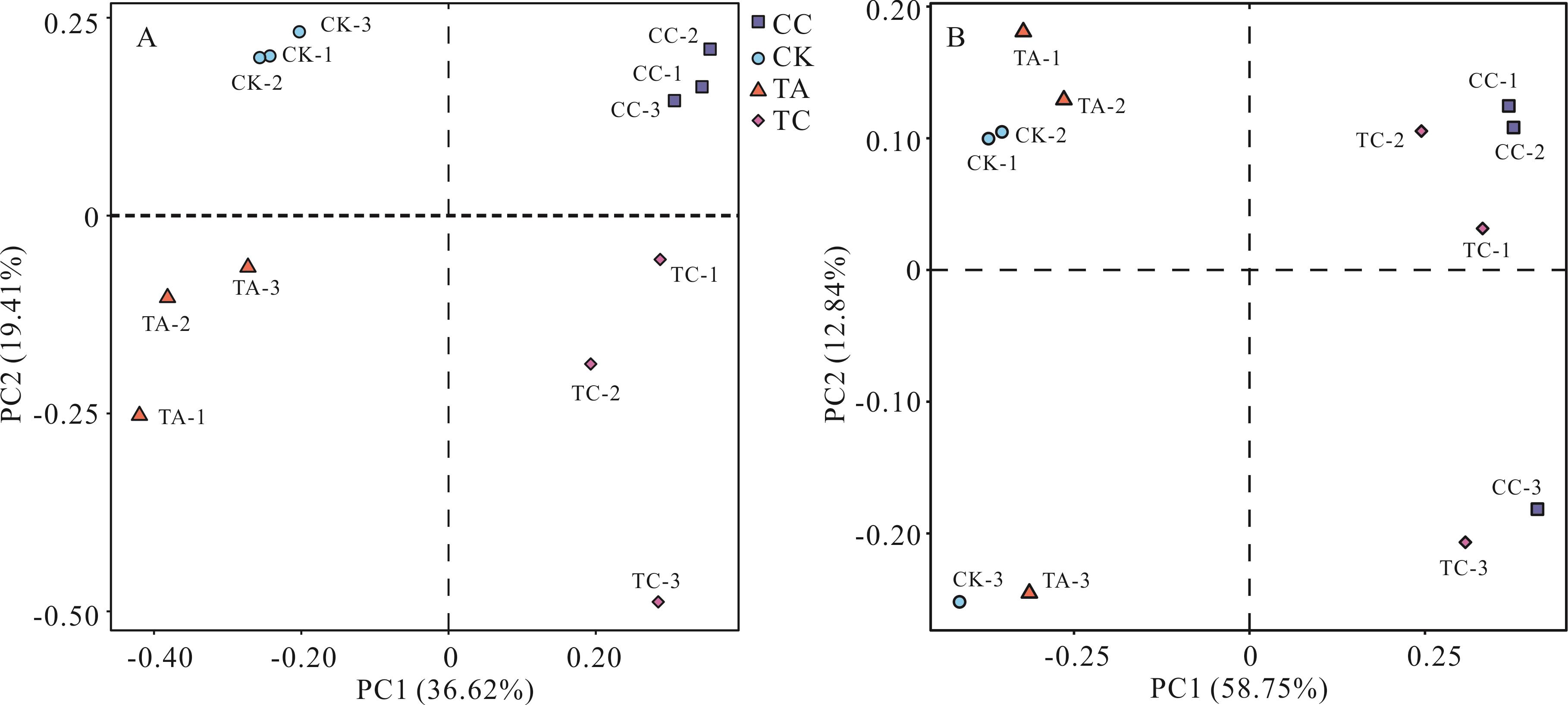
Fig.1 Principal component analysis of soil fungal and bacterial communities in tea garden under A. lavandulaefolia intercropping
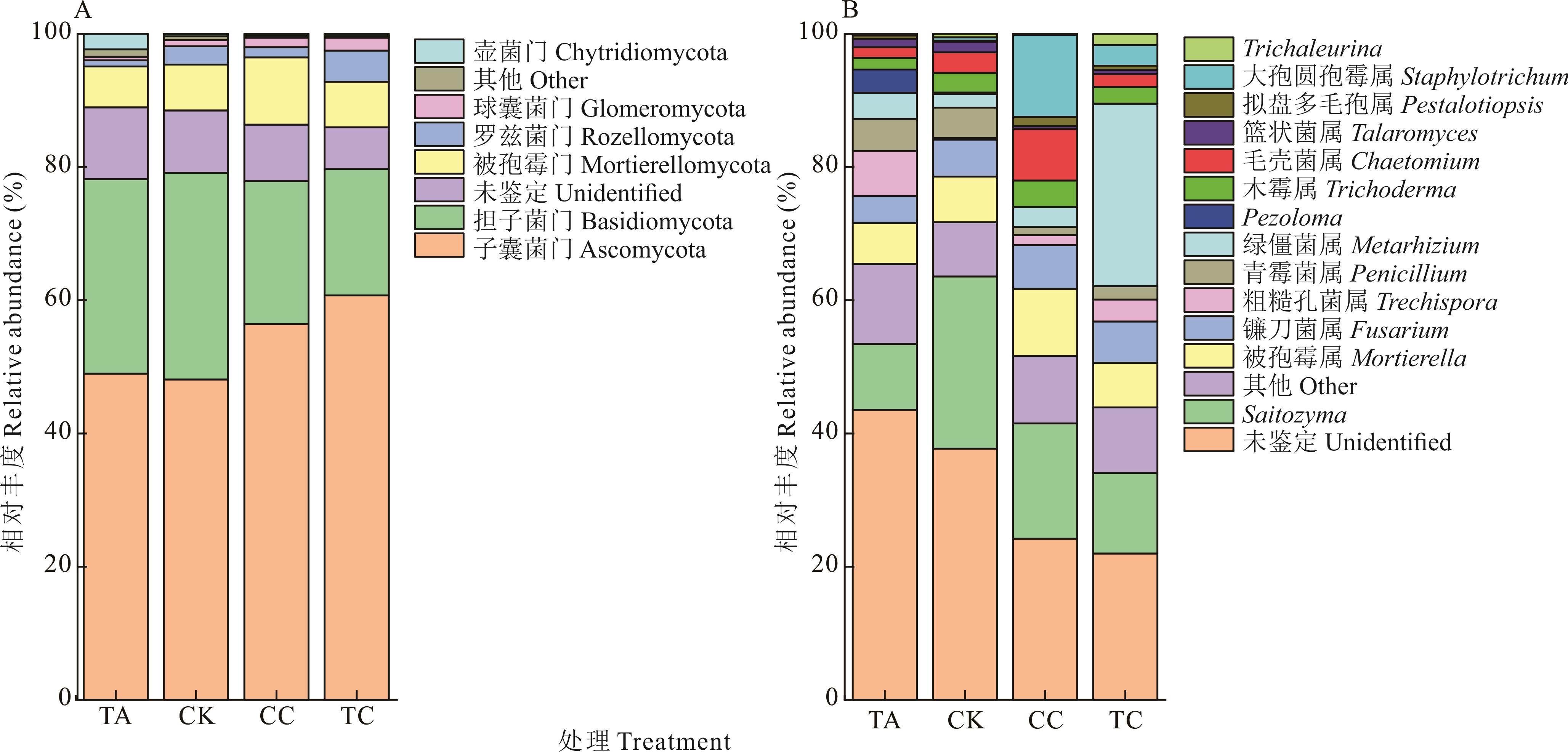
Fig.2 Relative abundance of soil fungal community at phylum and genus levels of intercropping A. lavandulaefolia in tea garden
属 Genus | TC中的丰度The abundance in TC (%) | CC中的丰度The abundance in CC (%) | P值 P-value | 属 Genus | TA中的丰度The abundance in TA (%) | CK中的相对 丰度The abundance in CK (%) | P值 P-value |
|---|---|---|---|---|---|---|---|
| 绿僵菌属Metarhizium | 25.850 | 2.800 | 0.009 | Saitozyma | 9.900 | 25.850 | 0.001 |
| 大孢圆孢霉属Staphylotrichum | 3.090 | 12.330 | 0.029 | 粗糙孔菌属Trechispora | 6.760 | 0.230 | 0.007 |
| 毛壳菌属Chaetomium | 3.000 | 7.740 | 0.015 | 绿僵菌属Metarhizium | 3.940 | 2.030 | 0.036 |
| 白环蘑属Leucoagaricus | 0.650 | 0.024 | 0.004 | 木霉属 Trichoderma | 1.760 | 2.940 | 0.046 |
| Castanediella | 0.180 | 0.051 | 0.001 | Ramicandelaber | 0.960 | 0.370 | 0.020 |
| Cladophialophora | 0.170 | 0.340 | 0.003 | Xepicula | 0.450 | 0.170 | 0.034 |
| 瓶头霉属Phialocephala | 0.064 | 0.026 | 0.038 | 曲霉菌属Aspergillus | 0.360 | 0.630 | 0.048 |
| 粪壳菌属Sordaria | 0.037 | 0.096 | 0.044 | Phaeomoniella | 0.340 | 0.160 | 0.018 |
| 土赤壳属Ilyonectria | 0.032 | 0.170 | 0.003 | 螺旋聚孢霉属Clonostachys | 0.260 | 0.160 | 0.048 |
| 枝顶孢霉属Acremonium | 0.030 | 0.120 | 0.034 | 梨孢霉属Coniosporium | 0.230 | 0.019 | 0.026 |
| 山野壳菌 Paraphaeosphaeria | 0.019 | 0.150 | 0.027 | 斜盖伞属Clitopilus | 0.120 | 0.014 | 0.001 |
| 节丛孢属Arthrobotrys | 0.016 | 0.070 | 0.032 | Hebeloma | 0.097 | 0.003 | 0.028 |
| 星裂盤菌属Phacidium | 0.010 | 0.000 | 0.023 | Octaviania | 0.070 | 0.003 | 0.035 |
| Crustoderma | 0.008 | 0.048 | 0.028 | Thozetella | 0.062 | 0.000 | 0.024 |
| Phaeomoniella | 0.006 | 0.075 | 0.011 | 马德里齿梗孢属Scolecobasidium | 0.060 | 0.003 | 0.021 |
| 毛球壳属Lasiosphaeria | 0.006 | 0.000 | 0.013 | Pseudoproboscispora | 0.048 | 0.000 | 0.001 |
| 毛色二孢属Lasiodiplodia | 0.003 | 0.037 | 0.001 | Thermoascus | 0.048 | 0.005 | 0.030 |
| Chaetosphaeria | 0.003 | 0.070 | 0.030 | 根孢囊霉属Rhizophagus | 0.022 | 0.045 | 0.041 |
| Scleroderma | 0.002 | 0.034 | 0.036 | Pseudophialophora | 0.021 | 0.057 | 0.025 |
| 近明球囊霉属Claroideoglomus | 0.000 | 0.005 | 0.000 | 赤壳属Cosmospora | 0.019 | 0.005 | 0.006 |
| Requienella | 0.000 | 0.006 | 0.013 | Polyscytalum | 0.019 | 0.005 | 0.049 |
| Saccharomycopsis | 0.000 | 0.010 | 0.023 | 横断孢属Strelitziana | 0.013 | 0.000 | 0.003 |
| Nephroma | 0.000 | 0.094 | 0.043 | 灵芝属Ganoderma | 0.011 | 0.000 | 0.045 |
| 伞菌属Agaricus | 0.000 | 0.120 | 0.048 | Umbelopsis | 0.010 | 0.061 | 0.044 |
| 柄孢壳菌属Podospora | 0.006 | 0.034 | 0.004 | ||||
| Arthrographis | 0.006 | 0.032 | 0.023 | ||||
| Coprinopsis | 0.005 | 0.026 | 0.030 | ||||
| Trichophaea | 0.003 | 0.035 | 0.017 | ||||
| 三毛孢属Robillarda | 0.003 | 0.029 | 0.022 | ||||
| Roussoella | 0.003 | 0.021 | 0.043 | ||||
| 山野壳菌 Paraphaeosphaeria | 0.002 | 0.081 | 0.000 | ||||
| 球毛壳菌属Chaetomidium | 0.000 | 0.024 | 0.002 | ||||
| 格孢腔菌属Pleospora | 0.000 | 0.011 | 0.004 | ||||
| 圆酵母属Torula | 0.000 | 0.014 | 0.006 | ||||
| 拟锁瑚菌属Clavulinopsis | 0.000 | 0.059 | 0.016 | ||||
| 拿逊酵母属Nadsoniomyces | 0.000 | 0.029 | 0.019 |
Table 3 Metastats was used to analyze the significantly different fungal genera
属 Genus | TC中的丰度The abundance in TC (%) | CC中的丰度The abundance in CC (%) | P值 P-value | 属 Genus | TA中的丰度The abundance in TA (%) | CK中的相对 丰度The abundance in CK (%) | P值 P-value |
|---|---|---|---|---|---|---|---|
| 绿僵菌属Metarhizium | 25.850 | 2.800 | 0.009 | Saitozyma | 9.900 | 25.850 | 0.001 |
| 大孢圆孢霉属Staphylotrichum | 3.090 | 12.330 | 0.029 | 粗糙孔菌属Trechispora | 6.760 | 0.230 | 0.007 |
| 毛壳菌属Chaetomium | 3.000 | 7.740 | 0.015 | 绿僵菌属Metarhizium | 3.940 | 2.030 | 0.036 |
| 白环蘑属Leucoagaricus | 0.650 | 0.024 | 0.004 | 木霉属 Trichoderma | 1.760 | 2.940 | 0.046 |
| Castanediella | 0.180 | 0.051 | 0.001 | Ramicandelaber | 0.960 | 0.370 | 0.020 |
| Cladophialophora | 0.170 | 0.340 | 0.003 | Xepicula | 0.450 | 0.170 | 0.034 |
| 瓶头霉属Phialocephala | 0.064 | 0.026 | 0.038 | 曲霉菌属Aspergillus | 0.360 | 0.630 | 0.048 |
| 粪壳菌属Sordaria | 0.037 | 0.096 | 0.044 | Phaeomoniella | 0.340 | 0.160 | 0.018 |
| 土赤壳属Ilyonectria | 0.032 | 0.170 | 0.003 | 螺旋聚孢霉属Clonostachys | 0.260 | 0.160 | 0.048 |
| 枝顶孢霉属Acremonium | 0.030 | 0.120 | 0.034 | 梨孢霉属Coniosporium | 0.230 | 0.019 | 0.026 |
| 山野壳菌 Paraphaeosphaeria | 0.019 | 0.150 | 0.027 | 斜盖伞属Clitopilus | 0.120 | 0.014 | 0.001 |
| 节丛孢属Arthrobotrys | 0.016 | 0.070 | 0.032 | Hebeloma | 0.097 | 0.003 | 0.028 |
| 星裂盤菌属Phacidium | 0.010 | 0.000 | 0.023 | Octaviania | 0.070 | 0.003 | 0.035 |
| Crustoderma | 0.008 | 0.048 | 0.028 | Thozetella | 0.062 | 0.000 | 0.024 |
| Phaeomoniella | 0.006 | 0.075 | 0.011 | 马德里齿梗孢属Scolecobasidium | 0.060 | 0.003 | 0.021 |
| 毛球壳属Lasiosphaeria | 0.006 | 0.000 | 0.013 | Pseudoproboscispora | 0.048 | 0.000 | 0.001 |
| 毛色二孢属Lasiodiplodia | 0.003 | 0.037 | 0.001 | Thermoascus | 0.048 | 0.005 | 0.030 |
| Chaetosphaeria | 0.003 | 0.070 | 0.030 | 根孢囊霉属Rhizophagus | 0.022 | 0.045 | 0.041 |
| Scleroderma | 0.002 | 0.034 | 0.036 | Pseudophialophora | 0.021 | 0.057 | 0.025 |
| 近明球囊霉属Claroideoglomus | 0.000 | 0.005 | 0.000 | 赤壳属Cosmospora | 0.019 | 0.005 | 0.006 |
| Requienella | 0.000 | 0.006 | 0.013 | Polyscytalum | 0.019 | 0.005 | 0.049 |
| Saccharomycopsis | 0.000 | 0.010 | 0.023 | 横断孢属Strelitziana | 0.013 | 0.000 | 0.003 |
| Nephroma | 0.000 | 0.094 | 0.043 | 灵芝属Ganoderma | 0.011 | 0.000 | 0.045 |
| 伞菌属Agaricus | 0.000 | 0.120 | 0.048 | Umbelopsis | 0.010 | 0.061 | 0.044 |
| 柄孢壳菌属Podospora | 0.006 | 0.034 | 0.004 | ||||
| Arthrographis | 0.006 | 0.032 | 0.023 | ||||
| Coprinopsis | 0.005 | 0.026 | 0.030 | ||||
| Trichophaea | 0.003 | 0.035 | 0.017 | ||||
| 三毛孢属Robillarda | 0.003 | 0.029 | 0.022 | ||||
| Roussoella | 0.003 | 0.021 | 0.043 | ||||
| 山野壳菌 Paraphaeosphaeria | 0.002 | 0.081 | 0.000 | ||||
| 球毛壳菌属Chaetomidium | 0.000 | 0.024 | 0.002 | ||||
| 格孢腔菌属Pleospora | 0.000 | 0.011 | 0.004 | ||||
| 圆酵母属Torula | 0.000 | 0.014 | 0.006 | ||||
| 拟锁瑚菌属Clavulinopsis | 0.000 | 0.059 | 0.016 | ||||
| 拿逊酵母属Nadsoniomyces | 0.000 | 0.029 | 0.019 |
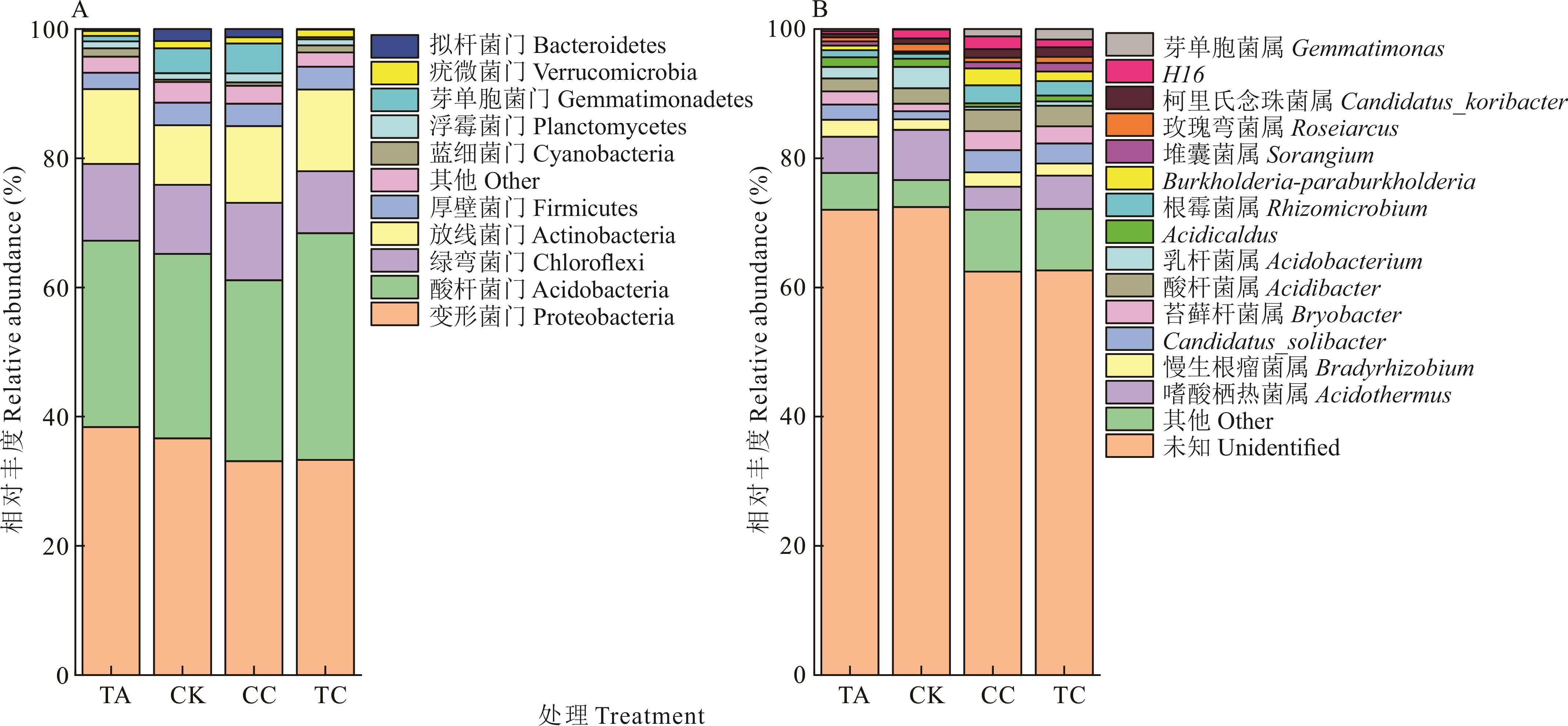
Fig. 3 Relative abundance of soil bacterial community at phylum and genus levels of intercropping A. lavandulaefolia in tea garden
属 Genus | TC中的 丰度The abundance in TC (%) | CC中的 丰度The abundance in CC (%) | P值P-value | 属 Genus | TA中的 丰度The abundance in TA (%) | CK中的 丰度The abundance in CK (%) | P值P-value |
|---|---|---|---|---|---|---|---|
| 芽单胞菌属Gemmatimonas | 1.630 | 1.14 0 | 0.049 | Burkholderia-paraburkholderia | 0.730 | 0.130 | 0.005 |
| Burkholderia-paraburkholderia | 1.380 | 2.630 | 0.019 | 纤维堆囊菌Sorangium | 0.640 | 0.210 | 0.025 |
| 玫瑰弯菌属Roseiarcus | 0.910 | 0.660 | 0.013 | 玫瑰弯菌属Roseiarcus | 0.610 | 1.180 | 0.016 |
| 纤维堆囊菌属Sorangium | 0.920 | 0.660 | 0.049 | 戴氏菌属Dyella | 0.340 | 0.040 | 0.024 |
| Variibacter | 0.600 | 0.400 | 0.048 | 芽单胞菌属Gemmatimonas | 0.310 | 0.070 | 0.032 |
| 硝化螺旋菌属Nitrospira | 0.160 | 0.280 | 0.019 | 鞘氨醇单胞菌属Sphingomonas | 0.290 | 0.050 | 0.030 |
| 厌氧菌属Anaeromyxobacter | 0.090 | 0.070 | 0.046 | 产黄杆菌属Rhodanobacter | 0.250 | 0.090 | 0.004 |
| Pseudolabrys | 0.090 | 0.040 | 0.049 | Conexibacter | 0.140 | 0.070 | 0.041 |
| Conexibacter | 0.080 | 0.030 | 0.027 | Haliangium | 0.060 | 0.010 | 0.027 |
| 吐鲁番长丝菌属Longimycelium | 0.060 | 0.000 | 0.034 | 吐鲁番长丝菌属Longimycelium | 0.060 | 0.010 | 0.006 |
| 贪噬菌属Variovorax | 0.050 | 0.090 | 0.002 | Jatrophihabitans | 0.060 | 0.010 | 0.006 |
| 盖氏菌属Gaiella | 0.040 | 0.130 | 0.040 | 中华单胞菌属Sinomonas | 0.050 | 0.000 | 0.025 |
| 全噬菌属Holophaga | 0.030 | 0.100 | 0.026 | 黏液杆菌属Mucilaginibacter | 0.040 | 0.010 | 0.003 |
| Candidatus_nitrosoarchaeum_limnia_SFB1 | 0.030 | 0.100 | 0.047 | 芽孢八叠球菌属Sporosarcina | 0.040 | 0.100 | 0.034 |
| 不粘柄菌属Asticcacaulis | 0.020 | 0.000 | 0.012 | Bauldia | 0.010 | 0.000 | 0.040 |
| Bacterium_enrichment_culture_clone_auto112_4W | 0.020 | 0.000 | 0.023 | 红游动菌属Rhodoplanes | 0.010 | 0.000 | 0.000 |
| 雷夫松氏菌属Leifsonia | 0.010 | 0.010 | 0.000 | Groundwater_metagenome | 0.010 | 0.000 | 0.000 |
| 八叠球菌属Sporosarcina | 0.010 | 0.050 | 0.039 | 马赛菌属Massilia | 0.010 | 0.000 | 0.000 |
| Perlucidibaca | 0.010 | 0.000 | 0.013 | ||||
| 木洞菌属Woodsholea | 0.000 | 0.010 | 0.013 | ||||
| 土生单胞菌属Terrimonas | 0.000 | 0.020 | 0.017 |
Table 4 Metastats was used to analyze the significantly different bacteria genera
属 Genus | TC中的 丰度The abundance in TC (%) | CC中的 丰度The abundance in CC (%) | P值P-value | 属 Genus | TA中的 丰度The abundance in TA (%) | CK中的 丰度The abundance in CK (%) | P值P-value |
|---|---|---|---|---|---|---|---|
| 芽单胞菌属Gemmatimonas | 1.630 | 1.14 0 | 0.049 | Burkholderia-paraburkholderia | 0.730 | 0.130 | 0.005 |
| Burkholderia-paraburkholderia | 1.380 | 2.630 | 0.019 | 纤维堆囊菌Sorangium | 0.640 | 0.210 | 0.025 |
| 玫瑰弯菌属Roseiarcus | 0.910 | 0.660 | 0.013 | 玫瑰弯菌属Roseiarcus | 0.610 | 1.180 | 0.016 |
| 纤维堆囊菌属Sorangium | 0.920 | 0.660 | 0.049 | 戴氏菌属Dyella | 0.340 | 0.040 | 0.024 |
| Variibacter | 0.600 | 0.400 | 0.048 | 芽单胞菌属Gemmatimonas | 0.310 | 0.070 | 0.032 |
| 硝化螺旋菌属Nitrospira | 0.160 | 0.280 | 0.019 | 鞘氨醇单胞菌属Sphingomonas | 0.290 | 0.050 | 0.030 |
| 厌氧菌属Anaeromyxobacter | 0.090 | 0.070 | 0.046 | 产黄杆菌属Rhodanobacter | 0.250 | 0.090 | 0.004 |
| Pseudolabrys | 0.090 | 0.040 | 0.049 | Conexibacter | 0.140 | 0.070 | 0.041 |
| Conexibacter | 0.080 | 0.030 | 0.027 | Haliangium | 0.060 | 0.010 | 0.027 |
| 吐鲁番长丝菌属Longimycelium | 0.060 | 0.000 | 0.034 | 吐鲁番长丝菌属Longimycelium | 0.060 | 0.010 | 0.006 |
| 贪噬菌属Variovorax | 0.050 | 0.090 | 0.002 | Jatrophihabitans | 0.060 | 0.010 | 0.006 |
| 盖氏菌属Gaiella | 0.040 | 0.130 | 0.040 | 中华单胞菌属Sinomonas | 0.050 | 0.000 | 0.025 |
| 全噬菌属Holophaga | 0.030 | 0.100 | 0.026 | 黏液杆菌属Mucilaginibacter | 0.040 | 0.010 | 0.003 |
| Candidatus_nitrosoarchaeum_limnia_SFB1 | 0.030 | 0.100 | 0.047 | 芽孢八叠球菌属Sporosarcina | 0.040 | 0.100 | 0.034 |
| 不粘柄菌属Asticcacaulis | 0.020 | 0.000 | 0.012 | Bauldia | 0.010 | 0.000 | 0.040 |
| Bacterium_enrichment_culture_clone_auto112_4W | 0.020 | 0.000 | 0.023 | 红游动菌属Rhodoplanes | 0.010 | 0.000 | 0.000 |
| 雷夫松氏菌属Leifsonia | 0.010 | 0.010 | 0.000 | Groundwater_metagenome | 0.010 | 0.000 | 0.000 |
| 八叠球菌属Sporosarcina | 0.010 | 0.050 | 0.039 | 马赛菌属Massilia | 0.010 | 0.000 | 0.000 |
| Perlucidibaca | 0.010 | 0.000 | 0.013 | ||||
| 木洞菌属Woodsholea | 0.000 | 0.010 | 0.013 | ||||
| 土生单胞菌属Terrimonas | 0.000 | 0.020 | 0.017 |
指标 Index | pH | 有机质 Soil organic matter | 全氮 | 有效磷 Available phosphorus | 碱解氮 Available nitrogen | 速效钾 Available potassium |
|---|---|---|---|---|---|---|
| 真菌Fungi | ||||||
| OTU数目OTU number | 0.54 | -0.49 | -0.57 | -0.16 | -0.50 | -0.40 |
| Chao 1指数 Chao 1 index | 0.68* | -0.64* | -0.73** | -0.41 | -0.81** | -0.28 |
| Shannon指数 Shannon index | 0.35 | -0.23 | -0.29 | 0.27 | -0.10 | -0.59* |
| 细菌Bacterial | ||||||
| OTU数目OTU number | 0.82** | -0.82** | -0.83** | -0.77** | -0.83** | -0.46 |
| Chao 1指数 Chao 1 index | 0.81** | -0.81** | -0.78** | -0.83** | -0.80** | -0.41 |
| Shannon指数 Shannon index | 0.79** | -0.73** | -0.79** | -0.69* | -0.80** | -0.30 |
Table 5 Spearman correlations analysis between soil fungal and bacterial α diversity and soil physical and chemical properties
指标 Index | pH | 有机质 Soil organic matter | 全氮 | 有效磷 Available phosphorus | 碱解氮 Available nitrogen | 速效钾 Available potassium |
|---|---|---|---|---|---|---|
| 真菌Fungi | ||||||
| OTU数目OTU number | 0.54 | -0.49 | -0.57 | -0.16 | -0.50 | -0.40 |
| Chao 1指数 Chao 1 index | 0.68* | -0.64* | -0.73** | -0.41 | -0.81** | -0.28 |
| Shannon指数 Shannon index | 0.35 | -0.23 | -0.29 | 0.27 | -0.10 | -0.59* |
| 细菌Bacterial | ||||||
| OTU数目OTU number | 0.82** | -0.82** | -0.83** | -0.77** | -0.83** | -0.46 |
| Chao 1指数 Chao 1 index | 0.81** | -0.81** | -0.78** | -0.83** | -0.80** | -0.41 |
| Shannon指数 Shannon index | 0.79** | -0.73** | -0.79** | -0.69* | -0.80** | -0.30 |
指标 Index | pH | 有机质 Soil organic matter | 全氮 Total nitrogen | 有效磷 Available phosphorus | 碱解氮 Available nitrogen | 速效钾 Available potassium |
|---|---|---|---|---|---|---|
| 真菌种类Fungi species | ||||||
| Saitozyma | -0.32 | 0.39 | 0.34 | 0.34 | 0.32 | 0.50 |
| 被孢霉属Mortierella | 0.32 | -0.40 | -0.20 | -0.19 | -0.15 | -0.29 |
| 大孢圆孢霉属Staphylotrichum | 0.79** | -0.78** | -0.78** | -0.64* | -0.77** | -0.22 |
| 镰刀菌属Fusarium | 0.34 | -0.38 | -0.45 | -0.21 | -0.44 | -0.20 |
| 粗糙孔菌属Trechispora | 0.26 | -0.26 | -0.22 | 0.00 | -0.24 | -0.62* |
| 绿僵菌属Metarhizium | 0.48 | -0.56 | -0.50 | -0.66* | -0.50 | -0.36 |
| 细菌种类Bacterial species | ||||||
| Candidatus-solibacter | 0.62* | -0.60* | -0.63* | -0.62* | -0.66* | -0.26 |
| 酸杆菌属Acidibacter | 0.70* | -0.66* | -0.66* | -0.77** | -0.59* | -0.15 |
| 嗜酸栖热菌属Acidothermus | -0.41 | 0.43 | 0.35 | 0.55 | 0.35 | 0.22 |
| 根霉菌属Rhizomicrobium | 0.76** | -0.74** | -0.79** | -0.73** | -0.79** | -0.23 |
| 慢生根瘤菌属Bradyrhizobium | 0.04 | -0.08 | 0.04 | -0.11 | -0.07 | -0.09 |
| 苔藓杆菌属Bryobacter | 0.73** | -0.68* | -0.70* | -0.61* | -0.65* | -0.38 |
Table 6 Spearman correlation analysis between dominant fungal genera, bacterial genera, and soil physical-chemical properties
指标 Index | pH | 有机质 Soil organic matter | 全氮 Total nitrogen | 有效磷 Available phosphorus | 碱解氮 Available nitrogen | 速效钾 Available potassium |
|---|---|---|---|---|---|---|
| 真菌种类Fungi species | ||||||
| Saitozyma | -0.32 | 0.39 | 0.34 | 0.34 | 0.32 | 0.50 |
| 被孢霉属Mortierella | 0.32 | -0.40 | -0.20 | -0.19 | -0.15 | -0.29 |
| 大孢圆孢霉属Staphylotrichum | 0.79** | -0.78** | -0.78** | -0.64* | -0.77** | -0.22 |
| 镰刀菌属Fusarium | 0.34 | -0.38 | -0.45 | -0.21 | -0.44 | -0.20 |
| 粗糙孔菌属Trechispora | 0.26 | -0.26 | -0.22 | 0.00 | -0.24 | -0.62* |
| 绿僵菌属Metarhizium | 0.48 | -0.56 | -0.50 | -0.66* | -0.50 | -0.36 |
| 细菌种类Bacterial species | ||||||
| Candidatus-solibacter | 0.62* | -0.60* | -0.63* | -0.62* | -0.66* | -0.26 |
| 酸杆菌属Acidibacter | 0.70* | -0.66* | -0.66* | -0.77** | -0.59* | -0.15 |
| 嗜酸栖热菌属Acidothermus | -0.41 | 0.43 | 0.35 | 0.55 | 0.35 | 0.22 |
| 根霉菌属Rhizomicrobium | 0.76** | -0.74** | -0.79** | -0.73** | -0.79** | -0.23 |
| 慢生根瘤菌属Bradyrhizobium | 0.04 | -0.08 | 0.04 | -0.11 | -0.07 | -0.09 |
| 苔藓杆菌属Bryobacter | 0.73** | -0.68* | -0.70* | -0.61* | -0.65* | -0.38 |
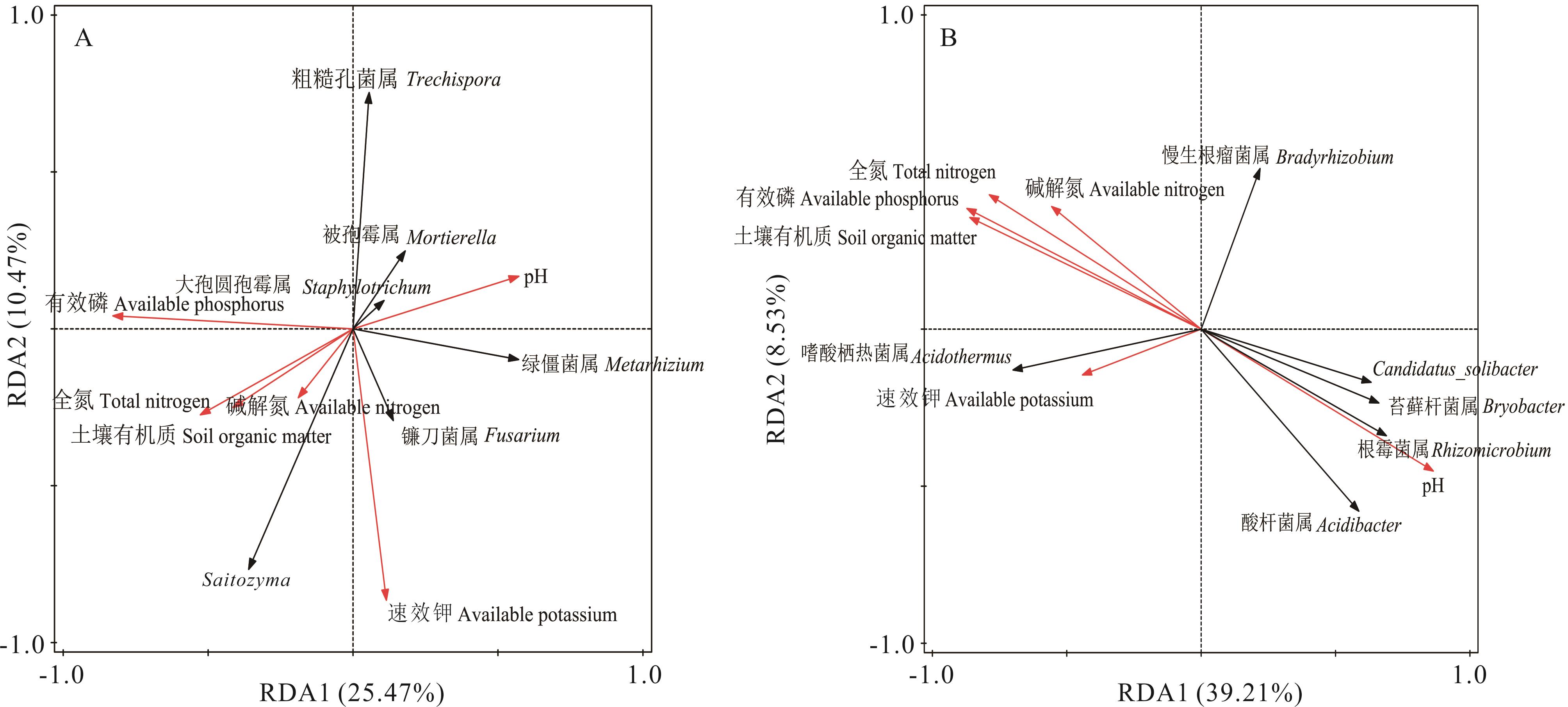
Fig.4 Redundancy analysis (RDA) between the relative abundance of soil fungal and bacterial at genus levels and environmental factors
| [1] | Zhou Z Y, Li C C, Hu B J, et al. Investigation on main weed species in tea plantations of Anhui Province. China Tea, 2012, 34(1): 18-20. |
| 周子燕, 李昌春, 胡本进, 等. 安徽省茶园杂草主要种类调查. 中国茶叶, 2012, 34(1): 18-20. | |
| [2] | Li J L, Zhou Y, Zhou B, et al. Habitat management as a safe and effective approach for improving yield and quality of tea (Camellia sinensis) leaves. Scientific Reports, 2019, 9(1): 433. |
| [3] | Pertile M, Antunes J E L, Araujo F F, et al. Responses of soil microbial biomass and enzyme activity to herbicides imazethapyr and flumioxazin. Scientific Reports, 2020, 10(1): 7694. |
| [4] | Tao B, Jiang L X, Shen X F, et al. Effects of glyphosate on soil microorganisms. Chinese Journal of Oil Crop Sciences, 2011, 33(2): 162-168. |
| 陶波, 蒋凌雪, 沈晓峰, 等. 草甘膦对土壤微生物的影响. 中国油料作物学报, 2011, 33(2): 162-168. | |
| [5] | National Health Commission of the People’s Republic of China, Ministry of Agriculture and Rural Affairs of the People’s Republic of China, State Administration of Market Supervision. National food safety standard-maximum residue limits for pesticides in food: GB 2763-2021. Beijing: Standards Press of China, 2021. |
| 中华人民共和国国家卫生健康委员会, 中华人民共和国农业农村部, 国家市场监督管理总局. 食品安全国家标准食品中农药最大残留限量: GB 2763-2021. 北京: 中国标准出版社, 2021. | |
| [6] | Xiao R L, Xiang Z X, Xu H Q, et al. Effects of intercropping white clover and straw mulching on weed control in hilly tea plantations. Transactions of the Chinese Society of Agricultural Engineering, 2008, 24(11): 183-187. |
| 肖润林, 向佐湘, 徐华勤, 等. 间种白三叶草和稻草覆盖控制丘陵茶园杂草效果. 农业工程学报, 2008, 24(11): 183-187. | |
| [7] | Luo X H, Liu M X, Luo S H, et al. Effects of intercropping Chamaecrista rotundifolia in tea plantation on weed diversity. Chinese Journal of Tropical Crops, 2013, 34(12): 2503-2507. |
| 罗旭辉, 刘明香, 罗石海, 等. 茶园套种圆叶决明对杂草物种多样性的影响. 热带作物学报, 2013, 34(12): 2503-2507. | |
| [8] | Wang H M, Cai H Y, He R R, et al. Effects of intercropping of aromatic plants with tea on physicochemical properties and soil nutrients in tea plantations. Journal of Southwest Forestry University, 2016, 36(5): 71-77. |
| 王慧敏, 蔡洪月, 何蓉蓉, 等. 间作芳香地被植物对茶园土壤理化性状及养分的影响. 西南林业大学学报, 2016, 36(5): 71-77. | |
| [9] | Zhang Y Z, Wang M, Gao J J, et al. Effects of intercropping Vulpia myuros on weed control and indexes of tea quality and production. Journal of Anhui Agricultural University, 2020, 47(3): 340-344. |
| 张永志, 王淼, 高健健, 等. 间作鼠茅对茶园杂草抑制效果和茶叶品质与产量指标的影响. 安徽农业大学学报, 2020, 47(3): 340-344. | |
| [10] | Sun Y N, Ran L X, Cai L, et al. Investigation of major diseases, pests and predators in different intercropping tea plantations. Shandong Agricultural Sciences, 2014(11): 110-113. |
| 孙云南, 冉隆珣, 蔡丽, 等. 不同间作模式茶园主要病虫害及天敌的调查研究. 山东农业科学, 2014(11): 110-113. | |
| [11] | Wu H P, Qi M, Li Y Y, et al. Proposal to replace the illegitimate name of tea garden weeds in China. Journal of Tea Science, 2019, 39(3): 247-256. |
| 吴慧平, 齐蒙, 李叶云, 等. 中国茶园杂草无效名录修订. 茶叶科学, 2019, 39(3): 247-256. | |
| [12] | Li X Y, Wu J, Jin L H, et al. Pest populations survey of the main tea-producing areas of Guizhou Province. Guizhou Agricultural Sciences, 2016, 44(3): 73-75. |
| 李向阳, 吴剑, 金林红, 等. 贵州主要产茶区有害生物的种群调查. 贵州农业科学, 2016, 44(3): 73-75. | |
| [13] | Zhang H, Li H L, Wang D F, et al. Toxicity activity of Artemisia lavandulaefolia essential oil against Empoasca onukii. Acta Tea Sinica, 2020, 61(4): 183-186. |
| 张辉, 李慧玲, 王定锋, 等. 野艾蒿精油对小贯小绿叶蝉的毒杀活性. 茶叶学报, 2020, 61(4): 183-186. | |
| [14] | Li H L, Cui H C, Huang H T, et al. Contact toxicity and repellent effects of 11 kinds of plant essential oils against Phyllocoptruta oleivora. Plant Protection, 2019, 45(5): 247-251. |
| 李红莉, 崔宏春, 黄海涛, 等. 11种植物精油对茶橙瘿螨的触杀和驱避作用研究. 植物保护, 2019, 45(5): 247-251. | |
| [15] | Bian W B, Wang G C, Gong Y F, et al. Repellent and anti-feedant activitiy of 19 plant essential oils against Myllocerinus aurolineatus. Chinese Journal of Applied Entomology, 2012, 49(2): 496-502. |
| 边文波, 王国昌, 龚一飞, 等. 十九种植物精油对茶丽纹象甲成虫的驱避和拒食活性. 应用昆虫学报, 2012, 49(2): 496-502. | |
| [16] | Jiang G B, Zeng R S. Allelopathic potentials from Artemisia lavandulaefolia DC. Prodr. Ecological Science, 2006, 25(2): 106-108. |
| 江贵波, 曾任森. 艾的挥发性物质化感作用研究. 生态科学, 2006, 25(2): 106-108. | |
| [17] | Zhang H, Li H L, Wang D F, et al. Ecology of tea plantation intercropped with Artemisia argyi. Acta Tea Sinica, 2023, 64(1): 63-69. |
| 张辉, 李慧玲, 王定锋, 等. 茶园间作艾蒿对其生态系统的影响. 茶叶学报, 2023, 64(1): 63-69. | |
| [18] | Kong Y L, Qin H, Zhu C Q, et al. Research progress on mechanisms by which soil microorganisms affect soil health. Acta Pedologica Sinica, 2024, 61(2): 331-347. |
| 孔亚丽, 秦华, 朱春权, 等. 土壤微生物影响土壤健康的作用机制研究进展. 土壤学报, 2024, 61(2): 331-347. | |
| [19] | Bi J T, He D H. Research advances in effects of plant on soil microbial diversity. Chinese Agricultural Science Bulletin, 2009, 25(9): 244-250. |
| 毕江涛, 贺达汉. 植物对土壤微生物多样性的影响研究进展.中国农学通报, 2009, 25(9): 244-250. | |
| [20] | Zhang Y J, Liang L N, Xu R N, et al. Intercropping tea plantations with soybean and rapeseed enhances nitrogen fixation through shifts in soil microbial communities. Frontiers of Agricultural Science and Engineering, 2022, 9(3): 344-355. |
| [21] | Li Y C, Lin Z N, Lu Z, et al. Microbial diversity and community structure in soil under tea bushes-Ganoderma lucidum intercropping. Fujian Journal of Agricultural Sciences, 2019, 34(6): 690-696. |
| 李艳春, 林忠宁, 陆烝, 等. 茶园间作灵芝对土壤细菌多样性和群落结构的影响. 福建农业学报, 2019, 34(6): 690-696. | |
| [22] | Li Q S, Lei W X, Liu J X, et al. Effects of intercropping Ophiopogon japonicus into tea plantation on its soil physicochemical properties and microbial community structure. Journal of Southern Agriculture, 2021, 52(12): 3366-3374. |
| 李奇松, 雷卫星, 刘江西, 等. 间作麦冬对茶园土壤理化性质及微生物群落结构的影响. 南方农业学报, 2021, 52(12): 3366-3374. | |
| [23] | Zhang G L, Chu X B, Zhu H Y, et al. The response of soil nutrients and microbial community structures in long-term tea plantations and diverse agroforestry intercropping systems. Sustainability, 2021, 13(14): 7799. |
| [24] | Lu R K. Analytical methods for soil and agro-chemistry. Beijing: China Agricultural Science and Technology Press, 2000: 228-264. |
| 鲁如坤. 土壤农业化学分析方法. 北京: 中国农业科技出版社, 2000: 228-264. | |
| [25] | Hu K Y, Duan Y, Yang Y, et al. Research progress on intercropping planting patterns in tea gardens. Journal of Nanjing Agricultural University, 2025, 48(2): 263-273. |
| 胡凯玥, 段玉, 杨垚, 等. 茶园间作种植模式的研究进展. 南京农业大学学报, 2025, 48(2): 263-273. | |
| [26] | De Costa W A J M, Surenthran P, Attanayake K B. Tree-crop interactions in hedgerow intercropping with different tree species and tea in Sri Lanka: 2. Soil and plant nutrients. Agroforestry Systems, 2005, 63(3): 211-218. |
| [27] | Wu X, Bi J Y, Ge Y T, et al. Research progress of intercropping promoting phosphorus absorption and utilization. Henan Agricultural Sciences, 2024, 53(12): 1-9. |
| 吴薪, 毕嘉榆, 戈应同, 等. 间作促进磷吸收利用的研究进展. 河南农业科学, 2024, 53(12): 1-9. | |
| [28] | Xiang Z X, Xiao R L, Wang J R, et al. Effects of interplanting Trifolium repens in tea plantattion on soil ecology in subtropical hilly region. Acta Prataculturae Sinica, 2008, 17(1): 29-35. |
| 向佐湘, 肖润林, 王久荣, 等. 间种白三叶草对亚热带茶园土壤生态系统的影响. 草业学报, 2008, 17(1): 29-35. | |
| [29] | Mortimer P E, Gui H, Xu J, et al. Effects of intercropping different green manures on fungal community characteristics in rhizosphere soil of tea plant. Applied Soil Ecology, 2015, 96(2015): 25-32. |
| [30] | Fu H P, Zhou P Q, Wang Y J, et al. Effects of green manure intercropping on fungal community in rhizosphere soil of tea plants. Journal of Tea Communication, 2020, 47(3): 406-415. |
| 傅海平, 周品谦, 王沅江, 等. 绿肥间作对茶树根际土壤真菌群落的影响. 茶叶通讯, 2020, 47(3): 406-415. | |
| [31] | Ma Z X, Tanalgo K C, Xu Q L, et al. Influence of tea-Pleurotus ostreatus intercropping on soil fungal diversity and community structure. Canadian Journal of Soil Science, 2022, 102(2): 359-369. |
| [32] | Xie H T, Chen Z M, Feng X X, et al. L-theanine exuded from Camellia sinensis roots regulates element cycling in soil by shaping the rhizosphere microbiome assembly. Science of the Total Environment, 2022 (837): 155801. |
| [33] | Deng H F. Effects of intercropping on mineral nutrient absorption and characteristics and rhizosphere soil characteristics of oriental melon. Shenyang: Shenyang Agricultural University, 2017. |
| 邓海峰. 间作栽培对薄皮甜瓜矿质营养吸收及其根际土壤特性的影响. 沈阳: 沈阳农业大学, 2017. | |
| [34] | Yang Z K, Qu J J, Qiao L, et al. Tea and Pleurotus ostreatus intercropping modulates structure of soil and root microbial communities. Scientific Reports, 2024, 14(1): 11295. |
| [35] | Hao H P, Bai H T, Xia F, et al. Effects of tea-Litsea cubeba intrercropping on soil microbial community structure in tea plantation. Scientia Agricultura Sinica, 2021, 54(18): 3959-3969. |
| 郝海平, 白红彤, 夏菲, 等. 茶-山苍子间作对茶园土壤微生物群落结构的影响. 中国农业科学, 2021, 54(18): 3959-3969. | |
| [36] | Xiong Y L, Shao S B, Li D L, et al. Exploring the impact of tea [Camellia sinensis (L.) O. Ktze.]/Trachelospermum jasminoides (Lindl.) Lem. intercropping on soil health and microbial communities. Agronomy, 2024, 14(6): 1261. |
| [37] | Zhou X G, Zhang J Y, Rahman M K, et al. Interspecific plant interaction via root exudates structures the disease suppressiveness of rhizosphere microbiomes. Molecular Plant, 2023, 16(5): 849-864. |
| [38] | Tang X Y, Wang X M, Cheng X X, et al. Metarhizium fungi as plant symbionts. New Plant Protection, 2025, 2(1): e23. |
| [39] | Liao H J, Zhang Z B, Jiang Y M, et al. Biocontrol potential of Chaetomium globosum against plant pathogenic fungi and root-knot nematodes: a review. Natural Product Research and Development, 2022, 34(6): 1076-1089. |
| 廖宏娟, 张志斌, 江玉梅, 等. 球毛壳菌对植物病原真菌和根结线虫的生物防治潜力. 天然产物研究与开发, 2022, 34(6): 1076-1089. | |
| [40] | Xiong C, He J Z, Singh B K, et al. Rare taxa maintain the stability of crop mycobiomes and ecosystem functions. Environmental Microbiology, 2021, 23(4): 1907-1924. |
| [41] | Zhou T, Liang G P, Reich P B, et al. Promoting effect of plant diversity on soil microbial functionality is amplified over time. One Earth, 2024, 7(12): 2139-2148. |
| [42] | Zhong Y J, Liang L N, Xu R N, et al. Intercropping tea plantations with soybean and rapeseed enhances nitrogen fixation through shifts in soil microbial communities. Frontiers of Agricultural Science and Engineering, 2022, 9(3): 344-355. |
| [43] | Wu T, Qin Y, Li M. Intercropping of tea (Camellia sinensis L.) and Chinese chestnut: Variation in the structure of rhizosphere bacterial communities. Journal of Soil Science and Plant Nutrition, 2021, 21(3): 2178-2190. |
| [44] | Xu H Q, Xiao R L, Song T Q, et al. Effects of mulching and intercropping on the functional diversity of soil microbial communities in tea plantations. Biodiversity Science, 2008, 16(2): 166-174. |
| 徐华勤, 肖润林, 宋同清, 等. 稻草覆盖与间作三叶草对丘陵茶园土壤微生物群落功能的影响. 生物多样性, 2008, 16(2): 166-174. | |
| [45] | Han W Y, Wang W M, Guo Y, et al. Bacterial abundance of tea garden soils and its influencing factors. Journal of Tea Science, 2013, 33(2): 147-154. |
| 韩文炎, 王皖蒙, 郭赟, 等. 茶园土壤细菌丰度及其影响因子研究. 茶叶科学, 2013, 33(2): 147-154. | |
| [46] | Xu G, Wang M J, Deng B W, et al. Bacterial diversity and community structure of rhizosphere soil of tea plants in different years of planting. Biotechnology Bulletin, 2020, 36(3): 124-132. |
| 许广, 王梦姣, 邓百万, 等. 不同植茶年限茶树根际土壤细菌多样性及群落结构研究. 生物技术通报, 2020, 36(3): 124-132. | |
| [47] | Fu Y Z, Ma K, Li Q, et al. Effects of potato intercropped with maize on soil bacterial diversity. Chinese Journal of Eco-Agriculture, 2020, 28(11): 1715-1725. |
| 伏云珍, 马琨, 李倩, 等. 马铃薯||玉米间作对土壤细菌多样性的影响. 中国生态农业学报, 2020, 28(11): 1715-1725. | |
| [48] | Zhao W S, Guo Q G, Li S Z, et al. Effects of wilt-resistant and wilt-susceptible cotton on soil bacterial community structure at flowering and boll stage. Scientia Agricultura Sinica, 2020, 53(5): 942-954. |
| 赵卫松, 郭庆港, 李社增, 等. 花铃期棉花黄萎病抗病与感病品种对土壤细菌群落结构的影响. 中国农业科学, 2020, 53(5): 942-954. | |
| [49] | Li Y Z, Hu W, Wu B H, et al. Diversity of metabolites and their bio-activities in myxobacterium Sorangium cellulosum. Acta Microbiologica Sinica, 2001, 41(6): 716-722. |
| 李越中, 胡玮, 吴斌辉, 等. 纤维堆囊菌的代谢产物及其生物学活性分析. 微生物学报, 2001, 41(6): 716-722. | |
| [50] | Kulichevskaya I S, Danilova O V, Tereshina V M, et al. Descriptions of Roseiarcus fermentans gen. nov. sp nov. a bacteriochlorophyll a-containing fermentative bacterium related phylogenetically to alphaproteobacterial methanotrophs, and of the family Roseiarcaceae fam. nov. International Journal of Systematic & Evolutionary Microbiology, 2014, 64(Pt 8): 25582014. |
| [51] | Sun L T, Dong X, Wang Y, et al. Tea-soybean intercropping improves tea quality and nutrition uptake by inducing changes of rhizosphere bacterial communities. Microorganisms, 2022, 10(11): 2149. |
| [52] | Li Y X, Sun L, Zhang J L, et al. Tea plant/Ophiopogon japonicus intercropping drives the reshaping of soil mcrobial communities in terraced tea plantation’s micro-topographical units. Agriculture, 2025, 15(11): 1150. |
| [53] | Duan Y, Wang T Q, Lei X Q, et al. Leguminous green manure intercropping changes the soil microbial community and increases soil nutrients and key quality components of tea leaves. Horticulture Research, 2024, 11(3): 181-192. |
| [54] | Zhang H, Li H L, Wang D F, et al. Effects of Artemisia argyi volatiles on the behavior of the tea green leafhopper (Empoasca onukii) in tea plantations. Chinese Journal of Applied Entomology, 2022, 59(4): 773-784. |
| 张辉, 李慧玲, 王定锋, 等. 茶园杂草艾蒿挥发物对茶小绿叶蝉行为的影响. 应用昆虫学报, 2022, 59(4): 773-784. . |
| [1] | Fei LI, Lin ZHANG, Ke-jia DE, Ting-xu FENG, Wei-shan LIN, Xue-mei XIANG, Xi-jie WEI. Effects of mixed sowing of oat and common vetch on the microbial diversity of inter-root soil in the Sanjiangyuan region [J]. Acta Prataculturae Sinica, 2026, 35(5): 99-112. |
| [2] | Yi-xin SONG, Ming-yuan LI, Ya-sheng MAIRIYANGU, Ji-lian WANG. The community structure and functional diversity of rhizosphere soil fungi of three plant species in the alpine grassland of Xinjiang [J]. Acta Prataculturae Sinica, 2026, 35(2): 167-178. |
| [3] | Ying WANG, Ming-yuan LI, Mairiyangu·Yasheng, Ji-lian WANG. Comparative study of rhizosphere soil fungal community structure among different plants in Tomur Peak, Xinjiang [J]. Acta Prataculturae Sinica, 2025, 34(7): 83-94. |
| [4] | Wen-hui DENG, Ke-chen SONG, Hao ZHANG, Si-yu GUAN, Jia-yi YONG, Hai-ying HU. Structure and diversity characteristics of the rhizosphere microbial community of dominant plants on the desert steppe under changing precipitation [J]. Acta Prataculturae Sinica, 2025, 34(5): 12-26. |
| [5] | Lei ZHANG, Jin-tao DU, Qian-yu FAN, Shun LI, Song-juan GAO, Wei-dong CAO. Response of biological nitrogen fixation by milk vetch to soil fertility and rhizobium inoculation [J]. Acta Prataculturae Sinica, 2025, 34(5): 51-63. |
| [6] | Shou-xing WANG, Hua-kun ZHOU, Li-peng OU, Cheng-xian LI, Yan-he WANG, Xiao-chun NING, Qiang GU, Dai-jun WEI, Ming-xin YANG. Vegetation and soil microbial diversity and their relationships with soil factors in different grassland types of the three river headwaters region [J]. Acta Prataculturae Sinica, 2025, 34(4): 16-26. |
| [7] | Yu-du JING, Xiao-wei LIU, Ke LIANG, Jun-hao FENG, Qiang YU, Liang GUO. Impacts of shrub encroachment on the fraction and stability of soil organic carbon of grassland on the Loess Plateau, and the underlying microbial mechanisms [J]. Acta Prataculturae Sinica, 2025, 34(12): 1-15. |
| [8] | Hui-yun TAO, Run-yan YANG, Yan-can LI, Ya-peng LIU, He-xing QI. Diversity of microorganisms in the rhizosphere soil of Kobresia humilis and their responses to environmental factors in the source region of the Yellow River [J]. Acta Prataculturae Sinica, 2025, 34(12): 16-32. |
| [9] | Yuan-fei MA, Yan-tao SONG, Yun-na WU, Cheng-feng FANG. Effects of fertilization and mowing for 5 years on soil microbial characteristics in Hulunbuir meadow steppe [J]. Acta Prataculturae Sinica, 2024, 33(9): 242-251. |
| [10] | Rong-chun ZHENG, Zhi-biao NAN, Ting-yu DUAN. Diversity of seed-borne fungi on four Trifolium pratense cultivars [J]. Acta Prataculturae Sinica, 2024, 33(8): 170-180. |
| [11] | Jian-feng NING, Tong LI, Rui-kun ZENG, Jian-wu YAO, Yong CHEN, Zi-wei LIANG. Soil fertility in perennial vegetable fields in the latosolic red soil zone of the Pearl River Delta [J]. Acta Prataculturae Sinica, 2024, 33(5): 25-40. |
| [12] | Zhen-fen ZHANG, Rong HUANG, Xiang-yang LI, Bo YAO, Gui-qin ZHAO. Seed-borne bacterial diversity of oat and functional analysis based on Illumina MiSeq high-throughput sequencing [J]. Acta Prataculturae Sinica, 2023, 32(7): 96-108. |
| [13] | Huan LIU, Kai DONG, Zeng-wangdui REN, Jing-long WANG, Yun-fei LIU, Gui-qin ZHAO. Effects of co-sowing of Artemisia wellbyi and perennial grasses on the characteristics of vegetation and soil fungal communities in desertified grasslands in Tibet [J]. Acta Prataculturae Sinica, 2023, 32(6): 45-57. |
| [14] | Ying TIAN, Zhe XU, Li-zhen ZHU, Jun WANG, Xue-fei WEN. Effect of cutting time during the growing season on the soil bacterial community under an artificial Caragana intermedia plantation [J]. Acta Prataculturae Sinica, 2022, 31(5): 40-50. |
| [15] | Xu-mei JIN, Ying-ying WANG, Chong-yi LIU, Xin-yi CHEN, Ming-xiu LONG, Shu-bin HE. Effects on soil nutrients and bacterial communities of different cover crops in an organic kiwifruit orchard in the Guanzhong region of China [J]. Acta Prataculturae Sinica, 2022, 31(10): 53-63. |
| Viewed | ||||||
|
Full text |
|
|||||
|
Abstract |
|
|||||
