
ISSN 1004-5759 CN 62-1105/S
Acta Prataculturae Sinica ›› 2026, Vol. 35 ›› Issue (6): 35-48.DOI: 10.11686/cyxb2025253
Previous Articles Next Articles
Bo SUN1,2( ), Jun-yi ZHANG1,2, Chun-yan BAI1,2, Fan FENG1,2, Jian LAN1,2, Jian-qiang DENG1,2()
Received:2025-06-26
Revised:2025-09-09
Online:2026-06-20
Published:2026-04-13
Contact:
Jian-qiang DENG
Bo SUN, Jun-yi ZHANG, Chun-yan BAI, Fan FENG, Jian LAN, Jian-qiang DENG. Production benefit analysis of annual forage rotation systems in an arid area of central Ningxia[J]. Acta Prataculturae Sinica, 2026, 35(6): 35-48.
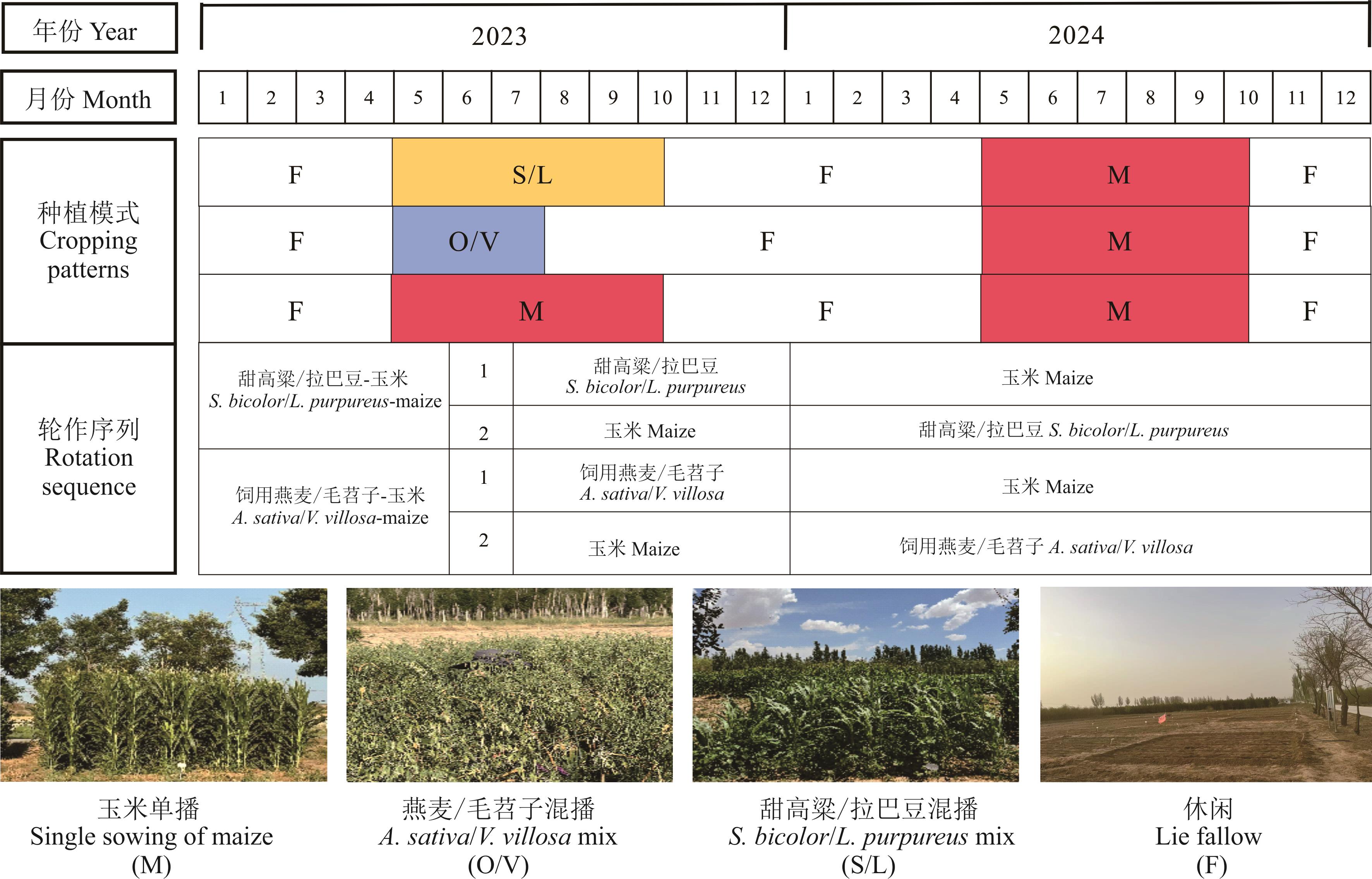
Fig.1 The crop rotation system during experimental period in 2023-2024
作物 Crop | 播种日期Sowing date (年-月-日 Year-month-day) | 收获日期Harvesting date (年-月-日 Year-month-day) | 播种量 Sowing rate (kg·hm-2) | 播种方法 Sowing method | 种植行距 Rowing space (cm) |
|---|---|---|---|---|---|
甜高粱 S. bicolor | 2023-4-9 2024-4-20 | 2023-9-22 2024-9-25 | 30.0 | 穴播 Hole seeding | 70/30 |
饲用燕麦 A. sativa | 2023-4-9 2024-3-27 | 2023-7-7 2024-7-8 | 180.0 | 条播 Drill seeding | 30 |
拉巴豆 L. purpureus | 2023-4-9 2024-4-20 | 2023-9-22 2024-9-25 | 49.5 | 穴播 Hole seeding | 70/30 |
毛苕子 V. villosa | 2023-4-9 2024-3-27 | 2023-7-7 2024-7-8 | 45.0 | 条播 Drill seeding | 30 |
玉米 Maize | 2023-4-20 2024-4-22 | 2023-9-9 2024-9-26 | 35.0 | 穴播 Hole seeding | 70/30 |
Table 1 Crop management under different cropping patterns during the experimental period
作物 Crop | 播种日期Sowing date (年-月-日 Year-month-day) | 收获日期Harvesting date (年-月-日 Year-month-day) | 播种量 Sowing rate (kg·hm-2) | 播种方法 Sowing method | 种植行距 Rowing space (cm) |
|---|---|---|---|---|---|
甜高粱 S. bicolor | 2023-4-9 2024-4-20 | 2023-9-22 2024-9-25 | 30.0 | 穴播 Hole seeding | 70/30 |
饲用燕麦 A. sativa | 2023-4-9 2024-3-27 | 2023-7-7 2024-7-8 | 180.0 | 条播 Drill seeding | 30 |
拉巴豆 L. purpureus | 2023-4-9 2024-4-20 | 2023-9-22 2024-9-25 | 49.5 | 穴播 Hole seeding | 70/30 |
毛苕子 V. villosa | 2023-4-9 2024-3-27 | 2023-7-7 2024-7-8 | 45.0 | 条播 Drill seeding | 30 |
玉米 Maize | 2023-4-20 2024-4-22 | 2023-9-9 2024-9-26 | 35.0 | 穴播 Hole seeding | 70/30 |
| 项目 Item | 2023 | 2024 |
|---|---|---|
| 玉米 Maize | 2.68 | 2.30 |
| 甜高粱 S. bicolor | 13.20 | 14.10 |
| 拉巴豆 L. purpureus | 8.42 | 9.79 |
| 饲用燕麦 A. sativa | 6.45 | 7.25 |
| 毛苕子 V. villosa | 5.55 | 6.28 |
Table 2 The market price of each crop under different rotation system in 2023-2024 (CNY·kg-1)
| 项目 Item | 2023 | 2024 |
|---|---|---|
| 玉米 Maize | 2.68 | 2.30 |
| 甜高粱 S. bicolor | 13.20 | 14.10 |
| 拉巴豆 L. purpureus | 8.42 | 9.79 |
| 饲用燕麦 A. sativa | 6.45 | 7.25 |
| 毛苕子 V. villosa | 5.55 | 6.28 |
项目 Item | 类别 Category | 单位 Unit | 能量系数 Energy conversion coefficient (MJ) | 材料生产排放系数 Emission coefficient from production of materials (kg CO2e·unit-1) | 材料使用排放系数 Emission coefficient from materials use (kg CO2e·unit-1) | 参考文献 Reference |
|---|---|---|---|---|---|---|
投入 Input | 成年男性>18岁Adult male>18 years | h | 1.96 | — | 0.035 | [ |
| 成年女性>18岁Adult females>18 years | h | 1.57 | — | 0.035 | [ | |
| 柴油Diesel oil | L | 56.31 | 53.27 | 3.320 | [ | |
| 拖拉机Tractors | h | 332.00 | 3.32 | — | [ | |
| 氮肥Nitrogen fertilizer | kg | 60.60 | 0.81 | 4.960 | [ | |
| 磷肥Phosphate fertilizer | kg | 11.10 | 0.11 | — | [ | |
| 杀虫剂Insecticide | kg | 120.00 | — | — | [ | |
| 玉米种子Maize seeds | kg | 15.10 | — | — | [ | |
| 饲用燕麦种子A. sativa seeds | kg | 15.50 | — | — | [ | |
| 甜高粱种子S. bicolor seeds | kg | 17.35 | — | — | [ | |
| 拉巴豆种子L. purpureus seeds | kg | 14.20 | — | — | [ | |
| 毛苕子种子V. villosa seeds | kg | 14.50 | — | — | [ | |
产出 Output | 玉米干物质Maize dry matter | kg | 18.00 | — | — | [ |
| 饲用燕麦干物质 A. sativa dry matter | kg | 16.30 | — | — | [ | |
| 甜高粱干物质S. bicolor dry matter | kg | 17.80 | — | — | [ | |
| 拉巴豆干物质L. purpureus dry matter | kg | 18.30 | — | — | [ | |
| 毛苕子干物质V. villosa dry matter | kg | 20.20 | — | — | [ |
Table 3 Conversion coefficient used to calculate energy equivalent in agricultural production activities[19-31]
项目 Item | 类别 Category | 单位 Unit | 能量系数 Energy conversion coefficient (MJ) | 材料生产排放系数 Emission coefficient from production of materials (kg CO2e·unit-1) | 材料使用排放系数 Emission coefficient from materials use (kg CO2e·unit-1) | 参考文献 Reference |
|---|---|---|---|---|---|---|
投入 Input | 成年男性>18岁Adult male>18 years | h | 1.96 | — | 0.035 | [ |
| 成年女性>18岁Adult females>18 years | h | 1.57 | — | 0.035 | [ | |
| 柴油Diesel oil | L | 56.31 | 53.27 | 3.320 | [ | |
| 拖拉机Tractors | h | 332.00 | 3.32 | — | [ | |
| 氮肥Nitrogen fertilizer | kg | 60.60 | 0.81 | 4.960 | [ | |
| 磷肥Phosphate fertilizer | kg | 11.10 | 0.11 | — | [ | |
| 杀虫剂Insecticide | kg | 120.00 | — | — | [ | |
| 玉米种子Maize seeds | kg | 15.10 | — | — | [ | |
| 饲用燕麦种子A. sativa seeds | kg | 15.50 | — | — | [ | |
| 甜高粱种子S. bicolor seeds | kg | 17.35 | — | — | [ | |
| 拉巴豆种子L. purpureus seeds | kg | 14.20 | — | — | [ | |
| 毛苕子种子V. villosa seeds | kg | 14.50 | — | — | [ | |
产出 Output | 玉米干物质Maize dry matter | kg | 18.00 | — | — | [ |
| 饲用燕麦干物质 A. sativa dry matter | kg | 16.30 | — | — | [ | |
| 甜高粱干物质S. bicolor dry matter | kg | 17.80 | — | — | [ | |
| 拉巴豆干物质L. purpureus dry matter | kg | 18.30 | — | — | [ | |
| 毛苕子干物质V. villosa dry matter | kg | 20.20 | — | — | [ |
| 年份 Year | 轮作模式 Rotation system | 鲜草产量 Fresh grass yield | 干草产量 Hay grass yield |
|---|---|---|---|
| 2023 | O/V-M | 144.55±0.72b | 38.79±0.15b |
| S/L-M | 227.90±0.74a | 60.17±0.16a | |
| M | 58.23±0.17c | 17.54±0.20c | |
| 2024 | O/V-M | 141.84±1.06b | 48.39±0.28b |
| S/L-M | 251.18±0.82a | 69.36±0.60a | |
| M | 47.77±0.22c | 25.35±0.16c | |
| 年份Year | 0.567 | <0.004 | |
| 轮作模式Rotation system | <0.001 | <0.001 | |
| 年份×轮作模式Year×rotation system | 0.078 | 0.953 | |
Table 4 Crop yield under different rotation systems in 2023-2024 (kg·hm-2)
| 年份 Year | 轮作模式 Rotation system | 鲜草产量 Fresh grass yield | 干草产量 Hay grass yield |
|---|---|---|---|
| 2023 | O/V-M | 144.55±0.72b | 38.79±0.15b |
| S/L-M | 227.90±0.74a | 60.17±0.16a | |
| M | 58.23±0.17c | 17.54±0.20c | |
| 2024 | O/V-M | 141.84±1.06b | 48.39±0.28b |
| S/L-M | 251.18±0.82a | 69.36±0.60a | |
| M | 47.77±0.22c | 25.35±0.16c | |
| 年份Year | 0.567 | <0.004 | |
| 轮作模式Rotation system | <0.001 | <0.001 | |
| 年份×轮作模式Year×rotation system | 0.078 | 0.953 | |
年份 Year | 轮作模式 Rotation system | 总产值 Total out-put | 总成本Total input | 净效益 Net benefits | 产投比 Output input/ | ||||
|---|---|---|---|---|---|---|---|---|---|
种植 Planting | 种子 Seed | 化肥 Chemical fertilizer | 人工 Labour cost | 合计 Total | |||||
| 2023 | O/V-M | 67874.40±2579.98b | 5535 | 2551 | 1187 | 1036 | 10009.71 | 57864.70±2579.98b | 6.78 |
| S/L-M | 78226.23±2082.51a | 5500 | 3752 | 1367 | 1036 | 11656.06 | 66570.17±2082.51a | 6.71 | |
| M | 9295.80±1085.89c | 1586 | 2428 | 1032 | 1036 | 6082.47 | 3213.33±1085.89c | 1.53 | |
| 2024 | O/V-M | 77416.85±4421.08a | 5535 | 2814 | 1187 | 1036 | 10572.45 | 66844.40±4421.08a | 7.32 |
| S/L-M | 90170.19±7805.62a | 5500 | 4377 | 1367 | 1036 | 12282.35 | 77887.84±7806.17a | 7.34 | |
| M | 13433.78±860.79b | 3209 | 2428 | 1097 | 1036 | 7770.67 | 5663.11±860.79b | 1.73 | |
| 年份Year | 0.021 | — | — | — | — | — | 0.036 | — | |
| 轮作模式Rotation system | <0.001 | — | — | — | — | — | <0.001 | — | |
年份×轮作模式 Year×rotation system | 0.611 | — | — | — | — | — | 0.526 | — | |
Table 5 The economic benefits of crops under different rotation systems in 2023-2024 (CNY·hm-2)
年份 Year | 轮作模式 Rotation system | 总产值 Total out-put | 总成本Total input | 净效益 Net benefits | 产投比 Output input/ | ||||
|---|---|---|---|---|---|---|---|---|---|
种植 Planting | 种子 Seed | 化肥 Chemical fertilizer | 人工 Labour cost | 合计 Total | |||||
| 2023 | O/V-M | 67874.40±2579.98b | 5535 | 2551 | 1187 | 1036 | 10009.71 | 57864.70±2579.98b | 6.78 |
| S/L-M | 78226.23±2082.51a | 5500 | 3752 | 1367 | 1036 | 11656.06 | 66570.17±2082.51a | 6.71 | |
| M | 9295.80±1085.89c | 1586 | 2428 | 1032 | 1036 | 6082.47 | 3213.33±1085.89c | 1.53 | |
| 2024 | O/V-M | 77416.85±4421.08a | 5535 | 2814 | 1187 | 1036 | 10572.45 | 66844.40±4421.08a | 7.32 |
| S/L-M | 90170.19±7805.62a | 5500 | 4377 | 1367 | 1036 | 12282.35 | 77887.84±7806.17a | 7.34 | |
| M | 13433.78±860.79b | 3209 | 2428 | 1097 | 1036 | 7770.67 | 5663.11±860.79b | 1.73 | |
| 年份Year | 0.021 | — | — | — | — | — | 0.036 | — | |
| 轮作模式Rotation system | <0.001 | — | — | — | — | — | <0.001 | — | |
年份×轮作模式 Year×rotation system | 0.611 | — | — | — | — | — | 0.526 | — | |
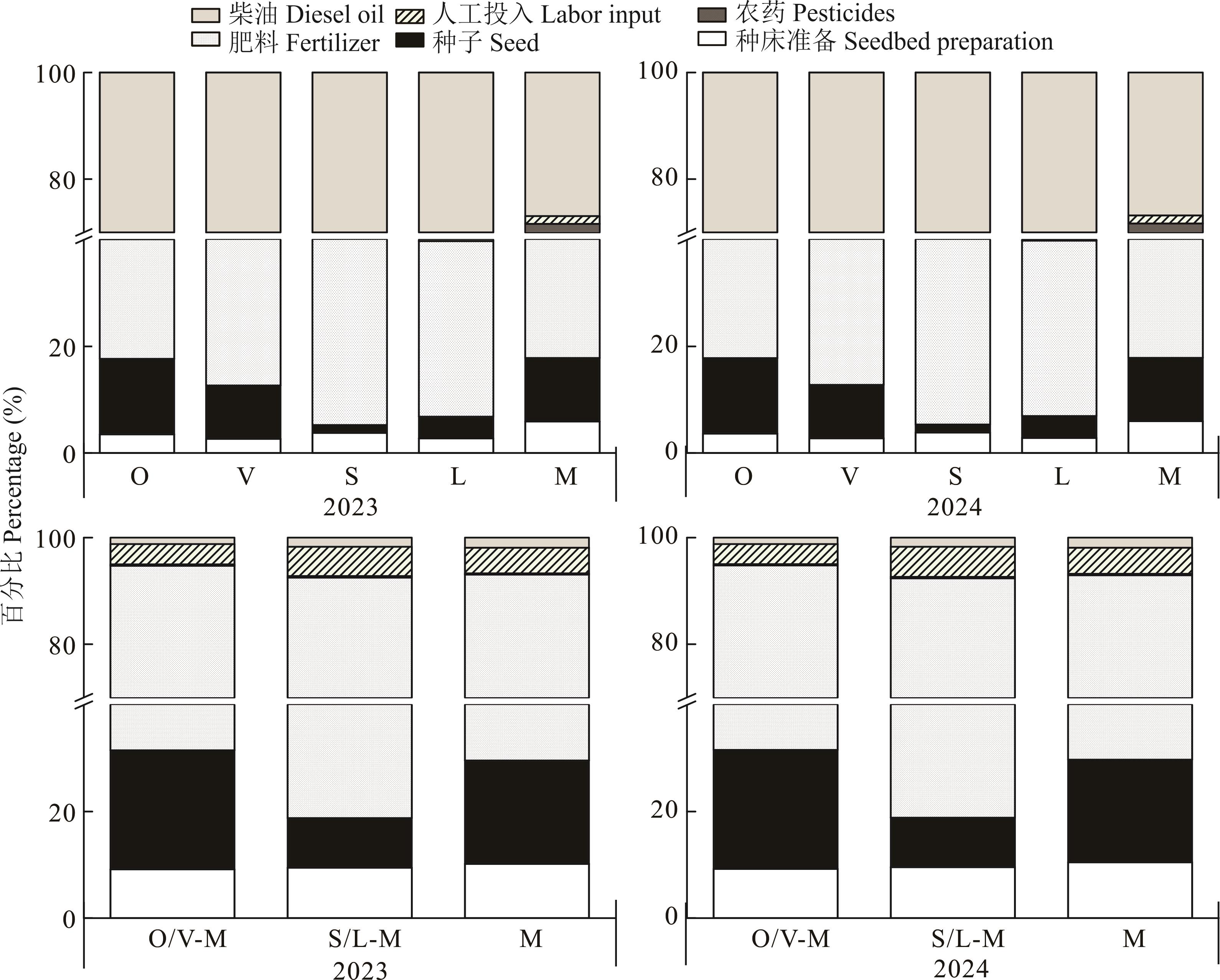
Fig.2 The distribution of energy input of each component under different rotation systems
年份 Year | 轮作模式 Rotation system | 能量产出 Energy output (MJ·hm-2) | 能量产投比 Energy output-input ratio | 人工能量投入能力获利能力Human energy use profitability | 能量利用效率 Energy use efficiency (kg·MJ-1) | 能量获利能力 Energy profitability (MJ·hm-2) |
|---|---|---|---|---|---|---|
| 2023 | O/V-M | 57.01±2.17b | 55.11±2.09b | 1440.50±63.39a | 3.75±0.14b | 54.11±2.09b |
| S/L-M | 88.46±2.35a | 86.35±1.84a | 1569.76±55.62a | 5.87±0.13a | 85.35±1.84a | |
| M | 25.78±3.01c | 20.56±2.42c | 426.51±53.44b | 1.40±0.16c | 19.56±2.42c | |
| 2024 | O/V-M | 71.13±4.06b | 68.68±3.49b | 1828.28±111.60a | 4.67±0.24b | 67.68±3.49b |
| S/L-M | 101.96±8.83a | 99.29±8.55a | 1753.03±157.52a | 6.75±0.58a | 98.29±8.55a | |
| M | 37.26±2.39c | 29.40±1.92c | 597.03±45.08b | 2.00±0.13c | 28.40±1.92c | |
| 年份Year | <0.004 | <0.004 | 0.006 | <0.004 | <0.004 | |
| 轮作模式Rotation system | <0.001 | <0.001 | <0.001 | <0.001 | <0.001 | |
| 年份×轮作模式Year×rotation system | 0.953 | 0.827 | 0.430 | 0.826 | 0.827 | |
Table 6 Energy use and input-output relationship under different rotation systems
年份 Year | 轮作模式 Rotation system | 能量产出 Energy output (MJ·hm-2) | 能量产投比 Energy output-input ratio | 人工能量投入能力获利能力Human energy use profitability | 能量利用效率 Energy use efficiency (kg·MJ-1) | 能量获利能力 Energy profitability (MJ·hm-2) |
|---|---|---|---|---|---|---|
| 2023 | O/V-M | 57.01±2.17b | 55.11±2.09b | 1440.50±63.39a | 3.75±0.14b | 54.11±2.09b |
| S/L-M | 88.46±2.35a | 86.35±1.84a | 1569.76±55.62a | 5.87±0.13a | 85.35±1.84a | |
| M | 25.78±3.01c | 20.56±2.42c | 426.51±53.44b | 1.40±0.16c | 19.56±2.42c | |
| 2024 | O/V-M | 71.13±4.06b | 68.68±3.49b | 1828.28±111.60a | 4.67±0.24b | 67.68±3.49b |
| S/L-M | 101.96±8.83a | 99.29±8.55a | 1753.03±157.52a | 6.75±0.58a | 98.29±8.55a | |
| M | 37.26±2.39c | 29.40±1.92c | 597.03±45.08b | 2.00±0.13c | 28.40±1.92c | |
| 年份Year | <0.004 | <0.004 | 0.006 | <0.004 | <0.004 | |
| 轮作模式Rotation system | <0.001 | <0.001 | <0.001 | <0.001 | <0.001 | |
| 年份×轮作模式Year×rotation system | 0.953 | 0.827 | 0.430 | 0.826 | 0.827 | |
年份 Year | 轮作模式 Rotation system | 温室气体排 放量 GHGs | 温室气体排放强度 GHGI |
|---|---|---|---|
| 2023 | O/V-M | 529.91±4.95c | 1.47±0.04a |
| S/L-M | 611.69±5.29b | 0.19±0.00c | |
| M | 644.87±2.89a | 1.02±0.12b | |
| 2024 | O/V-M | 529.91±4.95c | 0.25±0.01b |
| S/L-M | 611.69±5.29b | 0.20±0.02b | |
| M | 648.89±4.10a | 0.59±0.04a | |
| 年份Year | 0.731 | <0.001 | |
| 轮作模式Rotation system | <0.001 | <0.001 | |
| 年份×轮作模式Year×rotation system | 0.884 | <0.001 | |
Table 7 Greenhouse gas emissions and greenhouse gas intensity of the system under different crop rotation systems (kg CO2e·hm-2·a-1)
年份 Year | 轮作模式 Rotation system | 温室气体排 放量 GHGs | 温室气体排放强度 GHGI |
|---|---|---|---|
| 2023 | O/V-M | 529.91±4.95c | 1.47±0.04a |
| S/L-M | 611.69±5.29b | 0.19±0.00c | |
| M | 644.87±2.89a | 1.02±0.12b | |
| 2024 | O/V-M | 529.91±4.95c | 0.25±0.01b |
| S/L-M | 611.69±5.29b | 0.20±0.02b | |
| M | 648.89±4.10a | 0.59±0.04a | |
| 年份Year | 0.731 | <0.001 | |
| 轮作模式Rotation system | <0.001 | <0.001 | |
| 年份×轮作模式Year×rotation system | 0.884 | <0.001 | |
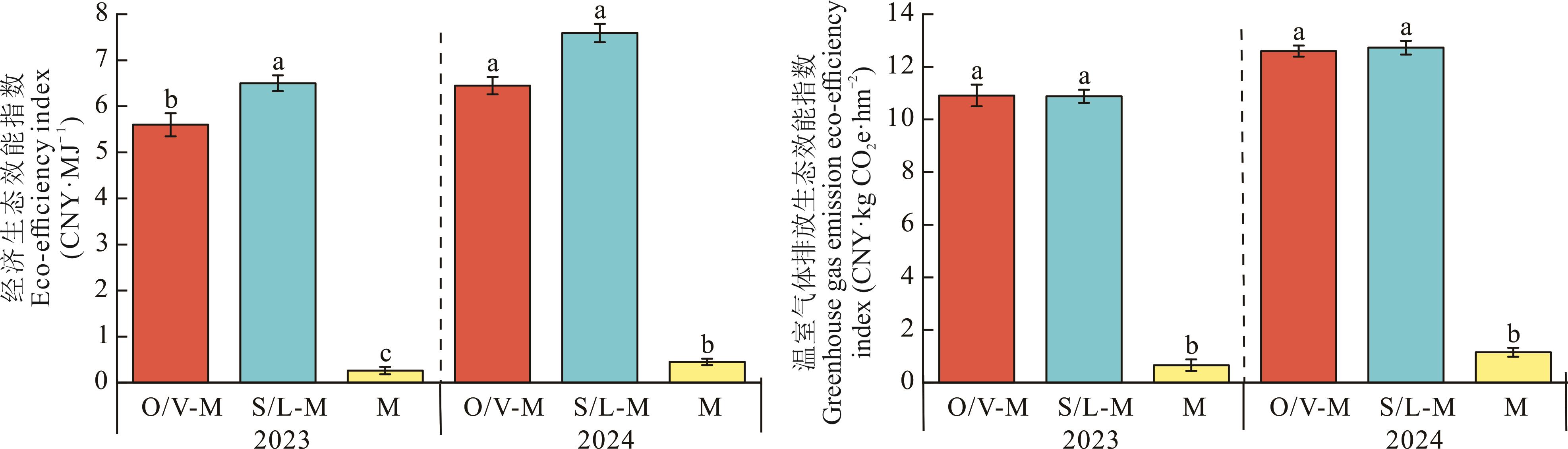
Fig.3 System ecological efficiency index under different rotation systems
| [1] | Wang J H, Li G, Yin M H, et al. Effects of regulated deficit irrigation on the soil environment and forage growth of mixed-species forage plantings in China’s high-cold desert area. Acta Prataculturae Sinica, 2022, 31(1): 95-106. |
| 汪精海, 李广, 银敏华, 等. 调亏灌溉对高寒荒漠区人工混播草地土壤环境与牧草生长的影响. 草业学报, 2022, 31(1): 95-106. | |
| [2] | The Central Committee of the Communist Party of China and the State Council. Opinions of the state council of the central committee of the communist party of China on improving the work of “agriculture, countryside and peasants”. Xinjiang Agricultural Mechanization, 2019(2): 40-46. |
| 中共中央国务院. 关于坚持农业农村优先发展做好“三农”工作的若干意见. 新疆农机化, 2019(2): 40-46. | |
| [3] | Gao T. Establish the strategic position of grass industry economic development and ecological management development status, existing problems and countermeasures of forage industry in Ningxia. Ningxia Agriculture and Forestry Science and Technology, 2023, 64(11): 36-39. |
| 高婷. 确立草业经济发展和生态治理的战略地位-宁夏牧草产业发展现状、存在问题与对策. 宁夏农林科技, 2023, 64(11): 36-39. | |
| [4] | Xu Q, Tian X H, Du W H. Effects of mixed sowing of rye and common vetch on forage yield and nutrient quality in alpine pastoral areas. Acta Prataculturae Sinica, 2021, 30(8): 49-59. |
| 徐强, 田新会, 杜文华. 高寒牧区黑麦和箭筈豌豆混播对草产量和营养品质的影响研究. 草业学报, 2021, 30(8): 49-59. | |
| [5] | Zhang J R. Potato planting status and development in the ecological immigrant area of the central arid zone of Ningxia. Seed Science and Technology, 2018, 36(1): 11. |
| 张景瑞. 宁夏中部干旱带生态移民区马铃薯种植现状及发展. 种子科技, 2018, 36(1): 11. | |
| [6] | Li W N, Li S, Guan H Y, et al. Effects of tillage methods and straw returning on soil physiochemical properties and enzyme activities in wheat-soybean rotation filed. Soil, 2024, 56(6): 1274-1282. |
| 李文娜, 李爽, 关皓月, 等. 耕作方式和秸秆还田对麦-豆轮作田土壤理化特性和土壤酶活性的影响. 土壤, 2024, 56(6): 1274-1282. | |
| [7] | Olsen R J, Hensler R F, Attoe O J, et al. Fertilizer nitrogen and crop rotation in relation to movement of nitrate nitrogen through soil profiles. Soil Science Society of America Journal, 1970, 34(3): 448-452. |
| [8] | Lu H P, Sun A H. The effect of grass-crop rotation on crop yield increase. Pratacultural Science, 2003, 20(4): 10-13. |
| 鲁鸿佩, 孙爱华. 草田轮作对粮食作物的增产效应. 草业科学, 2003, 20(4): 10-13. | |
| [9] | Zhou S R, Yu Y, Mao K, et al. Study on the economic and ecological benefits of monoculture and mixed legume-grass rotation with rice in paddy field. Sichuan Grassland, 1992(3): 2-8. |
| 周寿荣, 余云, 毛凯, 等. 稻田单播和混播豆禾牧草与水稻轮作的经济生态效益研究. 四川草原, 1992(3): 2-8. | |
| [10] | Yang H S, Zhang Y Q, Yang S H, et al. Analysis of the spatial-temporal variation of soil nutrient of alfalfa-maize rotation. Journal of Soil and Water Conservation, 2012, 26(6): 127-130. |
| 杨恒山, 张玉芹, 杨升辉, 等. 苜蓿轮作玉米后土壤养分时空变化特征分析. 水土保持学报, 2012, 26(6): 127-130. | |
| [11] | Chen W. A comparative study on resource utilization and economic benefits of different cropping modes in hilly dry land of Sichuan Province. Chengdu: Sichuan Agricultural University, 2019. |
| 陈伟. 四川丘陵旱地不同种植模式的资源利用及生态经济效益比较研究. 成都: 四川农业大学, 2019. | |
| [12] | Deng J Q. Resources use under forage rape/common vetch-crop production system on the Longdong Loess Plateau. Lanzhou: Lanzhou University, 2021. |
| 邓建强. 陇东旱塬饲用油菜和箭筈豌豆与粮食作物轮作系统资源利用研究. 兰州: 兰州大学, 2021. | |
| [13] | Huang G Q. On the benefits of crop rotation. Tillage and Cultivation, 2008(4): 1-3. |
| 黄国勤. 论作物轮作的效益. 耕作与栽培, 2008(4): 1-3. | |
| [14] | Guo Y X. Root-invasion fungi of alfalfa and wheat in the rotation system of grassland and field in the Loess Plateau. Lanzhou: Gansu Agricultural University, 2003. |
| 郭玉霞. 黄土高原草田轮作系统中苜蓿与小麦的根部入侵真菌. 兰州: 甘肃农业大学, 2003. | |
| [15] | Frank S, Havlik P, Stehfest E, et al. Agricultural non-CO2 emission reduction potential in the context of the 1.5 ℃ target. Nature Climate Change, 2019(9): 66-72. |
| [16] | Yang X L, Xiong J R, Du T S, et al. Diversifying crop rotation increases food production, reduces net greenhouse gas emissions and improves soil health. Nature Communications, 2024, 15: 198. https://doi.org/10.1038/s41467-023-44464-9. |
| [17] | Huang J D. Differences and mechanism of yield, resource utilization efficiency and carbon footprint of different multiple cropping patterns in paddy fields in the middle reaches of the Yangtze River. Wuhan: Central China Agricultural University, 2023. |
| 黄家达. 长江中游稻田不同复种模式产量、资源利用效率和碳足迹的差异及机理研究. 武汉: 华中农业大学, 2023. | |
| [18] | Wei Y. Legume-rice rotations increase rice yields and carbon sequestration potential globally. One Earth, 2025, 8(2): 101170. |
| [19] | Yadav G S, Lal R, Meena R S, et al. Energy budgeting for designing sustainable and environmentally clean/safer cropping systems for rainfed rice fallow lands in India. Journal of Cleaner Production, 2017, 158: 29-37. https://doi.org/10.1016/j.jclepro.2017.04.170. |
| [20] | Nassiri S M, Singh S. Study on energy use efficiency for paddy crop using data envelopment analysis (DEA) technique. Applied Energy, 2009, 86(7/8): 1320-1325. |
| [21] | Kuswardhani N, Soni P, Shivakoti G P. Comparative energy input-output and financial analyses of greenhouse and open field vegetable production in West Java, Indonesia. Energy, 2013, 53: 83-92. https://doi.org/10.1016/j.energy.2013.02.032. |
| [22] | Choudhary M, Rana K S, Bana R S, et al. Energy budgeting and carbon footprint of pearl millet-mustard cropping system under conventional and conservation agriculture in rainfed semiarid agro-ecosystem. Energy, 2017, 141: 1052-1058. https://doi.org/10.1016/j.energy.2017.09.136. |
| [23] | Pahlavan R, Omid M, Akram A. The relationship between energy inputs and crop yield in greenhouse basil production. Journal of Agricultural Science and Technology, 2012, 14(6): 1243-1253. |
| [24] | Hatirli S A, Ozkan B, Fert C. Energy inputs and crop yield relationship in greenhouse tomato production. Renewable Energy, 2011, 36(11): 3217-3221. |
| [25] | Kumar R, Mishra J S, Rao K K, et al. Crop rotation and tillage management options for sustainable intensification of rice-fallow agro-ecosystem in eastern India. Scientific Reports, 2020, 10: 1-15. https://doi.org/10.1038/s41598-020-67973-9. |
| [26] | Cantero-Martinez C, O’Leary G J, Connor D J. Stubble retention and nitrogen fertilisation in a fallow-wheat rainfed cropping system. Soil water and nitrogen conservation, crop growth and yield. Soil Tillage Research, 1995, 34(2): 79-94. |
| [27] | Singh R J, Ghosh B N, Sharma N K, et al. Energy budgeting and emergy synthesis of rainfed maize-wheat rotation system with different soil amendment applications. Ecological Indicators, 2016, 61: 753-765. https://doi.org/10.1016/j.ecolind.2015.10.026. |
| [28] | Rajaeifar M A, Akram A, Ghobadian B, et al. Energy economic life cycle assessment (LCA) and greenhouse gas emissions analysis of olive oil production in Iran. Energy, 2014, 66: 139-149. https://doi.org/10.1016/j.energy.2013.12.059. |
| [29] | Bonjin K, Charles M N. Effect of oat particle size on energy and nutrient utilization in growing pigs. Journal of Animal Science, 2021(5): 99. https://doi.org/10.1093/jas/skab134. |
| [30] | Li F R, Gao C Y, Zhao H L, et al. Soil conservation effectiveness and energy efficiency of alternative rotations and continuous wheat cropping in the Loess Plateau of Northwest China. Agriculture Ecosystems and Environment, 2002, 91(1/2/3): 101-111. |
| [31] | Nagasa G D, Belete A. Review on nanomaterials and nano-scaled systems for topical and systemic delivery of antifungal drugs. Journal of Multidisciplinary Healthcare, 2022, 15: 1819-1840. https://doi.org/10.2147/JMDH.S359282. |
| [32] | Datta M, Yadav G S, Chakraborty S. Integrated nutrient management in groundnut (Arachis hypogaea) in a subtropical humid climate of north-east India. Indian Journal of Agronomy, 2014, 59(2): 322-326. |
| [33] | Yang X L, Gao W S, Zhang M, et al. Reducing agricultural carbon footprint through diversified crop rotation systems in the North China Plain. Journal of Cleaner Production, 2014, 76: 131-139. https://doi.org/10.1016/j.jclepro.2014.03.063. |
| [34] | Rajaeifar M A, Akram A, Ghobadian B, et al. Environmental impact assessment of olive pomace oil biodiesel production and consumption: A comparative lifecycle assessment. Energy, 2016, 106: 87-102. https://doi.org/10.1016/j.energy. 2016.03.010. |
| [35] | West T O, Marland G. A synthesis of carbon sequestration, carbon emissions, and net carbon flux in agriculture: Comparing tillage practices in the United States. Agricultural Ecosystems and Environment, 2002, 91(1/3): 217-232. |
| [36] | Maillard E, McConkey B G, Luce M S, et al. Crop rotation, tillage system, and precipitation regime effects on soil carbon stocks over 1 to 30 years in Saskatchewan, Canada. Soil and Tillage Research, 2018, 177: 97-104. https://doi.org/10.1016/j.still.2017.12.001. |
| [37] | Parihar C M, Jat S L, Singh A K, et al. Bio-energy, water-use efficiency and economics of maize-wheat-mungbean system under precision-conservation agriculture in semi-arid agroecosystem. Energy, 2017, 119: 245-256. https://doi.org/10.1016/j.energy.2016.12.068. |
| [38] | Wang F, Yue Z Z, Zhao D Y, et al. Improving energy and GHG performance of the rice-wheat rotation system: a life-cycle analysis based on a large-scale behavior investigation. Journal of Cleaner Production, 2020, 256: 120319. https://doi:10.1016/j.jclepro.2020.120319. |
| [39] | Shi L, Zhao Y, Lv L Y. Discussion on the development of grassland rotation in the agro-pastoral ecotone of China. Agricultural Economy, 2023(3): 29-31. |
| 石亮, 赵艳, 吕林有. 我国农牧交错区草田轮作发展探讨. 农业经济, 2023(3): 29-31. | |
| [40] | Chen J H, Chen S T, He N Y, et al. Nuclear-encoded synthesis of the d1 subunit of photosystem II increases photosynthetic efficiency and crop yield. Natural Plants, 2020, 6: 570-580. https://doi.org/10.1038/s41477-020-0629-z. |
| [41] | Wahbi S, Prin Y, Thioulouse J, et al. Impact of wheat/faba bean mixed cropping or rotation systems on soil microbial functionalities. Frontiers in Plant Science, 2016, 7: 1364. https://doi.org/10.3389/fpls.2016.01364. |
| [42] | Bai W B, Zhang J H, Gao Z F, et al. Effects of different fertilization and cultivation methods on weed diversity in sorghum-maize rotation fields. Acta Agriculturae Boreali-Occidentalis Sinica, 2024, 33(10): 1858-1871. |
| 白文斌, 张建华, 高振峰, 等. 不同施肥与耕作方式对高粱-玉米轮作田杂草多样性的影响. 中国北方农业学报, 2024, 33(10): 1858-1871. | |
| [43] | Yang C H, Geng Y X, Fu X Z, et al. Effects of no tillage and crop rotation on yield and photosynthetic characteristics of wheat and maize in desert oasis of northwest China. Agricultural Research in Arid Areas, 2022, 40(1): 11-19. |
| 杨彩红, 耿艳香, 伏星舟, 等. 免耕轮作对西北荒漠绿洲小麦、玉米产量和光合特性的影响. 干旱地区农业研究, 2022, 40(1): 11-19. | |
| [44] | Lu Y W, Li S G, Zhao Y, et al. Study on the yield and economic benefits of millet and mung bean rotation mode. Anhui Agricultural Sciences, 2024, 52(22): 29-33, 59. |
| 鲁一薇, 李顺国, 赵宇, 等. 绿豆-谷子轮作模式的产量与经济效益研究. 安徽农业科学, 2024, 52(22): 29-33, 59. | |
| [45] | Zhu Z M, Wu G L, Huang M, et al. Effects of organic fertilizer instead of chemical fertilizer on potato yield and economic benefits in Pu’an County. Modern Agricultural Science and Technology, 2025(5): 72-74. |
| 朱正敏, 吴贵丽, 黄敏, 等. 有机肥替代化肥对普安县马铃薯产量及经济效益的影响. 现代农业科技, 2025(5): 72-74. | |
| [46] | Yang R, Geng S Y, Wang X Y. Differences of wheat yield and economic benefits between soybean-wheat and rice-wheat cropping under different nitrogen fertilization patterns in Jianghan Plain, China. Chinese Journal of Applied Ecology, 2020, 31(2): 441-448. |
| 杨蕊, 耿石英, 王小燕. 江汉平原不同氮肥运筹模式下豆麦和稻/麦轮作系统小麦产量和经济效益差异. 应用生态学报, 2020, 31(2): 441-448. | |
| [47] | Qiu J, Wang S K, Jing Q, et al. Analysis and future prospects of supply and demand of Chinese corn seeds. Grain, Oils and Food Science and Technology, 2023, 31(6): 163-168. |
| 邱军, 王术坤, 景琦, 等. 中国玉米种子供需形势分析与未来展望. 粮油食品科技, 2023, 31(6): 163-168. | |
| [48] | Yan J Y. Effect of phosphorus fertilizer rate on crop yield, phosphorus utilization and soil phosphorus transformation in a rice-oilseed rape rotation. Wuhan: Huazhong Agricultural University, 2022. |
| 闫金垚. 磷肥用量对水稻-油菜轮作系统作物产量与磷肥利用及土壤磷素转化的影响. 武汉: 华中农业大学, 2022. | |
| [49] | Yang Z P. Study on the difference of annual light energyresource ulitization in different paddy-upland rotations. Chengdu: Sichuan Agricultural University, 2019. |
| 杨志平. 不同水旱轮作模式周年光能资源利用的差异研究.成都: 四川农业大学, 2019. | |
| [50] | Wang B, Shi J M, Wang T F, et al. Effect of nitrogen application on production performance and nitrogen fertilizer contribution of forage sorghum/lablab mixed cropping. Acta Prataculturae Sinica, 2025, 34(4): 53-63. |
| 王斌, 史佳梅, 王腾飞, 等. 施氮对饲用高粱/拉巴豆混播草地生产性能和氮肥贡献率的影响. 草业学报, 2025, 34(4): 53-63. | |
| [51] | Yang B W, Liang X R, Qin M G, et al. Sustainability analysis of different upland-paddy rotation systems in the middle reaches of the Yangtze River based on energy efficiency and carbon efficiency. Acta Agronomica Sinica, 2024, 50(11): 2801-2817. |
| 杨博文, 梁修仁, 秦明广, 等. 基于能量效率与碳效率的长江中游不同水旱轮作系统可持续性分析. 作物学报, 2024, 50(11): 2801-2817. | |
| [52] | Zheng M J, Li Y, Jia X L. Research progress and perspective of diversified rotation systems of main crops. Acta Agriculturae Boreali-Sinica, 2021, 36(S1): 215-221. |
| 郑孟静, 李岩, 贾秀领. 主要农作物多样化轮作制度研究进展及展望. 华北农学报, 2021, 36(S1): 215-221. | |
| [53] | Jia X J, You M H, Li D X, et al. Effect of reduced fertilizer application on yield and soil nutrients in a forage/tobacco rotation system. Journal of Sichuan Agricultural University, 2024, 42(1): 166-173. |
| 贾雪杰, 游明鸿, 李达旭, 等. 减量施肥对牧草/烤烟轮作系统中产量和土壤养分的影响. 四川农业大学学报, 2024, 42(1):166-173. | |
| [54] | Lei Y H. Research on greenhouse gas emissions and water conservation and emission reduction models of wheat corn rotation system. Yangling: Northwest A & F University, 2024. |
| 雷玉涵. 小麦-玉米轮作系统温室气体排放及节水减排模式研究. 杨凌: 西北农林科技大学, 2024. | |
| [55] | Zhao S W, Wang Q, Pei Z Q, et al. Effects of humic acid and different amounts of biochar on the growth and nitrogen uptake of sweet sorghum in high nitrogen soil. Journal of Tianjin Agricultural University, 2019, 26(4): 5-8. |
| 赵思文, 王茜, 裴志强, 等. 高氮土壤下腐植酸与不同量生物炭配施对甜高粱生长及氮素吸收影响研究. 天津农学院学报, 2019, 26(4): 5-8. |
| [1] | Ling-fei XIANG, Feng-ju ZHANG, Yue LI, Xue-qin WANG, Jin-long LIU, Qiao-li MA. Effects of varied row spacings and sowing rates on forage and seed yield and quality of Echinochloa frumentacea in saline-alkali land [J]. Acta Prataculturae Sinica, 2026, 35(5): 126-138. |
| [2] | Long-hang CHAI, Rui ZHAO, Xiao-yi LIU, Jin-shun BAI. A meta-analysis of the effects of green manure on yield increase and chemical nitrogen fertilizer saving in Chinese farmlands [J]. Acta Prataculturae Sinica, 2026, 35(5): 162-174. |
| [3] | Wen-hui DENG, Xiao-na ZHAO, Jia-yi YONG, Si-yu GUAN, Guo-qiang HU, Teng-fei WANG, Hai-ying HU. Effects of intercropping oat with different densities on alfalfa seed yield and its constituent factors [J]. Acta Prataculturae Sinica, 2026, 35(4): 100-111. |
| [4] | Ju-feng FAN, Lang PAN, De-jun PENG, Ya-jun PENG, Si-fu LI, Cheng-yin NONG, Jian-hao DU, Xiang-ying LIU, Guo-lan MA. Effects of barnyardgrass on rice growth and yield traits, and determination of its economic control threshold [J]. Acta Prataculturae Sinica, 2026, 35(4): 124-134. |
| [5] | Yi-bo WANG, Xue-hua MING, Jian-yong ZHANG, Qi YUAN, Jian-ming DU, Bin WANG, Teng-fei WANG, Yi-yin ZHANG, Jian LAN, Le MU. Multi-trait evaluation of the production performance and seed yield of new oat germplasm materials in the arid area of Ningxia [J]. Acta Prataculturae Sinica, 2026, 35(4): 86-99. |
| [6] | Jia-yi ZANG, Ming-jie XU, Ji-cheng XIE, Yu-ying SHEN, Xing-fa LAI. Effects of replacing chemical fertilizers with organic fertilizer at equivalent nitrogen levels on forage yield and water use efficiency in a silage maize/forage soybean intercropping system in dryland areas [J]. Acta Prataculturae Sinica, 2026, 35(3): 83-95. |
| [7] | Yang-kun LI, Zhuan-lin BEN, Jun-yu ZHANG, Hui-min YANG. A meta-analysis on the effect of fertilizer type on alfalfa seed yield under various climate and soil conditions [J]. Acta Prataculturae Sinica, 2026, 35(2): 54-67. |
| [8] | Kong-tao WEI, Chun-ping ZHANG, Yang YU, Zheng-she ZHANG, Ze ZHOU, Xue ZHANG, Xin-xin WANG, Si-yu YUE, Quan CAO, Quan-min DONG. Yield performance, nutritional quality, and soil physicochemical responses of oat (Avena sativa) cultivars in the Qinghai Lake-Gonghe Basin region [J]. Acta Prataculturae Sinica, 2026, 35(1): 107-118. |
| [9] | Hong-qian YU, Xue-peng MA, Han-guo ZENG, Xiao-yan SHAN, Man-li LI, Zhan-jun WANG. Effects of the amount and timing of subsurface drip irrigation on alfalfa seed production [J]. Acta Prataculturae Sinica, 2026, 35(1): 53-64. |
| [10] | Chang-qing LI, Ya-ru SONG, Fan XIAO, Chun-yu MIAO, Meng-yu SUN, Meng JI, Zhi-mei SUN. Analysis of main agronomic traits of low-fertility-tolerant and high-yielding maize varieties [J]. Acta Prataculturae Sinica, 2025, 34(9): 97-110. |
| [11] | Bang-yan ZHANG, Xiao-wei XIE, Zhao-hui ZHANG, Jin-min WU, Bin WANG, Xing XU. Effect of organic-inorganic amendments on the quality of saline-alkaline soil and yield of Echinochloa frumentacea [J]. Acta Prataculturae Sinica, 2025, 34(8): 15-29. |
| [12] | Hai-long MAO, Ji-cheng TAI, Heng-shan YANG, Yu-qin ZHANG, Rui-fu ZHANG, Zhen-zhen WANG. Effect of strip configuration on canopy characteristics, yield, and the quality of silage produced from co-cultivated corn and soybean [J]. Acta Prataculturae Sinica, 2025, 34(8): 30-42. |
| [13] | Yi-yin ZHANG, Bin WANG, Teng-fei WANG, Jian LAN, Hai-ying HU. Effects of intercropping triticale with alfalfa on system yield, resource utilization, and alfalfa seed yield [J]. Acta Prataculturae Sinica, 2025, 34(8): 43-53. |
| [14] | Wen-juan FAN, Jian-chao SONG, Xiao-juan ZHANG, Yu-hang SHENG, Jin-tao SHI, Long-ji ZHANG, Xiao-jun YU. The effects of combined nitrogen and phosphorus fertilization on seed yield and quality of Medicago ruthenica in the Wuwei irrigation district, Gansu Province [J]. Acta Prataculturae Sinica, 2025, 34(8): 54-65. |
| [15] | Xue-qian JIANG, Qing-chuan YANG, Jun-mei KANG. Research progress on yield loss under drought stress and drought resistance genetics of alfalfa (Medicago sativa) [J]. Acta Prataculturae Sinica, 2025, 34(7): 219-234. |
| Viewed | ||||||
|
Full text |
|
|||||
|
Abstract |
|
|||||
