
ISSN 1004-5759 CN 62-1105/S
Acta Prataculturae Sinica ›› 2025, Vol. 34 ›› Issue (8): 15-29.DOI: 10.11686/cyxb2024364
Previous Articles Next Articles
Bang-yan ZHANG1( ), Xiao-wei XIE1, Zhao-hui ZHANG1, Jin-min WU2, Bin WANG2(), Xing XU1
Received:2024-09-24
Revised:2024-11-20
Online:2025-08-20
Published:2025-06-16
Contact:
Bin WANG
Bang-yan ZHANG, Xiao-wei XIE, Zhao-hui ZHANG, Jin-min WU, Bin WANG, Xing XU. Effect of organic-inorganic amendments on the quality of saline-alkaline soil and yield of Echinochloa frumentacea[J]. Acta Prataculturae Sinica, 2025, 34(8): 15-29.
土层 Soil layer (cm) | 土壤容重 Soil bulk density (g·cm-3) | pH | 全盐 Total dissolved salt (g·kg-1) | 有机质 Organic matter (g·kg-1) | 碱解氮 Alkaline nitrogen (mg·kg-1) | 速效磷 Available phosphorus (mg·kg-1) | 速效钾 Available potassium (mg·kg-1) |
|---|---|---|---|---|---|---|---|
| 0~20 | 1.55 | 7.50 | 4.29 | 6.07 | 19.10 | 3.28 | 215.27 |
| 20~40 | 1.63 | 7.75 | 4.15 | 5.79 | 12.73 | 1.67 | 208.80 |
Table 1 Basic soil characteristics of the test site
土层 Soil layer (cm) | 土壤容重 Soil bulk density (g·cm-3) | pH | 全盐 Total dissolved salt (g·kg-1) | 有机质 Organic matter (g·kg-1) | 碱解氮 Alkaline nitrogen (mg·kg-1) | 速效磷 Available phosphorus (mg·kg-1) | 速效钾 Available potassium (mg·kg-1) |
|---|---|---|---|---|---|---|---|
| 0~20 | 1.55 | 7.50 | 4.29 | 6.07 | 19.10 | 3.28 | 215.27 |
| 20~40 | 1.63 | 7.75 | 4.15 | 5.79 | 12.73 | 1.67 | 208.80 |
土层 Soil layer (cm) | 处理 Treatment | 土壤容重 Soil bulk density (g·cm-3) | 总孔隙度 Total porosity (%) | 毛管孔隙度 Capillary porosity (%) | 饱和持水量 Saturated water holding capacity (%) | 毛管持水量 Capillary moisture (%) |
|---|---|---|---|---|---|---|
| 0~20 | CK | 1.52±0.00a | 40.61±0.46d | 30.01±0.22c | 26.59±0.24c | 19.65±0.10d |
| PM | 1.34±0.14bc | 47.14±1.70bc | 37.25±4.54a | 33.71±3.05b | 24.47±2.40b | |
| CM | 1.40±0.04ab | 45.49±2.58c | 30.34±0.09c | 32.38±2.86b | 21.55±0.62bcd | |
| PCM1 | 1.35±0.11bc | 48.93±2.35b | 31.23±1.63bc | 36.45±4.91b | 23.27±3.23bc | |
| PCM2 | 1.23±0.03c | 52.36±1.74a | 34.47±2.87ab | 42.35±0.29a | 27.85±1.59a | |
| PCM3 | 1.31±0.04bc | 48.14±0.61bc | 25.60±0.44d | 36.82±1.74b | 20.58±0.92cd | |
| 20~40 | CK | 1.66±0.02a | 38.59±0.12d | 27.05±0.09b | 23.14±0.44d | 16.22±0.20c |
| PM | 1.56±0.06b | 41.68±2.59bc | 25.88±0.13c | 26.82±2.83bc | 16.60±0.64bc | |
| CM | 1.57±0.01b | 39.55±0.16cd | 28.60±0.31a | 25.12±0.08cd | 18.17±0.33a | |
| PCM1 | 1.53±0.04bc | 41.88±0.22b | 25.16±0.64d | 27.36±0.57b | 16.45±0.85c | |
| PCM2 | 1.44±0.02d | 45.03±1.37a | 25.11±0.15d | 31.26±0.31a | 17.44±0.25ab | |
| PCM3 | 1.46±0.04cd | 45.04±0.00a | 24.15±0.21e | 30.83±0.87a | 16.53±0.61bc |
Table 2 Effect of different ratios of organic-inorganic materials on the physical properties of soils in different tillage layers
土层 Soil layer (cm) | 处理 Treatment | 土壤容重 Soil bulk density (g·cm-3) | 总孔隙度 Total porosity (%) | 毛管孔隙度 Capillary porosity (%) | 饱和持水量 Saturated water holding capacity (%) | 毛管持水量 Capillary moisture (%) |
|---|---|---|---|---|---|---|
| 0~20 | CK | 1.52±0.00a | 40.61±0.46d | 30.01±0.22c | 26.59±0.24c | 19.65±0.10d |
| PM | 1.34±0.14bc | 47.14±1.70bc | 37.25±4.54a | 33.71±3.05b | 24.47±2.40b | |
| CM | 1.40±0.04ab | 45.49±2.58c | 30.34±0.09c | 32.38±2.86b | 21.55±0.62bcd | |
| PCM1 | 1.35±0.11bc | 48.93±2.35b | 31.23±1.63bc | 36.45±4.91b | 23.27±3.23bc | |
| PCM2 | 1.23±0.03c | 52.36±1.74a | 34.47±2.87ab | 42.35±0.29a | 27.85±1.59a | |
| PCM3 | 1.31±0.04bc | 48.14±0.61bc | 25.60±0.44d | 36.82±1.74b | 20.58±0.92cd | |
| 20~40 | CK | 1.66±0.02a | 38.59±0.12d | 27.05±0.09b | 23.14±0.44d | 16.22±0.20c |
| PM | 1.56±0.06b | 41.68±2.59bc | 25.88±0.13c | 26.82±2.83bc | 16.60±0.64bc | |
| CM | 1.57±0.01b | 39.55±0.16cd | 28.60±0.31a | 25.12±0.08cd | 18.17±0.33a | |
| PCM1 | 1.53±0.04bc | 41.88±0.22b | 25.16±0.64d | 27.36±0.57b | 16.45±0.85c | |
| PCM2 | 1.44±0.02d | 45.03±1.37a | 25.11±0.15d | 31.26±0.31a | 17.44±0.25ab | |
| PCM3 | 1.46±0.04cd | 45.04±0.00a | 24.15±0.21e | 30.83±0.87a | 16.53±0.61bc |

Fig.1 Effect of different ratios of organic-inorganic materials on soil chemical properties in different tillage layers
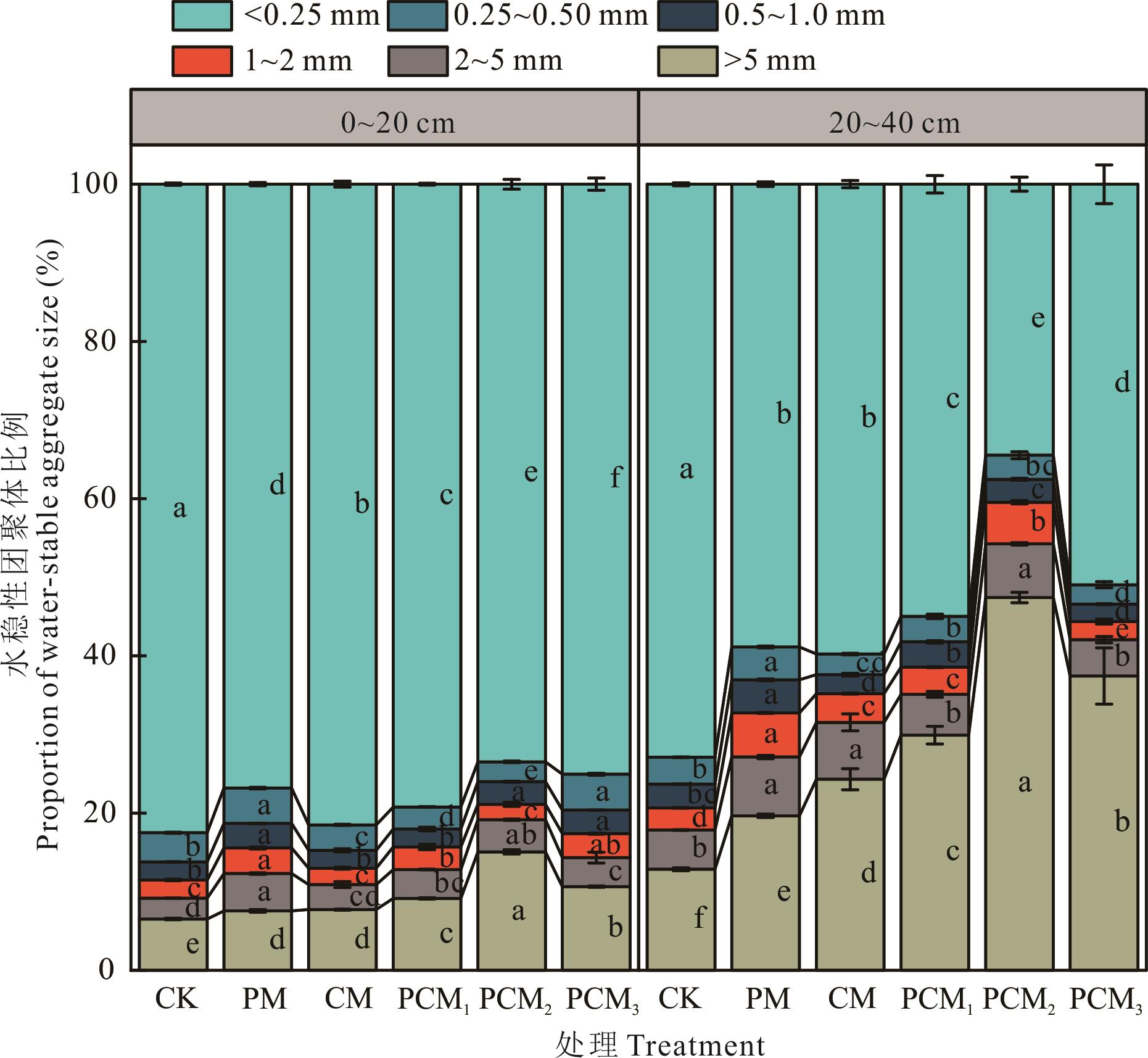
Fig.2 Effect of organic-inorganic material ratios on the composition of soil aggregates
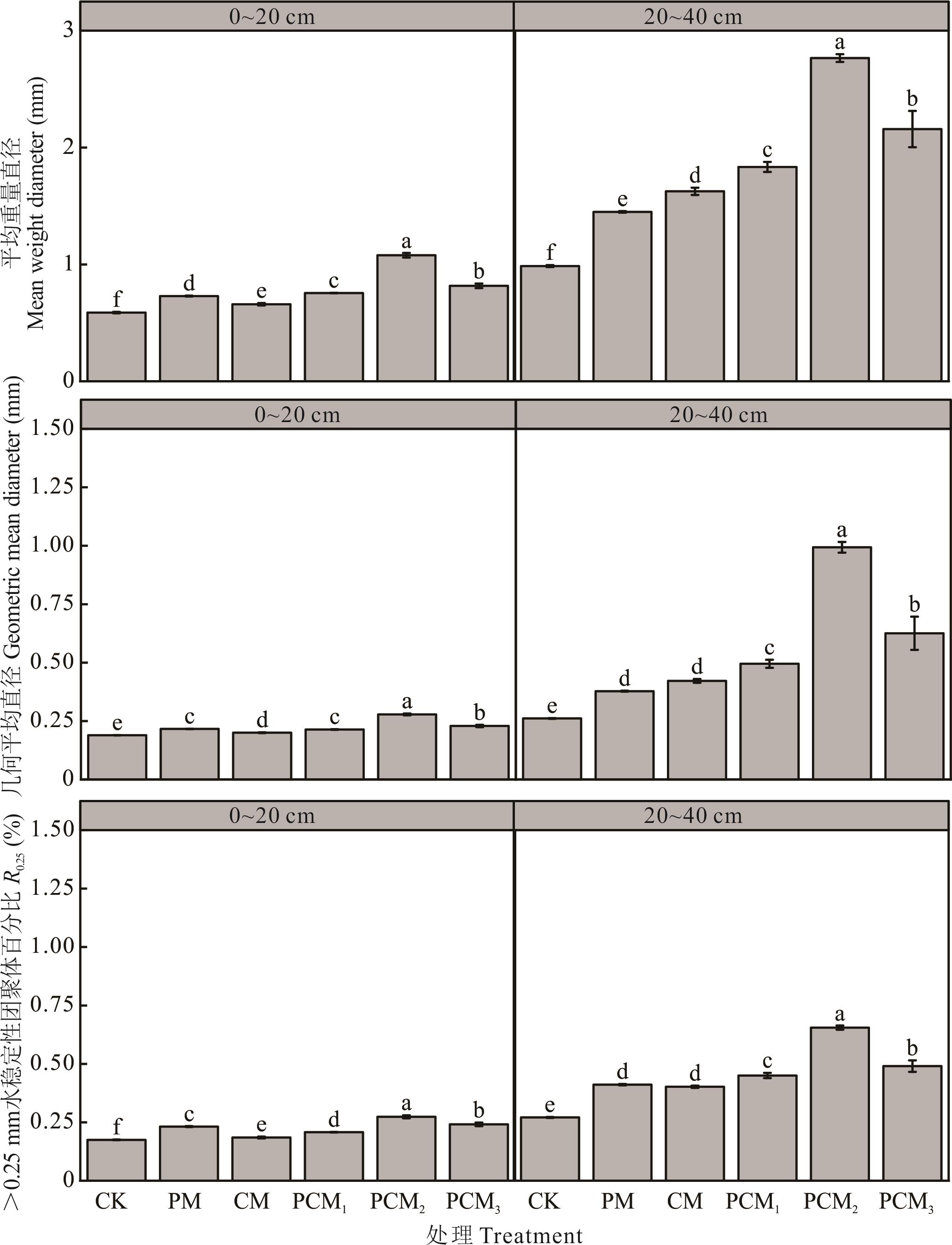
Fig. 3 Effect of different organic-inorganic material ratios on the stability of soil aggregates
指标 Indicators | 0~20 cm | 20~40 cm | 指标 Indicators | 0~20 cm | 20~40 cm | ||||
|---|---|---|---|---|---|---|---|---|---|
| 公因子方差Communality | 权重Weight | 公因子方差Communality | 权重Weight | 公因子方差Communality | 权重Weight | 公因子方差Communality | 权重Weight | ||
| BD | 0.684 | 0.065 | 0.895 | 0.085 | AP | 0.896 | 0.085 | 0.956 | 0.091 |
| FC | 0.837 | 0.080 | 0.905 | 0.086 | AK | 0.864 | 0.082 | 0.906 | 0.086 |
| pH | 0.673 | 0.064 | 0.678 | 0.064 | MWD | 0.885 | 0.084 | 0.882 | 0.084 |
| TDS | 0.821 | 0.078 | 0.444 | 0.042 | GMD | 0.860 | 0.082 | 0.778 | 0.074 |
| SOM | 0.741 | 0.071 | 0.834 | 0.079 | R0.25 | 0.878 | 0.084 | 0.884 | 0.084 |
| AN | 0.829 | 0.079 | 0.815 | 0.077 | |||||
Table 3 Common factor variance and weight of soil quality evaluation indicators
指标 Indicators | 0~20 cm | 20~40 cm | 指标 Indicators | 0~20 cm | 20~40 cm | ||||
|---|---|---|---|---|---|---|---|---|---|
| 公因子方差Communality | 权重Weight | 公因子方差Communality | 权重Weight | 公因子方差Communality | 权重Weight | 公因子方差Communality | 权重Weight | ||
| BD | 0.684 | 0.065 | 0.895 | 0.085 | AP | 0.896 | 0.085 | 0.956 | 0.091 |
| FC | 0.837 | 0.080 | 0.905 | 0.086 | AK | 0.864 | 0.082 | 0.906 | 0.086 |
| pH | 0.673 | 0.064 | 0.678 | 0.064 | MWD | 0.885 | 0.084 | 0.882 | 0.084 |
| TDS | 0.821 | 0.078 | 0.444 | 0.042 | GMD | 0.860 | 0.082 | 0.778 | 0.074 |
| SOM | 0.741 | 0.071 | 0.834 | 0.079 | R0.25 | 0.878 | 0.084 | 0.884 | 0.084 |
| AN | 0.829 | 0.079 | 0.815 | 0.077 | |||||
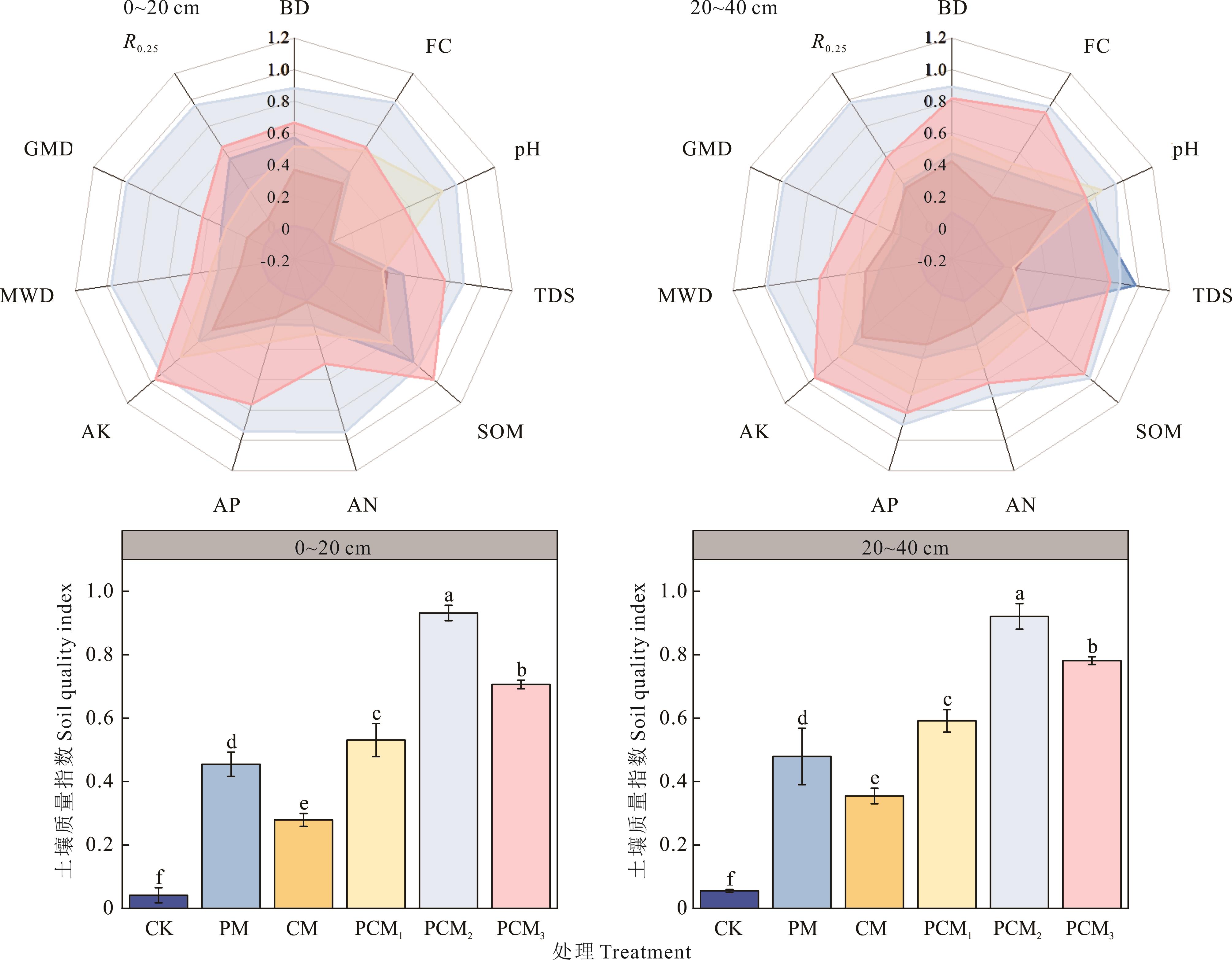
Fig. 4 Effect of different organic-inorganic material ratios on soil index scores and soil quality index from 0-40 cm
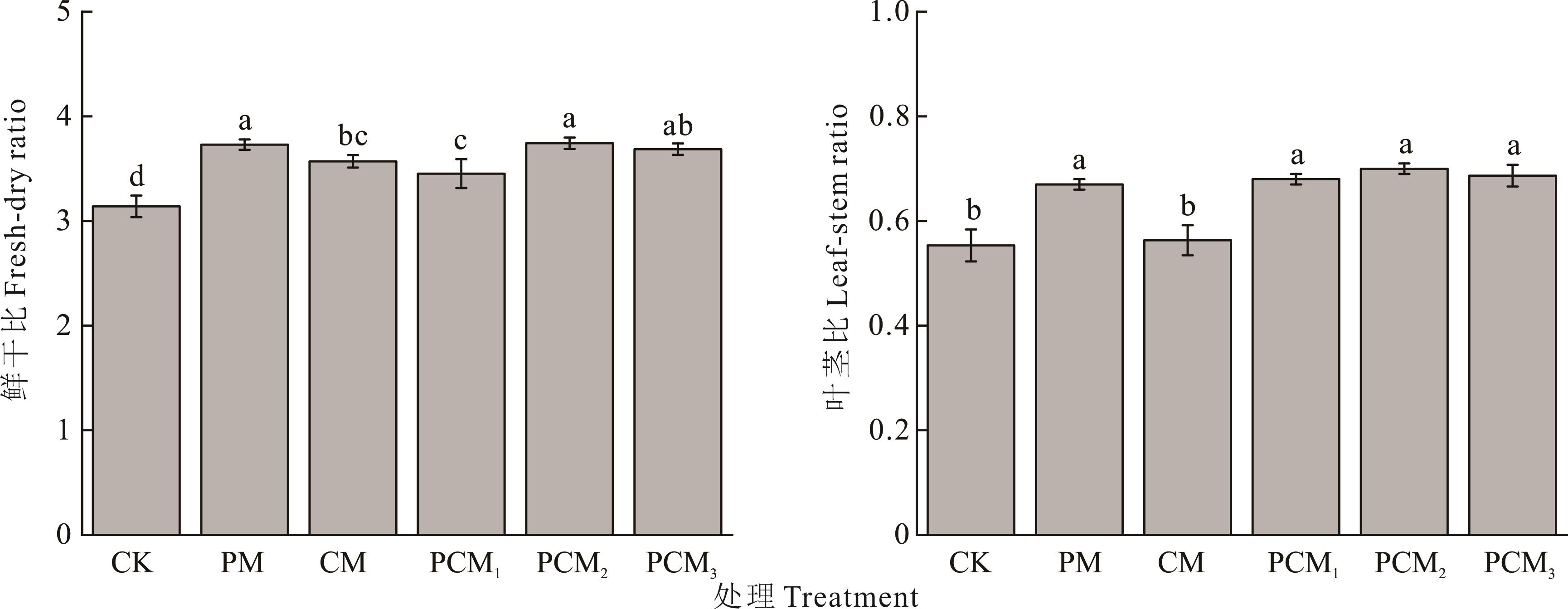
Fig. 5 Effect of different organic-inorganic material ratios on fresh-dry ratio and leaf-stem ratio of E. frumentacea
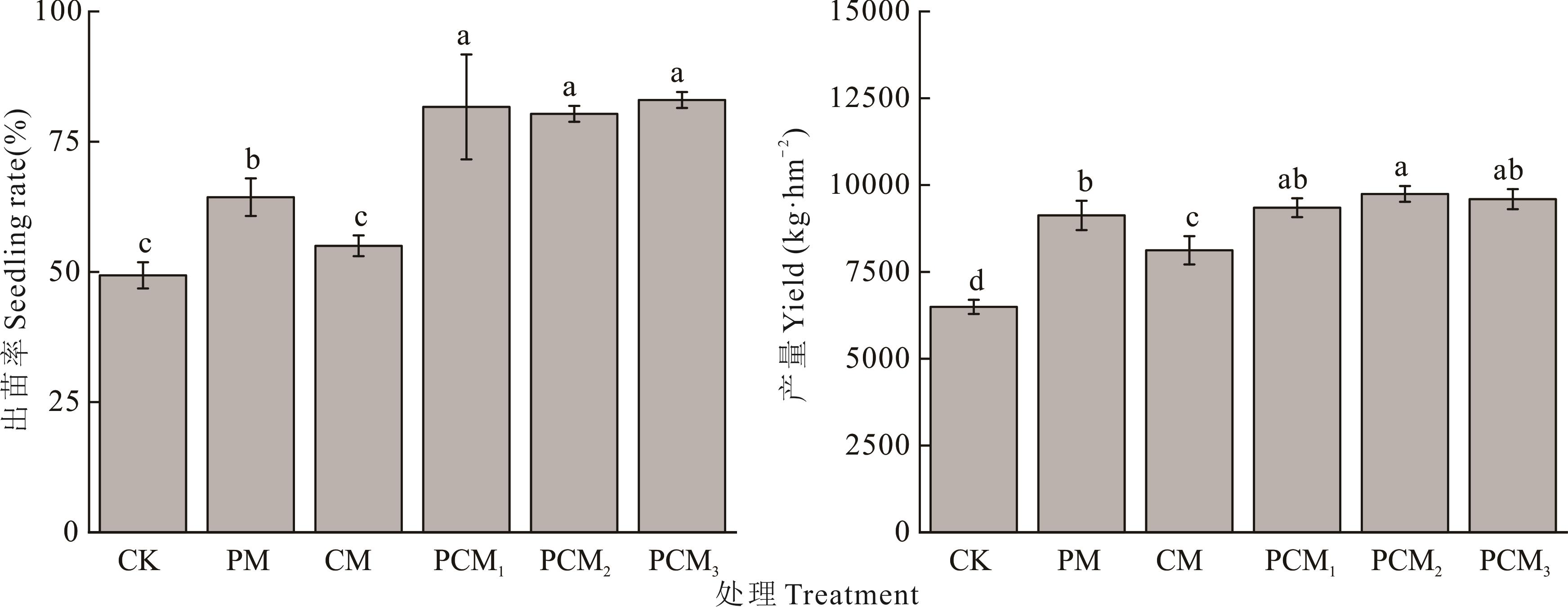
Fig. 6 Effect of different organic-inorganic material ratios on seedling rate and yield of E. frumentacea
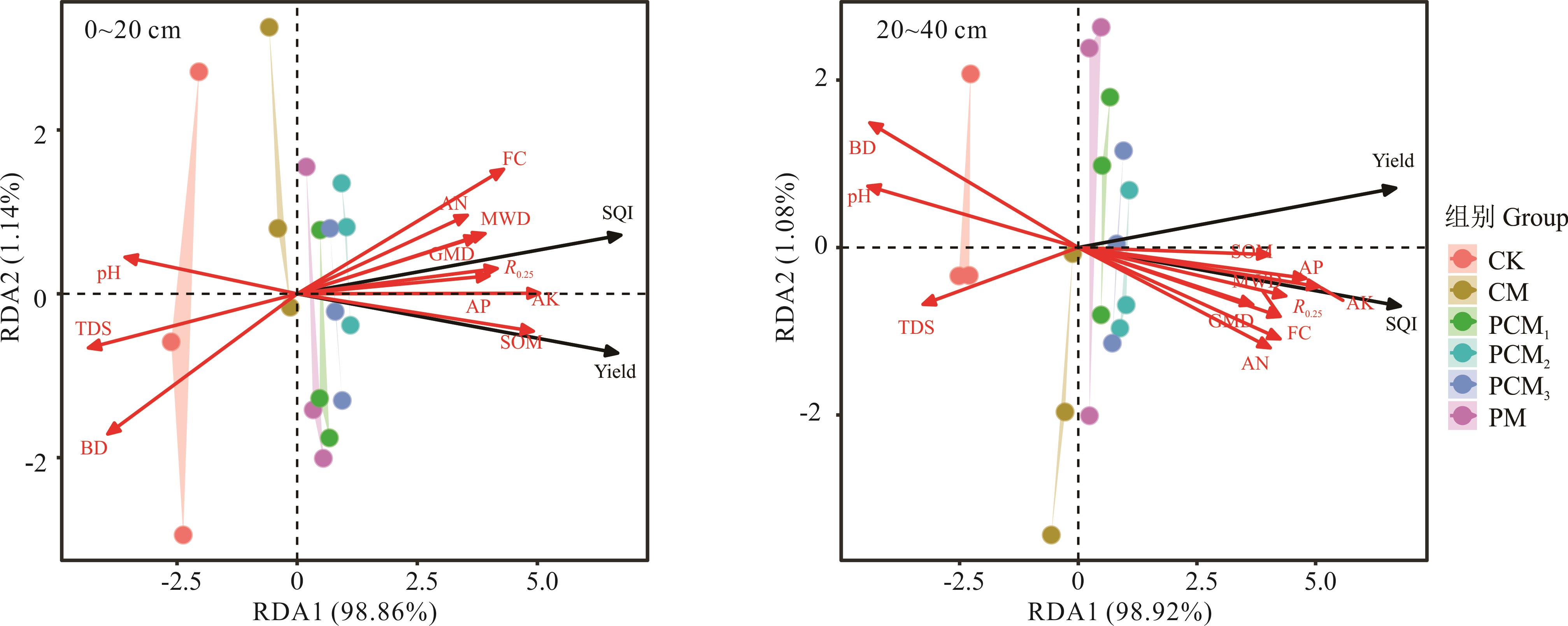
Fig.7 Redundancy analysis of soil quality and yield with soil properties under different organic-inorganic material ratios

Fig.8 Relationship of E. frumentacea yield and soil quality index under different organic-inorganic material ratios
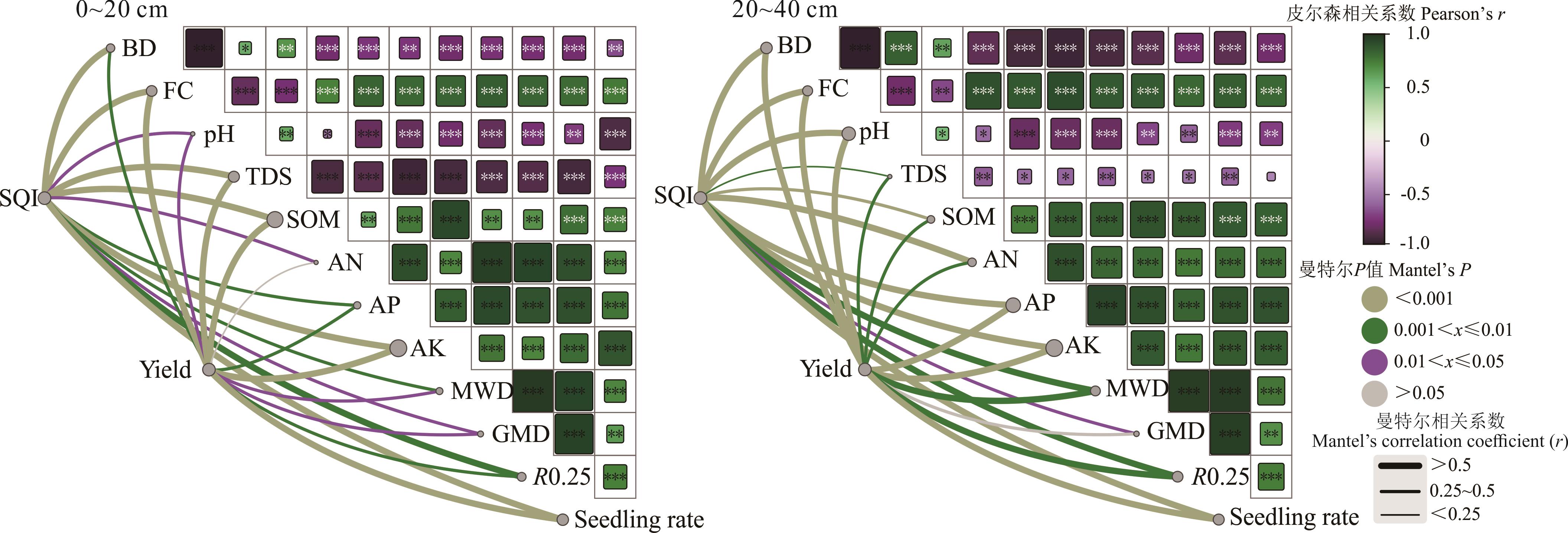
Fig.9 Mantel test analysis of soil quality and yield with soil properties
| 1 | Yang J S. Development and prospect of the research on saline-affected soils in China. Acta Pedologica Sinica, 2008, 45(5): 837-845. |
| 杨劲松. 中国盐渍土研究的发展历程与展望. 土壤学报, 2008, 45(5): 837-845. | |
| 2 | Zhang L, Yang J S, Yao R J, et al. The distribution and potential functions of prokaryotic communities in saline soils of Hetao irrigation district. Acta Pedologica Sinica, 2024, 61(2): 527-538. |
| 张璐, 杨劲松, 姚荣江, 等. 河套灌区盐渍土壤原核生物群落特征及其潜在功能研究. 土壤学报, 2024, 61(2): 527-538. | |
| 3 | Zhao Y, Wang L, Zhao H L, et al. Research status and prospects of saline-alkali land amelioration in the coastal region of China. Chinese Agricultural Science Bulletin, 2022, 38(3): 67-74. |
| 赵英, 王丽, 赵惠丽, 等. 滨海盐碱地改良研究现状及展望. 中国农学通报, 2022, 38(3): 67-74. | |
| 4 | Zhao Y, Wang S, Li Y, et al. Long-term performance of flue gas desulfurization gypsum in a large-scale application in a saline-alkali wasteland in northwest China. Agriculture, Ecosystems & Environment, 2018, 261: 115-124. |
| 5 | Shen J L, Wang B, Xu X. Review on research of using desulfurized gypsum to ameliorate saline-sodic soil. Journal of Agricultural Sciences, 2016, 37(1): 65-69. |
| 沈婧丽, 王彬, 许兴. 脱硫石膏改良盐碱地研究进展. 农业科学研究, 2016, 37(1): 65-69. | |
| 6 | Lu X C, Zhang J S, Miao Q, et al. Improvement effects of different amelioration materials and their combinations on coastal saline-alkaline soils in the Yellow River Delta. Journal of Soil and Water Conservation, 2017, 31(6): 326-332. |
| 卢星辰, 张济世, 苗琪, 等. 不同改良物料及其配施组合对黄河三角洲滨海盐碱土的改良效果. 水土保持学报, 2017, 31(6): 326-332. | |
| 7 | Yang J S, Yao R J, Wang X P, et al. Research on salt-affected soils in China: History, status quo and prospect. Acta Pedologica Sinica, 2022, 59(1): 10-27. |
| 杨劲松, 姚荣江, 王相平, 等. 中国盐渍土研究: 历程、现状与展望. 土壤学报, 2022, 59(1): 10-27. | |
| 8 | Tian R R, Wang S J, Liu J, et al. Applying biochar and flue gas desulfurization gypsum in the root zone to improve saline-alkali soil quality and sunflower yield. Transactions of the Chinese Society of Agricultural Engineering, 2024, 40(5): 148-157. |
| 田荣荣, 王淑娟, 刘嘉, 等. 根区施用生物炭和脱硫石膏提高盐碱土壤质量及向日葵产量. 农业工程学报, 2024, 40(5): 148-157. | |
| 9 | Xue Y S, Shi C H, Wang Y X, et al. Mixed application of superphosphate and organic fertilizers: Effect on photosynthetic characteristics and yield of wheat in saline soil. Chinese Agricultural Science Bulletin, 2021, 37(20): 1-6. |
| 薛远赛, 师长海, 王源溪, 等. 过磷酸钙及有机肥混施对盐碱地小麦光合特性及产量的影响. 中国农学通报, 2021, 37(20): 1-6. | |
| 10 | Liu Y, Yang S Q, Zhang W F, et al. Effects of phosphogypsum and Suaeda salsa on the soil moisture, salt, and bacterial community structure of salinized soil. Environmental Science, 2023, 44(4): 2325-2337. |
| 刘月, 杨树青, 张万锋, 等. 磷石膏和碱蓬对盐渍化土壤水盐及细菌群落结构的影响. 环境科学, 2023, 44(4): 2325-2337. | |
| 11 | Zhang J, Tian R R, Wang S J, et al. Effects of calcium-based amendments on saline-alkali soil improvement and sunflower yield. Soil and Fertilizer Sciences in China, 2022(11): 68-76. |
| 张菁, 田荣荣, 王淑娟, 等. 钙基型土壤改良剂对盐碱土壤改良和向日葵产量的影响. 中国土壤与肥料, 2022(11): 68-76. | |
| 12 | Buss W, Graham M C, Shepherd J G, et al. Risks and benefits of marginal biomass-derived biochars for plant growth. Science of the Total Environment, 2016, 569/570: 496-506. |
| 13 | Zhang Y, Cao J, Li G, et al. Metabolomics analysis of root exudates in Echinochloa frumentacea seeding stage under saline-alkali stress. Acta Ecologica Sinica, 2024, 44(8): 3540-3549. |
| 张杨, 曹靖, 李广, 等. 盐碱胁迫下湖南稷子苗期根系分泌物代谢组学. 生态学报, 2024, 44(8): 3540-3549. | |
| 14 | Wan L S, Jiang W K, Liu S L, et al. A study on the high-yield property of billon dollar grass. Pratacultural Science, 1991(1): 13-18. |
| 万力生, 姜文奎, 刘升林, 等. 海子1号湖南稷子高产性能的研究. 草业科学, 1991(1): 13-18. | |
| 15 | Lu A Q, Zhang F J, Xu X, et al. Effects of salt stress on growth and physiological characteristics of Echinochloa frumentacea seedlings. Acta Prataculturae Sinica, 2021, 30(5): 84-93. |
| 陆安桥, 张峰举, 许兴, 等. 盐胁迫对湖南稷子苗期生长及生理特性的影响. 草业学报, 2021, 30(5): 84-93. | |
| 16 | Zhang G L. Methods for laboratory analysis of soil investigation. Beijing: Science Press, 2012. |
| 张甘霖. 土壤调查实验室分析方法. 北京: 科学出版社, 2012. | |
| 17 | Chang F, Zhang H, Song J, et al. Once-middle amount of straw interlayer enhances saline soil quality and sunflower yield in semi-arid regions of China: Evidence from a four-year experiment. Journal of Environmental Management, 2023, 344: 118530. |
| 18 | Kim Y J, Choo B K, Cho J Y. Effect of gypsum and rice straw compost application on improvements of soil quality during desalination of reclaimed coastal tideland soils: Ten years of long-term experiments. Catena, 2017, 156: 131-138. |
| 19 | Yang W Y, Ji S F, Li D, et al. Effects of continuous application of commercial organic manure on farmland quality and vegetable yield. Journal of Agricultural Resources and Environment, 2014, 31(4): 319-322. |
| 杨文叶, 季淑枫, 李丹, 等. 连续施用商品有机肥对耕地质量及蔬菜产量的影响. 农业资源与环境学报, 2014, 31(4): 319-322. | |
| 20 | Bal A R, Dutt S K. Mechanism of salt tolerance in wild rice (Oryza coarctata Roxb). Plant and Soil, 1986, 92(3): 399-404. |
| 21 | Ji Z Y, Zhou J X, Zhang H, et al. Effects of soil conditioners on the soil chemical properties and organic carbon pools of saline-sodic soil. Journal of Agro-Environmental Sciences, 2019, 38(8): 1759-1767. |
| 冀拯宇, 周吉祥, 张贺, 等. 不同土壤改良剂对盐碱土壤化学性质和有机碳库的影响. 农业环境科学学报, 2019, 38(8): 1759-1767. | |
| 22 | Mao W J, Li X P, An D, et al. Effects of different conditioners on soil structure of alkali soils in Ningxia Hui Autonomous Region. Bulletin of Soil and Water Conservation, 2010, 30(4): 190-192, 197. |
| 毛文娟, 李新平, 安东, 等. 不同改良剂对宁夏地区盐碱土土壤结构的影响. 水土保持通报, 2010, 30(4): 190-192, 197. | |
| 23 | Chi C M, Zhao C W, Sun X J, et al. Reclamation of saline-sodic soil properties and improvement of rice (Oryza sativa L.) growth and yield using desulfurized gypsum in the west of Songnen Plain, northeast China. Geoderma, 2012, 187/188: 24-30. |
| 24 | Wang H, Zhang Z Q, Liu J H, et al. Improvement effects of different amendments on soda saline-alkali soil. Journal of Jilin Agricultural University, 2020, 42(5): 569-575. |
| 王涵, 张忠庆, 刘金华, 等. 不同改良剂对苏打盐碱土的改良效果. 吉林农业大学学报, 2020, 42(5): 569-575. | |
| 25 | Yang J S, Yao R J, Wang X P, et al. Halt soil salinization, Boost soil productivity. Science, 2021, 73(6): 30-34. |
| 杨劲松, 姚荣江, 王相平, 等. 防止土壤盐渍化, 提高土壤生产力. 科学, 2021, 73(6): 30-34. | |
| 26 | Qu C F, Yang J S, Yao R J, et al. Effect of different amendments on coastal saline-alkaline soils in the north Jiangsu. Journal of Irrigation and Drainage, 2012, 31(3): 21-25. |
| 曲长凤, 杨劲松, 姚荣江, 等. 不同改良剂对苏北滩涂盐碱土壤改良效果研究. 灌溉排水学报, 2012, 31(3): 21-25. | |
| 27 | Bai X L, Zhang E, Wu J M, et al. Effects of different modified materials on soil fungal community structure in saline-alkali soil. Environmental Science, 2024, 45(6): 3562-3570. |
| 白小龙, 张恩, 武晋民, 等. 不同改良物料对盐碱土壤真菌群落结构的影响. 环境科学, 2024, 45(6): 3562-3570. | |
| 28 | Zhang X D, Li B, Liu G M, et al. Effects of composite soil improvement agents on soil amendment and salt reduction in coastal saline soil. Chinese Journal of Eco-Agriculture, 2019, 27(11): 1744-1754. |
| 张晓东, 李兵, 刘广明, 等. 复合改良物料对滨海盐土的改土降盐效果与综合评价. 中国生态农业学报, 2019, 27(11): 1744-1754. | |
| 29 | Lu H Q, Tang W, Luo Z, et al. Effects of commercial organic fertilizer substituting chemical fertilizer partially on soil nutrients, plant development, and yield in cotton. Acta Agronomica Sinica, 2021, 47(12): 2511-2521. |
| 卢合全, 唐薇, 罗振, 等. 商品有机肥替代部分化肥对连作棉田土壤养分、棉花生长发育及产量的影响. 作物学报, 2021, 47(12): 2511-2521. | |
| 31 | Zhang Y, Wang J, Feng Y. The effects of biochar addition on soil physicochemical properties: A review. Catena, 2021, 202: 105284. |
| 32 | Zhang F J, Xu X, Xiao G J. Influence of flue gas desulphurization gypsum on characteristics of soil aggregates in sodic soil. Agricultural Research in the Arid Areas, 2013, 31(6): 108-114. |
| 张峰举, 许兴, 肖国举. 脱硫石膏对碱化土壤团聚体特征的影响. 干旱地区农业研究, 2013, 31(6): 108-114. | |
| 33 | Xu N, Tan G, Wang H, et al. Effect of biochar additions to soil on nitrogen leaching, microbial biomass and bacterial community structure. European Journal of Soil Biology, 2016, 74: 1-8. |
| 34 | Rochester I J. Phosphorus and potassium nutrition of cotton: interaction with sodium. Crop and Pasture Science, 2010, 61(10): 825. |
| 35 | Lashari M S, Ye Y, Ji H, et al. Biochar-manure compost in conjunction with pyroligneous solution alleviated salt stress and improved leaf bioactivity of maize in a saline soil from central China: a 2-year field experiment. Journal of the Science of Food and Agriculture, 2015, 95(6): 1321-1327. |
| 36 | Zhang P, Wei T, Jia Z, et al. Soil aggregate and crop yield changes with different rates of straw incorporation in semiarid areas of northwest China. Geoderma, 2014, 230: 41-49. |
| 37 | Wang X J, Jia Z K, Liang L Y, et al. Effects of organic manure application on dry land soil organic matter and water stable aggregates. Chinese Journal of Applied Ecology, 2012, 23(1): 159-165. |
| 王晓娟, 贾志宽, 梁连友, 等. 旱地施有机肥对土壤有机质和水稳性团聚体的影响. 应用生态学报, 2012, 23(1): 159-165. | |
| 38 | Yao R, Gao Q, Liu Y, et al. Deep vertical rotary tillage mitigates salinization hazards and shifts microbial community structure in salt-affected anthropogenic-alluvial soil. Soil and Tillage Research, 2023, 227: 105627. |
| 39 | Regelink I C, Stoof C R, Rousseva S, et al. Linkages between aggregate formation, porosity and soil chemical properties. Geoderma, 2015, 247/248: 24-37. |
| 40 | Jin M Y, Huang J, Hou P, et al. Improvement effect of three environmental materials and their composite application on saline-alkali soil. Journal of Agro-Environment Science, 2020, 39(1): 118-124. |
| 金梦野, 黄娟, 侯嫔, 等. 三种环境材料及其复合施用对盐碱化土壤的改良效果研究. 农业环境科学学报, 2020, 39(1): 118-124. | |
| 41 | Wang D L, Zhuge Y P, Yang Q G, et al. Effects of three amendments on the soil properties of and maize growth in coastal saline-alkali soils. Journal of Agricultural Resources and Environment, 2021, 38(1): 20-27. |
| 王德领, 诸葛玉平, 杨全刚, 等. 3种改良剂对滨海盐碱地土壤理化性状及玉米生长的影响. 农业资源与环境学报, 2021, 38(1): 20-27. | |
| 42 | Ullah S, Dahlawi S, Naeem A, et al. Biochar application for the remediation of salt-affected soils: Challenges and opportunities. Science of the Total Environment, 2018, 625: 320-335. |
| 43 | Wilson G W T, Rice C W, Rillig M C, et al. Soil aggregation and carbon sequestration are tightly correlated with the abundance of arbuscular mycorrhizal fungi: results from long-term field experiments. Ecology Letters, 2009, 12(5): 452-461. |
| 44 | De Gryze S, Six J, Brits C, et al. A quantification of short-term macroaggregate dynamics: influences of wheat residue input and texture. Soil Biology and Biochemistry, 2005, 37(1): 55-66. |
| 45 | Nichols K A, Halvorson J J. Roles of biology, chemistry, and physics in soil macroaggregate formation and stabilization. The Open Agriculture Journal, 2013, 7(1): 107-117. |
| 46 | Yan Z, Zhou J, Liu C, et al. Legume-based crop diversification reinforces soil health and carbon storage driven by microbial biomass and aggregates. Soil and Tillage Research, 2023, 234: 105848. |
| 47 | Zhang P P, Gao L C, Li X M, et al. Phosphogypsum and organic fertilizer: effects on yield and leaf physiological characteristics of broomcorn millet in saline-alkali soil. Chinese Agricultural Science Bulletin, 2018, 34(15): 26-32. |
| 张盼盼, 高立城, 李晓敏, 等. 磷石膏和有机肥对盐碱地糜子产量和叶片生理特性的影响. 中国农学通报, 2018, 34(15): 26-32. | |
| 48 | Wang J M, Yang P L, Shi Y, et al. Effects on physical and chemical properties of soil and sunflower growth when sodic soils reclaimed with by-product from flue gas desulphurization. Journal of Soil and Water Conservation, 2005, 19(3): 34-37. |
| 王金满, 杨培岭, 石懿, 等. 脱硫副产物对改良碱化土壤的理化性质与作物生长的影响. 水土保持学报, 2005, 19(3): 34-37. |
| [1] | Peng JIANG, Lei LI, Hao-jun XIE, De-jia XU, Rui WANG, Qiang HU, Quan SUN. Effect of purified biogas slurry drip irrigation on sandy loam soil quality, silage maize productivity and analysis of safe application rate [J]. Acta Prataculturae Sinica, 2025, 34(4): 64-81. |
| [2] | Qing-hua TIAN, Dan LIU, Xiao-qin LIAO, Xiao-yan SONG, Lei HU, Chang-ting WANG. Effects of nitrogen fertilization on soil aggregate biological binding agents and stability in an alpine grassland [J]. Acta Prataculturae Sinica, 2024, 33(11): 46-57. |
| [3] | Si-yao WANG, Kai-yang QIU, Jian-yu WANG. Evaluation of soil quality change over time when retiring cultivated farmland on gravel-sand mulched fields in central Ningxia [J]. Acta Prataculturae Sinica, 2024, 33(11): 58-68. |
| [4] | Wen-jun ZHAO, Rui LIU, Zheng-xu WANG, Yu FENG, Kai-zheng XUE, Kui LIU, Zi-he XU, Wei-dong CAO, Li-bo FU, Mei YIN, Hua CHEN. Effects of rotation with a green manure crop on soil quality and microbial nutrient limitation in a tobacco field in Yunnan [J]. Acta Prataculturae Sinica, 2024, 33(10): 147-158. |
| [5] | Lin-zhi LI, De-gang ZHANG, Yuan MA, Zhu-zhu LUO, Dong LIN, Long HAI, Lan-ge BAI. Ecological stoichiometry characteristics of soil aggregates in alpine meadows with differing degrees of degradation [J]. Acta Prataculturae Sinica, 2023, 32(8): 48-60. |
| [6] | Cong-ze JIANG, Na SHOU, Wei GAO, Ren-shi MA, Yu-ying SHEN, Xian-long YANG. A multivariate evaluation of production performance and nutritional quality of different varieties of silage maize in the dry plateau area of Longdong [J]. Acta Prataculturae Sinica, 2023, 32(7): 216-228. |
| [7] | Xin GUO, Huan LUO, Xue-mei XU, Ai-xia MA, Zhen-yan SHANG, Tian-hu HAN, De-cao NIU, Hai-yan WEN, Xu-dong LI. Effects of litter decomposition with different qualities on soil organic carbon content and its stability in grassland on the Loess Plateau [J]. Acta Prataculturae Sinica, 2023, 32(5): 83-93. |
| [8] | Zhi-hao ZHU, Chen MENG, Xing WANG, Nai-ping SONG, Li WANG, Miao-miao XU, Ling-tong DU. Geometric distribution, formation, and topological structure of soil aggregates after introduction of Caragana korshinskii on the desert steppe [J]. Acta Prataculturae Sinica, 2023, 32(11): 53-64. |
| [9] | Wen-ming MA, Chao-wen LIU, Qing-ping ZHOU, Zhuo-ma DENGzeng, Si-hong TANG, Diliyaer·mohetaer, Chen HOU. Effects of shrub encroachment on soil aggregate ecological stoichiometry and enzyme activity in alpine grassland [J]. Acta Prataculturae Sinica, 2022, 31(1): 57-68. |
| [10] | Li-xing ZHANG, Chun-xing HAI, Yao-wen CHANG, Xiao-mei GAO, Wen-bang GAO, Yun-hu XIE. Evaluation of soil quality in Leymus chinensis-Achnatherumsplendens grassland and in Stipa sareptana grassland [J]. Acta Prataculturae Sinica, 2021, 30(4): 68-79. |
| [11] | Ke-sheng WU, Zong-xian CHE, Xing-guo BAO, Jiu-dong ZHANG, Bing-lin LU, Xin-qiang YANG, Rui-ju YANG. Analysis of soil fertility and crop yield characteristics following long-term straw return to the field in a Hexi Oasis irrigated area [J]. Acta Prataculturae Sinica, 2021, 30(12): 59-70. |
| [12] | LIU Jiang, LV Tao, ZHANG Li-xin, YE Li-na, LIU Xiang-yang, DAI Xiang-rong, WANG Wei-wei, DING Ru. Soil quality assessment by principal component analysis in Glycyrrhiza uralensis stands of differing ages [J]. Acta Prataculturae Sinica, 2020, 29(6): 162-171. |
| [13] | MA Xiao-jing, GUO Yan-ju, ZHANG Jia-yu, XU Ai-yun, LIU Jin-long, XU Dong-mei. Size distribution of soil aggregates in different grassland desertification categories in Yanchi County, Ningxia [J]. Acta Prataculturae Sinica, 2020, 29(3): 27-37. |
| [14] | WANG Xiao-jiao, QI Peng, CAI Li-qun, CHEN Xiao-long, XIE Jun-hong, GAN Hui-jiong, ZHANG Ren-zhi. Effects of alternative fertilization practices on components of the soil organic carbon pool and yield stability in rain-fed maize production on the Loess Plateau [J]. Acta Prataculturae Sinica, 2020, 29(10): 58-69. |
| [15] | SU Ting-ting, MA Hong-bin, ZHOU Yao, JIA Xi-yang, ZHANG Rui, ZHANG Shuang-qiao, HU Yan-li. Response of typical steppe grassland soil physical and chemical properties to various ecological restoration measures in the Ningxia Loess Hill Region [J]. Acta Prataculturae Sinica, 2019, 28(4): 34-46. |
| Viewed | ||||||
|
Full text |
|
|||||
|
Abstract |
|
|||||
