
ISSN 1004-5759 CN 62-1105/S
Acta Prataculturae Sinica ›› 2026, Vol. 35 ›› Issue (1): 107-118.DOI: 10.11686/cyxb2025076
Kong-tao WEI1,2,3( ), Chun-ping ZHANG1,2,3, Yang YU1,2,3, Zheng-she ZHANG4, Ze ZHOU1,2,3, Xue ZHANG1,2,3, Xin-xin WANG1,2,3, Si-yu YUE1,2,3, Quan CAO1,2,3(), Quan-min DONG1,2,3()
Received:2025-03-11
Revised:2025-04-15
Online:2026-01-20
Published:2025-11-13
Contact:
Quan CAO,Quan-min DONG
Kong-tao WEI, Chun-ping ZHANG, Yang YU, Zheng-she ZHANG, Ze ZHOU, Xue ZHANG, Xin-xin WANG, Si-yu YUE, Quan CAO, Quan-min DONG. Yield performance, nutritional quality, and soil physicochemical responses of oat (Avena sativa) cultivars in the Qinghai Lake-Gonghe Basin region[J]. Acta Prataculturae Sinica, 2026, 35(1): 107-118.
编号 Number | 品种名称 Varieties name | 类型 Type | 产地 Producing area |
|---|---|---|---|
| Y1 | 楷模Model | 早熟Early maturity | 加拿大Canada |
| Y2 | 贝勒Baler | 中熟Mid maturity | 加拿大Canada |
| Y3 | 艾斯克Esker | 中熟Mid maturity | 美国America |
| Y4 | 贝勒2 Baler 2 | 晚熟Late maturity | 加拿大Canada |
| Y5 | 爱沃Everleaf | 超晚熟Ultra-late maturity | 美国America |
| Y6 | 黑玫克Haymaker | 晚熟Late maturity | 中国China |
| Y7 | 福瑞至Forage | 中晚熟Mid-late maturity | 美国America |
| Y8 | 美达Monida | 中早熟Mid-early maturity | 美国America |
| Y9 | 速锐Souris | 早熟Early maturity | 加拿大Canada |
| Y10 | 福星Fuxing | 中晚熟Mid-late maturity | 美国America |
Table 1 The basic characteristics of tested oat varieties
编号 Number | 品种名称 Varieties name | 类型 Type | 产地 Producing area |
|---|---|---|---|
| Y1 | 楷模Model | 早熟Early maturity | 加拿大Canada |
| Y2 | 贝勒Baler | 中熟Mid maturity | 加拿大Canada |
| Y3 | 艾斯克Esker | 中熟Mid maturity | 美国America |
| Y4 | 贝勒2 Baler 2 | 晚熟Late maturity | 加拿大Canada |
| Y5 | 爱沃Everleaf | 超晚熟Ultra-late maturity | 美国America |
| Y6 | 黑玫克Haymaker | 晚熟Late maturity | 中国China |
| Y7 | 福瑞至Forage | 中晚熟Mid-late maturity | 美国America |
| Y8 | 美达Monida | 中早熟Mid-early maturity | 美国America |
| Y9 | 速锐Souris | 早熟Early maturity | 加拿大Canada |
| Y10 | 福星Fuxing | 中晚熟Mid-late maturity | 美国America |
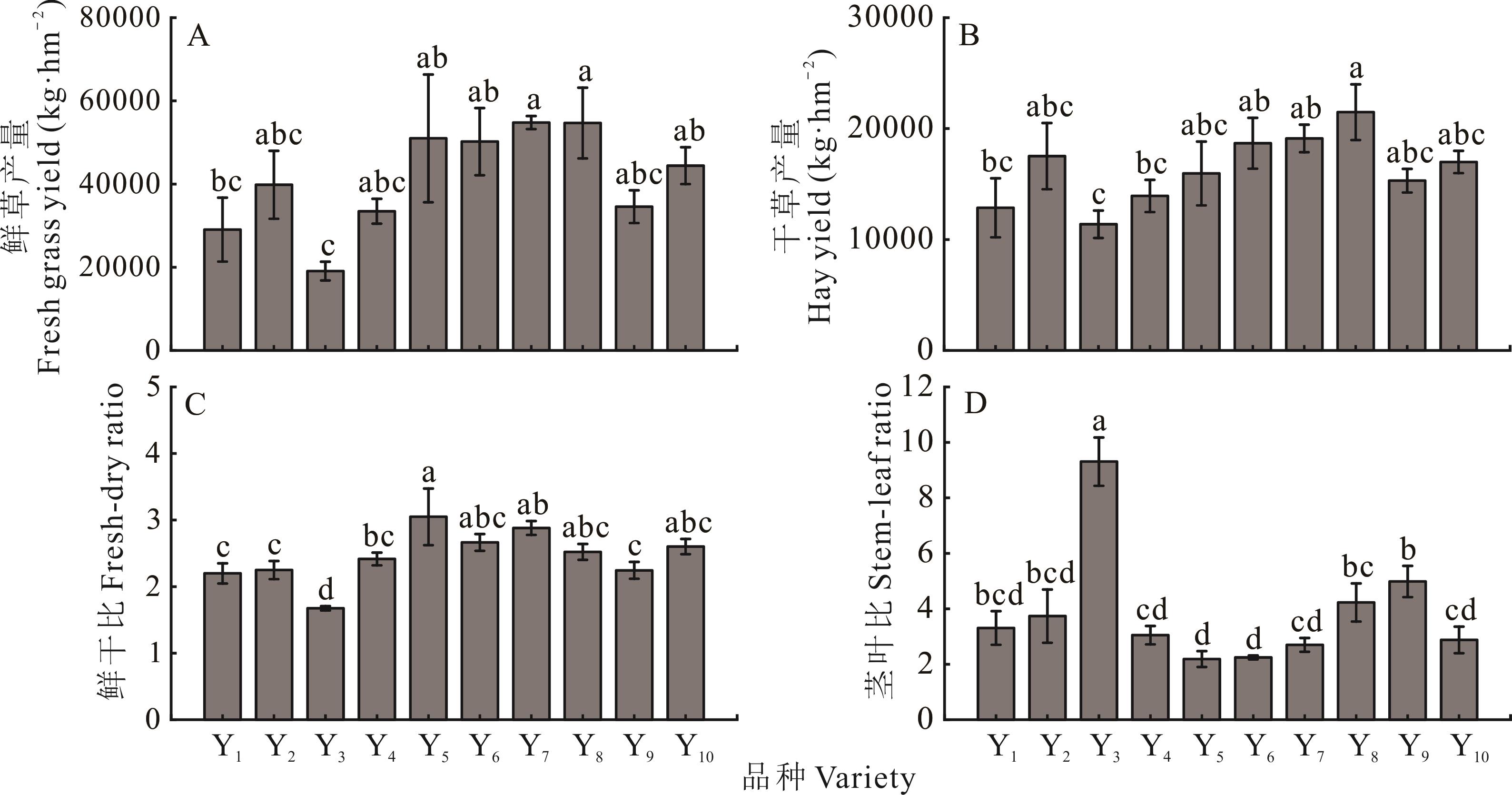
Fig.1 Yield of different oat varieties
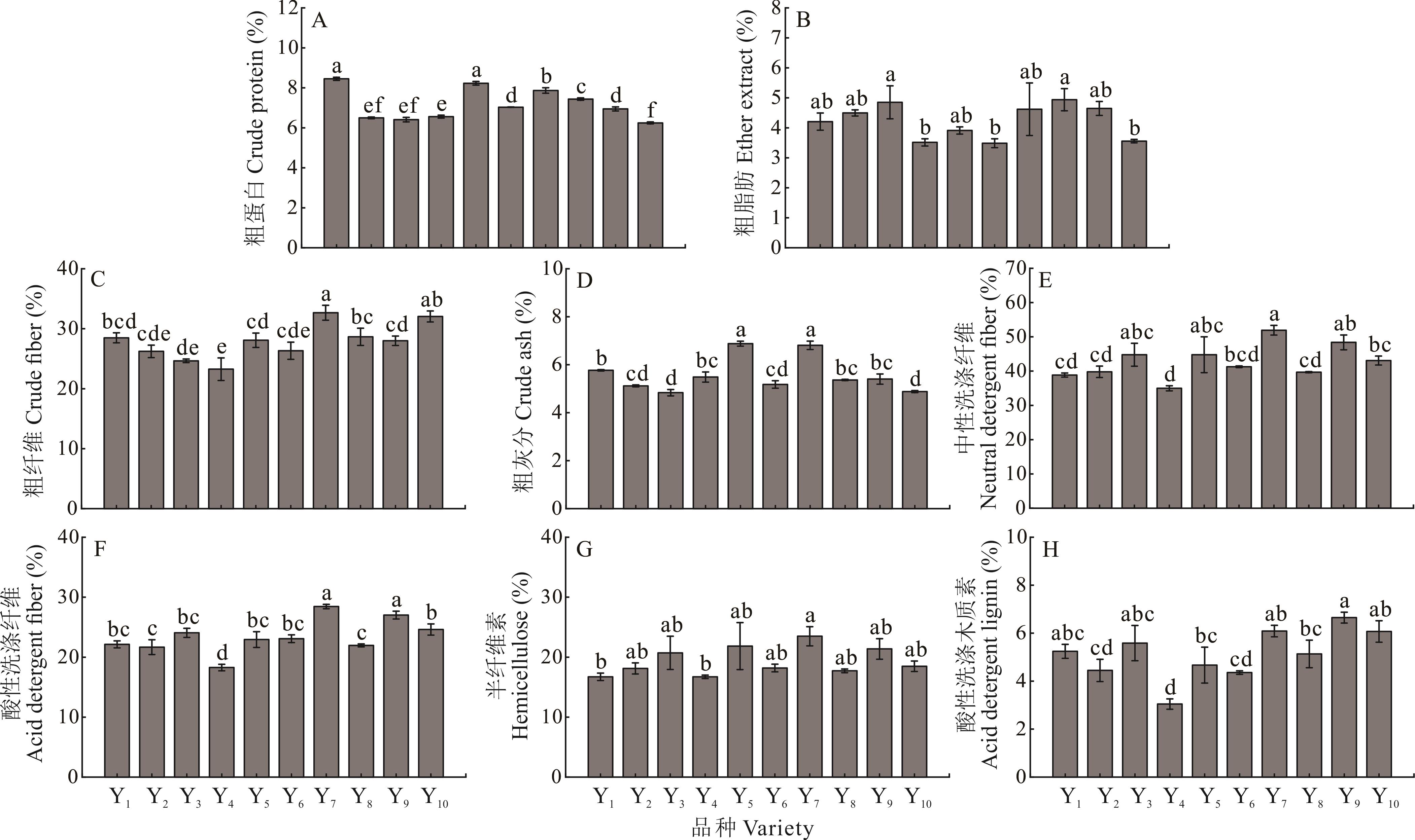
Fig.2 Nutritional quality of different oat varieties
品种 Variety | 总可消化养分 Total digestible nutrients (%) | 可消化干物质 Digestible dry matter (%DM) | 干物质采食量 Dry matter intake (%BW) | 相对饲喂价值 Relative feed value | 相对饲草品质 Relative forage quality |
|---|---|---|---|---|---|
| Y1 | 65.75±0.44bc | 71.66±0.46bc | 3.09±0.05ab | 171.68±3.35b | 165.20±3.27b |
| Y2 | 66.09±0.92b | 72.02±0.96b | 3.03±0.12ab | 169.09±8.88b | 162.76±8.65b |
| Y3 | 64.30±0.57bc | 70.16±0.59bc | 2.71±0.19bcd | 147.42±11.16bc | 141.71±10.78bc |
| Y4 | 68.65±0.41a | 74.67±0.43a | 3.43±0.07a | 198.73±5.22a | 191.63±5.09a |
| Y5 | 65.15±0.99bc | 71.03±1.02bc | 2.75±0.29bc | 151.78±18.14bc | 146.01±17.55bc |
| Y6 | 65.04±0.49bc | 70.92±0.50bc | 2.91±0.02bc | 159.88±1.62b | 153.76±1.60b |
| Y7 | 61.01±0.27d | 66.74±0.28d | 2.31±0.06d | 119.73±3.11d | 114.77±2.98d |
| Y8 | 65.88±0.19b | 71.79±0.19b | 3.02±0.01ab | 168.30±0.87b | 161.97±0.85b |
| Y9 | 62.08±0.49d | 67.85±0.51d | 2.49±0.11cd | 131.01±6.51cd | 125.71±6.29cd |
| Y10 | 63.89±0.70c | 69.73±0.73c | 2.79±0.09bc | 150.91±5.90bc | 145.01±5.74bc |
Table 2 Forage value of different oat varieties
品种 Variety | 总可消化养分 Total digestible nutrients (%) | 可消化干物质 Digestible dry matter (%DM) | 干物质采食量 Dry matter intake (%BW) | 相对饲喂价值 Relative feed value | 相对饲草品质 Relative forage quality |
|---|---|---|---|---|---|
| Y1 | 65.75±0.44bc | 71.66±0.46bc | 3.09±0.05ab | 171.68±3.35b | 165.20±3.27b |
| Y2 | 66.09±0.92b | 72.02±0.96b | 3.03±0.12ab | 169.09±8.88b | 162.76±8.65b |
| Y3 | 64.30±0.57bc | 70.16±0.59bc | 2.71±0.19bcd | 147.42±11.16bc | 141.71±10.78bc |
| Y4 | 68.65±0.41a | 74.67±0.43a | 3.43±0.07a | 198.73±5.22a | 191.63±5.09a |
| Y5 | 65.15±0.99bc | 71.03±1.02bc | 2.75±0.29bc | 151.78±18.14bc | 146.01±17.55bc |
| Y6 | 65.04±0.49bc | 70.92±0.50bc | 2.91±0.02bc | 159.88±1.62b | 153.76±1.60b |
| Y7 | 61.01±0.27d | 66.74±0.28d | 2.31±0.06d | 119.73±3.11d | 114.77±2.98d |
| Y8 | 65.88±0.19b | 71.79±0.19b | 3.02±0.01ab | 168.30±0.87b | 161.97±0.85b |
| Y9 | 62.08±0.49d | 67.85±0.51d | 2.49±0.11cd | 131.01±6.51cd | 125.71±6.29cd |
| Y10 | 63.89±0.70c | 69.73±0.73c | 2.79±0.09bc | 150.91±5.90bc | 145.01±5.74bc |
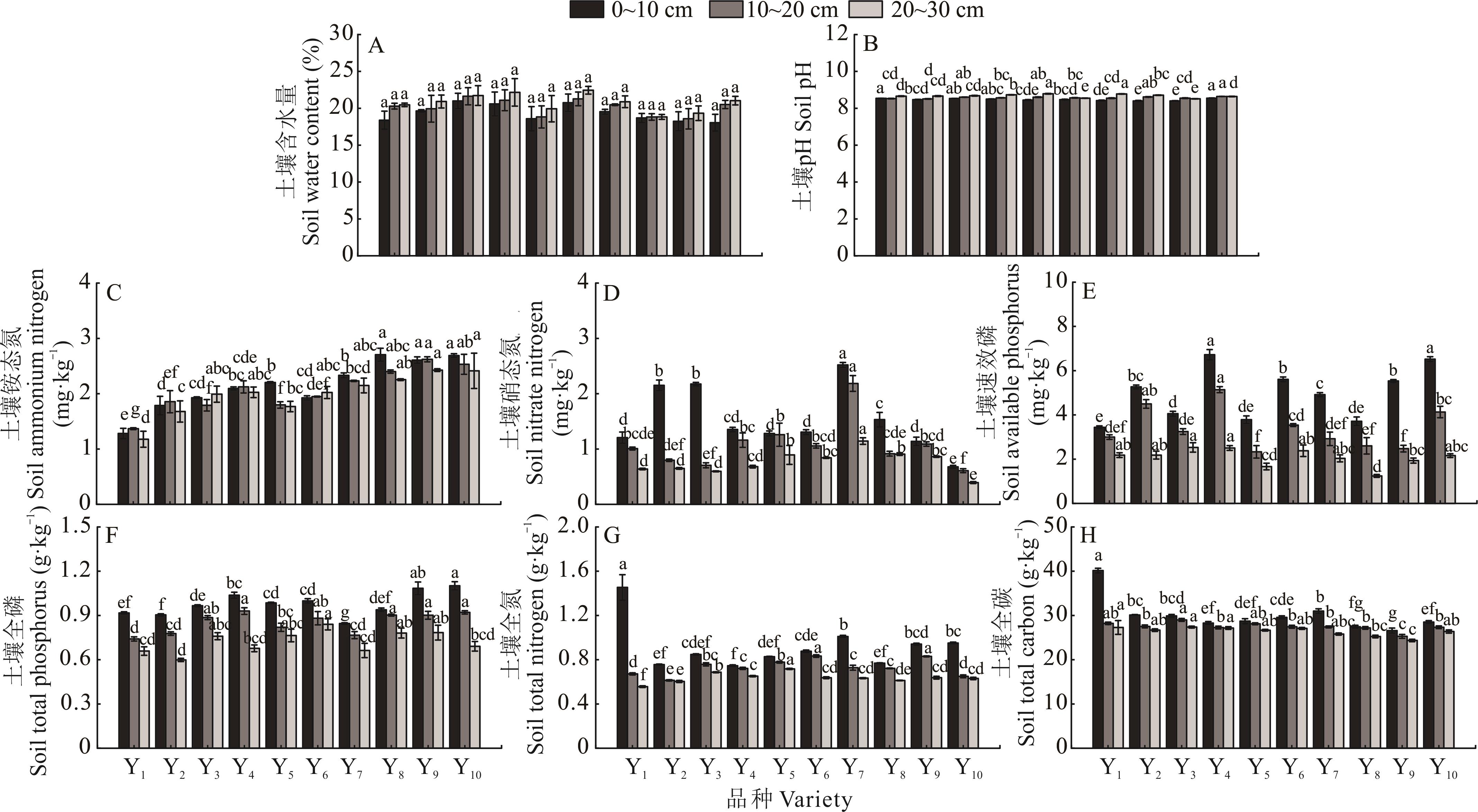
Fig.3 Soil physicochemical properties of different oat varieties
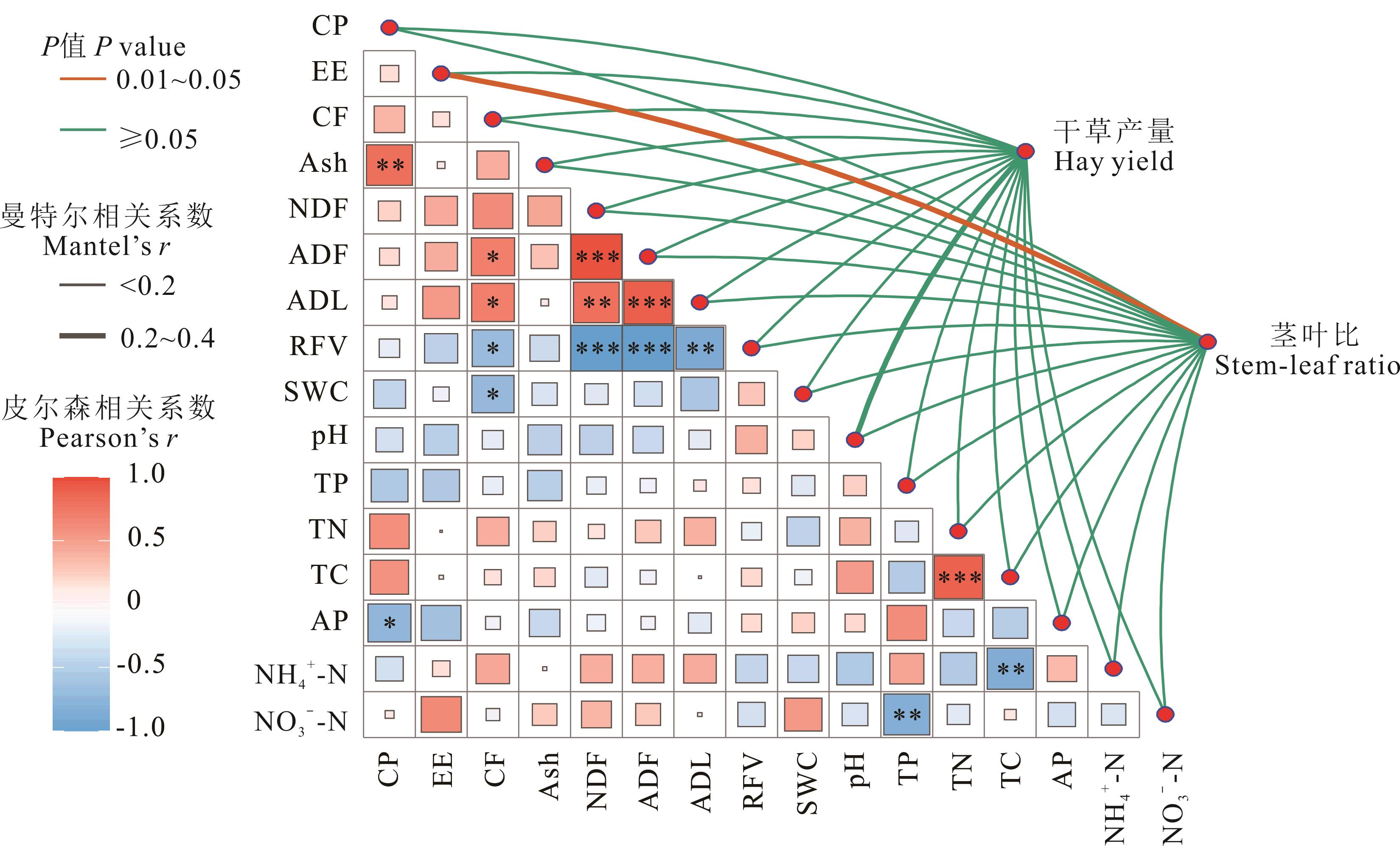
Fig.4 Correlation between yield, nutritional value, and soil physicochemical properties of different oat varieties

Fig.5 Pathways of cultivar effects on oat yield, nutritional quality, and soil physiochemical properties
品种 Variety | 最优距离 Optimal distance | 最劣距离 Worst distance | 相对贴合度 Relative fit | 排序 Ranking |
|---|---|---|---|---|
| Y1 | 0.137 | 0.189 | 0.580 | 1 |
| Y2 | 0.181 | 0.108 | 0.374 | 10 |
| Y3 | 0.174 | 0.142 | 0.450 | 3 |
| Y4 | 0.201 | 0.123 | 0.380 | 8 |
| Y5 | 0.183 | 0.110 | 0.376 | 9 |
| Y6 | 0.173 | 0.117 | 0.404 | 6 |
| Y7 | 0.140 | 0.157 | 0.530 | 2 |
| Y8 | 0.193 | 0.120 | 0.383 | 7 |
| Y9 | 0.182 | 0.125 | 0.406 | 5 |
| Y10 | 0.188 | 0.136 | 0.420 | 4 |
Table 3 Comprehensive evaluation of yield, nutritional quality, and soil physicochemical properties across oat varieties
品种 Variety | 最优距离 Optimal distance | 最劣距离 Worst distance | 相对贴合度 Relative fit | 排序 Ranking |
|---|---|---|---|---|
| Y1 | 0.137 | 0.189 | 0.580 | 1 |
| Y2 | 0.181 | 0.108 | 0.374 | 10 |
| Y3 | 0.174 | 0.142 | 0.450 | 3 |
| Y4 | 0.201 | 0.123 | 0.380 | 8 |
| Y5 | 0.183 | 0.110 | 0.376 | 9 |
| Y6 | 0.173 | 0.117 | 0.404 | 6 |
| Y7 | 0.140 | 0.157 | 0.530 | 2 |
| Y8 | 0.193 | 0.120 | 0.383 | 7 |
| Y9 | 0.182 | 0.125 | 0.406 | 5 |
| Y10 | 0.188 | 0.136 | 0.420 | 4 |
| [1] | Yang Y H, Sun J N. Current status and development prospects of livestock and feed industries in the Qinghai Lake region. Feed Industry, 2006, 27(23): 61-63. |
| 杨予海, 孙佳妮. 环青海湖地区畜牧业和饲料业现状及发展的思考. 饲料工业, 2006, 27(23): 61-63. | |
| [2] | Li F X, Fu Y, Yang Q, et al. Climate change and its environmental effects in the surrounding area of Qinghai Lake. Resources Science, 2008, 30(3): 348-353. |
| 李凤霞, 伏洋, 杨琼, 等. 环青海湖地区气候变化及其环境效应. 资源科学, 2008, 30(3): 348-353. | |
| [3] | Ding S X. Study on the sustainable development of animal husbandry in minority areas around Qinghai Lake. Journal of Anhui Agricultural Sciences, 2010, 38(22): 11832-11834, 11837. |
| 丁生喜. 环青海湖少数民族地区畜牧业可持续发展研究. 安徽农业科学, 2010, 38(22): 11832-11834, 11837. | |
| [4] | Li H M, Zhou B R. Dividing of phenological season around Qinghai Lake and application in animal husbandry. Pratacultural Science, 2006, 23(9): 103-105. |
| 李红梅, 周秉荣. 环青海湖地区物候季节划分及在畜牧业生产中的应用. 草业科学, 2006, 23(9): 103-105. | |
| [5] | Ren Y X, Liu H C, Tian X H, et al. Selection of succeeding crops for a double-cropping system in alpine pastoral areas of the Qinghai-Tibetan Plateau. Grass and Forage Science, 2024, 79(1): 47-55. |
| [6] | Hou L Y, Zhu Z Y, Yang J, et al. Current status, problems and potentials of forage oat in China. Journal of Southwest Minzu University (Natural Science Edition), 2019, 45(3): 248-253. |
| 侯龙鱼, 朱泽义, 杨杰, 等. 我国饲草用燕麦现状、问题和潜力. 西南民族大学学报(自然科学版), 2019, 45(3): 248-253. | |
| [7] | Ye X L, Gan Z, Wan Y, et al. Advances and perspectives in forage oat breeding. Acta Prataculturae Sinica, 2023, 32(2): 160-177. |
| 叶雪玲, 甘圳, 万燕, 等. 饲用燕麦育种研究进展与展望. 草业学报, 2023, 32(2): 160-177. | |
| [8] | Guan H, Xu D, Li H P, et al. A study of nutritional quality and rumen degradation characteristics of 17 oat varieties in high cold regions. Acta Prataculturae Sinica, 2024, 33(9): 185-198. |
| 关皓, 许多, 李海萍, 等. 高寒地区17个燕麦品种营养品质及瘤胃降解特性研究. 草业学报, 2024, 33(9): 185-198. | |
| [9] | Ibrahim M S, Ahmad A, Sohail A, et al. Nutritional and functional characterization of different oat (Avena sativa L.) cultivars. International Journal of Food Properties, 2020, 23(1): 1373-1385. |
| [10] | Van den Broeck H C, Londono D M, Timmer R, et al. Profiling of nutritional and health-related compounds in oat varieties. Foods, 2015, 5(1): 2. |
| [11] | Mut Z, Akay H, Erbaş Köse Ö D. Grain yield, quality traits and grain yield stability of local oat cultivars. Journal of Soil Science and Plant Nutrition, 2018, 18(1): 269-281. |
| [12] | Wang X J, Wang J L, Ju Z L, et al. Comprehensive evaluation on production performance and nutritional quality of different varieties of forage oat in the Qinghai Lake area. Scientia Agricultura Sinica, 2024, 57(19): 3730-3742. |
| 王小军, 王金兰, 琚泽亮, 等. 环青海湖地区不同饲用燕麦品种生产性能和营养品质综合评价. 中国农业科学, 2024, 57(19): 3730-3742. | |
| [13] | Cao Y, Malipati·Nuertai, Alehesi·Jiaerdemutila, et al. Comprehensive evaluation of the production performance of 18 oat germplasm resources based on the affiliation function method. Journal of Anhui Agricultural Sciences, 2023, 51(16): 26-28, 32. |
| 曹禹, 玛力帕提·努尔太, 阿勒合斯·加尔得木拉提, 等. 基于隶属函数法的18份燕麦种质资源生产性能的综合评价. 安徽农业科学, 2023, 51(16): 26-28, 32. | |
| [14] | Shah S A S, Akhtar L H, Minhas R, et al. Evaluation of different oat (Avena sativa L.) varieties for forage yield and related characteristics. Science Letters, 2015, 3(1): 13-16. |
| [15] | Sun H R, Zeng H, Liu J Y, et al. Preliminary study on abundance-deficiency index of soil available P and appropriate phosphorus application rate for oats in the farming-grazing transitional zone of China. Chinese Agricultural Science Bulletin, 2018, 34(10): 101-105. |
| 孙洪仁, 曾红, 刘江扬, 等. 中国农牧交错带燕麦土壤有效磷丰缺指标与适宜施磷量初步研究. 中国农学通报, 2018, 34(10): 101-105. | |
| [16] | Van Soest P J, Robertson J B, Lewis B A. Methods for dietary fiber, neutral detergent fiber, and nonstarch polysaccharides in relation to animal nutrition. Journal of Dairy Science, 1991, 74(10): 3583-3597. |
| [17] | Zhang L Y. Feed analysis and feed quality testing technology (4th edition). Beijing: China Agricultural University Press, 2016. |
| 张丽英. 饲料分析及饲料质量检测技术(第4版). 北京: 中国农业大学出版社, 2016. | |
| [18] | Rohweder D A, Barnes R F, Jorgensen N. Proposed hay grading standards based on laboratory analyses for evaluating quality. Journal of Animal Science, 1978, 47(3): 747-759. |
| [19] | Moore J E, Undersander D J. Relative forage quality: an alternative to relative feed value and quality index//Proceedings of 13th Annual Florida Ruminant Nutrition Symposium. Gainesville: University of Florida, 2002: 16-29. |
| [20] | Bao S D. Agrochemical analysis of soil. Beijing: China Agriculture Press, 2001. |
| 鲍士旦. 土壤农化分析. 北京: 中国农业出版社, 2001. | |
| [21] | Wei K T, Xiang H, Liu Y F, et al. Mixed cropping of Medicago ruthenica-Bromus inermis exhibits higher yield and quality advantages in the Longxi Loess Plateau region of northwest China. Frontiers in Sustainable Food Systems, 2024, 8: 1411687. |
| [22] | Zhou Q L, Duojidunzhu, Yixiyangzong. Evaluation of gray relational grade analysis to 16 oats varieties introduced in Lasa region. Acta Agrestia Sinica, 2020, 28(2): 389-396. |
| 周启龙, 多吉顿珠, 益西央宗. 拉萨地区16个燕麦引进品种的灰色关联度评价. 草地学报, 2020, 28(2): 389-396. | |
| [23] | Li J, Nan M, Liu Y M, et al. Comprehensive evaluation of the yield, quality and feeding performance on different oat varieties. Acta Agrestia Sinica, 2023, 31(4): 1089-1098. |
| 李晶, 南铭, 刘彦明, 等. 不同燕麦品种产量和品质及饲喂性能综合评价. 草地学报, 2023, 31(4): 1089-1098. | |
| [24] | Gao X F, Nie Y Y, Xu L J, et al. Adaptability evaluation of oat introduction in winter fallow field of Wumeng Mountain area under drought condition. Acta Prataculturae Sinica, 2024, 33(11): 215-227. |
| 高兴发, 聂莹莹, 徐丽君, 等. 干旱条件下乌蒙山区冬闲田燕麦引种适应性评价. 草业学报, 2024, 33(11): 215-227. | |
| [25] | Sun J P, Dong K H, Kuai X Y, et al. Comparison of productivity and feeding value of introduced oat varieties in the agro-pasture ecotone of northern Shanxi. Acta Prataculturae Sinica, 2017, 26(11): 222-230. |
| 孙建平, 董宽虎, 蒯晓妍, 等. 晋北农牧交错区引进燕麦品种生产性能及饲用价值比较. 草业学报, 2017, 26(11): 222-230. | |
| [26] | Dong Z X, Gou W L, Liu Y J, et al. Evaluation of production performance and nutritional value of 15 feed barley varieties in the Liangshan region. Pratacultural Science, 2024, 41(11): 2651-2663. |
| 董志晓, 苟文龙, 刘英杰, 等. 15份饲用燕麦品种在凉山地区的生产性能和营养价值评价. 草业科学, 2024, 41(11): 2651-2663. | |
| [27] | Lei X, You M H, Bai S Q, et al. Genetic diversity analysis and multivariate evaluation of agronomic traits of 50 oat germplasm lines in northwest Sichuan. Acta Prataculturae Sinica, 2020, 29(7): 131-142. |
| 雷雄, 游明鸿, 白史且, 等. 川西北高原50份燕麦种质农艺性状遗传多样性分析及综合评价. 草业学报, 2020, 29(7): 131-142. | |
| [28] | Rearte D H. New insights into the nutritional value of grass//Utilisation of grazed grass in temperate animal systems. Wageningen: Wageningen Academic Publishers, 2005: 49-59. |
| [29] | Razafindrazaka A, Stuerz S, Cotter M, et al. Genotypic yield responses of lowland rice in high-altitude cropping systems. Journal of Agronomy and Crop Science, 2020, 206(4): 444-455. |
| [30] | Wang F, Ma X D, Li G, et al. Adaptability evaluation of forage oat varieties in Ar Horqin Sandland. Pratacultural Science, 2024, 41(4): 931-941. |
| 王飞, 马晓东, 李刚, 等. 阿鲁科尔沁沙地饲用燕麦品种适应性评价. 草业科学, 2024, 41(4): 931-941. | |
| [31] | Basinskiene L, Cizeikiene D. Cereal-based nonalcoholic beverages//Galanakis C M. Trends in non-alcoholic beverages. London: Academic Press, 2020: 63-99. |
| [32] | Liu G, Zhao G Q, Wei L M. Primary application of the entropy weight-based gray systematic theory to integrated evaluation of oat. Chinese Journal of Grassland, 2007, 29(3): 84-89. |
| 刘刚, 赵桂琴, 魏黎明. 基于熵权赋权法的灰色系统理论在燕麦品种综合评价中的应用. 中国草地学报, 2007, 29(3): 84-89. | |
| [33] | Yang F, Zheng M N, Kang J H, et al. Comprehensive evaluation of production performance and feeding value of 9 oat varieties in Northern Shanxi. Crops, 2019(2): 94-98. |
| 杨富, 郑敏娜, 康佳惠, 等. 9个燕麦品种在晋北地区的生产性能及饲用价值综合评价. 作物杂志, 2019(2): 94-98. | |
| [34] | Yan Y F. Study on productivity performance and nutritional quality of different forage in Hetao irrigation district. Beijing: Chinese Academy of Agricultural Sciences, 2016. |
| 闫亚飞. 河套灌区不同饲草生产性能与品质研究. 北京: 中国农业科学院, 2016. | |
| [35] | Wang X, Li D, Pan X L, et al. Adaptability evaluation of 10 forage oat varieties in Chifeng semiarid area. Pratacultural Science, 2023, 40(2): 521-529. |
| 王筱, 李夺, 潘翔磊, 等. 赤峰半干旱区10个饲用燕麦品种适应性评价. 草业科学, 2023, 40(2): 521-529. | |
| [36] | Delgado A, Gómez J A. The soil physical, chemical and biological properties//Villalobos F J, Fereres E. Principles of agronomy for sustainable agriculture. Cham: Springer International Publishing, 2017: 15-26. |
| [37] | Chen R X. The rhizosphere micro-ecology of different oat varieties and their mechanism of cadmium absorption and transport. Hohhot: Inner Mongolia Agricultural University, 2024. |
| 陈若潇. 不同燕麦品种根际微生态及镉吸收转运机制. 呼和浩特: 内蒙古农业大学, 2024. | |
| [38] | Bao X R. Response of soil microbial communities in the rhizosphere of oats to saline-alkali stress. Hohhot: Inner Mongolia Agricultural University, 2024. |
| 鲍鑫茹. 燕麦根际土壤微生物群落对盐碱胁迫的响应. 呼和浩特: 内蒙古农业大学, 2024. | |
| [39] | Hoad S P, Russell G, Lucas M E, et al. The management of wheat, barley, and oat root systems. Advances in Agronomy, 2001, 74: 193-246. |
| [40] | Wang W. The phenotype of Avena sativa traits, nutrients and microbe community structure of soil under mixed sowing of Avena sativa and Vicia sativa. Hohhot: Inner Mongolia Agricultural University, 2023. |
| 王玮. 燕麦与箭筈豌豆混播下燕麦性状表型和土壤养分及微生物群落结构的研究. 呼和浩特: 内蒙古农业大学, 2023. | |
| [41] | Wang J L, Wang X J, Liu Q L, et al. A multi-trait evaluation of production performance and nutritional quality of different oat varieties in the Sanjiangyuan area. Acta Prataculturae Sinica, 2024, 33(10): 83-95. |
| 王金兰, 王小军, 刘启林, 等. 不同燕麦品种在三江源区的生产性能和营养品质综合评价. 草业学报, 2024, 33(10): 83-95. |
| [1] | Zhi-peng ZHANG, Qing-xue JIANG, Xin-yue ZHOU, Tong MIAO, Jun TANG, Deng-xia YI, Xue-min WANG, Lin MA. Screening of candidate genes for plant height in forage oat (Avena sativa) through combined transcriptome and proteome analysis [J]. Acta Prataculturae Sinica, 2025, 34(9): 147-161. |
| [2] | Chang-qing LI, Ya-ru SONG, Fan XIAO, Chun-yu MIAO, Meng-yu SUN, Meng JI, Zhi-mei SUN. Analysis of main agronomic traits of low-fertility-tolerant and high-yielding maize varieties [J]. Acta Prataculturae Sinica, 2025, 34(9): 97-110. |
| [3] | Kun ZHANG, Jian-xia QIAO, Jin-sheng LI, Yu-peng WANG, Ke-si LIU. Effects of different restoration materials on soil physicochemical properties and microbial communities in degraded alpine grassland [J]. Acta Prataculturae Sinica, 2025, 34(8): 132-148. |
| [4] | Bang-yan ZHANG, Xiao-wei XIE, Zhao-hui ZHANG, Jin-min WU, Bin WANG, Xing XU. Effect of organic-inorganic amendments on the quality of saline-alkaline soil and yield of Echinochloa frumentacea [J]. Acta Prataculturae Sinica, 2025, 34(8): 15-29. |
| [5] | Hai-long MAO, Ji-cheng TAI, Heng-shan YANG, Yu-qin ZHANG, Rui-fu ZHANG, Zhen-zhen WANG. Effect of strip configuration on canopy characteristics, yield, and the quality of silage produced from co-cultivated corn and soybean [J]. Acta Prataculturae Sinica, 2025, 34(8): 30-42. |
| [6] | Yi-yin ZHANG, Bin WANG, Teng-fei WANG, Jian LAN, Hai-ying HU. Effects of intercropping triticale with alfalfa on system yield, resource utilization, and alfalfa seed yield [J]. Acta Prataculturae Sinica, 2025, 34(8): 43-53. |
| [7] | Wen-juan FAN, Jian-chao SONG, Xiao-juan ZHANG, Yu-hang SHENG, Jin-tao SHI, Long-ji ZHANG, Xiao-jun YU. The effects of combined nitrogen and phosphorus fertilization on seed yield and quality of Medicago ruthenica in the Wuwei irrigation district, Gansu Province [J]. Acta Prataculturae Sinica, 2025, 34(8): 54-65. |
| [8] | Xue-qian JIANG, Qing-chuan YANG, Jun-mei KANG. Research progress on yield loss under drought stress and drought resistance genetics of alfalfa (Medicago sativa) [J]. Acta Prataculturae Sinica, 2025, 34(7): 219-234. |
| [9] | Pei-pei JIANG, Jin-hua GUO, Hui-shu XIAO, Yan-min PENG, Jun ZHANG, Wen-zhong TIAN, Jun-jie Lyu, Jin-zhi WU, He-zheng WANG, Guo-zhan FU, Ming HUANG, You-jun LI. Effect of rotational tillage patterns on the crop yield and quality in a maize-wheat (Zea mays-Triticum aestivum) double cropping system in dryland agriculture [J]. Acta Prataculturae Sinica, 2025, 34(6): 181-192. |
| [10] | Qi-lin LIU, Xiao-jun WANG, Jin-lan WANG, Wen-hui LIU, Qiao-ling MA, Jian-hui LI, Sheng-yuan ZHANG, Wen-xia CAO, Wen LI. Effect of nitrogen and phosphorus combined application on forage yield of Elymus sibiricus in an alpine region [J]. Acta Prataculturae Sinica, 2025, 34(6): 193-202. |
| [11] | Wen-li QIN, Jing ZHANG, Guang-min XIAO, Su-qian CUI, Jian-xun YE, Jian-fei ZHI, Li-feng ZHANG, Nan XIE, Wei FENG, Zhen-yu LIU, Xuan PAN, Yun-xia DAI, Zhong-kuan LIU. Effects of partial replacement of chemical nitrogen fertilizers with green manure on soil physical properties and maize (Zea mays) yield [J]. Acta Prataculturae Sinica, 2025, 34(6): 27-45. |
| [12] | Can CUI, Meng-qi WANG, Wan-lu ZHAO, Xin-ying LIU, Jing-jing JIAN, Jun-xin YAN. The effect on seed germination and seedling growth of soaking seeds with diethyl aminoethyl hexanoate in alfalfa under NaCl stress [J]. Acta Prataculturae Sinica, 2025, 34(6): 46-58. |
| [13] | Xiao-jing NING, Qiu-jie REN, Li-juan WANG, Xiao-lin JIA, Xiao-jun SHI, Jie WANG. Effects of different pelleted seed coating formulations on seed germination and seedling growth of three brewing sorghum (Sorghum bicolor) cultivars [J]. Acta Prataculturae Sinica, 2025, 34(6): 70-84. |
| [14] | Yao-bo LIU, Lu PEI, Chen-zhuo LIU, Xiao-xia LI, Bo-kun ZOU. A meta-analysis of fertilizer response of seed yield and seed yield components in Elymus sibiricus [J]. Acta Prataculturae Sinica, 2025, 34(6): 85-98. |
| [15] | Hang-qi HAN, Zi-fan WANG, He DING, Yu-rong CHEN, Qi WANG, Xiao-qing ZHANG. Comparative analysis of effects of oat hay and oat cubes on rumen fermentation and microbial composition in sheep [J]. Acta Prataculturae Sinica, 2025, 34(5): 212-222. |
| Viewed | ||||||
|
Full text |
|
|||||
|
Abstract |
|
|||||
