
ISSN 1004-5759 CN 62-1105/S
Acta Prataculturae Sinica ›› 2026, Vol. 35 ›› Issue (6): 73-82.DOI: 10.11686/cyxb2025244
Previous Articles Next Articles
Jia-ling YU( ), He-na LIAN, Wan-ning YANG, Zi-tong ZHOU, Zhen-jiang CHEN(), Chun-jie LI
Received:2025-06-23
Revised:2025-08-08
Online:2026-06-20
Published:2026-04-13
Contact:
Zhen-jiang CHEN
Jia-ling YU, He-na LIAN, Wan-ning YANG, Zi-tong ZHOU, Zhen-jiang CHEN, Chun-jie LI. Evaluation and screening of Achnatherum inebrians germplasm lines for use as bird-repellent turfgrass[J]. Acta Prataculturae Sinica, 2026, 35(6): 73-82.
采集地 Collection site | 编号 Code | 海拔 Altitude (m) | 经度 Longitude | 纬度 Latitude |
|---|---|---|---|---|
| 内蒙古Inner Mongolia | ZMC1 | 1660 | 105°47′ | 38°56′ |
| ZMC2 | 1673 | 105°43′ | 38°51′ | |
| 青海Qinghai | ZMC3 | 2299 | 101°21′ | 35°59′ |
| ZMC4 | 2874 | 100°36′ | 36°18′ | |
| ZMC5 | 3060 | 100°20′ | 38°09′ | |
| ZMC6 | 3289 | 101°03′ | 35°29′ | |
| ZMC7 | 3547 | 99°52′ | 35°47′ | |
| 新疆Xinjiang | ZMC8 | 796 | 87°01′ | 43°54′ |
| ZMC9 | 1390 | 87°04′ | 43°32′ | |
| ZMC10 | 1437 | 90°37′ | 43°41′ | |
| ZMC11 | 1459 | 91°13′ | 43°48′ | |
| ZMC12 | 1600 | 87°20′ | 43°30′ | |
| ZMC13 | 1635 | 89°37′ | 43°37′ | |
| 甘肃Gansu | ZMC14 | 1849 | 104°02′ | 35°56′ |
| ZMC15 | 2090 | 110°48′ | 38°16′ | |
| ZMC16 | 2170 | 101°22′ | 38°32′ | |
| ZMC17 | 2540 | 101°31′ | 38°76′ | |
| ZMC18 | 2632 | 99°30′ | 38°59′ | |
| ZMC19 | 2658 | 99°34′ | 38°51′ | |
| ZMC20 | 2860 | 101°35′ | 38°01′ | |
| ZMC21 | 2948 | 102°33′ | 35°19′ | |
| ZMC22 | 3146 | 99°92′ | 38°42′ |
Table 1 The 22 germplasm accessions of A. inebrians
采集地 Collection site | 编号 Code | 海拔 Altitude (m) | 经度 Longitude | 纬度 Latitude |
|---|---|---|---|---|
| 内蒙古Inner Mongolia | ZMC1 | 1660 | 105°47′ | 38°56′ |
| ZMC2 | 1673 | 105°43′ | 38°51′ | |
| 青海Qinghai | ZMC3 | 2299 | 101°21′ | 35°59′ |
| ZMC4 | 2874 | 100°36′ | 36°18′ | |
| ZMC5 | 3060 | 100°20′ | 38°09′ | |
| ZMC6 | 3289 | 101°03′ | 35°29′ | |
| ZMC7 | 3547 | 99°52′ | 35°47′ | |
| 新疆Xinjiang | ZMC8 | 796 | 87°01′ | 43°54′ |
| ZMC9 | 1390 | 87°04′ | 43°32′ | |
| ZMC10 | 1437 | 90°37′ | 43°41′ | |
| ZMC11 | 1459 | 91°13′ | 43°48′ | |
| ZMC12 | 1600 | 87°20′ | 43°30′ | |
| ZMC13 | 1635 | 89°37′ | 43°37′ | |
| 甘肃Gansu | ZMC14 | 1849 | 104°02′ | 35°56′ |
| ZMC15 | 2090 | 110°48′ | 38°16′ | |
| ZMC16 | 2170 | 101°22′ | 38°32′ | |
| ZMC17 | 2540 | 101°31′ | 38°76′ | |
| ZMC18 | 2632 | 99°30′ | 38°59′ | |
| ZMC19 | 2658 | 99°34′ | 38°51′ | |
| ZMC20 | 2860 | 101°35′ | 38°01′ | |
| ZMC21 | 2948 | 102°33′ | 35°19′ | |
| ZMC22 | 3146 | 99°92′ | 38°42′ |
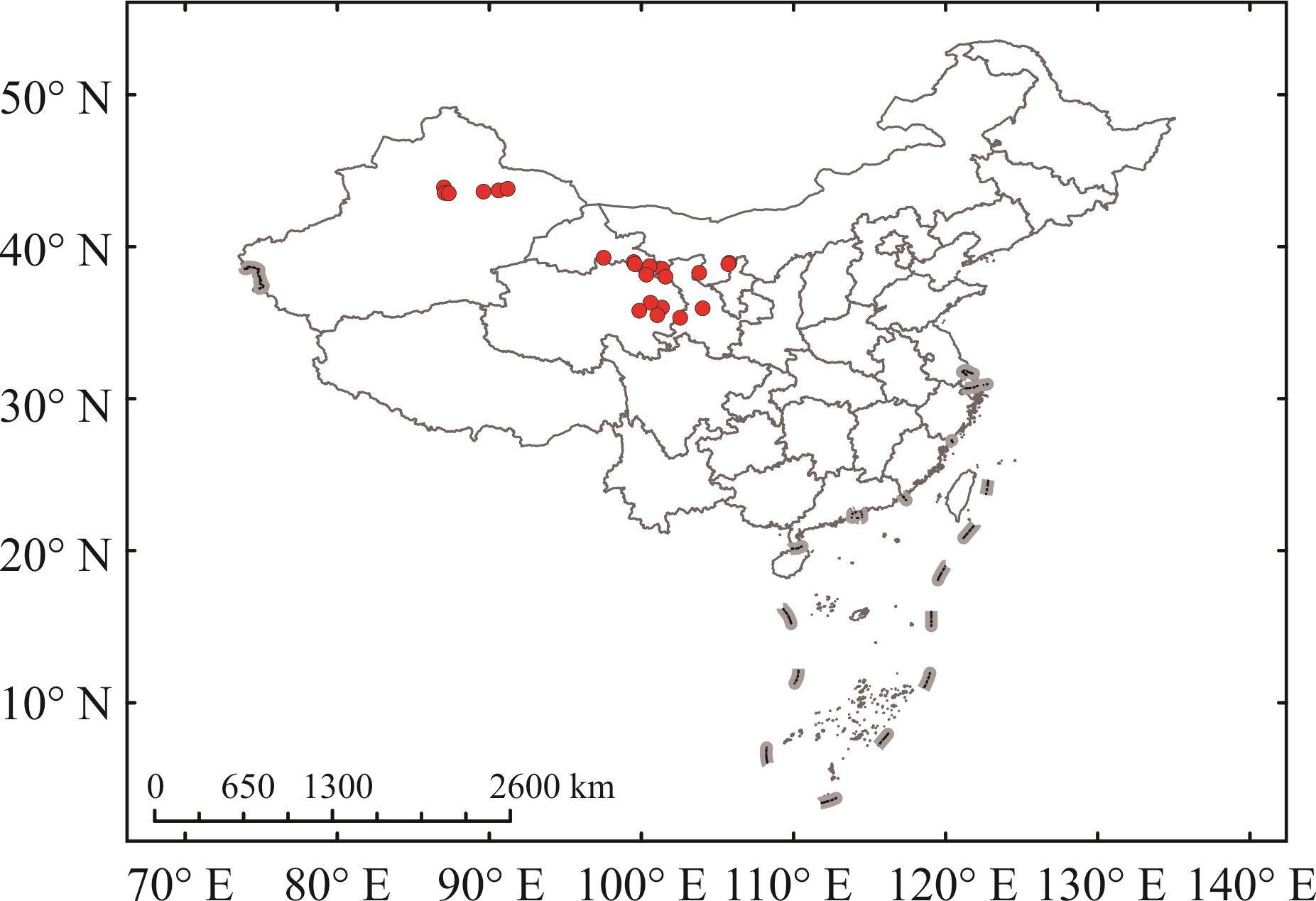
Fig.1 Distribution of sampling points
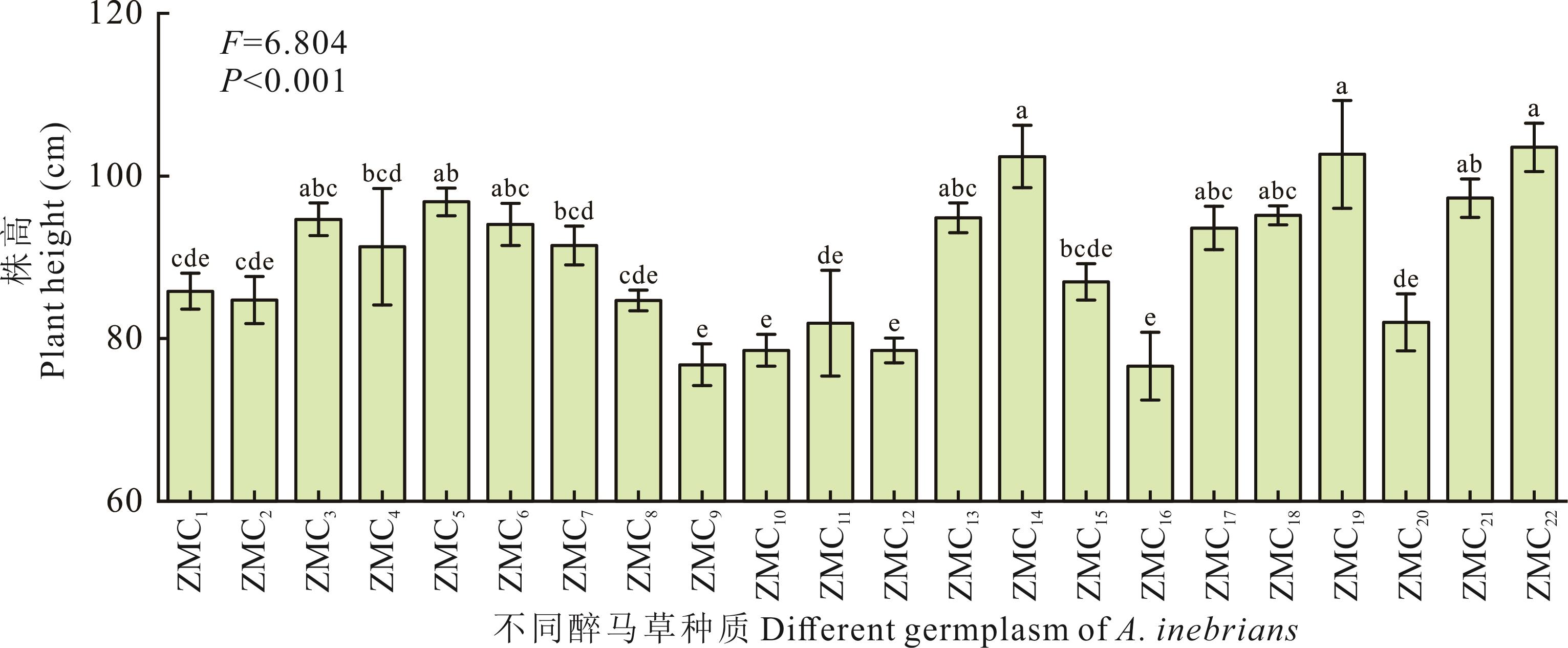
Fig.2 The differences in plant height among different germplasm of A. inebrians
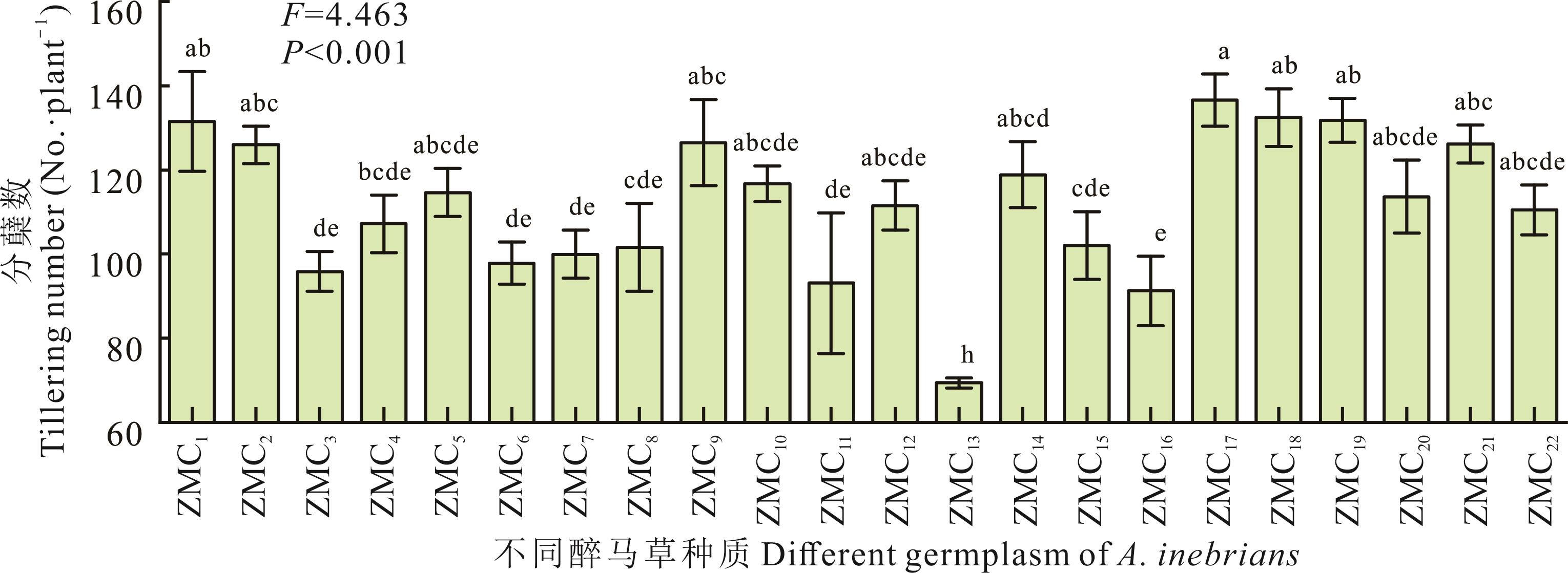
Fig.3 The differences in tiller number among different germplasm of A. inebrians
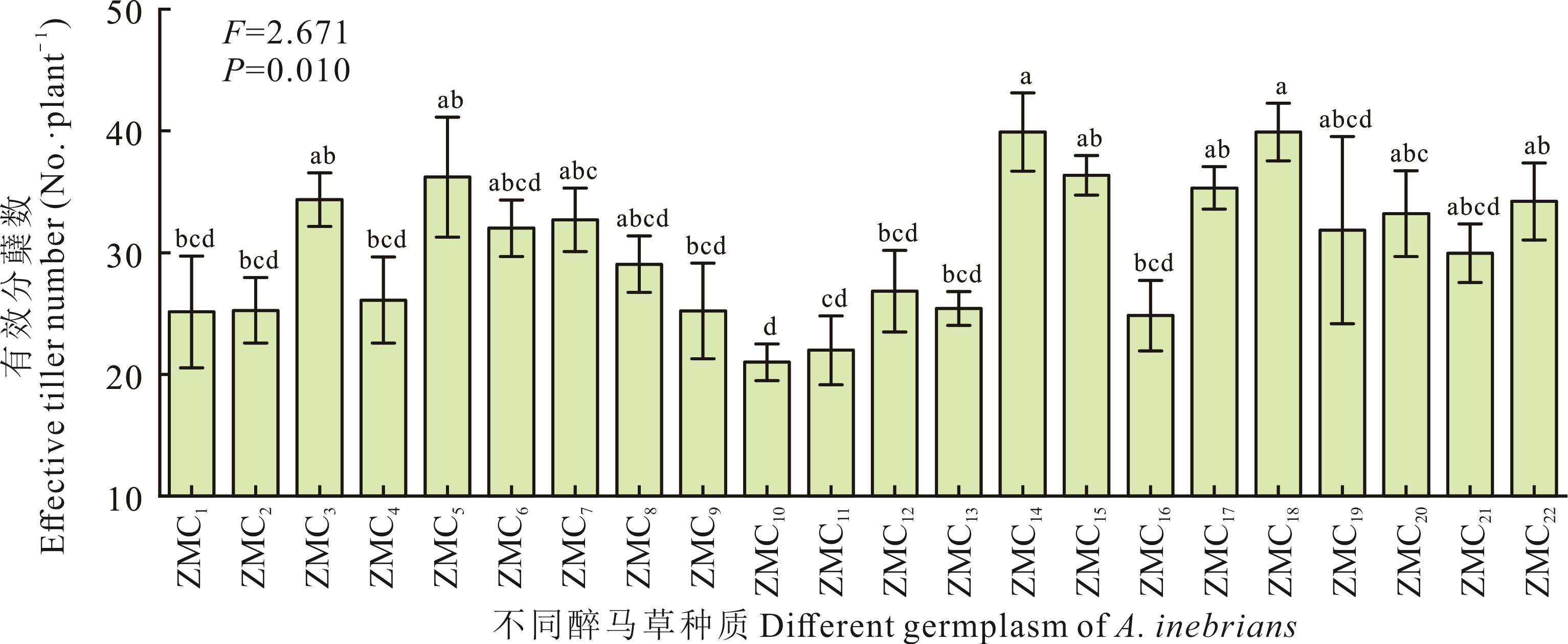
Fig.4 The differences in the number of effective tillers among different germplasm of A. inebrians
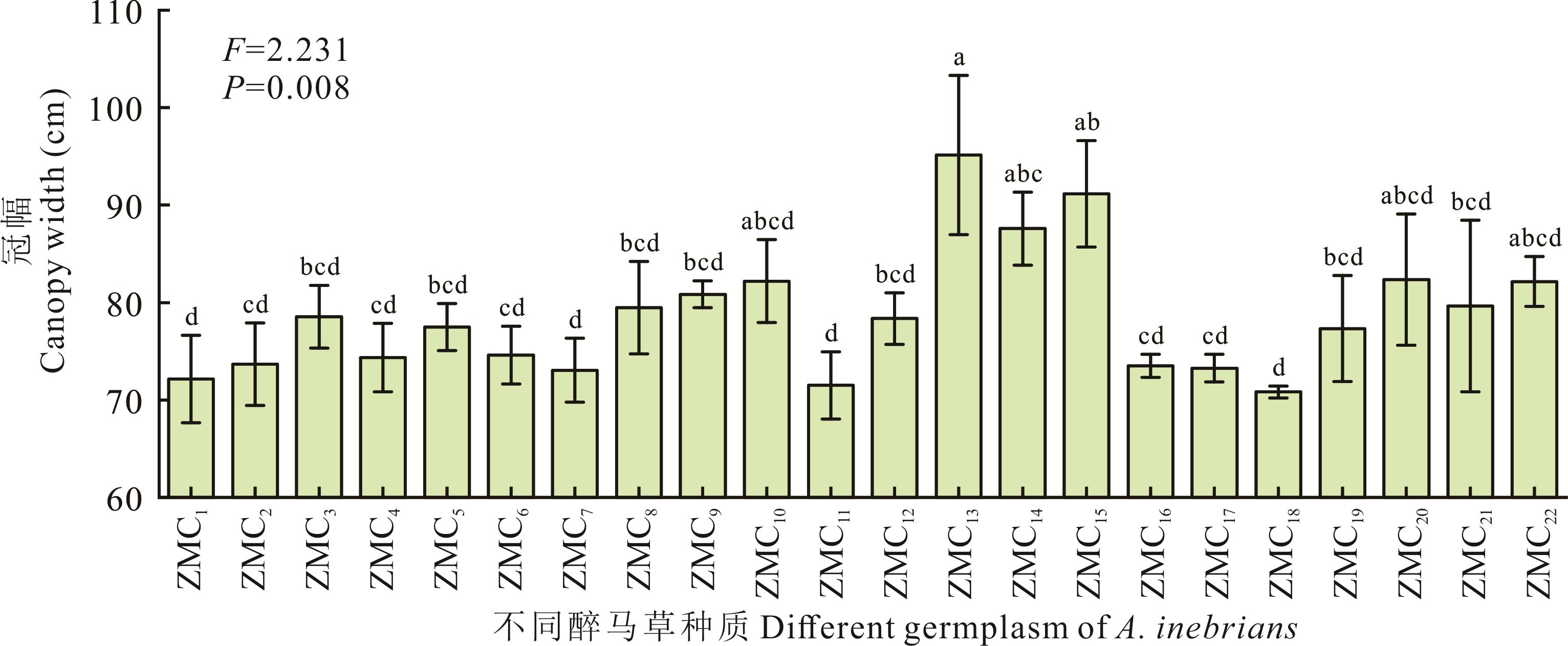
Fig.5 The differences in crown width among different germplasm of A. inebrians
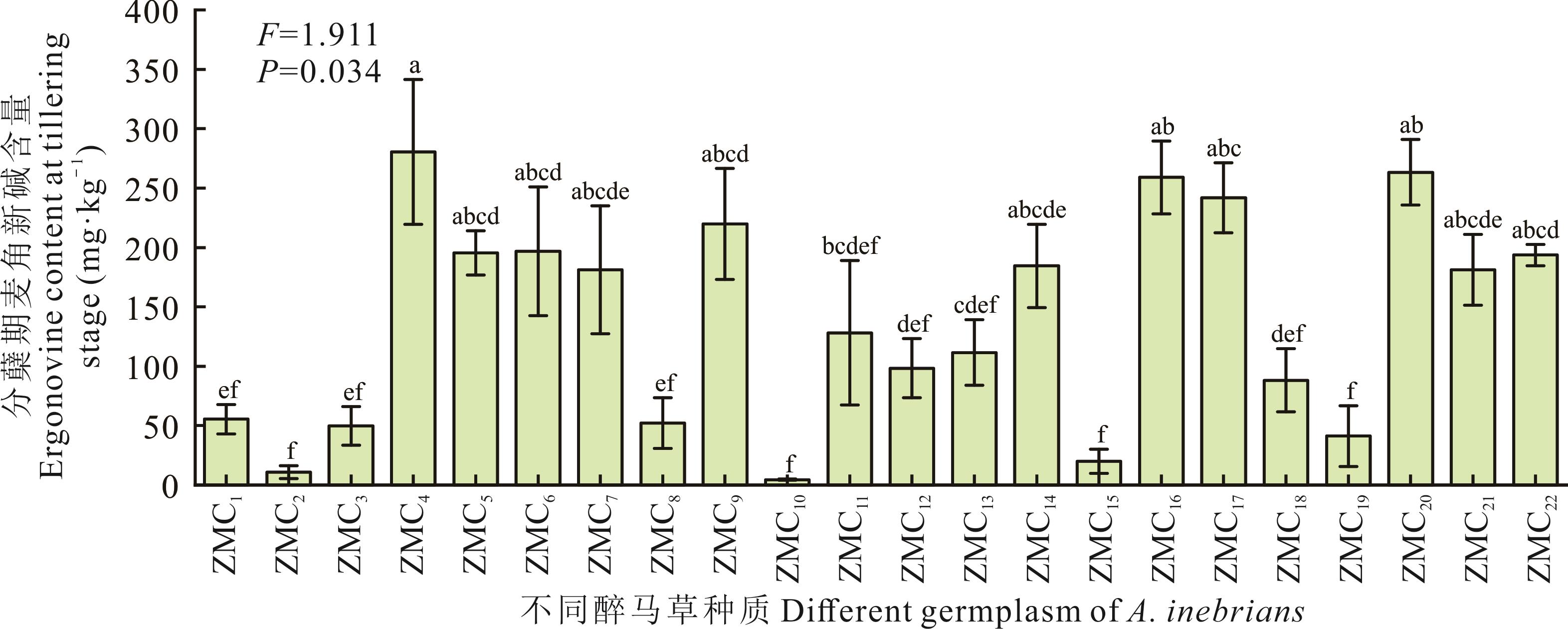
Fig.6 The differences in ergonovine content during the tillering stage among different germplasm of A. inebrians
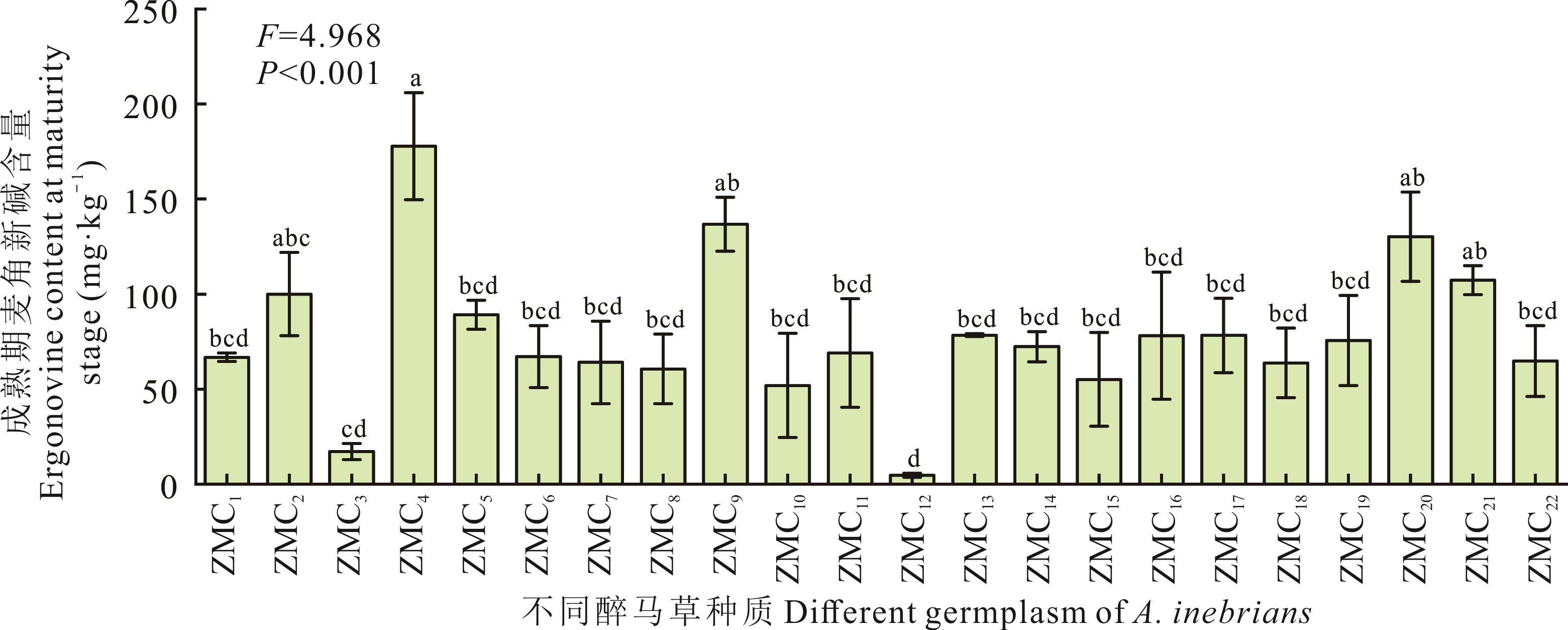
Fig.7 The differences in ergonovine content at the maturity stage among different germplasm of A. inebrians
不同醉马草种质Different germplasm of A. inebrians | 等权关联度 Unweighted relational grade | 加权关联度 Weighted relational grade | 不同醉马草种质Different germplasm of A. inebrians | 等权关联度 Unweighted relational grade | 加权关联度 Weighted relational grade | ||||
|---|---|---|---|---|---|---|---|---|---|
关联度值 Relational grade value | 排序 Ranking | 关联度值 Relational grade value | 排序 Ranking | 关联度值 Relational grade value | 排序 Ranking | 关联度值 Relational grade value | 排序 Ranking | ||
| ZMC4 | 0.7299 | 1 | 0.7999 | 1 | ZMC19 | 0.5611 | 16 | 0.5363 | 12 |
| ZMC20 | 0.7198 | 2 | 0.7237 | 2 | ZMC2 | 0.5644 | 12 | 0.5284 | 13 |
| ZMC17 | 0.6776 | 4 | 0.7081 | 3 | ZMC6 | 0.5515 | 18 | 0.5264 | 14 |
| ZMC9 | 0.7037 | 3 | 0.6947 | 4 | ZMC7 | 0.5526 | 17 | 0.5208 | 15 |
| ZMC16 | 0.6333 | 6 | 0.6289 | 5 | ZMC10 | 0.5619 | 15 | 0.4924 | 16 |
| ZMC14 | 0.6544 | 5 | 0.5992 | 6 | ZMC12 | 0.5633 | 14 | 0.4993 | 17 |
| ZMC21 | 0.6020 | 9 | 0.5961 | 7 | ZMC15 | 0.5995 | 10 | 0.4901 | 18 |
| ZMC18 | 0.6293 | 7 | 0.5893 | 8 | ZMC11 | 0.5219 | 21 | 0.4768 | 19 |
| ZMC5 | 0.6070 | 8 | 0.5852 | 9 | ZMC8 | 0.5384 | 20 | 0.4701 | 20 |
| ZMC22 | 0.5759 | 11 | 0.5479 | 10 | ZMC13 | 0.5414 | 19 | 0.4488 | 21 |
| ZMC1 | 0.5638 | 13 | 0.5406 | 11 | ZMC3 | 0.5154 | 22 | 0.4441 | 22 |
Table 2 Relational grade ranking of various A. inebrians germplasm
不同醉马草种质Different germplasm of A. inebrians | 等权关联度 Unweighted relational grade | 加权关联度 Weighted relational grade | 不同醉马草种质Different germplasm of A. inebrians | 等权关联度 Unweighted relational grade | 加权关联度 Weighted relational grade | ||||
|---|---|---|---|---|---|---|---|---|---|
关联度值 Relational grade value | 排序 Ranking | 关联度值 Relational grade value | 排序 Ranking | 关联度值 Relational grade value | 排序 Ranking | 关联度值 Relational grade value | 排序 Ranking | ||
| ZMC4 | 0.7299 | 1 | 0.7999 | 1 | ZMC19 | 0.5611 | 16 | 0.5363 | 12 |
| ZMC20 | 0.7198 | 2 | 0.7237 | 2 | ZMC2 | 0.5644 | 12 | 0.5284 | 13 |
| ZMC17 | 0.6776 | 4 | 0.7081 | 3 | ZMC6 | 0.5515 | 18 | 0.5264 | 14 |
| ZMC9 | 0.7037 | 3 | 0.6947 | 4 | ZMC7 | 0.5526 | 17 | 0.5208 | 15 |
| ZMC16 | 0.6333 | 6 | 0.6289 | 5 | ZMC10 | 0.5619 | 15 | 0.4924 | 16 |
| ZMC14 | 0.6544 | 5 | 0.5992 | 6 | ZMC12 | 0.5633 | 14 | 0.4993 | 17 |
| ZMC21 | 0.6020 | 9 | 0.5961 | 7 | ZMC15 | 0.5995 | 10 | 0.4901 | 18 |
| ZMC18 | 0.6293 | 7 | 0.5893 | 8 | ZMC11 | 0.5219 | 21 | 0.4768 | 19 |
| ZMC5 | 0.6070 | 8 | 0.5852 | 9 | ZMC8 | 0.5384 | 20 | 0.4701 | 20 |
| ZMC22 | 0.5759 | 11 | 0.5479 | 10 | ZMC13 | 0.5414 | 19 | 0.4488 | 21 |
| ZMC1 | 0.5638 | 13 | 0.5406 | 11 | ZMC3 | 0.5154 | 22 | 0.4441 | 22 |
醉马草指标 A. inebrians indicators | 分蘖数 Tiller number | 有效分蘖数 Effective tiller number | 株高 Plant height | 冠幅 Crown width | 分蘖期麦角新碱含量 Ergonovine content at tillering stage | 成熟期麦角新碱含量 Ergonovine content at maturity stage |
|---|---|---|---|---|---|---|
| 权重系数Weight coefficient | 0.25 | 0.10 | 0.10 | 0.05 | 0.30 | 0.20 |
Table 3 Weight coefficients of different indices for A. inebrians
醉马草指标 A. inebrians indicators | 分蘖数 Tiller number | 有效分蘖数 Effective tiller number | 株高 Plant height | 冠幅 Crown width | 分蘖期麦角新碱含量 Ergonovine content at tillering stage | 成熟期麦角新碱含量 Ergonovine content at maturity stage |
|---|---|---|---|---|---|---|
| 权重系数Weight coefficient | 0.25 | 0.10 | 0.10 | 0.05 | 0.30 | 0.20 |
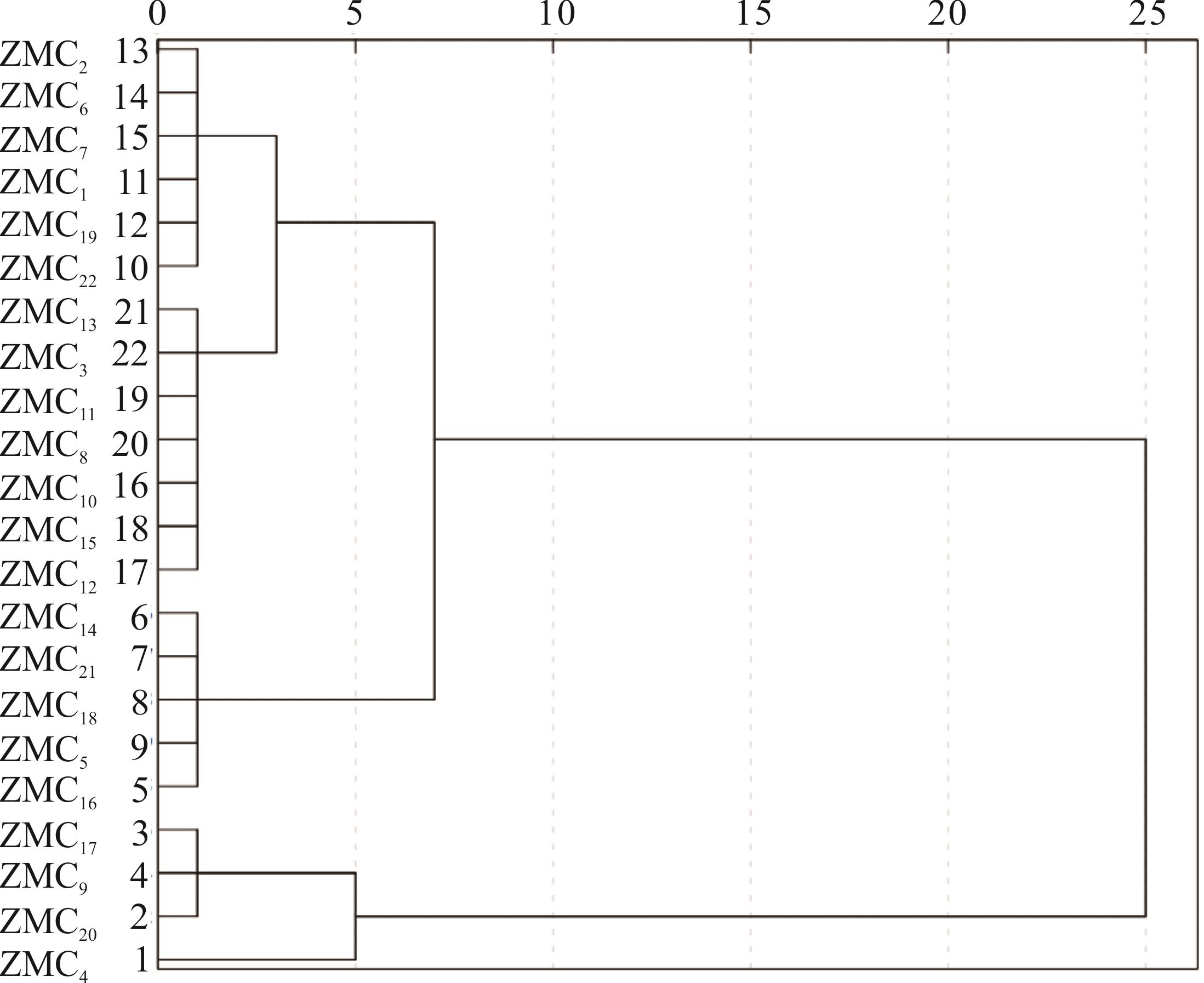
Fig.8 Cluster analysis of comprehensive performance of A. inebrians from different germplasm
| [1] | Shi Z C. Important poisonous plants in Chinese grasslands. Beijing: China Agriculture Press, 1997. |
| 史志诚. 中国草地重要有毒植物. 北京: 中国农业出版社, 1997. | |
| [2] | Nan Z B, Li C J. Roles of the grass-Neotyphodium association in pastoral agriculture systems. Acta Ecologica Sinica, 2004, 24(3): 605-616. |
| 南志标, 李春杰. 禾草-内生真菌共生体在草地农业系统中的作用. 生态学报, 2004, 24(3): 605-616. | |
| [3] | Leuchtmann A, Bacon C W, Schardl C L, et al. Nomenclatural realignment of Neotyphodium species with genus Epichloë. Mycologia, 2014, 106(2): 202-215. |
| [4] | Xia C, Christensen M J, Zhang X X, et al. Effect of Epichloë gansuensis endophyte and transgenerational effects on the water use efficiency, nutrient and biomass accumulation of Achnatherum inebrians under soil water deficit. Plant and Soil, 2018, 424(1/2): 555-571. |
| [5] | Chen N, He R L, Chai Q, et al. Transcriptomic analyses giving insights into molecular regulation mechanisms involved in cold tolerance by Epichloë endophyte in seed germination of Achnatherum inebrians. Plant Growth Regulation, 2016, 80(3): 367-375. |
| [6] | Li C J, Gao J H, Ma B. Seven diseases of drunken horse grass (Achnatherum inebrians) in China. Pratacultural Science, 2003, 20(11): 51-53. |
| 李春杰, 高嘉卉, 马斌. 我国醉马草的几种病害. 草业科学, 2003, 20(11): 51-53. | |
| [7] | Xia C, Zhang X X, Christensen M J, et al. Epichloë endophyte affects the ability of powdery mildew (Blumeria graminis) to colonise drunken horse grass (Achnatherum inebrians). Fungal Ecology, 2015, 16(4): 26-33. |
| [8] | Faeth S H, Helander M L, Saikkonen K T. Asexual Neotyphodium endophytes in a native grass reduce competitive abilities. Ecology Letters, 2004, 7(4): 301-313. |
| [9] | Fang F Y, Zhang Y Q. Research and application of airport bird-repellent grass technology. Air Force Logistics, 2012(1): 63. |
| 方福勇, 张永强. 机场驱鸟草技术研究和应用. 空军后勤, 2012(1): 63. | |
| [10] | Ding J Q, Jiang M Q, Peng H Z. Discussion on the application of bird-repellent grass technology at airports. Science and Technology Innovation Herald, 2012, 9(35): 240-241. |
| 丁剑桥, 蒋美其, 彭华洲. 驱鸟草技术在机场的应用探讨. 科技创新导报, 2012, 9(35): 240-241. | |
| [11] | Chen T X. Physiological mechanism of Epichloë endophyte infection to enhance salt tolerance of wild barley. Lanzhou: Lanzhou University, 2019. |
| 陈泰祥. 野大麦内生真菌提高宿主耐盐性的生理机制研究. 兰州: 兰州大学, 2019. | |
| [12] | Hoveland C S. Importance and economic significance of the Acremonium endophytes to performance of animals and grass plant. Agriculture, Ecosystem and Environment, 1993, 44(1-4): 3-12. |
| [13] | Potter D A, Stokes J T, Redmond C T, et al. Contribution of ergot alkaloids to suppression of a grass-feeding caterpillar assessed with gene knockout endophytes in perennial ryegrass. Entomologia Experimentalis et Applicata, 2008, 126(2): 138-147. |
| [14] | Pennell C G L, Popay A J, Rolston M P, et al. Avanex unique endophyte technology: reduced insect food source at airports. Environmental Entomology, 2016, 45(1): 101-108. |
| [15] | Li J L. Research progress on stress physiology and ecology of turfgrass. Nanjing: Nanjing University Press, 2017. |
| 李建龙. 草坪草抗性生理与生态研究进展. 南京: 南京大学出版社, 2017. | |
| [16] | Tian P, Kuang Y, Lin W H, et al. Shoot morphology and alkaloid content of Epichloë endophyte Festuca sinensis associations. Crop and Pasture Science, 2018, 69(7): 430-438. |
| [17] | Sun J X. Turfgrass science. Beijing: China Agriculture Press, 2015. |
| 孙吉雄. 草坪学. 北京: 中国农业出版社, 2015. | |
| [18] | Li C J, Nan Z B, Liu Y, et al. Detection methods of endophytes in Achnatherum inebrians//Proceedings of the joint annual meeting of Chinese society for plant pathology and mycological society (Hangzhou). Lanzhou: Lanzhou University, 2008: 16-19. |
| 李春杰, 南志标, 刘勇, 等. 醉马草内生真菌检测方法的研究//中国植病、菌物学会杭州联合年会论文集. 兰州: 兰州大学, 2008: 16-19. | |
| [19] | Hu C X. Effects of N, P and tryptophan on growth and ergot alkaloid content in Achnatherum inebrians symbiotic with Neotyphodium gansuense. Lanzhou: Lanzhou University, 2013. |
| 胡春霞. 氮、磷和色氨酸对醉马草内生真菌共生体生长及麦角生物碱含量的影响. 兰州: 兰州大学, 2013. | |
| [20] | Wan Z W. Effects of temperature, illumination and pH factor on growth and contents of ergot alkaloids of Epichloë endophyte symbiotic Achnatherum inebrians. Lanzhou: Lanzhou University, 2017. |
| 万志文. 温度、光照和pH对醉马草内生真菌共生体生长及麦角生物碱含量的影响. 兰州: 兰州大学, 2017. | |
| [21] | Hu Y S, Ren T H, Li Z, et al. Molecular mapping and genetic analysis of a QTL controlling spike formation rate and tiller number in wheat. Gene, 2017, 634: 15-21. DOI: 10.1016/j.gene.2017.08.039. |
| [22] | Sun L, Zhao S N, Zhang Y, et al. Effect of different growth regulators on turf performance of Eremochloa ophiuroides L. cv. Wuling. Journal of Grassland and Forage Science, 2022, 269(6): 12-21. |
| 孙林, 赵赛男, 张瑜, 等. 不同生长调节剂对武陵假俭草坪用性能影响的研究. 草学, 2022, 269(6): 12-21. | |
| [23] | Qiu X, Wang J F. The study on weeds population in desolation lawn encounter incidence, and the relationship to density(D), coverage(C) and frequency(F). Journal of Grassland and Forage Science, 2005(12): 26-31. |
| 邱翔, 王晋峰. 荒芜草坪杂草种群种间相遇几率(PIE)及密度(D)盖度(C)频度(F)的相关性研究. 草学, 2005(12): 26-31. | |
| [24] | Song X. Research progress on stress resistance of seashore paspalum. Modern Agricultural Science and Technology, 2024(11): 126-132. |
| 宋鑫. 海滨雀稗抗逆性研究进展. 现代农业科技, 2024(11): 126-132. | |
| [25] | Sun J X. Turfgrass science. Beijing: China Agriculture Press, 2003. |
| 孙吉雄. 草坪学. 北京: 中国农业出版社, 2003. | |
| [26] | Wu Z J. Causes of grassland degradation and restoration approaches in Urad Middle Banner, Inner Mongolia. Beijing: Chinese Academy of Agricultural Sciences, 2007. |
| 武志杰. 内蒙古乌拉特中旗草原退化原因与修复途径研究. 北京: 中国农业科学院, 2007. | |
| [27] | Ran F. Regulatory mechanisms and molecular basis of tillering traits formation in Poa pratensis. Lanzhou: Gansu Agricultural University, 2024. |
| 冉福. 草地早熟禾分蘖性状形成的调控机理及分子基础. 兰州: 甘肃农业大学, 2024. | |
| [28] | Wu H Y, Qu Z, Liu Z M, et al. Comparative study on production performance of oat varieties based on principal component analysis. Acta Agrestia Sinica, 2021, 29(9): 1967-1973. |
| 吴海艳, 曲珍, 刘昭明, 等. 基于主成分分析的燕麦品种生产性能的比较研究. 草地学报, 2021, 29(9): 1967-1973. | |
| [29] | Li H, Chen Y F, Liao Q M, et al. Planting and maintenance of turfgrass in the Comores stadium in Africa. Grassland and Turf, 2021, 41(3): 78-83. |
| 李辉, 陈雨峰, 廖庆民, 等. 非洲科摩罗体育场草坪建植与养护条件分析. 草原与草坪, 2021, 41(3): 78-83. | |
| [30] | An X K. Evaluation and renovation design of plant landscape beauty in urban wetland park. Chengdu: Chengdu University of Technology, 2020. |
| 安筱可. 城市湿地公园植物景观美景度评价与优化设计. 成都: 成都理工大学, 2020. | |
| [31] | Wang X N. Analysis on different gene expression and molecular mechanism for creeping-rooted type Medicago varia. Beijing: Beijing Forestry University, 2011. |
| 王晓娜. 根蘖型苜蓿(Medicago varia)差异表达基因分析及根蘖性状发生分子机制研究. 北京: 北京林业大学, 2011. | |
| [32] | Yin D S, Li Y, Zhang J Y. Effects of stumping on the growth and photosynthetic characteristics in Fraxinus mandshurica seedlings. Journal of Beihua University (Natural Science), 2025, 26(3): 381-387. |
| 殷东生, 李颖, 张建瑛. 平茬处理对水曲柳苗木生长和光合特性的影响. 北华大学学报(自然科学版), 2025, 26(3): 381-387. | |
| [33] | Zeng S Q, Cheng L, Zhang X R, et al. Study on growth and physiological responses of P. anserina, P. reptans var. sericophylla and P. reptans to trampling stress. Grassland and Turf, 2025, 45(1): 71-79. |
| 曾思琦, 程澜, 张雪茹, 等. 3种委陵菜对践踏胁迫的生长与生理响应. 草原与草坪, 2025, 45(1): 71-79. | |
| [34] | Fang C, Fernie A R, Luo J. Exploring the diversity of plant metabolism. Trends in Plant Science, 2019, 24(1): 83-98. |
| [35] | Beatriz R, Aldana V, Leinonen P, et al. Variation and plasticity in Epichloё alkaloid content Festure rubra across Europe. Fungal Ecology, 2020, 47: 100942. DOI: 10.1016/j.funeco.2020.100942. |
| [36] | Pennell C, Rolston P. AVANEXTM endophyte-infected grasses for the aviation industry now a reality//13th Joint Annual Meeting Bird Strike Committee USA/Canada. Lincoln: University of Nebraska-Lincoln, 2011. |
| [1] | Shao-yan YUAN, Yuan-kun LIU, Shi-jie CAI, Ting-xin LEI, Ping-ping ZHOU, Jun-zhen WANG, Hong-hai YAN. Comprehensive evaluation of the salt tolerance of diverse oat germplasm at the seedling stage [J]. Acta Prataculturae Sinica, 2026, 35(6): 49-59. |
| [2] | Wen-hui DENG, Xiao-na ZHAO, Jia-yi YONG, Si-yu GUAN, Guo-qiang HU, Teng-fei WANG, Hai-ying HU. Effects of intercropping oat with different densities on alfalfa seed yield and its constituent factors [J]. Acta Prataculturae Sinica, 2026, 35(4): 100-111. |
| [3] | Cai-jin CHEN, Ming-fang BAO, Wen-hu WANG, Ji-hong SHANG, Yan-xia ZENG, Xiao-di SHA, Xin-zhong ZHU, Xue-min WANG, Wen-hui LIU. Current situation and prospects for drought-resistance breeding in Medicago sativa [J]. Acta Prataculturae Sinica, 2025, 34(3): 204-223. |
| [4] | Mao-hua DENG, Rong ZHENG, Bei-chen WANG, Chao WANG, Rong-gui LIU, Han-wen ZHANG, Zheng-he WANG, Jian-feng WANG. Effects of the Epichloë gansuensis endophyte on the physiological status of Achnatherum inebrians under different nitrogen concentrations [J]. Acta Prataculturae Sinica, 2024, 33(7): 182-191. |
| [5] | Wen-wen QI, Hong-yuan MA, Ya-xiao LI, Yan DU, Meng-dan SUN, Hai-tao WU. Progress in research on breeding methods to produce new, high-quality forage varieties [J]. Acta Prataculturae Sinica, 2024, 33(6): 187-202. |
| [6] | Meng WANG, Xue-li LU, Ju-ying WANG, Meng-chao ZHANG, Yi-ru SONG, Chen MENG, Li ZHANG, Zong-chang XU. Evaluation and screening of the salt tolerance of triticale germplasm at the germination and seedling stages [J]. Acta Prataculturae Sinica, 2024, 33(5): 58-68. |
| [7] | Zhong-juan ZHANG, Xi-yu HAO, Xue WANG, Feng LI, Wen-long LI. Selection and multi-trait evaluation of silage maize varieties suitable for cultivation in the Qiqihar area [J]. Acta Prataculturae Sinica, 2024, 33(11): 228-240. |
| [8] | Rui ZHANG, Chong-yang HAN, Jia-bang CAI, Yang WANG, Lin-kai HUANG, Xin-quan ZHANG, Gang NIE. Evaluation of production performance of six Festuca arundinacea varieties in the Chengdu Plain [J]. Acta Prataculturae Sinica, 2024, 33(1): 138-148. |
| [9] | Hua-hao FENG, Han WANG, Jian-zhen ZHOU, Han ZHANG, Tao TANG, Yan PENG. Screening of Al-tolerant white clover germplasm and analysis of Al-tolerance evaluation indexes [J]. Acta Prataculturae Sinica, 2023, 32(6): 100-111. |
| [10] | Xue-ling YE, Zhen GAN, Yan WAN, Da-bing XIANG, Xiao-yong WU, Qi WU, Chang-ying LIU, Yu FAN, Liang ZOU. Advances and perspectives in forage oat breeding [J]. Acta Prataculturae Sinica, 2023, 32(2): 160-177. |
| [11] | He-na LIAN, Chun-jie LI. Effects of different cultivation measures on the establishment and turf quality characteristics of Achnatherum inebrians lawn [J]. Acta Prataculturae Sinica, 2022, 31(6): 178-188. |
| [12] | Chong-yang HAN, Shuan WANG, Su-tian ZUO, San-bo YAN, Yang WANG, Jia-bang CAI, Cong-yu MA, Xin-quan ZHANG, Gang NIE. An evaluation of suitability of ten Trifolium repens varieties for use on the Chengdu Plain [J]. Acta Prataculturae Sinica, 2022, 31(11): 105-117. |
| [13] | Yi XIAO, Zhong-fu YANG, Gang NIE, Jia-ting HAN, Yang SHUAI, Xin-quan ZHANG. Multi-trait evaluation of yield and nutritive value of 12 Lolium multiflorum varieties or lines in Chengdu Plain [J]. Acta Prataculturae Sinica, 2021, 30(5): 174-185. |
| [14] | LEI Xiong, YOU Ming-hong, BAI Shi-qie, CHEN Li-li, DENG Pei-hua, XIONG Yi, XIONG Yan-li, YU Qing-qing, MA Xiao, YANG Jian, ZHANG Chang-bing. Genetic diversity analysis and multivariate evaluation of agronomic traits of 50 oat germplasm lines in northwest Sichuan [J]. Acta Prataculturae Sinica, 2020, 29(7): 131-142. |
| [15] | HE Hai-feng, YAN Cheng-hong, WU Na, LIU Ji-li, CHANG Wen-wen. Effects of nitrogen application rate on chlorophyll fluorescence characteristics and dry matter accumulation in switchgrass (Panicum virgatum) leaves [J]. Acta Prataculturae Sinica, 2020, 29(11): 141-150. |
| Viewed | ||||||
|
Full text |
|
|||||
|
Abstract |
|
|||||
