

ISSN 1004-5759 CN 62-1105/S
草业学报 ›› 2027, Vol. 36 ›› Issue (1): 101-111.DOI: 10.11686/cyxb2026036
• 研究论文 • 上一篇
王雪1( ), 姜黎2(), 夏妍1, 蔡庆生1, 娄来清1()
收稿日期:2026-01-21
修回日期:2026-04-16
出版日期:2027-01-20
发布日期:2026-11-25
通讯作者:
娄来清
作者简介:E-mail: loulq@njau.edu.cn基金资助:
Xue WANG1(), Li JIANG2(), Yan XIA1, Qing-sheng CAI1, Lai-qing LOU1()
Received:2026-01-21
Revised:2026-04-16
Online:2027-01-20
Published:2026-11-25
Contact:
Lai-qing LOU
摘要:
盐胁迫是制约白麻生长的关键逆境因子之一,而植物促生菌(PGPB)能有效增强植物的耐盐性。为阐明PGPB提升白麻耐盐性的机制,通过平板与溶液培养试验,研究了两株植物促生菌(肠杆菌Av16和不动杆菌Av23)对盐胁迫下白麻生长/生理特性的影响。结果表明,盐胁迫显著抑制了白麻幼苗根系与地上部的生长,并引起根系细胞损伤。接种Av16或Av23菌株均能显著促进白麻幼苗生长,具体表现为株高、生物量、总根长、根系表面积和体积的增加。此外,PGPB处理虽抑制了主根伸长,但显著增加了侧根数量(P<0.05)。在盐胁迫条件下,接种菌株显著提升了幼苗体内脯氨酸(26.9%~41.1%)、可溶性蛋白(31.0%~41.2%)及可溶性糖(29.5%~36.5%)的含量,同时降低了根系电解质渗漏率(30.9%~37.6%)与丙二醛(MDA)含量(13.4%~25.9%),有效缓解了盐害。然而,在无盐胁迫条件下,PGPB仅对可溶性糖含量有显著影响。盐胁迫抑制了白麻对K?的吸收与积累,而接种PGPB后,根系与地上部K?含量显著上升(12.3%~18.4%),Na?含量(24.7%~31.8%)及Na?/K?(33.8%~41.5%)显著下降。非损伤微测研究进一步表明,经Av16或Av23预处理的白麻根系,其K?外流与Na?内流速率均显著降低(P<0.05)。综上所述,植物促生菌Av16与Av23可通过改变渗透调节物质积累、改善离子稳态(减少Na?吸收、提高K?积累)来缓解盐胁迫对白麻幼苗的生长抑制与细胞损伤。这些结果揭示了耐盐植物促生菌资源的重要性,并为白麻的保护与栽培提供了可行的策略。
王雪, 姜黎, 夏妍, 蔡庆生, 娄来清. 植物促生菌提高白麻耐盐性的生理机制[J]. 草业学报, 2027, 36(1): 101-111.
Xue WANG, Li JIANG, Yan XIA, Qing-sheng CAI, Lai-qing LOU. Plant growth-promoting bacteria improve salt tolerance of Apocynum pictum by enhancing osmolyte accumulation and Na⁺/K⁺ homeostasis[J]. Acta Prataculturae Sinica, 2027, 36(1): 101-111.
项目 Item | 浓度 Concentration (mg | 项目 Item | 浓度 Concentration (mg | 项目 Item | 浓度 Concentration (mg |
|---|---|---|---|---|---|
| NH4NO3 | 825.0 | 维生素B1 Vitamin B1 | 0.05 | MnSO4 | 7.55 |
| KNO3 | 950.0 | 维生素B6 Vitamin B6 | 0.25 | Na2MoO4 | 0.075 |
| CaCl2 | 116.1 | 甘氨酸Glycine | 1.00 | CoCl2 | 0.007 |
| MgSO4 | 90.35 | 肌醇Inositol | 50.0 | KI | 0.415 |
| KH2PO4 | 85.0 | 烟酸Niacin | 0.25 | H3BO3 | 3.10 |
| ZnSO4·7H2O | 5.30 | 蔗糖Sucrose | 15000 | NaFeEDTA | 18.35 |
| CuSO4·5H2O | 0.0125 | 琼脂Agar | 10000 |
表1 1/2 MS培养基成分及浓度
Table 1 The components and concentrations of 1/2 MS medium
项目 Item | 浓度 Concentration (mg | 项目 Item | 浓度 Concentration (mg | 项目 Item | 浓度 Concentration (mg |
|---|---|---|---|---|---|
| NH4NO3 | 825.0 | 维生素B1 Vitamin B1 | 0.05 | MnSO4 | 7.55 |
| KNO3 | 950.0 | 维生素B6 Vitamin B6 | 0.25 | Na2MoO4 | 0.075 |
| CaCl2 | 116.1 | 甘氨酸Glycine | 1.00 | CoCl2 | 0.007 |
| MgSO4 | 90.35 | 肌醇Inositol | 50.0 | KI | 0.415 |
| KH2PO4 | 85.0 | 烟酸Niacin | 0.25 | H3BO3 | 3.10 |
| ZnSO4·7H2O | 5.30 | 蔗糖Sucrose | 15000 | NaFeEDTA | 18.35 |
| CuSO4·5H2O | 0.0125 | 琼脂Agar | 10000 |
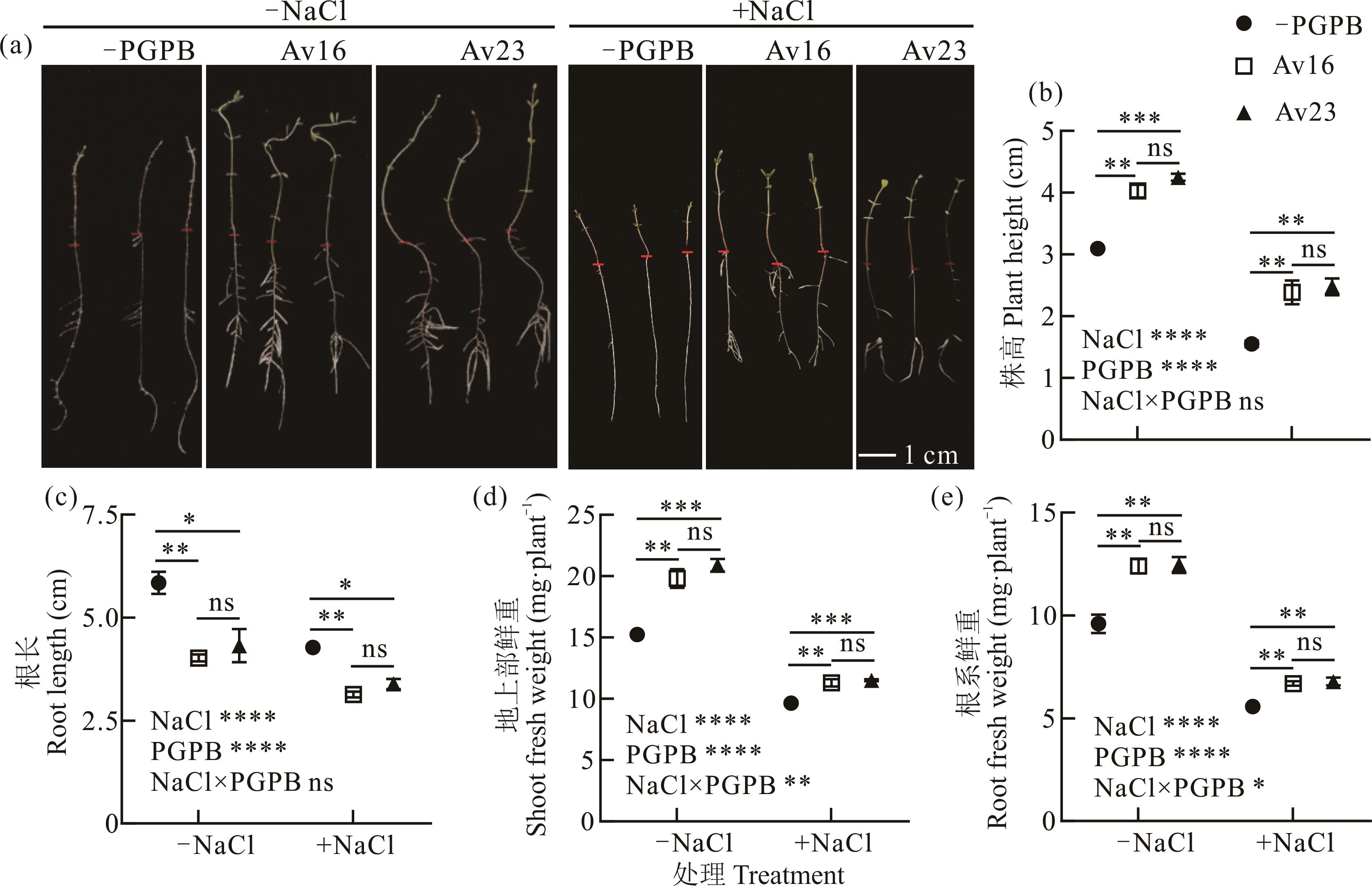
图1 植物促生菌肠杆菌Av16和不动杆菌Av23对白麻幼苗生长的影响a:不同处理白麻幼苗的生长表型;-PGPB,Av16和Av23:分别为不加PGPB、加Av16和加Av23处理;*,**,***,****分别代表P<0.05, P<0.01, P<0.001和P<0.0001水平上差异显著(n=3);ns:差异不显著;下同。a: Growth phenotype of A. pictum seedlings under different treatments. -PGPB, Av16 and Av23 represent the treatments without PGPB, with Av16 and with Av23. *, **, ***, **** indicate significant differences at P<0.05, P<0.01, P<0.001 and P<0.0001 levels, respectively (n=3). ns: not significant. The same below.
Fig.1 Effects of plant growth-promoting bacteria (PGPB) strains Enterobacter sp. Av16 and Acinetobacter sp. Av23 on the growth of A. pictum seedlings
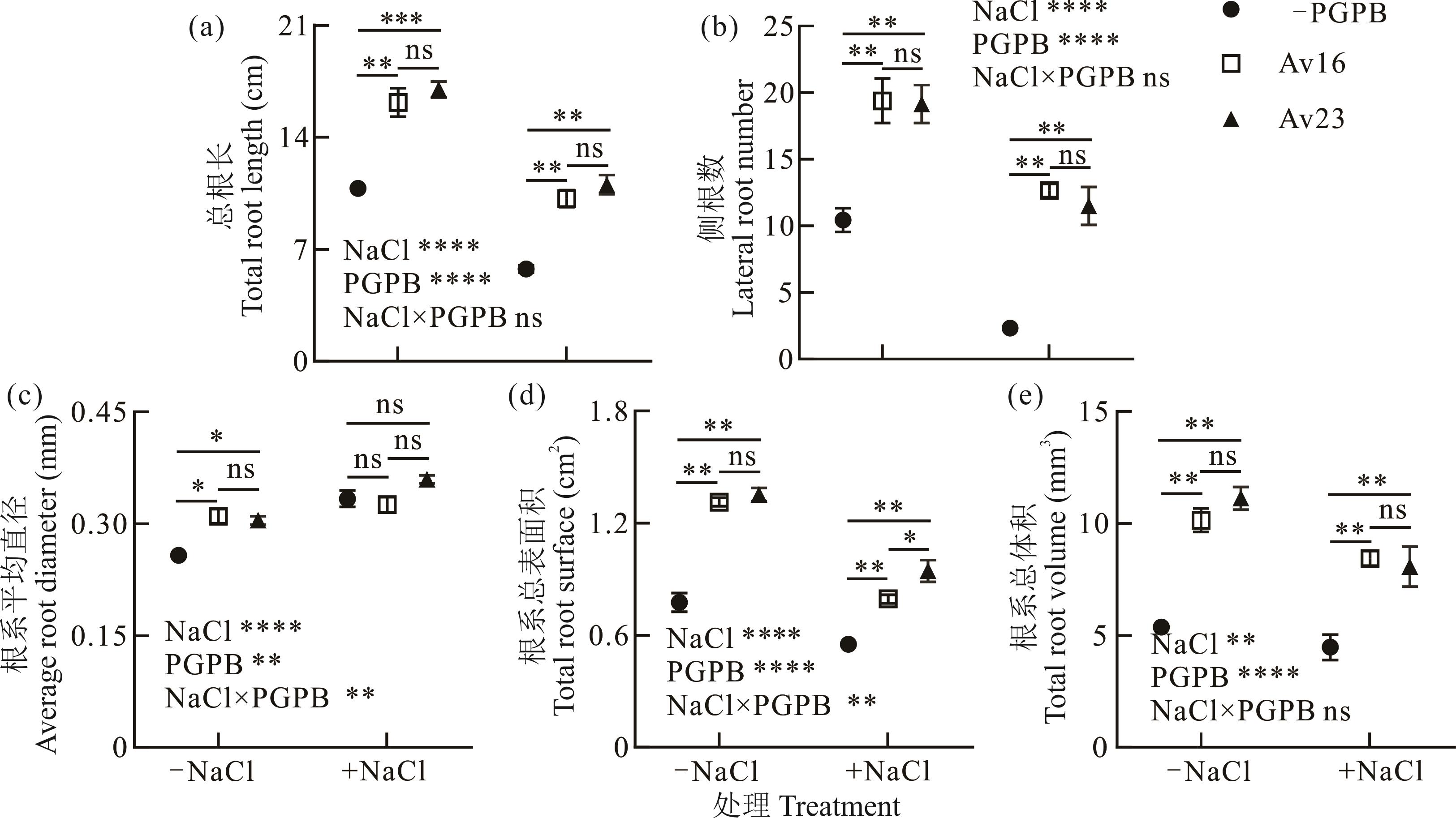
图2 植物促生菌肠杆菌Av16和不动杆菌Av23对白麻幼苗根系形态的影响
Fig.2 Effects of plant growth-promoting bacteria (PGPB) strains Enterobacter sp. Av16 and Acinetobacter sp. Av23 on root morphology of A. pictum seedlings
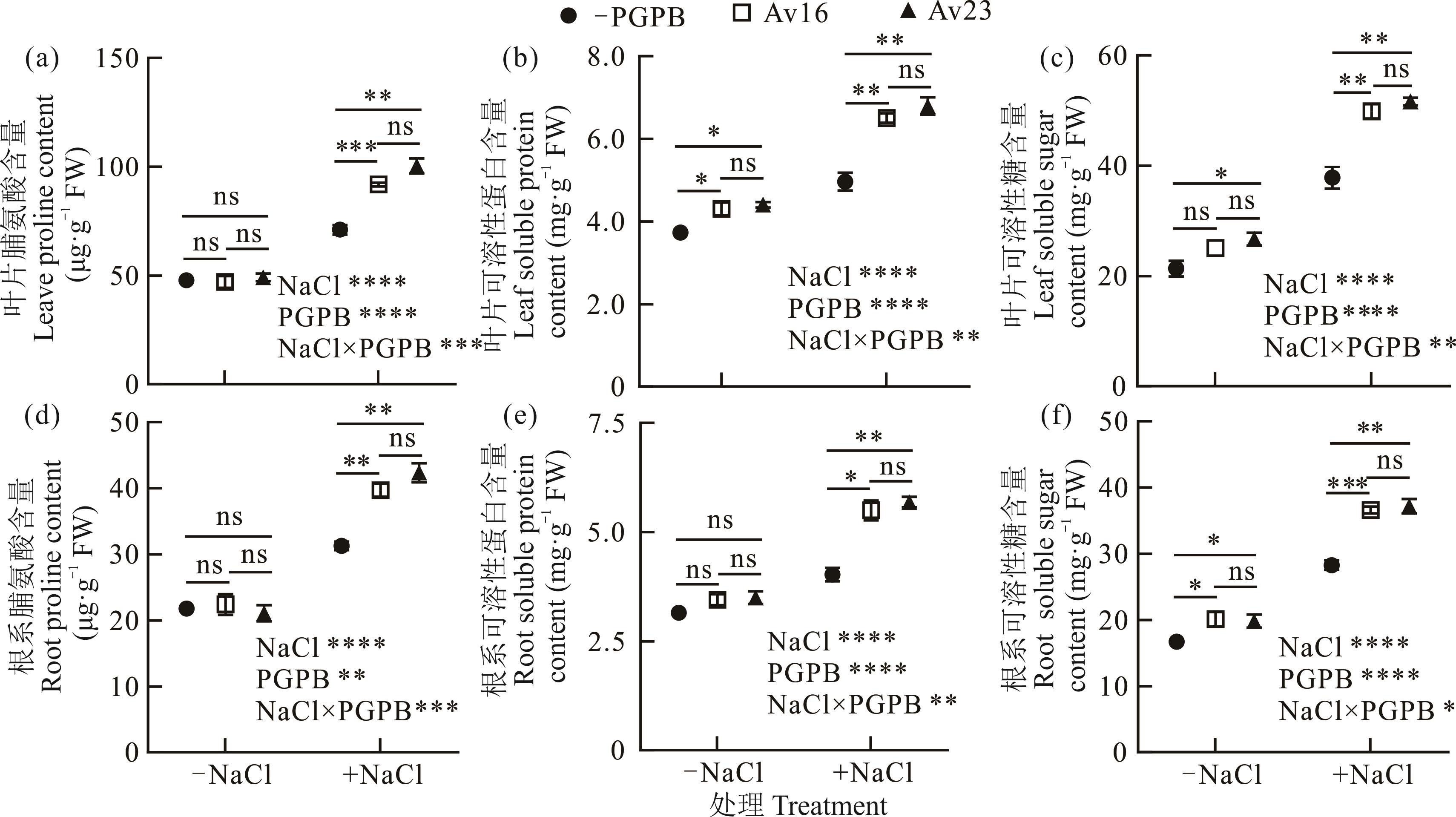
图3 植物促生菌肠杆菌Av16和不动杆菌Av23对白麻脯氨酸、可溶性糖和可溶性蛋白含量的影响
Fig.3 Effects of plant growth-promoting bacteria (PGPB) strains Enterobacter sp. Av16 and Acinetobacter sp. Av23 on the contents of proline, soluble sugar and soluble protein of A. pictum seedlings
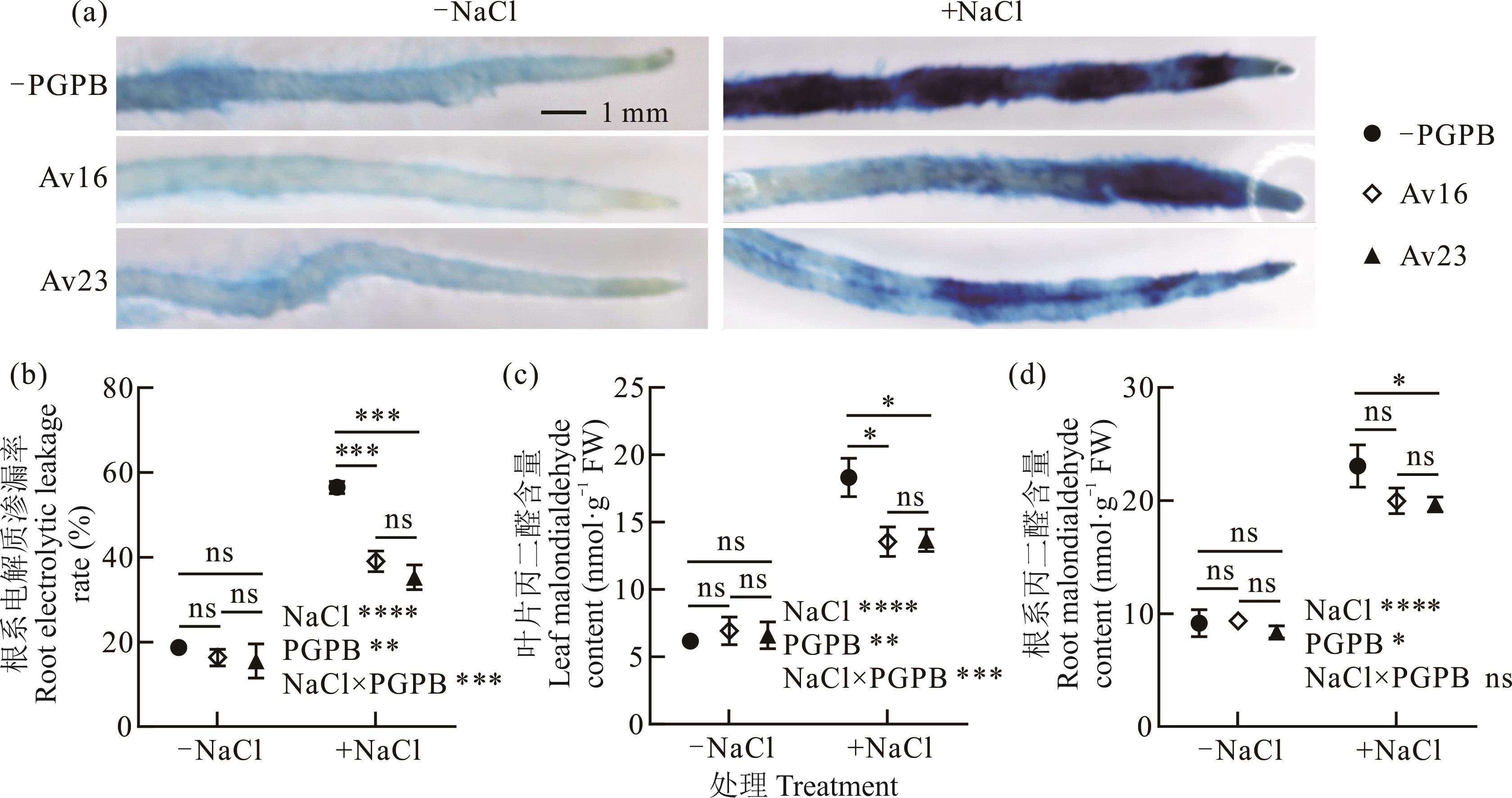
图4 植物促生菌肠杆菌Av16和不动杆菌Av23对白麻根系质膜完整性、根系离子渗漏率和丙二醛含量的影响
Fig.4 Effects of plant growth-promoting bacteria (PGPB) strains Enterobacter sp. Av16 and Acinetobacter sp. Av23 on plasma membrane integrity, root ion leakage and malondialdehyde (MDA) content of A. pictum seedlings
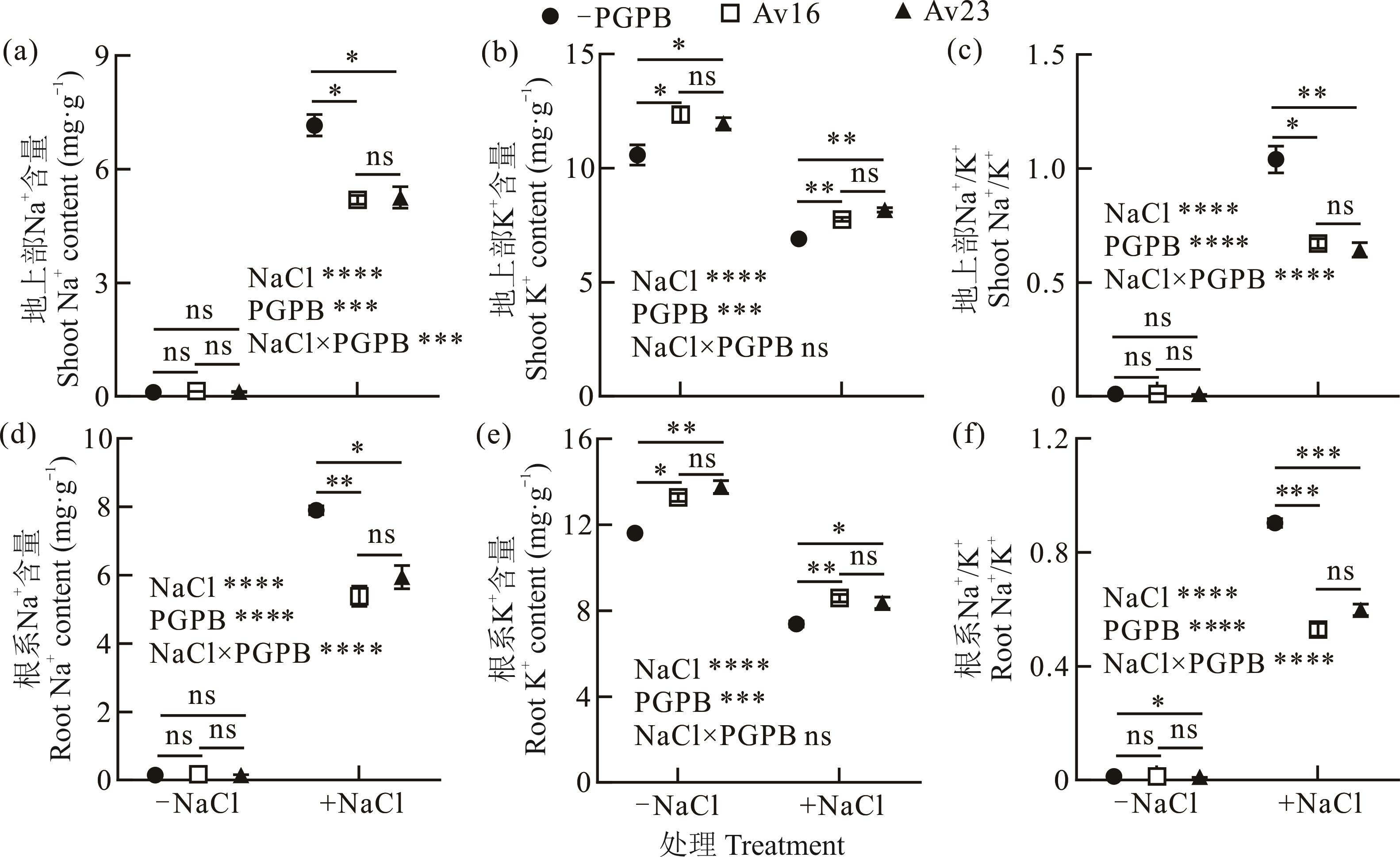
图5 植物促生菌肠杆菌Av16和不动杆菌Av23对白麻幼苗K+、Na+含量和Na+/K+的影响
Fig.5 Effects of plant growth-promoting bacteria (PGPB) strains Enterobacter sp. Av16 and Acinetobacter sp. Av23 on Na+, K+ content and Na+/K+ of A. pictum seedlings

图6 植物促生菌肠杆菌Av16和不动杆菌Av23对白麻根系K+和Na+净流入、K+和Na+平均流速的影响(n=5)
Fig.6 Effects of plant growth-promoting bacteria (PGPB) strains Enterobacter sp. Av16 and Acinetobacter sp. Av23 on net K+ and Na+ influx, average K+ and Na+ flux rate in roots of A. pictum seedlings (n=5)
| [1] | Ren Y P, Zhang J L, Yang G, et al. Survey of wild hemp resource in the two rivers valley of Tarim Basin on Xinjiang. Pratacultural Science, 2008, 25(4): 37-41. |
| 任玉平, 张江玲, 扬刚, 等. 新疆塔里木盆地两河流域野生麻资源调查. 草业科学, 2008, 25(4): 37-41. | |
| [2] | Jiang L, She C W, Tian C Y, et al. Storage period and different abiotic factors regulate seed germination of two Apocynum species-cash crops in arid saline regions in the northwestern China. Frontiers in Plant Science, 2021, 12: 671157. |
| [3] | Han Z J, Zhao Q Q, Jiang L. Study on salt tolerance characteristics of medicinal plants Apocynum venetum and Apocynum pictum. Acta Agrestia Sinica, 2025, 33(6): 1800-1806. |
| 韩占江, 赵晴晴, 姜黎. 药用植物罗布麻和白麻的耐盐特性研究. 草地学报, 2025, 33(6): 1800-1806. | |
| [4] | Muhammad N, Dong Q, Luo T, et al. New developments in understanding cotton’s physiological and molecular responses to salt stress. Plant Stress, 2025, 15: 100742. |
| [5] | Glick B R. Plant growth-promoting bacteria: Mechanisms and applications. Scientifica, 2012, 2012(1): 963401. |
| [6] | Singh M, Singh S K, Sharma J G, et al. Insights into the multifaceted roles of soil microbes in mitigating abiotic stress in crop plants: A review. Environmental and Experimental Botany, 2024, 228: 106010. |
| [7] | Ahammed I, Mondal R, Nesa J, et al. Understanding the role of soil microbiota and its’ interplay with environment to ensure sustainable development for the future generations. Applied Soil Ecology, 2025, 212: 106217. |
| [8] | Hnini M, Rabeh K. The power of plant growth-promoting rhizobacteria: A systematic review on sustainable pathogen management in tomato crops. Physiological and Molecular Plant Pathology, 2025, 139: 102828. |
| [9] | Shabaan M, Asghar H N, Zahir Z A, et al. Salt-tolerant PGPR confer salt tolerance to maize through enhanced soil biological health, enzymatic activities, nutrient uptake and antioxidant defense. Frontiers in Microbiology, 2022, 13: 901865. |
| [10] | Li H P, Ma H B, Zhang J L. Halo-tolerant plant growth-promoting bacteria-mediated plant salt resistance and microbiome-based solutions for sustainable agriculture in saline soils. FEMS Microbiology Ecology, 2025, 101(5): fiaf037. |
| [11] | Ali B, Wang X K, Saleem M H, et al. PGPR-mediated salt tolerance in maize by modulating plant physiology, antioxidant defense, compatible solutes accumulation and bio-surfactant producing genes. Plants, 2022, 11(3): 345. |
| [12] | AlHosani M, Kappachery S, Khan T A, et al. Mangrove-associated halotolerant bacteria augments salinity stress tolerance in Solanum lycopersicum. Plant Science, 2025, 359: 112642. |
| [13] | Jia X Y, Sun L L, Yue J S, et al. Developed BL-EF to acquire plant growth-promoting functions under salt stress by introducing the ACC deaminase gene. Plant Physiology and Biochemistry, 2025, 222: 109764. |
| [14] | Jiang L, Wu X J, Zhao Z Y, et al. Luobuma (Apocynum)-cash crops for saline lands. Industrial Crops and Products, 2021, 173: 114146. |
| [15] | Chan C O, Lau C C, Ng Y F, et al. Discrimination between leave of Apocynum venetum and its adulterant, A. pictum based on antioxidant assay and chemical profiles combined with multivariate statistical analysis. Antioxidants, 2015, 4(2): 359-372. |
| [16] | Aibibaihan M, Zhang J, Zhu J, et al. Comprehensive analysis of components in Chinese medicines derived from Apocynum venetum and Poacynum pictum in Xinjiang based on HPLC fingerprint and chemometrics. China Journal of Chinese Materia Medica, 2021, 46(15): 3886-3892. |
| 艾比拜罕·麦提如则, 张娟, 朱军, 等. 基于HPLC 指纹图谱和化学计量学综合分析新疆罗布麻和白麻药材化学成分差异. 中国中药杂志, 2021, 46(15): 3886-3892. | |
| [17] | Chen C H, Zhou Y Y, Xue J, et al. Comparative analysis of active components in different parts of Apocynum venetum L. and Apocynum pictum Schrenk based on high performance liquid chromatography. Modern Chinese Medicine, 2023, 25(5): 1010-1019. |
| 陈翠花, 周永逸, 薛佳, 等. 基于HPLC的罗布麻与白麻不同部位活性成分比较分析. 中国现代中药, 2023, 25(5): 1010-1019. | |
| [18] | Zhang J, Feng C Y, Qing D G, et al. Comparative studies on component and anti-inflammatory activity of Apocynum pictum leaves and Apocynum venetum leaves. Drug Evaluation Research, 2023, 46(4): 711-720. |
| 张娟, 冯春艳, 卿德刚, 等. 白麻叶和罗布麻叶的化学成分与抗炎活性比较研究. 药物评价研究, 2023, 46(4): 711-720. | |
| [19] | Jiang L, Gong Y N, Zhao Y, et al. Changes in biochemical composition and nutrient materials in Apocynum pictum honey during storage. Foods, 2024, 13(23): 3790. |
| [20] | Zhang Q, Deng C J, Zhao J, et al. Effects of salt and drought stress on germination rate and germination potential of Apocynum venetum and Poacynum pictum. Agricultural Technology & Equipment, 2024(10): 30-33. |
| 张权, 邓成军, 赵洁, 等. 盐分和干旱胁迫对罗布麻和白麻发芽率和发芽势的影响. 农业技术与装备, 2024(10): 30-33. | |
| [21] | Ji Y C, Zhao X Q, Zhao B, et al. Effects of quercetin and kaempferol on seed germination and seedling growth in Apocynum pictum Schrenk under salt stress. Arid Zone Research, 2025, 42(8): 1415-1425. |
| 季雨辰, 赵雪情, 赵冰, 等. 槲皮素和山奈酚对盐胁迫下白麻种子 萌发和幼苗生长的影响. 干旱区研究, 2025, 42(8): 1415-1425. | |
| [22] | Wang X, Jiang L, Ge Y, et al. Halotolerant plant growth-promoting bacteria Enterobacter sp. Av16 and Acinetobacter sp. Av23 enhance seed germination and seedling photosynthesis of Apocynum pictum under salt stress. Journal of Zhejiang University Science B (Biomedicine & Biotechnology), 2026, 27(6): 656-670. |
| [23] | Gupta A, Mishra R, Rai S, et al. Mechanistic insights of plant growth promoting bacteria mediated drought and salt stress tolerance in plants for sustainable agriculture. International Journal of Molecular Sciences, 2022, 23(7): 3741. |
| [24] | Bates L S, Waldren R P, Teare I D. Rapid determination of free proline for water-stress studies. Plant and Soil, 1973, 39: 205-207. |
| [25] | Bradford M M. A rapid and sensitive method for the quantitation of microgram quantities of protein utilizing the principle of protein-dye binding. Analytical Biochemistry, 1976, 72(1/2): 248-254. |
| [26] | Yemm E W, Willis A J. The estimation of carbohydrates in plant extracts by anthrone. Biochemical Journal, 1954, 57: 508-514. |
| [27] | Baker C J, Mock N M. An improved method for monitoring cell death in cell suspension and leaf disc assays using Evans blue. Plant Cell, Tissue and Organ Culture, 1994, 39: 7-12. |
| [28] | Tang J, Jiang L, Wang X, et al. Salt-tolerant plant growth-promoting bacteria enhanced the growth and alleviated salt toxicity to maize by increasing K+/Na+ homeostasis. International Journal of Environmental Science and Technology, 2025, 22: 6637-6650. |
| [29] | Heath R L, Packer L. Photoperoxidation in isolated chloroplasts: I. Kinetics and stoichiometry of fatty acid peroxidation. Archives of Biochemistry and Biophysics, 1968, 125(1): 189-198. |
| [30] | Tsai Y C, Chen K C, Cheng T S, et al. Chlorophyll fluorescence analysis in diverse rice varieties reveals the positive correlation between the seedlings salt tolerance and photosynthetic efficiency. BMC Plant Biology, 2019, 19: 403. |
| [31] | Farooq M, Park J R, Jang Y H, et al. Rice cultivars under salt stress show differential expression of genes related to the regulation of Na+/K+ balance. Frontiers in Plant Science, 2021, 12: 680131. |
| [32] | El-Esawi M A, Alaraidh I A, Alsahli A A, et al. Bacillus firmus (SW5) augments salt tolerance in soybean (Glycine max L.) by modulating root system architecture, antioxidant defense systems and stress-responsive genes expression. Plant Physiology and Biochemistry, 2018, 132: 375-384. |
| [33] | Mishra P, Mishra J, Arora N K. Plant growth promoting bacteria for combating salinity stress in plants-recent developments and prospects: A review. Microbiological Research, 2021, 252: 126861. |
| [34] | Kang S M, Hoque M I U, Woo J I, et al. Mitigation of salinity stress on soybean seedlings using indole acetic acid-producing Acinetobacter pittii YNA40. Agriculture, 2023, 13(5): 1021. |
| [35] | Zhu Z, Zhang H, Leng J, et al. Isolation and characterization of plant growth-promoting rhizobacteria and their effects on the growth of Medicago sativa L. under salinity conditions. Antonie van Leeuwenhoek, 2020, 113: 1263-1278. |
| [36] | Lee S, Kim Y K, Nie H, et al. Functional characterization of a novel plant growth-promoting rhizobacterium enhancing root growth and salt stress tolerance. Scientific Reports, 2025, 15: 30405. |
| [37] | Zerrouk I Z, Rahmoune B, Khelifi L, et al. Algerian Sahara PGPR confers maize root tolerance to salt and aluminum toxicity via ACC deaminase and IAA. Acta Physiologiae Plantarum, 2019, 41(6): 91. |
| [38] | Chen F Y, Xiao L T, Huang Q X, et al. Physiological evaluation of salt tolerance in sunflower seedlings across different genotypes. Agronomy, 2024, 14(12): 2995. |
| [39] | Taj Z, Bakka K, Challabathula D. Halotolerant PGPB Staphylococcus sciuri ET101 protects photosynthesis through activation of redox dissipation pathways in Lycopersicon esculentum. Plant Physiology and Biochemistry, 2024, 208: 108482. |
| [40] | Liu J, Zhao X H, Niu Y Q, et al. Plant growth-promoting rhizobacteria Halomonas alkaliantarcticae M23 promotes the salt tolerance of maize by increasing the K+/Na+ ratio, antioxidant levels, and ABA levels and changing the rhizosphere bacterial community. BMC Plant Biology, 2025, 25(1): 727. |
| [41] | Sofy M R, Aboseidah A A, Heneidak S A, et al. ACC deaminase containing endophytic bacteria ameliorate salt stress in Pisum sativum through reduced oxidative damage and induction of antioxidative defense systems. Environmental Science and Pollution Research, 2021, 28(30): 40971-40991. |
| [42] | Lu L, Liu N, Fan Z H, et al. A novel PGPR strain, Streptomyces lasalocidi JCM 3373T, alleviates salt stress and shapes root architecture in soybean by secreting indole-3-carboxaldehyde. Plant Cell & Environment, 2024, 47(6): 1941-1956. |
| [43] | Sukweenadhi J, Balusamy S R, Kim Y J, et al. A growth-promoting bacteria, Paenibacillus yonginensis DCY84T enhanced salt stress tolerance by activating defense-related systems in Panax ginseng. Frontiers in Plant Science, 2018, 9: 813. |
| [44] | Sunita K, Mishra I, Mishra J, et al. Secondary metabolites from halotolerant plant growth promoting rhizobacteria for ameliorating salinity stress in plants. Frontiers in Microbiology, 2020, 11: 567768. |
| [45] | Kanawapee N, Sanitchon J, Lontom W, et al. Evaluation of salt tolerance at the seedling stage in rice genotypes by growth performance, ion accumulation, proline and chlorophyll content. Plant and Soil, 2012, 358(1/2): 235-249. |
| [46] | Sánchez P, Castro-Cegrí A, Sierra S, et al. The synergy of halotolerant PGPB and mauran mitigates salt stress in tomato (Solanum lycopersicum) via osmoprotectants accumulation. Physiologia Plantarum, 2023, 175(6): e14111. |
| [47] | Rahman S, Rahmani A A, Abdul Aziz M, et al. The Enterobacter sp. SA187 stimulates stress-responsive genes and promotes salt and heat stress tolerance in tomato plants. Scientia Horticulturae, 2025, 342: 114038. |
| [48] | Kang B R, Kim M D, Park J S, et al. Genomic and functional insights into Bacillus velezensis KB21-A promising rhizobacterium for enhancing plant growth and stress tolerance in cucumber. Scientia Horticulturae, 2025, 339: 113904. |
| [1] | 金敏, 李敏, 黑金霞, 张桂银, 张峰举, 陈淑娟, 毛桂莲. 不同浓度NaCl 处理对4种耐盐植物根系形态的影响及耐盐性评价[J]. 草业学报, 2026, 35(9): 75-86. |
| [2] | 娄凯欣, 种培芳, 包新光, 肖金亭, 杨佳丽. 桑树肠杆菌对盐胁迫下红砂幼苗的促生效应及根际机理[J]. 草业学报, 2026, 35(9): 87-99. |
| [3] | 李若鸿, 李长然, 傅佳怡, 胡新雨, 毛培胜. 纳米铁引发和生物炭结壳包衣对中华羊茅种子萌发和幼苗生长耐盐性的影响[J]. 草业学报, 2026, 35(8): 32-44. |
| [4] | 杨金辉, 王晓彤, 马永龙, 余冬雯, 童玉花, 李淑霞. 喷施纳米氧化铈对紫花苜蓿幼苗耐盐性的影响[J]. 草业学报, 2026, 35(8): 45-54. |
| [5] | 魏明, 吴欣蕊, 吴璇, 李昊, 伍国强, 张伟杰, 程子义. 甜菜碱醛脱氢酶基因BvBADH2的克隆及在植物盐胁迫中的作用[J]. 草业学报, 2026, 35(5): 185-195. |
| [6] | 马祥, 李中兴, 杨容尘, 琚泽亮, 贾志锋, 杨培志. 盐胁迫对不同耐盐性燕麦糖类及内源激素含量变化的影响[J]. 草业学报, 2026, 35(3): 235-244. |
| [7] | 党志娟, 王小玮, 杨嘉宁, 高亚峰, 杜佛力, 沈翰文, 赵炘, 郎正东, 孙一川, 杨志伟, 汪军成, 王化俊, 姚立蓉. 盐生草对盐胁迫的生理响应及其苗期耐盐阈值分析[J]. 草业学报, 2026, 35(11): 157-169. |
| [8] | 宋娟, 赵根, 王靖涵, 顾炜, 林锦凯, 洪东睿, 张立钦, 闵莉静. 耐镉细菌的筛选及其对牵牛花幼苗生长和镉积累的影响[J]. 草业学报, 2026, 35(10): 106-116. |
| [9] | 刘沂欣, 隋晓青, 王鑫尧, 郎梦卿, 孙凌子寅, 吉尔尔格. 外源褪黑素对盐胁迫下紫花苜蓿的缓解作用[J]. 草业学报, 2025, 34(9): 206-214. |
| [10] | 卢天一, 艾艳梅, 汪洋, 那萌, 徐尚起, 周际海. 镉污染土壤中水稻的镉富集特征和生长响应[J]. 草业学报, 2025, 34(8): 66-78. |
| [11] | 张晴晴, 马兴羽, 鲁艳, 赵广兴, 曾凡江, 黄彩变. 沙化盐渍土地不同生长时期油莎豆的耐盐性差异研究[J]. 草业学报, 2025, 34(6): 168-180. |
| [12] | 王小风, 马步东, 黄海霞, 罗永忠, 齐建伟, 邓卓. 干旱胁迫及复水对裸果木幼苗生理特性的影响[J]. 草业学报, 2025, 34(4): 93-103. |
| [13] | 王梦琦, 王菲, 赵琬璐, 刘彦奇, 崔灿, 严俊鑫. 不同浓度硅、钙对留兰香幼苗生长和生理特性的影响[J]. 草业学报, 2025, 34(3): 154-163. |
| [14] | 田戈, 南丽丽, 王利群, 马香香, 何蓉, 郭佳雨. 盐胁迫下外源ABA对红豆草幼苗生长与生理特性的影响[J]. 草业学报, 2025, 34(10): 95-106. |
| [15] | 蔡文祺, 李淑霞, 王晓彤, 宋文学, 麻旭霞, 马小梅, 李小红, 代昕瑶. 外源褪黑素与乙烯交互对盐胁迫下紫花苜蓿幼苗生长和生理特性的影响[J]. 草业学报, 2025, 34(1): 80-93. |
| 阅读次数 | ||||||
|
全文 |
|
|||||
|
摘要 |
|
|||||
