
ISSN 1004-5759 CN 62-1105/S
Acta Prataculturae Sinica ›› 2025, Vol. 34 ›› Issue (10): 164-173.DOI: 10.11686/cyxb2024427
Dan-xia KE( ), Shi-bo HOU, Zhao-yuan ZHOU, Yun-hao MA, Zhi-jie CHEN, Xiao-li SONG, Jia-nuo LIN
Received:2024-10-28
Revised:2024-12-30
Online:2025-10-20
Published:2025-07-11
Contact:
Dan-xia KE
Dan-xia KE, Shi-bo HOU, Zhao-yuan ZHOU, Yun-hao MA, Zhi-jie CHEN, Xiao-li SONG, Jia-nuo LIN. Functional identification of the role of soybean gene GmPP2C28 in the nitrogen-fixation process of Lotus japonicus[J]. Acta Prataculturae Sinica, 2025, 34(10): 164-173.
| 引物名称 Primer name | 引物序列 Sequence of primer (5′-3′) |
|---|---|
| F-OX | G |
| R-OX | TCC |
| F-GUS | GTCGCGCAAGACTGTAACCA |
| R-GUS | CGGCGAAATTCCATACCTG |
| F-NIN-rt | AACTCACTGGAAACAGGTGCTTTC |
| R-NIN-rt | CTATTGCGGAATGTATTAGCTAGA |
| F-ENOD40-1-rt | GGAGGTATGCTCAAACATTC |
| R-ENOD40-1-rt | GTAACTTCTCAAGAGAAGACC |
| F-ENOD40-2-rt | CAAAACTCGTTATGTTGCGG |
| R-ENOD40-2-rt | CACCTCAAAGGAAGAAGAACA |
| F-GmPP2C28-rt | TTGCAACGGTCGTGTATTTGCG |
| R-GmPP2C28-rt | TGGGTAACCACACTCTCTGGATG |
| F-UBI | TTCACCTTGTGCTCCGTCTTC |
| R-UBI | AACAACAGCACACACAGACAATC |
Table 1 The primers used in this study
| 引物名称 Primer name | 引物序列 Sequence of primer (5′-3′) |
|---|---|
| F-OX | G |
| R-OX | TCC |
| F-GUS | GTCGCGCAAGACTGTAACCA |
| R-GUS | CGGCGAAATTCCATACCTG |
| F-NIN-rt | AACTCACTGGAAACAGGTGCTTTC |
| R-NIN-rt | CTATTGCGGAATGTATTAGCTAGA |
| F-ENOD40-1-rt | GGAGGTATGCTCAAACATTC |
| R-ENOD40-1-rt | GTAACTTCTCAAGAGAAGACC |
| F-ENOD40-2-rt | CAAAACTCGTTATGTTGCGG |
| R-ENOD40-2-rt | CACCTCAAAGGAAGAAGAACA |
| F-GmPP2C28-rt | TTGCAACGGTCGTGTATTTGCG |
| R-GmPP2C28-rt | TGGGTAACCACACTCTCTGGATG |
| F-UBI | TTCACCTTGTGCTCCGTCTTC |
| R-UBI | AACAACAGCACACACAGACAATC |

Fig.1 Bioinformatics analysis of GmPP2C28 protein
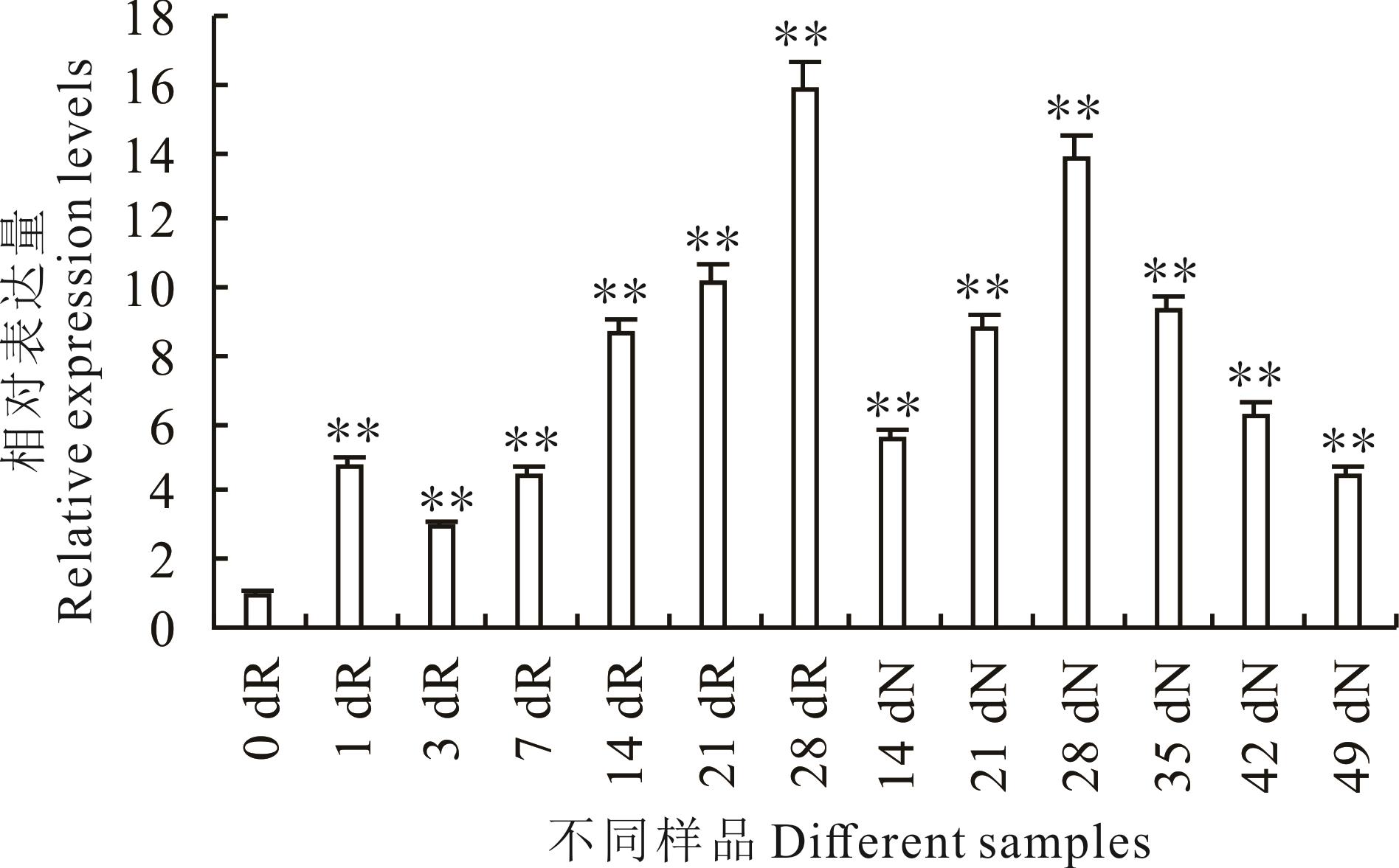
Fig.2 Expression levels of GmPP2C28 gene in soybean roots and nodules at different stages
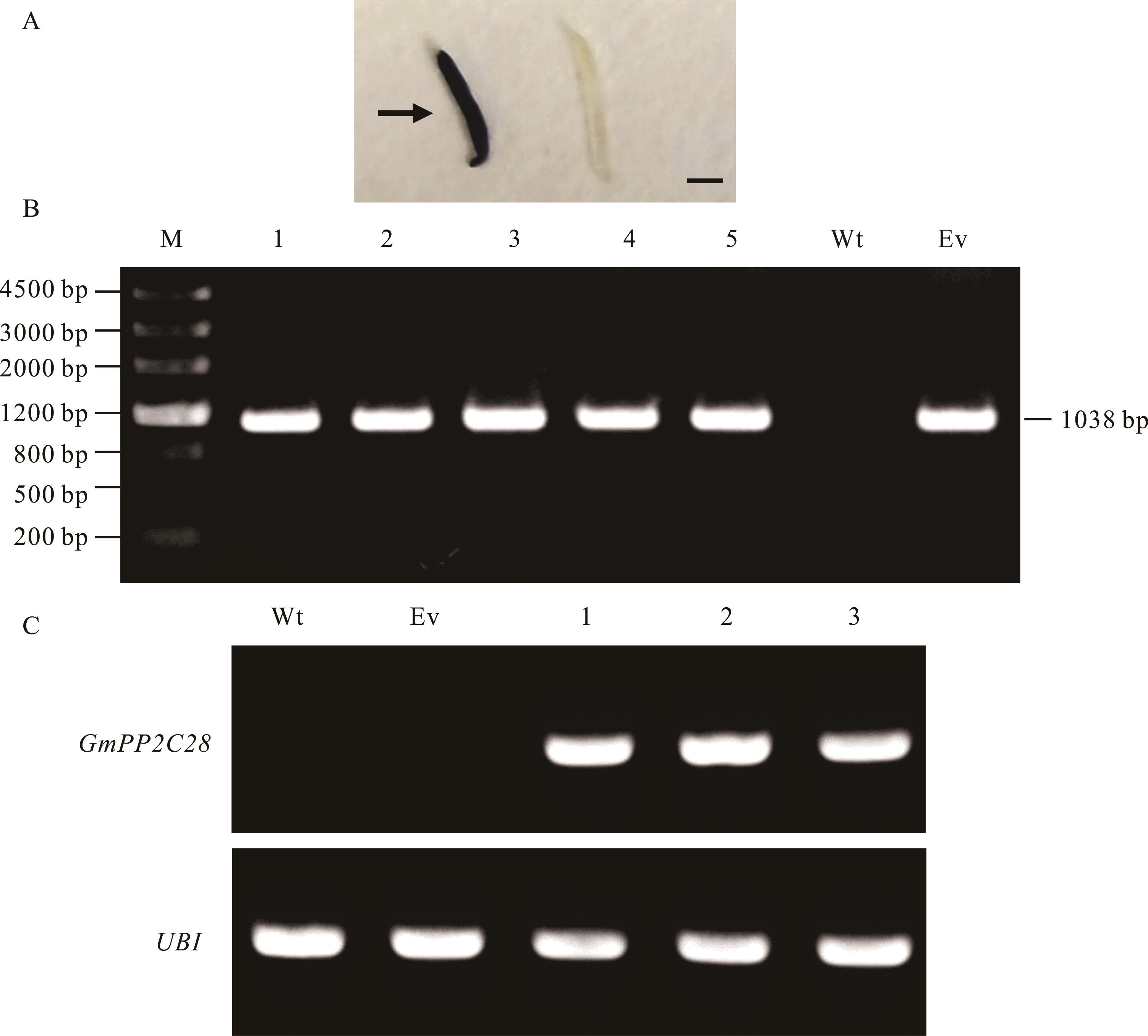
Fig.3 Molecular biology detection of positive hairy roots in composite L. japonicus
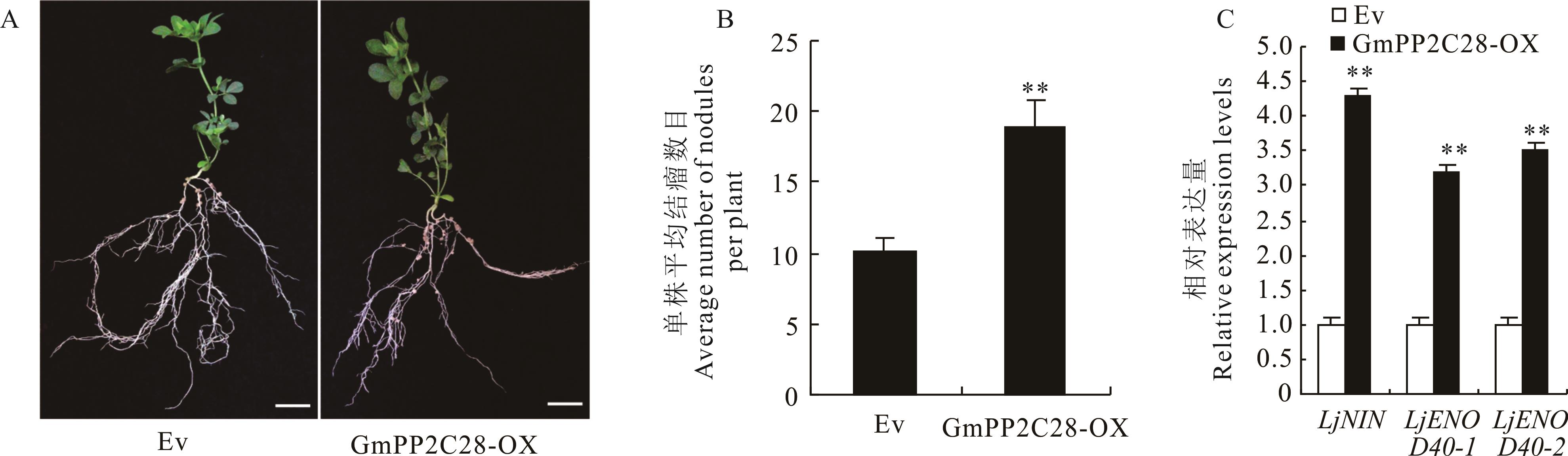
Fig.4 Effect of overexpression GmPP2C28 gene on nodulation in composite L. japonicus

Fig.5 Section staining analysis of the transgenic nodules
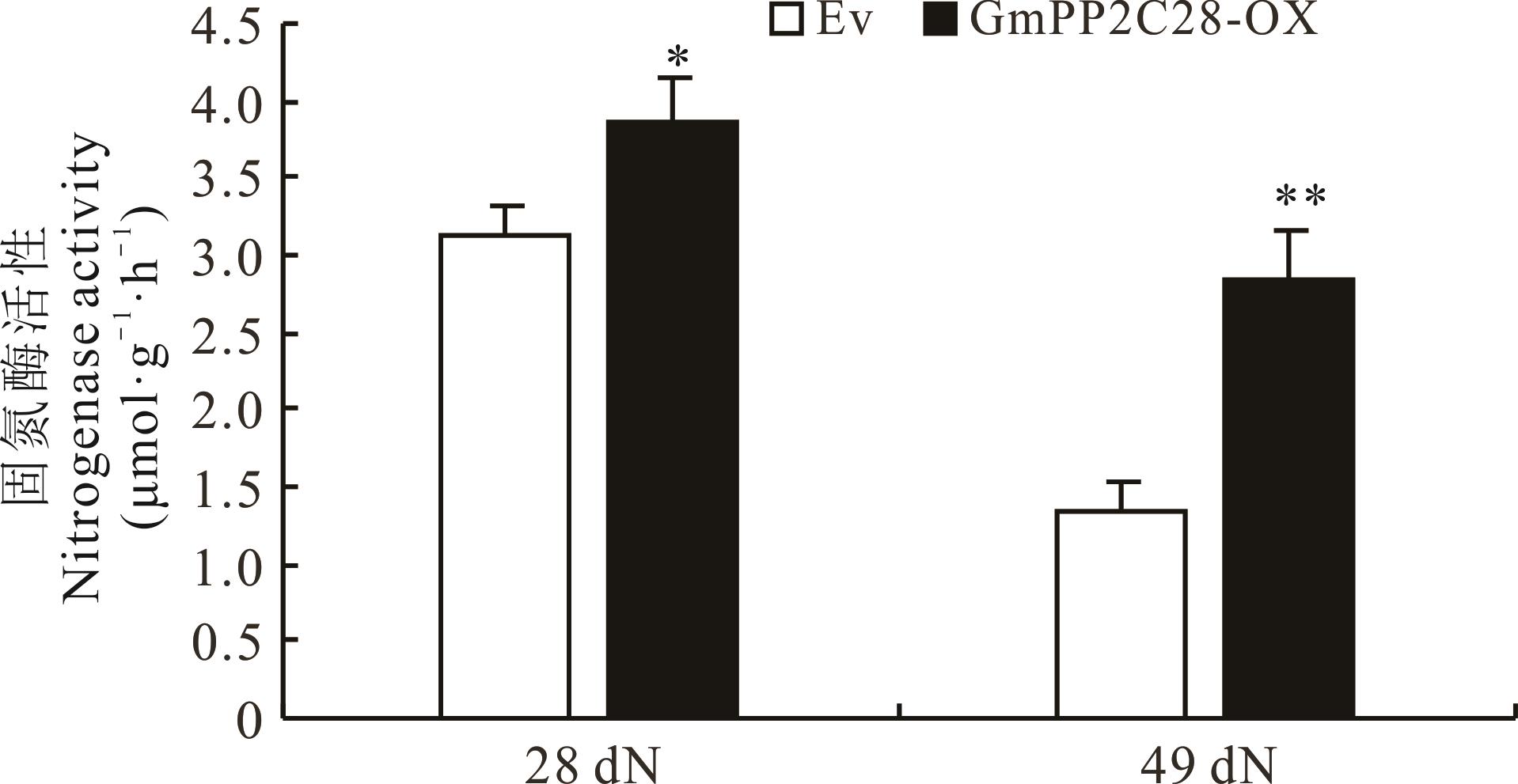
Fig.6 Determination of nitrogenase activity in transgenic root nodules at different stages
| [1] | Xu Q Z, Wang X, Wang N, et al. Nitrogen inhibition of nitrogenase activity involves the modulation of cytosolic invertase in soybean nodule. Journal of Genetics and Genomics, 2024, 51(12): 1404-1412. |
| [2] | Ke D X, Peng K P, Xia Y J, et al. Cloning of salt-stressed responsive gene GmWRKY6 and salt resistance analysis of transgenic Lotus japonicus. Acta Prataculturae Sinica, 2018, 27(8): 95-106. |
| 柯丹霞, 彭昆鹏, 夏远君, 等. 盐胁迫应答基因GmWRKY6的克隆及转基因百脉根的抗盐分析. 草业学报, 2018, 27(8): 95-106. | |
| [3] | Schmid A C, Woscholski R. Phosphatases as small-molecule targets: inhibiting the endogenous inhibitors of kinases. Biochemical Society Transactions, 2004, 32(2): 348-349. |
| [4] | Singh A, Jha S K, Bagri J, et al. ABA inducible rice protein phosphatase 2C confers ABA insensitivity and abiotic stress tolerance in Arabidopsis. PLoS One, 2015, 10(4): e0125168. |
| [5] | Zhang F, Wei Q H, Shi J C, et al. Brachypodium distachyon BdPP2CA6 interacts with BdPYLs and BdSnRK2 and positively regulates salt tolerance in transgenic Arabidopsis. Frontiers in Plant Science, 2017, 8: 264. |
| [6] | Schweighofer A, Kazanaviciute V, Scheikl E, et al. The PP2C-type phosphatase AP2C1, which negatively regulates MPK4 and MPK6, modulates innate immunity, jasmonic acid, and ethylene levels in Arabidopsis. The Plant Cell, 2007, 19(7): 2213-2224. |
| [7] | Umbrasaite J, Schweighofer A, Kazanaviciute V, et al. MAPK phosphatase AP2C3 induces ectopic proliferation of epidermal cells leading to stomata development in Arabidopsis. PLoS One, 2010, 5(12): e15357. |
| [8] | Kapranov P, Jensen T J, Poulsen C, et al. A protein phosphatase 2C gene, LjNPP2C1, from Lotus japonicus induced during root nodule development. Proceedings of the National Academy of Sciences of the United States of America, 1999, 96(4): 1738-1743. |
| [9] | Guan X M. LjPP2C, a protein phosphatases 2C from Lotus japonicus, functions as a negative regulator of MPK6 pathway. Wuhan: Huazhong Agricultural University, 2015. |
| 官晓敏. 百脉根LjPP2C蛋白磷酸酶负调控MPK6信号转导途径. 武汉: 华中农业大学, 2015. | |
| [10] | Lu X, Lai Y C, Du W G, et al. A PP2C-1 allele underlying a quantitative trait locus enhances soybean 100-seed weight. Molecular Plant, 2017, 10(5): 670-684. |
| [11] | Chen C, Yu Y, Ding X D, et al. Genome-wide analysis and expression profiling of PP2C clade D under saline and alkali stresses in wild soybean and Arabidopsis. Protoplasma, 2018, 255(2): 643-654. |
| [12] | Bai G, Yang D H, Zhao Y, et al. Interactions between soybean ABA receptors and type 2C protein phosphatases. Plant Molecular Biology, 2013, 83(6): 651-664. |
| [13] | Yang X X, Tang M S, Zhang B. Identification of soybean PP2C family genes and transcriptome analysis in response to salt stress. Acta Agriculturae Zhejiangensis, 2022, 34(2): 207-220. |
| 杨昕霞, 唐满生, 张斌. 大豆PP2C家族基因鉴定与响应盐胁迫的转录组分析. 浙江农业学报, 2022, 34(2): 207-220. | |
| [14] | Zhang B. Functional analysis of soybean GmPP2C89 gene under salt stress. Acta Agriculturae Boreali-Sinica, 2022, 37(4): 20-27. |
| 张斌. 大豆GmPP2C89基因在盐胁迫中的功能分析. 华北农学报, 2022, 37(4): 20-27. | |
| [15] | Zhang Y J, Liu X Y, Chen L, et al. Mining for genes encoding proteins associated with NopL of Sinorhizobium fredii HH103 using quantitative trait loci in soybean (Glycine max Merr.) recombinant inbred lines. Plant and Soil, 2018, 431: 245-255. |
| [16] | Wang J H, Wang J Q, Ma C, et al. QTL mapping and data mining to identify genes associated with the Sinorhizobium fredii HH103 T3SS effector NopD in soybean. Frontiers in Plant Science, 2020, 11: 453. |
| [17] | Ke D X, Hou S B, Ma S Y, et al. Cloning and expression analysis of the protein phosphatase gene GmPP2C28 of soybean. Journal of Xinyang Normal University (Natural Science Edition), 2024, 37(3): 343-348. |
| 柯丹霞, 侯仕博, 马斯羽, 等. 大豆蛋白磷酸酶基因GmPP2C28的克隆与表达分析. 信阳师范学院学报(自然科学版), 2024, 37(3): 343-348. | |
| [18] | Ke D X, Peng K P, Zhang M K, et al. Function of the soybean GmCYS20 gene in symbiotic nodulation of Lotus japonicus. Acta Prataculturae Sinica, 2018, 27(9): 132-141. |
| 柯丹霞, 彭昆鹏, 张孟珂, 等. 大豆GmCYS20基因在百脉根共生结瘤过程中的功能研究. 草业学报, 2018, 27(9): 132-141. | |
| [19] | Livak K J, Schmittgen T D. Analysis of relative gene expression data using real-time quantitative PCR and the 2-ΔΔCT method. Methods, 2001, 25(4): 402-408. |
| [20] | Ke D X, Feng S, Hu Y H, et al. Functional identification of soybean NADPH oxidase gene GmRbohL in the nodulation process of soybean. Acta Agriculturae Boreali-Sinica, 2023, 38(5): 29-38. |
| 柯丹霞, 冯爽, 胡艺涵, 等. 大豆NADPH氧化酶基因GmRbohL在共生结瘤过程中的功能鉴定. 华北农学报, 2023, 38(5): 29-38. | |
| [21] | Yuan S, Ke D, Liu B, et al. The Bax inhibitor GmBI-1α interacts with a Nod factor receptor and plays a dual role in the legume-rhizobia symbiosis. Journal of Experimental Botany, 2023, 74(18): 5820-5839. |
| [22] | Fan K, Yuan S N, Chen J, et al. Molecular evolution and lineage-specific expansion of the PP2C family in Zea mays. Planta, 2019, 250(5): 1521-1538. |
| [23] | Shazadee H, Khan N, Wang J J, et al. Identification and expression profiling of protein phosphatases (PP2C) gene family in Gossypium hirsutum L. International Journal of Molecular Sciences, 2019, 20(6): 1395. |
| [24] | Yu X F, Han J P, Wang E F, et al. Genome-wide identification and homoeologous expression analysis of PP2C genes in wheat (Triticum aestivum L.). Frontiers in Genetics, 2019, 10: 561. |
| [25] | Wang Y F, Liao Y Q, Wang Y P, et al. Genome-wide identification and expression analysis of StPP2C gene family in response to multiple stresses in potato (Solanum tuberosum L.). Journal of Integrative Agriculture, 2020, 19(6): 1609-1624. |
| [26] | Han Y G, Luo Y, Wei Z X, et al. Structure prediction and function analysis of protein phosphatase PPH1 from Arabidopsis thaliana. Chinese Journal of Applied and Environmental Biology, 2013, 19(1): 69-73. |
| 韩永光, 骆玥, 魏徵霄, 等. 拟南芥蛋白磷酸酶PPH1的结构预测与功能分析. 应用与环境生物学报, 2013, 19(1): 69-73. | |
| [27] | Singh A, Pandey A, Srivastava A K, et al. Plant protein phosphatases 2C: from genomic diversity to functional multiplicity and importance in stress management. Critical Reviews in Biotechnology, 2016, 36(6): 1023-1035. |
| [28] | Lin X, Duan X Y, Liang Y Y, et al. PPM1A functions as a Smad phosphatase to terminate TGFbeta signaling. Cell, 2006, 125(5): 915-928. |
| [29] | Akhurst R J, Derynck R. TGF-beta signaling in cancer-a double-edged sword. Trends in Cell Biology, 2001, 11(11): S44-S51. |
| [30] | Hanada M, Kobayashi T, Ohnishi M, et al. Selective suppression of stress-activated protein kinase pathway by protein phosphatase 2C in mammalian cells. FEBS Letters, 1998, 437(3): 172-176. |
| [31] | Takekawa M, Maeda T, Saito H. Protein phosphatase 2C alpha inhibits the human stress-responsive p38 and JNK MAPK pathways. The EMBO Journal, 1998, 17(16): 4744-4752. |
| [32] | Zhou B, Wang Z X, Zhao Y, et al. The specificity of extracellular signal-regulated kinase 2 dephosphorylation by protein phosphatases. The Journal of Biological Chemistry, 2002, 277(35): 31818-31825. |
| [33] | Hu X, Song F, Zheng Z. Molecular characterization and expression analysis of a rice protein phosphatase 2C gene, OsBIPP2C1, and overexpression in transgenic tobacco conferred enhanced disease resistance and abiotic tolerance. Plant Physiology, 2006, 127: 225-236. |
| [34] | Seo J K, Kwon S J, Cho W K, et al. Type 2C protein phosphatase is a key regulator of antiviral extreme resistance limiting virus spread. Science Report, 2014, 4: 5905. |
| [35] | Meskiene I, Baudouin E, Schweighofer A, et al. Stress-induced protein phosphatase 2C is a negative regulator of a mitogen-activated protein kinase. Journal of Biological Chemistry, 2003, 278(21): 18945-18952. |
| [36] | Cristina M S, Petersen M, Mundy J. Mitogen-activated protein kinase signaling in plants. Annual Review of Plant Biology, 2010, 61: 621-649. |
| [37] | Schoenbeck M A, Samac D A, Fedorova M, et al. The alfalfa (Medicago sativa) TDY1 gene encodes a mitogen-activated protein kinase homolog. Molecular Plant-Microbe Interactions, 1999, 12(10): 882-893. |
| [38] | Fernandez-Pascual M, Lucas M M, de Felipe M R, et al. Involvement of mitogen-activated protein kinases in the symbiosis Bradyrhizobium-Lupinus. Journal of Experimental Botany,2006, 57(11): 2735-2742. |
| [39] | Lee H, Kim J, Im J H, et al. Mitogen-activated protein kinase is involved in the symbiotic interaction between Bradyrhizobium japonicum USDA110 and soybean. Journal of Plant Biology, 2008, 51(4): 291-296. |
| [1] | Hai-long MAO, Ji-cheng TAI, Heng-shan YANG, Yu-qin ZHANG, Rui-fu ZHANG, Zhen-zhen WANG. Effect of strip configuration on canopy characteristics, yield, and the quality of silage produced from co-cultivated corn and soybean [J]. Acta Prataculturae Sinica, 2025, 34(8): 30-42. |
| [2] | Zong-yang KUANG, Lin MU, Lan WEI, Yang GUO, Gui XU, Yao CHEN, Xue-yun SHI, Zhong-shan WEI, Zhi-fei ZHANG. Effects of different mixture ratios and lactic acid bacteria on the quality and aerobic stability of mixed silage made from whole maize (Zea mays) and soybean (Glycine max) plants [J]. Acta Prataculturae Sinica, 2025, 34(6): 227-238. |
| [3] | Shuai QI, Yan-li ZHANG, Yong-jie WAN, Wei-qiang NIU, Ji-xin ZHANG, Xue GAO, Da-gan MAO. Effects of soybean straw co-fermented with a bacterium-enzyme mixture on the growth performance, serum indexes, and rumen microorganisms of Hu sheep [J]. Acta Prataculturae Sinica, 2025, 34(5): 189-201. |
| [4] | Mao-jian WANG, Wei SHI, Sheng-hua CHANG, Cheng ZHANG, Qian-min JIA, Fu-jiang HOU. Effects of irrigation modes on forage yield, quality and water use of corn-legume intercropping systems in the Hexi irrigation area [J]. Acta Prataculturae Sinica, 2023, 32(3): 13-29. |
| [5] | Zong-chang XU, Xue-li LU, Yun-chong WEI, Chen MENG, Meng-chao ZHANG, Yuan-yang ZHANG, Meng WANG, Ju-ying WANG, Cheng-sheng ZHANG, Yi-qiang LI. Salt tolerance identification and evaluation of a population of wild soybean SP1 mutants at the seedling stage [J]. Acta Prataculturae Sinica, 2023, 32(11): 168-178. |
| [6] | Dai-xiang XU, Jian-feng YANG, Hang SU, Jian-rong ZHAI, Cai QI, Long-gang ZHAO, Yan-jun GUO. Effect of the metabolites in rhizosphere soil on microbial communities of crop intercropping system [J]. Acta Prataculturae Sinica, 2023, 32(11): 65-80. |
| [7] | Sheng-sheng WANG, Zhen DUAN, Pei ZHOU, Ji-yu ZHANG. Phenotype and biomass analysis of nodulation-deletion mutants in Melilotus albus [J]. Acta Prataculturae Sinica, 2023, 32(10): 247-256. |
| [8] | Fu LIU, Cheng CHEN, Kai-xuan ZHANG, Mei-liang ZHOU, Xin-quan ZHANG. Cloning and identification of drought tolerance function of the LjbHLH34 gene in Lotus japonicus [J]. Acta Prataculturae Sinica, 2023, 32(1): 178-191. |
| [9] | Zi-wei JIANG, Gui-yu LIU, Hao-yun AN, Wei SHI, Sheng-hua CHANG, Cheng ZHANG, Qian-min JIA, Fu-jiang HOU. Effects of planting density and nitrogen application on forage yield, quality and nitrogen use efficiency in a maize/forage soybean intercropping system [J]. Acta Prataculturae Sinica, 2022, 31(7): 157-171. |
| [10] | Cheng-fu ZHOU, Shui-ping WANG, Bai-zhong ZHANG, Xiu-min ZHANG, Rong WANG, Zhi-yuan MA, Min WANG. Effects of hydrothermal treatment on in vitro fermentation, methanogenesis and microbiota of soybean straw [J]. Acta Prataculturae Sinica, 2022, 31(2): 171-181. |
| [11] | Yang FAN, Wei-biao QI, Chong-miao ZHU, Yu-yang YIN, Sheng-yong MAO. Effects of fermented soybean residues on growth performance, apparent nutrient digestibility, meat quality and serum biochemical indexes of Hu sheep [J]. Acta Prataculturae Sinica, 2022, 31(11): 86-93. |
| [12] | Shi-ya WANG, Dian-feng ZHENG, Nai-jie FENG, Xi-long LIANG, Hong-tao XIANG, Sheng-jie FENG, Xin-xin WANG, Guan-qiang ZUO. Damage to the AsA-GSH cycle of soybean leaves under waterlogging stress at in seed filling period growth stages and the mitigation effect of uniconazole [J]. Acta Prataculturae Sinica, 2021, 30(7): 157-166. |
| [13] | MA Ya-ling, LIU Hui, LIU Yang, LI Chun-jie. Response of biological characteristics of two color morphs of pea aphid (Acyrthosiphon pisum) to different soybean varieties [J]. Acta Prataculturae Sinica, 2020, 29(3): 96-102. |
| [14] | LIU Xiang-sheng, DENG Bo-bo, WANG Kuo-peng, FENG Li-mei, ZHAO Guo-qi, LIN Miao. Degradation characteristics of conventional and unconventional roughage in the rumen of dairy cows [J]. Acta Prataculturae Sinica, 2020, 29(11): 190-197. |
| [15] | JIANG Yan, XUE En-yu, LU Wen-cheng, CUI Guo-wen, LI Yuan-ming, HAN Tian-fu, WANG Shao-dong. Breeding and feeding quality analysis of a new soybean strain deficient in Kunitz trypsin inhibitor [J]. Acta Prataculturae Sinica, 2020, 29(10): 91-98. |
| Viewed | ||||||
|
Full text |
|
|||||
|
Abstract |
|
|||||
