
ISSN 1004-5759 CN 62-1105/S
Acta Prataculturae Sinica ›› 2025, Vol. 34 ›› Issue (9): 147-161.DOI: 10.11686/cyxb2024418
Zhi-peng ZHANG( ), Qing-xue JIANG, Xin-yue ZHOU, Tong MIAO, Jun TANG, Deng-xia YI, Xue-min WANG(), Lin MA()
Received:2024-10-24
Revised:2024-12-02
Online:2025-09-20
Published:2025-07-02
Contact:
Xue-min WANG,Lin MA
Zhi-peng ZHANG, Qing-xue JIANG, Xin-yue ZHOU, Tong MIAO, Jun TANG, Deng-xia YI, Xue-min WANG, Lin MA. Screening of candidate genes for plant height in forage oat (Avena sativa) through combined transcriptome and proteome analysis[J]. Acta Prataculturae Sinica, 2025, 34(9): 147-161.
编号 Code | 名称 Name | 材料来源 Source of material |
|---|---|---|
| 972 | Dookie 10 | 澳大利亚,维多利亚州Victoria, Australia |
| 1289 | X61-7 |
Table 1 Materials details
编号 Code | 名称 Name | 材料来源 Source of material |
|---|---|---|
| 972 | Dookie 10 | 澳大利亚,维多利亚州Victoria, Australia |
| 1289 | X61-7 |
| 基因ID Gene ID | 正向引物Forward primer (5′-3′) | 反向引物Reverse primer (5′-3′) |
|---|---|---|
| AVESA.00010b.r1.2CG3384710 | CATCACCGCCAACATCACC | GCAGCCTCCACGATCTCC |
| AVESA.00010b.r1.3CG0669440 | AAGAAGTTGGTGGTTATTGG | CTGCTTCCTTACCTCTCC |
| AVESA.00010b.r1.4AG2537620 | CGGACCTACAACCAGAACC | CAGCCCAAAGTGCCTCTC |
| AVESA.00010b.r1.5DG0437330 | CGGTCTTCTTGCGAATGG | CGATGTACTCCACGAAACC |
| AVESA.00010b.r1.3CG2847600 | ATGCTCTTCACCGTCTCC | CTGGTTGATGTAGTCCTTGG |
| AVESA.00010b.r1.4AG1741330 | GCATAGCGAGCAGTGAAGAG | ACACGGAGATCAGCAGAGC |
| AVESA.00010b.r1.2CG1087750 | CTCCTCCTCCTGCTCGTC | GTGCCCTTGAACCTGTGG |
| AVESA.00010b.r1.2DG0384520 | TGTGCTACGGGAGAAACG | AACTTGATGCCGCTATTCG |
| AVESA.00010b.r1.2CG0426050 | ACCTTCACGCTCAACTTCTCC | GCTCTCCACGCAGTTCTCC |
| AVESA.00010b.r1.4AG0885780 | AACTTCCCGTGCTCTGATCC | GTCGTCTCGTCGGCTTCC |
Table 2 Primer sequences of real-time fluorescence quantitative PCR
| 基因ID Gene ID | 正向引物Forward primer (5′-3′) | 反向引物Reverse primer (5′-3′) |
|---|---|---|
| AVESA.00010b.r1.2CG3384710 | CATCACCGCCAACATCACC | GCAGCCTCCACGATCTCC |
| AVESA.00010b.r1.3CG0669440 | AAGAAGTTGGTGGTTATTGG | CTGCTTCCTTACCTCTCC |
| AVESA.00010b.r1.4AG2537620 | CGGACCTACAACCAGAACC | CAGCCCAAAGTGCCTCTC |
| AVESA.00010b.r1.5DG0437330 | CGGTCTTCTTGCGAATGG | CGATGTACTCCACGAAACC |
| AVESA.00010b.r1.3CG2847600 | ATGCTCTTCACCGTCTCC | CTGGTTGATGTAGTCCTTGG |
| AVESA.00010b.r1.4AG1741330 | GCATAGCGAGCAGTGAAGAG | ACACGGAGATCAGCAGAGC |
| AVESA.00010b.r1.2CG1087750 | CTCCTCCTCCTGCTCGTC | GTGCCCTTGAACCTGTGG |
| AVESA.00010b.r1.2DG0384520 | TGTGCTACGGGAGAAACG | AACTTGATGCCGCTATTCG |
| AVESA.00010b.r1.2CG0426050 | ACCTTCACGCTCAACTTCTCC | GCTCTCCACGCAGTTCTCC |
| AVESA.00010b.r1.4AG0885780 | AACTTCCCGTGCTCTGATCC | GTCGTCTCGTCGGCTTCC |

Fig.1 Phenotypic observations of extreme plant height materials
样品名称 Sample | 过滤后数据 Clean reads (M) | 过滤后序列 Clean bases (G) | 碱基质量>30的 占比Q30 (%) | GC含量 GC content (%) | 唯一比对(对比率) Uniquely mapped (mapping ratio, %) | 多方比对(对比率) Multiple mapped (mapping ratio, %) |
|---|---|---|---|---|---|---|
| H-1 | 43.09 | 6.11 | 94.99 | 53.21 | 83.39 | 14.16 |
| H-2 | 43.05 | 6.13 | 95.07 | 52.98 | 83.80 | 14.22 |
| H-3 | 43.08 | 6.13 | 94.84 | 53.08 | 83.92 | 14.09 |
| L-1 | 43.13 | 6.33 | 94.06 | 51.53 | 85.83 | 11.67 |
| L-2 | 44.62 | 6.57 | 94.58 | 51.38 | 85.79 | 11.62 |
| L-3 | 42.36 | 6.23 | 93.99 | 51.16 | 85.83 | 11.60 |
Table 3 Quality test of transcriptome sequencing data
样品名称 Sample | 过滤后数据 Clean reads (M) | 过滤后序列 Clean bases (G) | 碱基质量>30的 占比Q30 (%) | GC含量 GC content (%) | 唯一比对(对比率) Uniquely mapped (mapping ratio, %) | 多方比对(对比率) Multiple mapped (mapping ratio, %) |
|---|---|---|---|---|---|---|
| H-1 | 43.09 | 6.11 | 94.99 | 53.21 | 83.39 | 14.16 |
| H-2 | 43.05 | 6.13 | 95.07 | 52.98 | 83.80 | 14.22 |
| H-3 | 43.08 | 6.13 | 94.84 | 53.08 | 83.92 | 14.09 |
| L-1 | 43.13 | 6.33 | 94.06 | 51.53 | 85.83 | 11.67 |
| L-2 | 44.62 | 6.57 | 94.58 | 51.38 | 85.79 | 11.62 |
| L-3 | 42.36 | 6.23 | 93.99 | 51.16 | 85.83 | 11.60 |

Fig.2 Basic information for protein identification

Fig.3 Number of differentially expressed genes and differentially expressed proteins up- and down-regulated genes in extreme materials

Fig.4 Transcriptome and proteome association analysis

Fig.5 GO enrichment analysis of correlators with the same trend change

Fig.6 KEGG pathway analysis of correlators with the same change trend

Fig.7 GO enrichment analysis of correlators with different trends

Fig.8 KEGG pathway analysis of different trend correlators
变化趋势 | 转录因子家族 Transcription factor family | 数量 Number |
|---|---|---|
| 转录本与蛋白共同上调Transcripts and proteins jointly up-regulated | Nin-like | 1 |
| 转录本与蛋白共同下调Transcripts and proteins jointly down-regulated | Trihelix | 3 |
| FAR1 | 1 | |
| ERF | 1 | |
| 转录本下调、蛋白上调Transcript down-regulation and protein up-regulation | TCP | 1 |
| bHLH | 1 | |
| NF | 1 | |
| 转录本上调、蛋白下调Transcript up-regulation and protein down-regulation | Whirly | 1 |
| NAC | 1 | |
| B3 | 1 |
Table 4 Classification of transcription factors
变化趋势 | 转录因子家族 Transcription factor family | 数量 Number |
|---|---|---|
| 转录本与蛋白共同上调Transcripts and proteins jointly up-regulated | Nin-like | 1 |
| 转录本与蛋白共同下调Transcripts and proteins jointly down-regulated | Trihelix | 3 |
| FAR1 | 1 | |
| ERF | 1 | |
| 转录本下调、蛋白上调Transcript down-regulation and protein up-regulation | TCP | 1 |
| bHLH | 1 | |
| NF | 1 | |
| 转录本上调、蛋白下调Transcript up-regulation and protein down-regulation | Whirly | 1 |
| NAC | 1 | |
| B3 | 1 |
基因ID Gene ID | 注释 Exegesis | 基因差异倍数Gene fold change | 趋势 Tendencies | 蛋白差异倍数Protein fold change | 趋势 Tendencies |
|---|---|---|---|---|---|
| AVESA.00010b.r1.2CG3384710 | BHLH结构域蛋白质BHLH domain-containing protein | 2.27 | 下调Down | 1.92 | 下调Down |
| AVESA.00010b.r1.3CG0669440 | GIDA葡萄糖抑制分裂蛋白GIDA glucose inhibited division protein | 4.41 | 上调Up | 1.31 | 上调Up |
| AVESA.00010b.r1.4AG2537620 | 糖苷水解酶家族17 Glycosyl hydrolases family 17 | 4.14 | 上调Up | 2.18 | 上调Up |
| AVESA.00010b.r1.5DG0437330 | 未定性蛋白Uncharacterized protein | 4.85 | 下调Down | 1.20 | 上调Up |
| AVESA.00010b.r1.3CG2847600 | 色氨酸氨基转移酶相关蛋白Tryptophan aminotransferase related protein | 5.65 | 下调Down | 3.59 | 下调Down |
| AVESA.00010b.r1.4AG1741330 | 过氧化物酶Peroxidase | 4.69 | 上调Up | 2.50 | 上调Up |
| AVESA.00010b.r1.2CG1087750 | γ-硫堇家族γ-thionin family | 3.70 | 下调Down | 1.28 | 上调Up |
| AVESA.00010b.r1.2DG0384520 | 糖基水解酶家族17 Glycosyl hydrolases family 17 | 4.70 | 上调Up | 1.85 | 上调Up |
| AVESA.00010b.r1.2CG0426050 | 谷氨酸脱羧酶Glutamate decarboxylase | 3.02 | 下调Down | 1.25 | 上调Up |
| AVESA.00010b.r1.4AG0885780 | 乙烯反应性转录因子ERF109 Ethylene-responsive transcription factor ERF109 | 9.04 | 下调Down | 1.89 | 上调Up |
Table 5 The candidate genes
基因ID Gene ID | 注释 Exegesis | 基因差异倍数Gene fold change | 趋势 Tendencies | 蛋白差异倍数Protein fold change | 趋势 Tendencies |
|---|---|---|---|---|---|
| AVESA.00010b.r1.2CG3384710 | BHLH结构域蛋白质BHLH domain-containing protein | 2.27 | 下调Down | 1.92 | 下调Down |
| AVESA.00010b.r1.3CG0669440 | GIDA葡萄糖抑制分裂蛋白GIDA glucose inhibited division protein | 4.41 | 上调Up | 1.31 | 上调Up |
| AVESA.00010b.r1.4AG2537620 | 糖苷水解酶家族17 Glycosyl hydrolases family 17 | 4.14 | 上调Up | 2.18 | 上调Up |
| AVESA.00010b.r1.5DG0437330 | 未定性蛋白Uncharacterized protein | 4.85 | 下调Down | 1.20 | 上调Up |
| AVESA.00010b.r1.3CG2847600 | 色氨酸氨基转移酶相关蛋白Tryptophan aminotransferase related protein | 5.65 | 下调Down | 3.59 | 下调Down |
| AVESA.00010b.r1.4AG1741330 | 过氧化物酶Peroxidase | 4.69 | 上调Up | 2.50 | 上调Up |
| AVESA.00010b.r1.2CG1087750 | γ-硫堇家族γ-thionin family | 3.70 | 下调Down | 1.28 | 上调Up |
| AVESA.00010b.r1.2DG0384520 | 糖基水解酶家族17 Glycosyl hydrolases family 17 | 4.70 | 上调Up | 1.85 | 上调Up |
| AVESA.00010b.r1.2CG0426050 | 谷氨酸脱羧酶Glutamate decarboxylase | 3.02 | 下调Down | 1.25 | 上调Up |
| AVESA.00010b.r1.4AG0885780 | 乙烯反应性转录因子ERF109 Ethylene-responsive transcription factor ERF109 | 9.04 | 下调Down | 1.89 | 上调Up |
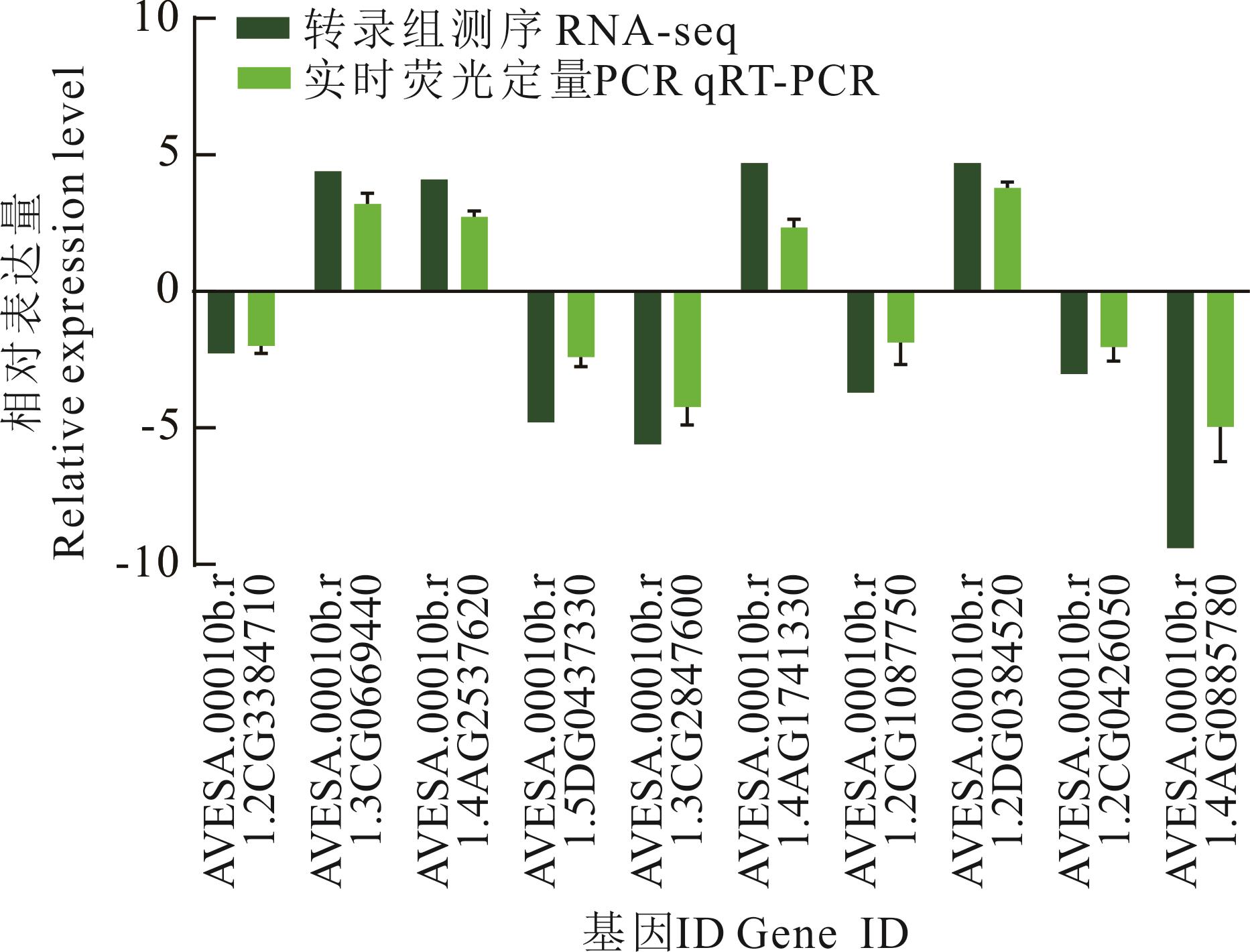
Fig.9 qRT-PCR validation of transcriptome data

Fig.10 Tissue-specific expression of candidate genes
| [1] | Liu W H, Jia Z F, Liang G L. The current situation, problems and suggestions for the development of China’s oat feed industry. Qinghai Science and Technology, 2020, 27(3): 82-85. |
| 刘文辉, 贾志锋, 梁国玲. 我国饲用燕麦产业发展现状及存在的问题和建议. 青海科技, 2020, 27(3): 82-85. | |
| [2] | Ye X L, Gan Z, Wan Y, et al. Advances and perspectives in forage oat breeding. Acta Prataculturae Sinica, 2023, 32(2): 160-177. |
| 叶雪玲, 甘圳, 万燕, 等. 饲用燕麦育种研究进展与展望. 草业学报, 2023, 32(2): 160-177. | |
| [3] | Chen X, Wu B, Zhang Z W. Evaluation of adaptability and stability for important agronomic traits of oat (Avena spp.) germplasm resources. Journal of Plant Genetic Resources, 2016, 17(4): 577-585. |
| 陈新, 吴斌, 张宗文. 燕麦种质资源重要农艺性状适应性和稳定性评价. 植物遗传资源学报, 2016, 17(4): 577-585. | |
| [4] | Milach S, Rines H W, Phillips R L, et al. Inheritance of a new dwarfing gene in oat. Crop Science, 1998, 38(2): 356-360. |
| [5] | Brown P D, Mckenzie R, Mikaelsen K. Agronomic, genetic, and cytologic evaluation of a vigorous new semidwarf oat. Crop Science, 1980, 20(3): 303-306. |
| [6] | Xu Y H. Fine mapping of oat dwarfing gene Dw6. Chengdu: Sichuan Agricultural University, 2023. |
| 徐颖红. 燕麦矮秆基因Dw6的精细定位. 成都: 四川农业大学, 2023. | |
| [7] | Milach S C K, Rines H W, Phillips R L. Molecular genetic mapping of dwarfing genes in oat. Theoretical & Applied Genetics, 1997, 95(5/6): 783-790. |
| [8] | Morikawa T. Genetic analysis on dwarfness of wild oat, Avena fatua. The Janpanese Journal of Genetics, 1989, 64: 363-371. |
| [9] | Zhang X B. Map-based cloning and functional analysis of leaf shape gene CFL2 and plant height gene SD38 in rice. Chongqing: Southwest University, 2021. |
| 张孝波. 水稻叶形基因CFL2和株高基因SD38的图位克隆与功能分析. 重庆: 西南大学, 2021. | |
| [10] | Yamamuro C, Ihara Y, Wu X, et al. Loss of function of a rice brassinosteroid insensitive1 homolog prevents internode elongation and bending of the lamina joint. The Plant Cell, 2000, 12(9): 1591-1605. |
| [11] | Zhang J, Liu X, Li S, et al. The rice semi-dwarf mutant sd37, caused by a mutation in CYP96B4, plays an important role in the fine-tuning of plant growth. PLoS One, 2014, 9(2): e88068. |
| [12] | Schefe J H, Lehmann K E, Buschmann I R, et al. Quantitative real-time RT-PCR data analysis: Current concepts and the novel “gene expression’s CT difference” formula. Journal of Molecular Medicine, 2006, 84(11): 901-910. |
| [13] | Yang F, Ye R, Ma C, et al. Toxicity evaluation, toxin screening and its intervention of the jellyfish Phacellophora camtschatica based on a combined transcriptome-proteome analysis. Ecotoxicology and Environmental Safety, 2022, 46(6): 1-12. |
| [14] | Luo J. Brassica napus L. dwarf traits proteome and transcriptome joint analysis. Guiyang: Guizhou Normal University, 2021. |
| 罗京. 甘蓝型油菜矮化性状的蛋白质组和转录组联合分析. 贵阳: 贵州师范大学, 2021. | |
| [15] | Li H, He X W, Gao Y F, et al. Integrative analysis of transcriptome, proteome, and phosphoproteome reveals potential roles of photosynthesis antenna proteins in response to brassinosteroids signaling in maize. Plants, 2023, 12(6): 1290-1307. |
| [16] | Lin J, Zheng X, Xia J, et al. Integrative analysis of the transcriptome and proteome reveals the molecular responses of tobacco to boron deficiency. BMC Plant Biology, 2024, 24(1): 689-707. |
| [17] | Wang Y J, Lu W J, Zhao J, et al. Transcriptome dynamics of dominant maize dwarf Dwarf11 (D11) revealed by RNA-seq and co-expression analysis. Plant Molecular Biology Reporter, 2017, 35(3): 355-365. |
| [18] | Sui J M. Fine mapping of one semidwarf gene sdt3 and candidate-gene screening and functional analysis of the other semidwarf gene sdg in rice (Oryza sativa L.) . Yangzhou: Yangzhou University, 2006. |
| 隋炯明. 水稻半矮秆基因sdt3的精细定位和sdg的克隆与功能分析. 扬州: 扬州大学, 2006. | |
| [19] | Gong Y S, Wei S H, Peng Z S, et al. Genetic study on plant height and its components, partial yield traits in durum wheat ‘ANW16F’. Southwest China Journal of Agricultural Sciences, 2021, 34(2): 229-235. |
| 龚胤书, 魏淑红, 彭正松, 等. 硬粒小麦ANW16F株高及构成因子与部分产量性状遗传研究. 西南农业学报, 2021, 34(2): 229-235. | |
| [20] | Wu M Y. Genetic analysis and gene mapping of three (semi-) dwarf genes in rice. Beijing: Chinese Academy of Agricultural Sciences, 2020. |
| 吴明月. 三个(半)矮秆水稻基因的遗传分析和基因定位. 北京: 中国农业科学院, 2020. | |
| [21] | Lv H K, Zhang J, Wang T Y, et al. The maize d2003, a novel allele of VP8, is required for maize internode elongation. Plant Molecular Biology, 2014, 84(3): 243-257. |
| [22] | Peng Z, Li X, Yang Z, et al. A new reduced height gene found in the tetraploid semi-dwarf wheat landrace Aiganfanmai. Genetics and Molecular Research, 2011, 10(4): 2349-2357. |
| [23] | Song J, Li L, Liu B Y, et al. Fine mapping of reduced height locus RHT26 in common wheat. Theoretical and Applied Genetics, 2023, 136(3): 62-72. |
| [24] | Chen L, Yang Y, Mishina K, et al. RNA-seq analysis of the peduncle development of Rht12 dwarf plants and primary mapping of Rht12 in common wheat. Cereal Research Communications, 2020, 48(2): 1-9. |
| [25] | Shan Q Q. Analysis of allelic variaions of wheat plant height regulation genes Rht-1 and GID1 and their interaction mechansim. Zhengzhou: Henan Agricultural University, 2018. |
| 单强强. 小麦株高调控基因Rht-1和GID1的等位变异分析及其编码蛋白的互作机制. 郑州: 河南农业大学, 2018. | |
| [26] | Wang H M. Characterization of the expression patterns of tomato SlGH3.2 and its potential functions in rice plants. Nanjing: Nanjing Agricultural University, 2015. |
| 王慧敏. 番茄SlGH3.2的表达特征及在水稻中的功能研究分析. 南京: 南京农业大学, 2015. | |
| [27] | Ai G. Functional dissection of SlGH3-15 in tomato. Wuhan: Huazhong Agricultural University, 2017. |
| 艾国. 番茄SlGH3-15基因的功能解析. 武汉: 华中农业大学, 2017. | |
| [28] | Kazuhito A, Fumio T. C-terminal extension of rice glutamate decarboxylase (OsGAD2) functions as an autoinhibitory domain and overexpression of a truncated mutant results in the accumulation of extremely high levels of GABA in plant cells. Journal of Experimental Botany, 2007, 58(10): 2699-2707. |
| [29] | Jia Y T. Function analysis of transcription factor bHLH146 in Arabidopsis thaliana. Changchun: Jilin University, 2022. |
| 贾雨彤. 拟南芥转录因子bHLH146的功能研究. 长春: 吉林大学, 2022. | |
| [30] | Qi W W, Sun F, Wang Q J, et al. Rice ethylene-response AP2/ERF factor OsEATB restricts internode elongation by down-regulating a gibberellin biosynthetic gene. Plant Physiology, 2011, 157(1): 216-228. |
| [31] | Ma Z M, Wu T, Huang K, et al. A novel AP2/ERF transcription factor, OsRPH1, negatively regulates plant height in rice. Frontiers in Plant Science, 2020, 11(13): 709-724. |
| [1] | Gui FU, Yu-ping LIU, Xu SU, Rong-ju QU, Zha-xi CAIRANG. Analysis of SSR characterization in full-length transcriptome and development of SSR molecular markers for Littledalea racemosa [J]. Acta Prataculturae Sinica, 2025, 34(7): 107-119. |
| [2] | Ting MA, Fen-qi CHEN, Yong WANG, Xue HA, Ya-jun LI, Hui-ling MA. Differentially expressed genes and related pathways in root systems of Astragalus cicer under NaCl stress [J]. Acta Prataculturae Sinica, 2025, 34(4): 104-123. |
| [3] | Rui-juan SANG, Chao-jie CUI, Yun HE, Xiao-xia ZHANG, Jin YAO, Chun-yang DONG, Hao SUN, Ying-hua SHI, Xiao-yan ZHU, De-feng LI. Lodging resistance and production performance of 18 autumn-sown forage oat varieties in northern Henan Province [J]. Acta Prataculturae Sinica, 2024, 33(8): 74-85. |
| [4] | Shuo LI, Pei-ying LI, Zong-jiu SUN, Wen LI. Transcriptome analysis-based bermudagrass root RNA sequencing data under drought stress [J]. Acta Prataculturae Sinica, 2024, 33(4): 186-198. |
| [5] | Bing ZENG, Pan-pan SHANG, Bing-na SHEN, Yin-chen WANG, Ming-hao QU, Yang YUAN, Lei BI, Xing-yun YANG, Wen-wen LI, Xiao-li ZHOU, Yu-qian ZHENG, Wen-qiang GUO, Yan-long FENG, Bing ZENG. Differentially expressed genes and related pathways in root systems of Dactylis glomerata under flooding stress [J]. Acta Prataculturae Sinica, 2024, 33(2): 93-111. |
| [6] | Jing-bo YU, Hui-li ZHANG, Jin LI, Hao GUAN, Qing-ping ZHOU, Shi-yong CHEN. A multi-trait evaluation of phosphorus efficiency of 38 forage oat cultivars at the seedling stage [J]. Acta Prataculturae Sinica, 2024, 33(11): 161-171. |
| [7] | Wen-long LI, Feng LI, Zhong-juan ZHANG, Dian-qing WANG, Huan WANG, Hui-qing JIN, Mu-re TE, Zhi-ling HU, Ya TAO. A performance evaluation of two crops of forage oats per year in the northern Ordos Plateau [J]. Acta Prataculturae Sinica, 2024, 33(1): 159-168. |
| [8] | Hao ZHANG, Hai-ying HU, Hui-xia LI, Hai-ming HE, Shuang MA, Feng-hua MA, Ke-chen SONG. Physiological response and transcriptome analysis of the desert steppe dominant plant Lespedeza potaninii to drought stress [J]. Acta Prataculturae Sinica, 2023, 32(7): 188-205. |
| [9] | Ting CUI, Yong WANG, Hui-ling MA. Analysis of the key exogenous IAA-induced gene expression levels and metabolic pathways involved in long-distance translocation of Cd in Poa pratensis [J]. Acta Prataculturae Sinica, 2023, 32(6): 146-156. |
| [10] | Xue-ling YE, Zhen GAN, Yan WAN, Da-bing XIANG, Xiao-yong WU, Qi WU, Chang-ying LIU, Yu FAN, Liang ZOU. Advances and perspectives in forage oat breeding [J]. Acta Prataculturae Sinica, 2023, 32(2): 160-177. |
| [11] | Ya TAO, Li-jun XU, Feng LI, Wen-long LI, Qi-zhong SUN, Chang XU, Ke-jian LIN. The Leymus chinensis industry in China needs to be urgently revitalized [J]. Acta Prataculturae Sinica, 2023, 32(11): 188-198. |
| [12] | Feng LI, Wen-long LI, Xue LI, Zhong-juan ZHANG, Lin-po BAI, Yu-fei ZHAO, Ya TAO. A multi-trait evaluation of the performance of 16 forage oat varieties in central and southern Heilongjiang Province [J]. Acta Prataculturae Sinica, 2023, 32(10): 82-92. |
| [13] | Lu-juan SUN, Jian-jun HE, Jun-cheng WANG, Li-rong YAO, Er-jing SI, Ke YANG, Bao-chun LI, Xiao-le MA, Xun-wu SHANG, Ya-xiong MENG, Hua-jun WANG. Development of SSR markers based on full-length transcriptome sequencing and genetic diversity analysis of Halogeton glomeratus [J]. Acta Prataculturae Sinica, 2022, 31(8): 199-210. |
| [14] | Jing ZHOU, Si-qi CHEN, Wen-jiao SHI, Fu-lin YANG, Hui LIN, Zhan-xi LIN. Transcriptome analyses of functional genes in young leaves and roots of Giant Juncao [J]. Acta Prataculturae Sinica, 2021, 30(2): 143-155. |
| [15] | Xin-zhu CHEN, Jian-guo ZHANG. Effects of cutting time and plant height of ‘Reyan No.4’ king grass on distribution of lactic acid bacteria and silage fermentation quality [J]. Acta Prataculturae Sinica, 2021, 30(1): 150-158. |
| Viewed | ||||||
|
Full text |
|
|||||
|
Abstract |
|
|||||
