
ISSN 1004-5759 CN 62-1105/S
Acta Prataculturae Sinica ›› 2027, Vol. 36 ›› Issue (1): 26-43.DOI: 10.11686/cyxb2026012
Previous Articles Next Articles
Tao-yang YANG1,2( ), Ajisaihan1,3, Wurilige1,3, Surilige1,3, Dian-lin YANG1, Hai-fang ZHANG1(), Jian-ning ZHAO1,2()
Received:2026-01-13
Revised:2026-03-26
Online:2027-01-20
Published:2026-11-25
Contact:
Hai-fang ZHANG,Jian-ning ZHAO
Tao-yang YANG, Ajisaihan, Wurilige, Surilige, Dian-lin YANG, Hai-fang ZHANG, Jian-ning ZHAO. Effects of chemical control of Euphorbia fischeriana on soil microbial community structure and assembly processes in a meadow steppe[J]. Acta Prataculturae Sinica, 2027, 36(1): 26-43.
编号 Code | 除草剂 Herbicides | 有效成分及剂型 Active ingredient & formulation | 用量 Dosage | 生产厂家 Manufacturer |
|---|---|---|---|---|
| H1 | 三氯吡氧乙酸Triclopyr | 48%乳油48%EC | 4.20 L·hm-2 | 科迪华农业科技有限责任公司Corteva Agricultural Technology Co., Ltd. |
| H2 | 草甘膦Glyphosate | 41%水剂41% AS | 4.60 L·hm-2 | 侨昌现代农业有限公司Qiaochang Modern Agriculture Co., Ltd. |
| H3 | 苯磺隆Tribenuron-methyl | 75%水分散粒剂75% WDG | 16.00 g·hm-2 | 山东胜邦绿野化学有限公司Shandong Shengbang Green Chemical Co., Ltd. |
| H4 | 氯氨吡啶酸Aminopyralid | 21%水剂21% AS | 0.45 L·hm-2 | 科迪华农业科技有限责任公司Corteva Agricultural Technology Co., Ltd. |
| H5 | 氯氟吡氧乙酸Fluroxypyr | 20%乳油20% EC | 0.90 L·hm-2 | 天津市华宇农药有限公司Tianjin Huayu Pesticide Co., Ltd. |
| H6 | 氟磺胺草醚Fomesafen | 25%水剂25% AS | 1.00 L·hm-2 | 山东滨农科技有限公司Shandong Binnong Technology Co., Ltd. |
| H7 | 乙羧氟草醚Fluoroglycofen-ethyl | 10%微乳剂10% micro-emulsion (ME) | 75.00 g·hm-2 | 河南瀚斯作物保护有限公司Henan Hansi Crop Protection Co., Ltd. |
Table 1 Herbicide type and dosage
编号 Code | 除草剂 Herbicides | 有效成分及剂型 Active ingredient & formulation | 用量 Dosage | 生产厂家 Manufacturer |
|---|---|---|---|---|
| H1 | 三氯吡氧乙酸Triclopyr | 48%乳油48%EC | 4.20 L·hm-2 | 科迪华农业科技有限责任公司Corteva Agricultural Technology Co., Ltd. |
| H2 | 草甘膦Glyphosate | 41%水剂41% AS | 4.60 L·hm-2 | 侨昌现代农业有限公司Qiaochang Modern Agriculture Co., Ltd. |
| H3 | 苯磺隆Tribenuron-methyl | 75%水分散粒剂75% WDG | 16.00 g·hm-2 | 山东胜邦绿野化学有限公司Shandong Shengbang Green Chemical Co., Ltd. |
| H4 | 氯氨吡啶酸Aminopyralid | 21%水剂21% AS | 0.45 L·hm-2 | 科迪华农业科技有限责任公司Corteva Agricultural Technology Co., Ltd. |
| H5 | 氯氟吡氧乙酸Fluroxypyr | 20%乳油20% EC | 0.90 L·hm-2 | 天津市华宇农药有限公司Tianjin Huayu Pesticide Co., Ltd. |
| H6 | 氟磺胺草醚Fomesafen | 25%水剂25% AS | 1.00 L·hm-2 | 山东滨农科技有限公司Shandong Binnong Technology Co., Ltd. |
| H7 | 乙羧氟草醚Fluoroglycofen-ethyl | 10%微乳剂10% micro-emulsion (ME) | 75.00 g·hm-2 | 河南瀚斯作物保护有限公司Henan Hansi Crop Protection Co., Ltd. |
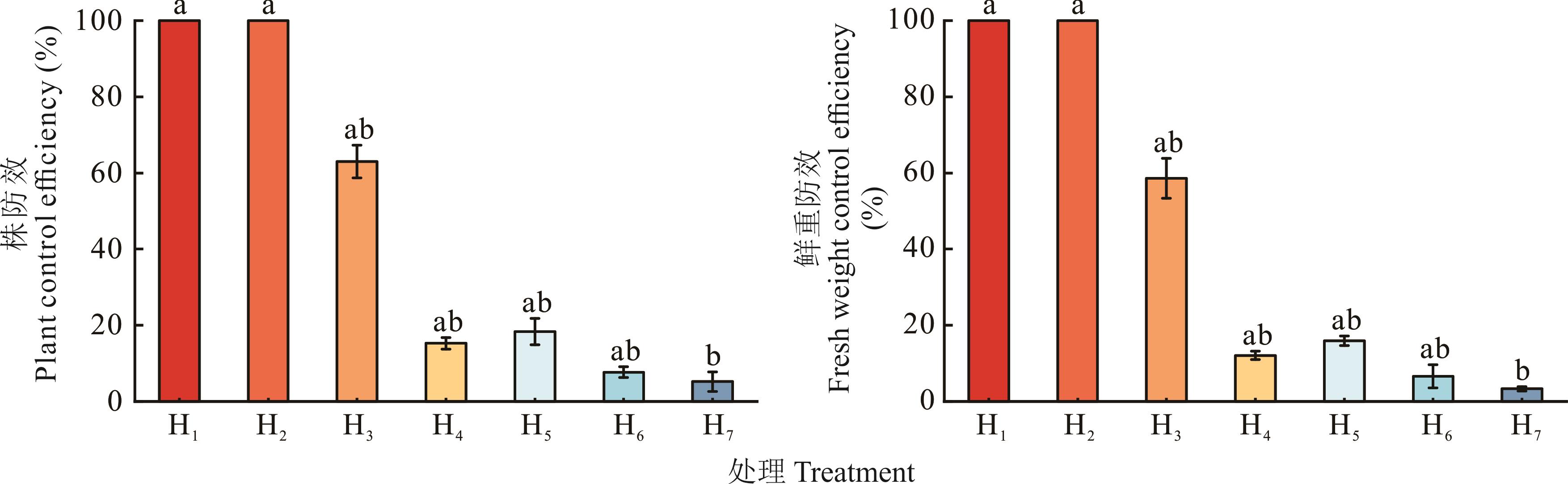
Fig.1 Control efficiency of different herbicides treatment on plant number and fresh weight of E. fischeriana
| 处理Treatment | 30 d | 360 d |
|---|---|---|
| 三氯吡氧乙酸Triclopyr | 7.92±3.24 | ND |
| 草甘膦Glyphosate | ND | ND |
| 苯磺隆Tribenuron-methyl | ND | ND |
| 氯氨吡啶酸Aminopyralid | ND | ND |
| 氯氟吡氧乙酸Fluroxypyr | ND | ND |
| 氟磺胺草醚Fomesafen | 79.46±18.86 | ND |
| 乙羧氟草醚Fluoroglycofen-ethyl | ND | ND |
Table 2 Residues of 7 herbicides in soil at 30 and 360 days after application (ng·g-1)
| 处理Treatment | 30 d | 360 d |
|---|---|---|
| 三氯吡氧乙酸Triclopyr | 7.92±3.24 | ND |
| 草甘膦Glyphosate | ND | ND |
| 苯磺隆Tribenuron-methyl | ND | ND |
| 氯氨吡啶酸Aminopyralid | ND | ND |
| 氯氟吡氧乙酸Fluroxypyr | ND | ND |
| 氟磺胺草醚Fomesafen | 79.46±18.86 | ND |
| 乙羧氟草醚Fluoroglycofen-ethyl | ND | ND |
处理 Treatment | pH | 土壤含水量 Soil water content (%) | 有机质 Organic matter (g·kg-1) | 全氮 Total nitrogen (g·kg-1) | 铵态氮 Ammonium nitrogen (mg·kg-1) | 硝态氮 Nitrate nitrogen (mg·kg-1) | 全磷 Total phosphorus (g·kg-1) | 速效磷 Available phosphorus (g·kg-1) |
|---|---|---|---|---|---|---|---|---|
| CK | 6.31±0.05a | 14.35±1.44a | 54.83±0.78a | 4.13±0.39a | 5.78±0.43a | 13.08±1.61a | 0.46±0.02a | 11.13±1.76a |
| H1 | 6.24±0.05a | 15.15±1.81a | 54.39±0.69a | 3.46±0.33a | 6.29±0.89a | 13.61±0.89a | 0.48±0.02a | 10.16±0.98a |
| H2 | 6.29±0.02a | 16.44±0.89a | 54.98±0.18a | 3.37±0.18a | 6.54±0.25a | 14.92±1.01a | 0.50±0.03a | 12.79±1.75a |
| H3 | 6.24±0.01a | 14.93±2.08a | 54.06±1.11a | 3.52±0.47a | 6.00±0.57a | 11.28±1.80a | 0.45±0.04a | 11.71±1.49a |
| H4 | 6.23±0.05a | 13.69±1.64a | 52.58±0.63a | 3.49±0.43a | 5.58±0.40a | 11.90±1.44a | 0.44±0.02a | 9.76±1.70a |
| H5 | 6.18±0.06a | 14.32±1.19a | 53.43±0.65a | 3.66±0.29a | 5.72±0.34a | 13.49±1.05a | 0.45±0.04a | 11.17±1.42a |
| H6 | 6.16±0.08a | 14.15±0.79a | 54.21±1.01a | 3.32±0.31a | 5.56±0.39a | 13.49±0.89a | 0.44±0.03a | 12.05±1.25a |
| H7 | 6.16±0.04a | 14.44±1.22a | 54.62±0.57a | 3.39±0.42a | 5.53±0.36a | 14.17±1.65a | 0.46±0.03a | 9.95±0.92a |
Table 3 Effects of 7 herbicides on soil physicochemical properties
处理 Treatment | pH | 土壤含水量 Soil water content (%) | 有机质 Organic matter (g·kg-1) | 全氮 Total nitrogen (g·kg-1) | 铵态氮 Ammonium nitrogen (mg·kg-1) | 硝态氮 Nitrate nitrogen (mg·kg-1) | 全磷 Total phosphorus (g·kg-1) | 速效磷 Available phosphorus (g·kg-1) |
|---|---|---|---|---|---|---|---|---|
| CK | 6.31±0.05a | 14.35±1.44a | 54.83±0.78a | 4.13±0.39a | 5.78±0.43a | 13.08±1.61a | 0.46±0.02a | 11.13±1.76a |
| H1 | 6.24±0.05a | 15.15±1.81a | 54.39±0.69a | 3.46±0.33a | 6.29±0.89a | 13.61±0.89a | 0.48±0.02a | 10.16±0.98a |
| H2 | 6.29±0.02a | 16.44±0.89a | 54.98±0.18a | 3.37±0.18a | 6.54±0.25a | 14.92±1.01a | 0.50±0.03a | 12.79±1.75a |
| H3 | 6.24±0.01a | 14.93±2.08a | 54.06±1.11a | 3.52±0.47a | 6.00±0.57a | 11.28±1.80a | 0.45±0.04a | 11.71±1.49a |
| H4 | 6.23±0.05a | 13.69±1.64a | 52.58±0.63a | 3.49±0.43a | 5.58±0.40a | 11.90±1.44a | 0.44±0.02a | 9.76±1.70a |
| H5 | 6.18±0.06a | 14.32±1.19a | 53.43±0.65a | 3.66±0.29a | 5.72±0.34a | 13.49±1.05a | 0.45±0.04a | 11.17±1.42a |
| H6 | 6.16±0.08a | 14.15±0.79a | 54.21±1.01a | 3.32±0.31a | 5.56±0.39a | 13.49±0.89a | 0.44±0.03a | 12.05±1.25a |
| H7 | 6.16±0.04a | 14.44±1.22a | 54.62±0.57a | 3.39±0.42a | 5.53±0.36a | 14.17±1.65a | 0.46±0.03a | 9.95±0.92a |
处理 Treatment | β-1,4-葡萄糖苷酶 β-1,4-glucosidase | 过氧化物酶 Peroxidase | 多酚氧化酶 Polyphenol oxidase | N-乙酰-β-D-葡萄糖苷酶 N-acetyl-β-D-glucosaminidase | 脲酶 Urease | 酸性磷酸酶 Acid phosphatase |
|---|---|---|---|---|---|---|
| CK | 1.09±0.06ab | 57.40±2.04a | 10.19±0.77a | 0.33±0.04a | 1.28±0.08ab | 4.24±0.19a |
| H1 | 1.05±0.04bc | 57.90±2.57a | 9.97±0.49a | 0.21±0.05a | 1.17±0.12ab | 3.95±0.20a |
| H2 | 0.85±0.09cd | 57.29±3.38a | 9.29±0.88a | 0.26±0.03a | 0.62±0.03c | 3.98±0.48a |
| H3 | 0.93±0.08bc | 54.48±3.89a | 10.20±1.10a | 0.23±0.07a | 1.53±0.19a | 4.07±0.40a |
| H4 | 1.01±0.11bc | 46.86±2.62a | 9.70±0.70a | 0.25±0.04a | 1.26±0.21ab | 4.19±0.45a |
| H5 | 1.04±0.04ab | 48.79±1.59a | 10.38±0.82a | 0.26±0.01a | 1.16±0.12ab | 4.24±0.39a |
| H6 | 0.72±0.06d | 52.08±5.87a | 11.08±0.49a | 0.21±0.02a | 1.04±0.08b | 3.87±0.37a |
| H7 | 1.28±0.05a | 54.73±3.00a | 9.30±1.01a | 0.25±0.04a | 1.20±0.15ab | 4.66±0.11a |
Table 4 Effects of different herbicide treatments on soil enzyme activities (mg·d-1·g-1)
处理 Treatment | β-1,4-葡萄糖苷酶 β-1,4-glucosidase | 过氧化物酶 Peroxidase | 多酚氧化酶 Polyphenol oxidase | N-乙酰-β-D-葡萄糖苷酶 N-acetyl-β-D-glucosaminidase | 脲酶 Urease | 酸性磷酸酶 Acid phosphatase |
|---|---|---|---|---|---|---|
| CK | 1.09±0.06ab | 57.40±2.04a | 10.19±0.77a | 0.33±0.04a | 1.28±0.08ab | 4.24±0.19a |
| H1 | 1.05±0.04bc | 57.90±2.57a | 9.97±0.49a | 0.21±0.05a | 1.17±0.12ab | 3.95±0.20a |
| H2 | 0.85±0.09cd | 57.29±3.38a | 9.29±0.88a | 0.26±0.03a | 0.62±0.03c | 3.98±0.48a |
| H3 | 0.93±0.08bc | 54.48±3.89a | 10.20±1.10a | 0.23±0.07a | 1.53±0.19a | 4.07±0.40a |
| H4 | 1.01±0.11bc | 46.86±2.62a | 9.70±0.70a | 0.25±0.04a | 1.26±0.21ab | 4.19±0.45a |
| H5 | 1.04±0.04ab | 48.79±1.59a | 10.38±0.82a | 0.26±0.01a | 1.16±0.12ab | 4.24±0.39a |
| H6 | 0.72±0.06d | 52.08±5.87a | 11.08±0.49a | 0.21±0.02a | 1.04±0.08b | 3.87±0.37a |
| H7 | 1.28±0.05a | 54.73±3.00a | 9.30±1.01a | 0.25±0.04a | 1.20±0.15ab | 4.66±0.11a |

Fig.2 Relative abundance of bacterial and fungal communities at phylum and genus levels under different herbicide treatments

Fig.3 Alpha diversity of soil bacteria and fungi under different herbicide treatments
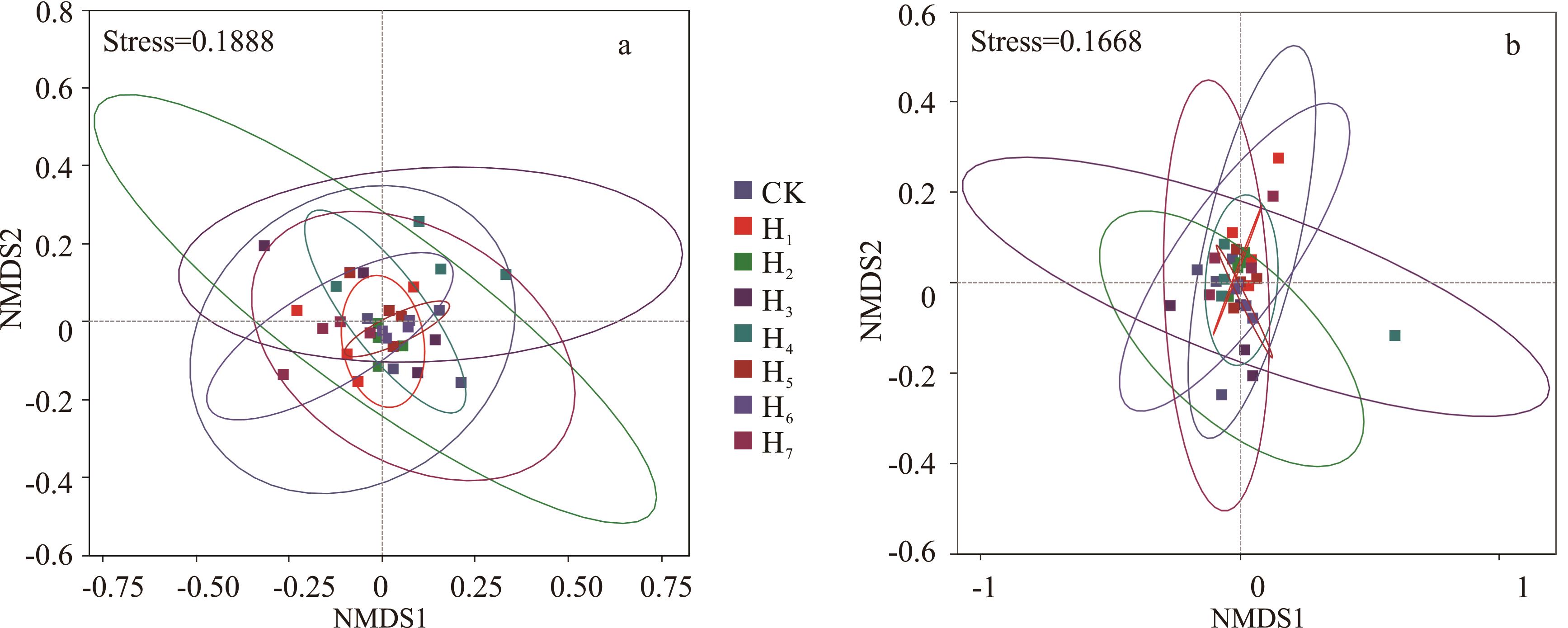
Fig.4 β-diversity of soil bacteria (a) and fungi (b) under different herbicide treatments

Fig.5 LEfSe analysis of soil bacterial (a) and fungal (b) communities under different herbicide treatments

Fig.6 Correlation analysis between dominant species at the genus level and soil factors under different herbicide treatments
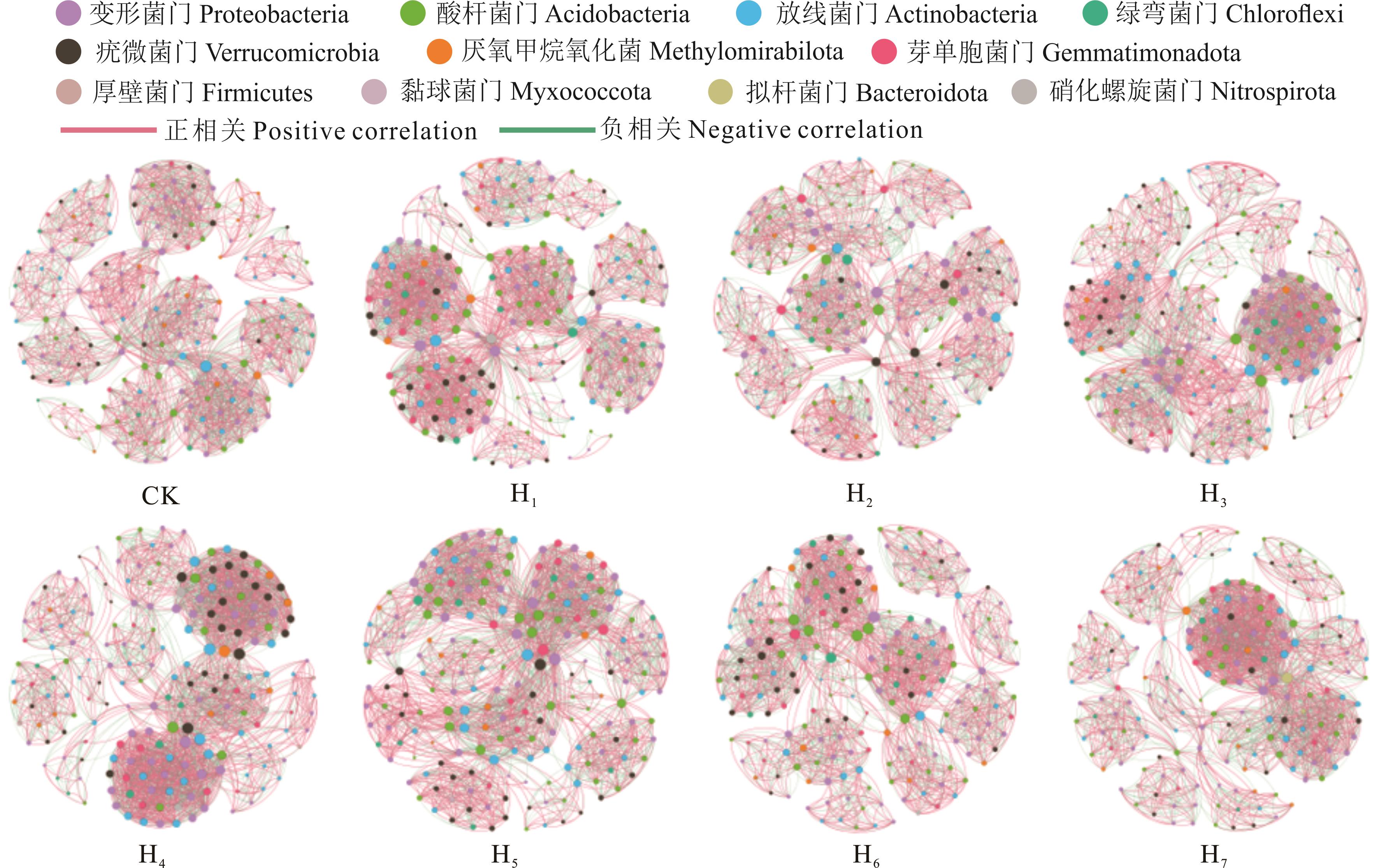
Fig.7 Co-occurrence network of soil bacterial taxa at the phylum level under different herbicide treatments

Fig.8 Co-occurrence network of soil fungal taxa at the phylum level under different herbicide treatments
| 拓扑参数Topological properties | CK | H1 | H2 | H3 | H4 | H5 | H6 | H7 |
|---|---|---|---|---|---|---|---|---|
| 节点数Total nodes | 200 | 200 | 200 | 200 | 200 | 200 | 200 | 200 |
| 边数Total edges | 2139 | 2399 | 2097 | 2318 | 2655 | 2445 | 2186 | 2325 |
| 正相关占比Proportion of positive edges (%) | 50.94 | 54.31 | 51.55 | 53.49 | 54.65 | 52.60 | 54.71 | 52.69 |
| 负相关占比Proportion of negative edges (%) | 48.06 | 45.69 | 48.45 | 46.51 | 45.35 | 47.40 | 45.29 | 47.31 |
| 网络直径Network diameter | 6 | 6 | 6 | 6 | 7 | 6 | 8 | 6 |
| 平均度Average degree | 21.39 | 23.99 | 20.97 | 23.18 | 26.55 | 24.45 | 21.86 | 23.25 |
| 平均路径长度Average path length | 3.01 | 2.84 | 3.04 | 2.78 | 3.07 | 2.87 | 3.54 | 2.99 |
| 平均聚类系数Average clustering coefficient | 0.95 | 0.96 | 0.94 | 0.94 | 0.94 | 0.93 | 0.94 | 0.95 |
Table 5 Topological structure of soil bacterial network under different herbicide treatments
| 拓扑参数Topological properties | CK | H1 | H2 | H3 | H4 | H5 | H6 | H7 |
|---|---|---|---|---|---|---|---|---|
| 节点数Total nodes | 200 | 200 | 200 | 200 | 200 | 200 | 200 | 200 |
| 边数Total edges | 2139 | 2399 | 2097 | 2318 | 2655 | 2445 | 2186 | 2325 |
| 正相关占比Proportion of positive edges (%) | 50.94 | 54.31 | 51.55 | 53.49 | 54.65 | 52.60 | 54.71 | 52.69 |
| 负相关占比Proportion of negative edges (%) | 48.06 | 45.69 | 48.45 | 46.51 | 45.35 | 47.40 | 45.29 | 47.31 |
| 网络直径Network diameter | 6 | 6 | 6 | 6 | 7 | 6 | 8 | 6 |
| 平均度Average degree | 21.39 | 23.99 | 20.97 | 23.18 | 26.55 | 24.45 | 21.86 | 23.25 |
| 平均路径长度Average path length | 3.01 | 2.84 | 3.04 | 2.78 | 3.07 | 2.87 | 3.54 | 2.99 |
| 平均聚类系数Average clustering coefficient | 0.95 | 0.96 | 0.94 | 0.94 | 0.94 | 0.93 | 0.94 | 0.95 |
| 拓扑参数Topological properties | CK | H1 | H2 | H3 | H4 | H5 | H6 | H7 |
|---|---|---|---|---|---|---|---|---|
| 节点数Total nodes | 200 | 200 | 200 | 200 | 200 | 200 | 200 | 200 |
| 边数Total edges | 2388 | 2351 | 2420 | 2477 | 2697 | 2382 | 2956 | 2888 |
| 正相关占比Proportion of positive edges (%) | 67.46 | 68.61 | 62.27 | 75.70 | 69.00 | 71.24 | 67.12 | 72.23 |
| 负相关占比Proportion of negative edges (%) | 32.54 | 31.39 | 37.73 | 24.30 | 31.00 | 28.76 | 32.88 | 27.77 |
| 网络直径Network diameter | 5 | 5 | 5 | 5 | 5 | 5 | 5 | 5 |
| 平均度Average degree | 23.88 | 23.51 | 24.20 | 24.77 | 26.97 | 23.82 | 29.56 | 28.88 |
| 平均路径长度Average path length | 2.72 | 2.74 | 2.91 | 2.74 | 2.72 | 2.68 | 2.63 | 2.57 |
| 平均聚类系数Average clustering coefficient | 0.84 | 0.85 | 0.84 | 0.87 | 0.82 | 0.86 | 0.85 | 0.82 |
Table 6 Topological structure of soil fungal network under different herbicide treatments
| 拓扑参数Topological properties | CK | H1 | H2 | H3 | H4 | H5 | H6 | H7 |
|---|---|---|---|---|---|---|---|---|
| 节点数Total nodes | 200 | 200 | 200 | 200 | 200 | 200 | 200 | 200 |
| 边数Total edges | 2388 | 2351 | 2420 | 2477 | 2697 | 2382 | 2956 | 2888 |
| 正相关占比Proportion of positive edges (%) | 67.46 | 68.61 | 62.27 | 75.70 | 69.00 | 71.24 | 67.12 | 72.23 |
| 负相关占比Proportion of negative edges (%) | 32.54 | 31.39 | 37.73 | 24.30 | 31.00 | 28.76 | 32.88 | 27.77 |
| 网络直径Network diameter | 5 | 5 | 5 | 5 | 5 | 5 | 5 | 5 |
| 平均度Average degree | 23.88 | 23.51 | 24.20 | 24.77 | 26.97 | 23.82 | 29.56 | 28.88 |
| 平均路径长度Average path length | 2.72 | 2.74 | 2.91 | 2.74 | 2.72 | 2.68 | 2.63 | 2.57 |
| 平均聚类系数Average clustering coefficient | 0.84 | 0.85 | 0.84 | 0.87 | 0.82 | 0.86 | 0.85 | 0.82 |

Fig.9 Soil bacterial and fungal community assembly under different herbicide treatments
| [1] | Xie W X. The study on extraction, purification, identification, antitumor and antibacterial effects of terpenoids in Euphorbia fischeriana. Guangzhou: Guangdong University of Technology, 2015. |
| 谢文仙. 狼毒大戟三萜的提取纯化、鉴定与抑瘤抑菌等作用研究. 广州: 广东工业大学, 2015. | |
| [2] | Wang Y X, Wang Z F, Cheng Y X, et al. The roles of toxic and harmful grass in grassland agro-ecosystems. Pratacultural Science, 2014, 31(3): 381-387. |
| 王迎新, 王召锋, 程云湘, 等. 浅议毒害草在草地农业生态系统中的作用. 草业科学, 2014, 31(3): 381-387. | |
| [3] | Deng Y Y. Secondary metabolites of three plants and their biological functions. Shenyang: Shenyang Agricultural University, 2019. |
| 邓彦彦. 三种植物的次生代谢产物及生物功能研究. 沈阳: 沈阳农业大学, 2019. | |
| [4] | Peng F H. Study on the diversity and spatial distribution pattern of three common poisonous plants in meadow grassland of Dumont County. Daqing: Heilongjiang Bayi Agricultural University, 2019. |
| 彭芳华. 杜蒙县草甸草原三种常见有毒植物多样性及空间分布格局研究. 大庆: 黑龙江八一农垦大学, 2019. | |
| [5] | Wen L, Dong S K, Li Y Y, et al. The effects of biotic and abiotic factors on the spatial heterogeneity of alpine grassland vegetation at a small scale on the Qinghai-Tibet Plateau (QTP), China. Environmental Monitoring and Assessment, 2013, 185(10): 8051-8064. |
| [6] | Ao T G, Xiao Y Z, Sun L, et al. Present situation, problems and sustainable development measures of Hulunbuir forage industry. Acta Agrestia Sinica, 2024, 32(3): 661-666. |
| 敖特根, 肖燕子, 孙林, 等. 呼伦贝尔饲草产业发展现状、问题与可持续发展对策. 草地学报, 2024, 32(3): 661-666. | |
| [7] | Zhu B B, Wei J, Sun S H, et al. Distribution and prevention and control practice of common poisonous grasses in Hulunbuir grassland. Journal of Grassland and Forage Science, 2025, 46(3): 48-51. |
| 朱宾宾, 伟军, 孙双红, 等. 呼伦贝尔草原常见毒害草区域分布与防控实践. 草学, 2025, 46(3): 48-51. | |
| [8] | Shi Y X, He J, Zhang J, et al. Chemical constituents of Euphorbia fischeriana. Chinese Traditional and Herbal Drugs, 2020, 51(8): 2107-2111. |
| 史影雪, 赫军, 张佳, 等. 狼毒大戟化学成分研究. 中草药, 2020, 51(8): 2107-2111. | |
| [9] | Wei J C, Gao Y N, Huang H H, et al. Euphorfinoids A and B, a pair of ent-atisane diterpenoid epimers from the roots of Euphorbia fischeriana, and their bioactivities. Natural Product Research, 2023, 37(8): 1300-1309. |
| [10] | Chi X X, Ma C Y, Zou Z H, et al. Efficacy test of five types of chemical herbicides on Euphorbia fisheriana. Journal of Weed Science, 2017, 35(2): 55-60. |
| 迟晓雪, 马崇勇, 邹志和, 等. 5种化学除草剂防除狼毒大戟药效试验. 杂草学报, 2017, 35(2): 55-60. | |
| [11] | Guo T, Yu Z H, Xue Y, et al. Screening and safety evaluation of herbicides for weed control in tobacco fields in Guizhou. Journal of Henan Agricultural Sciences, 2024, 53(5): 112-122. |
| 郭涛, 余知和, 薛原, 等. 贵州烟田杂草防控除草剂筛选与安全性评价. 河南农业科学, 2024, 53(5): 112-122. | |
| [12] | Yu H Y, Li L X. Study on influence of applying herbicide to control Ligularia virgaurea on grassland vegetation. Qinghai Prataculture, 2018, 27(1): 7-10. |
| 于红妍, 李林霞. 防除草地黄帚橐吾药剂筛选试验研究. 青海草业, 2018, 27(1): 7-10. | |
| [13] | Chen C, Wang Q H, Mo C H, et al. Control efficiency of forefront on Oxytropis ochrocephala and its influence on rangeland vegetation. Grassland and Turf, 2015, 35(3): 72-77. |
| 陈超, 王庆海, 莫重辉, 等. 迈士通除草剂对天然草地毒草黄花棘豆的防除效果及其植被的影响. 草原与草坪, 2015, 35(3): 72-77. | |
| [14] | Pang N N, Cui Y, Hu J Y. Weather dependent dynamics of the herbicides florasulam, carfentrazone-ethyl, fluroxypyr-meptyl and fluroxypyr in wheat fields through field studies and computational simulation. Chemosphere, 2016, 165(1): 320-328. |
| [15] | Gao L, Ding Y. Progress in research and practice of restoration of degraded grassland around the world. Acta Prataculturae Sinica, 2022, 31(10): 189-205. |
| 高丽, 丁勇. 世界退化草地恢复研究和实践进展. 草业学报, 2022, 31(10): 189-205. | |
| [16] | Thiour-Mauprivez C, Martin-Laurent F, Calvayrac C, et al. Effects of herbicide on non-target microorganisms: Towards a new class of biomarkers? Science of the Total Environment, 2019, 684: 314-325. |
| [17] | Bulgarelli D, Garrido-Oter R, Münch P C, et al. Structure and function of the bacterial root microbiota in wild and domesticated barley. Cell Host & Microbe, 2015, 17(3): 392-403. |
| [18] | Ma Q Y, Li Q Q, Wang J, et al. Exposure to three herbicide mixtures influenced maize root-associated microbial community structure, function and the network complexity. Environmental Pollution, 2023, 336(11): 1-17. |
| [19] | Yang Y S. Application of biological weeding bacteria in Camellia oleiferaforest and effect on soil health. Changsha: Central South University of Forestry and Technology, 2025. |
| 杨昱晟. 生物除草菌在油茶林中的应用及其对土壤健康的影响. 长沙: 中南林业科技大学, 2025. | |
| [20] | Zhang H P, Zhang Z H, Song J J, et al. Reduced bacterial network complexity in agricultural soils after application of the neonicotinoid insecticide thiamethoxam. Environmental Pollution, 2021, 274(96): 157-164. |
| [21] | Tomco P L, Duddleston K N, Schultz E J, et al. Field degradation of aminopyralid and clopyralid and microbial community response to application in Alaskan soils. Environmental Toxicology and Chemistry, 2016, 35(2): 485-493. |
| [22] | Sibalekile A, Araya T, Hernandez J C, et al. Glyphosate-microbial interactions: Metagenomic insights and future directions. Frontiers in Microbiology, 2025, 16(16): 1570235. |
| [23] | Liu M M, Kang S, Yao C. Research progress of QuEChERS method in pesticide mult-residue analysis. Chinese Journal of Pesticide Science, 2013, 15(1): 8-22. |
| 刘满满, 康澍, 姚成. QuEChERS方法在农药多残留检测中的应用研究进展. 农药学学报, 2013, 15(1): 8-22. | |
| [24] | Bao S D. Soil analysis in agricultural chemistry. Beijing: China Agriculture Press, 2008. |
| 鲍士旦. 土壤农业化学分析(第三版). 北京: 中国农业出版社, 2008. | |
| [25] | Chen Y Z, Chang Y N, Sun J, et al. Effects of long-term nitrogen application on soil bacterial community structure, functional groups, and assembly processes in tea gardens. Environmental Science, 2025, 41(83): 1-20. |
| 陈玉真, 常云妮, 孙君, 等. 长期施氮对茶园土壤细菌群落结构、功能类群及群落构建的影响. 环境科学, 2025, 41(83): 1-20. | |
| [26] | Wu X, Wang J T, Liu Y X, et al. Effects of quinclorac on tobacco growth and bacterial community in rhizosphere soil. Southwest China Journal of Agricultural Sciences, 2025, 38(4): 809-819. |
| 吴曦, 王继婷, 刘艳霞, 等. 二氯喹啉酸对烟草生长与根际土壤细菌群落的影响. 西南农业学报, 2025, 38(4): 809-819. | |
| [27] | Wang L, Hamel C, Lu P A, et al. Using enzyme activities as an indicator of soil fertility in grassland-an academic dilemma. Frontiers in Plant Science, 2023, 14: 1175946. |
| [28] | Mei J Y, Gan D B, Zhu E Y, et al. Research progress on soil enzyme activity of Eucalyptus plantation. South China Forestry Science, 2021, 49(4): 42-46. |
| 梅嘉仪, 甘东波, 朱恩永, 等. 桉树人工林土壤酶活性研究进展. 南方林业科学, 2021, 49(4): 42-46. | |
| [29] | Zhou X G, Zuo X Q, Wen Y G, et al. Effects of herbicide on understory plant and soil microbial communities in Eucalyptus plantations. Acta Ecologica Sinica, 2021, 41(17): 6749-6763. |
| 周晓果, 左晓庆, 温远光, 等. 除草剂对桉树人工林下植物及土壤微生物群落的影响. 生态学报, 2021, 41(17): 6749-6763. | |
| [30] | Wang Z D, Liu G Y, Yu Y, et al. Effects of glyphosate herbicide on the activities of soil enzyme. Journal of Henan Institute of Science and Technology (Natural Science Edition), 2020, 48(6): 37-42. |
| 王振东, 刘根源, 余阳, 等. 草甘膦对土壤酶活性的影响. 河南科技学院学报(自然科学版), 2020, 48(6): 37-42. | |
| [31] | Zhang Q M, Zhu L, Wang J, et al. Effects of fomesafen on soil enzyme activity, microbial population, and bacterial community composition. Environmental Monitoring & Assessment, 2014, 186(5): 2801-2812. |
| [32] | Cheng F S, You L H, Yu J L, et al. Effects of cold-season green manure on soil biochemical properties and the microbial community in a Castanea henryi orchard, China. Acta Prataculturae Sinica, 2021, 30(11): 62-75. |
| 程分生, 尤龙辉, 余锦林, 等. 冷季型绿肥对锥栗园土壤生化性质及微生物群落的影响. 草业学报, 2021, 30(11): 62-75. | |
| [33] | Bais H P, Weir T L, Perry L G, et al. The role of root exudates in rhizosphere interations with plants and other organisms. Annual Review of Plant Biology, 2006, 57: 233-266. |
| [34] | Kuzyakov Y. Priming effects: Interactions between living and dead organic matter. Soil Biology & Biochemistry, 2010, 42(9): 1363-1371. |
| [35] | Chen W M, Xu L L, Wu J J, et al. Effect of two pyridine herbicides on Stelleropsis tianschanica community and evaluation on yield and selectivity to gramineous pastures. Journal of Weed Science, 2016, 34(1): 43-46, 48-49. |
| 陈卫民, 徐林林, 吴加军, 等. 2种吡啶类除草剂对天山假狼毒群落影响和禾本科牧草产草量及安全性评价. 杂草学报, 2016, 34(1): 43-46, 48-49. | |
| [36] | Burns R G, DeForest J L, Marxsen J, et al. Soil enzymes in a changing environment: Current knowledge and future directions. Soil Biology & Biochemistry, 2013, 58(63): 216-234. |
| [37] | Wang Y H, Du L W, Liu H J, et al. Halosulfuron methyl did not have a significant effect on diversity and community of sugarcane rhizosphere microflora. Journal of Hazardous Materials, 2020, 399(6): 123040. |
| [38] | She C C, Huang Y J, Xiao B, et al. Spatial differentiation characteristics of soil bacterial communities in the eastern Inner Mongolia grassland and their driving factors. Journal of Northeast Forestry University, 2025, 53(4): 126-134. |
| 佘长超, 黄月军, 肖兵, 等. 内蒙古东部草原土壤细菌群落空间分异特征及其驱动因子. 东北林业大学学报, 2025, 53(4): 126-134. | |
| [39] | Xu W H, Xu H M, Delgado-Baquerizo M, et al. Global meta-analysis reveals positive effects of biochar on soil microbial diversity. Geoderma, 2023, 436(70): 116528. |
| [40] | Chen L, Zhou S W, Yang L L, et al. Effects of different intercropping models on quality and soil environmental factors of Atractylodes lancea. Chinese Archives of Traditional Chinese Medicine, 2025, 58(24): 1-19. |
| 陈璐, 周省委, 杨林林, 等. 不同间作模式对茅苍术质量及土壤环境因子的影响. 中华中医药学刊, 2025, 58(24): 1-19. | |
| [41] | Lu N, Gao W Q, Wang H Y, et al. The latitudinal distribution characteristics of soil bacterial communities in Larixgmelinii var. principis-rupprechtii plantations and the influencing factors. Acta Ecologica Sinica, 2026, 33(6): 1-16. |
| 卢佞, 高文强, 王海燕, 等. 华北落叶松人工林土壤细菌群落的纬度分布特征及其影响因素. 生态学报, 2026, 33(6): 1-16. | |
| [42] | Brewer T E, Handley K M, Carini P, et al. Genome reduction in an abundant and ubiquitous soil bacterium ‘Candidatus Udaeobacter copiosus’. Nature Microbiology, 2017, 2(2): 16198. |
| [43] | Hu L. Effects of composite soil amendments on the improvement of shajiang black soil and wheat growth. Hefei: Hefei University, 2025. |
| 胡亮. 复合改良剂对砂姜黑土改良及小麦生长的影响. 合肥: 合肥大学, 2025. | |
| [44] | Stone B W, Li J H, Koch B J, et al. Nutrients cause consolidation of soil carbon flux to small proportion of bacterial community. Nature Communications, 2021, 12(1): 121-127. |
| [45] | Wei Z B. Study on the coordinated regulation mechanism of inhibitor combined with organic materials on brown soil microorganisms and maize yield. Shenyang: Shenyang Agricultural University, 2025. |
| 魏占波. 抑制剂配伍有机物料对棕壤微生物-玉米产量协同调控机制研究. 沈阳: 沈阳农业大学, 2025. | |
| [46] | Blackwood C B, Waldrop M P, Zak D R, et al. Molecular analysis of fungal communities and laccase genes in decomposing litter reveals differences among forest types but no impact of nitrogen deposition. Environmental Microbiology, 2007, 9(5): 1306-1316. |
| [47] | Zhang X Y. Effects of salinity stress on microbial carbon metabolism characteristics of constructed wetland substrate and its functional mechanism. Jinan: Shandong University, 2024. |
| 张昕怡. 盐度胁迫对人工湿地基质微生物碳代谢特征的影响及其作用机制研究. 济南: 山东大学, 2024. | |
| [48] | Li W X, Wang K B, Wang P L, et al. Impact of glyphosate on soil bacterial communities and degradation mechanisms in large-leaf tea plantations. Journal of Hazardous Materials, 2025, 483: 57-59. |
| [49] | Zhang Z L, Li X Q, Wang H, et al. Preliminary studies on synergism and mechanisms of six organosilicon additives on fomesafen. Chinese Journal of Pesticide Science, 2015, 17(1): 115-118. |
| 张忠亮, 李相全, 王欢, 等. 六种有机硅助剂对氟磺胺草醚的增效作用及其增效机理初探. 农药学学报, 2015, 17(1): 115-118. | |
| [50] | Mori A S, Isbell F, Seidl R. β-diversity, community assembly, and ecosystem functioning. Trends in Ecology & Evolution, 2018, 33(7): 549-564. |
| [1] | Tao-yang YANG, Surilige, Wurilige, Na JIANG, Dian-lin YANG, Mei HONG, Hai-fang ZHANG, Jian-ning ZHAO. Efficacy of chemical control on Euphorbia fischeriana and its effect on other plant communities [J]. Acta Prataculturae Sinica, 2026, 35(9): 129-141. |
| [2] | Tao WANG, Jing LI, Qiang LU, Wen-can KE, Shuai HUANG. Effects of flavonoids from Taraxacum mongolicum and of Bacillus subtilis addition on fermentation quality, antioxidant activity, and aerobic stability of Avena sativa silage [J]. Acta Prataculturae Sinica, 2026, 35(6): 108-121. |
| [3] | Ji-peng TIAN, Xin WANG, Mudasir NAZAR, Bei-yi LIU, Si-ran WANG, Cheng-long DING, Yun-hui CHENG, Jie LI. Changes in non-structural carbohydrates of rice straw between before and after ensiling and additive effects on ensilage fermentation and microbial community structure [J]. Acta Prataculturae Sinica, 2026, 35(6): 131-144. |
| [4] | Tong LIU, Surilige, Na JIANG, Bo PANG, Wurilige, Tao-yang YANG, Hai-fang ZHANG, Jian-ning ZHAO, Dian-lin YANG. Impacts of Euphorbia fischeriana invasion on plant community succession and soil physicochemical properties in Hulunbuir grassland [J]. Acta Prataculturae Sinica, 2026, 35(5): 72-84. |
| [5] | Pan-yang SHI, Wen-qin ZHAO, Jian-rui DONG, Sai CAO, Yu-xia LI, Gui-fang LI. Effects of soil microecological factors on the medicinal quality of Fritillaria pallidiflora [J]. Acta Prataculturae Sinica, 2026, 35(3): 158-169. |
| [6] | Zhao-ming WANG, Li-na ZHENG, Yue-hua ZHANG, Wei ZHAO, Xiang CHEN, Zhen-yu JIA. Bacterial community assembly in the rhizosphere and endosphere of different perennial alfalfa varieties with low fall dormancy rates [J]. Acta Prataculturae Sinica, 2026, 35(2): 195-207. |
| [7] | Surilige, Tao-yang YANG, Wurilige, Na JIANG, Dian-lin YANG, Hai-fang ZHANG, Suriguga. Effects of mowing on key functional traits of the toxic plant Euphorbia fischeriana in the Hulunbuir grassland [J]. Acta Prataculturae Sinica, 2026, 35(11): 119-131. |
| [8] | Xu LUO, Hui MA, Cui HAN, Ya-xin ZHAO, Ying ZHAO, Ying-zhong XIE, Jian-ping LI. Response of aboveground net primary productivity to plant species richness and identification of the factors of influence [J]. Acta Prataculturae Sinica, 2025, 34(9): 26-37. |
| [9] | Ruo-xuan LI, Sheng-zhi-can LI, Yi-tong CHEN, Yu-hao SUN, Pei-zhi YANG, Yan-nong CUI, Ming-xiu LONG, Shu-bin HE. Effects of different planting ratios of broomcorn millet (Panicum miliaceum) on ammonia-oxidizing and denitrifying microorganisms in rhizosphere soil of alfalfa (Medicago sativa) [J]. Acta Prataculturae Sinica, 2025, 34(6): 110-121. |
| [10] | Wen-hui DENG, Ke-chen SONG, Hao ZHANG, Si-yu GUAN, Jia-yi YONG, Hai-ying HU. Structure and diversity characteristics of the rhizosphere microbial community of dominant plants on the desert steppe under changing precipitation [J]. Acta Prataculturae Sinica, 2025, 34(5): 12-26. |
| [11] | Dong-liang SHANG, Hui ZANG. Research progress on the chemical control of annual bluegrass in established golf turf [J]. Acta Prataculturae Sinica, 2025, 34(5): 223-236. |
| [12] | Xiao-dong TU, Jun-fang CUI, Fu-hong KUANG, Chun-pei LI, Jiu-zhen DU, Hong-lan WANG, Xiang-yu TANG. Effects of conversion of alpine meadow to cultivated land on the soil microbial community in northwest Sichuan [J]. Acta Prataculturae Sinica, 2025, 34(2): 54-66. |
| [13] | Chun-yan LI, Qian-jin WANG, Xin-he ZHOU, Wen-jing CAO, Meng-li ZHAO, Fang-bo YU. Effects of Burkholderia sp. SX9 inoculants on Trifolium repens growth and soil improvement [J]. Acta Prataculturae Sinica, 2025, 34(11): 53-65. |
| [14] | Zheng-yan LI, Zhi-ming XU, Yan LI, Yang LI. Effects of short-term continuous cropping of alfalfa on the growth and soil microenvironment of subsequent sorghum-sudan grass hybrid crops in the Jianghuai area [J]. Acta Prataculturae Sinica, 2024, 33(9): 155-168. |
| [15] | Jie ZHAO, Xue-jing YIN, Si-ran WANG, Zhi-hao DONG, Jun-feng LI, Yu-shan JIA, Tao SHAO. Effects of storage time on the fermentation quality, bacterial community composition, and functional profile of sweet sorghum silage [J]. Acta Prataculturae Sinica, 2023, 32(8): 164-175. |
| Viewed | ||||||
|
Full text |
|
|||||
|
Abstract |
|
|||||
