
ISSN 1004-5759 CN 62-1105/S
Acta Prataculturae Sinica ›› 2027, Vol. 36 ›› Issue (1): 66-77.DOI: 10.11686/cyxb2026051
Previous Articles Next Articles
Fa-long HU( ), Qiang CHAI(), Ai-zhong YU, Cai ZHAO, Zhi-long FAN, Wen YIN, Ya-li SUN, Hong FAN, Wei HE, Feng WANG
Received:2026-02-05
Revised:2026-04-23
Online:2027-01-20
Published:2026-11-25
Contact:
Qiang CHAI
Fa-long HU, Qiang CHAI, Ai-zhong YU, Cai ZHAO, Zhi-long FAN, Wen YIN, Ya-li SUN, Hong FAN, Wei HE, Feng WANG. Effects of intercropping with green manure and nitrogen application rate on maize yield formation and nitrogen fertilizer use[J]. Acta Prataculturae Sinica, 2027, 36(1): 66-77.
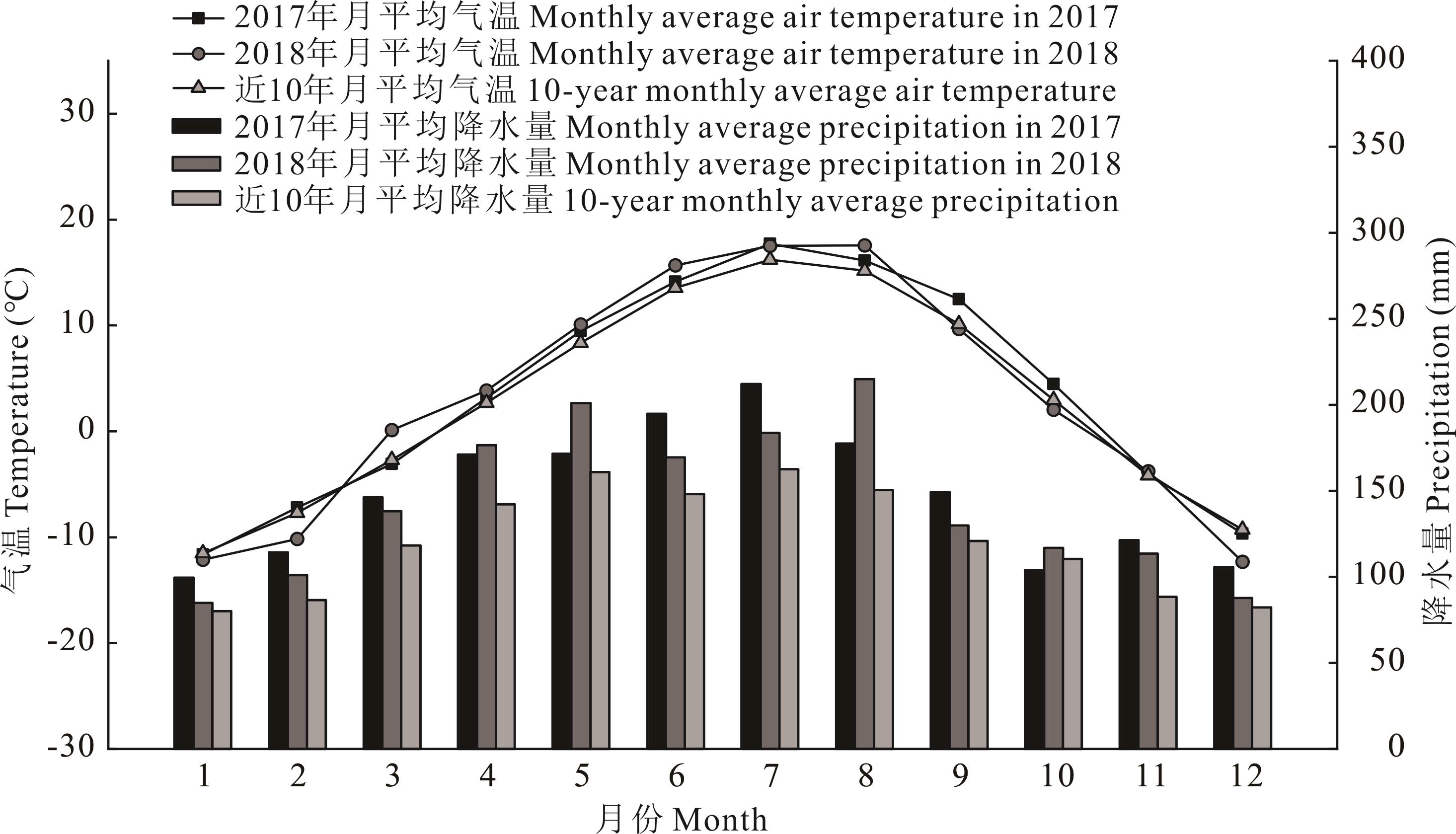
Fig.1 Month-by-month average temperature and precipitation in the test area in 2017-2018
施氮水平 Nitrogen level | 基肥 Base fertilizer | 追肥Top-dressing fertilizer | 总施氮量 Total nitrogen fertilizer rate | |
|---|---|---|---|---|
拔节期 Jointing stage | 灌浆期 Filling stage | |||
| N0 | 0 | 0 | 0 | 0 |
| N1 | 81 | 162 | 27 | 270 |
| N2 | 108 | 216 | 36 | 360 |
Table 1 Nitrogen fertilizer management system of different treatments (kg·hm-2)
施氮水平 Nitrogen level | 基肥 Base fertilizer | 追肥Top-dressing fertilizer | 总施氮量 Total nitrogen fertilizer rate | |
|---|---|---|---|---|
拔节期 Jointing stage | 灌浆期 Filling stage | |||
| N0 | 0 | 0 | 0 | 0 |
| N1 | 81 | 162 | 27 | 270 |
| N2 | 108 | 216 | 36 | 360 |

Fig.2 Plant height and stem diameter of maize in different cropping patterns under various nitrogen fertilizer rates
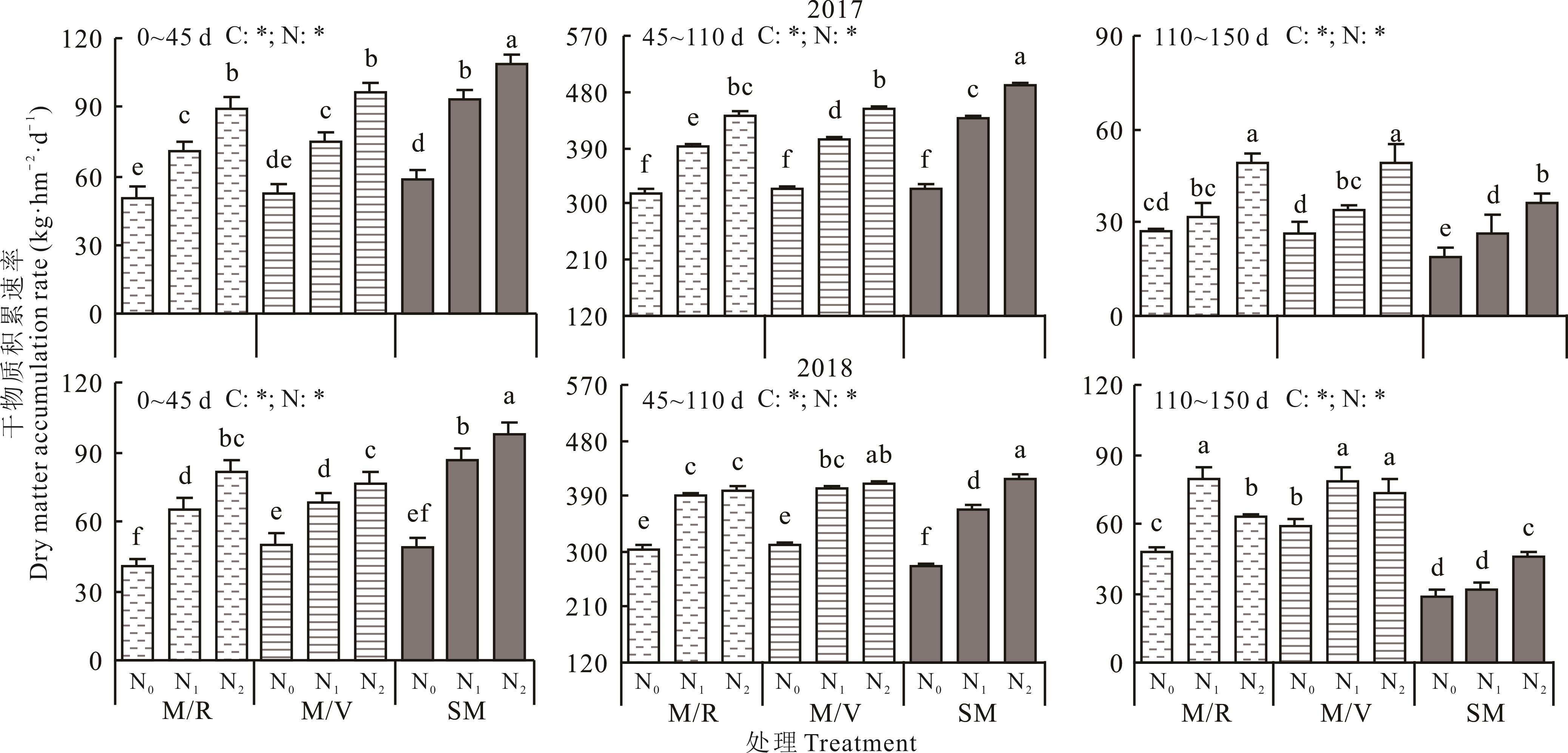
Fig.3 Dry matter accumulation rate of maize in different cropping patterns under various nitrogen fertilizer rates
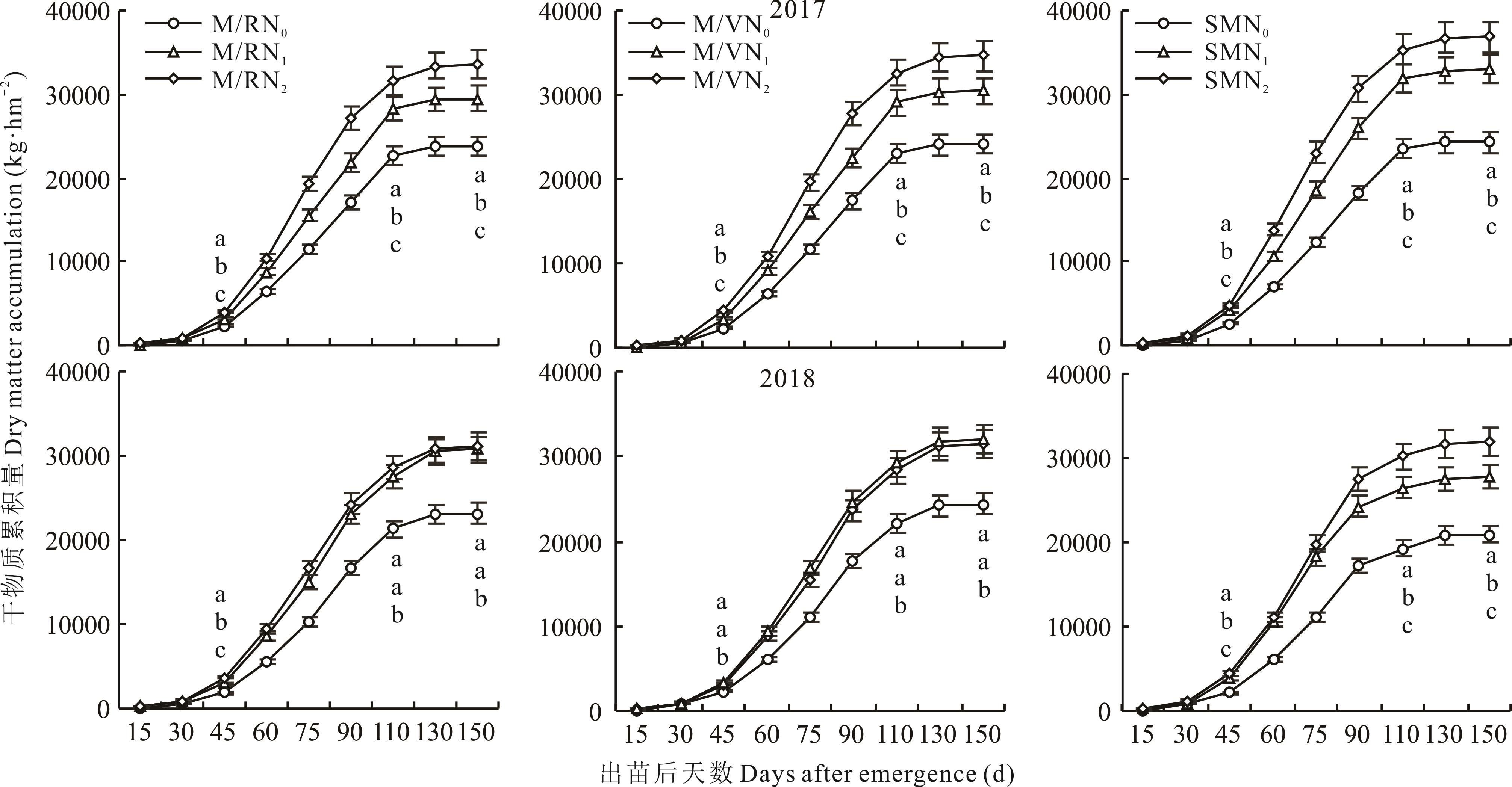
Fig.4 Dry matter accumulation of maize in different cropping patterns under various nitrogen fertilizer rates
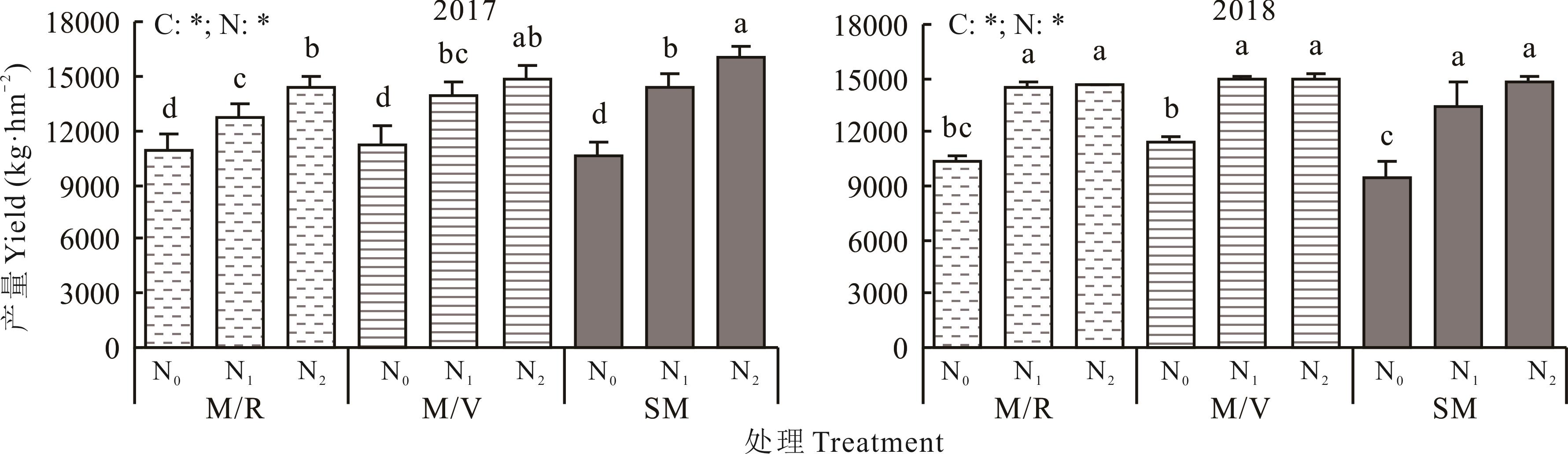
Fig.5 Grain yield of various nitrogen level systems with different cropping patterns
种植模式 Cropping pattern | 施氮水平 Nitrogen fertilizer level | 2017 | 2018 | ||||
|---|---|---|---|---|---|---|---|
穗数SN (×104·hm-2) | 穗粒数KSN | 千粒重 TKW (g) | 穗数SN (×104·hm-2) | 穗粒数 KSN | 千粒重 TKW (g) | ||
玉米间作油菜 Maize-rape intercropping (M/R) | N0 | 8.54de | 382.5d | 336.1cd | 8.25e | 381.9c | 331.0e |
| N1 | 9.02a | 398.8cd | 353.2bc | 9.47a | 422.5b | 363.9bc | |
| N2 | 8.80bc | 433.6b | 379.6a | 9.11b | 427.1b | 377.0ab | |
玉米间作箭筈豌豆 Maize-common vetch intercropping (M/V) | N0 | 8.48e | 416.0bc | 320.1d | 8.70cd | 380.3c | 343.7de |
| N1 | 8.89bc | 431.6b | 363.9ab | 8.92bc | 441.8b | 379.1a | |
| N2 | 8.95ab | 435.8b | 380.3a | 8.92bc | 446.0b | 375.4bc | |
单作玉米 Sole maize (SM) | N0 | 8.42e | 395.0cd | 318.8d | 8.53d | 357.3c | 311.4f |
| N1 | 8.77bc | 438.8b | 375.9a | 8.60d | 451.1b | 347.3d | |
| N2 | 8.72cd | 482.6a | 382.0a | 8.53d | 493.4a | 351.6cd | |
| 种植模式 Cropping pattern (C) | 0.036 | 0.001 | 0.728 | 0.000 | 0.129 | 0.000 | |
| 施氮水平Nitrogen fertilizer level (N) | 0.000 | 0.000 | 0.000 | 0.000 | 0.000 | 0.000 | |
| 种植模式×施氮水平 C×N | 0.346 | 0.027 | 0.091 | 0.000 | 0.033 | 0.420 | |
Table 2 Yield components factor of maize under different cropping patterns and various nitrogen fertilizer rates
种植模式 Cropping pattern | 施氮水平 Nitrogen fertilizer level | 2017 | 2018 | ||||
|---|---|---|---|---|---|---|---|
穗数SN (×104·hm-2) | 穗粒数KSN | 千粒重 TKW (g) | 穗数SN (×104·hm-2) | 穗粒数 KSN | 千粒重 TKW (g) | ||
玉米间作油菜 Maize-rape intercropping (M/R) | N0 | 8.54de | 382.5d | 336.1cd | 8.25e | 381.9c | 331.0e |
| N1 | 9.02a | 398.8cd | 353.2bc | 9.47a | 422.5b | 363.9bc | |
| N2 | 8.80bc | 433.6b | 379.6a | 9.11b | 427.1b | 377.0ab | |
玉米间作箭筈豌豆 Maize-common vetch intercropping (M/V) | N0 | 8.48e | 416.0bc | 320.1d | 8.70cd | 380.3c | 343.7de |
| N1 | 8.89bc | 431.6b | 363.9ab | 8.92bc | 441.8b | 379.1a | |
| N2 | 8.95ab | 435.8b | 380.3a | 8.92bc | 446.0b | 375.4bc | |
单作玉米 Sole maize (SM) | N0 | 8.42e | 395.0cd | 318.8d | 8.53d | 357.3c | 311.4f |
| N1 | 8.77bc | 438.8b | 375.9a | 8.60d | 451.1b | 347.3d | |
| N2 | 8.72cd | 482.6a | 382.0a | 8.53d | 493.4a | 351.6cd | |
| 种植模式 Cropping pattern (C) | 0.036 | 0.001 | 0.728 | 0.000 | 0.129 | 0.000 | |
| 施氮水平Nitrogen fertilizer level (N) | 0.000 | 0.000 | 0.000 | 0.000 | 0.000 | 0.000 | |
| 种植模式×施氮水平 C×N | 0.346 | 0.027 | 0.091 | 0.000 | 0.033 | 0.420 | |
年份 Year | 指标 Index | 与籽粒产量的简单相关系数Simple correlation coefficient with grain yield | 直接通径系数 Direct path coefficient | 间接通径系数Indirect path coefficient | 决策系数 Decision coefficient | ||
|---|---|---|---|---|---|---|---|
| 穗数SN | 穗粒数KSN | 千粒重TKW | |||||
| 2017 | 穗数SN | 0.656 | 0.123 | - | 0.156 | 0.378 | 0.146 |
| 穗粒数KSN | 0.900** | 0.477 | 0.040 | - | 0.383 | 0.631 | |
| 千粒重TKW | 0.959** | 0.510 | 0.091 | 0.358 | - | 0.718 | |
| 2018 | 穗数SN | 0.633 | 0.239 | - | 0.119 | 0.276 | 0.245 |
| 穗粒数KSN | 0.862** | 0.561 | 0.051 | - | 0.251 | 0.652 | |
| 千粒重TKW | 0.916** | 0.399 | 0.165 | 0.352 | - | 0.572 | |
Table 3 Correlation coefficient,path coefficient and decision coefficient of maize between grain yield and yield components under different treatments
年份 Year | 指标 Index | 与籽粒产量的简单相关系数Simple correlation coefficient with grain yield | 直接通径系数 Direct path coefficient | 间接通径系数Indirect path coefficient | 决策系数 Decision coefficient | ||
|---|---|---|---|---|---|---|---|
| 穗数SN | 穗粒数KSN | 千粒重TKW | |||||
| 2017 | 穗数SN | 0.656 | 0.123 | - | 0.156 | 0.378 | 0.146 |
| 穗粒数KSN | 0.900** | 0.477 | 0.040 | - | 0.383 | 0.631 | |
| 千粒重TKW | 0.959** | 0.510 | 0.091 | 0.358 | - | 0.718 | |
| 2018 | 穗数SN | 0.633 | 0.239 | - | 0.119 | 0.276 | 0.245 |
| 穗粒数KSN | 0.862** | 0.561 | 0.051 | - | 0.251 | 0.652 | |
| 千粒重TKW | 0.916** | 0.399 | 0.165 | 0.352 | - | 0.572 | |
| 年份Year | 阶段积累速率 CGR at different stage | 穗数 SN | 穗粒数KSN | 千粒重TKW |
|---|---|---|---|---|
| 2017 | CGR1 | 0.575 | 0.618 | 0.926** |
| CGR2 | 0.667* | 0.869** | 0.957** | |
| CGR3 | 0.684 | 0.484 | 0.756* | |
| 2018 | CGR1 | 0.240 | 0.927* | 0.544 |
| CGR2 | 0.554 | 0.906** | 0.871** | |
| CGR3 | 0.586 | 0.091 | 0.720* |
Table 4 Correlation analysis between dry matter accumulation and yield of maize under various treatments
| 年份Year | 阶段积累速率 CGR at different stage | 穗数 SN | 穗粒数KSN | 千粒重TKW |
|---|---|---|---|---|
| 2017 | CGR1 | 0.575 | 0.618 | 0.926** |
| CGR2 | 0.667* | 0.869** | 0.957** | |
| CGR3 | 0.684 | 0.484 | 0.756* | |
| 2018 | CGR1 | 0.240 | 0.927* | 0.544 |
| CGR2 | 0.554 | 0.906** | 0.871** | |
| CGR3 | 0.586 | 0.091 | 0.720* |
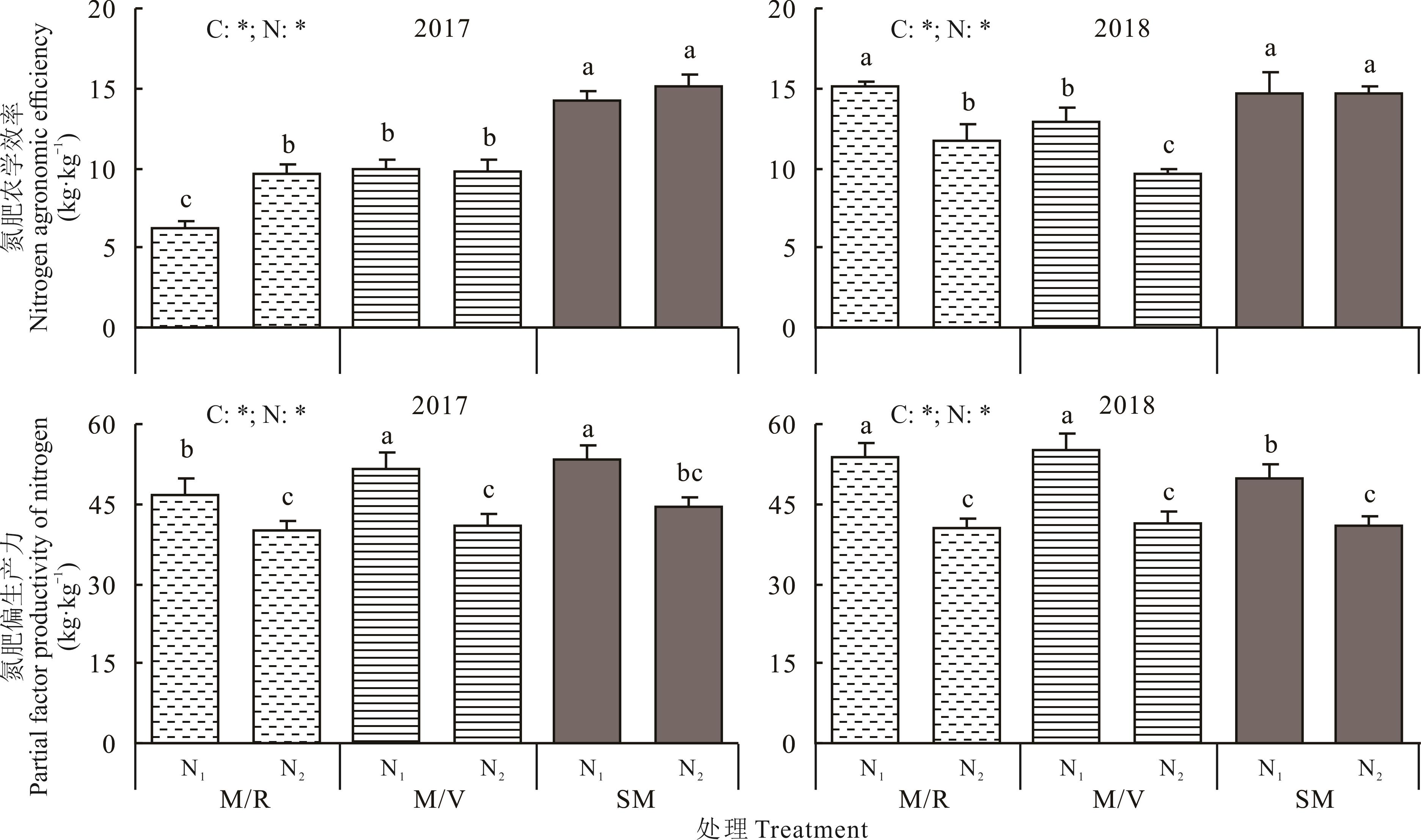
Fig.6 Nitrogen agronomic efficiency and partial factor productivity of nitrogen of maize in different cropping patterns under various nitrogen fertilizer rates
种植模式 Cropping pattern | 施氮水平Nitrogen fertilizer level | 2017 | 2018 | ||||
|---|---|---|---|---|---|---|---|
| 投入IP | 产值OP | 纯收益NR | 投入IP | 产值OP | 纯收益NR | ||
| 玉米间作油菜Maize-rape intercropping (M/R) | N0 | 23538 | 29243e | 5706f | 23538 | 32147cd | 8609d |
| N1 | 24255 | 34549d | 10295e | 24255 | 44192a | 19937a | |
| N2 | 24494 | 39403bc | 14909b | 24494 | 44572a | 20078a | |
| 玉米间作箭筈豌豆Maize-common vetch intercropping (M/V) | N0 | 24588 | 29905e | 5318fg | 24588 | 34804c | 10216c |
| N1 | 25305 | 37205cd | 11901d | 25305 | 45312a | 20007a | |
| N2 | 25544 | 40446b | 14902b | 25544 | 45563a | 20019a | |
| 单作玉米Sole maize (SM) | N0 | 24240 | 28739e | 4499g | 24240 | 29139d | 4899e |
| N1 | 25414 | 39102bc | 13688c | 25414 | 40624b | 15210b | |
| N2 | 25805 | 43550a | 17745a | 25805 | 45202a | 19396a | |
| 种植模式 Cropping pattern (C) | - | 0.016 | <0.001 | - | 0.021 | <0.001 | |
| 施氮水平Nitrogen fertilizer level (N) | - | 0.020 | <0.001 | - | 0.019 | <0.001 | |
| 种植模式×施氮水平C×N | - | 0.089 | <0.001 | - | 0.975 | <0.001 | |
Table 5 Economic benefits of maize under different cropping patterns and various nitrogen fertilizer rates (CNY·hm-2)
种植模式 Cropping pattern | 施氮水平Nitrogen fertilizer level | 2017 | 2018 | ||||
|---|---|---|---|---|---|---|---|
| 投入IP | 产值OP | 纯收益NR | 投入IP | 产值OP | 纯收益NR | ||
| 玉米间作油菜Maize-rape intercropping (M/R) | N0 | 23538 | 29243e | 5706f | 23538 | 32147cd | 8609d |
| N1 | 24255 | 34549d | 10295e | 24255 | 44192a | 19937a | |
| N2 | 24494 | 39403bc | 14909b | 24494 | 44572a | 20078a | |
| 玉米间作箭筈豌豆Maize-common vetch intercropping (M/V) | N0 | 24588 | 29905e | 5318fg | 24588 | 34804c | 10216c |
| N1 | 25305 | 37205cd | 11901d | 25305 | 45312a | 20007a | |
| N2 | 25544 | 40446b | 14902b | 25544 | 45563a | 20019a | |
| 单作玉米Sole maize (SM) | N0 | 24240 | 28739e | 4499g | 24240 | 29139d | 4899e |
| N1 | 25414 | 39102bc | 13688c | 25414 | 40624b | 15210b | |
| N2 | 25805 | 43550a | 17745a | 25805 | 45202a | 19396a | |
| 种植模式 Cropping pattern (C) | - | 0.016 | <0.001 | - | 0.021 | <0.001 | |
| 施氮水平Nitrogen fertilizer level (N) | - | 0.020 | <0.001 | - | 0.019 | <0.001 | |
| 种植模式×施氮水平C×N | - | 0.089 | <0.001 | - | 0.975 | <0.001 | |
| [1] | Li Z Q, Wang J H, Zhang X. A review on the research of decomposition and nutrients release of green manure. Soil and Fertilizer Sciences in China, 2017(4): 8-16. |
| 李增强, 王建红, 张贤. 绿肥腐解及养分释放过程研究进展. 中国土壤与肥料, 2017(4): 8-16. | |
| [2] | Cao W D, Huang H X. Ideas on restoration and development of green manures in China.Soil and Fertilizer Sciences in China, 2009(4): 1-3. |
| 曹卫东, 黄鸿翔. 关于我国恢复和发展绿肥若干问题的思考. 中国土壤与肥料, 2009(4): 1-3. | |
| [3] | Zhang J D, Bao X G, Wang T, et al. Effect of green manure utilization and reduced N fertilizer on wheat yield and soil fertility. Journal of Nuclear Agricultural Sciences, 2011, 25(5): 998-1003. |
| 张久东, 包兴国, 王婷, 等. 增施绿肥与降低氮肥对小麦产量和土壤肥力的影响. 核农学报, 2011, 25(5): 998-1003. | |
| [4] | Qiao J, Yan T M, Xue F, et al. Reduction of nitrogen fertilizer application under different crop rotation systems in paddy fields of Taihu area. Chinese Journal of Eco-Agriculture, 2011, 19(1): 24-31. |
| 乔俊, 颜廷梅, 薛峰, 等. 太湖地区稻田不同轮作制度下的氮肥减量研究. 中国生态农业学报, 2011, 19(1): 24-31. | |
| [5] | Lu B L, Bao X G, Zhang J D, et al. Effects of intercropping green manure forages and nitrogen-reduction on corn yield and soil fertility in Hexi Oasis Irrigation. Agricultural Research in the Arid Areas, 2015, 33(2): 170-175. |
| 卢秉林, 包兴国, 张久东, 等. 间作绿肥饲草与减施氮肥对河西绿洲灌区玉米产量和土壤肥力的影响. 干旱地区农业研究, 2015, 33(2): 170-175. | |
| [6] | Chai Q, Qin A Z, Gan Y T, et al. Higher yield and lower carbon emission by intercropping maize with rape, pea, and wheat in arid irrigation areas. Agronomy for Sustainable Development, 2014, 34(2): 535-543. |
| [7] | Chai Q, Hu F L, Chen G P. Research advance in the mechanism and agronomic regulation of high-efficient use of nitrogen in cereal-legume intercropping. Chinese Journal of Eco-Agriculture, 2017, 25(1): 19-26. |
| 柴强, 胡发龙, 陈桂平. 禾豆间作氮素高效利用机理及农艺调控途径研究进展. 中国生态农业学报, 2017, 25(1): 19-26. | |
| [8] | Fan Z L, Chai Q, Cao W D, et al. Ecosystem service function of green manure and its application in dryland agriculture of China. Chinese Journal of Applied Ecology, 2020, 31(4): 1389-1402. |
| 樊志龙, 柴强, 曹卫东, 等. 绿肥在我国旱地农业生态系统中的服务功能及其应用. 应用生态学报, 2020, 31(4): 1389-1402. | |
| [9] | Li H Y, Hu T C, Cao Q H, et al. Effect of improving soil fertility by planting different green manures in different patterns in dryland. Journal of Plant Nutrition and Fertilizers, 2016, 22(5): 1310-1318. |
| 李红燕, 胡铁成, 曹群虎, 等. 旱地不同绿肥品种和种植方式提高土壤肥力的效果. 植物营养与肥料学报, 2016, 22(5): 1310-1318. | |
| [10] | Li L, Tilman D, Lambers H, et al. Plant diversity and overyielding: insights from belowground facilitation of intercropping in agriculture. New Phytologist, 2014, 203(1): 63-69. |
| [11] | Zhang J D, Bao X G, Cao W D, et al. Effect of intercropping green manure crops on maize yield and soil fertility.Soil and Fertilizer Sciences in China, 2013(4): 43-47. |
| 张久东, 包兴国, 曹卫东, 等. 间作绿肥作物对玉米产量和土壤肥力的影响. 中国土壤与肥料, 2013(4): 43-47. | |
| [12] | Li L, Sun J H, Zhang F S, et al. Wheat/maize or wheat/soybean strip intercropping: Ⅱ. Recovery or compensation of maize and soybean after wheat harvesting. Field Crops Research, 2001, 71(3): 173-181. |
| [13] | Li L, Sun J H, Zhang F S, et al. Wheat/maize or wheat/soybean strip intercropping: Ⅰ. Yield advantage and interspecific interactions on nutrients. Field Crops Research, 2001, 71(2): 123-137. |
| [14] | Tan Y, Hu F L, Chai Q, et al. Expanding row ratio with lowered nitrogen fertilization improves system productivity of maize/pea strip intercropping.European Journal of Agronomy, 2020, 113(1): 125986. |
| [15] | Tang M M, Dong N, Bao X G, et al. Effects of nutrient uptake and utilization on yield of intercropping systems in Northwest China. Journal of China Agricultural University, 2015, 20(5): 48-56. |
| 唐明明, 董楠, 包兴国, 等. 西北地区不同间套作模式养分吸收利用及其对产量优势的影响. 中国农业大学学报, 2015, 20(5): 48-56. | |
| [16] | Zhai L C, Xie R Z, Ming B, et al. Evaluation and analysis of intraspecific competition in maize: A case study on plant density experiment. Journal of Integrative Agriculture,2018, 17(10): 2235-2244. |
| [17] | Zhang X M, Lai X F, Yang X L, et al. Effects of nitrogen application and intercropping ratio on dry matter production and nitrogen use efficiency of the oat and common vetch intercropping system.Journal of Plant Nutrition and Fertilizers, 2018, 24(2): 489-498. |
| 张小明, 来兴发, 杨宪龙, 等. 施氮和燕麦/箭筈豌豆间作比例对系统干物质量和氮素利用的影响. 植物营养与肥料学报, 2018, 24(2): 489-498. | |
| [18] | Liu Y Y, Bu R Y, Tang S, et al. Effect of continuous straw-Chinese milk vetch synergistic return to the field on yield, nutrient accumulation and soil fertility of double cropping rice. Journal of Plant Nutrition and Fertilizers, 2020, 26(6): 1008-1016. |
| 刘颖颖,卜容燕, 唐杉, 等. 连续秸秆-紫云英协同还田对双季稻产量, 养分积累及土壤肥力的影响. 植物营养与肥料学报, 2020, 26(6): 1008-1016. | |
| [19] | Zhang L, Huang J, Gao J S, et al. Effects of long-term green manure and reducing nitrogen applications on rice yield and soil nutrient content. Transactions of the Chinese Society of Agricultural Engineering, 2020, 36(5): 106-112. |
| 张璐, 黄晶, 高菊生, 等. 长期绿肥与氮肥减量配施对水稻产量和土壤养分含量的影响. 农业工程学报, 2020, 36(5): 106-112. | |
| [20] | Liu W, Gen M J, Qin Z G, et al. Effects of co-incorporation of green manure planting and rice straw on soil organic carbon pool and soil enzyme activity in a mono-rice cropping system. Transactions of the Chinese Society of Agricultural Engineering, 2020, 36(7): 125-133. |
| 刘威, 耿明建, 秦自果, 等. 种植绿肥与稻秸协同还田对单季稻田土壤有机碳库和酶活性的影响. 农业工程学报, 2020, 36(7): 125-133. | |
| [21] | Ge J Z, Li S Y, Zhong X Y, et al. Effects of nitrogen application and film mulching on yield performance parameters and nitrogen use efficiency of spring maize in the middle reaches of Yangtze River. Acta Agronomica Sinica, 2014, 40(6): 1081-1092. |
| 葛均筑, 李淑娅, 钟新月, 等. 施氮量与地膜覆盖对长江中游春玉米产量性能及氮肥利用效率的影响. 作物学报, 2014, 40(6): 1081-1092. | |
| [22] | Zhao M, Zhou B Y, Ma W, et al. Theoretical and technical models of quantitative regulation in food crop production system.Acta Agronomica Sinica, 2019, 45(4): 485-498. |
| 赵明, 周宝元, 马玮, 等. 粮食作物生产系统定量调控理论与技术模式. 作物学报, 2019, 45(4): 485-498. | |
| [23] | Zhao J H, Sun J H, Chen W, et al. Yield and biomass accumulation of maize intercropped with different crops. Crops, 2013(4): 120-125. |
| 赵建华, 孙建好, 陈伟, 等. 不同作物与玉米间套作对玉米产量和生物量积累的影响. 作物杂志, 2013(4): 120-125. | |
| [24] | Zhao J H, Sun J H, Li W Q. Effect of film mulching on productivity and interspecific interaction in maize-pea intercropping system. Agricultural Research in the Arid Areas, 2020, 38(2): 164-169. |
| 赵建华, 孙建好, 李伟绮. 覆膜对玉米‖豌豆作物生产力及种间互作的影响.干旱地区农业研究, 2020, 38(2): 164-169. | |
| [25] | Zhao J H, Sun J H, Li L, et al. Effect of maize row spacing on yield of pea/maize intercropping system. Chinese Journal of Eco-Agriculture, 2012, 20(11): 1451-1456. |
| 赵建华, 孙建好, 李隆, 等. 改变玉米行距种植对豌豆/玉米间作体系产量的影响. 中国生态农业学报, 2012, 20(11): 1451-1456. | |
| [26] | Liu R, Chang D N, Gao S J, et al. Nitrogen fixation and transfer efficiency of common vetch and hairy vetch in wheat-vetch intercropping system in northwest China. Journal of Plant Nutrition and Fertilizers, 2020, 26(12): 2184-2194. |
| 刘蕊, 常单娜, 高嵩涓, 等. 西北小麦与豆科绿肥间作体系箭筈豌豆和毛叶苕子生物固氮效率及氮素转移特性. 植物营养与肥料学报, 2020, 26(12): 2184-2194. | |
| [27] | Su X X, Yu A Z, Lyu H Q, et al. Effects of wheat multiple cropping with green manure on grain yield formation and nitrogen absorption and utilization of maize in oasis irrigation area in Northwest China. Journal of Plant Nutrition and Fertilizers, 2022, 28(7): 1208-1218. |
| 苏向向, 于爱忠, 吕汉强, 等. 绿洲灌区小麦复种绿肥并翻压还田对翌年玉米产量形成及氮素吸收利用的影响. 植物营养与肥料学报, 2022, 28(7): 1208-1218. |
| Viewed | ||||||
|
Full text |
|
|||||
|
Abstract |
|
|||||
