
ISSN 1004-5759 CN 62-1105/S
Acta Prataculturae Sinica ›› 2026, Vol. 35 ›› Issue (11): 106-118.DOI: 10.11686/cyxb2025488
Ya-fei QU1,2,3( ), Teng-fei WANG1,2,3, Yi-yin ZHANG1,2,3, Jian-wei SUN4, Yue YOU5, Bin-hong SHI6, Xi-bin LI7, Bin WANG1,2,3, Dan-ni LIANG1,2,3(), Jian LAN1,2,3()
Received:2025-12-02
Revised:2026-01-22
Online:2026-11-20
Published:2026-10-12
Contact:
Dan-ni LIANG,Jian LAN
Ya-fei QU, Teng-fei WANG, Yi-yin ZHANG, Jian-wei SUN, Yue YOU, Bin-hong SHI, Xi-bin LI, Bin WANG, Dan-ni LIANG, Jian LAN. Effects of row ratio configuration on interspecific competition and light use efficiency of silage maize/forage sorghum intercropping systems in the Ningxia Yellow River irrigation area[J]. Acta Prataculturae Sinica, 2026, 35(11): 106-118.
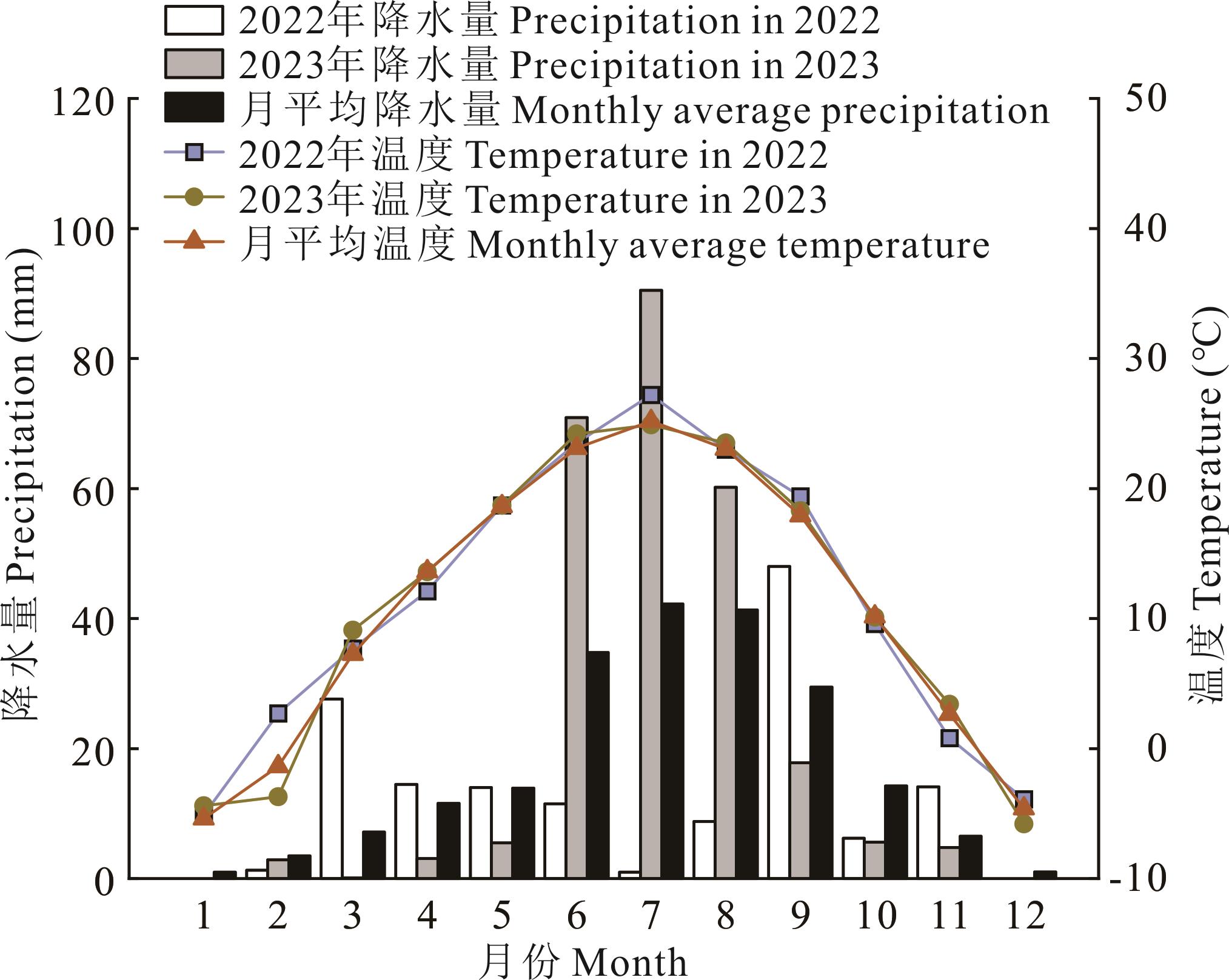
Fig.1 The meteorological data of experimental site
材料名称 Material name | 品种 Variety | 纯净度 Purity (%) | 发芽率Germination rate (%) | 千粒重Thousand seeds weight (g) | 来源 Source |
|---|---|---|---|---|---|
| 饲用高粱S. bicolor | 绿巨人 Green Giant | 99 | 98 | 29.74 | 北京百斯特草业有限公司Beijing Best Grass Industry Co., LTD |
| 青贮玉米Z. mays | 先玉1321 Xianyu 1321 | 98 | 97 | 373.00 | 宁夏农垦茂盛草业有限公司Ningxia Agricultural Reclamation Maosheng Grass Industry Co., LTD |
Table 1 Detailed information of test materials
材料名称 Material name | 品种 Variety | 纯净度 Purity (%) | 发芽率Germination rate (%) | 千粒重Thousand seeds weight (g) | 来源 Source |
|---|---|---|---|---|---|
| 饲用高粱S. bicolor | 绿巨人 Green Giant | 99 | 98 | 29.74 | 北京百斯特草业有限公司Beijing Best Grass Industry Co., LTD |
| 青贮玉米Z. mays | 先玉1321 Xianyu 1321 | 98 | 97 | 373.00 | 宁夏农垦茂盛草业有限公司Ningxia Agricultural Reclamation Maosheng Grass Industry Co., LTD |

Fig.2 Field planting pattern of silage maize and forage sorghum intercropping
年份 Year (Y) | 处理 Treatment (T) | 株高Plant height (cm) | 干草产量 Hay yield (t·hm-2) | 粗蛋白产量 Crude protein yield (kg·hm-2) | |
|---|---|---|---|---|---|
| 青贮玉米Silage maize | 饲用高粱Forage sorghum | ||||
| 2022 | 10M2S | 337.00±6.11a | 300.78±8.44c | 22.03±0.42bc | 1.65±0.01ab |
| 8M4S | 329.33±10.88a | 358.22±4.96a | 24.22±0.88ab | 1.75±0.13a | |
| 6M6S | 327.00±9.07a | 360.33±7.60a | 24.55±1.24a | 1.75±0.07a | |
| 4M8S | 326.78±9.03a | 335.00±5.13b | 21.06±0.96c | 1.47±0.02bc | |
| 2M10S | 333.67±8.45a | 356.56±7.96a | 20.01±0.57cd | 1.42±0.04c | |
| MS | 331.00±8.08a | - | 17.61±0.52d | 1.15±0.02d | |
| SS | - | 347.56±11.63ab | 18.59±0.32d | 1.46±0.04bc | |
| 2023 | 10M2S | 337.90±4.44a | 301.38±10.92c | 22.75±0.33bc | 1.70±0.05a |
| 8M4S | 328.60±6.46a | 357.19±4.06a | 23.53±1.30ab | 1.75±0.13a | |
| 6M6S | 328.03±10.11a | 361.07±8.13a | 25.45±0.62a | 1.78±0.06a | |
| 4M8S | 327.68±9.44a | 335.60±8.77b | 21.13±0.88cd | 1.47±0.02b | |
| 2M10S | 325.57±8.33a | 354.16±6.63a | 19.87±0.55de | 1.41±0.04b | |
| MS | 329.47±7.14a | - | 17.61±0.52e | 1.15±0.02c | |
| SS | - | 345.72±11.51ab | 18.77±0.31e | 1.47±0.06b | |
| 年份Year (Y) | 0.004ns | 0.027ns | 0.136ns | 0.178ns | |
| 处理Treatment (T) | 1.917ns | 29.810*** | 26.394*** | 25.050*** | |
| Y×T | 0.020ns | 0.028ns | 0.256ns | 0.068ns | |
Table 2 Comparison of plant height and yield in different intercropping patterns
年份 Year (Y) | 处理 Treatment (T) | 株高Plant height (cm) | 干草产量 Hay yield (t·hm-2) | 粗蛋白产量 Crude protein yield (kg·hm-2) | |
|---|---|---|---|---|---|
| 青贮玉米Silage maize | 饲用高粱Forage sorghum | ||||
| 2022 | 10M2S | 337.00±6.11a | 300.78±8.44c | 22.03±0.42bc | 1.65±0.01ab |
| 8M4S | 329.33±10.88a | 358.22±4.96a | 24.22±0.88ab | 1.75±0.13a | |
| 6M6S | 327.00±9.07a | 360.33±7.60a | 24.55±1.24a | 1.75±0.07a | |
| 4M8S | 326.78±9.03a | 335.00±5.13b | 21.06±0.96c | 1.47±0.02bc | |
| 2M10S | 333.67±8.45a | 356.56±7.96a | 20.01±0.57cd | 1.42±0.04c | |
| MS | 331.00±8.08a | - | 17.61±0.52d | 1.15±0.02d | |
| SS | - | 347.56±11.63ab | 18.59±0.32d | 1.46±0.04bc | |
| 2023 | 10M2S | 337.90±4.44a | 301.38±10.92c | 22.75±0.33bc | 1.70±0.05a |
| 8M4S | 328.60±6.46a | 357.19±4.06a | 23.53±1.30ab | 1.75±0.13a | |
| 6M6S | 328.03±10.11a | 361.07±8.13a | 25.45±0.62a | 1.78±0.06a | |
| 4M8S | 327.68±9.44a | 335.60±8.77b | 21.13±0.88cd | 1.47±0.02b | |
| 2M10S | 325.57±8.33a | 354.16±6.63a | 19.87±0.55de | 1.41±0.04b | |
| MS | 329.47±7.14a | - | 17.61±0.52e | 1.15±0.02c | |
| SS | - | 345.72±11.51ab | 18.77±0.31e | 1.47±0.06b | |
| 年份Year (Y) | 0.004ns | 0.027ns | 0.136ns | 0.178ns | |
| 处理Treatment (T) | 1.917ns | 29.810*** | 26.394*** | 25.050*** | |
| Y×T | 0.020ns | 0.028ns | 0.256ns | 0.068ns | |
年份 Year (Y) | 处理 Treatment (T) | 青贮玉米偏土地当量比 PLERM | 饲用高粱偏土地当量比 PLERS | 土地当量比 Land equivalent ratio |
|---|---|---|---|---|
| 2022 | 10M2S | 1.11±0.02a | 0.13±0.03e | 1.25±0.05ab |
| 8M4S | 0.95±0.04b | 0.41±0.02d | 1.35±0.03a | |
| 6M6S | 0.70±0.08c | 0.66±0.02c | 1.36±0.09a | |
| 4M8S | 0.38±0.01d | 0.77±0.06b | 1.15±0.07b | |
| 2M10S | 0.21±0.02e | 0.88±0.01a | 1.09±0.03b | |
| MS | - | - | - | |
| SS | - | - | - | |
| 2023 | 10M2S | 1.15±0.06a | 0.13±0.02e | 1.29±0.05ab |
| 8M4S | 0.95±0.04b | 0.36±0.02d | 1.31±0.06ab | |
| 6M6S | 0.73±0.07c | 0.67±0.01c | 1.40±0.06a | |
| 4M8S | 0.38±0.01d | 0.77±0.04b | 1.15±0.05bc | |
| 2M10S | 0.21±0.02e | 0.86±0.01a | 1.07±0.02c | |
| MS | - | - | - | |
| SS | - | - | - | |
| 年份Year (Y) | 0.244ns | 0.384ns | 0.015ns | |
| 处理Treatment (T) | 141.136*** | 279.238*** | 10.755*** | |
| Y×T | 0.094ns | 0.317ns | 0.232ns | |
Table 3 Comparison of land equivalent ratio in different intercropping patterns
年份 Year (Y) | 处理 Treatment (T) | 青贮玉米偏土地当量比 PLERM | 饲用高粱偏土地当量比 PLERS | 土地当量比 Land equivalent ratio |
|---|---|---|---|---|
| 2022 | 10M2S | 1.11±0.02a | 0.13±0.03e | 1.25±0.05ab |
| 8M4S | 0.95±0.04b | 0.41±0.02d | 1.35±0.03a | |
| 6M6S | 0.70±0.08c | 0.66±0.02c | 1.36±0.09a | |
| 4M8S | 0.38±0.01d | 0.77±0.06b | 1.15±0.07b | |
| 2M10S | 0.21±0.02e | 0.88±0.01a | 1.09±0.03b | |
| MS | - | - | - | |
| SS | - | - | - | |
| 2023 | 10M2S | 1.15±0.06a | 0.13±0.02e | 1.29±0.05ab |
| 8M4S | 0.95±0.04b | 0.36±0.02d | 1.31±0.06ab | |
| 6M6S | 0.73±0.07c | 0.67±0.01c | 1.40±0.06a | |
| 4M8S | 0.38±0.01d | 0.77±0.04b | 1.15±0.05bc | |
| 2M10S | 0.21±0.02e | 0.86±0.01a | 1.07±0.02c | |
| MS | - | - | - | |
| SS | - | - | - | |
| 年份Year (Y) | 0.244ns | 0.384ns | 0.015ns | |
| 处理Treatment (T) | 141.136*** | 279.238*** | 10.755*** | |
| Y×T | 0.094ns | 0.317ns | 0.232ns | |
| 因素Factor | 青贮玉米竞争力Aggressivity of silage maize (AM) | 饲用高粱竞争力Aggressivity of forage sorghum (AS) | 青贮玉米相对拥挤系数Relative crowding coefficient of silage maize (KM) | 饲用高粱相对拥挤系数Relative crowding coefficient of forage sorghum (KS) | 青贮玉米竞争比率Competition ratio of silage maize (CRM) | 饲用高粱竞争比率Competition ratio of forage sorghum (CRS) | 系统生产力System productivity (SP) | 叶面积指数Leaf area index (LAI) | 消光系数Extinction coefficient (k) | 截获光合有效辐射Intercepted photosynthetically active radiation (IPAR) | 辐射利用效率Radiation use efficiency (RUE) |
|---|---|---|---|---|---|---|---|---|---|---|---|
| 年份Year | ns | ns | ns | ns | ns | ns | ns | ns | ns | ns | ns |
| 处理Treatment | *** | *** | ** | ** | *** | *** | *** | *** | ** | *** | *** |
| 年份×处理Year×treatment | ns | ns | ns | ns | ns | ns | ns | ns | ns | ns | ns |
Table 4 Variance analysis of different intercropping patterns in interspecific competition, population photosynthetically active radiation and light utilization efficiency
| 因素Factor | 青贮玉米竞争力Aggressivity of silage maize (AM) | 饲用高粱竞争力Aggressivity of forage sorghum (AS) | 青贮玉米相对拥挤系数Relative crowding coefficient of silage maize (KM) | 饲用高粱相对拥挤系数Relative crowding coefficient of forage sorghum (KS) | 青贮玉米竞争比率Competition ratio of silage maize (CRM) | 饲用高粱竞争比率Competition ratio of forage sorghum (CRS) | 系统生产力System productivity (SP) | 叶面积指数Leaf area index (LAI) | 消光系数Extinction coefficient (k) | 截获光合有效辐射Intercepted photosynthetically active radiation (IPAR) | 辐射利用效率Radiation use efficiency (RUE) |
|---|---|---|---|---|---|---|---|---|---|---|---|
| 年份Year | ns | ns | ns | ns | ns | ns | ns | ns | ns | ns | ns |
| 处理Treatment | *** | *** | ** | ** | *** | *** | *** | *** | ** | *** | *** |
| 年份×处理Year×treatment | ns | ns | ns | ns | ns | ns | ns | ns | ns | ns | ns |
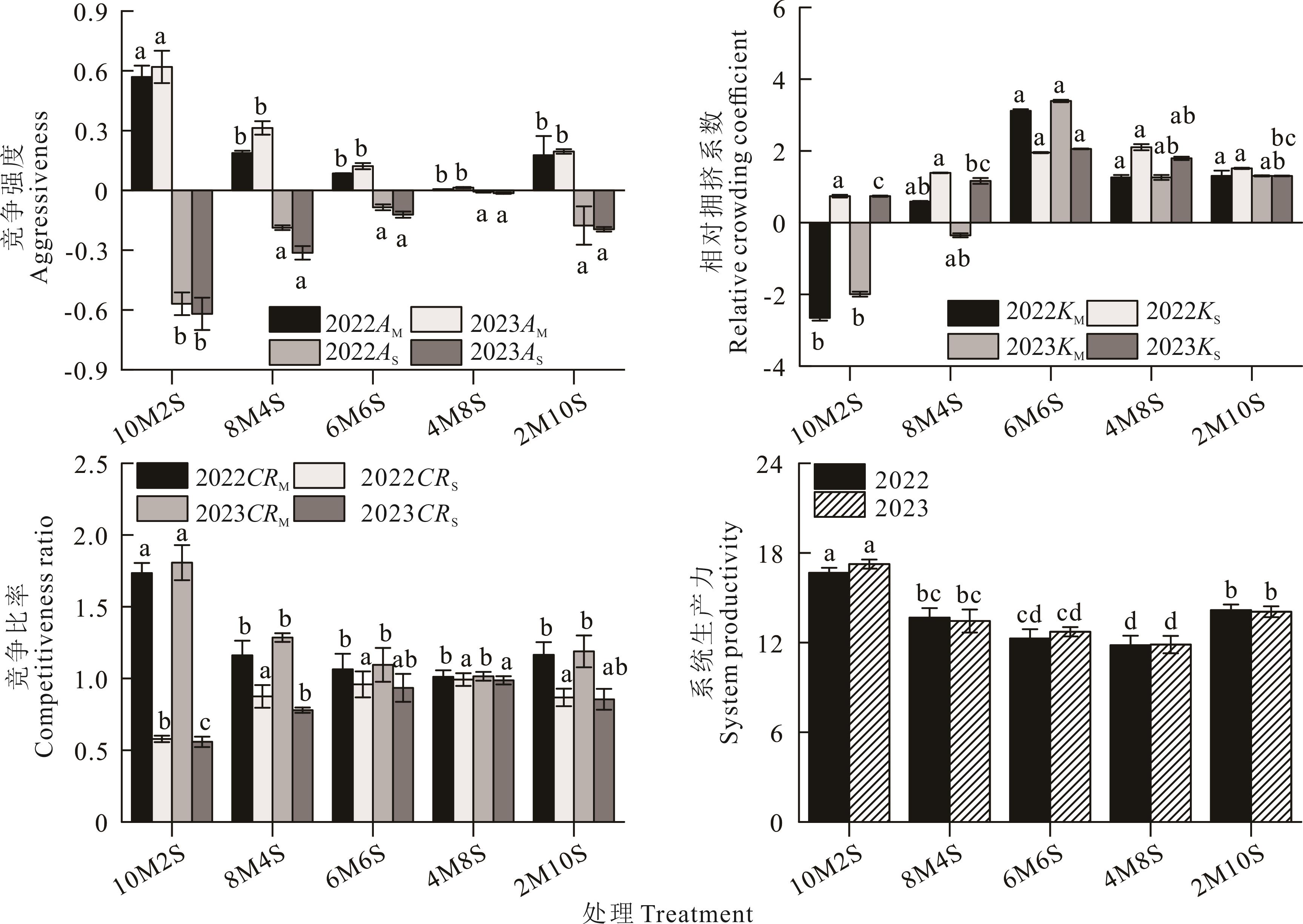
Fig.3 Comparison of interspecific competition among different intercropping patterns

Fig.4 Comparison of leaf area index and extinction coefficient under different intercropping patterns

Fig.5 Comparison of intercepted photosynthetic radiation and radiation use efficiency under different intercropping patterns
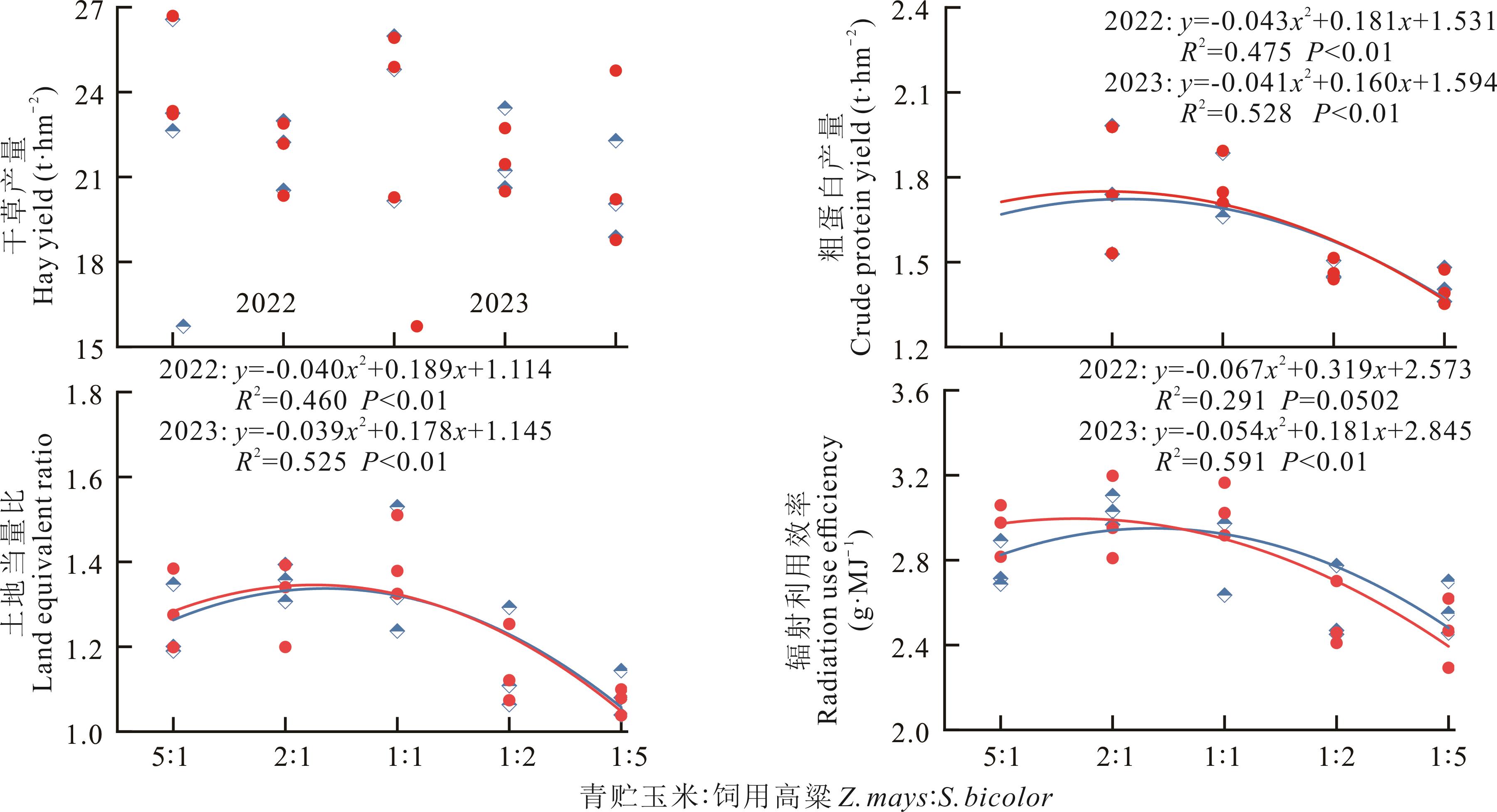
Fig.6 Fitting of different row ratios of silage maize-forage sorghum with productivity, land equivalent ratio and radiation use efficiency
| [1] | Li X Y, Yin X F, Zhou X L, et al. Countermeasures and suggestions for high quality development of forage industry in China. Acta Agrestia Sinica, 2020, 28(4): 889-894. |
| 李新一, 尹晓飞, 周晓丽, 等. 我国饲草产业高质量发展的对策和建议. 草地学报, 2020, 28(4): 889-894. | |
| [2] | Wang T F, Ma X, Liu J L, et al. Analysis of the yield, quality and economic benefits from multiple cropping of fodder oats in the Yellow River irrigation area. Acta Prataculturae Sinica, 2025, 34(4): 27-37. |
| 王腾飞, 马霞, 刘金龙, 等. 引黄灌区复种饲用燕麦种植模式产量、品质及经济效益分析. 草业学报, 2025, 34(4): 27-37. | |
| [3] | Wang J T, Sa D W, Shao L H, et al. Optimizing agricultural structure and accelerating the development of the forage industry. Acta Prataculturae Sinica, 2025, 34(2): 211-220. |
| 王加亭, 撒多文, 邵麟惠, 等. 调整优化农业结构, 加快饲草产业发展. 草业学报, 2025, 34(2): 211-220. | |
| [4] | Ge Y Q, Wang J, Liu R, et al. A dataset of shallow soil moisture for alfalfa in the Ningxia irrigation area of the Yellow River. Frontiers in Plant Science, 2024, 15: 1472930. |
| [5] | Wang B, Shi J M, Wang T F, et al. Effect of nitrogen application on production performance and nitrogen fertilizer contribution of forage sorghum/lablab mixed cropping. Acta Prataculturae Sinica, 2025, 34(4): 53-63. |
| 王斌, 史佳梅, 王腾飞, 等. 施氮对饲用高粱/拉巴豆混播草地生产性能和氮肥贡献率的影响. 草业学报, 2025, 34(4): 53-63. | |
| [6] | Feng Q, He X L, Wang B, et al. A study of mixed sowing effects for oat and common vetch in the Ningxia Yellow River irrigation area. Acta Prataculturae Sinica, 2024, 33(3): 107-119. |
| 冯琴, 何小莉, 王斌, 等. 宁夏引黄灌区燕麦与箭筈豌豆的混播效果研究. 草业学报, 2024, 33(3): 107-119. | |
| [7] | Yan Z L, Ren Q, Fan Z L, et al. Postponed nitrogen application optimizes interspecific interactions and enhances nitrogen use efficiency in wheat-maize intercropping systems in an oasis irrigation region. Acta Agronomica Sinica, 2025, 51(8): 2190-2203. |
| 闫喆林, 任强, 樊志龙, 等. 氮肥后移优化绿洲灌区小麦间作玉米种间关系提高氮素利用效率. 作物学报, 2025, 51(8): 2190-2203. | |
| [8] | Dzvene A R, Tesfuhuney W A, Walker S, et al. Optimizing the planting time and stand density of sunn hemp intercropping for biomass productivity and competitiveness in a maize-based system. Field Crops Research, 2023, 304: 109179. |
| [9] | Wang B, Deng J Q, Wang T F, et al. Optimizing nitrogen application rates to maximize productivity while reducing environmental risk by regulating nitrogen and water utilization in mixed cropping systems. Agricultural Water Management, 2024, 303: 109053. |
| [10] | Gong X W, Dang K, Lv S M, et al. Interspecific competition and nitrogen application alter soil ecoenzymatic stoichiometry, microbial nutrient status, and improve grain yield in broomcorn millet/mung bean intercropping systems. Field Crops Research, 2021, 270: 108227. |
| [11] | Wang W, Li M Y, Zhang W, et al. Soil moisture drives the shift from selection to complementarity effect in the rainfed maize/faba bean intercropping system. Plant and Soil, 2024, 499: 313-328. |
| [12] | Gong X W, Dang K, Li J, et al. Effects of different intercropping patterns on photosynthesis production characteristics and water use efficiency of proso millet. Scientia Agricultura Sinica, 2019, 52(22): 4139-4153. |
| 宫香伟, 党科, 李境, 等. 糜子绿豆间作模式下糜子光合物质生产及水分利用效率. 中国农业科学, 2019, 52(22): 4139-4153. | |
| [13] | Wang Z K. Light and water transmission and utilization in wheat/maize strip intercropping system. Yangling: Northwest A&F University, 2015. |
| 王自奎. 小麦/玉米间作复合群体光能和水分传输利用试验与模拟研究. 杨凌: 西北农林科技大学, 2015. | |
| [14] | Gou F, Van Ittersum M K, Simon E, et al. Intercropping wheat and maize increases total radiation interception and wheat RUE but lowers maize RUE. European Journal of Agronomy, 2017, 84: 125-139. |
| [15] | Li H L, Chai Q, Fan Z L, et al. Effects of reduced tillage and combined application of organic fertilizer on soil physical and chemical properties and crop yield of silage maize and lablab mixed cropping system in Hexi oasis irrigation area. Acta Agronomica Sinica, 2025, 51(11): 3013-3025. |
| 李海龙, 柴强, 樊志龙, 等. 少耕及有机肥配施对河西绿洲灌区青贮玉米×拉巴豆系统土壤理化特性及作物产量的影响. 作物学报, 2025, 51(11): 3013-3025. | |
| [16] | Li R N, Li X, Liu X, et al. Analysis of yield and quality traits of silage maize in multi-environment trials. Journal of Maize Sciences, 2025, 33(6): 73-79. |
| 李若楠, 李响, 刘霄, 等. 多环境试验下的青贮玉米产量及品质分析. 玉米科学, 2025, 33(6): 73-79. | |
| [17] | Wang T F, Wang B, Zhang Y Y, et al. Response of productivity of silage maize-forage sorghum intercropping system to row ratio configuration. Chinese Journal of Eco-Agriculture, 2025, 33(8): 1529-1540. |
| 王腾飞, 王斌, 张译尹, 等. 青贮玉米-饲用高粱间作系统生产力对行比配置的响应. 中国生态农业学报, 2025, 33(8): 1529-1540. | |
| [18] | Samarappuli D, Berti M T. Intercropping forage sorghum with maize is a promising alternative to maize silage for biogas production. Journal of Cleaner Production, 2018, 194: 515-524. |
| [19] | Wang J G. Science of forage and feed crop cultivation (The Second Edition). Beijing: China Agriculture Press, 2018. |
| 王建光. 牧草饲料作物栽培学(第2版). 北京: 中国农业出版社, 2018. | |
| [20] | Zhang Y Y, Wang B, Wang T F, et al. Effects of intercropping triticale with alfalfa on system yield, resource utilization, and alfalfa seed yield. Acta Prataculturae Sinica, 2025, 34(8): 43-53. |
| 张译尹, 王斌, 王腾飞, 等. 苜蓿种子田间作小黑麦对饲草产量、水分利用及苜蓿种子产量的影响. 草业学报, 2025, 34(8): 43-53. | |
| [21] | Li Y Y, Yu C B, Sun J H, et al. Nitrogen environmental endurance and economically-ecologically appropriate amount of nitrogen fertilizer in faba bean/maize intercropping system. Transactions of the Chinese Society of Agricultural Engineering, 2008, 24(3): 223-227. |
| 李玉英, 余常兵, 孙建好, 等. 蚕豆/玉米间作系统经济生态施氮量及对氮素环境承受力. 农业工程学报, 2008, 24(3): 223-227. | |
| [22] | Guyen B, Lucas M. Adjusting line quantum sensing to improve leaf area index measurements and estimations in forests. MethodsX, 2022, 9: DOI: 10.1016/j.mex.2022.101805. |
| [23] | Xiao Y B, Li L, Zhang F S, et al. Interspecific competition and facilitation for nutrient in wheat and legumes intercrops. Chinese Journal of Eco-Agriculture, 2004, 12(4): 92-95. |
| 肖焱波, 李隆, 张福锁, 等. 两种间作体系中养分竞争与营养促进作用研究. 中国生态农业学报, 2004, 12(4): 92-95. | |
| [24] | Li Y Y, Hu H S, Cheng X, et al. Effects of interspecific interactions and nitrogen fertilization rates on above- and below- growth in faba bean/mazie intercropping system. Acta Ecologica Sinica, 2011, 31(6): 1617-1630. |
| 李玉英, 胡汉升, 程序, 等. 种间互作和施氮对蚕豆/玉米间作生态系统地上部和地下部生长的影响. 生态学报, 2011, 31(6): 1617-1630. | |
| [25] | Du G J, Bai W, Cai Q, et al. Effects of maize-alfalfa intercropping system on crop yields and productivity. Chinese Journal of Agrometeorology, 2025, 46(3): 398-408. |
| 杜桂娟, 白伟, 蔡倩, 等. 玉米-紫花苜蓿间作模式对作物产量及土地生产力的影响. 中国农业气象, 2025, 46(3): 398-408. | |
| [26] | Zhao J H, Sun J H, Chen L Z, et al. Role of complementarity and select effect for yield advantage of maize/legumes intercropping systems. Acta Agronomica Sinica, 2022, 48(10): 2588-2596. |
| 赵建华, 孙建好, 陈亮之, 等. 玉/豆间作产量优势中补偿效应和选择效应的角色. 作物学报, 2022, 48(10): 2588-2596. | |
| [27] | Tan Y, Hou F L, Chai Q, et al. Expanding row ratio with lowered nitrogen fertilization improves system productivity of maize/pea strip intercropping. European Journal of Agronomy, 2020, 113(1): 125986. |
| [28] | Wang C, Zhou L B, Zhang G B, et al. Responses of photosynthetic characteristics and dry matter formation in waxy sorghum to row ratio configurations in waxy sorghum-soybean intercropping systems. Field Crops Research, 2021, 263: 108077. |
| [29] | Rajesh K V, Amit C H, Ram S V, et al. Improving production potential and resources use efficiency of peppermint (Mentha piperita L.) intercropped with geranium (Pelargonium graveolens L. Herit ex Ait) under different plant density. Industrial Crops and Products, 2013, 44: 577-582. |
| [30] | Peng R D, Xu H S, Bi H X, et al. Accumulated photosynthetically activeradiation and its heterogeneity collectively decrease soybean yield in apple-based intercropping systems. Agronomy, 2025, 15(3): 581. |
| [31] | Woittiez L S, Van Wijk M T, Slingerland M, et al. Yield gaps in oil palm: A quantitative review of contributing factors. European Journal of Agronomy, 2017, 83: 57-77. |
| [32] | Li H X, Li Q, Yu C L, et al. Unified estimation of rice canopy leaf area index over multiple periods based on UAV multispectral imagery and deep learning. Plant Methods, 2025, 21(1): 73. |
| [33] | Cai Z C, Bi H X, Xu H S, et al. Distribution of photosynthetically available radiation and its effect on growth of Arachis hypogaea in Malus pumila and Arachis hypogaea intercropping system in loess area of Western Shanxi. Journal of Northwest A&F University (Natural Science Edition), 2017, 45(4): 51-58. |
| 蔡智才, 毕华兴, 许华森, 等. 晋西黄土区苹果花生间作系统光合有效辐射及其对花生生长的影响. 西北农林科技大学学报(自然科学版), 2017, 45(4): 51-58. | |
| [34] | Wang Q S, Sun B D, Hao H, et al. Photosynthetically active radiation determining yields for an intercrop of maize with cabbage. European Journal of Agronomy, 2015, 69: 32-40. |
| [35] | Qiang B B, Chen S Y, Fan Z, et al. Effects of nitrogen application levels on soybean photosynthetic performance and yield: Insights from canopy nitrogen allocation studies. Field Crops Research, 2025, 326: 109871. |
| [1] | Hui-ting LI, Zhong-li LI, Qing-ming SHUI, Cong-ze JIANG, Kai-quan WEI, Xian-long YANG. Effects of grass-legume sowing ratio and nitrogen application mode on yield and water and nitrogen use efficiency of alfalfa-Bromus inermis mixed stands on the Loess Plateau [J]. Acta Prataculturae Sinica, 2026, 35(9): 180-197. |
| [2] | Yong-quan ZHAI, Yao MA, Li-hua SONG, Bing CAO. Effects of ryegrass intercropping density on the productivity, net benefits, and sustainability of a jujube-grass intercropping system [J]. Acta Prataculturae Sinica, 2026, 35(7): 68-79. |
| [3] | Hui ZHANG, Hui-ling LI, Qing-sen WANG, Feng-jing LIU, Jin-yu LI, Liang-de LI, Qiu-sheng ZHONG, Ding-feng WANG. Effects of intercropping the weed Artemisia lavandulaefolia on soil microbial structure and diversity in tea gardens [J]. Acta Prataculturae Sinica, 2026, 35(6): 166-180. |
| [4] | Wen-hui DENG, Xiao-na ZHAO, Jia-yi YONG, Si-yu GUAN, Guo-qiang HU, Teng-fei WANG, Hai-ying HU. Effects of intercropping oat with different densities on alfalfa seed yield and its constituent factors [J]. Acta Prataculturae Sinica, 2026, 35(4): 100-111. |
| [5] | Jia-yi ZANG, Ming-jie XU, Ji-cheng XIE, Yu-ying SHEN, Xing-fa LAI. Effects of replacing chemical fertilizers with organic fertilizer at equivalent nitrogen levels on forage yield and water use efficiency in a silage maize/forage soybean intercropping system in dryland areas [J]. Acta Prataculturae Sinica, 2026, 35(3): 83-95. |
| [6] | Pei WU, Cong-ze JIANG, Kai-quan WEI, Rui-bin TIAN, Hui-ting LI, Xian-long YANG, Yong-li LU. Effects of alfalfa/maize intercropping ratio on crop yield and quality, and water and nitrogen use in the semi-arid area of Longzhong [J]. Acta Prataculturae Sinica, 2026, 35(10): 207-221. |
| [7] | Ze-yu XIANG, Zhong-bing TANG, Xin-heng PENG, Xiao-long YANG, Chuang-ming YANG, Xiang-dong QIU, Chun-fa CHEN, Yan-song PENG, Sai-xia ZHOU. Plant community characteristics and niches in mountain meadows of Wugong Mountain [J]. Acta Prataculturae Sinica, 2025, 34(9): 12-25. |
| [8] | Wei TANG, Zi-guang LI, Qing-tian ZHAO, Juan SUN. Effects of oat (Avena sativa) planting density on the growth and rhizosphere fungal community structure of Digitaria sanguinalis and Echinochloa crusgalli [J]. Acta Prataculturae Sinica, 2025, 34(8): 149-164. |
| [9] | Hai-long MAO, Ji-cheng TAI, Heng-shan YANG, Yu-qin ZHANG, Rui-fu ZHANG, Zhen-zhen WANG. Effect of strip configuration on canopy characteristics, yield, and the quality of silage produced from co-cultivated corn and soybean [J]. Acta Prataculturae Sinica, 2025, 34(8): 30-42. |
| [10] | Yi-yin ZHANG, Bin WANG, Teng-fei WANG, Jian LAN, Hai-ying HU. Effects of intercropping triticale with alfalfa on system yield, resource utilization, and alfalfa seed yield [J]. Acta Prataculturae Sinica, 2025, 34(8): 43-53. |
| [11] | Tian-ci KONG, Xue-qing MA, Chen-bang HE, Tai-yan FAN, Guang-xin LU, He-xing QI. Effects of fungal diseases of silage maize on microbial diversity of silage fermentation [J]. Acta Prataculturae Sinica, 2025, 34(7): 95-106. |
| [12] | Ying-hao ZHANG, Chu-bo LIU, Kun ZHOU, Jia-cun GUO, Shi-peng LIU, Luan-zi SUN. Effects of jujube tree on the growth of alfalfa and orchardgrass in different positions within an orchard [J]. Acta Prataculturae Sinica, 2025, 34(6): 203-212. |
| [13] | Jiang-ping MA, Yi-yin ZHANG, Teng-fei WANG, Bin WANG, Jian LAN. Interspecific relationship and forage productivity effects in mixed sowings of Sorghum bicolor and Dolichos lablab [J]. Acta Prataculturae Sinica, 2025, 34(3): 111-122. |
| [14] | Ya-jiao ZHAO, Xiao-jing LIU, Fang LIN. Selection of intercropping combinations suitable for alfalfa and Poaceae forages in semi-arid areas of the Loess Plateau [J]. Acta Prataculturae Sinica, 2025, 34(3): 97-110. |
| [15] | Gen-sheng BAO, Yuan LI, Xiao-yun FENG, Qian ZHAO. Effects of intercropping planting patterns and nitrogen addition level on nitrogen absorption and biomass within oat-pea intercropping systems [J]. Acta Prataculturae Sinica, 2025, 34(11): 161-173. |
| Viewed | ||||||
|
Full text |
|
|||||
|
Abstract |
|
|||||
