
ISSN 1004-5759 CN 62-1105/S
Acta Prataculturae Sinica ›› 2026, Vol. 35 ›› Issue (6): 49-59.DOI: 10.11686/cyxb2025242
Previous Articles Next Articles
Shao-yan YUAN1( ), Yuan-kun LIU1, Shi-jie CAI1, Ting-xin LEI1, Ping-ping ZHOU1,2, Jun-zhen WANG3(), Hong-hai YAN1()
Received:2025-06-19
Revised:2025-08-08
Online:2026-06-20
Published:2026-04-13
Contact:
Jun-zhen WANG,Hong-hai YAN
Shao-yan YUAN, Yuan-kun LIU, Shi-jie CAI, Ting-xin LEI, Ping-ping ZHOU, Jun-zhen WANG, Hong-hai YAN. Comprehensive evaluation of the salt tolerance of diverse oat germplasm at the seedling stage[J]. Acta Prataculturae Sinica, 2026, 35(6): 49-59.
来源地 Origin | 国家 Country | 种质数量Germplasm number | 选育状态 Breeding status | 来源地 Origin | 国家 Country | 种质数量Germplasm number | 选育状态 Breeding status | ||
|---|---|---|---|---|---|---|---|---|---|
育成品种 Cultivar | 地方品种 Landrace | 育成品种Cultivar | 地方品种Landrace | ||||||
东亚 East Asia | 中国China | 11 | 3 | 8 | 大洋洲Oceania | 澳大利亚Australia | 4 | 4 | |
| 蒙古国Mongolia | 10 | 10 | 东欧East Europe | 保加利亚Bulgaria | 7 | 5 | 2 | ||
| 朝鲜North Korea | 1 | 1 | 捷克Czech Republic | 3 | 3 | ||||
中亚 Central Asia | 阿富汗Afghanistan | 6 | 6 | 立陶宛Lithuania | 1 | 1 | |||
| 伊朗Iran | 3 | 1 | 2 | 摩尔多瓦Moldova | 1 | 1 | |||
| 哈萨克斯坦Kazakhstan | 1 | 1 | 波兰Poland | 2 | 2 | ||||
| 吉尔吉斯斯坦Kyrgyzstan | 1 | 1 | 俄罗斯Russia | 6 | 6 | ||||
南亚 South Asia | 印度India | 7 | 7 | 乌克兰Ukraine | 3 | 3 | |||
| 巴基斯坦Pakistan | 1 | 1 | 中欧Central Europe | 芬兰Finland | 1 | 1 | |||
西亚 West Asia | 亚美尼亚Armenia | 3 | 1 | 2 | 法国France | 2 | 1 | 1 | |
| 格鲁吉亚Georgia | 3 | 1 | 2 | 德国Germany | 2 | 2 | |||
| 以色列Israel | 1 | 1 | 西班牙Spain | 6 | 1 | 5 | |||
| 阿曼Oman | 3 | 3 | 瑞典Sweden | 3 | 3 | ||||
| 巴勒斯坦Palestine | 3 | 3 | 英国United Kingdom | 1 | 1 | ||||
| 叙利亚Syria | 3 | 1 | 2 | 地中海沿岸Mediterranean | 阿尔巴尼亚Albania | 3 | 3 | ||
| 土耳其Turkey | 16 | 1 | 15 | 阿尔及利亚Algeria | 4 | 4 | |||
| 阿塞拜疆Azerbaijan | 4 | 1 | 3 | 波黑Bosnia and Herzegovina | 13 | 2 | 11 | ||
非洲 Africa | 埃塞俄比亚Ethiopia | 8 | 1 | 7 | 克罗地亚Croatia | 4 | 4 | ||
| 南非South Africa | 2 | 2 | 塞浦路斯Cyprus | 5 | 2 | 3 | |||
| 乌干达Uganda | 1 | 1 | 埃及Egypt | 3 | 3 | ||||
| 津巴布韦Zimbabwe | 1 | 1 | 希腊Greece | 5 | 5 | ||||
| 北美洲North America | 加拿大Canada | 6 | 6 | 意大利Italy | 4 | 2 | 2 | ||
| 墨西哥Mexico | 5 | 5 | 马其顿Macedonia | 3 | 3 | ||||
| 美国United States | 14 | 12 | 2 | 摩洛哥Morocco | 5 | 2 | 3 | ||
| 南美洲South America | 玻利维亚Bolivia | 2 | 1 | 1 | 葡萄牙Portugal | 1 | 1 | ||
| 秘鲁Peru | 1 | 1 | 突尼斯Tunisia | 4 | 1 | 3 | |||
Table 1 Geographical origin and breeding status of the 213 oat germplasms used in this study
来源地 Origin | 国家 Country | 种质数量Germplasm number | 选育状态 Breeding status | 来源地 Origin | 国家 Country | 种质数量Germplasm number | 选育状态 Breeding status | ||
|---|---|---|---|---|---|---|---|---|---|
育成品种 Cultivar | 地方品种 Landrace | 育成品种Cultivar | 地方品种Landrace | ||||||
东亚 East Asia | 中国China | 11 | 3 | 8 | 大洋洲Oceania | 澳大利亚Australia | 4 | 4 | |
| 蒙古国Mongolia | 10 | 10 | 东欧East Europe | 保加利亚Bulgaria | 7 | 5 | 2 | ||
| 朝鲜North Korea | 1 | 1 | 捷克Czech Republic | 3 | 3 | ||||
中亚 Central Asia | 阿富汗Afghanistan | 6 | 6 | 立陶宛Lithuania | 1 | 1 | |||
| 伊朗Iran | 3 | 1 | 2 | 摩尔多瓦Moldova | 1 | 1 | |||
| 哈萨克斯坦Kazakhstan | 1 | 1 | 波兰Poland | 2 | 2 | ||||
| 吉尔吉斯斯坦Kyrgyzstan | 1 | 1 | 俄罗斯Russia | 6 | 6 | ||||
南亚 South Asia | 印度India | 7 | 7 | 乌克兰Ukraine | 3 | 3 | |||
| 巴基斯坦Pakistan | 1 | 1 | 中欧Central Europe | 芬兰Finland | 1 | 1 | |||
西亚 West Asia | 亚美尼亚Armenia | 3 | 1 | 2 | 法国France | 2 | 1 | 1 | |
| 格鲁吉亚Georgia | 3 | 1 | 2 | 德国Germany | 2 | 2 | |||
| 以色列Israel | 1 | 1 | 西班牙Spain | 6 | 1 | 5 | |||
| 阿曼Oman | 3 | 3 | 瑞典Sweden | 3 | 3 | ||||
| 巴勒斯坦Palestine | 3 | 3 | 英国United Kingdom | 1 | 1 | ||||
| 叙利亚Syria | 3 | 1 | 2 | 地中海沿岸Mediterranean | 阿尔巴尼亚Albania | 3 | 3 | ||
| 土耳其Turkey | 16 | 1 | 15 | 阿尔及利亚Algeria | 4 | 4 | |||
| 阿塞拜疆Azerbaijan | 4 | 1 | 3 | 波黑Bosnia and Herzegovina | 13 | 2 | 11 | ||
非洲 Africa | 埃塞俄比亚Ethiopia | 8 | 1 | 7 | 克罗地亚Croatia | 4 | 4 | ||
| 南非South Africa | 2 | 2 | 塞浦路斯Cyprus | 5 | 2 | 3 | |||
| 乌干达Uganda | 1 | 1 | 埃及Egypt | 3 | 3 | ||||
| 津巴布韦Zimbabwe | 1 | 1 | 希腊Greece | 5 | 5 | ||||
| 北美洲North America | 加拿大Canada | 6 | 6 | 意大利Italy | 4 | 2 | 2 | ||
| 墨西哥Mexico | 5 | 5 | 马其顿Macedonia | 3 | 3 | ||||
| 美国United States | 14 | 12 | 2 | 摩洛哥Morocco | 5 | 2 | 3 | ||
| 南美洲South America | 玻利维亚Bolivia | 2 | 1 | 1 | 葡萄牙Portugal | 1 | 1 | ||
| 秘鲁Peru | 1 | 1 | 突尼斯Tunisia | 4 | 1 | 3 | |||
性状 Trait | 对照组 Control | 处理组 Treatment | 耐盐系数 Salt tolerance coefficient (STC) | STC变异系数 Coefficient of variation for STC (%) | 显著性 Significant | ||
|---|---|---|---|---|---|---|---|
范围 Range | 平均值±标准差 Mean±SD | 范围 Range | 平均值±标准差 Mean±SD | ||||
| RL (cm) | 6.25~23.70 | 14.08±3.32 | 6.80~20.20 | 12.70±2.87 | 0.90 | 19.91 | *** |
| SH (cm) | 18.60~38.70 | 28.20±3.97 | 16.50~35.30 | 25.00±3.84 | 0.89 | 12.21 | *** |
| RFW (g) | 0.007~0.069 | 0.032±0.010 | 0.009~0.056 | 0.028±0.011 | 0.88 | 30.74 | ** |
| SFW (g) | 0.081~0.340 | 0.190±0.056 | 0.053~0.280 | 0.160±0.048 | 0.84 | 24.03 | *** |
| RDW (g) | 0.0016~0.0084 | 0.0046±0.0013 | 0.0014~0.0074 | 0.0041±0.0013 | 0.89 | 28.85 | *** |
| SDW (g) | 0.0074~0.0330 | 0.0180±0.0054 | 0.0068~0.0310 | 0.0180±0.0053 | 1.00 | 23.68 | ns |
Table 2 Salt tolerance coefficient and 6 growth traits of 213 oat germplasms under salt stress conditions
性状 Trait | 对照组 Control | 处理组 Treatment | 耐盐系数 Salt tolerance coefficient (STC) | STC变异系数 Coefficient of variation for STC (%) | 显著性 Significant | ||
|---|---|---|---|---|---|---|---|
范围 Range | 平均值±标准差 Mean±SD | 范围 Range | 平均值±标准差 Mean±SD | ||||
| RL (cm) | 6.25~23.70 | 14.08±3.32 | 6.80~20.20 | 12.70±2.87 | 0.90 | 19.91 | *** |
| SH (cm) | 18.60~38.70 | 28.20±3.97 | 16.50~35.30 | 25.00±3.84 | 0.89 | 12.21 | *** |
| RFW (g) | 0.007~0.069 | 0.032±0.010 | 0.009~0.056 | 0.028±0.011 | 0.88 | 30.74 | ** |
| SFW (g) | 0.081~0.340 | 0.190±0.056 | 0.053~0.280 | 0.160±0.048 | 0.84 | 24.03 | *** |
| RDW (g) | 0.0016~0.0084 | 0.0046±0.0013 | 0.0014~0.0074 | 0.0041±0.0013 | 0.89 | 28.85 | *** |
| SDW (g) | 0.0074~0.0330 | 0.0180±0.0054 | 0.0068~0.0310 | 0.0180±0.0053 | 1.00 | 23.68 | ns |
主成分 Principal component | 初始特征值Initial eigenvalue | 提取载荷平方和Extract square sum load | ||||
|---|---|---|---|---|---|---|
特征值 Eigenvalue | 方差贡献率Variance contribution (%) | 累积方差贡献率Cumulative variance contribution (%) | 特征值 Eigenvalue | 方差贡献率Variance contribution (%) | 累积方差贡献率Cumulative variance contribution (%) | |
| Ⅰ | 3.60 | 60.04 | 60.04 | 3.60 | 60.04 | 60.04 |
| Ⅱ | 0.88 | 14.71 | 74.75 | 0.88 | 14.71 | 74.75 |
| Ⅲ | 0.56 | 9.39 | 84.14 | |||
| Ⅳ | 0.44 | 7.41 | 91.55 | |||
| Ⅴ | 0.38 | 6.30 | 97.85 | |||
| Ⅵ | 0.13 | 2.14 | 100.00 | |||
Table 3 Variance contribution of the principal component derived from the salt tolerance indices of oat seedlings
主成分 Principal component | 初始特征值Initial eigenvalue | 提取载荷平方和Extract square sum load | ||||
|---|---|---|---|---|---|---|
特征值 Eigenvalue | 方差贡献率Variance contribution (%) | 累积方差贡献率Cumulative variance contribution (%) | 特征值 Eigenvalue | 方差贡献率Variance contribution (%) | 累积方差贡献率Cumulative variance contribution (%) | |
| Ⅰ | 3.60 | 60.04 | 60.04 | 3.60 | 60.04 | 60.04 |
| Ⅱ | 0.88 | 14.71 | 74.75 | 0.88 | 14.71 | 74.75 |
| Ⅲ | 0.56 | 9.39 | 84.14 | |||
| Ⅳ | 0.44 | 7.41 | 91.55 | |||
| Ⅴ | 0.38 | 6.30 | 97.85 | |||
| Ⅵ | 0.13 | 2.14 | 100.00 | |||
主成分 Principal component | 根长 Root length | 苗高 Seedling height | 根鲜重 Root fresh weight | 苗鲜重 Seedling fresh weight | 根干重 Root dry weight | 苗干重 Seedling dry weight |
|---|---|---|---|---|---|---|
| Ⅰ | 0.700 | 0.760 | 0.800 | 0.880 | -0.540 | 0.910 |
| Ⅱ | 0.410 | 0.330 | -0.100 | 0.007 | 0.770 | -0.052 |
| Ⅲ | -0.300 | 0.250 | -0.280 | 0.310 | 0.140 | 0.200 |
Table 4 Loading matrix of the 6 growth traits on the principal components
主成分 Principal component | 根长 Root length | 苗高 Seedling height | 根鲜重 Root fresh weight | 苗鲜重 Seedling fresh weight | 根干重 Root dry weight | 苗干重 Seedling dry weight |
|---|---|---|---|---|---|---|
| Ⅰ | 0.700 | 0.760 | 0.800 | 0.880 | -0.540 | 0.910 |
| Ⅱ | 0.410 | 0.330 | -0.100 | 0.007 | 0.770 | -0.052 |
| Ⅲ | -0.300 | 0.250 | -0.280 | 0.310 | 0.140 | 0.200 |
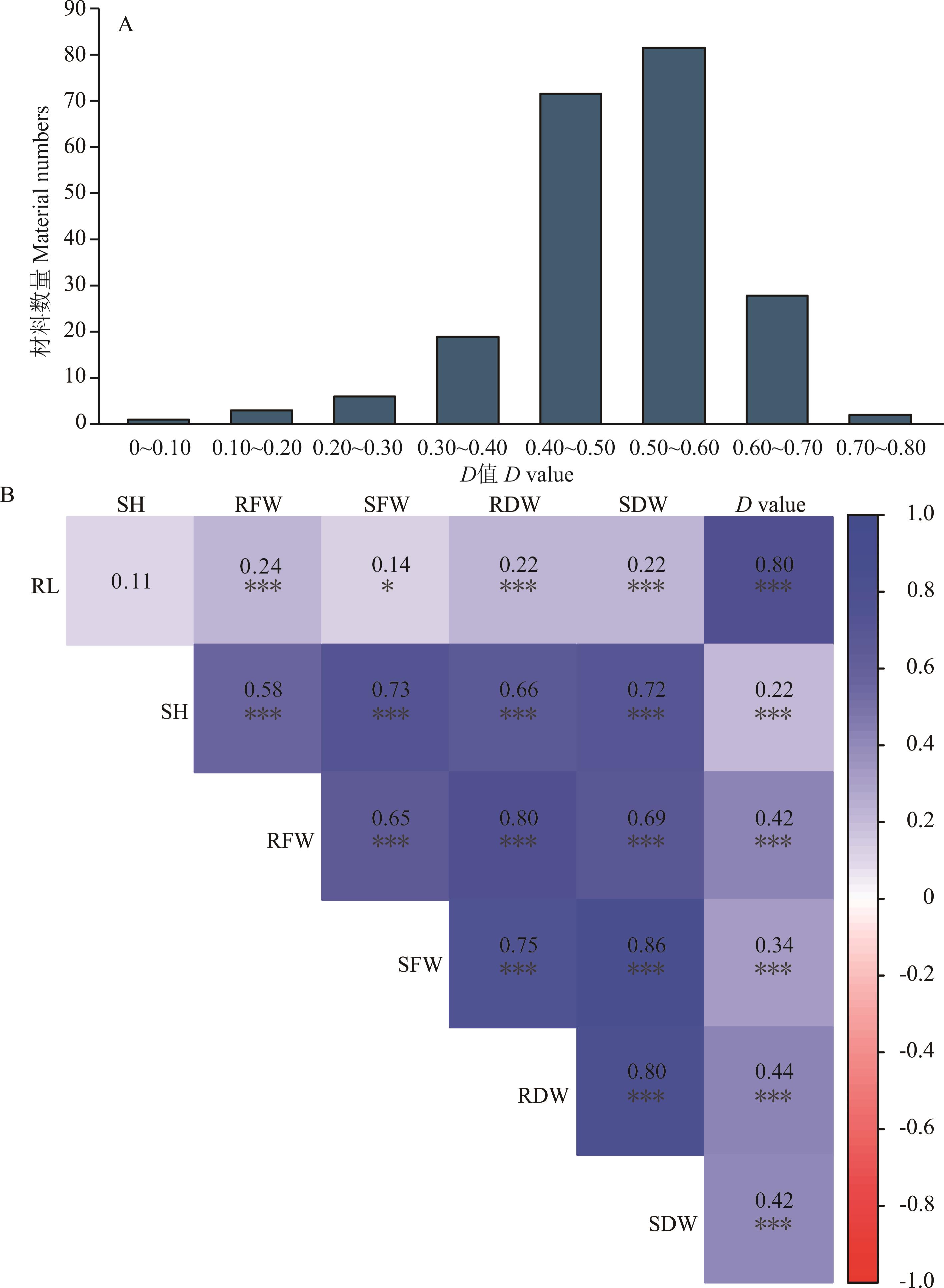
Fig.1 Correlation between the membership function of 6 growth traits and D values in oat
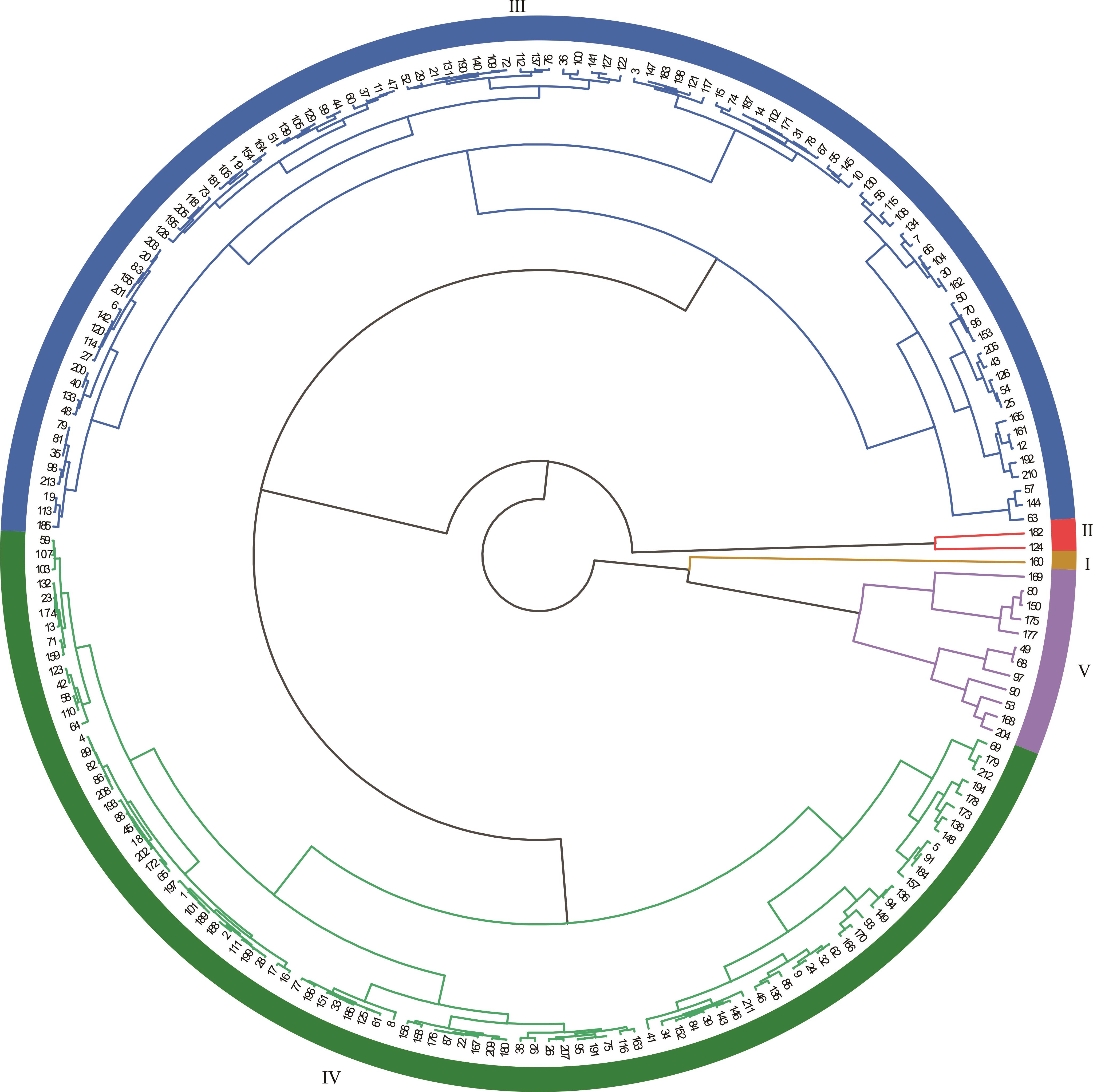
Fig. 2 Cluster analysis of salt tolerance of 213 oat germplasms based on the D values
变异来源 Source of variation | 自由度 Degrees of freedom | 平方和 Sum of squares | 均方 Mean square | F值 F value | P值 P value |
|---|---|---|---|---|---|
| 地理来源Geographic origin (O) | 10 | 0.0840 | 0.0084 | 0.72 | 0.71 |
| 选育状态Breeding status (B) | 1 | 0.0068 | 0.0068 | 0.58 | 0.45 |
| O×B | 11 | 0.0840 | 0.0076 | 0.65 | 0.78 |
| 误差Error | 201 | 2.3500 | 0.0120 |
Table 5 Analysis of variance for salt tolerance index of oats from different origins and with different breeding status
变异来源 Source of variation | 自由度 Degrees of freedom | 平方和 Sum of squares | 均方 Mean square | F值 F value | P值 P value |
|---|---|---|---|---|---|
| 地理来源Geographic origin (O) | 10 | 0.0840 | 0.0084 | 0.72 | 0.71 |
| 选育状态Breeding status (B) | 1 | 0.0068 | 0.0068 | 0.58 | 0.45 |
| O×B | 11 | 0.0840 | 0.0076 | 0.65 | 0.78 |
| 误差Error | 201 | 2.3500 | 0.0120 |
项目 Item | 范围 Range | 平均值 Mean | 标准差 Standard deviation | 变异系数 Coefficient of variation (%) | |
|---|---|---|---|---|---|
地理来源 Geographic origin | 东亚East Asia | 0.38~0.64 | 0.50 | 0.07 | 14.00 |
| 中亚Central Asia | 0.33~0.65 | 0.51 | 0.09 | 17.60 | |
| 南亚South Asia | 0.32~0.56 | 0.47 | 0.09 | 19.20 | |
| 西亚West Asia | 0.26~0.74 | 0.52 | 0.09 | 17.30 | |
| 中欧Central Europe | 0.20~0.65 | 0.50 | 0.12 | 24.00 | |
| 东欧East Europe | 0.03~0.68 | 0.48 | 0.16 | 33.30 | |
| 地中海沿岸Mediterranean | 0.20~0.80 | 0.50 | 0.11 | 22.00 | |
| 北美洲North America | 0.28~0.66 | 0.49 | 0.09 | 18.40 | |
| 南美洲South America | 0.51~0.66 | 0.59 | 0.08 | 13.60 | |
| 非洲Africa | 0.26~0.64 | 0.50 | 0.12 | 24.00 | |
| 大洋洲Oceania | 0.42~0.46 | 0.45 | 0.02 | 4.44 | |
选育状态 Breeding status | 地方品种Landrace | 0.20~0.80 | 0.50 | 0.10 | 20.50 |
| 育成品种Cultivar | 0.03~0.69 | 0.50 | 0.12 | 23.56 | |
Table 6 Variation in salt tolerance index (D value) of oats from different regions and with different breeding status
项目 Item | 范围 Range | 平均值 Mean | 标准差 Standard deviation | 变异系数 Coefficient of variation (%) | |
|---|---|---|---|---|---|
地理来源 Geographic origin | 东亚East Asia | 0.38~0.64 | 0.50 | 0.07 | 14.00 |
| 中亚Central Asia | 0.33~0.65 | 0.51 | 0.09 | 17.60 | |
| 南亚South Asia | 0.32~0.56 | 0.47 | 0.09 | 19.20 | |
| 西亚West Asia | 0.26~0.74 | 0.52 | 0.09 | 17.30 | |
| 中欧Central Europe | 0.20~0.65 | 0.50 | 0.12 | 24.00 | |
| 东欧East Europe | 0.03~0.68 | 0.48 | 0.16 | 33.30 | |
| 地中海沿岸Mediterranean | 0.20~0.80 | 0.50 | 0.11 | 22.00 | |
| 北美洲North America | 0.28~0.66 | 0.49 | 0.09 | 18.40 | |
| 南美洲South America | 0.51~0.66 | 0.59 | 0.08 | 13.60 | |
| 非洲Africa | 0.26~0.64 | 0.50 | 0.12 | 24.00 | |
| 大洋洲Oceania | 0.42~0.46 | 0.45 | 0.02 | 4.44 | |
选育状态 Breeding status | 地方品种Landrace | 0.20~0.80 | 0.50 | 0.10 | 20.50 |
| 育成品种Cultivar | 0.03~0.69 | 0.50 | 0.12 | 23.56 | |
| [1] | Hassani A, Azapagic A, Shokri N. Global predictions of primary soil salinization under changing climate in the 21st century. Nature Communications, 2021, 12(1): 6663. |
| [2] | Cao X F, Sun B, Chen H B, et al. Approaches and research progresses of marginal land productivity expansion and ecological benefit improvement in China. Bulletin of Chinese Academy of Sciences, 2021, 36(3): 336-348. |
| 曹晓风, 孙波, 陈化榜, 等. 我国边际土地产能扩增和生态效益提升的途径与研究进展. 中国科学院院刊, 2021, 36(3): 336-348. | |
| [3] | Ye X L, Gan Z, Wan Y, et al. Advances and perspectives in forage oat breeding. Acta Prataculturae Sinica, 2023, 32(2): 160-177. |
| 叶雪玲, 甘圳, 万燕, 等. 饲用燕麦育种研究进展与展望. 草业学报, 2023, 32(2): 160-177. | |
| [4] | Kaur H, Goyal M, Kaur A, et al. Nutritional and yield potential of oat (Avena sativa L.) genotypes in dual-purpose crop system. Cereal Research Communications, 2023, 51(4): 969-980. |
| [5] | Ren C Z, Cui L, He F, et al. Construction and development of China oat and buckwheat industrial technology system. Journal of Jilin Agricultural University, 2018, 40(4): 524-532. |
| 任长忠, 崔林, 何峰, 等. 我国燕麦荞麦产业技术体系建设与发展. 吉林农业大学学报, 2018, 40(4): 524-532. | |
| [6] | Zhang J, Gao W B, Yan L, et al. Identification and evaluation of salt-alkali tolerance and screening of salt-alkali tolerant germplasm of oat (Avena sativa L.). Acta Agronomica Sinica, 2023, 49(6): 1551-1561. |
| 张静, 高文博, 晏林, 等. 燕麦种质资源耐盐碱性鉴定评价及耐盐碱种质筛选. 作物学报, 2023, 49(6): 1551-1561. | |
| [7] | Luo Z N, Zhao G Q, Liu H. The comprehensive evaluation of salt tolerance for 24 oat cultivars. Grassland and Turf, 2012, 32(1): 34-38. |
| 罗志娜, 赵桂琴, 刘欢. 24个燕麦品种种子萌发耐盐性综合评价. 草原与草坪, 2012, 32(1): 34-38. | |
| [8] | Chen X, Zhang Z W, Wu B. Comprehensive evaluation of salt tolerance and screening for salt tolerant accessions of naked oat (Avena nuda L.) at germination stage. Scientia Agricultura Sinica, 2014, 47(10): 2038-2046. |
| 陈新, 张宗文, 吴斌. 裸燕麦萌发期耐盐性综合评价与耐盐种质筛选. 中国农业科学, 2014, 47(10): 2038-2046. | |
| [9] | Bai J H, Yan W K, Wang Y Q, et al. Screening oat genotypes for tolerance to salinity and alkalinity. Frontiers in Plant Science, 2018, 9: 1302. |
| [10] | Zhang M X, Bai R, Nan M, et al. Evaluation of salt tolerance of oat cultivars and the mechanism of adaptation to salinity. Journal of Plant Physiology, 2022, 273: 153708. |
| [11] | Shahid A, Richa P, Rajesh K S, et al. Salinity, alkalinity and their combined stress effects on germination and seedling growth attributes in oats (Avena sativa). Crop and Pasture Science, 2023, 74(11): 1094-1102. |
| [12] | Pecetti L, Tlahig S, Confalonieri M, et al. A comparison of procedures for evaluating and selecting alfalfa landrace germplasm for tolerance to salinity. Crop Science, 2024, 64(4): 2143-2157. |
| [13] | Diederichsen A. Assessments of genetic diversity within a world collection of cultivated hexaploid oat (Avena sativa L.) based on qualitative morphological characters. Genetic Resources and Crop Evolution, 2008, 55(3): 419-440. |
| [14] | Ma J, Lin Y, Tang S, et al. A genome-wide association study of coleoptile length in different Chinese wheat landraces. Frontiers in Plant Science, 2020, 11: 677. |
| [15] | Hao S H, Wang Y R, Yan Y X, et al. A review on plant responses to salt stress and their mechanisms of salt resistance. Horticulturae, 2021, 7(6): 132. |
| [16] | Atta K, Mondal S, Gorai S, et al. Impacts of salinity stress on crop plants: Improving salt tolerance through genetic and molecular dissection. Frontiers in Plant Science, 2023, 14: 1241736. |
| [17] | Zolla G, Heimer Y M, Barak S. Mild salinity stimulates a stress-induced morphogenic response in Arabidopsis thaliana roots. Journal of Experimental Botany, 2010, 61(1): 211-224. |
| [18] | Julkowska M M, Hoefsloot H C J, Mol S, et al. Capturing Arabidopsis root architecture dynamics with root-fit reveals diversity in responses to salinity. Plant Physiology, 2014, 166(3): 1387-1402. |
| [19] | Gao K O, Tian R M, Jia H N, et al. Identification of salt tolerance of 236 wheat germplasm at seedling stage and screening of salt tolerance indicators. Journal of Triticeae Crops, 2024, 44(9): 1115-1124. |
| 高珅奥, 田仁美, 贾惠宁, 等. 236份小麦种质苗期耐盐性鉴定及耐盐指标筛选. 麦类作物学报, 2024, 44(9): 1115-1124. | |
| [20] | Benito B, Haro R, Amtmann A, et al. The twins K+ and Na+ in plants. Journal of Plant Physiology, 2014, 171(9): 723-731. |
| [21] | Balasubramaniam T, Shen G, Esmaeili N, et al. Plants’ response mechanisms to salinity stress. Plants, 2023, 12(12): 2253. |
| [22] | Liu L Y, Han G D, Nagaoka T, et al. A comparative study of the growth and physiological parameters of two oat (Avena sativa L.) lines under salinity stress. Soil Science and Plant Nutrition, 2020, 66(6): 847-853. |
| [23] | Chen X J, Xu Z S, Zhao B P, et al. Physiological and proteomic analysis responsive mechanisms for salt stress in oat. Frontiers in Plant Science, 2022, 13: 891674. |
| [24] | Li Y Y, Chen B, Yao L R, et al. Evaluation of salt and alkali tolerance and germplasm screening of 283 wheat varieties (lines) during germination. Journal of Agricultural Science and Technology, 2021, 23(3): 25-33. |
| 李媛媛, 陈博, 姚立蓉, 等. 283份小麦品种(系)萌发期耐盐碱性评价及种质筛选. 中国农业科技导报, 2021, 23(3): 25-33. | |
| [25] | Xue T Y, Lu J C Z, He S X, et al. Comprehensive evaluation on saline-alkali tolerance of 286 Brassica napus germplasm at seedling stage. Journal of Plant Genetic Resources, 2024, 25(3): 356-372. |
| 薛天源, 鲁金春子, 何思晓, 等. 286份甘蓝型油菜种质苗期耐盐碱性综合评价. 植物遗传资源学报, 2024, 25(3): 356-372. | |
| [26] | Zou M, Tao T, Tian S B, et al. Evaluation of salt tolerance in the seedling stage of 139 eggplant germplasm resources for rootstock. Agricultural Research in the Arid Areas, 2025, 43(2): 23-29. |
| 邹敏, 陶涛, 田时炳, 等. 139份砧用茄子种质资源苗期耐盐性评价. 干旱地区农业研究, 2025, 43(2): 23-29. | |
| [27] | Huang G, Wang X F, Liu C L, et al. Genomic variation underpins genetic divergence and differing salt resilience in Sesbania bispinosa. Advanced Science, 2025, 12(32): e02600. |
| [28] | Guan R X, Qu Y, Guo Y, et al. Salinity tolerance in soybean is modulated by natural variation in GmSALT3. The Plant Journal, 2014, 80(6): 937-950. |
| [29] | Bailey-Serres J, Parker J E, Ainsworth E A, et al. Genetic strategies for improving crop yields. Nature, 2019, 575(7781): 109-118. |
| [30] | Fan M S, Shen J B, Yuan L X, et al. Improving crop productivity and resource use efficiency to ensure food security and environmental quality in China. Journal of Experimental Botany, 2012, 63(1): 13-24. |
| [31] | Li L, Peng Z, Mao X G, et al. Genetic insights into natural variation underlying salt tolerance in wheat. Journal of Experimental Botany, 2021, 72(4): 1135-1150. |
| [32] | Lian Q, Li S, Kan S L, et al. Association analysis provides insights into plant mitonuclear interactions. Molecular Biology and Evolution, 2024, 41(2): msae028. |
| [1] | Tao WANG, Jing LI, Qiang LU, Wen-can KE, Shuai HUANG. Effects of flavonoids from Taraxacum mongolicum and of Bacillus subtilis addition on fermentation quality, antioxidant activity, and aerobic stability of Avena sativa silage [J]. Acta Prataculturae Sinica, 2026, 35(6): 108-121. |
| [2] | Meng-yu REN, Li-qun WANG, Li-li NAN, Jia-yu GUO. Responses of new alfalfa lines to salt stress [J]. Acta Prataculturae Sinica, 2026, 35(6): 24-34. |
| [3] | Zheng LI, Hai-ying HU, Jian LAN, Li DING, Wen-bo WEI, Yu-lian LI, Qiao-li MA. Evaluation and screening of salt tolerance of triticale germplasm resources at the germination stage [J]. Acta Prataculturae Sinica, 2026, 35(5): 225-238. |
| [4] | Wen-hui DENG, Xiao-na ZHAO, Jia-yi YONG, Si-yu GUAN, Guo-qiang HU, Teng-fei WANG, Hai-ying HU. Effects of intercropping oat with different densities on alfalfa seed yield and its constituent factors [J]. Acta Prataculturae Sinica, 2026, 35(4): 100-111. |
| [5] | Chao-rong LIU, Yong-cheng CHEN, Ying CHEN, Xu-dong ZHANG, Tian-yu HU, Li-he SU, Fan-fan ZHANG, Xu-zhe WANG, Kun YAO, Chun-hui MA. Differences in saline-alkali tolerance of five Leymus chinensis cultivars grown in saline-alkali soil from Xinjiang [J]. Acta Prataculturae Sinica, 2026, 35(4): 29-41. |
| [6] | Shi-chao ZHANG, Guo-wen CUI, De-peng ZHANG, Fu-ying HAN, Ding DING, Xiang-li LYU, Shuo LIN, Le-ran CHEN, Ji-ru LI, Hua CAI. Establishment of a tissue culture-free genetic transformation system for alfalfa and its applications in salt-tolerance gene functional characterization and gene editing [J]. Acta Prataculturae Sinica, 2026, 35(3): 223-234. |
| [7] | Hao-le QI, Si-ning WANG, Xiao-xia LI, Feng-ling SHI. Multivariate evaluation of the salt tolerance of Buchloe dactyloides germplasm lines and construction of a preliminary evaluation model [J]. Acta Prataculturae Sinica, 2026, 35(1): 119-129. |
| [8] | Ruo-fei WANG, Xin-zhe LI, Qi-ce LI, Jia-yi ZHANG, Bei-jun WANG, Wen-gang XIE. Effects of different concentrations of silicon on the cold resistance of Elymus sibiricus seedlings [J]. Acta Prataculturae Sinica, 2026, 35(1): 130-139. |
| [9] | Yi-xin LIU, Xiao-qing SUI, Xin-yao WANG, Meng-qing LANG, Ling-zi-yin SUN, Er-ge JIER. Mitigating effects of exogenous melatonin on alfalfa under salt stress [J]. Acta Prataculturae Sinica, 2025, 34(9): 206-214. |
| [10] | Xiao-hong BAI, Wen-yan CHEN, Qin LI, Yi-xuan WANG, Xue ZHANG, Lei WANG, Wen-jie QU, Lin ZHU. Seed germination and seedling growth characteristics of Glycyrrhiza uralensis from different provenances [J]. Acta Prataculturae Sinica, 2025, 34(7): 196-209. |
| [11] | Yan-xia ZENG, Zhi-long CHEN, Ji-hong SHANG, Xiao-di SHA, Juan WU, Cai-jin CHEN. Effects of space mutagenesis on the growth of alfalfa (Medicago sativa) seedlings under PEG-6000 simulated drought stress [J]. Acta Prataculturae Sinica, 2025, 34(6): 59-69. |
| [12] | Shou-yu GAO, Wen-jing LIU, Yu-ying LI, Qing-yuan XIANG, Jia-jun XU, Lei-qi SHU, Zhao-zhong LI. Physiological and biochemical responses of Bothriochloa ischaemum seedlings to salt stress at seedling stage and definition of salt tolerance threshold [J]. Acta Prataculturae Sinica, 2025, 34(3): 164-174. |
| [13] | Cai-jin CHEN, Ming-fang BAO, Wen-hu WANG, Ji-hong SHANG, Yan-xia ZENG, Xiao-di SHA, Xin-zhong ZHU, Xue-min WANG, Wen-hui LIU. Current situation and prospects for drought-resistance breeding in Medicago sativa [J]. Acta Prataculturae Sinica, 2025, 34(3): 204-223. |
| [14] | Li-li MA, Fu-zhen JIANG, Yu-shou MA, Kai-bin QI, Shun-bin JIA, Zheng-peng LI. Effect of particle size ratio, fertilizer application amount, and seeding rate combinations coal gangue matrix properties in restoration of a mining area [J]. Acta Prataculturae Sinica, 2025, 34(3): 71-84. |
| [15] | Wen-hu WANG, Guo-ling LIANG, Wen-hui LIU, Feng-yu WANG, Wen LI. Comprehensive evaluation of agronomic traits and yield of eight Elymus sibiricus varieties in the Qinghai-Tibet Plateau [J]. Acta Prataculturae Sinica, 2025, 34(2): 123-132. |
| Viewed | ||||||
|
Full text |
|
|||||
|
Abstract |
|
|||||
