
ISSN 1004-5759 CN 62-1105/S
Acta Prataculturae Sinica ›› 2027, Vol. 36 ›› Issue (1): 54-65.DOI: 10.11686/cyxb2025522
Previous Articles Next Articles
Wei-ling WANG( ), Shu-chang WANG, Yue-wen HUO, Wen-feng CONG()
Received:2025-12-24
Revised:2026-03-26
Online:2027-01-20
Published:2026-11-25
Contact:
Wen-feng CONG
Wei-ling WANG, Shu-chang WANG, Yue-wen HUO, Wen-feng CONG. Effects of different cultivar combinations in silage maize/soybean intercropping on forage yield, forage quality, and economic returns in the irrigated desert soil region of northwest China[J]. Acta Prataculturae Sinica, 2027, 36(1): 54-65.
| 代码 Code | 种植模式 Cropping system | 处理 Treatment |
|---|---|---|
| SM1 | 玉米单作 Maize monoculture | 中北410 Zhongbei 410 |
| SM2 | 玉米单作 Maize monoculture | 东单1331 Dongdan 1331 |
| SSB1 | 大豆单作 Soybean monoculture | 中黄30 Zhonghuang 30 |
| SSB2 | 大豆单作 Soybean monoculture | 齐黄34 Qihuang 34 |
| T1 | 玉米/大豆间作 Maize/soybean intercropping | 中北410/中黄30 Zhongbei 410/Zhonghuang 30 |
| T2 | 玉米/大豆间作 Maize/soybean intercropping | 中北410/齐黄34 Zhongbei 410/Qihuang 34 |
| T3 | 玉米/大豆间作 Maize/soybean intercropping | 东单1331/中黄30 Dongdan 1331/Zhonghuang 30 |
| T4 | 玉米/大豆间作 Maize/soybean intercropping | 东单1331/齐黄34 Dongdan 1331/Qihuang 34 |
| T5 | 多品种玉米/大豆间作 Multi-variety maize/soybean intercropping | (中北410+东单1331)/(中黄30+齐黄34)(Zhongbei 410+Dongdan 1331) / (Zhonghuang 30+Qihuang 34) |
Table 1 Experimental treatment
| 代码 Code | 种植模式 Cropping system | 处理 Treatment |
|---|---|---|
| SM1 | 玉米单作 Maize monoculture | 中北410 Zhongbei 410 |
| SM2 | 玉米单作 Maize monoculture | 东单1331 Dongdan 1331 |
| SSB1 | 大豆单作 Soybean monoculture | 中黄30 Zhonghuang 30 |
| SSB2 | 大豆单作 Soybean monoculture | 齐黄34 Qihuang 34 |
| T1 | 玉米/大豆间作 Maize/soybean intercropping | 中北410/中黄30 Zhongbei 410/Zhonghuang 30 |
| T2 | 玉米/大豆间作 Maize/soybean intercropping | 中北410/齐黄34 Zhongbei 410/Qihuang 34 |
| T3 | 玉米/大豆间作 Maize/soybean intercropping | 东单1331/中黄30 Dongdan 1331/Zhonghuang 30 |
| T4 | 玉米/大豆间作 Maize/soybean intercropping | 东单1331/齐黄34 Dongdan 1331/Qihuang 34 |
| T5 | 多品种玉米/大豆间作 Multi-variety maize/soybean intercropping | (中北410+东单1331)/(中黄30+齐黄34)(Zhongbei 410+Dongdan 1331) / (Zhonghuang 30+Qihuang 34) |
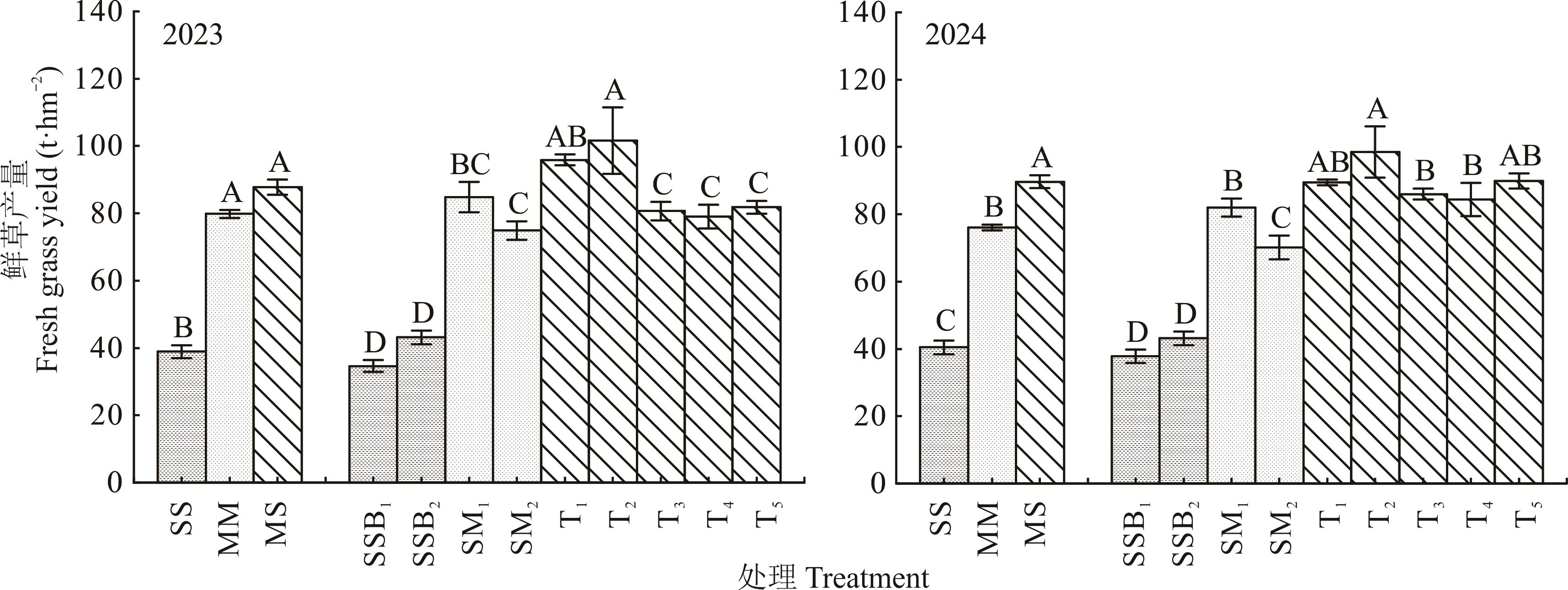
Fig.1 Total fresh yield of forage under different treatments

Fig.2 Total hay yield of forage under different treatments
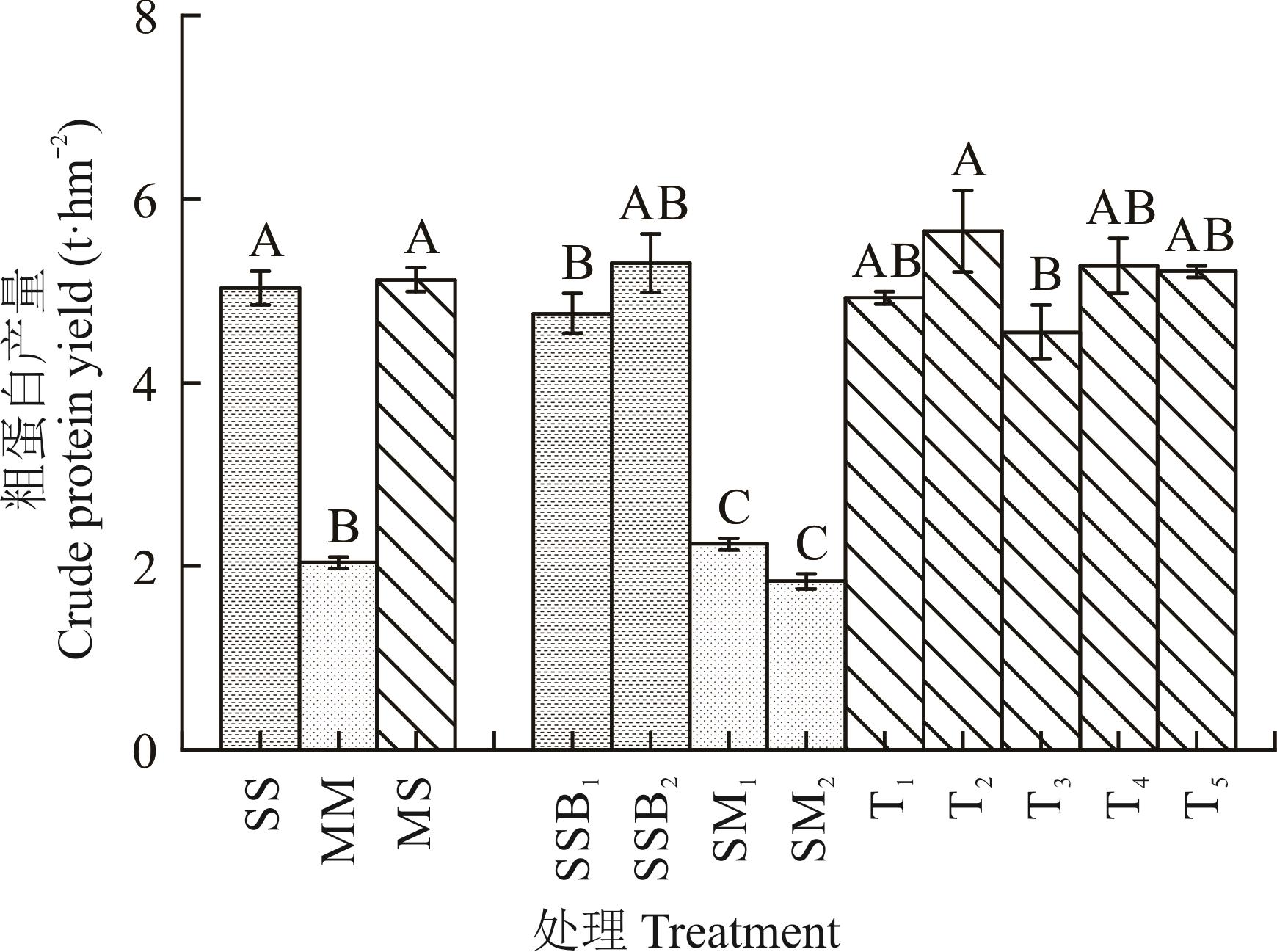
Fig.3 Total crude protein yield of forage under different treatments
种植模式 Planting mode | 处理 Treatment | 粗蛋白 Crude protein | 淀粉 Starch | 酸性洗涤纤维 Acid detergent fiber | 中性洗涤纤维 Neutral detergent fiber | 粗脂肪 Crude fat | 粗灰分 Crude ash |
|---|---|---|---|---|---|---|---|
大豆单作 Soybean monoculture | SSB1 | 24.93±0.29a | 4.13±1.17a | 19.87±0.58b | 26.92±0.56b | 4.97±0.27a | 10.84±0.43a |
| SSB2 | 24.33±0.12a | 2.67±0.85a | 29.33±0.58a | 31.66±0.65a | 1.30±0.10b | 10.62±0.16a | |
玉米单作 Maize monoculture | SM1 | 9.17±0.27a | 19.57±1.81b | 26.90±0.96a | 45.73±0.85a | 2.17±0.17a | 4.45±0.27a |
| SM2 | 9.33±0.09a | 32.97±0.39a | 19.97±0.13b | 36.00±0.78b | 2.57±0.15a | 3.48±0.27a | |
间作 Intercropping | T1 | 17.53±0.75ab | 12.98±0.42d | 22.67±0.15a | 38.07±0.18a | 3.47±0.03a | 7.00±0.22ab |
| T2 | 18.80±1.07a | 12.11±0.94d | 22.82±0.65a | 36.87±0.91a | 3.77±0.12a | 7.68±0.11a | |
| T3 | 15.87±0.38b | 20.40±0.41a | 18.61±0.61b | 30.33±0.41d | 3.75±0.05a | 6.78±0.30b | |
| T4 | 16.33±0.40b | 18.35±0.72b | 22.47±0.59a | 32.24±0.22c | 2.07±0.18c | 7.39±0.39ab | |
| T5 | 16.02±0.34b | 15.34±0.23c | 22.41±0.19a | 34.84±0.35b | 2.68±0.08b | 6.81±0.15b |
Table 2 Total nutritional quality under different treatments (%)
种植模式 Planting mode | 处理 Treatment | 粗蛋白 Crude protein | 淀粉 Starch | 酸性洗涤纤维 Acid detergent fiber | 中性洗涤纤维 Neutral detergent fiber | 粗脂肪 Crude fat | 粗灰分 Crude ash |
|---|---|---|---|---|---|---|---|
大豆单作 Soybean monoculture | SSB1 | 24.93±0.29a | 4.13±1.17a | 19.87±0.58b | 26.92±0.56b | 4.97±0.27a | 10.84±0.43a |
| SSB2 | 24.33±0.12a | 2.67±0.85a | 29.33±0.58a | 31.66±0.65a | 1.30±0.10b | 10.62±0.16a | |
玉米单作 Maize monoculture | SM1 | 9.17±0.27a | 19.57±1.81b | 26.90±0.96a | 45.73±0.85a | 2.17±0.17a | 4.45±0.27a |
| SM2 | 9.33±0.09a | 32.97±0.39a | 19.97±0.13b | 36.00±0.78b | 2.57±0.15a | 3.48±0.27a | |
间作 Intercropping | T1 | 17.53±0.75ab | 12.98±0.42d | 22.67±0.15a | 38.07±0.18a | 3.47±0.03a | 7.00±0.22ab |
| T2 | 18.80±1.07a | 12.11±0.94d | 22.82±0.65a | 36.87±0.91a | 3.77±0.12a | 7.68±0.11a | |
| T3 | 15.87±0.38b | 20.40±0.41a | 18.61±0.61b | 30.33±0.41d | 3.75±0.05a | 6.78±0.30b | |
| T4 | 16.33±0.40b | 18.35±0.72b | 22.47±0.59a | 32.24±0.22c | 2.07±0.18c | 7.39±0.39ab | |
| T5 | 16.02±0.34b | 15.34±0.23c | 22.41±0.19a | 34.84±0.35b | 2.68±0.08b | 6.81±0.15b |
种植模式 Planting mode | 处理 Treatment | 相对饲用价值 Relative forage value | 相对饲草质量Relative forage quality | 粗饲料分级指数Roughage grading index |
|---|---|---|---|---|
| 大豆单作Soybean monoculture | SSB1 | 253±7a | 326±13a | 40.9±1.8a |
| SSB2 | 193±5b | 308±10a | 25.5±1.2b | |
| 玉米单作Maize monoculture | SM1 | 137±3b | 201±8b | 20.9±1.4b |
| SM2 | 189±4a | 301±9a | 38.5±1.4a | |
| 间作Intercropping | T1 | 224±4a | 369±8a | 45.7±3.6a |
| T2 | 178±4c | 280±8c | 25.6±1.3c | |
| T3 | 232±3a | 386±7a | 44.1±1.4a | |
| T4 | 205±3b | 333±6b | 35.9±0.7b | |
| T5 | 210±2b | 342±4b | 37.8±0.7b |
Table 3 Total relative forage value, relative forage quality and roughage grading index of forage under different treatments
种植模式 Planting mode | 处理 Treatment | 相对饲用价值 Relative forage value | 相对饲草质量Relative forage quality | 粗饲料分级指数Roughage grading index |
|---|---|---|---|---|
| 大豆单作Soybean monoculture | SSB1 | 253±7a | 326±13a | 40.9±1.8a |
| SSB2 | 193±5b | 308±10a | 25.5±1.2b | |
| 玉米单作Maize monoculture | SM1 | 137±3b | 201±8b | 20.9±1.4b |
| SM2 | 189±4a | 301±9a | 38.5±1.4a | |
| 间作Intercropping | T1 | 224±4a | 369±8a | 45.7±3.6a |
| T2 | 178±4c | 280±8c | 25.6±1.3c | |
| T3 | 232±3a | 386±7a | 44.1±1.4a | |
| T4 | 205±3b | 333±6b | 35.9±0.7b | |
| T5 | 210±2b | 342±4b | 37.8±0.7b |
种植模式 Planting mode | 处理 Treatment | 肥料投入 Fertilizer input | 机械费用 Machinery cost | 种子费用 Seed cost | 其他费用 Other costs | 总投入 Total input | 净收益 Net profit |
|---|---|---|---|---|---|---|---|
大豆单作 Soybean monoculture | SSB1 | 2326 | 2250 | 1000 | 4800 | 10376 | 4238±793e |
| SSB2 | 2326 | 2250 | 1000 | 4800 | 10376 | 6378±815e | |
玉米单作 Maize monoculture | SM1 | 4935 | 2250 | 1200 | 5500 | 13885 | 21136±1117cd |
| SM2 | 4935 | 2250 | 1200 | 5500 | 13885 | 16269±1471d | |
间作 Intercropping | T1 | 3631 | 4000 | 1300 | 5700 | 14631 | 28299±421ab |
| T2 | 3631 | 4000 | 1300 | 5700 | 14631 | 32656±3649a | |
| T3 | 3631 | 4000 | 1300 | 5700 | 14631 | 26653±799b | |
| T4 | 3631 | 4000 | 1300 | 5700 | 14631 | 25848±2369bc | |
| T5 | 3631 | 4000 | 1300 | 5700 | 14631 | 28533±1085ab |
Table 4 Input and profit for different cropping patterns(CNY·hm-2·a-1)
种植模式 Planting mode | 处理 Treatment | 肥料投入 Fertilizer input | 机械费用 Machinery cost | 种子费用 Seed cost | 其他费用 Other costs | 总投入 Total input | 净收益 Net profit |
|---|---|---|---|---|---|---|---|
大豆单作 Soybean monoculture | SSB1 | 2326 | 2250 | 1000 | 4800 | 10376 | 4238±793e |
| SSB2 | 2326 | 2250 | 1000 | 4800 | 10376 | 6378±815e | |
玉米单作 Maize monoculture | SM1 | 4935 | 2250 | 1200 | 5500 | 13885 | 21136±1117cd |
| SM2 | 4935 | 2250 | 1200 | 5500 | 13885 | 16269±1471d | |
间作 Intercropping | T1 | 3631 | 4000 | 1300 | 5700 | 14631 | 28299±421ab |
| T2 | 3631 | 4000 | 1300 | 5700 | 14631 | 32656±3649a | |
| T3 | 3631 | 4000 | 1300 | 5700 | 14631 | 26653±799b | |
| T4 | 3631 | 4000 | 1300 | 5700 | 14631 | 25848±2369bc | |
| T5 | 3631 | 4000 | 1300 | 5700 | 14631 | 28533±1085ab |
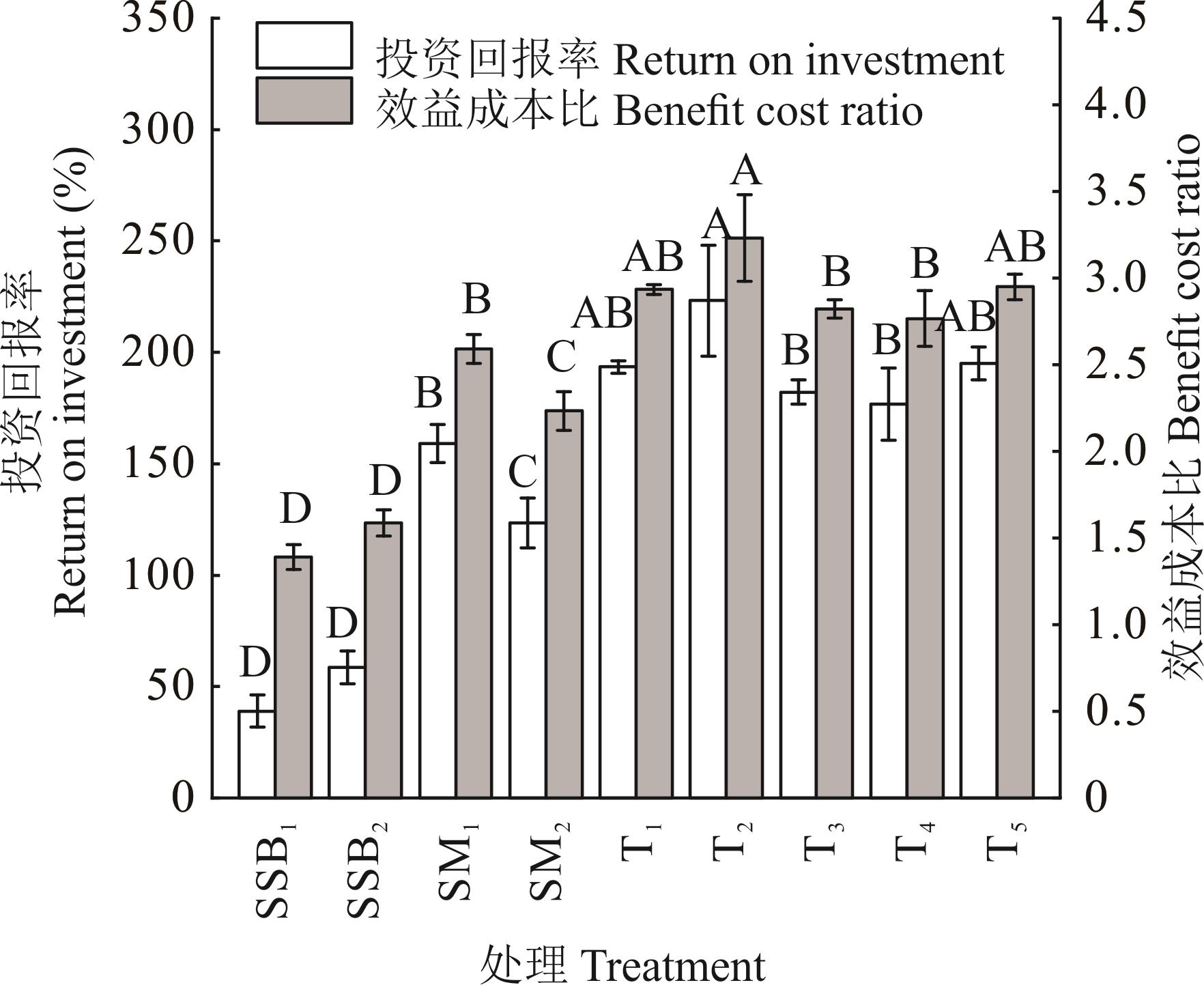
Fig.4 Return on investment and benefit cost ratio of various planting mode
| [1] | Liu S. Statistical analysis and response strategies of China’s feed grains import dependence from the perspective of the big food concept. China Feed, 2024(18): 165-168. |
| 刘帅. 大食物观视角下我国饲料粮进口依存度的统计分析及应对策略. 中国饲料, 2024(18): 165-168. | |
| [2] | Li H. A study on the impact of global economic policy uncertainty on the price volatility of China’s feed grain-based on a non-linear characteristics price perspective. Zhengzhou: Henan Agricultural University, 2023. |
| 李卉. 全球经济政策不确定性对我国饲料粮价格波动的影响研究-基于非线性特征视角. 郑州: 河南农业大学, 2023. | |
| [3] | Jiang C Z, Shou N, Gao W, et al. A multivariate evaluation of production performance and nutritional quality of different varieties of silage maize in the dry plateau area of Longdong. Acta Prataculturae Sinica, 2023, 32(7): 216-228. |
| 蒋丛泽, 受娜, 高玮, 等. 陇东旱塬区不同青贮玉米品种生产性能和营养品质综合评价. 草业学报, 2023, 32(7): 216-228. | |
| [4] | Siqingtuya, Wu Y P, Wang L. Comparative analysis between Chinese local standard DB15/T34-2005, Technical regulation of silage fodder and Mongolian national standard MNS3466-2008, Technical requirement of silage fodder. China Standardization, 2018(19): 150-153, 169. |
| 斯庆图娅, 吴玉苹, 王路. 中国地方标准DB15/T34-2005《青贮饲料技术规程》与蒙古国国家标准MNS3466-2008《青贮饲料技术要求》比对分析. 中国标准化, 2018(19): 150-153, 169. | |
| [5] | Song C R, Jia Y S, Wang Z J, et al. Effects of adding corn straw, alfalfa, and oat in different proportions on silage quality. Feed Research, 2024, 47(23): 125-133. |
| 宋超然, 贾玉山, 王志军, 等. 玉米秸秆、苜蓿和燕麦添加比例对青贮饲料品质的影响. 饲料研究, 2024, 47(23): 125-133. | |
| [6] | Peng D, Xu C T, De K J, et al. Effects of different lactic acid bacteria additives on the quality of maize and oat silage in alpine regions. China Feed, 2023(11): 140-145. |
| 彭丹, 徐成体, 德科加, 等. 不同乳酸菌添加剂对高寒地区玉米与燕麦青贮品质的影响. 中国饲料, 2023(11): 140-145. | |
| [7] | Tian Y X, Ma P J, Li Y J, et al. Effects of silage maize and Dolichos lablab intercropping on quality and yield of silage maize. Pratacultural Science, 2019, 36(5): 1457-1465. |
| 田应学, 马培杰, 李亚娇, 等. 青贮玉米与拉巴豆套种对青贮玉米品质及产量的影响. 草业科学, 2019, 36(5): 1457-1465. | |
| [8] | Cui C, Wang H Y, Wang J, et al. Effects of mixed sowing of silage maize and forage lentil on population yield formation. China Seed Industry, 2017(3): 37-40. |
| 崔超, 王海燕, 王靖, 等. 青贮玉米与饲用扁豆混播对群体产量形成的影响. 中国种业, 2017(3): 37-40. | |
| [9] | Chu Y B, Pan W. Study on the effects of mixed sowing cultivation on the yield and quality of silage maize. Heilongjiang Science and Technology Information, 2013(18): 275. |
| 褚玉宝, 潘微. 混播栽培对青贮玉米产量及品质影响的研究. 黑龙江科技信息, 2013(18): 275. | |
| [10] | Feng P. Effects of variety and cultivation techniques on maize yield and silage quality. Beijing: Chinese Academy of Agricultural Sciences, 2011. |
| 冯鹏. 品种与栽培技术对玉米产量及青贮质量的影响. 北京: 中国农业科学院, 2011. | |
| [11] | Liu M, Gong J R, Wang Y H, et al. Effects of establishing artificial grassland by legume-grass mixed sowing on forage yield and quality. Arid Zone Research, 2016, 33(1): 179-185. |
| 刘敏, 龚吉蕊, 王忆慧, 等. 豆禾混播建植人工草地对牧草产量和草质的影响. 干旱区研究, 2016, 33(1): 179-185. | |
| [12] | Wang X, Zeng Z H, Hu Y G, et al. Progress and prospect on mixture of Gramineae herbage and Leguminosae herbage. Chinese Journal of Grassland, 2007(4): 92-98. |
| 王旭, 曾昭海, 胡跃高, 等. 豆科与禾本科牧草混播效应研究进展. 中国草地学报, 2007(4): 92-98. | |
| [13] | Ji C D, Shi H L, Zhou Y Y. Determination of silage quality of maize cultivar SC704 in the mixed sowing with Dolichos lablab. Journal of Anhui Agricultural Sciences, 2015, 43(26): 151-154. |
| 姬承东, 史卉玲, 周芸芸. 青贮玉米SC704与拉巴豆混播后的青贮品质测定. 安徽农业科学, 2015, 43(26): 151-154. | |
| [14] | Li Y J, Ma P J, Wu J H, et al. Effects of interplanting with Dolichos lablab on agronomic traits and yield of two varieties of silage maize. Acta Prataculturae Sinica, 2019, 28(9): 209-216. |
| 李亚娇, 马培杰, 吴佳海, 等. 不同品种青贮玉米与拉巴豆套种对青贮玉米农艺性状及产量的影响. 草业学报, 2019, 28(9): 209-216. | |
| [15] | Lei T X, Bi X J, Song M, et al. Effects of different patterns on yield and quality of silage intercropping with maize and soybean. Feed Industry, 2025, 46(4): 120-124. |
| 雷天翔, 毕显杰, 宋敏, 等. 不同栽培模式对玉米与大豆间作青贮产量和品质的影响. 饲料工业, 2025, 46(4): 120-124. | |
| [16] | Fan Y H, Yue S Y, Nan Z B, et al. The evolution of China’s maize seed industry, relevant industrial policies and implications for grassland agriculture development. Acta Prataculturae Sinica, 2025, 34(3): 189-203. |
| 樊有鹤, 岳思妤, 南志标, 等. 我国玉米种业与产业政策演进及其对草地农业发展的启示. 草业学报, 2025, 34(3): 189-203. | |
| [17] | Li X, Zhang Y M, Zhu L L, et al. Evaluation of silage performance and nutritional quality of different corn cultivars in Qinghai Plateau. Pratacultural Science, 2021, 38(6): 1194-1208. |
| 李想, 张业猛, 朱丽丽, 等. 青海高原地区不同玉米品种青贮性能及营养品质评价. 草业科学, 2021, 38(6): 1194-1208. | |
| [18] | Wang X L, Zhang S Q, Wang S Q, et al. The dynamic variation of maize (Zea mays L.) population growth characteristics under cultivars-intercropped on the Loess Plateau. Acta Ecologica Sinica, 2012, 32(23): 7383-7390. |
| 王小林, 张岁岐, 王淑庆, 等. 黄土塬区不同品种玉米间作群体生长特征的动态变化. 生态学报, 2012, 32(23): 7383-7390. | |
| [19] | Qi Y. Study on the effects of intercropping different maize varieties on their yield traits. Bulletin of Agricultural Science and Technology, 2018(5): 52-54. |
| 祁勇. 不同玉米品种间作对其产量性状的影响研究. 农业科技通讯, 2018(5): 52-54. | |
| [20] | Li Z Q. Quality evaluation of oat hay. China Dairy Cattle, 2013(19): 1-3. |
| 李志强. 燕麦干草质量评价. 中国奶牛, 2013(19): 1-3. | |
| [21] | Hu H L, Lu Y. Roughage grading index technology-a new advance in roughage quality evaluation. Animal Husbandry and Feed Science, 2011, 32(10): 155-158. |
| 胡红莲, 卢媛. 粗饲料分级指数技术—粗饲料品质评定的新进展. 畜牧与饲料科学, 2011, 32(10): 155-158. | |
| [22] | Wang F M, Zhang A Z, Jiang N, et al. GI and RFV determination and comparison study of common ruminant forage in Heilongjiang Province. Chinese Journal of Animal Science, 2014, 50(17): 33-39. |
| 王法明, 张爱忠, 姜宁, 等. 黑龙江省反刍动物常用粗饲料分级指数及饲料相对值的测定与比较研究. 中国畜牧杂志, 2014, 50(17): 33-39. | |
| [23] | Gao H, Zhu Q, Zhang R, et al. Effects of maize and pea intercropping on the total grain yield of community under different planting densities. Chinese Journal of Applied Ecology, 2016, 27(11): 3548-3558. |
| 高慧, 朱倩, 张荣, 等. 不同种植密度下玉米与豌豆间作对群体总产量的影响. 应用生态学报, 2016, 27(11): 3548-3558. | |
| [24] | Yang W Y, Yang F. Developing maize-soybean strip intercropping for demand security of national food. Scientia Agricultura Sinica, 2019, 52(21): 3748-3750. |
| 杨文钰, 杨峰. 发展玉豆带状复合种植, 保障国家粮食安全. 中国农业科学, 2019, 52(21): 3748-3750. | |
| [25] | Yang H, Zhou Y, Chen P, et al. Effects of nutrient uptake and utilization on yield of maize-legume strip inter-cropping system. Acta Agronomica Sinica, 2022, 48(6): 1476-1487. |
| 杨欢, 周颖, 陈平, 等. 玉米-豆科作物带状间套作对养分吸收利用及产量优势的影响. 作物学报, 2022, 48(6): 1476-1487. | |
| [26] | Zhang X Q, Huang G Q, Bian X M, et al. Effects of intercropping on quality and yield of maize grain, microorganism quantity, and enzyme activities in soils. Acta Ecologica Sinica, 2012, 32(22): 7082-7090. |
| 张向前, 黄国勤, 卞新民, 等. 间作对玉米品质、产量及土壤微生物数量和酶活性的影响. 生态学报, 2012, 32(22): 7082-7090. | |
| [27] | Li J Y, Chen J L, Zhang W W, et al. Effects of maize-soybean intercropping on crop growth, development, and yield. Oasis Agriculture Science and Engineering, 2025, 10(3): 9-18. |
| 李嘉怡, 陈俊利, 张文文, 等. 玉米‖大豆对作物生长发育及产量的影响. 绿洲农业科学与工程, 2025, 10(3): 9-18. | |
| [28] | Jiang Z W. Effects of intercropping and nitrogen and phosphorus application on yield, quality and nitrogen and phosphorus utilization of silage maize in Hexi irrigation district. Lanzhou: Lanzhou University, 2023. |
| 蒋紫薇. 间作与氮磷配施对河西灌区青贮玉米产量、品质及氮磷利用的影响. 兰州: 兰州大学, 2023. | |
| [29] | Sun D S, Liu C Q. The influence of the mixed intercropping of wild soybean (Glycine soja) and silage maize on the yield and quality of forage grass. Barley and Cereal Sciences, 2019, 36(2): 38-41. |
| 孙东升, 刘成启. 野生大豆与青贮玉米混作对饲草产量及品质的影响. 大麦与谷类科学, 2019, 36(2): 38-41. | |
| [30] | Mthembu B E, Everson T M, Everson C S. Intercropping maize (Zea mays L.) with lablab (Lablab purpureus L.) for sustainable fodder production and quality in smallholder rural farming systems in South Africa. Agroecology and Sustainable Food Systems, 2018, 42(4): 362-382. |
| [31] | Yao Z Y, Li J, Song L Z, et al. Study on the effect of cross sowing of Elymus nutans and Medicago sativa in different periods. Acta Agrestia Sinica, 2020, 28(5): 1454-1459. |
| 姚泽英, 李军, 宋连昭, 等. 垂穗披碱草与紫花苜蓿不同时期交叉混播效果研究. 草地学报, 2020, 28(5): 1454-1459. | |
| [32] | He Z H. Study on the intercropping effect of silage maize and legume crops and the nutritional quality of mixed silage. Kunming: Yunnan Agricultural University, 2024. |
| 何卓恒. 青贮玉米与豆科作物间作效果及混合青贮营养品质研究. 昆明: 云南农业大学, 2024. | |
| [33] | Liang X Y, Ji Y, Hu Y B, et al. Impacts of legumes intercropping with silage maize on production performance and quality of mixed forage. Jiangsu Agricultural Sciences, 2023, 51(12): 158-164. |
| 梁小玉, 季杨, 胡远彬, 等. 豆科作物与青贮玉米间作对混合饲草生产性能及品质的影响. 江苏农业科学, 2023, 51(12): 158-164. | |
| [34] | Armstrong K L, Albrecht K A. Effect of plant density on forage yield and quality of intercropped maize and lablab bean. Crop Science, 2008, 48(2): 814-822. |
| [35] | Chang Q. Effects of different nitrogen application rates on nitrogen uptake, utilization, yield, and quality of forage maize-rapeseed intercropping system. Hohhot: Inner Mongolia Agricultural University, 2022. |
| 常青. 不同施氮量对饲用玉米油菜间作群体氮素吸收利用及产量品质的影响. 呼和浩特: 内蒙古农业大学, 2022. | |
| [36] | Zaeem M, Nadeem M, Pham T H. Maize-soybean intercropping improved the nutritional quality of forage cultivated on podzols in boreal climate. Plants, 2021, 10(5): 1005-1015. |
| [37] | Wang D S, Zhang L L. Research progress on the application of roughage grading index in ruminant nutrition. Jiangxi Feed, 2016(6): 4-6. |
| 王东升, 张露露. 粗饲料分级指数在反刍动物营养方面的应用研究进展. 江西饲料, 2016(6): 4-6. | |
| [38] | Chai Q, Hu F L, Chen G P. Research advance in the mechanism and agronomic regulation of high-efficient use of nitrogen in cereal-legume intercropping. Chinese Journal of Eco-Agriculture, 2017, 25(1): 19-26. |
| 柴强, 胡发龙, 陈桂平. 禾豆间作氮素高效利用机理及农艺调控途径研究进展. 中国生态农业学报, 2017, 25(1): 19-26. | |
| [39] | Ji Y M, Luo R P, Zhao Z G, et al. Effects of different nitrogen application and methods on nodule growth and yield of soybean(Glycine max L.). Soybean Science, 2017, 36(6): 887-893. |
| 姬月梅, 罗瑞萍, 赵志刚, 等. 不同施氮量及施氮方式对大豆根瘤生长及产量的影响. 大豆科学, 2017, 36(6): 887-893. | |
| [40] | Qin Y, Guo H J, Yang J, et al. Analysis on waxy maize/soybean intercropping pattern and economic benefit. Agricultural Science & Technology, 2016, 17(1): 48-50. |
| [1] | Shi-yu PENG, Qi-shun MO, Qiong-bo LIU, Yan-lin RAN, Feng YANG, Li-li NIU, Ting-tao YANG, Zhi-hong CHEN, Sheng-jiang HE, Chao CHEN, Zhou LI. Comprehensive evaluation and screening of silage maize varieties in multiple ecological regions of Guizhou Province based on grey relational analysis and a DTOPSIS framework [J]. Acta Prataculturae Sinica, 2026, 35(9): 113-128. |
| [2] | Hui-ting LI, Zhong-li LI, Qing-ming SHUI, Cong-ze JIANG, Kai-quan WEI, Xian-long YANG. Effects of grass-legume sowing ratio and nitrogen application mode on yield and water and nitrogen use efficiency of alfalfa-Bromus inermis mixed stands on the Loess Plateau [J]. Acta Prataculturae Sinica, 2026, 35(9): 180-197. |
| [3] | Qi-lin ZHANG, Xiao-jun WANG, Jing LI, Chong-qing CHENG, Guo-ling LIANG, Wen-hui LIU, Ze-liang JU, Zhi-feng JIA, Xiang MA, Wen LI. Mixed sowing with different combinations of oat and annual leguminous forages in the Qinghai Lake area [J]. Acta Prataculturae Sinica, 2026, 35(9): 198-210. |
| [4] | Yan-hao YU, Meng YAN, Yu-lin NIU, Yan QIN. Effects of nitrogen and phosphorus management on seed production of Festuca kryloviana in the Qinghai Lake region [J]. Acta Prataculturae Sinica, 2026, 35(9): 22-33. |
| [5] | Shu-chao LIU, Quan-qin SHAO, Jiang-wen FAN, Hai-bo HUANG. Spatiotemporal dynamics of edible forage and its climatic driving mechanisms in the Three-River Headwaters Region from 1981 to 2020 [J]. Acta Prataculturae Sinica, 2026, 35(7): 15-31. |
| [6] | Zhi-gang SU, You-jian HAN, Jian-hang ZHANG, Jun-xi WU, Ya-mei XU, Baosaihenna, Yan-jun MIAO, Zhong-hua CAO. Effects of nitrogen application and sowing rates on the seed yield and quality of Elymus nutans ‘Baqing’ [J]. Acta Prataculturae Sinica, 2026, 35(7): 175-187. |
| [7] | Yong-quan ZHAI, Yao MA, Li-hua SONG, Bing CAO. Effects of ryegrass intercropping density on the productivity, net benefits, and sustainability of a jujube-grass intercropping system [J]. Acta Prataculturae Sinica, 2026, 35(7): 68-79. |
| [8] | Jiang-ping MA, Li-juan CAO, Wen-wen ZHANG, Meng-yu ZHAO, Teng-fei WANG, Yi-yin ZHANG, Bin WANG, Jia-wang LI, Xiao-bing WANG, Jian LAN. Effects of reseeding and phosphorus application on productivity and soil in improvement of degraded alfalfa stands [J]. Acta Prataculturae Sinica, 2026, 35(7): 92-104. |
| [9] | Hui ZHANG, Hui-ling LI, Qing-sen WANG, Feng-jing LIU, Jin-yu LI, Liang-de LI, Qiu-sheng ZHONG, Ding-feng WANG. Effects of intercropping the weed Artemisia lavandulaefolia on soil microbial structure and diversity in tea gardens [J]. Acta Prataculturae Sinica, 2026, 35(6): 166-180. |
| [10] | Bo SUN, Jun-yi ZHANG, Chun-yan BAI, Fan FENG, Jian LAN, Jian-qiang DENG. Production benefit analysis of annual forage rotation systems in an arid area of central Ningxia [J]. Acta Prataculturae Sinica, 2026, 35(6): 35-48. |
| [11] | Yue-qi LI, Tao MA, Yu-ping DING, Ming SU, Tao LI, Xiao-ying MA, Feng-lan MA, Meng-hu WAN, Qing-yun LI, Dan ZHANG, Na WU, Ji-li LIU. Adaptation of maize varieties in saline and alkaline land in Ningxia based on growth-nutrient accumulation-yield synergistic regulation [J]. Acta Prataculturae Sinica, 2026, 35(6): 93-107. |
| [12] | Ling-fei XIANG, Feng-ju ZHANG, Yue LI, Xue-qin WANG, Jin-long LIU, Qiao-li MA. Effects of varied row spacings and sowing rates on forage and seed yield and quality of Echinochloa frumentacea in saline-alkali land [J]. Acta Prataculturae Sinica, 2026, 35(5): 126-138. |
| [13] | Long-hang CHAI, Rui ZHAO, Xiao-yi LIU, Jin-shun BAI. A meta-analysis of the effects of green manure on yield increase and chemical nitrogen fertilizer saving in Chinese farmlands [J]. Acta Prataculturae Sinica, 2026, 35(5): 162-174. |
| [14] | Wen-hui DENG, Xiao-na ZHAO, Jia-yi YONG, Si-yu GUAN, Guo-qiang HU, Teng-fei WANG, Hai-ying HU. Effects of intercropping oat with different densities on alfalfa seed yield and its constituent factors [J]. Acta Prataculturae Sinica, 2026, 35(4): 100-111. |
| [15] | Ju-feng FAN, Lang PAN, De-jun PENG, Ya-jun PENG, Si-fu LI, Cheng-yin NONG, Jian-hao DU, Xiang-ying LIU, Guo-lan MA. Effects of barnyardgrass on rice growth and yield traits, and determination of its economic control threshold [J]. Acta Prataculturae Sinica, 2026, 35(4): 124-134. |
| Viewed | ||||||
|
Full text |
|
|||||
|
Abstract |
|
|||||
