
ISSN 1004-5759 CN 62-1105/S
Acta Prataculturae Sinica ›› 2025, Vol. 34 ›› Issue (4): 124-136.DOI: 10.11686/cyxb2024206
Tian-rong LUO1( ), Jian-zhi MA1, Ming-yang DU1, Jie-cuo DUO2, Hui-yan XIONG2, Rui-jun DUAN1()
Received:2024-06-03
Revised:2024-07-22
Online:2025-04-20
Published:2025-02-19
Contact:
Rui-jun DUAN
Tian-rong LUO, Jian-zhi MA, Ming-yang DU, Jie-cuo DUO, Hui-yan XIONG, Rui-jun DUAN. Identification and expression analysis of LACS gene family members in Medicago sativa[J]. Acta Prataculturae Sinica, 2025, 34(4): 124-136.
| 基因Gene | 上游引物Forward primer (5′-3′) | 下游引物Reverse primer (3′-5′) |
|---|---|---|
| MsLACS1-1 | CATGCTGGGATGGCGTAAAAT | AGTGAAGCACTTTTTGCAACC |
| MsLACS1-2 | TACCATGGGGTCAAAGCTCG | CCAACAGTACCAAGCATGCAC |
| MsLACS2 | TTGGTTTCATACAGCCATGAAAAT | TTCTGTCGGGGACTACCACA |
| MsLACS3 | CGGGGCTGTGGAGTTTGTTA | CATGACCCCCGATCTTCTCA |
| MsLACS5 | GGAACGGGACCTTATCACTCC | GCAGTCAGTAAAAGACAGCTCAT |
| MsLACS8 | ACTGGTGACATTGGGCGATT | CCAGAGACTGACGTGAAGCA |
| MsLACS9-2 | TTCAGGGTTGTTTCAGGCGA | CAGCCGTGTCCAACAGATGA |
| Msactin | CAAAAGATGGCAGATGCTGAGGAT | CATGACACCAGTATGACGAGGTCG |
Table 1 qRT-PCR primers
| 基因Gene | 上游引物Forward primer (5′-3′) | 下游引物Reverse primer (3′-5′) |
|---|---|---|
| MsLACS1-1 | CATGCTGGGATGGCGTAAAAT | AGTGAAGCACTTTTTGCAACC |
| MsLACS1-2 | TACCATGGGGTCAAAGCTCG | CCAACAGTACCAAGCATGCAC |
| MsLACS2 | TTGGTTTCATACAGCCATGAAAAT | TTCTGTCGGGGACTACCACA |
| MsLACS3 | CGGGGCTGTGGAGTTTGTTA | CATGACCCCCGATCTTCTCA |
| MsLACS5 | GGAACGGGACCTTATCACTCC | GCAGTCAGTAAAAGACAGCTCAT |
| MsLACS8 | ACTGGTGACATTGGGCGATT | CCAGAGACTGACGTGAAGCA |
| MsLACS9-2 | TTCAGGGTTGTTTCAGGCGA | CAGCCGTGTCCAACAGATGA |
| Msactin | CAAAAGATGGCAGATGCTGAGGAT | CATGACACCAGTATGACGAGGTCG |
基因 Gene | 基因ID号 Gene ID | 氨基酸数 Number of amino acids (aa) | 分子质量 Molecular mass (kD) | 等电 点pI | 不稳定系数 Instability coefficient | 脂溶性系数 Fat solubility coefficient | 染色体定位 Chromosomal localization | 亚细胞定位 Subcellular localization |
|---|---|---|---|---|---|---|---|---|
| MsLACS1-1 | MsG0180004774.01.T01 | 610 | 27.09 | 88.48 | Chr1 | 叶绿体Chloroplast | ||
| MsLACS1-2 | MsG0780041383.01.T01 | 597 | 31.70 | 84.00 | Chr7 | 细胞质Cytoplasm | ||
| MsLACS2 | MsG0180001276.01.T02 | 654 | 73203.98 | 5.74 | 40.29 | 86.90 | Chr1 | 细胞核Cell nucleus |
| MsLACS3 | MsG0480023684.01.T01 | 584 | Chr4 | 细胞质Cytoplasm | ||||
| MsLACS4 | MsG0580024346.01.T01 | 662 | 6.37 | 33.60 | 89.18 | Chr5 | 细胞核Cell nucleus | |
| MsLACS5 | MsG0580024344.01.T01 | 744 | Chr5 | 细胞质Cytoplasm | ||||
| MsLACS6 | MsG0180005634.01.T01 | 692 | 6.35 | 29.23 | 88.03 | Chr1 | 细胞质Cytoplasm | |
| MsLACS8 | MsG0380016055.01.T02 | 727 | 7.19 | 29.26 | 93.59 | Chr3 | 叶绿体Chloroplast | |
| MsLACS9-1 | MsG0380016352.01.T01 | 860 | Chr3 | 叶绿体Chloroplast | ||||
| MsLACS9-2 | MsG0180001085.01.T01 | 697 | 6.51 | 30.95 | 95.24 | Chr1 | 叶绿体Chloroplast |
Table 2 Physicochemical property analysis of MsLACS gene encoded protein
基因 Gene | 基因ID号 Gene ID | 氨基酸数 Number of amino acids (aa) | 分子质量 Molecular mass (kD) | 等电 点pI | 不稳定系数 Instability coefficient | 脂溶性系数 Fat solubility coefficient | 染色体定位 Chromosomal localization | 亚细胞定位 Subcellular localization |
|---|---|---|---|---|---|---|---|---|
| MsLACS1-1 | MsG0180004774.01.T01 | 610 | 27.09 | 88.48 | Chr1 | 叶绿体Chloroplast | ||
| MsLACS1-2 | MsG0780041383.01.T01 | 597 | 31.70 | 84.00 | Chr7 | 细胞质Cytoplasm | ||
| MsLACS2 | MsG0180001276.01.T02 | 654 | 73203.98 | 5.74 | 40.29 | 86.90 | Chr1 | 细胞核Cell nucleus |
| MsLACS3 | MsG0480023684.01.T01 | 584 | Chr4 | 细胞质Cytoplasm | ||||
| MsLACS4 | MsG0580024346.01.T01 | 662 | 6.37 | 33.60 | 89.18 | Chr5 | 细胞核Cell nucleus | |
| MsLACS5 | MsG0580024344.01.T01 | 744 | Chr5 | 细胞质Cytoplasm | ||||
| MsLACS6 | MsG0180005634.01.T01 | 692 | 6.35 | 29.23 | 88.03 | Chr1 | 细胞质Cytoplasm | |
| MsLACS8 | MsG0380016055.01.T02 | 727 | 7.19 | 29.26 | 93.59 | Chr3 | 叶绿体Chloroplast | |
| MsLACS9-1 | MsG0380016352.01.T01 | 860 | Chr3 | 叶绿体Chloroplast | ||||
| MsLACS9-2 | MsG0180001085.01.T01 | 697 | 6.51 | 30.95 | 95.24 | Chr1 | 叶绿体Chloroplast |
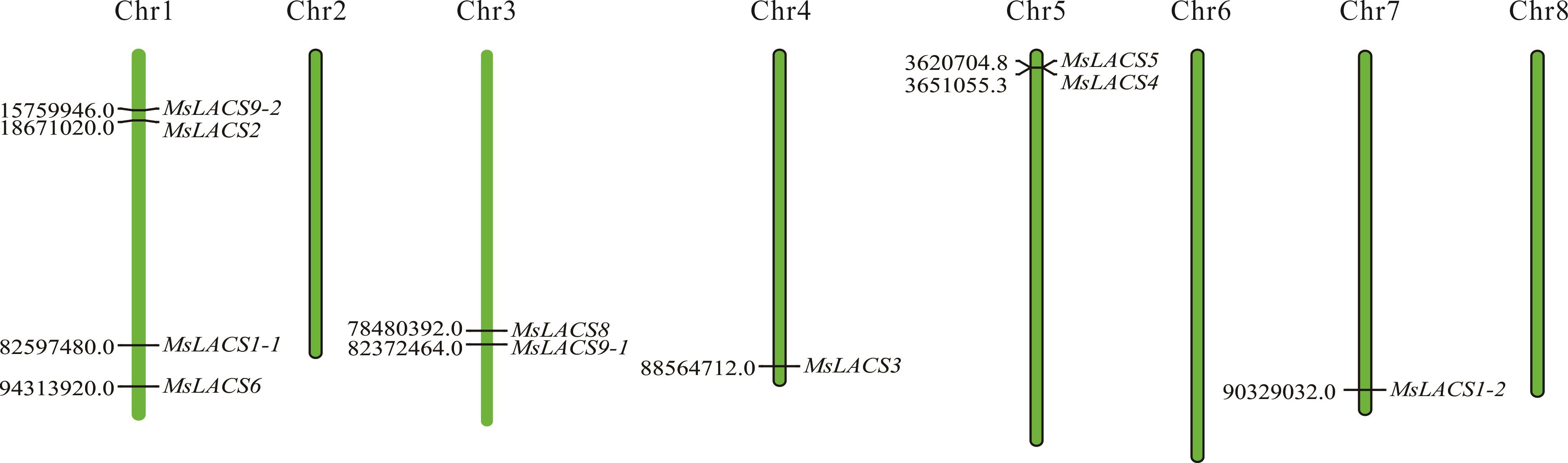
Fig.1 Chromosome location of MsLACS genes
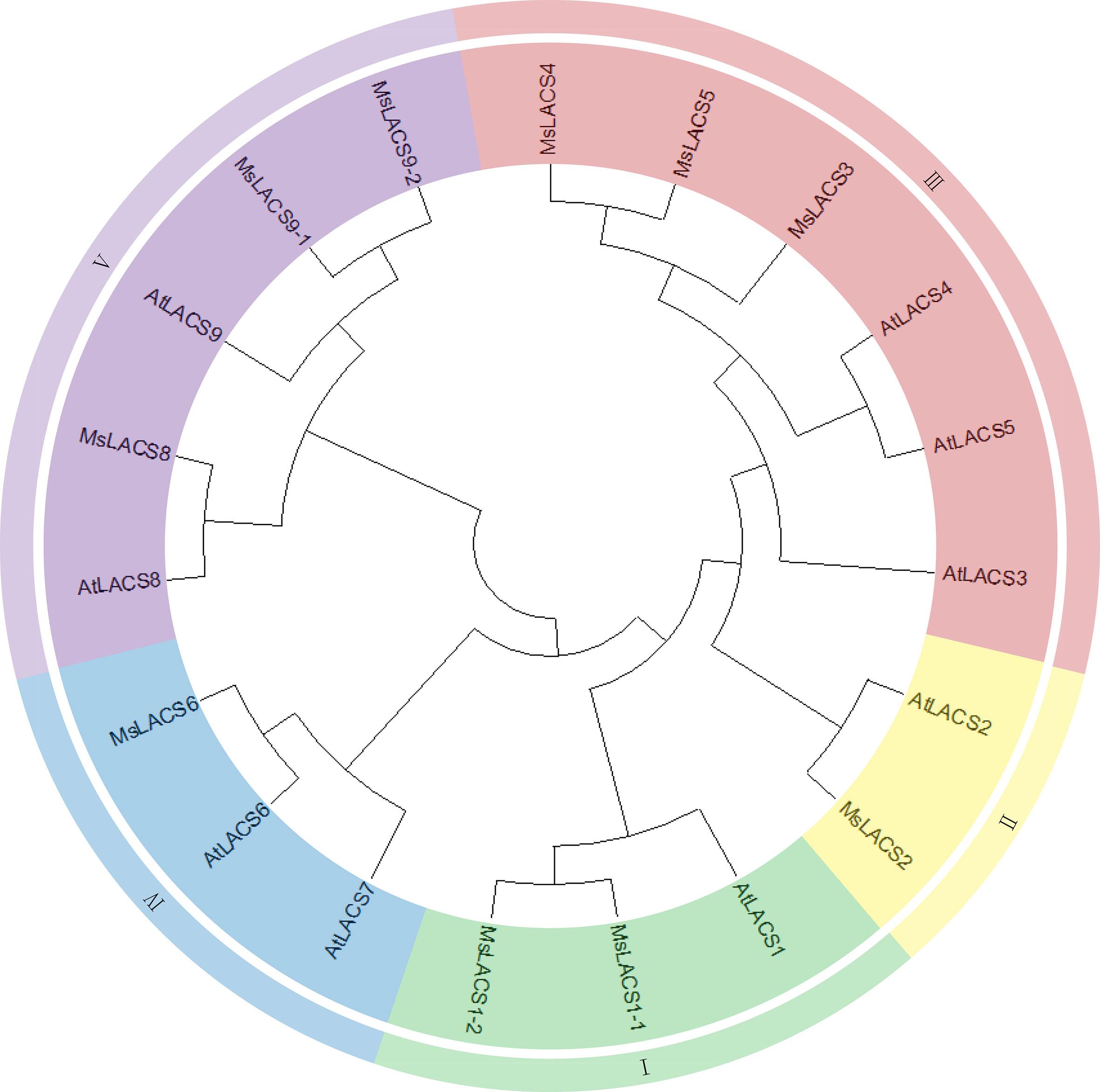
Fig.2 Phylogenetic analysis of the MsLACS gene family
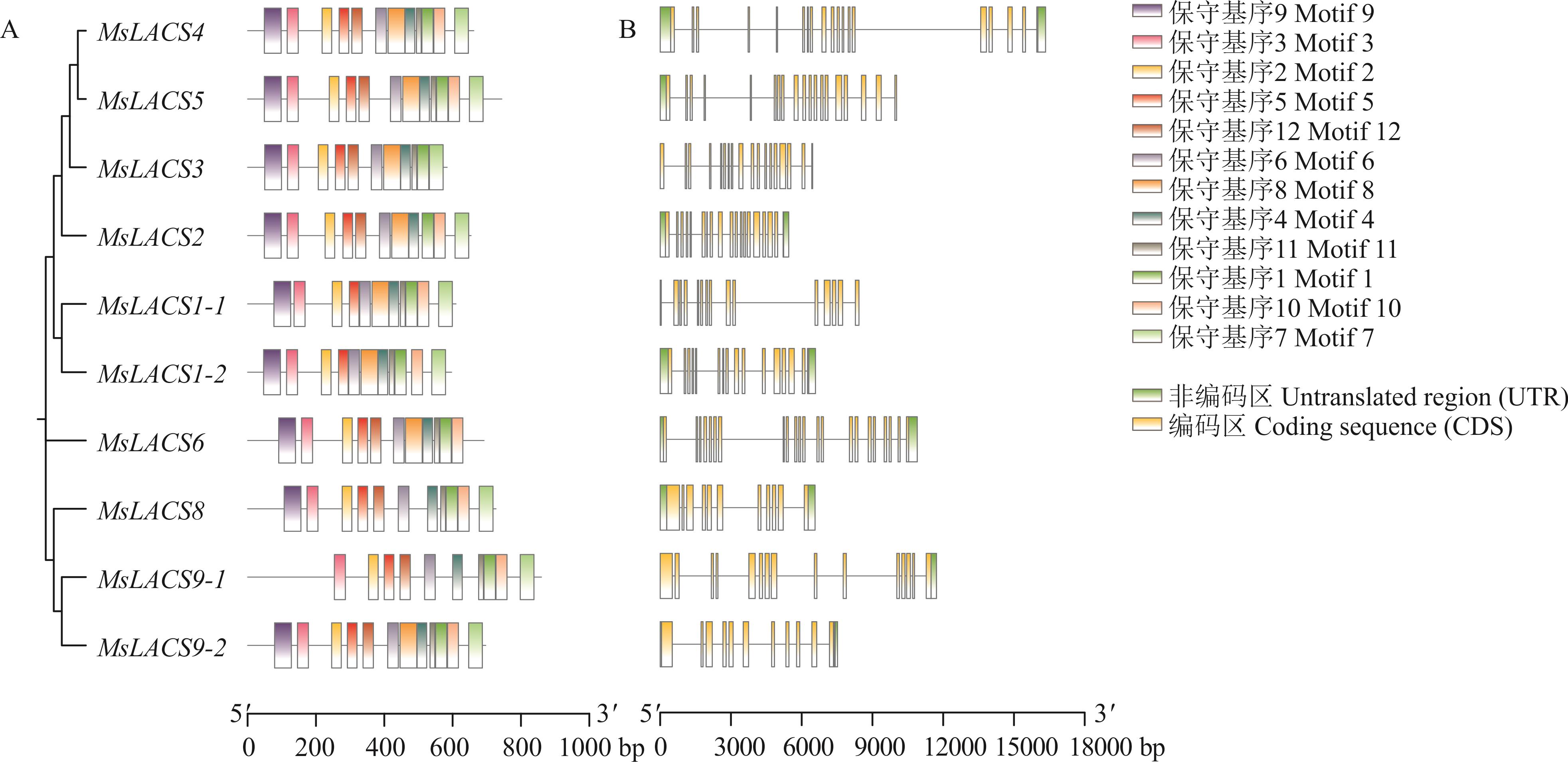
Fig.3 Conserved motif (A), and gene structure (B) analyses of MsLACS

Fig.4 Cis-acting element distribution map (A) and classification (B)
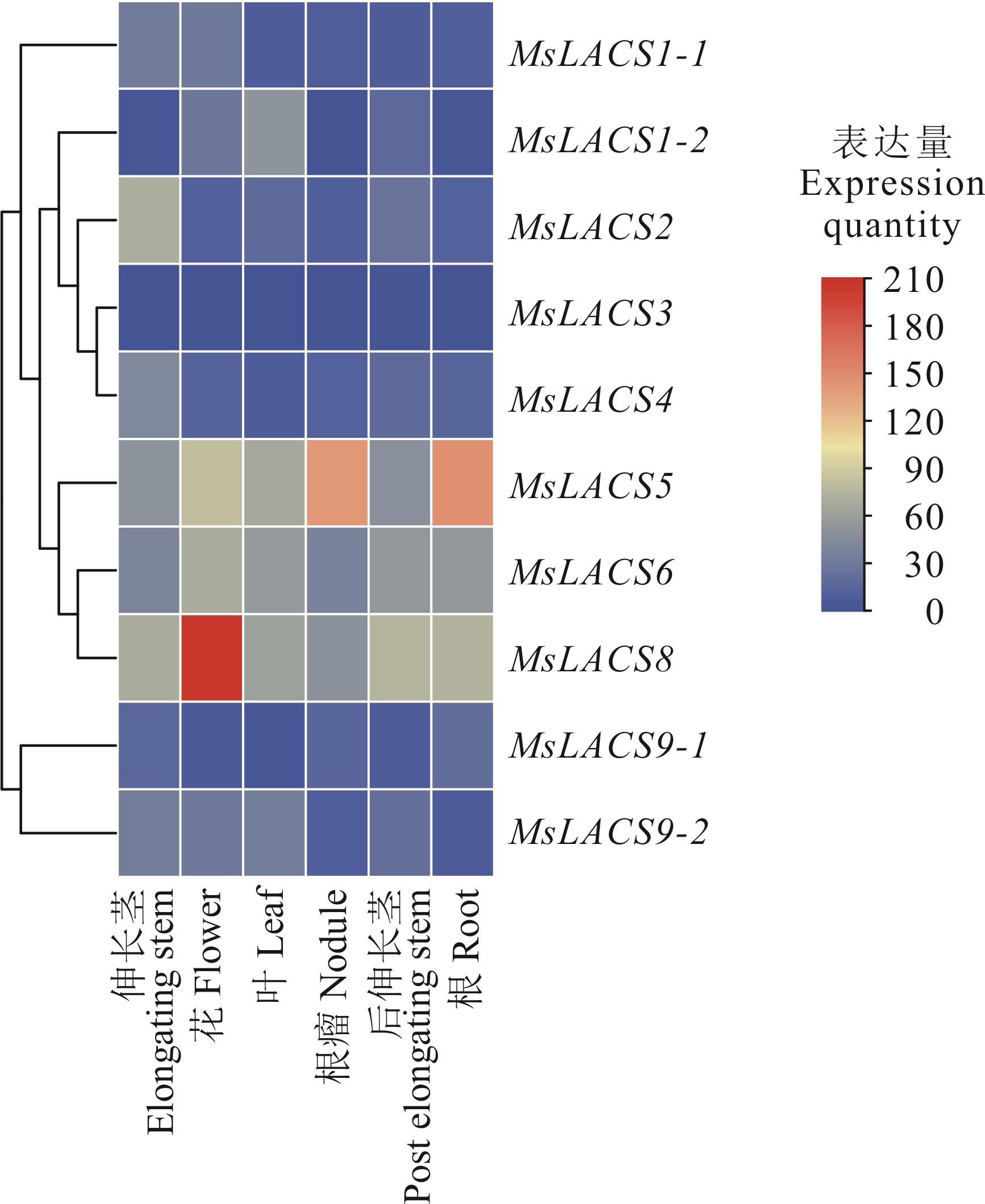
Fig.5 Expression heatmaps of MsLACS genes in different tissues
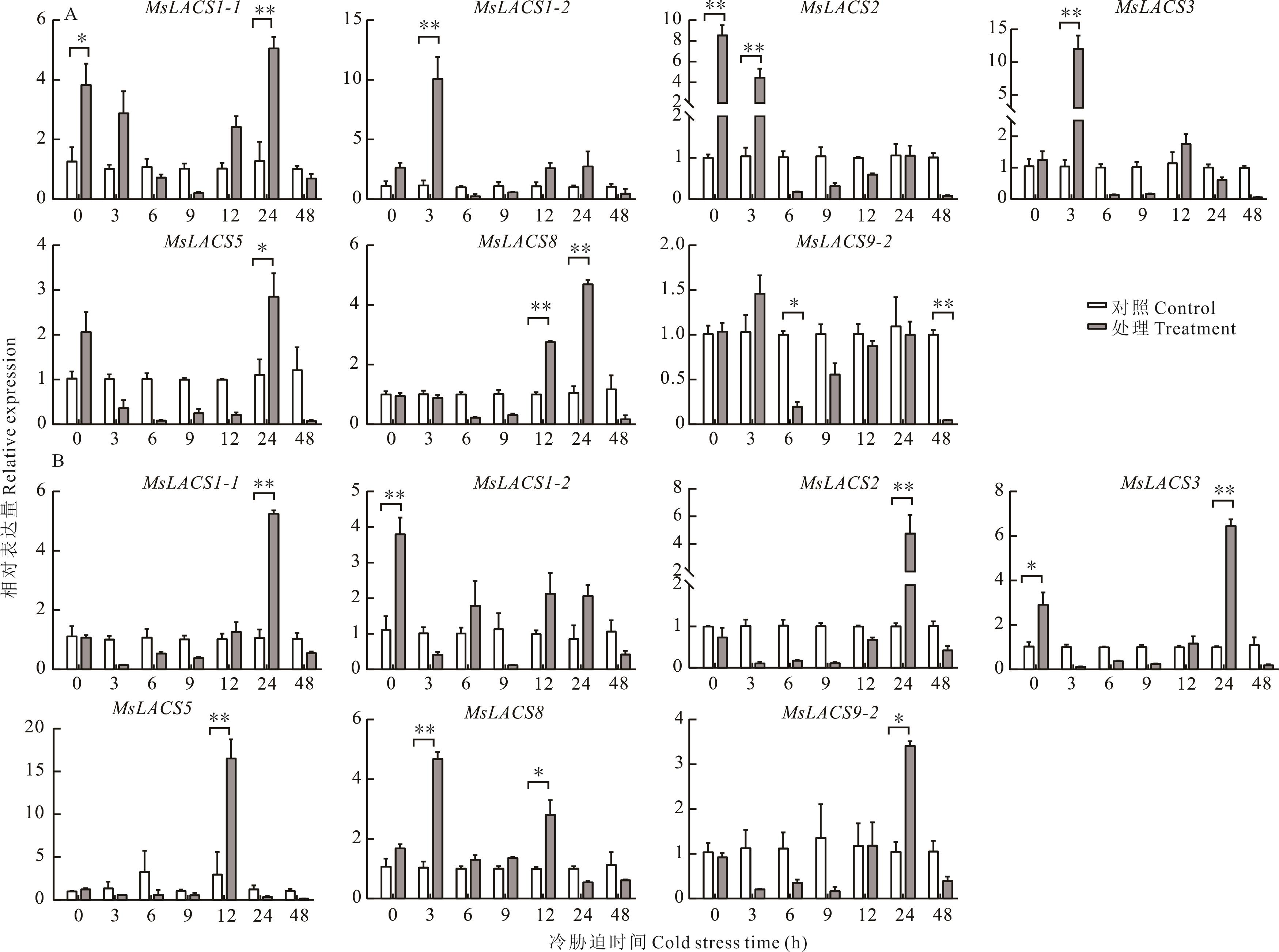
Fig.6 Expression of MsLACS gene in leaves and roots of alfalfa under cold stress

Fig.7 Expression of MsLACS gene in leaves and roots of alfalfa under drought stress

Fig.8 Expression of MsLACS gene in leaves and roots of alfalfa under salt stress

Fig.9 MsLACS protein interaction network
| 1 | Wang Y P, Zeng Y, Luo P. Advances in metabolic engineering of plant fatty acids. Chinese Journal of Oil Crop Science, 1998, 20(4): 88-92. |
| 王幼平, 曾宇, 罗鹏. 植物脂肪酸代谢工程研究进展. 中国油料作物学报, 1998, 20(4): 88-92. | |
| 2 | Li Q G, Tao Z, Yang Y Z, et al. Research progress of long chain acyl-CoA synthetase. China Animal Husbandry and Veterinary Medicine, 2012, 39(6): 137-140. |
| 李庆岗, 陶著, 杨玉增, 等. 长链脂酰CoA合成酶(ACSL)的研究进展. 中国畜牧兽医, 2012, 39(6): 137-140. | |
| 3 | Zhou D, Zhao J Z, Bai Y, et al. Research advance in triacylglycerol synthesis,metabolism, and regulation in plants. Journal of Nanjing Agricultural University, 2012, 35(5): 77-86. |
| 周丹, 赵江哲, 柏杨, 等. 植物油脂合成代谢及调控的研究进展. 南京农业大学学报, 2012, 35(5): 77-86. | |
| 4 | Somerville C, Browse J. Plant lipids: Metabolism, mutants, and membranes. Science, 1991, 252(5002): 80-87. |
| 5 | Hills M J, Beevers H. ATPase in lipid body membranes of castor bean endosperm. Plant Physiology, 1986, 82(3): 671-674. |
| 6 | Mukherjee K D. Plant lipases and their application in lipid bio-transformations. Progress Lipid Research, 1994, 33(1/2): 165-174. |
| 7 | Lv J B, Tan X F, Long H X, et al. Research progress in the study of plant long-chain acyl-coenzyme A(coA). Journal of Plant Physiology, 2017, 53(7): 1185-1191. |
| 吕佳斌, 谭晓风, 龙洪旭, 等. 植物长链脂酰辅酶A合成酶研究进展. 植物生理学报, 2017, 53(7): 1185-1191. | |
| 8 | Shockey J M, Fulda M S, Browse J A. Arabidopsis contains nine long-chain acyl-coenzyme A synthetase genes that participate in fatty acid and glycerolipid metabolism. Plant Physiology, 2002, 129(4): 1710-1722. |
| 9 | Tan X L. Characterization of an Arabidopsis long chain fatty acyl-coenzyme A synthetase, which is required for seedling establishment without exogenous sugar. Yangling: Northwest AF University, 2003. |
| 谭小力. 拟南芥长链脂肪酰辅酶A合成酶基因的克隆及功能鉴定. 杨凌: 西北农林科技大学, 2003. | |
| 10 | Lv S Y, Song T, Kosma D K, et al. Arabidopsis CER8 encodes long-chain acyl-CoA synthetase 1 (LACS1) that has overlapping functions with LACS2 in plant wax and cutin synthesis. The Plant Journal, 2009, 59 (4): 553-564. |
| 11 | Trick H N, Finer J J. Sonication-assisted agrobacterium-mediated transformation of soybean [Glycine max (L.) Merrill] embryogenic suspension culture tissue. Plant Cell Reports, 1998, 17(6): 482-488. |
| 12 | Jessen D, Olbrich A, Knüfer J, et al. Combined activity of LACS1 and LACS4 is required for proper pollen coat formation in Arabidopsis: LACS activity and pollen coat formation. The Plant Journal, 2011, 68(4): 715-726. |
| 13 | Jessen D, Roth C, Wiermer M, et al. Two activities of long-chain acyl-coenzyme A synthetase are involved in lipid trafficking between the endoplasmic reticulum and the plastid in Arabidopsis. Plant Physiology, 2015, 167(2): 351-366. |
| 14 | Fulda M, Shockey J, Werber M, et al. Two long-chain acyl-CoA synthetases from Arabidopsis thaliana involved in peroxisomal fatty acid β-oxidation: Fatty acid activation in peroxisomes of plants. The Plant Journal, 2002, 32(1): 93-103. |
| 15 | Zhao L, Haslam T M, Sonntag A, et al. Functional overlap of long-chain acyl-CoA synthetases in Arabidopsis. Plant and Cell Physiology, 2019, 60(5): 1041-1054. |
| 16 | Dahlqvist A, Stahl U, Lenman M, et al. Phospholipid: Diacylglycerol acyltransferase: An enzyme that catalyzes the acyl-CoA-independent formation of triacylglycerol in yeast and plants. Proceedings of the National Academy of Sciences of the United States of America, 2000, 97(12): 6487-6492. |
| 17 | Visser W F, van Roermund C W, Ijlst L, et al. Metabolite transport across the peroxisomal membrane. Biochemical Journal, 2007, 401(2): 365-375. |
| 18 | Zhang C L, Mao K, Zhou L J, et al. Genome-wide identification and characterization of apple long-chain acyl-CoA synthetases and expression analysis under different stresses. Plant Physiology and Biochemistry, 2018, 132: 320-332. |
| 19 | Black P N, DiRusso C C, Metzger A K, et al. Cloning, sequencing, and expression of the fadD gene of Escherichia coli encoding acyl coenzyme A synthetase. J Biol Chem, 1993, 267(35): 25513-25520. |
| 20 | Dai H P, Shan C J, Zhao H., et al. The difference in antioxidant capacity of four alfalfa cultivars in response to Zn. Ecotoxicology and Environmental Safety, 2015, 114: 312-317. |
| 21 | Song X, Fang C, Yuan Z Q, et al. Long-term alfalfa (Medicago sativa L.) establishment could alleviate phosphorus limitation induced by nitrogen deposition in the carbonate soil. Journal of Environmental Management, 2022, 324: 116346. |
| 22 | Li Y J, Ma J W, Li Y Q, et al. Effect of nitrogen on the phytoremediation of Cd-PAHs co-contaminated dumpsite soil by alfalfa (Medicago sativa L.) and on the soil bacterial community structure. Environmental Science, 2022, 43(10): 4779-4788. |
| 23 | Livak K J, Schmittgen T D. Analysis of relative gene expression data using real-time quantitative PCR and the 2‒ΔΔCt method. Methods, 2001, 25(4): 402-408. |
| 24 | Yang J B, Zhang Z, Zhou Z M, et al. Cloning and function analysis of a HaLACS9 gene in Helianthus annuus L. Acta Agronomica Sinica, 2023, 49(2): 426-437. |
| 杨佳宝, 张展, 周至铭, 等. 向日葵HaLACS9基因的克隆与功能分析. 作物学报, 2023, 49(2): 426-437. | |
| 25 | Deng S Y, Xiao Y, Zhang H T, et al. Bioinformatics and expression analysis of the LACS gene family in Prunus sibirica. Molecular Plant Breeding, 2018, 16(6): 1977-1984. |
| 邓舒雅, 肖羽, 张鹤婷, 等. 山杏LACS基因家族生物信息学及表达分析. 分子植物育种, 2018, 16(6): 1977-1984. | |
| 26 | Jia Q, Liu Y B, Wang F, et al. Identification of LACS family genes in Capsicum annuum L. and their response to abiotic stress. Journal of Yangtze University(Natural Science Edition), 2022, 19(6): 117-126. |
| 贾切, 刘亚博, 王飞, 等. 辣椒中LACS家族基因鉴定及其对非生物胁迫的响应. 长江大学学报(自然科学版), 2022, 19(6): 117-126. | |
| 27 | Wang R H, Wang S B, Liu S T, et al. Identification and expression analysis of LACS family genes in Chinese cabbage (Brassica rapa L.ssp.pekinensis). Shandong Agricultural Sciences, 2022, 54(6): 1-9. |
| 王荣花, 王树彬, 刘栓桃, 等. 大白菜LACS家族基因鉴定与表达分析. 山东农业科学, 2022, 54(6): 1-9. |
| [1] | Chao MA, Xi-jing SUN, Ya-lan FENG, Shuang ZHOU, Ji-hao JU, Yi WU, Tian-ning WANG, Bin-bin GUO, Jun ZHANG. Genome-wide identification of the GLK gene family in alfalfa and their transcript profiles under osmotic stress [J]. Acta Prataculturae Sinica, 2025, 34(1): 174-190. |
| [2] | Wen-qi CAI, Shu-xia LI, Xiao-tong WANG, Wen-xue SONG, Xu-xia MA, Xiao-mei MA, Xiao-hong LI, Xin-yao DAI. Effects of interaction between exogenous melatonin and ethylene on the growth and physiological characteristics of Medicago sativa seedlings under salt stress [J]. Acta Prataculturae Sinica, 2025, 34(1): 80-93. |
| [3] | Hong-li CUI, Ming-zhe SUN, Bo-wei JIA, Xiao-li SUN. Genome-wide analysis and expression of the OSCA family genes from Medicago truncatula in response to low temperature stresses [J]. Acta Prataculturae Sinica, 2024, 33(9): 111-125. |
| [4] | Xiao-tong WANG, Xiao-hong LI, Xu-xia MA, Wen-qi CAI, Xue-li FENG, Shu-xia LI. Identification and analysis of members of the FBA gene family in alfalfa [J]. Acta Prataculturae Sinica, 2024, 33(9): 81-93. |
| [5] | Yuan MA, Huan LIU, Gui-qin ZHAO, Jing-long WANG, Ran ZHANG, Rui-rui YAO. Identification of the oat sHSP gene family and its transcript profiles in response to high temperature and aging [J]. Acta Prataculturae Sinica, 2024, 33(8): 145-158. |
| [6] | Yi WU, Ya-lan FENG, Tian-ning WANG, Ji-hao JU, Hui-shu XIAO, Chao MA, Jun ZHANG. Genome-wide identification and expression analysis of the Hsp70 gene family in wheat and its ancestral species [J]. Acta Prataculturae Sinica, 2024, 33(7): 53-67. |
| [7] | Zhen-huan ZHANG, Li-rong YAO, Jun-cheng WANG, Er-jing SI, Hong ZHANG, Ke YANG, Xiao-le MA, Ya-xiong MENG, Hua-jun WANG, Bao-chun LI. Identification of AKR gene family members in Halogeton glomeratus and salt tolerance analysis of the root salt stress response gene HgAKR42639 [J]. Acta Prataculturae Sinica, 2024, 33(7): 68-83. |
| [8] | Shu-zhen SONG, Cai-ye ZHU, Li-shan LIU, Xu-ying GONG, Rui-rui LUO. The effect of tail-docking on adipocyte structure and lipid metabolism-related gene expression in Lanzhou fat-tailed sheep [J]. Acta Prataculturae Sinica, 2024, 33(7): 94-104. |
| [9] | Wen-wen QI, Hong-yuan MA, Ya-xiao LI, Yan DU, Meng-dan SUN, Hai-tao WU. Progress in research on breeding methods to produce new, high-quality forage varieties [J]. Acta Prataculturae Sinica, 2024, 33(6): 187-202. |
| [10] | Guo-qiang WU, Zu-long YU, Ming WEI. The mechanism of PGPR regulating plant response to abiotic stress [J]. Acta Prataculturae Sinica, 2024, 33(6): 203-218. |
| [11] | Ying TAN, Hao YIN. Effects of root application of an arbuscular mycorrhizal fungus and melatonin on the growth, photosynthetic characteristics, and antioxidant system of Medicago sativa under salt stresss [J]. Acta Prataculturae Sinica, 2024, 33(6): 64-75. |
| [12] | Hai-ming KONG, Jia-xing SONG, Jing YANG, Qian LI, Pei-zhi YANG, Yu-man CAO. Identification and transcript profiling of the CAMTA gene family under abiotic stress in alfalfa [J]. Acta Prataculturae Sinica, 2024, 33(5): 143-154. |
| [13] | Bo-xin XI, Xiao-ning CUI, Su-qin SHANG, Gui-xin HU, Yan WANG, Chang-ning LI, Bin PENG, Xue-qiang SHI. Cloning and tissue-specific expression patterns of a gene encoding an atypical odorant receptor co-receptor in the leaf beetle Diorhabda rybakowi (Coleoptera: Chrysomelidae) [J]. Acta Prataculturae Sinica, 2024, 33(5): 204-215. |
| [14] | Hao LIU, Xian-yang LI, Fei HE, Xue WANG, Ming-na LI, Rui-cai LONG, Jun-mei KANG, Qing-chuan YANG, Lin CHEN. Identification of the alfalfa SAUR gene family and its expression pattern under abiotic stress [J]. Acta Prataculturae Sinica, 2024, 33(4): 135-153. |
| [15] | Xian-yang LI, Hao LIU, Fei HE, Xue WANG, Ming-na LI, Rui-cai LONG, Jun-mei KANG, Qing-chuan YANG, Lin CHEN. Identification and expression pattern of the WRKY transcription factor family in Medicago sativa [J]. Acta Prataculturae Sinica, 2024, 33(4): 154-170. |
| Viewed | ||||||
|
Full text |
|
|||||
|
Abstract |
|
|||||
